A literary saint elevated by imperial ambition, Apollonius of Tyana reveals why constructed religious authority could not compete with lived communal belief.

By Matthew A. McIntosh
Public Historian
Brewminate
Introduction: A Rival Who Never Took Root
The religious landscape of the Roman Empire in the first three centuries CE was neither static nor monolithic, but instead marked by fluid competition, adaptation, and reinvention. Those who could embody divine wisdom, moral authority, and miraculous power often became focal points for emerging forms of devotion. Among them, Apollonius of Tyana stands as a compelling but ultimately unsuccessful candidate for lasting religious significance. Though remembered as a philosopher, ascetic, and wonderworker, his legacy did not evolve into a durable cult capable of rivaling the expanding influence of Christianity. His case offers a valuable entry point into understanding why some religious figures became central to enduring traditions while others remained marginal.
Apollonius lived in the first century CE, a period already rich with charismatic teachers and itinerant holy men who operated within established philosophical and religious frameworks. Unlike founders of new religious movements, he appears to have functioned within the recognizable traditions of Neo-Pythagoreanism, emphasizing ascetic discipline, moral instruction, and spiritual insight. Reports of his miracles and travels circulated in antiquity, placing him within the broader category of the theioi andres, or “divine men,” whose reputations blended philosophy with supernatural authority and who were often credited with healings, prophecies, and acts of divine mediation. Characters of this type were embedded in a cultural environment that did not sharply distinguish between philosophy, religion, and magic, allowing such individuals to attract admiration without necessarily forming structured communities of worship. Their authority rested as much on personal charisma and reputation as on doctrinal coherence or institutional backing. Yet this category, while culturally meaningful, did not inherently produce organized or enduring cults. The presence of such people was relatively common across the eastern Mediterranean, and their influence frequently remained localized or dissipated after their deaths, particularly when not reinforced by sustained ritual practice, dedicated followers, or integration into existing civic or religious institutions.
The transformation of Apollonius into a more explicitly sacred figure occurred not during his lifetime, but in the third century CE, when the Roman imperial court took an active interest in his legacy. Under the patronage of Julia Domna, the sophist Philostratus composed the Life of Apollonius of Tyana, a work that elevated the philosopher into a figure of extraordinary spiritual and miraculous stature. This literary project did not merely preserve tradition; it reshaped it. By presenting Apollonius as a divinely favored sage whose life paralleled that of other revered icons, the text sought to provide a compelling model of pagan sanctity at a time when Christianity was gaining traction. The resulting image was sophisticated and rhetorically powerful, but it emerged from a context of deliberate construction rather than continuous communal devotion.
The cult of Apollonius failed to take root because it was defined less by lived religious practice than by retrospective literary and ideological framing. Unlike traditions that developed organically through sustained community engagement, ritual continuity, and shared belief, the Apollonian movement relied heavily on elite sponsorship and textual authority. Its positioning as a pagan counterpart to Christianity further exposed its reactive nature, tying its identity to a rival it could not displace. The decline of the cult reflects not merely changing imperial policies or theological preferences, but a deeper structural weakness: the inability of constructed sanctity to generate the kind of authenticity and communal investment required for long-term survival.
Apollonius in Context: Philosopher, Ascetic, and Wonderworker
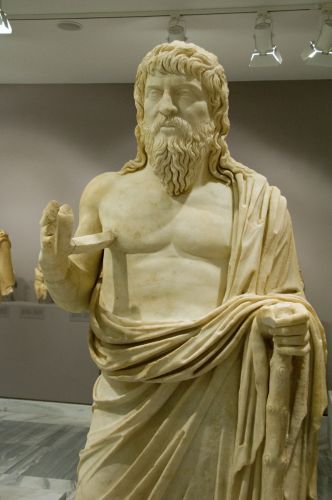
Apollonius of Tyana emerged in the first century CE as someone whose identity was shaped by the philosophical and religious currents of the eastern Roman Empire. Born in Cappadocia, a region deeply embedded in Hellenistic culture yet influenced by diverse local traditions, he operated within a world where intellectual life and religious practice were closely intertwined. His reputation as a philosopher was grounded not in the establishment of a new doctrine, but in his association with Neo-Pythagoreanism, a movement that revived and adapted the teachings attributed to Pythagoras. This philosophical orientation emphasized purity, discipline, and the pursuit of divine truth through a life of restraint and contemplation, positioning Apollonius within an already recognized and respected intellectual lineage.
Central to Apollonius’s identity was his commitment to asceticism, which functioned as both a personal discipline and a public performance of philosophical virtue. He was said to have adopted a strict vegetarian diet, rejected material wealth, and embraced celibacy, aligning himself with ideals that signaled moral superiority and spiritual clarity. In the cultural context of the Roman East, such practices were not merely eccentric choices but markers of philosophical seriousness. Asceticism created visible boundaries between the philosopher and ordinary society, reinforcing the perception that individuals like Apollonius possessed access to higher forms of knowledge and divine favor. This emphasis on self-denial and ethical rigor contributed significantly to his reputation, but it also tied him to a tradition in which many displayed similar traits without becoming objects of sustained cultic devotion.
Apollonius’s extensive travels further enhanced his stature, situating him within a broader Mediterranean and Near Eastern landscape of wisdom traditions. According to later accounts, he journeyed to regions as distant as India and Ethiopia, engaging with priests, sages, and religious communities along the way. These narratives, whether fully historical or partially embellished, reflect a common literary motif in which the philosopher acquires authority through exposure to diverse sources of knowledge. Travel served not only as a demonstration of intellectual curiosity but also as a means of constructing a universal identity, transcending local affiliations and positioning Apollonius as a figure of global significance. Such portrayals reinforced his image as a mediator between cultures and as a conduit for ancient and esoteric wisdom.
Equally important to his reputation were the accounts of miracles attributed to him, which placed Apollonius within the category of the theioi andres, or divine men. These figures occupied a liminal space between philosopher and holy man, credited with acts that suggested a special relationship with the divine. Stories of healings, exorcisms, and prophetic insight circulated around Apollonius, aligning him with a broader tradition in which extraordinary individuals demonstrated their authority through visible interventions in the natural and social order. His miraculous reputation did not distinguish him as unique, but rather situated him within a familiar cultural pattern. The Roman world was populated with such figures, and while they could command admiration and local devotion, their influence often depended on the persistence of personal memory rather than institutional reinforcement.
Despite these attributes, Apollonius did not found a formal religious movement during his lifetime, nor did he establish structures that would ensure the continuation of his teachings as a distinct cult. His authority appears to have been primarily personal, rooted in direct interaction with followers and observers rather than in the creation of organized communities. This absence of institutionalization is significant, as it limited the capacity for his legacy to be transmitted in a stable and enduring form. Without temples, priesthoods, or codified rituals associated specifically with his name, the memory of Apollonius remained diffuse, vulnerable to reinterpretation and dependent on later efforts to preserve and shape it. Even where admiration persisted, it likely took the form of localized reverence or philosophical respect rather than collective worship anchored in shared rites or communal identity. In a religious environment where continuity often depended on repetition, place, and participation, such diffuseness posed a serious obstacle to long-term survival.
Apollonius can be understood as a representative rather than an exception within the religious and philosophical culture of his time. He embodied the qualities that made the theios aner compelling, but he did so within a framework that did not inherently produce lasting religious systems. His life and reputation provided the raw material for later construction, but they did not, in themselves, generate a self-sustaining tradition. The significance of Apollonius lies not only in what he was, but in what he was not: a founder whose authority translated into durable communal practice. This distinction would prove decisive in the later attempts to elevate him into a rival to emerging religious movements.
The Philostratean Project: Literary Construction and Imperial Patronage
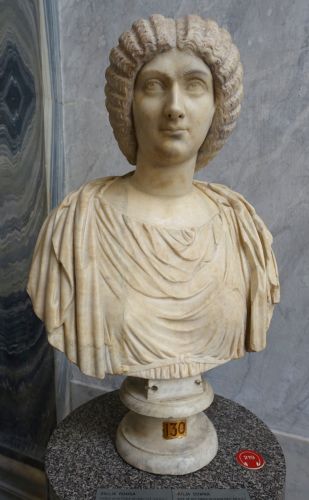
The elevation of Apollonius of Tyana from respected philosopher to quasi-sacred figure was not the result of continuous popular devotion, but of a deliberate literary and ideological project undertaken in the third century CE. At the center of this transformation stood Julia Domna, the Syrian-born empress and wife of Emperor Septimius Severus, whose court became a hub of intellectual and cultural activity. Julia Domna cultivated a circle of philosophers and sophists, positioning herself as a patron of Greek learning at a time when the Roman Empire faced both internal instability and shifting religious currents. Apollonius offered an opportunity to articulate a form of pagan wisdom that could stand alongside, and implicitly compete with, the growing influence of Christianity.
To realize this vision, Julia Domna commissioned Philostratus to compose the Life of Apollonius of Tyana, a work that would define the sage’s legacy for subsequent generations. Philostratus, a skilled rhetorician and member of the Second Sophistic, approached the task not as a historian in the modern sense, but as a literary craftsman. His narrative drew on a combination of purported earlier sources, oral traditions, and creative elaboration, weaving them into a cohesive and compelling account of Apollonius’s life. Central to this construction was Damis, presented as a disciple whose records supposedly preserved firsthand knowledge of Apollonius’s deeds. Modern scholarship has consistently questioned the authenticity of this source, viewing it as a literary device that lent an air of credibility to an otherwise highly stylized narrative. The use of such a figure reflects broader conventions of ancient biography, in which authority was often established through the invocation of named witnesses, even when their historical existence could not be verified. Philostratus was not simply inventing material but working within an accepted rhetorical framework that blurred the line between history and literary art. His goal was not merely to record events, but to shape a persuasive and authoritative narrative capable of sustaining admiration and, potentially, devotion.
The resulting text presents Apollonius as an idealized philosopher-saint, whose life embodies both intellectual rigor and divine favor. Philostratus emphasizes his subject’s purity, wisdom, and miraculous abilities, portraying him as someone who moves effortlessly between human and divine spheres. Episodes of healing, prophecy, and supernatural insight are carefully integrated into the narrative, reinforcing the impression that Apollonius possessed a unique relationship with the gods. The work situates him within a recognizable philosophical framework, ensuring that his authority remains grounded in established traditions rather than appearing wholly novel. This dual emphasis on continuity and transcendence reflects a conscious effort to craft a figure capable of commanding both intellectual respect and religious reverence.
Yet the very qualities that make the Life of Apollonius rhetorically effective also reveal its constructed nature. The temporal distance between Apollonius’s lifetime and Philostratus’s composition raises significant questions about historical reliability, as the narrative reflects the concerns and priorities of the third century more than those of the first. The text’s polished structure, thematic coherence, and dramatic episodes suggest a work shaped by literary convention as much as by historical memory. Rather than preserving an existing cult tradition, Philostratus appears to be creating the conditions for one, offering readers a fully formed model of sanctity that could, in theory, inspire devotion. This retrospective construction distinguishes Apollonius from those whose authority emerged through sustained communal engagement. It also underscores the degree to which the text is oriented toward its contemporary audience, addressing the intellectual and religious anxieties of the Severan period rather than simply recounting the past. The Life becomes as much a document of third-century cultural politics as it is a biography of a first-century philosopher.
The imperial context of the project further underscores its ideological purpose. Julia Domna’s patronage was not merely an act of cultural preservation, but part of a broader effort to reaffirm the value of Hellenic intellectual and religious traditions in an era of transformation. By elevating Apollonius as a paradigmatic sage, the Life implicitly asserts the continued relevance of pagan wisdom against competing claims. The text does not directly engage Christianity, yet its emphasis on miracles, moral teaching, and divine favor invites comparison with emerging Christian narratives. The Philostratean project can be understood as a form of cultural positioning, in which the past is reshaped to serve the needs of the present.
Despite its sophistication and ambition, the project reveals the limits of literary construction as a foundation for religious authority. While the Life of Apollonius succeeded in preserving and amplifying the sage’s reputation, it did not generate the kind of sustained, communal devotion necessary for a lasting cult. The authority it conferred was mediated through text and elite discourse, rather than embedded in ritual practice or collective experience. The image of Apollonius remained compelling at the level of narrative, but fragile in the face of broader social and religious change. The Philostratean project stands as both a remarkable act of cultural production and a case study in the challenges of transforming constructed memory into lived religion.
Constructed Sanctity versus Lived Religion
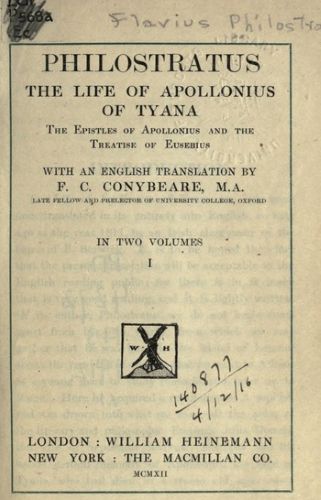
The distinction between constructed sanctity and lived religion lies at the heart of the Apollonius phenomenon. Religious authority in the ancient world did not emerge solely from compelling narratives or impressive philosophical credentials, but from sustained communal practices that embedded belief into daily life. Ritual repetition, shared spaces, and collective identity transformed individual figures into enduring objects of devotion. In the case of Apollonius of Tyana, the process operated in reverse. His elevation to an icon of religious significance followed the creation of an elaborate literary portrait, rather than preceding it through the gradual accumulation of communal reverence. This inversion proved decisive, as it deprived the movement associated with him of the organic foundations necessary for long-term survival.
The Life of Apollonius of Tyana offered readers a fully formed image of sanctity, but it did so without the support of an existing network of practices that could reinforce that image in lived experience. Philostratus’s narrative constructed a coherent and compelling vision of a divinely favored sage, yet it remained primarily a textual artifact, circulating among educated audiences rather than functioning as the basis for ritual engagement. Religious traditions that endured in the Roman Empire were characterized by their integration into the rhythms of communal life. Temples, festivals, and local cult practices created repeated encounters with the sacred, allowing belief to be enacted as well as imagined. The absence of such structures in the case of Apollonius meant that his sanctity persuasively described, lacked the reinforcement of habitual practice.
This lack of embeddedness also affected the transmission of Apollonius’s reputation across generations. In traditions grounded in lived religion, memory is sustained not only through texts but through participation. Individuals learn belief by engaging in shared rituals, observing communal norms, and inhabiting spaces marked as sacred. These repeated actions create continuity, allowing a community to internalize and reproduce its values without relying solely on written authority. Without these mechanisms, memory remains dependent on intellectual interest rather than collective investment, and it risks becoming an object of curiosity rather than devotion. Apollonius’s legacy, as shaped by Philostratus, relied heavily on the continued circulation and interpretation of a single text, making it vulnerable to shifts in cultural and religious priorities. As new forms of devotion gained prominence, particularly those offering more immediate and participatory experiences, the appeal of a primarily literary figure diminished, leaving his reputation increasingly confined to the realm of elite discourse rather than lived religious practice.
The contrast becomes especially clear when considered alongside the development of early Christianity, which combined narrative authority with communal practice in a way that reinforced both. The character of Jesus Christ was not only the subject of written accounts but the focal point of rituals such as baptism and communal meals, which created a shared identity among believers. These practices allowed adherents to experience their faith collectively, transforming abstract belief into embodied reality. By comparison, the Apollonian tradition lacked equivalent forms of participation, leaving its adherents without the means to translate admiration into sustained communal devotion. The difference was not merely theological but structural, reflecting distinct modes of religious formation.
The retrospective construction of Apollonius’s sanctity introduced an element of artificiality that may have undermined its credibility. While ancient audiences were accustomed to embellished narratives, the explicit shaping of a person’s life to meet contemporary needs could raise questions about authenticity. The gap between the historical Apollonius and his literary representation was not easily bridged, particularly in a competitive religious environment where claims to truth and authority were closely scrutinized. Traditions that could point to continuous practice and collective memory possessed a significant advantage over those that relied on retrospective elaboration. The perception, whether accurate or not, that Apollonius’s sanctity had been constructed rather than inherited weakened its capacity to inspire lasting commitment.
The story of Apollonius illustrates that sanctity in the ancient world was not simply a matter of narrative persuasion, but of social integration. A person could be admired, even revered, without becoming the center of a durable religious movement if that admiration was not translated into shared practice. The failure of the Apollonian cult to take root reflects this broader principle, highlighting the importance of continuity, participation, and communal reinforcement in the formation of lasting religious traditions. Constructed sanctity, no matter how sophisticated, could not substitute for the lived experience of religion, and it was this absence that ensured the eventual decline of Apollonius’s following.
Elite Religion and Its Limits

The cult of Apollonius of Tyana was shaped not only by its retrospective construction but also by the social context in which that construction took place. From its revival in the third century CE, the Apollonian tradition was closely tied to elite intellectual culture, particularly the circles surrounding the imperial court. This association gave the movement a certain prestige, aligning it with philosophical refinement and literary sophistication. Yet it also imposed limits on its reach, confining its appeal to audiences already embedded within the structures of education, rhetoric, and cultural capital. In a society where access to such structures was unevenly distributed, this meant that the cult’s potential base of adherents was inherently restricted. Religious participation in the Roman world often depended on visibility, repetition, and accessibility, qualities that enabled beliefs to spread across social boundaries. By contrast, a movement grounded in elite discourse risked remaining self-referential, circulating within a narrow audience without achieving broader resonance. In a religious environment where broad participation often determined longevity, such restriction proved to be a significant disadvantage.
The Life of Apollonius of Tyana itself reflects this elite orientation. Composed by Philostratus as a work of polished prose within the tradition of the Second Sophistic, it was intended for readers trained in Greek literary culture, capable of appreciating its stylistic nuances and philosophical allusions. The text presumes familiarity with classical models, rhetorical conventions, and intellectual debates, positioning Apollonius as someone whose authority is validated through literary excellence as much as through divine favor. This mode of presentation elevated the work’s status but limited its accessibility, making it less likely to resonate with broader, less literate populations who engaged with religion through ritual practice rather than textual interpretation.
The association with imperial patronage further distanced the Apollonian tradition from the lived experiences of ordinary people. Julia Domna’s sponsorship embedded the project within the cultural politics of the Severan court, linking it to a top-down model of religious and intellectual production. While such patronage could amplify visibility and lend authority, it did not necessarily foster grassroots engagement. Religious movements that endured in the Roman Empire often did so by integrating themselves into local communities, adapting to regional practices, and addressing the immediate concerns of their adherents. The Apollonian project, by contrast, remained largely detached from these dynamics, operating within a sphere that prioritized representation over participation.
This detachment becomes more apparent when contrasted with religious movements that successfully bridged the gap between elite discourse and popular practice. Early Christianity, for example, developed forms of organization that allowed it to spread across social boundaries, incorporating individuals from diverse backgrounds into a shared framework of belief and ritual. Its teachings could be communicated orally as well as textually, and its practices required neither advanced education nor access to elite cultural institutions. This flexibility enabled it to adapt to different social environments while maintaining a recognizable core identity, reinforcing both cohesion and expansion. By comparison, the Apollonian tradition offered a model of sanctity that was intellectually compelling but socially limited, lacking the mechanisms necessary to translate admiration into widespread communal adherence. The contrast highlights not simply a difference in message, but a divergence in structure, one that favored movements capable of embedding themselves in everyday life over those confined to elite circulation.
The limits of elite religion, as demonstrated by the case of Apollonius, reveal a broader pattern within the religious history of the Roman world. Movements that remained confined to intellectual circles, however sophisticated, struggled to achieve the depth and resilience required for long-term survival. Without the reinforcement of communal practice, localized adaptation, and accessible forms of participation, they remained vulnerable to shifts in cultural and political conditions. The decline of the Apollonian cult underscores the importance of social breadth in religious formation, showing that prestige and philosophical appeal alone were insufficient to sustain a living tradition.
Apollonius and Christ: Competitive Framing in Late Antiquity
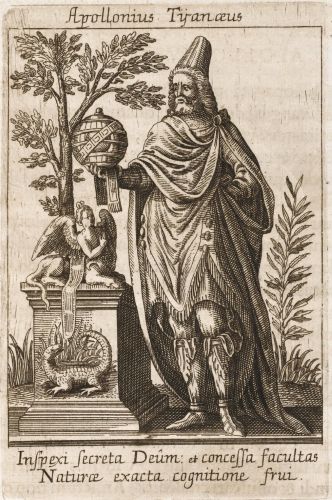
Apollonius of Tyana acquired renewed significance in Late Antiquity not only through literary reconstruction, but through comparison. As Christianity expanded across the Roman Empire, its central figure, Jesus Christ, became the focal point of both devotion and controversy. Apollonius was increasingly framed as a pagan counterpart whose life could be read in parallel to that of Christ. This comparison was not accidental but emerged from a broader cultural environment in which competing religious traditions sought to define themselves in relation to one another. By aligning Apollonius with Christ, proponents of pagan intellectual traditions attempted to demonstrate that the qualities attributed to Christianity’s founder were neither unique nor unprecedented.
Philostratus’s Life of Apollonius of Tyana played a central role in facilitating this comparison, even if it did not explicitly position itself as a direct response to Christianity. The text presents Apollonius as a miracle-worker, moral teacher, and divinely favored individual, attributes that resonated with contemporary descriptions of Christ. Stories of healing, exorcism, and prophetic insight appear prominently in both traditions, creating a framework in which the two figures could be evaluated side by side. This parallelism allowed pagan intellectuals to argue that the Christian narrative was part of a broader pattern rather than a singular revelation, thereby challenging claims to exclusivity. The similarities were often emphasized selectively, highlighting shared features while minimizing differences in theological context and meaning. Philostratus’s narrative strategy reflects a careful balancing act, presenting Apollonius as extraordinary without detaching him entirely from recognizable philosophical traditions, and thereby making the comparison plausible without rendering it overtly polemical. The effect was to situate Apollonius within a conceptual space that overlapped with Christian claims, even as it subtly contested them.
The comparative framing of Apollonius and Christ was further developed in polemical contexts, where it became a tool for religious debate. Pagan critics of Christianity pointed to Apollonius as evidence that miraculous deeds and moral teachings were not sufficient grounds for divine status. By presenting him as an equally compelling figure who operated within the traditional religious framework of the Greco-Roman world, they sought to undermine Christian assertions of uniqueness. Conversely, Christian writers responded by reinterpreting Apollonius’s reputation in negative terms, often attributing his alleged miracles to magic or demonic influence. This exchange illustrates the extent to which both figures became embedded in a shared discursive space, where their identities were shaped not only by their own traditions but by the arguments of their opponents.
Yet the very act of positioning Apollonius as a counterpart to Christ introduced a fundamental asymmetry. Christianity defined itself through a coherent narrative centered on the life, death, and resurrection of its founder, supported by communities that enacted this narrative through ritual and belief. Apollonius, by contrast, was inserted into this comparative framework retrospectively, his life reinterpreted to align with categories that had gained prominence through Christian discourse. This meant that his significance was, to a considerable extent, derivative, dependent on the existence of a rival tradition against which he could be measured. Rather than standing as an independent source of religious authority, he functioned as a mirror, reflecting and refracting the claims made by Christianity.
This dependence had important consequences for the reception of the Apollonian tradition. While the comparison may have elevated his profile among certain intellectual audiences, it also reinforced the centrality of Christ within the broader religious landscape. By engaging with Christian categories and narratives, proponents of Apollonius implicitly acknowledged the framework established by their rivals. The result was a form of competitive imitation that struggled to assert its own distinct identity. For adherents seeking a compelling object of devotion, the original narrative often proved more persuasive than its constructed parallel, particularly when supported by active communities and institutional structures. In addition, the rhetorical posture of imitation risked positioning Apollonius as secondary, a figure whose significance was defined in response rather than originating from an independent tradition of worship and practice. This dynamic weakened the capacity of the Apollonian tradition to command loyalty on its own terms, as it remained entangled in a discourse that privileged the very movement it sought to rival.
The competitive framing of Apollonius and Christ highlights the challenges faced by attempts to construct alternative forms of religious authority in Late Antiquity. The comparison brought visibility but not durability, positioning Apollonius within a discourse that favored the tradition it sought to counterbalance. His legacy, shaped by this dynamic, remained tied to the intellectual debates of the period rather than to a self-sustaining community of believers. The case demonstrates that religious competition was not only a matter of ideas, but of structure, continuity, and the capacity to translate narrative into lived experience. Without the institutional and communal foundations that supported Christianity’s expansion, the Apollonian tradition could not transform comparative recognition into lasting religious presence and remained a compelling but ultimately marginal phenomenon within the evolving religious landscape of the Roman Empire.
Imperial Transformation: Constantine and the Collapse of Pagan Alternatives

The transformation of the Roman Empire in the early fourth century fundamentally altered the conditions under which religious movements operated. With the rise of Constantine the Great, Christianity moved from a marginal and often persecuted tradition to one that enjoyed imperial favor and, increasingly, institutional dominance. This shift did not immediately eliminate competing religious expressions, but it reconfigured the framework in which they existed. Movements that had previously relied on local support, philosophical appeal, or elite patronage now faced a new reality in which alignment with imperial power carried decisive advantages. In this altered landscape, the cult of Apollonius of Tyana found itself at a structural disadvantage, lacking the institutional depth necessary to adapt to the changing environment.
Constantine’s policies, beginning with the Edict of Milan in 313 CE and continuing through his later reign, established a precedent for imperial involvement in religious life that would shape the trajectory of the empire for centuries. Christianity benefited not only from legal toleration but from active patronage, including the construction of churches, the support of clergy, and the integration of Christian leadership into imperial administration. These developments provided the religion with a level of organizational coherence and material support that few competing traditions could match. Imperial favor also conferred symbolic legitimacy, reinforcing the perception that Christianity possessed a unique relationship with power and destiny within the empire. While pagan practices were not immediately suppressed, they increasingly operated within a system that privileged Christian institutions, creating an uneven field in which alternative movements struggled to maintain relevance. This imbalance was reinforced through legislation, patronage networks, and shifting patterns of social prestige, all of which encouraged participation in the favored religious framework while gradually marginalizing others.
For the Apollonian tradition, this shift exposed underlying weaknesses that had been present from its inception. Unlike Christianity, which had developed networks of communities capable of sustaining themselves across regions, the cult of Apollonius lacked a comparable infrastructure. Its identity remained tied to literary representation and elite discourse, rather than to a distributed system of worship and communal practice. As imperial resources flowed toward Christian institutions, the absence of similar structures within the Apollonian movement became more pronounced. Without temples, organized clergy, or established congregations, it could not effectively compete for visibility or participation in a rapidly changing religious landscape.
The ideological dimension of Constantine’s transformation further compounded these challenges. Christianity’s growing association with imperial authority reinforced its claims to legitimacy, presenting it not only as a spiritual path but as a unifying force within the empire. This alignment between religious and political power created a feedback loop in which institutional strength and perceived truth mutually reinforced one another. The emperor’s involvement in theological disputes and ecclesiastical organization signaled that religious identity was no longer a purely local or philosophical matter, but one with direct implications for imperial stability and governance. The Apollonian tradition, already framed as a retrospective construction, lacked the capacity to project a comparable sense of inevitability or universality. Its reliance on a single literary narrative could not substitute for the dynamic interaction between belief, practice, and institutional support that characterized the Christian movement. It remained peripheral to the emerging structures of authority that defined religious life in the later empire.
The gradual marginalization of pagan intellectual culture in the later fourth century reduced the audience for traditions like that of Apollonius. As Christian education and theological discourse gained prominence, the cultural frameworks that had sustained the Second Sophistic and similar movements began to lose influence. The type of elite readership that might have engaged with Philostratus’s work became less central to the formation of religious identity, further isolating the Apollonian tradition. Even where admiration for Apollonius persisted, it was increasingly detached from any broader religious significance, surviving as a literary or philosophical curiosity rather than as the foundation of an active cult.
The decline of the cult of Apollonius was not the result of a single event, but of a convergence of structural and ideological changes that favored more deeply rooted traditions. Constantine’s transformation of the empire did not simply elevate Christianity; it reshaped the criteria by which religious movements succeeded or failed. Those capable of mobilizing communities, adapting to institutional frameworks, and aligning with emerging centers of power were positioned to endure. Those that remained confined to constructed narratives and limited social bases, however compelling, were gradually eclipsed. The Apollonian tradition, shaped by its origins in literary construction and elite patronage, was unable to survive this transition, illustrating the broader dynamics of religious change in Late Antiquity.
Historiography: Apollonius Between Pagan Revival and Christian Polemic
The following video from “Let’s Talk Religion” discusses the comparison between Apollonius and Jesus:
Apollonius of Tyana occupies an unstable position within modern scholarship, shaped as much by the debates of Late Antiquity as by the fragmentary evidence of his historical existence. Historians have long recognized that the primary source for his life, Philostratus’s Life of Apollonius of Tyana, is not a neutral account but a product of specific cultural and ideological circumstances. Apollonius himself is difficult to recover with certainty, existing at the intersection of history, literary construction, and polemical reinterpretation. This ambiguity has made him a particularly revealing case for examining how religious authority is constructed, contested, and reinterpreted across time.
One major line of historiographical inquiry has focused on the degree to which Philostratus’s narrative reflects historical reality versus literary invention. Scholars have argued that while a historical Apollonius likely existed, much of the detail in the Life must be understood as a later elaboration shaped by the intellectual milieu of the third century CE. The use of questionable sources, such as the supposed memoirs of Damis, and the highly stylized nature of the narrative have led many historians to treat the text with caution. Rather than serving as a straightforward biography, it is more accurately read as a cultural artifact that reveals the concerns and aspirations of the Severan court, particularly its interest in articulating a form of pagan wisdom capable of rivaling emerging religious traditions.
Apollonius became a focal point in the polemical exchanges between pagan and Christian writers, further complicating his historiographical reception. Pagan authors and sympathizers could present him as a figure whose life demonstrated the continuity and vitality of traditional religious values, while Christian critics sought to discredit him by reinterpreting his reputed miracles as acts of magic or deception. Texts such as Eusebius’s Against Hierocles illustrate how Apollonius was deployed within arguments about the nature of divine power and the legitimacy of religious claims. In these debates, the historical individual receded behind the symbolic roles assigned to him, becoming a proxy through which broader questions of truth and authority were contested. The figure of Apollonius functioned less as a subject of inquiry and more as a rhetorical instrument, mobilized to support competing visions of religious legitimacy. This process of reinterpretation often involved selective emphasis, in which certain aspects of his portrayal were highlighted or suppressed depending on the needs of the argument. The Apollonius encountered in these sources is not a stable historical figure, but a shifting construct shaped by the dynamics of intellectual and theological conflict.
Modern interpretations have continued to grapple with this dual legacy, often reflecting broader methodological approaches to the study of ancient religion. Some scholars emphasize the continuity between Apollonius and the tradition of the theioi andres, situating him within a wider pattern of charismatic holy men whose reputations combined philosophical teaching with miraculous activity. Others focus on the distinctiveness of his later portrayal, analyzing the Life as a deliberate attempt to construct an alternative model of sanctity in response to Christianity. These differing perspectives highlight the extent to which Apollonius serves as a test case for larger questions about the relationship between narrative, belief, and historical reality. In addition, debates persist over how to evaluate the evidentiary status of Philostratus’s account, with some scholars seeking to extract historical kernels from the text while others treat it primarily as a literary and ideological production. This divergence reflects broader tensions within the field, particularly between approaches that prioritize source criticism and those that emphasize cultural interpretation. The historiography of Apollonius mirrors the complexities of the subject itself, revealing the challenges inherent in reconstructing the past from sources that are deeply embedded in the concerns of their own time.
The historiography of Apollonius underscores the difficulty of disentangling individual figures from the discursive contexts in which they are embedded. His legacy has been shaped not only by what he may have done, but by how successive generations have chosen to represent and interpret him. As both a product of pagan revival and a target of Christian polemic, Apollonius illustrates the ways in which religious identities are constructed through dialogue and opposition. For modern historians, his case offers a reminder that the study of ancient religion must account not only for events and individuals, but for the processes through which their meanings are continually redefined.
Conclusion: The Limits of Manufactured Sacred Authority
The story of Apollonius of Tyana reveals a fundamental tension in the formation of religious authority in the ancient world: the difference between sanctity that emerges through lived experience and sanctity that is constructed through narrative. While Apollonius himself may have been a respected philosopher and charismatic figure, the attempt to elevate him into a durable object of devotion relied heavily on retrospective literary framing rather than sustained communal practice. This distinction proved decisive. Religious movements that endured in the Roman Empire did so not simply because of compelling stories or admirable founders, but because they embedded those elements within structures of participation, repetition, and shared identity. Without these foundations, even the most sophisticated representations of sanctity struggled to achieve permanence.
The Apollonian tradition, as shaped by Philostratus and promoted within elite circles, exemplifies the limits of top-down religious construction. Its reliance on imperial patronage and intellectual discourse gave it visibility and prestige, but not the depth required for long-term survival. The absence of institutional continuity, localized adaptation, and accessible forms of engagement left it vulnerable in a competitive religious environment. When compared to movements that developed organically, drawing strength from collective practice and communal reinforcement, the Apollonian project appears structurally fragile. Its authority remained mediated through text and interpretation, rather than grounded in the lived experiences of a broad base of adherents.
The broader transformations of Late Antiquity further exposed these weaknesses. As Christianity expanded and became increasingly integrated into the structures of imperial power, the criteria for religious success shifted toward those movements capable of organizing communities and sustaining participation across diverse social contexts. The Apollonian tradition could not effectively compete. Its identity, shaped by comparison and reactive framing, lacked the independence and cohesion necessary to command lasting allegiance. The decline of its influence was not merely the result of external pressure, but of internal limitations that prevented it from adapting to changing conditions.
The story of Apollonius of Tyana is not simply one of failure, but of clarification. It demonstrates that religious authority cannot be manufactured through literary brilliance or elite endorsement alone. It must be lived, enacted, and sustained within communities that find meaning in its practices and narratives. The inability of the Apollonian cult to achieve this integration underscores a broader principle in the history of religion: that authenticity, however defined, is inseparable from participation. Without it, even the most compelling vision of sanctity remains a construction, admired perhaps, but unable to endure.
Bibliography
Affiliate disclosure: Amazon links on this site are paid links. As an Amazon Associate I earn from qualifying purchases.
- Abraham, Roshan. “The Geography of Culture in Philostratus’ Life of Apollonius of Tyana.” The Classical Journal 109:4 (2014), 465-480.
- Anderson, Graham. Philostratus: Biography and Belles Lettres in the Third Century A.D. London: Croom Helm, 1986.
- Bowie, Ewen. “Philostratus: Writer of Fiction.” In Greek Fiction: The Greek Novel in Context, edited by J. R. Morgan and Richard Stoneman. London: Routledge (1994), 181-202.
- Brown, Peter. The Rise of Western Christendom: Triumph and Diversity, AD 200–1000. 2nd ed. Malden, MA: Blackwell, 1996.
- Donelson, Lewis R. “Cult Histories and the Sources of Acts.” Biblica 68:1 (1987), 1-21.
- Drake, H. A. Constantine and the Bishops: The Politics of Intolerance. Baltimore: Johns Hopkins University Press, 2000.
- Dzielska, Maria. Apollonius of Tyana in Legend and History. Rome: L’Erma di Bretschneider, 1986.
- Ehrman, Bart D. The New Testament: A Historical Introduction to the Early Christian Writings. 7th ed. New York: Oxford University Press, 2020.
- Eusebius of Caesarea. Against Hierocles. Translated by Mark DelCogliano. Washington, DC: Catholic University of America Press, 2013.
- Jones, C. P. “An Epigram on Apollonius of Tyana.” The Journal of Hellenic Studies 100 (1980), 190-194.
- Lane Fox, Robin. Pagans and Christians. New York: Knopf, 1986.
- Philostratus. The Life of Apollonius of Tyana. Translated by Christopher P. Jones. Cambridge, MA: Harvard University Press, 2005.
- Praet, Danny. “Death and the Maiden in Philostratus, About Apollonius of Tyana 4.45.” Mnemosyne 75:1 (2022), 169-206.
- Rüpke, Jörg. Religion of the Romans. Cambridge: Polity Press, 2004.
- Swain, Simon. Hellenism and Empire: Language, Classicism, and Power in the Greek World, AD 50–250. Oxford: Clarendon Press, 1996.
Originally published by Brewminate, 04.28.2026, under the terms of a Creative Commons Attribution-NonCommercial-NoDerivatives 4.0 International license.
About the Author