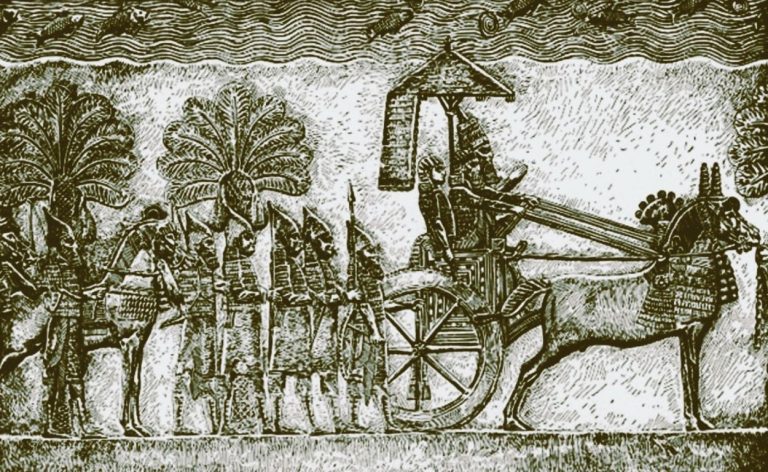
The Jezreelite movement’s rapid collapse in Victorian England reveals how charismatic authority, once undermined by hypocrisy and crisis, cannot sustain a religious community.

By Matthew A. McIntosh
Public Historian
Brewminate
Introduction: Charisma Without Continuity
The religious landscape of Victorian England was marked by both institutional stability and remarkable volatility. Alongside the established authority of the Church of England, a wide range of dissenting sects, prophetic movements, and millenarian communities emerged, each offering alternative interpretations of scripture and salvation. These groups often coalesced around charismatic leaders who claimed special insight into divine truth, drawing followers through a combination of apocalyptic urgency, moral rigor, and personal authority. Yet the same qualities that enabled rapid growth also introduced structural fragility, particularly when leadership rested on individual charisma rather than durable institutional forms. The history of such movements reveals a recurring pattern in which initial cohesion gives way to instability once that central authority is disrupted.
The Jezreelites, formally known as the New and Latter House of Israel, exemplify this dynamic with unusual clarity. Founded by James Roland White, who adopted the prophetic name James Jershom Jezreel, the movement developed a distinct identity grounded in biblical interpretation and eschatological expectation. Its followers believed themselves to be among the 144,000 referenced in the Book of Revelation, a conviction that provided both a sense of exclusivity and a powerful framework for collective purpose. Through publications such as The Flying Roll, the movement maintained doctrinal cohesion and extended its reach, combining religious teaching with a tightly controlled system of communication. Under White’s leadership, the sect achieved a level of organization and momentum that suggested the possibility of long-term survival.
This apparent stability proved to be contingent upon the continued presence of its founder. Following White’s death in 1885, leadership passed to his wife, Clarissa Rogers, who assumed the title “Queen Esther Jezreel.” Her succession marked a significant shift in the basis of authority within the movement, from prophetic legitimacy rooted in scriptural interpretation to a more personal and performative form of leadership. While she inherited the symbolic framework established by her husband, the transition exposed the absence of a clearly defined mechanism for maintaining continuity. In movements structured around a single charismatic figure, such transitions are inherently precarious, as the legitimacy of the successor depends not only on formal designation but on the continued confidence of the community.
The rapid decline of the Jezreelite movement in the late 1880s was the result of this structural weakness, compounded by contradictions in leadership and the absence of institutional resilience. The combination of charismatic instability, perceived hypocrisy, and external pressures created conditions in which the movement could not sustain itself beyond the lifespan of its central proponents. The case of the Jezreelites thus provides a focused example of a broader historical pattern, illustrating how religious movements that fail to translate personal authority into durable structures remain vulnerable to sudden collapse.
Origins of the Jezreelites: Prophecy, Print, and Millenarian Expectation

The emergence of the Jezreelite movement in the latter half of the nineteenth century must be understood within the broader context of Victorian religious ferment. This was a period in which traditional ecclesiastical authority coexisted uneasily with a proliferation of dissenting groups, many of which drew upon apocalyptic interpretations of scripture to articulate their identity. Industrialization, urbanization, and social dislocation created conditions in which alternative religious visions could flourish, particularly those that promised certainty in the face of rapid change. Millenarian expectation, rooted in the belief that history was approaching a divinely ordained climax, provided a powerful framework through which individuals could interpret both personal and collective experience. The Jezreelites found fertile ground for their message.
At the center of the movement stood White, who assumed the prophetic identity of Jezreel. His authority derived not only from his personal charisma but from his claim to interpret biblical prophecy in a way that revealed hidden truths about the end times. Drawing heavily on the Book of Revelation, White presented his followers as members of the elect 144,000, a group destined for salvation and transformation. This claim created a strong sense of exclusivity and purpose, distinguishing the Jezreelites from other religious communities and reinforcing internal cohesion. The identification with a numerically defined group also introduced a structural boundary, emphasizing belonging while implicitly limiting expansion beyond those who could be incorporated into this eschatological framework.
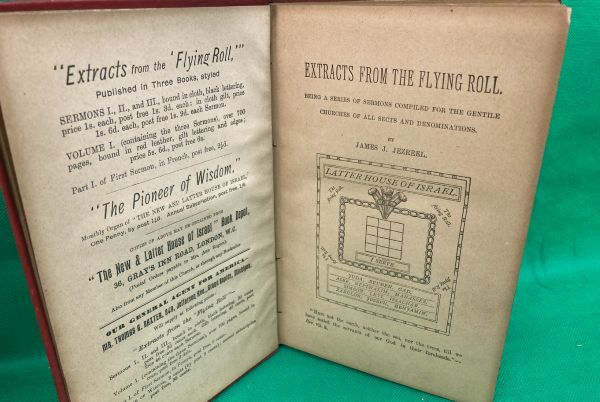
The doctrinal foundation of the movement was closely tied to its use of print culture, particularly through the publication known as The Flying Roll. This text functioned as both a theological guide and a means of communication, allowing White to disseminate his interpretations and maintain control over the narrative of the movement. In an era when print media was becoming increasingly accessible, such publications played a crucial role in shaping religious identity. They enabled leaders to reach dispersed audiences, standardize belief, and reinforce authority across geographical distances. For the Jezreelites, The Flying Roll was more than a publication; it was a central instrument of cohesion, linking individual adherents into a shared interpretive community. It provided not only doctrinal clarity but also a sense of immediacy, as followers encountered the teachings in a tangible, repeatable form that could be read privately or discussed collectively. The circulation of printed material allowed the movement to extend beyond the limitations of physical gatherings, creating a dispersed yet unified body of believers connected through shared texts. This reliance on print reinforced the authority of the founder, as all interpretation flowed from a centralized source, limiting the emergence of competing voices or alternative readings within the movement.
The integration of prophecy and print gave the movement a distinctive structure, combining traditional forms of religious authority with modern means of dissemination. White’s teachings were not confined to oral transmission or localized gatherings, but were embedded in texts that could be circulated, read, and reinterpreted by followers. This allowed the movement to extend beyond immediate personal contact, creating a network of believers connected through shared reading practices. The centralization of doctrinal production ensured that authority remained concentrated in the founder. The balance between dissemination and control was a defining feature of the movement’s early development, enabling expansion while maintaining coherence.
Despite these strengths, the reliance on a single interpretive authority introduced inherent limitations. The movement’s doctrinal system was closely tied to White’s personal readings of scripture, leaving little room for independent development or adaptation. While this concentration of authority contributed to initial unity, it also created a dependency that would later prove destabilizing. In the absence of mechanisms for doctrinal evolution or leadership succession, the coherence achieved through centralized control was fragile. The very structures that allowed the movement to grow quickly also constrained its ability to endure beyond the lifetime of its founder.
In its formative phase, the Jezreelite movement thus combined elements of traditional millenarian belief with the opportunities presented by modern communication. It offered a compelling vision of divine election, reinforced through print and embodied in a charismatic leader. Yet beneath this apparent cohesion lay structural vulnerabilities, rooted in the concentration of authority and the absence of institutional depth. These tensions would remain latent during the period of growth, only becoming fully apparent when the conditions that sustained them began to change.
The Succession Crisis: From Prophet to Queen

The death of Jezreel in 1885 marked a decisive turning point for the New and Latter House of Israel, exposing the structural fragility that had been masked by his charismatic leadership. During his lifetime, authority within the movement had been tightly centralized, grounded in his role as prophetic interpreter and spiritual guide. His teachings, disseminated through The Flying Roll, provided doctrinal clarity and organizational cohesion, allowing the sect to function as a unified body. Yet this coherence depended heavily on his personal presence, and his death created an immediate vacuum that the movement was ill-prepared to fill. The absence of a clearly articulated succession plan revealed the extent to which authority had been personalized rather than institutionalized. There were no established councils, governing bodies, or codified procedures capable of ensuring continuity in leadership or interpretation, leaving the movement exposed at precisely the moment when stability was most needed. The loss of the founder did not simply remove a leader but destabilized the entire structure upon which the movement depended, transforming a moment of transition into a moment of crisis.
Into this vacuum stepped Rogers, who assumed leadership under the title “Queen Esther Jezreel.” Her claim to authority rested partly on her relationship to the founder, but it also required a reconfiguration of the movement’s symbolic framework. Whereas White’s authority had been rooted in his identity as a prophetic figure, Rogers’s leadership introduced a more explicitly performative dimension, drawing on biblical typology associated with queenship and divine favor. This shift did not simply continue the existing structure of authority but transformed it, altering the basis on which legitimacy was asserted. It created both opportunities and tensions, as followers were asked to reinterpret their understanding of leadership in light of a new and less clearly defined model.
The transition also raised questions about the nature of continuity within the movement. In religious traditions where authority is institutionalized, succession can be managed through established procedures that maintain doctrinal and organizational stability. In the case of the Jezreelites, no such mechanisms were firmly in place. Rogers inherited a symbolic system but not a stable framework for governing it, leaving her to navigate the challenges of leadership without the support of durable structures. This situation required her to rely heavily on personal charisma and visible displays of authority, which could command loyalty in the short term but lacked the consistency necessary for long-term cohesion. The shift from prophet to queen thus introduced a form of authority that was inherently more contingent and potentially more vulnerable to challenge.
Compounding these difficulties were the broader social and cultural dynamics of Victorian England, where gender played a significant role in shaping perceptions of authority. While female religious leaders were not unprecedented, they often faced heightened scrutiny and skepticism, particularly when their claims to leadership departed from established norms. Rogers’s adoption of a royal and quasi-sacred identity placed her in a position that was both highly visible and potentially contentious, amplifying the risks associated with her leadership. Her authority had to be continually asserted and defended, not only within the movement but in the wider public sphere, where unconventional religious figures were often subject to criticism and suspicion.
The succession crisis that followed White’s death thus reflects a broader pattern in movements dependent on charismatic authority. Without mechanisms to translate personal leadership into institutional continuity, such movements are vulnerable at the moment of transition, when the loss of the founder exposes underlying weaknesses. In the case of the Jezreelites, the shift from prophetic to personal authority did not resolve this vulnerability but intensified it, creating conditions in which cohesion could not be sustained. The stage was thereby set for the further destabilization of the movement, as internal tensions and external pressures converged in the years that followed.
Leadership and Hypocrisy: Ascetic Demands versus Personal Luxury
The consolidation of authority under Rogers introduced a critical tension within the Jezreelite movement, one that would undermine its internal cohesion. Religious movements grounded in ascetic discipline often depend on the visible alignment between doctrine and leadership behavior, as followers look to their leaders not only for instruction but for moral example. In the case of the New and Latter House of Israel, this alignment began to fracture as the demands placed upon adherents contrasted sharply with the lifestyle adopted by their leader. What had once been a tightly controlled and morally coherent system under Jezreel increasingly appeared inconsistent, raising questions about the legitimacy of authority itself.
Central to this tension were the strict economic and dietary regulations imposed on the community. Followers were expected to adhere to a highly restricted diet, often centered on simple, inexpensive foods such as bread and potatoes, justified as both a spiritual discipline and a practical measure to conserve resources. These sacrifices were framed as necessary contributions to the collective mission of the movement, particularly its ambitious building projects. The discipline required to maintain such a lifestyle reinforced group identity and commitment, creating a shared sense of purpose rooted in self-denial. Yet this same framework also heightened sensitivity to perceived inequalities, as the legitimacy of sacrifice depended on its equitable distribution. When deprivation is institutionalized as a virtue, any deviation by those in positions of authority becomes especially visible and difficult to justify, turning private discomfort into collective scrutiny. The very mechanisms that initially strengthened cohesion also laid the groundwork for dissatisfaction once inconsistencies emerged.
It was precisely at this point that Rogers’s leadership began to generate disillusionment. While adherents were encouraged to live austerely, reports circulated that she herself traveled in relative luxury, making use of a coach and pair and presenting herself in expensive clothing. Such displays were not merely personal choices but public performances that carried symbolic weight within the movement. In a religious community that emphasized humility and restraint, visible markers of wealth could be interpreted as signs of inconsistency or even exploitation. The contrast between the expectations placed upon followers and the behavior of their leader created a disjunction that was difficult to reconcile within the existing doctrinal framework.
This perceived hypocrisy had broader implications for the structure of authority within the sect. Charismatic leadership depends heavily on trust, which in turn is sustained by the belief that the leader embodies the principles they espouse. When this belief is undermined, the authority it supports begins to erode. In the case of the Jezreelites, the gap between doctrine and practice weakened the moral foundation upon which Rogers’s leadership rested, making it more susceptible to challenge. The issue was not simply one of personal conduct, but of the integrity of the system, as followers were forced to confront the possibility that the sacrifices they were making were not reciprocated at the highest level. This erosion of trust could transform private doubt into collective skepticism, creating an environment in which loyalty was no longer assumed but continually tested against perceived inconsistencies.
The situation was further complicated by the financial demands associated with the movement’s ongoing projects, particularly the construction of Jezreel’s Tower. Contributions from followers were essential to sustaining these efforts, and the perception that resources were being unevenly distributed intensified existing tensions. Even isolated instances of perceived excess could take on disproportionate significance, serving as focal points for broader dissatisfaction. The cumulative effect of these dynamics was to erode confidence in leadership, not through a single decisive rupture, but through a gradual process of disillusionment that weakened the bonds holding the community together.
The contrast between ascetic demands and personal luxury illustrates a fundamental principle in the study of religious movements: that authority must be consistently enacted to remain credible. In the absence of such consistency, even well-established systems of belief can become unstable, as followers reassess their commitment in light of perceived contradictions. For the Jezreelites, the erosion of moral authority under Rogers’s leadership did not immediately dissolve the movement, but it created conditions in which loyalty was increasingly fragile. This fragility would prove decisive when combined with the additional crises that followed, contributing to the rapid decline of the sect in the late 1880s. The breakdown of alignment between expectation and example did not merely weaken the movement’s leadership, but struck at the core of its identity, undermining the shared sense of purpose that had sustained it during its period of growth.
Jezreel’s Tower: Monumental Ambition and Structural Overreach
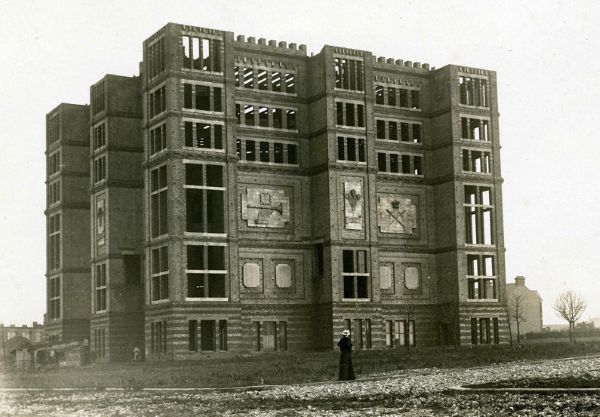
The construction of Jezreel’s Tower in Gillingham stands as the most visible and ambitious expression of the movement’s aspirations, embodying both its confidence and its underlying fragility. Conceived as a grand headquarters for the New and Latter House of Israel, the structure was intended to serve not only as a physical gathering place but as a symbolic center of divine purpose. Its scale and design reflected a vision of permanence and authority, projecting the movement’s identity into the built environment in a way that few sectarian groups attempted. The tower was more than a building; it was a material declaration of the group’s belief in its own enduring significance.
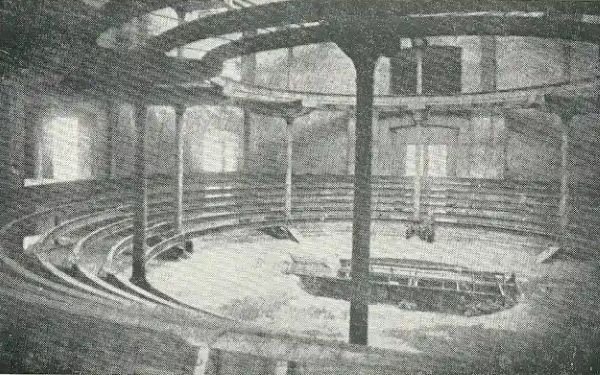
Architecturally, the project was striking in both concept and execution. Plans for a large circular assembly room suggested an emphasis on collective gathering and shared experience, while the inclusion of steam-powered printing facilities demonstrated the integration of modern technology into the movement’s operations. This combination of religious symbolism and industrial capability highlights the dual character of the Jezreelites as both a spiritual community and an organized enterprise. The tower was designed to centralize the movement’s activities, bringing together worship, communication, and administration within a single, monumental space. Such centralization offered potential advantages in terms of coordination and identity, but it also concentrated risk, tying the movement’s fortunes to the success of a single, highly visible project.
The financial demands of constructing Jezreel’s Tower placed considerable strain on the community, intensifying the expectations placed upon its members. Contributions were framed as acts of faith and commitment, reinforcing the idea that the project was not merely practical but divinely mandated. Followers were required to make sacrifices that extended beyond ordinary religious participation, redirecting personal resources toward a collective goal that promised future fulfillment. While this dynamic could strengthen cohesion in the short term, it also heightened the consequences of failure, as the investment of time, money, and belief became increasingly difficult to sustain without visible progress or clear returns.
The symbolic weight of the tower further amplified its significance within the movement. As a physical manifestation of divine purpose, it embodied the promise of continuity and fulfillment that underpinned the Jezreelite vision. Its sheer scale and visibility reinforced the impression that the movement was not temporary but destined for lasting importance, offering followers a tangible representation of their collective identity and future. Yet this symbolism also created a vulnerability, as any disruption to the project could be interpreted as a sign of instability or divine disfavor. When construction slowed and ceased following the death of Rogers, the incomplete structure became a visible marker of the movement’s decline. The tower, once envisioned as a center of unity and permanence, instead stood as a stark reminder of interruption and uncertainty. Its unfinished walls and unrealized purpose exposed the gap between ambition and capacity, transforming what had been a source of inspiration into an emblem of failure. In a movement so deeply invested in symbolic expression, the inability to complete its most significant project carried profound implications, reinforcing doubts about leadership, purpose, and the future itself.
Jezreel’s Tower illustrates the risks inherent in monumental ambition when it is not supported by resilient structures of leadership and organization. By concentrating resources, expectations, and identity into a single project, the movement amplified both its potential success and its potential failure. The tower’s incompletion did not merely represent a logistical setback, but a symbolic rupture that reinforced emerging doubts about the movement’s viability. As confidence waned and cohesion weakened, the very monument that was meant to secure the future of the Jezreelites instead highlighted the limits of their vision, marking the transition from expansion to decline.
Crisis and Collapse: Death, Lawsuit, and Disillusionment
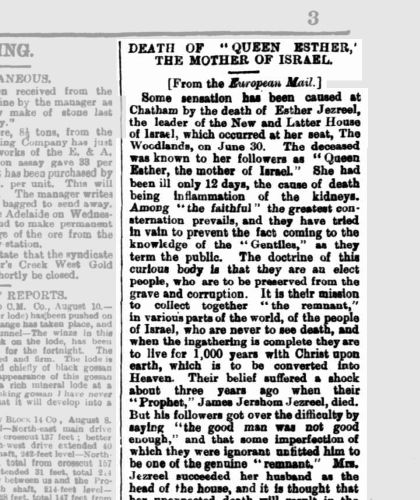
The final phase of the Jezreelite movement was marked by a convergence of crises that exposed its structural weaknesses and accelerated its decline. While earlier tensions had eroded confidence in leadership, the sudden death of Rogers in 1888 transformed instability into collapse. At only twenty-eight years old, her death from peritonitis removed the central figure upon whom the movement had come to depend, leaving no clear successor and no institutional framework capable of absorbing the shock. What had previously been a fragile but functioning system of authority now faced a vacuum that could not be filled, revealing the extent to which the movement’s cohesion had been tied to a single individual.
The immediate consequences of Rogers’s death were both organizational and symbolic. Without a recognized leader, the structures that had governed daily life and collective purpose began to disintegrate. The authority that had been maintained through personal charisma could not be transferred or replicated, and the absence of clear lines of succession created uncertainty among followers. In religious movements where leadership embodies both doctrinal interpretation and communal identity, such a loss can destabilize not only governance but belief itself. For the Jezreelites, the death of their “Queen Esther” was not simply a personal tragedy, but a rupture in the narrative that had sustained their sense of purpose. The symbolic framework that had defined their identity, grounded in prophetic expectation and divine election, was suddenly left without a living representative capable of affirming or reinterpreting it. Uncertainty spread rapidly, as followers were forced to confront the possibility that the movement’s claims to divine guidance were no longer sustainable in the absence of its primary figure.
External pressures intensified the internal crisis. Legal action brought against the movement by disillusioned families drew public attention to its practices, particularly the financial sacrifices demanded of its members. Allegations that followers had relinquished substantial resources to support the sect’s activities cast doubt on the legitimacy of its leadership and raised broader questions about exploitation and accountability. In the context of Victorian society, where legal and moral scrutiny of unconventional religious groups was increasing, such challenges carried significant weight. The lawsuit did not merely impose practical difficulties but contributed to a shift in perception, both within and outside the movement. Public exposure of internal practices transformed private grievances into widely known controversies, amplifying their impact and accelerating the erosion of trust. For members already uncertain about leadership and direction, the legal proceedings reinforced doubts and provided a tangible basis for disillusionment, making withdrawal from the movement a more conceivable and justifiable response.
The combined effect of leadership loss and legal scrutiny produced a rapid decline in membership. Reports indicate that the number of adherents fell dramatically, from over 1,400 at the movement’s height to approximately 160 in the aftermath of these events. This contraction reflects not only the departure of disillusioned members but also the failure to attract new followers in a climate of uncertainty and negative publicity. As confidence eroded, the collective identity that had once bound the community together weakened, making it increasingly difficult to sustain participation. The movement’s earlier emphasis on exclusivity and commitment, which had reinforced cohesion, now contributed to its isolation.
The cessation of construction on Jezreel’s Tower further symbolized the movement’s collapse. The project, which had once embodied the group’s ambitions and aspirations, was abandoned almost immediately after Rogers’s death, leaving an unfinished structure as a visible testament to its decline. This abrupt halt reinforced the perception that the movement’s vision had been disrupted beyond recovery. In a community where material and symbolic investments were closely intertwined, the failure to complete the tower underscored the broader breakdown of purpose and direction. The physical landscape thus mirrored the internal disintegration of the sect, providing a tangible representation of its downfall. What had once served as a focal point for collective effort and expectation now stood as a reminder of unrealized promises, reinforcing the sense that the movement’s trajectory had been irrevocably altered. The abandonment of such a central project did not merely reflect collapse; it actively contributed to it by stripping the community of a shared goal that might otherwise have sustained cohesion during a period of crisis.
The collapse of the Jezreelite movement illustrates the cumulative impact of leadership failure, external challenge, and internal disillusionment. Each factor alone might have been survivable, but together they created conditions from which the movement could not recover. The rapidity of the decline underscores the fragility of systems built on charismatic authority without institutional support, where the loss of a central figure can trigger a cascade of failures. The end of the Jezreelites was not an isolated event but the predictable outcome of structural vulnerabilities that had been present from the outset, brought into sharp relief by crisis.
Victorian Context: Sectarian Volatility and Public Scrutiny
The rise and fall of the Jezreelite movement must be situated within the broader religious and cultural dynamics of Victorian England, a period characterized by both intense religiosity and growing skepticism. The nineteenth century witnessed an extraordinary proliferation of sectarian groups, many of which emerged in response to dissatisfaction with established institutions and the perceived inadequacies of traditional doctrine. This fostered experimentation, allowing charismatic leaders to articulate alternative visions of faith that resonated with individuals navigating rapid social and economic change. Yet this same openness also produced instability, as movements competed for attention and legitimacy in an increasingly crowded religious landscape.
The expansion of literacy and print culture played a decisive role in shaping this structure. Religious ideas could now be disseminated more widely and more rapidly than in previous generations, enabling movements such as the Jezreelites to reach audiences beyond their immediate geographic base. Publications like The Flying Roll were part of a broader ecosystem of pamphlets, tracts, and periodicals that circulated competing interpretations of scripture and prophecy. This proliferation of printed material democratized religious discourse to a significant degree, but it also intensified competition, as individuals were exposed to multiple, often conflicting, claims to authority. Maintaining coherence and credibility required not only compelling doctrine but sustained organizational effort. Print did not simply transmit ideas; it created a space in which authority had to be continually asserted and defended, as rival interpretations could be produced and circulated with increasing ease. For emerging sects, this meant that doctrinal clarity had to be paired with persuasive communication strategies, as the battle for adherents was as much about visibility and persuasion as it was about theological consistency.
The Victorian period was marked by increasing public scrutiny of unconventional religious movements. The growth of a literate middle class, combined with the expansion of the press, created new channels through which sects could be observed, reported on, and criticized. Newspapers and periodicals often portrayed such groups in sensational or skeptical terms, emphasizing elements that appeared eccentric, manipulative, or socially disruptive. This attention could amplify a movement’s visibility, but it also exposed it to reputational risks, particularly when internal tensions or controversies became public knowledge. For groups like the Jezreelites, whose practices already diverged from mainstream norms, such scrutiny could quickly erode credibility.
Legal frameworks in Victorian England further contributed to the vulnerability of sectarian movements. While religious freedom was broadly protected, the state maintained mechanisms for addressing issues related to fraud, coercion, and the management of property. When disputes arose, particularly those involving financial contributions or inheritance, they could bring movements into direct confrontation with legal authorities. Such interventions did not necessarily target religious belief itself, but they could have significant consequences for organizational stability. Legal proceedings often served as public forums in which the internal dynamics of sectarian groups were exposed and evaluated according to prevailing social norms. This process could amplify existing tensions, transforming private disagreements into matters of public record and inviting external judgment. For the Jezreelites, legal challenges amplified existing doubts and provided a formal context in which grievances could be articulated and validated, further undermining confidence in leadership and accelerating the process of decline.
The social composition of many sectarian groups also influenced their susceptibility to both internal and external pressures. Movements often drew members from segments of the population experiencing economic uncertainty or social marginalization, offering a sense of belonging and purpose that was otherwise difficult to obtain. While this could foster strong internal bonds, it also meant that members were particularly sensitive to changes in leadership or direction. When confidence in authority faltered, the cohesion of the group could unravel quickly, as the structures supporting collective identity proved less resilient than they initially appeared. The Jezreelite experience reflects this dynamic, illustrating how rapidly a movement could contract once its internal and external supports weakened.
In this broader context, the decline of the Jezreelites appears less as an isolated anomaly and more as part of a wider pattern of sectarian volatility in Victorian England. The combination of religious experimentation, expanding communication networks, public scrutiny, and legal oversight created an environment in which movements could rise quickly but also fall with equal speed. Success depended not only on the charisma of leaders or the appeal of doctrine, but on the ability to navigate a complex and often unforgiving social landscape. The failure to do so, as with the Jezreelites, underscores the importance of adaptability and institutional resilience in sustaining ongoing religious movements.
Comparative Analysis: Charismatic Failure in Religious Movements
The following video is a short coverage of Jezreel’s Tower from John Walter:
The collapse of the Jezreelite movement can be more fully understood when placed within a broader comparative framework of charismatic religious movements that have failed to achieve institutional continuity. Sociological analysis, particularly that of Max Weber, has emphasized the inherently unstable nature of charismatic authority, which depends on the personal qualities of a leader rather than on formalized structures. Such authority can generate intense loyalty and rapid growth, but it is also difficult to sustain beyond the lifetime of the individual who embodies it. The Jezreelites fit this pattern closely, demonstrating how movements rooted in personal charisma often struggle to transition into more stable organizational forms. Their rise was marked by cohesion and conviction, yet these qualities were inseparable from the authority of a single figure, making them difficult to preserve once that figure was removed. The movement’s trajectory reflects not an unusual deviation but a recognizable pattern in the historical development of sectarian groups, where initial strength contains within it the seeds of later instability.
Weber’s concept of the “routinization of charisma” provides a useful lens for examining this process. For a movement to endure, charismatic authority must be transformed into a system of rules, offices, or traditions that can operate independently of the founder. This transformation allows leadership to be transferred, doctrine to be preserved, and communal identity to be maintained. In the absence of such mechanisms, the death of a leader can precipitate crisis, as followers are left without a clear framework for continuity. The Jezreelite movement illustrates this failure vividly, as the transition from Jezreel to Rogers did not produce a stable institutional structure but instead introduced new uncertainties that weakened cohesion. Rather than stabilizing authority, the succession highlighted its fragility, exposing the lack of procedural continuity and the absence of institutional safeguards. The inability to routinize charisma meant that authority remained tied to personality rather than principle, leaving the movement vulnerable to disruption at precisely the moment when stability was most needed.
Comparative examples from the nineteenth and early twentieth centuries reinforce the broader applicability of this pattern. Numerous sectarian movements emerged during periods of social change, often centered on prophetic figures who claimed unique access to divine truth. While some succeeded in establishing enduring institutions, many others experienced rapid decline following leadership crises, internal divisions, or external pressures. These cases highlight the importance of organizational adaptability, as movements that remained dependent on a single authoritative figure were particularly vulnerable to disruption. The Jezreelites, with their centralized leadership and limited mechanisms for succession, exemplify this vulnerability within a distinctly Victorian context.
It is important to recognize that charismatic failure is not solely a matter of structural deficiency, but also of perception and legitimacy. Followers must not only accept a leader’s authority but continue to believe in its authenticity, even as circumstances change. When contradictions emerge between doctrine and behavior, or when leadership transitions appear uncertain or contested, this belief can erode rapidly. The absence of institutional safeguards magnifies the impact of disillusionment, as there are few alternative sources of stability to which adherents can turn. The Jezreelite experience demonstrates how quickly confidence can collapse when both structural and perceptual supports are weakened.
The comparative perspective underscores that the decline of the Jezreelites was not an isolated anomaly but part of a recurring historical pattern. Movements grounded in charismatic authority can achieve remarkable initial success, but their long-term survival depends on their ability to evolve beyond the conditions of their founding. Without the development of durable institutions, clear mechanisms of succession, and consistent legitimacy, they remain susceptible to rapid and often irreversible decline. The Jezreelites provide a case study in the limits of charisma as a foundation for religious continuity, illustrating the broader dynamics that shape the life cycle of sectarian movements. Their experience demonstrates that while charisma can inspire and mobilize, it cannot alone sustain, and without transformation into stable forms of authority, even the most compelling movements risk fading as quickly as they arise.
Conclusion: The Limits of Charismatic Authority
The rise and collapse of the Jezreelite movement illustrate with unusual clarity the structural limits of charisma as a foundation for religious continuity. Under Jezreel, the sect achieved coherence through a tightly controlled system of belief, communication, and authority, reinforced by millenarian expectation and a shared sense of divine election. Yet this apparent stability concealed a critical weakness, namely the absence of mechanisms capable of sustaining the movement beyond the life of its founder. When leadership passed to Rogers, the underlying fragility of this system became visible, as authority shifted from prophetic legitimacy to a more personal and contested form of leadership that lacked institutional grounding.
The subsequent erosion of trust under Rogers’s leadership further exposed the dependence of charismatic movements on perceived authenticity. The contrast between ascetic demands placed upon followers and the visible markers of luxury associated with their leader undermined the moral coherence that had sustained the community. Authority cannot rely solely on formal claims or inherited status, but must be continually reinforced through alignment between doctrine and behavior. Once this alignment breaks down, the credibility of leadership diminishes, and the cohesion of the movement becomes increasingly difficult to maintain. This process is rarely instantaneous; rather, it unfolds through the gradual accumulation of doubt, as individual members begin to question not only specific actions but the broader legitimacy of the system itself. For the Jezreelites, the perception of inconsistency between expectation and example transformed private uncertainty into collective disillusionment, weakening the bonds that had previously sustained commitment. The resulting loss of confidence was not merely a reaction to individual behavior but a reassessment of the entire framework of authority, leaving the movement without the moral foundation necessary for recovery.
The rapid collapse that followed Rogers’s death underscores the importance of institutional resilience in moments of crisis. Without established procedures for succession or distributed forms of authority, the movement was unable to absorb the loss of its central figure. External pressures, including legal challenges and public scrutiny, intensified this vulnerability, accelerating the decline of membership and the abandonment of collective projects such as Jezreel’s Tower. What remained was not a transformed or diminished version of the original movement, but its near-complete dissolution, highlighting the extent to which its existence had depended on conditions that could not be sustained.
In a broader historical perspective, the Jezreelites exemplify a recurring pattern in the life cycle of sectarian movements. Charisma can inspire, mobilize, and unify, but it cannot alone provide the continuity necessary for long-term survival. Movements that endure are those that successfully translate personal authority into stable structures, capable of maintaining identity and purpose across generations. The failure to achieve this transformation leaves even the most compelling movements vulnerable to sudden collapse, as demonstrated by the brief and turbulent history of the New and Latter House of Israel.
Bibliography
Affiliate disclosure: Amazon links on this site are paid links. As an Amazon Associate I earn from qualifying purchases.
- Barrow, Logie. Independent Spirits: Spiritualism and English Plebeians, 1850–1910. London: Routledge and Kegan Paul, 1986.
- Brake, Laurel, and Marysa Demoor, eds. Dictionary of Nineteenth-Century Journalism in Great Britain and Ireland. Ghent: Academia Press, 2009.
- Brown, Callum G. The Death of Christian Britain: Understanding Secularisation, 1800-2000. London: Routledge, 2001.
- “Death of ‘Queen Esther’, the Mother of Israel.” The South Australian Advertiser 08.13.1888.
- Hempton, David. Religion and Political Culture in Britain and Ireland: From the Glorious Revolution to the Decline of Empire. Cambridge: Cambridge University Press, 1996.
- Jones, Kelvin. The Case of Jezreel’s Tower: A Dr John Carter Mystery. London: Cunning Crime Books, 2014.
- Laqueur, Thomas W. Religion and Respectability: Sunday Schools and Working Class Culture, 1780–1850. New Haven: Yale University Press, 1976.
- Shaw, Jane. Octavia, Daughter of God: The Story of a Female Messiah and Her Followers. London: Jonathan Cape, 2011.
- Stark, Rodney, and William Sims Bainbridge. The Future of Religion: Secularization, Revival and Cult Formation. Berkeley: University of California Press, 1980.
- Sumpter, Caroline. The Victorian Press and the Fairy Tale. Basingstoke: Palgrave Macmillan, 2008.
- Thompson, E. P. The Making of the English Working Class. New York: Vintage Books, 1963.
- Weber, Max. Economy and Society: An Outline of Interpretive Sociology. Translated by Guenther Roth and Claus Wittich. Berkeley: University of California Press, 1978.
- White, James Jershom Jezreel. The Flying Roll. London: Published by the New and Latter House of Israel, 1870s–1880s.
- Wilson, Bryan R. Religious Sects: A Sociological Study. London: Weidenfeld and Nicolson, 1970.
Originally published by Brewminate, 04.28.2026, under the terms of a Creative Commons Attribution-NonCommercial-NoDerivatives 4.0 International license.
About the Author