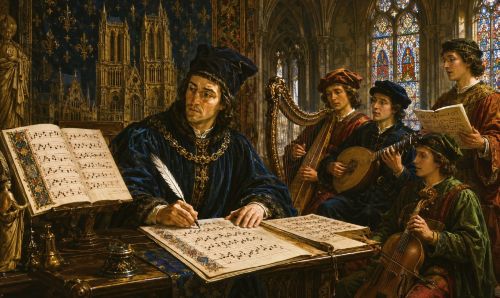
Guillaume de Machaut transformed medieval music by uniting poetry, polyphony, sacred sound, and manuscript preservation into one visible artistic identity.

By Matthew A. McIntosh
Public Historian
Brewminate
Introduction: The Medieval Composer Becomes Visible
Guillaume de Machaut stands at one of the great thresholds in the history of European music: the moment when the medieval composer begins to emerge not merely as an artisan of sound, but as a historically visible author. Earlier medieval musical culture was hardly anonymous in any absolute sense. Theorists wrote treatises, clerics copied chant, poets composed lyrics, cathedral schools cultivated polyphony, and patrons preserved the prestige of song within aristocratic households. Yet much of that world reached later generations through institutions, genres, and manuscripts more than through self-consciously organized artistic careers. Machaut is different. Born around 1300 and active through much of the fourteenth century, he left behind an unusually large and coherent body of poetry and music, preserved with a degree of authorial definition that makes him one of the first European composers whose creative identity can be studied across an extensive corpus.
That visibility was not accidental. Machaut belonged to a world in which writing, memory, and performance were being reorganized by clerical administration, courtly patronage, and manuscript compilation. He was a secretary, a cleric, a poet, and a musician, and those roles did not sit apart from one another like modern professional categories. They formed the conditions of his art. The same culture that trained him to serve princes and negotiate documentary authority also enabled him to imagine poetry and music as preservable works attached to a name, a career, and a crafted literary self. His clerical status gave him access to institutions where writing carried legal, liturgical, and commemorative force; his service to noble patrons placed him inside the aristocratic culture of reputation, gift exchange, emotional performance, and political memory; and his participation in manuscript culture allowed songs and poems that might otherwise have remained tied to occasion and performance to become arranged, copied, collected, and transmitted as a recognizable corpus. This matters because Machaut’s art developed at the crossing point between sound and document. He wrote for voices, but he also wrote for books. He composed within living traditions of performance, yet he also helped convert those traditions into durable objects of reading, ownership, and remembrance. His importance cannot be reduced to a single technical achievement, even one as monumental as the Messe de Nostre Dame. Machaut matters because he made composition legible as authorship, and because his works allow modern readers and listeners to see how medieval music moved between cathedral, court, book, and voice.
The revolution associated with Machaut was not a revolution of rupture. He inherited powerful traditions: Gregorian chant, the polyphony of the Notre Dame school, the thirteenth-century motet, troubadour and trouvère lyric, courtly love poetry, and the intellectual refinements of the French Ars Nova. His originality lay in synthesis, intensification, and preservation. In his motets, he explored the architectural possibilities of rhythm and text. In his ballades, rondeaux, and virelais, he gave courtly lyric a disciplined musical elegance. In the Messe de Nostre Dame, he helped establish the possibility of a complete polyphonic Mass Ordinary associated with a single composer. In works such as Le Voir Dit, he turned love, aging, truth, memory, and textual arrangement into problems of authorship itself. The medieval inheritance did not disappear in Machaut; it became newly organized around the figure of the poet-composer.
Machaut’s deepest historical significance lies in that convergence of music, poetry, manuscript, and self-conscious artistic identity. He did not invent medieval polyphony, courtly song, or literary self-fashioning, but he brought them into a rare and durable alignment. His career shows how fourteenth-century music could become technically complex, emotionally refined, sacredly ambitious, and authorially preserved at once. To follow Machaut chronologically, from Reims and aristocratic service through the Ars Nova, the formes fixes, the Mass, the late narrative poems, and the manuscript tradition, is to watch medieval music become something more than performance in time. It becomes an archive of a self.
Reims, Clerical Formation, and the World That Made Machaut
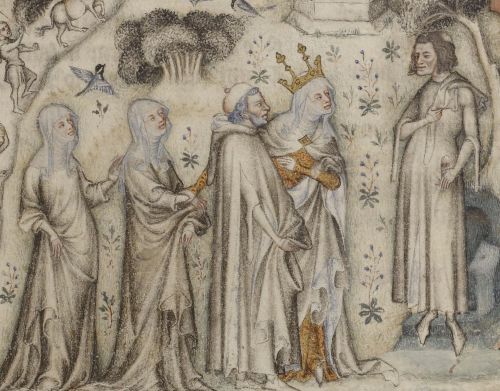
Machaut’s life begins in uncertainty, but the uncertainty itself is revealing. He was probably born around 1300 in the region of Reims, perhaps in or near a place associated with the name Machaut, but the surviving evidence does not allow a confident reconstruction of his family background, childhood, or earliest training. That absence is typical of medieval biography, especially for figures who became visible only after entering clerical, courtly, or institutional service. What matters historically is not that Machaut appears to us fully formed from the silence of the archives, but that he emerged from a region where ecclesiastical culture, royal ceremony, literacy, and aristocratic power intersected with unusual intensity. Reims was not merely a city near which a future composer happened to be born. It was one of the symbolic centers of the French kingdom, the metropolitan church of Notre-Dame de Reims standing at the center of coronation ritual, cathedral administration, clerical education, and sacred memory. The city’s importance was not abstractly prestigious; it was embedded in the political theology of French kingship, where sacred anointing, dynastic legitimacy, episcopal authority, and public ritual converged. A young man formed near such a place would have absorbed a world in which music, ceremony, language, and power were never wholly separate. Reims offered a living lesson in how sound could authorize hierarchy, how written record could stabilize memory, and how sacred institutions could give artistic labor a framework larger than private expression.
That environment matters because Machaut’s later career cannot be understood apart from the habits of mind produced by clerical formation. A boy educated for church service did not simply learn piety in the abstract. He entered a culture of Latin literacy, liturgical order, textual copying, legal formulae, calendrical time, musical discipline, and institutional hierarchy. Even if the details of Machaut’s schooling remain uncertain, his mature works reveal someone thoroughly at home in a world where words carried authority, form carried meaning, and memory required structure. The same intellectual habits that governed chant, office, charter, sermon, and clerical correspondence also helped shape his later poetic and musical imagination. His art is full of order, repetition, variation, balance, and formal self-awareness. These were aesthetic principles, but they were also clerical ones. Medieval music, especially in its learned forms, did not grow from feeling alone; it grew from institutions that trained the mind to hear proportion, organize time, and preserve meaning across generations.
Reims also gave Machaut a model of sacred sound as public authority. Cathedral life was ceremonial, repetitive, and collective, but it was not artistically inert. The liturgy taught medieval musicians how sound could mark time, sanctify space, distinguish feast from ordinary day, and bind a community to its dead, its patrons, and its sacred obligations. To imagine Machaut only as a courtly love poet is to miss the cathedral beneath the chanson. Long before the Messe de Nostre Dame became a monument for modern listeners, the world that made such a work possible had already taught Machaut that music could belong to ritual, memory, and institution. Reims was a place where voice and architecture answered one another, where the cathedral’s stone grandeur found its acoustic counterpart in chant and polyphony, and where the sacred calendar gave musical time a theological weight.
Machaut’s formation was not confined to the cloister or choir. Fourteenth-century clerics often moved between church office and secular administration, and Machaut’s career would unfold within precisely that overlap. The educated cleric could serve as secretary, notary, diplomat, poet, messenger, financial agent, or literary ornament to princely households. This flexibility was not a contradiction in medieval life; it was one of its defining features. The same training that made a man useful to the church made him useful to courts. Machaut’s later service to John of Luxembourg, King of Bohemia, should be seen not as a departure from clerical culture but as an extension of it into aristocratic space. His ability to write, organize, remember, flatter, advise, and perform made him valuable in a world where power depended not only on arms and land, but also on documents, ceremonies, reputations, and stories. The fourteenth-century court needed literate specialists who could translate experience into durable forms: letters, petitions, diplomatic language, commemorative verse, moral reflection, and songs that circulated prestige as surely as coin or heraldry. Machaut’s clerical formation equipped him for precisely this kind of service, because it trained him to move between practical writing and symbolic expression. In him, the administrative and the artistic were not enemies. They were neighboring disciplines, both concerned with arrangement, authority, sequence, and remembrance.
The broader fourteenth century sharpened these conditions. Machaut lived through a Europe marked by dynastic war, papal displacement, plague, fiscal pressure, and shifting patterns of aristocratic patronage. The world around him was unstable, but instability often intensified the need for memory and representation. Courts needed poets to celebrate lineage, grief, loyalty, and desire. Churches needed clerics to maintain order, ritual, and commemoration. Patrons needed manuscripts, songs, prayers, and literary works that could project refinement and permanence against the violence of time. Machaut’s genius developed inside that pressure. He did not write from a settled world calmly preserving itself. He wrote from a century that knew loss, mobility, ambition, and fracture, and his works repeatedly turn those conditions into form: Fortune’s wheel, unstable love, aging bodies, fragile reputation, and the desire to make art survive what history destroys.
By the time Machaut appears clearly in the record as a cleric and servant of princes, the foundations of his achievement had already been laid. Reims gave him proximity to sacred authority and institutional memory. Clerical education gave him habits of textual precision, musical discipline, and formal design. Courtly service would later give him access to aristocratic audiences, patronage, travel, and the emotional language of noble culture. Manuscript production gave him the means to preserve a career rather than merely produce isolated works. The “world that made Machaut” was not a background to his art; it was part of the art’s machinery. His later visibility as a poet-composer began in these overlapping systems of church, court, document, and song.
Service to John of Luxembourg and the Courtly Education of a Poet-Composer
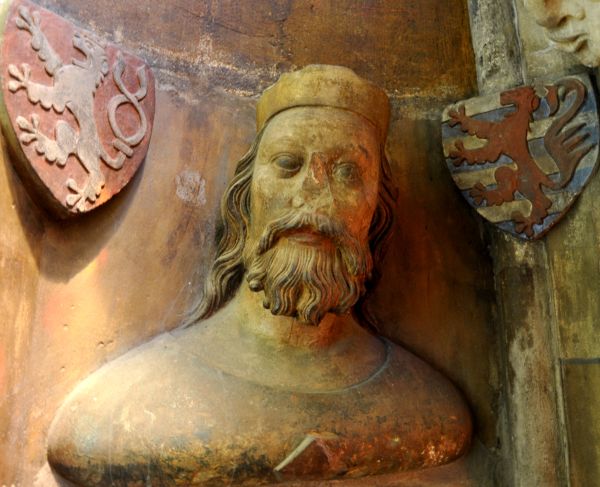
Machaut’s career becomes historically clearer when he enters the service of John of Luxembourg, King of Bohemia, one of the most celebrated and restless aristocratic figures of the fourteenth century. John was not a sedentary ruler confined to a single court. He moved through the political and military theaters of Europe, participated in dynastic conflicts, cultivated chivalric reputation, and embodied the mobile, martial, cosmopolitan culture of late medieval kingship. For Machaut, service to such a patron meant exposure to a world far larger than Reims. It placed him inside a network of courts, campaigns, embassies, ceremonies, and noble households where poetry and music were not ornamental afterthoughts, but tools of prestige, memory, and social performance. The young cleric-poet learned that aristocratic culture needed language as much as it needed banners. It required songs to refine desire, narratives to preserve reputation, and carefully shaped words to transform political life into remembered honor.
John of Luxembourg’s world also trained Machaut in the emotional codes of courtliness. Courtly love was never merely private romance dressed in elaborate language. It was a social grammar, a disciplined way of staging longing, fidelity, distance, service, humility, and self-command before an audience that understood the rules. Machaut’s later mastery of the ballade, rondeau, virelai, complaint, and debate poem depends on this world of stylized feeling. Love in his work is often sincere and artificial at once, deeply felt yet highly formalized, personal yet shaped by inherited conventions. That doubleness is part of its power. Courtly art did not ask whether emotion was “authentic” in the modern confessional sense. It asked whether emotion could be given honorable form. In the service of John, Machaut learned how lyric could turn desire into discipline, disappointment into rhetoric, and social aspiration into song.
This courtly education also helped make Machaut a poet-composer rather than simply a writer who happened to know music. In aristocratic settings, poetry and music circulated through performance, gift exchange, and manuscript culture together. A song could praise, console, persuade, commemorate, or entertain; it could travel with a court, mark an occasion, or attach itself to a patron’s memory. Machaut’s later works show a profound awareness of this mobility. His poems often imagine themselves as messages, offerings, testimonies, or carefully crafted objects moving between persons. His music intensifies that movement by giving lyric form an audible architecture. The refrain returns, the stanza turns, the voice waits, repeats, and varies. Composition was not only the making of sound. It was the management of presence and absence, the art of making a voice endure when the singer, lover, patron, or poet was not physically there. This helps explain why Machaut’s songs so often feel both intimate and ceremonial. They speak in the language of personal longing, but they also behave like social artifacts, designed to circulate, be remembered, be answered, and be placed within a larger economy of honor. The poem may seem to come from a wounded lover, but it also comes from a trained maker who understands audience, convention, repetition, and prestige. Courtly song taught Machaut that feeling became powerful when shaped, and that art could give emotional experience a public life beyond the private moment that supposedly produced it.
John’s military and diplomatic life also introduced Machaut to the instability that would haunt much of his later writing. The fourteenth-century court was glamorous, but it was not secure. It moved through war, debt, illness, rumor, shifting alliances, and sudden death. John himself died at the Battle of Crécy in 1346, a moment that resonated across the chivalric imagination of Europe. For Machaut, such events were not distant political abstractions. They belonged to the world in which patronage, memory, and artistic obligation were formed. His poetry’s recurring concern with Fortune, loss, reversal, and reputation reflects more than literary convention. It reflects a world in which status could be brilliant and fragile at once. The court taught him splendor, but it also taught him contingency. That tension between beauty and instability would become one of the deep structures of his art.
Machaut’s service to John of Luxembourg marks more than a biographical episode. It was the apprenticeship through which clerical literacy entered aristocratic performance and became a mature poetic-musical identity. Reims had given him the disciplines of institution, liturgy, and written memory; John’s court gave him the living theater of noble emotion, mobility, patronage, and fame. The combination was decisive. Machaut learned to write for courts without becoming merely decorative, to use inherited conventions without being imprisoned by them, and to shape song as both social act and authored work. By the time he emerged as the dominant poet-composer of the French Ars Nova, he had already absorbed the two forces that would define his career: the cleric’s concern for preservation and the courtier’s concern for performance.
Ars Nova: The “New Art” and the Expansion of Musical Time
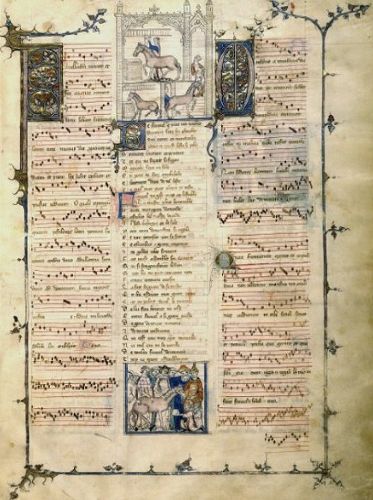
The world into which Machaut matured as a composer was transformed by the musical and notational developments known as the Ars Nova, the “New Art” of fourteenth-century France. The term is traditionally associated with Philippe de Vitry’s treatise Ars nova, though the phrase has come to describe a broader musical culture rather than a single document or school. Its importance lies in the way it expanded the possibilities of measured rhythm, polyphonic design, and written musical organization. Earlier medieval composers had already developed sophisticated polyphony, especially in the repertories associated with Notre Dame and the thirteenth-century motet, but the Ars Nova gave composers a more flexible and detailed rhythmic vocabulary. It allowed music to move with new kinds of proportion, subdivision, and structural planning. The “new art” was not simply a style. It was a new way of thinking about musical time.
That point matters because medieval music was never only a matter of melody. It was also a matter of order, and order required notation capable of carrying increasingly complex relationships among voices. Ars Nova notation made it possible to distinguish rhythmic values with greater precision and to move more freely between triple and duple divisions. This was a profound change. Medieval theorists had long associated triple division with perfection, partly because of its symbolic relation to the Trinity, but fourteenth-century notation made room for a more practical and flexible organization of rhythm. Duple time did not erase older symbolic frameworks, but it widened the field of compositional action. A composer could now shape rhythmic movement with subtler contrasts, more elaborate syncopations, and more carefully controlled relationships between voices.
Machaut’s historical importance depends on this notational revolution. He did not merely benefit from it passively; he became one of its supreme artists. In his hands, Ars Nova technique served expressive, architectural, and intellectual purposes at once. Rhythm could produce propulsion, suspense, balance, and difficulty. Voices could move together, diverge, overlap, or create patterned tensions that asked the listener to hear music as a constructed design rather than as a simple unfolding of chant or song. This does not mean that Machaut’s music was cold or mathematical in some reductive sense. Quite the opposite. Its complexity often gives emotional force to delay, longing, instability, and release. The technical language of the Ars Nova allowed feeling to become structure.
The motet was one of the great laboratories of this new musical thinking. In fourteenth-century practice, the motet could combine multiple voices, different texts, sacred references, courtly meanings, and intricate rhythmic plans. Its very density made it a privileged genre for composers who wanted to display learned skill. Machaut’s motets show him working inside this inherited form while extending its expressive and technical range. The listener may hear devotional language, political resonance, courtly longing, or abstract patterning, often at the same time. Such music assumes that meaning can be layered, not simply stated. It belongs to a culture in which trained audiences could recognize the artistry of combination: text against text, rhythm against rhythm, old material against new invention. The motet also suited a world in which authority itself was layered. A chant fragment, a Latin tenor, a French upper-voice text, a courtly allusion, and a rhythmic design could occupy the same musical space without collapsing into a single, easily paraphrased message. Machaut’s achievement was to make that density expressive rather than merely clever. The result is music that asks to be heard, read, decoded, and remembered, a kind of sounding manuscript in which voices become arguments moving simultaneously through time.
Isorhythm belongs at the center of this discussion, but it should be understood carefully. The term refers to the organization of music through recurring rhythmic patterns, often in relation to repeating or independently structured melodic material. Isorhythm allowed a composer to build large spans of music from ordered recurrence. It could give a piece hidden architecture, audible pattern, or both, depending on how clearly the design emerged in performance. For Machaut, this technique was not a mere puzzle. It was a way of making time intelligible. Repetition did not simply repeat. It measured, transformed, and intensified musical experience. In a century deeply concerned with Fortune, mutability, and the instability of earthly life, such patterned time carried more than technical interest. It offered an art of recurrence within change.
The Ars Nova also changed the status of the written musical object. When rhythm could be notated with greater detail, the page became more than a memory aid for performers. It became a site where musical thought could be planned, preserved, studied, and transmitted with unusual precision. This was crucial for Machaut, whose career depended so heavily on the relationship between performance and manuscript. His works were meant to sound, but they were also meant to endure as written compositions. The notational resources of the Ars Nova helped make that endurance possible. They allowed later singers, scribes, patrons, and readers to encounter his music not only as a vanishing event but as an authored design fixed in textual form. The page, in this world, did not replace the voice. It gave the voice a future. It also changed the composer’s relationship to his own work, because music that could be written in finer rhythmic detail could be gathered, compared, revised, transmitted, and recognized as belonging to a particular maker. For Machaut, whose surviving manuscripts present poetry and music within a carefully shaped authorial corpus, notation was part of reputation. It was a technology of memory. The more precisely musical time could be written, the more securely a composer’s intellectual labor could outlast the event of performance.
Machaut’s place in the Ars Nova is both technical and historical. He stands near the center of a musical culture that reimagined rhythm, notation, polyphony, and authorship together. The “new art” gave him tools, but he gave those tools one of their most enduring artistic identities. His music shows that medieval innovation did not require a rejection of sacred tradition, courtly convention, or inherited forms. It could emerge through refinement, intensification, and written control. By expanding musical time, Machaut and his Ars Nova contemporaries expanded what a composer could be: not only a maker of songs or a servant of ceremony, but an architect of time itself.
Motets and Isorhythm: Sacred, Political, and Intellectual Polyphony
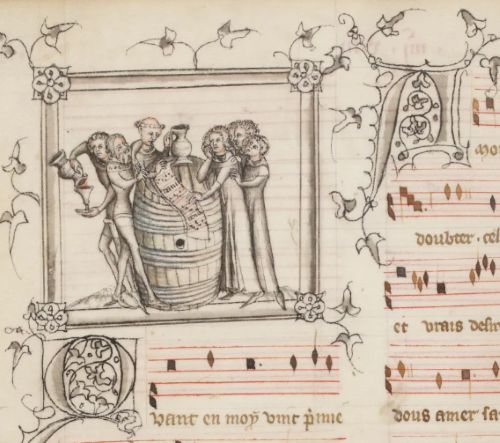
The motet was one of the most intellectually demanding musical genres Machaut inherited, and one of the forms through which he most clearly displayed the possibilities of the Ars Nova. Its origins lay in earlier medieval polyphony, especially in the practice of adding new texts and voices above preexisting musical material, but by the fourteenth century it had become something more intricate than a decorated chant-derived form. The motet could sustain multiple texts, languages, registers, and symbolic associations at once. It might sound devotional, courtly, political, moral, or learned, sometimes within the same piece. For Machaut, this density made the motet a privileged space for compositional intelligence. It allowed him to organize music not as a single lyrical utterance, but as a layered argument in sound.
The structure of the motet suited the culture that produced it. Medieval courts, cathedral chapters, universities, and clerical households all valued forms of expression that rewarded interpretation. A motet could be heard as music, read as poetry, studied as design, and decoded as allusion. Its lower voice, or tenor, might derive from chant or other preexisting material, anchoring the work in an inherited musical authority. Above it, upper voices could carry Latin or French texts that developed related, contrasting, or even competing meanings. The result was not confusion but cultivated simultaneity. The motet assumed that meaning could be plural and that learned listeners might take pleasure in the difficulty of holding several planes of signification together. This was a profoundly medieval way of thinking, because textual and musical meaning often worked through accumulation rather than simplification. A biblical phrase, liturgical fragment, courtly complaint, and rhythmic pattern could all participate in the same expressive field, each adding pressure to the others. The motet belonged to a culture of commentary as much as composition. It asked its audience not merely to receive sound, but to interpret relationships among words, voices, authorities, and formal procedures. In that sense, the motet was a miniature intellectual world, a place where musical pleasure and exegetical habit met.
Machaut’s motets belong fully to this world of layered meaning, but they also reveal his distinctive poetic and musical control. He did not use polyphony merely to display technical skill, although technical skill is everywhere apparent. He used it to dramatize tension: between sacred and secular desire, between discipline and instability, between inherited authority and new invention. A single motet might juxtapose a traditional tenor with upper voices whose texts speak of love, service, frustration, praise, or moral reflection. The voices do not simply decorate one another. They create a field of relation. Sometimes they seem to support one another; sometimes they pull against one another; sometimes the deepest meaning lies in the difficulty of deciding how they belong together.
Isorhythm gave Machaut a powerful means of organizing this complexity. At its simplest, isorhythm involves the recurrence of a rhythmic pattern, often called a talea, which may interact with a repeating melodic segment, often called a color. The two need not align neatly, and that misalignment could generate large-scale design across a composition. Modern scholars have rightly warned against using “isorhythm” too loosely, because not every patterned medieval motet works in precisely the same way. Still, in Machaut’s most architecturally ambitious works, recurring rhythmic structures help turn musical time into something measurable, divisible, and intellectually shaped. The listener may not consciously track every repetition, but the music’s sense of proportion depends on such hidden or partially audible recurrence. As Margaret Bent’s work on Machaut’s Motet 15 has shown, isorhythmic correspondence can involve subtle choices between strict formal alignment and musical sense, reminding us that medieval structure was not mechanical rigidity but compositional judgment.
This is why Machaut’s motets should not be treated as abstract puzzles detached from expression. Their difficulty is expressive. Isorhythm can make time feel constrained, suspended, ritualized, or inevitable. Repeated rhythmic structures create expectations, but those expectations may be delayed, displaced, or transformed. Such procedures suited a poetic world obsessed with Fortune, mutability, desire, and divine order. Machaut’s music often suggests that human experience unfolds within patterns that are real but not always immediately legible. Love appears chaotic, yet lyric form disciplines it. Political life appears unstable, yet ceremonial memory orders it. Sacred time seems eternal, yet liturgical performance unfolds moment by moment. The isorhythmic motet gathers these tensions into sound. It does not resolve them by making the world simple; it gives them a structure in which contradiction can be sustained. This is part of what makes Machaut’s polyphony so intellectually rich. Pattern becomes a way of thinking about disorder without denying it. Recurrence becomes a way of hearing change without surrendering to randomness. The motet’s formal discipline allows instability to be contemplated rather than merely endured, and that is why its technical procedures carry emotional and philosophical weight. Machaut’s art repeatedly returns to the same deep medieval question: how can the mutable world be shaped into meaningful form?
The political dimension of the Ars Nova motet is equally important. Medieval polyphony could praise rulers, comment on moral disorder, commemorate events, or participate in networks of patronage and prestige. Machaut’s own courtly experience made him alert to the public work that refined music could perform. A motet’s learned density could itself be a political statement, signaling the sophistication of a patron, institution, or occasion. It could encode hierarchy through musical placement, textual language, and the use of inherited chant. It could also create a space where praise, counsel, and ambiguity coexisted. In a culture where direct political speech often depended on rank, tact, and genre, the motet’s layered structure allowed meaning to move obliquely. It could honor power while also surrounding it with moral and theological resonance.
Sacred meaning remained central even when the motet entered courtly and political worlds. The use of chant-derived tenors, Latin texts, Marian references, and liturgical associations gave many motets a theological depth that should not be flattened into mere symbolism. Machaut’s sacred polyphony belongs to a culture in which music could participate in devotion by making order audible. To modern ears, the intellectual density of a motet may seem almost opposed to prayer, but medieval learned devotion often embraced complexity. Number, proportion, recurrence, textual layering, and musical hierarchy could all become ways of contemplating divine order. Machaut’s motets do not simply combine sacred and secular elements. They show how porous those categories could be in a fourteenth-century world where courtly service, clerical identity, and liturgical imagination continually overlapped.
The motets prepare the way for Machaut’s larger achievement in sacred polyphony, especially the Messe de Nostre Dame. They demonstrate his command of inherited material, his taste for large-scale rhythmic design, his ability to coordinate multiple textual and musical planes, and his conviction that composition could be an act of intellectual architecture. They also reveal the central paradox of his art: the more carefully ordered the music becomes, the more powerfully it can evoke uncertainty, longing, reverence, and instability. Machaut’s motets are not preliminary exercises on the road to greater works. They are among the clearest evidence that fourteenth-century music could think.
Courtly Song and the Formes Fixes: Ballade, Rondeau, and Virelai
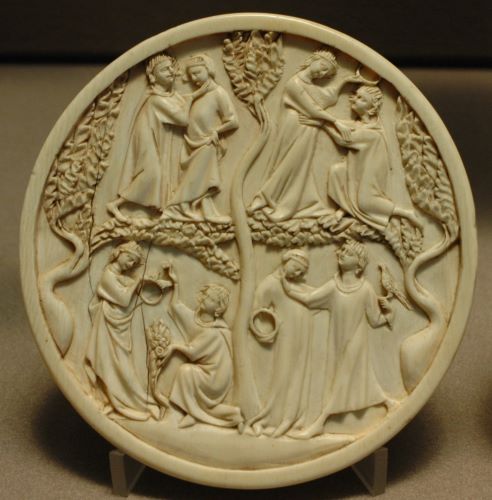
Machaut’s mastery of the motet reveals the intellectual density of his art, but his secular songs reveal something equally important: his ability to make courtly emotion formally durable. The formes fixes, especially the ballade, rondeau, and virelai, were not casual containers for lyric expression. They were disciplined poetic-musical structures in which repetition, return, refrain, and variation gave shape to longing. By the fourteenth century, these forms had become central to French courtly song, and Machaut gave them extraordinary refinement. His achievement was not merely that he wrote many examples of them, but that he made them into vehicles for a subtle art of desire, memory, absence, and self-presentation. Through them, courtly love became not just a theme, but a compositional method.
The ballade offered Machaut a form of ordered seriousness. Typically built around repeated stanzaic structures and a recurring refrain, it allowed the poet-composer to intensify an emotional or moral argument across successive turns. The refrain did not simply repeat a closing line; it gathered meaning as the song progressed. Each stanza could alter the listener’s understanding of the refrain, so that repetition became deepening rather than redundancy. This suited Machaut’s courtly imagination perfectly. His ballades often dwell on loyalty, suffering, hope, fear, service, and the paradoxes of love, but they do so through measured recurrence. The lover may be overwhelmed, but the form is not. The more unstable the emotional situation becomes, the more necessary the discipline of the ballade appears.
The rondeau worked differently, creating a tighter and more circular experience of return. Its pattern of refrain and internal repetition could make a brief lyric feel enclosed, almost jewel-like. In Machaut’s hands, the rondeau became a form of concentrated elegance, capable of expressing joy, praise, frustration, erotic distance, or refined melancholy within a compact design. The returning lines do more than decorate the poem. They create a sense of emotional capture, as if the speaker cannot escape the phrase that defines the experience. This is one reason Machaut’s rondeaux can feel so psychologically precise. Their circularity mirrors the repetitive motion of desire itself: the lover returns again and again to the same image, the same wound, the same hope, the same impossible address. Yet this circularity is not merely a sign of confinement. It also allows Machaut to refine emotional nuance within a narrow formal space, turning small verbal differences and musical repetitions into subtle changes of pressure. A phrase that seems simple at first can become more charged when it returns after intervening lines have altered its emotional field. The rondeau becomes a miniature theater of recollection. It does not move forward by narrative development so much as by deepening recurrence, by asking the listener to hear the same words differently because time, expectation, and musical placement have changed around them.
The virelai, with its own patterns of refrain and stanzaic movement, gave Machaut another way to balance motion and return. Often associated with dance-like energy and songful immediacy, the virelai could seem lighter than the ballade or less enclosed than the rondeau, but in Machaut’s work it is not artistically lesser. Its alternation of refrain and contrasting material creates a dynamic relationship between communal recognizability and individual expression. A refrain can feel almost public, something singable and memorable, while the intervening material allows the speaker to develop a more particular emotional condition. This made the virelai especially effective for turning courtly feeling into performance. It could carry delight, complaint, devotion, or playful artifice while still preserving the structural clarity that made the song memorable.
What unites these forms is their reliance on return. Courtly love, as Machaut inherited and reshaped it, was rarely linear. The lover did not simply move from desire to fulfillment, from suffering to resolution, or from absence to possession. Instead, love circled around obstacles: distance, secrecy, rank, refusal, jealousy, aging, rumor, and Fortune. The formes fixes gave that circularity a musical body. Their refrains do not merely mark formal boundaries; they enact the condition of the lover, who is bound to repeat, remember, and readdress what cannot be easily resolved. Form becomes psychology. The song’s structure teaches the listener what desire feels like when it is disciplined by courtly language but not cured by it.
Machaut’s secular songs also show how thoroughly poetry and music belonged together in his imagination. The written lyric and the musical setting were not separate stages of production, as if a completed poem were merely handed over to melody. In many of these songs, verbal structure and musical structure interpret one another. A refrain’s return may be sharpened by melodic repetition, a poetic turn may be intensified by rhythmic placement, and a line of courtly praise may gain force from the way voices converge or delay. This is why modern editions that present Machaut’s poetry and music together are so valuable: they recover the multimodal nature of works that were meant to be read, sung, seen, and remembered as integrated artifacts. The best scholarship on Machaut’s lyric corpus treats these works not as poems with optional music, or as melodies with attached texts, but as composite works in which formal design, sound, and verbal meaning mutually shape one another.
The formes fixes belong at the heart of Machaut’s revolution in medieval music. They show that innovation did not always require monumental scale or liturgical grandeur. Sometimes it appeared in the refinement of small forms, in the exact placement of a refrain, in the disciplined return of a melodic phrase, or in the transformation of inherited courtly language into something newly self-aware. Machaut’s ballades, rondeaux, and virelais helped define the sound-world of late medieval French lyric and influenced later generations of poets and composers. They reveal a composer who understood that repetition was not the enemy of invention. It was one of invention’s deepest resources.
The Poet and the Composer as One Artistic Identity
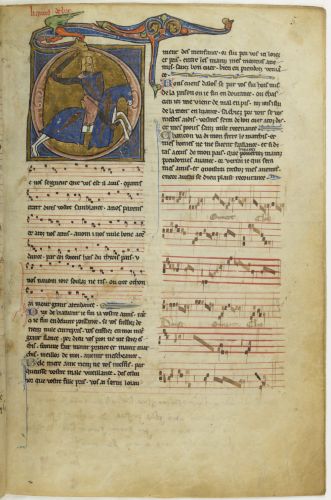
Machaut’s greatness depends on the fact that he cannot be divided neatly into “poet” and “composer” without distorting the nature of his art. Modern habits of classification often separate literary history from music history, placing poems in one archive and compositions in another. Machaut resists that division. He worked in a medieval tradition where lyric poetry and song were historically intertwined, but he also brought that tradition to a level of self-conscious authorship that makes his career exceptional. His words were not merely texts awaiting musical ornament, and his music was not merely a vehicle for preexisting poetry. The two belonged to a single artistic identity, one in which verbal form, musical structure, emotional posture, and authorial presence continually reinforced one another.
This unity had deep medieval roots. The troubadours and trouvères had already established powerful models of poet-composer identity, shaping courtly love through lyric forms that were meant to be sung, remembered, exchanged, and imitated. Machaut inherited that tradition, but he did not simply continue it unchanged. By the fourteenth century, the circumstances of lyric production had shifted. Manuscript culture had expanded, notation had become more precise, courtly audiences expected technical refinement, and authorship itself could be staged with increasing sophistication. Machaut stands at the meeting point of these developments. He preserved the older ideal of the singing poet while transforming it into something more archival, more formally ambitious, and more explicitly attached to a named literary-musical career. The earlier lyric traditions had often depended on performance communities, regional courts, and the circulation of songs whose authorship could be remembered, adapted, or blurred over time. Machaut’s world still valued that performative mobility, but it also increasingly valued compilation, ordering, and preservation. That difference matters. In his hands, the poet-composer became not only a voice heard in courtly exchange, but a figure whose works could be collected, arranged, and encountered as a coherent artistic legacy.
His works repeatedly show that music changes what a poem is. A refrain on the page may return as a line of text, but in song it returns as memory made audible. A stanza may seem balanced in poetic form, but musical setting can stretch its emotional force, delay its resolution, or sharpen its structural contrasts. The same phrase can feel submissive, hopeful, obsessive, or wounded depending on how it is placed in rhythm, melody, and voice. Machaut understood this profoundly. In his songs, the poem’s rhetoric and the music’s design are not parallel tracks; they are interdependent systems. Courtly longing becomes persuasive because it is sounded through form. The lover’s voice becomes memorable because it is organized musically as well as verbally.
This integration also shaped Machaut’s authorial self-presentation. He did not merely produce individual lyrics and compositions; he cultivated a recognizable artistic persona across genres. The lover, clerk, servant, narrator, moral observer, and aging poet recur in different forms, sometimes sincere, sometimes stylized, sometimes openly self-conscious. This does not mean that every speaker in Machaut’s poetry should be treated as a transparent autobiographical confession. Medieval lyric voice is never that simple. Yet the recurrence of these roles across his corpus allows readers and listeners to encounter Machaut as an authorial presence, someone whose works seem to speak to one another across time. His identity is made not by autobiography alone, but by patterned artistic recurrence. The figure “Machaut” is both historical person and crafted literary-musical effect. He becomes visible through repetition, through the return of certain emotional postures, through the careful management of voice, and through the way different genres refract the same authorial concerns. A complaint, a song, a narrative poem, and a sacred composition do not all speak in the same register, but together they create the impression of a mind arranging experience into durable form. This is why his corpus feels unusually personal without being naively confessional. It presents the self as something made through art.
The unity of poet and composer also explains why Machaut’s manuscript tradition matters so much. A scattered corpus of anonymous songs would not produce the same effect. Machaut’s works survive in manuscripts that help present him as a coherent author, arranging poetry, music, narrative, and lyric in ways that encourage readers to see the career as a body of work. This is one of the decisive differences between Machaut and many earlier medieval musicians. His compositions do not merely survive; they survive in relation to a larger self-construction. The book becomes the place where poet and composer meet, where song becomes text, where text remembers sound, and where the name Machaut gathers authority.
Machaut represents one of the culminating figures of the medieval poet-composer tradition. He was not the last person to write both poetry and music, nor should his achievement be reduced to a simple “last of his kind” formula. His significance is more precise than that. He stands at a point where lyric song, courtly authorship, clerical literacy, notational complexity, and manuscript preservation converged with unusual force. In him, poetry did not merely describe feeling, and music did not merely decorate it. Together they created an authored world. Machaut’s artistic identity was not divided between word and sound; it was built from their union.
The Messe de Nostre Dame: A Monument in Sacred Sound
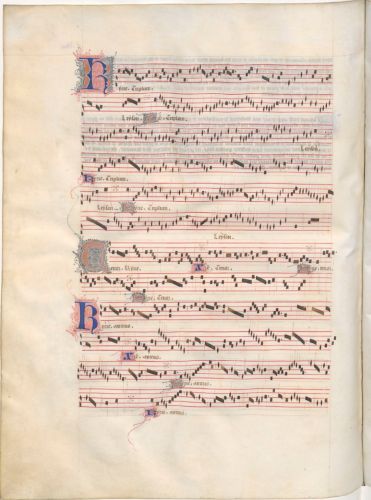
Machaut’s Messe de Nostre Dame occupies a singular place in the history of medieval music because it gathers sacred ritual, polyphonic ambition, authorial identity, and manuscript preservation into one extraordinary work. It did not create the Mass Ordinary, nor did it invent polyphonic sacred music. Individual polyphonic Mass movements existed before Machaut, and medieval singers had long known how to adorn liturgy with elaborate musical practice. Yet Machaut’s Mass has long been recognized as the earliest surviving complete polyphonic setting of the Mass Ordinary securely attributable to a single named composer. That distinction matters. The work stands at the threshold between liturgical function and compositional monument, between inherited ritual and the emergence of a sacred musical work that could be remembered as the achievement of one artistic mind.
The Mass Ordinary consists of the fixed liturgical texts used across the Mass: Kyrie, Gloria, Credo, Sanctus, Agnus Dei, and Ite missa est. In Machaut’s setting, these movements do not all operate in the same musical manner, and that variety is part of the work’s power. The Kyrie, Sanctus, Agnus Dei, and Ite missa est are often associated with the more intricate rhythmic and structural procedures of the Ars Nova, including isorhythmic organization, while the Gloria and Credo move in a more syllabic and declamatory style appropriate to their longer texts. This contrast shows Machaut’s practical intelligence as much as his technical mastery. He did not impose a single abstract system on the entire Ordinary. He shaped each movement according to text, liturgical weight, musical possibility, and rhetorical need.
The Messe de Nostre Dame also reveals the deep continuity between Machaut’s motet craft and his sacred ambition. The same composer who could layer texts, voices, rhythmic patterns, and symbolic associations in the motet now brought that architectural imagination to the central ritual of Christian worship. The result is not merely elaborate church music. It is sacred sound organized as large-scale thought. The Mass moves between supplication, praise, confession, sanctification, and dismissal, but its musical language gives those liturgical functions a heightened sense of design. Polyphony here does not simply beautify the rite. It enlarges it, allowing multiple voices to enact a sonic image of order, hierarchy, tension, and resolution. In Machaut’s hands, sacred music becomes both devotion and structure.
Its historical significance also depends on the problem of unity. Scholars have debated how far the Mass should be understood as a unified cycle in the later Renaissance sense, and caution is necessary. Machaut was not writing a fifteenth- or sixteenth-century cyclic Mass with all the expectations later attached to that genre. Even so, the Messe de Nostre Dame possesses a coherence that made it exceptional in its own time and decisive in later reception. Its attribution to Machaut, its preservation in manuscript, its complete setting of the Ordinary, and its association with Reims all encourage the listener and reader to encounter it as more than a collection of unrelated movements. The unity lies not only in musical cross-reference or stylistic consistency, but in authorship, liturgical purpose, and the historical fact of survival. It became a monument partly because it was made with extraordinary skill, and partly because it endured as a named work within Machaut’s larger corpus.
The Messe de Nostre Dame marks one of the great moments in the visibility of the medieval composer. It shows Machaut working at the highest level of sacred form, translating the resources of the Ars Nova into music for the Church’s central rite. Yet its importance is not only technical. It also changes the historical imagination of what medieval composition could be. In this Mass, the composer appears not simply as a craftsman serving liturgy, nor as a courtly maker of refined songs, but as an architect of sacred time. The work binds ritual, notation, memory, and authorship together so powerfully that it still defines modern understanding of fourteenth-century polyphony. If Machaut’s secular songs made courtly desire durable, the Messe de Nostre Dame made sacred sound monumental.
Reims, Memory, and the Function of the Mass

The Messe de Nostre Dame cannot be understood only as an abstract landmark in the history of composition. It also belongs to Reims, to cathedral memory, and to the institutional world in which Machaut spent so much of his mature life. By the late 1330s, Machaut held a canonry at Reims Cathedral, and that position placed him within one of the most symbolically charged ecclesiastical spaces in France. Reims was the coronation church of French kings, a center of Marian devotion, a place of liturgical regularity, and a community organized around prayer, office, commemoration, and sacred obligation. If the Mass later became famous as a work in music history, its original world was not the concert hall or the modern anthology. It was a cathedral culture in which sound served ritual, memory, and institutional identity.
That setting matters because medieval liturgy was never only immediate worship. It was also a discipline of remembrance. The Mass, the Divine Office, anniversary observances, obits, prayers for the dead, and foundations for commemorative performance all bound the living and the dead into a shared economy of obligation. A cathedral chapter did not merely maintain services; it maintained memory. Names, benefactions, burials, anniversaries, and devotions were folded into a ritual calendar that resisted disappearance. Machaut’s Mass should be placed within that world of sacred recurrence. Its musical sophistication does not remove it from liturgical function. Rather, it heightens the possibility that sound could participate in remembrance by giving ritual time a more elaborate and durable form.
The dedication implied by the title Messe de Nostre Dame also directs attention toward Marian devotion. Reims Cathedral was dedicated to Notre-Dame, and devotion to the Virgin Mary held an immense place in medieval religious life. Marian devotion offered tenderness, intercession, majesty, and protection, but it also carried institutional meaning in churches dedicated to her honor. A Mass associated with “Our Lady” could resonate on several levels at once: liturgical, local, devotional, and authorial. It belonged to the universal structure of the Latin Mass, but it also spoke through the particular sacred identity of Reims. Machaut’s title does not need to be forced into a narrow biographical reading to matter. It is enough to see that Marian dedication linked the work to a cathedral community whose worship, architecture, and memory were already oriented toward Notre-Dame. Marian devotion was not an isolated emotional preference but a structuring force in sacred space and ritual imagination. The Virgin’s presence was evoked through feast days, prayers, images, altars, processions, and liturgical texts, making her a central figure through whom the faithful approached mercy, intercession, and divine order. For Machaut, a cleric attached to Reims, a Mass associated with Notre-Dame could join personal artistry to the devotional identity of the church itself. It allowed the universal words of the Ordinary to pass through the local sacred personality of the cathedral, so that the work’s musical ambition became inseparable from place, patronage, and Marian memory.
Scholars have long debated the specific original function of the Messe de Nostre Dame, and this debate should be preserved rather than flattened. Was it intended for performance at Reims Cathedral? Was it connected to a Marian feast, a devotional observance, or a memorial foundation? Was it associated with Machaut’s own arrangements for his remembrance after death? The evidence does not permit a simple answer, and different scholars have emphasized different possibilities. Reims is important in a commemorative context, and scholars have approached the Mass with close attention to musical structure, performance, and the dangers of anachronistic assumptions. The most responsible conclusion is not to pretend certainty where the record remains partial. The Mass almost certainly belongs to Machaut’s Reims world, but the exact circumstances of its intended use remain historically complex.
This uncertainty is not a weakness in the interpretation; it is part of what makes the work so revealing. The Messe de Nostre Dame stands at the intersection of several medieval functions that modern categories too easily separate. It was sacred music, but not merely “church music” in a narrow functional sense. It was authored composition, but not a modern autonomous artwork detached from ritual. It was local in its likely Reims associations, but it drew on the universal texts of the Mass Ordinary. It was technically ambitious, but its ambition served a culture in which order, recurrence, and proportion could carry devotional meaning. To ask whether the Mass was liturgical, commemorative, artistic, or institutional is to ask a modern question of a medieval work whose power lies in being all of these at once.
Reims gives the Messe de Nostre Dame its historical gravity. The cathedral world taught Machaut that music could do more than adorn ceremony. It could preserve obligation, magnify devotion, and make sacred time audible as ordered memory. The Mass’s later reputation as a monument of medieval composition is justified, but that monumentality should not obscure its rootedness in place. It was not a free-floating masterpiece dropped into history by an isolated genius. It was the work of a cleric-composer formed by cathedral life, courtly service, manuscript culture, and the liturgical imagination of fourteenth-century France. In that sense, the Mass is not only a monument in sacred sound. It is Reims remembered through music.
Narrative Poems and the Self-Conscious Author
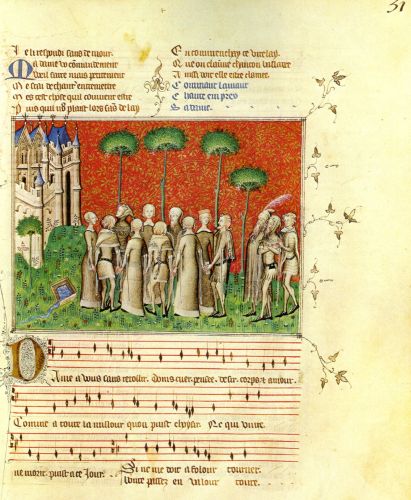
Machaut’s narrative poems reveal another dimension of his revolution: the transformation of the poet from a maker of lyrics into a staged, self-conscious author. His songs and motets show mastery over musical form, but the long narrative poems show how carefully he constructed literary identity across time. Works such as Le Remède de Fortune, Le Jugement dou Roy de Behaigne, Le Jugement dou Roy de Navarre, Le Dit dou Lyon, Le Dit de l’Alérion, and La Fonteinne Amoureuse do not simply tell stories of love, debate, consolation, or moral instruction. They create situations in which poetry itself becomes a problem. Who speaks? Who judges? Who remembers? What can a lover trust? What can a poet claim to know? Machaut repeatedly places the authorial figure inside the work, not as a transparent autobiographical subject, but as a literary presence whose voice, uncertainty, and craft become part of the meaning. This is crucial because his narrative poems expand the idea of authorship beyond technical skill or named attribution. They show the poet actively managing the conditions under which his work will be interpreted. The speaker is often implicated in the drama, exposed to correction, shaped by memory, and dependent on forms of judgment outside himself. In that sense, Machaut’s narrative art does not merely display a self; it stages the making of a self through literary procedure. The author becomes visible as someone who arranges experience, submits it to form, and then preserves that arrangement as part of a career.
This self-consciousness was rooted in the medieval dit, a flexible narrative form that allowed poets to combine first-person experience, allegory, lyric insertion, dream vision, moral argument, and courtly debate. Machaut used the dit not merely as a vessel for story, but as a way of exploring how experience becomes literature. In Le Remède de Fortune, for example, the speaker’s emotional education unfolds through love, despair, instruction, and lyric performance. The poem is not simply about a lover who suffers and learns; it is about the forms through which suffering is interpreted. Song, counsel, allegory, and memory all become instruments of transformation. Machaut’s narrative poetry extends the work of his lyric songs into a broader literary architecture. The isolated complaint becomes part of a sequence. The lover’s voice becomes part of a narrated education.
The judgment poems sharpen this interest in interpretation. In Le Jugement dou Roy de Behaigne and Le Jugement dou Roy de Navarre, Machaut stages disputes over love, loyalty, grief, and moral responsibility, placing competing claims before figures of authority. These works dramatize the courtly habit of turning emotional experience into debate. Love is not treated as a private feeling beyond judgment; it becomes something argued, weighed, compared, and rhetorically performed. This is essential to Machaut’s literary world. Courtly culture valued suffering, but it also valued the ability to give suffering proper form. The lover who cannot speak well about pain remains incomplete. Machaut’s narrative poems repeatedly ask what kind of language can make emotional experience intelligible without reducing its complexity.
These poems complicate the authority of the speaking “I.” Machaut’s narrators often seem close to the poet, but they should not be flattened into simple autobiography. The first-person voice is a crafted literary instrument, one that allows Machaut to appear vulnerable, learned, obedient, hesitant, ironic, and authoritative by turns. This is part of his extraordinary sophistication. He understood that authorship could be strengthened, not weakened, by staged uncertainty. A narrator who suffers, misreads, receives correction, remembers imperfectly, or submits to judgment can become more persuasive because he seems humanly situated rather than omniscient. Machaut’s authorial self is not a fixed portrait but a performance across genres. He appears through masks, roles, debates, and recurring situations, and those repeated acts of self-positioning help create the impression of a coherent career. The “I” in these poems is neither disposable convention nor simple confession. It is a site of literary experiment, where Machaut tests how far personal voice can be formalized without losing its persuasive intimacy. His narrators often occupy the unstable space between witness and invention, experience and artifice, sincerity and performance. That instability is not a flaw in the poems; it is one of their central achievements. It allows Machaut to make authorship itself dramatic, turning the act of speaking into something that must be judged, interpreted, and remembered.
The insertion of lyric material into narrative poems also reinforces the unity of Machaut’s artistic identity. Songs within the narratives are not decorative interruptions. They show how lyric emerges from circumstance and how circumstance is shaped by lyric response. A complaint, ballade, rondeau, or other inserted form can crystallize an emotional state that the surrounding narrative prepares, explains, or reframes. This creates a layered reading experience: the reader encounters the lyric as an immediate utterance, but also as part of a larger design controlled by the narrator-poet. Machaut’s narrative poems create a bridge between performed song and literary book. They preserve lyric intensity while embedding it in the slow architecture of narrated memory. The result is a body of work in which the poet-composer appears not only as a maker of individual pieces, but as an arranger of experience.
The narrative poems are central to Machaut’s emergence as a self-conscious medieval author. They show him developing a literary persona capable of moving across love lyric, moral debate, allegory, dream vision, and musical insertion. They also prepare the way for the still more intricate self-fashioning of Le Voir Dit, where letters, songs, memory, age, desire, and truth become inseparable problems. Machaut’s narrative art does not merely report experience. It stages the making of experience into poetry. It allows the author to become visible not as a modern confessional self, but as something more medieval and perhaps more subtle: a figure made from voice, form, memory, performance, and manuscript order.
Le Voir Dit: Love, Age, Authorship, and the Fiction of Truth
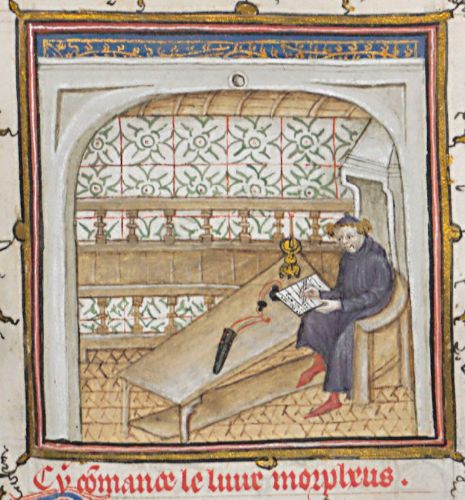
Machaut’s Le Voir Dit, or “true story,” is one of the most self-conscious literary works of the fourteenth century and one of the clearest demonstrations of his late authorial ambition. Composed near the end of his life, it presents a relationship between an aging poet and a younger woman, generally identified within the work as Toute Belle, through a complex mixture of narrative, letters, lyric poems, songs, memory, commentary, and retrospective arrangement. The title itself announces the central problem. This is a “true” account, but truth in Machaut’s hands is never simple transparency. It is mediated by documents, delayed messages, poetic performance, memory, and the author’s power to arrange events after the fact. The work does not merely tell a love story. It asks what kind of truth literature can produce when experience has already been shaped by rhetoric, desire, reputation, and manuscript order. That question gives the poem its unusual force, because Machaut makes the reader aware that truth is not only something recovered from the past but something constructed through selection, sequencing, and presentation. The “true story” becomes true not because it escapes artifice, but because it exposes the very processes by which artifice gives emotional experience a durable form. Le Voir Dit is not a retreat from Machaut’s earlier lyric and musical achievements; it is their late literary intensification.
Age gives the work much of its emotional and intellectual force. The speaker is not the conventional youthful lover of courtly lyric, but an older poet whose desire is inseparable from anxiety about time, bodily decline, credibility, and artistic survival. That difference matters. Courtly love had long depended on stylized longing, service, secrecy, and praise, but Le Voir Dit places those inherited conventions under pressure by attaching them to a visibly aging authorial figure. The result is not merely pathos. It is also unease, irony, and self-examination. Machaut allows the reader to see the poet both as lover and as maker, both as emotionally exposed and as carefully controlling the terms of exposure. The old poet’s vulnerability becomes part of his authority, but so does his ability to turn that vulnerability into a literary structure.
The letters in Le Voir Dit are central because they transform love into an archive. They create intimacy across distance, but they also make intimacy dependent on copying, delivery, reading, and preservation. The lovers know one another through mediated language, through documents that can be delayed, misunderstood, treasured, rearranged, or displayed. This gives the work a strikingly modern-seeming quality without making it modern in any simple sense. Machaut is not writing a novel, but he is exploring the instability of textual selfhood with remarkable sophistication. The beloved is present through her words and absent in her body. The poet is exposed through his declarations and protected by the artifice of composition. Love becomes something that happens not only between persons, but among letters, songs, messengers, readers, and books.
The lyric insertions intensify this effect. Songs and poems appear within the narrative not as ornaments but as evidence, performance, and emotional crystallization. They seem to document stages of the relationship, yet they also reveal how thoroughly the relationship has been aestheticized. A lyric in Le Voir Dit can function like a confession, a gift, a proof of feeling, a rhetorical strategy, or a crafted object intended for preservation. This is where Machaut’s identity as poet and composer becomes especially important. The work imagines love as something sung, written, exchanged, remembered, and curated. Emotional experience does not precede art in any pure state. It enters the reader’s view already formalized. The “truth” of the Voir Dit is not the factual simplicity of autobiography, but the more complicated truth of a self making meaning from desire through literary and musical form. The inserted lyrics also complicate the reader’s sense of evidence, because they appear to authenticate the story while simultaneously reminding us that authentication itself is being artistically managed. A song may seem to preserve a moment of feeling, but its very polish shows that the moment has already been reshaped for circulation and memory. Machaut’s genius lies in making that tension visible. The poems and songs do not interrupt the narrative’s truth claim; they reveal that the truth claim depends on lyric craft, on the ability of form to make private feeling publicly intelligible and historically preservable.
For that reason, Le Voir Dit should stand near the culmination of any account of Machaut’s revolution in medieval music and poetry. It gathers themes present throughout his career: courtly love, lyric recurrence, manuscript consciousness, authorial self-fashioning, the instability of Fortune, and the desire to make experience survive time. Yet it also pushes them into a new register, where the author’s own aging body, reputation, and textual legacy become part of the work’s drama. Machaut’s late masterpiece is not simply “autobiographical,” nor is it merely fictional. It occupies the charged space between those categories. It shows that medieval authorship could be playful, anxious, documentary, artificial, emotionally serious, and formally self-aware all at once. In Le Voir Dit, Machaut turns love into a manuscript problem and truth into an art of arrangement.
Manuscripts, Preservation, and the Invention of the Machaut Corpus
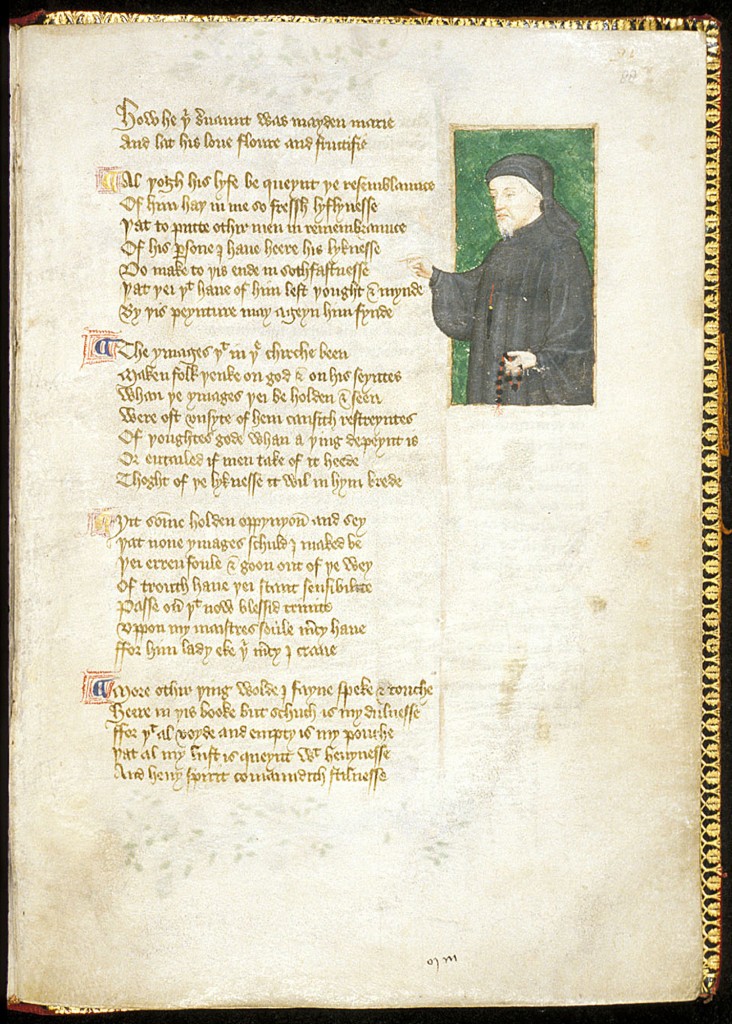
Machaut’s survival as a major figure in medieval music and literature depends not only on what he wrote, but on how his works were preserved. Many medieval composers are known through scattered attributions, isolated pieces, institutional repertories, or later copies whose connection to an author remains uncertain. Machaut is different. His poetry and music survive in a remarkably coherent manuscript tradition that presents him not merely as the source of individual works, but as the maker of a corpus. This distinction is central to his historical importance. A corpus is more than accumulation. It is an organized body of work that invites readers, performers, and later scholars to see artistic identity across time. Machaut’s manuscripts did not simply transmit his writings and compositions. They helped create “Machaut” as a durable author.
This does not mean that Machaut personally controlled every manuscript associated with his works, nor should his role be imagined in modern publishing terms. Medieval book production involved scribes, patrons, rubricators, illuminators, compilers, correctors, and owners, and the relationship between authorial intention and manuscript reality was always complex. Yet Machaut’s case is exceptional because several major manuscripts present his works with an unusual degree of order, scale, and authorial framing. His long narrative poems, lyric poetry, and musical compositions are not randomly dispersed. They are arranged in ways that encourage the reader to encounter them as the record of a career. The manuscript becomes a literary and musical architecture, a place where the poet-composer’s identity is assembled through sequence, repetition, visual presentation, and textual memory. This is especially important because medieval preservation often depended on practical and social circumstances that could fragment an author’s legacy. Works might be copied because they were useful, fashionable, devotional, entertaining, or locally valued, not because later readers wanted a complete authorial archive. Machaut’s surviving manuscripts move beyond that ordinary pattern. They suggest a culture, and perhaps an authorial ambition, interested in gathering diverse works under one name and allowing them to speak to one another. The result is not a modern collected edition, but it is something historically close enough to make Machaut extraordinary: a medieval corpus with visible shape, internal relation, and durable authorial force.
The movement from song to book is essential here. Courtly lyric had long circulated through performance, memory, imitation, and local manuscript traditions, but Machaut’s corpus shows what happens when lyric song becomes part of a carefully preserved authorial book. A song that once depended on a voice, occasion, or social exchange could be copied alongside other songs, placed near narrative works, surrounded by rubrics, and embedded in a larger account of poetic identity. This transformation did not destroy performance. It extended it. The book preserved the possibility of future performance while also making the song available to readers as a textual and visual object. Machaut’s manuscripts stand at the meeting point of voice and page. They remember sound while also converting it into a form that could be owned, studied, copied, and canonized.
The visual and material character of these manuscripts also matters. Medieval books did not communicate through words and notes alone. Layout, decoration, initials, miniatures, rubrication, ordering, and the placement of music on the page all shaped interpretation. In Machaut’s case, manuscript presentation could help readers distinguish genres, recognize transitions, identify lyric insertions, and perceive the author’s works as part of an intentionally arranged whole. The page becomes a guide to reception. It teaches the reader how to move through the corpus, how to recognize the relationship between narrative and lyric, and how to understand Machaut’s authority as both poet and composer. This is why the manuscript tradition is not a neutral container for his art. It is one of the media through which his art becomes historically legible.
Preservation also altered the relationship between music and authorship. A musical work that exists only in performance disappears as soon as sound passes, unless memory or repeated practice sustains it. Notation changes that condition. It does not freeze music completely, since performance always requires interpretation, but it allows complex rhythmic, melodic, and textual relationships to survive beyond the original occasion. For Machaut, this was especially important because his music often depends on structural relationships that require careful transmission. Ars Nova notation, formes fixes design, polyphonic coordination, and isorhythmic organization all benefit from written preservation. The manuscripts did not merely keep his music from vanishing. They preserved the intellectual labor embedded in that music, allowing later generations to encounter composition as design. This is where the connection between notation and authorship becomes especially powerful. The more precisely musical thought could be represented on the page, the more clearly it could be recognized as the work of a maker whose choices extended beyond local performance practice. A melody could be remembered communally, but a complex polyphonic composition required a different kind of transmission. It needed graphic discipline, scribal care, and a shared understanding that the written arrangement mattered. Machaut’s music, with its intricate coordination of rhythm, voice, and text, depended on exactly this kind of survival. In preserving his works, the manuscripts preserved not only sound but decision.
The Machaut corpus raises important questions about medieval authorship. Modern readers often imagine an author as someone who produces a stable text, owns it, and supervises its publication. Machaut’s world worked differently. Texts could vary, music could be copied imperfectly, ordering could change, and manuscript books could reflect the needs of patrons or readers as well as the intentions of the author. Yet this instability does not weaken Machaut’s authorship. It shows how medieval authorship was made through collaboration between writer, composer, scribe, patron, performer, and book. Machaut’s name becomes powerful not because it controls every detail in a modern proprietary sense, but because the manuscript tradition repeatedly organizes diverse works around his identity. Authorship here is not a single legal claim. It is a cultural effect produced through preservation, attribution, arrangement, and reception.
This archival self-fashioning helps explain why Machaut became so visible to later history. He was not simply lucky, though survival always involves luck. His corpus reflects a culture increasingly interested in collecting vernacular literary production, preserving named authors, and giving courtly works the dignity of book form. Machaut’s own career coincided with, and contributed to, this shift. His manuscripts invite a reader to move through love poems, dits, songs, and sacred compositions as parts of one artistic life. They make the career itself readable. That is an extraordinary development in medieval cultural history. The book does not merely preserve the works after the author has disappeared. It creates the conditions under which the author can continue to appear. This appearance is not passive. It is staged through order, genre, repetition, and accumulation, so that the reader encounters not only isolated acts of composition but a sustained artistic presence. The manuscripts make Machaut available as someone who has a past, a range, a voice, a repertoire, and a claim on memory. They allow later audiences to see development and recurrence, sacred and secular ambition, lyric intimacy and public authorship, all within one preserved body of work. The archive does not simply rescue Machaut from oblivion. It completes part of his artistic project by turning survival itself into a form of meaning.
The invention of the Machaut corpus is one of his most consequential achievements. Without the manuscripts, Machaut might still be known as an important composer or poet, but he would not occupy the same place in the history of authorship. The preserved corpus allows us to see the convergence of lyric, music, narrative, sacred composition, courtly performance, clerical memory, and visual book culture. It also reveals the deepest logic of his career: the desire to make art survive time. Machaut’s revolution was not only that he composed with new rhythmic and poetic sophistication. It was that his works entered history as a body, organized around a name, and capable of making a medieval artistic self visible across centuries.
Chaucer, Later Lyric, and the Cross-Channel Afterlife of Machaut
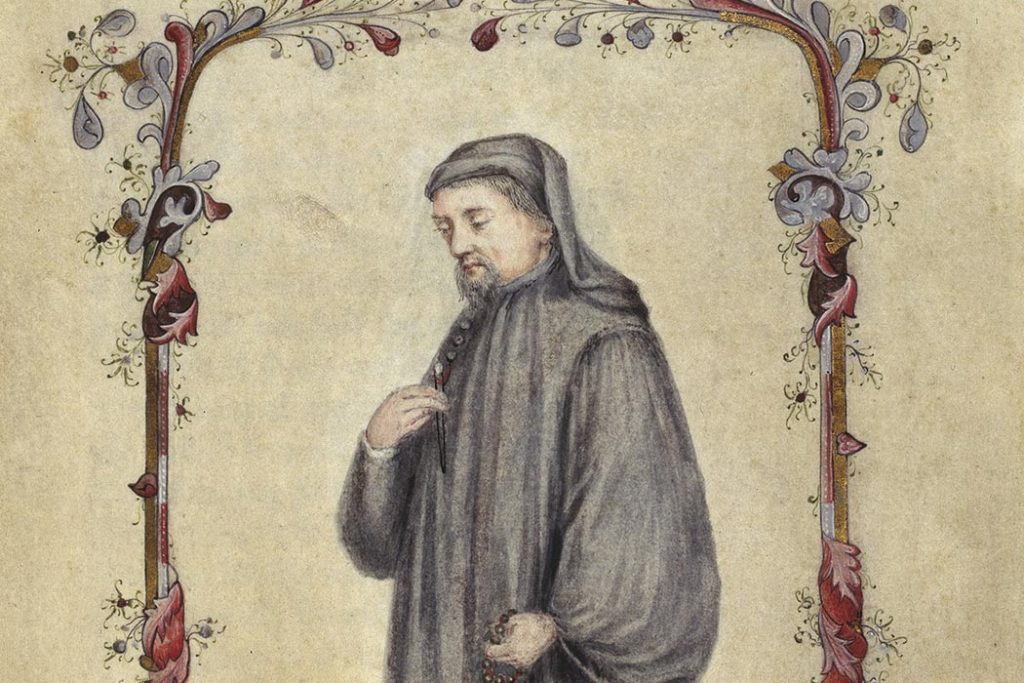
Machaut’s influence did not end with his death in 1377. His work continued to shape late medieval lyric, narrative poetry, and ideas of authorship across linguistic and political boundaries, especially in the complicated literary world shared by France and England during the Hundred Years’ War. This afterlife should not be imagined as a simple line of influence from a French master to passive English imitators. The cultural traffic was messier and more interesting than that. French, Anglo-French, Latin, and English literary traditions overlapped in aristocratic, clerical, diplomatic, and manuscript contexts. Chaucer’s England was not sealed off from French literary culture; it was deeply entangled with it. Machaut’s afterlife belongs to that cross-channel world of rivalry, imitation, translation, adaptation, and creative misrecognition.
Geoffrey Chaucer is the most important figure through whom to consider this afterlife, though he must be handled carefully. Chaucer did not become “English” by rejecting French models. On the contrary, his early poetry developed within a world where French literary forms, especially the love vision, complaint, courtly debate, and refined lyric persona, were central to aristocratic taste. Machaut was one of the major poets who helped define that world. The influence is visible not because Chaucer simply copies Machaut, but because both writers work with shared structures: the dream vision, the wounded or uncertain lover, the allegorical setting, the court of love, the debate over emotional truth, and the poet-speaker whose authority is both asserted and questioned. Machaut gave these materials a powerful fourteenth-century shape before Chaucer adapted them into English poetic practice. That adaptation was not passive dependence. Chaucer’s genius lay partly in his ability to absorb French courtly forms while changing their tonal balance, social reach, and narrative texture. He could take the elevated language of love-service and place it beside irony, uncertainty, humor, or psychological indirection. Machaut’s importance, then, is not that Chaucer becomes a shadow of him, but that Machaut helped furnish the literary room in which Chaucer learned to move. The English poet’s later originality makes more sense when seen against the French formal intelligence he inherited and transformed.
The connection is especially important for Chaucer’s early works, including The Book of the Duchess and the broader tradition of dream vision poetry. Machaut’s narrative poems had shown how first-person narration, lyric insertion, allegory, consolation, and courtly loss could be arranged into a self-conscious literary structure. Chaucer inherited that kind of poetic machinery, but he transformed it through his own language, tone, and social setting. Where Machaut often presents the poet as lover, judge, clerk, or aging maker, Chaucer develops narrators who are frequently awkward, evasive, comic, observant, and uncertain about the meaning of what they witness. The debt is not one of mechanical imitation. It is a deeper literary inheritance: Machaut helped make available a model of the poet as a staged consciousness moving through inherited forms.
Machaut’s influence also reached Chaucer through lyric form and courtly rhetoric. The ballade, complaint, and debate poem became part of the shared language of late medieval aristocratic expression, and Chaucer’s own shorter poems show his familiarity with French lyric conventions. The point is not that every Chaucerian use of complaint or courtly language must be traced directly to Machaut. Such a claim would flatten a broad and multilingual tradition. Rather, Machaut stands as one of the defining figures within the French lyric environment that Chaucer absorbed, studied, and reworked. The vocabulary of service, Fortune, fidelity, distance, and suffering was not merely thematic. It was formal. It came with expectations about voice, repetition, rhetorical posture, and the relation between emotional experience and poetic craft. When Chaucer writes within these conventions, he enters a literary system in which feeling is shaped by inherited forms before it becomes individual expression. That system gave poets a language for dignity, restraint, frustration, and longing, but it also created opportunities for subtle revision. A complaint could become sincere, ironic, performative, or self-questioning depending on how the speaker handled inherited formulas. This is where Machaut’s legacy is especially important: he showed how courtly convention could become a medium for authorial self-consciousness rather than a prison of cliché.
The afterlife of Machaut also extends beyond Chaucer to later French and European lyric culture. The formes fixes remained central to late medieval song, and composers after Machaut continued to cultivate the ballade, rondeau, and virelai as prestigious forms of poetic-musical expression. His influence can be felt in the way later writers and musicians treated lyric not as casual utterance but as a disciplined art of recurrence, arrangement, and social performance. Eustache Deschamps, Jean Froissart, Oton de Grandson, Christine de Pizan, and other late medieval authors worked in a world where Machaut’s synthesis of courtly language, authorial presence, and formal refinement had already become part of the literary atmosphere. Even when later poets moved away from setting their own lyrics to music, they inherited a lyric culture that Machaut had helped define.
This development also marks a gradual shift in the relationship between poetry and music. Machaut embodied the poet-composer tradition with unusual completeness, but later literary culture increasingly allowed poetry and musical composition to move along more separate paths. That separation should not be overstated, since song remained central to medieval and early Renaissance culture, but Machaut’s career begins to look retrospective as well as innovative. He appears as a culminating figure, someone who gathered poetry and music into one authorial identity before later traditions redistributed those arts among different kinds of makers. His afterlife contains a paradox. He influenced later lyric partly through forms that could survive without their original musical integration. The very success of his poetic structures allowed them to travel beyond the full unity of word and sound that had made his own work so powerful.
Machaut’s cross-channel afterlife finally confirms the scale of his achievement. He did not merely dominate a local or narrowly musical tradition. He helped shape the literary and musical grammar through which late medieval Europe imagined love, authorship, memory, and poetic authority. Chaucer’s engagement with French poetry shows that Machaut’s importance cannot be confined to France, nor even to music history alone. His works became part of a wider cultural repertoire, available for adaptation by poets writing in different languages under different political conditions. That is why Machaut’s legacy is best understood not as a fixed influence but as a continuing field of possibility. He left behind forms, voices, structures, and authorial models that later writers could inhabit, resist, translate, and transform.
Was Machaut Revolutionary or the Culmination of Older Traditions?
The following video from Brilliant Classics is a collection of Machaut’s works:
To call Machaut revolutionary is useful, but only if the word is handled carefully. He did not appear suddenly, overturn medieval music, and replace an old world with a new one. That is not how medieval artistic change usually worked. Machaut inherited nearly everything that made his achievement possible: chant, liturgy, courtly lyric, troubadour and trouvère traditions, the thirteenth-century motet, Notre Dame polyphony, clerical literacy, aristocratic patronage, and the technical innovations of Ars Nova notation. His greatness lies not in standing outside these traditions, but in gathering them with unusual force. He was revolutionary because he made inherited forms newly coherent, newly ambitious, and newly visible around the identity of a named poet-composer.
The strongest counterargument to Machaut’s “revolutionary” status is that much of what seems new in his work had older roots. Polyphony had developed powerfully before him, especially in the repertory associated with Notre Dame and in the motet culture of the thirteenth century. Courtly love lyric had already been refined by troubadours and trouvères. Clerical writers had long joined learning, memory, and performance. Even the idea of the poet as a recognizable figure was not Machaut’s invention. Earlier medieval authors and composers could be known, celebrated, and imitated. To present Machaut as a solitary inventor would distort the historical record. He was not the first to write courtly song, not the first to use polyphony, not the first to shape poetic selfhood, and not the first to participate in manuscript preservation.
Yet the counterargument only goes so far, because Machaut’s distinctiveness lies in convergence. Earlier traditions existed, but they rarely came together in one surviving career with such scale, range, and self-conscious organization. In Machaut, the courtly poet, the learned composer, the cleric, the manuscript author, the sacred musician, and the literary self-fashioner all occupy the same historical figure. This is not a minor matter of biography. It changes how the works mean. A motet, a ballade, a narrative poem, and the Messe de Nostre Dame do not merely coexist as separate achievements. They illuminate one another as parts of an authored corpus. The same mind that shaped courtly longing through refrain also organized sacred time through polyphony; the same author who staged uncertainty in narrative poetry also preserved lyric and music within manuscripts that invited future readers to see a career. That integration is what makes Machaut more than an excellent representative of his age. He becomes a site where medieval traditions recognize themselves as an artistic totality, gathered into a name, a repertoire, and a remembered self.
The question also depends on what kind of revolution one expects. If revolution means absolute novelty, Machaut was not revolutionary. Medieval art was deeply cumulative, and Machaut’s innovations depended on technical, institutional, and literary inheritances he did not create. But if revolution means the reorganization of existing materials into a new historical configuration, then the term is justified. Machaut transformed the relationship among lyric form, musical notation, sacred polyphony, manuscript preservation, and authorial identity. He did not abolish the medieval past. He made it newly legible through the figure of the poet-composer. The old forms remained, but their arrangement changed. The inheritance became an authored world.
This distinction matters especially for the Messe de Nostre Dame. The Mass is often treated as a revolutionary monument because it is the earliest surviving complete polyphonic setting of the Ordinary securely associated with a single composer. But even here, caution is necessary. Machaut did not invent the Mass Ordinary, and he did not invent polyphonic Mass composition. What he did was bring complete Ordinary setting, Ars Nova technique, liturgical ambition, authorial attribution, and manuscript survival into a powerful alignment. The Mass exemplifies the broader pattern of his career. Its importance lies not in pure origin, but in synthesis, scale, and historical visibility. It became a monument because inherited sacred practice was gathered into a form that could be remembered as Machaut’s. This is why the Mass should be understood less as a bolt from nowhere than as a concentrated expression of the forces that shaped his whole artistic life. Reims, liturgy, Marian devotion, rhythmic experiment, clerical memory, and manuscript preservation all meet there. The work’s revolutionary quality is inseparable from its conservatism, because its daring depends on the authority of the ritual it serves. Machaut’s sacred innovation does not reject tradition; it thickens tradition until it can bear the weight of named authorship.
The fairest conclusion is that Machaut was both culmination and revolution. He culminated older traditions by bringing them to a peak of technical, poetic, and manuscript refinement. He was revolutionary because that culmination changed the historical status of the composer. After Machaut, it becomes easier to imagine a musical career as a coherent body of authored work, not merely a series of performances, services, or anonymous repertory items. His achievement did not break medieval tradition apart. It revealed what that tradition could become when song, notation, poetry, sacred sound, and manuscript memory were organized around a visible artistic self.
Conclusion: The First Great Archive of a Musical Self
Machaut’s achievement cannot be measured by any single work, genre, or technical innovation alone. The Messe de Nostre Dame remains monumental, the motets remain intellectually dazzling, the formes fixes remain central to the history of courtly song, and Le Voir Dit remains one of the most self-conscious literary works of the fourteenth century. Yet Machaut’s deeper significance lies in the way these achievements form a coherent artistic world. He gathered the institutions that shaped him: Reims, cathedral liturgy, clerical literacy, courtly patronage, manuscript culture, and Ars Nova notation, into a career that could be recognized, preserved, and remembered. His art did not merely survive as fragments of medieval brilliance. It survived as a body of work organized around a visible author.
That visibility changed the historical meaning of composition. Earlier medieval music could be sophisticated, beautiful, devotional, and formally ambitious, but much of it reaches us through anonymity, institutional repertory, or scattered attribution. Machaut stands apart because his music and poetry invite us to follow a maker across genres and decades. The lover of the ballades, the architect of the motets, the cleric of Reims, the composer of the Mass, the aging narrator of Le Voir Dit, and the author preserved in manuscripts are not identical in any simple autobiographical sense. They are roles, voices, and artistic constructions. But together they create something extraordinary: a medieval musical self that can be studied historically, literarily, and musically as a durable presence.
This does not make Machaut modern, and it should not tempt us to detach him from the medieval traditions that made him possible. His originality was not the originality of isolation. It was the originality of synthesis. He inherited chant, courtly lyric, motet practice, Marian devotion, clerical book culture, and the notational resources of the Ars Nova, then intensified them until they produced a new kind of authorial visibility. His works show that medieval creativity often moved through preservation rather than rebellion, through disciplined return rather than rupture, through the patient reordering of inherited forms. Machaut’s revolution was profoundly medieval. He made the old newly powerful by arranging it around a name, a corpus, and a memory capable of enduring.
In that sense, Machaut created one of the first great archives of a musical self in European history. He made music more than sound in passing time. He made it part of a manuscript identity, a literary career, a sacred memory, and a historical record. The voices he composed have long since left the spaces for which they first sounded, but the architecture of his art remains. Through notation, poetry, manuscript, and reputation, Machaut turned the fragile event of performance into something that could cross centuries. The medieval composer became visible, and in that visibility, music itself became newly historical.
Bibliography
Affiliate disclosure: Amazon links on this site are paid links. As an Amazon Associate I earn from qualifying purchases.
- Avril, François. Manuscript Painting at the Court of France: The Fourteenth Century, 1310–1380. Translated by Ursula Molinaro. New York: George Braziller, 1978.
- Bent, Margaret. Counterpoint, Composition, and Musica Ficta. New York: Routledge, 2002.
- —-. “Deception, Exegesis and Sounding Number in Machaut’s Motet 15.” Early Music History 10 (1991), 15–27.
- —-. “The Machaut Manuscripts Vg, B, and E.” Musica Disciplina 37 (1983), 53–82.
- —-. The Motet in the Late Middle Ages. Oxford: Oxford University Press, 2023.
- Bowers, Roger. “Guillaume de Machaut and His Canonry of Reims, 1338–1377.” Early Music History 23 (2004), 1–48.
- Brownlee, Kevin. Poetic Identity in Guillaume de Machaut. Madison: University of Wisconsin Press, 1984.
- Butterfield, Ardis. The Familiar Enemy: Chaucer, Language, and Nation in the Hundred Years War. Oxford: Oxford University Press, 2009.
- —-. Poetry and Music in Medieval France: From Jean Renart to Guillaume de Machaut. Cambridge: Cambridge University Press, 2002.
- Calin, William. A Poet at the Fountain: Essays on the Narrative Verse of Guillaume de Machaut. Lexington: University Press of Kentucky, 1974.
- Cerquiglini-Toulet, Jacqueline. A New History of Medieval French Literature. Translated by Sara Preisig. Baltimore: Johns Hopkins University Press, 2011.
- Chaucer, Geoffrey. The Riverside Chaucer. Edited by Larry D. Benson. 3rd ed. Boston: Houghton Mifflin, 1987.
- Clark, Alice V. “Machaut’s Motets on Secular Songs.” Plainsong and Medieval Music 29:1 (2020), 1–25.
- —-. “The Motets: Read and Heard.” In A Companion to Guillaume de Machaut, edited by Deborah McGrady and Jennifer Bain, 169–196. Leiden: Brill, 2012.
- Cooper, Helen. The Structure of The Canterbury Tales. Athens: University of Georgia Press, 1983.
- Deschamps, Eustache. Selected Poems. Edited and translated by Ian S. Laurie and Deborah M. Sinnreich-Levi. New York: Routledge, 2003.
- Earp, Lawrence. Guillaume de Machaut: A Guide to Research. New York: Garland Publishing, 1995.
- Fuller, Sarah. “A Phantom Treatise of the Fourteenth Century? The Ars Nova.” Journal of Musicology 4:1 (1985–1986), 23–50.
- Hartt, Jared C. “Rehearing Machaut’s Motets: Taking the Next Step in Analysis.” Journal of Music Theory 54:2 (2010), 179–234.
- —-. “Tonal and Structural Implications of Isorhythmic Design in Guillaume de Machaut’s Tenors.” Theory and Practice 35 (2010), 57-94.
- Huot, Sylvia. From Song to Book: The Poetics of Writing in Old French Lyric and Lyrical Narrative Poetry. Ithaca, NY: Cornell University Press, 1987.
- Jackson, Roland. “Guillaume de Machaut and Dissonance in Fourteenth Century French Music.” Musica Disciplina 53 (2003-2008), 7-49.
- Keitel, Elizabeth A. “The Musical Manuscripts of Guillaume de Machaut.” Early Music 5:4 (1977), 469-472.
- Leach, Elizabeth Eva. “Death of a Lover and the Birth of the Polyphonic Balade: Machaut’s Notated Balades 1–5.” Journal of Musicology 19:3 (2002), 461–502.
- —-. “Fortune’s Demesne: The Interrelation of Text and Music in Machaut’s Il mest avis (B22), De fortune (B23), and Two Related Anonymous Balades.” Early Music History 19 (2000): 47–79.
- —-. Guillaume de Machaut: Secretary, Poet, Musician. Ithaca, NY: Cornell University Press, 2011.
- —-. “Machaut’s Balades with Four Voices.” Plainsong and Medieval Music 10:2 (2001), 47–79.
- Leech-Wilkinson, Daniel. The Modern Invention of Medieval Music: Scholarship, Ideology, Performance. Cambridge: Cambridge University Press, 2002.
- Machaut, Guillaume de. The Complete Poetry and Music of Guillaume de Machaut. Edited and translated in modern scholarly editions by R. Barton Palmer, Yolanda Plumley, Uri Smilansky, and Anne Stone. Kalamazoo: Medieval Institute Publications, 2019.
- McGrady, Deborah. Controlling Readers: Guillaume de Machaut and His Late Medieval Audience. Toronto: University of Toronto Press, 2006.
- Palmer, R. Barton, ed. and trans. Guillaume de Machaut: The Judgment of the King of Navarre. New York: Garland Publishing, 1988.
- Plumley, Yolanda. The Art of Grafted Song: Citation and Allusion in the Age of Machaut. Oxford: Oxford University Press, 2013.
- Plumley, Yolanda, and Anne Stone, eds. A Companion to Guillaume de Machaut. Leiden: Brill, 2015.
- Reaney, Gilbert. “Guillaume de Machaut: Lyric Poet.” Music & Letters 39:1 (1958), 38-51.
- Robertson, Anne Walters. Guillaume de Machaut and Reims: Context and Meaning in His Musical Works. Cambridge: Cambridge University Press, 2002.
- Wegman, Rob C. “From Maker to Composer: Improvisation and Musical Authorship in the Low Countries, 1450–1500.” Journal of the American Musicological Society 49:3 (1996), 409–479.
- Wimsatt, James I. Chaucer and His French Contemporaries: Natural Music in the Fourteenth Century. Toronto: University of Toronto Press, 1991.
- Wright, Craig. Music and Ceremony at Notre Dame of Paris, 500–1550. Cambridge: Cambridge University Press, 1989.
- Zayaruznaya, Anna. “Isorhythm.” In A Critical Companion to Medieval Motets, edited by Jared C. Hartt, 87–112. Woodbridge: Boydell Press, 2018.
Originally published by Brewminate, 06.03.2026, under the terms of a Creative Commons Attribution-NonCommercial-NoDerivatives 4.0 International license.
About the Author