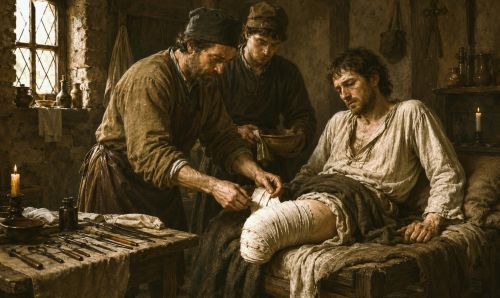
Medieval amputation was brutal, risky, and rarely simple. It could save a life, mark a punishment, or leave survivors negotiating disability, poverty, faith, and care.

By Matthew A. McIntosh
Public Historian
Brewminate
Introduction: The Last Cut
Amputation stood at one of the most terrifying edges of medieval medicine: the moment when the damaged part of the body was judged more dangerous than its removal. To cut away a hand, foot, arm, or leg was not simply to perform a difficult operation. It was to admit that ordinary wound care had failed, that corruption might be spreading, that blood, bone, flesh, and fever had entered a crisis in which delay could be fatal. Medieval surgeons did not possess modern anesthesia, antibiotics, antiseptic operating rooms, vascular clamps, transfusion, or germ theory. Yet they did possess a long and serious tradition of wound treatment, inherited from Greek, Roman, Arabic, monastic, urban, and university medicine, and they knew from experience that some injuries did not remain local. A crushed limb, a blackening foot, a foul-smelling wound, or a mangled battlefield injury could threaten the life of the whole person. In that setting, amputation was not casual brutality. It was a desperate wager: that the body might survive the loss of a limb better than it could survive the limb itself.
That wager was shaped by a world in which surgery occupied an uneasy place between learned medicine and manual craft. Physicians interpreted disease through humors, complexion, regimen, and the internal balance of the body, while surgeons worked directly with wounds, ulcers, fractures, abscesses, arrows, fistulas, burns, and broken flesh. The social distinction mattered, but it should not be mistaken for a simple division between educated doctors and ignorant cutters. Medieval surgery produced sophisticated authors, including Theodoric Borgognoni, Henri de Mondeville, Lanfranc of Milan, Guy de Chauliac, John of Arderne, and others who wrote about wounds with care and technical seriousness. Many operations were likely performed far from the idealized world of surgical books: in towns, households, hospitals, military camps, monasteries, and battlefields, by practitioners whose skill varied widely. The medieval amputation has to be understood as both textual and practical, both learned and improvised, both guided by tradition and forced by emergency.
The severed limb also carried meanings beyond medicine. In medieval law, hands and feet could be removed as punishments, turning the altered body into a permanent public record of judgment. In Christian imagination, bodily wholeness mattered because the body had been created by God, marked by sacrament, buried with ritual, and expected to rise again. In miracle stories, saints could restore what surgeons could only remove, while in daily life the surviving amputee had to navigate pain, poverty, work, charity, stigma, prosthetic adaptation, and dependence on kin or community. The same act of cutting could belong to radically different moral worlds. A surgeon might cut to save a patient from gangrene; a ruler might cut to shame a thief; a hagiographer might imagine divine healing that reversed the wound altogether. Medieval amputation was never only a medical event. It was a social and spiritual rupture, a transformation of the person’s body and place in the world.
Medieval amputation was an act of violence that could also be an act of care. It was painful, dangerous, and often fatal, but it was not senseless. Its history reveals a medical culture trying to manage catastrophe with the tools it had: cautery, compression, blades, saws, wine, honey, herbal sedatives, dressings, prayer, restraint, speed, and experience. It also reveals the limits of that culture. Medieval surgeons could observe corruption, remove dead tissue, and sometimes help a patient survive; they could not reliably prevent shock, sepsis, hemorrhage, or postoperative infection. To study amputation in the medieval era is to study medicine at its hardest boundary, where healing required mutilation, where survival came at the price of permanent loss, and where the body became the place where science, craft, suffering, punishment, faith, and necessity met.
Before the Knife: What Medieval People Thought a Limb Was

Before a medieval surgeon could decide whether a limb should be cut away, he had to understand what that limb was within the body as a whole. Medieval medicine did not imagine the arm, hand, foot, or leg as a detachable mechanical part in the modern sense. A limb belonged to a living system of humors, heat, moisture, complexion, spirit, blood, nerves, sinews, bones, flesh, and skin. Its health depended on balance, flow, nourishment, and proper relation to the rest of the body. A wound was not merely a break in tissue. It was an opening through which disorder could enter, a place where blood could escape, heat could be lost, corrupted matter could gather, and the body’s internal harmony could begin to fail. This made the damaged limb both local and total: the injury might appear in the foot or hand, but its danger belonged to the entire person.
That way of thinking mattered because medieval practitioners did not separate anatomy from physiology, morality, climate, diet, season, age, and temperament as sharply as later medicine would. The body was not just a collection of organs and appendages; it was a changing, porous, responsive organism whose condition shifted constantly in relation to food, sleep, work, emotion, weather, environment, and divine providence. A man’s wound might worsen because of his diet, his age, the weather, the quality of the air, the strength of his natural heat, or the balance of his humors. A patient who was strong, warm, and well nourished might survive an injury that would kill someone weaker, colder, poorer, or already ill. A wound received in winter might be judged differently from one received in summer; a limb injured in a filthy camp, a damp street, or a crowded household might inspire different fears from one treated in a more controlled domestic or institutional setting. Medieval diagnosis was not only a judgment about the wound but a judgment about the patient’s whole condition and surrounding world. The limb was not an isolated object to be repaired like a tool. It was a member whose condition reflected and affected the state of the whole body. When a limb blackened, swelled, stank, or lost sensation, it signaled not only local damage but the possible triumph of corruption over the body’s power to heal.
Medieval surgical language often treated damaged flesh as something that could move from injury into putrefaction. This was not germ theory, and it should not be mistaken for modern microbiology in medieval clothing. Yet the observations behind it were often real. Surgeons knew that some wounds became foul, hot, swollen, discolored, wet, painful, or strangely numb. They knew that dead tissue did not behave like living tissue. They knew that bad matter could collect in wounds, that abscesses needed opening, that foreign bodies could prevent healing, and that corruption could spread. A limb with crushed bone, torn flesh, deep puncture wounds, or interrupted blood supply could become a threat to life. Medieval practitioners may not have known bacteria, sepsis, thrombosis, or necrotizing infection by those names, but they knew the signs of bodies turning against themselves.
The limb also had meanings that medicine alone cannot exhaust. Hands labored, prayed, swore oaths, held tools, gave alms, wielded weapons, touched relics, received punishment, and marked social identity. Feet carried the body through work, pilgrimage, war, exile, and begging. Arms and legs were instruments of livelihood as much as anatomy. To lose one was not merely to suffer a physical impairment; it was to lose a capacity, a status, a visible part of one’s place in the world. This was particularly true in a society where labor was often bodily, where survival depended on household productivity, and where disability could push the poor toward charity, dependence, or public begging. A severed hand might mean the end of a craft, the loss of military usefulness, the collapse of earning power, or the permanent mark of criminal punishment. A lost foot or leg might change a person’s relationship to land, travel, service, pilgrimage, marriage, and household authority. Even when the wound was medically justified, the result could be socially devastating, because medieval communities read bodies closely and often treated visible difference as a sign of fortune, sin, suffering, sanctity, punishment, or need. A noble warrior, a craftsman, a peasant woman, a monk, and a condemned thief would not experience the same severed limb in the same way. The body was shared by medicine, law, labor, religion, and reputation.
Christian belief added another layer to this tension. The body was mortal and corruptible, but it was also created by God, sanctified by ritual, buried with care, and destined for resurrection. Medieval theologians argued intensely about how bodily identity would persist after decay, fragmentation, cannibalism, mutilation, or loss. These debates did not prevent surgery, but they made bodily wholeness a matter of more than practical function. A surgeon who cut off a limb acted within a culture that valued the integrity of the body even while accepting that the body might have to be opened, drained, cauterized, or diminished to preserve life. Amputation began before the knife touched flesh. It began in a judgment about whether the member still belonged to the living body or had become a dead, corrupt, dangerous thing attached to it.
The Surgical Inheritance: Classical, Arabic, Monastic, and University Traditions
Medieval amputation did not emerge from a surgical vacuum. It stood at the far end of a long inheritance of wound care, cautery, bone-setting, instrument-making, and anatomical speculation that moved across languages, religions, schools, and practical settings. Greek and Roman medicine had already framed the body as a living system governed by balance, temperament, heat, moisture, blood, and the body’s own capacity to heal. Hippocratic and Galenic traditions taught medieval practitioners to think carefully about crises, seasons, regimen, prognosis, and the difference between conditions that could be treated and those that should not be touched. Surgery inherited from this world not only techniques but a moral discipline: the practitioner had to judge when intervention might help, when it would worsen suffering, and when a wound or diseased part had crossed beyond recovery. Amputation belonged to that hardest category of judgment, where the surgeon was forced to decide whether a member was still part of the living body or had become an enemy within it.
Roman and late antique surgical writing preserved a more directly operative tradition. Celsus, writing in the first century, offered descriptions of cutting, cautery, wound management, and the qualities expected of a surgeon: a steady hand, courage, compassion, and the firmness to act despite the patient’s pain. Paul of Aegina, writing in the seventh century, later became important as a transmitter of ancient surgery into Byzantine, Arabic, and Latin medical worlds. These authors did not make medieval surgery modern, but they gave medieval practitioners a vocabulary of operative intervention. They described instruments, incisions, cauteries, dressings, fractures, ulcers, abscesses, and damaged tissue. In this inheritance, surgery was not simply hacking at flesh. It was a structured craft with rules, warnings, categories, and inherited authorities, even when those authorities were incomplete or difficult to apply in the chaos of a battlefield or a household sickroom.
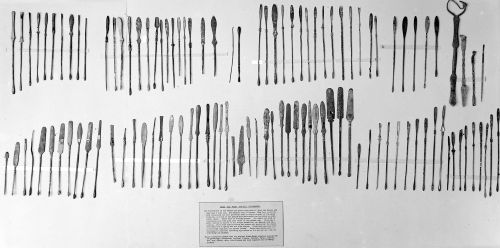
The Arabic and Islamic medical tradition was central to this inheritance. Medieval Latin surgery was deeply shaped by translated Arabic medical texts through centers of translation in places such as southern Italy, Sicily, and Iberia. Al-Zahrawi, known in Latin Europe as Albucasis, was particularly important because his surgical writing gave close attention to instruments, cautery, operative technique, and the practical details of treating wounds and bodily injuries. His work did not merely preserve ancient surgery; it organized and expanded a surgical tradition that Latin readers would later absorb. The surgical section of his encyclopedia described knives, hooks, forceps, cautery irons, probes, saws, and other instruments with a degree of specificity that mattered greatly in a world where the design of the tool could determine what kind of intervention was even possible. Avicenna’s Canon of Medicine also shaped medieval European medical thought, not because it was a surgical manual in the narrow sense, but because it offered a comprehensive framework for disease, diagnosis, temperament, drugs, and treatment. Through these Arabic and Islamic channels, medieval European surgery became part of a wider Afro-Eurasian medical conversation rather than a purely local or isolated craft. This matters for amputation because limb removal drew on several overlapping bodies of knowledge: anatomy, wound management, pharmacology, cautery, prognosis, and the difficult judgment of when diseased flesh had passed beyond remedy. The medieval surgeon who contemplated cutting away a limb was not acting outside inherited medicine, but at one of its most extreme and dangerous conclusions.
Monastic and charitable institutions also mattered, though not always in the simplified way later myth suggests. Monasteries, cathedral communities, hospitals, and religious houses preserved books, cared for the sick, sheltered travelers, tended the poor, and sometimes served as places where wounds and chronic conditions were managed. They were not modern hospitals, and they were not primarily surgical theaters. Many medieval hospitals were institutions of care, prayer, lodging, charity, and spiritual preparation as much as treatment. Yet this matters precisely because amputation did not end with the cut. A patient who survived the first violence of surgery needed nursing, food, dressing changes, warmth, rest, and protection from further contamination. Religious institutions could supply some of those conditions, particularly for the poor, pilgrims, soldiers, or the socially displaced. The medieval surgical inheritance was not only a tradition of texts and knives; it was also a tradition of beds, bandages, kitchens, infirmaries, attendants, and prayers.
By the twelfth and thirteenth centuries, the growth of schools and universities gave learned medicine a more formal intellectual setting. Salerno, Bologna, Montpellier, Paris, and other centers helped shape a culture in which medical knowledge could be taught, disputed, copied, glossed, licensed, and organized. Yet surgery occupied an ambiguous position within this world. Learned physicians often claimed higher status because their work was associated with theory, diagnosis, and the internal causes of disease, while surgery involved manual labor, blood, instruments, and visible intervention. This division was real, but it should not be exaggerated into a crude opposition between learned physicians and ignorant surgeons. Some surgeons were highly literate and intellectually ambitious and showed that medieval surgery could be bookish, reflective, and deeply engaged with learned medicine. Their works drew on ancient and Arabic authorities, but they also responded to practical problems that theoretical medicine alone could not solve: how to clean a wound, how to remove an arrowhead, how to prevent excessive suppuration, how to judge dead tissue, how to treat fractures, and how to manage pain and fear when the body had to be opened. In this environment, surgery slowly acquired a more explicit intellectual defense. It was not merely the servant of medicine or the dirty work beneath the physician’s dignity; it was a rational art of the hand, grounded in experience, observation, and anatomical familiarity. Their work joined the hand to the library.
This learned surgical tradition was important for wounds. Medieval surgeons wrote about arrows, fractures, ulcers, fistulas, abscesses, tumors, burns, dislocations, and contaminated injuries. They were concerned with removing foreign bodies, controlling bleeding, draining corrupt matter, preventing harmful accumulation, encouraging proper healing, and deciding when tissue had to be cut away. Amputation was not the ordinary center of this writing, but it belonged to the same intellectual world. A surgeon trained to think about dead flesh, spreading corruption, broken bone, and the relation between local injury and whole-body danger could understand why the loss of a limb might be preferable to the death of the patient. Medieval amputation grew out of wound surgery rather than from a separate specialty. It was the extreme answer to the same question medieval surgeons repeatedly faced: how much violence could be used against the body in order to save it?
The inheritance was layered and uneven. Classical authorities gave medieval practitioners language, categories, and prestige. Arabic and Islamic medicine supplied translated knowledge, surgical detail, pharmacology, and a broader intellectual framework. Monastic and charitable institutions preserved care as a social and spiritual duty. Universities and urban schools gave medicine a formal structure, while barber-surgeons, military practitioners, bone-setters, and local healers carried practical skills into ordinary life. No single tradition explains medieval amputation by itself. The operation belonged to the meeting point of all of them. It could be imagined through Galen, described through Albucasis, justified through prognosis, performed by a surgeon or barber-surgeon, endured in a household or infirmary, and interpreted through Christian ideas of suffering, wholeness, and salvation. The medieval knife was never only a knife. It carried with it centuries of books, translations, arguments, institutions, and hard experience at the edge of the living body.
Who Cut? Barber-Surgeons, Learned Surgeons, Military Practitioners, and Local Healers

The person who performed a medieval amputation was not always the same kind of practitioner, and this is one of the reasons the subject is so difficult to treat as a single medical practice. The familiar phrase “barber-surgeon” is useful, but it can also flatten a complicated world of healers into a caricature, as though all medieval cutting was done by the same semi-trained figure with the same tools, social status, and expectations. But the identity of the operator depended on geography, class, urgency, local regulation, available expertise, and the nature of the wound. Some operators were literate surgeons who wrote or read Latin treatises, trained in urban or courtly settings, and argued for surgery as a rational art. Others were barber-surgeons whose work included shaving, bloodletting, tooth-pulling, wound care, minor operations, and emergency intervention. Still others were military practitioners, bone-setters, household healers, empirics, monks, nuns, midwives, or local specialists whose authority came less from formal schooling than from reputation, repeated experience, and visible results. A rural patient, a wounded soldier, a condemned criminal, a wealthy townsman, and a prince might all encounter very different kinds of cutters. When a limb had to be removed, the question was not simply whether a “doctor” was present. It was who, in that place and moment, had enough recognized skill, nerve, tools, and social permission to cut.
The distinction between physician and surgeon mattered deeply in medieval Europe. Learned physicians often claimed a higher status because their work was associated with university training, theoretical knowledge, diagnosis, regimen, and internal medicine. Surgery, by contrast, required manual labor. It involved blood, pus, bone, instruments, smells, cries, and the risk of immediate visible failure. That association with the hand could make surgery socially inferior to learned medicine, even when the surgeon’s work was more urgent and more dangerous. Yet the hierarchy was never absolute. Learned medicine depended on practical intervention when the body was torn open, and surgery increasingly defended itself as a rational discipline grounded in anatomy, experience, and authoritative texts. The medieval surgeon stood in an ambiguous position: below the physician in many formal hierarchies, but indispensable when injury became bodily crisis.
This ambiguity is clear in the careers and writings of learned surgeons. They did not fit the stereotype of the ignorant cutter. They wrote, compiled, disputed, taught, criticized predecessors, and tried to define surgery as a disciplined art. Guy de Chauliac, for example, presented surgery as requiring knowledge of anatomy, disease, complexion, wounds, drugs, instruments, and the proper order of treatment. John of Arderne drew on practical experience, including military and aristocratic practice, while Bradmore’s treatment of Prince Henry’s facial wound after the Battle of Shrewsbury shows the prestige that a skilled surgeon could acquire when operating at the highest social levels. These men did not make medieval surgery safe by modern standards, but they show that medieval cutting could be intellectual, professional, and self-conscious. They wanted surgery to be more than emergency butchery; they wanted it to be medicine performed by the hand.
Barber-surgeons occupied a different but equally important place in this landscape. In towns, their work overlapped with everyday bodily maintenance and minor medical care. They shaved beards, cut hair, opened veins, drew teeth, dressed wounds, lanced swellings, and treated injuries that did not require the presence of a university physician. Their shops made them accessible in a way learned practitioners often were not. The same social visibility that gave barber-surgeons opportunity also made them vulnerable to criticism. Elite writers could dismiss them as crude, greedy, or insufficiently educated, yet many communities relied on them because they were available, affordable, and accustomed to handling bodies directly. If a laborer crushed a foot, a soldier returned with a mangled hand, or an ulcer turned foul, the barber-surgeon might be the first practical resort. In less ideal circumstances, he might also be the last.
Urban regulation gradually tried to impose order on this crowded medical marketplace. Towns, guilds, courts, and civic authorities sometimes licensed surgeons, restricted practice, examined competence, regulated fees, punished malpractice, or distinguished between levels of surgical work. These systems varied widely by region and period, and they should not be mistaken for modern professional medicine. But they reveal that medieval communities recognized both the necessity and danger of surgical practice. Cutting the body was too important to leave entirely unregulated, particularly in dense towns where reputation, litigation, apprenticeship, and guild authority shaped trust. Regulation also shows that the medieval patient was not simply helpless before any man with a knife. Patients and families made choices within constraints. They sought names, reputations, recommendations, institutional approval, and visible signs of competence. In a world without modern credentials, trust was built through apprenticeship, patronage, guild membership, local memory, and the survival of previous patients.
Military practice formed another crucial path into amputation and severe wound surgery. War created injuries that ordinary domestic medicine rarely produced at such scale: crushed limbs, hacked hands, pierced thighs, broken bones, infected arrow wounds, burns, frostbite, and bodies damaged by horses, carts, sieges, and later gunpowder weapons. A sword might slice flesh cleanly, but an axe, mace, hoof, wagon wheel, falling masonry, or siege projectile could shatter bone and pulp tissue in ways that made ordinary repair impossible. Men did not simply suffer wounds from enemy weapons; they were trampled in retreats, pinned beneath horses, struck by falling equipment, crushed during assaults on walls, or left exposed long enough for cold, dirt, and delay to worsen the injury. A military practitioner had to work quickly, often in filthy and unstable conditions, with limited supplies and uncertain aftercare. He might be treating not one carefully managed patient but many wounded bodies at once, surrounded by fear, noise, exhaustion, and the practical problem of deciding who could be saved. Yet warfare could also sharpen surgical experience. A practitioner who repeatedly treated battlefield wounds learned the difference between a clean cut and a shattered limb, between a lodged missile and a superficial wound, between bleeding that could be stanched and bleeding that could not. Military medicine was not necessarily more learned, but it forced practical knowledge through repetition. The battlefield surgeon, whether formally trained or not, confronted amputation as an emergency decision made under pressure, where hesitation could mean death but action could also kill.
Local healers and household practitioners should not be left outside the story. Most medieval people did not begin illness or injury by consulting famous authors or university-trained physicians. They relied on family care, neighbors, women’s medical knowledge, herbal remedies, prayers, charms, parish networks, monastic charity, and local specialists. Bone-setters, wound healers, midwives, and empirics often possessed forms of practical expertise that did not appear in learned surgical books. Their role in actual amputations is harder to document because successful or failed interventions among the poor left fewer written traces. But they mattered in the chain of care. Before amputation, they might clean, bind, poultice, reduce, splint, pray over, or attempt to preserve the injured limb. After amputation, they might feed, wash, dress, comfort, and watch over the stump. The operator who cut was only one figure in a wider ecology of care.
This wider ecology also reminds us that medieval surgery was not simply a matter of individual skill. Amputation required helpers. Someone had to hold the patient, prepare instruments, heat irons, hand bandages, bring wine or water, restrain movement, comfort the family, dispose of the severed limb, dress the wound, and return repeatedly during recovery. A learned surgeon might design the operation, but servants, apprentices, assistants, relatives, nurses, monks, sisters, or household women might make survival possible afterward. The act of cutting was brief compared with the labor of healing. Medieval amputation belonged not only to the surgeon’s hand but to a network of bodies around the patient. It was performed by someone with authority to cut, but it was endured, managed, and interpreted by a community.
The answer to “who cut?” is plural. Sometimes it was a learned surgeon defending his craft through Latin authorities and anatomical knowledge. Sometimes it was a barber-surgeon whose authority came from urban practice, apprenticeship, and familiarity with blood. Sometimes it was a military operator hardened by repeated exposure to traumatic wounds. Sometimes it was a local healer or empiric whose work has left little trace in formal texts. The variety matters because it prevents us from imagining medieval amputation as a standardized procedure performed by a single professional class. Its practice depended on setting, status, money, urgency, reputation, and chance. A prince might receive the care of a celebrated surgeon; a wounded laborer might receive the help of the nearest available cutter; a soldier might be treated in haste after battle; a criminal might lose a hand by sentence rather than therapy. The medieval knife changed meaning according to the hand that held it.
When Amputation Became Thinkable: Gangrene, Crushed Limbs, Battlefield Trauma, and Failed Healing
Amputation became thinkable only when the limb appeared to have crossed a terrible threshold. Medieval surgeons did not approach the body as though cutting away a member were an ordinary extension of wound care. The normal hope was preservation: cleanse the wound, remove foreign matter, reduce the fracture, drain the abscess, bind the flesh, encourage proper healing, and restore the member to service if possible. A limb was useful, socially meaningful, and part of the body’s integrity; to remove it was to admit that ordinary repair had failed or would soon fail. The moment of amputation belonged to crisis medicine. It arose when the wounded part seemed no longer capable of returning to health, or worse, when it seemed to endanger the life of the whole person. The surgeon was not merely asking whether the hand, foot, arm, or leg could be saved. He was asking whether trying to save it would kill the patient.
Gangrene, mortification, and spreading corruption made that question urgent. Medieval practitioners did not understand tissue death through modern vascular pathology or bacterial infection, but they recognized the signs that made a limb ominous: blackening flesh, coldness, swelling, foul odor, loss of sensation, unnatural moisture, spreading discoloration, fever, weakness, and the failure of ordinary dressings to produce healthy repair. The language of putrefaction was not empty superstition. It described the visible and sensory experience of flesh that had ceased to behave like living flesh. A toe, foot, or hand that darkened and stank was not simply unpleasant; it was a warning that the body’s boundary between living and dead matter had become unstable. Removing the dead or dying member could appear as the last available way to keep corruption from advancing inward. The logic was harsh, but it was not irrational: if the diseased part had become a source of danger, then survival might depend on separating the living body from what had already begun to die.
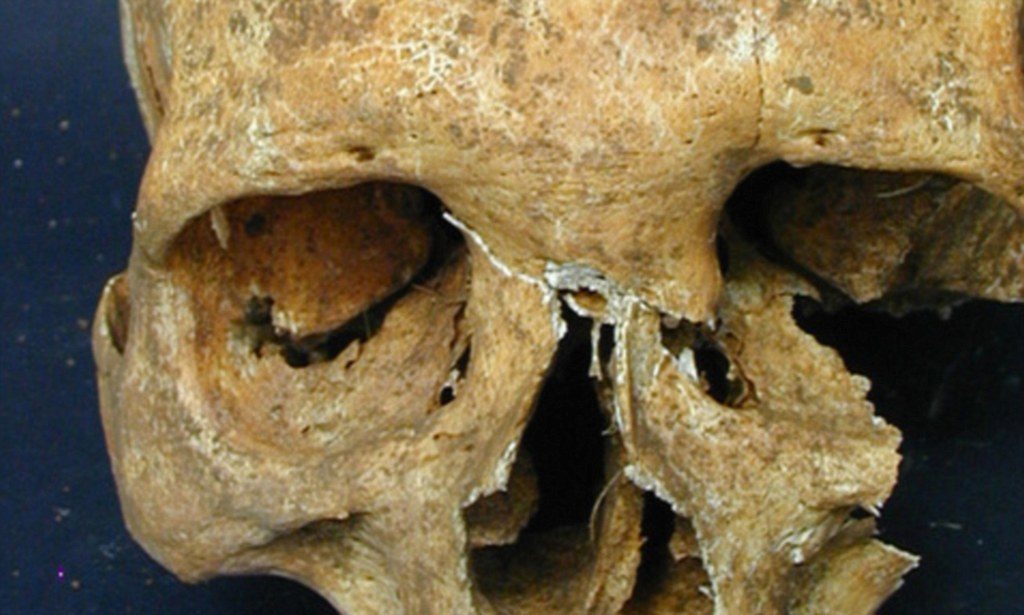
Crushed limbs made the decision still more difficult. A clean wound might be washed, closed, dressed, or left to drain, but a limb smashed by a cart wheel, horse, falling stone, mill machinery, siege engine, or battlefield weapon could present a chaos of torn flesh, splintered bone, ruptured vessels, damaged sinews, and embedded dirt, cloth, leather, metal, or wood. Medieval surgery had methods for fractures and dislocations, and bone-setting was a recognized practical skill, but not every broken limb could be restored. A simple fracture, if properly reduced and immobilized, might heal well enough for future use; a shattered limb with exposed bone and torn soft tissue belonged to a different order of danger. Compound fractures were dangerous because the broken bone communicated with the outside world through the wound, creating a route for corruption, bleeding, and later infection. If bone fragments protruded, if flesh was pulped, if sensation disappeared, or if the limb became cold and discolored, the surgeon might conclude that binding and splinting were no longer enough. The decision would have been grim because a mangled limb could mislead the practitioner. At first, the patient might still be alive, speaking, and even hopeful; the limb might seem damaged but not yet dead. Only later could swelling, odor, discoloration, fever, and discharge reveal the deeper failure. The surgeon had to judge not only what the limb looked like in the moment, but what it was likely to become. The choice was agonizing because amputation itself could kill. Yet leaving a mangled limb attached could also mean slow death through fever, putrefaction, and exhaustion.
Battlefield trauma brought these problems together in concentrated form. Medieval war did not produce only elegant sword cuts. It produced shattered knees, hacked wrists, pierced thighs, crushed feet, severed fingers, broken arms, infected arrow wounds, burns from siege warfare, and bodies trampled by horses or dragged through mud. Many men probably died before any surgical decision could be made, either from blood loss, shock, exposure, or the simple impossibility of reaching care in time. Others survived the first injury only to face the slower dangers of swelling, embedded fragments, foul drainage, and fever. A battlefield surgeon, barber-surgeon, or experienced wound healer might try to extract missiles, cut away ruined tissue, cauterize bleeding, dress wounds with wine or other preparations, and immobilize damaged limbs. But when a limb was too badly destroyed, amputation could become thinkable not because it promised safety, but because every other option had become less plausible. In war, the decision was often made under pressure, with too many wounded, too few hands, poor sanitation, and uncertain aftercare.
Failed healing also mattered. Amputation was not always an immediate response to injury; it could come after days, weeks, or even longer periods of attempted treatment. A wound might initially appear manageable, only to worsen. A fracture might be set but then swell, ulcerate, or discharge foul matter. A burn might deepen. An ulcer might spread. A frostbitten foot might blacken. A surgical wound might refuse to close. Medieval practitioners watched for whether the body was producing signs of healthy repair or signs of corruption. The boundary between patience and delay was perilous. To cut too early might destroy a limb that could have healed; to wait too long might allow the patient to weaken beyond recovery. This is one reason medieval surgical writing placed such importance on prognosis. The surgeon had to read the wound’s future before that future became irreversible.
Amputation became thinkable at the intersection of observation, fear, and necessity. It was not simply a procedure for “bad wounds,” but an answer to wounds that had become existential threats. Gangrene suggested that death had entered the limb. Crushing suggested that the member’s structure could no longer sustain life or function. Battlefield trauma overwhelmed ordinary repair. Failed healing showed that the body’s own powers were losing the struggle. In each case, the medieval surgeon faced the same brutal calculation: a person might live with one fewer limb, but not with a limb that was carrying death into the rest of the body. That calculation did not make amputation routine, and it did not make the operation safe. It made amputation morally and medically imaginable when the wounded part seemed to have ceased being a member and become a source of mortal danger. The surgeon had to decide whether the body could be saved by accepting permanent loss, and that decision was surrounded by uncertainty. A limb that looked hopeless might possibly have survived; a limb that was spared might later kill; a patient who endured the operation might still die from bleeding, shock, fever, or infection. The tragedy of medieval amputation was that the operation could be both medically reasonable and almost unbearably dangerous. It became thinkable only when the alternatives had become worse.
The Battlefield Limb: War, Weapons, Horses, Arrows, Axes, and Gunpowder

War made amputation imaginable because war produced wounds that overwhelmed ordinary repair. Medieval combat was not a clean contest of sword against sword, but a disorderly collision of metal, wood, stone, animal force, mud, fire, exhaustion, and panic. A limb might be split by an axe, pierced by an arrow, smashed by a mace, crushed under a horse, pinned beneath a wagon, burned during siege fighting, or broken by a fall from a wall or ladder. Many wounds that look dramatic in chronicles were probably less surgically important than the injuries that shattered structure: joints destroyed, bones splintered, hands hacked apart, feet pulped, thighs penetrated deeply enough to bleed or rot, and arms made useless by compound fractures. A medieval soldier might survive the first blow only to face a second enemy in the wound itself. Dirt, cloth, leather, rusted mail links, arrow fragments, splinters, and pieces of bone could remain inside the body, turning an injury from a visible cut into a continuing source of corruption.
Different weapons created different surgical problems. Swords and knives could produce relatively clean incised wounds if they cut sharply and did not shatter bone, though even these could be deadly if they opened major vessels, penetrated joints, or damaged tendons in the hand, wrist, ankle, or knee. Axes, bills, polearms, and heavy blades could chop through flesh and bone with more destructive force, leaving ragged tissue and unstable fragments. A blow from a poleaxe or billhook might not simply cut the limb but tear it open, split bone, expose marrow, and leave flaps of flesh that were difficult to clean or close. Maces, clubs, stones, and hammer-like weapons often damaged the body by crushing rather than cutting, which made their consequences harder to judge at first glance. A limb might remain attached but internally ruined, with vessels, sinews, nerves, and bone injured beyond practical recovery. Such wounds were dangerous precisely because they could look less spectacular than a severed member while being more lethal over time. Blood supply might be damaged, sensation lost, bone splintered, and tissue slowly mortified beneath skin that had not fully opened. Arrows and crossbow bolts raised still another problem: they could lodge deeply, carry foreign matter into the wound, break during extraction, or create narrow channels that hid the true extent of damage. Barbed or socketed heads could resist removal, and a shaft might be cut away while the metal remained buried near bone or joint. Medieval surgeons wrote seriously about removing missiles not because the task was theatrical, but because a wound could not heal properly if the thing that caused it remained inside. The weapon determined not only the injury’s appearance, but the surgeon’s whole chain of decisions: whether to pull, cut, probe, cauterize, splint, drain, wait, or despair of the limb altogether.
Horses deserve special attention because mounted warfare turned the animal itself into an instrument of trauma. The warhorse was not merely transportation; it was weight, speed, height, and panic. A man thrown from the saddle might break an arm, crush a leg, or be dragged by equipment. A fallen horse could trap a rider beneath hundreds of pounds of living mass. Infantry caught in a charge could be knocked down, stepped on, or crushed in the press of bodies. Even outside formal battle, military movement created opportunities for injury: carts overturned, siege equipment shifted, bridges failed, camps caught fire, and men exhausted by march or hunger became less able to protect themselves. These injuries could produce the kind of limb damage that challenged medieval care because they were not always clean wounds with clear edges. They were crushed, contaminated, delayed, and complicated by transport. By the time a surgeon saw the patient, the limb might already be swelling, cooling, blackening, or leaking foul matter.
The battlefield also forced brutal triage, even when medieval writers did not use that modern word. A surgeon, barber-surgeon, or experienced wound healer could rarely give each patient the careful attention imagined in learned surgical texts. After a battle, there might be too many injured men, too little clean water, too few assistants, limited wine or dressings, exhausted attendants, and no certainty that the patient could rest afterward. Some men lay unattended for hours or days if the field remained unsafe, or if social rank determined who was rescued first. Others were moved roughly, worsening fractures and bleeding. Transport itself could become part of the injury: a broken leg jolted in a cart, a wounded arm bound too tightly or too loosely, a foot left cold and wet, a thigh wound contaminated by mud, straw, or clothing. The surgeon had to decide which wounds could be dressed, which missiles could be extracted, which fractures could be set, which bleeding could be controlled, and which limbs had already become hopeless. He also had to judge whether the patient had enough strength to survive an operation. A young nobleman with attendants, wine, shelter, and food might be a very different surgical prospect from an exhausted infantryman lying in the open. Amputation was not simply a technical choice but a logistical one. A limb that might have been saved in a stable household, with time, warmth, food, and repeated care, might be lost in camp because the conditions for preservation did not exist. War compressed medical judgment into crisis, and crisis made the threshold for cutting both more urgent and more uncertain.
Gunpowder weapons complicated this older world of wound care. Late medieval firearms and artillery did not immediately replace swords, arrows, and lances, but they introduced new patterns of damage and new uncertainty. Gunshot wounds could burn, tear, lodge projectiles, shatter bone, and drive foreign matter deep into tissue. Cannon and handguns produced injuries that often looked more destructive than traditional cutting wounds, and they helped intensify surgical debate over whether such wounds were poisoned, burned, contaminated, or simply mechanically devastating. Much of the famous early modern debate over gunshot wounds belongs just beyond the medieval period, notably with Ambroise Paré in the sixteenth century, but the late medieval battlefield had already begun to confront the problem. Surgeons inherited older tools of cautery, extraction, dressing, and debridement, then faced wounds whose depth and violence strained those methods. In the transition from arrow to bullet and from siege stone to cannon shot, the limb became harder to save because the injury was less likely to respect the body’s natural lines.
The battlefield limb reveals medieval surgery at its most exposed. Learned texts might describe orderly treatment, but war presented bodies in disorder: bleeding, broken, contaminated, frightened, and often far from sustained care. Yet this does not mean battlefield medicine was mere chaos. Repeated exposure to traumatic injury gave practitioners practical experience that no classroom could fully supply. They learned which wounds bled too much, which limbs darkened, which fractures stank, which arrowheads had to come out, and which patients still had enough strength to endure intervention. Amputation emerged from this harsh education as both a failure and a form of knowledge. It meant that the limb could not be restored, but it also meant that the surgeon recognized a difference between a damaged member and a deadly one. War did not invent medieval amputation, but it made the logic of amputation brutally visible: in the wreckage of combat, survival sometimes required cutting away what battle had already destroyed.
Pain Before Anesthesia: Wine, Opium, Mandrake, Henbane, Hemlock, and the Soporific Sponge
Pain was the central terror of medieval amputation, and no account of the operation can treat it as a minor inconvenience. Before modern anesthesia, surgery took place in a world where the patient’s agony was expected, feared, managed imperfectly, and sometimes interpreted through religious or moral ideas about suffering. Medieval surgeons knew pain mattered. A screaming, struggling patient could make an operation more dangerous, increase bleeding, exhaust the body, and prevent the surgeon from cutting with precision. But knowing pain mattered did not mean being able to abolish it. The medieval patient might be given wine, strong drink, herbal preparations, prayers, reassurance, or physical restraint, yet the cut itself remained a bodily catastrophe. Amputation was not simply a test of the surgeon’s hand. It was a test of the patient’s endurance, the assistants’ strength, and the household or military community gathered around the wounded body.
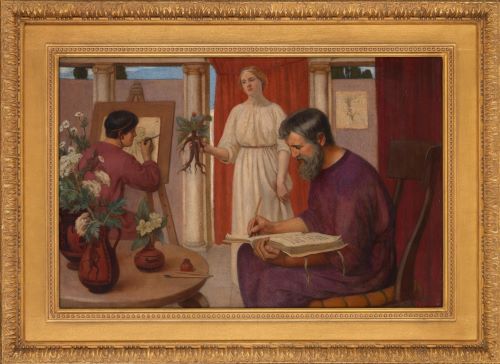
Medieval practitioners did possess substances that could dull consciousness or reduce sensation. Opium, mandrake, henbane, hemlock, lettuce, poppy, and other plants appeared in learned and practical medical traditions as sedatives, analgesics, or sleep-inducing ingredients. Wine and other strong alcohol could be used to calm, numb, or stupefy, though its effects were limited and unpredictable. The famous soporific sponge belonged to this same world of attempted surgical sedation. In some recipes, a sponge was soaked in a mixture of narcotic herbs, dried, and later moistened so that the patient could inhale its vapors before an operation. The idea was not absurd. These plants contained powerful compounds capable of altering consciousness, producing sleep, confusion, insensibility, delirium, or poisoning. But that power was precisely the problem. Medieval drug preparation could vary enormously according to plant strength, harvest, storage, mixture, dosage, and the patient’s own condition. A preparation strong enough to sedate might also be strong enough to kill.
Theodoric Borgognoni’s surgical writing is important here because it shows that some medieval surgeons took anesthesia-like preparations seriously and integrated them into a broader program of operative care. Theodoric’s reputation has often been linked to cleaner wound treatment and opposition to excessive suppuration, but his surgical world also included recipes meant to induce sleep before painful cutting. Such evidence should keep us from imagining medieval surgeons as indifferent to suffering. They were not modern anesthetists, but they were not unaware that pain could be medically and psychologically devastating. The surgical texts that preserve these recipes reveal a practical imagination trying to solve one of surgery’s central problems: how to make the body still enough, and the mind distant enough, for cutting to be possible. The soporific sponge, narcotic drinks, and herbal sedatives belonged to a continuum of pain management that also included timing, restraint, speed, assistants, and the surgeon’s effort to minimize unnecessary handling. The surviving recipes should not be romanticized into reliable anesthesia. A patient who inhaled or drank a narcotic preparation might become drowsy, confused, partially insensible, or easier to restrain, but might also wake during the operation, vomit, struggle, stop breathing, or drift into a dangerous stupor. The very ingredients that promised relief (mandrake, opium, henbane, hemlock) were medically potent and potentially lethal. Without standardized dosing, controlled inhalation, pulse monitoring, oxygen, airway management, or any modern understanding of pharmacology, medieval sedation remained a dangerous art of approximation. Medieval pain management was real, but it was unstable, uneven, and terrifyingly imprecise.
This uncertainty helps explain the importance of speed. The rapid medieval operation was not merely a sign of crude technique; it was also a response to the limits of pain control. The shorter the cutting, the less time the patient had to struggle, faint, bleed, or collapse. Assistants might hold the patient down, bind the limb, steady the body, or help the surgeon maintain access to the operative site. The patient’s cries, movements, and fear were part of the practical environment of surgery. A surgeon needed courage not only because cutting flesh was difficult, but because cutting flesh under the pressure of human suffering required emotional discipline. Medieval authors inherited from antiquity the ideal of a surgeon who was steady-handed, sharp-eyed, neither rash nor timid, and capable of acting despite distress. In amputation, that ideal became almost unbearable: compassion had to coexist with firmness, and mercy might mean continuing to cut.
Pain also shaped how medieval amputation was remembered and understood. For the patient, the operation could become a threshold experience between life and death, sin and endurance, terror and deliverance. For witnesses, it dramatized the violence hidden inside healing. For religious interpreters, suffering might be folded into broader Christian ideas of patience, penance, martyrdom, charity, or divine testing, though such meanings did not make the pain less physically real. The danger for modern readers is to imagine two false extremes: either that medieval patients simply endured pain without complaint, or that medieval surgeons had no meaningful tools to manage it. The truth lies between those poles. Medieval medicine tried to soften surgical pain with drugs, drink, technique, speed, restraint, prayer, and experience. Sometimes those measures helped. Sometimes they failed completely. The amputated limb was preceded not only by diagnosis and decision, but by an attempt (partial, risky, and deeply human) to bring the patient close enough to insensibility that the last cut could be survived.
The Operation Itself: Speed, Joints, Saws, Knives, Restraint, and Shock
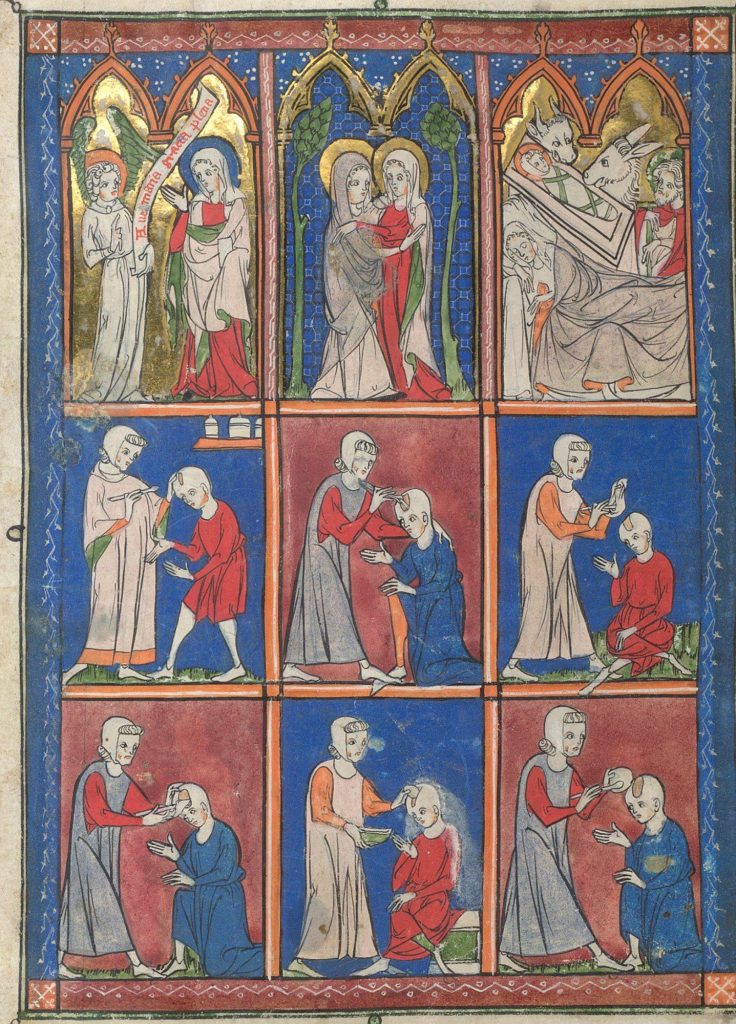
The medieval amputation, when it finally occurred, was not a calm mechanical procedure but a crisis condensed into minutes. Everything that had come before (the diagnosis of corruption, the failure of dressings, the worsening smell, the spreading discoloration, the shattered bone, the patient’s weakening condition) pressed toward a single violent decision. The surgeon had to act quickly because the operation itself threatened to kill. Pain could send the patient into panic or collapse. Blood loss could become uncontrollable. Shock, though not understood in modern physiological terms, was visible in faintness, coldness, weakness, pallor, trembling, and the terrifying possibility that the patient might die under the knife. Speed was not merely a sign of technical roughness. It was part of the operation’s survival logic. The longer the body remained open, the greater the danger.
The exact method varied according to the limb, the injury, the practitioner, and the setting. There was no single universal medieval amputation procedure. A learned surgeon working in a town or court might proceed differently from a military practitioner in camp, and both might differ from a barber-surgeon responding to an emergency in a household. Some amputations may have involved cutting through soft tissue first and then sawing bone; others may have taken advantage of joints when the damaged member could be separated there more quickly. Operating through or near a joint could reduce the need to saw through thick bone, but it was not always anatomically or medically possible. The location of healthy tissue mattered. A surgeon could not simply cut wherever the limb was already visibly ruined if the surrounding flesh was dead, cold, infected, or unable to heal. The practical question was where living tissue began and where the body might still close around a stump.
The instruments themselves belonged to a long surgical tradition. Medieval texts and images show knives, scalpels, saws, probes, hooks, forceps, cautery irons, needles, and other tools, though the instruments available in any particular operation would have depended on wealth, place, and practitioner. A knife could divide skin, flesh, sinew, and muscle; a saw could take bone where joint separation was not feasible; hooks or forceps might help handle tissue, vessels, fragments, or foreign matter; cautery irons could be heated for bleeding or corrupted tissue. These instruments also required maintenance, preparation, and familiarity. A dull blade lengthened agony and worsened tearing; a badly handled saw could splinter bone; an improperly heated cautery might fail to seal bleeding or destroy tissue without control. The surgeon’s tools were not neutral objects but extensions of training, habit, and material circumstance. A court surgeon, an urban master, a military practitioner, and a village barber might all possess different equipment, and those differences could shape what kinds of operations were possible. The modern temptation is to imagine these tools as crude because they were premodern, but that is too easy. Many medieval instruments were carefully designed for specific tasks. The problem was not simply the absence of tools, but the absence of reliable anesthesia, antisepsis, vascular control, transfusion, and postoperative infection management. A sharp knife in a skilled hand could cut efficiently. It could not make the operation safe.
Restraint was part of the procedure because pain management was uncertain. Even when wine, opium, mandrake, henbane, or a soporific preparation had been used, the patient might remain conscious, semi-conscious, delirious, or suddenly reactive. Assistants were essential. They might hold the patient down, steady the limb, keep the body from twisting, pass instruments, heat irons, manage cloths and bandages, or help the surgeon work despite cries, blood, and movement. The scene was social as well as surgical. Family members, servants, apprentices, military comrades, religious attendants, or household women might be nearby, whether as helpers or witnesses. The patient’s body had to be transformed into something still enough to operate on, but the person did not disappear into passivity. Fear, resistance, fainting, prayer, screaming, and exhaustion all belonged to the lived reality of the operation.
Shock and hemorrhage were the enemies that speed alone could not defeat. Medieval surgeons knew that excessive bleeding killed, even if they did not describe circulation in modern terms. They could use pressure, ligatures in some contexts, tight bandaging, styptic substances, cautery, and positioning, but major vessels remained dangerous. The removal of a limb opened the body at a scale far beyond ordinary wound care. If blood poured too quickly, if the patient fainted and did not recover, if the body became cold and weak, the operation could become a death scene almost immediately. Even a technically successful removal might fail if the body could not withstand the violence of the event. A patient weakened by fever, hunger, blood loss, age, infection, or exhaustion entered the operation with less reserve, and the surgeon had no modern way to replace what the patient lost. The danger did not end with the first rush of bleeding, either. Secondary hemorrhage could occur after the stump was dressed, especially if clots failed, tissue sloughed, or a vessel reopened. This is why amputation was not merely a matter of cutting off the diseased part. It required the surgeon to move from incision to separation to bleeding control to dressing with little margin for hesitation. The entire operation depended on sequence: expose, cut, separate, control, seal, cover, and then hope the body could recover from what had just been done to it. In a successful operation, the limb was removed, bleeding was checked, and the stump was made capable of receiving dressings. In a failed one, the patient might die before recovery could even begin.
The operation itself reveals the grim intelligence of medieval surgery. It was violent because it had to pass through flesh and bone. It was rapid because pain, bleeding, and shock made delay dangerous. It relied on restraint because sedation was uncertain. It used knives and saws because damaged limbs could not always be separated cleanly by nature or injury. It favored viable tissue because the stump had to live after the limb was gone. None of this should be mistaken for modern surgical confidence. The medieval surgeon could not see microbes, replace blood, monitor oxygen, intubate a failing patient, or prevent sepsis with antibiotics. Yet the operation was not meaningless hacking. It was a disciplined emergency, shaped by inherited technique and practical terror, in which the surgeon tried to do something almost contradictory: injure the body quickly enough, and in the right place, so that the body might survive.
Blood and Fire: Hemorrhage, Cautery, Styptics, Compression, and Ligature
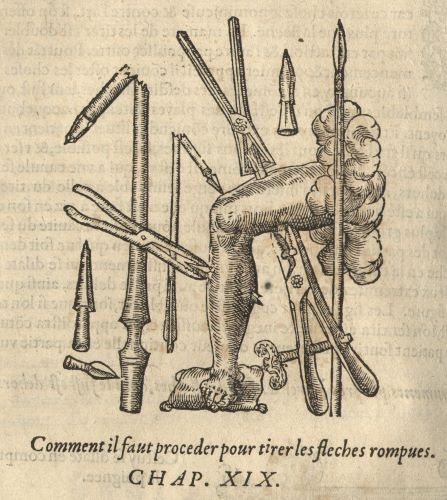
The greatest immediate danger in medieval amputation was not the severed limb itself, but the blood that followed it. A surgeon could cut quickly, choose the soundest available tissue, and remove the diseased member with technical competence, yet still lose the patient in moments if bleeding could not be controlled. Medieval practitioners did not understand blood circulation in the post-Harveyan sense, but they knew perfectly well that blood loss killed. They saw patients grow pale, cold, faint, weak, silent, and finally dead when the body emptied faster than it could endure. Hemorrhage was not an incidental complication of amputation. It was the central crisis around which the operation had to be organized. The surgeon’s task was not only to divide flesh and bone, but to close the body again before life ran out of it.
Compression was one of the simplest and most immediate responses. Pressure could be applied by hand, cloth, bandage, pad, or tight wrapping to slow or stop bleeding from smaller vessels and raw surfaces. This was practical knowledge available even outside learned surgical settings, because anyone who treated wounds understood that pressure could make blood flow less freely. In amputation, pressure alone was often insufficient. The scale of the wound was too large, the vessels too dangerous, and the patient too vulnerable. Still, compression mattered before, during, and after the cut. A limb might be bound above the site of operation to reduce bleeding; assistants might press cloths against the stump while the surgeon prepared cautery or dressings; bandages might be tightened after the operation to hold the wound closed and encourage clotting. Such measures were crude by modern standards, but they show that medieval hemorrhage control was not simply a matter of burning everything in sight. It involved a sequence of pressure, timing, heat, topical agents, and repeated observation.
Cautery became the most powerful and most feared symbol of premodern surgical bleeding control. Heated irons could be applied to vessels, wound surfaces, or corrupted tissue in an effort to seal, dry, destroy, and close. To modern readers, the cautery iron often appears as the very image of medieval cruelty: red-hot metal pressed against a fresh stump. Yet within medieval surgery, cautery had a rational place. Heat could stop bleeding when other methods failed. It could also be understood as drying excessive moisture, resisting putrefaction, and consuming tissue that had become dangerous or dead. The same act belonged to several overlapping logics: practical hemostasis, humoral drying, anti-corruption, and surgical closure. Cautery also gave the surgeon something immediate in a situation where delay was deadly. A compress might slip, a bandage might soak through, a vessel might continue to pulse, and a patient might fade visibly before the operator’s eyes; the heated iron promised a direct and forceful answer to that crisis. It transformed an open, wet, bleeding surface into one that appeared sealed, blackened, and controlled. That visible transformation mattered in a medical culture that read the wound through sight, smell, touch, heat, wetness, dryness, and the changing behavior of flesh. Fire could look like mastery over the terrifying instability of blood. Yet its risks were obvious. It added pain to pain, and if applied poorly it could deepen injury, produce burns that later sloughed, or damage tissue needed for healing. A stump seared too aggressively might be less likely to close well; a cautery applied too timidly might fail to stop the bleeding. The surgeon had to use an instrument that was both therapeutic and destructive, one that saved by burning. But when the choice seemed to lie between fire and fatal bleeding, fire could appear as the lesser terror.
Styptic substances offered another way to think about blood. Medieval surgeons and healers used powders, plant preparations, minerals, resins, gums, ashes, boles, alum-like substances, and astringent compounds to dry wounds, constrict tissue, and encourage bleeding to stop. Some were applied directly; others were incorporated into dressings. The language surrounding these materials often emphasized drying, binding, cooling, consolidating, or resisting corruption. A styptic did not replace the need for pressure or cautery in a major amputation, but it could help manage oozing surfaces, smaller vessels, and the wound environment after the principal bleeding had been addressed. These preparations also reveal how medieval medicine blended observation and theory. A substance that seemed to dry, tighten, harden, or close tissue could be interpreted through humoral qualities, while its practical usefulness was judged by whether bleeding slowed and the wound appeared more stable. The result was not modern pharmacology, but it was not random either. It was a therapeutic vocabulary built from touch, sight, smell, texture, repetition, and inherited authority.
Ligature presents a more complicated problem. Later surgical history often celebrates the tying of blood vessels as a major advance, especially in connection with early modern surgery and Ambroise Paré. But medieval practice should not be described as though surgeons either fully possessed or entirely lacked the idea of tying. The use of threads, bindings, and constricting techniques existed in various surgical contexts, and some medieval authors knew that vessels or bleeding structures could be tied, compressed, or otherwise secured. What was missing was not necessarily the bare concept of ligature, but its reliable, systematic use in amputation as a replacement for cautery. Major limb removal demanded rapid and dependable control of large vessels, and without modern anatomy, clamps, sterile thread, anesthesia, and postoperative infection control, ligature was not a simple solution. A tied vessel could slip, reopen, suppurate, or become a focus of later trouble. Cautery remained attractive because it was immediate, visible, and forceful. The medieval surgeon did not choose between “ignorant fire” and “scientific ligature” in the simple way older histories sometimes imply. He chose among imperfect methods in a situation where failure was often fatal.
The control of blood reveals the mixed character of medieval surgical intelligence. Medieval practitioners knew that bleeding had to be stopped; they had inherited techniques for compression, cautery, styptics, bandaging, and sometimes tying; and they made practical judgments about which method fit the wound before them. But their tools could not overcome the deeper vulnerabilities of the premodern operation. They could not replace lost blood, monitor circulation, transfuse, maintain sterile vascular control, or reliably prevent later infection. Even when bleeding was checked, the patient might die from shock, secondary hemorrhage, fever, or stump corruption. Blood and fire stood together at the center of medieval amputation. Blood represented the life escaping from the opened body; fire represented the violent effort to hold that life in. The cauterized stump was not simply a sign of brutality. It was the mark of a medical world that understood the danger in front of it, even when it lacked the means to master it safely.
Wine, Honey, Pus, and Putrefaction: Wound Care After the Cut
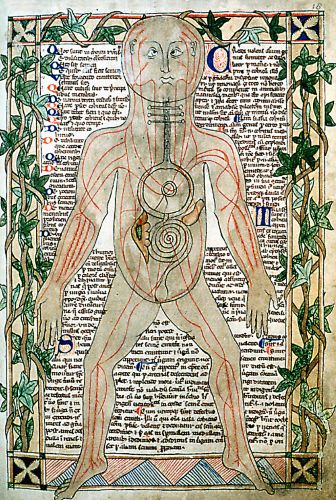
The removal of the limb did not end the crisis. In many ways, it began the longer and more uncertain part of medieval amputation: keeping the stump alive after the body had been violently reduced. A patient who survived the knife, saw, cautery, blood loss, and shock still faced days or weeks in which the wound might reopen, rot, swell, bleed again, discharge foul matter, or turn feverish. The stump was not merely the place where the limb had been removed; it was a new wound the body had to accept as a new boundary. The surgeon’s task shifted from cutting to watching. Was the flesh warm in the right way, or hot with corruption? Was moisture part of healing, or the beginning of putrefaction? Did the dressing smell clean, medicinal, sour, sweet, or foul? Did the patient regain strength, or sink into fever, delirium, chills, and exhaustion? Medieval postoperative care depended on this close reading of the wounded body, because the operation’s apparent success could be undone long after the severed limb was gone.
Wine, vinegar, honey, oils, herbs, salves, powders, and linen dressings all belonged to the world of medieval wound care. Wine could be used to wash or moisten wounds, not because medieval surgeons understood antisepsis in the modern microbiological sense, but because it was associated with cleansing, drying, strengthening, and resisting corruption. Honey likewise had a long medical history as a substance that soothed, protected, drew, preserved, and helped dress damaged flesh. Modern readers may be tempted to divide these remedies into “real” and “symbolic,” but medieval wound care often worked through both at once. A dressing could be chosen because an authority recommended it, because its qualities fit humoral theory, because it seemed to dry or soften as needed, because it smelled better than the wound, because previous patients had improved under it, or because it created a protective barrier between raw tissue and the outside world. Some substances used in medieval dressings did possess properties that could inhibit microbial growth, reduce moisture, or protect tissue, even if their use was explained in very different terms. The important point is not that medieval surgeons secretly practiced modern antisepsis, but that they sometimes arrived at useful wound practices through observation, inheritance, analogy, and repeated experience.
The problem of pus shows how complicated medieval wound care could be. Older surgical traditions often treated suppuration as a stage in healing when pus appeared thick, white, and relatively odorless. This was sometimes later summarized under the idea of “laudable pus,” though the phrase can oversimplify a range of views. Medieval surgeons did not simply praise all discharge. They distinguished between better and worse forms of matter, between drainage that suggested the body was expelling harmful material and foul corruption that suggested the wound was failing. Theodoric Borgognoni and Henri de Mondeville are important because they challenged excessive reliance on suppuration and emphasized cleaner, less corruptive forms of healing. Their criticism matters because it disrupts the common myth that medieval wound care deliberately sought infection. What many practitioners sought was not infection as modern medicine understands it, but a visible process by which the wound moved from danger toward closure. The difficulty was that without germ theory, sterile technique, or antibiotics, the boundary between useful drainage and deadly infection could be dangerously hard to manage.
Putrefaction remained the great postoperative fear. A stump that blackened, stank, softened, sloughed, or discharged foul matter suggested that the operation had failed to separate the living body from corruption. The surgeon might reopen, drain, cut away dead tissue, change dressings, apply drying or cleansing substances, use cautery again, or attempt to strengthen the patient through food, rest, warmth, and regimen. Yet each intervention carried its own dangers. Too much moisture could be read as corruption; too much drying could damage tissue needed for closure. A wound closed too soon might trap harmful matter; a wound left open too long might invite further contamination. Bandages had to protect without suffocating the flesh, compress without strangling, and absorb without becoming a source of decay. The problem was made worse by the fact that medieval practitioners had to interpret all of this through visible and sensory signs rather than through laboratory knowledge. They could not culture bacteria, measure inflammatory markers, distinguish clean granulation from infected tissue by modern criteria, or treat sepsis once it had entered the bloodstream. Instead, they relied on the wound’s changing appearance and the patient’s changing condition: the color of the stump, the smell of the dressing, the thickness or thinness of discharge, the presence of fever, the patient’s appetite, sleep, pulse as felt by the hand, strength of voice, and ability to endure further handling. A surgeon might believe he had removed the corrupted limb only to discover that corruption had already advanced beyond the cut, or that the new wound itself had become the place where death resumed its work. Medieval surgeons cared for the stump as a changing landscape. They had to manage heat, cold, wetness, dryness, smell, color, pain, swelling, discharge, bleeding, and the patient’s general strength, all without the invisible map of bacteria, immune response, and systemic sepsis that modern medicine would later provide.
Recovery after amputation was not a single event but a prolonged negotiation between the body and the wound. The patient needed food, water, warmth, sleep, clean or at least regularly changed dressings, help moving, and protection from further injury. Poorer patients, soldiers, travelers, and laborers faced grim odds because wound care required time and resources as much as surgical skill. A wealthy patient might receive repeated visits, better linens, attendants, careful diet, and a cleaner resting place; a poor patient might have to depend on family, charity, or institutional care while losing the very limb that made work possible. Medieval amputation could succeed only if the body survived the operation and then survived the wound’s aftermath. Wine, honey, pus, and putrefaction were not minor details in that story. They were the daily language of survival after the last cut, the substances and signs through which medieval practitioners tried to decide whether the stump was becoming part of the living body or dragging the patient back toward death.
The Amputee After Survival: Disability, Work, Charity, Prosthetics, Begging, and Household Dependence

Survival after medieval amputation was not the end of the story but the beginning of another life, often harder to document than the operation itself. Surgical texts tend to focus on the wound, the instruments, the dressing, the bleeding, and the technical problem of preserving the patient. They rarely follow the amputee through the months and years after the stump healed. Yet for the person who lived, the lost limb became a permanent condition around which work, movement, status, dependence, pain, and identity had to be reorganized. A healed stump was a medical success only in the narrowest sense. The larger question was whether the survivor could still labor, travel, marry, inherit, serve, fight, pray, beg, or remain inside the household economy that had once depended on the full use of the body.
Medieval disability was not simply a biological fact. It was produced by the meeting of bodily impairment with work, social expectation, poverty, charity, law, and reputation. A missing hand meant something different for a scribe, a plowman, a nobleman, a laundress, a soldier, a monk, a craft apprentice, or a beggar at a church door. A lost foot or leg changed mobility, but its consequences depended on roads, tools, servants, animals, family resources, and the kind of labor expected from the person. Some amputees may have continued to work in altered ways, especially if they had skills that could be adapted or household members who could redistribute labor. Others would have been pushed toward dependency almost immediately. Medieval society was bodily in a blunt economic sense: hands made goods, feet carried burdens, arms wielded tools, legs followed plows, and survival often required daily physical capacity. The loss of a limb could become the loss of livelihood.
Class shaped everything. A wealthy knight who lost a limb might retain land, servants, family honor, and a place within aristocratic memory, even if his military usefulness diminished. A prosperous townsman might be able to hire help, alter his trade, or rely on guild, kin, and property. A poor laborer, by contrast, might have little buffer between impairment and destitution. For the poor, the amputated body could become a public body, visible in streets, parish life, hospital petitions, and acts of almsgiving. Medieval charity did not always separate compassion from judgment. The visibly impaired person might be seen as deserving pity, as a reminder of Christian duty, as a figure of suffering, or as a troubling presence associated with disorder, fraud, or dependence. The amputee who survived the wound might still have to prove need, negotiate shame, and accept forms of assistance that reinforced social inferiority.
Hospitals, monasteries, confraternities, guilds, parishes, and households all formed part of the possible support network, but none guaranteed security. Medieval hospitals were often places of shelter, prayer, food, and care rather than centers of aggressive medical treatment. They could provide a bed, a meal, spiritual comfort, and some nursing, particularly for the poor, travelers, pilgrims, the elderly, and the chronically ill. Guilds and confraternities might help members in sickness or misfortune, though such aid depended on membership, status, local custom, and institutional resources. A craftsman who belonged to a guild, a widow connected to a parish charity, a veteran attached to a lord’s household, or a pilgrim received into a hospital might find forms of support unavailable to someone more socially isolated. Families were often the most important support system, but household dependence could be both protective and precarious. Kin could absorb lost labor, adjust tasks, feed the injured person, and provide the long-term care that no surgical text could supply. Yet kin could also be strained by poverty, resentment, inheritance conflict, or the sheer burden of daily assistance. An amputee might remain useful through supervision, childcare, craft adaptation, domestic work, begging on behalf of the household, or religious service. But if the household itself was poor, the impaired survivor could become one more mouth to feed after losing the ability to contribute as before. Survival after the stump healed depended not only on medicine but on the strength of social ties around the injured person.
Prosthetics and assistive devices existed, but their availability should not be overstated. Crutches, staffs, wooden supports, peg legs, modified shoes, hooks, and adapted tools could help some amputees move or work. More elaborate prosthetic devices, including mechanical hands or armored substitutes, are better documented for later medieval and early modern elites, such as those whose status justified expense and craftsmanship. Most amputees probably relied on simpler technologies: a crutch, a stick, a padded stump, a wooden support, a sling, a modified tool, or the help of another person. These devices mattered because they show that medieval people did not necessarily treat impairment as total incapacity. They improvised with wood, leather, cloth, metal, and household labor. But prosthetic adaptation was not a neutral technical solution. A device had to be made, fitted, maintained, tolerated by the body, and accepted socially. It could restore some function while also making the loss more visible.
Begging occupied a complicated place in the amputee’s possible future. A missing limb could make need undeniable, and visible impairment could attract alms in a Christian culture that valued charity as a work of mercy. The church door, market street, pilgrimage route, and hospital gate could become spaces where the damaged body asked the community to recognize obligation. A person who had lost a leg or hand might sit near a parish church, move along a pilgrimage road, or appear at places where giving was both socially expected and spiritually meaningful. The act of giving to the visibly impaired poor allowed donors to perform mercy, but it also placed the amputee in a position of dependence on public pity. Yet begging was never only compassion. Medieval authorities often worried about vagrancy, false poverty, disorderly mobility, and those who appeared able-bodied but claimed need. The amputee’s visible wound might protect him or her from some suspicion, but it could also lock the person into a public identity of dependence. The body became a document: proof of suffering, reason for charity, sign of misfortune, and sometimes a spectacle. Survival after amputation could force a person into a public performance of need that was both lifesaving and humiliating. The stump that had once been a surgical wound became a social credential, read by strangers as evidence of loss, legitimacy, and poverty.
The medieval amputee exposes the limits of defining surgical success by survival alone. A surgeon might remove the limb, stop the bleeding, dress the stump, and watch the wound close; the community then had to decide what kind of life remained possible. Disability was negotiated every day through tools, charity, labor, family, law, devotion, shame, and endurance. Some amputees surely adapted with remarkable resilience, folding impairment into new patterns of work and dependence. Others were abandoned, impoverished, institutionalized, or forced into begging. The lost limb did not have one meaning. It could be a sign of medical rescue, battlefield sacrifice, divine trial, criminal punishment, poverty, or survival against expectation. What united these lives was not a single experience of disability, but the fact that amputation changed the body from a surgical problem into a social one.
Amputation as Punishment: Hands, Feet, Law, Shame, and Public Authority
![Depiction of public shaming from the seven planets [Swabia], [circa 1465]](https://brewminate.com/wp-content/uploads/2022/07/072422-15-History-Medieval.jpg "Cut Off: How Medieval Amputation Saved and Shattered Lives 14")
Not every medieval amputation was medical. Hands, feet, noses, ears, tongues, and eyes could be damaged or removed by law, vengeance, lordship, or public punishment. This matters because the severed limb belonged to two overlapping worlds: the surgical world that cut in order to save life, and the penal world that cut in order to mark guilt, dishonor, or subjection. A medical amputation tried to separate the living body from a dead or dangerous member; punitive amputation tried to make the body itself carry a legal message. The difference in intention was enormous, but the bodily result could look similar in the archaeological record: a healed stump, a missing hand, an altered foot, a person who survived mutilation and lived afterward with permanent impairment. Medieval amputation cannot be understood only through the operating room, camp, or sickbed. It also has to be understood through the court, scaffold, marketplace, city gate, and lord’s jurisdiction.
The hand was charged with legal meaning. It was the member that stole, struck, forged, swore, wrote, held weapons, sealed agreements, and performed labor. To cut off a hand was not merely to injure the offender; it was to attack the bodily instrument associated with the offense and to leave a sign that others could read. In some legal traditions, mutilation functioned as an alternative to death, ransom, compensation, or imprisonment. A thief, counterfeiter, rebel, oath-breaker, or violent offender might be punished through the visible reduction of the body. The punishment worked because it lasted. A whipping ended, a fine could be paid, even imprisonment might be temporary, but a missing hand followed the person into every future encounter. It made punishment portable. The body became a record that did not require parchment, witness, or memory to speak. Feet carried their own punitive logic. A removed or damaged foot could limit flight, travel, labor, military action, and social mobility. It could mark a person as someone who had been judged and physically reduced by authority. In a world where movement mattered, between village and town, field and market, lordship and pilgrimage, the foot was not a minor member. To damage it was to alter a person’s capacity to escape, work, beg, serve, or return. Punitive injury to feet also reminds us that mutilation was not only symbolic; it had practical consequences. It could create dependency, poverty, and vulnerability long after the spectacle of punishment had passed. A medical amputee might lose a foot because the surgeon hoped to save the body from death; a punished offender might lose a foot because authorities wanted the body to remain alive but diminished, legible, and controlled.
Public shame was central to punitive amputation. Medieval justice often worked through visibility: processions, marketplaces, gates, pillories, gallows, branding, mutilation, and other punishments placed the offender’s body before the community. The point was not only to make the offender suffer, but to teach everyone watching what power could do. A severed hand nailed up, displayed, buried separately, or remembered in local story could become an object lesson in jurisdiction. The wounded body warned others against theft, treason, false coinage, rebellion, or disobedience. Mutilation created a practical problem for the community. A punished offender who survived might be permanently less able to work and more likely to depend on charity, kin, begging, or marginal labor. The law’s mark did not remain confined to the criminal body; it returned to the social world as poverty, stigma, fear, and sometimes pity.
The relationship between punitive and medical amputation is difficult in archaeology. A skeleton with missing hands or feet may suggest judicial mutilation, but interpretation depends on context: cut marks, healing, burial position, associated injuries, location of the grave, comparison with local legal practice, and whether the person survived long enough for bone remodeling. Some cases appear strongly suggestive of punishment when multiple extremities were removed in ways consistent with deliberate cutting and survival or peri-mortem violence. Yet caution is necessary. A missing limb might result from medical amputation, accident, battlefield trauma, postmortem disturbance, taphonomic loss, or punitive mutilation. The strongest interpretations come when skeletal evidence, cut morphology, healing patterns, burial context, and historical law point in the same direction. Even then, the body rarely tells the whole story. It may show that a hand or foot was removed; it cannot always tell us whether the person was condemned, treated, attacked, enslaved, shamed, or rescued.
Punitive amputation complicates the moral history of medieval cutting. It reminds us that the same basic act, removing part of the body, could mean care in one setting and domination in another. The surgeon’s knife and the executioner’s blade both transformed the person permanently, but they belonged to different ethical worlds. Medical amputation aimed, however dangerously, at survival. Penal amputation aimed at authority, deterrence, shame, and bodily inscription. Yet both depended on the medieval body’s public meaning. A limb was never only flesh. It was work, oath, crime, mobility, honor, dependency, and identity. When medieval authorities cut off a hand or foot, they did not simply punish an offense. They turned the body into law made visible.
Saints, Miracles, and the Replaced Limb: Religious Meanings of Cutting and Restoration
Medieval amputation was never only a medical or legal problem, because the body itself was never only biological matter. It was created by God, marked by baptism, disciplined by penance, fed by the Eucharist, displayed in charity, buried with ritual, and imagined as destined for resurrection. A severed limb raised questions that surgery alone could not answer. What did bodily loss mean for the integrity of the person? Could a mutilated body remain whole in the eyes of God? Was suffering a punishment, a trial, a sign of holiness, or simply one of the injuries of a fallen world? These were not abstract questions reserved for theologians. They mattered to wounded people, families, priests, hospital attendants, pilgrims, donors, and communities that had to decide how to interpret the visibly damaged body before them. A missing hand or foot might be seen as evidence of survival, divine testing, criminal penalty, battlefield sacrifice, poverty, or need. Medieval Christianity did not give one simple answer. It could honor bodily suffering, fear bodily corruption, venerate relics made from fragmented bodies, and still insist that the person remained more than the damaged flesh. The same culture that preserved saints’ bones in reliquaries also prayed for the final restoration of all bodies at the resurrection. Amputation forced these tensions into view because it made bodily incompleteness permanent, visible, and spiritually charged.
Saints’ miracles offered one way to imagine a medicine beyond human limits. Medieval hagiography is filled with healings of blindness, paralysis, wounds, ulcers, deformity, madness, infertility, and other afflictions, and these stories often turn on the contrast between ordinary medical failure and divine power. Where surgeons cut, saints restored; where physicians despaired, holy intercession intervened; where the body’s ordinary processes stalled, grace completed what nature could not. This does not mean that miracle stories should be read as clinical reports. Their purpose was devotional, moral, communal, and institutional. They promoted shrines, honored saints, testified to divine mercy, and gave sufferers a language of hope. But they also reveal what medieval people feared and desired from medicine. The perfect miracle was not merely pain relief. It was restoration: the return of function, wholeness, mobility, sight, sensation, or social possibility.
The most famous medieval and early modern example of miraculous limb replacement is the legend of Saints Cosmas and Damian, the physician-saints who came to embody Christian healing without greed. In one influential version of the story, a man with a diseased leg is visited while asleep by the saints, who remove the corrupted limb and replace it with the leg of a recently dead Ethiopian or Moorish man. The tale became a powerful image in art because it staged surgery as miracle: amputation, transplantation, anesthesia-like sleep, bodily restoration, and the defeat of corruption all compressed into a single sacred scene. Its racial imagery also matters. Later artistic versions often emphasized the contrast between the patient’s body and the transplanted dark leg, making the miracle visually unmistakable while also drawing on medieval and early modern ideas about difference, sanctity, death, and bodily exchange. The story should not be treated as evidence that medieval surgeons performed transplantation. Its importance lies elsewhere. It shows a culture imagining the exact thing human surgery could not provide: not just the removal of the dangerous limb, but the restoration of a usable one.
This miracle also clarifies the emotional logic of amputation. Human surgery could save by subtraction. It preserved life by accepting loss. The saints, by contrast, healed by replacement, reversing the mutilation and restoring the body’s functional completeness. That difference mattered profoundly. A medical amputee might live, but with pain, dependence, altered work, and visible impairment. A miraculous patient could be imagined as waking to find the diseased member gone and the body made whole again. The dreamlike structure of the Cosmas and Damian legend is telling: the patient sleeps through what would otherwise be unbearable, and divine surgeons do what earthly surgeons could not do without terror, blood, and risk. The miracle answers the deepest fear of amputation. It says that the lost limb is not beyond divine reach, that the body’s fragmentation is not final, and that a medicine higher than human craft can restore the boundary between life and death.
Religious meaning also shaped the care of real amputees, even when no miracle came. Christian charity made the impaired body a claim upon the community. Feeding, sheltering, washing, and comforting the sick were works of mercy, and the visibly damaged person could remind others of both human fragility and divine obligation. Hospitals, monasteries, shrines, parishes, and confraternities offered imperfect but meaningful structures of support. Religious interpretation could be morally dangerous. Bodily damage might be read as punishment, warning, penance, or sign of inward disorder when injury was associated with crime, poverty, or social marginality. The amputee might be pitied, honored, feared, avoided, suspected, or spiritually romanticized. Medieval religion did not simply soften the social consequences of disability. It gave those consequences a language, sometimes merciful and sometimes stigmatizing.
The resurrection of the body gave this entire subject its final horizon. Medieval theologians debated how God would restore bodies dispersed by decay, fire, animals, water, cannibalism, dismemberment, or mutilation. These debates mattered because amputation posed a concrete version of the problem: if the hand was gone, where was the whole person? Christian doctrine placed bodily restoration beyond human technique. The surgeon might cauterize a stump; the saint might restore a limb in story; God alone could guarantee the final wholeness of the resurrected body. This did not make medieval people indifferent to bodily loss. Quite the opposite: the intensity of resurrection debates shows how deeply bodily integrity mattered. Amputation was terrifying because it changed life here and now, but religious imagination refused to let the severed limb have the last word. In medieval thought, the cut body could remain a living person, a recipient of charity, a possible witness to miracle, and a future participant in a wholeness no earthly surgeon could make.
Why Medieval Amputation Sometimes Worked and So Often Failed
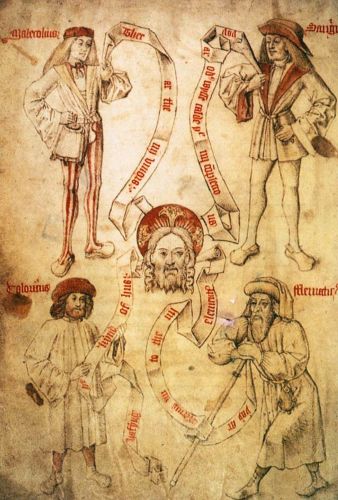
Medieval amputation sometimes worked because the basic logic behind it could be sound. If a limb had become gangrenous, crushed beyond repair, contaminated, or filled with dead tissue, leaving it attached could be more dangerous than removing it. Medieval surgeons did not know bacteria, vascular occlusion, sepsis, or immune response in modern terms, but they could observe that some wounds worsened, blackened, stank, discharged foul matter, and weakened the entire patient. In those cases, amputation functioned as a drastic form of separation. It removed what appeared dead, corrupted, or hopeless so that the rest of the body might continue living. This was not a guaranteed cure, and it was never gentle. But the underlying principle, that the survival of the whole body might require removal of a locally ruined part, was not irrational. It remains one of the reasons amputation has persisted across medical history. It also sometimes worked because bodies can survive astonishing violence under the right conditions. A patient who was relatively young, strong, well nourished, and not already overwhelmed by fever or blood loss had a better chance than one who was exhausted, starving, elderly, or septic. A limb injury that was localized, with enough healthy tissue above the damaged area, offered better odds than a wound whose corruption had already spread. Timing mattered, too. If the surgeon cut after the limb had become clearly dangerous but before the patient’s strength was irretrievably spent, survival was more plausible. Medieval practitioners did not have modern scoring systems or laboratory tests, but they did have prognosis, observation, and experience. They watched color, smell, swelling, heat, discharge, appetite, sleep, voice, strength, and fever. Their categories were not modern, but their attention to the changing patient could be clinically meaningful.
Technique also mattered. A surgeon who cut quickly, chose viable tissue, controlled bleeding, avoided unnecessary tearing, removed dead flesh, and dressed the stump carefully gave the patient a better chance than an operator who hesitated, cut through already corrupted tissue, splintered bone, failed to control hemorrhage, or closed a wound badly. The availability of good instruments, trained assistants, clean linens, wine, honey, styptics, cautery, bandages, and repeated postoperative care could all affect the outcome. None of these things created modern surgery, but they created differences between better and worse medieval surgery. Learned surgical authors were deeply interested in these differences. They argued over wound treatment, suppuration, cautery, instruments, anatomy, and the proper order of intervention because they understood that cutting alone was not enough. A successful amputation required a chain of judgments before, during, and after the operation.
Some medieval wound care may also have helped more than modern caricatures allow. Wine, vinegar, honey, clean or frequently changed linen, drainage, debridement, and protective dressings could sometimes reduce contamination, dry excessive moisture, inhibit foul growth, or create a better wound environment. Medieval explanations were humoral, sensory, and experiential rather than microbiological, but useful practices do not require modern theory to have some effect. Honey could protect and preserve; wine could cleanse; linen could absorb; drainage could prevent trapped matter; removal of dead tissue could reduce the burden of corruption. Theodoric Borgognoni and Henri de Mondeville’s criticism of excessive suppuration is important because it shows that some medieval surgeons were actively thinking about cleaner wound healing, not simply encouraging infection. Medieval medicine did not discover antisepsis, but parts of its wound practice could still support survival in particular cases.
Archaeology confirms that survival was possible. Healed amputations in medieval skeletal remains show that some people lived long enough after limb removal for bone remodeling and bodily adaptation to occur. These cases are precious because they move the story beyond surgical theory. A healed stump means that the patient survived not only the cut but also the bleeding, shock, wound care, infection risk, and early recovery. It also implies care from others. Someone fed the patient, moved the patient, dressed the wound, protected the stump, and helped the survivor endure the period when death remained close. Such evidence does not prove that medieval amputation was commonly successful, nor does it always reveal whether the amputation was medical, punitive, accidental, or traumatic. But it does prove that the medieval body, under certain circumstances, could survive what seems nearly unsurvivable.
Yet medieval amputation so often failed because the operation attacked the body at several of its weakest points at once. Pain could produce panic, fainting, exhaustion, and violent movement. Hemorrhage could kill within minutes. Shock could overwhelm a patient already weakened by injury, fever, hunger, or previous blood loss. Medieval surgeons could use speed, restraint, wine, narcotics, pressure, cautery, styptics, and bandaging, but they could not make the operation physiologically safe. They could not reliably anesthetize the patient, monitor vital signs, replace blood, maintain an airway, or reverse collapse. A technically competent amputation could still fail because the patient’s body simply could not endure the violence required to save it.
Even if the patient survived the operation, infection remained the great unseen enemy. Medieval surgeons could recognize foul wounds, putrefaction, fever, swelling, and discharge, but they could not see bacteria or prevent microbial contamination in the modern sense. They lacked sterile operating rooms, sterilized instruments, rubber gloves, antibiotics, intravenous fluids, blood transfusion, and intensive postoperative care. A stump might look controlled on the day of surgery and then deteriorate as tissue sloughed, vessels reopened, pus collected, fever rose, or corruption spread beyond the cut. Secondary hemorrhage, tetanus, erysipelas, osteomyelitis, gangrene, and systemic sepsis could destroy the patient after everyone believed the worst had passed. The medieval operation was surrounded by delayed dangers. The knife might succeed, and the wound might still kill.
Failure was also social and logistical, not only medical. Recovery required rest, nutrition, shelter, warmth, clean dressings, repeated care, and protection from further injury. Poor patients, soldiers, travelers, servants, prisoners, and laborers often lacked these supports. A noble patient might have attendants, food, bedding, repeated visits, and a protected place to heal; a poor laborer might return to a crowded household, a dirty floor, inadequate food, and family members already struggling to survive. Battlefield patients faced still worse conditions: delayed treatment, rough transport, contaminated wounds, exposure, and too many injured bodies competing for attention. In that sense, medieval amputation failed not simply because medieval surgeons were limited, but because the whole environment of recovery was fragile. Surgery could remove a limb in minutes, but healing demanded weeks of resources many people did not have.
The result is a history that resists both contempt and romanticism. Medieval amputation sometimes worked because medieval practitioners could observe dead tissue, make practical judgments, remove a dangerous limb, control bleeding, dress wounds, and support the body’s own capacity to heal. It so often failed because the same practitioners lacked the modern systems that make major surgery survivable: anesthesia, antisepsis, antibiotics, transfusion, vascular control, monitoring, and reliable postoperative care. The operation was neither barbaric nonsense nor hidden modernity. It was a dangerous rationality practiced under brutal constraints. Medieval surgeons could sometimes save life by cutting away death, but they could not reliably control what followed. That is the central paradox of medieval amputation: the decision to cut could be medically intelligent, while the conditions of cutting made survival uncertain at every stage.
Are We Making Medieval Amputation Too Coherent?
The following video from “History Hit” discusses medieval surgical techniques on the battlefield:
The reader can rightfully claim that “medieval amputation” may be too neat a category for evidence that is fragmentary, uneven, and often indirect. The sources do not give us a stable clinical record of amputations across medieval Europe. They give us learned surgical treatises, scattered legal references, miracle stories, chronicles, archaeological remains, later manuscript traditions, and occasional elite cases. These sources do not speak with one voice. A surgical manual may describe what an author thought should be done, not what most practitioners actually did. A skeleton may preserve the result of limb loss without preserving motive, setting, or technique. A legal text may threaten mutilation without proving how often it was carried out. A miracle story may reveal longing for restoration rather than ordinary experience. To turn all of this into a single narrative risks making medieval amputation look more systematic, intentional, and intellectually unified than it really was.
This challenge is important because I have emphasized rationality, inheritance, and practical judgment. Those themes are necessary correctives to the old caricature of medieval surgery as ignorant butchery, but they carry their own danger. If pushed too far, they can make learned surgical culture stand in for all medieval practice. Surgical writers were not every village healer, every barber-surgeon, every battlefield operator, or every executioner. Their texts are valuable precisely because they are articulate and unusually visible, but that visibility can distort the larger picture. The most vulnerable patients (the poor, rural, enslaved, marginal, or defeated) are often least represented in the sources. Their amputations, if they occurred, may have been rougher, more improvised, more coercive, and less carefully recorded than the learned tradition suggests.
Archaeology complicates the matter further. A healed stump may prove survival, but not necessarily medical success in the way a surgical text would define it. A missing hand or foot might result from therapeutic amputation, judicial mutilation, battlefield trauma, accident, interpersonal violence, postmortem disturbance, or a combination of events. Even when cut marks and bone remodeling show that a limb was deliberately removed and the person lived afterward, the evidence rarely tells us whether the person consented, who performed the cutting, what instruments were used, what substances dressed the wound, or how the community understood the survivor. The same skeletal fact can support several historical possibilities. This is not a weakness of archaeology; it is a reminder that bodies preserve traces, not full stories. The historian must resist the temptation to turn every healed amputation into proof of surgical competence or every mutilated extremity into proof of legal punishment.
This also forces a sharper distinction between medieval explanation and modern interpretation. When modern readers see gangrene, infection, vascular failure, shock, sepsis, or antimicrobial effects in medieval cases, they are translating observed signs into later biomedical language. That translation can be useful, but it can also become misleading if it implies that medieval practitioners were secretly thinking in modern terms. They were not. They interpreted wounds through heat, cold, moisture, dryness, corruption, putrefaction, humors, complexion, regimen, divine providence, and the visible behavior of flesh. Some of their practices may have had effects that modern medicine can partly explain, but those effects do not erase the difference between medieval theory and modern pathology. To say that wine, honey, drainage, debridement, or cautery could sometimes help is not to say that medieval surgeons possessed antisepsis, microbiology, or modern wound science. The success of a practice and the theory used to justify it are not the same thing.
This does not overturn the my argument, but it does discipline it. Medieval amputation should not be presented as a single standardized operation performed by a coherent profession according to stable rules. It was a family of acts clustered around crisis: sometimes therapeutic, sometimes punitive, sometimes military, sometimes improvised, sometimes learned, sometimes desperate, and often invisible except through damaged bone or prescriptive text. That makes the subject less tidy, but more historically revealing. The very incoherence is part of the meaning. Amputation stood where medieval medicine, law, violence, charity, theology, craft, and survival collided. The best interpretation is not that medieval amputation was either barbaric failure or rational proto-modern surgery. It was a dangerous and uneven practice that could be medically intelligent in principle, technically skillful in some cases, socially devastating in aftermath, and still profoundly limited by the evidence, institutions, and biological realities of the age.
Conclusion: The Limb Lost, the Life Preserved
Medieval amputation stood at the edge of what premodern medicine could imagine and endure. It was never an ordinary operation, never a simple technical solution, and never merely the work of a knife or saw. It emerged when the limb had become a crisis: blackened by gangrene, shattered by violence, corrupted by failed healing, crushed beyond repair, or transformed by law into an object of punishment. To remove a hand, foot, arm, or leg was to make a judgment about the relation between part and whole. Could the member still be restored to the living body, or had it become a threat to that body’s survival? The medieval surgeon, barber-surgeon, military practitioner, or legal executioner did not answer that question in the same way, but each acted in a world where the limb was more than tissue. It was work, honor, mobility, guilt, suffering, charity, and identity.
The history of medieval amputation also forces us to abandon the easy myth of ignorant brutality without replacing it with a comforting myth of hidden modernity. Medieval surgeons lacked anesthesia as a reliable science, antibiotics, antiseptic operating rooms, blood transfusion, vascular surgery, laboratory diagnosis, and modern postoperative care. Their patients faced pain, hemorrhage, shock, infection, poverty, and permanent disability. Yet the operation was not senseless. Medieval practitioners observed wounds closely, distinguished living from dead flesh, feared putrefaction, managed bleeding with the means available to them, experimented with sedatives, used wine, honey, cautery, compression, styptics, and dressings, and inherited a serious surgical tradition from classical, Arabic, monastic, urban, and university medicine. They could be wrong, limited, desperate, and dangerous, but they were not simply hacking in the dark.
The amputee’s survival reveals the deeper meaning of the subject. A successful operation did not restore the patient to the life that had existed before the cut. It created a new life marked by dependence, adaptation, altered labor, possible charity, visible impairment, and social negotiation. A healed stump was both a medical victory and a social wound. The survivor might return to work with modified tools, lean on family, seek guild or parish aid, enter a hospital, beg at a church door, or live under the shadow of punishment or shame. Religious imagination offered another horizon, one in which saints could restore what surgeons removed and God could promise a wholeness beyond earthly repair. But in daily life, the medieval amputee had to inhabit the gap between preservation and loss: alive because the limb was gone, changed forever because survival had required that price.
The limb lost and the life preserved belong together. Medieval amputation was an act of violence that could become an act of care, a mutilation that could be medically rational, a punishment that could resemble surgery, and a surgical success that could still end in poverty, pain, or death. Its history is not a straight line from barbarism to progress. It is a history of bodies at the limit: bodies opened by war, work, disease, law, and failed healing; bodies interpreted through humors, corruption, sin, charity, and resurrection; bodies saved imperfectly by hands that knew more than we sometimes assume and far less than their patients needed. To study medieval amputation is to see medicine at its most severe, where healing could not be separated from harm, and where the desperate hope of preserving life began with the decision to cut part of it away.
Bibliography
Affiliate disclosure: Amazon links on this site are paid links. As an Amazon Associate I earn from qualifying purchases.
- Al-Zahrawi. Albucasis on Surgery and Instruments. Translated and edited by M. S. Spink and G. L. Lewis. Berkeley: University of California Press, 1973.
- Arderne, John. Treatises of Fistula in Ano, Haemorrhoids, and Clysters. Edited by D’Arcy Power. London: Kegan Paul, Trench, Trübner, 1910.
- Avicenna. The Canon of Medicine (Al-Qanun fi’l-Tibb). Translated by Laleh Bakhtiar. Chicago: Great Books of the Islamic World, 1999.
- Bellamy, J. G. Crime and Public Order in England in the Later Middle Ages. London: Routledge and Kegan Paul, 1973.
- Borgognoni, Theodoric. The Surgery of Theodoric. Translated by Eldridge Campbell and James Colton. New York: Appleton-Century-Crofts, 1955.
- Bradmore, John. Philomena. London, 1530-1535.
- Bullough, Vern L. The Development of Medicine as a Profession: The Contribution of the Medieval University to Modern Medicine. Basel: Karger, 1966.
- Bynum, Caroline Walker. Christian Materiality: An Essay on Religion in Late Medieval Europe. New York: Zone Books, 2011.
- —-. The Resurrection of the Body in Western Christianity, 200–1336. New York: Columbia University Press, 1995.
- Cavalloro, Valeria, et.al. “Teodorico Borgognoni’s Formulary for Thirteenth Century Surgical Anesthesia.” Journal of Anesthesia History 9:3 (2023), 109–116.
- Caviness, Madeline H. “Images of Divine Order and the Third Mode of Seeing.” Gesta 22:2 (1983), 99–120.
- Celsus. De Medicina. Translated by W. G. Spencer. Cambridge, MA: Harvard University Press, 1935.
- Connelly, Erin, Charo I. del Genio, and Freya Harrison. “Datamining a Medieval Medical Text Reveals Patterns in Ingredient Choice That Reflect Biological Activity against Infectious Agents.” mBio 11:1 (2020), e03136-19.
- Dean, Trevor. Crime in Medieval Europe, 1200–1550. Harlow: Longman, 2001.
- Demaitre, Luke. Medieval Medicine: The Art of Healing, from Head to Toe. Santa Barbara: Praeger, 2013.
- DeVries, Kelly. Medieval Military Technology. Toronto: University of Toronto Press, 1992.
- Eyler, Joshua R., ed. Disability in the Middle Ages: Reconsiderations and Reverberations. Farnham: Ashgate, 2010.
- Fernandes, Teresa, Marco Liberato, Carina Marques, and Eugénia Cunha. “Three Cases of Feet and Hand Amputation from Medieval Estremoz, Portugal.” International Journal of Paleopathology 18 (2017), 63–69.
- Getz, Faye Marie. Medicine in the English Middle Ages. Princeton: Princeton University Press, 1998.
- Guy de Chauliac. The Major Surgery of Guy de Chauliac. Translated by Leonard D. Rosenman. 2 vols. Philadelphia: Xlibris, 2007.
- Horden, Peregrine. “Religion as Medicine: Music in Medieval Hospitals.” In The Church and Healing, edited by W. J. Sheils, 135–153. Oxford: Basil Blackwell, 1982.
- Hyams, Paul R. Rancor and Reconciliation in Medieval England. Ithaca, NY: Cornell University Press, 2003.
- Jacobus de Voragine. The Golden Legend: Lives of the Saints. Translated by William Caxton. 2 vols. Cambridge: Cambridge University Press, 1914.
- Keen, Maurice. Chivalry. New Haven, CT: Yale University Press, 1986.
- Kirkup, John. A History of Limb Amputation. London: Springer, 2007.
- McVaugh, Michael R. The Rational Surgery of the Middle Ages. Florence: SISMEL, Edizioni del Galluzzo, 2006.
- Metzler, Irina. Disability in Medieval Europe: Thinking about Physical Impairment during the High Middle Ages, c. 1100–1400. London: Routledge, 2005.
- —-. A Social History of Disability in the Middle Ages: Cultural Considerations of Physical Impairment. London: Routledge, 2013.
- Mitchell, Piers D. Medicine in the Crusades: Warfare, Wounds and the Medieval Surgeon. Cambridge: Cambridge University Press, 2005.
- Mondeville, Henri de. The Surgery of Master Henry de Mondeville, Surgeon of Philip the Fair, King of France. Translated by E. Nicaise. Paris: Alcan, 1893.
- Nutton, Vivian. Ancient Medicine. 2nd ed. London: Routledge, 2012.
- Oliver, Lisi. The Body Legal in Barbarian Law. Toronto: University of Toronto Press, 2011.
- Paul of Aegina. The Seven Books of Paulus Aegineta. Translated by Francis Adams. 3 vols. London: Sydenham Society, 1844–1847.
- Payer, Pierre J., ed. Sex and the Penitentials: The Development of a Sexual Code, 550–1150. Toronto: University of Toronto Press, 1984.
- Pormann, Peter E., and Emilie Savage-Smith. Medieval Islamic Medicine. Washington, DC: Georgetown University Press, 2007.
- Pouchelle, Marie-Christine. The Body and Surgery in the Middle Ages. Translated by Rosemary Morris. New Brunswick, NJ: Rutgers University Press, 1990.
- Prestwich, Michael. Armies and Warfare in the Middle Ages: The English Experience. New Haven: Yale University Press, 1996.
- Rawcliffe, Carole. Medicine and Society in Later Medieval England. Stroud: Sutton Publishing, 1995.
- —-. Urban Bodies: Communal Health in Late Medieval English Towns and Cities. Woodbridge: Boydell Press, 2019.
- Rogers, Clifford J., ed. The Oxford Encyclopedia of Medieval Warfare and Military Technology. Oxford: Oxford University Press, 2010.
- Rubin, Miri. Corpus Christi: The Eucharist in Late Medieval Culture. Cambridge: Cambridge University Press, 1991.
- Siraisi, Nancy G. Medieval and Early Renaissance Medicine: An Introduction to Knowledge and Practice. Chicago: University of Chicago Press, 1990.
- Skinner, Patricia. Living with Disfigurement in Early Medieval Europe. New York: Palgrave Macmillan, 2016.
- —-. “Mutilation and the Law in Early Medieval Europe and India: A Comparative Study.” Early Medieval Europe 21:2 (2013), 149–172.
- Stiker, Henri-Jacques. A History of Disability. Translated by William Sayers. Ann Arbor: University of Michigan Press, 1999.
- Turner, Wendy J., ed. Madness in Medieval Law and Custom. Leiden: Brill, 2010.
- Valoriani, S., T. King, and K. Cootes. “Disability in Medieval Poulton, Cheshire: A Case of Hand Amputation.” International Journal of Paleopathology 51 (2025), 23–31.
- Van der Velden, Hugo. The Donor’s Image: Gerard Loyet and the Votive Portraits of Charles the Bold. London: Brepols Publishers, 2000.
- Vauchez, André. Sainthood in the Later Middle Ages. Translated by Jean Birrell. Cambridge: Cambridge University Press, 1997.
- Verbruggen, J. F. The Art of Warfare in Western Europe during the Middle Ages. Amsterdam: North-Holland Publishing, 1977.
- Wallis, Faith, ed. Medieval Medicine: A Reader. Toronto: University of Toronto Press, 2010.
- Wormald, Patrick. The Making of English Law: King Alfred to the Twelfth Century. Vol. 1, Legislation and Its Limits. Oxford: Blackwell, 1999.
Originally published by Brewminate, 06.25.2026, under the terms of a Creative Commons Attribution-NonCommercial-NoDerivatives 4.0 International license.
About the Author