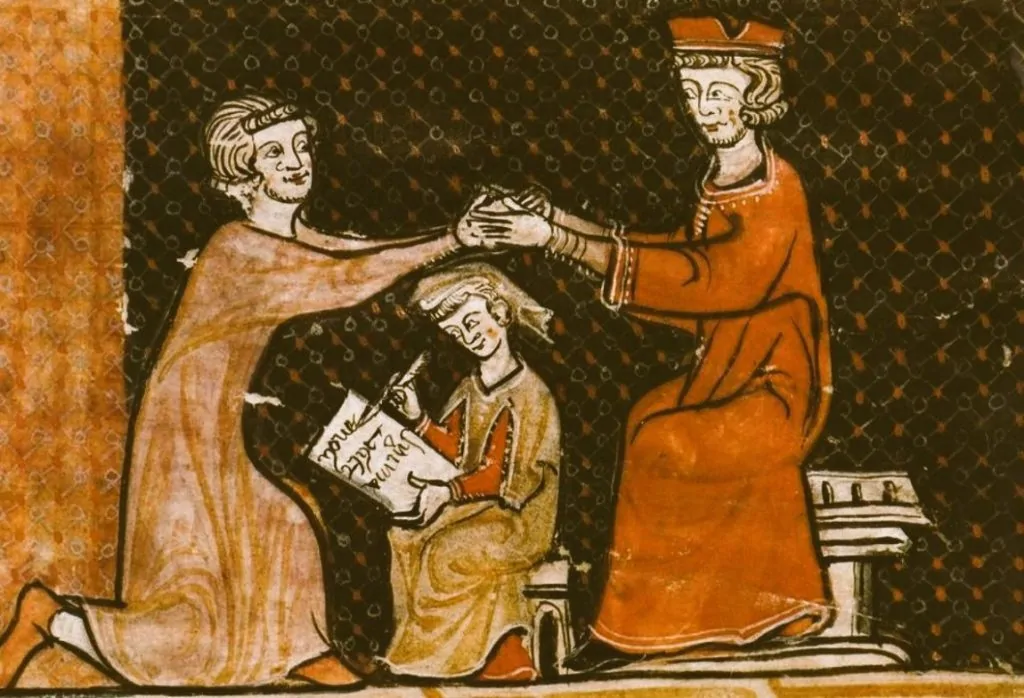
In medieval Europe, friendship could demand warning, correction, and counsel before pride, dishonor, or political danger turned loyalty into ruin.

By Matthew A. McIntosh
Public Historian
Brewminate
Introduction: The Friend Who Warns
In medieval Europe, friendship was rarely imagined as passive affection. It was not merely the private warmth of one person toward another, nor simply the pleasure of companionship. Friendship could include those things, but it also carried duties: correction, counsel, intercession, loyalty, warning, and sometimes rebuke. A friend who saw danger approaching and remained silent might not be regarded as discreet or gentle; he might be judged false, cowardly, negligent, or spiritually useless. To warn a friend was to risk discomfort in order to prevent a greater ruin. That ruin might be sin, shame, dishonor, political catastrophe, bad counsel, reckless violence, social disgrace, or the loss of divine favor. Medieval friendship operated within a moral world in which love and correction were not opposites. A true friend did not merely stand beside another person after the fall. He tried, if he could, to keep him from falling.
This obligation drew on several overlapping traditions. Classical ideas of friendship, especially those inherited from Cicero, emphasized frank speech and the danger of flattery. Christian pastoral teaching added a sharper spiritual urgency: to fail to correct sin could make the silent observer complicit in another’s destruction. Monastic writers, bishops, teachers, and royal advisers all adapted these ideas to their own settings. Friendship was not only a horizontal bond between equals. It could exist, or at least be claimed, between teacher and king, bishop and ruler, abbot and monk, lord and vassal, knight and ally, neighbor and neighbor. In each case, the friend’s warning was shaped by the relationship. The warning offered to a king had to sound different from the correction given to a monk or the alarm sent between aristocratic neighbors. Yet the underlying logic remained recognizable: friendship created an obligation to speak when silence would be a betrayal.
The language of warning also belonged to the broader medieval vocabulary of counsel. Words such as amicitia, admonitio, consilium, and auxilium did not occupy sealed compartments. Friendship could authorize admonition; admonition could take the form of counsel; counsel could itself be a form of aid. This is why the phrase “aid and counsel” is so important. Medieval aid was not always military service, financial support, or physical rescue. A friend, ally, or dependent might aid another precisely by giving advice before a foolish action hardened into disaster. Counsel was necessary where uncertainty, rumor, pride, ambition, or danger clouded judgment. The friend became a moral instrument: not merely a companion, but a witness who could see what the endangered person could not, or would not, see for himself.
We will that idea from the Carolingian court of Charlemagne to the chivalric and documentary culture of thirteenth-century England. Alcuin’s letters to Charlemagne offer a powerful early case of affectionate warning directed upward toward a ruler whose victories, pride, and religious policies required moral interpretation. Later monastic and episcopal traditions show how correction could be framed as spiritual care rather than hostility. The language of lordship, vassalage, and noble alliance then reveals how counsel became part of the expected performance of loyalty. Finally, thirteenth-century collections of model letters show that warnings between knights, neighbors, and allies had become recognizable social scripts, teachable forms of communication in which danger was announced through the language of obligation. The central argument is not that medieval friendship was pure, sentimental, or free from power. It was often entangled with hierarchy, patronage, reputation, and self-interest. But that is precisely what makes it historically significant. In medieval Europe, the warning friend stood at the crossing point between affection and authority, private concern and public consequence, loyalty and correction.
The Moral Grammar of Warning

To understand why a medieval friend might be expected to warn rather than merely comfort, we need to begin with the moral vocabulary that made such warning intelligible. Medieval Europe inherited and reshaped several languages of obligation: the classical language of amicitia, the Christian language of admonitio, the political and practical language of consilium, and the reciprocal language of auxilium. These terms did not always mean the same thing in every century or setting, and they should not be treated as a rigid legal code. Yet together they formed a grammar by which medieval people could explain why one person owed another more than affection. A friend, counselor, monk, bishop, vassal, neighbor, or ally might be bound to speak because speech itself could be a form of rescue. The warning was not merely an opinion offered from outside the relationship. It was part of the relationship’s proper work.
The classical foundation lay particularly in Cicero’s De amicitia, one of the most important inherited texts for medieval thinking about friendship. Cicero’s ideal friend was not a flatterer. Friendship required truth, constancy, moral likeness, and the courage to speak plainly when the beloved friend was in danger of wrongdoing. False friends soothe, conceal, and approve; true friends advise, restrain, and correct. This was not a minor point. Cicero treated flattery as one of friendship’s great corruptions because it imitated affection while destroying the moral usefulness of the bond. Medieval readers did not simply copy Cicero, but they absorbed his insistence that friendship without truthful counsel was defective. A friend who never contradicted was pleasant, but not necessarily loyal. The test of friendship came when affection had to take the uncomfortable form of correction.
Christian teaching intensified this older ideal by placing warning within the economy of salvation. In Scripture and patristic pastoral thought, correction could be an act of charity, while silence could become a form of guilt. The language of the watchman in Ezekiel, fraternal correction in the Gospel of Matthew, and pastoral rebuke in Gregory the Great all contributed to a world in which moral danger demanded speech. A person who saw another approaching sin, scandal, or destruction could not always claim innocence by saying nothing. The obligation was strong for pastors, abbots, bishops, teachers, and rulers, but it was not limited to them. The Christian friend who warned another was not merely protecting reputation or prudence. He was, at least ideally, helping protect a soul. That claim gave warning an intensity that modern readers can easily miss. In a society where sin was not only an inward failure but a force that could damage households, communities, courts, monasteries, and kingdoms, correction had communal significance. The friend who remained silent before destructive pride, lust, greed, violence, or injustice might appear merciful in the moment, but his silence could be judged spiritually negligent. This did not mean that every rebuke was automatically righteous. Medieval writers were fully aware that correction could become harsh, self-serving, humiliating, or hypocritical. The duty to warn required discipline as well as courage. One had to correct without cruelty, speak without arrogance, and rebuke without becoming intoxicated by one’s own righteousness.
The word admonitio carried this weight of moral warning. It could mean instruction, exhortation, reminder, correction, or rebuke, depending on context. It was not necessarily hostile. Indeed, one of the most important features of medieval admonition is that it often claimed to arise from love, office, or duty rather than enmity. A bishop admonishing a king, an abbot correcting a monk, or a scholar warning a ruler could present himself not as a rebel but as a guardian of proper order. This mattered because warning could easily look like presumption. To admonish someone above oneself required rhetorical care. The speaker had to show humility, loyalty, grief, reverence, or affection, while still making the danger clear. Medieval admonition occupied a delicate space between obedience and resistance. It allowed criticism to appear as service.
Consilium, or counsel, gave warning a more practical and political form. Counsel was not simply advice in the modern casual sense. It was a necessary element of governance, lordship, household management, monastic discipline, legal action, and aristocratic decision-making. Kings needed counsel because no ruler could see everything. Lords needed counsel because honor and power were easily misused. Knights and nobles needed counsel because alliances, marriages, lawsuits, inheritances, and feuds could turn quickly from opportunity to disaster. A warning was often counsel under pressure. It was advice sharpened by danger. The counselor did not merely say, “Here is what I think.” He effectively said, “You are about to act in a way that may destroy you, dishonor you, imperil your dependents, or offend God.” Counsel translated friendship into judgment. This is why medieval counsel was so often surrounded by anxiety. Bad counsel could ruin a king, corrupt a court, inflame a feud, or mislead a soul; good counsel could preserve order, restrain violence, and redirect ambition before it crossed into sin or folly. Counsel also depended on access. Only those close enough to hear plans, read moods, know rumors, or interpret political pressures could warn effectively. The friend’s proximity mattered. He was dangerous if malicious, useless if silent, and precious if honest. To give counsel was to enter the hazardous space between another person’s desire and his future consequences.
The paired language of auxilium et consilium, aid and counsel, shows how deeply advice belonged to medieval obligation. Aid was not always a sword, a horse, a payment, or armed support. Counsel itself could be aid because it helped another person navigate uncertainty. The pairing also reveals that medieval loyalty was not supposed to be mindless compliance. A dependent, ally, or friend might owe support, but support could include restraint. To give aid without counsel might mean helping a friend rush toward ruin; to give counsel without aid might mean offering elegant words while refusing the burdens of loyalty. The two concepts strengthened each other. The truest service was not merely to appear when called, but to help another discern what should be done before action became irreversible.
This moral grammar helps explain the range of medieval warning. Alcuin could praise Charlemagne as a Christian ruler while cautioning him against pride, cruelty, or coercive religious policy. A monastic friend could correct a brother because friendship aimed at God rather than indulgence. A bishop could admonish a king because royal sin was not private; it threatened the moral condition of the realm. A knight could warn another knight of political danger, dishonorable marriage, or royal pressure because noble identity depended on vigilance, counsel, and mutual protection. These warnings were not all the same kind of speech, and they did not all arise from equal relationships. Yet they shared an assumption: the person who truly belongs to another through friendship, office, spiritual care, or alliance cannot be indifferent to his danger. In medieval Europe, the friend who warned was not stepping outside friendship. He was performing one of friendship’s most demanding duties.
Alcuin and Charlemagne: The Courage to Warn a King

Alcuin’s relationship with Charlemagne gives medieval friendship one of its most revealing political forms: the friend who warns a king. Alcuin was not Charlemagne’s equal in worldly power. He was an Anglo-Saxon scholar, teacher, cleric, and adviser whose authority came from learning, spiritual seriousness, rhetorical skill, and proximity to the royal court. Yet that very imbalance makes the case important. Medieval counsel did not always move between social equals. It could move upward, from scholar to ruler, from bishop to king, from spiritual adviser to military conqueror. Alcuin’s letters show how such warning had to be performed. He could not simply denounce Charlemagne as though speaking from outside the royal order. Instead, he addressed the king as a Christian ruler whose greatness imposed obligations. Praise became the doorway through which correction could enter.
The biographical setting matters. Alcuin had been formed in the scholarly world of York, one of the great intellectual centers of the eighth-century Latin West, before entering Charlemagne’s orbit after their meeting in Italy in 781. He became associated with the palace school and the wider program of learning, correction, and religious reform that later historians call the Carolingian Renaissance. By the 790s, even when he was no longer constantly at court, his letters allowed him to remain present as a counselor at a distance. The relationship was not merely institutional. Charlemagne valued Alcuin’s learning, and Alcuin understood that learning as a form of service to Christian kingship. The scholar’s task was not only to polish Latin, instruct young nobles, or ornament the court with books. It was to help shape the moral intelligence of power. Alcuin could praise Charlemagne’s victories and authority, but he also sought to teach the king what those victories meant before God. A 796 letter survives as one example of Alcuin addressing Charlemagne in the language of royal instruction and wisdom, placing education and virtue at the center of government rather than treating them as decorative accomplishments.
The crucial point is that Alcuin’s praise was not empty court flattery. It was a disciplined rhetorical strategy. He elevated Charlemagne to bind him to the standard of elevation. If the king was chosen, victorious, wise, learned, and divinely favored, then he had to behave like such a king. This is one of the most characteristic features of medieval admonition directed toward rulers: the adviser often begins by affirming the recipient’s dignity, then turns that dignity into an argument for restraint. Alcuin’s letters can sound simultaneously reverent and daring. He does not attack kingship; he appeals to its highest form. He does not reject Charlemagne’s Christian mission; he insists that a Christian mission cannot be reduced to conquest, taxation, intimidation, or the spectacle of submission. Alcuin’s warning was not an act against Charlemagne’s authority. It was an attempt to save that authority from becoming spiritually incoherent.
This becomes clearest in Alcuin’s response to forced conversion and harsh missionary policy among conquered peoples, especially in the aftermath of the Saxon wars and in discussions of the Avars. Alcuin was not a modern advocate of religious pluralism, nor was he opposed to Christian expansion as such. He wanted conversion. He believed that pagan peoples should be brought into the Christian faith. But he also understood faith as something that required teaching, persuasion, interior assent, and pastoral formation. A baptism imposed by fear might create a subject, but it did not necessarily create a Christian. This was the sharp edge of his counsel to Charlemagne and to other figures involved in frontier policy: coercion could produce the appearance of victory while leaving the soul unconvinced. Steven Stofferahn’s study of Alcuin and the conversion dilemma rightly places him inside the Christianizing project while emphasizing his resistance to the use of the royal sword as a substitute for instruction and persuasion.
That warning required courage because it touched the moral legitimacy of conquest. Charlemagne’s wars, most notably against the Saxons, were not only military campaigns; they became entangled with baptism, law, punishment, tribute, hostage-taking, the destruction of sanctuaries, and the incorporation of defeated peoples into a Christian imperial order. To question the method of conversion was to question how victory itself should be interpreted. Alcuin’s concern was that rulers and missionaries might mistake compliance for faith. A conquered people might kneel, receive baptism, pay tithes, submit to Frankish authority, and outwardly accept Christian law while remaining inwardly alienated. Worse still, if new Christians first experienced the faith through violence, taxation, humiliation, and the pressure of royal command, they might associate Christianity not with salvation but with domination. Alcuin’s warning was practical as well as theological. Coerced conversion could fail even on its own terms. It could produce rebellion, resentment, shallow Christianity, and repeated apostasy, turning missionary triumph into a cycle of conquest and revolt. His counsel tried to prevent Charlemagne from confusing immediate control with genuine Christian transformation. The king could defeat armies and impose law, but he could not force belief into the heart by military decree. That distinction made Alcuin’s warning unusually bold: he was not merely advising better administration, but reminding the greatest ruler in the West that Christian power had limits set by the very faith it claimed to defend.
Alcuin also warned against the spiritual dangers that accompanied success. Medieval advisers often feared failure, but they feared triumph as well, because triumph fed pride. Charlemagne’s victories gave him immense prestige, and Alcuin’s letters repeatedly worked to redirect that prestige toward humility, mercy, wisdom, learning, and divine accountability. The greater the king, the greater the danger of forgetting that kingship remained subject to God. Here the friend’s warning took the form of moral memory. Alcuin reminded Charlemagne that royal power was not self-justifying. It had to be governed by Christian wisdom. A king who conquered bodies but failed to teach souls had not completed his task. A king who punished fiercely but neglected mercy had not reflected the ruler he claimed to serve. A king who gathered scholars but did not submit his own glory to divine judgment risked turning learning into ornament and victory into vanity. Alcuin’s counsel was aimed not only at Charlemagne’s policies but at Charlemagne’s imagination of himself. The king had to see his own power as stewardship rather than possession, as burden rather than license, as responsibility rather than proof of personal greatness. Praise, in Alcuin’s hands, became a mirror held before the king: this is what you are called; now become what the title demands. The warning was affectionate, but it was not soft. It asked Charlemagne to recognize that the most dangerous enemy of a successful Christian ruler might not be the pagan beyond the frontier, but pride within the victorious heart.
Alcuin embodies the medieval friend as counselor, not because he enjoyed equal intimacy with Charlemagne in a modern sentimental sense, but because he occupied a trusted position from which warning became possible. His letters show how friendship, learning, and spiritual duty could converge in political speech. He praised to be heard, warned to protect, and counseled to turn power toward wisdom. The case also reveals the limits and risks of medieval admonition. Alcuin could advise; he could not command. He could shape the king’s conscience, but he could not replace the machinery of conquest. Yet this limitation makes his role even more significant. Medieval friendship did not require the power to control another person. It required the courage to speak before silence became complicity. In Alcuin’s relationship with Charlemagne, the warning friend appears not as a rebel against kingship, but as one of the few figures willing to tell a victorious king that victory itself could endanger the soul.
Wisdom Against Pride: Warning as Protection of the Soul
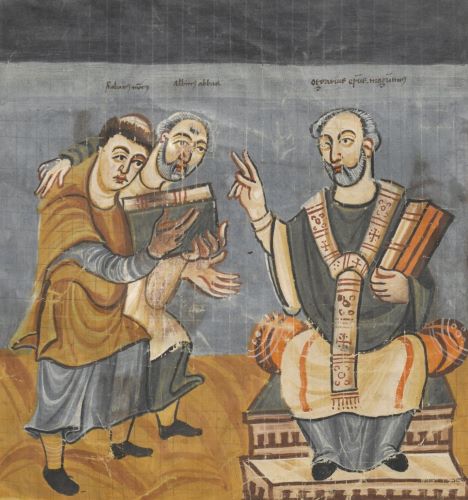
The warning friend in medieval Europe often spoke most urgently against pride because pride was not treated as a minor flaw of temperament. It was the root from which other sins grew, the inward disorder that made a person mistake gift for possession, office for entitlement, victory for righteousness, and power for proof of divine approval. In a ruler, pride could become tyranny; in a monk, disobedience; in a bishop, ambition; in a knight, vainglory; in a scholar, vanity; in a wealthy lord, contempt for the poor. The danger was not simply that pride made a person unpleasant. It made him spiritually blind. The proud person could no longer hear correction because he had already enthroned his own judgment. For medieval moralists, this made pride deadly: it destroyed the very humility by which repentance, counsel, and amendment became possible. Pride also made friendship itself more difficult, because friendship required some capacity to receive truth from another person. The proud man could still enjoy praise, service, loyalty, and companionship, but he could not easily endure the friend who contradicted him. His circle might remain full, yet it would become morally useless if everyone near him learned to protect themselves by flattering his self-image. The warning friend stood against pride not only as a private vice, but as a social danger that corrupted the relationships meant to restrain it.
This is why warning was so often framed as protection of the soul. A friend who warned against pride was not merely trying to improve manners or prevent scandal. He was trying to interrupt a spiritual process before it hardened. Medieval writers frequently imagined sin as progressive. A bad impulse became a habit; habit became character; character became destiny. Pride was dangerous because it fed on success. Failure could humble a person, but success could disguise spiritual danger as blessing. The victorious king, the honored abbot, the celebrated warrior, or the admired scholar might appear most secure at the very moment he was most exposed. The friend who warned such a person had to speak against the evidence of the world. Everyone else might be praising the victory, the promotion, the conquest, or the reputation. The warning friend had to ask what that success was doing to the soul.
Alcuin’s counsel to Charlemagne belongs squarely within this moral world. He did not warn the king because Charlemagne was weak, obscure, or failing. He warned him because Charlemagne was powerful, successful, and surrounded by the temptations of victory. Royal triumph made possible a dangerous spiritual confusion: the king might mistake conquest for conversion, obedience for faith, fear for reverence, or worldly expansion for divine approval. Alcuin’s praise carried a hidden severity. By calling Charlemagne a Christian ruler, defender of the faith, patron of learning, and servant of divine order, he gave the king a demanding image of himself. That image could flatter, but it could also judge. If Charlemagne was truly a Christian king, then he had to govern as one. He had to temper power with mercy, military force with teaching, command with pastoral care, and glory with humility. The warning did not deny Charlemagne’s greatness. It insisted that greatness was precisely what made humility necessary.
This pattern appears throughout medieval admonitory writing. The adviser often begins with honor, title, affection, or reverence, not because he is evading criticism, but because he is establishing the moral height from which the recipient may fall. A king is reminded that he is king so that he will not behave like a robber. A bishop is reminded that he is a shepherd so that he will not act like a hireling. A monk is reminded that he has renounced the world so that he will not smuggle worldly ambition into the cloister. A knight is reminded of honor so that he will not confuse courage with brutality or loyalty with rashness. Warning works by restoring memory. It tells the endangered person: remember what you are, remember what you owe, remember who sees you, remember what judgment awaits. The friend does not invent the standard. He calls the recipient back to a standard already professed. This is why medieval warnings so often sound like reminders rather than discoveries. The counselor does not usually present himself as the creator of a new morality, but as the voice recalling an older one: Scripture, rule, office, oath, lineage, vow, or shared reputation. The force of the warning lies in recognition. The recipient is asked to see the contradiction between his present course and the identity he has already claimed. Admonition is not merely accusation. It is an appeal to coherence.
The protection of the soul also explains why medieval warnings could sound both tender and severe. To modern ears, admonition may seem intrusive, moralizing, or authoritarian. In medieval Christian culture, to let a friend continue toward ruin without protest could be the greater cruelty. Gregory the Great’s pastoral teaching made this point with particular force: those responsible for others had to discern when silence was prudent and when silence became dangerous negligence. The same logic could extend beyond formal pastoral office into spiritual friendship and counsel. A warning might wound pride, but it aimed to heal the person. This was the moral paradox of correction. The flatterer preserved comfort while allowing danger to deepen; the friend caused discomfort to prevent destruction. The wound of admonition could be imagined as medicinal. It hurt because it cut into illusion. This medical language is important because it clarifies the moral difference between cruelty and correction. Cruelty wounds to diminish; correction wounds to restore. The warning friend, at least in the ideal form imagined by medieval moralists, did not seek to shame another person for the pleasure of superiority. He sought to expose the sickness before it became fatal. That ideal could be difficult to achieve, but it gave medieval friendship a demanding ethical seriousness. Affection without correction could become indulgence; correction without affection could become domination. True warning required both.
Yet this language also created risks. People who rebuked others could easily mistake aggression for charity or self-interest for zeal. Medieval writers knew that admonition could humiliate, dominate, or disguise rivalry. Pride could infect the corrector as much as the corrected. The friend who warned against pride needed humility himself. He had to speak as one sinner to another, not as a soul already above danger. This complication does not weaken the central point; it strengthens it. Medieval warning was morally demanding because it required more than bluntness. It required discernment, timing, charity, courage, and self-suspicion. In its highest form, warning protected the friend’s soul by refusing the false mercy of silence. It said that love was not proven by agreement alone, but by the willingness to stand between a friend and the pride that might destroy him.
Monastic Friendship: Correction as Care

Monastic friendship gives the medieval warning friend a more interior and disciplined setting. In the monastery, correction was not primarily about public reputation, courtly access, or military danger, although monasteries were never wholly free from politics. It was about the care of souls within a community ordered toward salvation. A monk did not live alone, even when he sought solitude. His habits, obedience, speech, anger, ambition, laziness, and humility affected the spiritual health of others. The monastery made warning ordinary, not exceptional. Correction was woven into the daily logic of communal life: brothers were expected to listen, submit, repent, and help one another persevere. In this setting, the friend who warned was not interrupting friendship with judgment. He was participating in the labor by which friendship became spiritually useful.
The Rule of Saint Benedict provides one of the foundational frameworks for this kind of corrective care. Benedict’s monastery is not a loose association of like-minded companions, but a school for the Lord’s service, governed by obedience, humility, stability, and mutual discipline. Correction belongs first to the abbot, whose responsibility is pastoral and paternal, but the entire community is shaped by the assumption that souls need guidance. Faults are not merely personal eccentricities. They require attention because they threaten the monk’s progress and the community’s order. Benedict’s concern with murmuring, pride, disobedience, and stubbornness shows how easily interior disorder becomes communal disturbance. A monk who refuses correction is not simply asserting independence; he is resisting the very medicine the monastic life is designed to provide. Friendship that merely sympathized with disobedience would have been spiritually dangerous. Friendship had to support conversion.
Aelred of Rievaulx gives this corrective friendship its most elegant and explicitly affective form. In Spiritual Friendship, Aelred draws on Cicero while transforming classical friendship into a Christian path toward God. Friendship is not only pleasant companionship or mutual usefulness. It is a bond in which two people help one another grow in charity, truth, and virtue. Yet Aelred is careful: not every intimacy is holy friendship, and not every affectionate attachment deserves trust. Friends must be chosen, tested, admitted, and cultivated. The reason is simple. The wrong friend can flatter vice, feed resentment, encourage faction, or turn private affection into spiritual danger. Aelred’s ideal friendship contains both warmth and moral seriousness. It does not reject affection; indeed, it treats rightly ordered affection as one of friendship’s great gifts. But affection has to be governed by charity and truth. The friend who loves only another’s approval, company, or usefulness has not yet reached spiritual friendship. The true friend is not the one who indulges every mood, but the one who helps another become more capable of loving God. Correction becomes one of friendship’s necessary works. The friend who never corrects may be agreeable, but he has not yet become spiritually reliable. He may preserve peace in the room while allowing disorder to grow in the soul. Aelred’s point is not that friendship should become constant rebuke, but that it must be strong enough to survive truth.
Aelred’s vision also helps explain why monastic correction could be tender without becoming permissive. The friend’s warning was supposed to arise from love, not contempt. It aimed at restoration, not humiliation. In a healthy spiritual friendship, rebuke could be received because the relationship had already established trust. The person corrected knew, or was meant to know, that the warning friend was not seeking victory in an argument or superiority over a weaker brother. He was seeking the friend’s good. This is what distinguishes correction as care from correction as domination. The same words could wound differently depending on the moral quality of the relationship. A warning delivered with anger, envy, impatience, or public scorn might crush rather than heal. A warning delivered with patience and fidelity could become a form of rescue. Monastic friendship required not only the courage to speak, but the discipline to speak rightly. Timing, tone, privacy, humility, and the corrector’s own self-knowledge all mattered. A rebuke could fail if it was true but badly given, because the purpose was not merely to state moral fact but to help the other person receive it. This makes monastic correction more complex than simple discipline from above. It depended on the slow formation of trust, the belief that the friend desired salvation rather than control, and the shared recognition that both men stood under the same divine judgment. In that setting, warning could become one of friendship’s deepest acts of tenderness: not the tenderness of avoiding pain, but the tenderness of refusing to abandon a brother to the pain that would come later if no one spoke.
This discipline mattered because medieval monastic writers were deeply aware of friendship’s dangers. The monastery cherished charity, brotherhood, and spiritual intimacy, but it also feared private cliques, favoritism, possessive affection, gossip, and faction. A friendship that drew two monks toward God was holy; a friendship that separated them from obedience, community, or humility was suspect. This tension is essential. Medieval monastic friendship was not naïve about emotion. Affection could soften the soul, but it could also distort judgment. A monk might defend a friend’s faults out of loyalty, resent the abbot’s correction, or turn private sympathy into opposition against communal discipline. For that reason, the warning friend had to resist the temptation to become an accomplice. True care did not mean protecting a brother from correction. It meant helping him receive it. The most dangerous false friendship in the cloister was not open hatred, but affectionate collusion in spiritual decline.
The monastic setting also sharpened the connection between correction and humility. A brother who warned another had to remember that he, too, required warning. This mutual vulnerability distinguished spiritual correction from mere command. Even when hierarchy was real, as in the authority of the abbot, the deeper theological assumption was that all monks were sinners under discipline. No one had graduated beyond the need for admonition. This made friendship a school of self-knowledge. The friend could see faults that the self-concealed. He could name pride, resentment, vanity, harshness, or despair before they became settled habits. Such naming was painful because it broke the illusion of spiritual self-sufficiency. But pain did not make the warning unloving. In monastic thought, the soul often needed to be interrupted before it could be healed. Correction was care because it refused to let a brother disappear into the private logic of his own sin.
Monastic friendship reveals a quieter but profound form of medieval warning. Unlike Alcuin’s counsel to Charlemagne, it did not usually address armies, kingdoms, or forced conversion. Its battlefield was the will. Yet the underlying moral pattern was the same: friendship imposed responsibility for another’s danger. The monk who warned a brother did so because salvation was not imagined as a purely private achievement. Souls were formed in relation to others, and friendship was one of the relationships through which formation occurred. The best monastic friend was neither a flatterer nor a prosecutor. He was a companion in conversion, someone willing to speak when silence would be easier, someone able to wound gently in order to heal, and someone humble enough to know that tomorrow he might need the same warning himself.
Bishops and Kings: Admonition Without Rebellion

If Alcuin shows how a scholar and spiritual adviser could warn a king, the wider medieval relationship between bishops and rulers shows how deeply admonition belonged to the structure of Christian kingship itself. Bishops were not simply private moralists standing outside politics. They were great landholders, royal counselors, administrators, diplomats, judges, patrons, and guardians of ecclesiastical order. Their proximity to kings made them politically useful, but it also placed them in a morally dangerous position. They could become flatterers of power, servants of faction, or silent witnesses to royal injustice. Medieval episcopal admonition developed from this tension. A bishop who warned a king could claim that he was not attacking rulership but defending its sacred purpose. He spoke because kingship was too important to be abandoned to anger, greed, bad counsel, or pride. This was true because medieval kingship was understood as more than a practical arrangement for command and defense. It was a moral office. The king was supposed to protect the Church, preserve justice, restrain violence, punish wickedness, defend the weak, and rule in fear of God. A bishop near such a ruler occupied a position of terrible responsibility. Access to the king was not merely privilege; it was exposure. The closer a bishop stood to power, the harder it became to pretend that silence was innocent.
This is why admonition did not automatically mean rebellion. A bishop could rebuke a ruler while still affirming monarchy, hierarchy, obedience, and the king’s divinely sanctioned office. The warning usually worked by distinguishing the king from his sins, or the office from the misuse of the office. The bishop did not need to say, “You are no king.” He could say, more powerfully, “Because you are king, you must not act this way.” That distinction made correction possible within a loyal framework. The king’s authority was not denied; it was measured. The ruler was reminded that his power came with obligations: justice, mercy, protection of the Church, defense of the poor, restraint of violence, and submission to divine judgment. Episcopal admonition was conservative as well as critical. It did not necessarily seek to overthrow the political order. It sought to recall that order to its professed moral foundations.
Carolingian political thought had already made this logic central. Bishops and abbots were expected to participate in the moral governance of the realm, not merely to pray at the margins. The ruler’s sin could not be treated as a private defect, because royal conduct shaped the spiritual and social condition of the people. The Carolingian world imagined Christian rulership as a shared project of correction: kings corrected peoples, bishops corrected clergy and laity, councils corrected abuses, and advisers corrected kings. This did not create a clean separation between Church and state. It created a dense moral partnership in which each side could claim responsibility for the other’s failures. The same framework that empowered kings to reform churches also empowered clerics to warn kings that reform without repentance, justice, or mercy would become hollow. The bishop’s rebuke arose from within the system of Christian governance, not from outside it. This made admonition both necessary and unstable. Necessary, because the king’s power touched too many lives to be left morally unexamined; unstable, because the same king who needed correction also possessed the means to punish those who gave it. Carolingian sources repeatedly assume that Christian society required right order, but right order was never automatic. It had to be taught, remembered, enforced, and restored. Bishops helped supply that memory. They could remind rulers that victories, assemblies, capitularies, and reforms meant little if the ruler himself became captive to pride, cruelty, negligence, or the whispering of corrupt counselors. Episcopal admonition functioned as a kind of institutional conscience for kingship.
The eleventh and twelfth centuries sharpened these tensions as conflicts between kings, emperors, popes, bishops, and reformers intensified. The Investiture Controversy and related struggles made episcopal counsel more dangerous because questions of office, obedience, and spiritual authority became entangled with lawsuits, excommunication, military force, and dynastic politics. Yet even in these sharper conflicts, admonitory language remained important. Bishops and churchmen often framed their opposition as warning rather than ambition. They claimed to be defending souls, sacraments, ecclesiastical liberty, or the order of Christian society. A king might view such language as defiance, especially when warning became public or was backed by sanctions. But from the clerical perspective, silence before royal wrongdoing could itself be a betrayal of office. The bishop who failed to warn might preserve favor, but he would fail as shepherd.
Lanfranc and Anselm of Canterbury reveal two different faces of this problem in post-Conquest England. Lanfranc’s correspondence shows an archbishop deeply involved in royal and ecclesiastical politics, careful in tone, practical in judgment, and attentive to the maintenance of order. His authority depended partly on his ability to counsel without needlessly rupturing the relationship with royal power. Anselm, by contrast, became a more openly conflicted figure under William II and Henry I, particularly over questions of ecclesiastical authority, obedience to Rome, and the limits of royal control. Yet even Anselm’s resistance was often articulated as spiritual responsibility rather than personal rebellion. He did not present himself merely as a political opponent of kings. He warned, pleaded, withdrew, negotiated, and endured exile because he believed that obedience to God and fidelity to office required him to refuse certain forms of royal pressure. The difference between Lanfranc and Anselm is useful because it shows the range of episcopal admonition: sometimes counsel remained quiet and managerial; sometimes it became confrontation. In both cases, the bishop’s identity as adviser and corrector remained central.
The form of episcopal warning also mattered. Bishops could admonish in letters, councils, sermons, private meetings, public assemblies, ritual encounters, or through the language of prayer and penance. A private warning preserved the king’s honor and gave him room to amend without humiliation. A public warning carried greater danger but could become necessary if the king’s actions had public consequences. Medieval bishops had to decide not only whether to speak, but how. Too soft a warning might become useless; too harsh a warning might harden resistance, provoke retaliation, or appear as pride disguised as zeal. This is why admonition required rhetorical skill. The bishop had to speak as servant and judge, subject and shepherd, counselor and accuser. He had to make criticism sound like care. The best admonitory letters often move through deference, grief, scriptural reminder, praise of the royal office, and then warning. They try to preserve relationship while forcing moral recognition.
Episcopal admonition expands my central argument beyond personal friendship into the realm of institutional friendship and sacred counsel. Bishops were not always “friends” of kings in the intimate sense, and their warnings were often entangled with jurisdiction, wealth, privilege, and political advantage. Yet medieval political culture repeatedly used the moral grammar of friendship to describe what good counsel should do. The faithful bishop, like the faithful friend, was expected to speak when silence would endanger another soul. His warning was not rebellion simply because it criticized power. It became rebellion only when interpreted as an assault on rightful order rather than a defense of it. That ambiguity was never fully resolved, and it gave medieval admonition its force. The bishop who warned a king stood in a perilous but necessary position: close enough to power to be heard, bound enough to power to be implicated, and responsible enough before God to say that even kings must be corrected.
“Aid and Counsel”: Lordship, Vassalage, and Political Friendship

The phrase “aid and counsel” brings the warning friend out of the monastery and episcopal letter and into the harder world of lordship, vassalage, aristocratic alliance, and political obligation. Medieval society did not imagine loyalty as a purely emotional attachment or a vague sentiment of goodwill. Loyalty had work to do. It could require armed service, attendance at court, witness to charters, support in disputes, help in war, intercession with greater powers, and advice in moments of uncertainty. “Aid” and “counsel” named two complementary forms of service. Aid supplied strength; counsel supplied judgment. Aid without counsel could become reckless obedience, the kind of support that helped a lord, friend, or ally rush toward disaster. Counsel without aid could become empty talk, a safe moral posture unsupported by risk. Together, the two terms expressed a world in which political relationships were supposed to bind action to advice.
This does not mean that medieval lordship should be reduced to the older textbook model of neat “feudal” pyramids, each man owing fixed duties to the man above him in a clean ladder of obligation. Modern scholarship has rightly complicated that picture. Lordship, tenure, service, friendship, patronage, kinship, neighborhood, and office often overlapped in messy and changing ways. A man could owe service to one lord, hold land through another, be related by marriage to a third, and seek favor from a fourth. The language of aid and counsel worked within this complexity. It did not describe one simple institution so much as a repeated expectation: those bound together by dependence, alliance, honor, or sworn service owed one another more than silence. When danger approached, counsel became one of the tests of loyalty.
In aristocratic life, warning was important because danger often arrived before it became visible as open conflict. A lord might be surrounded by flatterers. A knight might be drawn into a reckless feud. A noble household might be endangered by a marriage alliance, lawsuit, accusation, debt, hostage arrangement, inheritance dispute, or royal suspicion. Decisions were rarely made from complete knowledge. Rumor mattered; reputation mattered; proximity to power mattered. The friend, vassal, counselor, or ally served as an early-warning system. He might know what was being said at court, what enemies were planning, what neighbors feared, or how an action would be interpreted by those not present. He might also recognize a danger that the principal actor could not see because pride, anger, grief, ambition, or immediate advantage had narrowed his judgment. This was true in a society where conflict often developed through warning signs before it erupted openly: a slight at court, a failed summons, a rumor about marriage, an unexplained legal move, the gathering of armed men, a shift in patronage, or the sudden coolness of a powerful lord. To warn was to bring hidden danger into speech before it hardened into public ruin. The value of such warning lay not only in information, but in interpretation. The friend did not merely report that something had happened; he explained what it might mean.
Counsel was not simply the polite exchange of opinions. It was a political skill and a social obligation. The good counselor had to judge not only what was true, but what could be said, when it could be said, and how much danger the recipient was able to hear. Medieval political culture prized prudence because power was relational. A lord’s decision could affect his household, tenants, kin, allies, dependents, and armed followers. A king’s anger could destroy families. A noble’s rashness could start violence that others would have to fight. A knight’s dishonor could stain a lineage. The counselor had to think beyond the immediate wish of the person advised. He had to imagine consequences across a network. That is why warning could be a form of friendship: it protected not only the individual will, but the relationships attached to that will.
The vassal or dependent who counseled a lord also occupied a difficult moral position. Loyalty might seem to demand agreement, especially when the lord was powerful, angry, proud, or already committed to a course of action. Yet a relationship built only on compliance could become dangerous to both parties. The lord who heard only approval became vulnerable to his own impulses. The dependent who gave only approval became less a friend than an instrument. Medieval writers repeatedly worried about bad counsel because it corrupted the center of power from within. The treacherous counselor was not always the man who openly rebelled; he could also be the man who encouraged a lord’s worst desires, concealed danger, or praised folly because praise was profitable. In that setting, honest warning became one of the most valuable and hazardous forms of service. It proved that the counselor was committed to the lord’s good, not merely to the lord’s mood.
Political friendship operated in this same space between affection and utility. Medieval amicitia could mean personal closeness, but it could also describe alliance, favor, negotiated peace, sworn cooperation, or reciprocal obligation between powerful men. Such friendship was not necessarily insincere because it was political. Medieval people did not always separate emotional loyalty from practical advantage as sharply as modern readers might. A friend might be loved, useful, honorable, necessary, and dangerous all at once. Political friendship created expectations of assistance, but also expectations of frankness. If a friend’s course would lead to dishonor, defeat, royal punishment, or spiritual danger, silence could look like betrayal. The warning friend intervened because the relationship gave him standing to speak. He could say what a stranger could not, because his warning came from within the bond. That inner standing mattered. A public enemy’s warning could be dismissed as threat, mockery, or manipulation; a stranger’s warning might be ignored as presumption. But a friend, ally, or counselor could claim a different authority. He had shared interests, remembered obligations, and some recognized stake in the other person’s future. His speech was not neutral, but that was precisely why it carried force. He warned because the danger was not someone else’s problem. It belonged to the relationship itself.
The phrase “aid and counsel” also helps explain why warning could be understood as active help rather than interference. A man who warned an ally about royal displeasure, a dangerous lawsuit, an ill-advised marriage, or an impending attack was not merely offering commentary. He was participating in defense. He was helping preserve land, honor, safety, lineage, and standing. In a violent and reputation-conscious society, advance knowledge could be as valuable as armed force. A sword mattered when the enemy arrived; counsel mattered before the enemy arrived. The warning might allow the recipient to seek reconciliation, gather support, change tactics, avoid provocation, delay action, or prepare defense. Counsel extended aid backward in time. It tried to prevent the moment when physical rescue became necessary.
This political world complicates my thesis in useful ways. The friend who warns in lordly and vassalic society is not always a gentle moral companion or spiritual brother. He may be a retainer, neighbor, ally, counselor, kinsman, or subordinate with his own interests at stake. His warning may protect the recipient, but it may also protect himself, his household, his lordship, or his faction. Yet this does not make the warning less medieval or less meaningful. It shows that friendship and counsel operated in a society where private concern and public consequence were inseparable. “Aid and counsel” named a form of loyalty that was both practical and moral. To be bound to another person was to help him act, but also to help him judge. The warning friend was not outside medieval political friendship. He was one of its necessary figures: the person close enough to see danger, obligated enough to speak, and loyal enough to risk displeasure before silence became disaster.
Knights Warning Knights: Thirteenth-Century Formularies and the Social Script of Alarm

The thirteenth-century formularies bring my point into a particularly concrete social world. A formulary was a collection of model documents: letters, petitions, agreements, complaints, requests, and other written forms that scribes could copy, adapt, or study. Such collections do not give us private correspondence in the modern sense. They preserve templates, rhetorical exercises, and reusable models. Yet that is exactly why they matter. A model letter reveals what a scribe, teacher, or community of users thought a plausible letter should sound like. It shows the expected language of obligation, anxiety, rank, danger, and persuasion. When a formulary includes a letter in which one knight warns another, it does not simply preserve a stray episode of aristocratic nervousness. It gives us a social script: this is how danger might be announced; this is how obligation might be invoked; this is how warning could be made intelligible between men of rank.
One of the most revealing examples from thirteenth-century English formularies involves a knight warning another knight of a threatening royal or aristocratic design. The warning turns on the claim that a neighbor is bound to offer “aid and counsel” in time of danger. That phrase is doing enormous work. The writer does not present himself as a gossip, meddler, or alarmist. He claims standing as someone obligated by relationship and proximity. He has heard something dangerous; therefore, he must speak. The danger itself concerns not merely physical attack but the honor, marriage prospects, and lineage of noble daughters. In other words, the threatened injury is social and dynastic as much as military. The warning friend acts before the harm occurs, when the matter still belongs to rumor, intention, and possibility. His counsel is preventive aid.
This kind of letter shows how aristocratic friendship and neighborly obligation operated in a world where reputation could be wounded before a sword was drawn. A knight’s household was vulnerable not only to raids, lawsuits, and royal displeasure, but to arrangements that could diminish status or stain lineage. Marriage was never a merely private affair among noble families. It was a political and social act, binding land, inheritance, honor, alliance, and memory. A warning about a proposed marriage or coercive arrangement reached into the deepest structures of aristocratic identity. It told the recipient that danger was approaching his house, not just his person. The friend’s warning protected the future as well as the present: daughters, heirs, lands, name, and standing. To remain silent under such circumstances would not be tact. It would be failure of fellowship. The stakes were heightened by the fact that noble honor was both intensely personal and unmistakably public. A marriage made under pressure, a humiliating alliance, or an unsuitable match could reshape how a family was spoken of by neighbors, rivals, patrons, and descendants. The warning responds to a world in which danger might arrive through ceremony rather than battle, through legal arrangement rather than open violence, through social degradation rather than bodily injury. The knight who warns another knight is not only protecting women as dependents within a patriarchal household; he is protecting the symbolic and material continuity of the lineage itself. That makes his intervention urgent even if the danger remains at the level of rumor. By the time a forced or dishonorable arrangement became official, the damage might already be difficult to undo.
The formulaic nature of the document also reveals the learned performance of alarm. The letter does not simply say, “I heard bad news.” It frames the communication through shared obligation. The writer must establish why he is speaking, why the recipient should believe him, and why the matter demands urgency. This is important because warning always risks appearing presumptuous. A knight who tells another knight that his family, honor, or political judgment is in danger enters a sensitive space. He may be accused of spreading rumor, insulting judgment, exaggerating threat, or interfering in household affairs. The language of aid and counsel solves part of that problem. It transforms the warning from intrusion into duty. The sender is not violating boundaries; he is fulfilling them. He speaks because the relationship requires speech.
Formularies also show that medieval warnings were often built around uncertainty. The sender may not possess absolute proof. He may report rumor, suspicion, intention, or a plan not yet enacted. But uncertainty does not cancel obligation; it creates the need for counsel. In a slower documentary world, where messages traveled by messenger and decisions could unfold through courtly networks before becoming public acts, early information mattered. A warning letter gave the recipient time: time to investigate, prepare, seek allies, appeal to a lord, negotiate, delay, or resist. The warning friend occupied a crucial position between rumor and action. He did not merely transmit information. He converted uncertain knowledge into social responsibility. Once danger had been spoken, the recipient could no longer claim complete ignorance, and the sender had discharged at least part of his duty. This is one reason the formulary evidence is so valuable even when it cannot be treated as a verbatim record of a single historical incident. It preserves the logic by which aristocratic society imagined responsible communication under conditions of incomplete knowledge. The writer does not need to prove that disaster is already present; he needs to show that danger is plausible enough, and the bond strong enough, to require warning. Medieval political life often worked in precisely this gray zone, where rumor, probability, and reputation shaped action before formal proof appeared. The warning letter gives that gray zone a disciplined form.
The knightly warning letter brings together several threads of medieval friendship: moral courage, political prudence, social rank, and practical aid. It is less lofty than Alcuin’s counsel to Charlemagne and less interior than monastic correction, but it belongs to the same moral universe. The friend or neighbor who warns does not act because friendship is sentimental. He acts because friendship, neighborhood, and alliance create obligations before crisis becomes catastrophe. The thirteenth-century formulary preserves this expectation in teachable form. It shows that warning had a recognizable shape: invoke the bond, announce the danger, explain the stakes, urge response, and present speech itself as service. In the world of knights and noble households, to give counsel was not merely to advise. It was to stand guard at the edge of another person’s honor.
The Art of the Warning Letter: Courtesy and Persuasion

The medieval warning letter was not simply a spontaneous expression of anxiety. It belonged to a learned and practical culture of written persuasion. From the late eleventh century onward, the ars dictaminis, or art of letter-writing, offered rules for composing letters suited to rank, purpose, tone, and circumstance. This mattered because medieval letters did work. They requested favors, announced decisions, negotiated disputes, conveyed obedience, delivered threats, sought mercy, recommended friends, warned allies, and preserved relationships across distance. A warning letter had to do several things at once: communicate danger, establish credibility, avoid needless offense, and move the recipient toward action. Its success depended not only on information, but on form. The writer had to make the warning sound like duty rather than panic, counsel rather than insult, service rather than intrusion.
The classic structure taught by the ars dictaminis divided the letter into parts, often including the salutation, the securing of goodwill, the narration of the matter, the petition or request, and the conclusion. These divisions were not mechanical boxes to be filled without thought. They trained the writer to think socially. Who is writing? To whom? From what position? With what degree of humility, urgency, affection, or authority? A king could not be addressed like a monk; a bishop could not be addressed like a brother knight; a social superior could not be warned as though he were a subordinate. The form of the letter encoded hierarchy. Even before the danger was named, the salutation and opening phrases established the relationship that made speech possible. A warning that ignored rank could fail before it began.
Courtesy was important because warning is dangerous speech. It tells the recipient something unwelcome: that he is threatened, mistaken, vulnerable, misled, watched, or morally endangered. Such speech easily provokes anger. The person warned may resent the warning more than the danger. Medieval letter-writers often wrapped urgency in deference. They praised the recipient’s wisdom before asking him to act wisely; they affirmed loyalty before revealing bad news; they expressed reluctance before delivering correction; they invoked duty before pressing advice. This was not necessarily hypocrisy. Courtesy allowed truth to approach power without immediately becoming confrontation. It gave the recipient a dignified path toward amendment. A king could accept counsel without appearing weak; a knight could respond to warning without seeming afraid; a friend could change course without confessing public humiliation. Courtesy also protected the sender. The warning friend needed to show that he was not driven by envy, panic, insolence, or factional malice. Polite language did not make the warning less serious; it helped prove that the warning came from disciplined loyalty rather than uncontrolled emotion. In a society intensely attentive to rank and honor, the manner of speech could determine whether counsel was heard as aid or rejected as insult. The courteous warning performed two tasks at once: it softened the wound and sharpened the claim that the wound was necessary.
The securing of goodwill, or captatio benevolentiae, was central to this art. The writer first had to make himself believable and benevolent. In a warning letter, that meant explaining why he spoke at all. He might appeal to friendship, neighborhood, kinship, sworn obligation, Christian charity, shared danger, or the duty of “aid and counsel.” The purpose was to prevent the warning from being interpreted as meddling, rivalry, slander, or presumption. The sender had to show that silence would be worse than speech. Once goodwill had been secured, the narration could present the danger: a rumor at court, a hostile plan, a reckless policy, a threatened marriage, a spiritual fault, or the recipient’s own destructive pride. The petition then urged response, whether that meant caution, repentance, negotiation, investigation, restraint, or preparation. The conclusion might soften the whole with prayer, affection, or renewed assurance of service.
This structure helps explain why medieval warnings could be both indirect and forceful. Modern readers sometimes expect sincerity to be blunt, but medieval rhetorical culture often treated indirection as a form of prudence. A writer could make a severe point through reminder, allusion, scriptural example, praise, or carefully measured concern. He might not say, “You are acting proudly.” He might say that God exalts the humble, that wise rulers heed counsel, or that noble men preserve their honor by caution. The meaning could be unmistakable without becoming crude. This was particularly useful when writing upward. Alcuin could warn Charlemagne by praising the ideals of Christian kingship. Bishops could admonish rulers by recalling the duties of office. Knights could warn other knights by invoking neighborly aid and aristocratic honor. The art lay in making correction recognizable without making it unbearable. Indirection also allowed the recipient to participate in his own correction. A blunt accusation could force him into defensiveness, but a carefully framed reminder could invite recognition. The recipient might see himself in the example, proverb, scriptural warning, or moral contrast without being openly shamed. That mattered because persuasion often required preserving the recipient’s dignity long enough for him to change course. Medieval warning letters worked not only through statement, but through suggestion, association, memory, and implication. They taught the reader how to understand his own danger.
The letter also transformed warning into a durable act. Spoken counsel might vanish into memory, but written counsel could be carried, reread, copied, stored, adapted, or used as evidence of loyalty. This gave letters power and risk. A written warning could protect the sender by showing that he had fulfilled his duty; it could also expose him if the recipient took offense or if the message was intercepted. Medieval letters often traveled by messengers who could supplement, explain, soften, or intensify the written words. The letter was not always a self-contained object. It belonged to a larger communicative performance involving bearer, sender, recipient, rumor, reputation, and occasion. A warning might be written cautiously because the messenger would say more aloud. Or it might be written firmly because the sender wanted the record itself to bear witness.
The ars dictaminis reveals that medieval warning was an art of relationship management as much as moral courage. It was not enough to see danger. The warning friend had to speak in a form the recipient could receive. He needed courtesy without cowardice, urgency without recklessness, humility without evasiveness, and persuasion without manipulation. This makes the medieval warning letter one of the clearest expressions of the larger theme here. Friendship and counsel were not merely feelings or abstract duties; they had techniques. The friend who warned had to know the grammar of obligation, the etiquette of rank, and the rhetoric of care. In the hands of a skilled writer, the letter became a disciplined instrument of loyalty: a way of disturbing another person’s peace to preserve his soul, honor, household, or realm. Its artistry should not be mistaken for artificiality. The form mattered because the stakes were real. A badly delivered warning could rupture friendship, provoke anger, or fail to avert disaster; a well-shaped warning could create space for repentance, caution, negotiation, or rescue. Medieval letter-writing made warning teachable. It turned the difficult act of speaking dangerous truth into a social craft, one in which affection, hierarchy, prudence, and moral pressure could be arranged into words strong enough to matter and careful enough to survive.
Letters, Messengers, and Friendship at a Distance
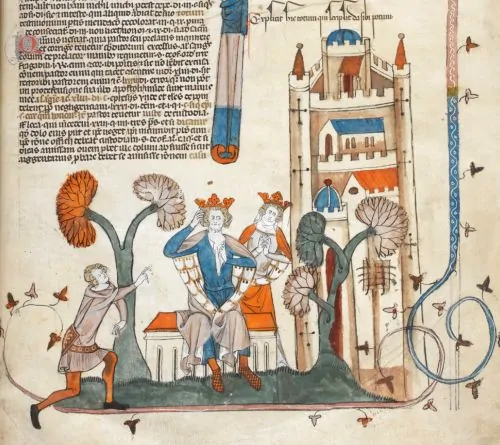
Medieval friendship was not always sustained by presence. Indeed, some of its most revealing expressions come from absence: the friend away at court, the monk writing from another abbey, the bishop separated from a king, the nobleman sending news through a trusted bearer, the scholar maintaining affection and influence through letters. Distance did not dissolve friendship; it tested and formalized it. A friend who could not stand beside another person might still counsel, warn, intercede, recommend, console, or rebuke through writing. The letter became one of the chief instruments by which medieval friendship remained active across space. It allowed affection to travel, but it also allowed obligation to travel. The absent friend could still speak when danger appeared.
This mattered because medieval relationships often stretched across unstable geographies of movement and duty. Kings traveled, courts moved, bishops attended councils, and monks were sent to daughter houses or reforming communities. Nobles followed campaigns, lawsuits, pilgrimages, marriages, and patronage networks. Students, clerics, and scholars moved between schools and ecclesiastical households. Friendship could not depend entirely on daily companionship. It had to be maintained through memory, messengers, gifts, prayers, recommendations, and written signs of continued loyalty. A letter told the recipient: I have not forgotten you; I still belong to this bond; I still know enough, care enough, or owe enough to speak. When the letter contained a warning, that message became sharper. Absence had not made the friend indifferent. It had made his counsel necessary in another form.
The messenger was central to this system. Medieval letters were rarely just pieces of text moving through neutral channels. They were carried by people, and those people mattered. A trusted messenger could authenticate the sender, explain circumstances, supply details too sensitive for writing, judge the recipient’s reaction, and return with news. The bearer might soften harsh words, emphasize urgency, or add spoken counsel that the written letter only hinted at. This means that medieval warning often operated through a combination of written and oral communication. The letter created a formal record and structured the appeal; the messenger completed the performance. A friend might write cautiously because he expected the bearer to speak more plainly, or he might write strongly because he feared the message would be delayed, distorted, or ignored. The messenger stood between secrecy and publicity, between friendship and politics, between danger known and danger answered.
Letters also created a peculiar kind of intimacy. They could address the absent friend directly, sometimes with warmth, sometimes with complaint, sometimes with aching insistence that silence itself had become a wound. Medieval letter collections preserve repeated anxiety over unanswered letters, delayed messengers, forgotten obligations, and the fear that distance had cooled affection. That emotional texture matters for the warning friend. A warning letter depended on the assumption that the bond still existed strongly enough to authorize speech. If the recipient had neglected correspondence or drifted into another circle of counsel, the warning might have to reestablish friendship before delivering danger. The sender might remind him of old affection, shared service, common vows, mutual favors, or former intimacy. Only then could the warning fully land. The letter had to say not merely, “You are in danger,” but also, “I still have the right and duty to tell you so.” This is why so many medieval letters linger over the condition of the relationship before turning to the matter at hand. What may appear formulaic or emotionally excessive often served a practical purpose: it renewed the bond that made the warning legitimate. The absent friend had to overcome the weakness of distance by making memory present again. He might evoke former conversations, shared teachers, mutual patrons, common prayers, or earlier acts of loyalty. He made the warning less like an isolated intervention and more like the continuation of a long relationship. The letter became a substitute for presence, but also a proof that presence had not been wholly lost.
Letters made friendship more public than it sometimes appeared. Even a private letter could be copied, read aloud, preserved in a collection, shown to allies, or used as evidence. Medieval correspondence often existed in a gray zone between intimacy and performance. A warning addressed to one person might also be crafted with other readers in mind: the court, the monastery, the household, the bishop’s circle, the future compiler of a letter collection. This did not make the warning insincere. It made it socially powerful. The sender could protect himself by demonstrating that he had spoken; he could shape reputation by appearing as a loyal counselor rather than a silent accomplice; he could urge reform while preserving the forms of friendship. Written warning did more than transmit concern. It created a durable witness to concern.
The danger, of course, was that letters could fail. A messenger might be delayed, intercepted, bribed, misunderstood, or distrusted. A written warning might arrive too late. It might be read by the wrong eyes. It might anger the recipient because written words lack the softening force of face, tone, and immediate explanation. It might be treated as rumor, manipulation, or presumption. Distance made counsel possible, but it also made counsel fragile. The absent friend had to judge how much to write, whom to trust, how openly to name danger, and whether the risks of silence outweighed the risks of disclosure. This uncertainty helps explain the elaborate courtesy and careful structure of medieval letters. Their form was not decorative. It was protective. It helped a dangerous message survive the journey from one person’s knowledge to another person’s conscience. The problem was not only physical transmission, but interpretive survival. A warning had to pass through roads, gates, households, servants, rivals, secretaries, and moods before it reached the person whose judgment it sought to alter. Even then, the recipient had to understand it as friendship rather than accusation. A careless phrase could undo the whole effort. A letter too blunt might be rejected as insolence; a letter too cautious might fail to communicate danger. The warning friend at a distance faced a double task: to get the message delivered, and to get it received in the spirit in which it was sent. That difficulty gave medieval written counsel its distinctive mixture of urgency and restraint.
Letters and messengers reveal medieval friendship as a networked practice rather than a purely face-to-face affection. A friend at a distance could still warn because friendship was carried through words, bodies, memory, and obligation. Alcuin could counsel Charlemagne from afar; bishops could admonish rulers through correspondence; monks could sustain spiritual friendship by written correction; knights and neighbors could transform rumor into warning by sending a letter with a trusted bearer. Distance did not weaken the moral grammar of friendship. It gave that grammar a medium. The warning friend became present through the message, and the message became a form of aid: a hand extended across space before danger arrived in person.
The Public Consequences of Private Counsel

Private counsel in medieval Europe rarely remained merely private in its consequences. A warning might be whispered, written discreetly, carried by a trusted messenger, or framed in the language of friendship, but the dangers it addressed were often public: shame, dishonor, scandal, political exposure, bad marriage, broken alliance, violent feud, failed lordship, or sin that stained more than the sinner. Medieval people did not generally imagine the self as sealed off from household, lineage, monastery, court, village, or realm. A person’s choices radiated outward. The king’s pride affected the kingdom; the abbot’s negligence affected the house; the knight’s dishonor affected his lineage; the noble marriage affected inheritance and alliance; the monk’s disobedience affected the discipline of the community. Warning a friend meant intervening before private error became public damage.
Honor was one of the most fragile of these public goods. It was not simply self-esteem, and it was not reducible to personal virtue. Honor depended on recognition by others: kin, rivals, dependents, neighbors, patrons, chroniclers, courts, and God. A nobleman or knight could believe himself honorable, but that belief had little force if his conduct became publicly legible as cowardice, treachery, lust, greed, rashness, or servility. Reputation was a social judgment continually made and remade. A warning friend helped manage the perilous space between action and interpretation. He could say, in effect, “This may not look to others as it looks to you.” That was not trivial. In aristocratic society, misread conduct could produce insult, retaliation, loss of trust, or permanent stain. Counsel protected not only what a person intended, but how his action would be understood.
Lineage made the stakes even wider. A medieval aristocrat did not act only as an isolated individual. He acted as the visible bearer of a family’s past and future. Land, title, memory, marriage, patronage, and burial all tied the living person to those who came before and those expected to come after. This is why warnings about marriage, inheritance, guardianship, or household honor could be so urgent. A bad alliance did not merely embarrass one man; it could redirect property, weaken kinship networks, expose daughters and heirs to humiliation, or place a family under the influence of an enemy. The thirteenth-century model letters in which knights warn other knights of dangerous arrangements make sense within this world. The warning is not gossip about domestic affairs. It is an intervention in the continuity of status. The friend speaks because lineage is vulnerable before the damage is obvious. In aristocratic society, the future could be injured in advance: by a betrothal arranged under pressure, by a rumor that lowered marriage prospects, by a guardian who mishandled an heir, by a royal demand that placed a household in an inferior position, or by a public association that suggested weakness. A family’s honor was not stored safely in the past. It had to be defended in every generation, through marriages, alliances, displays of loyalty, acts of courage, and the careful avoidance of shame. Warning became a form of dynastic vigilance. The friend who spoke before a damaging arrangement was concluded helped guard not only the living lord’s dignity, but the inherited and anticipated dignity of the house itself. His counsel stood at the threshold between rumor and record, between possibility and fact.
Reputation also mattered because medieval power was relational. Kings, lords, bishops, abbots, and knights depended on others believing that they were worth following, obeying, fearing, trusting, or honoring. A ruler with a reputation for injustice invited resistance. A lord known for bad counsel became a danger to his followers. A knight thought dishonorable could lose the confidence of allies. A bishop seen as cowardly before royal pressure might damage both his office and the Church’s moral claim. A monk known for pride or faction could poison communal life. Private counsel aimed to prevent this erosion. It gave the endangered person a chance to correct himself before correction came from outside: rumor, scandal, public rebuke, legal action, ecclesiastical discipline, armed retaliation, or divine judgment. The friend’s warning was an act of preservation.
This helps explain why medieval warning so often fused moral and practical language. To modern readers, it can be tempting to separate the “spiritual” warning from the “political” warning, as though Alcuin cared about Charlemagne’s soul while knights cared only about rank and inheritance. Medieval culture did not divide the problem so cleanly. Pride endangered the soul, but it also damaged rule. A dishonorable marriage could injure lineage, but it also raised questions of moral order and proper counsel. A bishop’s silence could preserve political peace, but at the cost of pastoral failure. A knight’s rash feud could be both a practical disaster and a moral failure of prudence. The friend who warned had to speak across these categories. He might appeal to God, honor, memory, office, blood, oath, shame, or prudence because all of them belonged to the same moral landscape. That fusion is essential to the medieval logic of counsel. A warning about pride was never only inward; it might concern how pride would deform judgment, provoke enemies, oppress dependents, or endanger the realm. A warning about marriage was never only social; it might concern vows, consent, inheritance, legitimacy, and the moral order of household government. A warning about violence was never only strategic; it might concern sin, reputation, vengeance, and the danger of dragging followers into a feud they could not escape. Medieval friendship required a broad moral imagination. The friend had to see how one mistake could travel through soul, body, household, lineage, and community. To warn well was to understand consequences before they separated into categories.
The public consequences of private counsel also reveal why silence could be condemned so severely. Silence was not neutral when one possessed knowledge of danger. The person who knew that a friend was being misled, dishonored, tempted, or politically exposed could not always excuse himself by saying that the matter belonged to someone else. Friendship created standing, and standing created responsibility. A stranger might remain silent because he lacked relationship; a friend could not so easily claim distance. The same applied to counselors, bishops, abbots, neighbors, and allies. Their closeness implicated them. If they failed to warn, they might later appear complicit, cowardly, negligent, or self-protective. Warning protected the sender as well as the recipient. It allowed the counselor to say: I saw the danger, and I did not abandon my obligation.
Yet this public dimension also made warning dangerous. A person who received counsel badly might experience it as an attack on honor rather than a defense of honor. A ruler might hear admonition as rebellion; a knight might hear warning as insult; a monk might hear correction as hostility; a lord might hear prudence as cowardice. The warning friend had to navigate a paradox. He spoke to prevent shame, but the act of warning could itself feel shaming. He sought to preserve reputation, but naming danger could expose vulnerability. He acted from loyalty, but loyalty expressed through correction could look like betrayal. This is why medieval warning required such careful rhetoric: praise before rebuke, courtesy before alarm, shared obligation before advice, humility before correction. The goal was to make the recipient understand that the warning guarded his honor rather than diminished it. In medieval Europe, private counsel mattered because private error rarely stayed private for long. The true friend warned before the world did.
Was This Really Friendship, or Politics Dressed as Friendship?
The following video from “Study of Antiquity and the Middle Ages” is an introduction to medieval chivalry:
We should take note that much of the evidence may not describe “friendship” in the sense modern readers expect. Alcuin was not simply Charlemagne’s friend; he was a scholar, cleric, adviser, and beneficiary of royal patronage. Bishops who admonished kings were not merely affectionate truth-tellers; they were institutional actors defending ecclesiastical authority, jurisdiction, property, reform, and their own standing. Knights who warned other knights were not necessarily moved by disinterested concern; they were operating within a world of lineage, alliance, inheritance, neighborhood, and aristocratic self-preservation. Even monastic friendship, which appears more interior and spiritual, was embedded in hierarchy, discipline, communal order, and the institutional needs of religious life. The warning friend, then, may seem less like a friend than a political or spiritual functionary using the language of friendship to make pressure sound affectionate.
This challenge is serious because medieval amicitia did not map neatly onto modern emotional categories. Friendship could mean affection, but it could also mean alliance, patronage, sworn cooperation, negotiated peace, reciprocal service, or the maintenance of influence. Political friendship might be warm and sincere, but it was also useful. A king’s “friend” might expect land, access, office, or protection. A noble ally might invoke friendship while defending his own faction. A bishop might present rebuke as pastoral care while advancing the claims of the Church against royal interference. A formulary letter warning a knight may preserve less a real private friendship than a model of how aristocratic obligation should be performed in writing. In all these cases, “friendship” can look like a vocabulary of power: a way to soften hierarchy, bind another person to expectations, make correction harder to reject, and turn intervention into duty.
Nor should the rhetoric of warning be accepted at face value. Medieval writers were skilled at presenting self-interested action as moral necessity. A counselor could call his advice loyal while steering a lord toward his own advantage. A bishop could denounce royal sin while protecting episcopal privilege. A knight could warn a neighbor because he feared damage to a wider aristocratic order that benefited himself. Even the language of charity could become coercive. To say “I warn you for your soul” was not always gentle; it could be a powerful claim over another person’s conscience. The danger is that we romanticize admonition by treating every warning as noble courage. Some warnings surely were courageous. Others were strategic, defensive, anxious, factional, or manipulative. Medieval friendship was not immune from ambition. It was one of the languages through which ambition could operate.
Yet this does not overturn my thesis. It clarifies it. The claim is not that medieval warning was pure, private, sentimental, or free from power. The claim is that medieval Europe possessed a moral and social grammar in which friendship, counsel, correction, and obligation overlapped. That grammar could be used sincerely or cynically, gently or aggressively, spiritually or politically. But its very usefulness proves its importance. People invoked friendship when warning because friendship gave speech standing. It explained why silence would be wrong. It made intervention appear as loyalty rather than hostility. It allowed a scholar to correct a king, a bishop to admonish a ruler, a monk to rebuke a brother, and a knight to alert another knight to danger. The language could be strategic, but strategy does not make it meaningless. It shows that friendship was one of the recognized forms through which medieval people negotiated danger, authority, and responsibility. In fact, the ambiguity may be the point. A purely private model of friendship would not have explained why a king should listen to a scholar, why a ruler should heed a bishop, why a monk should accept correction from a brother, or why one knight’s household danger should become another knight’s concern. Medieval friendship mattered because it crossed boundaries that modern categories often separate: affection and office, moral care and social advantage, spiritual responsibility and political calculation. The same warning could protect a soul, preserve a reputation, defend a lineage, and strengthen a network of obligation. Rather than asking whether such speech was “really” friendship or “really” politics, we should see how medieval people often used friendship to make politics morally intelligible and used politics to give friendship practical force.
The better conclusion is not that medieval warnings were either “real friendship” or “politics dressed as friendship.” They were often both. Medieval friendship was not sealed off from politics, office, hierarchy, or material interest; it lived inside them. That is precisely what distinguishes it from many modern ideals of purely private friendship. To warn a friend in medieval Europe was to act within a web of soul, honor, lineage, office, household, and realm. Sometimes that warning protected the beloved. Sometimes it protected the order to which both parties belonged. Sometimes it protected the adviser himself. But in all these forms, warning remained one of the ways relationship became obligation. The counterpoint strengthens the final interpretation: medieval friendship was not less powerful because it was entangled with politics. It was powerful because it gave politics, counsel, and correction the language of personal duty.
Conclusion: The Friend as Guardian
The medieval friend who warned was more than a companion. He was a guardian: of soul, honor, reputation, household, lineage, office, and sometimes realm. This guardianship did not always look gentle. It could arrive as correction, admonition, rebuke, advice, alarm, or an uncomfortable reminder of obligations the recipient preferred to forget. Yet in the moral world traced throughout this essay, warning was not a departure from friendship. It was one of friendship’s most serious forms. The flatterer preserved ease while danger deepened; the true friend disturbed ease before danger became ruin. Whether speaking to a king, a monk, a bishop, a lord, or a fellow knight, the warning friend stood at the point where affection became responsibility.
Alcuin’s counsel to Charlemagne shows this ideal at its most dramatic. The scholar praised the king, but he also used praise to bind the king to Christian wisdom, mercy, and humility. He warned because victory itself could become spiritually dangerous, and because conquest without teaching could betray the faith it claimed to spread. Monastic friendship translated the same principle into the interior life of the cloister, where correction became care for a brother’s soul. Episcopal admonition extended it into the public order of Christian kingship, where bishops could rebuke rulers without necessarily rejecting monarchy itself. Aristocratic and knightly warnings, preserved in formularies and the language of “aid and counsel,” carried the principle into the practical world of lineage, marriage, rumor, danger, and honor. Across these settings, warning changed form, but not essence. It was speech offered before silence became complicity.
The counterpoint remains essential. Medieval warning was not always pure, affectionate, or disinterested. Friendship could be political; admonition could defend privilege; counsel could serve faction; warnings could be manipulative, coercive, or self-protective. But this complexity does not empty the language of friendship of meaning. It shows why that language mattered. Medieval people lived in networks where personal affection, spiritual duty, legal obligation, hierarchy, and political advantage were often inseparable. Friendship did not float above power. It worked inside power, giving counsel a moral shape and giving correction a language that could be heard as loyalty rather than attack. The very ambiguity of medieval friendship made it useful: it allowed people to say dangerous things within bonds that made speech possible.
To warn a friend, then, was to guard the boundary between private judgment and public consequence. A king’s pride could endanger a people; a monk’s disobedience could unsettle a house; a knight’s dishonor could stain a lineage; a bishop’s silence could betray an office. The medieval friend was expected to see these connections and speak before the damage became irreversible. This is the deeper meaning of “aid and counsel.” Aid was not only the hand raised in battle or the purse opened in need. Counsel itself was aid, especially when it arrived early enough to prevent disaster. In medieval Europe, the friend who warned was the friend who kept watch. He protected by speaking, served by correcting, and loved by refusing to let another person fall unwarned.
Bibliography
- Aelred of Rievaulx. Spiritual Friendship. Translated by Lawrence C. Braceland. Edited by Marsha L. Dutton. Collegeville, MN: Cistercian Publications, 2010.
- Alberic of Monte Cassino. The Flowers of Rhetoric. In Three Medieval Rhetorical Arts, translated by James J. Murphy, 31–59. Berkeley: University of California Press, 1971.
- Alcuin. Alcuin of York, c. A.D. 732 to 804: His Life and Letters. Translated by Stephen Allott. York: William Sessions, 1974.
- Althoff, Gerd. Family, Friends and Followers: Political and Social Bonds in Early Medieval Europe. Translated by Christopher Carroll. Cambridge: Cambridge University Press, 2004.
- Anselm of Canterbury. The Letters of Saint Anselm of Canterbury. Translated by Walter Fröhlich. 3 vols. Kalamazoo, MI: Cistercian Publications, 1990–1994.
- Augustine of Hippo. The City of God against the Pagans. Edited and translated by R. W. Dyson. Cambridge: Cambridge University Press, 1998.
- Benedict of Nursia. The Rule of Saint Benedict. Edited and translated by Timothy Fry. Collegeville, MN: Liturgical Press, 1981.
- Bernard of Clairvaux. The Steps of Humility and Pride. Translated by M. Basil Pennington. Liturgical Press: Collegville (MN), 1989.
- Bisson, Thomas N. The Crisis of the Twelfth Century: Power, Lordship, and the Origins of European Government. Princeton, NJ: Princeton University Press, 2009.
- Bloch, Marc. Feudal Society. Translated by L. A. Manyon. Chicago: University of Chicago Press, 1961.
- Bullough, Donald A. Alcuin: Achievement and Reputation. Leiden: Brill, 2003.
- Burton, Janet. Monastic and Religious Orders in Britain, 1000–1300. Cambridge: Cambridge University Press, 1994.
- Camargo, Martin. Ars Dictaminis, Ars Dictandi. Turnhout: Brepols, 1991.
- Carlin, Martha, and David Crouch, eds. and trans. Lost Letters of Medieval Life: English Society, 1200–1250. Philadelphia: University of Pennsylvania Press, 2013.
- Cassian, John. The Conferences. Translated by Colm Luibheid. New York: Paulist Press, 1985.
- Cicero. De Senectute. Translated by W. A. Falconer. Loeb Classical Library. Cambridge, MA: Harvard University Press, 1923.
- Clanchy, M. T. From Memory to Written Record: England 1066–1307. 3rd ed. Oxford: Wiley-Blackwell, 2012.
- Constable, Giles. The Reformation of the Twelfth Century. Cambridge: Cambridge University Press, 1996.
- Crouch, David. The Birth of Nobility: Constructing Aristocracy in England and France, 900–1300. Harlow: Pearson Longman, 2005.
- Dales, Douglas. Alcuin II: Theology and Thought. Cambridge: James Clarke, 2013.
- de Jong, Mayke. The Penitential State: Authority and Atonement in the Age of Louis the Pious, 814–840. Cambridge: Cambridge University Press, 2009.
- Duby, Georges. The Chivalrous Society. Translated by Cynthia Postan. Berkeley: University of California Press, 1977.
- Garrison, Mary. “The Social World of Alcuin: Nicknames at York and at the Carolingian Court.” In Alcuin of York: Scholar at the Carolingian Court, edited by Luuk A. J. R. Houwen and A. A. MacDonald, 59–79. Groningen: Egbert Forsten, 1998.
- Gaylord, Alan T. “Friendship in Chaucer’s ‘Troilus’.” The Chaucer Review 3:4 (1969), 239-264.
- Gillingham, John. “1066 and the Introduction of Chivalry into England.” In Law and Government in Medieval England and Normandy: Essays in Honour of Sir James Holt, edited by George Garnett and John Hudson, 31–55. Cambridge: Cambridge University Press, 1994.
- Gregory VII. The Register of Pope Gregory VII, 1073–1085. Translated by H. E. J. Cowdrey. Oxford: Oxford University Press, 2002.
- Gregory the Great. The Pastoral Rule. Translated by Henry Davis. New York: Newman Press, 1950.
- Haseldine, Julian. “Friendship, Intimacy and Corporate Networking in the Twelfth Century: The Politics of Friendship in the Letters of Peter the Venerable.” The English Historical Review 126:519 (2011), 251-280.
- Hincmar of Rheims. “On the Governance of the Palace.” In Charlemagne and Louis the Pious: The Lives by Einhard, Notker, Ermoldus, Thegan, and the Astronomer, translated by Thomas F. X. Noble, 258–299. University Park: Pennsylvania State University Press, 2009.
- Jaeger, C. Stephen. The Envy of Angels: Cathedral Schools and Social Ideals in Medieval Europe, 950–1200. Philadelphia: University of Pennsylvania Press, 1994.
- —-. The Origins of Courtliness: Civilizing Trends and the Formation of Courtly Ideals, 939–1210. Philadelphia: University of Pennsylvania Press, 1985.
- Jonas of Orléans. Le métier de roi. Edited and translated by Alain Dubreucq. Sources Chrétiennes 407. Paris: Cerf, 1995.
- Kaeuper, Richard W. Chivalry and Violence in Medieval Europe. Oxford: Oxford University Press, 1999.
- Keen, Maurice. Chivalry. New Haven, CT: Yale University Press, 1986.
- Lanfranc of Canterbury. The Letters of Lanfranc, Archbishop of Canterbury. Edited and translated by Helen Clover and Margaret Gibson. Oxford: Clarendon Press, 1979.
- Lavallée, Emilie. Counsel amidst Uncertainty: Conceptual Traditions of Consilium and Their Medieval Adaptations, c. 1150–c. 1270. DPhil thesis, University of Oxford, 2022.
- Leyser, Karl. Communications and Power in Medieval Europe: The Carolingian and Ottonian Centuries. Edited by Timothy Reuter. London: Hambledon Press, 1994.
- McFarlane, K. B. England in the Fifteenth Century: Collected Essays. London: Hambledon Press, 1981.
- McGuire, Brian Patrick. Friendship and Community: The Monastic Experience, 350–1250. Kalamazoo, MI: Cistercian Publications, 1988.
- McKitterick, Rosamond. Charlemagne: The Formation of a European Identity. Cambridge: Cambridge University Press, 2008.
- Murphy, James J. Rhetoric in the Middle Ages: A History of Rhetorical Theory from Saint Augustine to the Renaissance. Berkeley: University of California Press, 1974.
- Nelson, Janet L. King and Emperor: A New Life of Charlemagne. Oakland: University of California Press, 2019.
- —-. Politics and Ritual in Early Medieval Europe. London: Hambledon Press, 1986.
- Perelman, Les. “The Medieval Art of Letter Writing: Rhetoric as Institutional Expression.” In Textual Dynamics of the Professions: Historical and Contemporary Studies of Writing in Professional Communities, edited by Charles Bazerman and James Paradis, 97–119. Madison: University of Wisconsin Press, 1991.
- Reuter, Timothy. Medieval Polities and Modern Mentalities, edited by Janet L. Nelson. Cambridge: Cambridge University Press, 2006.
- Reynolds, Susan. Fiefs and Vassals: The Medieval Evidence Reinterpreted. Oxford: Oxford University Press, 1994.
- Rosenwein, Barbara H. Emotional Communities in the Early Middle Ages. Ithaca, NY: Cornell University Press, 2006.
- Sauer, Michelle M. “Uncovering Difference: Encoded Homoerotic Anxiety within the Christian Eremitic Tradition in Medieval England.” Journal of the History of Sexuality 19:1 (2010), 133-152.
- Stofferahn, Steven A. “Staying the Royal Sword: Alcuin and the Conversion Dilemma in Early Medieval Europe.” The Historian 71:3 (2009), 461–480.
- Verini, Alexandra. “Medieval Models of Female Friendship in Christine de Pizan’s The Book of the City of Ladies and Margery Kempe’s The Book of Margery Kempe.” Feminist Studies 42:2 (2016), 365-391.
- Weiler, Björn. “Clerical Admonitio, Letters of Advice to Kings and Episcopal Self-Fashioning, c. 1000–c. 1200.” History 102:352 (2017), 557–575.
- White, Stephen D. “The Politics of Anger.” In Anger’s Past: The Social Uses of an Emotion in the Middle Ages, edited by Barbara H. Rosenwein, 127–152. Ithaca, NY: Cornell University Press, 1998.
- Witt, Ronald G. “Medieval Ars Dictaminis and the Beginnings of Humanism: A New Construction of the Problem.” Renaissance Quarterly 35:1 (1982), 1–35.
- Ysebaert, Walter. “Medieval Letter-Collections as a Mirror of Circles of Friendship? The Example of Stephen of Tournai, 1128–1203.” Revue belge de philologie et d’histoire 83:2 (2005), 285–300.
Originally published by Brewminate, 07.15.2026, under the terms of a Creative Commons Attribution-NonCommercial-NoDerivatives 4.0 International license.
About the Author