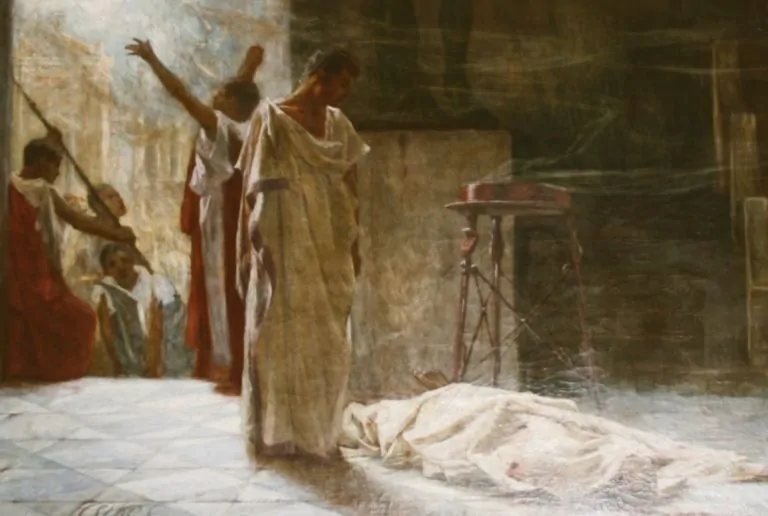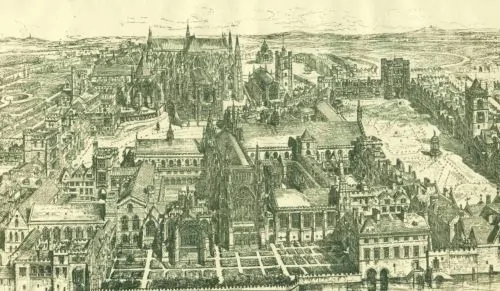
Medieval kings stood at the center of government, and danger. Their survival depended on elite guards, fortified residences, trusted servants, intelligence networks, and political legitimacy.

By Matthew A. McIntosh
Public Historian
Brewminate
Introduction: The Most Guarded, and Most Exposed, Man in the Realm
At first glance, no one in a medieval kingdom appeared better protected than its king. Armed companions surrounded him, trusted officers regulated his household, sentries watched the gates of his residences, and formidable walls separated his private chambers from the world beyond them. Yet royal power could not be exercised from permanent concealment. A king was expected to receive petitioners, preside over assemblies, dispense justice, attend worship, dine before observers, travel through his dominions, reward followers, and often lead armies in person. The ceremonies that demonstrated his supremacy also placed his body within reach of courtiers, servants, clerics, soldiers, ambassadors, rivals, and subjects. He was at once the most guarded and one of the most exposed men in his realm.
There was no single medieval model of royal protection. The households of Merovingian, Carolingian, Anglo-Saxon, Scandinavian, Capetian, Plantagenet, Iberian, and other rulers differed greatly, while the Byzantine imperial court developed institutions that cannot simply be transferred to western kingdoms. Practices also changed over the thousand years conventionally assigned to the Middle Ages, as armed war bands evolved into larger households, timber defenses gave way to stone castles and fortified palaces, and loosely defined personal service became more carefully regulated by offices and ordinances. Nevertheless, the same underlying problem confronted rulers across these differences: the king needed people close enough to defend and serve him, but proximity created opportunity for betrayal. His guards could become kingmakers, his chamberlains could exclude necessary advisers, his relatives could become dynastic rivals, and his castellans could surrender the fortresses entrusted to them. A monarch might be killed by a servant, surprised while hunting, captured in battle, isolated by rebellious magnates, or removed by men who claimed that they were preserving the kingdom by deposing its ruler. Even rumors of poison or conspiracy could destabilize the court by turning ordinary illness, unexpected death, or private disagreement into evidence of treason. The greatest danger was consequently not always the stranger attempting to force his way through a gate; it was often the familiar face already permitted to stand on the other side.
This vulnerability carried consequences far beyond the fate of one individual. Medieval political thought increasingly distinguished between the mortal ruler and the enduring authority embodied in kingship, a relationship later scholarship famously described through the concept of the king’s two bodies. That distinction was neither expressed identically in every century nor sufficient to separate the king’s physical condition from the health of the realm: illness, captivity, incapacity, or sudden death could interrupt justice, unsettle succession, divide aristocratic loyalties, and invite foreign intervention. Protecting the king meant protecting a political center around which households, offices, laws, alliances, and expectations of order had accumulated. The king’s body was human, but its security had become a matter of public consequence.
Medieval royal security is best understood not as a centralized apparatus resembling a modern protective service, but as a practice of managed proximity. Elite guards, household knights, chamberlains, ushers, castles, garrisons, escorts, food-service officers, messengers, informants, and political allies formed overlapping layers around the ruler without belonging to a single institution devoted exclusively to his safety. Some safeguards were explicitly protective, while others emerged from domestic service, military obligation, court ceremony, or the ordinary exercise of lordship. Nor should familiar images be accepted uncritically: foreign guards did not invariably remain loyal, castles were more than defensive machines, and the evidence does not support imagining every medieval king waiting at every meal while a disposable servant tested each dish for poison. The effectiveness of royal protection depended less on the existence of any particular guard unit or architectural feature than on whether the people operating those defenses remained committed to the ruler. Examining medieval kingship through that reality reveals a persistent paradox: the king could not govern without allowing others near him, but every layer of protection brought potential enemies closer to the throne. To guard the king was not merely to surround a man with weapons and walls; it was to organize the household, manage access, preserve loyalty, and sustain the political relationships upon which the realm itself depended.
The Mortal Body of Kingship: Why the Ruler Had to Be Seen
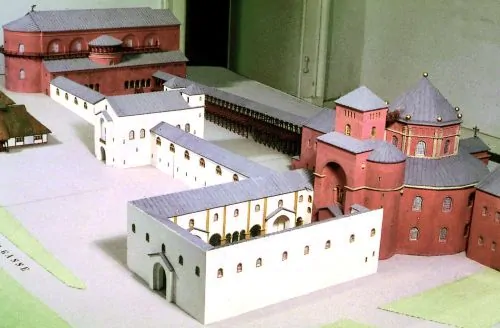
A medieval king’s body became a focus of political attention most dramatically at his inauguration. Succession could depend on ancestry, designation, election, conquest, or some combination of these, but private possession of a hereditary claim was rarely sufficient by itself. Acclamation, oath-taking, anointing, coronation, enthronement, and the presentation of regalia placed the new ruler before the communities whose recognition made his authority effective. These rites differed across kingdoms and changed over time, so they should not be reduced to a single formula by which the Church supposedly manufactured sacred kings. Their common political effect was nevertheless to transform accession into a witnessed event in which the ruler’s identity, obligations, and authority were publicly affirmed. A claimant became unmistakably royal not merely because he possessed the correct blood, but because significant people had seen him accepted, elevated, and treated as king.
That need for recognition continued after the coronation. Early and central medieval government remained intensely personal, and even increasingly sophisticated administrations issued commands in the name of a ruler whose presence still carried an authority that documents alone could not reproduce. Kings appeared at assemblies, received embassies, heard petitions, settled disputes, attended councils, celebrated major feasts, confirmed grants, and displayed generosity before audiences capable of remembering and reporting what they had witnessed. An itinerant court brought the king into successive regions of his dominions, allowing local magnates, bishops, abbots, officials, and selected communities to encounter royal authority as a living presence rather than a distant abstraction. Hincmar of Reims’s account of the Carolingian palace reveals how carefully ordered consultation and attendance could connect the ruler to information arriving from across the kingdom. Such encounters were not indiscriminately open: access was graded by status, occasion, office, and political usefulness, while many subjects knew the king principally through seals, coins, proclamations, officers, or stories. Yet representation worked because it referred to a recognized person whose physical existence anchored the authority exercised in his name. Prolonged absence could encourage rumors of sickness, incapacity, captivity, or death, while an inaccessible ruler risked appearing dominated by favorites or indifferent to the obligations of justice. Visibility was not ornamental publicity but one of the means through which medieval kings renewed relationships that could not be sustained indefinitely by command alone.
The royal touch made the connection between body and authority unusually literal. From the central Middle Ages onward, the kings of England and France developed rituals in which sufferers from scrofula sought healing through contact with an anointed ruler, although the origins, regularity, and contemporary interpretation of the practice remain subjects of debate. The custom was never common to all medieval monarchies and should not be used as evidence that every king was universally regarded as a miracle worker. It nevertheless demonstrates how royal holiness could be expressed through controlled bodily contact, making the monarch’s flesh simultaneously exalted, accessible, and dependent on ceremonial management.
Martial kingship exposed the ruler even more directly. A king who accompanied his army could be seen sharing its hardships, inspecting defenses, directing operations, rewarding courage, and accepting the dangers that aristocratic ideals associated with honorable command. His recognizable presence might steady troops and turn a campaign into a demonstration of personal lordship, but it also identified the most valuable target on the field. Capture could yield an enormous ransom, paralyze government, embolden domestic opponents, and force concessions from an entire kingdom. Richard I’s death in 1199 from a wound received while inspecting the siege of Châlus showed that even an experienced warrior king surrounded by soldiers could be struck during a comparatively minor operation. Louis IX’s capture in Egypt in 1250 similarly converted the physical defeat of the king into a political and financial crisis for the crusading host and the French monarchy. Neither incident meant that medieval rulers were expected recklessly to fight in the front rank on every occasion; commanders balanced exemplary courage against their obligation to preserve themselves. Nonetheless, a ruler who consistently avoided military danger could damage a reputation built on protection, victory, and masculine prowess. Campaigns, hunts, pilgrimages, and progresses generated a recurring dilemma: the king gained authority by being recognizably present, but his presence concentrated the political fortunes of the realm in a body vulnerable to arrows, disease, exhaustion, accident, and capture.
Medieval courts answered this dilemma by choreographing visibility rather than abolishing it. Thrones, raised platforms, canopies, distinctive clothing, processions, liturgical positioning, ordered seating, armed escorts, and successive chambers allowed the king to appear while preserving hierarchy and distance. These arrangements marked some people as witnesses, others as servants or counselors, and only a trusted few as individuals permitted intimate approach. Protection consequently aimed not to remove the monarch from public life but to regulate the circumstances in which his body could be viewed, addressed, touched, or followed. Appearing before the realm helped create a political defense of its own by sustaining recognition, loyalty, obligation, and confidence in the continued operation of royal government. Conversely, illness, minority, imprisonment, or unexplained seclusion could become dangerous because each condition separated the visible institution of kingship from the person expected to embody it. The ruler had to be seen because medieval authority was not only proclaimed and obeyed; it was enacted through encounters in which the mortal man demonstrated that the king remained present.
From War Band to Royal Household: Loyalty Before Bureaucracy

Before royal households appeared in ordinances, financial accounts, and administrative records, kings were already surrounded by people who fought, traveled, ate, and deliberated with them. Historians often describe the armed nucleus of this following as a war band, but the term can create a misleading impression of a single institution inherited unchanged from an ancient Germanic past. Evidence for early retinues comes from Roman ethnography, law codes, chronicles, poetry, archaeology, and later recollections, each of which represented companionship and lordship for different purposes. Some rulers commanded small groups bound closely to their persons, whereas others drew protection from larger aristocratic coalitions, military households, or networks of dependent families. These arrangements also absorbed Roman practices of officeholding, Christian ideas of kingship, and the social structures of the kingdoms that succeeded imperial government in the West. The royal household did not emerge when an informal band suddenly became civilized or bureaucratic; it developed through the gradual combination of armed companionship, domestic service, political counsel, religious ministry, and written administration.
The relationship between a ruler and his closest warriors rested on reciprocity rather than obedience alone. A successful lord distributed food, weapons, horses, garments, treasure, offices, legal protection, and opportunities for enrichment, while followers answered generosity with service, counsel, public support, and military courage. Heroic poetry made the gift-giving hall the moral center of this relationship, presenting the ruler as a ring-giver whose open-handedness transformed wealth into loyalty and reputation. Such literature cannot be read as a literal inventory of early medieval institutions, but it preserves expectations that appear in less stylized forms throughout chronicles and political narratives. Feasting allowed rewards to be displayed, precedence to be acknowledged, alliances to be renewed, and stories of collective achievement to be repeated before witnesses. Oaths intensified these bonds by placing loyalty under religious and social sanction, yet an oath did not function like an impersonal contract enforced by a sovereign state. A follower expected his lord to protect him, honor his rank, reward service, and avoid humiliating him before his peers; persistent failure could weaken the moral force of continued allegiance. Loyalty was consequently cultivated through repeated exchanges, and the king who could no longer give, protect, or win risked discovering that supposedly permanent devotion had depended on his performance as a lord.
The vocabulary of early medieval service further warns against imagining a clearly defined corps of professional bodyguards. Frankish sources referred to the royal trustis and to antrustiones enjoying a specially valued relationship with the king, while Anglo-Saxon terms such as gesith and thegn could indicate honor, dependence, or service without identifying membership in one permanent military unit. A ruler’s following might contain relatives, fostered youths, aristocratic companions, clerics, household dependents, enslaved or unfree servants, craftsmen, messengers, and warriors whose duties overlapped rather than fitting into fixed departments. Protection arose from an armed element embedded within this larger domestic community, not from a security organization standing apart from it.
Under the Carolingians, the royal palatium denoted more than a building: it encompassed the people, offices, relationships, and procedures that moved with the ruler and enabled him to govern. Charlemagne and his successors possessed chaplains, notaries, counselors, chamber servants, officials responsible for provisions and horses, and aristocratic followers expected to perform both military and political service. Hincmar of Reims’s De ordine palatii, written in 882, described an ordered court in which the chief ecclesiastical officer and count of the palace managed different streams of petitions, counsel, judgment, and royal business. His account partly reconstructed an idealized earlier order and cannot be treated as a neutral description of daily practice, but it shows that contemporaries could imagine the household as an organized instrument of government. Clerics drafted documents and preserved records, messengers carried commands, regional representatives supplied information, and palace officials regulated the presentation of disputes to the ruler. Domestic responsibilities could acquire political weight because control of the chamber, chapel, stables, table, or audience placed an officer near the king and the resources of kingship.
The extraordinary rise of the Carolingian family from the Frankish mayoralty of the palace demonstrated how authority rooted in a royal household could eventually overshadow the dynasty it ostensibly served. Even so, Carolingian government remained dependent on itineration, aristocratic cooperation, ecclesiastical expertise, and negotiations conducted through personal encounters. Administrative differentiation strengthened the ruler’s following, but it did not release him from reliance on the loyalty of particular people.
By the eleventh and twelfth centuries, Latin sources increasingly described the familia regis, a capacious royal household whose members could serve in the chamber, hall, chapel, writing offices, hunt, treasury, stables, or armed retinue. The Constitutio Domus Regis, compiled around 1136 from arrangements associated with Henry I of England, listed chancellors, stewards, butlers, chamberlains, constables, marshals, and numerous lesser servants together with their allowances and entitlements. Its concern with payments, meals, candles, bread, wine, and daily provision reveals an institution far more regulated than the heroic hall, although hierarchy and personal favor remained essential to its operation. Household knights and military serjeants accompanied the monarch, performed missions, held castles, enforced orders, and supplied a dependable core around which larger forces could be assembled. Under rulers such as King John, these knights were valued not merely for combat but because proximity allowed the king to employ them as administrators, envoys, commanders, and agents in politically sensitive situations. Meanwhile, institutions such as the English Exchequer and Chancery acquired specialized procedures, even as many of their personnel retained connections to the court and household from which royal administration had grown. The emergence of more elaborate government extended the reach of personal kingship rather than simply replacing the household with detached offices.
“Loyalty before bureaucracy” describes an order of dependence, not a clean chronological division between personal and institutional government. Wages, written rules, defined offices, and audited accounts could clarify obligations and stabilize service, but none guaranteed that an officer would protect a king whose patronage had failed or whose political position was collapsing. Household members might attach themselves to a royal child, queen, favorite, magnate, or prospective successor, creating rival loyalties within the community expected to defend the reigning monarch. The royal household was both the king’s most immediate protection and the environment in which dangerous factions could form closest to his person. Out of this enduring tension came the demand for select warriors whose identity, reward, and reputation marked them as bound to the ruler: the housecarls, Varangians, household knights, and foreign guards who stood nearest the throne.
Axes Beside the Throne
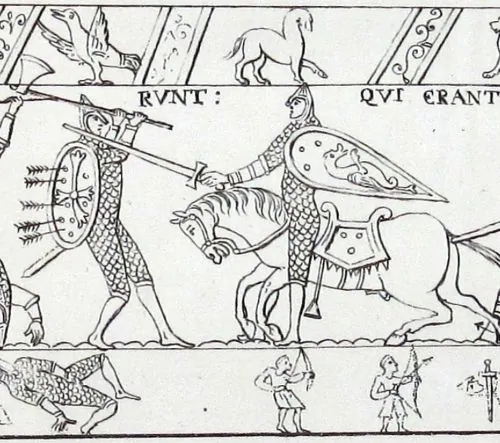
The long-handled axe became the most recognizable symbol of two very different kinds of medieval royal retainer: the housecarls of northern Europe and the Varangians of Byzantium. Both emerged from traditions of armed household service, both acquired reputations for fighting on foot around rulers or standards, and both became associated with exceptional personal loyalty. Yet calling either group a “bodyguard” can obscure as much as it reveals, because their members also campaigned, enforced commands, held property, performed ceremonial duties, and served magnates other than kings. They were not necessarily assigned to watch a royal bedchamber or surround the monarch at every moment. Their value arose from a broader combination of military skill, household membership, corporate identity, and dependence on a powerful patron. Comparing them illuminates not a universal medieval guard system, but several ways rulers attempted to place formidable warriors between themselves and the political factions surrounding their thrones.
The Old Norse word húskarl meant, most basically, a man of the household, and its breadth should discourage the assumption that every person bearing the title belonged to one centrally organized royal regiment. In Scandinavia and England, household men could serve kings, earls, and other lords, while the vocabulary of hired warriors, shipmen, retainers, and royal servants overlapped in ways that surviving sources do not always clarify. Cnut’s conquest of England in 1016 undoubtedly left him with experienced Scandinavian warriors whose continued presence helped secure a newly won kingdom. Later tradition described a disciplined fellowship governed by rules of precedence, table fellowship, compensation, and expulsion, most famously in Sven Aggesen’s twelfth-century account of the so-called law of the retainers. That source was written long after Cnut’s death and may preserve the ideals of a later Danish military household as much as the organization of an early eleventh-century English force. Royal taxation known as the heregeld supported ships and paid warriors, but it cannot simply be equated with the maintenance of thousands of housecarls functioning as a permanent national army. Some of Cnut’s followers were almost certainly salaried or rewarded from royal resources, yet others received land, office, gifts, or opportunities created by conquest. The evidence does not establish a fixed corps with a known establishment, uniform recruitment, and continuous command structure comparable to a modern standing guard. What can be said more securely is that Cnut maintained a militarized household whose members combined personal attendance with the coercive work required to protect a conquering dynasty.
Housecarls remained prominent under Cnut’s successors and could also belong to powerful earls, making them part of the kingdom’s aristocratic order rather than an exclusive possession of the crown. In 1066, seasoned household warriors formed an important element of Harold Godwinson’s army, first in the rapid northern campaign against Harald Hardrada and then at Hastings against William of Normandy. The Bayeux Tapestry’s axemen standing in the English shield wall have conventionally been identified as housecarls, although the image cannot supply a roster or prove that every warrior carrying an axe held that status. Their destruction alongside Harold demonstrated the courage expected of retainers who remained near a fallen lord, but it also exposed the weakness of a protective force whose fate was inseparable from defeat of the king it served.
The Byzantine Varangian Guard developed within a more elaborate imperial military and palace establishment. Emperors had long recruited foreigners, provincial soldiers, and mercenaries to balance native commands whose generals could convert military authority into bids for the throne. Northern warriors from the world of the Rus had entered Byzantine service before the reign of Basil II, but a decisive moment came around 988 when Vladimir of Kyiv supplied approximately six thousand troops as part of an alliance with the emperor. These warriors helped Basil defeat the rebellion of Bardas Phokas and gave him a force whose position did not depend on the great families contesting power within the empire. The event is conventionally treated as the foundation of the Varangian Guard, although the transformation of Vladimir’s contingent into a continuing palace institution cannot be reconstructed in every detail. Early recruits came principally through the interconnected Scandinavian, Rus, and eastern European worlds linked to Constantinople by river and maritime routes. By the later eleventh century, political upheaval in England added another stream of recruits. Evidence supports a significant migration of Anglo-Saxons and other English exiles into Byzantine service around 1080, after the Norman Conquest had displaced warriors unwilling or unable to accommodate themselves to the new regime. Byzantine writers subsequently referred to English or British axe-bearers, while western and Scandinavian traditions remembered Constantinople as a destination where dispossessed or ambitious warriors could win wealth and honor. “Varangian” consequently described an imperial military identity that survived changes in the geographic and ethnic origins of its members.
The Varangians performed a wider range of tasks than the image of silent sentries beside an imperial throne suggests. They guarded palace spaces, accompanied the emperor during ceremonies, participated in acclamations and arrests, watched important prisoners, and deployed as elite infantry during major campaigns. Their axes possessed obvious battlefield utility, but their size and visual distinctiveness also made them instruments of intimidation and imperial display. High pay, access to booty, ceremonial privileges, collective reputation, and the possibility of returning home wealthy reinforced their attachment to service. Anna Komnene portrayed fidelity to the emperors as an inherited Varangian tradition, but her language expressed a courtly ideal and defended the legitimacy of the dynasty to which she belonged. Varangian loyalty could attach more firmly to the imperial office or recognized possessor of the palace than to a deposed, absent, or dead emperor. Incidents at Constantinople in 1068 and 1078 also show Varangian groups engaging in violent resistance within the palace rather than obeying without question. Foreign recruitment reduced certain local connections, but it did not deprive guards of collective grievances, ambitions, leaders, or the ability to intervene in a crisis.
Comparable reasoning appeared elsewhere without producing institutions identical to the Varangian Guard. The Norman rulers of Sicily retained Muslim soldiers and Arabic-speaking palace personnel whose skills connected the new monarchy to the island’s preconquest military and administrative traditions. Frederick II later drew dependable archers and retainers from the Muslim community transferred from Sicily to Lucera, using men whose separation from Christian barons and dependence on imperial favor could make them valuable during conflict with the papacy and rebellious subjects. These Muslims were technically royal subjects rather than foreigners, demonstrating that political outsider status could matter more than birthplace. In fifteenth-century France, Scottish troops arriving through the Franco-Scottish alliance supplied Charles VII and his successors with another body of warriors relatively detached from French aristocratic rivalries. From these contingents emerged the Scottish company that became the senior element of the French royal bodyguard, although its development was more gradual than later claims of a single foundation in 1418 imply. Foreign or socially separate soldiers could appear trustworthy because they lacked an independent constituency within the host kingdom. The same quality could make them hated as alien instruments of royal coercion and dangerously dependent on uninterrupted wages, privileges, and patronage.
Elite guards represented a calculated substitution of one kind of risk for another. A ruler reduced his dependence on local magnates by rewarding warriors whose status rested upon service at court, but he simultaneously placed an armed corporation close to his person, treasury, family, and succession. Oaths, ethnicity, shared weapons, distinctive dress, table fellowship, and stories of ancestral fidelity strengthened cohesion without making obedience automatic. Housecarls and Varangians were most dependable when institutional reward and personal loyalty pointed toward the same ruler; when those forces diverged, the guard could defend the throne while abandoning its occupant. The axes beside the throne projected formidable protection, but the decisive security question remained who controlled the men carrying them.
Controlling Access: Doors Within Doors

Castle walls could repel an army, but the ordinary security of a medieval king depended on people stationed at far less imposing barriers. In daily court life, the critical boundary was often a doorway separating one degree of access from another. Porters, ushers, chamber servants, household knights, and armed attendants determined whether a visitor entered, waited, advanced under escort, or was turned away. Each threshold reduced the number of people permitted to approach the ruler while sorting them according to status, office, purpose, and favor. These practices were not equivalent to modern screening, identification, or close protection, but they performed the essential work of distinguishing the expected courtier from the unknown intruder and the legitimate petitioner from the disruptive claimant. Control of the king’s doors consequently joined physical security to the distribution of political opportunity.
The frequently imagined progression from castle gate to courtyard, great hall, great chamber, inner chamber, and bedchamber captures an important principle but not a universal floor plan. The hall was ordinarily the most public elite space, accommodating meals, ceremonies, petitioners, servants, entertainers, and gatherings through which the ruler displayed hospitality and rank. A chamber offered greater warmth, comfort, and selectivity, yet it might still contain counselors, clerks, servants, favored nobles, and guests rather than functioning as a modern private room. Deeper rooms or screened areas could restrict attendance still further, creating an inner environment in which the king dressed, rested, handled money, received confidants, or discussed sensitive business. The terminology and use of these spaces varied greatly across centuries, kingdoms, and individual residences.
A royal castle built around a defensible keep did not arrange access in precisely the same way as an urban palace, monastic guesthouse, episcopal residence, hunting lodge, commandeered noble household, or military pavilion. Because medieval courts traveled, household officers repeatedly had to reproduce recognizable levels of access inside buildings never designed as permanent royal centers. Screens, curtains, furniture, liveried servants, guarded stairs, announced entry, and rules of precedence could create social barriers even where architecture supplied few permanent ones.
The chamberlain stood near the center of this controlled environment, although the title covered responsibilities much broader than guarding a door. The chamber originated as both a living space and a repository for clothing, jewels, documents, ready money, and objects required for the ruler’s personal service. Chamber officials consequently developed financial and administrative functions alongside their domestic duties, and money controlled through the chamber could give the king resources less encumbered by larger governmental procedures. A great chamberlain might be a high-ranking aristocrat who exercised general authority or enjoyed a largely honorific dignity, while deputies, clerks, valets, and lesser chamber servants performed much of the continuous work. Even when he did not literally inspect every visitor, the chamberlain could influence which petitions reached the king, which messages received attention, and which courtiers obtained a private audience. His proximity made him a potential intermediary between formal government and personal decision, especially when access to the royal chamber also meant access to patronage. The office combined protective trust with political leverage: the man charged with preserving the king’s privacy could shape what the king knew.
Ushers and porters translated that authority into daily practice. Porters controlled exterior or principal entrances, while ushers managed movement within the household, announced arrivals, escorted visitors, arranged precedence, and maintained order in halls and chambers. Admission depended heavily on recognition, clothing, heraldic display, household livery, known office, personal recommendation, and the ability of established courtiers to vouch for newcomers. A stranger claiming urgent business might first present himself to a lower servant, who carried the request upward through several intermediaries rather than allowing direct approach. During audiences, meals, ceremonies, and assemblies, ushers also prevented crowding and protected the spatial distinctions that made royal magnificence intelligible. Serjeants-at-arms, archers, household knights, and other armed servants could reinforce a refusal, remove an offender, or raise an alarm, but most control rested on routine compliance rather than threatened violence. Household ordinances attempted to define numbers, duties, allowances, attendance, and periods of waiting so that the king would not be left unattended or overwhelmed by unnecessary servants. The Constitutio Domus Regis and the later ordinances collected in Edward IV’s Black Book reveal increasing concern with graded service and accountability. Such texts recorded ideals of good order and reform rather than offering a perfect transcript of daily behavior, for a king could always admit a favorite, dismiss an inconvenient officer, or suspend normal custom when circumstances demanded it.
Night narrowed the protective circle but did not leave the monarch alone in the modern sense. Valets, grooms, squires, physicians, chaplains, and other trusted attendants might remain within call, while servants responsible for clothing, bedding, water, light, fires, doors, and bodily care possessed unavoidable access to the king at his most defenseless. Bed curtains created visual seclusion rather than complete isolation, and adjoining attendants could watch for fire, theft, illness, disturbance, or an unauthorized approach while other household personnel guarded more distant passages. The arrangement reduced danger from outsiders by concentrating intimacy in a small group, but it magnified the consequences of admitting a disloyal servant, conspirator, or coerced accomplice.
Access also became a currency over which courtiers competed. A noble who could speak with the king before a council meeting, accompany him during recreation, or present a request in a chamber enjoyed an advantage over rivals confined to formal audiences. Royal spouses, confessors, physicians, clerks, valets, and comparatively low-ranking personal servants sometimes possessed opportunities for private conversation unavailable to greater aristocrats, demonstrating that ceremonial rank and practical proximity did not always coincide. Kings could use this arrangement deliberately, cultivating chamber personnel whose fortunes depended upon royal favor and who provided alternatives to dominant magnates. Richard II’s reliance on chamber servants, household knights, yeomen, and archers became politically controversial because opponents associated the inner household with selective counsel and coercive royal power. Later interpretations have sometimes exaggerated this group into a unified instrument of absolutism, but contemporary complaints reveal genuine anxiety about decisions formed behind restricted doors. The Yorkist household ordinances similarly sought to regulate access, expenditure, service, and discipline in a monarchy repeatedly destabilized by civil conflict. Yet written order could not prevent an inner circle from becoming a faction, nor could it assure excluded nobles that private access was being used for the common good rather than personal favoritism. The safer the chamber appeared to the king, the more politically threatening it could appear to those kept outside it.
Medieval access control was an active social process rather than a simple arrangement of locked rooms. Effective officers had to protect the ruler without making him unreachable, admit powerful people without allowing them to dominate, and preserve private counsel without creating the appearance of secret government. Regulations clarified responsibility, but recognition and trust remained indispensable because the household moved, personnel changed, and the king retained authority to disregard his own routines. Every successive door reduced exposure while increasing dependence on the smaller number of people permitted to pass through it. The final barrier around the monarch was never wood, iron, or stone; it was the judgment and loyalty of those empowered to decide when the door should open.
Stone Around the Crown: Castles as Fortresses and Royal Stages

A medieval king could be surrounded by armed men and still remain dangerously reachable; a castle answered that problem by giving protection an architectural form. Thick masonry, elevation, controlled gates, and defensible courtyards multiplied the time and force an attacker needed to reach the ruler. Yet a royal castle was never simply a stone container for the royal body. It was also a residence, arsenal, treasury, prison, archive, court of justice, and setting in which kingship was made visible. Its towers warned enemies, but its halls welcomed petitioners, magnates, envoys, clerics, and household servants whose presence sustained government. The castle did not abolish the contradiction between security and accessibility; it reorganized that contradiction through space.
In western and central Europe, the forms used to accomplish this changed profoundly between the tenth and fifteenth centuries, though never according to a single evolutionary sequence. Earth-and-timber strongholds could be erected quickly, and motte-and-bailey sites combined an elevated lordly nucleus with a lower enclosure for troops, animals, workshops, and stores. Following conquests in England, southern Italy, Wales, and elsewhere, castles allowed rulers and their agents to occupy strategic crossings, towns, and roads while making domination a permanent feature of the landscape. Stone keeps and curtain walls later offered greater durability and prestige, but timber did not simply disappear, nor did every royal residence progress neatly from motte to keep to “concentric” fortress. Kings repeatedly enlarged older sites, adapted urban citadels, and moved between fortified and unfortified residences as politics required.
Where resources and terrain permitted, castle defenses worked as a sequence rather than a single barrier. Cliffs, rivers, marshes, and steep slopes made approach predictable. Ditches, many of them dry rather than water-filled moats, kept men and siege machines away from walls, while outer banks, palisades, and wards forced attackers to expose themselves before reaching the central enclosure. Bridges might be removable or equipped with movable sections, and their raising converted the gate from a passage into a break in the road itself. Gatehouses concentrated timber doors reinforced with iron, portcullises, guardrooms, arrow loops, and openings from which defenders could strike into a confined passage. Projecting towers and wall walks permitted flanking fire along curtain walls, denying besiegers a safe position at their base. Inside, narrow doorways and staircases could slow movement between levels, so that the fall of one zone did not automatically surrender the next. Architectural details should not be romanticized: arrow loops varied in usefulness, drawbridges and portcullises were not universal, and the popular claim that spiral stairs were consistently designed to favor a right-handed defender is much too neat for the evidence. The reliable principle was not a single clever feature but cumulative delay.
Layering continued behind the curtain wall. Outer wards held stables, bakehouses, workshops, barracks, and stores; inner wards and residential ranges brought a progressively smaller set of people toward the hall, chapel, chamber, and private apartments. The king did not invariably sleep at the top of a keep, since royal lodging depended on date, season, comfort, and the changing arrangement of each site. What mattered was that routes to his rooms could be watched and doors closed without disabling the whole household. Wells, cisterns, granaries, kitchens, and secure storage also belonged to personal protection because a castle unable to feed its garrison or household during crisis was only temporarily defensible. Architecture extended the chamberlain’s hierarchy of permission: every bridge, ward, stair, and doorway created another point at which identity could be tested.
The same spaces that protected the king also performed the majesty of rule. A great hall large enough for feasting, judgment, homage, and diplomatic reception allowed the monarch to appear in controlled splendor, while its raised dais, screens, doors, and adjoining chambers graded the visitor’s advance toward him. Chapels advertised piety and dynastic legitimacy; painted chambers, glazed windows, gardens, parks, and water features turned a military site into a courtly landscape. At Windsor, successive English kings transformed a fortress into a principal ceremonial residence without stripping it of defensive character, while the Louvre joined the protection of Capetian Paris to the monumental presence of the French crown. Richard I’s Château Gaillard dramatized command of the Seine frontier, and Edward I’s castles in Wales combined logistical force with an architecture that announced conquest and permanent lordship. Caernarfon’s banded masonry and polygonal towers, often read in relation to Roman and imperial imagery, made clear that fortification could speak politically as well as resist materially. Even a moat could contribute to display by reflecting walls, separating designed grounds, or framing an impressive approach, just as towers could orient views across territories the king claimed to govern. Royal security required carefully managed permeability: a castle had to overawe those outside while admitting enough people to let the ruler dispense justice, favor, hospitality, and command.
No castle, however massive, made a monarch invulnerable. Mining, stone-throwing artillery, blockade, fire, and starvation could overcome masonry, especially if relief failed or water and provisions ran short. More dangerously, gates could be opened, keys copied, guards bribed, and constables persuaded that the king’s enemy was about to become the lawful ruler. A fortress could even become a cage when political opponents controlled its exits, as the recurrent conversion of royal residences into prisons grimly demonstrated. Stone strengthened loyal custody; it could not manufacture it.
The royal castle is best understood as a machine for organizing distance, time, resources, and rank. Its walls established defensive depth, its stores made endurance possible, and its ceremonial rooms converted seclusion into a visible claim to authority. But the machine functioned only when household officers knew whom to admit, soldiers watched the approaches, craftsmen maintained gates and roofs, and local communities supplied food, labor, intelligence, and horses. In ordinary times the doors could not remain permanently shut, because an inaccessible king soon appeared absent, fearful, or unjust. In emergencies those same doors had to close quickly, and the social world that normally flowed through them had to be reduced to a trusted remnant. The security provided by a castle was consequently neither purely military nor merely symbolic: it was the architectural expression of the monarchy’s attempt to govern exposure. Whether that expression protected the king in practice depended on the constables, garrisons, watches, and keepers who turned stone boundaries into living defenses.
The Human Wall
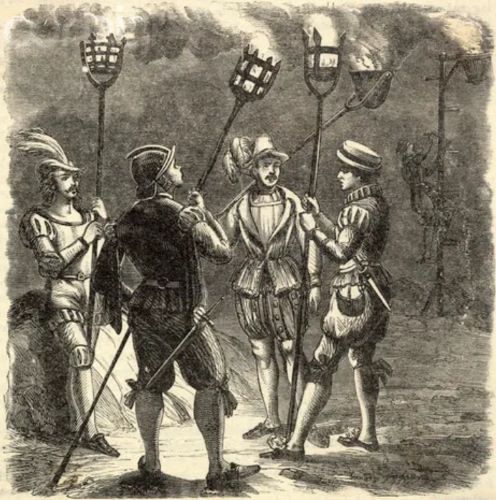
A castle’s walls remained inert until people agreed to defend them. Stone could obstruct an assault, but only sentries could recognize danger, officers could close the gates, and soldiers could prevent an enemy from exploiting the inevitable openings through which residents, supplies, and messages passed. The real protective envelope around a king was partly architectural and partly human. Constables, castellans, keepers, porters, watchmen, men-at-arms, archers, and household servants transformed walls into an inhabited system of defense. Their effectiveness depended less on heroic individual combat than on repeated acts of supervision: inspecting doors, assigning watches, accounting for weapons, challenging strangers, and ensuring that someone remained alert when everyone else slept. Royal safety ultimately rested on whether these ordinary duties continued to be performed before a crisis made their importance obvious.
The constable or castellan ordinarily held delegated custody of the fortress, although titles, powers, and terms of appointment varied considerably across regions and centuries. In a royal castle, he represented an absent king and might command the garrison, supervise repairs, receive supplies, guard prisoners, preserve stored weapons, and account for revenues or expenditures connected with the site. Some constables also exercised judicial or territorial authority, while others served beneath sheriffs, wardens, chamberlains, or provincial governors whose jurisdictions overlapped with their own. A powerful noble might receive custody as a reward, but kings also appointed household knights, experienced soldiers, clerics, foreigners, and lesser men whose advancement depended directly upon royal favor. The choice carried obvious political risks because control of a strategic fortress could convert a servant into an independent regional power. Constables who held office for long periods accumulated local clients, installed relatives and deputies, and sometimes treated royal resources as extensions of their own households. During Richard I’s absence on crusade, disputes over the placement of allegedly foreign or unfamiliar men in castles became part of the wider struggle surrounding William Longchamp’s government. Such controversies revealed that appointing a constable was not a routine administrative act but a decision about who would control armed strongpoints during the ruler’s absence. A royal writ could confer custody, but it could not guarantee that the recipient would surrender the castle when political loyalties changed.
Castle garrisons were rarely fixed bodies resembling modern permanent military units. In peaceful conditions, a fortress might contain only enough armed men to guard the gates, patrol the walls, protect stores, and deter opportunistic violence. Knights and men-at-arms could serve alongside serjeants, archers, crossbowmen, porters, engineers, and locally recruited infantry, with distinctions between soldiers, household retainers, and working servants often remaining indistinct. Some men performed castle-guard because of obligations attached to landholding, while cash payments and hired service increasingly supplemented or replaced such duties. When invasion, rebellion, or siege threatened, the crown attempted to enlarge the garrison, but the necessary soldiers did not always arrive promptly or remain after their wages fell into arrears.
Watch routines turned this fluctuating body of men into a continuous defense. Gates were generally opened and closed according to the rhythms of daylight, local business, and perceived danger, with stricter restrictions imposed after sunset or during political emergencies. Guards inspected doors, bridges, locks, bars, and portcullises before the night watch began. Sentries occupied gatehouses and towers, while patrols moved along walls and through wards to ensure that no vulnerable sector had been abandoned. Where evidence survives, watches could be divided into successive periods so that one group relieved another, and passwords or recognized signals helped distinguish authorized movement from intrusion. Bells, horns, shouted alarms, and beacons could summon sleeping soldiers or warn nearby settlements and fortresses. Travelers arriving late might be forced to remain outside, while messengers claiming royal authority still had to be identified before a gate was opened. When the king occupied the castle, the ordinary military watch overlapped with household guards posted nearer the hall, chamber, chapel, and royal lodgings. This produced several defensive rings, but it also created uncertainty over whether the constable, chamberlain, usher, or captain possessed final authority at a particular threshold. Regulations differed between castles, and surviving administrative records reveal practice unevenly, so no universal timetable of medieval guard duty can be reconstructed. The central objective was nevertheless consistent: no passage connecting the outside world to the royal interior was supposed to remain unobserved.
Keys embodied this system of custody more completely than almost any weapon. Possession of a castle’s keys signified practical control over gates, chambers, towers, prisons, treasuries, and armories, but it also represented the legal authority to admit or exclude in the ruler’s name. When constables changed, the transfer of keys could accompany the formal surrender of the castle and the accounting of provisions, weapons, furnishings, prisoners, and royal property. Individual doors might be entrusted to porters or subordinate keepers, while the constable retained responsibility for the whole site, producing a hierarchy of custody comparable to the graded access of the royal household. In particularly sensitive circumstances, responsibility could be divided among several officers so that no single subordinate controlled every entrance, although arrangements varied too widely to constitute a standard medieval procedure. The ceremonial presentation of a town’s or fortress’s keys to a victorious king made explicit what defenders already understood: to yield the keys was to surrender authority before every wall had necessarily been breached. Their importance was both material and symbolic. A copied, stolen, or treacherously surrendered key could neutralize thousands of pounds spent on masonry.
Garrisons also had to be paid, fed, equipped, and sheltered if their vigilance was to endure. Royal orders repeatedly concerned grain, salted meat, ale, firewood, crossbow bolts, bowstrings, armor, timber, and money for wages because courage could not compensate indefinitely for empty stores or broken equipment. Arrears encouraged desertion, corruption, extortion, and collusion with surrounding communities, while neglected roofs and gates could weaken a fortress without an enemy striking a blow. The troubled reign of Edward II demonstrated that castles with formidable walls could contribute little when their garrisons were inadequate, their supplies insufficient, and appointments to command confused by factional politics.
The human wall was consequently also a potential breach. A constable decided whether to recognize a royal messenger, obey a command of dismissal, admit an approaching magnate, or hold the castle for a rival claimant who promised better rewards. Kings attempted to manage that danger through oaths, limited or revocable appointments, financial audits, inventories, sureties, divided responsibilities, and the replacement of officers whose loyalty appeared uncertain. Yet frequent turnover could itself produce confusion, especially when an outgoing constable delayed surrender or disputed which stores belonged to him and which belonged to the crown. Successful defense required the convergence of a trusted commander, a sufficiently numerous garrison, reliable pay, adequate provisions, maintained equipment, and disciplined watches. The defense of Dover against the forces of Prince Louis of France in 1216 illustrated how an important fortress could remain effective when determined leadership and continued resistance complemented its formidable architecture. Under different political conditions, the same stronghold might be opened without a prolonged siege and become the operational base of the king’s enemies. Castles did not distinguish legitimate sovereigns from successful usurpers; the people controlling their gates made that judgment. The monarchy tried to bind castle officers personally to the ruler while simultaneously subjecting them to written commands and financial supervision. Fortification protected the king only when the men holding the keys believed that his authority remained worth defending, and because kings could not govern permanently from behind closed gates, that loyalty next had to accompany them onto roads, hunts, pilgrimages, campaigns, and royal progresses.
Guarding a Moving Target
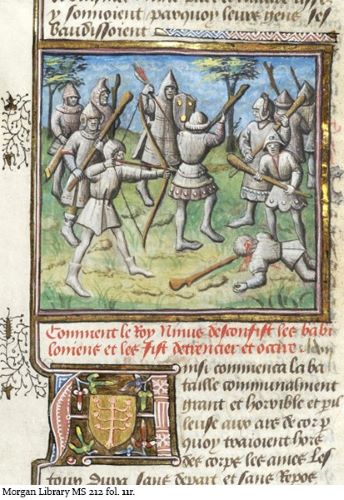
A king who remained permanently behind castle walls might preserve his body while weakening his rule. Medieval government depended upon personal presence: rulers traveled to hear petitions, inspect officials, negotiate with magnates, administer justice, hunt, worship at important shrines, and command armies. Historians often describe such journeys as progresses, although much medieval royal travel was not an exceptional ceremonial tour but the ordinary movement of an itinerant court. Every departure dissolved some of the spatial protections constructed within a familiar residence. Roads created opportunities for ambush, river crossings divided escorts, forests concealed strangers, and overnight lodgings contained doors and passages unknown to the royal household. Yet mobility also prevented enemies from knowing precisely where the king would be, allowed him to respond quickly to unrest, and demonstrated that royal authority extended beyond a single capital or fortress. The problem was not how to keep the king stationary, but how to carry a temporary zone of guarded kingship around a moving body.
Royal travel required extensive preparation before the monarch appeared. Household officers and local officials identified routes, gathered provisions, arranged horses and carts, prepared bridges and ferries, and determined where different parts of the court would sleep. Harbingers or lodging officers rode ahead to allocate rooms and prevent rival courtiers from seizing the most desirable quarters by force or influence. Sheriffs, castellans, abbots, urban authorities, and estate managers received warning that the royal party was approaching and were expected to provide food, fodder, guides, transport, and secure accommodation. The king normally traveled within an ordered company rather than as an isolated horseman, with household knights, servants, clerks, messengers, huntsmen, baggage animals, and armed retainers distributed around him. Men who knew the locality could warn of damaged roads, flooded rivers, hostile communities, or suspicious gatherings, while scouts and advance riders examined uncertain stretches of the route. The wardrobe, treasure, seals, correspondence, plate, bedding, clothing, weapons, and portable chapel equipment formed a valuable train requiring protection of its own. Losing the royal baggage could deprive the king not merely of comfort but of money, records, symbols of authority, and the material means of continuing government. Movement consequently enlarged the number of people upon whom his safety depended. It also made security inseparable from logistics, since a hungry escort, an exhausted horse, or a delayed baggage cart could leave the royal body exposed as effectively as an unguarded door.
Each stopping place required the household to construct a new interior hierarchy within unfamiliar walls. A royal castle offered recognized defensive resources, but kings also lodged in monasteries, episcopal residences, hunting lodges, manor houses, urban palaces, tents, and private noble households. Officers had to identify suitable chambers, control approaches, post guards, secure baggage, and determine which existing servants could remain near the king. A host’s hospitality could signal loyalty, yet the dependence it created demanded caution because local cooks, porters, grooms, guides, and servants entered the temporary royal environment.
The hunt presented a different problem because it deliberately carried the ruler away from halls, roads, and tightly ordered processions. Hunting demonstrated aristocratic mastery, trained riders in the use of horses and weapons, and provided a setting in which kings could cultivate favored companions beyond the formalities of the audience chamber. Royal forests and enclosed parks offered some control over terrain and access, while foresters, verderers, huntsmen, beaters, dog handlers, and local guides prepared the landscape before the quarry was pursued. Their knowledge helped separate ordinary hunting activity from suspicious movement, but the expansion of the party also introduced people who did not belong to the king’s permanent household. Once pursuit began, riders could become dispersed, paths narrowed, visibility deteriorated, and excitement disrupted ceremonial order. Horses stumbled, weapons slipped, wounded animals charged, and streams or broken ground turned recreation into physical danger without any conspiracy being necessary. Bodyguards had to remain close enough to intervene while allowing the king to exhibit courage, skill, and command rather than appearing timidly enclosed by protectors. Hunting security depended on controlled informality: the event had to feel freer than court while remaining prepared more carefully than its spontaneity suggested.
Pilgrimage exposed the ruler through reverence rather than recreation. A king approaching a shrine might walk, remove visible signs of rank, give alms, join processions, or permit unusually close contact with clerics and crowds in order to display humility before the saint. Churches and monasteries could organize receptions and control portions of the route, but they were not necessarily designed to protect a large royal household. Pilgrims, beggars, merchants, invalids, petitioners, and spectators converged around sacred destinations, making pious enthusiasm difficult to distinguish from dangerous disorder. Armed escorts could secure the surrounding streets and lodgings, yet an overwhelmingly military appearance risked undermining the penitential or devotional meaning of the journey. Royal pilgrimage required a negotiated balance in which ecclesiastical hosts, civic officers, household guards, and local communities shared responsibility for protecting a king who was publicly presenting himself as a Christian pilgrim.
War placed the king within the largest armed escort he was ever likely to possess and simultaneously exposed him to the most concentrated danger. On campaign, household protection merged with military organization as scouts examined the country ahead, advance and rear guards protected the marching column, and mounted troops screened its flanks. Rivers, bridges, mountain passes, and narrow roads were hazardous because they compressed the army and could separate the king from portions of his force. In camp, commanders selected defensible ground, positioned the royal tents among trusted contingents, posted watches, guarded horses and supplies, and controlled movement after dark. Standards, banners, trumpets, and recognized liveries helped the ruler’s men locate him, but they also advertised his position to the enemy. During battle, a close body of household knights and retainers could surround the king, provide replacement horses, carry messages, and extract him if the line collapsed. The expectation that a warrior king should be visibly courageous made complete concealment politically difficult, especially when his leadership held together forces recruited through personal obligation. Siege warfare produced its own exposures because inspecting defenses, approaching walls, negotiating surrenders, or directing engines brought the ruler within range of missiles. Richard I’s fatal wound at Châlus in 1199 demonstrated that even a king celebrated for military expertise could be struck during an apparently limited operation. Capture or death threatened more than one life: it could destroy command, release uncertain loyalties, invite rival claims, and transform a campaign into a succession crisis.
Royal mobility depended on repeated acts of reconstruction. At every stage the household had to identify secure routes, reliable hosts, defensible lodgings, trustworthy guides, fresh horses, guarded baggage, and local authorities capable of controlling crowds. Too much secrecy could make travel impractical and deprive the journey of political meaning, while too much ceremony announced the king’s location and encouraged uncontrolled approach. The safest progress was not necessarily the one with the most soldiers, but the one in which advance intelligence, logistical preparation, household discipline, and local cooperation reduced opportunities for surprise. Hunts and pilgrimages could strengthen kingship by displaying prowess or piety, yet both required protectors to remain present without overwhelming the performance they guarded. Campaigns reversed that balance by making armed protection conspicuous, although the confusion of war could still separate the monarch from men who would willingly die for him. Security on the move was consequently less a wall than a choreography, continually adjusted as roads, purposes, and audiences changed. It also extended royal vulnerability into the baggage train, kitchen, stable, and temporary lodging, where familiar safeguards had to operate through newly encountered people. Once the king left his permanent residence, even the food placed before him traveled through a lengthened and increasingly difficult chain of trust.
The King’s Mouth and the Trusted Food Chain

Poison was the weapon most perfectly suited to a royal court because it transformed an act of service into an act of attack. It required no armed band to cross the castle wall and left no wound that immediately identified an assailant. Food, wine, medicine, and hospitality all depended upon intimate trust, allowing a cook, cupbearer, physician, servant, host, or supplier to approach the royal body in ways forbidden to an obvious enemy. Medieval writers consequently treated poisoning as a treacherous crime, made worse by the possibility that sudden death might deny its victim confession and the last rites. Yet allegations of royal poisoning present severe problems for historians because the Latin term venenum and its vernacular equivalents could encompass poison, venom, dangerous drugs, magical substances, and sometimes harmful preparations whose effects were poorly understood. Dysentery, infection, spoiled food, medication, apoplexy, and other natural illnesses could produce symptoms that contemporaries interpreted as evidence of deliberate poisoning. Chroniclers also used poison accusations to explain unexpected deaths, discredit political enemies, or give moral shape to confusing events. Royal households nevertheless had to plan for the possibility, even though the familiar image of a servant swallowing every dish and waiting to collapse greatly oversimplifies the precautions actually documented.
Protection began long before cooked food reached the royal table. Purveyors, buyers, caterers, poulterers, bakers, brewers, butchers, fishmongers, and spicers acquired ingredients from estates, markets, merchants, and local suppliers, creating numerous points at which substitution or contamination could occur. Household officers attempted to preserve accountability by assigning particular servants to receive, store, issue, and prepare different classes of provisions. Pantries, butteries, cellars, larders, and spice stores restricted access to expensive or sensitive goods, while written accounts recorded quantities delivered and consumed. These arrangements guarded against theft, spoilage, and fraud as well as assassination, since ordinary corruption could compromise the food chain without anyone intending to kill the king.
The clearest surviving regulations come from later medieval households, especially the English royal court, where specialized offices divided the movement of food and drink into supervised stages. Cooks worked within a kitchen hierarchy, but prepared dishes normally passed through additional hands before reaching the monarch: ushers controlled movement, sewers organized service, carvers portioned meat, pantlers supervised bread, and officers of the buttery and cellar managed ale and wine. Assaying could involve inspecting a dish, breaking its surface, dipping bread into sauces or liquids, tasting portions, and observing whether anything appeared unusual before service continued. Wine and water required particular attention because a substance could be introduced into a cup, flagon, or mixing vessel after it had left storage. Cupbearers and other trusted servants guarded the vessels, performed or witnessed tests, and presented drink according to an ordered ritual. Dishes might be covered during transport, while servants responsible for them were expected to prevent unauthorized touching, substitution, or delay between kitchen and table. This was not a scientifically reliable experiment in which the king waited to see whether a designated victim survived: many poisons acted slowly, a small tasted portion might contain none of a substance distributed unevenly through a dish, and symptoms might appear only after the king had eaten. Assaying instead combined sensory inspection, controlled custody, personal accountability, and ceremonial assurance. Each servant publicly accepted responsibility for a particular stage, making unexplained interference more noticeable and narrowing the circle within which deliberate tampering could occur. The elaborate procession of food also displayed the magnificence of the household, so a procedure intended to convey safety simultaneously advertised hierarchy, discipline, and royal honor.
Material objects and medical remedies offered additional reassurance, although their effectiveness ranged from plausible caution to costly illusion. Servants could reject food or drink with an unexpected odor, color, texture, residue, or taste, but subtle substances and contaminated medicines remained difficult to identify. Elite households collected objects believed to expose or neutralize poison, including “serpents’ tongues,” often fossilized sharks’ teeth, and supposed unicorn horn, usually narwhal tusk, which might be placed near food or used in drinking vessels. Physicians and apothecaries recommended compound antidotes such as theriac or mithridate and drew upon an expanding learned literature that attempted to classify poisonous plants, minerals, animals, symptoms, and remedies. Such learning recognized that the same substance might heal or harm according to its preparation and dose, making the boundary between medicine and poison inherently unstable. Once illness began, medieval practitioners possessed no dependable chemical analysis capable of proving that poison had been administered. The physician called to save the king might become a suspect if his treatment failed.
The uncertainty surrounding famous royal deaths illustrates why poison was as powerful as an accusation as it was as a weapon. Henry I’s death in 1135 became inseparable from Henry of Huntingdon’s account of the king eating lampreys against medical advice, although the story does not establish either deliberate poisoning or even fatal food poisoning. King John’s death during civil war in 1216 was attributed by contemporary evidence to severe dysentery, but later traditions transformed it into a dramatic murder by a poisoned drink or dish. Similar rumors clustered around rulers who died suddenly, particularly when succession was disputed or a politically suspect intimate had been present during the final illness. Accusations repeatedly fell upon socially vulnerable or mistrusted figures (foreigners, clerics, physicians, apothecaries, women, Jews, servants, and political favorites) whose alleged access made them plausible villains even when evidence was absent. No assay could eliminate that deeper problem, because the royal table depended upon dozens of people whose loyalty could not be chemically tested. The most effective defense was not the sacrificial taster of legend but the preservation of provenance and custody from supplier to storehouse, from storehouse to kitchen, and from kitchen to royal mouth. Even then, unexplained illness could turn the household inward, transforming trusted service into suspicion and medical uncertainty into political rumor. Poison revealed the central weakness of proximity-based security: the king could exclude an enemy from his chamber, but he still had to admit the hands that fed him.
Hearing Treason Before It Struck
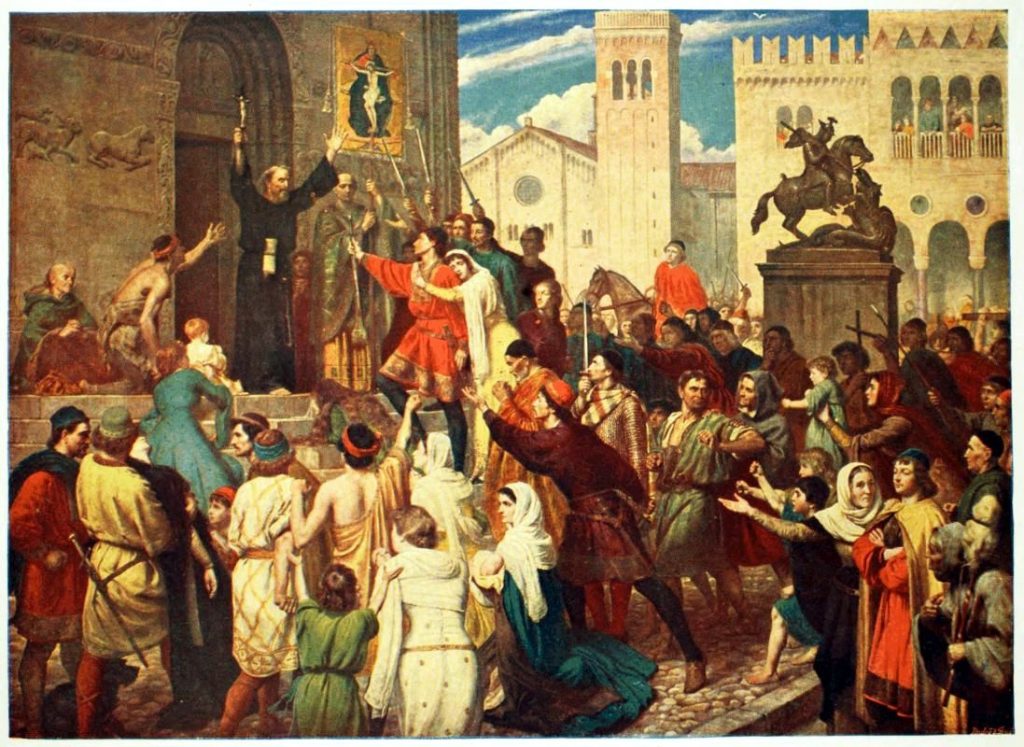
The first defense against treason was knowledge, because guards and walls were of little use if conspirators already controlled the gate, the household, or the king’s itinerary. Medieval rulers cultivated channels through which warnings could travel from border castles, provincial towns, noble households, foreign courts, and military camps. These channels did not constitute an intelligence service in the modern bureaucratic sense. They were an overlapping collection of royal messengers, local officials, scouts, diplomats, merchants, clerics, servants, and occasionally paid spies, each of whom possessed only part of the political landscape. Medieval sources consequently employ fluid terms for observers, informers, scouts, and secret agents rather than describing a stable profession with standardized duties. The effectiveness of this system depended not merely upon obtaining information but upon carrying it quickly, preserving its secrecy, and persuading the king that it deserved belief. Royal intelligence was a problem of judgment as much as collection: the ruler had to distinguish warning from rumor, loyalty from opportunism, and genuine conspiracy from the accusations produced by factional rivalry.
Messengers formed the connective tissue of this dispersed apparatus. They carried sealed writs, diplomatic credentials, military orders, requests for supplies, private letters, and oral instructions that could not safely be committed to parchment. Although expanding royal administrations created increasingly regular routes of communication, medieval kingdoms possessed no universally reliable postal system reserved for official use. A message might pass through royal couriers, household servants, sheriffs, ecclesiastical institutions, civic authorities, or specially hired riders, depending upon its urgency and destination. The messenger was not always a passive bearer of words, for he might explain the circumstances in which a letter had been written, report what he had witnessed along the road, or convey confidential qualifications omitted from the written text. Seals and letters of credence helped authenticate communications, but their value still depended upon the recipient’s recognition of the seal, the bearer, or the authority that had dispatched him. Roads became difficult in winter, ships were delayed by contrary winds, horses failed, and hostile patrols could seize both messenger and correspondence. The itinerant habits of kings created an additional difficulty because reports had to find a court whose location might change repeatedly while the courier was traveling. Local officers needed to know not only what to report but also where the king, council, or household was likely to be when the warning arrived. Speed could decide whether intelligence remained useful: news that a castle was disloyal or an army had crossed a frontier might become obsolete within days. Royal security consequently rested upon a fragile chain of human endurance, geographical knowledge, administrative coordination, and personal trust.
Much domestic intelligence originated less dramatically in the observations of sheriffs, castellans, bishops, abbots, mayors, and household retainers. These figures heard disputes, watched armed gatherings, noticed unusual purchases of provisions, and learned which magnates were exchanging messengers or withholding customary service. Reports were often grounded in public reputation, or fama, rather than evidence that would satisfy a modern investigator. Such information could expose preparations for rebellion, but it could also transform gossip, private resentment, or a local quarrel into a matter of royal suspicion.
War made the collection of timely information urgent and gave espionage some of its clearest medieval forms. Commanders employed scouts, guides, outriders, and local inhabitants to discover roads, river crossings, supplies, ambushes, garrison strengths, and the movement of enemy forces. Prisoners and deserters could be questioned, while captured letters might disclose intended marches, political divisions, or shortages within a fortress. Merchants, sailors, pilgrims, and travelers crossed boundaries that armed retainers could not easily penetrate, making their observations valuable even when they had not originally traveled as spies. Diplomatic envoys performed a similarly ambiguous function because negotiation placed them close to foreign rulers, courtiers, military preparations, and factional disputes. Their recognized status gave them access, but it also exposed them to surveillance by hosts who understood that an ambassador’s eyes could be as useful as his formal message. Crusading warfare, the Anglo-Welsh and Anglo-Scottish conflicts, and the Hundred Years War repeatedly demonstrated that armies operating in unfamiliar territory depended upon people who understood local languages, loyalties, and terrain. Yet commanders could seldom verify every report before acting, and informants had powerful reasons to exaggerate an enemy’s weakness, conceal their own divided allegiance, or tell employers what they wished to hear. Intelligence might prevent an ambush, but inaccurate intelligence could lead an army directly into one.
The discovery of political conspiracy posed an even more difficult problem because the language and law of treason changed throughout the medieval period. In England, the statute of 1352 gave greater definition to high treason, including plotting the king’s death and assisting his enemies, but it did not eliminate disputes over intention, evidence, or political allegiance. Plots commonly became visible through intercepted correspondence, the confession of an accomplice, the indiscretion of a servant, or denunciation by someone seeking money, pardon, or advancement. Kings could encourage disclosure through rewards and protection, thereby making concealment risky for conspirators who could not be certain of one another’s loyalty. Nevertheless, an accusation of treason was itself a political weapon, and magnates or courtiers might portray competitors as disloyal in order to monopolize royal confidence. Aggressive investigation could uncover real danger, but indiscriminate suspicion could destroy the trust on which the king’s household and affinity depended, driving frightened subjects toward the very resistance the crown hoped to prevent.
By the fifteenth century, surviving accounts and correspondence reveal increasingly frequent payments to secret messengers, informants, and agents operating across borders or within contested political communities. The wars among England, France, Burgundy, and Scotland, as well as the dynastic struggles later called the Wars of the Roses, created sustained demand for reports about military preparations, negotiations, defections, and noble alliances. Even then, the result was not a permanent intelligence agency separated from diplomacy, war, household service, and local government. Information was collected through existing relationships, carried along personal and administrative networks, evaluated by the king and council, and converted into arrests, negotiations, changes of route, military precautions, or grants intended to preserve allegiance. Failure could occur at every stage: the observer might misunderstand events, the courier might be delayed, the letter might be intercepted, the councillor might suppress unwelcome news, or the king might dismiss an accurate warning. Conversely, the crown’s enemies exploited the same methods by planting rumors, corrupting messengers, cultivating household contacts, and concealing military intentions. The king was guarded not only by armed men but by the ears of the realm, people whose reports allowed distant movements and private conversations to become matters of royal knowledge. Yet knowledge alone could not guarantee survival, for its value ultimately depended upon the ruler’s ability to command confidence, reward loyalty, and act without turning prudent vigilance into paralyzing fear.
The Politics of Survival

The most dependable protection available to a medieval king was not the guard standing beside him but the political community that believed it had something to lose from his destruction. A monarch could surround himself with armed retainers and still remain vulnerable if magnates, clergy, towns, and household officers ceased to regard the preservation of his rule as desirable. Royal security depended upon relationships that transformed obedience from a momentary response to force into an expectation sustained by honor, advantage, custom, and belief. Oaths made loyalty sacred and publicly recognizable, even when they could not make it permanent. Hostages placed human guarantees behind agreements whose written terms might otherwise be ignored. Patronage gave nobles, knights, clerics, and administrators material reasons to defend the regime from which their positions flowed. Legitimacy bound these mechanisms together by presenting the king’s survival as necessary to the preservation of justice, peace, lawful succession, and the political order itself.
Oaths occupied a central place in this system because medieval government depended heavily upon personal commitments made before witnesses and under divine sanction. Early medieval rulers demanded fidelity from warriors, counts, bishops, local leaders, and sometimes wider groups of free subjects, while later kings received homage and fealty from men who held lands, offices, or privileges under the crown. Such ceremonies converted political obligation into a public relationship: the sworn man acknowledged his duty, and the ruler accepted responsibilities of protection, justice, and reward. The resulting bond was reciprocal even when it was profoundly unequal. A lord who arbitrarily dispossessed or dishonored a follower could weaken the moral basis of the service he expected, just as a vassal who abandoned his lord risked condemnation as faithless. Religious language intensified the obligation because perjury endangered the soul as well as reputation, but rulers still needed witnesses, records, sureties, and political pressure to make sworn promises effective. Historians no longer treat these relationships as components of a single, uniform “feudal system,” since the language and consequences of fidelity, homage, lordship, and tenure differed markedly across regions and periods. What mattered for royal protection was less a rigid hierarchy than the proliferation of recognizable bonds connecting the crown to people capable of raising troops, holding fortresses, administering territory, or influencing local opinion. An oath did not remove the possibility of rebellion, but it raised its moral and political cost by forcing rebels to justify why fidelity had ceased to bind them.
Hostages supplied a more tangible guarantee when an oath alone appeared insufficient. Kings received the children, relatives, or leading associates of defeated rulers, rebellious magnates, doubtful allies, and recently subjected communities as security for future conduct. High-ranking hostages might live honorably at court, receive an education, form relationships with royal servants, and become partially integrated into the ruler’s political culture. Their privileged treatment did not erase the coercion at the heart of the arrangement because their liberty, and sometimes their lives, remained contingent upon another person’s obedience.
Hostage-taking worked because medieval politics treated family and affinity as extensions of the political self. A magnate who might break a written promise could hesitate when defection endangered a son, brother, nephew, or trusted companion residing in royal custody. Hostages could guarantee tribute, military withdrawal, observance of a peace, surrender of a castle, or continued loyalty after rebellion, and exchanges of hostages could provide mutual assurance between negotiating powers. Their custody demanded careful management, since escape humiliated the crown while mistreatment could transform a temporary guarantee into a lasting blood feud. Kings distributed important hostages among castles, monasteries, and trusted households, balancing secure confinement against the honorable treatment expected for persons of rank. Some hostages eventually entered royal service, married within the ruler’s dominions, or returned home carrying loyalties acquired during their detention. Others became enduring symbols of subjection, particularly when the crown demanded them repeatedly from communities it considered unreliable. The threat behind hostage-taking also had practical limits, for executing a valuable captive could destroy the very leverage that possession created and advertise the king’s cruelty to potential allies. Hostages were most useful when they supported a settlement that both sides still found tolerable; they could delay betrayal, but they could not permanently reconcile interests that remained fundamentally opposed.
Patronage offered a more constructive way of making royal survival advantageous. Medieval kings distributed lands, offices, pensions, wardships, marriages, legal favors, ecclesiastical recommendations, commercial privileges, pardons, and access to profitable jurisdictions. These grants were not simply private generosity, because they created chains of expectation through which royal beneficiaries supplied counsel, military service, administrative labor, intelligence, and political support. The household and the wider royal affinity connected the monarch to men whose local power could be mobilized without maintaining an enormous permanent bureaucracy. Yet patronage was necessarily selective, and every reward risked producing resentment among those who believed themselves equally deserving. A ruler who concentrated favors upon a narrow circle of courtiers could make his favorites dependent while persuading excluded magnates that the political system had been captured against them. Royal generosity protected the king only when it appeared sufficiently broad, predictable, and consistent with accepted standards of rank and service.
Legitimacy was the widest and least tangible of these defenses, but it could be more powerful than physical restraint. Coronation and anointing marked the king as a ruler set apart by sacred ceremony, while dynastic descent connected his person to inherited claims, collective memory, and expectations about lawful succession. Medieval political thought nevertheless did not give every anointed ruler unlimited freedom. The king was expected to preserve the Church, administer justice, defend the realm, maintain peace, and respect established law and custom, obligations frequently expressed in coronation oaths and public counsel. Assemblies of magnates, prelates, and political communities supplied recognition that could strengthen a disputed title, especially after conquest, minority, civil war, or dynastic transition. Public audiences, judicial decisions, religious observances, military leadership, gift-giving, and ceremonial appearances continually renewed a legitimacy that inheritance alone could not preserve. Victory suggested divine favor and practical competence, whereas defeat, famine, disorder, or notorious injustice encouraged subjects to ask whether the ruler still fulfilled the purpose of kingship. Rebels rarely claimed that monarchy itself was unnecessary; more often, they alleged that evil councillors had corrupted the king, that the ruler had violated his obligations, or that another claimant possessed the better title. Legitimacy narrowed the political space in which violence against the monarch could be defended, even though it could never eliminate competing interpretations of rightful rule.
The reign of King John demonstrated how coercive safeguards could fail when they were detached from trust. John demanded hostages, money, castles, and professions of loyalty, but military defeats, arbitrary exactions, disputed justice, and conflict with leading subjects steadily weakened the willingness of those men to protect his government. Magna Carta’s celebrated security clause answered the king’s perceived unreliability by authorizing twenty-five barons to compel his observance of the settlement, revealing how thoroughly the guarantors had ceased to trust ordinary royal promises. Later depositions, including that of Richard II in 1399, likewise showed that anointing, hereditary title, household retainers, and sworn allegiance could not save a king once influential subjects constructed a persuasive case that he had violated the reciprocal obligations of rule. In both circumstances, political isolation penetrated defenses that no assassin or invading army could easily have breached.
Oaths, hostages, patronage, and legitimacy consequently formed interdependent layers of royal protection rather than interchangeable techniques of control. The oath declared loyalty and subjected its violation to moral judgment, but its credibility depended upon reciprocal conduct. The hostage gave an agreement human collateral, but coercion remained effective only while negotiation and eventual release were still imaginable. Patronage attached powerful individuals to the crown, but its distribution had to avoid making royal government appear the possession of an exclusive faction. Legitimacy encouraged subjects to equate the king’s safety with the health of the realm, but legitimacy had to be enacted through justice, counsel, generosity, competence, and continuity. None of these mechanisms made rebellion impossible, and each could become dangerous when employed without restraint. They reduced the number of people willing to join a conspiracy, increased the costs of defection, and gave potential loyalists reasons to warn, defend, or rescue the ruler. The deepest security of medieval kingship lay in persuading enough armed and influential people that protecting the king also protected their families, lands, honor, expectations, and place within the political order.
Betrayal at Close Range: When the Inner Circle Failed
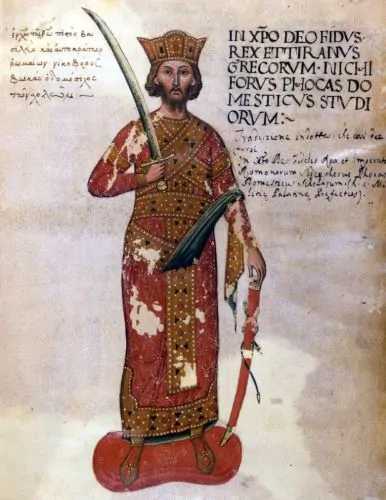
Every protective layer surrounding a medieval ruler ultimately depended upon people who possessed the knowledge necessary to circumvent it. A king entrusted chamber servants, guards, clerks, physicians, confessors, relatives, and favored councillors with access that strangers could never obtain. The same intimacy that allowed these figures to protect the royal body also enabled them to observe its habits, weaknesses, routes, passwords, and moments of isolation. Conspirators who won an insider’s cooperation did not need to batter down the castle gate if someone could unlock a private door, alter a watch, conceal a weapon, or disclose where the ruler would sleep. Consequently, the danger posed by the inner circle extended beyond the possibility that a favorite might personally wield the knife. The most consequential betrayal might consist of silence, delayed warning, forged instructions, deliberate absence, or a timely refusal to resist. Betrayal at close range was the point at which personal trust, household administration, and physical security became impossible to separate.
Access turned a political conspiracy into an immediate bodily threat, as the assassination of the Byzantine emperor Nikephoros II Phokas demonstrated in 969. Nikephoros occupied a fortified palace and commanded formidable troops, yet conspirators led by John Tzimiskes reached his private quarters and killed him before an effective defense could form. Narrative sources implicated Empress Theophano in facilitating the conspiracy, although her precise role remains disputed and the surviving accounts shaped events into a morally charged story of adultery, ambition, and retribution. Whatever responsibility belonged to Theophano, the attackers succeeded because court connections gave them information and entry that an external enemy could scarcely have obtained. A comparable princely example appeared in Flanders in 1127, when Charles the Good was murdered while praying in the church of Saint Donatian at Bruges. The conspiracy emerged from the Erembald clan, a powerful ministerial family whose members had acquired offices, influence, and intimate knowledge of the count’s government. Galbert of Bruges described how men embedded within the existing political order used its institutions and spaces against the ruler they had served. In both killings, fortification failed because political insiders converted familiarity into tactical advantage. These episodes also reveal why medieval accounts so often represented treachery as more contemptible than open warfare: the betrayer attacked not merely the ruler’s body but the bonds of fidelity that made court life possible.
A successful attack usually required less brute strength than precise knowledge of routine. A servant could identify the unguarded stair, a chamberlain could control admission, and a trusted commander could ensure that armed assistance arrived too late. Guards might also be neutralized without fighting if a familiar voice issued plausible orders or if divided loyalties made them hesitate at the decisive moment. Every procedure intended to regulate proximity transferred dangerous power to the person authorized to administer it.
The failure of the inner circle more often appeared as progressive desertion than as a sudden bedroom assassination. Edward II of England possessed a household, castles, retainers, and the formal allegiance of the political community, but his dependence upon the Despensers narrowed royal confidence around favorites whose advancement alienated much of the nobility. When Queen Isabella and Roger Mortimer invaded England in 1326, the king’s support collapsed with remarkable speed as magnates, bishops, towns, and officers abandoned or opposed his government. Edward fled westward with a diminishing company rather than remaining securely protected at the center of a functioning realm. His eventual capture in Wales demonstrated that royal guards could not compensate for the disappearance of the wider network that supplied refuge, intelligence, provisions, and obedience. Richard II experienced a related collapse in 1399 after years of punitive politics, forced submissions, confiscations, and reliance upon a restricted group of supporters. Henry Bolingbroke returned from exile while Richard was in Ireland and rapidly attracted men who had little desire to defend the king’s recent methods of government. By the time Richard confronted the challenge, the problem was no longer whether his attendants could protect him in a chamber but whether commands issued in his name would still be obeyed outside it. Surrender, deposition, and death in captivity followed the political disintegration of his protective environment. The experiences of Edward and Richard show that an inner circle failed whenever it isolated the king from broader support as surely as when one of its members joined a murderous plot.
The evidence for intimate betrayal nevertheless requires particular caution because royal deaths attracted rumor, retrospective accusation, and imaginative elaboration. Edward the Martyr was killed at Corfe in 978, but later narratives supplied far more elaborate accounts of his stepmother Ælfthryth’s involvement than the earliest records provide. William II died from an arrow during a hunt in the New Forest in 1100, prompting enduring suspicions of assassination, although the circumstances remain compatible with accident and no surviving evidence securely establishes a conspiracy. Edward II’s presumed death at Berkeley Castle generated the notorious story that he was killed with a red-hot instrument inserted into his body, yet that lurid detail emerged through developing narrative traditions rather than secure contemporary testimony. Such stories expressed powerful medieval anxieties about secret murder, unnatural counsel, sexual dishonor, and divine punishment, even when they cannot be treated as reliable descriptions of method. The historian must distinguish evidence that a ruler was politically abandoned or violently removed from later claims about exactly who entered the chamber and how the killing occurred.
Inner-circle betrayal became most likely when political isolation and privileged access reinforced one another. Favorites who monopolized royal favor provoked excluded elites, while fearful kings often answered opposition by retreating further into the company of men whose fortunes depended entirely upon them. That concentration of trust could produce a loyal final defense, but it could also leave the ruler dependent upon a small group vulnerable to intimidation, bribery, resentment, or calculation. Rotating guards, dividing household responsibilities, controlling keys, and requiring multiple officers to authorize access reduced particular risks without eliminating the need for confidence in someone. Kings could watch their servants, but the watchers themselves required watching, and endless suspicion eventually made coordinated government impossible. The decisive weakness was not intimacy alone but intimacy severed from accountable service and wider political consent. When the royal household remained connected to respected institutions and durable affinities, an individual betrayal could be contained; when those connections had already broken, a single opened door or withheld warning could complete the regime’s collapse. The inner circle was indispensable because rulers could not govern without trusted proximity, yet that necessity ensured that the last and most dangerous breach would almost always come from close at hand.
From Retinue to Standing Guard: Security at the End of the Middle Ages
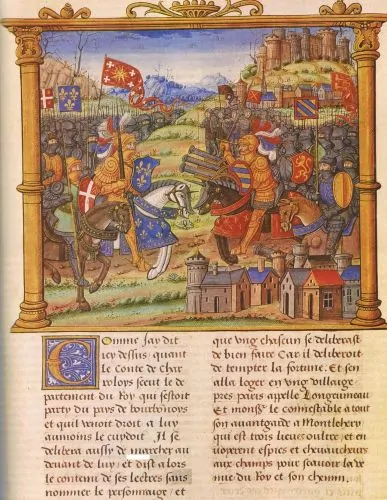
By the fourteenth and fifteenth centuries, royal protection was becoming more permanent, regulated, and visibly institutional without ceasing to be personal. The change did not replace the household retinue with a modern professional security service, nor did it proceed at the same pace in every kingdom. Kings continued to rely upon noble affinities, household servants, foreign soldiers, castle garrisons, and temporary wartime escorts. What changed was the growing tendency to organize selected armed men into named corps whose numbers, wages, equipment, duties, and chains of command could be recorded in writing. Household ordinances defined positions more precisely, financial accounts made continuing payment possible, and regular musters distinguished retained soldiers from the broader population liable for occasional service. These developments gave the crown a more dependable nucleus of armed force that could accompany the ruler, secure a residence, reinforce a gate, or appear in ceremonial formation. Yet the guard remained attached to the king’s person and dynasty more closely than to an abstract, impersonal state.
France provided an influential example because the final stages of the Hundred Years War encouraged the crown to maintain forces beyond the traditional duration of a feudal campaign. Charles VII’s compagnies d’ordonnance, established during the 1440s, created permanent companies of paid cavalry subject to royal regulation, while the francs-archers provided a complementary system of infantry recruitment. These formations were primarily military rather than personal bodyguard units, but they demonstrated the administrative and fiscal capacity upon which a continuing royal guard depended. Scottish soldiers who had entered French service during the struggle against England became a trusted element near the king and formed the nucleus of the Garde Écossaise. Other archers and men-at-arms served in corps associated more directly with the royal household and the protection of the sovereign’s body. The dukes of Burgundy developed comparable arrangements, combining household guards with ordinance companies and a court whose internal organization was minutely regulated. Under Charles the Bold, military ordinances attempted to standardize command, discipline, equipment, and pay across forces that still included men connected to the duke through personal lordship. Distinctive livery made guards recognizable, reinforced corporate identity, and allowed officers to distinguish authorized armed servants from outsiders within crowded residences or ceremonial spaces. Their presence also magnified princely authority, for an ordered rank of archers or men-at-arms communicated wealth, discipline, and readiness to subjects and ambassadors. Permanent guards developed simultaneously as instruments of defense, extensions of military reform, and carefully staged representations of sovereign power.
England illustrates how a comparatively small household corps could carry considerable political meaning. Edward IV’s household ordinances described a graded establishment of officers, servants, yeomen, and watchmen whose duties regulated access, attendance, provisioning, and movement within the royal residence. After his victory at Bosworth in 1485, Henry VII formed the Yeomen of the Guard from men whose service connected the new Tudor monarchy to the military triumph upon which its claim initially rested. The Yeomen guarded royal spaces, accompanied the king, and appeared at coronations, progresses, feasts, and other occasions on which security and magnificence became inseparable. Their creation did not eliminate temporary escorts or aristocratic retainers, but it gave a ruler born from civil conflict an identifiable and continuing body of armed servants whose loyalty was tied directly to the new dynasty.
Comparable mixtures of inherited custom and institutional innovation appeared in the kingdoms ruled by Ferdinand of Aragon and Isabella of Castile. The Monteros de Espinosa represented an older tradition of privileged attendants charged with guarding the ruler during the night, while the Guardias Viejas de Castilla, organized in the 1490s, provided permanent cavalry companies maintained by the crown. Like the French ordinance companies, the Castilian guards were broader military formations rather than a bodyguard in the narrow sense, but they increased the number of salaried troops available to enforce royal authority. Expanding revenues, specialized financial officers, written rosters, and more systematic inspection enabled rulers to retain soldiers after a campaign had ended. Gunpowder weapons simultaneously transformed the environment in which guards operated, since artillery weakened many older fortifications while handguns created new dangers at gates, streets, windows, and public gatherings. Castles remained important, but rulers increasingly occupied large palaces and urban residences designed for administration, ceremony, and controlled access as much as for resisting siege. More stable courts made guard rotations and household departments easier to supervise, although they also rendered royal routines more predictable to anyone studying them. Uniforms, badges, liveries, and standardized weapons clarified authority within these crowded settings and made the guard’s collective presence immediately visible. The establishment of the papal Swiss Guard in 1506 stood just beyond the conventional medieval boundary but expressed the same developing preference for a permanent, distinctively dressed corps whose foreign origin and corporate identity appeared to promise dependable service.
A standing guard did not solve the fundamental problem of royal security, because permanence could institutionalize danger as readily as loyalty. Salaried soldiers might be more consistently available than a hastily summoned retinue, but arrears of pay, disputed command, dynastic change, or political division could still weaken their obedience. A powerful captain who controlled access to the ruler and enjoyed the loyalty of an organized corps could become a protector, kingmaker, or conspirator according to circumstance. Nevertheless, permanent guards gave rulers a disciplined core around which larger defensive arrangements could form, while written ordinances made responsibility easier to assign when a watch failed or an unauthorized person entered. The transition from retinue to standing guard was not a simple movement from private loyalty to public professionalism. It joined the two by converting selected personal followers into continuing institutions financed and supervised through an expanding royal administration. By approximately 1500, several European monarchies possessed recognizable guard formations whose corporate identity outlasted individual campaigns and, in some cases, individual kings. Medieval royal security had not become modern, but it had acquired enduring offices, salaried personnel, written procedures, and permanent corps that would become central features of early modern court protection.
Was Medieval Royal Security Ever a “System”?
The following video from “Chronicle – Medieval History Documentaries” discusses feudalism:
The strongest objection to describing medieval royal security as a system is that the term may impose modern coherence upon practices that contemporaries never regarded as parts of a single enterprise. Medieval sources do not normally gather bodyguards, chamber officers, castle garrisons, food service, messengers, hostages, and royal legitimacy beneath one administrative category equivalent to “security.” These functions belonged instead to the household, army, court, chapel, chancery, treasury, and personal affinity of the ruler. The same officer might guard a doorway, carry money, command troops, supervise servants, and deliver confidential messages without considering himself a security specialist. Castles were residences and administrative centers as well as fortifications, while ceremonial restrictions on access expressed hierarchy as much as concern about assassination. Arrangements also differed substantially between kingdoms, reigns, courts, and moments of crisis. If a system requires centralized command, standardized procedures, specialized personnel, and an explicit institutional identity, medieval royal protection rarely satisfies the definition.
The danger of anachronism becomes greater because the evidence itself encourages historians to construct connections that may not have actually existed. Household ordinances describe how service was supposed to operate, but they often reveal reforming intentions more clearly than everyday conduct. Chronicles emphasize dramatic conspiracies, assassinations, miraculous escapes, and providential punishments while passing over uneventful years in which ordinary precautions worked. Financial accounts record payments to guards, messengers, spies, and garrisons without necessarily explaining how their activities were coordinated. Architectural remains preserve walls, towers, gates, and chambers but seldom identify which design decisions arose specifically from concern for the ruler’s body. Historians can select evidence from different centuries and regions, arrange it into functional categories, and produce an apparent apparatus more orderly than any medieval king actually possessed. Multipurpose officials complicate that reconstruction further because chamberlains, constables, marshals, ushers, cooks, and clerks served administrative, domestic, ceremonial, and political purposes simultaneously. Even late household ordinances rarely provide anything resembling a complete chain of security command capable of coordinating every protective measure. The extraordinary variation between an itinerant eleventh-century war leader, a thirteenth-century king in a fortified castle, and a fifteenth-century monarch presiding over an elaborate residential court warns against treating “medieval royal security” as a stable institution. From this perspective, the language of systems risks transforming a collection of contingent responses into an organization that existed chiefly in historical retrospect.
The frequent failure of royal protection strengthens this challenge. Kings repeatedly traveled with inadequate escorts, admitted dangerous rivals to private audiences, trusted disloyal favorites, lost control of castles, ignored warnings, and discovered that sworn retainers would not defend them. Protective arrangements were often improvised after a conspiracy, invasion, or rebellion rather than maintained according to a settled doctrine. What appears to be layered redundancy may sometimes have been little more than overlapping jurisdictions whose officers competed, misunderstood one another, or assumed that someone else was responsible.
Yet the absence of a specialized bureaucracy does not make the idea of a system entirely misleading. A system need not be named by its participants or directed through a single office if its components interact repeatedly to produce a recognizable function. Chamberlains and ushers restricted physical access, guards enforced those restrictions, household servants controlled objects entering royal rooms, and castellans secured the wider residence. Messengers and informants warned the court of approaching danger, allowing councillors to alter a journey, reinforce a garrison, summon retainers, or arrest suspected conspirators. Oaths, hostages, patronage, and ceremonial legitimacy operated at a greater distance by discouraging defection and giving influential subjects reasons to preserve the king’s rule. When one layer failed, another could still intervene: political intelligence might prevent an attack before guards encountered it, while a castle or armed escort might protect a king whose negotiations had broken down. Written orders, household regulations, financial accounts, repeated appointments, and permanent guard formations demonstrate that at least some protective practices became habitual and administratively reproducible. The growth of royal government during the later Middle Ages increased this coordination by connecting household officers to councils, treasuries, regional officials, military commanders, and diplomatic agents. The resulting coherence was functional rather than departmental, but it was not wholly imaginary.
The most defensible conclusion is that medieval kings possessed systems of protection without possessing a distinct royal security apparatus. These systems were decentralized, personal, and permeable, assembled from institutions whose principal purposes often extended far beyond guarding the monarch. It is more precise to imagine an ecology of managed proximity in which architecture, armed force, household service, information, political obligation, and sacred authority reinforced one another unevenly. Such an ecology changed whenever the court moved, a new favorite gained influence, a war altered military priorities, or a ruler’s legitimacy weakened. The counterpoint modifies the central argument by rejecting any suggestion that medieval protection operated with modern specialization, uniformity, or continuous oversight. It also strengthens the interpretation by explaining why trust remained indispensable even as royal households acquired more elaborate offices and written procedures. Systemic features were strongest where several protective practices were deliberately coordinated, but weakest where historians have connected isolated customs solely because they appear security-related from a modern perspective. Medieval royal security was real and structured, yet it remained a shifting product of household government and political relationships rather than an autonomous institution of the state
Conclusion: To Guard the King Was to Govern the Realm
Medieval kings were never protected by a single wall of armed men standing between the throne and its enemies. Their safety depended upon controlling successive degrees of proximity while remaining sufficiently visible to exercise justice, reward service, lead armies, receive petitioners, and embody legitimate rule. The king’s mortal body could not be separated from these public obligations, because concealment sufficient to prevent every physical danger would also have prevented effective kingship. Royal protection became an art of selective exposure rather than complete isolation. Every guard, chamberlain, castellan, messenger, food servant, and councillor represented both a defensive layer and another person entrusted with dangerous access. Security measures distributed authority even as they attempted to concentrate power around the crown. To organize the king’s protection was consequently to organize the relationships through which the realm itself was governed.
The royal household formed the center of this arrangement because it joined domestic service, political counsel, military command, ceremony, and physical protection within the same community. Elite guards and foreign warriors provided concentrated force, but their usefulness depended upon captains, wages, quarters, supplies, and confidence in the ruler they served. Chamberlains, ushers, and other household officers determined who could cross the increasingly restrictive boundaries surrounding the king’s private rooms. Castles expanded those boundaries outward through walls, gates, watches, keys, garrisons, and defensible inner spaces, while simultaneously presenting royal authority to subjects and visitors. When the court traveled, escorts, scouts, local officers, hosts, guides, and advance parties temporarily reconstructed those protections along roads, in hunting grounds, at shrines, and inside military camps. The preparation and service of food created another controlled chain in which hierarchy, supervision, ritual, and trust answered fears of contamination or poison. Messengers, informants, diplomats, and spies extended royal awareness beyond the range of the king’s eyes, allowing threats to be confronted before they reached the palace or camp. Oaths, hostages, grants, offices, pardons, and dynastic legitimacy operated more broadly still by giving powerful subjects reasons to preserve the regime rather than join its enemies. None of these measures belonged exclusively to security, because each also performed administrative, military, social, economic, or ceremonial work. Their overlap explains why guarding the king cannot be extracted from the ordinary practice of medieval government.
Layering did not eliminate danger, and sometimes it multiplied the opportunities for betrayal. Guards could defect, chamberlains could admit conspirators, castellans could surrender, messengers could be intercepted, servants could be bribed, and favorites could isolate the ruler from the political community whose support he required. The deaths, captures, and depositions of medieval rulers demonstrate that physical precautions became fragile once legitimacy and obedience had begun to collapse. A guarded king who could no longer command trust was often more exposed than a lightly defended ruler supported by a durable network of interests and obligations.
The later Middle Ages brought salaried guard corps, more detailed household ordinances, permanent military formations, improved financial administration, and increasingly stable royal residences. These developments made protection more continuous and recognizable, but they did not create a security institution independent of the ruler’s household, army, court, and affinity. Medieval royal security is best understood as an ecology of managed proximity rather than a centralized apparatus resembling its modern counterparts. Its parts were unevenly coordinated, varied across kingdoms and reigns, and often became most visible only when a crisis revealed their weakness. Yet their combined purpose was unmistakable: to regulate access, anticipate danger, preserve obedience, and keep the ruler capable of performing kingship. The king’s body mattered not simply because one powerful man wished to survive, but because courts, offices, jurisdictions, alliances, and expectations converged upon that body. Protecting it required the crown to maintain roads, castles, households, communications, armed forces, political loyalties, and public belief. Medieval kings were most secure when their subjects and servants understood that the ruler’s continued life sustained an order in which they, too, possessed a place.
Bibliography
Affiliate disclosure: Amazon links on this site are paid links. As an Amazon Associate I earn from qualifying purchases.
- Abels, Richard P. “Household Men, Mercenaries and Vikings in Anglo-Saxon England.” In Mercenaries and Paid Men: The Mercenary Identity in the Middle Ages, edited by John France, 143–166. Leiden: Brill, 2008.
- Abulafia, David. Frederick II: A Medieval Emperor. London: Allen Lane, 1988.
- Aggesen, Sven. The Works of Sven Aggesen, Twelfth-Century Danish Historian. Translated by Eric Christiansen. London: Viking Society for Northern Research, 1992.
- Airlie, Stuart. Power and Its Problems in Carolingian Europe. Farnham: Ashgate, 2012.
- Allmand, Christopher. The Hundred Years War: England and France at War, c.1300–c.1450. Cambridge: Cambridge University Press, 1988.
- Althoff, Gerd. Family, Friends and Followers: Political and Social Bonds in Early Medieval Europe. Translated by Christopher Carroll. Cambridge: Cambridge University Press, 2004.
- Amt, Emilie, and S. D. Church, eds. and trans. Dialogus de Scaccario, and Constitutio Domus Regis: The Dialogue of the Exchequer, and the Disposition of the King’s Household. Oxford: Clarendon Press, 2008.
- The Anglo-Saxon Chronicle. Yale Law School: Lillian Goldman Law Library, 2008.
- Angold, Michael. The Byzantine Empire, 1025–1204: A Political History. 2nd ed. London: Longman, 1997.
- Anna Komnene. The Alexiad. Translated by E. R. A. Sewter. Revised by Peter Frankopan. London: Penguin Books, 2009.
- Anonymous. Beowulf. Edited and translated by Lesslie Hall. Peterborough, Boston: D. C. Heath & Co., Publishers, 1892.
- Arthurson, Ian. “Espionage and Intelligence from the Wars of the Roses to the Reformation.” Nottingham Medieval Studies 35 (1991), 134–154.
- Austin, Thomas, ed. Two Fifteenth-Century Cookery-Books. Early English Text Society, Original Series 91. London: N. Trübner, 1888.
- Bartlett, Robert. Blood Royal: Dynastic Politics in Medieval Europe. Cambridge: Cambridge University Press, 2020.
- Bellamy, John G. The Law of Treason in England in the Later Middle Ages. Cambridge: Cambridge University Press, 1970.
- Bernhardt, John W. Itinerant Kingship and Royal Monasteries in Early Medieval Germany, c. 936–1075. Cambridge: Cambridge University Press, 1993.
- Bisson, Thomas N. The Crisis of the Twelfth Century: Power, Lordship, and the Origins of European Government. Princeton, NJ: Princeton University Press, 2009.
- Bloch, Marc. The Royal Touch: Sacred Monarchy and Scrofula in England and France. Translated by J. E. Anderson. Montreal: McGill-Queen’s University Press, 1973.
- Blöndal, Sigfús. The Varangians of Byzantium: An Aspect of Byzantine Military History. Translated, revised, and rewritten by Benedikt S. Benedikz. Cambridge: Cambridge University Press, 1978.
- Bonner, Elizabeth. “Scotland’s ‘Auld Alliance’ with France, 1295–1560.” History 84:273 (1999), 5–30.
- Bower, Walter. A History Book for Scots: Selections from Scotichronicon. Edited by D. E. R. Watt. 9 vols. Aberdeen: Aberdeen University Press, 1987–98.
- Bracton, Henry de. Bracton on the Laws and Customs of England. Translated by Samuel E. Thorne. 4 vols. Cambridge, MA: Harvard University Press, 1968–77.
- Brown, Michael. James I. East Linton: Tuckwell Press, 1994.
- Brown, R. Allen, H. M. Colvin, and A. J. Taylor. The History of the King’s Works. Vols. 1–2, The Middle Ages. Edited by H. M. Colvin. London: Her Majesty’s Stationery Office, 1963.
- Buc, Philippe. The Dangers of Ritual: Between Early Medieval Texts and Social Scientific Theory. Princeton: Princeton University Press, 2001.
- Burgess, Glenn. “The Divine Right of Kings Reconsidered.” The English Historical Review 107:425 (1992), 837-861.
- Campbell, Alistair, ed. and trans. Encomium Emmae Reginae. London: Offices of the Royal Historical Society, 1949.
- Canning, Joseph. A History of Medieval Political Thought, 300–1450. London: Routledge, 1996.
- Carpenter, Christine. Locality and Polity: A Study of Warwickshire Landed Society, 1401–1499. Cambridge: Cambridge University Press, 1992.
- Carpenter, David, trans. Magna Carta. London: Penguin Books, 2015.
- Chaplais, Pierre. English Diplomatic Practice in the Middle Ages. London: Hambledon and London, 2003.
- Christine de Pizan. The Book of Deeds of Arms and of Chivalry. Translated by Sumner Willard. Edited by Charity Cannon Willard. University Park: Pennsylvania State University Press, 1999.
- Church, Stephen D. The Household Knights of King John. Cambridge: Cambridge University Press, 1999.
- —-. “Some Aspects of the Royal Itinerary in Twelfth-Century England.” Thirteenth Century England 11 (2007), 31–45.
- Clanchy, M. T. From Memory to Written Record: England 1066–1307. 3rd ed. Oxford: Wiley-Blackwell, 2012.
- Collard, Franck. The Crime of Poison in the Middle Ages. Translated by Deborah Nelson-Campbell. Westport, CT: Praeger, 2003.
- Contamine, Philippe. War in the Middle Ages. Translated by Michael Jones. Oxford: Basil Blackwell, 1984.
- Coulson, Charles L. H. Castles in Medieval Society: Fortresses in England, France, and Ireland in the Central Middle Ages. Oxford: Oxford University Press, 2003.
- Creighton, Oliver H. Castles and Landscapes: Power, Community and Fortification in Medieval England. London: Equinox, 2002.
- Cummins, John. The Hound and the Hawk: The Art of Medieval Hunting. London: Weidenfeld and Nicolson, 2003.
- Dunham, William Huse Jr., and Charles T. Wood. “The Right to Rule in England: Depositions and the Kingdom’s Authority, 1327-1485.” The American Historical Review 81:4 (1976), 738-761.
- Earenfight, Theresa. Queenship in Medieval Europe. New York: Palgrave Macmillan, 2013.
- Edward of Norwich. The Master of Game. Edited by William A. Baillie-Grohman and Florence Baillie-Grohman. London: Chatto and Windus, 1909.
- Edwards, John. The Spain of the Catholic Monarchs, 1474–1520. Oxford: Blackwell, 2000.
- Einhard. The Life of Charlemagne. Translated by Lewis Thorpe. London: Penguin, 1969.
- Evans, Michael. The Death of Kings: Royal Deaths in Medieval England. London: Hambledon and London, 2003.
- Evans, Stephen S. The Lords of Battle: Image and Reality of the Comitatus in Dark-Age Britain. Woodbridge: Boydell Press, 1997.
- Froissart, Jean. Chroniques. Translated selections in Geoffrey Brereton, Froissart: Chronicles. Harmondsworth: Penguin, 1968.
- Fylypchuk, Oleksandr. “The Revolts of the Varangians in Constantinople: Two Incidents at the Palace.” Studia Ceranea 14 (2024), 389–404.
- Galbert of Bruges. The Murder, Betrayal, and Slaughter of the Glorious Charles, Count of Flanders. Translated by Jeff Rider. New Haven: Yale University Press, 2013.
- Geoffrey Malaterra. The Deeds of Count Roger of Calabria and Sicily and of His Brother Duke Robert Guiscard. Translated by Kenneth Baxter Wolf. Ann Arbor: University of Michigan Press, 2005.
- Gibbs, Frederick W. Poison, Medicine, and Disease in Late Medieval and Early Modern Europe. London: Routledge, 2019.
- Gillespie, James L. “Richard II’s Yeomen of the Chamber.” Albion 10:4 (1978), 319–329.
- Gillingham, John. Richard I. New Haven, CT: Yale University Press, 1964.
- Given-Wilson, Chris. The Royal Household and the King’s Affinity: Service, Politics and Finance in England, 1360–1413. New Haven, CT: Yale University Press, 1986.
- Goodall, John. The English Castle, 1066–1650. New Haven, CT: Yale University Press for the Paul Mellon Centre for Studies in British Art, 2011.
- Great Britain, Exchequer. Book of Prests of the King’s Wardrobe for 1294–5. Edited by E. B. Fryde. Oxford: Clarendon Press, 1962.
- Great Britain, Public Record Office. Calendar of the Close Rolls Preserved in the Public Record Office: Edward I, 1272–1279. London: His Majesty’s Stationery Office, 1900.
- Great Britain, Public Record Office.Calendar of the Liberate Rolls Preserved in the Public Record Office: Henry III. Vol. 1, 1226–1240. London: His Majesty’s Stationery Office, 1916.
- Great Britain. The Statutes of the Realm. Vol. 1. London: Record Commission, 1810.
- Gregory of Tours. The History of the Franks. Translated by Lewis Thorpe. London: Penguin Books, 1974.
- Grummitt, David. The Calais Garrison: War and Military Service in England, 1436–1558. Woodbridge: Boydell Press, 2008.
- Guenée, Bernard. States and Rulers in Later Medieval Europe. Translated by Juliet Vale. Oxford: Basil Blackwell, 1985.
- Gunn, Steven. Henry VII’s New Men and the Making of Tudor England. Oxford: Oxford University Press, 2016.
- Haldon, John. Warfare, State and Society in the Byzantine World, 565–1204. London: Routledge, 1999.
- Halsall, Guy. Barbarian Migrations and the Roman West, 376–568. Cambridge: Cambridge University Press, 2005.
- Hammond, P. W and Anne Helm. Food and Feast in Medieval England. Stroud: Sutton Publishing, 1993.
- Hardy, Thomas Duffus, ed. Rotuli Litterarum Patentium in Turri Londinensi Asservati. Vol. 1, pt. 1. London: Record Commission, 1835.
- Hefferan, Matthew. “Household Knights, Chamber Knights and King’s Knights: The Development of the Royal Knight in Fourteenth-Century England.” Journal of Medieval History 45, no. 1 (2019): 80–99.
- Heiser, Richard R. “Castles, Constables, and Politics in Late Twelfth-Century English Governance.” Albion 32:1 (2000), 19–36.
- Henry of Huntingdon. The Chronicle of Henry of Huntingdon: The History of England, from the Invasion of Julius Caesar to the Accession of Henry II. Translated and edited by Thomas Forester. London: Henry G. Bohn, 1853.
- Hewerdine, Anita. The Yeomen of the Guard and the Early Tudors: The Formation of a Royal Bodyguard. London: I. B. Tauris, 2012.
- Hincmar of Rheims. “On the Governance of the Palace.” In Charlemagne and Louis the Pious: The Lives by Einhard, Notker, Ermoldus, Thegan, and the Astronomer, translated by Thomas F. X. Noble, 258–299. University Park: Pennsylvania State University Press, 2009.
- The History of William Marshal. Translated by Nigel Bryant. Woodbridge: Boydell Press, 2016.
- Hu, Jun. “Messengers in Later Medieval England.” PhD diss., University of St Andrews, 2017.
- Innes, Matthew. State and Society in the Early Middle Ages: The Middle Rhine Valley, 400–1000. Cambridge: Cambridge University Press, 2000.
- John of Salisbury. Policraticus: Of the Frivolities of Courtiers and the Footprints of Philosophers. Edited and translated by Joseph B. Pike. Minneapolis: The University of Minnesota Press, 1938.
- Johnson, Matthew. Behind the Castle Gate: From Medieval to Renaissance. London: Routledge, 2002.
- Joinville, Jean de, and Geoffrey of Villehardouin. Chronicles of the Crusades. Translated by Caroline Smith. London: Penguin Books, 2008.
- Kantorowicz, Ernst H. The King’s Two Bodies: A Study in Mediaeval Political Theology. Princeton: Princeton University Press, 1957.
- Kosto, Adam J. Hostages in the Middle Ages. Oxford: Oxford University Press, 2012.
- Koziol, Geoffrey. Begging Pardon and Favor: Ritual and Political Order in Early Medieval France. Ithaca, NY: Cornell University Press, 1992.
- La Marche, Olivier de. Mémoires d’Olivier de La Marche. Bruxelles: Hubert Antoinem 1616.
- Lawson, M. K. Cnut: England’s Viking King, 1016–35. Stroud: Tempus, 2004.
- Le Goff, Jacques. Saint Louis. Translated by Gareth Evan Gollrad. Notre Dame, IN: University of Notre Dame Press, 2009.
- Leo the Deacon. The History of Leo the Deacon: Byzantine Military Expansion in the Tenth Century. Translated by Alice-Mary Talbot and Denis F. Sullivan. Washington, DC: Dumbarton Oaks, 2005.
- Liddiard, Robert. Castles in Context: Power, Symbolism and Landscape, 1066 to 1500. Macclesfield: Windgather Press, 2005.
- Maimonides, Moses. Treatises on Poisons, Hemorrhoids, and Cohabitation. Translated by Fred Rosner. Haifa: Maimonides Research Institute, 1984.
- Marafioti, Nicole. The King’s Body: Burial and Succession in Late Anglo-Saxon England. Toronto: University of Toronto Press, 2014.
- Mertes, Kate. The English Noble Household, 1250–1600: Good Governance and Politic Rule. Oxford: Basil Blackwell, 1988.
- Mesqui, Jean. Châteaux et enceintes de la France médiévale: De la défense à la résidence. 2 vols. Paris: Picard, 1991–93.
- Metcalfe, Alex. Muslims and Christians in Norman Sicily: Arabic-Speakers and the End of Islam. London: RoutledgeCurzon, 2003.
- Michael Psellos. Fourteen Byzantine Rulers: The Chronographia. Translated by E. R. A. Sewter. London: Penguin, 1966.
- Molinet, Jean. Chroniques. Edited by J. A. Buchon. Paris: Verdiere, 1828.
- Myers, A. R., ed. The Household of Edward IV: The Black Book and the Ordinance of 1478. Manchester: Manchester University Press, 1959.
- Nelson, Janet L. “Kingship and Royal Government.” In The New Cambridge Medieval History. Vol. 2, c. 700–c. 900, edited by Rosamond McKitterick, 383–430. Cambridge: Cambridge University Press, 1995.
- —-. Politics and Ritual in Early Medieval Europe. London: Hambledon Press, 1986.
- Nicolas, Nicholas Harris, ed. Proceedings and Ordinances of the Privy Council of England. 7 vols. London: Record Commission, 1834–37.
- Orderic Vitalis. The Ecclesiastical History of Orderic Vitalis. Edited and translated by Marjorie Chibnall. Oxford: Clarendon Press, 1969–1980.
- Philippe de Commynes. Memoirs: The Reign of Louis XI, 1461–83. Translated by Michael Jones. Harmondsworth: Penguin Books, 1972.
- Phillips, Seymour. Edward II. New Haven: Yale University Press, 2010.
- Potter, David. Renaissance France at War: Armies, Culture and Society, c. 1480–1560. Woodbridge: Boydell Press, 2008.
- Pounds, N. J. G. The Medieval Castle in England and Wales: A Social and Political History. Cambridge: Cambridge University Press, 1990.
- Prestwich, Michael. Armies and Warfare in the Middle Ages: The English Experience. New Haven: Yale University Press, 1996.
- —-. “Edward I’s Armies.” Journal of Medieval History 37:3 (2011), 233–44.
- —-. “English Castles in the Reign of Edward II.” Journal of Medieval History 8:2 (1982), 159–178.
- Reuter, Timothy. Medieval Polities and Modern Mentalities, edited by Janet L. Nelson. Cambridge: Cambridge University Press, 2006.
- Reynolds, Susan. Fiefs and Vassals: The Medieval Evidence Reinterpreted. Oxford: Oxford University Press, 1994.
- —-. Kingdoms and Communities in Western Europe, 900–1300. 2nd ed. Oxford: Clarendon Press, 1997.
- Rickard, Thomas John Charles. “The Personnel of English and Welsh Castles, 1272–1422.” PhD diss., University of Hull, 1999.
- Rider, Jeff. God’s Scribe: The Historiographical Art of Galbert of Bruges. Washington, DC: Catholic University of America Press, 2001.
- Roger of Howden. Chronica Magistri Rogeri de Houedene. Edited by William Stubbs. 4 vols. London: Longman, 1868–71.
- Saul, Nigel. Richard II. New Haven: Yale University Press, 1997.
- Scully, Terence. The Art of Cookery in the Middle Ages. Woodbridge: Boydell Press, 1995.
- Shepard, Jonathan. “The English and Byzantium: A Study of Their Role in the Byzantine Army in the Later Eleventh Century.” Traditio 29 (1973), 53–92.
- Skylitzes, John. A Synopsis of Byzantine History, 811–1057. Translated by John Wortley. Cambridge: Cambridge University Press, 2010.
- Small, Graeme. Late Medieval France. Basingstoke: Palgrave Macmillan, 2009.
- Society of Antiquaries of London, ed. A Collection of Ordinances and Regulations for the Government of the Royal Household, Made in Divers Reigns, from King Edward III to King William and Queen Mary. London: John Nichols, 1790.
- Spencer, Dan. The Castle at War in Medieval England and Wales. Stroud: Amberley Publishing, 2018.
- Steane, John. The Archaeology of the Medieval English Monarchy. London: B. T. Batsford, 1993.
- Strayer, Joseph R. On the Medieval Origins of the Modern State. Princeton, NJ: Princeton University Press, 1970.
- Strohm, Paul. England’s Empty Throne: Usurpation and the Language of Legitimation, 1399–1422. New Haven: Yale University Press, 1998.
- Taylor, A. J. The Welsh Castles of Edward I. London: Hambledon Press, 1984.
- Taylor, Julie. Muslims in Medieval Italy: The Colony at Lucera. Lanham, MD: Lexington Books, 2003.
- Tout, T. F. Chapters in the Administrative History of Mediaeval England: The Wardrobe, the Chamber and the Small Seals. 6 vols. Manchester: Manchester University Press, 1920–33.
- Turner, Matthew D. “‘Forbidden Fish’: Did King Henry I Die of Lamprey Poisoning?” Cureus 15:5 (2023), 1–5.
- Vale, Malcolm. The Princely Court: Medieval Courts and Culture in North-West Europe, 1270–1380. Oxford: Oxford University Press, 2001.
- —-. War and Chivalry: Warfare and Aristocratic Culture in England, France and Burgundy at the End of the Middle Ages. Athens: University of Georgia Press, 1981.
- Vaughan, Richard. Charles the Bold: The Last Valois Duke of Burgundy. Woodbridge: Boydell Press, 1973.
- Vegetius Renatus, Flavius. Epitome of Military Science. Translated by Michael D. Lang. ed. Liverpool: Liverpool University Press, 2004.
- Vergil, Polydore. The Anglica Historia of Polydore Vergil, A.D. 1485–1537. Edited and translated by Denys Hay. London: Royal Historical Society, 1950.
- Vita Edwardi Secundi: The Life of Edward the Second. Edited and translated by Wendy R. Childs. Oxford: Oxford University Press, 2005.
- Wallace-Hadrill, J. M. Early Germanic Kingship in England and on the Continent. Oxford: Clarendon Press, 1971.
- Walsingham, Thomas. The Chronica Maiora of Thomas Walsingham, 1376–1422. Translated by David Preest. Woodbridge: Boydell Press, 2005.
- Walter of Guisborough. The Chronicle of Walter of Guisborough. Edited by Hans Claude Hamilton. London: Sumptibus Societatis, 1848.
- Watts, John. The Making of Polities: Europe, 1300–1500. Cambridge: Cambridge University Press, 2009.
- Webb, Diana. Medieval European Pilgrimage, c. 700–c. 1500. Basingstoke: Palgrave, 2002.
- —-. Pilgrimage in Medieval England. London: Hambledon and London, 2001.
- Weiler, Björn. Kingship, Rebellion and Political Culture: England and Germany, c. 1215–c. 1250. Basingstoke: Palgrave Macmillan, 2007.
- —-. Paths to Kingship in Medieval Latin Europe, c. 950–1200. Cambridge: Cambridge University Press, 2021.
- The Westminster Chronicle, 1381–1394. Edited and translated by L. C. Hector and Barbara F. Harvey. Oxford: Clarendon Press, 1982.
- Wheatley, Abigail. The Idea of the Castle in Medieval England. Woodbridge: York Medieval Press, 2004.
- Woolgar, C. M. The Culture of Food in England, 1200–1500. New Haven, CT: Yale University Press, 2016.
- —-. The Great Household in Late Medieval England. New Haven, CT: Yale University Press, 1999.
Originally published by Brewminate, 08.18.2026, under the terms of a Creative Commons Attribution-NonCommercial-NoDerivatives 4.0 International license.
About the Author