From palace guards and fortified gates to secret memorials and political surveillance, China’s emperors built layered defenses against assassination, rebellion, invasion, and betrayal.

By Matthew A. McIntosh
Public Historian
Brewminate
Introduction: The Most Guarded Man in the Empire
From the Qin unification in 221 BCE until the abdication of the final Qing emperor in 1912 CE, the emperor occupied the symbolic and administrative center of the Chinese political order. He was the Son of Heaven, the highest source of appointments and commands, the supreme military authority, and the indispensable link between the human realm and the cosmic order. Yet these exalted claims made the emperor’s physical vulnerability unusually consequential. An assassin’s blade, an illness concealed from ministers, a forged succession order, or the capture of the sovereign on campaign could destabilize an entire dynasty. The most powerful man in the empire was also the man around whom the greatest concentration of guards, barriers, rituals, regulations, and watchers had to be assembled.
Palace walls and controlled gates provided the most visible forms of protection, but imperial security extended much further than stone fortifications. Audiences were restricted, movements choreographed, weapons prohibited, identities checked, and entry into successive palace zones treated as a carefully graded privilege. Bodyguards stood near the imperial person, palace troops defended gates and courtyards, and larger capital armies protected the political center against rebellion or invasion. Eunuchs, chamberlains, palace women, physicians, cooks, and household servants controlled the intimate spaces where conventional soldiers could not remain. Beyond the palace, censors investigated official misconduct, provincial administrators reported suspicious activity, household-registration systems identified populations, and messengers carried warnings from distant frontiers. Ming emperors employed the Jinyiwei and eunuch-run Depots to bypass regular judicial and bureaucratic channels, while Qing rulers combined Banner guards with confidential communications that allowed selected officials to report directly to the throne. These institutions were not created at one moment, did not remain unchanged, and never belonged to a single unified department, but together they formed a changing security ecology around the emperor and his dynasty.
The central danger arose from proximity itself. A distant rebel had to raise followers, evade officials, defeat armies, enter the capital, and penetrate the palace, whereas a trusted attendant already stood beside the emperor’s bed, food, medicine, and documents. A guard commander could save the ruler from an uprising and then decide which prince should occupy the throne; a eunuch could protect confidential messages while controlling which messages reached the sovereign. Imperial security was consequently strongest against those excluded from the palace and weakest against those whom the emperor had authorized to enter it.
The history of imperial protection was not a straightforward progression from simple guards to increasingly sophisticated surveillance. Later dynasties inherited earlier offices, terminology, laws, architectural principles, and cautionary stories, but each reconstructed security according to its own military organization, court politics, governing traditions, and recent experience of conquest or usurpation. Qin secrecy could be exploited by the men who concealed the First Emperor’s death, Han palace forces could become weapons in struggles among consort families and eunuchs, and Tang guard armies could confine the emperors they ostensibly defended. Song rulers divided military authority to discourage usurpation, Ming emperors created extraordinary police agencies to escape dependence upon the civil bureaucracy, and the Qing grounded inner security partly in Banner identity and confidential reporting. None of these arrangements guaranteed political stability, because preservation of the emperor’s body was not identical to preservation of the dynasty: fiscal strength, orderly succession, military competence, elite cooperation, popular subsistence, ritual authority, and belief in the heavenly mandate remained equally essential. The most guarded man in the empire was never entirely safe, because every wall contained a gate, every order required a messenger, and every network of protection ultimately depended upon the uncertain loyalty of people standing close to the throne.
The Dagger before the Throne: Warring States Violence and Qin Foundations
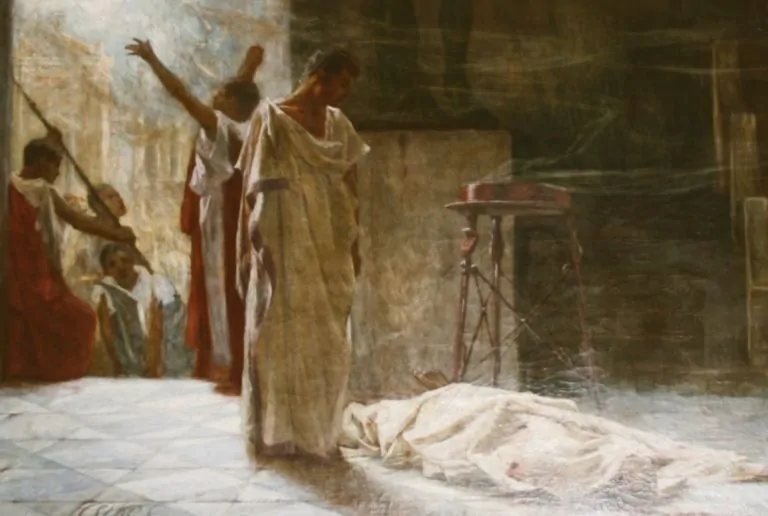
The final centuries of Zhou rule were not an age of undifferentiated chaos, but they were marked by an expanding scale of organized violence. Competing rulers constructed territorial states, fielded mass armies, registered populations, rewarded military service, and displaced older aristocratic privileges with bureaucratic ranks dependent upon the monarch. Violence increasingly became something the state claimed the authority to direct, punish, and legitimize. Yet rulers still depended upon personal retainers, wandering warriors, diplomats, defectors, and ambitious ministers whose loyalties could cross political boundaries. Assassination belonged to this world of unstable allegiance, private vengeance, and interstate rivalry, particularly when a weaker state could not defeat a stronger enemy in conventional war. As Qin approached supremacy during the third century BCE, its ruler became both the principal beneficiary of centralized violence and the most consequential possible target of an assassin. The most famous attempt came in 227 BCE, when Crown Prince Dan of Yan sent Jing Ke to kill King Zheng of Qin, the future First Emperor. Yan could not expect to stop Qin’s advance through military force, so the prince turned the ceremonial conventions of diplomacy into instruments of attack. Jing Ke carried the severed head of Fan Yuqi, a Qin fugitive greatly desired by King Zheng, together with a map representing territory that Yan appeared willing to surrender. Concealed within the rolled map was a dagger reportedly sharpened, tested, and treated with poison so that even a slight wound might be fatal. The offering of a fugitive’s head and disputed territory promised exactly what an expansionist ruler wished to receive: submission, strategic advantage, and confirmation that resistance was collapsing. Jing Ke and his companion Qin Wuyang approached not as armed invaders but as envoys bearing gifts whose political value justified exceptional proximity to the king. The plot exposed a fundamental weakness in court security, because the rites that protected royal majesty could also provide a carefully scripted route through its barriers.
According to Sima Qian’s account, Qin Wuyang began trembling as the two men entered the royal presence, forcing Jing Ke to continue the mission largely by himself. Jing Ke presented Fan Yuqi’s head and then slowly unrolled the map until the concealed dagger appeared. He seized the king’s sleeve and struck, but King Zheng pulled away, tearing the fabric and gaining a moment in which to flee. The court’s security regulations then produced a dangerous delay: ministers attending the audience were unarmed, while guards stationed outside could not enter without being summoned. The king’s long sword was difficult to draw while he moved around a pillar trying to escape Jing Ke, and the surrounding officials could initially offer little more than shouted advice. A physician named Xia Wuju reportedly threw his medicine bag at the assassin, briefly disrupting the attack until the king managed to draw his weapon and wound Jing Ke. Only after the immediate struggle had turned did armed guards enter, kill the assassin, and restore control of the hall they had been assigned to protect.
The episode is extraordinarily vivid, but its details cannot be treated as the equivalent of a surviving Qin security report. Sima Qian wrote during the Han dynasty, more than a century after the attempt, and arranged Jing Ke’s story as part of a literary biography honoring assassin-retainers whose courage preserved their names even when their missions failed. Speeches, gestures, dramatic reversals, and Jing Ke’s farewell song at the Yi River gave the account a moral and tragic shape that complicates any literal reconstruction. Even so, the narrative preserves a credible institutional problem: weapons restrictions protected the ruler from assembled courtiers but left him temporarily dependent upon procedure when an apparently legitimate envoy breached the inner audience space. Qin answered the attack with overwhelming military power, capturing the Yan capital in 226 BCE and completing the destruction of Yan in 222 BCE, but conquest punished the state that sent Jing Ke without eliminating the vulnerability he had revealed.
When King Zheng completed the destruction of the rival states in 221 BCE and assumed the unprecedented title of First Emperor, protection of the ruler became inseparable from the security of a continental empire. Qin abolished the remaining political independence of conquered kingdoms and divided its territories into commanderies and counties governed by appointed officials whose authority derived from the center. Legal and administrative documents reveal a government deeply invested in registration, written reporting, official accountability, investigation, and collective responsibility. Sima Qian also attributes to the conqueror the relocation of powerful families to the capital region and the collection of weapons from across the former states, measures that deprived defeated elites of local resources while placing potentially dangerous households under closer observation. Imperial roads enabled armies, officials, and messages to move rapidly, but they also allowed the emperor to display authority and inspect territories whose loyalty remained uncertain. Around Xianyang, palaces, covered passages, elevated routes, and restricted spaces allowed the sovereign to move without exposing his precise location to the public. These arrangements were larger than a personal bodyguard: they transformed political centralization, administrative documentation, control of movement, and monopoly of armed force into the foundations of imperial security.
Unification nevertheless failed to extinguish the personal vengeance created by Qin conquest. Sima Qian relates that Gao Jianli, Jing Ke’s friend and a celebrated musician, was eventually recognized after entering hiding; the emperor had him blinded but continued to summon him because he admired his performances. Gao weighted his zhu, a struck stringed instrument, with lead and attempted to use it as a weapon when he was permitted close to the imperial person, repeating the earlier pattern in which cultural or ceremonial value overcame ordinary distance. In 218 BCE, Zhang Liang, whose family had served the extinguished state of Han, organized a more openly military ambush during an imperial tour at Bolangsha. A powerful attacker wielding a massive iron bludgeon struck one of the vehicles in the imperial procession but hit the wrong carriage, after which Qin authorities conducted an extensive search for the conspirators. The episode demonstrated the protective value of a large and visually confusing entourage, but it also exposed the emperor whenever he traveled beyond palace walls. Qin’s response was to intensify concealment, surveillance, and control over knowledge of the emperor’s movements, making uncertainty about his location an additional defensive barrier.
Those precautions protected the First Emperor from repeated attacks, but they also increased his dependence upon a very small circle of trusted attendants and officials. When he died during an imperial journey at Shaqiu in 210 BCE, his death initially remained known only to those immediately around him, including Chancellor Li Si, the eunuch official Zhao Gao, and the emperor’s younger son Huhai. According to Sima Qian, the inner circle continued presenting food and receiving reports as though the ruler remained alive, while carts of strong-smelling fish were placed near the imperial carriage to conceal the odor of decomposition. Zhao Gao and his allies then manipulated the succession, issuing a false command that induced the emperor’s elder son Fusu and the general Meng Tian to take their own lives and installing Huhai as the Second Emperor. No assassin penetrated the carriage, and no rebel army seized the imperial body, yet control of access, documents, and information allowed palace insiders to capture the authority of the dead sovereign.
Qin established the enduring foundations of imperial protection (centralized force, guarded spaces, controlled movement, administrative surveillance, and restricted proximity) while its collapse demonstrated the danger built into all of them. A ruler hidden from his enemies could also be hidden from his government, and the officials entrusted with preserving imperial secrecy could convert that secrecy into a weapon of succession.
The Han Security Order
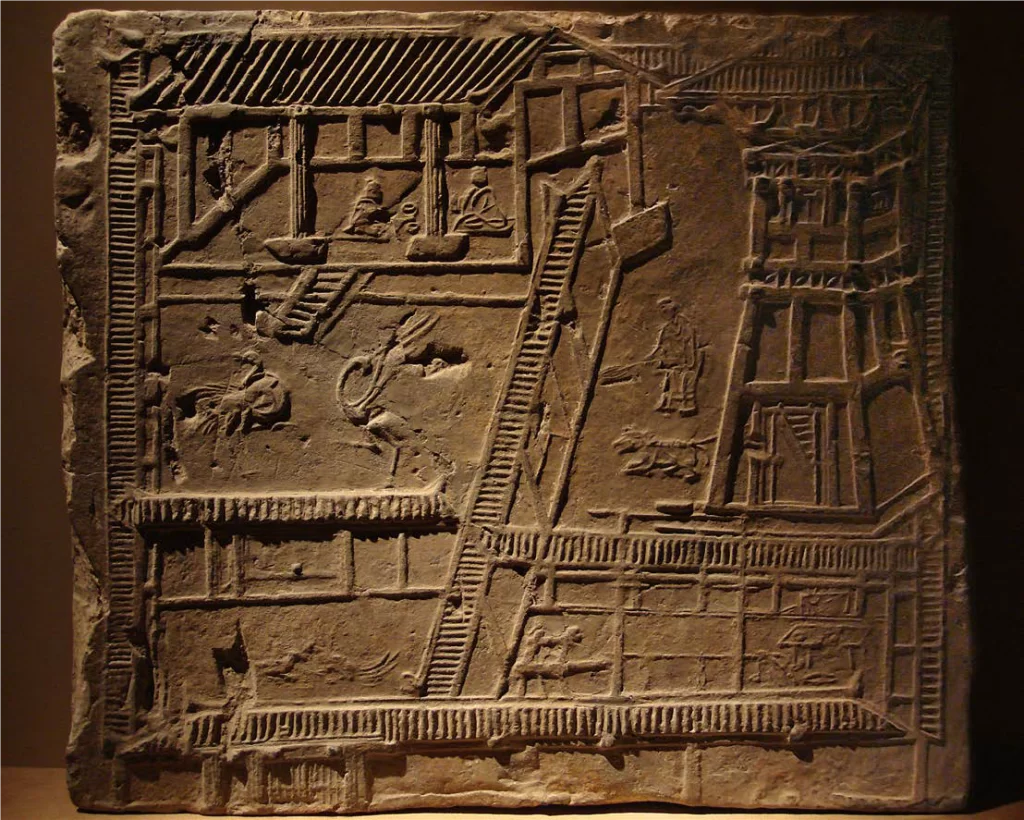
The founders of the Han dynasty had learned political survival amid the rebellions and civil wars that destroyed Qin. Liu Bang rose not through hereditary succession but through command of armed followers, negotiated alliances, defections, and the defeat of rival generals, experiences that made the danger posed by military subordinates impossible to ignore. The dynasty preserved much of Qin’s centralized administration while tempering some of its punishments and accommodating regional kings, imperial relatives, and meritorious officers. Security required more than surrounding the emperor with soldiers: the court had to protect the sovereign while preventing generals, princes, ministers, and palace servants from concentrating enough power to control him. Across the Western Han capital of Chang’an and the Eastern Han capital of Luoyang, officials distinguished among security of the imperial person, defense of palace buildings, policing of the capital, and military protection of the metropolitan region. The resulting order changed substantially over four centuries, but its underlying principle remained the division of armed authority among several institutions whose duties overlapped without becoming identical.
Responsibility for the palace perimeter belonged principally to the official conventionally translated as Commandant or Minister of the Guards, the weiwei. His subordinates guarded palace walls, towers, gates, passages, and the boundaries separating one compound from another. Access depended upon credentials and tallies, some made of wood or metal, that identified those entitled to enter or leave; in an emergency, the authorities could collect or suspend the ordinary credentials and seal the palace more completely. Guards at an outer entrance did not necessarily possess authority inside the residential compounds, because the Han court treated each successive threshold as a distinct jurisdiction. Beyond the palace, the Colonel of the City Gates supervised the fortified entrances of the capital, while the Bearer of the Gilded Mace maintained order in the urban space outside the palace and commanded mounted patrolmen and other security personnel. Municipal officials and county authorities exercised additional policing powers, creating another layer between the imperial precinct and the surrounding population. This distribution meant that no single officer commanded every wall, gate, street, patrol, and armed detachment from the emperor’s chamber to the countryside. Han security was spatially graduated: each movement toward the ruler passed through a new boundary, a different group of guards, and another chain of administrative responsibility.
Immediate protection of the emperor belonged to the Minister of the Household, known earlier as the Prefect of the Gentlemen of the Palace and later as the guangluxun. This office supervised attendants, advisers, escorts, and several corps of lang, or Gentlemen, who served within the palace and accompanied the emperor beyond it. Many Gentlemen were not professional soldiers in the narrow sense but nominees for civil office undergoing a period of probation before receiving substantive appointments. Their nominal guard service allowed the court to observe their conduct, discipline, education, and reliability while accustoming future administrators to imperial ceremony and hierarchy. Alongside these candidates stood more militarily useful formations, most notably the Rapid as Tigers, or Huben, and the Feathered Forest, or Yulin. The latter drew heavily from military families, including the sons and grandsons of men who had died in service and households from the northwestern regions where cavalry experience was particularly valuable. Palace service consequently joined physical defense with bureaucratic recruitment, social prestige, military training, and the cultivation of personal obligation to the throne.
Larger formations protected the palace and capital against dangers that household guards could not defeat. The organization described by the terms Northern Army and Southern Army varied between Western and Eastern Han, but it generally distinguished forces associated with the palace zone from a more field-capable metropolitan reserve. Under Eastern Han, the Northern Army’s professional regiments remained near Luoyang and could reinforce provincial troops, suppress rebellion, or defend the political center. Dividing these forces among colonels and ministers reduced the likelihood that one commander could quietly monopolize every armed unit around the emperor, but control of the capital regiments nevertheless remained one of the greatest prizes in court politics.
Security had to move whenever the emperor left the palace. Hunts, religious observances, inspections, journeys to ancestral temples, and formal processions required advance preparation, secured roads, imperial carriages, mounted escorts, attendants, standards, reserve animals, and troops able to respond beyond the reach of fixed gates. The Minister of the Household’s responsibilities extended into imperial parks and accompanied the ruler during public appearances, while formations such as the Huben and Yulin combined protective duty with the ceremonial display of martial power. Their visibility proclaimed that the emperor possessed disciplined force, but their arrangement also controlled how closely spectators, petitioners, officials, and foreign envoys could approach. Guard service gave selected men unusual proximity to the sovereign and could become the beginning of an administrative or military career, binding elite ambition to the survival of the dynasty. Appointment through recommendation meant that Gentlemen arrived with family connections, regional associations, and patrons whose interests did not disappear when they entered palace service. The throne attempted to transform those connections into loyalty, but it could never ensure that service beside the emperor would outweigh every competing obligation.
The political history of Eastern Han ultimately revealed the limitations of even this carefully divided system. Empress dowagers often governed for child emperors, while their fathers or brothers received senior military commands and used control of capital troops to dominate the outer court. Eunuchs, meanwhile, guarded and served within the private palace, transmitted messages across the Yellow Gates, and enjoyed access that generals and civil ministers could not match. In 168 CE, when the regent Dou Wu and his allies attempted to destroy the leading eunuchs, their plan was discovered before they could secure the palace; the eunuchs seized the young Emperor Ling, obtained the imperial seals, issued commands in his name, and rallied forces that defeated Dou Wu. The episode demonstrated that possession of the emperor and the instruments authenticating his orders could matter more than formal seniority in the government. In 189 CE, General-in-Chief He Jin attempted another purge, but the eunuchs lured him inside the palace and killed him after separating him from his armed supporters. Yuan Shao and other officers then attacked the palace, burned gates, and massacred eunuchs, while surviving palace attendants carried the emperor and his brother away from the capital. The warlord Dong Zhuo entered the resulting vacuum, gained control of the sovereign, deposed him, and installed another prince. Institutions created to separate household service, palace defense, urban policing, and metropolitan military power had become weapons in a contest over who could possess the emperor. The Han security order was formidable when its components obeyed a recognized center, but when the inner court and outer army turned against one another, gates and garrisons ceased to protect imperial authority and instead determined which faction could claim it.
Inside the Inner Palace
The inner palace was not simply the emperor’s residence; it was a jurisdiction organized around his body, household, and immediate presence. In the Qin and Han empires, the conceptual boundary between the “inner court” and the regular bureaucracy distinguished personal service to the sovereign from the formal administration of the state, although the two spheres continually overlapped. Gates, corridors, audience chambers, sleeping quarters, and women’s apartments imposed a physical sequence through which people, documents, and information had to pass before reaching the throne. Because those passages were guarded and socially restricted, the ability to admit, exclude, delay, or privately advise became a form of political power. The inner palace consequently functioned both as a defensive enclosure and as a network of intimate relationships encompassing empresses, consorts, imperial relatives, eunuchs, attendants, and favored advisers. Its history demonstrates that protecting an emperor could never be separated from deciding who was permitted to influence him.
The empress stood at the institutional center of this household order. Within a polygynous court containing numerous ranked consorts, she supervised palace women, embodied the principal imperial marriage, and occupied a decisive position in the production and recognition of heirs. Her authority became still more consequential when she survived an emperor and assumed the title of empress dowager. During an imperial minority, the dowager could attend to government, authorize decisions, receive reports, and lend dynastic legitimacy to edicts issued in the name of a child ruler. Such arrangements were not inherently unconstitutional intrusions by women into government; they were established mechanisms for maintaining continuity when the sovereign was too young to rule. Yet the gendered structure of public office meant that an empress dowager ordinarily relied upon male relatives to command troops, occupy ministries, and communicate with officials beyond the palace. Her father, brothers, and nephews could convert kinship with the imperial household into administrative and military authority. The resulting power of imperial affines arose not merely from favoritism but from the monarchy’s need for trusted agents whose fortunes appeared inseparable from the security of the reigning line.
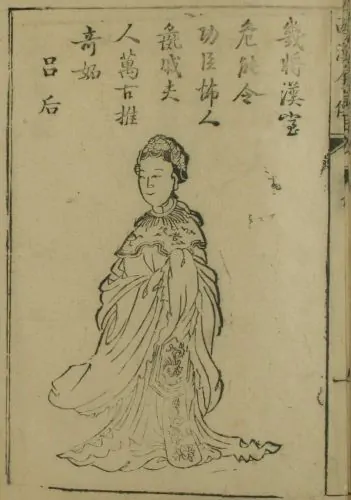
The career of Empress Lü revealed both the stabilizing and destabilizing possibilities contained in that arrangement. After Gaozu died in 195 BCE, she preserved the newly founded Han regime through the reign of her son, Emperor Hui, and subsequently governed behind young nominal rulers. At the same time, she elevated members of the Lü family, distributed titles among them, and created a concentration of power that rivals interpreted as an alternative to Liu dynastic rule. Her death in 180 BCE was followed by the destruction of the Lü clan and the enthronement of Emperor Wen, events later historians presented as the restoration of the proper political order. Near the end of the Former Han, the long prominence of Empress Dowager Wang Zhengjun’s family similarly helped Wang Mang accumulate the offices, reputation, and court connections that enabled him to seize the throne in 9 CE. Neither case proves that rule by imperial women inevitably produced usurpation; rather, both show how regency transformed household trust into public power and thereby made the empress’s natal family simultaneously a shield for the dynasty and a possible competitor to it.
Eunuchs occupied the other indispensable position within the architecture of intimate access. Because they were permitted to serve inside residential areas from which most adult men were excluded, eunuch attendants guarded doors, transmitted messages, maintained chambers, carried commands, and accompanied the emperor during the unrecorded portions of his daily life. Their proximity gave them knowledge unavailable to officials who encountered the sovereign only at formal audiences or through memorials. An emperor could use such servants to communicate secretly, investigate senior ministers, or bypass administrators who controlled the ordinary channels of government. Although court rhetoric often represented eunuchs as men without families and without legitimate social attachments, many maintained natal connections, adopted heirs, accumulated property, and constructed extensive patronage networks. They were dependent upon imperial favor, but that dependence made them useful counterweights to consort clans and bureaucratic grandees whose power possessed broader institutional foundations. Nonetheless, the same freedom from regular administrative supervision allowed successful eunuchs to sell access, protect clients, manipulate appointments, and conceal information from the throne. The moral hostility of official historians toward eunuchs should be read critically without dismissing the genuine dangers created when private attendants acquired public authority.
The overthrow of the Dou clan in 92 CE offers a clear example of eunuch service as an instrument of imperial self-liberation. Emperor He had ascended the throne as a child and remained overshadowed by Empress Dowager Dou and her powerful relatives, particularly the general Dou Xian. Kept under close observation, the emperor secretly coordinated with the eunuch Zheng Zhong, whose access to the inner palace enabled communications that the Dou establishment could not readily intercept. With that assistance, Emperor He recovered control of the palace and forced Dou Xian and his brothers to commit suicide. Zheng Zhong’s subsequent elevation established a precedent in which eunuchs gained political rewards because they had helped the sovereign defeat an overmighty consort clan, not because they had initially displaced an independent emperor.
The same pattern recurred with more destructive consequences under Emperor Huan. Liang Ji, brother of Empress Dowager Liang, had helped place Huan on the throne in 146 CE and dominated the court through military office, family appointments, intimidation, and his sister’s regency. Even after the dowager’s death, Liang’s position was reinforced by the emperor’s marriage to another woman of the Liang family, binding the sovereign’s household to the clan that constrained him. In 159, following the death of Empress Liang, Huan entered a secret alliance with a small circle of eunuchs and used palace forces to surround Liang Ji’s residence and compel his suicide. Because the conspiracy depended upon secrecy inside the imperial apartments, the emperor trusted attendants who could reach him without passing through Liang-controlled offices. The eunuchs who participated received noble titles and extraordinary rewards, converting emergency service into durable political standing. Their ascendancy intensified struggles over appointments and contributed to confrontations between palace favorites and scholar-official networks, including the persecutions later known as the Partisan Prohibitions. Emperor Huan had removed one dangerous concentration of power, but the method by which he regained personal control strengthened another group whose influence likewise rested upon commanding access to the throne.
By the final decades of the Later Han, control of the emperor’s person had become more important than nominal possession of the highest offices. In 168, when the regent Dou Wu and the official Chen Fan attempted to eliminate the eunuchs, their opponents secured the young Emperor Ling, obtained the palace instruments through which commands were authenticated, and mobilized forces in the sovereign’s name. In 189, the killing of the general-in-chief He Jin inside the palace provoked a retaliatory massacre of eunuchs, but the violence also removed the last effective protections around the imperial household and left the court exposed to the army of Dong Zhuo.
These episodes should not be reduced to a repetitive struggle among three permanent factions labeled “eunuchs,” “consort clans,” and “officials,” for alliances shifted and members of each category pursued conflicting interests. Empresses and eunuchs became powerful because imperial succession, gendered palace space, and the dangers of bureaucratic domination created recurring demands for regents, intermediaries, and confidential agents. The palace protected the ruler by filtering human contact, yet every filter created a gatekeeper capable of shaping what the ruler knew and what others believed he had commanded. The most guarded man in the empire was often most vulnerable to those entrusted with guarding the final few steps to his door.
A Gate Can Decide an Empire: Tang Palace Armies and Court Coups

The Tang founders inherited a political order in which imperial authority remained inseparable from military command, fortified capitals, and aristocratic retinues. At Chang’an, the formal guard offices of the Southern Command protected the capital and palace approaches, while the Northern Command contained more permanent forces attached directly to the emperor. This division was never absolute, but it distinguished routine metropolitan defense from the sovereign’s personal military establishment. Because every movement between these spheres passed through guarded entrances, the loyalty of the officers at a palace gate could matter more than the strength of an army stationed beyond it.
No event demonstrated that reality more clearly than the Xuanwu Gate Incident of 626. Li Shimin, the future Emperor Taizong, had played a leading military role in establishing the Tang, accumulating experienced retainers and a reputation that rivaled the authority of his elder brother, Crown Prince Li Jiancheng. Their father, Emperor Gaozu, attempted to preserve a balance among his sons, but the princes developed competing staffs, military followings, and alliances inside the palace. When Li Shimin decided to act, he did not begin by marching openly against the capital or proclaiming himself emperor. Instead, he secured the cooperation of officers responsible for Xuanwu Gate, the northern entrance to the palace city, and concealed a small body of followers nearby. Li Jiancheng and their brother Li Yuanji were ambushed when they approached the gate for an imperial audience. Li Shimin killed the crown prince, while Yuchi Jingde and other retainers pursued and killed Li Yuanji. Troops belonging to the dead princes attempted to force their way through the entrance, but the defenders held the position until the display of the princes’ heads dissolved organized resistance. Yuchi Jingde then entered the inner palace armed and informed Gaozu that Li Shimin had suppressed men who endangered the throne, converting a fratricidal coup into an accomplished act of imperial protection. Within days Li Shimin became crown prince, and approximately two months later Gaozu abdicated in his favor.
The coup revealed that palace security depended less upon walls themselves than upon the relationships connecting rulers, commanders, and guards. Tang emperors consequently cultivated units whose loyalty was intended to be more personal than that of soldiers rotating through the ordinary military establishment. Sources describe Taizong stationing a select formation of mounted archers, the Hundred Riders, near the northern palace approaches and employing them during hunts, processions, and other imperial movements. Under Wu Zetian this formation became the Thousand Riders, while Emperor Zhongzong expanded or reorganized it as the Ten Thousand Riders. These troops offered the sovereign a rapid armed reserve inside the capital, but their privileged location also gave their commanders an opportunity to determine which claimant would actually possess the palace.
The revolutions of the early eighth century confirmed that the bloodshed of 626 had established a reproducible method of political action. In 705, Wu Zetian was elderly, frequently ill, and increasingly dependent upon her favorites Zhang Yizhi and Zhang Changzong. Senior officials led by Zhang Jianzhi possessed administrative standing and a legitimate dynastic alternative, but neither would have been sufficient without soldiers capable of entering the inner court. The conspirators secured the participation of the guard general Li Duozuo and other officers before moving against the palace at Luoyang. Their troops killed the Zhang brothers, confronted Wu Zetian with an irreversible military situation, and compelled her to relinquish authority to the crown prince, who returned to the throne as Emperor Zhongzong. Yet restoration did not end the struggle over armed access. After Zhongzong died suddenly in 710, Empress Wei assumed power as dowager over the young Emperor Shang and attempted to place her relatives in command of key guard formations. Li Longji, the future Emperor Xuanzong, and his aunt Princess Taiping responded by cultivating officers of the Ten Thousand Riders, including men alienated by the Wei family’s treatment of the troops. Their supporters seized the northern palace approaches, entered the complex at night, and killed Empress Wei, Princess Anle, and leading members of their coalition. Li Longji’s father, Ruizong, then replaced the child emperor, while Li Longji emerged as the decisive military figure at court. When he moved against Princess Taiping in 713, he again used a swift seizure of the capital’s coercive institutions to destroy a rival before she could mobilize her own supporters.
These coups explain why Tang rulers repeatedly created new palace forces without ever solving the underlying problem. A guard connected personally to the emperor appeared safer than an army controlled through ministers or provincial commanders. Once the emperor died, became incapacitated, or lost physical access to that guard, its supposed personal loyalty became available to whoever could issue credible commands in his name. Each protective reorganization produced another armed institution whose officers might become kingmakers during the next succession crisis.
The An Lushan Rebellion transformed this recurring danger by altering the military balance between the palace and the provinces. The older militia structure had already deteriorated before 755, while professional frontier armies had grown under commanders who controlled regional revenues, appointments, and soldiers. Once rebellion devastated the central government, the restored Tang court required a permanent force capable of defending both the emperor and the Guanzhong heartland against military governors whose loyalty could no longer be assumed. A frontier formation known as the Shence Army followed the imperial government during the rebellion and gradually developed into the principal palace army. The Tibetan occupation of Chang’an in 763, which forced Emperor Daizong to flee, made the weakness of metropolitan defenses still more apparent. Under Emperor Dezong, particularly after the Jingyuan mutiny caused another imperial flight in 783, the Left and Right Shence Armies expanded and passed under lasting eunuch command. Eunuchs appeared suitable because their offices, status, and households depended upon the palace, whereas provincial generals possessed territorial and military foundations of their own. Yet the arrangement joined command of the guards to the eunuchs’ control over private audiences, palace communications, and the emperor’s daily environment. By the ninth century, Shence commanders could influence successions, protect favored officials, and obstruct investigations by the regular civil authorities. Emperor Wenzong attempted to destroy this concentration of power in 835 by conspiring with Li Xun, Zheng Zhu, and selected officers to lure the eunuchs into an ambush under the pretext that auspicious “sweet dew” had appeared near a guard headquarters. The eunuch commander Qiu Shiliang detected the trap, seized Wenzong’s litter, carried him through Xuanzheng Gate, and closed the entrance before the conspirators could intervene. Shence troops then emerged from the palace, massacred officials and guards, arrested the emperor’s allies, and transformed the sovereign’s attempted liberation into an alleged rescue from treason.
Wenzong survived the Sweet Dew Incident and retained his title, but the men guarding him had demonstrated that they could separate the emperor’s person from his political will. Tang palace troops should not be treated as a permanently united faction, for guards acted from personal loyalty, material interest, institutional privilege, and competing understandings of legitimate succession. They protected rulers from rebellion, invasion, urban disorder, and provincial warlords, often preserving the dynasty when no other dependable central army remained. Nevertheless, their position inside the capital allowed them to settle crises before distant officials or loyal generals even knew that a struggle had begun. A gate possessed no independent power, but it concentrated force, information, and access so effectively that its commander could determine whose words would be received as imperial commands. At Xuanwu Gate, a prince captured the throne by controlling entry; at Xuanzheng Gate, an emperor lost effective control when his supposed protectors closed the entrance around him.
Coup-Proofing the Throne: The Song Reordering of Military Power
The Song dynasty began with precisely the kind of military seizure its founders subsequently sought to prevent. In 960, Zhao Kuangyin, commander of the Later Zhou palace army, marched from Kaifeng ostensibly to confront an invasion, only to be acclaimed emperor by his soldiers at Chenqiao and returned to the capital wearing the imperial yellow robe. Whether the episode was carefully planned or partly improvised, Zhao’s success demonstrated that a general who combined command of elite troops with access to the capital could overthrow even a legitimate dynasty. As Emperor Taizu, he faced a problem of his own making: he required powerful armies to complete the conquest of China, but any commander capable of winning those wars might reproduce his ascent. The institutions created in response amounted to what modern political analysis would call coup-proofing, although they were also intended to end the broader cycle of military fragmentation inherited from the late Tang and Five Dynasties.
Taizu’s answer was not to dismantle the army but to divide the components of military authority so that no single commander could control troops, appointments, intelligence, and mobilization simultaneously. The capital forces were placed under three principal headquarters: the Palace Command, the Metropolitan Cavalry Command, and the Metropolitan Infantry Command, collectively known as the Three Commands. These offices administered units, supervised training, and maintained discipline, but they did not possess unrestricted authority to deploy the soldiers under their jurisdiction. The Bureau of Military Affairs retained registers, strategic information, and mobilization responsibilities, while actual campaigns required orders authenticated by the emperor. Command was distributed among institutions whose powers overlapped without becoming identical. Taizu also abolished or declined to fill dangerous senior posts, including the supreme palace command he himself had once occupied, thereby preventing another officer from inheriting his former concentration of authority. Generals were transferred, units were reassigned, and personal bonds between commanders and soldiers were deliberately weakened through rotation and administrative separation. Beyond the capital, the court reduced the independent fiscal and civil powers of military governors, redirected provincial revenues toward the center, and increasingly appointed civil officials to govern prefectures. Elite troops were concentrated around Kaifeng to create a “strong trunk” capable of overpowering rebellious “branches,” while provincial forces remained more closely dependent upon central supplies and authorization. The resulting structure did not remove military men from government; it made their authority conditional, fragmented, and more difficult to convert into a bid for the throne.
Later tradition condensed this reorganization into the celebrated story of Taizu “releasing military power over a cup of wine.” According to accounts written well after the alleged gathering, the emperor warned his senior generals that ambitious subordinates might someday place imperial robes upon them just as soldiers had done to him, whereupon the commanders accepted wealth, marriages, and comfortable retirement in exchange for surrendering their posts. The conversation may have been embellished into a moral drama of prudent rulership, but the removals, transfers, and rewards surrounding it reflected a genuine redistribution of command. Song military centralization was achieved through years of appointments, retirements, institutional changes, fiscal measures, and selective coercion rather than through a single genial banquet.
As an internal-security system, the reordering proved remarkably durable, but its military consequences were more complicated than the familiar image of a dynasty made weak by scholar-officials. No palace commander repeated Chenqiao against the Northern Song throne, and no regional military governor built an autonomous power base comparable to those that had partitioned the late Tang. At the same time, the court maintained an enormous professional army, invested heavily in fortifications and weapons, and developed a military bureaucracy comparable in scale and complexity to its civil administration. Examination-trained officials frequently served in the Bureau of Military Affairs, supervised logistics, debated strategy, or directed campaigns, making “civil control” less a rejection of warfare than an attempt to govern it through bureaucratic procedure. The system nevertheless imposed substantial costs. Concentrating troops near Kaifeng burdened the treasury, while frequent transfers and divided authority could weaken unit cohesion, restrict commanders’ initiative, and make responsibility difficult to assign when operations failed. Imperial interference sometimes produced contradictory orders, yet individual Song generals and armies continued to conduct effective campaigns against Southern Tang, Northern Han, Liao, Western Xia, Jin, and later the Mongols. The catastrophe of 1127, when Jurchen forces captured Kaifeng and carried Emperors Huizong and Qinzong into captivity, cannot be explained simply as the inevitable result of “valuing the civil and despising the military.” Diplomatic miscalculation, factional conflict, unstable command decisions, and the rapid collapse of capital defenses all contributed. Even so, the Jingkang disaster exposed the strategic danger of a system built around centralized protection: once the enemy penetrated Kaifeng, the court discovered that the same concentration intended to secure the dynasty had placed the emperors, command apparatus, and political elite within a single vulnerable theater.
The Southern Song soon demonstrated that coup-proofing had constrained military seizure without making it impossible. In 1129, while Emperor Gaozong’s displaced court struggled to escape Jin armies, the commanders Miao Fu and Liu Zhengyan mobilized palace troops, killed officials they opposed, and forced Gaozong to abdicate in favor of his infant son, Zhao Fu, under the regency of Empress Dowager Meng. Their regime survived for less than a month before outside commanders, including Han Shizhong, rallied loyal forces and restored Gaozong. The mutiny proved that armed control of the emperor could still produce a temporary transfer of power, particularly when invasion had shattered normal administration. Its rapid defeat also showed that seizing the palace was no longer sufficient if the conspirators lacked independent provincial resources, broad bureaucratic acceptance, and the allegiance of other imperial armies. Gaozong subsequently depended upon powerful field commanders such as Han Shizhong, Zhang Jun, and Yue Fei to preserve the dynasty, only to curtail their autonomous commands once the immediate emergency receded. Song military policy repeatedly oscillated between empowering generals for survival and dividing their authority for dynastic security. The throne became far harder to capture from within, but that achievement required a permanent negotiation between military effectiveness and imperial control.
The Emperor’s Eyes and Ears: The Censorate and Official Surveillance

The Censorate is sometimes described as imperial China’s secret police, but that comparison obscures its distinctive place within the regular government. Its principal targets were officials rather than the population at large, and its normal weapons were inspection, impeachment, administrative review, and direct reporting rather than clandestine arrest or torture. Censors examined whether officeholders were corrupt, disloyal, incompetent, abusive, or negligent, while also reporting broader conditions that ordinary bureaucratic channels might conceal. To call them the emperor’s “eyes and ears” was unusually precise: they gave the sovereign an alternative view of the government created to carry out his commands.
The institution developed from offices that originally combined record keeping with supervision. Under the Qin and early Han, imperial censors handled documents, recorded proceedings, examined administrative performance, and reported misconduct, responsibilities that reflected the close connection between controlling information and controlling officials. The Censor-in-Chief stood near the highest levels of government, but subordinate censorial officers could investigate matters involving men who greatly outranked them. This inversion of the normal hierarchy was deliberate, since an inspector protected by direct access to the throne could scrutinize officials whose authority would otherwise make them nearly untouchable. The Han court also dispatched regional inspectors to examine provincial administration, powerful families, judicial abuses, financial irregularities, and failures to carry out imperial policy. Their periodic circuits allowed the central government to compare local reports with observations produced outside the ordinary prefectural and commandery hierarchies. Low formal rank made these inspectors dependent upon the court rather than upon the governors they monitored, although it could also leave them vulnerable when imperial support was uncertain. Han surveillance nevertheless remained divided among several offices rather than concentrated in a fully independent censorial administration. When late Han inspectors acquired continuing executive responsibilities within their regions, some became territorial powerholders themselves, demonstrating how easily an agent sent to watch provincial government could become part of it.
The Tang transformed these precedents into a more clearly differentiated Censorate, or Yushitai. Its Headquarters Bureau handled major investigations and accusations against central officials, while its Palace Bureau monitored conduct, protocol, and order during audiences and ceremonies. The Investigation Bureau supplied censors who examined administrative offices, reviewed cases, traveled on inspection assignments, and reported failures in both the capital and the provinces. Because investigating censors were relatively junior officials, their ability to impeach governors, generals, and senior ministers symbolized authority delegated directly from the throne rather than power derived from personal rank. The Censorate remained distinct from remonstrance officials, whose formal responsibility was to criticize imperial decisions and urge the ruler toward better policy, although the boundary between correcting officials and correcting government could never be complete. A censor investigating a failed campaign, unlawful tax, or corrupt appointment necessarily evaluated the decisions that had produced it. Tang censorial power consequently rested upon privileged communication, documentary evidence, and the reputational force of impeachment, not upon possession of an independent armed organization.
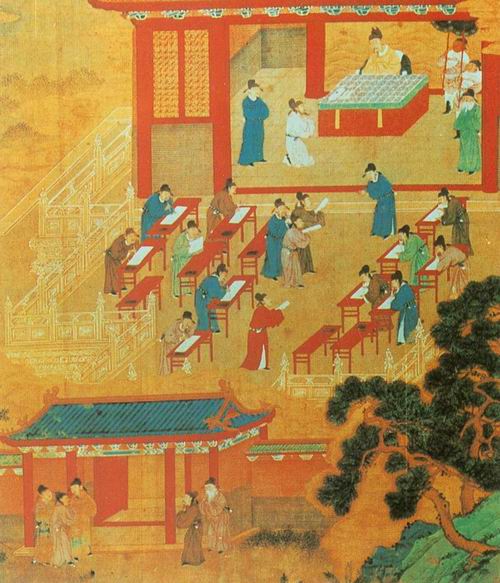
Under the Song, censorial surveillance became deeply embedded in a political order built around written communication and competing channels of advice. A mature Censorate emerged gradually during the early eleventh century rather than appearing fully formed at the dynasty’s foundation. Alongside it stood the Remonstrance Bureau, which scrutinized policies, appointments, and the conduct of the emperor and his principal advisers. Officials of the two institutions became known collectively as taijian, even though censors theoretically watched the bureaucracy while remonstrators corrected the ruler. Their ability to submit direct or sealed memorials allowed them to place accusations before the emperor without passing through offices controlled by the men under investigation. They examined fiscal abuses, military failures, judicial irregularities, illicit patronage, and evidence that senior officials were assembling personal political networks. An impeachment did not itself convict its target, but it could initiate an inquiry, block a promotion, compel a resignation, or persuade the emperor to order demotion and exile. Censorial memorials also entered the political record, ensuring that alleged misconduct could survive beyond the immediate dispute and shape later evaluations of an official’s career. Yet the Censorate was never an ideologically neutral tribunal, as struggles surrounding the New Policies and later Song factional conflicts repeatedly demonstrated. Reformers and their opponents both attempted to place sympathizers in censorial offices, remove hostile critics, and define policy disagreement as evidence of selfish association or administrative failure. The system still served imperial security because it prevented chief councilors and established ministries from monopolizing information, but it did so by institutionalizing conflict within the bureaucracy rather than by producing an uncontested version of the truth.
The Ming greatly enlarged this supervisory principle through the Metropolitan Censorate, whose investigating censors were assigned among thirteen circuits and dispatched on temporary tours to inspect provincial government, military administration, judicial proceedings, granaries, schools, construction, and taxation. Their relatively low rank contrasted sharply with their authority to consult records, receive accusations, interrogate officeholders, and recommend the dismissal of senior officials. Separate Six Offices of Scrutiny monitored the Six Ministries and reviewed the movement and content of official documents, creating another line of oversight outside the ministries themselves. The Qing retained this architecture and in 1723 subordinated the Six Offices to the Censorate, producing a more centralized supervisory establishment through which capital censors and investigating censors could impeach officials across the empire.
Censorial government nevertheless remained an instrument of monarchy, not an independent constitutional restraint upon it. Emperors selected censors, defined the permissible scope of criticism, decided which accusations deserved action, and could demote, imprison, beat, or execute officials whose remonstrance became intolerable. Censors might pursue private enemies, repeat unverified rumors, protect allies, or frame legitimate policy disagreements as corruption and disloyalty, while local officials could manipulate documents and prepare deceptive displays for inspection tours. Unlike the Ming Brocade-Clad Guards or the eunuch-controlled Depots, the Censorate ordinarily possessed no separate coercive force capable of conducting an extrajudicial purge on its own authority. Its memorials could nevertheless activate judicial agencies, palace guards, or imperial commissioners, giving a written accusation consequences far beyond the censor’s formal rank. The institution’s value lay less in guaranteeing honest government than in creating redundancy: ministers reported upon provinces, inspectors reported upon ministers, remonstrators criticized policy, and rival officials supplied information that others wished to suppress. Such multiplication of reports could produce factionalism and fear, but it also made concealment more difficult and warned the throne when corruption, local oppression, military failure, or official alliance threatened to become rebellion. The emperor’s eyes and ears did not always see accurately or hear impartially, yet without them he would have remained dependent upon the very officials whose loyalty he most needed to verify.
The Keshig at Dadu: Yuan Security through Household Loyalty

The keshig did not originate as a garrison assigned to a fixed palace. It was the khan’s household in arms, combining bodyguards, attendants, companions, hostages, and future commanders within a single institution of personal service. When Qubilai established Dadu as the principal capital of the Yuan dynasty, this mobile steppe institution entered a monumental city governed partly through Chinese administrative forms. Security at Dadu consequently rested upon two overlapping orders: the walls, gates, offices, and guard regiments of an imperial capital, and the intimate loyalties of the khan’s own household.
Chinggis Khan formalized and greatly expanded the household guard at the imperial assembly of 1206. The Secret History of the Mongols presents a nominal force of ten thousand men divided among day guards, night guards, and quiver bearers, with much of its service arranged through rotating shifts. These distinctions reflected proximity as much as military specialization. Night guards controlled the ruler’s sleeping area and restricted movement after dark, while other members watched entrances, carried weapons, supervised horses, protected baggage, served at ceremonies, and accompanied the khan on campaign. Recruitment linked the institution to the political structure of the newly united Mongol nation. Commanders and other leading men were expected to send sons, brothers, or suitable retainers, usually equipped with horses and attendants appropriate to their families’ status. Such service functioned partly as a guarantee of elite obedience because the relatives of powerful men remained near the sovereign, but it also offered those relatives access to favor, wealth, marriages, and advancement. Young nobles serving together learned court discipline, formed relationships across tribal lines, and became accustomed to receiving authority from the khan rather than solely from their ancestral leaders. Members of the keshig later emerged as army commanders, provincial agents, diplomats, judges, and administrators, turning the guard into a training ground for imperial government. Household loyalty was not an alternative to administration; it supplied many of the people through whom administration operated.
Qubilai preserved this patrimonial core even as he surrounded it with the bureaucratic and architectural institutions of the Yuan state. Within Dadu, keshig personnel guarded palace approaches and private quarters, regulated audiences, protected imperial possessions, and served in offices concerned with food, drink, clothing, weapons, stables, seals, and ceremonial equipment. They also accompanied the court between Dadu, Shangdu, hunting grounds, and temporary encampments, ensuring that imperial protection remained mobile despite the construction of permanent capitals. Service close to the khan continued to lead into appointments elsewhere, allowing household attendants to become officials without passing through the ordinary routes of Chinese bureaucratic recruitment. At the same time, the Yuan created a much larger collection of imperial guard regiments drawn from Mongols and from favored military populations such as Kipchaks, Qanglis, and Asuds or Alans. These units defended the capitals, supplied field forces, and formed outer layers around the imperial residence. They should not be collapsed into the keshig itself: the ethnic guard regiments provided mass and specialized military strength, while the keshig retained the prestige and political intimacy of the sovereign’s household.
The effectiveness of this system depended upon whether personal allegiance to the reigning khan outweighed loyalty to commanders, princes, empresses, and inherited household networks. Senior positions became associated with prominent families, giving the guard valuable continuity but also allowing service groups to develop corporate interests extending across several reigns. Yuan emperors did not preside over a single undivided household, for empresses, dowagers, princes, and other Chinggisid relatives maintained their own establishments, revenues, clients, and armed retainers. During an undisputed reign, these overlapping networks could bind the dynasty together; during a contested succession, they provided ready-made coalitions. The assassination of Emperor Yingzong, Shidibala, at Nanpo in 1323 revealed the danger with exceptional clarity. While the emperor traveled from Shangdu toward Dadu, Tegshi and a coalition of princes, officials, and Asud guards attacked his encampment and killed both Shidibala and his chief minister Baiju. The murder succeeded because insiders understood the imperial route, possessed armed access to the traveling court, and could approach the ruler under conditions in which unfamiliar troops would have been excluded. Security organized through household trust had enabled men within the protective establishment to penetrate its innermost layer. A second crisis followed the death of Yesün Temür in 1328, when rival coalitions at Shangdu and Dadu proclaimed competing emperors. El Temür, a commander closely connected to the Kipchak Guard, seized the political machinery of Dadu and supported the enthronement of Tugh Temür, while the Shangdu court backed the young Ragibagh. The resulting War of the Two Capitals showed that command of elite guards, palace communications, seals, and the capital could transform a succession dispute into civil war before the wider empire had accepted either claimant.
The keshig nevertheless remained one of the Mongol Empire’s most durable institutions because it addressed a problem that formal offices could not solve: how a ruler might turn potentially independent aristocrats into servants whose honor depended upon proximity to him. Its cohesion did not arise simply from shared Mongol identity, since the wider Yuan security establishment incorporated numerous peoples and since Mongol princes themselves were often the throne’s most dangerous rivals. What mattered was the exchange of service, privilege, protection, and advancement that joined a household member personally to the khan. Dadu’s Chinese-style avenues and palace walls did not replace this steppe political order; they gave it a new architectural setting and connected it to a larger imperial bureaucracy. Yet personal loyalty was relational rather than automatic, and a guard loyal to one commander, dowager, prince, or dynastic branch could become hostile to another. The keshig protected the emperor by filling his immediate surroundings with privileged dependents, but Yuan history repeatedly demonstrated that no distance was more dangerous than the final few steps occupied by men who already belonged there.
Walls Are Procedures: The Imperial Palace as a Security Machine

A palace wall did not protect an emperor merely because it was high, thick, or surrounded by water. Its defensive value arose from the procedures attached to it: who could approach, which gate that person could use, when it could be opened, what credentials had to be shown, and who assumed responsibility for admitting the visitor. Every threshold translated physical distance into an administrative decision, forcing movement toward the sovereign through increasingly restrictive layers. The imperial palace was less a fortified container than a machine for separating authorized presence from intrusion.
This logic long predated the Forbidden City. Qin and Han palace compounds had already placed rulers behind walled precincts whose gates distinguished court officers, attendants, petitioners, soldiers, and members of the imperial household. At Tang Chang’an, the palace and imperial cities formed separate jurisdictions within the larger capital, while guarded gates converted the city plan into a hierarchy of access. Song capitals were spatially less monumental than Chang’an, yet palace gates still marked the boundary between ordinary official administration and the emperor’s immediate presence. Yuan Dadu added the household character of Mongol rulership to this inherited tradition, placing trusted guards and imperial dependents within a carefully ordered capital. The Ming builders of Beijing consequently did not invent axial enclosure, nested walls, or restricted palace precincts; they combined established forms into an unusually comprehensive arrangement. The approach to the throne began far beyond the emperor’s chambers, passing through the gates of the capital and Imperial City before reaching the Forbidden City proper. Tiananmen, despite its later association with the palace, stood on the southern boundary of the Imperial City, whereas the Meridian Gate served as the principal southern entrance to the Forbidden City itself. Side gates, service passages, and lateral courtyards prevented the main ceremonial axis from becoming an unrestricted corridor, assigning different kinds of movement to different routes. Architecture classified people before any guard questioned them: rank, office, gender, occupation, and purpose determined which spaces a person could legitimately occupy.
The Forbidden City erected under the Yongle emperor between 1406 and 1420 made this gradation visible. After passing through the Meridian Gate, an authorized entrant still faced broad courtyards, bridges, additional gates, and reception spaces before reaching the principal halls of the Outer Court. Even high officials generally encountered the emperor in regulated ceremonial or administrative settings rather than penetrating his residential world. Farther north, the Gate of Heavenly Purity marked the conventional division between the Outer Court and the Inner Court, where imperial consorts, palace women, eunuchs, children, and household personnel lived and worked. During the Qing, the emperor’s frequent residence in the Hall of Mental Cultivation altered the practical center of sovereign activity without abolishing the surrounding hierarchy of courtyards and gates. The resulting spatial gradient placed public majesty at the accessible edge of imperial presence and domestic intimacy at its most secluded core.
Geometry acquired defensive force only through daily administration. Gates opened and closed according to schedules, while watches and time signals coordinated the movement of guards, officials, servants, and supplies. Keys had to be held by designated personnel, transferred under recognized procedures, and accounted for when gates were secured. Officials assembled at prescribed locations, entered through gates appropriate to their status, dismounted where regulations required, and waited until summoned onward. Credentials, rosters, tallies, and gate records connected each authorized passage to a name or office, making unexplained presence within the palace inherently suspicious. Ming law treated unauthorized entry into an imperial palace as a grave offense and also assigned liability to negligent guards, recognizing that a protected boundary depended upon the conduct of its keepers. Under the Qing, bannermen, particularly men associated with the Upper Three Banners, supplied important components of the imperial guard, while specialized bodyguards and vanguard units protected entrances, ceremonies, excursions, and the sovereign’s immediate person. Yet soldiers were only part of the system. Eunuchs under the Ming and personnel supervised by the Qing Imperial Household Department regulated food, clothing, maintenance, fuel, workshops, medical service, and countless other necessities that had to cross palace boundaries without opening them indiscriminately. Deliveries could not simply be excluded, because the court was a populous household and administrative center, but admitting them created risks involving weapons, poison, theft, disguise, and intelligence gathering. The palace attempted to make provisioning inspectable by controlling carriers, routes, containers, destinations, and the officials responsible for receipt. Fire posed another persistent danger in a complex dominated by timber construction, requiring water-filled vessels, night watches, restrictions on flame, rapid alarm, and organized response. Palace security consequently consisted of repeated acts of verification whose cumulative purpose was to ensure that every person and object inside the walls had arrived through an intelligible chain of authorization.
The limits of that system appeared most starkly when trusted insiders turned against the ruler. In the Renyin Palace Plot of 1542, palace women already admitted to the Jiajing emperor’s sleeping quarters attempted to strangle him, demonstrating that outer walls could do little against people whose service required physical intimacy. In 1813, adherents of the Eight Trigrams uprising attacked the Forbidden City with assistance from palace eunuchs, some of whom helped the insurgents negotiate the very gates meant to exclude them. Both incidents exposed the same structural weakness: a procedure can filter strangers, but it must confer power upon insiders who know its timings, exceptions, and points of dependence.
To describe the palace as a security machine is not to claim that its operation was automatic or consistently successful. Its nested spaces produced defensive depth, delaying an attacker and multiplying the number of decisions required before anyone could approach the emperor. They also rendered court society more legible by assigning guards, officials, artisans, servants, women, and imperial relatives to distinguishable routes and zones. Yet the sovereign’s safety remained distributed among gatekeepers, key holders, household managers, guards, eunuchs, palace women, and relatives, any one of whom might convert authorized access into an opportunity for betrayal. The stronger the controls on entry became, the more valuable trusted insiders became, and the more dangerous their disaffection could be. Walls reduced the number of plausible attackers, while procedures exposed unusual movement and created time for loyal personnel to respond; neither eliminated the political and domestic conflicts carried inside the palace by legitimate occupants. Imperial architecture was an administrative technology of controlled proximity, formidable because it organized human behavior but vulnerable for precisely the same reason.
The Emperor’s Private Justice: Hongwu and the Jinyiwei
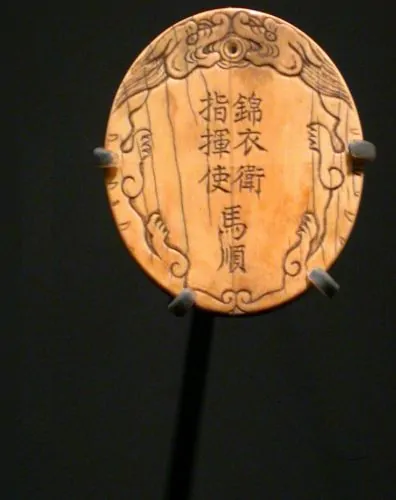
Among the institutions created by the Ming founder, none expressed the politics of personal imperial security more clearly than the Jinyiwei, or Embroidered Uniform Guard. Formally established in 1382, it combined the functions of an elite military guard, ceremonial retinue, investigative agency, and instrument of extraordinary justice. Its officers answered directly to the emperor rather than to the civil bureaucracy’s judicial hierarchy. The Jinyiwei consequently protected Hongwu not only by guarding his body, but also by identifying and punishing people whom he believed might threaten his authority.
The institution emerged from the peculiar insecurity of a rebel leader who had conquered an empire but never ceased to think like the commander of a precarious coalition. Zhu Yuanzhang had risen from extreme poverty through monastic wandering, bandit-infested countryside, rebellion, and civil war, experiences that taught him both the instability of political loyalty and the dangers posed by powerful subordinates. Once enthroned, he sought to rebuild disciplined government through law, moral instruction, registration, and administrative supervision, yet he remained suspicious of the educated officials and veteran commanders required to govern his new dynasty. The arrest and execution of Chancellor Hu Weiyong in 1380 intensified that suspicion. Hongwu abolished the Central Secretariat and the office of grand chancellor, placed the Six Ministries directly beneath himself, and prohibited restoration of the chancellorship. He also divided military authority among several commissions and reorganized supervisory agencies so that no single minister or commander could easily accumulate sufficient power to challenge the throne. These measures made the emperor the junction through which the principal branches of government had to communicate. They also burdened him with an enormous volume of decisions and created a demand for agents who could investigate officials without depending upon the officials’ own institutions. The Jinyiwei supplied that parallel channel. Its creation belonged to the same constitutional transformation as the destruction of the chancellery: both reduced intermediary authority and brought information, coercion, and judgment closer to the emperor’s person.
Calling the Jinyiwei a “secret police” captures part of its activity but obscures its institutional breadth. It originated within the imperial guard establishment and continued to provide escorts, ceremonial attendants, honor guards, and armed personnel for the court. Selected officers also conducted surveillance, pursued fugitives, made politically sensitive arrests, and carried imperial orders beyond the palace. When assigned an imperial case, the guard could detain and interrogate suspects in its prison rather than immediately transferring them to the Ministry of Justice. This placed it beside, and sometimes above, the ordinary procedures of the Ministry of Justice, the Censorate, and the Court of Judicial Review. The Jinyiwei was not outside the Ming state; it was an alternative face of the state, one in which the emperor’s command displaced the normal division of judicial responsibility.
That alternative jurisdiction changed the political meaning of investigation. Ordinary criminal procedure theoretically required officials to identify an offense under the code, gather testimony, review sentences, and submit the gravest punishments for confirmation. An imperial investigation began instead with the ruler’s suspicion that a hidden conspiracy existed, making the discovery of accomplices more important than neutral evaluation of whether the original allegation was true. Jinyiwei agents could arrest suspects suddenly, isolate them from their administrative allies, search their residences, confiscate documents, and interrogate servants or relatives who might reveal wider connections. Torture intensified the pressure to produce names, while collective liability allowed an accusation to expand through families, patronage relationships, military commands, and official networks. Confession under these conditions did not merely resolve a case; it generated the next round of arrests. The Hu Weiyong affair illustrates the need for chronological care, because Hu was executed in 1380, two years before the formal establishment of the Jinyiwei under that name. The guard did not uncover the original alleged conspiracy, as popular summaries sometimes suggest, although it operated during the subsequent years in which Hongwu repeatedly enlarged the category of Hu’s associates and enemies. By contrast, the Jinyiwei was directly implicated in the case against General Lan Yu in 1393, when its commander Jiang Huan accused the celebrated general of plotting rebellion. Lan’s arrest became the starting point for another extensive purge of officers, nobles, retainers, and alleged associates. The surviving confessions and official narratives present these prosecutions as discoveries of treason, but their production under imperial pressure makes it difficult to separate genuine evidence from coerced confirmation. What can be established more securely is the political result: men whose military reputations, followings, or connections might have complicated the succession were destroyed, and the throne’s independence from the founding elite was strengthened.
Hongwu nevertheless recognized that extraordinary justice could escape even his control. In late 1386, after learning that Jinyiwei interrogators had subjected prisoners to illegal abuse, he ordered their instruments of torture burned and transferred their prisoners to the Ministry of Justice. Later, in 1393, he reiterated that cases should pass through the regular judicial authorities rather than be submitted to the guard’s prison. Yet the Lan Yu prosecution in that same year revealed how easily the emperor’s discretionary commands could override his general prohibitions, leaving the Jinyiwei’s power restricted in principle but available in a perceived emergency.
The Jinyiwei embodied a central contradiction in Hongwu’s program of dynastic security. He promulgated an elaborate legal code and repeatedly instructed officials to punish only according to law, but he also reserved a sphere of imperial action in which suspected treason justified departures from ordinary procedure. Directly controlled investigators helped prevent ministers and judicial officials from concealing conspiracies, protecting colleagues, or monopolizing the information reaching the throne. At the same time, agents whose advancement depended upon satisfying the emperor had strong incentives to enlarge threats, extract confirming testimony, and interpret ambiguity as disloyalty. Terror might expose a real plot, but it could also flood the throne with the allegations that frightened prisoners and ambitious investigators believed the ruler wished to hear. Hongwu’s private justice protected the emperor by breaking independent concentrations of power, while weakening the distinction between reliable intelligence and politically useful confession. The Jinyiwei made the throne harder to challenge, but it did so by turning imperial suspicion into an institution.
Watching the Watchers: The Eastern Depot and Ming Eunuch Intelligence
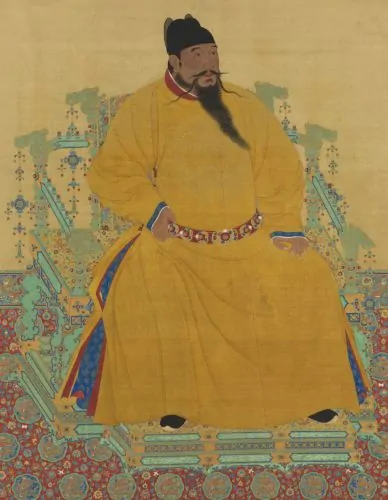
The Eastern Depot, established by the Yongle emperor in 1420, added another layer to the Ming throne’s internal-security apparatus. If the Jinyiwei watched officials and investigated suspected conspirators, the new eunuch-directed agency could observe both those targets and the imperial guards assigned to pursue them. Jinyiwei commanders possessed their own interests, relationships, and opportunities to manipulate information. Yongle answered that vulnerability by creating a second intelligence channel whose leadership depended upon intimate palace service and direct imperial favor.
The decision reflected the insecurity surrounding Yongle’s seizure of the throne. Zhu Di had defeated his nephew, the Jianwen emperor, after a civil war lasting from 1399 to 1402, but military victory could not erase questions about the legitimacy of his accession. Jianwen loyalists might survive within the bureaucracy, provincial society, military establishment, or scholarly networks, while official reports could conceal rather than expose their activities. Yongle needed information that did not pass exclusively through civil officials whose colleagues, teachers, relatives, and protégés formed dense relationships across the government. Palace eunuchs offered an alternative. Hongwu had publicly warned against eunuch participation in government, recognizing that servants with private access to the sovereign might interfere with formal administration. Yongle departed from that restriction because eunuchs had already proved useful to him during the struggle for power. He sent them on diplomatic missions, entrusted them with military and logistical assignments, employed them in palace construction, and used them as personal observers of civil and military officials. Their residence within the imperial household made their authority unusually dependent upon the emperor, although it did not prevent them from building patronage networks of their own. When the court moved its principal political center to Beijing, Yongle institutionalized this reliance by creating the Eastern Depot near the palace. What had previously been discretionary espionage by individual household servants now acquired offices, personnel, procedures, and a continuing place within Ming government.
The depot was headed by a trusted eunuch rather than by an official selected through the civil service system. Its investigative personnel included officers and constables supplied from the Jinyiwei, giving it access to men already experienced in surveillance, pursuit, and arrest. A practical division of labor often emerged in which depot agents gathered information and identified suspects, while the Jinyiwei supplied coercive manpower, conducted arrests, and received prisoners for interrogation. This division was never absolute, because the depot’s powers varied according to the emperor and the influence of its director. Its reports could reach the sovereign without prior examination by ministers, censors, or judicial officials. The Eastern Depot watched the watchers less through a stable bureaucratic hierarchy than through its privileged ability to tell the emperor what the Jinyiwei and other agencies were doing.
The depot’s field of observation extended well beyond formal allegations of treason. Its agents monitored civil officials, military commanders, scholars, palace personnel, religious figures, and people suspected of spreading politically dangerous rumors. They attended to conversations in public places, unusual gatherings, private associations, intercepted communications, and expressions of dissatisfaction with imperial policy. Informants could be recruited among clerks, servants, guards, local functionaries, and people seeking advantage over personal enemies. Information gathered through these channels was condensed into reports that transformed fragments of speech or behavior into evidence of possible disloyalty. The system did not approach the technical reach of modern mass surveillance, and claims that depot agents knew everything said throughout the empire belonged partly to the political mythology of fear. Nevertheless, even limited observation could be effective when officials did not know which colleagues, attendants, or subordinates might be reporting upon them. Once a depot report reached the emperor, the investigation could pass rapidly from rumor to coercion. Jinyiwei officers might search a residence, seize papers, arrest associates, and confine suspects within an extraordinary judicial process largely shielded from ordinary review. Direct reporting promised speed and secrecy, particularly when a suspected conspiracy implicated the officials who would normally investigate it. Overlapping agencies also allowed an attentive emperor to compare accounts and prevent any single security organization from monopolizing his knowledge. Yet the same duplication encouraged competition, as depot eunuchs and Jinyiwei commanders attempted to demonstrate vigilance by discovering threats that rival investigators had missed. A system designed to verify intelligence could reward exaggeration, turning ambiguous conduct into conspiracy because an agent who reported too little risked appearing negligent.
Successive emperors responded to that problem by creating still more layers rather than by submitting political surveillance to regular judicial supervision. The Western Depot, founded in 1477 and intermittently revived, and the Inner Branch Depot established during the Zhengde reign demonstrated how quickly one trusted intelligence service could itself become an object of imperial suspicion. Powerful eunuchs such as Wang Zhen, Liu Jin, and Wei Zhongxian used control over palace communications and investigative organs as part of broader personal regimes, although their authority depended upon particular emperors and could collapse abruptly when imperial favor disappeared. Under Wei Zhongxian in the 1620s, depot surveillance and Jinyiwei coercion were coordinated against Donglin-associated officials and critics, converting the machinery of dynastic security into an instrument of factional proscription.
Accounts written by scholar-officials understandably portrayed the Eastern Depot as proof that eunuch government was inherently corrupt, cruel, and illegitimate. That literature must be read critically because civil officials possessed their own institutional interests, while the official histories compiled under the Qing inherited many of their accusations. Eunuchs were not a unified political class, and many performed difficult administrative, diplomatic, military, and technical assignments without becoming leaders of persecutory factions. Depot investigations could also uncover genuine corruption, illicit communication, armed conspiracy, or failures that ordinary officials preferred to conceal. The stronger criticism is structural rather than moral: information delivered secretly by agents who answered only to imperial favor was exceptionally difficult to verify. Because the depot’s authority came from proximity to the sovereign, an emperor who withdrew from active government could surrender practical control of surveillance to the eunuchs who selected reports, framed allegations, and managed access to him. The Eastern Depot protected the throne by preventing the Jinyiwei and civil bureaucracy from becoming its sole sources of intelligence, but it simultaneously created another organization whose power required watching. Ming rulers repeatedly responded to that paradox by adding new observers, producing an intelligence system rich in accusation but persistently uncertain about whom the emperor could trust.
The Banner Throne: Manchu Guards and Qing Palace Security
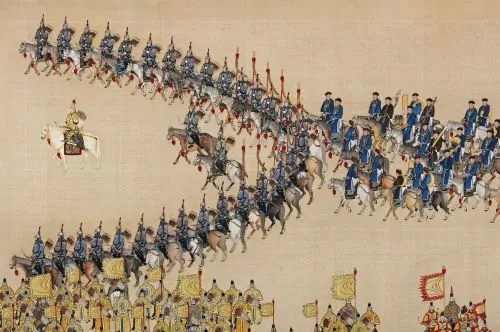
The Qing conquest placed the Chinese imperial throne inside a military-social order created before the Manchus entered Beijing. Palace security rested principally upon the Eight Banners, whose members were hereditary subjects, soldiers, dependents, and beneficiaries of the ruling house rather than merely troops hired to defend a residence. The emperor drew his most trusted guards from banner populations institutionally bound to the dynasty through registration, privilege, service, and conquest memory. Protecting the Qing sovereign meant preserving both his physical person and the Manchu political supremacy embodied in the Banner system.
Nurhaci and Hong Taiji had organized their followers into banners that combined military mobilization with household registration, political allegiance, and the distribution of rewards. After the conquest of Beijing in 1644, the Shunzhi emperor formally assumed the Chinese imperial throne, but the Qing court did not dissolve this Inner Asian structure into the institutions inherited from the Ming. Instead, banner garrisons occupied strategically important cities, while a large concentration of bannermen in and around Beijing secured the capital against rebellion, invasion, and palace seizure. The most intimate relationship to the ruler belonged to the Bordered Yellow, Plain Yellow, and Plain White Banners, collectively known as the Upper Three Banners. These stood directly under the emperor, unlike the Lower Five Banners, whose origins remained associated with other branches of the imperial clan even as the throne increasingly restricted the authority of princely banner lords. Membership in an Upper Banner did not make every bannerman a palace guard, but it defined the principal population from which many guards and household servants could be selected. The arrangement reduced the danger that the emperor’s immediate protectors would owe overriding allegiance to a powerful prince. It also made guard service part of a broader system of hereditary dependence in which stipends, rank, residence, promotion, and family status were tied to the dynasty. Manchu rulers confronted the old problem of guarding the monarch with armed men by making those men members of an encompassing conquest order whose fortunes appeared inseparable from the survival of the throne.
Actual palace protection was divided among several formations rather than entrusted to a single bodyguard corps. The Imperial Bodyguard, or shiwei, supplied selected nobles and banner officers who served near the emperor, attended audiences, accompanied hunts and journeys, stood watches, and could receive sensitive assignments beyond the palace. The Guards Division supervised important guard personnel and duty arrangements, while the Vanguard and other elite banner formations protected gates, ceremonial movements, encampments, and the sovereign during travel. Units of the Beijing banner establishment secured the wider capital and its approaches, creating defensive depth beyond the Forbidden City. Within that city, guards occupied assigned posts at gates and courtyards, checked authorized passage, enforced closing times, and separated the emperor’s residential spaces from the larger world of officials, artisans, servants, and petitioners. No one formation constituted a Qing equivalent of a modern presidential protection agency; security emerged from the coordinated duties of bodyguards, gate units, banner commands, palace administrators, and household personnel.
The Imperial Household Department added an administrative layer essential to making those armed arrangements work. Established in mature form after the conquest, it managed much of the emperor’s private estate, palace provisioning, workshops, treasuries, stables, hunting establishments, servants, and properties, thereby controlling people and materials whose routine access could not be eliminated. Its personnel came from the Upper Three Banners and included booi, or bondservants, whose hereditary service connected them directly to the imperial household. The department was not simply a domestic ministry, because control over food, clothing, transport, money, buildings, attendants, and communications had immediate security consequences. It maintained rosters, assigned responsibilities, regulated supplies, and helped define which members of the enormous palace population belonged in particular spaces. Qing emperors also cultivated additional channels of confidential information among trusted Manchu officials, household servants, provincial agents, and palace memorialists, reducing their dependence upon the formal reports of the civil bureaucracy. The palace memorial system developed under Kangxi and expanded under Yongzheng allowed selected officials to send confidential communications directly to the emperor, often through secure transmission arrangements associated with trusted couriers and the palace. Yongzheng further strengthened centralized control by creating the Grand Council during military operations against the Zunghars, placing a small group of trusted officials close to the sovereign and outside the slower routines of the outer bureaucracy. These institutions did not belong to palace guarding in a narrow physical sense, but they protected the throne by joining control of access to control of information. A gate could stop an unauthorized visitor, whereas household administration and confidential reporting could reveal negligence, corruption, princely ambition, or military danger before it reached the palace.
Banner security remained formidable without becoming immune to decay or penetration. Extended peace weakened military readiness among many metropolitan bannermen, while hereditary privilege, indebtedness, absenteeism, and uneven training complicated the ideal of a permanently mobilized conquest elite. The Eight Trigrams attack of 1813 demonstrated the consequences when rebels obtained assistance from palace eunuchs and entered through gates that loyal guards had failed to make secure, although imperial relatives and defenders prevented the assault from reaching the Jiaqing emperor, who was then away from Beijing. The incident exposed both the vulnerability of palace routines to insider collaboration and the capacity of armed members of the imperial household to respond when procedure failed. In the nineteenth century, the throne increasingly relied upon military forces outside the old banner establishment to suppress enormous rebellions, yet Manchu guards and Upper Banner personnel retained privileged positions around the sovereign until the dynasty’s end. Qing palace security was never only a matter of ethnicity or military skill: it was an attempt to transform conquest loyalty, hereditary status, household dependence, spatial control, and confidential service into a durable shield around the ruler. Its deepest weakness resembled that of earlier imperial systems, for the men best placed to defend the emperor were also those whose authorized proximity made their loyalty most consequential.
Secrets under Seal: Qing Intelligence and the Surveillance of Empire
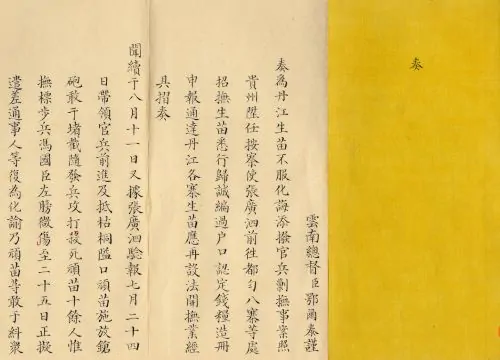
The Qing emperors did not govern their immense territories through a single intelligence service comparable to a modern centralized agency. They assembled information through overlapping channels that included routine bureaucratic reports, confidential palace memorials, provincial investigations, censorial impeachments, military reconnaissance, household agents, banner officials, and communications from the frontiers. Secrecy mattered because any report passing through ordinary offices could be delayed, copied, softened, or suppressed by men whose conduct it described. By reserving private lines of communication to selected servants, the emperor could compare official government with reports about how that government actually behaved.
The most important of these channels was the palace memorial system, which developed under the Kangxi emperor and expanded dramatically during the reign of Yongzheng. Ordinary memorials circulated through established administrative offices, where clerks registered, copied, summarized, and transmitted them according to bureaucratic procedure. Palace memorials instead traveled in sealed containers directly between selected officials and the emperor, initially bypassing the agencies that normally processed state documents. Kangxi granted this privilege selectively to trusted provincial governors, military commanders, imperial household officials, salt administrators, textile commissioners, and other servants whose positions gave them access to valuable information. Some reported military or fiscal affairs within their formal jurisdictions, while others commented upon weather, harvests, grain prices, local opinion, official reputations, factional relationships, or the private conduct of colleagues. The emperor answered in vermilion ink and could return the memorial through the confidential channel, permitting an extended written conversation unknown to much of the regular bureaucracy. The system encouraged officials to report one another because possession of confidential access signaled exceptional imperial trust, and failure to reveal a matter already reported by someone else could appear evasive. It also allowed Kangxi to use household servants and technically subordinate officials as observers of governors and ministers far above them in formal rank. Yet the memorials were not simply espionage reports, since they also carried policy advice, administrative requests, personal professions of loyalty, and descriptions of local conditions. Their security value lay in combining these functions so thoroughly that an official could never be certain whether an apparently routine provincial matter had already been privately described to the throne.
Yongzheng made confidential reporting more systematic, more demanding, and more closely associated with his intensely personal style of rule. He enlarged the number of officials permitted or ordered to submit palace memorials and frequently demanded detailed responses to questions that revealed information received from other sources. His vermilion rescripts could be conversational, sarcastic, encouraging, or threatening, creating the impression that the emperor was continuously present in the careers of distant servants. Because memorialists often did not know who else reported confidentially, the system generated a form of mutual surveillance without requiring a permanent secret policeman in every province. Yongzheng also ordered the return and preservation of palace memorials, bringing documents that had once functioned as private exchanges into an increasingly organized imperial archive. Confidential communication thereby became both an immediate instrument of control and a cumulative repository against which later statements could be tested.
The establishment of the Grand Council during Yongzheng’s military campaigns further tightened the relationship between secrecy, speed, and imperial decision-making. Originally associated with the need to manage sensitive operations against the Zunghars without exposing plans through the more cumbersome outer bureaucracy, the council developed into the dynasty’s most important coordinating body. Its members worked near the emperor, handled confidential documents, drafted commands, maintained records, and transmitted decisions to officials throughout the empire. The Grand Council did not constitutionally replace the emperor or operate as a cabinet collectively responsible for policy; its authority derived from proximity, discretion, and the sovereign’s confidence. Grand councillors could digest large quantities of information and prepare draft responses, but the emperor retained the power to revise their language, consult other advisers, or create separate channels around them. Security procedures governed access to the council’s offices and papers because a leaked edict, frontier report, appointment discussion, or military plan could benefit enemies inside or beyond the empire. Couriers and relay stations carried sealed dispatches across vast distances, while documentary markings, registration practices, and specified routes helped officials detect delay or interference. During wars, the court received reconnaissance from banner commanders, Green Standard officers, Mongol allies, surrendered enemies, merchants, missionaries, and frontier administrators whose knowledge could not be reduced to a single bureaucratic perspective. Qing rulers also exploited the empire’s linguistic diversity by employing translators and officials familiar with Manchu, Mongolian, Chinese, Tibetan, and other languages, although translation itself created opportunities for distortion and monopoly. Intelligence from Central Eurasia was dependent upon relationships with nobles, clerics, envoys, caravan travelers, and local intermediaries who interpreted events through their own interests. The ideal was not perfect knowledge but corroboration: reports arriving through military, provincial, diplomatic, household, and confidential channels could be placed beside one another until omission or contradiction became visible.
Surveillance also extended into the written and social life of the empire. Provincial officials investigated rumors, heterodox religious associations, prophetic claims, forged proclamations, secret fraternities, and signs that local conflict might become organized resistance. The Qing literary inquisitions, especially severe under Qianlong, turned poems, histories, genealogies, prefaces, and private writings into possible evidence of sedition or contempt for Manchu rule. Officials searched homes, questioned associates, traced the circulation of texts, and sometimes punished authors, relatives, printers, or owners long after the disputed words had been composed. These prosecutions encouraged self-censorship and political caution, but they could also magnify ambiguous phrases into imagined conspiracies that revealed more about official fear than organized opposition.
The resulting system was extensive without being omniscient. Provincial administrators governed through magistrates, clerks, constables, village leaders, lineage heads, licensed brokers, innkeepers, and other intermediaries who could supply information but could also conceal abuses, settle private scores, or tell officials what they wished to hear. Secret societies and religious movements repeatedly escaped sustained notice until rebellion exposed the inadequacy of previous reporting, as the White Lotus uprising at the end of the eighteenth century demonstrated. Confidential memorials reduced the bureaucracy’s ability to monopolize information, yet they rewarded alarm, personal denunciation, and displays of exceptional vigilance. Literary prosecutions might terrorize educated communities without producing reliable knowledge of actual political danger, while frontier intelligence remained hostage to distance, translation, changing alliances, and the ambitions of local informants. Much depended upon the emperor’s willingness and capacity to read competing reports, identify manipulation, and prevent trusted gatekeepers from controlling which secrets reached him. Kangxi, Yongzheng, and Qianlong devoted formidable personal energy to that work, but an administrative system designed around imperial scrutiny became less effective when later rulers were inexperienced, distracted, ill, or dependent upon favorites. Qing surveillance protected the dynasty by multiplying the pathways through which danger could become visible; it could not solve the deeper problem that every sealed report still contained the judgments, omissions, and motives of the person permitted to write it.
When the Layers Failed
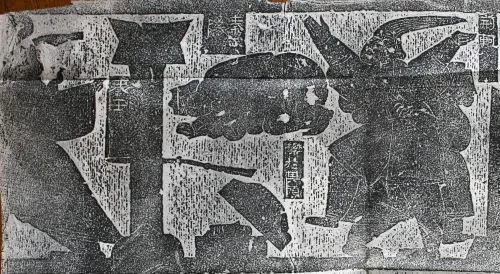
Imperial security systems are most visible at the moments when they cease to work. A failed gate, compromised guard, reckless campaign, or divided court could expose the ruler despite layers of walls, troops, rituals, intelligence, and law. Assassination and capture were not identical dangers, but both reduced the exalted Son of Heaven to a vulnerable human body whose possession could determine the fate of a dynasty. The history of Chinese monarchy repeatedly showed that security depended less upon the number of protective institutions than upon whether those institutions remained coordinated and loyal during a crisis.
The attempted assassination of the king of Qin by Jing Ke in 227 BCE became the classic representation of an attacker defeating outer controls without reaching his ultimate objective. Sent by Crown Prince Dan of Yan, Jing Ke gained admission by presenting credentials of submission, a valuable map, and the severed head of the renegade Qin general Fan Wuji. His dagger remained concealed inside the rolled map until he had entered the audience chamber and approached King Zheng, the future First Emperor. Court protocol helped create the danger because armed guards remained below the hall and ministers standing near the king were prohibited from carrying weapons. When Jing Ke struck, Zheng initially struggled to draw his long sword and fled around a pillar while attendants attempted to impede the assassin with their bare hands. A physician reportedly threw his medicine bag at Jing Ke, buying time until the king managed to unsheathe his weapon and wound him. Guards then entered and killed the attacker, but only after ceremonial restrictions had temporarily isolated the sovereign from the armed men assigned to protect him. Qin retaliation destroyed Yan, yet the episode remained a warning that tribute, surrender, and diplomatic ritual could be converted into vehicles for carrying lethal force through a ruler’s final defensive boundary.
Later assassinations more often originated within the palace itself. In 189 CE, the Han general-in-chief He Jin plotted with court officials to eliminate the eunuchs who controlled access to the young emperor, but the eunuchs learned of the plan, summoned He Jin into the palace, and murdered him. His followers then forced their way into the compound and slaughtered eunuchs, while surviving palace attendants carried Emperor Shao and his brother out of the capital amid the confusion. The crisis did not kill the emperor, but it destroyed effective court control and allowed the warlord Dong Zhuo to seize Luoyang, depose Emperor Shao, and reduce the dynasty to a succession of military dependencies. Every participant claimed to be rescuing the throne, yet competing guardians had converted the emperor into the prize of their struggle.
The Tang court demonstrated even more clearly how palace troops could become makers and destroyers of emperors. In 710, palace forces associated with Li Longji and Princess Taiping overthrew Empress Wei after the sudden death, possibly by poisoning, of Emperor Zhongzong, whose demise became inseparable from the succession struggle that followed it. The restored and increasingly powerful Shence Armies later placed decisive coercive power near the throne, but their command by eunuchs gave palace insiders the means to dominate rulers as well as defend them. In 805, Emperor Shunzong’s illness enabled eunuchs and officials to control access, communications, and the transfer of authority to his son. In 820, Emperor Xianzong died inside the palace, probably murdered by the eunuch Chen Hongzhi, although the political interests surrounding the official account make the precise conspiracy difficult to recover. The Sweet Dew Incident of 835 revealed the culmination of this imbalance. Emperor Wenzong and allied officials attempted to lure leading eunuchs into an ambush under the pretext that miraculous sweet dew had appeared, hoping to destroy the men whose command of the Shence forces overshadowed imperial authority. The eunuchs recognized the trap, seized the emperor, carried him back into the palace, and unleashed troops against the participating officials and their families. Wenzong survived, but survival itself became evidence of captivity: the imperial guards had protected his body while defeating his attempt to reclaim the throne from those who commanded them.
Capture by a foreign army exposed a different failure, one produced when palace protection could not compensate for strategic collapse. In 1127, Jin forces entered Kaifeng during the Jingkang catastrophe and captured the retired Northern Song emperor Huizong, the reigning emperor Qinzong, imperial relatives, consorts, officials, artisans, and members of the palace establishment. Capital defenses, negotiations, payments, and ritual submissions had failed to preserve either the city or the persons at the center of the dynasty. By concentrating the court, command system, and imperial family in Kaifeng, the Northern Song had placed an extraordinary share of its political legitimacy within reach of a victorious enemy.
The Ming Tumu Crisis of 1449 demonstrated how an emperor could carry the vulnerability of the palace into the field. Encouraged by the eunuch Wang Zhen, the young Zhengtong emperor personally accompanied a vast expedition against the Oirat leader Esen rather than remaining behind the capital’s defenses. Poor logistics, confused command, rapid countermarches, exhaustion, and disagreement among senior officers left the army exposed near Tumu. Oirat forces surrounded and shattered the Ming host, killing many high officials and capturing the emperor alive. Beijing did not collapse because Minister Yu Qian and other officials enthroned Zhengtong’s brother as the Jingtai emperor, organized the capital’s defense, and denied Esen the political leverage he expected from his captive. The response preserved the dynasty by sacrificing the captive monarch’s exclusive claim to immediate obedience. When the Oirats eventually released Zhengtong, he returned not as the unquestioned sovereign but as a former emperor confined within the Southern Palace. His restoration in the 1457 “seizing of the gate” coup then depended upon insiders who manipulated palace access and succession uncertainty, proving that the gates protecting one reign could become the instruments used to terminate it.
Domestic attacks under the later Ming and Qing returned the crisis to the emperor’s innermost surroundings. In the Renyin Palace Plot of 1542, a group of palace women attempted to strangle the Jiajing emperor while he slept, reportedly using cords before a frightened participant alerted Empress Fang. The knots failed, rescuers arrived, and the conspirators were executed, but the incident showed that servants subjected to intimate palace discipline already possessed the access no external assassin could obtain. In 1813, Eight Trigrams insurgents entered the Forbidden City with the assistance of eunuchs who knew its gates and routines, only to encounter unexpectedly effective resistance from princes, guards, and palace defenders while the Jiaqing emperor was away. Neither assault killed its principal target, yet both defeated multiple outer layers by converting legitimate service into operational knowledge. Successful protection began only after the attackers had crossed boundaries that were supposed to make such a confrontation impossible. Across these episodes, the greatest dangers arose not simply from inadequate walls or too few soldiers but from contradictions inside the security system itself: ceremony disarmed those nearest the ruler, guards acquired political interests, eunuchs controlled communication, ministers concealed failure, and trusted servants learned how protection operated. Imperial security failed when proximity, command, and information ceased to reinforce one another and instead became weapons in the hands of rival claimants, foreign captors, or people whom the palace had already admitted.
Was There Ever an Imperial Security Apparatus?
The following video from “Odyssey – Ancient History Documentaries” covers China’s first emperor:
To describe imperial China as possessing a “security apparatus” risks imposing modern institutional coherence upon a political world organized through very different categories. Chinese rulers did not establish a permanent national agency with a defined mission encompassing personal protection, counterintelligence, political policing, emergency management, and continuity of government. Guard units, censorial offices, palace attendants, military commands, judicial authorities, and confidential reporters belonged to separate jurisdictions whose responsibilities changed across dynasties and reigns. The apparent apparatus may be an analytical construction assembled retrospectively from institutions that contemporaries did not understand as parts of a single system.
Even the words translated as “guard,” “spy,” “police,” or “secret service” can create deceptive similarities. An imperial bodyguard might also be a noble companion, ceremonial attendant, military officer, hostage, household dependent, or candidate for administrative promotion. A censor investigated misconduct through recognized bureaucratic procedures but normally lacked the armed force and clandestine jurisdiction associated with secret police. Eunuchs gathered intelligence because their palace access made them useful personal agents, yet most eunuchs performed domestic, ritual, technical, financial, or clerical work unrelated to political surveillance. Banner forces protected the Qing emperor while simultaneously constituting hereditary military communities, ethnic institutions, social registers, and instruments of conquest rule. The Jinyiwei combined guarding, ceremony, arrest, investigation, and extraordinary justice, but even it did not maintain continuous surveillance over the entire Ming population. Institutions that converged around the ruler’s safety retained purposes far broader than security as a modern specialist profession. Treating every official who conveyed information or every soldier stationed near a palace as a security operative would stretch the category until it ceased to distinguish anything useful.
The evidence also overrepresents moments of crisis and the language of official prescription. Dynastic histories, legal codes, administrative compendia, memorials, and palace regulations tell historians what governments claimed should happen, but they reveal less consistently how many guards appeared for duty, how carefully credentials were examined, or how often local reports reached the emperor without distortion. Narratives of assassinations and rebellions survive precisely because they were extraordinary, inviting reconstruction of a permanent defensive system from the exceptional occasions on which it failed. Conversely, the countless uneventful days during which gates closed, watches changed, meals arrived, and emperors remained unharmed generated relatively little narrative documentation. Any account of imperial protection must resist mistaking unusually visible failures for the normal operation of the court.
There was also no single enduring model of imperial security across more than two millennia of monarchical rule. Qin and Han rulers governed through institutions formed during and after the age of territorial conquest, whereas Tang emperors inherited an aristocratic and militarized court shaped by northwestern traditions. Song rulers confronted the political legacy of military usurpation and responded by fragmenting command, but their solutions differed profoundly from the Mongol household relationships embodied in the Yuan keshig. Ming emperors relied at different moments upon the Jinyiwei, eunuch depots, palace guards, censors, and regional officials, yet the power of each institution fluctuated according to the ruler and the political circumstances. Qing emperors placed conquest elites, Upper Banner guards, bondservants, the Imperial Household Department, palace memorialists, and the Grand Council within another distinctive configuration. Nor did practices remain stable within a dynasty: an energetic founder, a child emperor, an isolated ruler, and a sovereign dominated by favorites inhabited the same formal institutions very differently. Personal rule mattered because direct access to the emperor was the source from which many extraordinary powers flowed. Jurisdictions overlapped, responsibilities remained negotiable, and rulers frequently created a new channel because they distrusted the one already available. What appears from a distance as institutional depth often emerged through improvisation, rivalry, and the accumulation of partially redundant offices rather than through conscious system design.
Yet rejecting the modern label entirely would conceal a durable political logic connecting these arrangements. Successive dynasties repeatedly controlled approach to the sovereign, separated military powers, recruited guards through dependable relationships, monitored officials through alternative reporting channels, protected communications, investigated conspiracy, and punished failures of loyalty. These measures interacted even when no contemporary administrative category encompassed them: palace gates depended upon guards, guards upon commanders, commanders upon salaries and appointments, and all of them upon intelligence concerning threats beyond the walls. The system was distributed rather than unified, personal as well as bureaucratic, and frequently reconstructed after coups, invasions, or assassinations exposed its weaknesses. “Imperial security apparatus” is defensible if used as a comparative analytical term rather than as the name of a historical Chinese institution. It identifies a recurring field of practices surrounding dynastic survival while preserving the crucial fact that no emperor commanded a single, professional, politically neutral organization responsible for his safety. Imperial China possessed security arrangements of formidable complexity, but their coherence existed chiefly in their shared orientation toward the throne, and even that coherence could disappear when the people guarding the ruler disagreed about who should occupy it.
Conclusion: The Throne Behind Many Gates
The Chinese emperor appeared in political thought as the singular pivot between Heaven, humanity, and the ordered world, but his security depended upon an extraordinary number of other people. Guards controlled his doors, attendants served his body, officials transmitted his commands, investigators searched for conspiracies, and armies defended the capital and empire. Each layer increased the distance between the sovereign and potential enemies while also creating another group capable of obstructing, deceiving, isolating, or betraying him. The throne stood behind many gates because universal authority could never eliminate personal vulnerability.
Across successive dynasties, rulers answered that contradiction by distributing protection among institutions whose powers overlapped without entirely coinciding. Palace walls and guarded courtyards regulated physical approach, while seals, credentials, rosters, schedules, and escorts converted architecture into enforceable procedure. Household guards, from the Han yulin and Tang imperial formations to the Mongol keshig and Qing Upper Banner forces, attempted to make proximity an expression of personal or hereditary loyalty. Censors, confidential memorialists, eunuch agents, and extraordinary investigators supplied competing information so that ministers and commanders could not monopolize what the emperor knew. Dynasties fragmented military command because the army that defeated a rebellion could also enthrone its commander, yet excessive division sometimes impaired the state’s ability to meet external enemies. Ming rulers placed the Jinyiwei and Eastern Depot outside ordinary judicial pathways to expose concealed threats, only to discover that secret investigators could manufacture conspiracies or become instruments of factional domination. Qing emperors combined banner loyalty, household administration, sealed communications, and the Grand Council into a formidable machinery of personal rule, but even that arrangement depended upon the energy and judgment of the monarch at its center. Imperial protection consequently developed not as a steady march toward bureaucratic perfection but as a succession of solutions whose strengths repeatedly created new dangers.
The decisive boundary was rarely the outer wall. Jing Ke reached the Qin audience chamber through diplomatic ritual; Tang eunuchs converted palace armies into instruments of political mastery; Jiajing’s attendants attacked him in his bedchamber; and Eight Trigrams rebels entered the Forbidden City with insider assistance. Foreign capture at Jingkang and Tumu likewise followed failures of strategy and command that no final bodyguard could reverse. These crises demonstrated that the innermost gate was trust, and trust could be tested only after access had already been granted.
Imperial security was a continual management of proximity rather than the elimination of danger. The emperor needed commanders capable of independent action but not of usurpation, ministers knowledgeable enough to govern but not powerful enough to control information, and attendants close enough to serve him but too dependent to betray him. No institutional arrangement could satisfy all of these requirements permanently because political relationships changed with succession, war, personality, faction, and time. A vigorous ruler might exploit overlapping channels to compare reports and restrain competing servants, whereas a child, captive, or withdrawn emperor could disappear behind the same layers supposedly created for his protection. The security of the throne depended upon institutions, but those institutions functioned through human judgments that walls and regulations could discipline without making infallible. China’s imperial courts endured for centuries not because they discovered an impenetrable form of protection, but because they repeatedly rebuilt defensive relationships after each coup, assassination, invasion, and betrayal revealed another path to the sovereign. Behind the final gate remained the central paradox of monarchy: the most exalted person in the empire could be protected only by admitting a chosen few close enough to destroy him.
Bibliography
Affiliate disclosure: Amazon links on this site are paid links. As an Amazon Associate I earn from qualifying purchases.
- Allsen, Thomas T. “Guard and Government in the Reign of the Grand Qan Möngke, 1251–1259.” Harvard Journal of Asiatic Studies 46:2 (1986), 495–521.
- —-. Mongol Imperialism: The Policies of the Grand Qan Möngke in China, Russia, and the Islamic Lands, 1251–1259. Berkeley: University of California Press, 1987.
- Alyagon, Elad. Inked: Tattooed Soldiers and the Song Empire’s Penal-Military Complex. Cambridge, MA: Harvard University Asia Center, 2023.
- Atwood, Christopher P. Encyclopedia of Mongolia and the Mongol Empire. New York: Facts On File, 2004.
- Ban Gu. The History of the Former Han Dynasty. Translated by Homer H. Dubs. 12 vols. Baltimore: Waverly Press, 1938–1955.
- Barfield, Thomas J. The Perilous Frontier: Nomadic Empires and China. Oxford: Blackwell, 1989.
- Barmé, Geremie R. The Forbidden City. Cambridge, MA: Harvard University Press, 2008.
- Bartlett, Beatrice S. Monarchs and Ministers: The Grand Council in Mid-Ch’ing China, 1723–1820. Berkeley: University of California Press, 1991.
- Bielenstein, Hans. The Bureaucracy of Han Times. Cambridge: Cambridge University Press, 1980.
- Bingham, Woodbridge. “Li Shih-min’s Coup in A.D. 626. I: The Climax of Princely Rivalry.” Journal of the American Oriental Society 70:2 (1950), 89–95.
- Chaffee, John W. Branches of Heaven: A History of the Imperial Clan of Sung China. Cambridge, MA: Harvard University Asia Center, 1999.
- Chen Shou. Records of the Three Kingdoms. Translated by William Gordon Crowell. 2 vols. Berlin: De Gruyter, 2025.
- Crawford, Robert B. “Eunuch Power in the Ming Dynasty.” T’oung Pao 49:3 (1961), 115–148.
- Crossley, Pamela Kyle. Orphan Warriors: Three Manchu Generations and the End of the Qing World. Princeton, NJ: Princeton University Press, 1990.
- Dardess, John W. Blood and History in China: The Donglin Faction and Its Repression, 1620–1627. Honolulu: University of Hawai‘i Press, 2002.
- —-. Confucianism and Autocracy: Professional Elites in the Founding of the Ming Dynasty. Berkeley: University of California Press, 1983.
- De Crespigny, Rafe. “The Harem of Emperor Huan: A Study of Court Politics in Later Han.” Papers on Far Eastern History 12 (1975), 1–42.
- —-. “Inspection and Surveillance Officials under the Two Han Dynasties.” In State and Law in East Asia: Festschrift Karl Bünger, edited by Dieter Eikemeier and Herbert Franke, 40–79. Wiesbaden: Otto Harrassowitz, 1981.
- —-. “Recruitment Revisited: The Commissioned Civil Service of Later Han.” Early Medieval China 13–14:2 (2008), 1–47.
- —-. “Women of Later Han: Ideals and Reality.” Monumenta Serica 67:1 (2019), 33–55.
- Drompp, Michael R. Tang China and the Collapse of the Uighur Empire: A Documentary History. Leiden: Brill, 2005.
- Du You. Tongdian. Beijing: Zhonghua shuju, 1988.
- Dunnell, Ruth W. “The Assassination of Shidibala (r. 1320–1323) Reconsidered: Assumed Identities and Historiographical Erasures in Fourteenth-Century Yuan China.” Journal of Song-Yuan Studies 53 (2024), 1–32.
- Ebrey, Patricia Buckley. Emperor Huizong. Cambridge, MA: Harvard University Press, 2014.
- Elliott, Mark C. Emperor Qianlong: Son of Heaven, Man of the World. New York: Longman, 2009.
- —-. The Manchu Way: The Eight Banners and Ethnic Identity in Late Imperial China. Stanford: Stanford University Press, 2001.
- Fan Ye. Hou Han shu [Book of Later Han]. Beijing: Zhonghua Shuju, 1965.
- Farmer, Edward L. Zhu Yuanzhang and Early Ming Legislation: The Reordering of Chinese Society Following the Era of Mongol Rule. Leiden: Brill, 1995.
- Farquhar, David M. The Government of China under Mongolian Rule: A Reference Guide. Stuttgart: Franz Steiner Verlag, 1990.
- Graff, David A. Medieval Chinese Warfare, 300–900. London: Routledge, 2002.
- —-. “The Reach of the Military: Tang.” Journal of Chinese History 1:2 (2017), 243–268.
- Guy, R. Kent. Three Impeachments: Guo Xiu and the Kangxi Court. Seattle: University of Washington Press, 2024.
- Hardy, Grant. Worlds of Bronze and Bamboo: Sima Qian’s Conquest of History. New York: Columbia University Press, 1999.
- Hartman, Charles. “Sung Government and Politics.” In The Cambridge History of China, vol. 5, part 2, Sung China, 960–1279, edited by John W. Chaffee and Denis Twitchett, 19–138. Cambridge: Cambridge University Press, 2015.
- Hinsch, Bret. Women in Early Imperial China. 2nd ed. Lanham, MD: Rowman & Littlefield, 2010.
- Hoeckelmann, Michael. “Power Emasculated: Eunuchs, Great Clans and Political Reproduction under the Tang.” T’ang Studies 38:1 (2020), 1–27.
- Hope, Michael. Power, Politics, and Tradition in the Mongol Empire and the Ilkhanate of Iran. Oxford: Oxford University Press, 2016.
- Hsiao, Ch’i-ch’ing. The Military Establishment of the Yüan Dynasty. Cambridge, MA: Harvard University Press, 1978.
- Hucker, Charles O. The Censorial System of Ming China. Stanford, CA: Stanford University Press, 1966.
- —-. A Dictionary of Official Titles in Imperial China. Stanford, CA: Stanford University Press, 1985.
- —-. “Governmental Organization of the Ming Dynasty.” Harvard Journal of Asiatic Studies 21 (1958), 1–66.
- —-. The Ming Dynasty: Its Origins and Evolving Institutions. Ann Arbor: Center for Chinese Studies, University of Michigan, 1978.
- —-. “The Traditional Chinese Censorate and the New Peking Regime.” American Political Science Review 45, no. 4 (1951): 1041–1057.
- Hulsewé, A. F. P., trans. Remnants of Ch’in Law: An Annotated Translation of the Ch’in Legal and Administrative Rules of the 3rd Century B.C. Discovered in Yün-meng Prefecture, Hu-pei Province, in 1975. Leiden: Brill, 1985.
- Jay, Jennifer W. “The Li Hsün Faction and the Sweet Dew Incident of 835.” T’ang Studies 7 (1989), 39–58.
- Jiang, Yonglin, trans. The Great Ming Code: Da Ming lü. Seattle: University of Washington Press, 2005.
- Jones, William C., trans. The Great Qing Code. Oxford: Clarendon Press, 1994.
- Juvaini, ʿAla al-Din ʿAta-Malik. The History of the World Conqueror. Translated by John Andrew Boyle. Cambridge, MA: Harvard University Press, 1958.
- Kessler, Lawrence D. K’ang-hsi and the Consolidation of Ch’ing Rule, 1661–1684. Chicago: University of Chicago Press, 1976.
- Kuhn, Dieter. The Age of Confucian Rule: The Song Transformation of China. Cambridge, MA: Belknap Press of Harvard University Press, 2009.
- Kuhn, Philip A. Soulstealers: The Chinese Sorcery Scare of 1768. Cambridge, MA: Harvard University Press, 1990.
- Labadie, John Richard. “Rulers and Soldiers: Perception and Management of the Military in Northern Sung China, 600–ca. 1060.” PhD diss., University of Washington, 1981.
- Lewis, Mark Edward. China’s Cosmopolitan Empire: The Tang Dynasty. Cambridge, MA: Belknap Press of Harvard University Press, 2009.
- —-. The Early Chinese Empires: Qin and Han. Cambridge, MA: Harvard University Press, 2007.
- Li Linfu et al. Tang liudian [Administrative Institutions of the Tang]. Edited by Chen Zhongfu. Beijing: Zhonghua shuju, 1992.
- Li Tao. Xu Zizhi tongjian changbian [Extended Continuation of the Comprehensive Mirror for Aid in Government]. Beijing: Zhonghua shuju, 2004.
- Li Xinchuan. Jianyan yilai xinian yaolu [Chronological Record of Important Events since the Jianyan Reign]. Beijing: Zhonghua shuju, 2013.
- Li, Yunxin. “The Inner Court and Politics in the Han Empire.” PhD diss., Stanford University, 2022.
- Liu, Cary Y. “The Yuan Dynasty Capital, Ta-tu: Imperial Building Program and Bureaucracy.” T’oung Pao 78:4-5 (1992), 264–301.
- Liu Ruoyu. Zhuozhong zhi [Records from Within the Palace]. Beijing: Beijing guji chubanshe, 1994.
- Liu Xu et al. Jiu Tang shu [Old History of the Tang]. Beijing: Zhonghua shuju, 1975.
- Loewe, Michael. The Government of the Qin and Han Empires: 221 BCE–220 CE. Indianapolis: Hackett Publishing, 2006.
- Lorge, Peter. “Military Institutions as a Defining Feature of the Song Dynasty.” Journal of Chinese History 1:2 (2017), 269–295.
- —-. The Reunification of China: Peace through War under the Song Dynasty. Cambridge: Cambridge University Press, 2015.
- The Manchu Veritable Records. Translated by Kanda Nobuo and others. Tokyo: Tōyō Bunko, 1955–1963.
- McMahon, Keith. Women Shall Not Rule: Imperial Wives and Concubines in China from Han to Liao. Lanham, MD: Rowman & Littlefield, 2013.
- McMullen, David. State and Scholars in T’ang China. Cambridge: Cambridge University Press, 1988.
- Mote, Frederick W. Imperial China 900–1800. Cambridge, MA: Harvard University Press, 1999.
- Naquin, Susan. Millenarian Rebellion in China: The Eight Trigrams Uprising of 1813. New Haven: Yale University Press, 1976.
- —-. Peking: Temples and City Life, 1400–1900. Berkeley: University of California Press, 2000.
- Ouyang Xiu and Song Qi. Xin Tang shu [New History of the Tang]. Beijing: Zhonghua shuju, 1975.
- Oxnam, Robert B. Ruling from Horseback: Manchu Politics in the Oboi Regency, 1661–1669. Chicago: University of Chicago Press, 1975.
- Palace Memorials of the Kangxi, Yongzheng, and Qianlong Reigns. First Historical Archives of China, Beijing.
- Pang, Huiping. “The Confiscating Henchmen: The Masquerade of Ming Embroidered-Uniform Guard Liu Shouyou, ca. 1540–1604.” Ming Studies 72 (2015), 24–45.
- Pines, Yuri, et.al., eds. Birth of an Empire: The State of Qin Revisited. Berkeley: University of California Press, 2014.
- —-, ed. and trans. The Book of Lord Shang: Apologetics of State Power in Early China. New York: Columbia University Press, 2017.
- —-. Envisioning Eternal Empire: Chinese Political Thought of the Warring States Era. Honolulu: University of Hawai‘i Press, 2008.
- —-. The Everlasting Empire: The Political Culture of Ancient China and Its Imperial Legacy. Princeton, NJ: Princeton University Press, 2012.
- Psarras, Sophia-Karin. “The Political Climate of the Later Han.” Journal of Asian History 27:1 (1993), 16–29.
- Qing shilu [Veritable Records of the Qing]. 60 vols. Beijing: Zhonghua shuju, 1985–1987.
- Qing State Council, comp. Da Qing huidian [Collected Statutes of the Great Qing]. 1899. Reprint, Taipei: Wenhai chubanshe, 1991.
- Rachewiltz, Igor de, trans. The Secret History of the Mongols: A Mongolian Epic Chronicle of the Thirteenth Century. 2 vols. Leiden: Brill, 2004.
- Rashid al-Din. The Successors of Genghis Khan. Translated by John Andrew Boyle. New York: Columbia University Press, 1971.
- Rawski, Evelyn S. The Last Emperors: A Social History of Qing Imperial Institutions. Berkeley: University of California Press, 1998.
- Rhoads, Edward J. M. Manchus and Han: Ethnic Relations and Political Power in Late Qing and Early Republican China, 1861–1928. Seattle: University of Washington Press, 2000.
- Robinson, David M. Ming China and Its Allies: Imperial Rule in Eurasia. Cambridge: Cambridge University Press, 2020.
- Rossabi, Morris. Khubilai Khan: His Life and Times. Berkeley: University of California Press, 1986.
- Shen Shixing, et al. Da Ming huidian [Collected Statutes of the Great Ming]. 1587. Reprint, Beijing: Zhonghua shuju, 1988.
- Sima Guang. Sushui jiwen [Records of Things Heard at Sushui]. Beijing: Zhonghua shuju, 1989.
- Sima Qian. Records of the Grand Historian. Translated by Burton Watson. New York: Columbia University Press, 1993.
- —-. Records of the Grand Historian: Qin Dynasty. Translated by Burton Watson. New York: Columbia University Press, 1993.
- —-. Zizhi tongjian [Comprehensive Mirror for Aid in Government]. Beijing: Zhonghua shuju, 1956.
- Skaff, Jonathan Karam. Sui-Tang China and Its Turko-Mongol Neighbors: Culture, Power, and Connections, 580–800. New York: Oxford University Press, 2012.
- Song Lian et al. Yuan shi [History of the Yuan]. Beijing: Zhonghua shuju, 1976.
- Spence, Jonathan D. Ts’ao Yin and the K’ang-hsi Emperor: Bondservant and Master. New Haven, CT: Yale University Press, 1966.
- Steinhardt, Nancy Shatzman. Chinese Imperial City Planning. Honolulu: University of Hawai‘i Press, 1990.
- —-. “Imperial Architecture along the Mongolian Road to Dadu.” Ars Orientalis 18 (1988), 59–93.
- Taylor, Romeyn. “Social Origins of the Ming Dynasty, 1351–1360.” Monumenta Serica 22 (1963), 1–78.
- Toqto’a et al. Song shi [History of the Song]. Beijing: Zhonghua shuju, 1977.
- Tsai, Shih-shan Henry. The Eunuchs in the Ming Dynasty. Albany: State University of New York Press, 1996.
- Twitchett, Denis, ed. The Cambridge History of China. Vol. 3, Sui and T’ang China, 589–906, Part 1. Cambridge: Cambridge University Press, 1979.
- Twitchett, Denis, and Paul Jakov Smith, eds. The Cambridge History of China. Vol. 5, part 1, The Five Dynasties and Sung Dynasty and Its Precursors, 907–1279. Cambridge: Cambridge University Press, 2009.
- Twitchett, Denis, and Frederick W. Mote, eds. The Cambridge History of China, Volume 7: The Ming Dynasty, 1368–1644, Part I. Cambridge: Cambridge University Press, 1988.
- Twitchett, Denis, and John K. Fairbank, eds. The Cambridge History of China. Vol. 10, part 1, Late Ch’ing, 1800–1911. Cambridge: Cambridge University Press, 1978.
- Wakeman, Frederic Jr. The Great Enterprise: The Manchu Reconstruction of Imperial Order in Seventeenth-Century China. Berkeley: University of California Press, 1985.
- Waley-Cohen, Joanna. The Culture of War in China: Empire and the Military under the Qing Dynasty. London: I.B. Tauris, 2006.
- Wang Pu. Tang huiyao [Institutional History of the Tang]. Beijing: Zhonghua shuju, 1955.
- Will, Pierre-Étienne. “Views of the Realm in Crisis: Testimonies on Imperial Audiences in the Nineteenth Century.” Late Imperial China 29, supplement (2008), 125–59.
- Xu Song, comp. Song huiyao jigao [Collected Draft of the Song State Compendium]. Edited by Liu Lin et al. Shanghai: Shanghai guji chubanshe, 2014.
- Yongzheng Emperor. Yongzheng chao Hanwen zhupi zouzhe huibian [Collected Chinese-Language Palace Memorials with Vermilion Rescripts from the Yongzheng Reign]. 40 vols. Nanjing: Jiangsu guji chubanshe, 1989–1991.
- Zhang Tingyu et al. Ming shi [History of the Ming]. Beijing: Zhonghua shuju, 1974.
- Zhao Erxun et al. Qing shi gao [Draft History of the Qing]. Beijing: Zhonghua shuju, 1977.
- Zhu, Jianfei. Chinese Spatial Strategies: Imperial Beijing, 1420–1911. London: RoutledgeCurzon, 2004.
Originally published by Brewminate, 08.18.2026, under the terms of a Creative Commons Attribution-NonCommercial-NoDerivatives 4.0 International license.
About the Author