You started selling under a name that isn’t your legal business name. Maybe your LLC is registered as Thompson Enterprises LLC, but you’re running a bakery called Flour & Co. To operate legally under that second name, you need a DBA.
DBA stands for “doing business as.” It’s also called a fictitious business name, assumed name, or trade name depending on which state you’re in. The name changes, but the purpose doesn’t; it’s the official registration that lets you conduct business, open a bank account, and accept payments under a name other than your legal one.
Who Actually Needs a DBA
Sole proprietors and general partnerships need a DBA if they want to operate under any name other than their own. If your name is Sarah Chen and you’re running a freelance design studio called Bright Line Studio, you need a DBA before you can open a business bank account or sign contracts under that name.
LLCs and corporations sometimes need one too. If your registered business name doesn’t match what you’re selling under, or if you’re launching a second brand under the same entity, a DBA covers that gap.
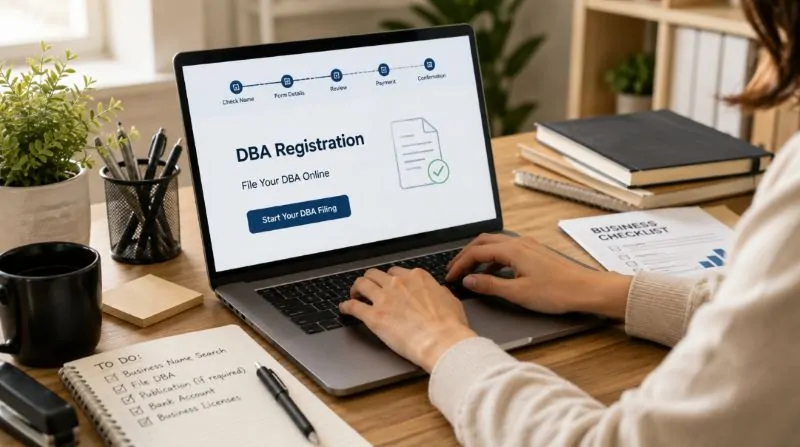
What Applying for a DBA Online Actually Involves
The process varies by state, but the steps follow the same general pattern nationwide.
First, start by searching your state’s business name database to confirm your chosen name isn’t already taken. You can do that with Secretary of State websites, as they have a free search too for this purpose.
Second, file your DBA registration. Depending on your state, you file at the county level, the state level, or both. Most states now offer online filing through their official portals. Filing fees range from $10 to $100 depending on where you’re registering.
Third, some states require publication. A handful of states, including California, New York, and Georgia, require you to publish a notice of your DBA in a local newspaper for a set number of weeks. Your county clerk’s office will tell you whether this applies to you.
Fourth, renew on schedule. A DBA registration isn’t permanent. Most states require renewal every one to five years. Missing the renewal deadline means your registration lapses, and you’re back to operating under an unregistered name.
Using an Online Filing Service
Filing directly through your state’s website works, but the process isn’t always straightforward. State portals differ, requirements aren’t always clearly explained, and a mistake in your filing can delay the whole thing.
Online filing services handle the search, paperwork, and submission for you. If you’re applying for a DBA online through a service, the main advantage is that someone else is responsible for knowing whether your state files at the county or state level, what the publication requirement is, and when your renewal comes due.
After Your DBA Is Approved
Once your registration is confirmed, take it to your bank. Most banks require your DBA certificate before they’ll open a business checking account under your trade name. You’ll also want to update any business licenses, contracts, or invoices that reference your operating name.
A DBA doesn’t create a new legal entity. Your LLC or sole proprietorship stays the same — you’re just adding a registered name to it.
And, if you need liability protection under your new brand name, you can talk to a business attorney about whether a separate LLC makes more sense for your situation.
The registration takes anywhere from a few days to a few weeks, depending on your state, and online filing speeds up the paperwork side. The rest will depend on how backed up your state or county office is.
About the Author