For three decades, major U.S. telegraph companies secretly supplied international message traffic to intelligence agencies, exposing the hidden power of public-private surveillance.

By Matthew A. McIntosh
Public Historian
Brewminate
Introduction: The Private Telegram That Wasn’t Entirely Private
For Americans who relied on international telegrams in the middle decades of the twentieth century, privacy was never absolute. A message necessarily passed through the hands and equipment of a communications company, and wartime conditions had demonstrated that the federal government could lawfully impose censorship and inspection when national survival appeared to require it. What customers could not readily have known was that an extraordinary wartime relationship between government and the communications industry did not simply disappear with victory in 1945. Instead, American signals-intelligence officials moved almost immediately to preserve access to international cable traffic, and the resulting arrangement developed into what became known as Project SHAMROCK. For approximately thirty years, major international telegraph companies (including RCA Global Communications, ITT World Communications, and Western Union International) secretly provided the U.S. intelligence establishment with access to streams of international telegram traffic moving through their systems. The government did not have to nationalize the companies, construct a parallel communications network, or visibly seize correspondence from individual senders. It could obtain information at the point through which the communications already had to pass. That deceptively simple arrangement made SHAMROCK more than another episode in the history of American signals intelligence: it exposed how privately controlled communications infrastructure could quietly acquire a second function as part of the state’s surveillance capacity.
The origins of the program lay in circumstances that made extraordinary access seem both useful and familiar. During World War II, censorship laws and emergency powers permitted government authorities to inspect international communications, while commercial carriers developed working relationships with military and intelligence personnel whose task was to find strategically significant information among an enormous volume of ordinary traffic. When the war ended, the institutional appetite for the intelligence did not end with it. Army cryptologic officials approached the principal international telegraph companies in 1945 seeking continued cooperation, initially with the stated object of obtaining foreign governmental and other foreign-intelligence communications rather than indiscriminately reading private American correspondence. Yet the mechanics of communications collection mattered. Separating only designated foreign messages at the company level risked exposing the operation to additional employees and made the process cumbersome, while transferring larger bodies of traffic allowed government personnel to perform the selection themselves. In time, the system evolved from paper tape and microfilm toward magnetic tape and electronic processing, greatly enlarging the practical ability of the National Security Agency and its predecessors to sort communications after acquisition. By the final years of SHAMROCK, according to the later Senate investigation, NSA analysts were reviewing roughly 150,000 telegrams a month, although that figure should not be confused with the much larger volume of communications to which the agency obtained access. The distinction between acquisition and reading is essential: SHAMROCK was not a system in which an analyst personally examined every message, but neither was it merely a collection of individually requested interceptions. It was an architecture of continuing access from which messages could be selected according to intelligence requirements that changed over time. That architecture became consequential when names of Americans appeared on government watch lists and communications involving them could be selected from broader NSA holdings.
What makes this history particularly difficult to reduce to a simple story of illegal spying is that questions about legality arose inside the arrangement itself. Section 605 of the Communications Act of 1934 restricted the interception and disclosure of communications, and executives of participating companies repeatedly sought assurances that their cooperation would not place them in legal jeopardy. Senior government officials responded with assurances grounded in national-security necessity and executive authority, while Secretary of Defense James Forrestal later explored legislation that might have given the practice firmer statutory protection. The failure to secure such legislation did not end the cooperation. Instead, the program continued within a sphere in which secrecy, executive approval, inherited practice, and Cold War necessity together performed much of the legitimating work that public legislation or judicial review ordinarily might have performed. This does not establish that every official who participated regarded SHAMROCK as unlawful; surviving records show competing understandings of executive foreign-intelligence power, statutory restrictions, and the constitutional rules applicable to international communications. It does establish something more historically revealing: serious legal uncertainty accompanied the program for years without forcing a public resolution of the underlying question. Because the arrangement remained highly compartmented, the ordinary institutions through which disputed governmental authority is tested had little opportunity to operate.
That situation changed dramatically in 1975, when the Senate Select Committee to Study Governmental Operations with Respect to Intelligence Activities began penetrating areas of the intelligence establishment that had previously received little sustained congressional examination. The committee chaired by Senator Frank Church eventually uncovered SHAMROCK and the related history of NSA watch-list activity, bringing into public view a collection system that had survived changing administrations, reorganizations of the intelligence community, technological transformation, and the creation of the NSA itself. The revelations were disturbing not simply because Americans’ communications had entered intelligence channels without individual warrants. They demonstrated that the surveillance power of the modern state could extend beyond what the government directly owned or visibly operated. A private company could collect information for one commercial purpose while simultaneously becoming the point through which government acquired that information for another. That distinction matters when considering the historical relevance of SHAMROCK to later surveillance controversies. International telegrams transmitted during the Cold War are not technologically, legally, or functionally equivalent to contemporary databases, digital communications platforms, or automated license-plate systems, and treating them as interchangeable would flatten important differences. The more durable comparison concerns institutional structure: whenever private infrastructure continuously creates information valuable to government, the terms under which government gains access to that information become part of the architecture of surveillance itself. SHAMROCK raises a question that survived the telegraph age: whether privacy can be adequately understood by asking who owns the system collecting the information, or whether democratic accountability must also ask who can routinely enter that system, what they can extract from it, and what prevents an exceptional access arrangement from becoming an ordinary feature of government power.
Before SHAMROCK: An Older American Precedent

Long before Project SHAMROCK, the telegraph had already created an unusual problem for American ideas about privacy. A sealed letter could travel through the postal system without a postal employee ordinarily needing to know its contents, but a telegram was different: its words had to be accepted, transmitted, relayed, reproduced, and delivered through systems operated by intermediaries. Telegraphic privacy depended less upon physical secrecy than upon institutional restraint, the expectation that employees and companies entrusted with a message would not disclose it merely because their work gave them access to it. This distinction became increasingly important as Western Union and other carriers developed communications networks that linked businesses, newspapers, banks, diplomats, families, and government agencies across the country and overseas. The same concentration that made telegraphy efficient also made its infrastructure exceptionally attractive to intelligence services. A government that gained cooperation at a major communications chokepoint could potentially observe information produced by thousands of people without approaching those people individually.
The first great American demonstration of that possibility came during World War I, when peacetime assumptions about private communications yielded to explicit wartime controls. After the United States entered the war in April 1917, President Woodrow Wilson issued Executive Order 2604, restricting the international transmission and delivery of messages over telegraph, telephone, and submarine cable lines except under rules established by the War and Navy Departments. The Trading with the Enemy Act later supplied broad statutory authority for censorship of communications passing between the United States and foreign countries when the president deemed such censorship necessary for public safety. A federal Censorship Board administered controls over mail, cable, radio, and other international communications, while military cryptologic organizations exploited the resulting access for intelligence purposes. Herbert O. Yardley’s MI-8, the Military Intelligence code and cipher section, benefited from the enormous volume of communications made available under wartime conditions. Copies of international cable traffic could be routed into the government’s cryptanalytic machinery, allowing analysts to search communications for diplomatic, military, and espionage value. There was nothing mysterious about the underlying constitutional transformation: Congress had declared war, emergency legislation had been enacted, presidential orders openly imposed censorship, and the communications companies operated under rules unmistakably associated with wartime authority. What became important later was not that wartime censorship existed, but that it taught intelligence officials how valuable routine access to commercial communications could be.
When wartime censorship receded, the appetite for communications intelligence did not. In 1919 the War and State Departments created a peacetime Cipher Bureau under Yardley, later famous as the American Black Chamber, to continue cryptanalytic work against foreign diplomatic communications. Its location in New York was itself revealing, because the city was not merely a financial and diplomatic center but also a hub for the cable companies handling international traffic. Yardley and his colleagues could break foreign codes only if they first obtained encrypted messages to attack, and commercial carriers possessed precisely the traffic the Bureau needed. An intelligence capability that had developed under wartime authority confronted a basic peacetime dilemma: the intelligence requirement remained while the extraordinary wartime mechanism for satisfying it had disappeared. The solution increasingly depended upon informal cooperation with private companies.
The Black Chamber consequently established a precedent that would resonate strongly in the later history of SHAMROCK. Yardley later described how Military Intelligence officials approached Newcomb Carlton, president of Western Union, and secured covert access to messages handled by the company; other cable interests also cooperated, although Yardley’s sweeping retrospective claims about the extent of industry participation require the caution appropriate to a memoir written by a gifted but self-dramatizing intelligence officer. Congressional investigations and subsequent cryptologic histories nevertheless confirm that Western Union and Postal Telegraph were among the companies that provided diplomatic cable traffic to the Bureau during the 1920s. The arrangement was powerful precisely because the government did not have to intercept each target at the point of transmission. Company facilities were already gathering the traffic, and the Bureau needed access to copies rather than an independent global collection network. Intelligence derived from this system could be extraordinarily consequential. During the Washington Naval Conference of 1921–1922, American cryptanalysts broke Japanese diplomatic communications revealing Tokyo’s negotiating instructions and limits concerning naval strength, giving American officials an informational advantage in negotiations over battleship and aircraft-carrier ratios. Yet the episode also exposed an enduring tension between the diplomatic value of communications intelligence and the means by which the raw communications had been obtained. The Black Chamber depended upon secrecy not only because cryptanalysis itself had to remain secret, but because the commercial cooperation supplying its traffic was not something the government wished to debate publicly. Private communications infrastructure had already become a hidden extension of intelligence collection.
The arrangement did not develop in a legal vacuum, and by the end of the 1920s the environment had become less accommodating. The Radio Act of 1927 strengthened restrictions surrounding the interception and divulgence of communications, creating problems for continued reliance on cooperative access to commercial traffic. The Black Chamber itself closed in 1929 after Secretary of State Henry L. Stimson withdrew State Department support and the Army ceased sustaining the operation at its previous level. Stimson’s opposition has often been remembered as a clash between gentlemanly diplomacy and espionage, but the institutional result mattered more than the famous moral language attached to it. American cryptanalysis survived; what disappeared was this particular peacetime mechanism for obtaining diplomatic traffic.
The legal boundary became considerably more important during the following decade. In Olmstead v. United States in 1928, the Supreme Court had held that telephone wiretapping conducted without physical intrusion into constitutionally protected premises did not violate the Fourth Amendment, leaving technological surveillance poorly fitted to a constitutional doctrine still strongly tied to property and physical trespass. Congress subsequently enacted Section 605 of the Communications Act of 1934, which restricted both carrier employees’ disclosure of communications and unauthorized interception and divulgence. The Supreme Court gave those restrictions real force in Nardone v. United States in 1937, holding that the statutory prohibition applied to federal officers and prevented the government from introducing intercepted telephone conversations in a federal criminal prosecution. A second Nardone decision in 1939 extended the problem to evidence derived from unlawful interceptions rather than allowing government simply to exploit the fruits of an illegal tap indirectly. In Goldstein v. United States in 1942, the Court described Section 605 as embodying a broader public policy against unauthorized intrusions into private intercourse conducted through modern communications media, expressly encompassing telephone, telegraph, and radio. These cases did not settle every question involving presidential authority, foreign intelligence, or international communications, but they made it much harder to maintain that government access to communications carried by private companies existed outside statutory privacy protections. By the time World War II again produced extraordinary demands for communications intelligence, federal officials were operating in a world in which the strategic attractiveness of carrier cooperation was already well known and its peacetime legality had become considerably more troublesome.
SHAMROCK should consequently be understood not as the moment when American intelligence first discovered the usefulness of private communications companies, but as the revival and enormous institutional expansion of an older method. World War I had demonstrated how comprehensively government could exploit cable traffic when emergency authority placed communications under censorship. Yardley’s Black Chamber then demonstrated that secret cooperation with commercial carriers could preserve valuable access even after formal wartime controls disappeared. The interwar legal developments also established the contradiction that would trouble the later SHAMROCK relationship: the most efficient place to acquire communications intelligence was often inside privately operated networks whose customers had legal and practical reasons to expect confidentiality. When another world war reopened those networks to government scrutiny, intelligence officials inherited more than a technical opportunity. They inherited a historical lesson that access once obtained could be extraordinarily difficult for the intelligence state to surrender.
Censorship in Wartime: When the Government Could Read the Cables
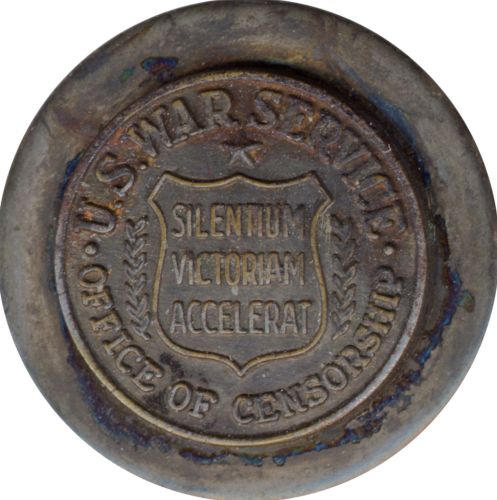
The Japanese attack on Pearl Harbor did not create American plans for communications censorship, but it transformed contingency planning into an operating system almost overnight. During 1940 and 1941, as war engulfed Europe and the Roosevelt administration prepared for the possibility of American entry, the Army and Navy had already been developing procedures for controlling international communications in an emergency. On December 8, 1941, military authorities began imposing temporary restrictions on telephone and telegraph circuits crossing American borders. Congress then enacted the First War Powers Act on December 18, explicitly authorizing the president, when public safety demanded it during the war, to censor communications passing between the United States and foreign countries by mail, cable, radio, or other means. Franklin D. Roosevelt followed on December 19 with Executive Order 8985, establishing the Office of Censorship and granting its director sweeping authority over international communications. The significance for the later history of SHAMROCK was fundamental: for the duration of the war, government access to international cable traffic operated within a publicly established emergency regime whose legal foundation was tied directly to the existence of war.
Roosevelt appointed Associated Press executive Byron Price as Director of Censorship, placing a civilian journalist at the head of an organization empowered to intrude deeply into private communications. Price understood the contradiction. He later acknowledged that censorship in a democratic society necessarily invaded privacy and interfered with freedoms that government ordinarily claimed to protect, which was why he insisted that such powers could be justified only by wartime necessity. His office distinguished between voluntary censorship of newspapers and broadcasters and compulsory censorship of international private communications. The distinction mattered enormously. American editors were generally asked to withhold militarily useful information under a voluntary code, whereas international letters and telecommunications passed through systems in which government examiners possessed direct authority to inspect, delay, suppress, or report communications. The Office of Censorship eventually employed thousands of personnel at stations positioned around the principal gateways through which international communications moved. Cable censorship became one component of a much larger apparatus that also examined overseas mail and monitored radiotelegraph and radiotelephone traffic. What was exceptional was not simply that government occasionally intercepted a suspicious telegram; wartime authority allowed inspection to occur systematically because international transmission itself brought a communication within the censorship regime.
For the intelligence services, censorship did much more than prevent dangerous information from reaching an enemy. It created an enormous stream of material from which information could be extracted. Censors were trained not only to stop disclosures concerning military movements, installations, production, shipping, or other protected subjects but also to recognize information that might possess affirmative intelligence value and forward it to the appropriate government agencies. The distinction between censorship and intelligence collection consequently became porous: an apparatus ostensibly designed to prevent information from leaving or entering the country simultaneously became a mechanism for discovering what people, businesses, foreign officials, and enemy agents were saying. Wartime censorship demonstrated on a massive scale that access to communications infrastructure could be valuable even when only a fraction of the material passing through it ultimately interested an intelligence analyst.
The relationship between censorship and cryptanalysis made the importance of cable access still clearer. American codebreakers required intercepted traffic in quantity because cryptanalysis depended upon acquiring enough messages to identify patterns, exploit mistakes, reconstruct communications systems, and locate material worthy of deeper study. During the war, the Signal Intelligence Service and other American cryptologic organizations could draw upon commercial traffic obtained through censorship arrangements and through cooperation at communications facilities, supplementing material intercepted from radio transmissions. Major communications companies were already accustomed to dealing with government authorities under conditions in which the legitimacy of wartime access was not seriously in doubt. RCA, Western Union, AT&T, and other communications interests operated within an environment where national-security requirements could override ordinary expectations of confidentiality, and company facilities could become collection points without ceasing to be privately owned businesses. The resulting intelligence could be extraordinarily valuable because diplomatic and commercial cable systems carried communications that exposed foreign intentions, economic relationships, espionage activity, and political conditions inaccessible by other means. One of the most consequential wartime cryptanalytic undertakings, the project later known as VENONA, began in 1943 with the collection and examination of Soviet diplomatic traffic, illustrating the long-term intelligence value that could emerge from communications accumulated during wartime. The government did not have to know in advance which individual message would prove important; the strategic advantage arose from having enough traffic available to search for significance after collection. In this sense, wartime cable censorship taught an institutional lesson that extended beyond any particular code or target: broad access generated possibilities that narrowly targeted interception could not.
Yet the breadth of censorship should not obscure the fact that it remained conceptually bounded by the war. Price repeatedly presented the Office of Censorship as an extraordinary institution whose authority could survive politically only so long as Americans believed it necessary for victory. Its formal jurisdiction concentrated on communications crossing international or territorial boundaries rather than creating an unrestricted system for reading ordinary domestic correspondence. Even within government, disputes arose over attempts to stretch censorship beyond clearly authorized categories, demonstrating that wartime necessity did not erase every jurisdictional boundary. Most important, the institution prepared for its own termination rather than openly claiming that national-security usefulness entitled it to permanent existence. After Japan’s surrender, compulsory wartime censorship rapidly wound down, and Executive Order 9631 formally abolished the Office of Censorship effective November 15, 1945.
That termination created the problem from which SHAMROCK emerged. During the war, intelligence organizations had learned that the major communications carriers offered something extraordinarily difficult to reproduce independently: access to concentrated streams of international traffic at the places where those messages naturally passed. Government cryptologists had also developed procedures, technical capabilities, and working relationships that made such access operationally useful. Victory removed the legal framework that had normalized compulsory censorship, but it did not make foreign governments less interesting to American intelligence officials, nor did it erase the rapidly developing anxieties that accompanied the collapse of the wartime alliance with the Soviet Union. The Office of Censorship could disappear while the intelligence value of what it had made available remained obvious. That distinction is central to understanding what happened in 1945. SHAMROCK did not begin because officials suddenly invented the idea of obtaining communications from private carriers after the war; it began because an access relationship that had been legitimate under exceptional wartime authority had become too valuable for intelligence officials to abandon when the exception ended. The decisive historical transformation was not from no surveillance to surveillance, but from openly authorized wartime access to a secret peacetime arrangement whose legal foundations were far less secure.
The War Ends but the Access Remains: August 1945 and the Birth of SHAMROCK
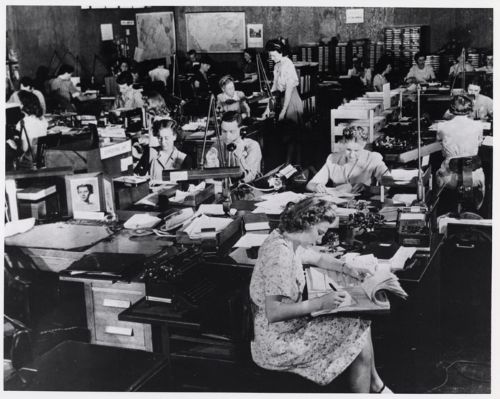
The birth of Project SHAMROCK occurred in the narrow interval between war and peace, which makes its chronology more revealing than a simple claim that wartime censorship ended and peacetime surveillance began. Japan announced its acceptance of the Allied surrender terms on August 14, 1945, but the formal instrument of surrender would not be signed until September 2, and the Office of Censorship itself would survive until November. Nevertheless, only four days after the surrender announcement, on August 18, two representatives of the Army Signal Security Agency were sent to New York to preserve a portion of the communications access military intelligence had enjoyed during the war. Their instructions were to contact the leaders of the major commercial communications companies and obtain approval for intercepting foreign governmental traffic entering, leaving, or merely passing through the United States. They were also to arrange the practical means for photographing that traffic. The mission began before the wartime system had been fully dismantled, as an attempt to ensure that useful intelligence access would survive the legal and administrative transition already underway. SHAMROCK was born not after a clean break with emergency censorship, but inside the seam between an expiring wartime authority and an emerging peacetime intelligence state.
The companies did not initially respond as though the Army’s request were routine. An ITT official first rejected the proposal emphatically, while a Western Union vice president agreed to cooperate only if the Attorney General did not find the interception illegal. When Army representatives returned to ITT on August 21, they pointedly suggested that the company might not wish to stand alone as the only carrier refusing cooperation; ITT’s president then agreed conditionally, provided the Attorney General concluded that the arrangement was not illegal. RCA’s president expressed willingness the same day but likewise withheld final approval pending the government’s legal assurance.
Those reservations were more than corporate nervousness after a confusing war. Army memoranda later examined by the Church Committee recorded that company executives feared the proposed arrangement might violate Federal Communications Commission regulations and doubted that favorable opinions already obtained from the Army and Navy judge advocates general would necessarily protect them in a civil court. They also worried that employees belonging to the communications union might discover the arrangement, report it, and expose the companies to legal or public repercussions. Later Army records indicated that corporate attorneys consulted during the August discussions uniformly advised against participation. That advice did not end the project, but it establishes that the legal problem was visible at the moment of creation rather than discovered years afterward. More strikingly, the documentary record eventually recovered by congressional investigators did not establish that Attorney General Tom C. Clark ever supplied the specific assurance the companies had requested before collection began. ITT and Western Union were participating by September 1, and RCA followed by October 9. The machinery started moving while the legal assurance on which corporate consent ostensibly depended remained, at least in the surviving record, unresolved. Operational necessity had advanced faster than legal clarification, establishing a pattern that would shadow SHAMROCK for decades.
The Army’s stated objective was narrower than the collection system that soon developed. Its representatives had sought foreign governmental communications, the kind of traffic that could yield diplomatic or military intelligence, rather than a general archive of private American telegrams. But identifying only desired messages at the carrier level created a secrecy problem because company employees would have to know which circuits, destinations, or categories of traffic interested the government. At RCA, later testimony described proposals to tap selected overseas lines or have company employees separate pertinent communications, but both approaches proved impractical or threatened to expose too much about the operation. The solution was to give Army personnel access to a larger traffic stream and allow government personnel to perform the selection themselves.
That operational choice altered the character of the arrangement. RCA ultimately provided paper tapes containing its international message traffic so that Army personnel could sort the material manually on company premises, with messages judged pertinent then forwarded into military intelligence channels. The proposed ITT arrangement was broader still: incoming, outgoing, and transiting international traffic could be recorded, including private as well as governmental communications, with the government subsequently identifying what it wanted. Western Union adopted a more restrictive method, insisting that its employees operate the microfilm equipment and handle the messages themselves, and its actual turnover remained considerably more selective than that of RCA or ITT. Yet even Western Union contemplated implementation at facilities in New York, Washington, San Francisco, and San Antonio, demonstrating that the envisioned system was not confined to a single New York office. At RCA facilities, Army personnel could appear in civilian clothes rather than as conspicuous military censors, while company space and communications equipment became part of the collection process. Couriers could remove tapes or film without the construction of a separate government interception station. The government did not need to nationalize the telegraph companies, nor did it need to recreate commercially operated networks that already reached around the world. Intelligence personnel instead attached themselves to infrastructure through which the desired information naturally flowed. What had begun as a request for particular foreign-government messages produced something institutionally more powerful: recurring access at the communications chokepoint itself.
The distinction between SHAMROCK and wartime censorship consequently concerned authority as much as technique. During the war, compulsory censorship had possessed an explicit public legal foundation in emergency legislation and presidential action, even though the details of intelligence exploitation remained secret. The emerging postwar arrangement was intended to preserve access after that exceptional structure disappeared, but through confidential cooperation between private carriers and military intelligence rather than a comparably public peacetime statute. That distinction does not by itself settle the constitutional or statutory legality of every foreign-intelligence interception, questions that remained contested for decades. It does show how a capability created under extraordinary authority could survive the disappearance of the legal circumstances that had originally made broad access relatively straightforward.
The historical importance of August 1945 lies in more than establishing a starting date for a program that would persist until 1975. The Army acted quickly because wartime experience had demonstrated the intelligence value of concentrated international commercial traffic and losing that access would have forced cryptologic organizations to obtain the same kinds of communications by more difficult means. The worsening relationship with the Soviet Union would soon make foreign communications intelligence still more valuable, although the Army’s original request was framed broadly around foreign-government traffic rather than a single emerging adversary. When the Signal Security Agency became the Army Security Agency later in 1945, the collection relationship survived the organizational change; it would subsequently pass to the Armed Forces Security Agency and eventually to the National Security Agency. Those later institutions inherited rather than invented SHAMROCK’s underlying logic. The pivotal decision had already been made as World War II ended: intelligence access justified and cultivated during an emergency should not simply disappear because the emergency was passing. Once the companies cooperated and collection became routine, the burden of decision quietly reversed. Officials no longer had to decide repeatedly whether to create access; someone would instead have to decide affirmatively to surrender an intelligence source that the government already possessed. That transformation from temporary wartime privilege into inherited peacetime capability was the real birth of SHAMROCK.
Three Companies, One Secret Pipeline: How Corporate Cooperation Made SHAMROCK Possible

SHAMROCK depended upon a feature of the American communications system that was at once commercial and strategic: international telegraph traffic was highly concentrated in the facilities of a very small number of private carriers. RCA Communications, later RCA Global Communications; ITT Communications, later ITT World Communications; and Western Union, whose overseas operations became Western Union International in 1963, occupied commanding positions at the gateways through which American international telegrams moved. By the early 1970s, the three international carriers together handled approximately 94 percent of international telegraph messages entering or leaving the United States, while RCA and ITT alone accounted for roughly 70 percent of international non-oral telecommunications. Their importance to intelligence collection did not arise because they had been created for surveillance. It arose because ordinary commercial communications naturally converged inside systems they already operated. An intelligence agency seeking access to international telegrams could attempt to intercept communications independently at numerous transmission points, or it could obtain them from the companies through whose facilities the traffic was already concentrated. SHAMROCK chose the latter method, converting commercial centralization into an intelligence advantage that the government could never have replicated as cheaply or unobtrusively on its own.
RCA provided the most expansive form of access. Army records from 1945 initially contemplated having civilian-clothed government personnel photograph selected foreign traffic at RCA facilities in New York, Washington, and San Francisco, but the practical difficulty of isolating desired messages without revealing the operation encouraged a broader solution. Sidney Sparks, the RCA executive later responsible for implementing the arrangement, recalled that schemes involving taps on particular overseas lines or segregation of selected tapes would have required too many employees to understand what the government was doing. RCA instead made its perforated message tapes available so that government personnel could perform the selection themselves. Whatever the nominal emphasis on foreign governmental communications, this method exposed a much wider stream that included the private traffic carried over the same facilities.
ITT’s cooperation followed the same basic logic but developed through its own corporate network. The company agreed that international messages moving through participating subsidiaries could be recorded on microfilm and made available to Army signals intelligence, encompassing incoming, outgoing, and transit traffic rather than only messages originating with foreign governments. Private communications consequently traveled through the same collection process as diplomatic or official traffic. As SHAMROCK continued, ITT and RCA remained the two carriers whose participation most closely approximated comprehensive access: the Church Committee concluded that both companies made virtually all of their international message traffic available throughout most of the program’s thirty-year existence. What changed was principally the medium in which that traffic was supplied. Paper and microfilm systems gradually gave way to magnetic tape as the telecommunications industry computerized its operations, allowing intelligence processing to become correspondingly more automated. The companies did not have to identify an American sender as suspicious before the message entered the intelligence stream. They furnished the stream from which government systems could make subsequent selections. That sequence (commercial collection first, governmental filtering later) was one of SHAMROCK’s most consequential characteristics because it transferred the act of deciding what was relevant from the carrier to the intelligence agency.
Western Union’s participation was materially different, which is why descriptions of the three companies as collectively handing over every international telegram can be misleading. From the program’s beginning, Western Union insisted that its own employees retain physical control over the messages being copied rather than permitting government personnel the same direct access available elsewhere. Initially, only traffic associated with a particular foreign country was provided; at a later point the category broadened to include foreign governmental telegrams. After Western Union’s international operations were transferred in 1963 to the newly created Western Union International, the more limited relationship continued. The Church Committee found that a government Recordak copying machine discovered by company officials in 1968 had been duplicating traffic beyond what some executives understood, and another discovery eventually led to the cessation of the remaining arrangement in 1972. Western Union International left SHAMROCK several years before RCA and ITT, whose cooperation continued until the program itself was terminated in 1975. The differences matter because SHAMROCK was not governed by a single standardized contract imposed uniformly upon the telecommunications industry; it was a set of secret relationships whose practical operation reflected what each carrier was willing to permit.
The informality of those relationships was extraordinary considering how long they lasted. When Church Committee investigator L. Britt Snider attempted three decades later to reconstruct the arrangements, neither the government nor the companies could produce a conventional agreement with the Army Security Agency, Armed Forces Security Agency, or NSA spelling out the respective obligations of the parties. Corporate witnesses and NSA officials also denied that the carriers had received payment, regulatory favors, or other compensation for participating in SHAMROCK. They characterized the cooperation instead as patriotic assistance to the government, an explanation that fits the program’s origins at the end of a war in which private communications companies had worked intimately with national-security authorities. Yet patriotism did not eliminate apprehension. An Army memorandum written little more than a year after the initial negotiations recorded that the companies, worried about the legality of their conduct, had restricted knowledge of the operation to only two or three people within each corporation. Compartmentation existed on both sides of the relationship. Ordinary employees might transmit, record, copy, or handle communications without knowing that particular equipment, procedures, or senior executives connected portions of the company’s traffic to an intelligence operation. Even senior executives possessed uneven knowledge: Sparks later believed RCA’s arrangement had begun in 1947 and that he had been central to establishing it, although documents discovered in 1976 demonstrated that his superiors had authorized cooperation in 1945. Secrecy did more than protect SHAMROCK from foreign targets. It fragmented institutional memory so thoroughly that people inside the participating corporations could know the mechanics of one portion of the operation without understanding either its origins or its full governmental use.
The absence of payment also illuminates what kind of public-private relationship SHAMROCK represented. These were not ordinary contractors selling surveillance services to the federal government, nor were they formally deputized government agencies. They remained regulated communications businesses serving customers who had no contractual relationship with the intelligence community, while a tiny number of executives permitted government access because senior officials asserted that national security required it. That arrangement allowed the government to acquire the benefit of privately financed infrastructure without formally taking control of the infrastructure itself. Corporate ownership became a poor measure of actual surveillance capacity: the network could remain private while part of the information flowing through it became regularly available to the state.
This arrangement also explains why the telegraph companies were not merely incidental helpers in SHAMROCK. NSA and its predecessors supplied the intelligence requirements and ultimately analyzed the material, but without the carriers there would have been no comparably efficient pipeline delivering such a broad body of international commercial communications. The companies possessed the switching facilities, message records, transmission systems, and technical personnel that made collection practical, while their concentration in a few large firms reduced the number of corporate relationships the government needed to maintain. Corporate cooperation changed the economics and visibility of surveillance. Instead of deploying government collectors against thousands of individual communicators, intelligence officials could work upstream at the intermediaries through which those communicators necessarily passed. Differences among RCA, ITT, and Western Union demonstrate that private cooperation could influence how expansive government access became: the companies were not mechanically powerless once intelligence officials approached them, and Western Union’s more restrictive procedures show that narrower forms of participation were possible. That makes corporate responsibility an unavoidable part of SHAMROCK’s history. The program survived not simply because intelligence agencies wanted the messages, but because private institutions repeatedly continued supplying access to them.
What emerged was consequently neither a wholly governmental surveillance system nor an intelligence program outsourced in any conventional commercial sense. It was a hybrid architecture in which privately owned networks performed their ordinary business function while simultaneously furnishing an information source to secret government users. Customers paid the companies to transmit telegrams; the very process of fulfilling that service created records that intelligence agencies could exploit. The government’s surveillance power expanded without an equivalent expansion in government-owned surveillance infrastructure. This is one reason SHAMROCK became so durable once established: the most expensive communications network already existed, its customers continuously replenished the traffic, and only a small number of corporate insiders needed to sustain the government’s access. Such an arrangement also obscured accountability because responsibility could be divided conceptually between the party possessing the communications and the party exploiting them. Yet that division did not make either role dispensable. SHAMROCK functioned for decades because private communications infrastructure and government intelligence requirements had been joined into a single operational pipeline, even though almost everyone using that infrastructure remained unaware that the pipeline existed.
“Not Illegal”: The Companies Ask Washington to Protect Them

From the beginning, the corporate participants in SHAMROCK understood that patriotic cooperation with military intelligence did not automatically make their conduct lawful. Section 605 of the Communications Act of 1934 restricted communications carriers and their employees from divulging the existence or contents of interstate and foreign communications except under specified circumstances, creating an obvious problem once wartime censorship authority began disappearing. During the August 1945 negotiations, Western Union, RCA, and ITT executives sought assurances before committing themselves fully to continued peacetime cooperation. Army memoranda later examined by congressional investigators showed that corporate lawyers advised against participation and that company officials feared possible prosecution, civil liability, and damaging exposure if employees or outsiders discovered the arrangement. Their concern arose before SHAMROCK acquired the protective aura of long-established bureaucratic practice. At the program’s creation, the people responsible for the communications networks themselves already recognized that the legal position was uncertain.
Those anxieties did not disappear after collection began. By 1946, Army officials recorded that knowledge of the operation had been restricted to only two or three people within each participating company because executives remained concerned about legality and disclosure. Such compartmentation protected the intelligence relationship from discovery while also preventing most employees from knowing enough to challenge it. Secrecy was becoming not merely an operational precaution but one of the conditions under which the arrangement could survive.
The companies eventually demanded stronger protection from the highest levels of the Truman administration. In December 1947, Secretary of Defense James Forrestal met with representatives of RCA and ITT and conveyed assurances that the collection was considered essential to national security and had presidential backing; Western Union was subsequently given equivalent assurances. Forrestal told the companies, in substance, that they would not be subjected to federal prosecution for cooperating with the government and that officials would attempt to prevent public exposure of the arrangement. Yet he also acknowledged a limitation that went to the heart of the problem: he could not guarantee what a future administration or future officials might do. His assurance could protect the companies politically while Truman remained in office, but it could not rewrite the Communications Act or create permanent statutory immunity. That distinction soon produced an even more revealing development. In 1948 Forrestal approached congressional leaders about amending Section 605 so that cooperation of this kind could rest on firmer legal ground. Draft language was considered, but no legislation emerged. The effort does not prove that Forrestal or other officials believed SHAMROCK unquestionably criminal, since administrations often seek legislation to clarify powers they believe they already possess. It does show that presidential approval and national-security necessity were understood to be different things from explicit congressional authorization. The government tried to resolve the statutory vulnerability and failed, yet the collection continued anyway.
When Forrestal left office in 1949, the companies again sought reassurance, demonstrating how little permanence the earlier promise actually possessed. Secretary of Defense Louis A. Johnson informed them that President Truman and Attorney General Tom C. Clark approved the continuing arrangement and again assured the carriers that they would not be prosecuted for assisting the government. After that point, surviving records do not show the companies repeatedly demanding comparable formal assurances each time administrations changed. The absence of renewed challenges should not be mistaken for a definitive legal settlement. More plausibly, the operation’s longevity itself had begun to normalize conduct that had initially seemed exceptional enough to require protection.
That normalization was one of SHAMROCK’s most important institutional achievements. RCA, ITT, and Western Union had entered the arrangement knowing that their own lawyers and executives saw serious legal risk, yet they continued after receiving executive assurances that were powerful politically but incapable of substituting for legislation or judicial judgment. Government officials, meanwhile, recognized the vulnerability strongly enough to contemplate changing federal law but not strongly enough to terminate the collection when Congress failed to provide the desired statutory protection. The relationship settled into an ambiguous space where national-security claims, presidential approval, secrecy, and bureaucratic inheritance collectively supplied the practical legitimacy that public law had not clearly supplied. That ambiguity mattered because secrecy prevented the unresolved question from reaching institutions capable of answering it. Customers could not sue over a program they did not know existed; courts could not evaluate a practice never placed before them; legislators could not meaningfully oversee an arrangement concealed from most of Congress. Even many employees of the participating companies knew too little to raise objections internally. What had begun as a controversial exception hardened into routine simply because successive officials encountered it as an established fact. SHAMROCK illustrates a recurring danger in secret government: disputed authority can acquire the appearance of settled authority when the dispute itself is kept from public institutions long enough.
From Army Intelligence to the NSA: How an Emergency Arrangement Became an Institution

SHAMROCK’s durability cannot be understood without following the organizations that inherited it. On September 15, 1945, barely a month after Army cryptologic officers had approached the international telegraph companies, the Signal Security Agency was redesignated the Army Security Agency. The new ASA inherited a wartime cryptologic apparatus that was simultaneously contracting from wartime mobilization and adapting to a rapidly changing strategic environment. Demobilization reduced personnel and facilities, but it did not eliminate the perceived need for communications intelligence. Soviet intentions were increasingly uncertain, political instability spread across postwar Europe, and American officials were discovering that the alliance that had defeated Germany and Japan was giving way to a new geopolitical confrontation. SHAMROCK fitted easily into that environment because it did not require construction of an entirely new collection system. The commercial carriers were already cooperating, the mechanisms for obtaining international traffic already existed, and the intelligence value of that traffic had been demonstrated during the war. The Army Security Agency encountered the arrangement not as a hypothetical surveillance authority requiring fresh creation, but as an operational source already in being. That difference would prove consequential: bureaucracies tend to scrutinize new capabilities more explicitly than capabilities presented to them as inherited necessities.
Yet the ASA remained an Army organization, and American signals intelligence after World War II was fragmented among competing military services. The Navy maintained its own cryptologic structure, while the newly independent Air Force developed a separate security service after 1947. Each service had institutional interests, collection requirements, analytic specialties, and claims upon resources. Wartime cooperation had demonstrated the advantages of coordination, but postwar arrangements did not immediately produce a genuinely unified national communications-intelligence system. The problem facing policymakers was larger than SHAMROCK: the United States possessed increasingly global intelligence responsibilities without a single organization capable of directing cryptologic activity across the government.
The first major effort to solve that problem came in 1949. Secretary of Defense Louis Johnson established the Armed Forces Security Agency on May 20, intending to consolidate communications intelligence and communications security activities that had previously remained divided among the services. AFSA represented an important conceptual shift because cryptologic intelligence was increasingly being treated as a national resource rather than merely an adjunct of individual military branches. SHAMROCK passed from the Army Security Agency into this new organization with the rest of the relevant communications-intelligence responsibilities. Congressional investigators later summarized the succession succinctly: ASA had first exercised operational responsibility, AFSA inherited the program upon its creation, and NSA would inherit it again in 1952. What appears to have been absent at each transfer is just as significant as what was present. There was no new public statute establishing SHAMROCK, no judicial proceeding examining its legality, and no fundamental reconsideration of whether the commercial arrangements fashioned in 1945 should survive under the authority of a newly created organization. Organizational responsibility changed while the collection relationship continued. In bureaucratic terms, SHAMROCK was becoming portable: it could survive the institution that had created it because its perceived intelligence value had become detached from its original administrative home.
AFSA itself soon proved inadequate to the ambitions policymakers had placed upon it. The military services continued to resist central direction, disputes over responsibilities persisted, and the agency lacked sufficient authority to impose genuine unity upon the American cryptologic system. In 1952 a committee chaired by New York attorney George A. Brownell examined the problem and recommended a stronger organization with genuinely national responsibilities. President Harry Truman responded in October with a secret directive establishing the National Security Agency, which formally came into existence on November 4, 1952. The change was more than another alteration of initials. NSA was intended to coordinate communications intelligence on behalf of national policymakers as well as the armed services, reflecting the growing importance of signals intelligence to Cold War diplomacy and security.
SHAMROCK moved into the NSA along with AFSA’s other functions, and here the evolution from inherited arrangement to entrenched institution becomes particularly visible. The presidential directive creating NSA did not publicly debate or separately authorize SHAMROCK; operational control simply followed the larger transfer of communications-intelligence responsibilities. Within the agency, responsibility for the program eventually became extraordinarily concentrated. Louis Tordella, who served as NSA deputy director from 1958 until 1974 and exercised senior administrative responsibility over SHAMROCK, later recalled that only one lower-level manager reporting directly to him handled the operation on a continuing basis. The first man in that role reportedly began in 1952 and remained responsible until his retirement in 1970, when another employee succeeded him. Tordella’s recollection of the program was striking precisely because it lacked drama: years could pass without SHAMROCK demanding his attention because, as he remembered it, the operation simply continued. That bureaucratic quiet is one of the most revealing facts in its history. A program capable of delivering immense quantities of private communications did not necessarily require repeated high-level decisions once its procedures had stabilized. The carriers supplied the material, designated personnel handled the relationship, analysts exploited useful traffic, and senior officials could treat the arrangement as part of the agency’s inherited operating environment. The legal anxieties that had caused executives to seek Forrestal’s and Johnson’s assurances in the late 1940s consequently did not translate into periodic reconsideration at the highest levels. Tordella later testified that, to his knowledge, presidents after Truman did not know about SHAMROCK and that he was uncertain whether later attorneys general or secretaries of defense had been informed. If his recollection was accurate, continuity no longer depended upon continuous presidential approval. Institutional routine had begun doing the work once performed by explicit reassurance.
This transformation helps explain how an arrangement created during the unsettled final weeks of World War II could persist for approximately thirty years. SHAMROCK survived the Signal Security Agency, the Army Security Agency’s period of operational control, the creation and failure of AFSA, and the establishment of NSA because each organizational transition treated access as an existing intelligence asset rather than a new claim of governmental power. Nothing about bureaucratic inheritance necessarily makes an activity improper; continuity is indispensable to any intelligence service that must operate across administrations and organizational reorganizations. The danger appears when continuity itself begins substituting for reconsideration. By the 1950s, the crucial question was no longer whether the government should ask private telegraph companies to open their systems to intelligence collection, because that decision had already been made years earlier by officials confronting an entirely different historical moment. The practical question had become whether anyone possessed both the knowledge and institutional incentive to reverse an arrangement that was secret, productive, inexpensive, and already functioning. Few did. SHAMROCK demonstrates how emergency-derived powers can become durable without a deliberate decision to make them permanent: institutional succession can transform yesterday’s exception into today’s procedure, and procedure into something that eventually seems less like a policy choice than part of the organization itself.
From Microfilm to Magnetic Tape: Automating the Telegraph Dragnet

For much of SHAMROCK’s early history, the physical form of the telegram imposed limits on what intelligence officers could do with the immense stream of communications they were receiving. From NSA’s creation in 1952 until the early 1960s, microfilm and punched paper tapes supplied by the participating carriers were transported to Fort Meade several times each week. Some material had already undergone preliminary sorting by company employees or government personnel, but substantial quantities still reached NSA for additional screening. One former official remembered the agency receiving what seemed like miles of punched tape, an image that captures both the scale of the collection and the practical burden of exploiting it. Paper tape could encode messages for rapid telecommunications transmission, but once accumulated in bulk it still required cumbersome handling and comparatively labor-intensive selection. Microfilm similarly allowed enormous numbers of communications to be copied compactly without making their contents easily searchable. The government possessed access to far more material than analysts could realistically examine message by message. In SHAMROCK’s first phase, acquisition had already become broad, but human labor and physical media continued to constrain what could be extracted from what had been acquired.
Those limitations affected the kinds of searches that could practically be performed. Church Committee witnesses later explained that the sheer volume of material made routine selection based upon reading the substantive content of every message essentially impossible. Traffic could be narrowed through known targets and other selection criteria, after which potentially significant messages went to analysts for closer examination. The distinction was fundamental: possession of a telegram and intelligence exploitation of that telegram were not the same act. SHAMROCK had created a large collection stream, but the machinery for interrogating that stream remained relatively crude.
That changed dramatically when commercial telecommunications technology itself changed. RCA Global began moving its message storage to magnetic tape in the early 1960s, and NSA learned of the transition in early 1963. By 1964 the agency could electronically sort information supplied by RCA against predetermined selection criteria rather than depending primarily upon manual examination of physical records. From 1964 through 1966, RCA’s magnetic tapes were taken from New York to Fort Meade each day, copied or processed, and returned to the company the same day. ITT World Communications began its own conversion to magnetic tape by 1965 and likewise started supplying traffic to NSA in machine-readable form. The technological transition was not uniform: Western Union International never used magnetic tape for its SHAMROCK contribution and continued supplying more limited traffic through older methods until its participation effectively ended in 1972. What mattered about RCA and ITT was not simply that magnetic tape was smaller or more convenient than reels of paper. Machine-readable traffic could be compared automatically against selectors before a human analyst ever saw the underlying telegram. A bottleneck that had previously rested heavily in human sorting could now be displaced into electronic processing. SHAMROCK had not suddenly become broad because computers arrived; the acquisition had already been broad. What automation transformed was the government’s ability to make use of that breadth.
The new system created an unexpectedly mundane logistical difficulty: the communications companies needed their magnetic tapes back. Between 1964 and 1966, NSA conducted daily round trips between New York and Fort Meade to borrow RCA tapes and return them quickly enough that the company’s operations were not disrupted. In 1966 Deputy Director Louis Tordella sought CIA assistance in establishing a secure New York location where the tapes could be duplicated before the originals were returned. The CIA rented lower Manhattan office space under the cover of a television tape-processing business, an arrangement it designated LPMEDLEY. There, the commercial tapes could be copied without the daily journey to Maryland. The CIA maintained the cover arrangement until 1973, when its general counsel became concerned about even this limited CIA involvement in a domestic operation. NSA then obtained its own Manhattan space and continued duplicating the tapes there until SHAMROCK ended in 1975.
The consequences of electronic sorting went well beyond administrative convenience. Once communications existed as machine-readable data, NSA could test large quantities of traffic against selection criteria rapidly enough that names and identifying information on government watch lists became practically useful as systematic filters. The Church Committee specifically emphasized the importance of this change because by 1964 telegrams associated with people whose names appeared on NSA watch lists could be selected electronically for subsequent analyst processing. Later watch-list practices, culminating in the formal MINARET system established in 1969, would make the implications for Americans increasingly serious, although SHAMROCK and MINARET remained distinct operations and should not be collapsed into one program. SHAMROCK supplied a broad communications source; watch lists helped determine what should be pulled from sources available to NSA. Automation strengthened the connection between those two stages. A name that might once have been difficult to locate reliably within mountains of microfilm and paper tape could become a selector tested against a much larger body of incoming traffic. By SHAMROCK’s final years, the Senate investigation estimated that approximately 150,000 telegrams each month were being reviewed by NSA analysts. That figure was extraordinary, but it must be interpreted carefully. It did not mean that analysts personally read every international telegram carried by the participating companies, nor that every telegram accessible to NSA was selected for intelligence use. RCA and ITT gave the agency access to vastly more traffic than analysts ultimately reviewed. The importance of automation was precisely that the government no longer had to read everything in order to determine which communications it wanted to examine more closely.
The transformation from microfilm to magnetic tape consequently marked a change in the nature of SHAMROCK even though its underlying corporate relationships remained intact. During the earlier period, physical volume placed a powerful practical limit between broad collection and detailed analysis. Electronic processing reduced that barrier by allowing selection to occur across an acquired body of communications before scarce analyst attention was committed to individual messages. The significance lies less in the specific computing technology, primitive by later standards, than in the change of sequence it permitted. Government could first obtain an extensive communications stream, then allow machines to determine which portions deserved human attention. That logic made surveillance increasingly scalable because improvements in processing could increase the usefulness of information already being collected without requiring corresponding increases in physical interception. SHAMROCK crossed an important threshold in the 1960s: the intelligence problem was no longer principally how to acquire enough communications, but how efficiently to search the communications the government already possessed.
From Collection to Selection

The most important distinction in understanding NSA surveillance of Americans during the Cold War is the distinction between collection and selection. SHAMROCK principally supplied communications: vast quantities of international telegram traffic obtained from cooperating private carriers and made available for intelligence processing. That acquisition by itself did not determine whose messages analysts would examine or why. Selection mechanisms performed that second function by identifying communications associated with particular names, organizations, addresses, geographic destinations, or other intelligence criteria. As telecommunications became machine-readable during the 1960s, this distinction became increasingly consequential because NSA no longer had to depend upon human beings manually searching mountains of paper tape or microfilm for a person of interest. A broad collection stream could instead be tested electronically against lists of selectors, making the value, and the danger, of obtaining communications in bulk substantially greater.
Watch lists were not invented by MINARET, nor were they initially designed simply as instruments for monitoring political dissent. Intelligence agencies had legitimate reasons to ask NSA whether communications involving particular Americans intersected with foreign threats or foreign governments. The Secret Service, for example, sought information concerning individuals who might threaten the president, while narcotics authorities pursued international trafficking networks and other agencies investigated espionage or hostile foreign influence. The constitutional difficulty emerged as the categories expanded and the government increasingly used a foreign-intelligence collection apparatus to search for information about Americans whose significance arose from domestic political activity.
That expansion accelerated during the political crises of the 1960s. The Johnson administration confronted urban unrest, growing opposition to the Vietnam War, fears of foreign sponsorship of domestic protest, and increasingly contentious civil-rights politics, while federal intelligence agencies came under pressure to determine whether foreign governments were financing or directing American activists. The FBI, CIA, military intelligence organizations, and other agencies searched for evidence linking domestic movements to hostile foreign powers, often on assumptions that proved much broader than the evidence justified. NSA occupied a distinctive position because its principal mission concerned foreign communications rather than domestic political surveillance, yet its collection systems inevitably acquired international messages sent or received by Americans. Agencies could provide NSA with names and ask whether those names appeared in communications already available through foreign-intelligence channels. The significance of SHAMROCK becomes clearer at this point. A telegram involving an American did not have to be intercepted individually after a government agency developed suspicion about that person if the underlying international traffic was already flowing into NSA’s collection system. A watch-list name could instead be compared against material obtained for broader intelligence purposes. The same architecture built to discover foreign governmental communications could answer questions about identifiable Americans without any corresponding transformation of the physical collection network. What changed was not necessarily what NSA possessed, but what the government instructed NSA to find within what it possessed.
By the later 1960s, NSA watch-list activity increasingly included Americans associated with antiwar organizations, civil-rights activity, radical politics, and other forms of domestic dissent. Intelligence requests were often justified by the possibility of foreign influence, but the practical categories could extend well beyond persons for whom evidence of foreign control actually existed. Names supplied by other agencies entered a system capable of searching communications collected through NSA sources, including SHAMROCK. That development created a powerful form of mission expansion: a surveillance capability constructed around foreign intelligence could acquire domestic political relevance simply by changing the selectors applied to it. The infrastructure remained largely invisible, while the reasons for searching it evolved with changing governmental priorities.
Project MINARET emerged from this environment, but it should not be described as another name for SHAMROCK. By 1969 NSA had formalized special procedures for handling sensitive communications intelligence concerning Americans, and the designation MINARET came to identify an unusually restricted reporting system associated with watch-list material. Reports produced under those procedures were deliberately stripped of normal indications that NSA had generated them, distributed only to a narrow group of authorized recipients, and handled under exceptional security rules intended to minimize the possibility that the agency’s role would become known. The extraordinary sensitivity was itself revealing. NSA officials understood that dissemination of intelligence concerning American citizens carried political and legal dangers different from ordinary reporting about foreign governments. Some requests came from agencies pursuing conventional security concerns, while others involved the search for foreign connections to domestic protest activity. The source material could include communications obtained from SHAMROCK as well as other NSA collection systems, making MINARET dependent upon a broader signals-intelligence architecture rather than upon a single interception program. During the years of intensive watch-list activity, NSA produced thousands of intelligence reports concerning communications involving Americans or domestic organizations. Yet MINARET’s purpose was not to create a giant separate archive of telegrams. Its importance lay in establishing a protected channel through which information selected because of sensitive American names could be reported without revealing how deeply NSA had entered an area traditionally associated with domestic intelligence. The distinction between SHAMROCK and MINARET clarifies rather than diminishes the civil-liberties problem: one system supplied a wide pool of communications, while another helped turn portions of that pool into intelligence about particular people.
The secrecy surrounding MINARET also affected accountability inside government. Intelligence reports could circulate to requesting agencies without ordinary attribution to NSA, reducing the number of officials who understood precisely how the information had been acquired or processed. Highly restrictive dissemination protected sources and methods, but it also fragmented knowledge of the surveillance system among different bureaucratic participants. An agency supplying a watch-list name might know whom it wanted examined without understanding the full scope of NSA collection, while an NSA analyst might process communications without knowing the complete investigative rationale behind every selector. Compartmentation made surveillance administratively manageable while making the overall system harder for any outsider, or many insiders, to see.
By the early 1970s, the assumptions sustaining this arrangement were becoming increasingly difficult to defend. Attorney General Elliot Richardson questioned the legal basis for aspects of NSA’s watch-list activity in 1973, and the agency terminated MINARET that year, two years before SHAMROCK itself ended. The different termination dates reinforce the need to keep the programs analytically separate: NSA could stop a sensitive watch-list reporting system while continuing to receive international telegram traffic from RCA and ITT. Yet their histories had become intertwined because technological change had made broad acquisition increasingly valuable precisely when selectors could be applied efficiently across it. The deeper lesson was not simply that NSA had placed Americans on a list. It was that surveillance power could expand dramatically without constructing a new network of microphones, agents, or intercept stations whenever government already possessed a large communications stream capable of being searched according to changing priorities. SHAMROCK supplied access; watch lists redirected attention within that access; MINARET created a protected mechanism for disseminating some of what those searches revealed. Once those functions were combined, the boundary between foreign-intelligence collection and surveillance affecting Americans depended increasingly upon administrative rules governing selection rather than upon any physical boundary preventing Americans’ communications from entering the system in the first place.
Intelligence by Partnership: Who Used What SHAMROCK Produced?

SHAMROCK’s significance cannot be measured simply by the quantity of telegram traffic delivered to American intelligence. The more important question is what happened after the messages entered the system. RCA, ITT, and Western Union did not ordinarily provide their traffic directly to a broad assortment of federal agencies; the communications passed into the signals-intelligence apparatus, where NSA and its predecessors selected, processed, analyzed, and disseminated information judged responsive to intelligence requirements. That distinction matters because it separates the companies’ role from the later uses government made of the material. A corporate executive might know that international telegram traffic was being furnished for foreign intelligence without knowing which agencies would ultimately receive reports derived from it or which names might later become subjects of searches. SHAMROCK functioned as the collection end of a larger intelligence network whose consumers could be far removed from the private companies that made the initial access possible.
The traditional customers for communications intelligence included the departments most directly concerned with foreign affairs and national security. The State Department wanted insight into foreign governments and diplomatic negotiations, while the Defense Department and military services sought information concerning foreign military capabilities, intentions, deployments, and political developments. The Central Intelligence Agency also depended heavily upon signals intelligence as one source among many for assessing foreign governments and international threats. In these conventional uses, SHAMROCK-derived material could contribute to the larger Cold War intelligence picture without transforming every intercepted telegram into a domestic surveillance record.
The structure became more controversial when agencies whose responsibilities reached directly into the United States began requesting information about identifiable Americans. The FBI was a major participant in the federal effort to identify possible foreign influence over domestic political movements, particularly as opposition to the Vietnam War intensified and officials searched for connections between American activists and Communist governments. The Secret Service supplied names connected with possible threats to the president, an intelligence requirement substantially different from monitoring political dissent but one that likewise encouraged examination of communications involving Americans. Federal narcotics authorities sought intelligence related to international drug trafficking, giving NSA another category of American or domestic names that could intersect with foreign communications. The CIA also became involved in investigating possible foreign relationships of American antiwar activists through Operation CHAOS, even though its charter and institutional mission were directed principally overseas. Military intelligence organizations pursued their own investigations of civil disturbances and political activity during the same period. Each agency approached the problem from a different institutional mandate, but a common capability connected them: NSA held or could acquire international communications against which supplied names and other selectors could be checked. The result was not a single centralized domestic surveillance conspiracy so much as an increasingly dense network of bureaucratic demands converging upon a signals-intelligence system originally justified primarily by foreign targets. The danger lay partly in accumulation, because individually plausible requests from separate agencies could together produce surveillance considerably broader than any one requesting office might have envisioned.
What the recipient agencies usually received was not unfettered access to SHAMROCK’s underlying commercial traffic. NSA retained control of the communications source and issued intelligence reports based on material selected from SHAMROCK and other collection systems. Under the restrictive MINARET procedures, reports concerning sensitive American names were disseminated without the ordinary NSA identifying marks and under unusually tight handling restrictions. This protected cryptologic sources and methods, but it also obscured the institutional origin of information that could become relevant to domestic investigations. Dissemination created a second layer of secrecy beyond the companies’ original cooperation: even government officials who saw the intelligence might not see the full architecture that had produced it.
The requesting agencies also exerted influence over surveillance without necessarily operating the surveillance infrastructure themselves. When the FBI, Secret Service, Bureau of Narcotics and Dangerous Drugs, CIA, or military intelligence organizations supplied names or requirements, they helped determine what NSA’s machinery would search for even though NSA controlled the technical collection and processing. This division of labor made responsibility unusually diffuse. One organization collected the communications, another requested attention to particular people, NSA analysts performed selection and reporting, and still another office might use the resulting intelligence in a broader investigation. None of those individual actions necessarily revealed the scale of the whole system to the people performing them. Bureaucratic specialization, normally valued because it distributes expertise, could make surveillance harder to evaluate as an integrated practice. The Church Committee later discovered that names placed on NSA watch lists encompassed thousands of Americans and organizations, while reports generated from communications involving those selectors were distributed to authorized recipients over a period of years. Some targets were connected to recognizable security concerns, including presidential protection, espionage, narcotics trafficking, or contact with hostile governments. Others entered the system because officials wanted to know whether domestic protest movements had foreign sponsors, a hypothesis repeatedly pursued despite the weakness of evidence for extensive foreign direction. Once the government possessed a searchable international communications stream, the threshold for asking whether a particular American appeared in it could be much lower than the threshold that would have been required to build a separate interception operation around that individual. The architecture encouraged a subtle form of mission expansion: new intelligence questions could be answered by redirecting an existing collection capability rather than creating a conspicuous new one.
Seen this way, SHAMROCK was part of an intelligence partnership considerably broader than the initial arrangement between NSA and the telegraph companies. Corporate carriers supplied access to communications; NSA transformed that access into usable intelligence; other federal agencies supplied requirements and consumed selected results. The arrangement increased governmental capability precisely because no single institution had to perform every function. It also complicated accountability, since the company providing the communication might not know its eventual use, the agency requesting information might not know the full collection method, and the recipient of an intelligence report might see only the selected product rather than the mass of communications from which it had emerged. That fragmentation became one of the central problems exposed by the investigations of the 1970s. Surveillance power resided not merely in the agency that physically received the telegrams but in the relationships connecting private carriers, NSA collection systems, watch-list requesters, and intelligence consumers throughout the federal government.
The Law Outside the Room: Section 605, the Fourth Amendment, and Executive Power

For most of SHAMROCK’s existence, its legal status rested uneasily between statutory restrictions, changing constitutional doctrine, and expansive claims of presidential authority over foreign intelligence. That combination makes it misleading to describe the program simply as something that everyone involved knew to be unconstitutional from the beginning. When SHAMROCK began in 1945, the Supreme Court had not yet developed the modern Fourth Amendment doctrine governing electronic surveillance, and presidents had long claimed substantial independent authority in matters touching foreign relations and national security. Yet uncertainty did not mean absence of law. The Communications Act of 1934 contained language directly regulating the disclosure and interception of communications, and the Supreme Court had already demonstrated that federal law-enforcement officers were not automatically exempt from those restrictions. SHAMROCK operated not in a legal void but in a contested territory where the government’s asserted foreign-intelligence powers existed alongside a federal statute whose language created serious problems for the companies actually furnishing the traffic.
Section 605 was the most immediate difficulty because the telegraph companies possessed the communications in their capacity as carriers. The provision restricted carrier employees from divulging the contents or even the existence of communications except to authorized recipients or under specified lawful circumstances, while separately prohibiting unauthorized interception and divulgence. In Nardone v. United States in 1937, the Supreme Court rejected the argument that federal agents stood outside the statute’s prohibition and excluded evidence obtained through government wiretapping. A second Nardone decision in 1939 prevented prosecutors from avoiding the restriction simply by using evidence derived from illegal interceptions rather than the intercepted conversations themselves.
SHAMROCK nevertheless presented legal questions that ordinary criminal wiretapping cases did not answer neatly. Its principal justification was foreign intelligence, an area in which presidents claimed powers derived from Article II responsibilities for diplomacy, defense, and national security rather than from the normal enforcement of federal criminal statutes. The Truman administration’s assurances to the communications companies reflected this understanding: senior officials treated cooperation as essential to national security and effectively promised that the executive branch would not prosecute companies for providing the traffic. But an executive promise not to prosecute was not the same thing as a judicial determination that Section 605 permitted disclosure, and Secretary of Defense James Forrestal’s unsuccessful 1948 attempt to obtain clarifying legislation exposed that gap. The companies could plausibly rely upon representations from the president, attorney general, and secretary of defense while still confronting a statute whose restrictions had never been judicially displaced by a foreign-intelligence exception applicable to SHAMROCK. The constitutional claim was similarly unsettled. Olmstead v. United States in 1928 had held that wiretapping did not violate the Fourth Amendment when government agents committed no physical trespass into a constitutionally protected space, a property-centered doctrine that left many forms of technological surveillance outside the amendment’s reach. Government lawyers could operate for much of SHAMROCK’s early history without confronting the constitutional privacy doctrine that would emerge later. That did not resolve the statutory problem under Section 605, which Congress had enacted after Olmstead and which Nardone had applied directly to federal officers. The result was an unusual legal layering: constitutional doctrine initially gave electronic surveillance relatively broad room, statutory law imposed restrictions that could be more demanding, and executive officials claimed additional latitude when foreign intelligence rather than criminal prosecution was the purpose. No authoritative institution ever brought all three strands together and decided how they applied to SHAMROCK while the program was operating.
The constitutional landscape changed dramatically in the 1960s. In Katz v. United States in 1967, the Supreme Court repudiated the idea that Fourth Amendment protection depended upon a physical penetration of private property, holding that government electronic monitoring of a telephone conversation could constitute a search even though agents had never entered the telephone booth from which the call was made. The decision shifted constitutional analysis toward the privacy of people and communications rather than the physical location of surveillance equipment. For a program built around secretly acquiring private messages from communications intermediaries, that transformation was impossible to dismiss as irrelevant. But Katz arose from a criminal investigation, not foreign intelligence, and the Court expressly avoided deciding whether national-security surveillance might be governed by different rules.
Congress complicated the picture further with Title III of the Omnibus Crime Control and Safe Streets Act of 1968, which established an elaborate statutory system for judicially authorized wiretapping and electronic surveillance in criminal investigations. The legislation also altered the role of Section 605 in regulating wire communications and included language addressing presidential national-security powers. Crucially, that language did not straightforwardly grant the president a new warrantless surveillance authority; Congress stated that the statute should not be understood to limit whatever constitutional power the president already possessed in matters involving foreign intelligence and threats to national security. The distinction would later become important because the executive branch could point to presidential authority without being able to identify a statute expressly authorizing a program like SHAMROCK. Meanwhile, the increasingly domestic character of some NSA watch-list activity made reliance on an undifferentiated concept of foreign intelligence still more problematic. A collection mechanism might have originated in the search for foreign governmental communications, but applying selectors supplied because Americans were protesting a war or participating in political movements presented a different constitutional problem from monitoring an identified foreign power. The government’s internal categories did not necessarily determine the Fourth Amendment rights of the people whose communications were being examined. By the end of the 1960s, SHAMROCK was operating under a substantially more privacy-protective constitutional doctrine than the one that had existed when the program began, even while no court had yet ruled directly on the warrant requirement for foreign-intelligence surveillance.
That unresolved issue reached the Supreme Court in United States v. United States District Court in 1972, usually called the Keith case. The Nixon administration argued that the president possessed constitutional authority to conduct warrantless electronic surveillance when domestic national security was at stake, but the Court unanimously rejected that position and required prior judicial approval for surveillance directed at domestic organizations. The justices carefully limited their holding, expressly declining to decide the rules governing surveillance of foreign powers or their agents. That reservation preserved a substantial area in which executive foreign-intelligence claims remained unresolved, and SHAMROCK’s defenders could point to the program’s foreign-intelligence origins when distinguishing it from ordinary domestic wiretapping. Yet the distinction became harder to sustain when American names were deliberately used to extract communications from the available traffic, particularly when those names were associated with political protest rather than demonstrated agency on behalf of a foreign government. Keith did not decide that SHAMROCK was unconstitutional, but it undermined any sweeping proposition that invoking “national security” automatically removed electronic surveillance involving Americans from the warrant requirement.
When the Church Committee finally confronted SHAMROCK in 1975, it inherited three decades of unresolved legal tension rather than a single controlling precedent. Senator Frank Church stated publicly that the program appeared to violate both Section 605 and the Fourth Amendment, but even the committee’s investigation revealed why the historical judgment required care. Some foreign-intelligence surveillance remained constitutionally unsettled, executive claims of authority had never been completely extinguished, and statutory amendments had changed the legal landscape while the program was still operating. None of those complications erased the central problem: SHAMROCK had continued without a court order specifically authorizing the bulk carrier arrangement and without Congress having enacted the statutory protection that government officials themselves had once considered desirable. The striking feature was not that law had spoken with perfect clarity and government openly defied it for thirty years. It was that secrecy allowed a major surveillance system to persist while fundamental questions about statutory authority, constitutional privacy, and executive power remained unresolved outside the room in which the program actually operated.
Secrecy as a Form of Governance: How SHAMROCK Survived for Thirty Years

SHAMROCK survived for three decades not merely because it was classified, but because secrecy became part of the way the program was governed. Classification concealed the operation from the public and most of Congress, while compartmentation sharply restricted knowledge inside both government and the participating corporations. Army records from the program’s earliest years noted that concern over legality had led the companies to confine knowledge of their cooperation to only two or three individuals apiece. At NSA, many employees eventually knew that something called SHAMROCK existed, but remarkably few appear to have possessed responsibility for the complete arrangement. Former Deputy Director Louis Tordella later recalled that a single lower-level manager reporting directly to him handled the program for eighteen years before retiring in 1970, after which another official succeeded him. Tordella could go years without hearing much about SHAMROCK because the machinery continued functioning without requiring repeated decisions at the top. Secrecy produced an administrative paradox: an operation capable of supplying enormous quantities of private communications could become almost bureaucratically inconspicuous precisely because only a small circle needed to keep it running.
The same fragmentation existed within the telegraph companies. Church Committee investigators found that the executives who inherited responsibility for SHAMROCK often assumed that the arrangements made by their predecessors were valid and simply continued them. No corporate witness recalled a sustained executive-level reconsideration of whether the companies should remain involved. Some later officials did not even know how the relationship had originated. Institutional memory had become compartmented along with the secret itself.
That erosion of memory helps explain why longevity could begin functioning as a substitute for authorization. A new surveillance proposal might have forced officials to identify a legal basis, determine who possessed authority to approve it, consult lawyers, and decide what controls should govern its operation. SHAMROCK increasingly required none of those things because the crucial decisions seemed already to have been made. The Army Security Agency inherited the arrangement created in 1945; the Armed Forces Security Agency inherited it in 1949; NSA inherited it in 1952. Corporate managers similarly received practices established by previous executives and continued them without reopening the circumstances under which the original assurances had been given. By the time congressional investigators attempted to reconstruct the program in 1975, even knowledgeable NSA officials initially could not say with confidence who had first approved it, precisely when it had begun, or what documentary authority sustained it. The investigators themselves repeatedly encountered records only after making additional inquiries, and crucial Army documents concerning the 1945 origins and subsequent legal anxieties surfaced late enough that portions of the Church Committee’s account had to be revised while its reports were being prepared. This was not merely bureaucratic sloppiness. A system designed to minimize written exposure, restrict knowledge, and distribute responsibility had made its own history difficult to recover. Secrecy could preserve an activity while simultaneously destroying the institutional memory necessary to evaluate why that activity was being preserved.
The consequences extended far beyond recordkeeping. Because SHAMROCK was unknown to the people whose telegrams entered the collection stream, affected individuals could not challenge the arrangement in court or even know that there was something to challenge. Because most legislators did not know that the companies were furnishing traffic, Congress could not meaningfully determine whether existing statutes authorized the practice or whether additional safeguards were necessary. Courts accordingly received no opportunity to evaluate SHAMROCK itself while the operation was active, leaving major questions concerning Section 605 and the Fourth Amendment unresolved outside the program. Even corporate oversight was weakened: Church Committee witnesses from the participating companies could not recall their firms asking NSA whether it was reading the international telegrams of American customers. Secrecy did not merely protect sources and methods from foreign adversaries; it removed the operation from several institutions through which disputed governmental authority normally receives scrutiny.
This helps explain why SHAMROCK’s thirty-year life should not be imagined as thirty years of presidents, attorneys general, NSA directors, and corporate presidents repeatedly assembling behind closed doors to renew a consciously controversial policy. Its durability was in some respects more unsettling because so little repeated high-level action was required. The early Truman administration had confronted the companies’ legal fears directly, senior officials had supplied assurances, and Forrestal had even explored legislation that might provide firmer statutory protection. Once the arrangement became established, repeated political authorization appears to have given way increasingly to bureaucratic inheritance. Tordella later recalled little sustained senior attention to the program, and he was uncertain whether later presidents and many other senior officials had even been informed of it. Corporate witnesses similarly remembered no recurring executive review of the relationship. The practical incentives all favored continuation: the telecommunications infrastructure already existed, the companies supplied access without ordinary commercial compensation, specialized personnel understood the procedures, and the resulting traffic remained potentially valuable to foreign intelligence. Terminating SHAMROCK, by contrast, required someone with sufficient knowledge to recognize the problem and sufficient authority to surrender an established collection source. Secrecy made that combination unusually rare. It consequently functioned as a form of governance in its own right, determining who could know, who could question, which institutions remained outside the decision, and how long an inherited practice could persist without being reconsidered from first principles. The deeper lesson of SHAMROCK’s longevity is not simply that secret programs are difficult for outsiders to discover. It is that secrecy can change the internal life of government itself, allowing an extraordinary arrangement to become ordinary before anyone is required to decide openly whether it should be permanent.
The First Cracks: MINARET’s End and the Crisis of the Intelligence State

By the early 1970s, the secrecy that had protected NSA’s surveillance arrangements was beginning to collide with a changing legal and political environment. Katz v. United States had strengthened constitutional protection for private communications, while United States v. United States District Court in 1972 had rejected the Nixon administration’s claim that domestic national-security surveillance automatically fell outside the warrant requirement. Neither decision directly settled the rules governing genuine foreign-intelligence collection, but NSA’s watch-list practices had become increasingly difficult to describe as purely foreign. Americans associated with antiwar activity and political dissent had been placed alongside targets connected with espionage, narcotics trafficking, and presidential protection. The agency could still argue that it was not establishing new intercepts solely to monitor those Americans, because their communications were being selected from foreign-intelligence traffic acquired through existing sources. That distinction had operational meaning, but it did not eliminate the constitutional question raised when government deliberately searched those holdings for the communications of named Americans. By 1973, NSA officials themselves were confronting the possibility that practices inherited from the previous decade could no longer survive serious legal examination.
The immediate crisis centered on MINARET and the watch lists rather than on SHAMROCK itself. When Lieutenant General Lew Allen became NSA director in 1973, agency lawyers brought the sensitive reporting program to his attention, and Allen became concerned about its constitutional basis. The issue also reached Attorney General Elliot Richardson, who questioned NSA’s dissemination to the FBI and Secret Service of information derived from intercepted foreign communications concerning named individuals and organizations. In October, Allen defended the general foreign-intelligence collection as legitimate while acknowledging that NSA was not equipped to determine independently whether every name submitted by another agency properly belonged on a watch list. The exchange exposed a basic defect in the arrangement: the agency performing the technical surveillance had often relied upon other agencies to decide whom it should search for.
MINARET ended in 1973, and the circumstances of its termination are revealing precisely because no dramatic public exposure forced the decision. Internal legal concern and scrutiny from the attorney general had made continuation increasingly difficult to justify, and Allen terminated the special watch-list operation. The cessation did not mean that NSA suddenly stopped collecting foreign communications involving Americans, nor did it abolish the agency’s foreign-intelligence mission. It meant that the extraordinary mechanism under which sensitive names had been supplied, searched, and reported through concealed dissemination procedures could no longer be defended comfortably inside the executive branch. SHAMROCK, importantly, continued. RCA and ITT were still supplying international telegram traffic, demonstrating that government officials could distinguish between the broad acquisition of foreign communications and the controversial selection of particular Americans from that collection. This separation also reveals why the termination of MINARET did not solve the larger structural problem. The searchable communications pool remained available even after one particularly objectionable method of interrogating it disappeared. Technology and collection had created a capacity whose future uses would depend upon rules governing selectors, dissemination, and access. Ending MINARET removed one set of practices without forcing a comprehensive reckoning with the architecture that had made those practices possible. SHAMROCK could survive the first major internal retreat because the government still regarded international communications intelligence itself as indispensable.
Outside NSA, a much broader crisis was destroying the political assumptions under which secret intelligence activities had long been protected. The Watergate scandal revealed presidential abuses of federal agencies and attempts to manipulate intelligence institutions for political purposes, culminating in Richard Nixon’s resignation in August 1974. Earlier disclosures about military surveillance of civilians, FBI political intelligence, and other domestic-security practices had already raised questions about the reach of the national-security state. Watergate transformed those concerns by demonstrating how easily claims of secrecy and executive necessity could shield conduct unrelated to legitimate foreign threats. Congressional deference toward intelligence agencies, never absolute, became increasingly difficult to sustain in an atmosphere where hidden executive power itself had become an object of suspicion. The crucial change was political as much as legal: practices previously defended by asking whether officials could be trusted now confronted a public increasingly inclined to ask how anyone outside the executive branch could know whether that trust was warranted.
The immediate catalyst for a comprehensive intelligence investigation arrived on December 22, 1974, when Seymour Hersh reported in the New York Times that the CIA had conducted a massive domestic intelligence operation against antiwar activists and other Americans during the Nixon years. Hersh’s reporting concerned the CIA and what would become publicly associated with Operation CHAOS; it did not expose SHAMROCK or provide the public with a complete picture of NSA surveillance. Its importance lay in detonating a political crisis over intelligence accountability at precisely the moment when Congress was prepared to investigate executive secrecy more aggressively. The allegations suggested that statutory restrictions on the CIA’s domestic role had not prevented the agency from accumulating extensive information about Americans, and they reinforced suspicions that the intelligence community contained hidden programs beyond anything Congress had systematically examined. Senate Majority Leader Mike Mansfield moved toward a special investigation, and on January 27, 1975, the Senate approved Resolution 21 by a vote of 82 to 4. The resulting Select Committee to Study Governmental Operations with Respect to Intelligence Activities, chaired by Idaho senator Frank Church with Texas senator John Tower as vice chairman, received a mandate extending far beyond the CIA. It was authorized to investigate whether federal intelligence and surveillance activities had involved illegal, improper, or unethical conduct. That breadth would prove decisive for NSA, an agency whose existence was publicly known but whose operations had historically received far less congressional and journalistic examination than those of the CIA or FBI.
The first cracks in the old intelligence order appeared before Congress ever learned the name SHAMROCK. MINARET had been terminated because officials inside government could no longer ignore its legal vulnerability, while Watergate and the intelligence disclosures of 1974 destroyed much of the external political deference that had protected secret programs from sustained inquiry. Yet the two developments should not be collapsed into a simple narrative of reform automatically following abuse. NSA had ended one troubling operation while leaving SHAMROCK intact, and the executive branch had shown little inclination to expose voluntarily the full history of the communications arrangements from which NSA benefited. The Church Committee changed that equation because investigators could begin asking questions across institutional boundaries, compare explanations with records, and pursue programs whose existence Congress had never affirmatively authorized. Once investigators gained access to classified material, they discovered that the history of surveillance affecting Americans was not confined to the spectacular abuses already appearing in newspapers. It included administrative systems that had persisted quietly for decades because they seemed useful, because responsibility had been fragmented, and because very few outsiders knew enough to challenge them. The crisis of the intelligence state in 1975 was not simply a reaction to one rogue president or one overreaching agency. It was a confrontation with a governing culture in which enormous powers had developed behind secrecy while the institutions responsible for democratic oversight often possessed only fragments of the information necessary to understand them. SHAMROCK had survived that culture for nearly thirty years; what changed was that Congress was finally preparing to enter the rooms from which it had long been excluded.
Pulling the Thread: How the Church Committee Found SHAMROCK
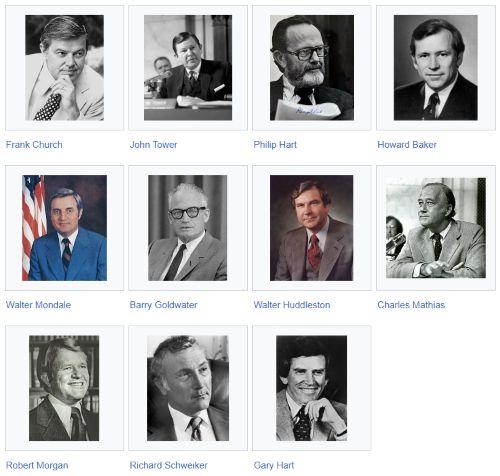
When the Church Committee began work in early 1975, the National Security Agency presented a different investigative problem from the CIA or FBI. Journalists had already exposed significant activities of those agencies, giving congressional investigators leads, names, and programs to pursue, but NSA remained extraordinarily opaque and had never developed anything resembling a sustained congressional oversight relationship. Staff counsel L. Britt Snider and Peter Fenn were assigned the task of investigating an agency about which they initially knew remarkably little. Their early inquiries produced few results because they did not yet know which questions would penetrate NSA’s compartmented structure. The breakthrough came in May, when the committee obtained from the Rockefeller Commission a copy of the CIA’s so-called “family jewels,” the internal compilation of questionable or potentially improper activities assembled after Director James Schlesinger had ordered CIA employees to report them. Buried among hundreds of pages were two references involving NSA: one concerned a New York facility the CIA had provided for copying telegram traffic, while another concerned CIA requests that NSA monitor communications involving Americans active in the antiwar movement. The references were fragmentary, but they gave investigators something they previously lacked, a thread leading into the machinery itself.
Snider pursued the New York operation while Fenn and another staff lawyer investigated the monitoring requests involving Americans. An initial oral inquiry to NSA about the mysterious New York facility produced no meaningful response for weeks. In July, growing frustrated, Snider prepared formal written interrogatories that went to NSA under Senator Church’s signature. NSA finally replied that the subject was so sensitive that it could be discussed only with Church and committee vice chairman John Tower, a restriction that effectively stalled the inquiry because arranging the necessary joint briefing proved difficult. Congressional investigators had found a subject so compartmented that even the committee created specifically to investigate intelligence activities was initially being denied an ordinary staff explanation.
The impasse broke in August 1975, partly because secrecy failed outside the formal investigative process. On August 8, the New York Times reported that NSA had been intercepting large quantities of international communications involving Americans, placing the general subject into public view before the committee had completed its investigation. The leak angered both NSA and committee officials, but it also removed much of the practical justification for refusing to explain what reporters were already describing. In late August an NSA official finally briefed Snider and acknowledged that the agency had enjoyed access for many years to most international telegram traffic leaving New York for foreign destinations. The operation was called SHAMROCK. The briefer described magnetic tapes copied from the traffic of the participating telegraph companies and processed electronically for foreign-intelligence material, while insisting that ordinary private telegrams sent by Americans were generally of no interest to analysts. He also said that the program had been terminated in May 1975, ostensibly because it no longer produced enough intelligence to justify its continuation. Snider then asked the questions that transformed an operational briefing into a historical investigation: how long had the program existed, who had created it, and who had authorized it? The briefer could not answer. He suggested that the person most likely to know the entire history was Louis Tordella, NSA’s recently retired longtime deputy director. That inability of the agency’s own briefer to explain the origins of a program that had operated for decades encapsulated one of the effects of SHAMROCK’s compartmentation: the government knew how the machine worked more readily than it knew why the machine existed.
Snider located Tordella and visited him at his Maryland home on a Sunday afternoon in September. Tordella initially regarded the young congressional investigator warily, but as their conversation developed he reconstructed a program that predated NSA and had grown from wartime communications censorship. He explained that SHAMROCK had operated with surprisingly little senior attention, with one subordinate manager handling it for many years and reporting directly to him. Tordella also acknowledged that although NSA ordinarily sought foreign intelligence rather than Americans’ private communications, American names had sometimes been used as selectors and SHAMROCK traffic would have been searched accordingly. Several days later, NSA officials briefed the committee in closed session and substantially confirmed Tordella’s account. The investigation had finally moved from a mysterious New York copying facility to a recognizable thirty-year intelligence program.
Finding SHAMROCK did not mean that the committee immediately understood it. Investigators next approached RCA Global Communications, ITT World Communications, and Western Union International, seeking witnesses and records capable of reconstructing the corporate side of the arrangement. No company could produce an ordinary written agreement defining its relationship with NSA or the predecessor agencies, and only RCA initially located a witness who had been personally involved near the beginning of the postwar cooperation. The committee nevertheless assembled enough evidence to conclude that the carriers had secretly provided international telegram traffic for decades, and on November 6, 1975, Church placed the essential SHAMROCK account, including the identities of the participating companies, into the public record despite Ford administration resistance to public disclosure. Even then, the reconstruction was incomplete. In March 1976, while staff members were preparing the committee’s final reports, the Defense Department notified Snider that an NSA employee had discovered an additional SHAMROCK file. The supposedly minor discovery proved to contain crucial Army memoranda describing the August 1945 approaches to the telegraph companies, their initial legal anxieties, the absence in the surviving record of the anticipated attorney general’s opinion before collection began, and the broader geographic extent of the original arrangements. A month later, nine additional documents located at the National Archives supplied further information about the companies’ appeals for high-level protection and the government’s attempts to address their legal concerns. Snider had to revise the committee’s historical account while the final report was already being assembled. The episode demonstrated how profoundly secrecy had fragmented the record: even after investigators discovered SHAMROCK, interviewed its senior custodians, questioned the corporations, and publicly exposed the program, some of the evidence most important for understanding its origins remained buried in files that neither NSA leadership nor congressional investigators initially knew existed. The Church Committee did not simply reveal a concealed surveillance program; it had to reconstruct one whose own secrecy had nearly obscured its institutional memory.
“Probably the Largest”: SHAMROCK Goes Before the American Public

The public exposure of SHAMROCK in 1975 changed the meaning of a program that had operated almost invisibly for three decades. What had once been known only within restricted circles of military intelligence, NSA, and the participating telecommunications companies suddenly became evidence in a national argument over the proper limits of secret government. On October 29 and November 6, the Senate Select Committee chaired by Frank Church held public hearings on the National Security Agency and Fourth Amendment rights, bringing an organization long shielded from sustained public examination into an unusually bright congressional spotlight. The committee’s investigators had already learned that NSA had obtained access to enormous quantities of international telegraph traffic through arrangements with RCA Global Communications, ITT World Communications, and Western Union International. They had also discovered the related watch-list practices through which communications involving named Americans could be selected from intelligence holdings. What made the revelations explosive was not simply the existence of foreign-intelligence interception, something few legislators expected the United States to abandon. It was the scale and persistence of a collection system operating without the knowledge of customers whose messages passed through privately owned networks.
Church and other committee members repeatedly emphasized that SHAMROCK involved something qualitatively different from an occasional interception directed at a specific target. The participating carriers had supplied access to broad streams of international telegram traffic, leaving NSA to determine what portions warranted examination. Near the program’s end, analysts were reviewing approximately 150,000 telegrams each month, although the underlying body of traffic available through the cooperating companies was considerably larger. The committee consequently characterized SHAMROCK in extraordinary terms, describing it as probably the largest governmental interception program affecting Americans ever undertaken. That formulation was intentionally alarming, but it also required precision. NSA analysts were not personally reading every international telegram transmitted by the participating companies, and the program’s principal institutional purpose remained foreign intelligence. The constitutional concern arose because broad acquisition meant that communications of Americans entered the system before individualized suspicion necessarily existed, after which selectors could determine which messages received attention.
The November 6 hearing made the corporate role difficult to ignore. Church publicly identified the companies that had cooperated with intelligence agencies, breaking through a layer of secrecy the Ford administration preferred to preserve. For the first time, Americans could see that the government’s communications-intelligence capacity had depended not only upon NSA equipment and government intercept stations but upon access voluntarily supplied inside private commercial networks. That distinction profoundly altered the political character of the controversy because customers had entrusted their messages to businesses rather than knowingly placing them into government hands.
The hearings also placed SHAMROCK inside a much larger pattern of intelligence practices revealed during the Church Committee investigation. The public was simultaneously learning about FBI political surveillance, CIA mail opening, domestic intelligence operations, military monitoring of civilians, and NSA watch lists containing American names. Yet SHAMROCK possessed a distinctive institutional character. COINTELPRO had involved an agency deliberately targeting political organizations, while CIA mail-opening programs physically intercepted correspondence at selected postal facilities. SHAMROCK demonstrated a different route to surveillance power: government could secure recurring access through intermediaries already carrying the communications. That arrangement could appear administratively less intrusive because intelligence officers were not necessarily breaking into homes, tapping an individual telephone line, or seizing a particular envelope, but its potential scale was much greater precisely because access occurred upstream. The Senate hearings exposed a structural question that went beyond individual abuses. If government could routinely obtain communications from private carriers, then constitutional and statutory protections could not be evaluated solely by examining what government agents physically intercepted themselves. The relationship between the state and the intermediary had become part of the surveillance system. This was troubling because the secrecy of the arrangement had prevented customers, courts, and most legislators from knowing that the relationship existed. Even if foreign-intelligence objectives justified some interception, the Committee confronted the separate question of whether a democratic government could permit such an extensive system to operate for decades without durable external supervision.
NSA officials did not accept the implication that SHAMROCK could fairly be reduced to indiscriminate domestic spying. Director Lew Allen emphasized the agency’s foreign-intelligence mission and the enormous importance of communications intelligence to national security, while witnesses distinguished the mass of traffic technically available from the much smaller portion actually selected and analyzed. That defense was significant and remains necessary to any balanced historical interpretation. SHAMROCK originated in the pursuit of foreign governmental communications, operated during an era of genuine espionage and Cold War confrontation, and produced intelligence that could have legitimate diplomatic and security value. But the hearings demonstrated why purpose alone could not resolve the controversy. A system designed for foreign intelligence could still acquire the private communications of Americans, while changing watch lists and interagency requests could redirect the attention of that system toward domestic persons and organizations. By exposing SHAMROCK, the Church Committee forced the public to confront an intelligence architecture whose power arose from the combination of broad access, secrecy, technological selection, and corporate cooperation. The lasting importance of the hearings was not simply that Congress revealed a program whose scale shocked contemporaries. It was that SHAMROCK made visible an uncomfortable principle of modern surveillance: a government need not own the network through which information travels in order to make that network part of its intelligence capacity.
Congress Investigates the Companies: Bella Abzug and the Other SHAMROCK Inquiry

The Church Committee produced the most famous congressional investigation of SHAMROCK, but it was not the only one. In the House of Representatives, Representative Bella Abzug of New York chaired the Subcommittee on Government Information and Individual Rights of the Committee on Government Operations, an investigative body whose concerns naturally extended beyond what NSA had done with the telegrams to how the government had obtained them in the first place. Beginning in October 1975 and continuing into 1976, Abzug’s subcommittee examined federal interception of nonverbal communications and turned directly toward the commercial carriers that had supplied international telegram traffic. RCA Global Communications, ITT World Communications, and Western Union International faced congressional questioning not merely as peripheral witnesses to an intelligence program but as institutions whose own decisions had made that program possible. This changed the emphasis of the inquiry. Instead of asking only whether NSA had exceeded constitutional or statutory limits, the House investigation asked why private communications companies had opened their systems to government, who within those companies had approved the arrangements, and what legal authority executives believed permitted them to do so. SHAMROCK became a problem of corporate accountability as well as intelligence oversight.
Abzug’s subcommittee approached the companies with a directness that made the investigation unusually uncomfortable for both corporate executives and the executive branch. Investigators demanded records concerning the origins of the arrangements, the identities of officials who had approved them, and the legal assurances received from Washington. They also pressed witnesses to explain why cooperation had continued for decades after wartime censorship authority disappeared. The questions forced corporate officials to confront decisions that many current executives had inherited rather than personally made.
The evidentiary problem was formidable because secrecy had left each company with an incomplete institutional memory. RCA witnesses were able to describe how government personnel had obtained message tapes and how the arrangement had evolved technologically, but even knowledgeable executives were initially mistaken about when cooperation had begun. Sidney Sparks, one of the most important RCA witnesses, remembered the relationship as dating from the late 1940s until documentary evidence revealed that senior RCA officials had agreed to cooperate in August 1945, before Sparks himself assumed responsibility for the operation. ITT faced similar difficulties reconstructing the intentions of executives who had negotiated with Army intelligence thirty years earlier, while Western Union International had inherited a more limited form of participation from Western Union and had already ended its involvement before the wider program collapsed. The absence of conventional contracts made reconstruction even harder. There was no single agreement that Congress could place on a table and examine clause by clause to determine what the companies had promised, what government had authorized, or what restrictions had been imposed. Instead, investigators encountered memoranda, correspondence, recollections, technical arrangements, and executive assurances accumulated across different institutions and administrations. This evidentiary fragmentation itself became part of the story. A secret relationship between government and private corporations could endure precisely because it had never been subjected to the kinds of formal documentation and recurring review that ordinarily accompany long-term commercial or regulatory arrangements. By the time Abzug’s subcommittee demanded accountability, the companies could often explain how portions of the machinery had operated more readily than why their predecessors had believed the arrangement lawful.
The Ford administration resisted aspects of the House inquiry on national-security grounds, creating an extraordinary dispute over information that was not located solely within government files. Executive officials argued that records and testimony concerning SHAMROCK implicated classified intelligence sources and methods and could not simply be disclosed because a congressional subcommittee demanded them. The dispute became revealing when the administration attempted to control information in the possession of private corporations on the ground that the underlying relationship involved national security. Abzug challenged the logic forcefully: if government could prevent private companies from disclosing their own records of cooperation with intelligence agencies, then executive secrecy could effectively follow classified relationships outside the executive branch itself. The controversy raised a question larger than access to particular SHAMROCK documents. It asked whether a president’s authority to protect intelligence secrets could shield from Congress the conduct of corporations that had voluntarily participated in a secret government surveillance arrangement.
The corporate testimony also weakened any simple defense that the carriers had merely complied with clearly established law. Their own historical records showed recurring concern about Section 605 of the Communications Act, consultation with attorneys, requests for assurances, and dependence upon representations from senior government officials. The hearings did not establish that corporate executives understood every later use NSA made of the traffic they supplied. The distinction mattered because responsibility for granting access was not identical to responsibility for selecting particular Americans from the resulting communications pool.
Abzug’s inquiry exposed a dimension of SHAMROCK that could easily disappear if the history were told entirely from NSA’s perspective. The participating companies had meaningful choices, even if those choices were made under powerful pressure from officials invoking wartime experience and Cold War national security. Western Union’s more restrictive methods and eventual withdrawal demonstrated that corporate cooperation was not mechanically predetermined, while RCA and ITT continued providing substantially broader access until the final termination of SHAMROCK in 1975. The companies had also benefited from the secrecy surrounding the arrangement because customers were unable to evaluate a practice they did not know existed, and ordinary corporate accountability mechanisms were weakened when only a few senior insiders understood what was happening. Yet the government remained the dominant initiator of the relationship: federal intelligence officials requested the access, defined the intelligence needs, assured executives that cooperation served national security, and protected the arrangement through classification. The House investigation revealed neither a purely governmental abuse nor an independent corporate surveillance enterprise. It uncovered a partnership in which each side supplied something the other required, while secrecy dispersed responsibility between them. That dispersion made the arrangement resilient because every participant could understand its own role as limited: the companies transmitted and copied traffic, NSA selected and analyzed it, requesting agencies supplied intelligence requirements, and senior officials invoked national security to justify the whole. Abzug’s hearings challenged that fragmentation by asking who was responsible for the system rather than merely who operated each component. The answer was uncomfortable precisely because responsibility was shared. SHAMROCK demonstrated that when private infrastructure becomes integrated into government surveillance, democratic oversight must examine the corporation providing access as seriously as the agency exploiting what that access makes available.
What SHAMROCK Revealed About the American Surveillance State
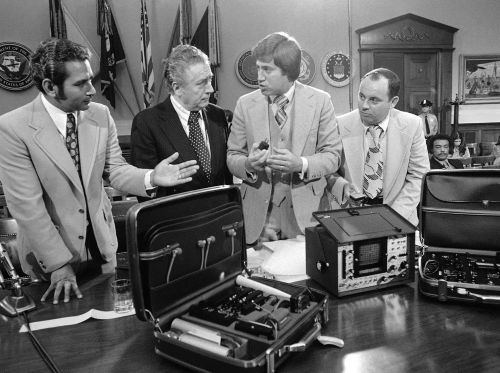
SHAMROCK revealed that the surveillance power of the American state did not reside entirely inside government agencies. The National Security Agency and its predecessors supplied intelligence requirements, analysts, technical expertise, classification rules, and the authority of national security, but the communications themselves originated inside privately owned networks. RCA, ITT, and Western Union controlled the infrastructure through which international telegrams naturally passed, giving them access to information the government wanted but could not obtain as efficiently on its own. By cooperating with intelligence agencies, those companies allowed privately financed communications systems to perform a second, hidden function as collection points for the state. The resulting architecture blurred a boundary that conventional descriptions of surveillance often leave deceptively clear: a network could remain privately owned while becoming operationally important to government intelligence.
This arrangement mattered because it changed the practical meaning of government access. Traditional images of surveillance emphasize an identifiable governmental act, an officer searches a home, agents tap a telephone line, investigators open a letter, or police physically follow a suspect. SHAMROCK demonstrated another possibility in which the government could obtain information after a private intermediary had already gathered it as part of an ordinary commercial service. The telegram sender did not need to be individually approached, and the government did not need to build a separate communications system around each target. Instead, intelligence officials obtained access upstream, at points where enormous volumes of messages were already concentrated. Once RCA and ITT began supplying broad traffic streams, the government could separate acquisition from suspicion: communications could enter the intelligence system before analysts knew which individual messages would later prove interesting. Magnetic tape and electronic selection widened that advantage by permitting computers to compare large bodies of traffic against designated selectors. Surveillance capacity consequently grew not only when government deployed more collectors, but when it acquired better access to information that private institutions were already producing.
The intermediary became constitutionally and politically significant in its own right. Customers could not send international telegrams without entrusting their words to communications companies, just as participation in many forms of modern economic and social life requires entrusting information to institutions that stand between one individual and another. That necessity did not erase expectations of confidentiality, which was one reason carrier disclosure had troubled Congress in Section 605 of the Communications Act. SHAMROCK exposed the weakness of treating information as effectively unprotected simply because a private company had to handle it. If the act of using communications infrastructure itself creates a pathway for routine government access, then the practical scope of surveillance may depend as much upon the rules governing intermediaries as upon restraints imposed directly on police or intelligence agencies.
The program also demonstrated that surveillance architecture consists of more than collection technology. SHAMROCK acquired communications, but watch lists determined which names deserved attention, analysts transformed selected messages into intelligence, dissemination rules determined who could receive the results, and other agencies generated demands that shaped what NSA searched for. The machinery worked through relationships rather than through a single device or database. RCA could supply telegrams without knowing which FBI or Secret Service requirement might later make a particular communication significant; NSA could search selectors supplied by another agency without independently investigating the reasons every name had been submitted; an intelligence consumer could receive a report without seeing the full body of communications from which it had been extracted. Such specialization made the system efficient, but it simultaneously fractured responsibility. No single participant needed to experience itself as operating the entire surveillance apparatus because each organization performed only one portion of it. Corporate executives could describe themselves as assisting national security, NSA could describe itself as conducting foreign intelligence, and requesting agencies could characterize their submissions as legitimate investigative requirements. The cumulative result could nevertheless reach substantially further than any one description suggested. SHAMROCK demonstrated that evaluating surveillance solely agency by agency risks missing the power created when separate institutions become connected into a common information system.
Scale further complicated the older distinction between targeted investigation and general surveillance. Government has always possessed legitimate reasons to seek particular communications in matters involving espionage, foreign military threats, presidential protection, organized crime, or other serious dangers. SHAMROCK’s unusual feature was that the government did not necessarily have to begin with a particular message or sender and then seek access to that communication. It could receive a broad stream first and decide later which portions merited attention. That reversal mattered because the cost of adding another target changed once the collection infrastructure was already operating. Searching for an additional name inside an existing pool could be administratively easier than obtaining a new interception directed specifically at that person.
Secrecy amplified every one of these structural features. Customers could not alter their behavior, seek judicial relief, choose another carrier on privacy grounds, or demand contractual restrictions because they did not know SHAMROCK existed. Most members of Congress were similarly unable to debate whether existing statutes properly governed the arrangement, while courts were denied opportunities to consider questions that never arrived before them in concrete cases. Even inside the participating institutions, compartmentation prevented many employees and some executives from understanding the complete system. The government benefited from something more consequential than operational secrecy against foreign adversaries: secrecy suspended the feedback mechanisms through which legal and political systems normally respond to disputed exercises of power. A surveillance practice could generate intelligence for years without producing the controversies that might otherwise force officials to defend, narrow, regulate, or terminate it. Longevity then created its own form of legitimacy, since successor officials inherited a functioning program rather than confronting a new proposal. SHAMROCK illustrates how secrecy can convert institutional inertia into policy by ensuring that the people most capable of challenging an arrangement remain unaware that there is an arrangement to challenge.
None of this means that cooperation between government and private communications companies is inherently illegitimate. States cannot protect national security, investigate serious crime, or conduct foreign intelligence without sometimes obtaining information held by private parties, and the existence of an intermediary does not confer absolute immunity upon communications passing through it. The question exposed by SHAMROCK is instead what happens when exceptional or case-specific access becomes systematic, durable, and technically scalable. Once government gains continuing access to a privately generated information stream, the distinction between requesting records and possessing surveillance infrastructure begins to narrow. The relevant democratic safeguards must then address not only who owns the equipment but who may search the information, under what legal authority, for which purposes, and with what independent oversight.
SHAMROCK’s larger historical importance lies in the model of state power it made visible. The American surveillance state was not simply an aggregation of secret agencies possessing their own listening posts, investigators, and files; it could also expand through relationships with institutions embedded in ordinary civilian life. Private ownership did not prevent infrastructure from becoming functionally governmental for particular purposes, while governmental use did not require formal nationalization or public acknowledgement. The telegraph companies remained commercial enterprises, yet their networks became integral to an intelligence system that customers could neither see nor evaluate. That hybrid structure proved powerful precisely because it combined the reach of private infrastructure with the secrecy and analytic capacity of government. SHAMROCK shifted the central question of surveillance away from the deceptively simple inquiry of whether the state itself collected a piece of information. A more revealing question is whether private systems and government access have been joined so systematically that information produced for one purpose has become a continuing resource for another. Once that occurs, the surveillance state extends beyond the formal boundaries of the state itself.
After SHAMROCK: Intelligence Oversight and the Attempt to Put Surveillance under Law
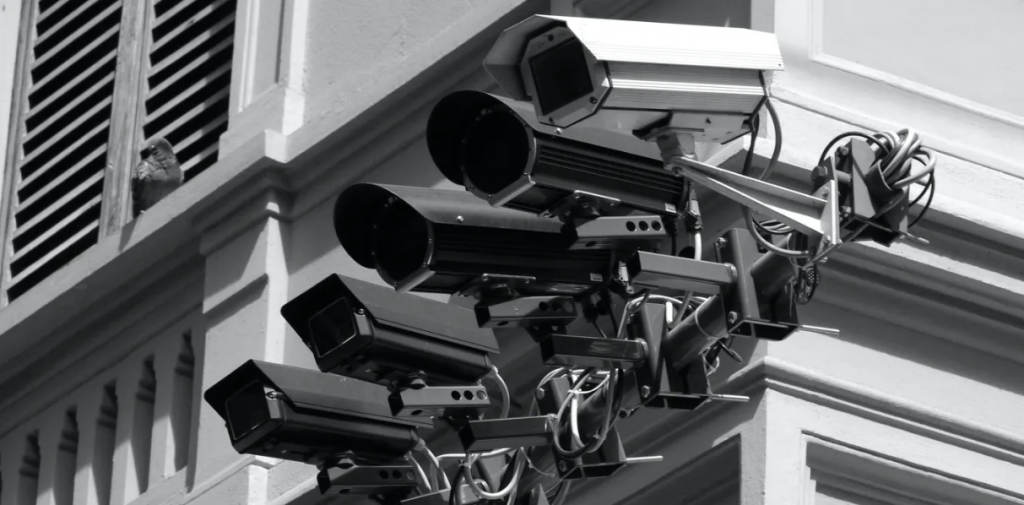
The end of SHAMROCK in 1975 did not end American signals intelligence, nor did the Church Committee recommend that it should. The larger reform project sought instead to place secret intelligence activity within legal and institutional boundaries that could survive changes of administration without depending solely upon executive restraint. That distinction mattered because the investigations had revealed failures extending far beyond one telegraph program: FBI political surveillance, CIA mail opening, domestic intelligence operations, military monitoring of civilians, NSA watch lists, and other activities had developed under overlapping claims of secrecy and national necessity. SHAMROCK supplied a particularly vivid example because its underlying corporate arrangement had endured for approximately thirty years without sustained judicial review or meaningful congressional supervision. Reformers confronted a structural question rather than simply a list of past abuses. How could democratic institutions supervise activities that genuinely required secrecy without allowing secrecy to become a substitute for law? The answer that emerged during the second half of the 1970s was an imperfect mixture of executive rules, congressional committees, reporting requirements, inspectors and oversight bodies, and eventually a specialized judicial process for foreign-intelligence surveillance. The intelligence state would remain secret in important respects, but the hope was that secrecy would operate inside a system of accountability rather than outside one.
President Gerald Ford took an early step in February 1976 with Executive Order 11905, the first comprehensive presidential order publicly setting out restrictions and responsibilities for the intelligence community. The order prohibited assassination as a matter of executive policy, reorganized portions of intelligence management, required agencies to observe stated limitations on activities involving Americans, and established an Intelligence Oversight Board to receive reports of potentially unlawful or improper conduct. It did not resolve every constitutional question exposed by SHAMROCK, and many of its protections remained dependent upon executive rules that a later president could modify. Even so, the order represented an important departure from the culture in which sensitive programs could rest indefinitely on oral assurances and inherited practice.
Congress simultaneously attempted to correct one of the weaknesses that had allowed SHAMROCK to remain hidden for so long: intelligence oversight had previously been dispersed among a small number of committees whose members often treated secrecy as a reason for deference rather than investigation. In May 1976, the Senate created the permanent Senate Select Committee on Intelligence, replacing the temporary Church Committee with a standing body expected to oversee intelligence agencies continuously rather than only after scandal. The House followed in 1977 with the House Permanent Select Committee on Intelligence. These committees did not make intelligence operations public, nor could they eliminate the basic problem that legislators often depended upon the executive branch for information about programs they were supposed to supervise. They did create identifiable congressional institutions with staffs, jurisdiction, security procedures, and an enduring mandate to ask questions that earlier committees had seldom been organized to pursue. That institutionalization was itself a response to one of the central lessons of the Church inquiry. Oversight conducted only after revelations appeared in newspapers could expose abuses, but it could not reliably prevent secret practices from hardening into routine.
President Jimmy Carter pushed the executive framework further with Executive Order 12036 in January 1978. The order more precisely described intelligence-agency responsibilities and imposed additional restrictions on collection involving United States persons. It also reflected an emerging consensus that surveillance of Americans could not simply be governed by the same assumptions applied to foreign governments and foreign military targets. Yet executive orders remained an incomplete solution because their legal force ultimately derived from presidential authority. The more durable question was whether Congress would enact a statutory structure governing foreign-intelligence surveillance itself.
The Foreign Intelligence Surveillance Act of 1978 became the central legislative answer. FISA established a statutory procedure for specified forms of electronic surveillance conducted for foreign-intelligence purposes and created the Foreign Intelligence Surveillance Court, composed of federal judges empowered to review government applications in secret. The legislation attempted to reconcile two propositions that had often been treated as incompatible: foreign-intelligence surveillance sometimes required secrecy and procedures different from ordinary criminal investigations, but executive assertions of national-security necessity should not automatically eliminate independent judicial review. Under the new framework, the government could seek surveillance orders without publicly revealing targets or sensitive intelligence methods, while a court outside the executive branch would evaluate whether the statutory requirements had been satisfied. FISA addressed directly the unresolved constitutional terrain left after Katz and Keith, although it did so legislatively rather than waiting for the Supreme Court to define the full scope of presidential foreign-intelligence authority. The act did not simply translate ordinary Fourth Amendment warrant procedures into the intelligence context. It created a specialized regime with its own definitions, standards, secrecy requirements, and institutional logic. Nor should FISA be portrayed as a statute written solely because of SHAMROCK. The legislation arose from the cumulative impact of the Church Committee, the Watergate crisis, earlier disputes over warrantless national-security wiretapping, the Keith decision, and the broader exposure of intelligence activities involving Americans. SHAMROCK nevertheless provided powerful evidence for the reformers’ central proposition: surveillance affecting Americans should not depend indefinitely upon secret executive arrangements whose legality had never been tested outside the agencies conducting them.
The reforms also changed the expected relationship between intelligence agencies and Congress. Agencies increasingly faced requirements to keep designated committees informed of significant activities, while congressional staffs developed expertise that could challenge technical and legal claims once accepted largely on trust. That did not create perfect transparency, because intelligence oversight necessarily remained hidden from most citizens and much of Congress. It did create a more formal chain of responsibility in which secrecy was supposed to coexist with identifiable reviewers rather than erase them. The governing principle was no longer that secrecy made outside supervision impossible, but that secrecy required specialized institutions capable of supervising what could not safely be made public.
The post-SHAMROCK settlement nevertheless contained limitations that would become increasingly important as communications technology changed. FISA regulated particular categories of government surveillance, but it did not eliminate the government’s dependence upon private communications companies, nor could legislation written in the telegraph and telephone era anticipate every kind of digital information that commercial networks would later generate. Executive Order 12333, issued by President Ronald Reagan in 1981, replaced Carter’s order and became a durable framework for intelligence activities conducted under presidential authority, particularly those centered outside the United States. Congress would repeatedly amend FISA as new technologies and security demands altered the intelligence environment, especially after the attacks of September 11, 2001. These later developments demonstrated that placing surveillance “under law” was not a single achievement completed in 1978 but a continuing political and constitutional process. The reforms of the 1970s created institutions capable of authorization and oversight, yet they could not permanently settle the boundary between foreign intelligence, technological capacity, corporate cooperation, and individual privacy. That is perhaps the most important continuity with SHAMROCK. The lesson Congress drew was not that government must never obtain information from private communications systems; such access could be indispensable to legitimate intelligence. The lesson was that usefulness could not itself constitute sufficient authority. SHAMROCK had shown what could happen when an operationally successful arrangement outlived the emergency that helped create it and survived largely because few institutions possessed the knowledge required to question it. The reformers’ answer was to construct a system in which surveillance might remain secret from the public while no longer remaining secret from every institution capable of imposing legal restraint.
From Telegraph Networks to Data Networks: The Durable Institutional Question
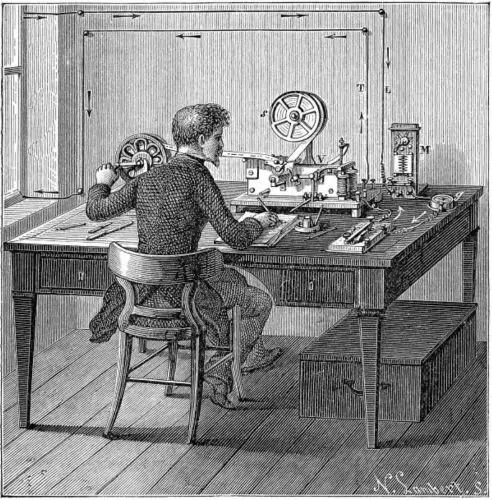
The temptation to compare SHAMROCK directly with contemporary digital surveillance is understandable, but the comparison becomes useful only after its limits are made explicit. A telegram carried by RCA or ITT was the content of a private communication, while a license-plate observation, location record, transaction log, or other digitally generated datum may reveal something quite different. Modern surveillance also operates under statutes, constitutional precedents, contractual structures, and oversight mechanisms that did not exist when Army intelligence officials approached the telegraph companies in 1945. Yet technological difference does not erase institutional continuity. SHAMROCK demonstrated that government surveillance capacity can expand dramatically when information created or held by private enterprises becomes systematically available to public authorities. The enduring question is not whether a twenty-first-century database is the technological descendant of the international telegram, but whether similar relationships between private information holders and government users can produce comparable changes in the practical reach of state surveillance.
Modern communications and data systems have magnified the importance of that question because private companies routinely generate information as an ordinary consequence of providing services. Mobile phones create location-related records; internet services preserve account and communications data; vehicles, toll systems, security cameras, access controls, financial networks, and commercial platforms generate additional traces of activity. Automated license-plate-recognition systems provide an instructive example because cameras can record vehicle plates, locations, and times as part of a network whose informational value increases when individual observations become searchable across places and dates. Some contemporary ALPR infrastructure is owned or operated directly by government agencies, while other systems are supplied or maintained by private vendors, including companies such as Flock Safety. The resulting institutional arrangements differ radically from SHAMROCK in their purposes and legal frameworks, and a photograph of a license plate visible on a public road should not be equated with the contents of a private telegram. Nevertheless, the structural resemblance becomes clearer when access is considered rather than content. A government agency may obtain investigative capability not by constructing every sensor or database itself, but by gaining access to information already gathered through privately supplied infrastructure. The cost of expanding surveillance can then fall because the underlying network exists independently of each individual investigation. As with SHAMROCK, the decisive change may occur when the government ceases asking only for isolated information about a known target and gains the ability to search a continuously replenished information stream.
This distinction between a particular observation and an accumulated system is crucial. One license plate observed by an officer on a public street conveys far less about a person’s life than months of searchable vehicle-location records, just as one lawfully obtained telegram differs from continuing access to international communications traffic. Aggregation can transform information without changing the individual units from which it is assembled. The surveillance question increasingly concerns not simply whether government could lawfully observe one fact, but what follows when technology makes thousands or millions of such facts persistent, searchable, and relational.
American Fourth Amendment law has struggled with precisely this change in scale. In Smith v. Maryland in 1979, the Supreme Court held that a person lacked a reasonable expectation of privacy in telephone numbers voluntarily conveyed to the telephone company, helping establish what became known as the third-party doctrine. For decades, that reasoning encouraged the proposition that information entrusted to a commercial intermediary might receive less constitutional protection than information retained exclusively by an individual. Digital technology placed enormous pressure on that logic because ordinary participation in modern life increasingly requires disclosure of revealing data to private companies. In United States v. Jones in 2012, several justices expressed concern about the implications of prolonged technological tracking, even though the Court formally resolved the case through the government’s physical installation of a GPS device on a vehicle. Carpenter v. United States in 2018 went considerably further, holding that government acquisition of seven days of historical cell-site location information constituted a Fourth Amendment search despite the records being held by a wireless carrier. Chief Justice John Roberts emphasized that the pervasive and revealing nature of the data made mechanical application of the third-party doctrine inappropriate. Carpenter was deliberately narrow and did not abolish that doctrine, much less establish a general rule covering every commercial database. Its importance for the institutional problem exposed by SHAMROCK lies elsewhere: the Court recognized that the relationship between private possession and governmental acquisition cannot always be evaluated without considering the comprehensiveness, persistence, and revealing capacity of the resulting surveillance.
Private ownership can also obscure how much governmental capability a system actually provides. A police department may own relatively few cameras yet possess access to observations generated across a much larger vendor-supported or interagency network; similarly, an intelligence agency need not physically operate every facility from which useful information originates. This does not mean that private vendors become government agencies merely because police purchase their products or obtain access to their records. Questions of state action, statutory authority, contractual restrictions, retention, permissible searches, and judicial process remain legally significant. But institutional analysis requires looking beyond the name on the equipment to the relationships governing the data it produces. SHAMROCK’s carriers remained private corporations throughout the program, and that fact did little to describe the actual intelligence capacity their cooperation gave the federal government.
The strongest continuity between the telegraph and data-network eras lies in the possibility of secondary governmental use. Information may be generated because a customer wants a telegram delivered, a driver enters a parking facility, a mobile subscriber uses a cellular network, or a vehicle passes a camera; the original transaction does not necessarily reveal all of the later purposes for which the resulting information can be searched. Once databases become technically interoperable or widely accessible, additional investigative uses can develop without corresponding construction of new surveillance infrastructure. This does not mean that every expansion of access is improper. Government may have compelling reasons to locate kidnapping suspects, identify stolen vehicles, investigate organized crime, protect officials, or discover foreign intelligence threats, and private records can be indispensable to those objectives. The lesson of SHAMROCK is instead that the original justification for access cannot be assumed to control every later use of the system. A foreign-government collection arrangement eventually became searchable against names of American political activists because the communications pool already existed; technological capacity made a new use easier than creating a new collection operation from scratch. Modern data systems create the same institutional possibility even when the information, agencies, and governing law are entirely different. The central democratic question consequently concerns the rules surrounding access before a controversial search occurs: who may query the system, how broadly searches may extend, how long information remains available, whether access is audited, and what independent authority can detect a use that exceeds the original justification. The history of SHAMROCK does not tell modern policymakers what those answers must be. It demonstrates why those questions become harder, and more important, once private infrastructure has already been connected to government power.
Is SHAMROCK Really a Useful Precedent for Modern Private-Sector Surveillance?
The following video from Nat Schooler is an overview of Project Shamrock:
The strongest objection to using SHAMROCK as a precedent for modern private-sector surveillance is that the comparison risks flattening differences so substantial that they may overwhelm the resemblance. SHAMROCK involved the secret acquisition of international telegram traffic by a federal signals-intelligence apparatus during the Cold War, when intercepted communications could contain diplomatic instructions, business information, political correspondence, or intimate personal messages in the senders’ own words. Many contemporary systems instead collect observations, identifiers, transactional records, or location-related data generated through activities occurring in public or through commercial services whose users know that some recordkeeping occurs. Automated license-plate readers, for example, normally capture a plate, location, time, and associated image rather than the contents of a private communication. Modern police departments also operate within constitutional doctrine, public-records laws, procurement systems, retention policies, statutory restrictions, and judicial procedures that did not govern SHAMROCK in anything like their present form. Foreign intelligence conducted by NSA is institutionally different from ordinary state or local law enforcement, while nationwide Cold War communications collection differs from a municipal agency querying records concerning a stolen automobile. Calling the situations equivalent would obscure precisely the legal, technological, and functional distinctions necessary for evaluating either one responsibly.
There is also a serious historical objection to describing SHAMROCK primarily as a domestic-surveillance program. It originated in the search for foreign governmental communications at the end of World War II, and signals intelligence addressed genuine security problems in an era of Soviet espionage, nuclear competition, military confrontation, and intense diplomatic rivalry. The fact that American communications entered the collection stream does not mean that monitoring Americans was the program’s original or exclusive purpose. Likewise, the later abuse or expansion of a surveillance capability does not retroactively make every earlier use of that capability illegitimate. A historical interpretation that treats national-security justifications as mere pretexts would be as misleading as one that accepts those justifications without examining what the program eventually became.
The legal differences are even more formidable. SHAMROCK began before Katz v. United States detached Fourth Amendment analysis from physical trespass, before Keith constrained warrantless domestic-security surveillance, before Congress enacted FISA, and before modern courts confronted the implications of persistent digital tracking. Since then, the third-party doctrine developed through decisions such as Smith v. Maryland, while United States v. Jones and particularly Carpenter v. United States demonstrated judicial concern that aggregation and technological scale can alter the constitutional significance of information that might appear innocuous in isolation. Contemporary government access to private databases can occur through warrants, subpoenas, statutory authority, contracts, interagency agreements, voluntary disclosure, emergency requests, or other mechanisms whose legality depends heavily upon the kind of information involved and the circumstances of access. Some systems are openly purchased by public agencies and discussed in city councils or procurement documents rather than hidden through arrangements known to only a few corporate executives. Others provide extensive audit logs and configurable access controls that would have been alien to SHAMROCK’s early operation. These differences matter because legality cannot be inferred by historical analogy. A police officer querying a lawfully operated license-plate database does not become the equivalent of NSA acquiring telegram traffic simply because both actions involve information originating in privately supplied infrastructure. Nor does Carpenter establish a general constitutional right against government acquisition of every commercially held dataset. The modern legal landscape is fragmented and contested, but it is not the legal landscape of 1945.
Corporate responsibility likewise resists an easy parallel. RCA, ITT, and Western Union operated communications networks through which customers’ messages necessarily passed, but the companies did not themselves determine every intelligence use eventually made of SHAMROCK traffic. Modern technology companies can occupy very different positions: some merely provide equipment to government agencies, some host databases the government may query, some aggregate information collected from multiple sources, and others determine retention or sharing policies that substantially shape governmental capability. Treating all of these relationships as one phenomenon called “private surveillance” risks concealing differences in agency, knowledge, control, and legal responsibility. The relevant unit of analysis must be the particular access relationship rather than the mere presence of a private company.
These objections significantly narrow what SHAMROCK can legitimately contribute to modern surveillance debates, but they do not make the comparison useless. They instead reveal the level at which the comparison is strongest. SHAMROCK is not a technological precedent establishing that a license-plate camera is a telegram interceptor, nor is it a legal precedent proving that contemporary access arrangements are unconstitutional because a Cold War program generated serious statutory and constitutional concerns. It is an institutional precedent showing how government capability can change when private infrastructure continuously creates information that the state can obtain without building the underlying collection network itself. The critical transition occurs when access becomes systematic enough that authorities can search a preexisting information stream for new purposes rather than collect new information separately for each investigation. SHAMROCK further demonstrates how the original justification for a system may fail to constrain later uses once technological capability, bureaucratic demand, and institutional habit begin reinforcing one another. That insight survives all the differences between telegram content and modern metadata because it concerns the organization of power rather than the form of the record. The comparison becomes stronger when stated modestly: SHAMROCK does not tell us that contemporary private-sector surveillance arrangements are repetitions of a 1945 intelligence program. It tells us why democratic oversight must examine the rules connecting private collection to governmental access, when those connections become durable enough that privately generated information functions as a continuing extension of state surveillance capacity.
Conclusion: When Private Infrastructure Becomes Government Eyes
Project SHAMROCK began with a decision made in the unsettled final weeks of World War II: American intelligence officials did not want to surrender access to international communications simply because the legal and political conditions of wartime censorship were disappearing. What followed was not a temporary expedient but an arrangement that survived for roughly thirty years, moving from Army signals intelligence into the Armed Forces Security Agency and finally the National Security Agency. RCA, ITT, and Western Union supplied the commercial infrastructure through which the communications already traveled, while government agencies supplied the intelligence requirements that determined which portions of that traffic mattered. The companies remained private, their customers continued using ordinary commercial services, and the intelligence apparatus itself remained largely invisible. That combination made SHAMROCK durable because government obtained the benefits of an enormous communications network without having to construct or publicly operate that network for surveillance purposes. By the time Congress finally exposed the program, an emergency-derived practice had become an institutional inheritance whose longevity itself had helped obscure the unresolved questions surrounding its authority.
The transformation of SHAMROCK from microfilm and punched tape to magnetic tape also revealed how technological change alters the character of surveillance without necessarily changing its formal purpose. Broad access became more consequential when machines could search communications against selectors faster than human analysts could ever examine them individually. The resulting power lay not in reading every telegram but in possessing a large enough information stream that particular communications could be found when government priorities changed. Collection and selection could become separate stages, allowing an infrastructure created for foreign intelligence to acquire new significance when American names entered watch lists.
The most troubling feature of that history was not simply secrecy, illegality, or the involvement of private corporations considered separately. It was the way those elements interacted with institutional continuity. Company executives had worried about Section 605, sought assurances from senior federal officials, and watched the government unsuccessfully explore legislation that might have placed the arrangement on firmer statutory ground. Yet the absence of such legislation did not end the program, nor did changes in administrations repeatedly force its legal foundations back into public consideration. Secrecy prevented affected customers from challenging the practice, limited congressional knowledge, kept courts from addressing SHAMROCK directly while it operated, and fragmented memory even among people inside NSA and the participating companies. When the Church Committee and Bella Abzug’s House subcommittee finally reconstructed the system, investigators discovered not merely a hidden intelligence source but a form of governance in which responsibility had been distributed so widely that no single participant seemed to own the whole arrangement. The companies could say that government had requested the traffic; NSA could say that foreign intelligence was its mission; other agencies could say that they merely supplied legitimate investigative requirements. Each explanation captured part of the truth. Those limited roles had produced a surveillance architecture capable of reaching communications involving Americans on a scale few outsiders had known existed.
That is why SHAMROCK remains relevant even when modern technologies bear little resemblance to international telegrams. Its history does not establish that contemporary commercial databases, digital platforms, or automated camera networks are legally or morally equivalent to a Cold War intelligence program, and forcing such an analogy would weaken rather than strengthen the historical lesson. The more durable warning concerns systematic access without systematic accountability. Private infrastructure can enlarge governmental surveillance power whenever information collected for one purpose becomes continuously available for another, particularly when searchability and aggregation make the resulting system more revealing than its individual records suggest. Democratic scrutiny must look beyond who owns the cable, camera, database, network, or server and ask who can enter the information system, how frequently, under what authority, for which purposes, and with what independent means of detecting misuse. SHAMROCK showed what happens when those questions are postponed long enough for an exceptional relationship to become ordinary. The telegram companies supplied the wires, but once government acquired enduring access to what flowed through them, private infrastructure had quietly become part of the state’s eyes.
Bibliography
Affiliate disclosure: Amazon links on this site are paid links. As an Amazon Associate I earn from qualifying purchases.
- Aid, Matthew M. The Secret Sentry: The Untold History of the National Security Agency. New York: Bloomsbury Press, 2009.
- Allen, Lew, Jr. Letter to Attorney General Elliot L. Richardson, October 4, 1973. Reproduced in U.S. Congress, Senate, Select Committee to Study Governmental Operations with Respect to Intelligence Activities, Intelligence Activities: The National Security Agency and Fourth Amendment Rights. Washington, DC: U.S. Government Printing Office, 1976.
- Alvarez, David J. Secret Messages: Codebreaking and American Diplomacy, 1930–1945. Lawrence: University Press of Kansas, 2000.
- Armed Forces Security Agency. “SHAMROCK Operations.” Memorandum for Record, August 25, 1950. Cited in U.S. Congress, Senate, Supplementary Detailed Staff Reports on Intelligence Activities and the Rights of Americans, Book III, 1976.
- Army Signal Security Agency. “Letters of Appreciation.” Letter from Assistant Chief of Staff, Army Signal Security Agency, to Army Chief of Staff, March 19, 1946. Cited in U.S. Congress, Senate, Supplementary Detailed Staff Reports on Intelligence Activities and the Rights of Americans, Book III, 1976.
- —-. “Report on New York Trip.” Letter from an Army intelligence officer to the Commanding General, Signal Security Agency, Army Service Forces, August 24, 1945. Cited in U.S. Congress, Senate, Supplementary Detailed Staff Reports on Intelligence Activities and the Rights of Americans, Book III, 1976.
- Bamford, James. The Puzzle Palace: A Report on America’s Most Secret Agency. Boston: Houghton Mifflin, 1982.
- Barsby, W. H. Letter to Brigadier General W. Preston Corderman, October 9, 1945. Reproduced in U.S. Congress, House, Interception of Nonverbal Communications by Federal Intelligence Agencies, 1976.
- Benson, Robert Louis. A History of U.S. Communications Intelligence during World War II: Policy and Administration. United States Cryptologic History, Series IV, vol. 8. Fort George G. Meade, MD: National Security Agency, Center for Cryptologic History, 1997.
- Berg, Thomas Harold. “Silence Speeds Victory: The History of the United States Office of Censorship, 1941–1945.” PhD diss., University of Nebraska–Lincoln, 1999.
- Brayne, Sarah. Predict and Surveil: Data, Discretion, and the Future of Policing. New York: Oxford University Press, 2020.
- Budiansky, Stephen. Code Warriors: NSA’s Codebreakers and the Secret Intelligence War against the Soviet Union. New York: Alfred A. Knopf, 2016.
- Carpenter v. United States. 585 U.S. 296 (2018).
- Carter, Jimmy. “Executive Order 12036: United States Intelligence Activities.” January 24, 1978. 43 Fed. Reg. 3674.
- Commission on CIA Activities within the United States. Report to the President by the Commission on CIA Activities within the United States. Washington, DC: U.S. Government Printing Office, 1975.
- Donner, Frank J. The Age of Surveillance: The Aims and Methods of America’s Political Intelligence System. New York: Alfred A. Knopf, 1980.
- Donohue, Laura K. The Future of Foreign Intelligence: Privacy and Surveillance in a Digital Age. New York: Oxford University Press, 2016.
- Federal Trade Commission. Data Brokers: A Call for Transparency and Accountability. Washington, DC: Federal Trade Commission, 2014.
- Ferguson, Andrew Guthrie. The Rise of Big Data Policing: Surveillance, Race, and the Future of Law Enforcement. New York: New York University Press, 2017.
- Ford, Gerald R. “Executive Order 11905: United States Foreign Intelligence Activities.” February 18, 1976. 41 Fed. Reg. 7703.
- Gilliom, John, and Torin Monahan. SuperVision: An Introduction to the Surveillance Society. Chicago: University of Chicago Press, 2013.
- Goldstein v. United States. 316 U.S. 114 (1942).
- Hersh, Seymour M. “Huge C.I.A. Operation Reported in U.S. Against Antiwar Forces, Other Dissidents in Nixon Years.” New York Times, December 22, 1974.
- Horrock, Nicholas M. “National Security Agency Reported Eavesdropping on Most Private Cables.” New York Times, August 8, 1975.
- Joh, Elizabeth E. “Discretionless Policing: Technology and the Fourth Amendment.” California Law Review 95:1 (2007), 199–234.
- Johnson, Loch K. A Season of Inquiry: The Senate Intelligence Investigation. Lexington: University Press of Kentucky, 1985.
- Johnson, Thomas R. American Cryptology during the Cold War, 1945–1989. Book III: Retrenchment and Reform, 1972–1980. United States Cryptologic History, Series VI, vol. 5. Fort George G. Meade, MD: Center for Cryptologic History, National Security Agency, 1998.
- Kahn, David. The Reader of Gentlemen’s Mail: Herbert O. Yardley and the Birth of American Codebreaking. New Haven, CT: Yale University Press, 2004.
- Katz v. United States. 389 U.S. 347 (1967).
- Lyon, David. Surveillance Studies: An Overview. Cambridge: Polity Press, 2007.
- Nardone v. United States. 302 U.S. 379 (1937).
- Nardone v. United States. 308 U.S. 338 (1939).
- National Security Agency. Classification Guide for SHAMROCK and MINARET. Declassified National Security Agency records.
- —-. The Origins of NSA. United States Cryptologic History. Fort George G. Meade, MD: Center for Cryptologic History, National Security Agency.
- Olmstead v. United States. 277 U.S. 438 (1928).
- Price, Byron. A Report on the Office of Censorship. Washington, DC: U.S. Government Printing Office, 1945.
- Reagan, Ronald. “Executive Order 12333: United States Intelligence Activities.” December 4, 1981. 46 Fed. Reg. 59941.
- Richards, Neil M. Intellectual Privacy: Rethinking Civil Liberties in the Digital Age. New York: Oxford University Press, 2015.
- Richelson, Jeffrey T. The U.S. Intelligence Community. 7th ed. Boulder, CO: Westview Press, 2016.
- Roosevelt, Franklin D. “Executive Order 8985: Establishing the Office of Censorship.” December 19, 1941. 6 Fed. Reg. 6625.
- Schwartz, Herman. “Taps, Bugs, and Fooling the People.” University of Colorado Law Review 381 (1978), 381-388.
- Smist, Frank J., Jr. Congress Oversees the United States Intelligence Community, 1947–1994. 2nd ed. Knoxville: University of Tennessee Press, 1994.
- Smith v. Maryland. 442 U.S. 735 (1979).
- Snider, L. Britt. “Unlucky SHAMROCK: Recollections from the Church Committee’s Investigation of NSA.” Studies in Intelligence 43:3 (1999–2000), 49–60.
- Solove, Daniel J. The Digital Person: Technology and Privacy in the Information Age. New York: New York University Press, 2004.
- Sweeney, Michael S. Secrets of Victory: The Office of Censorship and the American Press and Radio in World War II. Chapel Hill: University of North Carolina Press, 2001.
- Theoharis, Athan G. Abuse of Power: How Cold War Surveillance and Secrecy Policy Shaped the Response to 9/11. Philadelphia: Temple University Press, 2011.
- —-. “Expanding U.S. Surveillance Powers: The Costs of Secrecy.” Journal of Policy History 28:3 (2016), 515–534.
- —-. Spying on Americans: Political Surveillance from Hoover to the Huston Plan. Philadelphia: Temple University Press, 1978.
- Thomas, Evan. The Very Best Men: Four Who Dared: The Early Years of the CIA. New York: Simon & Schuster, 1995.
- Truman, Harry S. “Executive Order 9631: Terminating the Office of Censorship.” September 28, 1945. 10 Fed. Reg. 12245.
- United States. Communications Act of 1934. Public Law 73-416. 48 Stat. 1064.
- —-. First War Powers Act, 1941. Public Law 77-354. 55 Stat. 838. December 18, 1941.
- —-. Foreign Intelligence Surveillance Act of 1978. Public Law 95-511. 92 Stat. 1783.
- —-. Omnibus Crime Control and Safe Streets Act of 1968. Public Law 90-351. 82 Stat. 197.
- —-. Radio Act of 1927. Public Law 69-632. 44 Stat. 1162.
- —-. Trading with the Enemy Act. Public Law 65-91. 40 Stat. 411. October 6, 1917.
- United States v. Jones. 565 U.S. 400 (2012).
- United States v. United States District Court. 407 U.S. 297 (1972).
- United States Army Security Agency. Post War Transition Period, the Army Security Agency, FY 1945–1948. History of the Army Security Agency. Washington, DC: Department of the Army.
- United States Congress. House. Committee on Government Operations. Subcommittee on Government Information and Individual Rights. Interception of Nonverbal Communications by Federal Intelligence Agencies. Hearings, 94th Cong., 1st and 2nd sess., October 23, 1975; February 25 and March 3, 10, and 11, 1976. Washington, DC: U.S. Government Printing Office, 1976.
- United States Congress. Senate. Select Committee to Study Governmental Operations with Respect to Intelligence Activities. Intelligence Activities: The National Security Agency and Fourth Amendment Rights. Hearings, 94th Cong., 1st sess., October 29 and November 6, 1975. Vol. 5. Washington, DC: U.S. Government Printing Office, 1976.
- —-. S. Res. 21, 94th Cong., 1st sess. January 27, 1975.
- —-. Select Committee to Study Governmental Operations with Respect to Intelligence Activities. Foreign and Military Intelligence. Book I, Final Report, S. Rep. No. 94-755. 94th Cong., 2nd sess. Washington, DC: U.S. Government Printing Office, 1976.
- —-. Select Committee to Study Governmental Operations with Respect to Intelligence Activities. Intelligence Activities and the Rights of Americans. Book II, Final Report, S. Rep. No. 94-755. 94th Cong., 2nd sess. Washington, DC: U.S. Government Printing Office, 1976.
- —-. Select Committee to Study Governmental Operations with Respect to Intelligence Activities. Supplementary Detailed Staff Reports on Intelligence Activities and the Rights of Americans. Book III, Final Report, S. Rep. No. 94-755. 94th Cong., 2nd sess. Washington, DC: U.S. Government Printing Office, 1976.
- Whitfield, Stephen J. The Culture of the Cold War. 2nd ed. Baltimore: Johns Hopkins University Press, 1996.
- Wilson, Woodrow. “Executive Order 2604: Censorship of Submarine Cables, Telegraph and Telephone Lines.” April 28, 1917.
- Yardley, Herbert O. The American Black Chamber. Indianapolis: Bobbs-Merrill Company, 1931.
Originally published by Brewminate, 08.28.2026, under the terms of a Creative Commons Attribution-NonCommercial-NoDerivatives 4.0 International license.
About the Author