The myth that Hebrew slaves built the pyramids fused Exodus, Herodotus, medieval legend, and Hollywood into one powerful false memory.

By Matthew A. McIntosh
Public Historian
Brewminate
Introduction: A Famous Image with No Ancient Foundation
No. Hebrew slaves did not build the Egyptian pyramids. The Giza pyramids were constructed by organized Egyptian laborers during the Old Kingdom, more than a thousand years before the period usually associated with the Exodus. The myth developed when Greek accounts, biblical tradition, medieval legend, and modern film were gradually fused together.
Few images of ancient oppression have lodged as deeply in modern imagination as the sight of Hebrew slaves dragging massive stones beneath the Egyptian sun while overseers lash them toward the rising pyramids. It is cinematic, morally legible, and instantly recognizable: Egypt as tyranny, Pharaoh as despot, the pyramids as monuments to human suffering, and Israel as the enslaved people whose deliverance would become one of the foundational liberation narratives of the Western religious imagination. Yet the image is historically false. The Hebrew Bible does describe Israelite forced labor in Egypt, but it does not place that labor at Giza, nor does it identify the pyramids as the work of the Israelites. In Exodus, the Israelites build the store cities of Pithom and Rameses, laboring with mortar, brick, and fieldwork under harsh conditions. The pyramids, by contrast, belonged to a far older Egyptian world, the Old Kingdom of the third millennium BCE, long before the usual historical settings proposed for the Exodus tradition.
The persistence of the myth reveals less about the actual construction of the pyramids than about the way historical memory fuses powerful symbols. The pyramids were the most visible monuments of ancient Egypt, and the Exodus became one of the most powerful stories of bondage and liberation ever told. Once those two traditions entered the same imaginative space, later cultures found it easy to combine them, even though the chronology breaks the connection. The Great Pyramid of Khufu and the other major pyramids at Giza were built during Egypt’s Fourth Dynasty, around the twenty-sixth century BCE. The biblical setting implied by the city-name Rameses, if connected to any historical period at all, belongs more plausibly to the New Kingdom, over a millennium later. The mistake depends on treating “ancient Egypt” as a single timeless backdrop, as though Pharaoh, Moses, Hebrew bondage, and pyramid construction all occupied the same historical stage.
The lie also drew strength from Greek interpretation. Herodotus, writing in the fifth century BCE, described the pyramid of Khufu, whom he called Cheops, as the product of oppressive royal power and vast compulsory labor. His account did not identify the workers as Hebrews, but it helped attach the pyramids to a moral story of tyranny. That association became fertile ground for later confusion because Herodotus’ Egypt was already filtered through distance, translation, informants, and Greek assumptions about kingship and despotism. By the time he wrote, the Great Pyramid was already about two thousand years old, closer to his world as an ancient wonder than as a living institutional memory. He was not describing the Old Kingdom from contemporary evidence, but interpreting a monument whose original administrative, religious, and social setting had long since vanished from ordinary explanation. In that gap, moral narrative rushed in. If a structure was enormous, then it must have required unbearable suffering; if a king commanded such a structure, then he must have been monstrous; if Egypt was remembered through the Bible as a place of bondage, then its greatest monuments could be made to bear that moral burden. If the pyramids were already imagined as monuments built by coerced masses, and if the Bible already remembered Israelites as an oppressed laboring population in Egypt, then the later fusion required little more than cultural compression. Herodotus supplied one kind of tyranny; Exodus supplied another. Later readers, artists, preachers, and eventually filmmakers joined them into a single image that felt true because it was emotionally coherent, not because it was historically grounded.
I examine how that false image was shaped, repeated, and naturalized. It does not simply ask whether Hebrew slaves built the pyramids, because the answer is clear: they did not. The more important question is how a claim with no secure foundation in Egyptian archaeology, biblical text, or chronology became so widely accepted. The answer lies in the movement from Old Kingdom state labor to Greek moralizing history, from biblical forced labor to late religious imagination, and from modern Egyptology to Hollywood spectacle. The pyramids were built by organized Egyptian labor within the administrative, religious, and political world of the Old Kingdom. The myth that Hebrew slaves built them was built much later, not out of limestone, but out of misremembered texts, symbolic shortcuts, and the human preference for images that explain the past too neatly.
Evidence at a Glance: Why Hebrew Slaves Did Not Build the Pyramids
The claim can be tested against several independent lines of historical and archaeological evidence:
| Line of evidence | What the evidence shows | Why it matters |
|---|---|---|
| Pyramid construction dates | The major Giza pyramids were built for Khufu, Khafre, and Menkaure during the Fourth Dynasty, principally in the twenty-sixth century BCE. | They belong to the Old Kingdom, more than a thousand years before the period commonly considered when discussing the Exodus tradition. |
| Known workers and logistics | Egyptian work-gang inscriptions name organized crews connected with Khufu, while Merer’s diary records an Egyptian official and his crew transporting limestone to Giza. | Contemporary evidence places the project within an Egyptian state labor and administrative system, not a Hebrew slave population. |
| Archaeology at Giza | The Heit el-Ghurab workers’ settlement contains housing, galleries, bakeries, breweries, food remains, tools, administrative sealings, and nearby burials. Skeletal evidence reflects strenuous labor as well as healed injuries. | The builders formed a provisioned and organized workforce. This does not prove that all labor was voluntary, but it contradicts the familiar picture of disposable foreign slaves. |
| Biblical description of the labor | Exodus 1:11 names the store cities of Pithom and Rameses; the surrounding passage describes mortar, brickmaking, and field labor. It never says that Israelites built pyramids or worked at Giza. | The text describes different projects, materials, and places from Old Kingdom pyramid construction. |
| Biblical chronology | If the name Rameses preserves a historical setting, it points toward the Ramesside New Kingdom of the thirteenth century BCE, although the historical background of Exodus remains debated. | That setting is separated from Khufu’s pyramid age by well over a millennium, making the popular identification chronologically untenable. |
Old Kingdom Egypt and the Actual Building of the Giza Pyramids

The first correction to the myth must begin with chronology, because chronology is where the familiar image collapses first. The Giza pyramids were not built in the world of Moses, Rameses, or the biblical story of Israelite bondage. They belonged to the Old Kingdom, especially the Fourth Dynasty, when Egyptian kingship reached one of its most ambitious architectural expressions. The Great Pyramid was built for Khufu, followed by the pyramid complexes of Khafre and Menkaure, forming a monumental landscape that expressed royal power, divine order, mortuary theology, and state organization in stone. These monuments emerged in the third millennium BCE, roughly a thousand years or more before the period usually associated with the Exodus tradition. To place Hebrew slaves at Giza is not merely to make a small error about labor. It is to collapse two very different historical worlds into one imagined scene, flattening Egypt’s long civilization into a single symbolic backdrop. The Old Kingdom pyramid age, the later New Kingdom setting often associated with Ramesside Egypt, and the still later Greek interpretations of Egyptian monuments belong to separate historical layers. The myth survives by stacking those layers on top of one another until their differences disappear.
Old Kingdom Egypt was not a loose collection of desert communities suddenly compelled into impossible construction by a single tyrant’s whim. It was a developing territorial state with a royal court, administrative offices, taxation systems, regional officials, craft specialists, scribes, priests, and labor obligations tied to the agricultural calendar. The annual Nile flood shaped the rhythm of Egyptian society, limiting some agricultural work while making labor available for state projects. This does not mean pyramid building was casual or painless, nor does it mean every worker volunteered in the modern sense. It means the labor system belonged to the internal organization of Egyptian society itself. The men who quarried, hauled, dressed, transported, fed, counted, supervised, and ritually supported pyramid construction were not a foreign Hebrew slave population remembered in Exodus, but Egyptians working within the structures of the Old Kingdom state.
The pyramids also need to be understood as religious and political architecture, not merely as gigantic tombs or royal vanity projects. In Egyptian ideology, the king stood at the junction between the human world and the divine order known as ma’at. His death did not end his significance. It required ritual management, architectural preparation, priestly service, and cosmic continuity. The pyramid complex, with its valley temple, causeway, mortuary temple, subsidiary structures, enclosure walls, boat pits, cemeteries, and surrounding settlements, created a ceremonial landscape for the dead king’s transformation and continued cult. The pyramid’s form carried solar and celestial associations, binding the king to eternity and to the ordered universe. Such structures were not simply piles of stone raised by brutal command. They were statements about kingship, divine legitimacy, cosmic stability, and the state’s capacity to organize human and material resources around the afterlife of the ruler.
This point matters because the Hebrew-slave myth depends on seeing the pyramids only as monuments of oppression. That reading is not entirely invented, since all large ancient states depended on hierarchy, extraction, and commanded labor. But it is incomplete and historically misplaced. The Old Kingdom pyramid was embedded in a worldview in which royal death, divine power, food production, ritual service, and political authority were inseparable. The workers were participants in a state economy that redistributed grain, beer, meat, cloth, tools, and other supplies. Their labor may have been compulsory in some cases, seasonal in others, and specialized in many, but it was not the same as the chattel slavery imagined by modern popular culture. Nor does the evidence point to an enslaved Israelite population imported into Egypt to build Khufu’s pyramid.
The material facts of construction further separate Giza from the biblical picture. The pyramids were primarily stone monuments, requiring quarrying, cutting, hauling, ramp construction, surveying, leveling, engineering judgment, and skilled coordination across many phases of labor. Exodus, by contrast, describes forced labor in mortar and brick, along with agricultural work in the fields. That difference does not make the biblical account irrelevant to the history of labor in Egypt, but it does show that the biblical image belongs to a different architectural and chronological setting. Mudbrick construction was common in Egypt for houses, forts, store cities, temples, palaces, military installations, magazines, and administrative compounds, especially where speed, local materials, and practical function mattered more than eternal stone permanence. Pyramid construction at Giza, especially in the Fourth Dynasty, involved a different material regime and a different state context. It required limestone blocks, casing stones, quarry faces, ramps or hauling systems, surveyors, masons, rope teams, sledges, copper tools, and the logistical movement of materials through a landscape organized around royal construction. The false image survives because the viewer sees “Egypt” and assumes all Egyptian monuments belong to the same story. Once that assumption is made, brickmaking Hebrews and stone-hauling pyramid crews become interchangeable in the popular imagination, even though the texts, materials, dates, and archaeological contexts point in different directions.
The administrative sophistication required by the Giza pyramids was immense. Stone had to be quarried locally and, in some cases, transported from farther away; food had to be gathered and delivered; workers needed housing; tools needed repair; cattle had to be slaughtered; beer and bread had to be produced on a massive scale; crews had to be organized and recorded. The pyramids reveal not merely royal ambition, but bureaucratic capacity. The state had to coordinate labor, materials, provisioning, and ritual over years. This is one reason the archaeological evidence from workers’ settlements is so important. It shows that pyramid construction was not an accidental eruption of cruelty, but part of a sustained social system capable of feeding, housing, supervising, and commemorating the people who made the project possible.
The reigns of Khufu, Khafre, and Menkaure should also be placed within the longer development of pyramid building. Giza did not appear out of nowhere. Earlier royal monuments, especially the Step Pyramid of Djoser at Saqqara and the later experiments of Sneferu at Meidum, Dahshur, and elsewhere, reveal a process of architectural experimentation before the full achievement of the Great Pyramid. The Fourth Dynasty perfected forms that earlier kings and builders had tested through trial, innovation, failure, correction, and administrative expansion. Djoser’s complex showed how royal burial could become a monumental stone landscape, while Sneferu’s reign pushed pyramid design through several ambitious attempts before the true pyramid form reached technical maturity. By the time Khufu’s builders worked at Giza, they inherited not only royal ambition but generations of accumulated knowledge about stone, slope, mass, orientation, internal chambers, labor organization, and the symbolic language of royal eternity. This developmental sequence makes the Hebrew-slave myth even less plausible, because pyramid building was already a long Egyptian project before Giza reached its most famous expression. It emerged from Egyptian institutions, Egyptian religious ideas, Egyptian royal ideology, and Egyptian technical practice.
To restore the Giza pyramids to the Old Kingdom is not to romanticize the Egyptian state or deny the burdens it placed on laboring people. Ancient monumentality almost always rests on unequal power. But historical precision matters. The people who built the pyramids were not the Hebrews of Exodus, and the pyramids were not built in the world of Rameses. They were products of a much earlier Egyptian civilization whose organization, religion, economy, and royal ideology made such construction possible. The real story is not less dramatic than the myth. It is more complex: a state mobilizing labor through obligation, skill, provisioning, administration, ritual, and belief to create monuments that later cultures would misunderstand precisely because they survived so powerfully.
Labor, Not Legend: The Archaeology of the Pyramid Builders
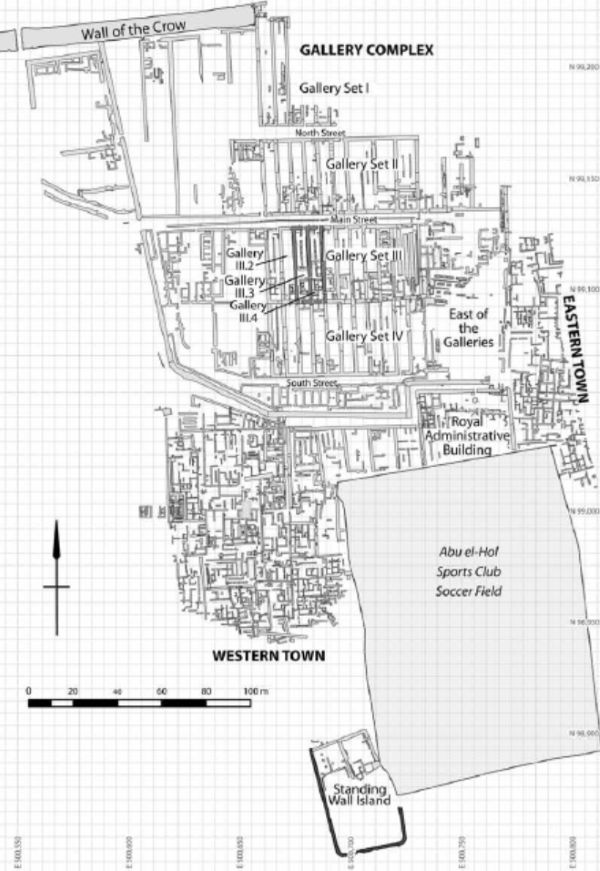
The myth that Hebrew slaves built the pyramids survives most easily when the builders remain anonymous, faceless, and imaginary. Archaeology has made that anonymity harder to maintain. Excavations around the Giza Plateau, especially at the workers’ settlement often called Heit el-Ghurab, have revealed the material world behind pyramid construction: housing areas, galleries, bakeries, production spaces, administrative traces, animal bones, tools, pottery, sealings, and burial grounds associated with the laborers and supervisors who served the royal building projects. This evidence does not produce a simple picture of cheerful volunteers building monuments out of devotion alone, but it does dismantle the cinematic fantasy of starving Hebrew captives driven by whips beneath the pyramids. The real builders lived within an organized Egyptian labor system that provisioned, supervised, fed, housed, and, in some cases, honored the people whose work made royal monumentality possible.
The workers’ settlement is particularly important because it replaces legend with infrastructure. Pyramid construction required more than stone-hauling crews. It required cooks, bakers, brewers, butchers, scribes, seal-bearers, toolmakers, overseers, inspectors, boatmen, quarry workers, masons, haulers, and specialists who could coordinate labor across an enormous logistical system. At Giza, the settlement evidence shows not a temporary slave camp thrown together at the edge of royal cruelty, but a planned support environment tied to state organization. Large galleries may have housed rotating crews; bakeries and breweries supplied staple foods; administrative sealings helped track goods and authority; animal bones point to large-scale provisioning. The archaeology shifts attention away from the melodrama of forced foreign captives and toward the more historically plausible reality of a labor force managed through Egyptian institutions.
Food remains are among the strongest challenges to the slave myth. The workers at Giza were not merely kept alive on scraps. Evidence from faunal remains suggests substantial provisioning with cattle, sheep, goats, pigs, fish, bread, and beer, though distribution almost certainly varied by rank, task, and status. Meat, especially cattle, was not an insignificant resource in Old Kingdom Egypt. Supplying it to workers required planning, herding, slaughtering, transport, and redistribution, drawing rural production into the royal project through an administrative system that could move food as deliberately as it moved stone. The pyramid was sustained not only by haulers and masons, but by herdsmen, bakers, brewers, scribes, and officials whose labor made the visible monument possible. This does not mean the work was easy or egalitarian. Monumental labor was exhausting, dangerous, and deeply hierarchical. But the evidence of organized provisioning contradicts the popular image of disposable slave laborers being worked to death without investment. The state fed these workers because their labor was valuable, specialized, and integrated into a system that depended on maintaining human capacity. A starving, casually expendable population would have been poorly suited to the precision, endurance, and coordination required by pyramid construction.
The cemeteries associated with pyramid workers further complicate the old story. Burials near the pyramids do not fit easily with the idea of despised foreign slaves whose bodies were discarded after use. Some workers and overseers received tombs in proximity to the royal monuments, and skeletal evidence has been interpreted as showing both hard physical labor and signs of medical treatment. Injuries, healed fractures, stress markers, and degenerative conditions point to bodies shaped by strenuous work, but also to lives sustained long enough for injuries to heal. That combination matters because it reveals laborers neither as pampered servants of royal ideology nor as faceless victims thrown away after exhaustion. They were working people in an ancient state, subject to hierarchy and physical strain, yet also situated within a social order that could provide food, medical attention, burial, and recognition. The proximity of some burials to the pyramids suggests that participation in royal construction may have carried status, or at least a form of honored association with the king’s eternal monument. This does not erase coercion or inequality, but it changes the historical category. It suggests hardship without confirming the Hollywood picture of mass enslavement. These were laboring people within a hierarchical ancient state, not modern wage workers in any simple sense, but neither were they the Hebrew slaves of popular imagination.
The organization of labor at Giza also appears to have relied on named crews and internal identity. Marks, inscriptions, and later administrative evidence from pyramid projects show that workers could be grouped into teams with names, divisions, and responsibilities. Such organization was essential for managing quarrying, transport, placement, food supply, and accountability. The famous work-gang inscriptions inside the relieving chambers of Khufu’s pyramid, including names connected to Khufu, remind us that the project operated through Egyptian crews with loyalties, labels, and administrative oversight. This kind of evidence is worlds away from the anonymous, ethnicized mass imagined by the Hebrew-slave myth. It reveals pyramid construction as a structured Egyptian enterprise, not as a biblical episode accidentally carved into Old Kingdom stone.
The discovery and publication of the Wadi al-Jarf papyri have deepened this picture by giving scholars rare documentary evidence connected to Khufu’s reign. The diary of Merer, an official involved in transporting limestone from Tura to Giza, does not describe pyramid construction as mythic spectacle. It describes logistics: movement by boat, coordination with administrative centers, delivery of stone, and officials operating within a named bureaucratic system. The text is remarkable precisely because it is ordinary. It shows ancient monumentality from the level of scheduling, supply, movement, and supervision, not from the level of legend. Stone did not simply appear at Giza through royal command. It traveled through managed routes, by crews whose movements were recorded, under officials whose authority was embedded in the administrative machinery of Khufu’s state. That is precisely what the archaeological record at Giza would lead us to expect. The pyramids were not built by a mysterious lost people, aliens, or enslaved Hebrews. They were built through Egyptian administrative competence, river transport, provisioning, recordkeeping, and labor organization. The diary’s plainness is its power. It replaces fantasy with paperwork, and paperwork is often where real history finally catches the myth by the ankle.
None of this requires pretending that Old Kingdom labor was free in a modern liberal sense. Ancient Egypt was hierarchical, royal, extractive, and capable of compelling service. The pyramid builders may have included permanent specialists, seasonal workers, conscripted laborers, and personnel drawn from communities obligated to the crown. But that is a different historical claim from saying that Hebrew slaves built the pyramids. Archaeology does not support that claim, and chronology makes it nearly impossible. The evidence points instead to native Egyptian workers embedded in a state labor system, provisioned through royal redistribution, organized by crews and officials, and remembered materially in settlements, tombs, bones, tools, and administrative traces. The legend gives us a dramatic image. Archaeology gives us people.
Herodotus and the Greek Invention of Pyramid Tyranny
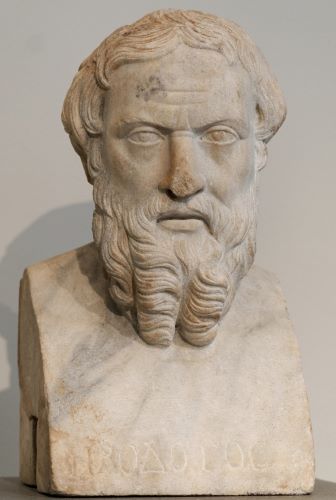
Herodotus occupies an uneasy place in the history of the pyramid-slavery myth. He did not claim that Hebrew slaves built the pyramids and blaming him for the full modern misconception would be too simple. Yet his account supplied one of the myth’s most durable ingredients: the idea that the pyramids were monuments of tyranny, extracted from suffering populations by a despotic king. Writing in the fifth century BCE, nearly two thousand years after Khufu’s reign, Herodotus described Egypt as an ancient land of wonders, customs, priests, kings, animals, rivers, and marvels. His narrative preserved information, rumor, interpretation, and Greek moral judgment in the same literary fabric. When he turned to the pyramid of Cheops, his Greek name for Khufu, he framed the monument not primarily as a royal mortuary complex rooted in Old Kingdom theology, but as the legacy of a ruler who oppressed his people and forced them into monumental labor.
That framing mattered because Herodotus wrote for an audience outside Egypt’s own historical memory. The Old Kingdom world that produced the Giza pyramids had long vanished by his lifetime. The institutions that organized pyramid labor, the theological logic of royal mortuary complexes, the administrative records of work crews, and the social meanings of service to the king were no longer available to him in any direct sense. Instead, he encountered monuments that dwarfed ordinary explanation and traditions mediated through Egyptian informants, temple memory, translation, and his own Greek assumptions about political power. The result was not simply falsehood, but interpretive distance. Herodotus looked at immense architecture and read it through the moral vocabulary available to him: kingship sliding into tyranny, command becoming oppression, labor becoming suffering, and size itself becoming evidence of injustice.
In Herodotus’ account, Cheops closes temples, brings misery upon Egypt, and compels great numbers of people to work on the pyramid and its associated works. The details are famous, but their deeper significance lies in the moral architecture of the story. The pyramid is not merely built; it becomes an accusation. Monumentality is treated as proof of royal excess. A king who could command so much labor must have violated proper limits. This was a profoundly Greek way of understanding power, especially when applied to eastern monarchies. Greek writers often contrasted their own civic ideals, however imperfectly practiced, with images of Oriental despotism, luxurious courts, and subjects reduced to instruments of royal will. Herodotus’ Egypt was more complicated than a simple caricature, but his Cheops episode helped place the pyramids inside a larger Mediterranean tradition in which massive royal monuments could be read as the visible remains of political domination.
This interpretive move created fertile ground for later confusion. Herodotus’ workers were not Hebrews, and his story was not an Exodus story. Still, once the pyramids had been morally classified as structures of forced labor, they were easier to merge with the biblical memory of Israelite bondage. The connection did not require careful argument. It required only symbolic proximity. Egypt already stood in Jewish and Christian memory as the land of Pharaoh, oppression, and deliverance. The pyramids stood in Greco-Roman and later European imagination as the most astonishing remains of Egyptian royal power. When these two inherited images met, the distinction between Old Kingdom pyramid labor and biblical forced labor began to blur. The Greek tyrant of monumental memory and the biblical Pharaoh of bondage were not the same figure, but later imagination did not need them to be. They occupied the same symbolic space: Egypt as the theater of royal domination. Once that fusion began, the specific identities of the workers mattered less than the moral clarity of the scene. A Greek story about Cheops’ tyranny and a Hebrew story about oppression under Pharaoh became a single visual shorthand: slaves building pyramids.
Herodotus also shaped the problem by making Egyptian antiquity readable as narrative drama. He did not write archaeology, and he did not write modern social history. He wrote inquiry, travel narrative, ethnography, moral reflection, political storytelling, and wonder literature. That mixture gave his account extraordinary power. Later readers could remember the story more easily than the chronology. They did not need to know the Old Kingdom, the Fourth Dynasty, the development from Djoser to Sneferu to Khufu, or the distinction between stone pyramid complexes and mudbrick store cities. They needed only the image of a cruel king commanding vast labor. His account gave later tradition a kind of narrative handle, something simple enough to grasp and repeat: the pyramid as evidence of oppression. That simplification mattered because monuments often survive after their original meanings become inaccessible. When later cultures cannot recover the administrative and ritual world that produced a structure, they often explain it through moral drama. Herodotus helped create the emotional grammar by which the pyramids would later be misunderstood. The monuments ceased to be primarily Egyptian religious and administrative achievements and became signs of suffering, arrogance, and royal overreach.
The irony is that Herodotus’ account is valuable precisely because it reveals the early formation of an outsider’s Egypt. His work shows how monuments can outlive the cultures that built them and then become available for new explanations, new moral lessons, and new mistakes. By the fifth century BCE, the pyramids were already ancient enough to attract legend. Herodotus did not invent the Hebrew-slave myth, but he helped invent the pyramid as a monument of tyranny in the Western imagination. That was enough. Once the pyramids had been detached from their Old Kingdom setting and attached to oppression as a moral category, later cultures could fasten the Exodus onto them with ease. The result was not history, but a powerful inheritance of misread grandeur.
Exodus, Forced Labor, and the Cities That Were Not Pyramids
The next layer of the myth comes from a different source altogether: the biblical memory of Israelite bondage in Egypt. Unlike Herodotus, Exodus is not interested in the pyramids, Khufu, Giza, or Old Kingdom royal architecture. Its concern is theological, political, and narrative: the growth of the Israelites in Egypt, Pharaoh’s fear of their increasing numbers, the imposition of oppressive labor, the attempted destruction of Hebrew male children, and the eventual deliverance of Israel through divine intervention. The story is not framed as an explanation for Egyptian monuments. It is framed as an account of enslavement, oppression, covenant, liberation, and the formation of a people. The problem begins when later readers take this powerful story of forced labor and attach it to the most famous monuments in Egypt, even though the text itself points elsewhere.
The key passage is Exodus 1:11, which says that the Egyptians set taskmasters over the Israelites and forced them to build “store cities” for Pharaoh, specifically Pithom and Rameses. That sentence matters because it names the work. It does not say that the Israelites built pyramids, tombs, mortuary temples, royal causeways, or stone monuments at Giza. It describes store cities, and the surrounding verses emphasize mortar, brick, and labor in the fields. The biblical image is one of state construction and agricultural oppression, not Old Kingdom stone pyramid building. This does not make the passage simple as history, because the identification of Pithom and Rameses, the dating of the Exodus tradition, and the historical memory behind the story remain debated. But the text itself is clear enough on this point: the forced labor of the Israelites is not presented as pyramid construction.
The city-name Rameses is especially important because it belongs to a much later Egyptian horizon than the Giza pyramids. Pi-Ramesses, the royal residence associated with Ramesside power in the eastern Nile Delta, belongs to the New Kingdom, particularly the world of Ramesses II in the thirteenth century BCE. That does not automatically prove the Exodus happened under Ramesses II, nor does it settle the complicated question of how biblical place names developed, were remembered, or were updated by later scribes. But it does show why the biblical text cannot be simply mapped onto the Old Kingdom. The world evoked by Rameses is not the Fourth Dynasty world of Khufu. It is a later Egypt of Delta cities, mudbrick construction, imperial administration, chariot power, Asiatic contacts, military roads, garrison networks, royal building programs, and New Kingdom statecraft. The setting implied by Rameses belongs to an Egypt deeply involved in the eastern Mediterranean and Levant, not to the earlier pyramid age when kingship expressed itself through vast mortuary complexes on the Memphite plateau. The myth collapses that distance because “Pharaoh” sounds timeless in modern ears, but Egyptian history was not one long, undifferentiated reign. To speak of “Pharaoh” without chronology is like speaking of “Caesar” without distinguishing the Roman Republic from late antiquity. The title can remain recognizable while the institutions, politics, economy, and architecture around it change profoundly.
The material language of Exodus also points away from the pyramids. Brickmaking dominates the forced-labor scenes. Pharaoh demands bricks without straw, intensifying labor by forcing the Israelites to gather their own materials while maintaining the same quotas. The cruelty of the story lies in administrative pressure: production targets, taskmasters, foremen, punishment, and the deliberate manipulation of labor conditions. This is a powerful picture of state oppression, but it is not the same as quarrying, hauling, dressing, and placing limestone blocks for a Fourth Dynasty pyramid. Mudbrick and stone both mattered enormously in Egypt, but they belonged to different building traditions, different types of structures, and often different symbolic purposes. A mudbrick store city in the Delta and a limestone pyramid complex at Giza should not be treated as interchangeable simply because both are Egyptian.
The distinction is not merely technical. It changes the moral and historical meaning of the story. In Exodus, Israelite labor is connected to Pharaoh’s fear and policy. The Israelites are oppressed because they are becoming numerous, because their presence is perceived as a political danger, and because forced labor becomes a tool of containment. The narrative is about power responding to fear by turning a resident population into a controlled labor force. Pyramid construction, by contrast, emerged from the Old Kingdom’s mortuary theology, royal ideology, and state capacity centuries earlier. The pyramid was a king’s eternal machine, a ritual and architectural expression of cosmic order and royal afterlife. The store cities of Exodus belong to a different logic: storage, administration, production, and coercive control. One belongs to the sacred architecture of royal eternity; the other belongs to the management of labor, supply, and population inside an anxious state. That difference matters because it prevents the pyramids from becoming a generic symbol pasted over every Egyptian act of coercion. Egypt certainly used forced labor in many contexts, and Exodus gives literary form to that memory, but the pyramids were not the specific works named by the text. When later imagination identifies the two, it does not merely make a chronological mistake. It changes both stories. It turns Old Kingdom mortuary architecture into biblical punishment, and it turns the Exodus account of brickmaking and store cities into a spectacle of stone monuments it never claimed.
Scholars have long debated the historical background of the Exodus tradition, and I do not need to resolve that debate to reject the pyramid myth. Some scholars see elements of Egyptian memory in the biblical account, especially in the Delta setting, Egyptian names, labor terminology, and the reference to Rameses. Others are more skeptical, emphasizing the literary shaping of the tradition, the lack of direct Egyptian evidence for a mass Exodus, and the complex formation of Israelite identity in Canaan. Between maximalist and minimalist readings lies a wide field of cautious interpretation. Yet across that debate, one point remains firm: the biblical text does not attribute pyramid building to the Israelites. Even arguments that defend some historical memory behind Israelite labor in Egypt usually place that memory in a much later setting than the Giza pyramid age.
This is why the popular phrase “the Hebrews built the pyramids” is so misleading. It pretends to summarize the Bible, but it actually adds something the Bible never says. Exodus supplies bondage, Pharaoh, taskmasters, harsh labor, bricks, store cities, and liberation. It does not supply pyramids. The pyramids are imported from another tradition of Egyptian memory, especially the Greco-Roman and modern visual imagination of monumental tyranny. Once imported, they make the biblical story more visually dramatic but less historically accurate. The whip, the block, and the pyramid create a scene that feels ancient and oppressive, but the scene is stitched together from mismatched parts. It is less a memory than a montage.
A careful reading of Exodus helps dismantle the myth rather than support it. The Bible remembers forced labor in Egypt, but not pyramid labor. It names Pithom and Rameses, not Giza. It describes brickmaking and field labor, not Fourth Dynasty stone construction. It places oppression within a theological story of deliverance, not within an explanation of Egyptian royal tombs. The later fusion of Exodus and the pyramids reveals how easily cultural memory turns symbols into evidence. Pharaoh becomes any Egyptian king, Egypt becomes any Egyptian period, forced labor becomes any major monument, and the pyramids become the obvious stage for a story that never placed them there. The process is powerful because it is simple. It removes the difficult work of chronology, geography, textual reading, and archaeological distinction, replacing all of it with an image that can be understood instantly. But instant recognition is not the same as historical truth. The real Exodus tradition, whatever one concludes about its historical core, speaks in the language of brick, quota, fear, labor discipline, and divine deliverance. The pyramid myth speaks in the language of spectacle. The two have been made to overlap in popular imagination, but the overlap is the invention. The result is memorable, but memory is not the same thing as history.
The Chronological Gap: Why the Timeline Breaks the Myth
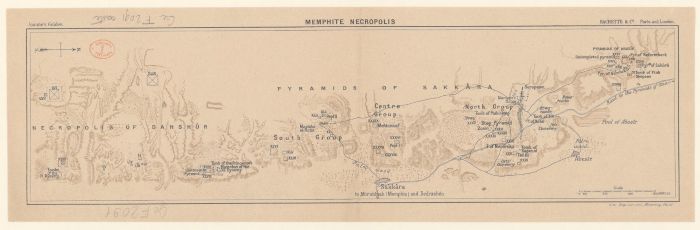
The myth that Hebrew slaves built the pyramids cannot survive ordinary chronological scrutiny. The Giza pyramids belong to the Old Kingdom, especially the Fourth Dynasty, when Khufu, Khafre, and Menkaure constructed their mortuary complexes on the Memphite plateau in the third millennium BCE. The biblical world usually associated with Israelite bondage, if connected to a historical setting at all, belongs much later, most commonly to discussions of the New Kingdom and the Ramesside period. That separation is not a matter of decades or even a few generations. It is a gap of more than a thousand years. To imagine Hebrews building the Great Pyramid is not like confusing two neighboring pharaohs. It is like placing medieval peasants at the construction of the Colosseum, or Roman legionaries at the building of Gothic cathedrals. The scale of the error is enormous, and yet it disappears easily because popular memory often treats ancient Egypt as a single, unchanging world.
The Fourth Dynasty pyramid age was a world of early centralized kingship, Memphite administration, Old Kingdom mortuary theology, stone pyramid complexes, and royal cult landscapes built around the dead king’s transformation and eternal presence. Khufu’s pyramid was part of a tradition that had developed through earlier experiments, especially at Saqqara, Meidum, and Dahshur, before reaching its most famous expression at Giza. By the time any plausible Ramesside setting for Israelite labor is considered, Egypt had passed through vast changes: political fragmentation, reunification, foreign rule by the Hyksos, New Kingdom imperial expansion, military campaigns in the Levant, new royal capitals, changing administrative systems, and different architectural priorities. These were not cosmetic differences. They were transformations in state structure, foreign policy, religious emphasis, military power, and regional geography. The word “Egypt” covers all of them, but historical accuracy requires distinguishing them.
The name Rameses in Exodus 1:11 is one of the clearest signs that the biblical memory, whatever its historical core, does not belong to the Old Kingdom pyramid age. Rameses evokes the world of Ramesside Egypt, especially the eastern Nile Delta and the royal city of Pi-Ramesses, not the Fourth Dynasty landscape of Giza. Scholars disagree about whether the name reflects a genuine memory from the Late Bronze Age, a later scribal updating of an older place name, or a complex layering of tradition. But none of those options places Israelite forced labor in Khufu’s reign. Even a cautious reading of the biblical text points toward a setting far later than the pyramids. The myth survives only by ignoring the chronological signal embedded in the very verse often invoked to support it.
The problem is intensified by the way modern audiences imagine “Pharaoh.” In popular storytelling, Pharaoh becomes almost a personal name rather than a royal title used across long stretches of Egyptian history. Once that happens, the pharaoh of Exodus, the pharaohs of the pyramids, and the pharaohs encountered by Greek writers all merge into one symbolic tyrant. The same flattening happens to Egyptian architecture. Pyramids, temples, obelisks, tombs, statues, store cities, and mudbrick compounds all become interchangeable signs of “ancient Egypt.” The historical imagination becomes a painted backdrop: sand, stone, slaves, whips, gods, kings, and monumental labor. Chronology disappears because the symbols are stronger than the sequence. But the sequence is exactly what matters. Without it, the myth can place anyone anywhere, doing any work, under any Pharaoh, so long as the image feels ancient enough. This is how a Fourth Dynasty stone monument becomes attached to a New Kingdom-flavored biblical memory, and how both are then absorbed into a much later Greek and modern visual tradition. The audience is not usually asking which dynasty built the monument, which materials were used, which labor system operated, or which text actually names the project. It recognizes Egypt through icons. The pyramid supplies Egypt, the whip supplies oppression, and Pharaoh supplies tyranny. That combination is powerful, but it is also historically careless. It turns Egypt’s long chronology into costume and scenery, allowing a vivid tableau to replace the difficult work of periodization.
Restoring the timeline breaks the spell. The pyramids at Giza were already ancient by the time Herodotus saw them in the fifth century BCE. They were already monuments from a remote past when New Kingdom pharaohs ruled, campaigned, built, and governed in worlds very different from Khufu’s. They were older to Ramesses II than classical Athens is to the modern United States. That single fact should unsettle the entire popular image. The Hebrew-slave pyramid myth depends on chronological collapse, and historical chronology undoes it. Once the Old Kingdom pyramid age, the possible Ramesside background of Exodus, and the later Greek interpretation of Egyptian monuments are put back in order, the familiar image can no longer stand. It remains vivid, but it belongs to cultural memory, not ancient history.
Late Antique and Medieval Transformations: Biblical Egypt Becomes Monumental Egypt
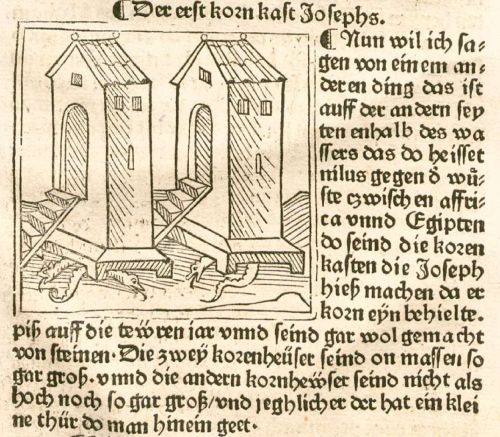
The fusion of biblical Egypt with monumental Egypt did not occur all at once. It developed gradually as later Jewish, Christian, and Islamic readers encountered the ruins of ancient Egypt through scripture, pilgrimage, hearsay, travel writing, local tradition, and inherited classical accounts. By late antiquity, the pyramids no longer belonged primarily to the living religious and administrative world that had produced them. They stood as enormous remnants from a past that even Egyptians of later periods often understood through legend, antiquarian explanation, or priestly memory. Once the original Old Kingdom context faded from ordinary knowledge, the monuments became available for new meanings. Biblical history offered one of the most powerful frameworks through which late antique and medieval observers could make sense of them.
One of the most important developments was the tradition that identified the pyramids not with Hebrew slave labor, but with Joseph’s granaries. This was a different misconception, but it arose from the same impulse to place Egyptian monuments inside biblical narrative. Genesis describes Joseph storing grain during years of abundance in preparation for famine, and later readers looking at the pyramids saw vast, mysterious structures that seemed to demand a scriptural explanation. The pyramids were sometimes interpreted as storehouses built under Joseph’s supervision. The idea was wrong, but it made imaginative sense within a world that often read landscape through sacred history. Egypt’s greatest monuments were too large, too strange, and too ancient to remain merely unexplained. If they could be joined to Joseph, they could be made intelligible within providential history. The association also gave the pyramids a morally positive biblical purpose, unlike the later slavery myth: they were not yet monuments of oppression, but instruments of foresight, preservation, and divine wisdom. Joseph’s administrative genius became a way to domesticate Egyptian antiquity, turning alien royal architecture into evidence of biblical providence. The same stone that Old Kingdom Egyptians had raised for royal eternity could be reimagined by later readers as a material witness to God’s saving care during famine. That transformation did not require evidence in the modern sense. It required only resemblance, memory, and the confidence that the visible world should confirm the sacred story.
Late antique pilgrimage helped circulate these associations. Christian travelers moving through Egypt and the Holy Land often encountered places already layered with local identifications, biblical associations, and devotional memory. A site did not need to be archaeologically correct to become meaningful. It needed to be narratively useful. The pyramids, viewed from outside their Old Kingdom context, could be treated as physical witnesses to biblical events, even when the connection rested on tradition rather than evidence. This mattered because pilgrimage literature carried authority among readers who would never see Egypt themselves. A traveler’s report could stabilize a local claim, repeat it across regions, and turn speculation into inherited knowledge. In that process, Egyptian monuments became less Egyptian and more biblical in the imagination of distant audiences.
The Joseph’s granaries tradition also demonstrates how easily architecture could be misread when form replaced function. Medieval observers knew the biblical story of famine and storage; they saw huge structures in Egypt; they knew ancient Egypt had been the setting of Joseph’s rise. The conclusion seemed to follow, especially before close architectural study made the idea untenable. Some writers repeated the granary identification while others challenged it, noting that the pyramids were largely solid, lacked the internal capacity required for grain storage, and were more plausibly tombs or royal monuments. But correction did not immediately erase the myth. The persistence of the granary tradition shows that historical falsehoods endure when they answer a cultural need. The pyramids became proof that the Bible had left visible marks upon the Egyptian landscape. Their very massiveness made them persuasive. A small ruin could be dismissed as local tradition, but the pyramids seemed too grand not to belong to a grand story. Their scale invited explanation, and sacred history supplied one ready at hand. Medieval audiences were not usually working from excavated plans, stratigraphy, hieroglyphic evidence, or Old Kingdom chronology. They worked from texts, authorities, analogies, inherited stories, and visible forms. In that environment, the question was less “What did Fourth Dynasty Egyptians build these for?” than “Which known story makes these monuments meaningful?” The wrong answer could survive because it gave the right kind of narrative satisfaction.
This development is crucial for understanding the later Hebrew-slave pyramid myth. Before modern Hollywood placed enslaved Israelites under the shadow of Giza, medieval and late antique imagination had already made the pyramids available to biblical history. The specific association changed. In one tradition, Joseph’s administrative wisdom explained the pyramids as storage facilities. In another, the oppression of Israel explained them as monuments of forced labor. The two claims are not identical, but they belong to the same larger pattern: Egyptian ruins were absorbed into biblical memory because they seemed too important to remain outside it. Once the pyramids had become scripturalized, later audiences could shift them from Joseph’s providential economy to Moses’ drama of bondage without feeling that they had crossed a major historical boundary.
Medieval Islamic and Christian traditions added further layers of interpretation. Some Arabic writers treated the pyramids as antediluvian monuments, repositories of ancient wisdom, talismanic structures, royal tombs, or remnants from a world before the Flood. Christian travelers and commentators often preferred biblical identifications, though even among them there was disagreement and skepticism. Jewish travelers also encountered and transmitted local traditions about Egyptian monuments. The important point is not that all medieval writers believed the same thing. They did not. The important point is that the pyramids became a contested imaginative field, a place where biblical history, classical memory, local Egyptian lore, Islamic antiquarian speculation, and traveler observation overlapped. The monuments were no longer only what Old Kingdom Egyptians had made them. They had become objects through which later civilizations argued about the ancient past. In some traditions, they preserved the wisdom of primeval kings; in others, they marked Joseph’s prudence, Pharaoh’s pride, or the uncanny survivals of a civilization older than ordinary memory. That plurality matters because it shows that the pyramids were not misunderstood in one fixed way. They were repeatedly reinterpreted according to the needs, fears, and authorities of different communities. Each interpretation loosened the monuments further from their original setting. The more meanings they accumulated, the easier it became for later cultures to treat them as symbolic property rather than historical evidence.
By the late medieval and early Renaissance periods, more critical voices began to reassert the older classical understanding that the pyramids were tombs of kings, not granaries or biblical storehouses. Humanist attention to ancient texts, increased travel, and closer observation gradually weakened some of the medieval identifications. Yet the broader habit of biblicalizing Egypt did not disappear. It remained powerful because it gave moral and narrative order to ruins that otherwise seemed alien. This is where the later slave myth found prepared ground. The pyramids had already been detached from their Old Kingdom setting and made available for sacred history. All that remained was for modern visual culture to select the most dramatic biblical association available: not Joseph storing grain, but Israelites suffering under Pharaoh. The transformation from monumental Egypt into biblical Egypt was a necessary stage in the making of the modern false image.
Modern Egyptology and the Collapse of the Slave Myth
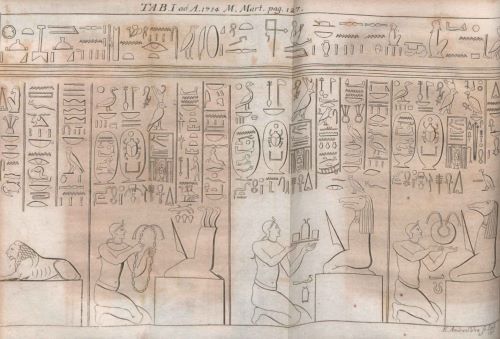
Modern Egyptology did not merely correct a mistaken detail about who built the pyramids. It changed the entire intellectual framework through which the pyramids could be understood. Before the decipherment of hieroglyphs and the development of archaeological method, Egyptian monuments were often read through Greek texts, biblical memory, local legend, traveler speculation, and theological imagination. The pyramids could become Joseph’s granaries, monuments of tyrants, repositories of primeval wisdom, or stages for the bondage of Israel because their own textual, administrative, and archaeological contexts were not yet fully recoverable. Modern Egyptology gradually altered that situation. Once Egyptian inscriptions could be read, sites could be excavated systematically, pottery and architecture could be dated comparatively, and royal chronologies could be reconstructed with increasing precision, the pyramids could no longer be treated as free-floating symbols. They belonged to a specific period, a specific royal ideology, a specific landscape, and a specific state system.
The decipherment of hieroglyphs in the nineteenth century was one of the great turning points. It allowed scholars to move beyond treating ancient Egypt as a silent monument field interpreted mainly through outsiders. Egyptian texts, king lists, inscriptions, tomb scenes, administrative records, offering formulas, and religious writings began to speak within their own cultural grammar. This did not make interpretation easy or final, but it shifted authority away from inherited myth and toward Egyptian evidence. The pyramids could now be placed within dynastic history, royal names could be connected to monuments, and the Old Kingdom could be distinguished from the New Kingdom with growing confidence. That distinction was fatal to the Hebrew-slave pyramid myth. The monuments of Khufu, Khafre, and Menkaure were not only older than the usual Exodus settings; they belonged to an earlier phase of Egyptian kingship whose written, architectural, and archaeological profile differed profoundly from the Ramesside world evoked by Exodus 1:11.
Archaeological work at Giza intensified the collapse of the myth by replacing spectacle with context. Excavations did not reveal a landscape of foreign slave camps attached to the pyramids. They revealed an Egyptian royal necropolis with tombs, temples, causeways, quarries, settlements, administrative zones, food-production areas, and cemeteries connected to the labor force and officials who served the pyramid complexes. The site known as Heit el-Ghurab, often described as the Lost City of the Pyramid Builders, has been especially important because it shows the infrastructure necessary to support large-scale construction. Bakeries, breweries, animal-processing evidence, galleries, sealings, and other remains point to a planned labor and provisioning system. These remains matter because they restore the human and administrative texture that the myth erases. Pyramid construction required not only people dragging stone, but also people baking bread, brewing beer, slaughtering cattle, distributing rations, repairing tools, recording deliveries, supervising crews, and moving supplies through a managed landscape. The work was embedded in a settlement economy, not isolated in a camp of anonymous misery. The builders were not archaeologically invisible, and once they became visible, they did not look like the Hebrews of Exodus or the disposable masses of Hollywood. They looked like Egyptians working within a state-directed system of obligation, specialization, redistribution, and supervision.
The workers’ cemeteries and skeletal evidence further weakened the older image of enslaved captives worked to death without recognition. Graves associated with pyramid workers and overseers indicate social differentiation, physical hardship, and proximity to the royal project. Some remains show stress and injury, as one would expect from heavy labor, but also healed fractures and signs that injured workers survived long enough to recover. This combination points toward a labor force that endured strain and hierarchy, but was also fed, managed, and in some cases buried with a degree of care and status. Such evidence does not require sentimentalizing pyramid labor. The Old Kingdom state was not a modern employer, and the line between obligation, corvée, conscription, and service was not the same as modern freedom. But the evidence does require abandoning the crude image of chained Hebrew slaves hauling blocks under Pharaoh’s lash. Archaeology has made that picture not merely doubtful, but historically untenable.
The discovery of the Wadi al-Jarf papyri sharpened the case by providing rare administrative documentation from the age of Khufu itself. Merer’s diary, an official involved in transporting limestone from Tura toward Giza, is important because it shows pyramid construction through the ordinary machinery of state logistics. Boats, crews, delivery schedules, stone transport, officials, and administrative coordination appear not as mythic abstractions, but as practical realities. This is exactly the kind of evidence that myths cannot easily absorb, because it is too specific. The Hebrew-slave legend thrives in vagueness: ancient Egypt, Pharaoh, slaves, stones, pyramids. The papyri restore names, routes, materials, procedures, and offices. They show the pyramid not as a miracle of cruelty, but as an administrative achievement rooted in Egyptian labor organization and riverine transport. Even more importantly, they pull pyramid construction out of the realm of abstract wonder and place it inside the daily recordkeeping of an Old Kingdom official. Merer’s world is not the world of Moses, nor is it the world of Herodotus’ moralized Cheops. It is a world of teams, harbors, limestone shipments, inspections, and movement between named locations. The grandeur of the Great Pyramid was made possible by tasks that were repetitive, logistical, and bureaucratic. The collapse of the slave myth comes not from one dramatic discovery alone, but from the convergence of chronology, settlement archaeology, textual evidence, and logistical reconstruction.
Modern Egyptology has made the old myth unnecessary as well as inaccurate. The actual story of pyramid construction is far more interesting than the legend it replaces. It involves royal ideology, state formation, agricultural cycles, labor mobilization, technical experimentation, food redistribution, craft specialization, river transport, administrative accounting, and the social world of workers who were neither modern free laborers nor biblical Hebrew slaves. The myth had treated the pyramids as mute evidence of oppression because later cultures did not know how else to explain them. Egyptology gave them back their historical setting. It did not remove power, hardship, or inequality from the story. It made those realities more precise. The pyramids were products of Old Kingdom Egypt, not Exodus; of Egyptian state labor, not Hebrew captivity; of administrative capacity, not cinematic fantasy. That is why the slave myth did not simply weaken under modern scholarship. It collapsed under the weight of better evidence.
Hollywood, Popular Memory, and the Final Form of the Lie
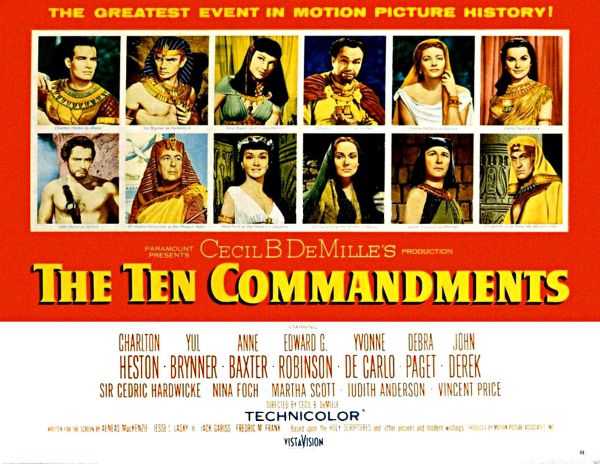
Modern film did not invent the confusion between biblical Egypt and monumental Egypt, but it gave the confusion its most durable visual form. Earlier traditions had already detached the pyramids from their Old Kingdom setting and made them available to biblical memory, whether through Joseph’s granaries, Pharaoh’s tyranny, or generalized ideas of Egyptian oppression. Hollywood inherited that symbolic field and simplified it for mass audiences. Film needed images that could communicate Egypt instantly, and nothing communicated Egypt more efficiently than pyramids, colossal statues, desert horizons, and lines of laboring bodies beneath royal command. The result was not historical reconstruction, but visual shorthand. The pyramids became scenery for the Exodus even though Exodus itself never placed Israelite labor there.
The logic of cinema favored compression. A filmmaker trying to represent ancient Egypt has only moments to establish setting, power, danger, and scale. The pyramid performs all of that work at once. It tells the viewer, without explanation, that the story takes place in Egypt, that the society is ancient, that the ruler is powerful, and that ordinary people are dwarfed by state ambition. The whip and the stone block then complete the moral picture. Viewers do not need a lesson in Old Kingdom chronology, Delta geography, Ramesside construction, or mudbrick store cities. They see pyramids and understand “Egypt.” They see enslaved workers and understand “bondage.” They see Pharaoh and understand “tyranny.” The power of the image lies precisely in its speed, but that speed is also what makes it historically dangerous.
Biblical epics intensified this compression by treating Egypt as a dramatic world rather than a chronological civilization. In such films, architectural elements from widely separated periods could appear together because their historical specificity mattered less than their symbolic charge. Pyramids, obelisks, sphinxes, pylons, temples, statues, chariots, palace courts, and slave gangs became part of one cinematic Egypt, a composite antiquity assembled for spectacle. The audience was not invited to distinguish Khufu from Ramesses II, Old Kingdom mortuary architecture from New Kingdom royal cities, or Herodotean tyranny from biblical forced labor. Instead, the visual field created a single emotional environment: Egypt as oppression made monumental. Once that environment became familiar, the false memory no longer needed to be argued. It had been seen.
The Ten Commandments, especially in its twentieth-century cinematic form, became central to the popular afterlife of this image. The film did not operate as academic history and did not pretend to solve the archaeology of pyramid construction. It worked as sacred spectacle, national morality play, Cold War-era epic, and visual theology. Its Egypt was vast, glittering, cruel, sensual, hierarchical, and architecturally overwhelming. The enslaved Hebrews were placed within that world as the suffering people whose liberation would reveal divine justice against imperial arrogance. Whether or not a viewer remembered the exact construction scenes, the film reinforced a mental association between Hebrew bondage and Egyptian monumentality. It made oppression visible through scale. The larger the statues, gates, and building projects became, the smaller the enslaved body appeared beneath them. That visual contrast was emotionally effective because it transformed historical complexity into moral geometry: the empire towered, the captive bent, and liberation became the breaking of a stone world that seemed to crush the human spirit beneath it. The film’s power lay not in proving that Hebrews built pyramids, but in making the audience feel that Egyptian monumentality and Israelite bondage naturally belonged in the same frame. Once that feeling took hold, the image could detach from the film itself and circulate as assumed history.
This is how popular memory often works: it remembers images more readily than texts. Exodus 1:11 names Pithom and Rameses, but most viewers do not carry the verse’s architectural and geographical details in their minds. They carry scenes. They remember bricks, whips, sand, Pharaoh, Moses, and colossal monuments. Those scenes become a substitute for reading. The biblical story is not so much rejected as visually overwritten. A person may sincerely believe that “the Bible says the Hebrews built the pyramids” because the cinematic version has become the remembered version. The false claim then circulates through classrooms, cartoons, sermons, casual speech, tourist assumptions, and simplified retellings. It becomes one of those “everybody knows” facts that survives precisely because few people stop to ask where it came from.
Hollywood also sharpened the moral usefulness of the myth. The actual history of pyramid construction is complicated: Egyptian labor organization, seasonal obligations, skilled crews, provisioning, hierarchy, royal ideology, religious purpose, and administrative capacity. The myth is simpler. It turns the pyramids into visible proof of enslavement and makes Pharaoh’s evil measurable in stone. That simplicity has emotional force. It allows audiences to see oppression at a glance and to experience liberation as the overthrow of monumental cruelty. In that sense, the myth survives because it is good storytelling. It gives moral architecture to the Exodus. But good storytelling can be bad history, especially when a powerful image erases the very people whose real labor built the monuments: Old Kingdom Egyptians organized within their own state, society, and religious world. The irony is that the myth claims to honor suffering while displacing actual historical laborers from the story of their own work. It replaces named Egyptian crews, administrators, haulers, quarrymen, bakers, brewers, and overseers with a biblical population attached to the wrong century, the wrong construction system, and the wrong monuments. The emotional truth of oppression becomes a historical falsehood when it is assigned to evidence that does not support it.
The final form of the lie, then, is not simply “Herodotus was wrong” or “Hollywood exaggerated.” It is a cumulative visual inheritance. Herodotus helped moralize the pyramids as monuments of tyranny. Biblical tradition preserved a memory of Israelite forced labor in Egypt. Late antique and medieval interpreters made Egyptian monuments available to sacred history. Modern Egyptology corrected the chronology and labor evidence, but mass media gave the older fusion new life. By the time the image reached modern popular culture, it had become almost immune to ordinary correction because it was no longer held as an argument. It was held as a picture. The task of history is not only to refute the claim, but to explain why the picture became so persuasive. The Hebrews did not build the pyramids. The modern imagination did.
Why the Lie Endures: Moral Truth, Historical Falsehood, and Cultural Compression
The following video from “Study of Antiquity and the Middle Ages” address the myth:
The belief that Hebrew slaves built the pyramids endures because it feels morally true even when it is historically false. It gives visible form to oppression. It turns bondage into architecture, power into stone, and liberation into the overthrow of a world built on human suffering. In that sense, the myth satisfies a deep narrative instinct. People want oppression to leave monuments that can be seen, touched, condemned, and symbolically reversed. The Exodus story already carries that moral force, but the pyramids intensify it because they are among the most recognizable symbols of ancient power on earth. When the two are fused, the result feels inevitable: the greatest monuments of Egypt must have been built by the people most famously enslaved there. The logic is emotionally satisfying, but historical evidence does not obey emotional satisfaction. It asks different questions: when was the monument built, by whom, under what labor system, in which political setting, and according to what material evidence? Those questions break the spell because they move the discussion from moral recognition to historical reconstruction. The myth wants the pyramid to function as a symbol. History insists that it first be understood as a product of a particular society, period, and administrative world. That insistence may feel less dramatic, but it is what keeps the past from becoming merely a screen for inherited images.
This is the difference between moral truth and historical truth. The Exodus tradition speaks powerfully about bondage, fear, domination, endurance, and deliverance. Those themes have shaped Jewish memory, Christian theology, liberation movements, abolitionist rhetoric, civil rights language, and countless modern struggles against oppression. In that moral sense, the image of a people crushed under imperial power has genuine force. But moral force does not license historical relocation. A story can speak truthfully about oppression without being attached to the wrong monument, century, labor system, or population. The pyramids do not need to have been built by Hebrews in order for the Exodus tradition to matter. Indeed, forcing the pyramids into the story weakens historical understanding by confusing symbolic meaning with evidence.
Cultural compression is the mechanism that makes the falsehood durable. Long histories are difficult to remember, especially when they involve multiple dynasties, shifting capitals, different building materials, contested textual traditions, and archaeological nuance. Popular memory compresses them. Old Kingdom pyramid building, New Kingdom Ramesside labor, Herodotus’ tale of Cheops, Joseph’s granaries, medieval biblical geography, and Hollywood spectacle become one simplified “Egypt.” In that compressed Egypt, chronology has little authority. Pharaoh is always Pharaoh, Egypt is always Egypt, slaves are always slaves, and pyramids are always the obvious monument of tyranny. The compression works because it is efficient. It creates a story that can be told in one image. But efficiency is precisely the problem. The single image devours the distinctions that make history true.
The myth also survives because correction can feel like moral diminishment. When historians say that Hebrew slaves did not build the pyramids, some hear an attempt to soften Egyptian oppression, deny biblical suffering, or strip the Exodus of its symbolic force. That is not what the correction means. It means only that different histories must be allowed to remain different. Old Kingdom Egyptians built the pyramids through a state labor system that included hierarchy, obligation, provisioning, specialization, and royal ideology. The biblical Israelites, according to Exodus, suffered forced labor in brickmaking, fieldwork, and the construction of store cities. Herodotus later interpreted the pyramids through a Greek moral lens of tyranny. Hollywood then fused these traditions into a vivid spectacle. None of these pieces has to be denied. They simply cannot be collapsed into one event without turning memory into montage. Precision does not weaken the moral seriousness of oppression; it protects it from becoming a decorative backdrop. If every monument can be assigned to any oppressed people because the image feels right, then actual workers, actual texts, and actual historical experiences are all displaced. The correction is not an act of dismissal, but of respect. It respects the Exodus tradition by reading what it says rather than importing what it does not. It respects Old Kingdom laborers by returning them to the monuments they built. And it respects history itself by refusing to confuse a powerful symbol with a proven fact.
The persistence of the lie reveals how historical falsehoods often survive at the intersection of image, emotion, and inherited authority. The claim is not persuasive because it is well sourced. It is persuasive because it is easy to picture, easy to teach, easy to preach, easy to film, and easy to remember. It reduces a complicated ancient past to a scene with clear villains, victims, monuments, and moral meaning. That is why it takes more than saying “archaeologists disproved it” to undo the myth. The historian has to restore depth where the myth has created flatness. The pyramids must be returned to the Old Kingdom, Exodus to its own textual world, Herodotus to Greek interpretation, and Hollywood to the modern manufacture of visual memory. Only then does the lie lose its power, not because oppression disappears from the story, but because the past becomes real again.
Conclusion: The Pyramids Were Not Built by Hebrew Slaves, but the Myth Was Built by History
The claim that Hebrew slaves built the Egyptian pyramids fails at every point where evidence must replace image. The chronology is wrong, the biblical text does not say it, the archaeology does not support it, and the labor system revealed at Giza belongs to Old Kingdom Egypt rather than to the later world evoked by Exodus. The pyramids of Khufu, Khafre, and Menkaure were products of a third-millennium BCE Egyptian state capable of organizing labor, materials, food, ritual, transport, and administration on a monumental scale. The Israelites of Exodus, by contrast, are described as building store cities with brick and mortar under conditions of forced labor. These are not the same projects, not the same materials, not the same period, and not the same historical setting. The famous image survives only when those distinctions are allowed to disappear.
Yet the myth itself has a history, and that history matters. Herodotus helped establish the pyramid as a monument of tyranny in the Greek imagination, even though he did not identify the builders as Hebrews. Exodus preserved a powerful story of Israelite bondage in Egypt, even though it did not place that bondage at Giza. Late antique and medieval interpreters made Egyptian monuments available to biblical memory, sometimes imagining the pyramids as Joseph’s granaries or as relics of sacred history. Modern film then gave the older fusion its final emotional form, placing Egypt, Pharaoh, slaves, stone, and liberation into a single visual field. The result was not a direct inheritance from antiquity, but a layered construction assembled from Greek moral history, biblical narrative, medieval interpretation, and modern spectacle.
The correction requires more than the simple statement that “slaves did not build the pyramids.” That phrase itself can be misleading if it implies that ancient labor was free, equal, or modern in character. The better conclusion is more precise: the pyramids were built by organized Egyptian laborers working within a hierarchical Old Kingdom state system that mobilized people through obligation, specialization, provisioning, supervision, and royal ideology. Some labor may have been compulsory, and the work was surely difficult, dangerous, and unequal. But the available evidence points to native Egyptian workers, not Hebrew slaves. Their settlements, food remains, crew organization, burials, injuries, administrative traces, and logistical records restore a human reality that the myth erases. The pyramid builders were not imaginary bodies placed beneath a biblical whip. They were people embedded in a specific Egyptian world.
The endurance of the false image teaches a broader lesson about historical lies. Many survive not because they are carefully argued, but because they are visually powerful, morally satisfying, and easy to repeat. The Hebrew-slave pyramid myth turns a complex ancient past into a single scene of oppression and deliverance. It feels meaningful, but feeling is not evidence. History asks harder questions, and those questions return the pyramids to the Old Kingdom, Exodus to its own textual world, Herodotus to Greek interpretation, medieval legend to sacred geography, and Hollywood to the manufacture of modern memory. The pyramids were not built by Hebrew slaves. But the myth was built by history itself, by the long human habit of turning separate pasts into one unforgettable picture.
Bibliography
Affiliate disclosure: Amazon links on this site are paid links. As an Amazon Associate I earn from qualifying purchases.
- Arnold, Dieter. Building in Egypt: Pharaonic Stone Masonry. New York: Oxford University Press, 1991.
- Assmann, Jan. Cultural Memory and Early Civilization. Cambridge: Cambridge University Press, 2011.
- —-. Moses the Egyptian: The Memory of Egypt in Western Monotheism. Cambridge, MA: Harvard University Press, 1997.
- Baines, John, and Jaromir Málek. Atlas of Ancient Egypt. Oxford: Phaidon, 1946.
- Bichler, Reinhold. “Herodotus’ Egypt and the Foundations of Universal History.” In Brill’s Companion to Herodotus, edited by Egbert J. Bakker, Irene J. F. de Jong, and Hans van Wees, 209–228. Leiden: Brill, 2002.
- Bietak, Manfred. “From Where Came the Hyksos and Where Did They Go?” In The Second Intermediate Period: Current Research, Future Prospects, edited by Marcel Marée, 139–181. Leuven: Peeters, 2010.
- Champollion, Jean-François. Précis du système hiéroglyphique des anciens Égyptiens. Paris: Imprimerie Royale, 1824.
- Curran, Brian A. The Egyptian Renaissance: The Afterlife of Ancient Egypt in Early Modern Italy. Chicago: University of Chicago Press, 2007.
- DeMille, Cecil B., dir. The Ten Commandments. Paramount Pictures, 1956.
- Edwards, I. E. S. The Pyramids of Egypt. Rev. ed. Harmondsworth: Penguin Books, 1987.
- Egeria. Egeria’s Travels. Translated by John Wilkinson. 3rd ed. Warminster: Aris & Phillips, 1999.
- Greener, Leslie. The Discovery of Egypt. London: Cassell, 1966.
- Gregory of Tours. The History of the Franks. Translated by Lewis Thorpe. London: Penguin Books, 1974.
- Haarmann, Ulrich. “Joseph’s Granaries: The Antiquity and Persistence of a Legend.” In The Near East in Antiquity: German Contributions to the Archaeology of Jordan, Palestine, Syria, Lebanon and Egypt, edited by Suzanne Kerner, 33–39. Amman: Goethe-Institut, 1991.
- Hall, Edith. Inventing the Barbarian: Greek Self-Definition through Tragedy. Oxford: Oxford University Press, 1989.
- Hartog, François. The Mirror of Herodotus: The Representation of the Other in the Writing of History. Translated by Janet Lloyd. Berkeley: University of California Press, 1980.
- Hawass, Zahi. “The Discovery of the Tombs of the Pyramid Builders at Giza.” In Egyptology at the Dawn of the Twenty-First Century: Proceedings of the Eighth International Congress of Egyptologists, edited by Zahi Hawass and Lyla Pinch Brock, 536–544. Cairo: American University in Cairo Press, 2003.
- Herodotus. Histories. Translated by Robin Waterfield. Oxford: Oxford University Press, 1998.
- Hoffmeier, James K. Israel in Egypt: The Evidence for the Authenticity of the Exodus Tradition. New York: Oxford University Press, 1997.
- Kemp, Barry J. Ancient Egypt: Anatomy of a Civilization. 3rd ed. London: Routledge, 2018.
- Kitchen, Kenneth A. On the Reliability of the Old Testament. Grand Rapids, MI: Eerdmans, 2003.
- Lehner, Mark. The Complete Pyramids: Solving the Ancient Mysteries. London: Thames & Hudson, 1997.
- —-. “The Development of the Giza Necropolis: The Khufu Project.” Mitteilungen des Deutschen Archäologischen Instituts, Abteilung Kairo 41 (1985), 109–143.
- —-. “The Name and Nature of the Heit el-Ghurab Old Kingdom Site: Workers’ Town, Pyramid Town, and the Port Hypothesis.” In Cities and Urbanism in Ancient Egypt, edited by Manfred Bietak, Ernst Czerny, and Irene Forstner-Müller, 171–200. Vienna: Austrian Academy of Sciences Press, 2010.
- Lehner, Mark, and Zahi Hawass. Giza and the Pyramids: The Definitive History. Chicago: University of Chicago Press, 2017.
- Lloyd, Alan B. Herodotus, Book II: Commentary 99–182. Leiden: Brill, 1988.
- Lowenthal, David. The Past Is a Foreign Country. Cambridge: Cambridge University Press, 1985.
- Mandeville, John. The Book of Marvels and Travels. Translated by Anthony Bale. Oxford: Oxford University Press, 2012.
- Moyer, Ian S. Egypt and the Limits of Hellenism. Cambridge: Cambridge University Press, 2011.
- Munson, Rosaria Vignolo. Telling Wonders: Ethnographic and Political Discourse in the Work of Herodotus. Ann Arbor: University of Michigan Press, 2001.
- Parkinson, Richard B. Cracking Codes: The Rosetta Stone and Decipherment. Berkeley: University of California Press, 1999.
- Redding, Richard W. “The Pig and the Chicken in the Middle East: Modeling Human Subsistence Behavior in the Archaeological Record Using Historical and Animal Husbandry Data.” Journal of Archaeological Research 23:4 (2015), 325–368.
- Redford, Donald B. Egypt, Canaan, and Israel in Ancient Times. Princeton: Princeton University Press, 1992.
- Rendsburg, Gary A., and James K. Hoffmeier. “Pithom and Rameses (Exodus 1:11): Historical, Archaeological, and Linguistic Issues.” Journal of Ancient Egyptian Interconnections 33–34 (2022), 1–14.
- Said, Edward. Orientalism. New York: Vintage Books, 1979.
- Schipper, Bernd U. “Raamses, Pithom, and the Exodus: A Critical Evaluation of Ex 1:11.” Vetus Testamentum 65:2 (2015), 265–288.
- Shaw, Ian, ed. The Oxford History of Ancient Egypt. Oxford: Oxford University Press, 2000.
- Tallet, Pierre. The Red Sea Scrolls: How Ancient Papyri Reveal the Secrets of the Pyramids. London: Thames & Hudson, 2022.
- Tallet, Pierre, and Gregory Marouard. “The Harbor of Khufu on the Red Sea Coast at Wadi al-Jarf, Egypt.” Near Eastern Archaeology 77:1 (2014), 4–14.
- Trouillot, Michel-Rolph. Silencing the Past: Power and the Production of History. Boston: Beacon Press, 1995.
- The Holy Bible. Exodus 1:8–14; 5:1–19.
- —-. Exodus 1:11–14.
- —-. Genesis 41:46–57; Exodus 1:8–14.
- Van Seters, John. The Life of Moses: The Yahwist as Historian in Exodus-Numbers. Louisville, KY: Westminster John Knox Press, 1994.
- Verner, Miroslav. The Pyramids: The Mystery, Culture, and Science of Egypt’s Great Monuments. New York: Grove Press, 2001.
- Wyke, Maria. Projecting the Past: Ancient Rome, Cinema, and History. New York: Routledge, 1997.
Originally published by Brewminate, 05.22.2026, under the terms of a Creative Commons Attribution-NonCommercial-NoDerivatives 4.0 International license.
About the Author