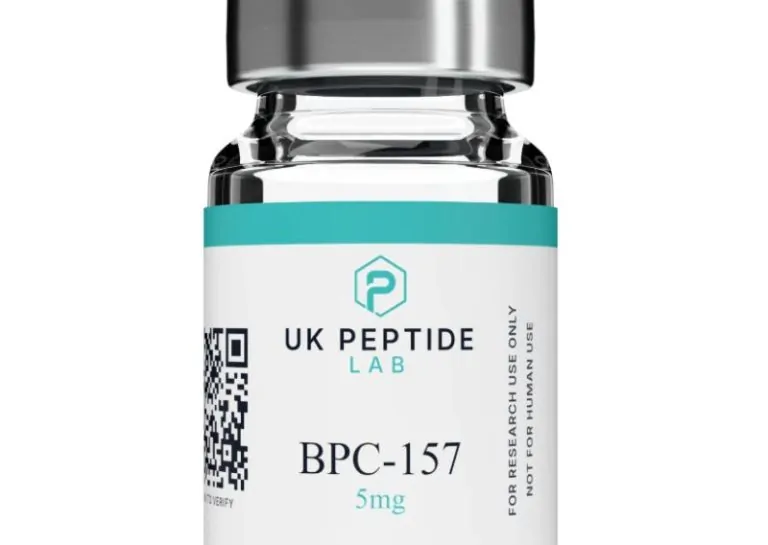
Peptide research depends on precision. Even small differences in molecular composition can influence how a compound behaves in laboratory settings, making consistency a critical part of producing meaningful results. Whether researchers are studying receptor interactions, cellular signaling, or metabolic pathways, the quality of the peptide itself plays a significant role in the reliability of experimental data.
This is why high-purity peptides have become the preferred standard for research applications. Purification removes unwanted synthesis byproducts and incomplete peptide sequences that could interfere with experiments. The result is a compound that more accurately reflects the intended molecular design while reducing variables that may affect reproducibility.
Understanding why peptide purity matters provides valuable insight into the foundation of dependable scientific research.
What Peptide Purity Really Means
Peptide purity refers to the percentage of a sample that consists of the desired peptide sequence rather than impurities or unintended molecular fragments.
During peptide synthesis, multiple chemical reactions occur to assemble amino acids into a complete chain. While modern synthesis methods are highly advanced, they can still produce small amounts of incomplete sequences, deletion products, or side reactions. Without proper purification, these unwanted compounds remain mixed with the target peptide.
Purity is commonly measured using analytical techniques such as High-Performance Liquid Chromatography (HPLC), which separates compounds based on their chemical characteristics. The higher the purity, the greater the proportion of the sample that contains the intended peptide.
For research applications, this level of accuracy helps minimize uncertainty throughout experimental work.
Where Peptide Impurities Come From
Even carefully controlled manufacturing processes naturally generate small amounts of unwanted materials.
One common source is incomplete amino acid coupling during synthesis. If a reaction does not finish completely, shortened peptide fragments may form alongside the desired sequence.
Chemical protecting groups used throughout synthesis can also leave residual compounds if they are not fully removed during processing.
Oxidation, aggregation, and other chemical changes may occur during handling or storage if environmental conditions are not carefully controlled.
These impurities are often present in extremely small quantities, but depending on the research objective, they can still influence experimental observations if left unremoved.
Why Purity Matters in Scientific Research
Reliable experiments depend on controlling as many variables as possible. When impurities are present, researchers introduce additional variables that may complicate data interpretation.
For example, an unintended peptide fragment may bind differently to a receptor than the intended compound. This can produce biological responses that appear inconsistent or difficult to explain.
Impurities may also affect enzyme activity, alter signaling pathways, or interfere with analytical measurements. Even when these effects are subtle, they can contribute to variation between repeated experiments.
High-purity peptides reduce the likelihood that observed outcomes are influenced by unintended molecular components, allowing researchers to focus on the biological properties of the target peptide itself.
The Connection Between Purity and Reproducibility
One of the biggest goals in scientific research is reproducibility. Independent researchers should be able to perform similar experiments and obtain comparable results.
Poor-quality compounds make this significantly more difficult.
If different peptide batches contain varying impurity profiles, experimental outcomes may shift even when protocols remain unchanged. Researchers may mistakenly attribute these differences to biological variability rather than inconsistencies in the material itself.
Using highly purified peptides helps establish a consistent starting point for every experiment. This supports better comparisons across studies and improves confidence in the conclusions drawn from the data.
How Purification Improves Peptide Quality
Purification is a specialized process that separates the desired peptide from unwanted synthesis byproducts.
Reverse-phase High-Performance Liquid Chromatography is one of the most commonly used techniques. During this process, peptide molecules move through a chromatography column at different rates depending on their chemical properties.
Because each compound behaves differently, the desired peptide can be isolated from impurities with high precision.
Following purification, analytical testing confirms both the identity and purity of the finished compound. Techniques such as HPLC and Mass Spectrometry provide detailed information about molecular composition before the peptide is released for research use.
These quality control measures help ensure that each batch meets strict specifications.
Common Challenges Caused by Lower-Purity Peptides
Researchers using lower-purity materials may encounter several avoidable issues during experimental work.
Unexpected biological activity is one of the most common concerns. Impurities can interact with experimental systems in ways that produce misleading observations.
Analytical testing may also become more complicated. Additional compounds can create overlapping signals that make chromatographic or spectrometric data more difficult to interpret.
Lower-purity materials may contribute to inconsistent results between experiments, requiring additional troubleshooting that consumes both time and research resources.
While impurities are not always immediately obvious, they often become apparent when studies fail to reproduce expected findings.
High-Purity Peptides and Long-Term Research Efficiency
Using highly purified compounds supports efficiency throughout the research process.
When researchers spend less time investigating unexplained variability, they can focus more directly on analyzing biological mechanisms and experimental outcomes.
Reliable materials also reduce the likelihood of repeating experiments due to inconsistent data, helping laboratories make better use of available resources.
Although purification adds complexity to manufacturing, it often saves significant time during downstream research by minimizing unnecessary variables.
This contributes to more streamlined workflows and stronger overall confidence in experimental conclusions.
Quality Control Beyond Purification
Purification represents only one component of peptide quality assurance.
After purification, manufacturers typically perform additional testing to verify molecular identity, purity, and structural integrity.
Mass Spectrometry confirms that the molecular weight matches the intended peptide sequence. HPLC verifies purity levels by measuring the proportion of the target compound within the sample.
Environmental controls during production, packaging, and storage also help preserve quality by limiting exposure to moisture, oxygen, and contaminants.
These combined quality control procedures help ensure that peptides remain suitable for demanding research applications.
Choosing Research Peptides With Confidence
Researchers evaluating peptide suppliers often look beyond purity percentages alone.
Comprehensive quality documentation provides greater confidence that each batch has undergone consistent manufacturing and analytical testing.
Manufacturing standards, validated purification methods, and thorough laboratory verification all contribute to overall product reliability.
BioHack Labs combines advanced peptide synthesis with rigorous purification, HPLC verification, Mass Spectrometry analysis, and carefully controlled production processes to produce highly purified peptides, proteins, and amino acid derivatives intended exclusively for research applications. This comprehensive quality approach helps maintain consistency from manufacturing through laboratory use.
The Future of Peptide Manufacturing
Advances in peptide science continue to improve both manufacturing efficiency and product quality.
Researchers are developing automated synthesis platforms capable of producing increasingly complex peptide sequences with greater precision.
New purification technologies are improving separation efficiency while reducing production time and material loss.
Artificial intelligence is also beginning to assist manufacturing optimization by identifying reaction conditions that maximize yield while minimizing impurities.
As these innovations continue to evolve, researchers can expect even higher levels of consistency, scalability, and quality in future peptide production.
FAQ
What are high-purity peptides?
High-purity peptides are compounds that contain a very high percentage of the intended peptide sequence with minimal impurities remaining after purification.
Why is peptide purity important?
Higher purity reduces unwanted variables that may interfere with experimental results, supporting more reliable and reproducible research.
How is peptide purity measured?
Purity is commonly evaluated using High-Performance Liquid Chromatography (HPLC), often alongside Mass Spectrometry to verify molecular identity.
Can impurities affect research outcomes?
Yes. Even small amounts of unintended compounds may influence biological activity, receptor interactions, or analytical measurements.
Why do researchers choose highly purified peptides?
Highly purified peptides provide greater consistency, improved experimental reliability, and increased confidence that observed results reflect the intended compound rather than contaminants.
About the Author