
In Roman Africa, Apuleius defended himself against accusations of magic. His Apologia reveals how philosophical learning could become evidence of dangerous influence over others.

By Matthew A. McIntosh
Public Historian
Brewminate
Introduction: When Learning Became Evidence
When Apuleius was asked what he kept wrapped in linen, his answer made the interpretation of a private possession a question of religious authority. He said the concealed objects were tokens of initiations, entrusted to him by priests and preserved in accordance with sacred obligations. Linen, he explained, was an appropriate covering for things associated with the gods. An accuser could interpret concealment as evidence of illicit activity; an initiate might understand disclosure as a breach of religious duty. The contents are not independently recoverable, but the disagreement survives in unusually revealing detail. Apuleius asked his audience to recognize proper reverence in conduct his opponents had presented as suspicious.
This explanation formed part of the defense he delivered at Sabratha, in Roman Africa, in 158 or 159 CE before the proconsul Claudius Maximus. The prosecution arose from a dispute surrounding his marriage to Aemilia Pudentilla, a wealthy widow from Oea, where Apuleius had established connections after arriving as a traveling intellectual. His opponents alleged that he had obtained the marriage through magic. Such an accusation questioned Pudentilla’s freedom to choose her husband and represented Apuleius’s influence within her household as potentially coercive. It also made his interests available for hostile interpretation. Activities he described as philosophical investigation or religious observance could be assembled into a portrait of someone possessing concealed means of affecting others. The surviving Apologia answers that portrait with a formidable display of learning, accompanied by attacks on the competence and character of those advancing it. Yet its brilliance creates a historical difficulty. Almost everything known about the prosecution comes through the defendant’s selection and arrangement of what readers are permitted to hear.
Apuleius supplies a striking explanation for the predicament of learned people in chapter 27 of his speech. Philosophers who investigate material causes, he observes, are regarded as irreligious and accused of denying the gods. Those who examine divine providence and devote themselves more intensely to worship are called magicians. These are alternative suspicions attached to different forms of inquiry, rather than evidence that Apuleius himself faced separate formal charges of atheism and magic. His formulation nevertheless identifies a shared inference. Unfamiliar explanations could discredit a thinker’s relationship with the gods, while unusual religious expertise could suggest an ability to intervene in affairs ordinarily beyond human control.
The trial offers a means of investigating how that inference acquired force within a concrete allegation of wrongdoing. The accusation attached learned expertise to the supposed manipulation of a marriage, giving intellectual reputation a place within a criminal case. Apuleius responded by claiming the authority to distinguish legitimate investigation from harmful practice and to explain religious conduct whose significance escaped the uninitiated. His defense depended on a persuasive account of what he had done, but it also depended on persuading the governor that he was qualified to interpret those actions. Education and philosophical affiliation helped establish that claim. His approach, in turn, placed limits on the protection he sought for knowledge. Apuleius defended a learned religious identity whose respectability rested on distinctions between worthy observance and disreputable activity. He could also deploy alleged impiety against an opponent, as his attack on Aemilianus’s supposed neglect of the gods demonstrates. The connection between accusations of godlessness and magic runs through the defense as well as the prosecution it reconstructs. Examining that connection requires attention to the authority claimed by the accused, together with the evidentiary disadvantages of those whose arguments survive principally because he chose to refute them.
Reading a Defense That Preserves Its Opponents
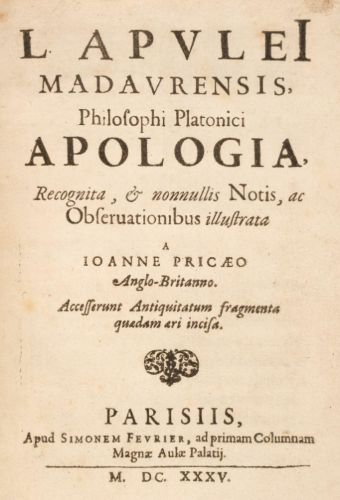
The speakers opposing Apuleius enter the surviving work at moments determined by the defense. An accusation may appear as a brief quotation or as a paraphrased objection arranged so that its answer follows immediately. These forms offer different degrees of access to the prosecution, and their apparent immediacy should not obscure the absence of a separately transmitted prosecutorial address. Even a faithfully reproduced sentence can acquire a different force when detached from the testimony that supported it. Establishing that an allegation was made is accordingly a different task from recovering the argument its advocates developed around it. The speech often permits the first conclusion more securely than the second.
A further distinction concerns the relationship between addressing a court and preparing a text for circulation. The Apologia repeatedly evokes an event in progress through appeals to Maximus and instructions for the production or reading of evidence. Such features help reconstruct the performance it represents, although they cannot establish that every surviving sentence was delivered in its present form. Ancient forensic composition allowed extensive literary craftsmanship, and an accomplished speaker could prepare elaborate passages before appearing in court. Revision after delivery could also alter emphasis or expand an explanation for readers who had not witnessed the proceedings. Neither possibility can be measured against an independently preserved transcript. Scholarly disagreement about the work’s composition requires a distinction between the historical setting of the defense and the verbal form through which that setting reaches us. Recognizing its literary construction does not require abandoning the trial as a historical event. It does require caution when treating an elegant transition, an apparently spontaneous joke, or the convenient appearance of supporting material as an exact record of courtroom sequence. The surviving text establishes how Apuleius chose to represent his defense more securely than it establishes every circumstance of its delivery.
Documents introduce another kind of evidentiary problem. Pudentilla’s correspondence and the financial arrangements discussed in the speech make claims about records whose wording could, in principle, be checked by people with access to them. Their documentary character gives them a different function from an insult or an assertion about somebody’s intentions. Yet the originals do not survive alongside the defense, and accurate quotation would still leave questions about completeness and context. Each passage must be assessed for what it actually establishes, including the distance between its reported contents and the interpretation Apuleius attaches to them.
Leonardo Costantini’s study makes that distance a central subject of investigation by reconsidering the allegations as components of a potentially coherent prosecution. A defense that answers objections individually can weaken the connections through which an accuser intended them to reinforce one another. Conduct that seems inconclusive in isolation might have been presented as one element in an account of preparation and harmful effect.
Comparative evidence concerning ancient ritual practices can help recover associations that Apuleius suppresses or ridicules. This approach supplies a necessary check on the temptation to assume that an accusation was negligible because its surviving refutation is amusing. Comparison also has limits of its own. A practice attested elsewhere, especially in material from another period or region, cannot establish precisely what these prosecutors alleged or what Apuleius performed. Costantini’s reconstruction is most useful when it restores plausible implications to the evidence while leaving their historical status open to scrutiny. Its value lies in making the prosecution more intelligible, rather than supplying a missing accusation whose details can thereafter be treated as securely documented.
A productive reading assigns different levels of confidence to different claims. Details of public officeholding can be compared with evidence beyond the speech, whereas accounts of private motives generally offer fewer opportunities for corroboration. The knowledge of an original audience may also have constrained invention, since witnesses or other participants could recognize a conspicuous distortion. That constraint should remain a possibility to assess, rather than a guarantee of accuracy, especially where domestic events were concerned. Readers encountering the work later would have possessed still fewer means of checking its assertions. These uneven conditions call for judgments made passage by passage, with attention to the purpose each statement serves and the evidence available to test it. Apuleius remains indispensable throughout the investigation, but the confidence of his narration cannot determine the confidence of the historian. His achievement as an advocate is itself part of what the evidence asks us to explain.
A Provincial Intellectual in Roman Africa
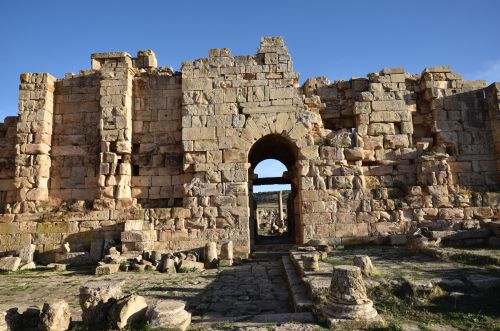
The Africa in which Apuleius developed his career contained communities with markedly different local histories. Madauros, his birthplace, was an inland Roman colony in what is now eastern Algeria; Oea and Sabratha stood on the Tripolitanian coast of present-day Libya. Mediterranean connections sustained opportunities for advanced education, while civic institutions organized local participation in the imperial order. Describing Apuleius as a provincial intellectual places him within that political geography, but the African cities themselves require attention as centers of cultural activity. They supplied the social resources through which an ambitious speaker could acquire an education and establish a reputation.
His family’s position at Madauros gave him substantial advantages. Apuleius reports that his father held the duumvirate, one of the colony’s leading municipal magistracies, and that he received an inheritance. Officeholding at this level associated a household with the conduct of civic government and the expectations attached to local prominence. Family resources could support prolonged study and travel, allowing a son to cultivate accomplishments beyond those immediately required for managing property. Apuleius’s African background belonged within this privileged position. In chapter 24 of the Apologia, he answers disparagement of his origins through the description “half Numidian and half Gaetulian,” turning a geographical association into an occasion for defending personal merit. The phrase belongs to a rhetorical exchange and cannot establish a precise account of ancestry. It does show that regional identity could become material for hostile characterization even among people participating in Roman civic life. African origins and Roman citizenship coexisted in his social identity, while the value assigned to those origins remained open to dispute.
Carthage provided a major setting for his education before further study at Athens. His recollections associate intellectual formation with movement between cities where different kinds of instruction were available. Greek gave access to philosophical traditions and an extensive literary inheritance; Latin supported participation in the public culture of the western empire. Apuleius advertised accomplishments in both languages, and his Latin writings repeatedly draw on Greek texts. Such training supplied a repertoire that could be adapted to different occasions, from discussing natural phenomena to addressing a civic audience. His philosophical identity developed within this broad education, whose literary and rhetorical dimensions remained active throughout his career.
Learning acquired conspicuous civic value through performance. A speaker who could hold an audience, handle an unexpected subject, or demonstrate familiarity with difficult texts possessed accomplishments that communities could recognize publicly. The Florida, a collection of excerpts from Apuleius’s speeches, preserves something of this world of ceremonial address and cultivated entertainment. Its passages connect intellectual display with relationships involving prominent officeholders and the honor a city could extend to an accomplished speaker. Gerald Sandy and Stephen Harrison have situated Apuleius within the cultural context commonly described as the Second Sophistic, a scholarly framework associated with Greek rhetorical life under the empire. His Latin compositions adapted many of its habits, including elaborate self-presentation and the competitive exhibition of literary knowledge. The framework helps explain how philosophical credentials could contribute to a public career embracing several forms of writing and speaking. A display of erudition offered an audience an opportunity to recognize its own cultivation, making the event socially rewarding for listeners as well as performer. Civic recognition could then give that success a more durable form through honors and commemorative representation. Apuleius’s references to such distinctions reveal an intellectual career pursued through the institutions and ambitions of urban society.
This cultivated bilingualism existed within a wider linguistic landscape. Punic continued to be used in Roman Africa, while access to advanced literary Greek or Latin depended heavily on educational opportunity. Mastery of prestigious texts identified a socially valuable accomplishment whose acquisition required resources and sustained training. The distance between that accomplishment and the experience of less extensively educated inhabitants gave intellectual performance part of its distinguishing force. Apuleius’s command of both literary languages illuminates the opportunities enjoyed by a prosperous, highly trained individual within a population whose linguistic practices were more varied.
Arrival at Oea brought his mobile reputation into contact with relationships rooted more firmly in one community. According to his account, an earlier association with Pontianus during their studies at Athens helped secure his reception there. Educational connections could operate as practical means of entry into a household, extending the usefulness of relationships established far from home. Marriage to Pudentilla subsequently placed him within a family whose existing attachments carried expectations about property and personal obligation. The encounter involved a newcomer equipped to compete for esteem among people with standing of their own. Kehoe and Vervaet’s emphasis on honor and humiliation helps locate the ensuing confrontation within this environment of contested precedence. When Apuleius mocked an opponent’s rusticity or deficient cultivation, he was assigning that man an inferior position according to standards favorable to his own accomplishments. Agricultural wealth and municipal influence could sustain a rival’s importance even when the speaker denied him cultural distinction. The family dispute developed in a setting where an impressive visitor could attract support while disturbing established expectations about who should exercise influence.
Pudentilla’s Remarriage and the Making of a Family Dispute
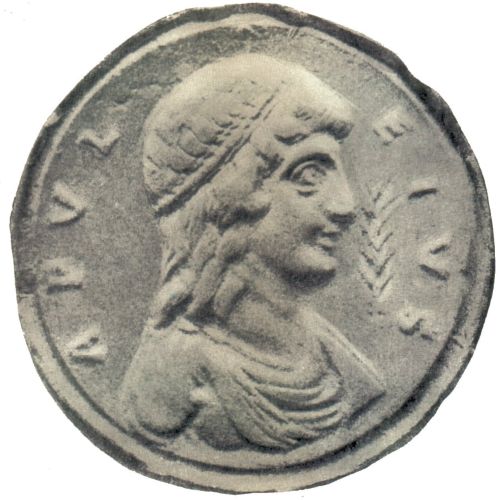
Before Apuleius became a prospective husband, Pudentilla’s remarriage had already been the subject of family negotiation. Her first husband, Sicinius Amicus, had died, leaving two sons, Pontianus and the younger Pudens. Their paternal relatives retained interests in the boys’ futures, and the possibility of another marriage introduced questions about the organization of the household. Pudentilla’s position as a prosperous widow gave those discussions considerable material importance. Her choice would affect people whose expectations concerning her property could differ from her own wishes.
The earliest pressure described in the defense came from the sons’ paternal grandfather. Apuleius reports that this man wanted Pudentilla to marry another of his sons, Sicinius Clarus, thereby maintaining the marital connection within the same family. His leverage lay in the inheritance he could leave to his grandsons, which he threatened to withhold if their mother married elsewhere. The arrangement linked Pudentilla’s conduct to her children’s financial prospects, making resistance potentially costly to people for whom she had responsibility. Apuleius presents her response as a strategy of postponement, allowing an engagement to exist while delaying the marriage itself. The grandfather’s eventual death removed the threat attached to his testamentary intentions. His account gives Pudentilla an active role in managing an unwelcome proposal, although her reasons reach us through the husband she subsequently chose. It also establishes an important distinction between Clarus, the proposed spouse, and his brother Aemilianus, who later became prominent in the accusations against Apuleius.
Pontianus initially appears as an advocate for a different arrangement. During Apuleius’s stay at Oea, he encouraged the visitor to remain and eventually urged him to marry his mother. In the defense’s presentation, the proposal offered the household a suitable connection with someone whose character Pontianus trusted. Apuleius describes his own reluctance in terms of plans that marriage would interrupt, before explaining his acceptance of the match. This version of events assigns responsibility for initiating the proposal to the widow’s adult son and makes his approval central to its legitimacy. It gave the defendant an answer to the later allegation of predatory intervention, since the marriage had supposedly developed through an invitation from within the household. The importance of that endorsement would increase once Pontianus’s subsequent conduct became part of the dispute.
A changed alignment emerges around Pontianus’s marriage to the daughter of Herennius Rufinus. In Apuleius’s explanation, Rufinus sought influence over his son-in-law and anticipated advantages from Pudentilla’s wealth. He attributes Pontianus’s hostility toward the new marriage to this intervention, presenting the son’s altered attitude as the result of pressure exercised through his wife’s family. Aemilianus, another brother of Pudentilla’s deceased husband, also becomes an active opponent, while the younger Pudens supplies the prosecution with a direct connection to her surviving children. These relationships gave the quarrel several overlapping centers of interest. Rufinus approached Pudentilla’s household through his daughter’s marriage, whereas Aemilianus belonged to the paternal family of her sons. Their positions need not have generated identical expectations, even if they cooperated against Apuleius. The defense’s effort to assign them a common appetite for wealth simplifies relationships in which personal antagonism could operate alongside concern about future inheritance. Honor also mattered in a community where a marriage could alter the relative influence of established families. The accusations should be situated within that changing distribution of authority, while the claims about each participant’s intentions require separate assessment.
Pontianus died before the trial, leaving his changes of allegiance to be explained by others. Apuleius maintains that reconciliation preceded his death and that the younger man had recovered his earlier goodwill. This assertion allowed him to preserve Pontianus’s original endorsement while representing the intervening hostility as temporary. Pontianus could no longer confirm that account in person, and the prosecution proceeded with Pudens still involved in the conflict. His death removed a participant whose relationship with Apuleius had supplied support for the marriage as well as material for challenging it.
The property issues beneath these events require more precision than the image of a single fortune contested by greedy relatives permits. Pudentilla’s existing estate, the dowry associated with her marriage, and transfers to her sons raised different questions of ownership. Expectations of inheriting from her also differed from rights already possessed. Tristan Taylor’s examination of the legal circumstances complicates the assumption that convicting Apuleius would have straightforwardly secured the financial objectives attributed to his opponents. Their anticipated gains cannot simply be inferred from his condemnation, and uncertainty about those gains leaves room for explanations involving sincere suspicion or vindictiveness. Neither possibility establishes what any individual privately believed. What can be traced is the emergence of an accusation that challenged the basis on which Pudentilla had entered her new marriage. Claims about concealed influence supplied a way of contesting a relationship whose formation had already exposed disagreements within the family. The prosecution brought those disagreements before a Roman governor, where the alleged means of obtaining the marriage would demand a criminal defense.
What Made the Accusation Legally Dangerous?

Apuleius’s references to the possibility of a capital sentence establish the seriousness with which he wanted the proceedings understood. In chapter 26, he asks why anyone would risk provoking a supposedly powerful magician by exposing him to condemnation. The argument mocks his opponents, but its effectiveness depends on the court possessing the authority to impose a grave punishment. A hostile account of his marriage had reached a forum in which conviction could threaten his life. The absence of a surviving formal indictment leaves uncertainty about the prosecution’s precise formulation, rather than making its potential severity doubtful.
The principal statutory framework discussed by scholars is the lex Cornelia de sicariis et veneficiis, legislation associated with Sulla and conventionally dated to 81 BCE. Its concerns included murder and harmful poisoning, although the terminology through which Romans described dangerous substances does not map neatly onto modern distinctions between pharmacology and magic. The meaning of veneficium depended on usage and context. A substance’s preparation might acquire criminal significance through its intended application or effects, while ritual elements could enter an account of how injury had been produced. That semantic range requires care when identifying the law supposedly governing Apuleius’s case. The Cornelian statute cannot simply be treated as an original, comprehensive prohibition of everything subsequently classified as magical. Its relationship to such accusations developed through interpretation and the extension of legal concerns to additional forms of conduct. Reconstructing that development helps explain why alleged ritual activity could become dangerous without establishing that every unfamiliar practice constituted the same offense.
Jurisdiction also mattered. As proconsul, Maximus exercised Roman criminal authority within the province, giving the accusation a significance beyond the sanctions that relatives could impose through household pressure. Provincial adjudication allowed an official to investigate allegations and evaluate the material presented before him. The proceedings are commonly understood within the flexible arrangements of cognitio, although that description should not suggest that a governor operated without legal constraints. Apuleius’s appeals to Maximus, together with his references to questioning and the examination of evidence, show a defense addressed to an official actively involved in assessing the case. Legal judgment depended on the relationship between the alleged conduct and applicable grounds for punishment, with substantial work required to establish what that conduct had actually been.
The marriage allegation supplied a claimed injury around which otherwise disparate details could be organized. Pudentilla had entered a relationship that her opponents attributed to interference with her capacity to choose, making Apuleius’s supposed expertise relevant to an asserted act of compulsion. This did not create a distinct statutory offense of “magical marriage,” nor does the surviving account establish that proof of the accusation would automatically have invalidated the union. Its force lay in presenting the defendant as someone who had used illicit means to obtain a result affecting another person and her household. Assertions about suspicious materials or unusual observances could then serve as evidence of preparation, provided the prosecution could connect them to the alleged operation. The legal importance of those details depended on the inference drawn from them. A purchase, for example, might be acknowledged while its intended purpose remained contested, leaving considerable room for disagreement about whether an ordinary act helped establish criminal responsibility.
Later legal writings make the dangers of retrospective reconstruction clear. A passage attributed to the jurist Modestinus and preserved in the sixth-century Digest, at 48.8.13, refers to a senatorial decree placing the performance or organization of mala sacrificia, harmful or evil sacrifices, under the Cornelian penalty. The passage demonstrates a connection between sacrificial misconduct and that legal framework, but the decree’s date and its applicability to Apuleius’s proceedings require qualification. It cannot provide an unquestioned transcript of the rules Maximus applied. The collection known as the Sentences of Paulus, generally assigned to a substantially later period than the trial, likewise associates magical activities with severe penalties. Its prescriptions belong to the history of Roman punishment and must be located within that history before being used to explain a second-century defendant’s exposure. Rives interprets the evidence as showing a developing movement from concern with harmful, uncanny actions toward the criminal significance of religious deviance. In his account, aspects of that movement were already present during Apuleius’s prosecution, while later legal texts gave them more explicit expression. This interpretation makes the case important to the development of Roman legal categories without turning later prescriptions into a sentencing schedule securely applicable in 158 or 159.
Under these circumstances, the defense had to address both alleged events and the reasoning that made acknowledged activities incriminating. Disputing the purpose of an object could weaken an assertion about preparation, just as challenging an account of bodily collapse could undermine a claimed effect. Explanations of religious custom had a practical forensic role wherever observance had been presented as evidence of an illicit operation. The uncertainty surrounding the exact legal formulation sharpened the importance of these arguments, since the speech repeatedly contests how the prosecution’s details should be understood. Apuleius’s task was to make each asserted connection vulnerable to examination, reducing the persuasive force of a case that represented his personal conduct as a source of hidden danger.
Constructing a Suspicious Man
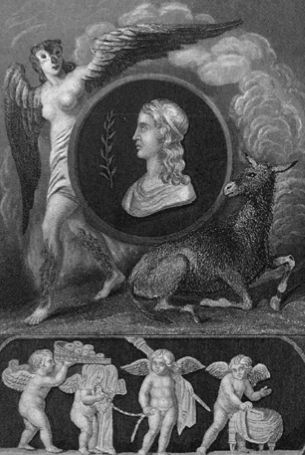
Before discussing the meaning of magic, Apuleius answers attacks on his appearance and his ability to speak. These might initially seem peculiar grounds for hostility, since good looks and verbal accomplishment could attract admiration. Within an allegation of seduction, such qualities could also suggest an unusual capacity to influence another person. The defense presents them as compliments absurdly converted into accusations, inviting the audience to enjoy the prosecutors’ apparent confusion. That response leaves an interpretive question open. Descriptions of an attractive, accomplished man might have contributed to an account of dangerous persuasion even when they established no offense by themselves.
The dispute over a preparation for cleaning teeth gives this treatment of personal habits a concrete form. Apuleius had composed verses accompanying a dental powder sent in response to a request, and the poem became material for examination in court. Its references to the preparation’s benefits allow him to defend oral cleanliness with considerable wit. A philosopher, he argues, has reason to maintain the mouth through which he speaks, while neglect of the body supplies no reliable measure of intellectual seriousness. Costantini draws attention to the less reassuring associations that the same material might have carried for an accuser. Knowledge of preparations made from unfamiliar ingredients could contribute to a reputation for expertise in substances whose applications others could not readily assess. The poem’s mention of Arabian ingredients also placed the preparation within a world of imported materials. Its stated purpose was hygienic, and the surviving passage establishes no use in an erotic operation. The episode nevertheless shows how a modest act of assistance could be presented as evidence of a more extensive practical competence.
Erotic poetry raised a different set of questions about the relationship between literary activity and personal conduct. Apuleius’s opponents had material from which to challenge the gravity associated with his philosophical profession, especially where the verses expressed affection for male recipients. His answer draws on the poetic practices of respected predecessors and on conventions through which writers represented desire. Verse attributed to Plato offered a useful precedent because it joined philosophical prestige to expressions of love that a hostile reader might otherwise dismiss as discreditable. Such examples gave Apuleius resources for defending his participation in an established literary culture. They also challenged the assumption that every poetic utterance could be treated as a direct report of the author’s behavior. The argument requires distinctions between a composition’s speaker and the circumstances of its production, although literary convention cannot by itself settle what relations existed outside the text. For the prosecution, the poems might help portray a man whose professed seriousness concealed appetites incompatible with the character he claimed. For Apuleius, their reception exposed the inadequacy of readers unable to recognize the precedents through which educated authors wrote. A disagreement about taste thereby became an argument over the credibility of his public identity.
A mirror offered another opportunity to assign moral significance to a personal possession. Attention to reflected appearance could suggest vanity or an excessive concern with attractiveness, giving an accuser further material for questioning the defendant’s priorities. Apuleius invokes a tradition associating Socrates with the use of mirrors as an encouragement to moral improvement. Within that account, inspecting the face could prompt attention to the character accompanying it. An object presented as an accessory of self-admiration could be explained through a philosophical practice of self-examination.
He also makes the mirror an occasion for discussing the formation of images. Questions about reflection belonged to the investigation of perception and the physical world, providing another respectable context in which a learned person might take an interest in such an object. This part of the answer demonstrates how readily a familiar possession could support several descriptions. Its relevance to grooming did not exhaust the subjects on which it could furnish instruction. Apuleius’s discussion displays the range of explanation available to someone trained in philosophical traditions, while the accusers’ treatment of the mirror appears narrow by comparison. The defense gains something from that unequal presentation of competence even without establishing how every alleged use should be understood. It offers the audience an intellectual association capable of competing with the moral insinuation. Reading the passage carefully means recognizing the work performed by that association without assuming that its availability resolves the object’s entire history.
The later discussion of poverty and the size of his household complicated the portrayal of a man devoted to personal refinement. Apuleius answers disparagement of limited means by appealing to philosophical restraint and to examples of respected figures who possessed little. His account makes the extent of a person’s requirements a more useful ethical consideration than the amount of property accumulated. References to a small number of enslaved attendants participate in that presentation, treating the scale of the household as a subject on which moderation could be claimed. These passages do not establish destitution. They show him defending an allocation of resources and a manner of living that he wanted acknowledged as appropriate to his profession. Care for the body and modest material demands could both find a place within that description.
Costantini’s reconstruction brings these exchanges into relation by asking how they might have supported the portrayal of an erotically dangerous magus. Verbal skill could make the defendant persuasive, while his knowledge of preparations supplied a possible connection between persuasion and more concealed forms of intervention. The poems and alleged attention to appearance could further characterize his interests, making the portrait intelligible before any technical discussion of magical practice began. This remains a reconstruction of connected insinuations, not an independently preserved outline of the prosecution. Its advantage is that it helps explain why apparently slight details might have belonged in a serious accusation. Apuleius repeatedly gives those details separate answers, drawing on an appropriate precedent or exposing a weakness in the inference attached to each. The cumulative effect of that procedure is to make the hostile portrait difficult to sustain in the form he presents it. Yet the extended rebuttal also reveals how much could depend on the interpretation of ordinary conduct. His manner of living had become an argument about the uses to which his talents might be put.
Defining the Magus

The word magus supplied Apuleius with an opportunity that a more narrowly specified accusation might have denied him. Its associations extended from Persian religious specialists to practitioners credited with illicit powers, allowing him to question what his opponents meant by using it. In chapter 25, he makes their apparent uncertainty the starting point of a discussion about the qualifications and activities the designation could imply. The charge now requires an explanation of its central term before the alleged conduct receives further examination. Apuleius uses that opening to introduce authorities whose descriptions attach honor to knowledge his prosecutors had made threatening.
His most prestigious example comes from the Alcibiades I, a dialogue transmitted under Plato’s name. Its account of Persian royal education includes instruction in the magia of Zoroaster, understood within the passage as the worship of the gods. The future ruler’s education places this instruction among accomplishments entrusted to carefully selected teachers. Apuleius draws considerable advantage from that setting, since an art included in royal formation possesses an institutional dignity difficult to reconcile with an accusation of intrinsically shameful behavior. The association with Zoroaster gives it an ancestry within a tradition represented as ancient and authoritative. Persian knowledge enters the defense through Greek philosophical literature, whose standing provides the immediate reason for introducing it in court. The passage should accordingly be read as a strategically chosen representation of Persian religion, rather than as a direct investigation of Persian priestly institutions. Its forensic usefulness depends on the audience accepting the authority of the cited text. Through that authority, Apuleius can ask why acquiring knowledge praised in the education of rulers should expose a philosopher to condemnation. He has located a favorable meaning of the word and invited the prosecution to account for it.
A further appeal concerns Zalmoxis and the language of charming in Plato’s Charmides. The dialogue associates beneficial verbal treatment with care for the soul, placing the words used in healing within an account of ethical improvement. Apuleius extracts from this setting an understanding of charms as beautiful words, giving an expression associated with incantation a philosophically acceptable explanation. His command of literature allows him to make an apparently incriminating vocabulary available for another purpose. The medical and ethical context matters because the passage concerns the condition of the person receiving treatment, rather than offering an unrestricted endorsement of every ritual called a charm. It gives Apuleius grounds for defending instruction in a valued form of speech. What he gains is a precedent for interpreting such instruction favorably, without resolving the separate question of what he himself had done.
He then addresses the more threatening understanding attributed to his opponents. In this version, the magician possesses an extraordinary ability to accomplish desired effects through communication with divine powers and the utterance of spells. Apuleius answers by asking why anyone who credited him with such capabilities would dare expose him to a capital sentence. An accuser of poisoning could take precautions about food, but the reach assigned to a magician would seem to defeat ordinary measures of protection. The prosecutors’ willingness to proceed becomes material for a joke about the consistency of their professed fears. This argument leaves the existence of magical power untouched. Its immediate target is the behavior of people who supposedly believe they have placed themselves within reach of exceptional retaliation. Even that criticism depends on the magnitude of the power being imagined, since belief in an ability to perform some harmful operation need not entail belief in unlimited capacity to strike back. Apuleius’s formulation may enlarge a specific allegation into a more extravagant proposition that is easier to ridicule. The confidence of his reply encourages the audience to accept that enlargement, making his definition of the danger significant to the assessment of those alleging it.
Costantini’s analysis clarifies the hierarchy supporting these exchanges. Knowledge associated with philosophical religion receives an elevated position, while the harmful practitioner remains available as an object of repudiation. Calling the latter interpretation “vulgar” identifies its stigmatized associations and its place in Apuleius’s argument; it does not establish that everyone credited with such practices belonged to one social class. His distinctions work through the prestige of teachers and the purposes assigned to their instruction. They permit him to defend acquaintance with traditions that an indiscriminate rejection of magia would have made difficult to acknowledge. That permission is selective, resting on the intellectual ancestry he can claim and the religious value he can attach to it. A defendant unable to summon comparable authorities would have fewer resources for obtaining the same recognition. The discussion establishes an honorable meaning under which Apuleius can seek protection, while preserving a discreditable meaning from which he must distance himself.
Godless Philosophers and Excessively Religious Magicians

At the opening of chapter 27, Apuleius attributes suspicion of philosophers to a recurrent error among people he characterizes as ignorant. He then divides that suspicion according to the subjects investigated. Those examining the fundamental causes of material things are considered irreligiosi, and their critics say that they deny the gods. Those who pursue questions of providence and worship with greater intensity are designated magi. The wording distinguishes the activities of the philosophers from the conclusions drawn about them, making the passage an explanation of how inquiry acquires a hostile interpretation.
The first group includes Anaxagoras, Leucippus, Democritus, and Epicurus. These names represent substantial differences in the explanation of nature, and their appearance together should not be mistaken for a declaration that they shared one theology. Anaxagoras assigned an ordering role to Mind, whereas the atomist traditions associated with the other figures developed different accounts of the physical world. Epicurus supplies a clear reason to separate an accusation of denying the gods from a philosopher’s own position. His Letter to Menoeceus, preserved by Diogenes Laertius, affirms their existence while rejecting popular beliefs about them. His understanding of divine blessedness also excluded the kind of providential supervision through which conventional explanations connected the gods with human affairs. A critic who regarded that supervision as essential to divinity could treat its rejection as a more comprehensive religious denial. Apuleius’s catalogue allows readers to observe a discrepancy between doctrines and the names attached to their supposed implications. A thinker could acknowledge gods while advancing an account that opponents considered destructive of what gods were expected to do.
The chronological reach of the catalogue performs work of its own. Thinkers separated by generations become participants in a recurring story of hostile reception. Their differences are subordinated to a shared position as investigators of nature, allowing Apuleius to attach his predicament to a recognizable history of philosophical controversy. The passage supplies that history in compressed form, with the force of an analogy rather than the documentation of a series of prosecutions.
The other group directs attention toward the providential ordering of the world and the observance appropriate to divine powers. Apuleius describes heightened investigation and devotion, with the comparative expressions curiosius and impensius giving emphasis to the intensity of those commitments. “Excessively religious” captures the suspicion such intensity might provoke; it is not an agreed judgment that these people had exceeded a recognized measure of acceptable worship. His examples also extend beyond the kinds of thinkers assembled in the first catalogue. Epimenides and Orpheus bring the authority of sacred traditions and legendary accomplishment into company with Pythagoras and Ostanes. The resulting group embraces figures whose reputations crossed the boundaries of poetry, ritual, and philosophical teaching. Ostanes already belonged to traditions of writing and expertise associated with magi, making it difficult to read the entire list as a collection of philosophers simply mislabeled by outsiders. The favorable account of priestly knowledge developed in the preceding chapters remains relevant here. Some of the company Apuleius claims could possess an honorable association with magia, even as the accusation against him depended on a threatening understanding of the designation.
The crucial inference appears in the phrase quasi facere etiam sciant quae sciant fieri. Apuleius challenges the assumption that knowing what happens, or understanding its occurrence, entails knowing how to bring it about. His wording identifies a movement from knowledge toward attributed agency. A person’s familiarity with an unusual phenomenon might establish intellectual competence, while an observer could take that familiarity as evidence of power over it. Within a providential account of the world, close attention to divine operations made this inference uniquely available. Someone who discussed such operations with confidence could appear to enjoy access unavailable to ordinary worshippers. Yet the distinctions required to assess an allegation remain substantial. Understanding an occurrence does not establish that the investigator can reproduce it, and even a demonstrated capacity would leave the question of whether it had been exercised on the occasion alleged. Apuleius compresses these distinctions into a sharp criticism of the reasoning attributed to his opponents. Its value as an argument lies in exposing a connection that requires proof, rather than in establishing a universal separation between religious knowledge and effective ritual practice.
He then widens the discussion through the Purifications of Empedocles, the divine sign associated with Socrates, and Plato’s Good. This sequence brings different relationships with the divine under the description of suspicion. Empedocles’ title evokes purification, while Socrates’ daimonion introduces an experience of divine warning within the life of an exemplary philosopher. The latter should be understood within its ancient setting, without importing the sinister associations that “demon” acquired through later religious usage. Plato’s Good gives the sequence a culminating abstraction whose philosophical standing would be difficult for a cultivated audience to dismiss. Its inclusion suggests how far an unfavorable interpretation might extend when unfamiliarity becomes grounds for distrust. Apuleius does not provide an independent history of each example’s reception, and the passage leaves some uncertainty about how precisely the later names fit his initial division. Their cumulative function is nevertheless clear. They enlarge the range of respected intellectual achievements that an accuser’s suspicions might place in jeopardy. Apuleius greets admission to this company with ironic gratitude. The comparison invites Maximus to assess the current accusation through the reputations of people whose importance survived the hostility directed toward them. A proceeding against Apuleius can then be imagined as another occasion on which an inadequate judgment fails to recognize distinction. The solidarity claimed here is broader than agreement with every doctrine represented in the catalogues. His own Platonic commitments give him no reason to endorse an Epicurean understanding of the gods, but a shared exposure to hostile characterization allows him to invoke Epicurus as a useful predecessor. Philosophical disagreement is temporarily subordinated to the advantage of a common reputation for serious inquiry. This breadth complicates any account of the passage as solely a defense of one school, even though Apuleius continues to rank interpretations through authorities favorable to his position. He asks the audience to recognize a community of achievement whose members need not have agreed about the constitution or government of the universe.
The chapter then returns from celebrated predecessors to allegations concerning the defendant’s conduct. That transition gives the catalogues a practical purpose within the defense, since the audience must now consider ordinary details after being reminded how distinguished thinkers could attract suspicion. Apuleius urges Maximus to resist treating assertions as substantial criminal charges merely because opponents have advanced them. The comparison with earlier philosophers cannot establish what happened in his household or determine the purpose of a disputed purchase. But it can challenge the authority that an allegation acquires through the act of being made. Chapter 27 seeks to interrupt that acquisition of credibility, requiring the prosecution’s explanation to earn acceptance through more than the frightening associations attached to its subject.
Natural Inquiry and the Interpretation of Materials

Apuleius does not deny seeking marine animals. He contests the explanation attached to that activity, asking why the acquisition of fish should identify their purchaser as a magician. The question directs attention toward a transaction that could be acknowledged while its purpose remained disputed. Fish entered households through ordinary provisioning, but a request for selected kinds could invite speculation about uses beyond the table. In answering the allegation, Apuleius draws on several different resources, moving between literary accounts of enchantment and the investigation of animal bodies. The variety of those answers matters because the materials under discussion were themselves more diverse than the general designation “fish” suggests.
One response challenges the prosecution through its apparent unfamiliarity with descriptions of erotic magic. Apuleius invokes Virgil and Laevius, recalling ingredients and implements associated in poetry with the production of desire. These literary passages allow him to contrast a recognizable repertoire of enchantment with the marine specimens mentioned by his opponents. He also exploits the supposed incongruity between cold aquatic creatures and the heat of passion, even joking about whether Venus’s emergence from the sea had encouraged the accusation. His performance rewards listeners capable of recognizing the allusions and appreciating the contrast. Yet poetic familiarity establishes a selective standard of plausibility, rather than an exhaustive account of ritual practice. The examples come from texts chosen for their usefulness to the defense. His anecdote about Pythagoras purchasing a catch and arranging for its release likewise turns philosophical precedent toward the question of what fish might signify. Apuleius reasons that a figure associated with exceptional wisdom would hardly have discarded something indispensable to magical operations. The story supplies another memorable answer, although its persuasive force exceeds what one reported action could establish about every possible application of marine substances.
Sexual associations give a more specific shape to part of the allegation. Some specimens bore names suggestive of genital anatomy, enabling their procurement to be connected with the erotic purpose attributed to Apuleius. Such a connection would depend on a correspondence between the ingredient’s designation and the bodily effect sought through its use. Naming could give a material significance that its presence alone would not disclose. Apuleius attacks this reasoning through ridicule and mock analogies, exposing the implausible conclusions that might follow if verbal resemblance determined practical effects. His answer contests the movement from an animal’s name to an explanation of why he wanted it. The allegation becomes intelligible as an insinuation about erotic applications, while the inference on which it rests remains open to challenge.
The most substantial positive explanation comes through his presentation of zoological work. Apuleius places the examination of marine creatures within a tradition associated with Aristotle and Theophrastus, giving his requests an intellectual context extending beyond the immediate dispute. He invokes writings of his own and calls for material to be read, bringing the products of investigation into the proceedings as credentials. Technical discussion also makes the relationship between Greek and Latin terminology relevant to the case. An unfamiliar designation might belong to the work of describing an animal accurately, even when its sound or associations offered opportunities for a hostile interpretation. His account presents the investigator as someone who needs access to specimens because books alone cannot supply every observation. Anatomical examination receives an explanation grounded in the production and communication of knowledge. The cited writings remain part of his forensic presentation, and they cannot establish that every acquisition served an exclusively scholarly purpose. They do, nevertheless, give the defense a developed account of activities that an allegation about mysterious ingredients might otherwise leave unexplained.
The creature called a sea-hare introduced an additional difficulty because of its reputation for dangerous properties. It should be distinguished from the genital-named specimens, without assuming that the ancient designation permits a secure identification of the precise species involved. Apuleius explains its examination through an interest in its bodily organization, presenting dissection as a means of learning about the animal. Its reported harmfulness could also make that investigation attractive to an accuser seeking evidence of dangerous practical knowledge. The specimen’s relevance to natural inquiry and the suspicion attached to its properties could arise from the same characteristic, leaving the purpose of the examination decisive to its interpretation.
Costantini’s treatment of these chapters tests the defense’s broad exclusions against evidence for the uses of natural materials in ancient magic. That comparison gives reason to question the implication that marine substances lay outside the possibilities of ritual application. Studies of erotic operations also show why ingredients could be selected through attributed affinities, giving bodily associations an intelligible place within an attempt to produce desire. Apuleius’s literary repertoire captures only part of that wider field. A substance might enter a preparation through a reputed capacity to affect the body, making the division between a medicinal application and an erotic one difficult to infer from the ingredient alone. Comparable practices cannot establish what he performed, especially when the evidence comes from different settings or dates. Their contribution is to reopen possibilities that his confident presentation would close. The resulting assessment gives greater weight to the prosecution’s potential argument while requiring evidence connecting a possible use with the conduct alleged in this case.
These acquisitions also reveal the practical setting of the natural inquiry Apuleius describes. Examining aquatic life required access to animal bodies and to people capable of obtaining them, making local procurement part of the history of his intellectual activity. A request communicated to a supplier could become known beyond the eventual examination, allowing information about a purchase to circulate separately from an account of its purpose. The researcher’s explanation might classify as a specimen something another observer valued as food or feared as a source of injury. Such differences help explain how the same transaction could support incompatible accounts without requiring disagreement about every material detail. Apuleius offers the investigative work he says followed acquisition as the missing context that makes his requests understandable. Assessing that explanation requires attention to the distinct creatures involved and to the operations attributed to him, preserving the differences that his opponents’ general association between fish and magic might obscure.
Collapse and Claims of Hidden Influence

The alleged scene in chapter 42 places a boy in a secluded setting, with a lamp and a small altar among its apparatus. According to the accusation as Apuleius reports it, an incantation caused the boy to collapse, after which he recovered without awareness of what had occurred. The description joins a visible bodily event to actions presented as its concealed cause. Seclusion could explain why knowledge of the proceedings was restricted, while the ritual equipment gave the episode a recognizable setting. The body’s loss of ordinary responsiveness supplied an effect through which the accusation of hidden influence could acquire apparent substance.
Apuleius challenges the account by observing that it contains no report of a prediction. If his opponents wished to describe a divinatory operation, he suggests, they had left their story incomplete. He supports the expectation of prophecy through learned testimony, citing Varro’s report of a boy at Tralles who contemplated an image of Mercury in water and foretold the outcome of the Mithridatic War in 160 verses. The authority invoked here gives extraordinary experience a place within an established literary record. It also supplies a standard against which Apuleius can judge the allegation deficient. A loss of consciousness, under this interpretation, would be an intermediate condition whose significance depended on what the subject subsequently revealed. Yet the relevance of the missing prediction depends on accepting a divinatory purpose for the alleged procedure. If the prosecutors sought to establish that an incantation had injured someone, collapse could matter without prophecy forming any part of their explanation. Costantini’s attention to the harmfulness attributed to spells makes this distinction important. Apuleius has identified an omission within the scenario he chooses to examine, while the relationship between that scenario and the prosecution’s intended argument requires scrutiny.
His discussion of the soul explains why the absence of a prediction can become such a useful objection. He entertains the possibility that a young, uncomplicated soul might withdraw from ordinary bodily awareness under the influence of music or soothing fragrances. In that condition, its immortal and divine nature could become accessible, permitting knowledge beyond its usual reach. Divination receives a philosophical explanation through a changed relationship between soul and body. Apuleius can discuss an altered state as a genuine possibility while denying that the reported event establishes his participation in such a procedure. The passage gives him room to contest the episode without repudiating the intellectual traditions through which extraordinary knowledge could be understood.
The reply’s treatment of Thallus introduces an account of recurrent bodily illness. Apuleius represents this enslaved person as subject to attacks, making an existing condition relevant to the explanation of collapse. A history of similar episodes could weaken an inference that the defendant’s presence or words had produced the occurrence under investigation. The argument asks the audience to consider the body across repeated events, rather than interpreting one reported incident solely through its immediate surroundings. Its evidentiary value depends on the history Apuleius supplies and on the accuracy of his description. The condition is commonly discussed as epilepsy, but the surviving account does not permit an independently established modern diagnosis. His presentation also gives the illness a second function, treating bodily affliction as a reason that Thallus would be unsuitable for the kind of divinatory operation introduced in the defense. An explanation of symptoms becomes entangled with a judgment about which bodies could serve as instruments of revelation.
A further episode involving a woman brings medical opinion more directly into the discussion. Apuleius uses the circumstances of her condition to demonstrate familiarity with bodily explanations and to draw a physician’s competence into the argument. Such an intervention could give the court grounds for examining an occurrence through symptoms rather than accepting the causal account attached to it by an accuser. Ido Israelowich’s study places these medical passages within Apuleius’s persuasive strategy, directing attention to how claims of Hippocratic learning function in the defense. Their authority requires assessment alongside the uses to which the speaker puts them. Greek medicine offered resources for explaining fits through bodily processes, although those explanations could coexist with acceptance of divine order. Invoking them did not commit Apuleius to rejecting the philosophical possibility of inspired knowledge that he had just described.
Thallus’s enslaved status adds another dimension to the dispute over his condition. Readers encounter assertions about his body through the speech of a free, highly educated defendant, with little access to his own understanding of what happened. His illness becomes available for other people to classify according to the requirements of their arguments. This imbalance is part of the evidence itself, showing how a person affected by the alleged event could occupy a central place in the case while possessing little independent presence in its surviving account.
The distinction between explaining a collapse and disqualifying a proposed divinatory subject remains crucial to evaluating the response. Evidence of recurrent attacks could challenge the attribution of one episode to an incantation. An assertion that an afflicted person was unfit to receive prophetic knowledge addresses a different question, concerning the conditions under which Apuleius thought divination credible. The latter argument preserves criteria of bodily suitability that could themselves diminish the standing of someone already disadvantaged within the proceedings. It also leaves open the possibility that another, suitably constituted subject might undergo a genuine revelatory experience. Apuleius’s response combines a dispute about an event with a selective account of extraordinary perception. Its several explanations do different forensic work, and none should receive the evidentiary force belonging to another. A medical account of a fit and a philosophical account of divinatory trance remain compatible within the speech; the burden lies in establishing which explanation can answer the occurrence alleged.
Sacred Objects and the Defense of Devotion

Initiation creates an unequal distribution of religious information. Participants may acquire obligations governing what they can disclose, leaving other observers unable to inspect the grounds on which they identify an observance as sacred. Apuleius’s response to the objects kept under a covering brings that inequality into court. He presents reserve as a duty acquired through authorized participation, requiring the audience to consider how religious confidentiality might be distinguished from concealment intended to prevent discovery of wrongdoing. The proceedings expose a tension between the demand for an explanation and the restrictions he says a proper explanation must respect.
His account in chapter 55 begins with a calculated concession. He suggests that he could deny the presence of the bundle or dispute what anyone knew about its contents, before volunteering an identification grounded in his initiations. The objects, he explains, were signs and memorials entrusted to him through religious participation in Greece. His answer gives the possession a history of transmission, locating its significance in a relationship between the recipient and those qualified to instruct him. He then appeals to members of the audience initiated into the mysteries of Liber, asking them to recognize that sacred things could properly be preserved at home beyond the knowledge of the uninitiated. Their experience supplies a possible basis for corroborating the custom he describes. In chapter 56, his willingness to communicate with an appropriately qualified participant further defines the conditions of disclosure. He offers recognition within a community whose membership determines access, without surrendering the obligation to keep its knowledge from everyone else.
The linen covering acquires meaning within this account of religious discipline. Apuleius supports its use through prescriptions associated with Orpheus and Pythagoras, together with the example of Egyptian priestly dress. His explanation favors a plant-derived fabric over wool taken from an animal, giving the choice of material a rationale founded on purity. These are selected authorities through which he establishes the appropriateness of his conduct, rather than evidence that Roman worship everywhere followed one rule about textiles. The covering becomes a visible indication that he understood the requirements governing the objects in his care.
Aemilianus receives a sharply different description. Apuleius alleges that his opponent mocks divine matters and neglects the acts through which reverence should be expressed. He claims to have heard from people familiar with Aemilianus at Oea that the man neither prayed to a god nor attended temples, and that he failed to make customary offerings from the agricultural resources sustaining him. The alleged absence of a consecrated place on his property extends this picture of habitual neglect. Apuleius explains the nickname Mezentius through contempt for the gods, drawing on the religious reputation of the figure familiar from Virgil’s Aeneid. These assertions do not establish Aemilianus’s private convictions, especially since the speaker introduces them through reports attributed to others. Their argumentative function is more immediate. Someone represented as dismissive of sacred obligations can be portrayed as incapable of understanding why an initiate would preserve objects with exceptional care. Apuleius uses alleged impiety to explain the opponent’s failure of interpretation, making the accuser’s religious conduct relevant to his competence to accuse. The defense of devotion thereby acquires an exclusionary force of its own.
Reports of nocturnal rites introduce a different problem from the obligations governing initiatory objects. Here the issue concerns activities said to have occurred in a setting where observation was restricted, with traces interpreted as evidence of sacrifice. Apuleius’s reply challenges the account through which those circumstances have been connected with him. The distinction between noticing remains and identifying the operation that produced them becomes important, as does the reliability of the testimony carrying that interpretation into court. Nighttime activity could contribute to an account of concealment, but its significance depended on establishing what had happened and who had participated. His claim to initiatory confidentiality could not by itself answer those questions, since an obligation to protect sacred knowledge would not establish the character of every privately conducted rite.
The wooden image gives the defense an opportunity to supply a more accessible account of manufacture. His opponents describe a secretly commissioned object made from exceptional wood and possessing a frightening skeletal appearance. Apuleius identifies the carving as a small Mercury and invokes the craftsman Cornelius Saturninus, whose account he says had already been given in response to Maximus’s questions. According to that explanation, he had requested a wooden representation of a god, leaving considerable freedom to the maker. The choice of material also receives a domestic history. Boxwood had initially been contemplated, while Pontianus subsequently supplied ebony and encouraged its use as a rarer, more durable alternative. These details explain features that could sound ominous when detached from the circumstances of production. The artisan provides a proposed witness to fabrication, and Pontianus’s involvement places the procurement of the wood within a familiar household relationship. Identifying the result as Mercury also contests the frightening description through which the prosecution had characterized it. The defense offers several points at which an alarming account of an object might be tested against a history of its construction.
The reported designation basileus, meaning king, carries the discussion into theological interpretation. Apuleius answers through language of divine kingship associated with Platonic accounts of the highest deity, bringing philosophical authority to bear on an expression presented as suspicious. The identification of the carving as Mercury and the invocation of an ultimate divine principle must remain distinct elements of his explanation. Treating them as interchangeable would obscure the differences between a represented god and the highest level of the divine order under discussion. His handling of the title asks the audience to recognize a vocabulary whose significance depends on understanding the religious and philosophical relations within which it is used. An unfamiliar divine name could support an accusation through its apparent strangeness, while the defense sought to place it within an intelligible account of worship. The dispute reaches beyond the appearance of the image to the qualifications required for interpreting the language surrounding it.
Different forms of examination emerge across these episodes. A craftsman could speak about the making of a figure, whereas a fellow initiate might recognize an obligation whose contents remained unavailable for general inspection. Apuleius seeks acceptance for each kind of knowledge within the area to which he assigns it. This arrangement could make aspects of his conduct more readily examinable while preserving restrictions over others. It also depended on the court accepting his account of which restrictions deserved respect. His attack on Aemilianus sharpened that dependence by portraying religious incomprehension as a defect belonging to the accuser. Initiation becomes a credential capable of justifying limited disclosure, while alleged indifference to worship becomes a reason to discount a hostile interpretation. The authority Apuleius claims for his devotion extends to judging who is equipped to understand it.
Pudentilla’s Letters and the Representation of Consent
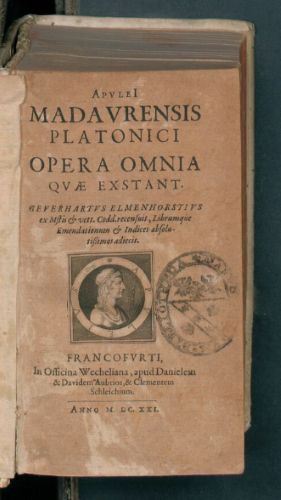
A letter addressed to Pontianus supplied language that could appear exceptionally damaging to Apuleius. Pudentilla’s reported description of him as a magician, together with words associating her attachment with enchantment, seemed to place the accusation in the mouth of the woman supposedly affected. Such material carried a different persuasive force from speculation by a hostile relative. Her own correspondence could apparently confirm the explanation advanced against her husband. The dispute over its interpretation concerned whether the letter acknowledged subjection or used the accusation for another purpose.
Apuleius insists that the surrounding argument reverses the meaning obtained from the incriminating passage alone. In his reading, Pudentilla echoes the charge being circulated about him, bringing its absurdity into an exchange with her son. The language belongs within her response to Pontianus’s changing attitude toward the marriage, including the discrepancy between his earlier encouragement and subsequent hostility. Restoring that relationship allows Apuleius to present the apparent admission as an argument directed against the position attributed to her son. Its force depends on tone and reference, requiring an audience to decide whose view the disputed words express. The Greek correspondence also helps him represent Pudentilla as an articulate participant in the disagreement, capable of handling an accusation through indirection. She appears to understand what others are saying about her and to possess a reasoned answer. That representation supports the defense’s account of a woman exercising judgment in circumstances that her relatives have interpreted differently. Nevertheless, the ironic reading remains Apuleius’s persuasive explanation of the wording transmitted through his speech. The letter gives access to an exchange that he asks the court to understand on his terms.
Other arguments make her decision intelligible through assumptions about age and bodily need. Apuleius challenges the exaggerated age assigned to Pudentilla by invoking a record of her birth registration, seeking to replace a hostile characterization with documentary calculation. He also supplies a medical account of difficulties experienced during her prolonged widowhood and presents remarriage as an appropriate response. Within that explanation, sexual attachment can arise from ordinary human circumstances, supplying an alternative to the alleged operation of spells. Yet the appeal to medical necessity qualifies the kind of autonomy being defended. Pudentilla’s wishes receive support through an account of female physiology whose authority is conveyed by her husband. The defense acknowledges her desire while helping to determine the acceptable reasons for it. Its recognition of choice remains bound to gendered expectations concerning how a widow’s conduct should be explained.
The dowry introduces a more explicitly contractual expression of deliberation. Apuleius presents the contribution as limited in relation to Pudentilla’s wealth and points to conditions governing its disposition. The arrangement permits him to describe a marriage formed with financial provisions that took account of interests extending beyond his own. Those provisions could support a picture of planning and negotiation, giving the court something more specific to consider than an assertion that affection had overwhelmed judgment. The dowry nevertheless concerns a defined marital contribution, and its significance depends on distinguishing it from everything else Pudentilla possessed.
Her testamentary arrangements address a different question, concerning the anticipated distribution of her estate after death. Apuleius invokes Pudens’s favorable position to challenge the assumption that the marriage had delivered the wealth to a predatory newcomer. A son participating in the opposition could be represented as acting against someone who had respected his prospects. The document’s usefulness to the defense depended on the contrast between the financial advantage attributed to Apuleius and the arrangements he said Pudentilla had actually made. This was a substantial response to an allegation organized around inheritance expectations, but its reach must be specified. A testament records a disposition intended to operate in the future; it does not by itself establish the circumstances under which an earlier marriage was contracted. Roman legal formalities also placed women’s transactions within procedures that could involve a guardian, as the speech’s references to Pudentilla’s guardian remind us. Ownership of substantial resources and the ability to plan their transmission existed alongside those requirements. Taylor’s analysis of the property issues helps preserve the difference between an argument about anticipated gain and proof of an alleged coercive act. Financial arrangements could weaken the motive assigned to the defendant without answering every question about how the relationship began.
Pudentilla emerges through these passages as someone whose choices required explanation because other people claimed to know what could have produced them. The letter represents her answering that claim, while the arrangements concerning her property give further substance to her participation in household decisions. Her correspondence is valuable beyond its usefulness to the prosecution or defense, preserving an argument about the interpretation of her conduct. Recovering that participation requires restraint toward the temptation to equate her interests completely with those of the husband transmitting it. His need to establish consent encouraged him to emphasize evidence of judgment and to organize her statements around the vindication of their marriage. Her apparent command of the dispute could strengthen his case even where the surviving record leaves other aspects of her position unexplored. The letter preserves a claim to assess her own circumstances, while its forensic reuse places the authority to explain that claim in her husband’s hands.
Persuading the Governor and Shaping the Surviving Account
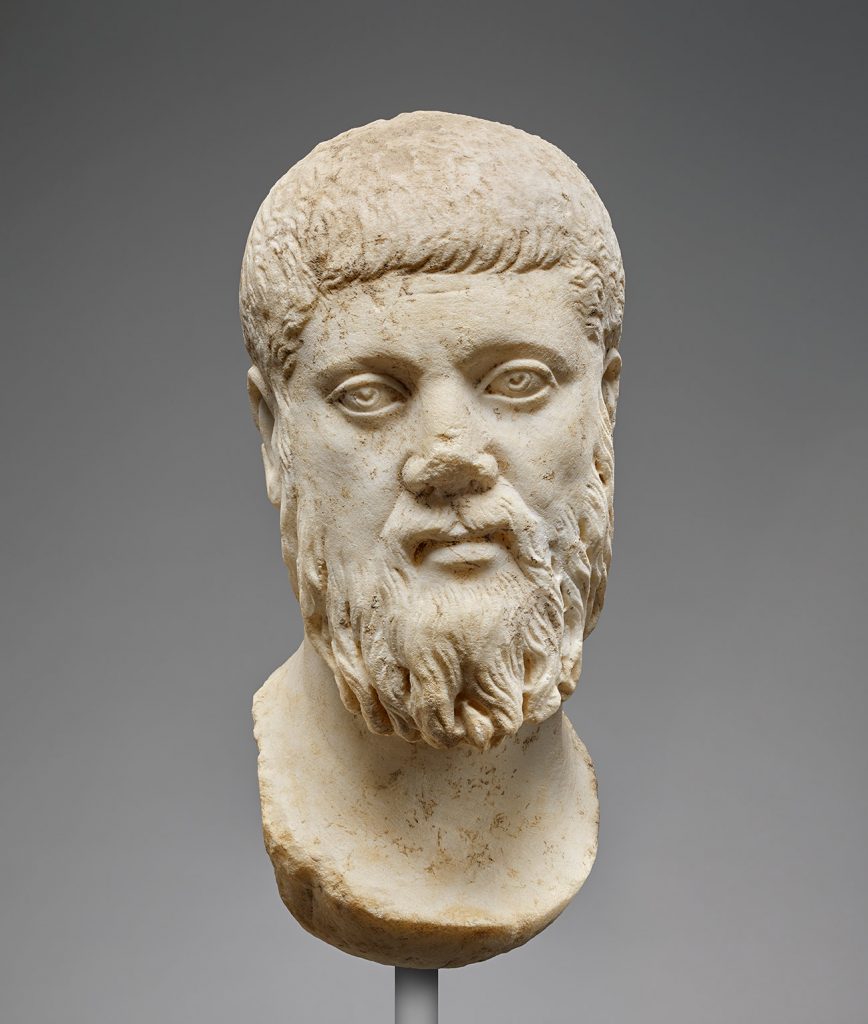
Addressing Maximus repeatedly by name, Apuleius makes the presiding governor an active presence in the text. These appeals ask him to exercise capacities extending beyond the administration of a hearing. His familiarity with difficult subjects becomes a resource through which the defense can establish agreement before proceeding to a contested explanation. Apuleius represents him as capable of recognizing distinctions that the prosecutors have failed to grasp. The official empowered to decide the case is given an intellectual role whose successful performance would favor several of the defendant’s arguments.
Appeals to Platonic knowledge make this relationship apparent. At several points, Apuleius introduces philosophical material as something Maximus can recall, inviting recognition rather than presenting the governor as a beginner requiring instruction. Costantini interprets such appeals to recollection within the speech’s broader Platonizing design. They allow the defendant to approach an authoritative tradition through knowledge attributed to his addressee, making their understanding appear shared. Agreement can then seem to confirm the governor’s discernment as well as the speaker’s competence. The treatment of opponents provides an unequal counterpart, since their encounters with Greek writing become occasions for exposing supposed deficiencies. A failure to read or interpret properly is made relevant to their ability to assess the defendant’s conduct. This distribution of competence belongs to Apuleius’s representation of the hearing, and it cannot establish Maximus’s actual philosophical commitments. Its persuasive advantage lies in assigning the governor a respected identity through which the defense becomes congenial. The invitation is to judge as the kind of cultivated person Apuleius has already credited him with being.
Humor helps sustain that invitation. When Apuleius praises Maximus for enduring the prosecution’s lengthy accusations, the compliment also proposes an assessment of what the court has been obliged to hear. Patience becomes the official’s virtue, while the need for patience exposes the alleged weakness of the opposition. Such remarks give amusement a forensic function, encouraging the audience to regard an accusation as tiresome or implausible before every component has been answered. They also help the speaker manage his own extensive explanations by presenting intellectual clarification as useful work occasioned by prosecutorial confusion. The text supplies the governor with reasons to appreciate the performance, without preserving an independent account of whether he shared its amusement.
The organization of appearances and disclosures gives the proceedings another source of momentum. Apuleius calls for writings to be read and invokes people whose contributions arrive within explanations he has prepared for them. A document’s presentation can accordingly become a turning point in an account of character, allowing the audience to reconsider a person in light of newly emphasized information. The late treatment of Pudentilla’s testament is effective in this respect, since its implications for Pudens’s inheritance challenge the financial expectations attributed to the accusers. That placement gives the material an answering force extending beyond the statement of a legal provision. Regine May’s analysis of the speech as courtroom drama draws attention to the roles and moments of disclosure through which such effects are produced. The arrangement makes a developing evaluation available to an audience, with some participants progressively assigned the position of exposed or ungrateful opponents. Factual content and the timing of its presentation contribute separately to that evaluation. A reader can acknowledge the importance of a document while still asking how the response prepared around it enlarges its significance.
The result of the historical hearing remains less securely recoverable than the defense’s preferred resolution. No separately preserved verdict records Maximus’s decision. Apuleius’s subsequent public activity, including his continuing prominence at Carthage, supports the usual inference that he escaped condemnation. That evidence explains why acquittal is generally considered likely, but it does not supply the judgment’s wording or establish which arguments proved decisive. The distinction leaves room to recognize an apparently favorable outcome without making the speech’s account of its own effectiveness an explanation of the governor’s ruling.
For later readers, the learned evaluator represented within the defense remains available long after the hearing has ended. Someone who recognizes a philosophical reference or enjoys an allusion can participate in the appreciation that Apuleius attributes to Maximus. The pleasure of understanding may encourage acceptance of the speaker’s broader account, especially where an opponent has been presented as unable to understand at all. This is one means by which intellectual prestige can acquire evidentiary force through reading. Familiarity with Plato, for example, may make an explanation coherent without establishing that it describes an alleged event accurately. Assessing the speech requires keeping that difference visible even where its performance is most compelling. The text repeatedly rewards the judgment it hopes to obtain, making agreement feel like recognition of learning. Its continuing authority partly depends on readers accepting that reward as a reason to trust the advocate who offers it.
Was Apuleius Defending Knowledge or His Right to Define It?’
The following video from Hearth of Haemonia discusses the theory of Apuleius as a magician:
My emphasis on endangered knowledge risks granting Apuleius an advantage that his opponents were contesting. Describing an activity as investigation or devotion can make its legitimacy appear established before the allegation concerning its application has been assessed. The prosecution, as far as it can be reconstructed, concerned supposed interventions affecting other people, giving its objections a specificity that a general history of intellectual suspicion might obscure. A satisfactory interpretation must allow the possibility that learned activity furnished grounds for inquiry even where Apuleius offered a plausible explanation of it.
His willingness to discuss divination and initiation placed him within a world in which exceptional expertise could be taken seriously. An accuser might suspect a harmful application of such expertise without regarding every philosophical interest as criminal. Rives’s analysis further complicates a clean separation between conduct and classification, since Roman legal concerns about injurious operations developed alongside suspicion of religious deviance. The accusation could involve judgments about the practitioner’s relationship with divine powers as well as claims about an identifiable effect. Taylor’s examination of the property issues likewise prevents financial hostility from supplying a complete explanation of the proceedings. Uncertainty about the advantages conviction would bring leaves room for sincere fear, although sincerity and opportunism could operate together. A relative might resent a marriage and believe the allegation through which he opposed it. These possibilities give the prosecution historical intelligibility without establishing its accuracy. They challenge an account in which unfamiliar learning alone generates an otherwise inexplicable hostility.
Apuleius’s attack on Aemilianus’s alleged impiety exposes the selectivity of his response. Religious neglect becomes a reason to question an opponent’s understanding, making conformity to valued observances relevant to credibility. This need not constitute a contradiction within the defendant’s own position, since he could regard accusations against philosophers as mistaken while considering his criticism of Aemilianus justified. It does show how little protection his argument offers to someone whose conduct he judges irreverent. He seeks favorable recognition for a cultivated religious identity and asks the governor to accept the distinctions sustaining it. The struggle over honor examined by Kehoe and Vervaet helps situate this effort within competition among people possessing standing of their own. Apuleius’s cultural accomplishments equip him to claim privileged interpretive authority, whose effectiveness ultimately depends on the official hearing his case.
A reading confined to that claim of privilege would nevertheless undervalue several arguments the speech makes available. The inference from an animal’s sexually suggestive name to its purchaser’s intended operation requires examination independently of the purchaser’s social distinction. A letter’s wording likewise needs to be assessed within the exchange to which it belongs, even when the person demanding that assessment has an interest in the result. Such objections possess analytical force that cannot be dismissed by identifying the advocate’s advantages. His account may distort the prosecution and still expose weaknesses in an allegation. Chapter 27 supplies another qualification through its inclusion of thinkers whose explanations of the world differed substantially from his own. Invoking Epicurus allows Apuleius to recognize a shared vulnerability extending beyond agreement with Platonic theology, although that affiliation remains strategically useful and selectively constructed. The speech contains resources for defending inquiry whose value exceeds the reputation of the individual deploying them. Those resources could be used to test his explanations as well as the accusations he reports, even though he does not distribute interpretive standing equally among the participants.
Apuleius’s defense is most revealing as a contest over the presumptions attached to different forms of expertise. Learned piety could attract suspicion, but it could also furnish credentials through which a defendant secured a favorable hearing. His response brings both possibilities into view, showing how a challenge to an accusation might preserve unequal judgments about who deserved belief. Assessing the reasoning requires distinguishing its evidentiary value from the status through which it gains attention. That distinction narrows my claim from a general defense of threatened knowledge to an examination of how intellectual authority operates within a disputed account of wrongdoing. The defense can expose a defective inference and seek an unequal presumption of credibility in the same passage.
Conclusion: The Authority to Call Knowledge Dangerous
The prosecution of Apuleius joined a dispute about personal conduct to a dispute about the meaning of learned accomplishment. His opponents attributed effects to powers they associated with him, while he supplied explanations under which his activities could be accepted as proper. Choosing between “philosopher” and “magician” would leave those competing accounts largely unexamined, especially because the terms could overlap within the traditions he invoked. The historical problem concerns how descriptions of expertise acquired force as assertions about intention and responsibility. Apuleius’s defense makes that transformation unusually accessible because it contests the connections through which an accusation became plausible.
Chapter 27 locates the difficulty within expectations about the relationship between divine action and human understanding. Explanations centered on material processes could appear to deprive the gods of a role that observers considered essential. Intensive attention to providence could suggest access to operations that should remain beyond human command. Each interpretation added something to the activity it described, assigning implications that the investigator might reject. The resulting suspicion concerned the acceptable limits of explanation as well as the limits of intervention. A person could become religiously troubling through an account of how the world worked, even before any allegation that he had altered its workings. Within the prosecution, the imputation of effective power gave those concerns a more immediate application. What someone appeared qualified to understand could become relevant to what others believed him capable of accomplishing. Apuleius’s formulation brings these judgments into view, exposing the assumptions through which knowledge of divine or natural operations could suggest a capacity to direct them.
His response offered protection on terms that require scrutiny of their own. He sought recognition for an educated devotional life and treated the ability to appreciate it as a qualification for assessing his conduct. The disadvantage he assigned to an allegedly irreverent opponent reveals how readily a defense against religious suspicion could generate another judgment of religious inadequacy. Yet the critical value of his arguments need not share those restrictions. Challenges concerning causation or the interpretation of a document remain available for examining his assertions, regardless of the standing he claims for himself. The counterpoint changes the significance of his achievement. He defended intelligible explanations while seeking advantages from the religious and cultural distinctions through which those explanations received a hearing.
The stakes become clearest when the accusation is understood as a disputed attribution of agency. Pudentilla’s decision to marry could be represented as an effect produced by Apuleius, turning her attachment into evidence of his supposed operation upon her. His answer had to make her choice credible while explaining why the accomplishments attributed to him did not establish the means alleged. This exchange gave the interpretation of learning consequences extending into another person’s capacity to act. It also placed a private relationship before an official empowered to impose punishment. The surviving speech shows how much depended on the account through which those matters were connected, including the opportunities available to challenge its reasoning. Its importance lies in preserving that process closely enough for the historian to examine the authority of the explanations themselves. At Sabratha, a claim about what a learned man might know became part of a demand that Roman power condemn what he had supposedly done.
Bibliography
Affiliate disclosure: Amazon links on this site are paid links. As an Amazon Associate I earn from qualifying purchases.
- Apuleius. Apologia. Florida. De Deo Socratis. Edited and translated by Christopher P. Jones. Cambridge, MA: Harvard University Press, 2017.
- Bohm, Robert Karl. “The Isis Episode in Apuleius.” The Classical Journal 68:3 (1973), 228-231.
- Bradley, Keith R. “Law, Magic, and Culture in the ‘Apologia’ of Apuleius.” Phoenix 51:2 (1997), 203–223.
- —-. “Romanitas and the Roman Family: The Evidence of Apuleius’s Apology.” In Apuleius and Antonine Rome: Historical Essays, 41–58. Toronto: University of Toronto Press, 2012.
- Burkert, Walter. Ancient Mystery Cults. Cambridge, MA: Harvard University Press, 1987.
- Costantini, Leonardo. “Apuleius on Divination: Platonic Daimonology and Child-Divination.” In Divination and Knowledge in Greco-Roman Antiquity, edited by Crystal Addey, 248–269. Abingdon: Routledge, 2021.
- —-. Magic in Apuleius’ Apologia: Understanding the Charges and the Forensic Strategies in Apuleius’ Speech. Berlin and Boston: De Gruyter, 2019.
- Diogenes Laertius, Lives of Eminent Philosophers. Translated by R.D. Hicks. London: William Heinemann, 1925.
- Faraone, Christopher A. Ancient Greek Love Magic. Cambridge, MA: Harvard University Press, 1999.
- Harrison, S. J. Apuleius: A Latin Sophist. Oxford: Oxford University Press, 2000.
- Hunink, Vincent, ed. Apuleius of Madauros: Pro se de magia (Apologia). 2 vols. Amsterdam: J. C. Gieben, 1997.
- —-. “Apuleius, Pudentilla, and Christianity.” Vigiliae Christianae 54:1 (2000), 80-94.
- —-. “The Enigmatic Lady Pudentilla.” The American Journal of Philology 119:2 (1998), 275-291.
- Israelowich, Ido. “The Use and Abuse of Hippocratic Medicine in the Apology of Lucius Apuleius.” Classical Quarterly 66:2 (2016), 635–644.
- Justinian. The Digest of Justinian. Edited by Theodor Mommsen and Paul Krueger. Translated by Alan Watson. 4 vols. Philadelphia: University of Pennsylvania Press, 1985.
- Kehoe, Thomas J., and Frederik Juliaan Vervaet. “Honor and Humiliation in Apuleius’ Apologia.” Mnemosyne 68:4 (2015), 605–640.
- Leinweber, David Walter. “Witchcraft and Lamiae in ‘The Golden Ass’.” Folklore 105 (1994), 77-82.
- May, Regine. Apuleius and Drama: The Ass on Stage. Oxford: Oxford University Press, 2006.
- Pack, Roger A. “Adventures of a Dilettante in a Provincial Family.” The Classical Journal 35:2 (1939), 67-80.
- Plato. Complete Works. Edited by John M. Cooper. Indianapolis: Hackett Publishing Company, 1997.
- Rives, James B. “Magic in Roman Law: The Reconstruction of a Crime.” Classical Antiquity 22:2 (2003), 313–339.
- Sandy, Gerald. The Greek World of Apuleius: Apuleius and the Second Sophistic. Leiden: Brill, 1997.
- Taylor, Tristan. “Magic and Property: The Legal Context of Apuleius’ Apologia.” Antichthon 45 (2011), 149–166.
- Treggiari, Susan. Roman Marriage: Iusti Coniuges from the Time of Cicero to the Time of Ulpian. Oxford: Oxford University Press, 1991.
Originally published by Brewminate, 11.02.2026, under the terms of a Creative Commons Attribution-NonCommercial-NoDerivatives 4.0 International license.
About the Author