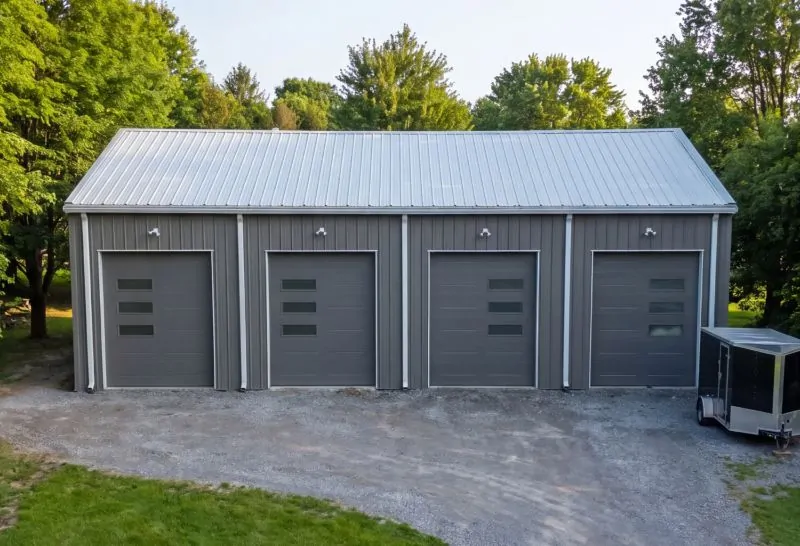
Weather conditions play a major role in the long-term performance of a barn roof. Snow accumulation, strong winds, heavy rainfall, and humid summers all affect how well a structure holds up over time. A practical roof design supports proper drainage, protects interior space, and reduces unnecessary maintenance.
Choosing the right roof style also improves comfort and storage efficiency. A well-designed hip roof barn offers dependable stability in regions that experience strong seasonal winds, while other roof styles support ventilation or additional loft space. Climate should always guide the decision before appearance or layout preferences.
Popular Barn Roof Styles According to the Climate
Each barn roof style offers practical advantages based on local weather, storage needs, and daily barn use. The right roof shape can help manage snow, rain, wind, airflow, and interior space. A well-planned roof also supports long-term durability by reducing moisture buildup and structural strain.
Gable Roof
A gable roof is a practical choice for many agricultural and storage buildings. Its triangular shape allows rain and snow to move off the roof efficiently, which helps reduce standing moisture and excess roof load. This design also supports simple framing, clean interior lines, and easy maintenance access.
Gable roofs work well in areas with regular rainfall or moderate snowfall. The open peak can also support better attic ventilation when proper vents are included. This makes the design suitable for barns used for equipment, feed storage, or general farm use.
Gambrel Roof
A roof made of gambrel provides more overhead space through its double-sloped design. The lower slope creates added loft room, which is useful for hay storage, seasonal supplies, or upper-level work areas. This roof style also gives barns a traditional agricultural appearance while supporting practical interior capacity.
The steeper roof sections help shed snow and rain efficiently when the structure is properly engineered. Gambrel roofs suit properties that need extra usable space without expanding the building footprint. Proper ventilation and moisture control remain important because the added loft area can trap warm air during colder months.
Monitor Roof
A monitor roof includes a raised centre section that improves airflow and natural light inside the barn. This design is helpful for barns used for livestock, workshops, or storage areas where humidity control matters. The raised section can include vents or windows that release warm, moist air from the upper part of the building.
This roof style supports a brighter and more comfortable interior during daytime use. Better airflow also helps reduce condensation on walls, ceilings, and stored materials. Monitor roofs are especially useful when the barn needs ventilation without relying heavily on mechanical systems.
Choosing A Barn Roof For Wind Protection
A hip roof is a strong option for areas exposed to high winds and changing weather conditions. Its four-sided slope helps distribute wind pressure across the structure rather than concentrating stress on one end wall. This balanced shape also helps rain move away from the roof from multiple sides.
A hip roof barn works well in open rural areas where buildings face direct wind exposure. Proper bracing, secure fasteners, and engineered framing improve performance during strong seasonal storms. This roof style also supports dependable protection for barns used for equipment, vehicles, livestock, or storage.
Why Professional Barn Planning Matters In Harsh Climates
Cold winters, fluctuating temperatures, and seasonal storms place constant pressure on barn structures across Canada, making professional planning essential for roof systems, framing layouts, ventilation design, engineering requirements, and structural load expectations that support durable year-round performance.The right barn roof style supports durability, weather protection, and practical daily use. Snowy climates sometimes require steep drainage-friendly slopes, while windy regions benefit from balanced structural designs. Warm and humid conditions usually call for improved ventilation and airflow. A roof designed around local climate conditions creates a stronger and more dependable barn for years of reliable performance.
About the Author