The Qhapaq Ñan was more than a road system. It turned Andean movement, labor, ritual, communication, and military power into the visible structure of Inka empire.

By Matthew A. McIntosh
Public Historian
Brewminate
Introduction: The Road as Empire Made Visible
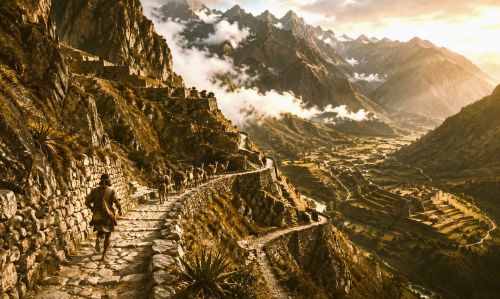
A road in the Andes was never merely a line across the ground. It was an answer to altitude, distance, ravines, desert, cold, rain, labor, authority, and memory. The Inka road system, known in Quechua as the Qhapaq Ñan, stretched through one of the most demanding imperial landscapes in world history, linking the highland capital of Cusco with coastlands, valleys, forests, plateaus, frontier zones, shrines, storehouses, military stations, and provincial centers. Its routes crossed snow-capped passes, arid lowlands, steep ravines, and river canyons, often by means of paving, stairways, retaining walls, drainage channels, embankments, and woven suspension bridges. To modern eyes, the road appears first as an engineering marvel; to the Inka, it was also a political instrument as well as a sacred geography and a visible expression of imperial order.
The Qhapaq Ñan made Tawantinsuyu, the “realm of the four parts,” thinkable as a single empire. From Cusco, roads radiated outward into the four great regions of Inka rule, turning geography into administration. Messengers could move through relay stations, armies could be dispatched to rebellious provinces, officials could inspect subject communities, and llama caravans could carry food, textiles, weapons, ritual goods, and tribute across ecological zones. The road did not simply connect places that already belonged together; it helped make them belong together. A valley or mountain pass and a settlement or a storehouse became part of the imperial world not only by conquest but by being placed on a route through which the state could command, provision, remember, and return.
Yet the road’s significance cannot be reduced to speed or efficiency. Unlike Roman highways designed for wheeled vehicles, the Inka road system was built for feet, runners, porters, soldiers, and llamas. Its brilliance lay in its refusal to impose a single kind of road on every landscape. In some places it was paved and monumental; in others it was narrow, steep, stepped, or adapted to local terrain. A road across coastal desert did not face the same problems as a road descending into cloud forest or climbing toward a high pass. Inka engineers built according to use and environment, not according to an abstract ideal of what a “proper” road should look like. Stone paving, drainage channels, stairways, retaining walls, causeways, and bridge approaches appeared where they were needed, while other stretches could remain simpler paths stabilized by repeated use and local maintenance. This was not technological backwardness, but technological fit. The absence of wheeled traffic, often treated by modern readers as a limitation, actually helps explain the system’s form. A road made for runners, armies, porters, and llama caravans could climb where carts could not go, turn into stairs where slopes demanded it, and cross fragile terrain without requiring the broad, graded surfaces expected in wheel-based transport systems. The Inka governed without alphabetic writing or a money economy, yet they created a network capable of sustaining one of the largest empires in the premodern world. The road was not a lesser version of Old World infrastructure. It was an Andean solution to Andean problems.
The Qhapaq Ñan should be understood not simply as a transportation network, but as an imperial technology: a network of roads, bridges, waystations, labor obligations, messengers, and administrative practices that transformed movement into power. Its stones and paths mattered, but so did the people who maintained them, the communities obligated to rebuild them, the runners who animated them, the storehouses that fed them, and the sacred landscapes through which they passed. The Inka did not invent Andean mobility from nothing; they inherited and expanded older traditions of movement. Their achievement was to make roads into empire itself: visible, walkable, enforceable, and remembered.
Before the Inka: Andean Movement Before Empire
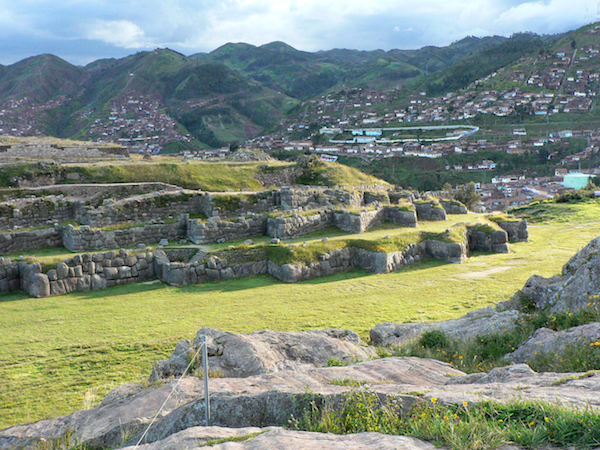
The Qhapaq Ñan did not appear in an empty landscape. Long before the Inka state expanded from Cusco into Tawantinsuyu, Andean peoples had already learned how to move through a world of extreme verticality, ecological contrast, and fragmented terrain. The Andes encouraged movement not because travel was easy, but because survival often depended on access to different environments. Coastal valleys, highland pastures, puna grasslands, cloud forests, river corridors, and intermontane basins each produced different resources. Communities developed habits of exchange, seasonal movement, caravan travel, ritual journeying, and political communication that preceded Inka rule by centuries and, in some cases, millennia. The Inka inherited a landscape already marked by paths, memory, and movement.
This older Andean mobility was shaped by what scholars have often called vertical ecology. A community might need maize from lower valleys, tubers from higher fields, coca from warmer eastern slopes, camelid products from the puna grasslands, fish or shell from the coast, and feathers or forest goods from beyond the highlands. These were not merely luxuries; they were part of economic life, ritual obligation, diet, status display, and political negotiation. Movement across altitude was not accidental or marginal. It was built into Andean society. Highland communities could not treat the coast, the forest edge, or neighboring valleys as distant abstractions, because those places supplied materials and foods that gave households resilience, rulers prestige, and rituals their proper substances. Likewise, coastal communities were not isolated from the mountains simply because the terrain between them was harsh. Shells, dried fish, salt, cotton, maize, coca, wool, meat, metals, and ceremonial goods moved through networks of exchange, obligation, alliance, and sometimes domination. The famous idea of the “vertical archipelago” captures part of this logic: Andean groups often sought access not only to nearby lands, but to scattered ecological “islands” at different elevations, sometimes through colonies, kin ties, reciprocal arrangements, or political control. Paths were more than beaten tracks between settlements. They were the physical expression of a society organized around difference: different climates, different crops, different animals, different ritual materials, and different kinds of power. The path that linked one valley to another, or one ecological zone to another, was not simply a convenience. It was a social artery through which food, animals, textiles, marriage ties, obligations, religious meanings, and political claims could pass.
The llama caravan was central to this world before the Inka, though it should not be imagined as equivalent to wheeled transport or Old World pack methods. Llamas could carry useful loads across high-altitude terrain, but they could not pull carts, bear riders, or move the massive quantities associated with oxen, horses, or camels. Their strength lay in their adaptation to Andean conditions. They could travel where wheeled vehicles would have been useless, survive on highland pasturage, and carry goods between communities separated by mountains, deserts, and ravines. Human porters also remained essential, especially in regions or contexts where llamas were unsuitable. The result was a mobile world built around walking, carrying, climbing, and repeated passage rather than broad highways designed for animal-drawn vehicles.
Earlier states and regional powers also left precedents for Inka mobility. The Wari created an expansive Middle Horizon political presence that linked highland centers, provincial installations, and road-like corridors across parts of the central Andes. Tiwanaku and other regional traditions likewise participated in long-distance exchange, pilgrimage, colonization, and the movement of goods and people across ecological boundaries. These earlier systems were not simply prototypes of the Inka road network, and they should not be flattened into a single evolutionary story that inevitably leads to Cusco. Still, they mattered. They showed that Andean political power could be extended through movement, that distant places could be tied to central authorities, and that roads, paths, waystations, and caravan routes could carry more than goods. They could carry authority.
The Inka achievement was not the invention of Andean transportation from nothing. It was the imperial reorganization of older patterns of movement. Existing paths were improved and attached to new administrative centers. New road segments were added where conquest, military movement, or state provisioning required them. Tambos, storehouses, bridges, and relay stations transformed routes into infrastructure. What had once been local, regional, seasonal, commercial, ritual, or kin-based movement became part of a Cusco-centered imperial structure. To understand the Qhapaq Ñan properly, we must begin before the Inka, because the road’s power came not only from what the empire built, but from what it absorbed.
Cusco and the Four Quarters: Roads as Imperial Geography

The Inka road system began, conceptually if not always physically, at Cusco. The city was more than a capital in the administrative sense. It was a ritual center, dynastic memory-place, political stage, and cosmological anchor from which imperial space could be imagined as ordered. To speak of roads radiating from Cusco is not merely to describe movement outward from a city. It is to describe the transformation of landscape into a political map. The Qhapaq Ñan made distance intelligible by tying faraway valleys, highland settlements, coastal routes, frontier zones, and sacred places to a center that claimed to organize them all.
That imperial geography was expressed through Tawantinsuyu, the “realm of the four parts.” The empire was conventionally divided into four great suyus: Chinchaysuyu to the northwest, Antisuyu toward the eastern slopes and forested frontiers, Qollasuyu to the south and southeast, and Kuntisuyu toward the southwest. These were not equal provinces in a modern bureaucratic sense, nor were their boundaries always neat or fixed. They were directional, political, and symbolic divisions that helped the Inka state imagine an enormous and uneven territory as a coherent whole. Roads helped make those divisions real. They gave the four quarters lines of movement, channels of command, and routes through which Cusco’s authority could be extended into places that otherwise might have remained politically distant.
The two great north-south axes of the system are often described as a highland road and a coastal road. The highland route followed the Andean spine, linking Cusco with major mountain centers, agricultural basins, pastures, and administrative installations. The coastal route ran through the Pacific lowlands, where dry valleys, river crossings, deserts, and irrigated settlements posed a different set of problems. Between them ran transverse roads, climbing from coast to sierra, descending through valleys, and joining ecological zones that produced different goods and sustained different communities. This arrangement was not accidental. It reflected one of the deepest facts of Andean life: power depended on the ability to move across altitude as well as distance. Because of this, the road system did not simply connect points on a map. It connected different kinds of landscape. A route might link maize lands with highland tuber fields, llama pastures with administrative centers, coastal cotton-producing valleys with mountain storehouses, or sacred shrines with provincial settlements. The empire’s geography was both horizontal and vertical. It stretched across latitude from present-day Colombia and Ecuador through Peru and Bolivia into Chile and Argentina, but it also moved constantly up and down through ecological tiers. This allowed the Inka state to think in both directions at once. It could command north and south, but also coast and highland, valley and pass, puna and forest edge.
Cusco’s own sacred geography helps explain why roads could carry more than practical traffic. The ceque system, with lines extending from the capital to huacas and other sacred places, shows how Inka space could be organized through radiating lines of obligation, memory, and ritual attention. The imperial road network was not the same thing as the ceque system, but the comparison is useful. Both suggest that lines across the landscape could define relationships. They could tell people where they belonged, what they owed, whom they served, and how local places fitted into a broader order. Roads were not neutral corridors. They were paths through a world already thick with ancestral, sacred, political, and administrative meaning.
This geography was also performative. When officials traveled from Cusco into the provinces, when conquered leaders were summoned to the capital, when tribute goods moved toward storehouses, when armies marched to a frontier, or when messengers ran between relay stations, the empire was being enacted. The road made hierarchy visible in motion. It reminded provincial communities that Cusco could arrive, inspect, provision, punish, reward, and remember. Even when no emperor was present, the infrastructure suggested imperial presence. A paved segment, a bridge, a tambo, a storehouse, or a guarded pass marked the landscape as belonging to a system larger than the local community. Movement itself became a political performance: the runner carrying a message, the llama caravan bearing state goods, the labor crew repairing a slope, the provincial lord traveling under obligation, and the army descending upon a rebellious region all made imperial order visible in different ways. The road allowed power to appear not only in palaces, temples, and fortresses, but in repeated acts of passage. Each journey confirmed that the empire could move across its own body, crossing distances that might otherwise have fractured rule into isolated local commands. The Qhapaq Ñan did not merely serve Inka authority after authority had been established. It helped continually produce that authority by making Cusco’s reach something people could see, hear, feel, and anticipate.
Yet this imperial geography was never perfectly smooth. The Inka road network crossed regions with older identities, rival memories, local routes, and political traditions that did not simply disappear when incorporated into Tawantinsuyu. The four quarters gave the empire an elegant structure, but lived geography remained uneven. Some routes were monumental and heavily maintained; others were more modest, seasonal, or dependent on local labor and knowledge. Some places were deeply integrated into imperial administration, while others remained frontier zones or negotiated spaces. The genius of the Qhapaq Ñan lay not in making the Andes uniform, but in making their differences administratively usable. Cusco did not erase the landscape. It drew lines through it and made those lines serve empire.
Engineering the Andes: Building with the Landscape Instead of Against It

The Qhapaq Ñan was not a single kind of road imposed across a passive landscape. It was a family of engineering solutions adapted to environments that changed dramatically over short distances. Inka builders worked across a great number of various types of geographies, each of which demanded different techniques. The result was an organized network that could appear monumental in one place and almost modest in another, paved with carefully laid stone in some stretches, cut into slopes elsewhere, raised above wet ground in another region, or marked by little more than a stabilized track where the terrain did not require heavier construction. Its achievement lay not in uniformity, but in judgment. The road changed because the Andes changed.
This adaptive quality is crucial to understanding Inka engineering on its own terms. Modern observers often expect great roads to be broad, graded, standardized, and designed for wheels. The Inka road system followed a different logic because it served a different world of movement. It was built for human feet, running messengers, military columns, porters, officials, pilgrims, labor crews, and llama caravans. A road meant for llamas and people did not need the same continuous width, smoothness, or gentle grade as a road meant for carts. It could climb by stairs, narrow along a cliff, descend through switchbacks, cross a ravine by a fiber bridge, or follow a ridge where wheeled vehicles would have failed. What might look irregular from the standpoint of Roman, Chinese, or modern highway engineering was, in Andean conditions, a practical and efficient response to the forms of movement the empire actually used.
Stonework was one of the most visible signs of this adaptation, but it was not used everywhere for the same reason. In heavily traveled, steep, unstable, ceremonial, or administratively important areas, paving could protect the surface, mark the road as official, and give travelers a durable path through mud, erosion, or slope wash. In other places, paving would have been unnecessary labor. A dry coastal stretch or a naturally firm highland path might require boundary markers, clearing, or periodic maintenance rather than elaborate stone surfacing. Where paving was used, it varied in quality and form: flat stones laid into a path, larger fitted slabs, cobbled surfaces, stair treads, curbs, and stone-lined edges. The choice of stone also depended on local geology, available labor, and the political importance of the route. In some stretches, the road’s masonry made the empire appear permanent, as though Cusco had set its authority directly into the earth; in others, the lighter touch of a cleared path or defined corridor was enough to make movement orderly. This variation reminds us that the Qhapaq Ñan was not a single monumental highway but a network of decisions. The Inka were not simply displaying technical skill for its own sake. They were deciding where permanence, visibility, and durability mattered most.
Drainage was just as important as paving, and in many places more important. Water is one of the great enemies of mountain roads. Rainfall can turn paths into channels, loosen slopes, undercut retaining walls, and wash away surfaces that seem solid in dry weather. Inka builders responded with stone gutters, culverts, crowned surfaces, side channels, and careful alignment. Roads were often designed to shed water rather than fight it after damage had already occurred. This was important in highland environments where seasonal rains could be intense and where steep slopes magnified erosion. A road that could not survive water could not serve empire for long. Drainage reveals one of the less spectacular but most sophisticated features of the Qhapaq Ñan: its engineering was concerned not only with construction but with ongoing survival.
Retaining walls, terraces, embankments, and cut slopes show the same concern for stability. In mountain terrain, a road is not merely placed on the ground; it must often be held there. Builders cut into hillsides, supported edges with masonry, reinforced slopes, and created platforms where otherwise there would have been no dependable path. In narrow places, the road could cling to the side of a mountain, supported by stonework that transformed a dangerous traverse into an imperial route. In wet or low-lying areas, raised causeways and embankments could lift the path above waterlogged ground. In deserts, where erosion took different forms, the road might be defined by cleared corridors, edge stones, or alignments that guided travelers through otherwise open space. These features also show how deeply road building overlapped with broader Andean traditions of landscape modification. The same civilization that terraced slopes for agriculture, channeled water for fields, and built stone architecture into mountain settings brought similar habits of thought to road construction. A retaining wall was not simply a support; it was a way of negotiating with gravity. A cut slope was not simply an excavation; it was an attempt to make dangerous ground legible and repeatable for travelers. The system’s variety was not inconsistency. It was environmental intelligence.
Stairways were among the clearest examples of building with the landscape rather than against it. In a wheel-based transport system, stairs are an obstacle; in a foot-based system, they can be a solution. Stone steps allowed steep ascents and descents to become manageable, particularly in places where a graded road would have required enormous labor, unstable cuts, or long switchbacks. For runners, soldiers, porters, and sure-footed llamas, stairs could be practical rather than primitive. They condensed vertical movement into durable form. This matters because it reverses a common modern assumption: the absence of wheeled vehicles did not simply limit Inka engineering. It freed Inka engineers to use forms (stairs, steep paths, narrow crossings, suspended bridges) that made sense for Andean bodies, animals, and terrain.
The road network also depended on standardized thinking without requiring standardized appearance. Builders and planners seem to have shared principles: maintain passable routes, control water, stabilize slopes, mark official paths, place support facilities where travelers needed them, and connect roads to administrative and ritual nodes. But these principles were applied flexibly. A road through a populated highland province might look different from a road crossing a sparse desert or entering a frontier zone. A ceremonial approach to an important center might be broader and more carefully built than a utilitarian connector between local routes. This flexibility made the system stronger, not weaker. It allowed the Inka to incorporate existing paths, adapt to local materials, use regional labor knowledge, and avoid wasting effort where lighter construction would do.
The engineering of the Qhapaq Ñan cannot be separated from the political intelligence of the Inka state. Roads were built to endure, but also to signify. A paved stretch, a stairway, a drainage channel, a walled roadbed, or a carefully maintained bridge announced that movement had been brought under imperial order. In some places, the road may have looked almost like architecture stretched across the landscape, a long public structure that made the state visible between cities, shrines, and administrative centers. In others, its presence was less monumental but no less important: a maintained track, a cleared passage, a dependable crossing, or a repaired slope could still tell travelers that this route belonged to a larger construct of authority. The political message was not only that the Inka could build, but that they could maintain, organize, and return. A road that remained passable season after season suggested continuing power, continuing labor obligations, and continuing surveillance. Yet the road’s greatest achievement was not the conquest of nature in the modern sense. It was a disciplined collaboration with terrain. The Inka did not flatten the Andes into an artificial plain. They learned where to climb, where to step, where to drain, where to bridge, where to pave, where to mark, and where to rely on repeated passage and local maintenance. In that sense, the Qhapaq Ñan was not only a road through the Andes. It was an argument about how empire could be built in a world where mountains, water, altitude, and distance could never be ignored.
The Problem of Broken Landscapes
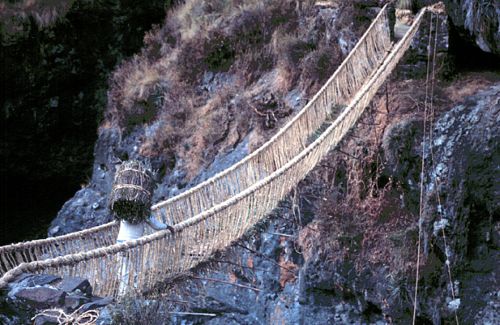
The Andes broke roads as quickly as people built them. Ravines cut through routes that otherwise seemed direct; rivers dropped suddenly through narrow canyons; slopes collapsed after rain; passes forced travelers into steep ascents and dangerous descents. A road system could not be understood only by its long lines across maps in this landscape. Its real test lay in interruptions. The Qhapaq Ñan was impressive not simply because it stretched across great distances, but because it repeatedly solved the problem of broken ground. Bridges, stairways, retaining walls, and crossing places turned fragments of landscape into usable imperial space.
Bridges were among the most dramatic answers to that problem. Inka builders and local communities used different kinds of crossings depending on terrain, materials, and water conditions. Some rivers could be crossed by simple structures, stepping stones, or fordable places in dry seasons. Others required wooden bridges, stone-supported crossings, reed or pontoon arrangements, or the famous woven suspension bridges that stretched across deep gorges. These fiber bridges were well suited to Andean conditions. Where masonry arches or heavy timber bridges would have been difficult, unnecessary, or impossible, cables of braided grass or other plant fiber could create flexible crossings anchored to stone abutments on either side of a canyon. They were not crude substitutes for “real” bridges. They were sophisticated solutions built from local materials and maintained by organized labor.
The woven suspension bridge also reveals how Inka infrastructure blurred the line between object and practice. A bridge made of fiber was not meant to survive forever in the way a stone causeway might. Exposure, tension, weather, and use wore it down. Its durability came from renewal. Communities responsible for such crossings had to gather grass, twist cords, braid cables, prepare anchorages, dismantle weakened sections, and rebuild the bridge as part of a recurring social obligation. The bridge was not only an engineering device; it was a ritualized and administrative act of maintenance. It made visible the same principle that governed much of the Qhapaq Ñan: infrastructure endured because people were repeatedly mobilized to care for it.
This matters because the Inka road system was not a static achievement frozen at the moment of construction. It was a living network that demanded attention. A neglected bridge could sever a route as completely as an enemy army. A damaged stairway could slow messengers, block caravans, or make troop movement dangerous. A washed-out crossing could isolate a valley from the state’s logistical structure. Bridges were strategic points of vulnerability. They concentrated danger, labor, and authority in one place. To control a bridge was to control passage; to maintain it was to keep the empire continuous; to destroy or abandon it was to let geography reassert its power. These points of crossing also made the state’s dependence on local communities unusually visible. The empire could plan routes, demand service, assign responsibilities, and benefit from rapid movement, but the actual continuity of the road often rested on people who knew the river, the season, the fiber, the anchor stones, the slope, and the dangers of a particular place. A bridge was both imperial and local at once. It belonged to the Qhapaq Ñan as a state system, but it also belonged to the community that rebuilt it, watched it, crossed it, and understood when it had become unsafe. That dual character is important. The road’s strongest points were often its most fragile, and the empire’s most impressive solutions were also reminders that infrastructure was never independent of labor, memory, and environmental knowledge.
Stairways solved a different but related problem: vertical rupture. In a landscape where roads had to climb and descend sharply, the choice was often between long, labor-intensive switchbacks and direct stepped routes. For a society that moved on foot and by llama caravan rather than by wheeled vehicles, stairs were not an inconvenience but a practical form of road engineering. Stone steps could stabilize steep paths, reduce erosion, protect slopes from being churned into mud, and make repeated passage safer. They also gave difficult ascents a built rhythm. A traveler climbing an Inka stairway encountered not wilderness overcome by force, but vertical movement disciplined into form.
The presence of stairs also reminds us how misleading it can be to judge the Qhapaq Ñan by wheel-based standards. A wheeled road tries to smooth verticality into grade; a foot road can accept verticality and organize it differently. The Inka did not need to carve every mountain into a ramp. They could turn slopes into sequences of steps, ledges, and switchbacks designed for bodies accustomed to climbing. This provided for a flexibility that broad cart roads lacked. It could pass through tight spaces, cling to cliffs, cross steep saddles, and descend into ravines without requiring the immense earth-moving that wheeled traffic would have demanded. In the Andes, stairs were not a sign that the road had failed to become a highway. They were one reason the road succeeded.
Together, bridges and stairs show the deeper logic of Inka engineering: the empire did not erase broken landscapes, but stitched them. A canyon remained a canyon, but it could be crossed. A slope remained steep, but it could be climbed. A river remained dangerous, but it could be approached, anchored, bridged, and maintained. The Qhapaq Ñan’s power lay in this repeated conversion of interruption into passage. Every bridge and stairway announced that the state could make movement possible where geography resisted it. Yet each also depended on local materials, local labor, local knowledge, and continual repair. The road system was not only a triumph of imperial planning. It was a negotiated structure of movement, built at the exact points where the Andes threatened to break empire apart.
The Politics of Obligation
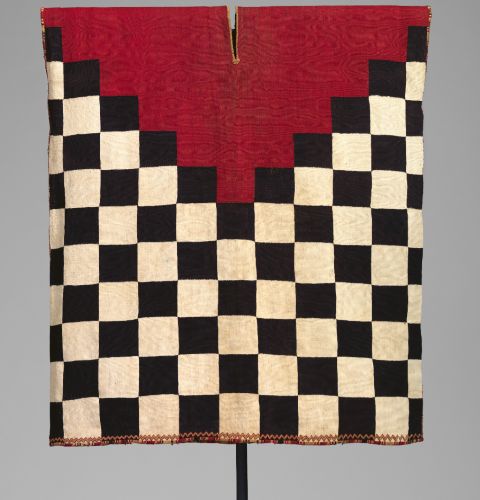
The Qhapaq Ñan was not sustained by engineering alone. Roads through mountains, deserts, forests, and river valleys decay quickly unless people continually repair them. Stones loosen, bridge fibers fray, drainage channels clog, retaining walls shift, stairways break, and seasonal rains carve new channels through even well-built surfaces. The Inka road system depended on a second infrastructure that was less visible than paving or bridges but just as important: organized labor. The road endured because communities were compelled, coordinated, and habituated to maintain it. The Qhapaq Ñan was not only a physical network. It was a social network that converted human obligation into imperial durability.
The most important framework for understanding that labor was the broader Andean system of service often discussed under the term mit’a. Inka rule did not rely on a money economy or wage labor in the modern sense. Instead, subject communities owed labor to the state, and that labor could be directed toward agriculture, construction, military service, mining, transport, textile production, and the maintenance of roads, bridges, storehouses, and administrative facilities. Road work was part of a larger political economy in which the state claimed people’s time and bodies as a form of tribute. This does not mean every act of road repair was experienced in the same way everywhere, or that local communities had no traditions of communal labor before the Inka. But under imperial rule, older forms of reciprocal work were reorganized into obligations that served Cusco’s needs.
Maintenance made the politics of the road unusually clear. A newly built road might display imperial ambition, but a maintained road displayed continuing power. It showed that the state could return season after season, assign responsibilities, mobilize workers, and keep routes open for officials, messengers, soldiers, and caravans. This was important because the Qhapaq Ñan crossed places where neglect would quickly undo construction. A drainage channel left uncleared could turn a roadbed into a stream. A bridge not renewed could collapse into a ravine. A slope not stabilized could fail after heavy rain. The road’s permanence was not simply built into stone; it was reproduced through repeated acts of labor. Every repair was a small reenactment of imperial order. Yet this labor system also depended on local knowledge. Cusco could command work, but it could not replace the practical understanding of communities who knew particular landscapes intimately. Local workers knew which grasses made strong bridge cables, when a river crossing became dangerous, where a slope tended to slip, which stones held in wet ground, and how water moved during the rainy season. The empire’s administrative genius lay partly in its ability to appropriate and coordinate that knowledge. A bridge, stairway, or paved road might appear as an imperial work, but it was often made possible by the skills of people who had lived with the terrain long before the Inka arrived. The Qhapaq Ñan was both centralized and local: planned in relation to imperial needs, but maintained through regional expertise and community obligation.
This dual character complicates any simple celebration of the road system. The Qhapaq Ñan connected people to resources, protection, ceremony, and wider political worlds, but it also connected them to demands. Communities that maintained road segments, rebuilt bridges, supplied labor crews, or supported travelers through nearby tambos were participating in the empire, but not always voluntarily or equally. Infrastructure that appears beneficial from the perspective of the state could feel burdensome from the perspective of those required to sustain it. A road that allowed armies to move quickly also required someone to repair its surface. A bridge that joined two provinces also required someone to gather fiber and rebuild it. A tambo that fed travelers also required someone to fill its stores. A storehouse that gave the road logistical strength also required someone to produce the maize, potatoes, textiles, sandals, weapons, and dried meat placed inside it. The labor behind the road extended beyond the roadbed itself into fields, herds, workshops, households, and communities whose work made movement possible for others. The empire’s mobility was not free. It was paid for in time, bodies, materials, and obligations distributed across subject populations. This does not mean the road was only oppressive, since local people could also benefit from maintained routes, safer crossings, and access to wider networks. But those benefits existed inside a system in which the state decided when labor was owed, where it would be directed, and whose movement mattered most. The road’s usefulness and its coerciveness were not separate features. They were intertwined.
The politics of obligation also shaped how the road made empire visible. Laborers building a retaining wall, clearing a path, carrying stones, repairing a stairway, or renewing a bridge were not merely maintaining transportation. They were publicly participating in the making of Inka authority. Work itself became a political performance. It reminded communities that the state could organize them, classify their duties, and turn their collective effort toward projects larger than local need. The road could also reinforce local identity and continuity, because communities often worked on familiar routes, known crossings, and inherited landscapes. Imperial labor did not erase local belonging; it redirected it. The same hands that maintained a community’s practical access to neighboring valleys might also be maintaining Cusco’s ability to move soldiers, messengers, and officials through the region.
The Qhapaq Ñan’s endurance rested on a tension at the heart of Inka rule. The road system was a marvel of planning, but planning alone could not keep it open. It required an empire capable of turning obligation into routine and local knowledge into state infrastructure. Its stones, bridges, stairs, and waystations were the visible surface of a deeper order of labor. To walk the road was to move across the work of countless communities whose names rarely survive in the sources but whose labor made imperial geography possible. The road was not only built through the Andes. It was built through people: through their service, discipline, memory, and sometimes their burden.
The Infrastructure of Rest
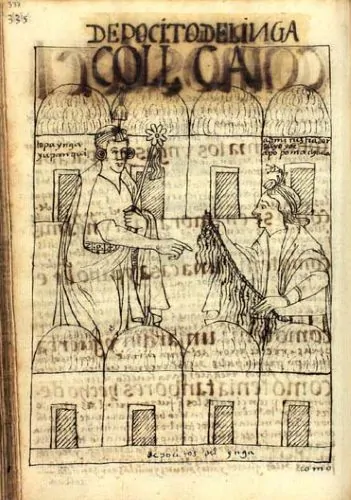
The Qhapaq Ñan was not only a road of motion. It was also a road of stopping. Long-distance movement across the Andes required places where travelers could sleep, eat, receive supplies, exchange messages, rest animals, gather labor, and prepare for the next difficult stretch of terrain. The physical roadbed made movement possible, but waystations and storage facilities made movement sustainable. A messenger could run only if relay stations were available. An army could march only if food, clothing, sandals, weapons, and shelter could be supplied along the way. Officials could inspect distant provinces only if the state had created an infrastructure that made their journeys predictable. The road system depended on pauses as much as passages.
The most visible institutions of this resting infrastructure were tambos, the waystations placed along major routes and near administrative nodes. Tambos were not simply inns in a modern commercial sense, because the Inka road system did not operate as an open highway lined with private businesses serving paying travelers. They were state-connected facilities, supported through labor obligations and provisioning, designed to serve people traveling for official, military, ritual, or logistical purposes. Some were modest stopping places; others were more substantial complexes associated with storehouses, corrals, administrative buildings, kitchens, lodging spaces, and nearby settlements. Their variety mattered because the road system itself was varied. A small relay or resting point on a difficult route did not have to look like a larger installation near an administrative center, military route, or provincial hub. What made a tambo important was not architectural uniformity, but its place in a chain of support. It turned distance into stages, gave travelers predictable points of recovery, and allowed the state to organize movement as a sequence rather than a gamble. A soldier, messenger, official, or labor crew did not simply step into wilderness and hope to survive the next stretch of road; they moved through a landscape already prepared for their arrival. Their purpose was practical but also political. A tambo told the traveler that the road was not a mere path through empty space. It was supervised, provisioned, and claimed.
Spacing mattered. Chroniclers and archaeologists have often noted that tambos were placed at intervals suited to a day’s travel, though the actual distance could vary according to terrain, altitude, water, settlement patterns, and the importance of the route. In a flat or open stretch, a day’s travel might cover more ground; in steep highland country, the same effort might cover far less. This variability again shows the Andean logic of the Qhapaq Ñan. The state did not need every stopping point to be measured by an abstract uniform standard. It needed travelers to be able to move from one workable support point to the next. A tambo at the right pass, river crossing, valley entrance, or administrative boundary could matter more than a mathematically regular interval.
Storehouses, or qollqas, gave the road system logistical depth. They held foodstuffs such as maize, potatoes, chuño, quinoa, and charqui, as well as textiles, sandals, weapons, tools, and other goods needed by soldiers, workers, messengers, officials, and dependent populations. Storage was one of the great strengths of the Inka political economy. It allowed the state to collect labor and goods from subject communities, hold them in reserve, and redistribute them when needed. In ordinary times, this supported administration and travel. In moments of war, famine, ceremony, or emergency, it gave the state the ability to act quickly and visibly. A road without storage could carry commands; a road with storage could carry power.
The relationship between tambos and storehouses also clarifies the difference between movement and logistics. Roads allowed people and goods to move, but logistics required anticipation. Someone had to decide where supplies should be stored, what quantities were needed, how long foods could be preserved, which goods were appropriate for a region, who would fill the storehouses, who would guard them, and under what authority they could be opened. Dried foods such as chuño and charqui were valuable because they could last, travel, and feed people in demanding conditions. Textiles and sandals mattered because bodies on the road wore out what they used. Llama caravans required fodder and management. Soldiers required more than a path; they required a chain of support. The Inka road system was not merely reactive. It was planned around future need.
This infrastructure of rest also reveals the social cost of imperial movement. Tambos and storehouses did not fill themselves. Their supplies came from fields, herds, workshops, and households, and their upkeep depended on communities assigned to maintain them. To the traveler moving under state authority, the system could appear generous, even abundant: food, shelter, equipment, and replacement goods waiting along the way. To the communities responsible for provisioning it, the same system could represent obligation, extraction, and surveillance. The state’s ability to feed an army at a distance was inseparable from its ability to claim production from local people. The state’s ability to host officials along the road depended on the labor of those who might never travel far themselves. Rest for some required work from others.
Tambos and storehouses transformed the Qhapaq Ñan from a line of passage into a managed imperial landscape. They made the road habitable, but not neutral; generous, but not free; efficient, but not detached from coercion. They also helped the empire appear permanent. A paved road might impress the eye, but a stocked storehouse impressed the stomach. A traveler who found shelter, food, clothing, and order at regular intervals encountered the state not as an abstract authority in Cusco, but as a material presence embedded in the landscape. The Inka road system succeeded because it understood that empires do not move on roads alone. They move on rest, storage, provisioning, accounting, obligation, and the quiet expectation that when power arrives, supplies will already be waiting.
The Speed of Imperial Knowledge
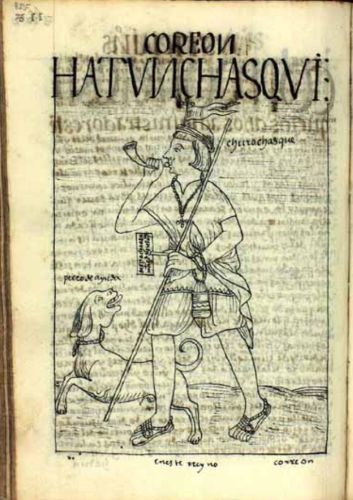
The Qhapaq Ñan moved more than bodies and goods. It moved knowledge. Roads gave the Inka state a way to project authority across mountains, deserts, valleys, and frontier zones, but that authority depended on communication as much as construction. Orders had to travel from Cusco to provincial officials; reports had to return from distant regions; news of rebellion, harvest failure, military need, or ritual obligation had to move faster than a caravan or an army. The road system became an information system. Its paths, bridges, relay stations, and waystations allowed the empire to convert distance into sequence: one runner, one station, one message, one transfer, and then another, until imperial knowledge crossed spaces that would otherwise have remained politically slow.
The most famous agents were the chasquis, relay runners stationed along major routes. They did not simply wander the roads carrying casual news. They were part of an organized communication structure in which trained runners moved between stations, handing off messages so that information could travel with remarkable speed. Each individual chasqui covered only a portion of the route, but the relay could extend the reach of the state. This was the genius of the system. It did not require one exhausted messenger to cross the empire. It required many prepared bodies placed at intervals, each responsible for a segment of movement. The road made their running possible, but the relay made their running imperial.
The speed of chasqui communication has often impressed both chroniclers and modern readers, though exact figures should be handled carefully. Claims that messages could travel roughly 240 kilometers in a day are useful as a general indication of relay capacity, not as a rule that applied everywhere under all conditions. Terrain, weather, urgency, route quality, staffing, altitude, and political importance would all have shaped actual performance. A message moving along a well-maintained highland route with staffed relay points was not the same as one moving through a difficult frontier or across a damaged bridge. Still, even if we treat the highest figures cautiously, the underlying point remains powerful: the Inka state developed a way to make information move faster than ordinary travel. In an empire without alphabetic correspondence, horses, wheeled vehicles, or mounted couriers, that achievement mattered enormously.
The chasquis carried messages in more than one form. Some were oral, entrusted to memory and repetition; others were associated with objects, signs, or khipus, the knotted-string devices used for recording and communicating information. Khipus could encode numerical data with remarkable sophistication, and scholars have shown that they were central to accounting, administration, census-taking, labor organization, storage, and tribute records. Their full communicative range remains debated, especially the question of whether some khipus carried narrative, historical, or non-numerical information. That debate matters because it reminds us how easily modern categories can distort Andean evidence. If khipus are treated only as “numbers,” their role in memory, authority, and social practice can be underestimated; if they are treated too casually as “writing,” the specific material and interpretive character of the medium can be blurred. Khipus were not paper documents translated into string, nor were they simple mnemonic toys. They were structured, portable records whose meaning depended on color, fiber, knot type, placement, hierarchy, and the trained knowledge of those who made and interpreted them. A khipu could travel along the road, but its meaning also traveled through the specialist who understood it, the official who authorized it, and the administrative context that gave it force. The crucial point is not to force khipus into a modern category of “writing” or reduce them to mere counting tools. They were an Andean technology of record, memory, and administration, and the road system helped move the people who knew how to read, make, carry, and explain them.
This combination of running bodies and knotted records reveals something distinctive about Inka power. The empire did not separate information from people as neatly as a literate bureaucratic state using paper archives might. Knowledge often traveled embodied: in the memory of a runner, the expertise of a khipu specialist, the authority of an official, the testimony of a local leader, or the interpretation of a corded record. A khipu by itself was not always enough; it required trained understanding, context, and institutional trust. Likewise, an oral message depended on disciplined memory and the credibility of the person carrying it. The Qhapaq Ñan gave these forms of knowledge a physical route. Roads did not simply transport records; they transported the human systems that made records meaningful.
The administrative value of this communication network was immense. Through chasquis and khipus, the state could coordinate labor drafts, track stored goods, monitor provincial obligations, summon leaders, respond to military threats, and organize ceremonial demands. A storehouse full of maize or textiles mattered only if officials knew what was inside it, where it was located, and when it should be opened. A labor obligation mattered only if it could be counted, assigned, remembered, and enforced. A distant province mattered politically only if information from it could reach the center and commands from the center could return. Roads, runners, and khipus formed a single administrative ecology. The road supplied movement; the chasqui supplied speed; the khipu supplied memory; the state supplied the demand that made all three necessary.
The Qhapaq Ñan made imperial knowledge mobile. It allowed Cusco to imagine distant places not simply as conquered lands, but as knowable and responsive parts of a larger order. Yet this knowledge was never neutral. To be counted, reported, summoned, supplied, or inspected was also to be governed. The same relay system that could carry news of need or danger could also carry commands of labor, military mobilization, punishment, or extraction. The same khipu that preserved information could bind a community to recorded obligations. The speed of imperial knowledge was both impressive and disciplinary. Through the chasquis and the khipus, the road became more than a route across the Andes.
The Vertical Economy of Movement
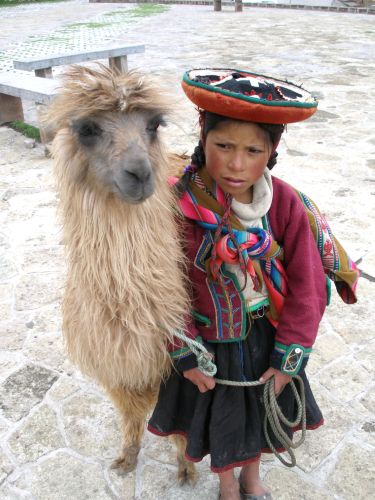
The Qhapaq Ñan joined an empire built across ecological extremes. Tawantinsuyu was not a compact agricultural kingdom spread across a uniform plain; it was a long, mountainous, vertically organized world in which different altitudes and regions produced different necessities. Coastal valleys, highland fields, puna pastures, eastern slopes, river basins, and desert corridors each contributed something different to Andean life. Roads mattered because they allowed the Inka state to move through those differences, not around them. The road network linked maize lands to potato fields, camelid pastures to administrative centers, coca-producing valleys to highland communities, coastal cotton zones to textile production, and storehouses to armies, workers, ritual centers, and provincial officials. Movement across the empire was ecological as much as political.
Llamas were central to this movement, but their role must be understood carefully. They were not the Andean equivalent of horses, oxen, or camels in every respect. They could not carry riders, pull carts, or transport the enormous loads associated with wheeled vehicles and heavy draft animals. Their strength lay elsewhere. Llamas were adapted to highland environments, could move across rough terrain, and could carry modest but useful loads through places where carts would have been useless. Their bodies matched the road system’s logic: narrow paths, steep climbs, high passes, and uneven surfaces were not barriers in the same way they would have been for wheel-based transport. A llama caravan did not turn the Andes into a highway in the Old World sense. It made Andean mobility possible on Andean terms.
The goods that moved through this construct reflected the vertical economy that had long shaped Andean society. Maize could move from warmer valleys toward highland storehouses and ceremonial centers. Potatoes and other tubers could be processed into chuño, a durable freeze-dried food well suited to storage and transport. Meat could be dried as charqui, making pastoral resources portable and useful for soldiers, labor crews, and travelers. Coca, cotton, wool, feathers, metals, shell, salt, fish, textiles, tools, and ritual materials could move between zones that produced and valued different things. These goods did not flow randomly. They moved through obligations, state collection, redistribution, local exchange, elite gifting, ritual demand, and logistical planning. Their meaning also changed as they moved. Maize was food, but it could also become chicha, ceremony, hospitality, or state generosity. Textiles were practical objects, but they could also mark status, reward service, clothe officials, equip soldiers, or embody labor owed to the state. Coca was consumed, exchanged, offered, and valued in ritual and political settings. Shell, feathers, metals, and fine cloth could carry meanings far beyond utility, linking distant landscapes to elite display and sacred practice. The road system gave those movements form. It allowed ecological diversity to become administratively useful, and it allowed goods from one zone to appear in another as proof that the empire could gather, store, transform, and redistribute the products of many worlds.
This is why it is misleading to imagine the Qhapaq Ñan primarily as a commercial highway. Goods certainly moved along it, and exchange certainly existed in Andean worlds, but the Inka state was not organized around market trade in the modern sense. Much of the road’s most important traffic served administration, ceremony, military provisioning, labor mobilization, and redistribution. A storehouse filled with maize or textiles was not simply a warehouse awaiting buyers. It was a reserve of state power. A llama caravan carrying goods along an imperial route might be moving tribute, supplies for an army, materials for a ceremony, provisions for laborers, or wealth to be redistributed by rulers. Goods were not merely economic objects. They were instruments of obligation, generosity, hierarchy, memory, and control.
The limitations of llama transport shaped the empire as much as its possibilities did. Because loads were relatively small, the movement of large quantities required many animals, skilled herders, planned routes, rest, pasturage, and coordination. Caravans moved at animal pace, not at the speed of a relay runner. They needed water, grazing, and protection from difficult terrain and weather. Human porters remained important, especially where routes, goods, or local conditions made animal transport less practical. These limits forced the Inka state to think carefully about distance, weight, preservation, and supply. Heavy or perishable goods could not simply be moved wherever rulers wished without cost. Durable foods such as chuño and charqui mattered because they reduced the risks of distance. Textiles, sandals, tools, and weapons had to be produced, stored, and replaced in ways that anticipated use on the road. Herds had to be managed so that transport capacity remained available when the state needed it. The Qhapaq Ñan’s support infrastructure (tambos, storehouses, corrals, bridges, stairways, and maintained paths) helped manage these constraints. The empire did not overcome the limits of transport by discovering a single technological breakthrough. It overcame them through organization: many animals, many people, many stopping points, many stored goods, and many obligations arranged into a system. The road network was not separate from the economy of movement. It was the structure that allowed modest loads, slow caravans, and human labor to become imperial logistics.
The vertical economy of movement reveals the deeper purpose. The Qhapaq Ñan did not simply allow the Inka to move across space; it allowed them to move across ecological difference and turn that difference into imperial strength. The state’s power depended on knowing what each region produced, how goods could be preserved, where they should be stored, who owed labor or supplies, and how routes could connect one zone’s surplus to another zone’s need. Llamas, caravans, storehouses, dried foods, textiles, and road stations were all parts of this same system. The genius of the Qhapaq Ñan was not speed alone. It was the ability to make a mountain empire circulate: slowly in caravans, rapidly in messages, ceremonially in offerings, militarily in supply chains, and politically through the constant movement of goods that made distant communities part of a single imperial economy.
Roads of War: Military Mobility and Imperial Discipline
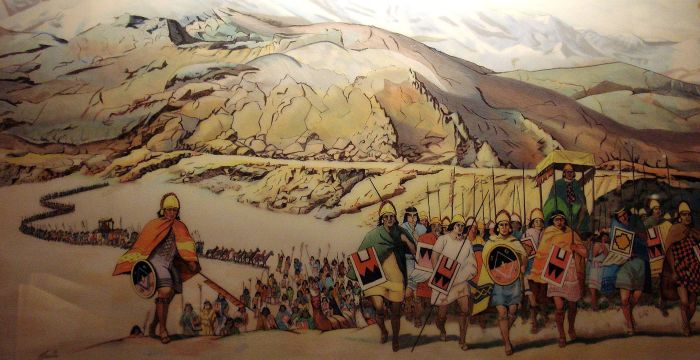
The Qhapaq Ñan was a road system of administration, communication, ritual, and provisioning, but it was also a road system of war. Tawantinsuyu expanded with extraordinary speed during the fifteenth and early sixteenth centuries, and that expansion required more than battlefield success. Armies had to be assembled, supplied, moved, reinforced, and used again after conquest to hold what had been taken. In a mountain empire, military power could not depend simply on the bravery of soldiers or the authority of rulers. It depended on routes that made movement possible across passes, deserts, valleys, river canyons, and hostile frontier zones. The road system gave the Inka state the ability to turn scattered fighting forces into coordinated imperial force.
Military mobility mattered especially because the Inka Empire governed a landscape full of potential fragmentation. Communities separated by mountains, ravines, ecological zones, and older political identities could resist, rebel, or withdraw from imperial supervision if the state could not reach them. Roads reduced that distance politically. They allowed troops to move toward rebellious provinces, frontier regions, or newly conquered territories before local resistance could fully consolidate. They also allowed the state to send officials, inspect garrisons, move supplies, and keep watch over strategic corridors. The Qhapaq Ñan did not eliminate the difficulty of Andean war, but it changed the terms on which war could be conducted. It made the state faster, more persistent, and more capable of returning. The road’s military function depended on the logistical system discussed earlier. An army cannot march on paving alone. Soldiers required food, sandals, clothing, weapons, shelter, and organized stopping places. Tambos and storehouses transformed roads into military corridors by making movement sustainable over long distances. Maize, chuño, charqui, textiles, and equipment stored along important routes could support troops as they crossed difficult terrain. Llama caravans and human porters could move goods, but stockpiled supplies reduced the burden of carrying everything from the start. This gave the Inka state a strategic advantage. It could prepare regions before troops arrived, use stored goods to support campaigns, and make military force appear with a speed and material backing that would have been impossible if armies depended only on local foraging.
Roads also helped turn conquest into occupation. The Inka did not merely defeat enemies and depart. They built, repaired, or appropriated routes; established administrative centers; placed storehouses; stationed officials; moved populations when necessary; and tied conquered regions into the imperial geography of Cusco. A road into a newly conquered area was not just a path of invasion. It became a path of incorporation. Through it came tax obligations, labor demands, inspection, ritual integration, and military oversight. The same route that first carried soldiers could later carry messengers, administrators, goods, and summoned local leaders. The violence of conquest was extended into the routines of rule. The road gave victory an infrastructure.
The military value of the Qhapaq Ñan was also psychological and disciplinary. A subject community did not need to see an army every day to know that one could arrive. A maintained road, a stocked storehouse, a relay station, a nearby garrison, or a pass under imperial control suggested that Cusco’s reach was not theoretical. It was built into the landscape. Roads made punishment imaginable before it happened. They gave imperial threats credibility because they made movement possible. This mattered in an empire that governed many peoples whose incorporation had been recent, negotiated, or coerced. The road could carry gifts and food, but it could also carry soldiers and commands. Its ambiguity was part of its power.
Yet military movement along the Qhapaq Ñan should not be imagined as effortless domination. Roads made armies mobile, but they also created dependencies and vulnerabilities. A column moving through mountains needed reliable crossings, open passes, maintained surfaces, and secure supply points. Bridges could fail or be destroyed. Storehouses could be emptied, hidden, or attacked. Local guides and laborers could become essential. Terrain still mattered, and communities familiar with that terrain could resist imperial movement in ways that formal maps conceal. A road that made it easier for an army to enter a region also gave defenders a sense of where that army might come from, which crossings mattered, which passes could be blocked, and which supply points were most valuable. The very features that made imperial logistics possible (bridges, tambos, storehouses, chokepoints, and maintained corridors) also concentrated risk. To disrupt a road was to disrupt more than travel; it was to interrupt the sequence of provisioning, communication, reinforcement, and intimidation on which imperial force depended. The Inka state could respond to such threats with punishment, repair, and renewed mobilization, but the need to do so shows that infrastructure never removed politics from war. It simply gave politics a route. The road system strengthened Inka military power, but it also revealed where that power could be interrupted. Strategic routes, bridges, passes, and storehouses were assets precisely because they were also points of danger.
The Qhapaq Ñan made war part of the ordinary machinery of empire. It allowed armies to move, but it also allowed military discipline to linger after armies had passed. Roads connected conquest to provisioning, provisioning to administration, administration to surveillance, and surveillance to the possibility of renewed force. They helped the Inka state transform military expansion into governable territory. The road was not only a means of reaching battlefields; it was one of the reasons battlefields could become provinces. In that sense, the Qhapaq Ñan did not merely serve Inka war. It helped define what Inka war was: rapid, logistical, territorial, and inseparable from the larger project of making the Andes answer to Cusco.
Ritual Movement Through Sacred Geography

The Qhapaq Ñan crossed a landscape that was never merely physical. In Andean thought, mountains, springs, caves, stones, rivers, ancestors, and powerful places could possess presence, memory, and agency. The road system did not pass through neutral terrain in the way a modern highway might be imagined to do. It moved through a world dense with sacred relationships. A mountain pass could be more than an obstacle; a spring could be more than water; a stone outcrop could be more than geology. The same roads that carried armies, messengers, officials, and llama caravans also carried offerings, ritual obligations, pilgrims, sacred objects, and the political theology of Inka rule.
The concept of the huaca is central here. A huaca could be a shrine, sacred object, place, body, ancestor, natural formation, or point of ritual power. Some huacas were local, rooted in community memory and ancestral identity. Others were drawn into wider Inka ceremonial systems and made part of imperial religion. This did not necessarily erase their local meanings. Rather, the Inka state often worked by incorporating local sacred places into a larger order, recognizing, ranking, supervising, and sometimes redirecting them. A spring that had long mattered to one community, a mountain associated with ancestral protection, a stone linked to origin stories, or a cave connected with the dead could be folded into imperial ritual without ceasing to matter locally. This made Inka sacred geography unusually flexible. The empire did not always need to destroy local cults in order to dominate them; it could attach them to Cusco, place them within hierarchies of obligation, and make them participate in a wider ceremonial map. Roads made that incorporation practical. They allowed officials, ritual specialists, offerings, and worshippers to move between sacred places, and they allowed Cusco to claim relationships with landscapes that had been sacred long before Inka expansion. A road to a huaca was not simply a route to a religious site. It was a channel through which local memory, imperial authority, ritual performance, and political incorporation could meet.
Cusco itself offers the clearest model for thinking about sacred geography as ordered movement. The ceque system organized shrines around the capital through radiating lines that connected huacas to social groups, ritual duties, calendrical observances, and political hierarchy. The imperial road network was not identical to the ceque system, and it would be a mistake to collapse one into the other. Yet both reveal a similar Inka habit of thought: lines across the landscape could make relationships visible. A line could connect a shrine to a lineage, a road to a province, a mountain to a ceremony, or a conquered place to Cusco. Movement along such lines was never only travel. It was a way of acknowledging order.
Mountains were especially important within this sacred geography. High peaks, often understood as powerful beings or presences, shaped not only the physical horizon but also the ritual world. They watched over valleys, controlled weather in local imagination, marked regional identity, and served as destinations or reference points for offerings. Roads approaching high passes, mountain shrines, or elevated ritual places participated in more than administrative movement. They helped structure encounters with altitude as sacred experience. A climb could be labor, transport, military movement, or pilgrimage, but it could also be a movement toward powers believed to sustain or threaten human life. The road did not desacralize the mountain by making it accessible. It made ritual access repeatable.
Ritual movement also helped the Inka state bind empire to sacred performance. Processions, offerings, pilgrimages, royal journeys, calendrical ceremonies, and the movement of sacred objects all depended on routes and staging places. A shrine gained imperial significance not only by being named or honored, but by being visited, supplied, remembered, and woven into recurring practice. Roads made these practices durable. They allowed ritual to be scheduled, repeated, supervised, and connected to state authority. The Inka state could present itself not merely as a conqueror of lands, but as the proper mediator between people, ancestors, mountains, gods, and the ordered world. Sacred movement made rule appear cosmic rather than merely political. Some of the most dramatic examples of Inka ritual movement involved high-altitude offerings and ceremonies linked to mountains and imperial expansion. The capacocha ritual, for example, could involve the movement of children, objects, textiles, figurines, food, and offerings across long distances before deposition in sacred places, including high mountains. These practices were not simply isolated acts of devotion. They connected center and periphery, royal authority and local landscape, human bodies and cosmic claims. Roads and paths mattered because they made such ritual geographies possible. To move an offering from one place to another was to create a relationship between those places. To place an offering on a mountain was to bind that mountain into an imperial-sacred order.
This sacred geography also complicates the distinction between religion and administration. A road to a shrine could also be a road to a provincial center. A storehouse could provision a ceremony as well as an army. A local lord traveling to Cusco might be participating in politics, ritual subordination, and sacred diplomacy at once. The Inka state did not need to separate these functions sharply, because sacred legitimacy and administrative control reinforced each other. When the road carried offerings, officials, khipus, soldiers, and food through the same landscape, it revealed a world in which practical and sacred movement were intertwined. The road system was not a secular infrastructure later decorated with religious meaning. It was part of an imperial order in which movement itself could be simultaneously sacred, political, and logistical.
The Qhapaq Ñan’s sacred dimension strengthens the larger argument here. The road made empire visible not only because it allowed Cusco to command territory, but because it allowed Cusco to enter into relationship with the powers believed to inhabit that territory. It connected provinces to the capital, but also mountains to ritual, shrines to obligation, ancestors to memory, and conquered landscapes to imperial theology. The Inka did not simply build roads through the Andes. They built routes through a living sacred world, and by doing so, they made political rule appear as part of cosmic order. The road’s power lay partly in stone, labor, storage, and speed, but also in the belief that movement along its lines could sustain the relationship between people, place, and the sacred forces that held the world together.
Unequal Roads: Status and Access to Movement
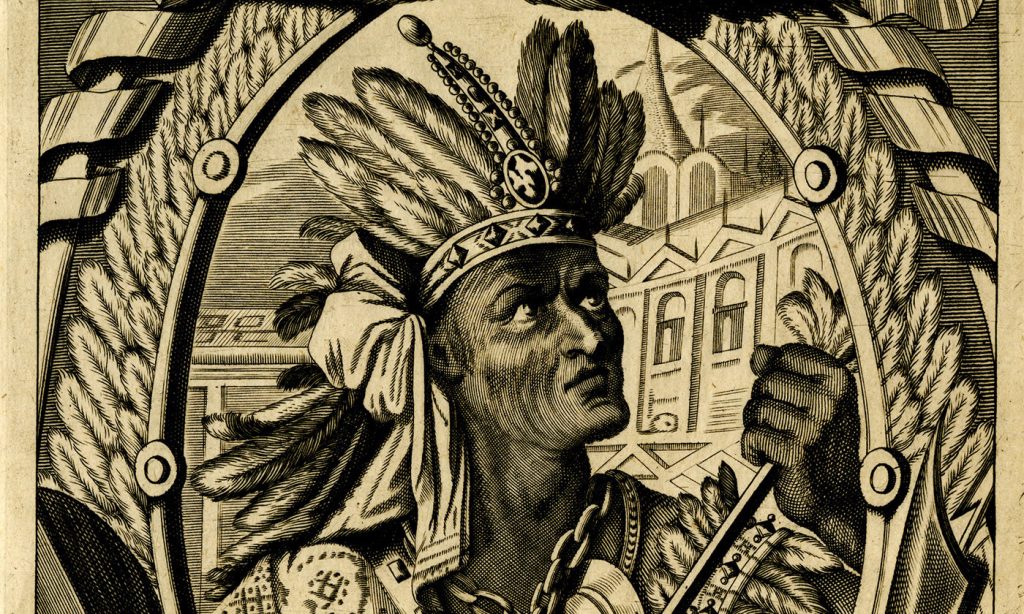
The Qhapaq Ñan connected the Inka Empire, but connection did not mean equal freedom of movement. Modern readers may imagine a road as a public route open to anyone who wishes to travel, but the Inka road system operated within a hierarchical imperial society in which status, duty, authorization, and purpose mattered. The road was a state infrastructure before it was a general convenience. Officials, messengers, soldiers, labor crews, llama caravans, ritual specialists, nobles, and summoned provincial leaders all moved through it, but they did not move in the same way or with the same rights. Access was structured by obligation and authority. To be on the road could mean privilege, service, surveillance, punishment, pilgrimage, labor, or command.
At the top of this hierarchy stood the Sapa Inka, royal kin, high officials, military commanders, and state representatives whose movement expressed power. For them, roads could function as corridors of inspection, command, ceremony, and display. Their journeys were supported by tambos, storehouses, labor service, attendants, and the logistical machinery of empire. When an official traveled, he did not simply move as a private person crossing space; he moved as an embodiment of Cusco’s authority. The road prepared the landscape for him. Food, lodging, labor, and information were made available because his movement mattered to the state. This kind of mobility was ceremonial as well as administrative. A royal or official journey could make hierarchy visible to communities along the route, reminding them that the empire was not confined to Cusco, provincial centers, or military installations. It could arrive in person, accompanied by attendants, goods, commands, ritual expectations, and the authority to inspect or demand. The traveler of high rank did not merely use the road; he activated the whole structure of support that surrounded it. Every stocked waystation, repaired bridge, cleared path, and prepared lodging place demonstrated that elite movement was a collective production. Elite mobility was not only easier than common mobility; it was materially produced by the labor of others.
Chasquis occupied a different but equally privileged position within the road system. Their access to routes and relay stations came from duty rather than rank alone, but their movement was essential to imperial communication. They could run where others might not be permitted to travel freely, and their passage represented the urgency of state knowledge. Soldiers likewise moved with authorization, but their presence could mean danger for the communities through which they passed. A military column on the road was not merely a group of travelers. It was a mobile form of coercion, supplied by storehouses, supported by local labor, and capable of transforming a peaceful route into an instrument of discipline. The same road that carried a runner with news could carry armed men with orders.
For common people, the road’s meaning was more ambiguous. Local communities used paths, crossings, and regional routes before and during Inka rule, and they surely continued to move for farming, herding, exchange, ritual, kinship, and local obligation. But the great imperial roads were not simply free spaces for unrestricted private travel. Movement could be shaped by state demands, local supervision, ethnic identity, labor assignments, and political suspicion. A person might travel because he had been summoned, because a labor draft required it, because goods had to be carried, because a bridge had to be repaired, or because a ceremony demanded participation. The road did not represent liberty. It represented being drawn into the circuits of imperial need.
Status also determined what kind of road experience a person had. One traveler might sleep in a supported tambo; another might maintain it. One might receive food from a storehouse; another might have produced that food as part of tribute or labor obligation. One might command a caravan; another might walk beside it as a herder or porter. One might cross a bridge as an official passenger; another might spend days gathering grass, braiding cables, and rebuilding it. The road gathered inequality into movement. Its impressive efficiency depended on the uneven distribution of burdens. Mobility for administrators, soldiers, and messengers rested on the relative immobility or constrained labor of those required to support them.
There were also limits created by geography, season, gender, age, health, and local knowledge. A road might officially connect two places, but that did not mean everyone could use it safely or easily. High passes, thin air, cold, rain, snow, desert heat, river crossings, and steep stairways imposed bodily demands. Travelers needed familiarity with terrain, access to food and shelter, and permission or social reason to move. A chasqui trained for rapid movement along a known relay route experienced the road differently from a porter carrying goods, a woman traveling for household or ritual obligations, an elder summoned for political purposes, or a resettled person moving under state direction. Even when the same path lay underfoot, the social meaning of that path changed according to the traveler’s body, role, and degree of choice. Women, elders, children, captives, resettled communities, ritual participants, and laborers would have experienced movement differently, though the sources rarely allow us to reconstruct those differences with precision. That silence itself is revealing. Imperial roads are often described from the perspective of rulers, chroniclers, armies, and administrators, but most movement was carried by people whose experiences remain faint in the record. The road’s universality was partly an illusion created by imperial mapping. On the ground, mobility remained uneven, embodied, and socially filtered.
The Qhapaq Ñan was both connective and restrictive. It joined the empire together, but it did so through hierarchy. It expanded the reach of Cusco while regulating the movement of those who lived under Cusco’s rule. It allowed goods, commands, armies, offerings, and officials to move across enormous distances, but it did not turn Tawantinsuyu into an open landscape of free circulation. The road system’s power lay precisely in this tension. It made movement possible, but also made movement governable. To understand the Qhapaq Ñan as an imperial technology, we must see not only the paths it opened, but the inequalities it organized: who traveled, who waited, who carried, who supplied, who repaired, who commanded, and who was commanded to move.
The Qhapaq Ñan after Spanish Conquest
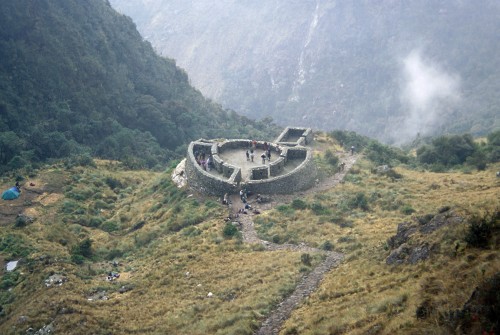
The Spanish conquest did not erase the Qhapaq Ñan. In many places, it made the road newly valuable to invaders who depended on the very infrastructure of the empire they were destroying. Spanish soldiers, officials, priests, merchants, and chroniclers moved through an Andean landscape already organized by roads, bridges, tambos, storehouses, and administrative centers. The road system helped them understand the scale of Tawantinsuyu, but it also helped them move through it. Conquest was not simply a collision between Spanish arms and Inka power; it was also a process of appropriation. The conquerors inherited routes that allowed them to penetrate highland regions, reach provincial centers, communicate across distances, and draw on existing sources of labor and supply. The road that had once made Cusco’s authority visible became, in altered form, a tool of colonial occupation.
Early Spanish observers often admired the road system, even when they misunderstood the society that had produced it. Chroniclers described well-made routes, remarkable bridges, orderly waystations, and the speed with which information and goods could move across harsh terrain. Their praise was not neutral. Some used the roads to emphasize Inka grandeur, others to compare Andean achievements with Roman or Old World precedents, and still others to explain how such a vast empire had been governed before Spanish arrival. Yet their descriptions also reveal a practical reality: the roads remained usable enough to matter. The Spanish did not encounter a vanished infrastructure. They encountered an imperial network in the process of being captured, redirected, and unevenly maintained under new political conditions.
Colonial reuse changed the road system’s logic. The Qhapaq Ñan had been built for walkers, runners, porters, llama caravans, and armies moving within an Andean political economy of labor and redistribution. Spanish rule introduced horses, mules, wheeled vehicles where terrain allowed, new legal institutions, Christian missions, mining centers, colonial towns, and commercial demands shaped by empire across the Atlantic. These changes did not simply “modernize” the road. In many highland settings, wheeled traffic remained impractical, and older paths continued to matter precisely because they suited mountain travel. But the purposes of movement shifted. Roads that had once connected Cusco to provincial administration might now connect colonial authorities to encomiendas, mines, parishes, tribute districts, markets, and ports. The road system survived, but its meanings were reworked.
The mining economy was transformative. Colonial demand for silver, labor, animals, food, mercury, textiles, and transport reorganized Andean movement around places such as Potosí and other mining zones. Routes that served imperial provisioning under the Inka could be absorbed into new circuits of extraction, now directed toward Spanish colonial wealth and global trade. Indigenous labor obligations were also transformed. The Inka mit’a had already linked labor to state power, but colonial authorities adapted and intensified labor drafts in ways that served mines, estates, transport, and Spanish institutions. Roads and paths became channels through which people, animals, and goods were pulled toward colonial demands. The old infrastructure of connection could become an infrastructure of deeper exploitation.
The damage to the Qhapaq Ñan was not only physical, though physical damage mattered. Bridges decayed when the communities responsible for them were disrupted or when colonial authorities failed to maintain older obligations in the same way. Tambos lost their original administrative function, storehouses were emptied, abandoned, repurposed, or folded into new systems, and some routes declined as colonial towns and economic priorities shifted. Horses and mules changed patterns of travel, sometimes favoring different paths from those best suited to llamas and pedestrians. In other places, Spanish roads, churches, estates, and settlements were built over or beside older Inka installations. The result was not a single collapse but a patchwork of survival, abandonment, reuse, and alteration. Some segments remained vital because no better route existed; others faded when the institutions that had sustained them disappeared.
The colonial transformation of the road also altered its sacred geography. Christian priests, churches, crosses, processions, and campaigns against “idolatry” entered landscapes already marked by huacas, mountain powers, ancestral places, and Inka ritual routes. Some sacred sites were suppressed or reinterpreted; others survived under new forms, hidden practices, or blended meanings. Roads that had once carried offerings to Andean shrines could now carry priests, officials, saints’ images, parishioners, tribute records, and colonial commands. A mountain path or shrine road might become a route of forced Christian instruction, a parish procession, a colonial inspection, or an extirpation campaign, even while local people continued to remember older associations embedded in the same stones, springs, peaks, and crossings. The Christianization of the road was never simply a matter of replacing one meaning with another. It involved contests over memory, authority, and the right to define what a place meant. A cross placed near an older sacred site could mark conquest, conversion, or surveillance, but it could also become part of a layered landscape in which Andean communities interpreted imposed symbols through their own histories. Colonial officials might see a road as a means of reaching a parish or tribute district; local communities might see the same route as ancestral, seasonal, dangerous, sacred, or haunted by memories of Inka and pre-Inka worlds. Yet this did not mean Andean meanings simply vanished. Indigenous communities continued to remember, use, and inhabit routes through their own landscapes. The road after conquest became a contested corridor of memory: Spanish in authority, colonial in administration, Christian in official language, but still Andean in terrain, labor, and local knowledge.
The Qhapaq Ñan after conquest forces us to see infrastructure as historically unstable. A road can outlive the state that built it, but it does not carry the same world unchanged. Under the Inka, the road had joined military movement, ritual order, labor obligation, storage, communication, and imperial geography. Under Spanish rule, many of those same routes were redirected toward colonial extraction, evangelization, administration, and market exchange. The stones might remain, the pass might still be crossed, the bridge site might still matter, and the path might still guide travelers through the mountains, but the political order moving across it had changed. The road’s survival was real, yet survival was not continuity without transformation. After conquest, the Qhapaq Ñan became both a remnant of Inka power and a foundation for colonial rule.
Heritage and Living Landscape: The Qhapaq Ñan Today
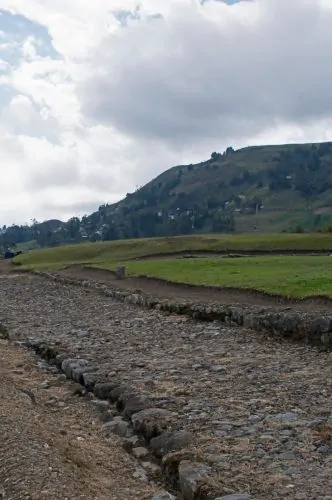
The Qhapaq Ñan survives today in more than one form. It is an archaeological monument, a heritage route, a tourist landscape, a national symbol, a transnational World Heritage property, and, in some places, a living path still tied to community memory and local movement. This layered survival matters because the road was never only stone. It was always labor, landscape, authority, memory, and practice. To treat it only as a ruin would miss the ways it continues to organize identity and historical imagination in the Andes. To treat it only as a modern heritage brand would flatten the deeper history of imperial construction, colonial transformation, and community use that made the road what it is. The Qhapaq Ñan today is both ancient and contemporary, preserved and changing, monumental and lived.
Its inscription as a UNESCO World Heritage Site in 2014 gave international recognition to that complexity. The listed property is serial and transnational, involving Argentina, Bolivia, Chile, Colombia, Ecuador, and Peru, the six modern countries through which major parts of the Andean road system extend. UNESCO’s framework recognizes the Qhapaq Ñan not simply as an Inka engineering achievement, but as a cultural landscape shaped by communication, administration, trade, defense, ritual, and the integration of diverse environments. That transnational status is important. The road predates modern borders, yet its protection now depends on modern states, heritage agencies, archaeologists, local communities, legal systems, and international cooperation. The ancient road that once helped organize Tawantinsuyu now requires a different kind of network to preserve it.
But World Heritage status also changes how people see the road. It turns particular segments into protected sites, research objects, tourist destinations, educational symbols, and sources of national or regional pride. These changes can bring resources, visibility, and legal protection, but they can also create tensions. A road that archaeologists classify as heritage may be a route local people remember through work, family, grazing, pilgrimage, or seasonal travel. A trail promoted for tourism may also be a fragile archaeological surface, vulnerable to erosion, overcrowding, careless reconstruction, souvenir-taking, or the pressure to make a complex landscape easier for visitors to consume. A bridge celebrated as ancient engineering may still depend on living communities whose labor and ritual practice keep it meaningful. A restored road segment may look more “authentic” to tourists after conservation, even while local residents know that its older life included repair, adaptation, detours, and practical use rather than frozen preservation. Heritage can protect the Qhapaq Ñan, but it can also simplify it by selecting certain stretches, images, and stories as representative of the whole. The danger is that the road becomes a scenic symbol of Inka greatness while the labor, colonial disruption, local continuity, and modern community claims that sustained it receive less attention. Preservation is not simply a matter of freezing stones in place. It requires asking who the road is for, who speaks for it, who benefits from it, and who bears the burdens of conserving it.
The annual renewal of the Q’eswachaka bridge in Peru is one of the clearest examples of the Qhapaq Ñan as living landscape rather than dead monument. The bridge is rebuilt each year by local Quechua communities using traditional techniques, plant fibers, collective labor, and inherited knowledge. The bridge is not preserved because it has remained materially unchanged from the Inka period, but because the knowledge, practice, and communal obligation that remake it continue to be valued. This is not preservation in the museum sense. The bridge survives because it is remade. Its continuity lies in practice: cutting grass, twisting fiber, braiding rope, dismantling the old structure, stretching new cables, anchoring them, weaving the crossing, and celebrating the completed work.
The contemporary Qhapaq Ñan is also fragmented. It does not survive as one uninterrupted ancient highway available to be walked from end to end in its original condition. Some sections are monumental and visible; others are buried, eroded, reused, paved over, absorbed into modern routes, or known mainly through archaeology, memory, and documentary reconstruction. Heritage work often has to connect pieces that history has separated: Inka construction, colonial reuse, local paths, modern roads, tourist trails, abandoned segments, and sacred places. This fragmentation should not be seen only as loss. It also reveals the road’s long life. The Qhapaq Ñan has been broken, reused, renamed, protected, neglected, restored, and reimagined many times. Its discontinuity is part of its history.
The Qhapaq Ñan today asks us to think carefully about what survival means. A stone-paved section preserved for visitors, a path still used by villagers, a bridge rebuilt through ritual labor, a museum exhibit, a UNESCO management plan, a school lesson, a tourist trek, and an archaeological map are all different afterlives of the same imperial system. None is the road exactly as it existed under the Inka, but none is wholly detached from that past either. The road remains powerful because it can hold these meanings together: empire and community, archaeology and memory, engineering and ritual, state heritage and local knowledge. Its modern significance lies not only in the fact that parts of it still exist, but in the way it continues to make Andean history visible as a living landscape rather than a vanished world.
Was the Qhapaq Ñan Really an “Inka Road System”?
The following video from SA Expeditions discusses the Qhapaq Ñan today:
The phrase “Inka road system” may make the Qhapaq Ñan seem more original, unified, and centrally controlled than it actually was. Roads, paths, caravan routes, pilgrimage corridors, and exchange networks existed in the Andes long before Inka expansion. Communities had already learned how to move across ecological zones, link coast and highland, reach pastures and fields, visit shrines, exchange goods, and maintain local routes through difficult terrain. Earlier polities such as Wari and Tiwanaku also participated in large-scale movement, regional integration, and the creation or use of formal routes. If we begin the story only with Cusco, we risk turning a long Andean history of mobility into a single imperial achievement.
This challenge is important because empires are good at claiming what they organize. The Inka did not need to invent every road to make roads appear Inka. By improving, guarding, paving, widening, redirecting, ritualizing, or administratively labeling older routes, the state could absorb local movement into imperial geography. A path that had once connected neighboring communities, grazing lands, shrines, or exchange partners might become part of the Qhapaq Ñan once it was tied to tambos, storehouses, chasqui stations, military routes, or provincial administration. From the perspective of Cusco, this incorporation could look like system-building. From the perspective of local communities, it may have looked more like appropriation: familiar routes now carried imperial officials, labor demands, soldiers, tribute goods, and new forms of oversight.
There is also a danger in imagining the Qhapaq Ñan as more coherent on the ground than it was in practice. Maps, heritage designations, and broad estimates of mileage can create the impression of a single continuous highway system comparable to Roman roads or modern national infrastructure. But the Andean road network was uneven. Some segments were monumental and highly maintained; others were modest, seasonal, local, or dependent on inherited patterns of use. Some routes were central to military and administrative movement; others mattered more for ecology, ritual, or regional exchange. Some were newly built or heavily transformed under Inka rule; others may have been older paths folded into imperial service. The name “Qhapaq Ñan” can conceal as much as it reveals if it makes difference look like uniformity.
Yet this does not overturn my central argument. It refines it. The Inka achievement was not the creation of Andean mobility from emptiness, nor was it the imposition of a perfectly uniform state road across a passive landscape. The achievement was imperial reorganization. The Inka took older habits of movement, local knowledge, ecological routes, sacred corridors, regional exchange paths, and earlier political precedents, then bound them to a new scale of rule. They added roads where needed, formalized existing routes, placed tambos and storehouses, organized labor, controlled bridges, deployed chasquis, moved armies, recorded obligations through khipus, and turned movement toward Cusco-centered authority. The system was Inka not because every stone, path, or crossing originated with the Inka, but because the empire made movement serve an imperial order.
This strengthens the final interpretation. The Qhapaq Ñan was not simply an “Inka road system” if that phrase means a wholly original network designed from scratch by central planners. It was an Inka imperialization of Andean mobility. Its power came from the fusion of inherited paths and new construction, local labor and state command, ecological need and political ambition, sacred geography and administrative control. The road’s greatness lies precisely in that complexity. It was not a clean imperial invention laid over the Andes; it was a contested, layered, adaptive system through which the Inka transformed older movements into the visible structure of empire.
Conclusion: The Road That Made the Empire
The Qhapaq Ñan was one of the great infrastructures of the premodern world, but its importance cannot be measured only in kilometers, stones, bridges, or engineering feats. Its deeper power lay in the way it made an empire possible across a landscape that resisted easy rule. The Andes did not offer the Inka a broad plain, a simple river valley, or a uniform agricultural heartland from which authority could spread smoothly. They offered altitude, ravines, deserts, forests, valleys, sacred mountains, scattered communities, and ecological difference. The road system answered that challenge not by erasing the Andes, but by making movement through them governable. It turned distance into sequence, broken terrain into passage, and regional diversity into imperial circulation.
This is why the road must be understood as more than transportation. It carried armies, but also discipline. It carried messengers, but also state knowledge. It carried goods, but also obligation. It carried ritual offerings, but also sacred claims over mountains, shrines, ancestors, and conquered landscapes. It depended on stones, stairs, drainage, bridges, tambos, storehouses, llamas, runners, khipus, and human labor, but none of these elements mattered fully in isolation. Together they formed a system in which movement became power. The Qhapaq Ñan allowed Cusco to appear in places where the Sapa Inka was absent, to act in regions far from the capital, and to make imperial authority visible as something that could arrive, return, count, provision, punish, honor, and remember.
Yet the road’s greatness also lies in its layered and unequal character. It was not invented from nothing, and it was not experienced the same way by everyone who touched it. The Inka absorbed older Andean routes, local knowledge, ecological pathways, and sacred landscapes into a new imperial order. Elite travelers, officials, soldiers, messengers, porters, herders, bridge builders, farmers, ritual specialists, and subject communities all encountered the road differently. For some, it opened the empire; for others, it imposed the empire. Its beauty and violence were inseparable. The same bridge that connected provinces could demand labor from local communities. The same storehouse that fed an army could represent extraction from fields and households. The same road that made sacred movement possible could also carry soldiers into rebellion.
The Qhapaq Ñan made the Inka Empire not because roads alone create states, but because this road system joined landscape, labor, logistics, ritual, and command into a durable form. It was the empire’s skeleton, its memory, its circulation, and its threat. After conquest, many of its routes were reused, damaged, transformed, and reimagined, yet the road’s continuing presence reveals how deeply it had been built into Andean space. Today, as archaeology, heritage, community memory, and living practice, the Qhapaq Ñan still makes the Inka world visible. It reminds us that empires are not only made in battles, palaces, or royal commands. They are also made in the repeated act of moving through the world and in the roads that teach the world to move according to power.
Bibliography
Affiliate disclosure: Amazon links on this site are paid links. As an Amazon Associate I earn from qualifying purchases.
- Arkush, Elizabeth N. Hillforts of the Ancient Andes: Colla Warfare, Society, and Landscape. Gainesville: University Press of Florida, 2011.
- Ascher, Marcia, and Robert Ascher. Code of the Quipu: A Study in Media, Mathematics, and Culture. Ann Arbor: University of Michigan Press, 1981.
- Bakewell, Peter. Miners of the Red Mountain: Indian Labor in Potosí, 1545–1650. Albuquerque: University of New Mexico Press, 1984.
- Bauer, Brian S. The Sacred Landscape of the Inca: The Cusco Ceque System. Austin: University of Texas Press, 1998.
- Bauer, Brian S., and Charles Stanish. Ritual and Pilgrimage in the Ancient Andes: The Islands of the Sun and the Moon. Austin: University of Texas Press, 2001.
- Beresford-Jones, David G., et.al. “Beyond Inca Roads: Archaeological Mobilities from the High Andes to the Pacific in Southern Peru.” Antiquity 97:391 (2023), 194-212.
- Betanzos, Juan de. Narrative of the Incas. Translated and edited by Roland Hamilton and Dana Buchanan. Austin: University of Texas Press, 1996.
- Bonavia, Duccio. The South American Camelids: An Expanded and Corrected Edition. Los Angeles: Cotsen Institute of Archaeology Press, 2009.
- Bray, Tamara L., ed. The Archaeology of Wak’as: Explorations of the Sacred in the Pre-Columbian Andes. Boulder: University Press of Colorado, 2014.
- Brokaw, Galen. A History of the Khipu. Cambridge: Cambridge University Press, 2010.
- Christie, Jessica Joyce. “Inka Roads, Lines, and Rock Shrines: A Discussion of the Contexts of Trail Markers.” Journal of Anthropological Research 64:1 (2008), 41-66.
- Cieza de León, Pedro de. The Incas of Pedro de Cieza de León. Translated by Harriet de Onís. Norman: University of Oklahoma Press, 1959.
- Cobo, Bernabé. History of the Inca Empire. Translated and edited by Roland Hamilton. Austin: University of Texas Press, 1979.
- —-. Inca Religion and Customs. Translated and edited by Roland Hamilton. Austin: University of Texas Press, 1990.
- Covey, R. Alan. How the Incas Built Their Heartland: State Formation and the Innovation of Imperial Strategies in the Sacred Valley, Peru. Ann Arbor: University of Michigan Press, 2006.
- —-. Inca Apocalypse: The Spanish Conquest and the Transformation of the Andean World. Oxford: Oxford University Press, 2020.
- —-. “The Inca Empire.” In Ritual and Pilgrimage in the Ancient Andes: The Islands of the Sun and the Moon, 809-830. Austin: University of Texas Press, 2001.
- D’Altroy, Terence N. The Incas. Malden, MA: Wiley-Blackwell, 2003.
- D’Altroy, Terence N., and Timothy K. Earle. “Staple Finance, Wealth Finance, and Storage in the Inka Political Economy.” Current Anthropology 26:2 (1985), 187–206.
- Garcilaso de la Vega, El Inca. Royal Commentaries of the Incas and General History of Peru. Translated by Harold V. Livermore. Austin: University of Texas Press, 1966.
- Gasparini, Graziano, and Luise Margolies. Inca Architecture. Translated by Patricia J. Lyon. Bloomington: Indiana University Press, 1984.
- Guaman Poma de Ayala, Felipe. The First New Chronicle and Good Government. Translated and edited by Roland Hamilton. Austin: University of Texas Press, 2009.
- Hemming, John. The Conquest of the Incas. New York: Harcourt Brace Jovanovich, 1970.
- Hyslop, John. The Inka Road System. Orlando: Academic Press, 1984.
- Julien, Catherine. Reading Inca History. Iowa City: University of Iowa Press, 2000.
- LeVine, Terry Y., ed. Inka Storage Systems. Norman: University of Oklahoma Press, 1992.
- McEwan, Gordon F. The Incas: New Perspectives. New York: W. W. Norton, 2006.
- Morris, Craig. “Storage, Supply, and Redistribution in the Economy of the Inka State.” In Inka Storage Systems, edited by Terry Y. LeVine, 59–68. Norman: University of Oklahoma Press, 1992.
- Mumford, Jeremy Ravi. Vertical Empire: The General Resettlement of Indians in the Colonial Andes. Durham, NC: Duke University Press, 2012.
- Murra, John V. The Economic Organization of the Inka State. Greenwich, CT: JAI Press, 1956.
- Nielsen, Axel E. “Ethnoarchaeological Perspectives on Caravan Trade in the South-Central Andes.” In Ethnoarchaeology of Andean South America: Contributions to Archaeological Method and Theory, edited by Lawrence A. Kuznar, 163–201. Ann Arbor: International Monographs in Prehistory, 2001.
- Niles, Susan A. The Shape of Inca History: Narrative and Architecture in an Andean Empire. Iowa City: University of Iowa Press, 1999.
- Ogburn, Dennis E. “Evidence for Long-Distance Transportation of Building Stones in the Inka Empire, from Cuzco, Peru to Saraguro, Ecuador.” Latin American Antiquity 15:4 (2004), 419-439.
- Pizarro, Pedro. Relation of the Discovery and Conquest of the Kingdoms of Peru. Translated by Philip Ainsworth Means. New York: Cortes Society, 1921.
- Protzen, Jean-Pierre. Inca Architecture and Construction at Ollantaytambo. New York: Oxford University Press, 1993.
- Quilter, Jeffrey, and Gary Urton, eds. Narrative Threads: Accounting and Recounting in Andean Khipu. Austin: University of Texas Press, 2002.
- Ramírez, Susan Elizabeth. To Feed and Be Fed: The Cosmological Bases of Authority and Identity in the Andes. Stanford, CA: Stanford University Press, 2005.
- Reinhard, Johan, and Constanza Ceruti. Inca Rituals and Sacred Mountains: A Study of the World’s Highest Archaeological Sites. Los Angeles: Cotsen Institute of Archaeology Press, 2010.
- Rostworowski de Diez Canseco, María. History of the Inca Realm. Translated by Harry B. Iceland. Cambridge: Cambridge University Press, 1999.
- Salomon, Frank. The Cord Keepers: Khipus and Cultural Life in a Peruvian Village. Durham, NC: Duke University Press, 2004.
- —-. Native Lords of Quito in the Age of the Incas: The Political Economy of North-Andean Chiefdoms. Cambridge: Cambridge University Press, 1986.
- Sarmiento de Gamboa, Pedro. History of the Incas and the Execution of the Inca Tupac Amaru. Translated by Sir Clements Markham. Cambridge: Cambridge University Press, 1907.
- Schreiber, Katharina J. Wari Imperialism in Middle Horizon Peru. Ann Arbor: Museum of Anthropology, University of Michigan, 1992.
- Sistrunk, Hannah. “Road to Empire: Documenting an Inca Road in Northern Ecuador.” Ñawpa Pacha: Journal of Andean Archaeology 30:2 (2010), 189-208.
- Smith, Monica L. “Networks, Territories, and the Cartography of Ancient States.” Annals of the Association of American Geographers 95:4 (2005), 832-849.
- Smithsonian Center for Folklife and Cultural Heritage. “Q’eswachaka Bridge.” Smithsonian Folklife Festival, 2015.
- Smithsonian National Museum of the American Indian. “Weaving the Bridge at Q’eswachaka.” The Great Inka Road: Engineering an Empire.
- Stanish, Charles. Ancient Andean Political Economy. Austin: University of Texas Press, 1992.
- Stern, Steve J. Peru’s Indian Peoples and the Challenge of Spanish Conquest: Huamanga to 1640. 2nd ed. Madison: University of Wisconsin Press, 1993.
- Thompson, Donald E. and John V. Murra. “The Inca Bridges in the Huánuco Region.” American Antiquity 31:5/1 (1966), 632-639.
- Topic, John R., and Theresa Lange Topic. “The Archaeological Investigation of Andean Militarism: Some Cautionary Observations.” In The Origins and Development of the Andean State, edited by Jonathan Haas, Shelia Pozorski, and Thomas Pozorski, 47–55. Cambridge: Cambridge University Press, 1987.
- UNESCO. “Knowledge, Skills and Rituals Related to the Annual Renewal of the Q’eswachaka Bridge.” Intangible Cultural Heritage, 2013.
- UNESCO World Heritage Centre. “Main Andean Road—Qhapaq Ñan.”
- Urton, Gary. Signs of the Inka Khipu: Binary Coding in the Andean Knotted-String Records. Austin: University of Texas Press, 2003.
- Yarasca Aybar, César P. “Cartographies of Heritage Routes, Networks and Territorial Reconfigurations of the Qhapaq Ñan.” Journal of Cultural Heritage Management and Sustainable Development, 2025.
- Zuidema, R. Tom. The Ceque System of Cuzco: The Social Organization of the Capital of the Inca. Leiden: Brill, 1964.
Originally published by Brewminate, 07.01.2026, under the terms of a Creative Commons Attribution-NonCommercial-NoDerivatives 4.0 International license.
About the Author