Medieval law offered no modern right to silence, but canon law, English jury trials, and resistance to coercive oaths laid foundations for the privilege against self-incrimination.

By Matthew A. McIntosh
Public Historian
Brewminate
Part I: Before the Right to Silence
Introduction: A Medieval Protection That Was Not Yet a Modern Right
Medieval law presents an apparent contradiction at the heart of the history of self-incrimination. The same legal culture that enlarged the investigative authority of judges, required sworn answers, elevated confession as a privileged form of proof, and eventually permitted judicial torture also produced the proposition that no one should be compelled to betray or accuse himself. Canonists expressed that proposition through several related formulations, the most enduring of which was nemo tenetur prodere seipsum, no one is bound to betray himself. It is tempting to treat the maxim as an embryonic Fifth Amendment and to place the medieval jurist at the beginning of an uninterrupted advance toward the modern right to remain silent. That interpretation captures an important continuity, but it obscures the different institutions, assumptions, and purposes that gave the medieval rule its original meaning.
Modern self-incrimination protections ordinarily distinguish the government’s obligation to prove an accusation from the defendant’s decision whether to provide testimonial evidence, allowing the accused to withhold compelled speech without thereby forfeiting every practical means of defense. Medieval procedure was organized around no such stable division. An oath could serve simultaneously as a religious obligation, an evidentiary device, a test of credibility, and an assertion of communal standing, while confession belonged both to the sacramental discipline of the Church and to the judicial search for proof. The canonists who argued that a person should not be forced to reveal a hidden offense were not necessarily recognizing an autonomous sphere of personal silence against all lawful questioning. They were more often defining the conditions under which a judge could begin an inquiry, administer an oath, or demand answers about conduct not already brought within the court’s legitimate knowledge. If no accuser appeared, no public reputation attached to the alleged offense, and no preliminary evidence justified suspicion, indiscriminate interrogation threatened to transform judicial authority into a search for unknown crimes. Once a proceeding rested upon lawful accusation, public fame, notoriety, or sufficient indications of guilt, the same person who had been protected from an unsupported fishing expedition might be required to answer under oath, submit to purgation, or confront increasingly coercive methods of proof.
The contrast with medieval England further warns against constructing a single European history of protected silence. English royal justice relied heavily upon communal presentment, local reputation, and juries expected to possess or acquire knowledge of disputed events, while felony defendants ordinarily conducted their own defenses without counsel. An accused person might not be placed under the same testimonial oath employed in a Romano-canonical inquiry, but meaningful defense nevertheless depended upon his ability to answer accusations, explain suspicious circumstances, and persuade the jury. Silence under such conditions was less a secure privilege than the abandonment of the defendant’s principal instrument of defense.
The medieval contribution to the history of self-incrimination must consequently be understood as both substantial and incomplete. Canon law and the wider ius commune developed serious objections to compelling a person to become the original source of a criminal accusation against himself, especially when a judge lacked public fame, a responsible accuser, or another lawful foundation for proceeding. Those objections supplied a vocabulary through which later critics could challenge indiscriminate oaths and abusive interrogation, including practices associated with the English High Commission and Star Chamber. Yet medieval law generally did not establish an unconditional right to refuse answers after jurisdiction and suspicion had been lawfully established, nor did it provide the institutional support that would eventually make silence compatible with an effective defense. The maxim against self-betrayal belongs within the genealogy of the modern privilege without being identical to it. The history that follows is not the story of a modern right discovered fully formed in the Middle Ages, but of a limited procedural protection whose logic would outlive the legal world that first produced it.
Before Witness Testimony: Oaths, Compurgation, Ordeal, and Reputation
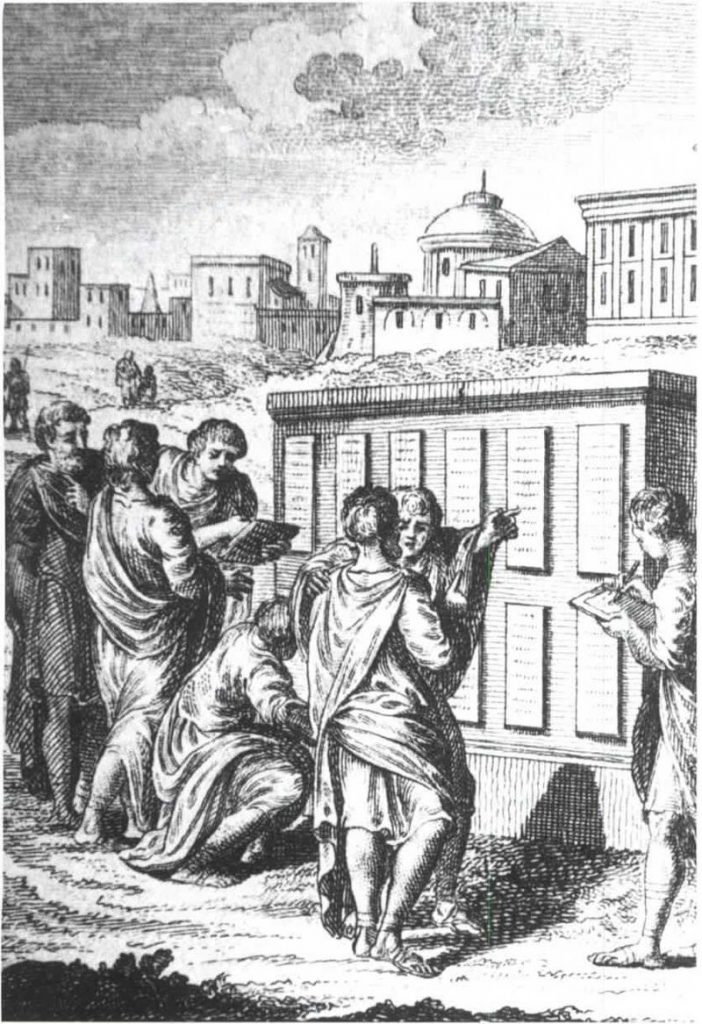
Before the revival of Roman law and the professionalization of legal procedure transformed European courts, disputes were not ordinarily resolved by placing competing witnesses before a detached judge who reconstructed past events from their testimony. Early medieval courts certainly heard accusations, declarations, and accounts of wrongdoing, and local people often supplied information about the parties or circumstances. Nevertheless, such statements did not yet form a consistently differentiated body of “evidence” evaluated according to formal rules of relevance, admissibility, and credibility. Courts more commonly assigned one party a recognized mode of proof whose successful performance would conclude the dispute. The decisive question was often not which narrative appeared most factually persuasive, but who possessed the legal and social capacity to swear, produce supporters, undergo a physical test, or demand another authorized judgment.
The oath stood at the center of this world because sworn speech was simultaneously legal proof, religious invocation, and public exposure of the speaker’s honor. A litigant who swore did more than assert that a proposition was true: he called upon divine power to witness the declaration and accepted the danger that perjury would bring spiritual punishment, social disgrace, or legal consequences. The prescribed words and gestures consequently mattered with an intensity difficult to reproduce in a modern courtroom. A defective formula, hesitation, or procedural mistake might invalidate the proof because the efficacy of the oath depended upon its exact and solemn performance. This was not simply a credulous substitute for investigation. In small communities where reputation, kinship, and continuing relationships structured economic and political life, the willingness to risk a sacred oath could communicate information about confidence, standing, and the expected reactions of neighbors. Yet the system also distributed credibility unequally, since a powerful or honorable person could possess an oath of greater legal weight than someone unfree, foreign, impoverished, or already suspected of misconduct.
Compurgation, sometimes called oath-helping or wager of law, extended the defendant’s oath into a collective demonstration of trustworthiness. The accused or civil defendant swore the required denial and produced a specified number of compurgators who supported the oath, usually by affirming their belief in its truth or their confidence in the oath-taker rather than by describing events they had personally witnessed. Laws could vary the required number and standing of these supporters according to the seriousness of the allegation, the status of the parties, and the perceived strength of the accusation. Success depended partly upon the ability to mobilize relatives, neighbors, associates, or social equals willing to place their own reputations and souls behind the litigant. Compurgation converted communal relationships into a legally measurable form of proof: a person who could assemble reputable oath-helpers publicly displayed social credit, while one who stood isolated revealed vulnerability before the court. The procedure could favor established networks and disadvantage strangers or social outcasts, but it also restrained unilateral judgment by requiring an accusation to be answered through recognized rules rather than through a lord’s or judge’s unregulated intuition.
When an oath was unavailable, contested, or considered insufficient, a court might resort to an ordeal understood as an appeal to divine judgment. In ordeals of hot iron or boiling water, the participant carried heated metal or retrieved an object from a cauldron before the injured hand or arm was bound and later inspected; other procedures included cold water, the morsel, the cross, and regionally specific tests. Priests blessed the instruments, celebrated Mass, imposed fasting, heard confession, and surrounded the event with liturgical forms intended to make concealed guilt visible through God’s intervention. The result was not produced by the ordeal alone but by an entire sequence of accusation, preparation, performance, inspection, and communal interpretation. Judicial combat similarly placed judgment in a regulated physical contest, sometimes conducted by champions, although access to battle depended upon jurisdiction, status, and the nature of the dispute. Neither ordeal nor battle should be imagined as the routine first response to every uncertain allegation. The threat of undergoing them could encourage confession, withdrawal, compromise, or settlement, while officials who selected, supervised, and interpreted the test retained considerable influence over its outcome. Even so, the ordeal’s legitimacy rested upon a conviction that divine justice could disclose what ordinary human knowledge could not securely establish.
Reputation bound these procedures together. A person’s standing affected whether an accusation gained traction, which mode of proof the court assigned, how many oath-helpers were required, and whether the defendant could obtain respectable supporters at all. Early medieval legal culture did not sharply separate what a community knew about an event from what it believed about the character of the people involved. Reports, suspicions, prior misconduct, kinship loyalties, and public honor entered the process before any formal test began, making proof the culmination of communal judgment as much as an independent inquiry into facts. This social operation of reputation should not be equated without qualification with the later canonical doctrine of fama publica, which learned jurists would define as a legal threshold for official investigation. It nonetheless supplied an important foundation for that doctrine by establishing that widely shared suspicion could possess procedural consequences even when no eyewitness account or conventional accuser conclusively proved the charge.
A modern right to remain silent would have been conceptually difficult in this context because the accused person’s sworn participation was often the means by which innocence could be established. Refusing an oath did not ordinarily preserve a neutral evidentiary position; it could amount to failure to perform the proof assigned by law, surrender of the opportunity to clear one’s name, or defiance of the court’s authority. Nor did undergoing an ordeal protect an interior realm of silence, since the accused submitted his body to a ritual intended to reveal a truth that speech had not settled. Yet these procedures did not authorize judges to interrogate anyone indiscriminately about every possible offense. They generally presupposed an accusation, dispute, presentment, or publicly meaningful suspicion and then directed the parties toward a recognized form of proof. The resulting limitation belonged to the structure of lawful process rather than to an individual privilege against self-incrimination. Only when the legal transformations of the twelfth and thirteenth centuries made judicial questioning, confession, witness depositions, and rationalized proof increasingly central would compelled speech itself emerge as a distinct and persistent jurisprudential problem.
The Twelfth-Century Legal Revolution

The “twelfth-century legal revolution” describes a prolonged transformation in European legal thought and institutions rather than a single moment when rational law displaced an irrational past. From the late eleventh century onward, expanding commerce, ecclesiastical reform, urban government, royal administration, and increasingly ambitious claims of jurisdiction created a demand for rules capable of operating beyond the memory and custom of a single locality. Older practices (including oath-helping, ordeal, lordly judgment, and negotiated settlement) did not immediately disappear. What changed was the growing conviction that law existed as a coherent and teachable body of principles that could be interpreted through disciplined argument. Courts and legal schools consequently began to produce a professional jurisprudence concerned not only with who possessed authority, but also with how proceedings should begin, what counted as proof, and which procedural steps made a judgment lawful.
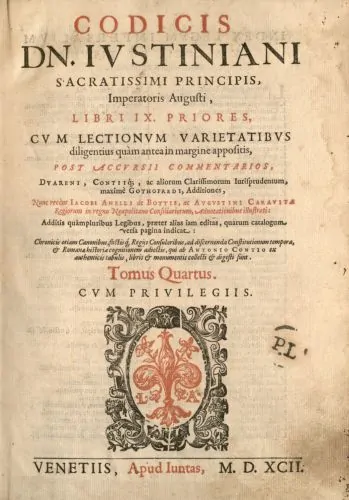
Roman law supplied one foundation for this transformation. Texts associated with Justinian’s sixth-century codification had never vanished completely from western Europe, but fuller manuscripts of the Digest began circulating in northern Italy by the late eleventh century, and systematic legal instruction developed at Bologna during the early twelfth. Later tradition credited Irnerius with inaugurating the school, although the institutional beginnings of Bolognese legal study were more gradual and collective than that founding legend suggests. The jurists known as glossators analyzed the Digest, Code, Institutes, and Novels line by line, surrounding difficult passages with explanations, distinctions, cross-references, and attempted reconciliations. They treated Justinian’s compilations not merely as historical records of ancient Rome but as authoritative expressions of a rational legal order. Roman categories concerning persons, property, obligations, actions, presumptions, confession, witnesses, and judicial office offered a technical language more elaborate than most local customs possessed. Yet these texts were not simply imposed unchanged upon medieval society. Their practical influence depended upon interpretation, adaptation, princely legislation, municipal statutes, and the willingness of courts to employ jurists trained in Roman doctrine.
Canon law underwent a parallel intellectual reorganization through the work conventionally attributed to Gratian, probably completed in a significant early form around 1140 and subsequently expanded. The Decretum assembled conciliar canons, papal letters, biblical passages, patristic writings, penitential rules, and other ecclesiastical authorities that frequently appeared to contradict one another. Gratian’s achievement was not merely compilation: through hypothetical cases, distinctions, and dialectical analysis, the work attempted to reconcile discordant texts by examining differences of circumstance, intention, jurisdiction, and legal meaning. Although the Decretum was initially a private scholarly work rather than an officially promulgated code, it quickly became the basic textbook of canon law. Successive generations of decretists wrote glosses and summae upon it, converting a vast inheritance of ecclesiastical norms into a jurisprudence that could be taught, debated, and applied.
The consolidation of canon law did not end with Gratian because the papacy continued to decide cases and issue authoritative decretals addressing problems that the Decretum had not settled. Notably under Alexander III and Innocent III, papal judges and delegates confronted disputes involving marriage, clerical discipline, elections, benefices, procedure, penance, heresy, and the boundaries between secular and ecclesiastical power. Collections of these newer rulings began to circulate during the later twelfth century, and Bernard of Pavia organized a major compilation according to five subject headings: judge, judgment, clergy, marriage, and crime. Canonists who concentrated upon the newer decretals became known as decretalists, although their work remained inseparable from the older canonical tradition interpreted by the decretists. The sequence eventually culminated in Gregory IX’s promulgation of the Liber Extra in 1234, which provided an authoritative collection of papal law outside Gratian’s Decretum. Canon law was not a fixed repository of ancient commands but a developing legal system in which legislation, adjudication, and scholarly interpretation continually interacted.
From the convergence of Roman and canon law emerged what later jurists called the ius commune, the common learned law of much of Latin Christendom. Its practitioners often studied utrumque ius, “both laws,” because civil and canonical jurisprudence employed related methods while retaining distinct sources and jurisdictions. The ius commune did not function as a uniform European code that automatically displaced royal law, feudal custom, urban statutes, or regional practice. Instead, it supplied concepts, interpretive techniques, and subsidiary rules that could be combined with those local legal traditions in different ways. Its geographical reach was uneven, but universities, ecclesiastical courts, royal chanceries, municipal governments, notarial offices, and networks of papal judges carried its vocabulary far beyond Bologna. A jurist in England, France, Iberia, Germany, or Italy might operate under very different institutions while still participating in a shared discourse about jurisdiction, procedure, proof, and lawful judgment.
The procedural consequences were profound. Treatises on the ordo iudiciarius increasingly described litigation as an ordered progression through complaint, summons, pleas, formulation of the issue, production of proof, judgment, and appeal. Written records enabled higher authorities to review decisions and made it easier to identify omissions or irregularities that might invalidate a proceeding. Witnesses could be questioned under oath, documents assessed, confessions evaluated, and presumptions arranged within increasingly refined discussions of proof. These developments did not instantly produce the rigid hierarchy of “full” and “half” proof associated with later Romano-canonical criminal procedure, nor did they cause ritual proofs to disappear everywhere at once. They did strengthen the distinction between communal suspicion and judicially demonstrable guilt. They enhanced the position of the trained judge, who could supervise pleadings, examine legal exceptions, direct the taking of testimony, and determine whether the prescribed order had been observed. Accusatorial procedure remained important, but canonists also explored circumstances in which denunciation, public reputation, or notorious wrongdoing allowed an authority to investigate without a conventional private accuser. The expansion of rationalized procedure generated both more sophisticated safeguards and more formidable instruments of official inquiry.
This learned legal environment made compelled self-accusation a recognizable jurisprudential problem. Biblical, patristic, Roman, and canonical authorities could be assembled to support the proposition that a person was not ordinarily obligated to expose his own hidden wrongdoing, but those materials had to be reconciled with obligations of obedience, confession, correction, and truthful sworn speech. Canonists began distinguishing an unsupported demand for self-betrayal from questioning conducted after an offense had become notorious, a responsible accusation had been made, or public reputation had supplied lawful grounds for inquiry. Such distinctions did not yet create an absolute privilege allowing every accused person to remain silent. They instead located protection within the lawful order of proceedings: a judge could not properly begin with an indiscriminate oath and use the accused’s answers to discover whether any crime existed at all. Once jurisdiction and suspicion had been legitimately established, compulsory answers could still be demanded. The medieval rule against self-betrayal consequently arose from the same legal revolution that enlarged judicial power, because only a system capable of defining lawful inquiry with precision could also identify the point at which interrogation became an abuse.
The Two Forums: Confession of Sin and Proof of Crime
The distinction between the Church’s internal and external forums emerged from the same twelfth- and thirteenth-century jurisprudence that systematized canon law. The internal forum, often described as the forum of penance or conscience, addressed the believer’s moral condition before God through confession, absolution, spiritual counsel, and satisfaction. The external or contentious forum addressed allegations capable of public judgment, legal proof, correction, and punishment by ecclesiastical authority. These were not equivalent to a modern separation between private religion and public law, because both belonged to the Church’s government of Christian life. Nor did they divide conduct neatly into “sins” on one side and “crimes” on the other, since adultery, heresy, sacrilege, perjury, and clerical misconduct could possess both moral and juridical dimensions. Their essential difference concerned how wrongdoing became known, what could be proved, which authority acted upon it, and what kind of remedy or sanction followed.
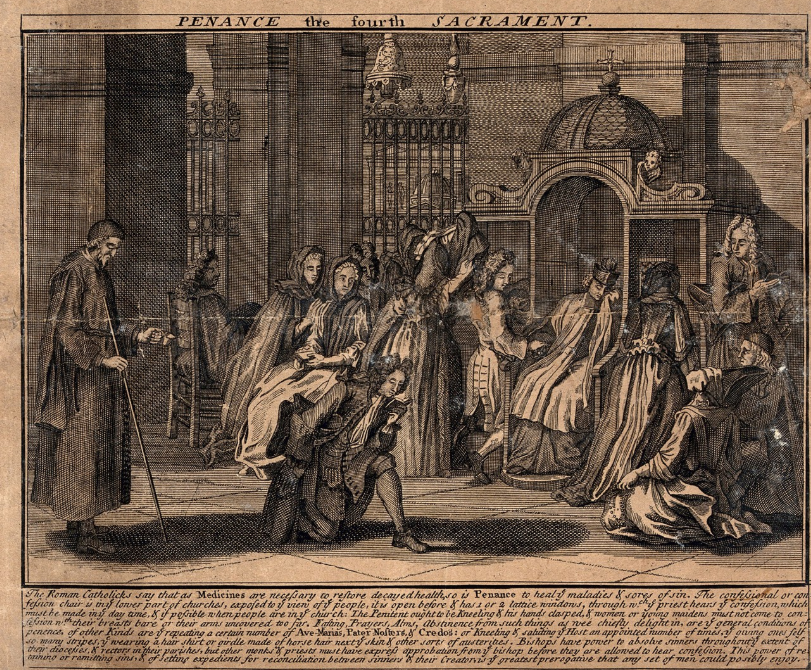
Sacramental confession was directed primarily toward reconciliation rather than prosecution. The penitent was expected to examine the conscience, acknowledge sins truthfully, express contrition, accept an appropriate penance, and resolve to amend future conduct. The priest questioned and evaluated the penitent, sometimes using distinctions and methods resembling those of learned jurisprudence, but he did so as a confessor charged with healing the soul rather than as a contentious judge assembling a criminal record. Confessors’ manuals accordingly discussed intention, consent, circumstance, restitution, scandal, and degrees of culpability with considerable legal precision. This juridical vocabulary did not transform the sacrament into an evidentiary hearing, because the priest’s judgment ordinarily produced absolution and penance rather than a publicly enforceable criminal sentence. A believer’s obligation to reveal hidden sins in confession did not mean that the believer was obligated to announce them before a court or initiate a prosecution against himself. The Church could demand an accounting of conscience while still recognizing that secret guilt and judicially proved guilt occupied different procedural positions.
Canon 21 of the Fourth Lateran Council, commonly known from its opening words as Omnis utriusque sexus, gave this penitential discipline its most famous universal formulation in 1215. It required Christians who had reached the age of discernment to confess faithfully to their own priest at least once each year and ordinarily to receive the Eucharist at Easter, although it did not invent either private confession or the belief that serious sins should be confessed. The same canon instructed the priest to inquire prudently into the circumstances of both sinner and sin so that an appropriate remedy could be applied. It also commanded the confessor not to betray the penitent by word, sign, or any other means, permitting consultation with a wiser adviser only if the sinner’s identity remained concealed. Violation of this secrecy exposed the priest to deposition and perpetual confinement in a monastery. Lateran IV intensified the Church’s supervision of conscience while simultaneously constructing a formidable barrier against converting sacramental disclosure into public accusation.
The external forum operated according to another logic: judges were expected to decide from matters properly alleged and proved rather than from personal intuition or inaccessible knowledge of the conscience. Canonists expressed this limitation through the proposition ecclesia de occultis non iudicat, the Church does not judge hidden things. The maxim did not declare secret wrongdoing innocent, place it beyond divine judgment, or deny the Church any pastoral authority over it. It meant that a human tribunal ordinarily could not impose an external judgment upon an offense known only to God and the offender without a legally cognizable route by which the matter entered the court. An accusation, denunciation, public reputation, notoriety, witnesses, documents, or a judicial confession might transform previously concealed conduct into a justiciable matter. Until such a basis existed, the judge could not simply equate suspicion with proof or punish an inward condition that human evidence could not establish. Once misconduct became public or was lawfully alleged, conduct already addressed through private penance could acquire external consequences, particularly when it produced scandal, endangered others, or implicated an office whose integrity the Church was obligated to protect. The two forums overlapped without producing identical results: sacramental absolution could reconcile a sinner to God while leaving unresolved the restitution, disability, deposition, or punishment that a public offense demanded.
This distinction helps explain how medieval Christianity could require confession without accepting an unlimited duty of judicial self-accusation. A Christian was bound to confess sins within a protected sacramental relationship, but that obligation did not automatically make the sinner the prosecution’s first witness in the external forum. A judicial confession differed fundamentally from a sacramental confession because it entered an evidentiary record and could supply the basis for condemnation, whereas the confessional seal was intended to prevent penitential disclosure from becoming forensic proof. The arrangement did not create a general right to privacy or an absolute privilege against questioning, and it did not prevent courts from compelling answers once accusation, fama, or other lawful grounds justified an inquiry. Its boundaries were also less tidy in practice than later accounts sometimes suggest, for confessors applied canonical rules, public penances carried juridical meaning, and the same ecclesiastical hierarchy exercised authority in both forums. Nevertheless, the separation established a consequential principle: acknowledging guilt before God was not the same legal act as proving guilt before a judge. By preserving that difference, medieval canon law supplied an indispensable premise for the later argument that the duty to confess sin could not justify forcing a person to originate a criminal case against himself.
Part II: Canon Law and the Boundaries of Compelled Speech
Three Roads to Judgment: Accusatio, Denunciatio, and Inquisitio

By the early thirteenth century, canonists distinguished three principal routes by which alleged wrongdoing could enter judicial consideration: accusatio, denunciatio, and inquisitio. The difference among them lay chiefly in who initiated the proceeding, assumed responsibility for the charge, and directed the production of proof. These terms did not designate three entirely separate court systems, nor did every proceeding remain within the category under which it began. Allegations could move from private complaint to official investigation, while notorious conduct might permit action without the formalities ordinarily required by any one route. The triad nevertheless reveals a decisive transformation in medieval justice: prosecution was no longer imagined solely as a contest between an injured accuser and a defending party, but increasingly as a responsibility that ecclesiastical authority could undertake for the protection of the community.
Accusatio most closely preserved the traditional adversarial structure inherited from Roman law and incorporated into canonical jurisprudence. A specific person appeared before a competent judge, identified the alleged offender, formulated a criminal charge, and accepted the burden of proving it. Formal inscription placed the accuser’s name and accusation upon the record, preventing an adversary from making a dangerous allegation anonymously and then withdrawing without consequence. Because criminal accusation could destroy reputation, office, or liberty even before judgment, the accuser might be required to accept the risk of the poena talionis: if the accusation failed under circumstances contemplated by law, the accuser could incur the penalty sought against the defendant. Canonists qualified this liability when proof failed for reasons not attributable to malice or recklessness, but the danger remained substantial enough to discourage private prosecution. The judge’s ideal position was that of an impartial arbiter between two legally defined parties, neither inventing the charge nor relieving the accuser of the obligation to prove it. This arrangement protected defendants from unsupported prosecution, yet it also allowed serious misconduct to escape judgment when victims feared retaliation, lacked resources, or refused to assume the hazards of accusation.
Denunciatio offered a less adversarial road. A denouncer reported wrongdoing to an ecclesiastical superior without necessarily becoming a formal prosecuting party or undertaking the accuser’s full evidentiary and penal risks. Canonical discussions connected this procedure to the Gospel’s sequence of fraternal correction: private admonition should precede broader exposure when the offense remained secret and correction could still be achieved without scandal. If private correction failed, or if the wrongdoing threatened others or damaged the Church, the matter could be brought before the appropriate authority. The denunciation theoretically sought amendment, discipline, or protection of the community rather than retaliation, although punitive consequences could follow once the judge established the offense. It was neither an informal rumor nor a disguised accusation, since the denouncer supplied information while the superior determined whether lawful proceedings should begin. Malicious denunciators could still face punishment for calumny or defamation, but they did not ordinarily bear the same role or reciprocal liability as formal accusers.
Inquisitio shifted initiative most dramatically toward the judge. Under this procedure, an ecclesiastical superior could act ex officio without waiting for a private person to undertake formal accusation, provided that a legally sufficient basis for inquiry already existed. Pope Innocent III developed the procedure through decretal letters concerning clerical misconduct, and Canon 8 of the Fourth Lateran Council gave it an authoritative conciliar formulation in 1215. Its celebrated language imagined public reputation as performing the work of an accuser and public outcry as supplying a denunciation: the community’s persistent fama allowed the judge to inquire into conduct that could no longer be treated as wholly secret. The inquiry was to establish whether the public report rested upon truth, not merely to confirm a conclusion already reached. The accused was supposed to be informed of the specific charges, permitted to answer them, and given a meaningful opportunity to present exceptions, witnesses, and other defenses. A written record helped distinguish the evidence judicially received from the judge’s private knowledge and made appeal or review possible. Although inquisitio later became closely associated with tribunals prosecuting heresy, the word originally described a general procedural method that could be employed in disciplinary and criminal matters far beyond heresy.
The three roads frequently intersected. A denunciation could cause a superior to determine that public scandal existed and then open an inquisition, while a failed or abandoned accusation might disclose facts that justified continued official action. If an offense was notorious in the technical legal sense, a judge could sometimes proceed more summarily because facts manifest to the relevant community did not require proof in the ordinary manner. Conversely, a vague allegation that had not generated credible fama was not supposed to authorize an unlimited search through a person’s life. The classification of a proceeding consequently mattered because it determined who bore the burden of action, what preliminary showing was required, and which protections the defendant could claim.
These procedural differences also defined the emerging problem of compelled self-incrimination. In accusatio, the existence of an identifiable accuser and articulated charge theoretically required the prosecution to establish its case before demanding that the defendant disprove an unknown offense. Denunciatio weakened the accuser’s personal responsibility, while inquisitio removed the need for a private prosecutor altogether and joined investigation more closely to judicial authority. That expansion made preliminary safeguards indispensable: if the judge could both commence the inquiry and question the suspect, an unsupported interrogation might manufacture the very accusation needed to justify itself. Canonists insisted upon distinctions among secret suspicion, responsible denunciation, public fama, notoriety, and legally sufficient indications of wrongdoing. These requirements did not give a lawfully accused person an unconditional right to refuse every question, for sworn answers could be compelled after a proper foundation had been established. They instead prevented the judge, at least in doctrine, from beginning with the defendant’s conscience and searching it for an undiscovered crime. The road by which a case reached judgment determined whether questioning constituted lawful proof or an impermissible demand that a person become his own first accuser.
Fama Publica: When Reputation Became Preliminary Evidence

The emergence of inquisitio confronted medieval jurists with a fundamental procedural problem. If a judge could act without a formal accuser, something other than his private suspicion had to justify directing official power against a particular person. The doctrine of fama publica, or public fame, supplied that foundation by translating communal reputation into a legally cognizable reason for inquiry. Medieval Latin fama could denote renown, disgrace, rumor, common report, or the collective judgment surrounding a person or event, but its technical procedural meaning was narrower than everyday gossip. It referred to a sufficiently widespread and credible report that connected an identifiable person with a particular offense within a relevant community. Once such a report existed, the alleged misconduct could no longer be treated as wholly secret, even though its truth had not yet been judicially established.
Canon 8 of the Fourth Lateran Council gave authoritative expression to this principle when it regulated proceedings against prelates and clerics whose offenses had become known through persistent public outcry. Drawing upon decretals of Innocent III, the canon declared that when an accusation did not formally appear, widespread report and insistent clamor could perform something resembling the accuser’s role. This personification did not mean that fama testified to facts, assumed the risks of calumny, or supplied proof capable of being cross-examined. It meant that public knowledge could activate the judge’s office where the absence of a private prosecutor might otherwise leave scandalous misconduct untouched. Canonists consequently distinguished a preliminary inquiry into the existence of fama from the fuller investigation of the alleged offense itself. The judge might first ask whether a substantial report genuinely circulated and only then proceed specifically against the person named by it. Jurists commonly insisted that valid fama arise among trustworthy people rather than from a single malicious informant, declared enemy, disreputable group, or manufactured whispering campaign. They did not reduce these requirements to a uniform number of voices or a mechanical formula, because the legal significance of reputation depended upon the size, composition, and circumstances of the community involved. A report might be public within a cathedral chapter, monastery, village, guild, neighborhood, or town without being known throughout an entire diocese. What mattered was that the suspicion had acquired a social existence independent of the judge’s private desire to investigate.
Fama also had to be distinguished from neighboring categories that carried different procedural consequences. Notoriety implied that a fact was so openly manifest that ordinary proof might be unnecessary, whereas fama ordinarily established suspicion requiring investigation rather than guilt permitting immediate punishment. Infamia could describe a damaged legal or moral standing produced by conviction, notorious misconduct, dishonorable occupation, or persistent public disrepute. A generally bad reputation might weaken someone’s credibility or make an accusation appear plausible, but it did not necessarily constitute legally sufficient fama of the specific crime under examination.
Once public fame had been established, the accused person’s procedural position changed significantly. A judge could summon the suspect, formulate articles concerning the alleged offense, receive sworn testimony, examine documents, and require answers that would have been improper had the matter remained secret. Fama itself was not ordinarily full proof of guilt, and a lawful condemnation still required confession, qualified witnesses, documents, or another recognized combination of proofs and presumptions. Learned jurists nevertheless treated reputation as an indicium whose weight could contribute to a broader evidentiary judgment. Its formally preliminary character did not make it practically harmless. An accusation surrounded by public suspicion could influence how judges interpreted ambiguous testimony, how witnesses remembered events, and how readily further allegations were believed. Investigation could then intensify the very reputation that had authorized it, producing a circular movement in which rumor generated proceedings and the existence of proceedings appeared to validate rumor. Procedural safeguards: verification of fama, disclosure of specific charges, exclusion of mortal enemies, opportunities to challenge witnesses, and appellate review, were meant to interrupt that cycle. Their effectiveness varied considerably, especially where local antagonisms, factional conflict, gendered judgments, religious hostility, or the vulnerability of outsiders shaped communal speech. The doctrine rested upon the assumption that collective report could reveal misconduct concealed from formal authorities, but communities could reproduce prejudice and political interest as readily as reliable knowledge.
The boundary created by fama publica became central to the medieval law of compelled self-accusation. Before public fame or another lawful basis for proceeding existed, a judge was not supposed to search an individual’s conscience for undisclosed offenses or use a general oath to discover whether there was anything to prosecute. After fama attached a public accusation to a particular person, judicial questioning no longer appeared to demand revelation of a purely secret sin; it sought an answer to a charge already present in the community. The protection against self-betrayal could recede precisely when reputational suspicion became procedurally sufficient, even though that suspicion remained far short of proof. This made the authenticity and independence of fama crucial, for a judge who secretly elicited allegations, spread suspicions, or extracted answers and then presented the resulting report as public fame inverted the required order of proceeding. Compared with formal accusatio, the doctrine broadened the capacity to prosecute wrongdoing while dispersing responsibility for initiating the case across an often-unidentifiable public. Fama was preliminary evidence in the strongest procedural sense: it did not ordinarily establish guilt, but it opened the gate through which investigation, sworn interrogation, and compelled participation could begin.
Nemo Tenetur Prodere Seipsum: The Formation of the Rule

Nemo tenetur prodere seipsum did not enter medieval law through a single enactment, decisive judgment, or authoritative text containing the modern privilege in completed form. It emerged gradually from the canonists’ effort to reconcile the expansion of official investigation with older requirements governing accusation, proof, secrecy, and judicial competence. Jurists employed several related formulations, including propositions that no one was bound to accuse himself, expose his own shame, or reveal his own hidden wrongdoing. The verb prodere carried the sense of disclosing, exposing, or betraying, making the maxim broader in moral resonance than a narrow rule about testimony from a criminal defendant. The absence of one universally fixed formula warns against treating every medieval objection to self-disclosure as evidence of a settled constitutional right. What formed was a family of arguments whose common premise was that lawful authority could not ordinarily require a person to supply the first public revelation of an offense otherwise known only to himself.
The canonists derived that premise from several elements of the learned legal tradition rather than from one controlling source. The Church did not ordinarily judge hidden matters in the external forum, a judge was expected to proceed upon matters properly alleged and proved, and criminal jurisdiction normally required accusation, denunciation, public fame, notoriety, or another lawful foundation. Christian moral teaching also distinguished the obligation to confess sin sacramentally from any general duty to publish one’s guilt before a tribunal. A command to answer every conceivable question about one’s conduct would collapse these distinctions by allowing judicial power to penetrate the conscience before any legally cognizable charge existed. It could also force a person to damage his own reputation and expose himself to punishment without an accuser accepting responsibility for the allegation. Canonists did not conclude that all compulsory speech was unjust, because oaths, witness testimony, confession, and obedience to lawful superiors remained essential to ecclesiastical government. Their narrower conclusion was that the obligation to speak truthfully arose only when the authority demanding an answer acted within the proper order of law. The protection against self-betrayal was constructed as a limit upon jurisdiction and procedure before it was conceived as a right belonging to the accused independently of procedural circumstances.
Papal decretals and their learned interpretation gave this reasoning greater precision during the thirteenth century. Innocent III’s development of inquisitio allowed ecclesiastical superiors to investigate misconduct without a conventional private accuser, but his procedural legislation also required some public basis for official action and an opportunity for the accused to know and answer the charges. The Fourth Lateran Council’s regulation of inquisitorial procedure supplied canonists with an authoritative framework within which public fama could activate inquiry without itself establishing guilt. Decretalists such as Hostiensis and later commentators examined when a judge could impose an oath, which questions an accused person was obligated to answer, and when demanded disclosure exceeded the court’s legitimate authority. Through glosses, summae, procedural treatises, and university teaching, the rule against self-betrayal became part of the shared jurisprudence of the ius commune. Its formation was consequently inseparable from the rise of inquisitorial procedure: stronger official powers generated a more urgent need to define the lawful threshold at which those powers could reach an individual conscience.
Thomas Aquinas expressed the underlying distinction with exceptional clarity when he asked whether an accused person was bound to confess a truth that would lead to condemnation. If a judge questioned the accused according to the order of justice, Aquinas concluded, the accused was obligated to answer truthfully; lawful judicial authority made resistance wrongful. If the judge lacked authority to ask the question or proceeded contrary to legal order, the accused was not bound to reveal the truth and could avoid answering, although he could not licitly utter a falsehood. This moral analysis closely reflected the procedural doctrine developed by the canonists. A person could not be compelled to uncover a secret crime merely because a superior wished to search for misconduct, but the protection diminished once lawful accusation, public fame, or sufficient indications placed a specific offense before a competent tribunal. At that point, an oath to tell the truth could be administered, articles could be presented, and refusal to answer could be treated as disobedience or contumacy. Even then, the judge was not theoretically authorized to range without limit across the accused person’s entire life. Questions were supposed to remain connected to the charge or suspicion that had justified the proceeding. The crucial objection was not to every oath or every compelled answer, but to reversing the proper order of justice by extracting self-accusation first and using it afterward to create the case that should have preceded interrogation.
The medieval rule consequently occupied a position both recognizably ancestral to and substantially narrower than the modern privilege against self-incrimination. A modern defendant may ordinarily invoke the privilege after accusation, precisely when the medieval obligation to answer often became strongest. Modern doctrine also tends to classify protected communications by their compelled and testimonial character, whereas the canonists concentrated more heavily upon whether the court possessed lawful grounds to inquire. Nevertheless, nemo tenetur prodere seipsum established a durable proposition that official convenience alone could not make an individual the original instrument of his own prosecution. It demanded that authority arrive at interrogation through a legitimate procedural doorway rather than manufacture jurisdiction from whatever compelled disclosure might reveal. Later jurists would detach this principle from its medieval dependence upon secrecy, fama, and the canonical order of judgment, transforming a conditional protection against groundless self-betrayal into a broader privilege attached to the accused person. The medieval achievement was not yet a general right to silence, but it gave later legal cultures both the language and the logic with which such a right could be defended.
The Oath to Tell the Truth and the Peril of the Judicial Trap
![Medieval jury depicted in Grand Coutumier de Normandie [Customary Law of Normandy]. Illustrated manuscript on vellum, ca. 1450–1470](https://brewminate.com/wp-content/uploads/2026/08/080426-04-Law-Medieval.jpg "Bound to Answer? Self-Incrimination in Medieval Law 10")
Having determined that accusation, public fama, or sufficient indications could place an offense within a judge’s lawful reach, medieval procedure still needed a mechanism capable of compelling the accused person’s participation. The oath to tell the truth supplied that mechanism by converting judicial questioning from a request for information into an obligation binding both conscience and law. Commonly described in canonical parlance as the iuramentum de veritate dicenda, it was prospective: the oath-taker promised to answer truthfully the questions that the judge would subsequently pose. The oath itself did not prove the alleged crime, because its evidentiary force lay in the answers, admissions, or judicial confession obtained beneath it. It nevertheless intensified every response by placing the speaker’s soul, reputation, and obedience to ecclesiastical authority behind the spoken words. Because deliberate falsehood under oath constituted perjury as well as a grave sin, interrogation acquired a coercive power that did not depend initially upon physical force.
Not every judicial oath performed the same function or exposed its taker to the same danger. Witnesses swore to tell the truth about matters on which they were examined, while litigants might take oaths concerning good faith, the absence of calumny, or certain disputed facts. An accused person placed under an oath to answer could occupy a more perilous position because the questions concerned conduct for which the answers themselves might authorize condemnation. Canonical doctrine attempted to control that peril by requiring the court to proceed according to the proper order of justice. The judge was supposed to possess jurisdiction, establish a lawful basis for inquiry, identify the alleged misconduct, and confine examination to articles relevant to that charge. When these conditions were satisfied, refusing the oath or withholding a required truth could be treated as resistance to legitimate authority. Conversely, a person questioned about an offense that remained wholly secret, or about matters beyond the charge properly before the court, could object, appeal, evade the question through lawful means, or deny the judge’s authority to demand an answer. The oath’s justice depended less upon its verbal formula than upon what had occurred before it was imposed and how far the subsequent interrogation was allowed to range.
Once the oath had been validly administered, the accused confronted a severe trilemma. A truthful answer might become a confession and lead directly toward punishment, deprivation of office, disgrace, or further investigation. A false denial protected the accused only by incurring the spiritual and legal guilt of perjury. Refusal to answer avoided neither danger, since silence could be classified as contumacy or disobedience and met with admonition, censure, detention, or other pressure appropriate to the tribunal. The judicial “trap” arose because no available response was neutral: the procedure compelled the accused to choose among self-condemnation, sinful falsehood, and punishable resistance.
The peril became still greater because judicial confession occupied an exceptionally powerful position within the Romano-canonical law of proof. Where outside testimony remained incomplete, an accused person’s own sworn admission could supply what the prosecution lacked, clarify ambiguous circumstances, or direct the judge toward new witnesses and documents. Partial admissions could be compared with later answers, and evasions recorded in writing could appear incriminating when read beside testimony gathered elsewhere. The judge who formulated the articles, conducted the examination, and interpreted the responses consequently possessed considerable control over the path by which uncertainty became proof. Medieval law did not leave the accused entirely defenseless. A defendant could challenge jurisdiction, object to procedurally improper questions, seek disclosure of the articles, raise exceptions against hostile witnesses, offer contrary proof, and appeal an irregular judgment. Jurists also insisted that no one was bound to disclose every truth, but only those truths that the judge could lawfully demand within the established cause. Yet those protections required knowledge, counsel, resources, and officials willing to respect procedural limits. An accused cleric, dissenter, stranger, or socially vulnerable person might experience a formally lawful inquiry as an interrogation whose outcome had already been heavily structured against him. The distinction between a legitimate oath and an unlawful fishing expedition could be doctrinally precise while remaining painfully unstable.
The oath to tell the truth was not devised simply as an instrument of oppression. In a properly founded proceeding, it expressed the belief that courts could not administer justice if parties and witnesses were free to conceal material facts, fabricate denials, or frustrate every inquiry through silence. Its danger appeared when the oath was detached from specific charges and used to discover whether the oath-taker had committed any punishable act at all. Such a reversal allowed the judge to compel disclosure first and manufacture the legal foundation for prosecution from the answers afterward. Later controversies, especially those surrounding the oath ex officio in English ecclesiastical courts, would turn that danger into a central argument against compelled self-incrimination. Critics increasingly contended that procedural safeguards offered little protection when a person had to swear before learning the full scope of the interrogation. The medieval oath embodied a lasting paradox: the same institution that solemnized truth and made adjudication possible could also transform the duty of honesty into a weapon against the speaker.
The Procedural Revolution of 1215

The Fourth Lateran Council of 1215 did not create Romano-canonical procedure at a single stroke, but it brought several decades of experimentation into an unusually coherent program of judicial reform. Convened by Innocent III, the council addressed ecclesiastical government, clerical discipline, pastoral care, heresy, marriage, crusading, and relations with non-Christians, yet a striking number of its constitutions also concerned how authority should discover and judge wrongdoing. Canon 8 regulated official inquiry when public reputation attached allegations to a prelate or cleric. Canon 18 withdrew clerical participation from ordeals involving hot iron and hot or cold water, while Canon 38 required reliable written records of judicial proceedings. Canon 21 strengthened sacramental confession while protecting its secrecy, thereby sharpening the difference between penitential disclosure and forensic proof. These measures did not establish one comprehensive criminal code, nor were they enforced uniformly throughout Latin Christendom. Together, they accelerated a movement away from judgment through sacred manifestation and toward proceedings organized around investigation, testimony, confession, documentation, and review.
Before 1215, judicial ordeal had served as one method of resolving accusations that ordinary human knowledge seemed incapable of deciding. A person might carry heated iron, plunge a hand into hot water, or undergo immersion in cold water, after which the outcome was interpreted according to prescribed ritual criteria. Such ordeals were not casual eruptions of superstition but formally administered acts embedded within Christian worship, communal participation, and assumptions about divine justice. They were often reserved for cases in which witnesses, confession, compurgation, or other accepted proofs could not settle the matter. Priests prepared participants through fasting, prayer, Mass, exorcism, and blessing, although clerical involvement and particular forms of ordeal varied among regions. Canon 18 did not declare that God could never reveal guilt through a sign, and it did not directly abolish every ordeal administered by secular authority. It instead prohibited clerics from blessing or participating in the judicial ordeals of hot or cold water and heated iron. Because the procedure’s credibility depended heavily upon its liturgical setting, removing clerical authorization deprived it of much of the religious structure that made its verdict persuasive. The decline that followed was rapid in some jurisdictions and protracted in others, demonstrating that Lateran IV destabilized ordeal more decisively than it replaced it with a single uniform alternative.
With ordeal’s authority diminished, courts had to rely more heavily upon facts that human beings could articulate, preserve, compare, and evaluate. Learned jurists refined rules concerning competent witnesses, documentary evidence, presumptions, notoriety, judicial confession, and the evidentiary consequences of an oath. The emerging law of proofs attempted to discipline discretion by assigning different kinds of evidence characteristic weights, eventually distinguishing complete proof from indications that generated suspicion without independently authorizing conviction. This could protect an accused person by requiring legally sufficient evidence rather than permitting a judge to condemn according to intuition, hostility, or private knowledge. Yet the same structure created a powerful demand for confession whenever the available testimony fell short of the prescribed standard. The disappearance of one coercive method of resolving uncertainty contributed to the development of procedures that could place intense psychological, and eventually physical, pressure upon the accused to complete an otherwise inadequate case.
Canon 8 supplied an institutional answer to the danger that serious offenses would remain unpunished merely because no private accuser was willing to accept the hazards of formal prosecution. When persistent public report implicated a churchman, an appropriate superior could inquire officially into the allegation without waiting for conventional accusatio. The canon nevertheless instructed the judge to proceed cautiously because a superior could become the target of malicious subordinates just as subordinates could suffer beneath a corrupt superior. The accused was to be informed of the accusations, allowed to identify hostile witnesses, and given an opportunity to defend himself against specific allegations. Public fama opened the proceeding, but it did not itself establish guilt. These requirements embedded inquisitio within the ordo iudiciarius rather than authorizing an unrestricted search for misconduct. Their practical effectiveness depended upon the impartiality of judges, the accused person’s access to counsel, and the court’s willingness to distinguish genuine communal report from orchestrated defamation. Even with those limitations, Canon 8 marked a major reallocation of prosecutorial responsibility by making the suppression of publicly suspected wrongdoing an affirmative duty of office. Criminal justice increasingly became a matter of institutional governance rather than a dispute that could proceed only through the initiative of an injured accuser.
Canon 38 complemented that change by requiring judicial acts to be recorded by a public official or other trustworthy persons, thereby creating an authoritative account of what the parties alleged, admitted, denied, or proved. Written procedure constrained the judge because a decision could be compared with the evidence actually entered into the cause, while litigants could identify omitted defenses, altered testimony, and failures to observe required forms. It also strengthened judicial administration by preserving interrogatories, depositions, exceptions, interlocutory rulings, and procedural defaults in a form capable of transmission to appellate authorities. Recordkeeping was simultaneously a safeguard against arbitrary judgment and an instrument through which increasingly centralized institutions could supervise local courts.
The procedural revolution of 1215 produced no simple march from superstition toward humanitarian justice. It reduced reliance upon ordeals, imposed recognizable requirements of notice and defense, encouraged written records, and made judgment more dependent upon articulated evidence. It enlarged the investigative responsibility of judges and increased the institutional value of confession as a source of complete proof. An accused person could benefit from the demand that charges possess a lawful foundation, yet face far greater pressure once fama or another sufficient indication had opened an official inquiry. The oath to tell the truth became perilous within this system because it could transform the accused from the object of investigation into an indispensable source of prosecutorial evidence. The rule against self-betrayal developed partly to preserve the correct sequence: suspicion had to precede interrogation rather than be manufactured from compelled answers. Lateran IV helped establish both sides of the medieval procedural legacy, the principle that judgment must follow an ordered and reviewable process, and the capacity of that process to compel increasingly intimate participation from the person whose guilt it sought to determine.
The Papal Inquisition and Heresy as an Exceptional Crime
The medieval papal inquisition was not a single permanent institution governed from Rome through a centralized bureaucracy. Unlike the Spanish Inquisition established in the late fifteenth century or the Roman Inquisition created in 1542, it possessed no universal headquarters, uniform territorial organization, or continuously operating network of tribunals. It consisted instead of papally commissioned inquisitors whose authority varied by region, period, and assignment. The offense they pursued nevertheless seemed to demand powers extending beyond those normally exercised against other crimes. Heresy was understood not merely as an erroneous private opinion but as the obstinate defense or dissemination of teachings contrary to authoritative Christian doctrine. A false teaching could corrupt believers, invalidate obedience, divide communities, and endanger eternal salvation long before its social consequences became fully visible. Jurists came to treat heresy as a crimen exceptum, an exceptional crime for which the ordinary rules of judgment could be modified, although not simply discarded.
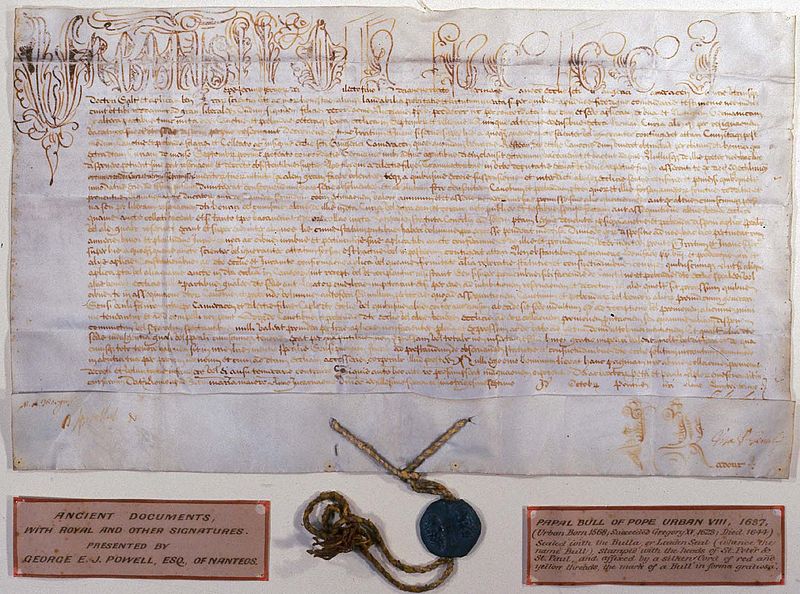
The institutional background extended well before the appearance of specialized papal inquisitors. Lucius III’s decretal Ad abolendam, issued at Verona in 1184, required bishops to investigate suspected heresy within their dioceses and enlist local communities in identifying persons whose conduct or beliefs generated suspicion. Canon 3 of the Fourth Lateran Council strengthened this episcopal responsibility in 1215 while requiring secular rulers to assist in suppressing heretics and threatening recalcitrant authorities with ecclesiastical penalties. These measures treated the investigation of heresy as part of ordinary episcopal government, but bishops often lacked the training, resources, freedom from local pressure, or sustained attention necessary for systematic prosecution. During the 1230s, Gregory IX increasingly appointed individual clerics to pursue heresy under delegated papal authority across parts of France, Italy, and the German lands. Many of these inquisitors belonged to the Dominican or Franciscan orders, whose mobility, theological education, institutional discipline, and relative independence from local elites made them attractive agents of papal policy. Their commissions could cross diocesan boundaries and direct secular officials to assist them, yet their authority was neither identical everywhere nor immune from resistance. Bishops retained their own jurisdiction, rulers defended territorial interests, urban governments negotiated the terms of cooperation, and local populations sometimes obstructed or violently attacked investigators. The papal inquisition consequently developed as an uneven overlay upon existing ecclesiastical justice rather than as its complete replacement.
Heresy’s exceptional character rested upon a convergence of theological, legal, and political reasoning. Because the offense attacked the faith upon which Christian society was believed to rest, jurists could compare it with treason against a temporal sovereign and describe it as an injury to divine majesty. Its adherents were also imagined as a concealed and contagious community capable of reproducing itself through secret meetings, protected networks, itinerant teachers, and household loyalties. Ordinary prosecution appeared dangerously inadequate when potential witnesses sympathized with the accused, feared retaliation, or believed that exposing a fellow believer constituted betrayal. The exceptional-crime doctrine justified intervention before heresy had produced the open and readily provable harm expected in more conventional offenses.
An inquisitorial campaign commonly began with preaching that announced the tribunal’s arrival, explained the errors under investigation, and summoned the population to cooperate. Inquisitors sometimes offered a period of grace during which individuals could confess voluntarily, abjure condemned beliefs, reveal associates, and receive comparatively moderate penances. Depositions gathered during these preliminary stages created stores of names, places, relationships, and remembered conversations that could be compared across investigations conducted months or years apart. When a suspect was formally summoned, the inquisitor questioned that person about beliefs, religious practices, contacts with suspected heretics, participation in prohibited gatherings, and assistance given to fugitives. The accused might be informed of the substance of the allegations without receiving the names of those who had supplied them. Concealment of witness identities was defended as necessary protection against intimidation and revenge, particularly where heretical communities possessed strong kinship or political connections. Defendants could attempt to neutralize testimony by naming mortal enemies, demonstrating contradictions, challenging jurisdiction, or proving that an alleged encounter was impossible, but such defenses were difficult to construct without knowing precisely who had testified. The process combined written records, articulated charges, consultation among trained judges, and possibilities of appeal with an evidentiary asymmetry that placed the tribunal in control of information indispensable to the defense.
The classification of heresy as exceptional also permitted departures from ordinary rules governing witnesses and proof. Persons whose infamy, complicity, criminal status, kinship, or religious disqualification might have excluded them from other proceedings could sometimes testify in heresy cases because members of a clandestine group were thought to be the people most likely to possess relevant knowledge. Such testimony did not automatically establish guilt, but multiple statements, circumstantial indications, damaged reputation, evasive answers, and evidence of association could be assembled into an increasingly formidable case. Access to legal counsel was constrained because an advocate who knowingly assisted an obstinate heretic risked being accused of obstructing the faith, although defendants were not universally or absolutely deprived of advice. The accused could also be required to swear to answer truthfully, transforming concealment into perjury or contumacy as well as a possible indication of guilt. In theory, the tribunal still needed public fama, denunciation, testimony, or another lawful basis before compelling answers about a specific offense. But the breadth of heresy investigations made it easier to move from questions about known associations to demands for disclosures that exposed additional beliefs, acts, and persons never contained in the original suspicion.
The tribunal’s declared objective was not solely to punish but to obtain confession, abjuration, reconciliation, and the identification of error within the wider community. Interrogation sought more than an admission that the accused had held a prohibited belief. Inquisitors wanted to know who had preached, listened, provided food or lodging, exchanged books, conducted rituals, guided travelers, concealed fugitives, or connected one local group with another. A first offender who confessed, supplied a sufficiently complete account, and accepted the Church’s authority might receive penitential crosses, fasting, pilgrimage, fines, loss of property, or imprisonment rather than death. The severity and practical meaning of these penalties varied widely, while imprisonment itself ranged from comparatively less restrictive custody to harsh confinement in chains. An accused person who persisted in the condemned belief after instruction could be judged obstinate, while one who returned to heresy after formal abjuration could be classified as relapsed. Such offenders were abandoned to the secular arm because ecclesiastical courts formally disclaimed the shedding of blood, although both ecclesiastical and secular authorities understood that the anticipated punishment was normally execution by burning. This transfer preserved a jurisdictional distinction without separating the inquisitorial judgment from its lethal consequence. The system’s penitential language was neither wholly fraudulent nor safely benevolent: reconciliation was genuinely preferred, but it depended upon submission, confession, and often the disclosure of others.
Torture represented the most consequential procedural concession to heresy’s exceptional status, though it did not belong to the earliest phase of every papal inquisition. Innocent IV’s bull Ad extirpanda of 1252 authorized secular authorities in parts of Italy to use physical coercion to obtain information from accused heretics, drawing upon methods already reappearing in secular prosecutions of grave crimes. The bull prohibited danger to life and limb and contemplated restrictions intended to distinguish regulated torture from unbounded violence, but such formulas could not eliminate severe suffering or official manipulation. Confessions produced under torture were theoretically to be repeated freely outside the torture chamber, yet the threat of renewed pain made that distinction precarious. The employment of torture remained uneven, dependent upon local law, evidentiary thresholds, individual inquisitors, and the degree of secular cooperation. Complaints about abusive imprisonment, coerced testimony, undisclosed accusations, and unauthorized practices eventually prompted further papal regulation, including reforms associated with the Council of Vienne under Clement V. The medieval papal inquisition should not be imagined as an omnipresent machine in which every suspect was tortured and condemned, but neither should procedural qualifications obscure the extraordinary powers concentrated in its hands. By making heresy an exceptional crime, ecclesiastical law preserved the language of ordered judgment while weakening precisely those protections most likely to prevent the accused from becoming the principal source of evidence against himself and his community.
Judicial Torture and Confession

The learned law of proof transformed confession from one persuasive item among others into a formally decisive basis for conviction. Because criminal penalties could involve death, mutilation, perpetual imprisonment, or grave infamy, many jurists maintained that a judge’s personal conviction was insufficient unless supported by evidence possessing the required legal weight. Full proof, or probatio plena, might arise from a judicial confession, the concordant testimony of qualified eyewitnesses, or certain other exceptionally authoritative forms of evidence. A confession properly delivered before a competent judge could establish guilt without additional confirmation because the accused had acknowledged the material elements of the charge. Extrajudicial admissions, rumors, inconsistent statements, and confessions reported by third parties generally carried less weight and required corroboration. The system was meant to restrain arbitrary judgment, but its insistence upon legally complete proof gave officials a powerful incentive to obtain the one form of evidence that the accused could personally supply.
Between unsupported suspicion and full proof lay a broad territory of presumptions, indications, and partial proofs. A single qualified eyewitness might constitute half proof, while possession of stolen property, flight, contradictory answers, threats against a victim, opportunity, damaged reputation, or association with accomplices could acquire evidentiary significance when combined with other circumstances. These facts might convince a judge that the accused was probably guilty without legally authorizing final condemnation. Judicial torture developed as a method for crossing that divide by compelling a suspect already burdened by substantial evidence to confess. Pain was not itself proof, and the cries, gestures, or physical endurance of the accused possessed no formal capacity to establish guilt. The confession produced through coercion was expected to complete a case that had already advanced beyond conjecture. Torture was not supposed to create an accusation, identify an unknown offender, or test every person whom the judge happened to distrust. Jurists debated how many and what kinds of indications justified its use, producing formulas such as half proof, urgent indications, or violent presumption without achieving a uniform standard across jurisdictions. The apparent precision of these categories consequently concealed considerable judicial discretion at the crucial moment when suspicion became permission to inflict pain.
Judicial torture was theoretically classified as an act of investigation rather than a punishment imposed upon someone already convicted. Its medieval revival drew heavily upon the recovered texts of Roman law, in which coercive examination had been used principally against enslaved people before expanding under the empire to other persons and exceptional crimes. As jurists incorporated Roman doctrines into the ius commune, secular courts in parts of continental Europe began employing regulated torture during the twelfth and thirteenth centuries, although its adoption remained geographically uneven. Ecclesiastical law did not invent the practice, but the authorization associated with Innocent IV’s Ad extirpanda in 1252 enabled its use in heresy proceedings and joined the investigative authority of inquisitors to coercive methods increasingly familiar in secular criminal justice.
Learned doctrine surrounded torture with restrictions intended to preserve the distinction between lawful examination and uncontrolled violence. A judge was ordinarily required to identify the indications supporting torture, issue an interlocutory decision, and direct questioning toward the particular offense already under investigation. Interrogators were not supposed to reveal every incriminating detail within their questions, because a credible confession should contain circumstances that only the perpetrator or a genuine participant would know. Most importantly, words spoken during the infliction of pain did not by themselves constitute the final judicial confession needed for conviction. The accused was to be removed from the instruments, allowed an interval of recovery, and asked to repeat the admission freely before the court. If the confession was ratified, it could become full proof even though the earlier torture had plainly caused it. If it was withdrawn, the judge confronted a procedural dilemma: the recantation suggested that the admission had been coerced, while the original confession could be treated as a reason for renewed suspicion. Rules against repeating torture were often weakened by describing a later examination as a continuation of the first session or by claiming that newly discovered indications justified another order. Jurisdictions also recognized exemptions or special protections based upon age, pregnancy, illness, disability, social rank, or civic privilege, but these varied widely and confirmed that exposure to judicial pain was distributed according to legal status as well as alleged guilt. Requirements that torture remain proportionate and avoid death or permanent injury imposed genuine restraints in some courts, yet they could not make extreme suffering a reliable instrument of truth.
The safeguards were particularly fragile because the officials who decided whether torture was justified also controlled its intensity, interpreted the answers, and certified whether the later confession was voluntary. Written records might state that the accused confessed freely after removal from the torture chamber while omitting threats of renewed pain, visible instruments, prolonged detention, exhaustion, or instructions about what the court expected to hear. Torture could teach the suspect the desired narrative, allowing an innocent person to escape immediate suffering by adopting facts supplied through leading questions or accusations already voiced by others. In heresy investigations, where tribunals sought information about meetings, beliefs, books, lodging, travel, and networks of associates, one coerced confession could generate the indications used to interrogate many additional suspects. The formal boundary between tortured and voluntary confession also became difficult to sustain when imprisonment, shackling, deprivation, intimidation, or the threatened spectacle of another person’s suffering operated before any instrument touched the accused.
Judicial torture exposed both the force and the limitation of the medieval rule against self-betrayal. Before accusation, public fama, testimony, or sufficient indications existed, a judge was not supposed to compel a person to reveal a secret offense and thereby originate his own prosecution. Once the evidentiary threshold had been crossed, nemo tenetur prodere seipsum did not ordinarily confer an absolute right to remain silent. The accused could be sworn, questioned, imprisoned for contumacy, and, in jurisdictions recognizing the practice, tortured to obtain the confession required for conviction. Torture preserved the proper procedural sequence in formal terms: evidence had to precede coercion, and a confession spoken under pain had to be renewed afterward. In practical terms, the accused person’s conscience and body became instruments through which incomplete prosecution evidence was converted into full proof. A system designed to prevent condemnation upon judicial intuition could inflict extraordinary coercion precisely because it refused to permit condemnation upon anything less than formally sufficient evidence. The resulting contradiction was fundamental: the law denied that a person should be made his own first accuser while permitting the state, after substantial suspicion had accumulated, to force him to become the decisive witness against himself. Confession acquired its elevated evidentiary authority because it appeared to resolve uncertainty through the accused person’s own knowledge, yet judicial torture demonstrated how easily the appearance of self-revealed truth could be manufactured by overwhelming compulsion.
Due Process Denied: Joan of Arc and the Boundaries of Silence

The trial of Joan of Arc exposed how easily the formal safeguards of Romano-canonical procedure could be hollowed out when ecclesiastical judgment served an urgent political purpose. Captured by Burgundian forces at Compiègne in May 1430, Joan was transferred to the English, who regarded her not simply as a military prisoner but as the living embodiment of Charles VII’s claims to divine legitimacy. Bishop Pierre Cauchon of Beauvais asserted jurisdiction because Joan had been captured within his diocese, although the proceedings were conducted at English-controlled Rouen after its cathedral chapter granted him the necessary territorial authority. The English government financed the prosecution, retained physical custody of Joan, and expected an ecclesiastical condemnation capable of discrediting the woman who had helped secure Charles’s coronation at Reims. Cauchon nevertheless assembled learned theologians, canonists, notaries, and the vice-inquisitor Jean Le Maistre, producing the outward structure of a legitimate heresy proceeding. The trial cannot be dismissed as a wholly fictitious ceremony in which no legal forms mattered. Its deeper injustice arose from the selective manipulation of recognizable procedures by judges whose institutional position, political dependence, and control over the prisoner made an impartial outcome exceedingly unlikely.
Canonical due process required more than a general declaration that the accused possessed a scandalous reputation. The court was expected to establish a lawful foundation for proceeding, formulate the suspected offenses with sufficient specificity, inform the accused of the substance of the charges, and permit a meaningful defense before demanding answers that might establish guilt. Joan’s public interrogations began on February 21, 1431, but the seventy formal articles against her were not presented until late March, after weeks of intensive questioning had supplied much of their content. During those earlier sessions, the court ranged across her childhood, military career, adoption of male clothing, attempted escapes, obedience to Charles VII, prophetic letters, visions of saints, possession of rings, knowledge of future events, and the mysterious sign allegedly given to the king. Some preliminary investigation was permissible within inquisitorial procedure, and Cauchon repeatedly invoked Joan’s public notoriety as its justification. Yet compelling her to swear and answer before identifying the specific accusations reversed the protective sequence that distinguished lawful inquiry from judicial fishing. H. Ansgar Kelly has argued that Joan possessed a medieval right to remain silent during this stage, not an absolute immunity from later questioning, but a right not to provide sworn evidence before the court had properly charged her. Instead of warning her that her statements could be used against her, the judges transformed uncertainty about the accusations into a reason for demanding broader disclosure. Her examinations became the quarry from which the prosecution constructed the case that should have defined the permissible boundaries of examination from the beginning.
Joan repeatedly recognized the danger and attempted to place conditions upon her oath. She was willing to answer concerning her parents, her journey into France, and matters belonging to the trial, but she refused to promise that she would reveal everything she knew. Certain revelations, she insisted, had been entrusted only to Charles VII, while others could not be disclosed without permission from her voices. When pressed to swear simply and absolutely, she protested that she had “sworn enough,” postponed answers, directed the judges to question the king, or demanded that they proceed to another subject. These responses did not constitute complete silence; they represented a deliberate effort to distinguish matters lawfully examinable by the court from secrets she believed neither conscience nor jurisdiction required her to betray.
The judges treated that distinction as evidence of evasiveness rather than as a boundary requiring legal examination. Questions about whether Joan knew herself to be in God’s grace placed her in a doctrinal dilemma, since an unqualified claim of certainty could suggest presumption while a denial could undermine the divine authority she claimed for her mission. Other questions invited her to choose between repudiating the voices and subordinating ecclesiastical judges to private revelation. Joan answered many such traps with remarkable theological agility, declaring that if she were not in grace God should place her there, and if she were, God should preserve her in it. Her insistence upon submission first to God became dangerous when the court demanded unconditional submission to the Church Militant, meaning the institutional Church acting through the very judges prosecuting her. Joan did not reject the Church as a spiritual community, and she repeatedly affirmed her Catholic faith, her loyalty to the pope, and her willingness to hear Mass and receive the sacraments. She nevertheless hesitated to submit revelations she regarded as divinely authenticated to a tribunal controlled by her political enemies. When she asked that her cause be transmitted to the pope or examined by a less compromised ecclesiastical authority, the judges did not suspend the proceeding for appellate review. Cauchon eventually offered her counsel from among the assembled assessors, but such conditional guidance from men already participating in the prosecution could not provide the independent advocacy needed to identify improper questions, challenge jurisdiction, or preserve an appeal. Silence, qualification, and appeal were collapsed into disobedience, allowing resistance to the tribunal to be represented as resistance to the Church itself.
Joan’s imprisonment intensified the coercion surrounding every answer. Rather than being confined in an ecclesiastical prison under female supervision, she remained in an English military prison, chained and guarded by male soldiers whose hostility she feared. Cauchon’s officials threatened her with torture on May 9, displaying the instruments and warning that pain would be used if she withheld the truth, although the assessors ultimately advised against applying it. On May 24, after a public sermon at Saint-Ouen, Joan faced the immediate prospect of execution and accepted an abjuration whose wording and circumstances would later become fiercely disputed. She was returned to English custody rather than transferred to a church prison, resumed male clothing under circumstances that the condemnation record and later witnesses described differently, and reaffirmed the divine origin of her voices. The court classified these actions as relapse into heresy, a status that exposed her to death without another extended evidentiary proceeding. Her execution on May 30 followed not from one proved heretical doctrine but from an accumulated process in which coerced answers, conditional submission, disputed clothing, and resistance to judicial demands were made to confirm one another.
The nullification proceeding of 1455–1456 did not discover modern civil liberties hidden intact within medieval canon law, and it too unfolded within the changed political world created by Charles VII’s victory. It nevertheless concluded that the prosecution, articles, abjuration, and sentences against Joan had been corrupted by fraud, procedural error, coercion, and malice, and it formally annulled the condemnation on July 7, 1456. Joan’s case consequently reveals both the existence and the fragility of medieval due process. The rule against self-betrayal could protect an accused person only if judges stated the charges before compelling answers, respected the difference between relevant testimony and secret knowledge, permitted effective counsel, and allowed appeals to a superior tribunal. Where the same authorities controlled accusation, interrogation, imprisonment, interpretation, and access to review, silence itself could be converted into proof of guilt.
Part III: England, Juries, and the Speaking Accused
Presentment and Royal Justice: The Assize of Clarendon to the End of Ordeal
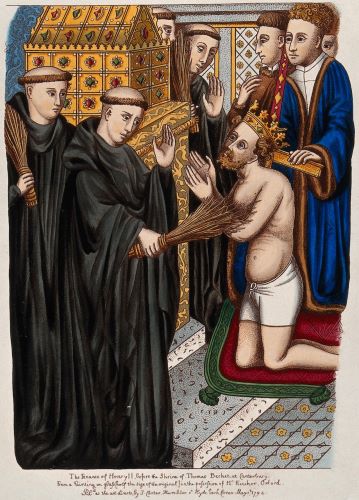
England’s movement toward royal criminal prosecution developed through institutions markedly different from the Romano-canonical inquisitio, although both systems attempted to overcome the weaknesses of private accusation. Local sworn inquiries had precedents before Henry II, but the Assize of Clarendon in 1166 regularized their use throughout the kingdom and attached them to itinerant royal justice. It directed twelve of the more lawful men of each hundred and four of the more lawful men of every vill to swear that they would identify persons accused or publicly suspected of robbery, murder, theft, or receiving offenders. The inquiry concerned communal knowledge and reputation rather than evidence presented through an adversarial contest. These panels were not modern grand juries deliberating privately underdeveloped rules of evidence, still less trial juries deciding guilt from testimony heard in court. Their oath nevertheless supplied the Crown with an official accusation capable of initiating arrest and compulsory proof. Royal prosecution no longer depended entirely upon an injured person willing to undertake the financial, procedural, and retaliatory risks of a private appeal. By locating the first accusation in the sworn voice of the community, Clarendon made local reputation an instrument of centralized royal government.
Presentment did not itself determine whether the suspect had committed the alleged offense. A person named by the sworn panel was arrested and ordinarily sent to the ordeal of cold water, before which he swore that he had not committed the crime attributed to him. This was compelled self-exculpation rather than compelled confession: the accused denied guilt, while the ordeal supposedly invited divine judgment upon the truth of that denial. Properly blessed water was expected to receive the innocent and reject the guilty, with clerical ritual transforming an uncertain human accusation into an apparently authoritative verdict. Failure could bring mutilation, forfeiture, and expulsion from the realm. Yet even success did not necessarily restore the accused to his former position. Clarendon provided that a person acquitted by ordeal but still notoriously defamed by the testimony of the county’s lawful men could be required to leave the kingdom. Presentment possessed consequences extending well beyond what would later be called probable cause, since the community’s sworn suspicion could justify punishment-like exclusion despite a favorable divine judgment. The system joined two different modes of knowledge: neighbors identified the people whom they considered dangerous, while ordeal purported to reveal which of those people were legally guilty. Royal authority controlled arrest and punishment, but neither the presentors nor the justices initially assumed full responsibility for pronouncing the final verdict.
The Assize of Northampton in 1176 reinforced this machinery, expanded the offenses subject to presentment, and reaffirmed cold-water ordeal as the prescribed mode of proof. It also intensified the penalty for failure by requiring the loss of the right hand as well as a foot, followed by abjuration of the realm. Magna Carta’s thirty-eighth clause later prohibited a royal official from putting someone to his law upon the official’s unsupported accusation, while its thirty-ninth clause required lawful judgment or the law of the land before a free man could be imprisoned, dispossessed, outlawed, or exiled. Neither provision created a privilege against self-incrimination or guaranteed criminal jury trial in its modern form, but both reflected an established expectation that coercive judgment should begin with a legally recognized accusation rather than an official’s uncorroborated assertion.
The system was destabilized when Canon 18 of the Fourth Lateran Council prohibited clerics from blessing or participating in ordeals involving hot iron and hot or cold water. Priests did not pronounce the secular sentence, but their Masses, blessings, exorcisms, and supervision gave ordeal the sacramental framework upon which its credibility depended. English authorities did not immediately replace the procedure through a comprehensive statute, and the disappearance of clerical participation created uncertainty about what royal justices should do with suspects already presented for serious crime. Instructions issued in 1219 under Henry III distinguished cases according to gravity and strength of suspicion, retaining some defendants in custody, permitting others to abjure the realm, and releasing less seriously implicated persons upon pledges. These temporary measures reveal that jury trial was not unveiled as a complete institution the moment ordeal ended. During the following years, royal courts increasingly asked another body of local men to give a final verdict upon the accused, extending the use of sworn lay knowledge from accusation to adjudication. The trial jury was related to the older inquest and presentment practices but was not simply the presenting panel renamed, since the functions of charging and judging gradually became distinguishable. Jurors initially relied heavily upon their own knowledge, local report, and information gathered outside court rather than passively evaluating evidence presented by opposing lawyers. Defendants were asked whether they would place themselves “upon the country,” because submission to this new mode of proof was treated as requiring consent. The end of ordeal resolved one procedural problem only by creating another: royal justice possessed an effective machinery of accusation but now needed a human institution authorized to decide whether the accusation was true.
From the perspective of self-incrimination, presentment established an important principle without creating a personal right to silence. The ordinary royal prosecution began with sworn allegations supplied by persons other than the suspect, preserving a sequence in which a publicly cognizable charge preceded the accused person’s required plea or oath of denial. An accused person could not safely refuse participation, and nothing in Clarendon, Northampton, Magna Carta, or the abandonment of ordeal authorized him to remain silent after a lawful charge had been made. The emerging trial jury shifted responsibility for determining guilt from the accused person’s body and oath toward the judgment of lay representatives of the community. Because English jurors could return verdicts without the judicial confession demanded by the continental law of full proof, the common law did not acquire the same structural dependence upon torture as a means of completing deficient evidence. That divergence should not be confused with immediate procedural humanity: early defendants lacked counsel, jurors could possess prejudicial prior knowledge, and a damaging reputation might shape both presentment and verdict. The enduring importance of the Angevin reforms lay instead in their reallocation of the burden of revelation. The Crown had learned to commence prosecution through communal accusation, and when ordeal disappeared, it preserved that accusatory structure by making the country responsible not only for naming suspected offenders but increasingly for judging them.
The Self-Informing Jury: Local Knowledge Before Courtroom Evidence
The criminal jury that emerged after the decline of ordeal differed fundamentally from the modern body expected to enter court ignorant of the dispute. Medieval jurors were drawn from the locality because proximity was believed to give them access to the people, events, and reputations relevant to the accusation. They came to court not merely to evaluate a prosecution’s presentation but to report what they already knew or had discovered. Their verdict represented a sworn communal judgment rather than the mechanical application of evidentiary rules to testimony delivered before the judge. The description “self-informing” captures this dependence upon knowledge acquired outside the courtroom, although it should not imply that every juror had witnessed the alleged crime personally. It identifies a system in which the court expected the jury itself, rather than professional investigators or opposing advocates, to supply much of the factual foundation for judgment.
Vicinage was an epistemic principle as well as a rule governing jury composition. In thirteenth-century eyres, royal officials summoned freeholders from the hundred together with representatives of the neighboring vills, creating a pool of men situated close to the place where the offense had allegedly occurred. Some might know the accused, victim, or principal witnesses directly, while others had heard the hue and cry, attended a coroner’s inquest, viewed a body or wound, helped pursue a fugitive, served in a local court, or discussed the event with neighbors. Presenting jurors could also participate in the later determination of guilt, making the division between accusation and trial considerably less rigid than the modern separation between grand and petit juries. An accused person might consequently be judged by men who had already sworn that he was suspected of the offense. Information passed through families, households, manors, markets, parish communities, and systems of frankpledge, allowing even private conduct to become part of a collective reputation. Rumor and hearsay were not automatically excluded merely because their original source could not be produced and examined before the justices. In small and relatively stable communities, such accumulated knowledge could be detailed, persistent, and difficult for either the Crown or the accused to disregard. The system became less reliable when an offense occurred near the boundaries of jurisdictions, when the accused was a stranger, when local factions controlled communal opinion, or when the passage of time weakened memory. Locality supplied access to information, but it did not guarantee that the information was truthful or impartially interpreted.
Self-information did not require jurors to arrive with an irrevocable verdict already formulated. Jurors could question one another, consult informed neighbors, consider statements made by the accused, and supplement their prior understanding through exchanges conducted at the eyre or gaol delivery. Surviving records occasionally reveal accusers, coroners, sheriffs, township representatives, or other persons supplying information in court, especially about collateral circumstances or procedural events. The crucial distinction was not between a medieval jury that heard nothing and a modern jury that hears evidence, but between a jury whose knowledge arose principally from the community and one whose permissible knowledge is created through a regulated courtroom presentation.
The medieval criminal proceeding nevertheless lacked the sustained evidentiary contest associated with later jury trials. Once an accused person pleaded not guilty and placed himself upon the country, the justices could question him about the accusation, his movements, his relationships, or the circumstances of his arrest. In a private appeal, the victim or another appellor could state the complaint, while local officials might explain how the defendant had been captured or what had been discovered during an earlier inquiry. Such exchanges gave the accused an opportunity to influence the jurors, contradict damaging reports, identify enemies, or offer an exculpatory account. They did not ordinarily produce a carefully ordered sequence of sworn prosecution witnesses followed by cross-examination, defense testimony, judicial summation, and legal instructions concerning the admissibility of each item. Jurors could rely upon information never disclosed in open court, and no complete record revealed which facts, rumors, assumptions, or personal experiences had moved them toward their verdict. The justices might know the applicable law while knowing substantially less than the jury about the underlying event. Because the general verdict supplied no explanation of its factual reasoning, a judge could rarely determine whether jurors had relied upon trustworthy knowledge, communal prejudice, or a deliberate desire to reach a merciful result. The early jury exercised an authority resembling that of witnesses, investigators, and judges of fact simultaneously.
That concentration of functions offered both practical advantages and serious dangers. The Crown could adjudicate large numbers of accusations without maintaining a professional police force or assembling witnesses for a formal prosecution in every case. A knowledgeable jury could expose offenses that frightened victims refused to prosecute, but it could also reproduce village animosities, deference to powerful families, hostility toward outsiders, and assumptions based upon poverty or damaged reputation. Jurors sometimes reshaped accounts of homicide, theft, or participation in crime so that technically severe law produced a verdict closer to communal judgments about culpability and mercy. Legislation enacted in the twenty-fifth year of Edward III prohibiting indictors from serving upon the trial inquest reflected growing concern that men who had already accused a defendant could not approach the final determination without prejudgment. Separating presentment from trial reduced the most obvious institutional conflict, but it did not immediately eliminate jurors’ reliance upon knowledge acquired beyond the courtroom.
For the history of self-incrimination, the self-informing jury created an alternative to the continental demand for judicial confession as full proof. English royal courts could convict because local jurors declared the accused guilty, even when he supplied no admission and no pair of qualified eyewitnesses testified against him. This capacity helped prevent ordinary common-law criminal procedure from developing the same structural dependence upon judicial torture that appeared within the Romano-canonical law of proof. It did not confer a medieval right to remain silent. The accused was expected to plead, consent to trial by the country, answer questions personally, and present whatever explanation might overcome the jury’s prior knowledge or suspicion; refusal to submit to jury trial eventually exposed defendants to imprisonment and the coercion known as peine forte et dure. Silence could abandon the only meaningful opportunity to contest a narrative already circulating through the community. Indeed, the jury’s undisclosed knowledge could place the accused at a special disadvantage because he might not know which rumors required denial or which absent informants had shaped the case. As jurors increasingly came from beyond the immediate neighborhood during the later Middle Ages, courtroom testimony and official evidence gathering assumed greater importance, gradually changing the jury from a source of facts into a body instructed by evidence. The self-informing jury nevertheless established a lasting feature of English criminal justice: the state could obtain a verdict against an accused person without first forcing him to supply the conclusive proof of his own guilt.
The “Accused Speaks”: Trial and the Practical Impossibility of Silence

By the sixteenth century, the English criminal trial had become what John H. Langbein has termed the “accused speaks” trial: a proceeding organized around the defendant’s personal response to the charge. The formula described a practice rather than a formal rule requiring sworn testimony, for defendants accused of felony or treason remained legally incompetent to testify under oath. Nevertheless, the victim, accusing witnesses, justices, and defendant confronted one another in an oral exchange through which competing accounts were tested before the jury. Sir Thomas Smith famously depicted the accuser and alleged thief standing “in altercation,” each answering the other’s assertions as the trial unfolded. Judges questioned defendants directly, interrupted implausible explanations, demanded answers to incriminating circumstances, and invited responses after witnesses spoke. The defendant’s unsworn statements did not possess the technical status of testimony, but they performed nearly all the practical work of a defense case. What mattered to the jury was not the evidentiary label attached to those words but whether the accused could explain the prosecution’s allegations convincingly enough to create doubt.
This arrangement reflected the continuing exclusion of defense counsel from most felony trials. Lawyers could advise defendants before trial, argue disputed questions of law, or assist persons enjoying special privileges, but they were ordinarily forbidden to conduct the factual defense in routine cases of serious crime. Contemporary judges justified the prohibition by claiming that the court itself served as counsel for the prisoner and would ensure that no improper conviction occurred. Such judicial assistance could clarify legal points or expose a defective indictment, yet it could not substitute for an advocate committed to investigating the facts, preparing witnesses, challenging prosecution testimony, and constructing a coherent alternative narrative. Because no representative could perform those tasks in the defendant’s place, personal speech became inseparable from self-defense.
The practical pressure to answer began well before the jury returned its verdict. Statutes enacted during the reign of Mary I required justices of the peace investigating felonies to examine arrested suspects and record material information for use at trial, helping convert local suspicion into an organized prosecution case. The suspect might confront at trial statements previously made during detention, when legal advice, advance knowledge of the evidence, and reliable access to supporting witnesses were generally unavailable. In court, witnesses commonly delivered their accounts one after another, and the defendant was expected to respond immediately rather than reserve a complete defense until the prosecution had formally closed. There was ordinarily no professional cross-examiner capable of exposing inconsistencies through carefully sequenced questions. The accused had to listen, question, deny, remember, and explain while also enduring the public anxiety of a proceeding that might end in death. Trials could be extremely brief, and several unrelated defendants might be tried during the same session. Rules excluding hearsay, prior misconduct, character attacks, or prejudicial accusations remained rudimentary by later standards. A hesitation, contradiction, emotional outburst, or failed explanation could consequently acquire enormous significance because jurors observed the defendant’s performance as closely as they considered the underlying facts.
Nothing necessarily prevented a defendant from declining to answer a particular question once a plea had placed the case before the jury. That limited possibility should not be mistaken for a usable privilege to remain silent. Judges could repeat questions, comment upon evasiveness, contrast silence with the apparent specificity of an accuser’s account, and encourage jurors to treat an unexplained circumstance as damaging. The defendant who remained silent surrendered the only voice formally available to contest prosecution evidence, since neither counsel nor sworn defense testimony could replace the missing explanation. Even an innocent person might need to disclose humiliating conduct, implicate associates, reveal religious or political connections, or admit a lesser offense to rebut the greater charge. Silence carried an evidentiary meaning produced by the structure of the trial itself: when an accusation appeared answerable, failure to answer naturally invited the inference that no satisfactory answer existed.
The “accused speaks” trial consequently complicates any claim that the common law had already established a comprehensive privilege against self-incrimination during the later medieval or early modern periods. English law did avoid the continental requirement that guilt be established through a judicial confession or two qualified eyewitnesses, and it did not ordinarily torture defendants to obtain the full proof necessary for conviction. Opposition to compulsory oaths in ecclesiastical and prerogative courts was also generating principles that would become central to the later privilege. Yet those developments did not silence the accused in an ordinary felony trial, where answering the charge remained the principal means of survival. A rule against being forced to accuse oneself of an undisclosed offense was conceptually different from a right to withhold an explanation after witnesses had publicly presented incriminating facts. Only when defense lawyers gradually assumed responsibility for questioning witnesses, organizing evidence, addressing juries, and holding the prosecution to its burden could the accused refrain from speaking without abandoning the defense altogether. The later privilege was not simply an ancient maxim finally enforced with greater consistency; it depended upon institutional changes that separated the defensive function from the defendant’s own voice. In the lawyer-free trial, silence might be legally possible in the narrowest sense, but it was practically equivalent to leaving the accusation unanswered.
Standing Mute and Peine Forte et Dure

The common-law defendant’s practical obligation to speak began with the arraignment, when the indictment was read and the prisoner was required to answer guilty or not guilty. A plea of not guilty was ordinarily followed by the formula placing the defendant upon the country, thereby submitting the accusation to determination by a jury. “Standing mute” did not necessarily mean maintaining complete physical silence, since a prisoner might dispute the court’s jurisdiction, refuse the available pleas, reject trial by the country, or give answers that judges considered deliberately unresponsive. Without an acceptable plea and submission, the court believed that it could not proceed to an ordinary felony trial. This procedural difficulty grew from the unsettled transition after ordeal, when jury trial acquired legitimacy partly through the accused person’s consent to the new mode of proof. The defendant’s words consequently did more than answer the allegation: they authorized the institutional machinery that could condemn him. Yet the resulting capacity to obstruct trial did not create a recognized liberty to remain silent, because the law answered refusal with measures intended to make consent unavoidable.
Before imposing coercion, the court was expected to determine why the accused had failed to plead. A jury could be empaneled to decide whether the prisoner was mute “of malice,” meaning that the refusal was deliberate, or mute “by visitation of God,” a category encompassing an inability to answer that was not willfully chosen. Deafness, inability to speak, illness, mental incapacity, incomprehension, and obstinate resistance were not always distinguished with the precision later doctrines of competency would require. Judges could test whether an apparently mute defendant understood questions, could communicate by signs or writing, or had spoken on other occasions. The distinction nevertheless recognized that involuntary incapacity could not justly receive the response designed for calculated procedural defiance. It protected a limited class of prisoners from being treated as contumacious, but it did not establish a general right to refuse participation in one’s prosecution.
Chapter 12 of the First Statute of Westminster in 1275 directed that notorious accused felons who refused to place themselves upon the appropriate inquest should be subjected to prison forte et dure, or strong and hard imprisonment. The statute did not prescribe the later standardized image of a prisoner crushed beneath steadily increasing stones, and the development of the practice was neither uniform nor completely recoverable from surviving records. Medieval “hard prison” could combine confinement on the bare ground, shackling or bodily restraint, cold, darkness, nakedness, isolation, and an alternating diet of small quantities of coarse bread and water. Some prisoners pleaded after experiencing or merely being threatened with these conditions, allowing the felony trial to proceed. Other records indicate the use of weights or pressing, while later legal descriptions made crushing the defining element of peine forte et dure. The prisoner could be stretched upon the floor, subjected to an increasing load of iron or stone, and given minimal bread and water on alternating days until a plea was entered or death intervened. Officials classified the ordeal as coercion or penance rather than punishment for the indicted felony because no verdict had yet established guilt. That distinction preserved the formal logic of the process while subjecting an unconvicted person to suffering more severe than many judicial sentences.
Defendants stood mute for reasons more varied than the familiar desire to protect an inheritance. Because conviction for felony produced attainder and forfeiture, dying without pleading could prevent a valid judgment and sometimes preserve property for the prisoner’s heirs. That incentive became particularly important when conviction appeared certain, although it cannot explain prisoners who owned little property or refused to plead despite possessing a plausible defense. Silence could also express rejection of royal jurisdiction, distrust of hostile jurors, fear that a trial would expose relatives or associates, religious resistance, despair, or a determination to control the manner of one’s death. Margaret Clitherow’s refusal to plead at York in 1586 illustrates the political and confessional power such silence could acquire. Charged with harboring Catholic priests, she sought to prevent a trial in which her children and servants might be required to testify, and she denied the legitimacy of proceedings she regarded as an assault upon conscience and faith. Her death under pressing transformed a device intended to compel procedural submission into an act represented by Catholic observers as martyrdom. The mute prisoner could use the very precondition that made trial possible to deny the court a verdict, but only by accepting a bodily violence designed to demonstrate that royal justice would not tolerate unresolved defiance.
Peine forte et dure reveals the narrowness of silence within the older common-law tradition. The prisoner was not being compelled to confess the felony or furnish narrative evidence of guilt; formally, the law demanded only a plea and acceptance of jury trial. Nevertheless, it used potentially lethal force to extract the speech without which prosecution could not continue. The distinction between forcing self-accusation and forcing procedural participation was legally meaningful, but it offered little comfort to a defendant whose body was crushed until he uttered the required words. Parliament abolished the practice in 1772 by providing that a person who stood mute upon arraignment for felony or piracy would be convicted and sentenced as though guilt had been established by verdict or confession. That solution eliminated pressing by attaching an even more conclusive meaning to silence, while legislation in 1827 adopted the more protective course of directing that a plea of not guilty be entered for a defendant who refused to answer. The court could thereafter proceed without pretending that the accused had voluntarily selected the jury or confessed by remaining mute. Standing mute contributed to the history of the privilege against self-incrimination mainly by contrast: it demonstrated that common-law procedure could dispense with a defendant’s consent only after abandoning centuries of coercion aimed at making him speak.
Canon Law in England: Rival Jurisdictions and Shared Legal Ideas
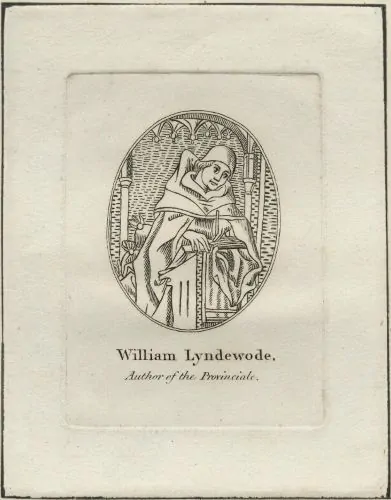
Medieval England did not possess a single legal system extending uniformly across every person, dispute, and offense. Royal courts administered the developing common law, while manorial, borough, mercantile, and ecclesiastical tribunals exercised authority derived from different institutions and customs. The Norman separation of spiritual pleas from the hundred and shire courts strengthened an ecclesiastical hierarchy whose tribunals ranged from archdeaconries and diocesan consistories to the provincial courts of Canterbury and York. Appeals could proceed through that hierarchy and, before the English Reformation, ultimately reach the papal curia. Canon law was neither merely private religious discipline nor an occasional foreign intrusion into English justice; it was an operating body of law encountered by laypeople and clerics throughout their lives.
The courts Christian claimed jurisdiction according to the spiritual character of a person, subject, or remedy. They determined the validity of marriages, separations from bed and board, annulments, and questions of legitimacy arising from canonical marriage, although royal courts guarded their authority over inheritance and land. Ecclesiastical judges proved wills involving personal property, supervised executors, and heard disputes arising from testamentary administration. They adjudicated tithes, church dues, clerical appointments, ecclesiastical property, defamation, perjury, broken oaths, and violations of faith that could sometimes resemble secular contract claims. Their corrective jurisdiction also encompassed adultery, fornication, incest, clandestine marriage, failure to attend worship, and other conduct classified as sinful. Clergy accused of offenses presented a particularly sensitive jurisdictional problem because ordination could remove a defendant from ordinary royal punishment and place him under ecclesiastical discipline. Spiritual courts generally imposed penance, monetary commutation, suspension, deprivation, or excommunication rather than the death and mutilation associated with royal felony law, although persistent contumacy could produce imprisonment and convicted heretics could be abandoned to secular authority. Jurisdiction consequently mattered not only because different judges applied different doctrines but because transfer between forums could radically alter the procedures, sanctions, and social consequences facing the accused.
The dispute between Henry II and Thomas Becket over “criminous clerks” revealed how questions of criminal procedure became contests over sovereignty. The Constitutions of Clarendon in 1164 sought to define royal authority over clergy accused of serious crimes, including a disputed arrangement under which royal officials could observe ecclesiastical proceedings and degraded clerks could face further secular punishment. Becket resisted what he regarded as unlawful subordination of clerical status and an impermissible second punishment for the same offense. His murder and subsequent canonization forced royal concessions, but they did not establish an uncontested ecclesiastical monopoly; instead, benefit of clergy became a continuing mechanism through which the two jurisdictions negotiated custody, trial, status, and punishment.
Institutional rivalry did not prevent extensive intellectual contact between canon law and the common law. The classical canon law assembled in Gratian’s Decretum, papal decretals, conciliar legislation, and juristic commentaries entered England through manuscripts, universities, clerical networks, and appeals to Rome. English students studied civil and canon law at Oxford, Cambridge, and continental schools, while bishops, chancellors, royal administrators, and judges often participated in more than one institutional world. William Lyndwood’s fifteenth-century Provinciale, a compilation and commentary upon the provincial constitutions of Canterbury, interpreted specifically English legislation through the learning of the European ius commune. Ecclesiastical procedure relied heavily upon written allegations, sworn answers, advocates, proctors, documentary records, interlocutory rulings, and graded appeals. Common-law criminal proceedings, by contrast, remained comparatively oral, jury-centered, and dependent upon confrontation between accuser and accused. Yet both traditions wrestled with lawful accusation, notorious reputation, witness credibility, judicial impartiality, double punishment, good faith, consent, and the relationship between procedural regularity and legitimate judgment. Canonists served the Crown, common lawyers litigated questions whose resolution depended upon ecclesiastical determinations, and litigants moved strategically between forums. Shared concepts arose through overlapping personnel and practical necessity as well as through any direct borrowing of a rule from one legal system into another.
Royal judges policed the jurisdictional boundary principally through writs of prohibition, which ordered an ecclesiastical tribunal to halt a cause thought to belong to the temporal courts. A church litigant could sometimes obtain a consultation allowing the proceeding to resume after showing that the spiritual court had remained within its authority. The text known as Circumspecte agatis, conventionally associated with 1285, instructed royal officials to proceed cautiously in interfering with recognized ecclesiastical matters, including clerical discipline, tithes, mortuary payments, church ornaments, and certain spiritual corrections. The boundary nevertheless remained unstable whenever a Church court attached monetary consequences to defamation, enforced a sworn promise resembling a debt, addressed property through testamentary jurisdiction, or examined misconduct that might also constitute a royal offense. Competition produced neither complete separation nor the effortless supremacy of one jurisdiction, but an enduring process in which each system defined itself partly by contesting the claims of the other.
This interaction was consequential for the developing law of compelled self-accusation. Canon law recognized accusatory proceedings initiated by an identified complainant, denunciations made by informants, and inquisitorial proceedings undertaken by a judge acting officially. In an ex officio inquiry, an accused person could be placed under oath and required to answer articles concerning suspected misconduct, giving ecclesiastical tribunals an investigative power unfamiliar to ordinary common-law felony trials. Learned doctrine did not authorize unrestricted interrogation merely because a judge wished to discover whether some secret sin had occurred: public fama, specific denunciation, evident scandal, or another lawful basis was ordinarily supposed to precede compulsory examination. The associated maxim that no one was bound to betray himself protected hidden offenses and resisted questions lacking an adequate jurisdictional foundation, but it did not grant absolute silence once lawful suspicion and a competent accusation existed. Ecclesiastical judges could invoke canon law to compel answers, while defendants and their advisers invoked the same tradition to argue that an oath, article, or entire inquiry exceeded permissible limits. English resistance to the ex officio oath would later become entangled with common-law prohibitions, religious controversy, parliamentary opposition, and claims of national liberty, but the legal arguments were not created wholly outside the system being challenged. Canon law supplied both a formidable machinery of sworn investigation and some of the concepts by which that machinery could be restrained, leaving England with rival procedures but a partially shared language for debating when silence became lawful.
Part IV: Transformation, Debate, and Legacy
From Medieval Safeguard to Early Modern Crisis

The medieval maxim nemo tenetur se ipsum prodere, no one is bound to betray himself, did not originally establish an absolute right to refuse every incriminating question. In its fuller canonical setting, the principle protected a person from being forced to reveal a secret offense that had not already become the subject of lawful accusation, denunciation, or public fama. An ecclesiastical judge could not properly roam through a person’s conscience merely in the hope of discovering punishable sin. Once credible reputation or other legally sufficient grounds exposed the alleged misconduct, the accused could be required to answer specific articles under oath. Canonists attempted to reconcile protection against unfounded inquiry with the Church’s responsibility to investigate public scandal. The danger lay in the authority entrusted to the judge to determine whether sufficient suspicion existed, formulate the articles, administer the oath, evaluate the answers, and punish refusal. When those preliminary restraints weakened, a conditional obligation to answer could become an instrument for making suspects disclose offenses that the authorities could not otherwise prove.
The English Reformation transferred this procedural inheritance into a transformed constitutional setting. Henry VIII’s repudiation of papal jurisdiction did not eliminate ecclesiastical law, ecclesiastical courts, or their learned methods of examination; it subjected them to a royal supremacy whose institutional boundaries remained contested. The Act of Supremacy of 1559 authorized Elizabeth I to delegate ecclesiastical authority to commissioners appointed under the great seal, and successive royal commissions gradually produced the central tribunal conventionally known as the Court of High Commission. Its membership could include bishops, civil lawyers, common lawyers, privy councillors, and other royal officials, making it neither an ordinary diocesan court nor simply a secular prerogative council. It enforced religious uniformity, investigated clerical misconduct, disciplined recusants and Protestant separatists, supervised printing, and addressed beliefs or practices classified as heretical, schismatic, or scandalous. High Commission could employ written articles, sworn examinations, suspension, deprivation, excommunication, imprisonment, and disputed powers of fine, combining spiritual correction with the coercive authority of the Tudor state. Questions about the oath ex officio consequently became inseparable from a larger question: whether royal supremacy had preserved the lawful jurisdiction of the Church or created an ecclesiastical instrument capable of evading the protections of the common law.
The controversy sharpened after John Whitgift became archbishop of Canterbury in 1583 and began a determined campaign for clerical conformity. Ministers suspected of rejecting the Book of Common Prayer, episcopal government, prescribed vestments, or the Thirty-Nine Articles could be required to swear before learning the full reach of the interrogatories that would follow. Questions might concern their preaching, administration of the sacraments, private religious meetings, possession of prohibited books, opinions about bishops, and knowledge of other dissenters. A truthful answer could establish the respondent’s own offense or expose associates, a false answer endangered the soul through perjury, and refusal invited imprisonment for contempt. The oath placed religious conscience inside a procedural trap whose effectiveness depended precisely upon the absence of evidence sufficient to support an ordinary prosecution.
Opposition initially concentrated upon the breadth and irregular administration of the oath rather than upon an unlimited privilege to remain silent. The diplomat and legal scholar Robert Beale argued during the 1580s that ecclesiastical commissioners were departing from canon law itself by examining people without a proper accuser, established fama, or specifically disclosed offense. In 1593, the Puritan lawyer and member of Parliament James Morice introduced proposals attacking the commissioners’ compulsory procedures, only to have Elizabeth suppress the initiative and place him under restraint. Critics invoked Magna Carta, statutes defining ecclesiastical authority, common-law traditions of presentment, scriptural objections to compelled betrayal, and the canonical maxim against self-accusation. Richard Cosin answered them in his Apologie for Sundrie Proceedings by Jurisdiction Ecclesiasticall, defending official inquiry and sworn answers as ancient, necessary, and lawful when public scandal or credible suspicion supplied the required foundation. This exchange was not a simple confrontation between inquisitorial canon law and an immemorial English right, because each side selectively drew upon ecclesiastical learning, statute, royal authority, and common-law language. Under James I, common-law judges issued prohibitions against examinations they considered jurisdictionally excessive, while ecclesiastical commissioners insisted that effective church discipline required access to facts usually hidden within private belief and association. Nicholas Fuller’s defense of the nonconformists Thomas Lad and Richard Maunsell in 1607 turned that disagreement into a direct conflict over imprisonment, clerical jurisdiction, and the authority of the royal judges to restrain High Commission. The disputed oath became a constitutional fault line because it tested who could define lawful suspicion, which courts could compel disclosure, and whether royal ecclesiastical authority remained answerable to the ordinary law of the realm.
Star Chamber brought similar methods into a separate institutional arena. It had developed from the king’s council rather than being created fully formed by the statute of 1487, and during the Tudor period it acquired an important role in prosecuting riot, maintenance, conspiracy, forgery, perjury, corruption, libel, and offenses threatening public order or royal government. Its procedure ordinarily began through a bill, information, or other formal complaint, after which defendants answered upon oath and confronted written interrogatories without a criminal jury. Witness testimony could be taken by examiners outside the defendants’ presence, while the councillors and judgesillors and judges who heard the cause determined both fact and law. Star Chamber could impose fines, imprisonment, whipping, the pillory, and mutilating punishments, although it did not ordinarily pronounce a sentence of death. These features made it useful against powerful offenders whom local juries might fear or favor, and for much of its history litigants sought its intervention rather than viewing it only as a machinery of tyranny. Its reputation darkened under the early Stuarts as proceedings involving political opposition, religious dissent, unlicensed printing, and criticism of government joined harsh punishment to compelled examination. High Commission and Star Chamber were distinct courts with different jurisdictional foundations, but their cooperation allowed religious and political investigations to pass between ecclesiastical inquiry, administrative censorship, and prerogative judgment.
John Lilburne transformed this technical dispute into a public drama of bodily suffering and “freeborn” English liberty. Arrested in December 1637 for involvement in importing and circulating unlicensed Puritan books, he was brought before authorities seeking information about the publications, their printers, and their distribution. Lilburne refused to take an oath binding him to answer interrogatories whose full content and legal foundation had not been disclosed. He maintained that the authorities should first identify a definite accusation and produce lawful witnesses rather than forcing him to become his own accuser. Star Chamber treated his refusal as contumacy and in February 1638 sentenced him to a fine of £500, imprisonment, public whipping, and exposure in the pillory. On April 18, he was whipped from Fleet Prison to Westminster and continued denouncing the bishops and the proceedings while standing in the pillory, prompting officials to silence him forcibly. The spectacle gave the oath a political visibility that arguments among canonists, commissioners, and common lawyers had never achieved. Lilburne’s stand did not yet amount to a carefully defined claim that every criminal defendant could refuse all incriminating questions, for his central demand remained that lawful accusation precede compulsory answer. Yet his punishment made that procedural distinction intelligible as a defense of personal liberty against a tribunal that appeared able to create an offense from the refusal to disclose one.
The Long Parliament’s legislation of 1641 destroyed the institutions most closely associated with that abuse. One statute abolished Star Chamber and condemned the expansion of conciliar jurisdiction beyond the ordinary law, while another repealed the statutory foundation of High Commission and prohibited ecclesiastical judges from administering an oath that compelled a person to confess or accuse himself of a criminal matter. Parliament also declared Lilburne’s sentence illegal, helping convert his resistance into a symbol of the struggle against arbitrary government.
These measures did not immediately create the modern privilege against self-incrimination within common-law felony trials, where defendants still lacked counsel and remained under overwhelming practical pressure to answer prosecution evidence personally. They instead established a more limited but crucial principle: officials could not use a preliminary oath to search an accused person’s conscience for the facts necessary to formulate or prove a criminal charge. The medieval distinction between concealed sin and publicly grounded accusation had been recast through Reformation politics, jurisdictional rivalry, and opposition to royal prerogative. What began as an internal restriction upon ecclesiastical inquiry emerged from the crisis of High Commission and Star Chamber as a claim about the lawful relationship between individual speech and governmental power.
Did Medieval Law Really Recognize a Right Against Self-Incrimination?
The following video from “EHS HIST” discusses law in the Middle Ages:
To ask whether medieval law recognized a right against self-incrimination risks imposing a modern constitutional category upon institutions organized around very different assumptions. The modern privilege generally permits an accused person to refuse testimonial assistance to the prosecution, while procedural safeguards allow the case to continue without treating that refusal as proof of guilt. Medieval courts neither divided governmental power from individual liberty in those terms nor provided the accused with lawyers capable of conducting a defense while he remained silent. Canon law regulated compulsory examination according to jurisdiction, public reputation, and the distinction between secret and notorious offenses. English common law ordinarily required an accusation from someone other than the defendant, but it also expected him to plead, submit to judgment, and answer the case personally. The strongest historical conclusion is not that medieval Europe possessed a fully formed right to silence, but that it developed several restrictions upon compelled self-accusation that later lawyers could reorganize into such a right.
Canonical maxims provide the most tempting evidence for an early privilege. Statements that no one was bound to accuse, betray, or proceed against himself appeared in learned legal discussions and could be invoked against improperly expansive judicial inquiry. Their operative meaning depended upon the procedural setting in which they were used. A judge was not ordinarily entitled to compel a person to reveal a wholly secret offense merely to satisfy suspicion or curiosity, because jurisdiction over an inquisitorial proceeding required some lawful foundation such as public fama, denunciation, or manifest scandal. Once that foundation existed, the accused could be placed under oath and required to answer specific articles concerning the alleged misconduct. He might object that a question exceeded the known accusation, exposed an unrelated crime, lacked sufficient supporting reputation, or came from an incompetent tribunal, but he did not thereby acquire an unconditional power to refuse every incriminating answer. Nor was the protection conceived solely as personal autonomy against the state: it also defended sacramental confession, guarded the internal forum of conscience, restrained judicial overreach, and preserved the procedural legitimacy of ecclesiastical correction. To describe these rules as a medieval “privilege against self-incrimination” is defensible only if the phrase is understood as shorthand for conditional procedural safeguards rather than as an exact equivalent of the later constitutional doctrine.
The common law presents an equally mixed picture. Presentment, indictment, and jury verdict allowed royal courts to begin and complete a prosecution without requiring the accused to confess, thereby placing responsibility for establishing guilt upon accusers and the community. Because English jurors could convict from their own knowledge and later from evidence supplied in court, confession never acquired the formal necessity it possessed under the Romano-canonical law of full proof. Yet the defendant was still expected to provide a plea and rebut the accusation through personal speech. The institutional ability to convict without confession was not identical to a personal entitlement to withhold testimony.
The absence of routine judicial torture in English felony procedure can also be made to bear more interpretive weight than it can sustain. English law generally did not require confession as the indispensable proof completing an otherwise deficient prosecution, which reduced the incentive to torture defendants for admissions. Continental systems governed by learned law surrounded torture with rules concerning the strength of preliminary proof, the status of the suspect, the questions permitted, and the later confirmation of a confession. That divergence was important, but neither system can be reduced to a simple opposition between English liberty and continental coercion. An accused felon in England faced no ordinary torture chamber, yet he could be confined under appalling conditions, questioned by officials, compelled to confront hostile allegations without counsel, and forced to speak in order to mount any recognizable defense. At arraignment, refusal to plead could bring peine forte et dure, making bodily torment the answer to silence even though the law formally sought consent to jury trial rather than a confession. After a plea, silence allowed witnesses, judges, jurors, and communal reputation to define the facts without effective contradiction. Defendants could also be pressured into disclosing accomplices, religious associates, embarrassing conduct, or lesser offenses when explaining away a capital accusation. A system can refrain from demanding a formal confession while still making silence practically ruinous, and medieval common law usually did precisely that.
Yet rejecting the claim of a complete medieval right should not erase the genuine legal inheritance from which the later privilege emerged. Canonists articulated limits upon inquisitorial power, insisted that concealed wrongdoing could not always be converted into public accusation through a compulsory oath, and supplied the maxim that no one should be forced to betray himself. Common lawyers preserved a prosecution structure in which presentors, accusers, witnesses, and jurors ordinarily supplied the charge and verdict, while Magna Carta and related traditions strengthened the expectation that coercion required lawful procedure rather than an official’s unsupported will. These principles remained fragmented, jurisdictionally specific, and sometimes openly contradictory, but they gave later opponents of High Commission and Star Chamber a language with which to challenge investigative oaths.
When early modern controversy fused canonical restraint, common-law procedure, religious conscience, parliamentary opposition, and fear of arbitrary government, a narrower medieval protection against unfounded self-accusation began to acquire the dimensions of a general civil liberty. Medieval law recognized no single, comprehensive right against self-incrimination in the modern sense. Its achievement was more foundational: it identified circumstances in which compelled disclosure was unlawful and preserved procedures capable of determining guilt without making confession indispensable, thereby creating materials from which a true right to silence could eventually be constructed.
Conclusion: The Long Road from Secret Sin to Protected Silence
The history of self-incrimination did not begin with a fully formed individual right waiting to be discovered. It began with narrower questions about jurisdiction, proof, conscience, and the lawful exposure of wrongdoing. Medieval canonists distinguished between concealed sin, which ordinarily remained within the private forum, and public scandal, which could justify official investigation and compelled answers. Continental criminal procedure made confession exceptionally powerful because the Romano-canonical law of proof demanded specially qualified evidence before judges could impose the gravest punishments. English common law followed another path by allowing presenting communities and juries to accuse, investigate, and convict without making the defendant’s confession legally indispensable. Neither tradition protected silence absolutely, but each established limits that prevented every unproven suspicion from becoming an unrestricted demand for self-disclosure.
The decline of ordeal made the English jury essential to this divergence. Self-informing jurors supplied communal knowledge that continental judges sought through witnesses, circumstantial proof, interrogation, and sometimes torture. Yet the resulting system did not permit defendants to retreat into silence, because the lawyer-free criminal trial depended upon their personal answers to accusations presented in court. Even the refusal to enter a plea could provoke peine forte et dure, demonstrating that common law tolerated silence only so long as it did not obstruct the machinery of judgment.
The decisive transformation occurred when older procedural restraints became entangled with the religious and constitutional struggles of early modern England. The oath ex officio had originated within a learned legal tradition that theoretically required public fama, denunciation, or another lawful basis before compulsory examination could begin. High Commission weakened those safeguards by requiring suspected dissenters to answer broad articles concerning beliefs, worship, books, associates, and private conduct, while Star Chamber joined sworn examination to prerogative justice and severe punishment. Critics responded by drawing upon canon law, common-law procedure, scripture, Magna Carta, parliamentary authority, and the language of conscience rather than upon any single unbroken doctrine of personal liberty. John Lilburne’s refusal to answer undisclosed interrogatories transformed a technical jurisdictional objection into a vivid public claim that government must accuse and prove before compelling the accused to speak. Parliament’s abolition of High Commission and Star Chamber in 1641 established that officials could not employ a preliminary oath to force a person to furnish the criminal case against himself. That victory remained incomplete, because defendants in ordinary felony trials still lacked counsel and could scarcely defend themselves without speaking. Protected silence became practically possible only when adversarial institutions allowed lawyers, evidentiary rules, and the prosecution’s burden of proof to perform work previously demanded from the accused.
The road from secret sin to protected silence was neither straight nor exclusively English. Canon law contributed both the investigative procedures that provoked resistance and the principles used to restrain them, while the common law offered jury trial without initially offering a meaningful right to remain silent. The later privilege emerged when these inheritances were reinterpreted through experiences of religious persecution, jurisdictional conflict, coercive interrogation, and resistance to arbitrary power. Its deepest historical premise was not that silence revealed nothing, but that lawful government could not make a person’s refusal to betray himself the substitute for accusation and proof. What began as protection for concealed conscience became a wider limitation upon public authority: guilt should be established by evidence supplied against the accused, not extracted from the compelled surrender of his own voice.
Bibliography
Affiliate disclosure: Amazon links on this site are paid links. As an Amazon Associate I earn from qualifying purchases.
- Albertus Gandinus. Tractatus de maleficiis. Edited by Hermann Kantorowicz. In Albertus Gandinus und das Strafrecht der Scholastik, vol. 2, Die Praxis. Berlin and Leipzig: Walter de Gruyter, 1907.
- Ames, Christine Caldwell. Righteous Persecution: Inquisition, Dominicans, and Christianity in the Middle Ages. Philadelphia: University of Pennsylvania Press, 2009.
- Aquinas, Thomas. Summa Theologica. Translated by Fathers of the English Dominican Province. New York: Benziger Bros., 1947.
- Arnold, John H. Inquisition and Power: Catharism and the Confessing Subject in Medieval Languedoc. Philadelphia: University of Pennsylvania Press, 2001.
- Attenborough, F. L., ed. and trans. The Laws of the Earliest English Kings. Cambridge: Cambridge University Press, 1922.
- Baker, J. H. An Introduction to English Legal History. 4th ed. Oxford: Oxford University Press, 2005.
- Baldwin, John W. “The Intellectual Preparation for the Canon of 1215 against Ordeals.” Speculum 36:4 (1961), 613–636.
- Barnes, Thomas G. “Star Chamber Mythology.” American Journal of Legal History 5:1 (1961), 1–11.
- Bartlett, Robert. Trial by Fire and Water: The Medieval Judicial Ordeal. Oxford: Clarendon Press, 1986.
- Beattie, J. M. Crime and the Courts in England, 1660–1800. Princeton, NJ: Princeton University Press, 1986.
- Bellomo, Manlio. The Common Legal Past of Europe, 1000–1800. Translated by Lydia G. Cochrane. Washington, DC: Catholic University of America Press, 1995.
- Berman, Harold J. Law and Revolution: The Formation of the Western Legal Tradition. Cambridge, MA: Harvard University Press, 1983.
- Bernard Gui. Practica inquisitionis heretice pravitatis. Edited by Célestin Douais. Paris: Alphonse Picard, 1886.
- Bernardus Papiensis. Summa decretalium. Edited by Ernst Adolph Theodor Laspeyres. Regensburg: Georg Joseph Manz, 1860.
- Biller, Peter, and A. J. Minnis, eds. Handling Sin: Confession in the Middle Ages. Woodbridge: York Medieval Press, 1998.
- Blackstone, William. Commentaries on the Laws of England. Vol. 1. Oxford: Clarendon Press, 1765.
- Bracton, Henry de. Bracton on the Laws and Customs of England. Translated by Samuel E. Thorne. 4 vols. Cambridge, MA: Harvard University Press, 1968–77.
- Britton. Translated and edited by Francis Morgan Nichols. 2 vols. Oxford: Clarendon Press, 1865.
- Brundage, James A. Medieval Canon Law and the Crusader. Madison: University of Wisconsin Press, 1969.
- —-. The Medieval Origins of the Legal Profession: Canonists, Civilians, and Courts. Chicago: University of Chicago Press, 2008.
- —-. “Proof in Canonical Criminal Law.” Continuity and Change 11:3 (1996), 329–339.
- Butler, Sara M. Pain, Penance, and Protest: Peine Forte et Dure in Medieval England. Cambridge: Cambridge University Press, 2021.
- Cairns, David J. A. Advocacy and the Making of the Adversarial Criminal Trial, 1800–1865. Oxford: Clarendon Press, 1998.
- Cockburn, J. S., ed. Calendar of Assize Records: Home Circuit Indictments, Elizabeth I and James I. London: Her Majesty’s Stationery Office, 1985.
- Cohen, Esther. “The Animated Pain of the Body.” American Historical Review 105:1 (2000), 36–68.
- Coke, Edward. The Second Part of the Institutes of the Lawes of England. London: R. Brooke, 1797.
- Collinson, Patrick. The Elizabethan Puritan Movement. Berkeley: University of California Press, 1967.
- Cosin, Richard. An Apologie for Sundrie Proceedings by Jurisdiction Ecclesiasticall. London: Deputies of Christopher Barker, 1593.
- Council of Vienne. “Decrees.” In Decrees of the Ecumenical Councils, edited by Norman P. Tanner, 1:333–374. London: Sheed & Ward; Washington, DC: Georgetown University Press, 1990.
- Davies, Wendy, and Paul Fouracre, eds. The Settlement of Disputes in Early Medieval Europe. Cambridge: Cambridge University Press, 1986.
- Douglas, David C., and George W. Greenaway, eds. English Historical Documents, Volume 2: 1042–1189. 2nd Rev. Ed. London: Eyre Methuen, 1981.
- Donahue, Charles, Jr. “Roman Canon Law in the Medieval English Church: Stubbs vs. Maitland Re-examined after 75 Years in the Light of Some Records from the Church Courts.” Michigan Law Review 72:4 (1974), 647–716.
- Downer, L. J., ed. Leges Henrici Primi. Oxford: Clarendon Press, 1972.
- Drew, Katherine Fischer, trans. The Laws of the Salian Franks. Philadelphia: University of Pennsylvania Press, 1991.
- Duparc, Pierre, ed. Procès en nullité de la condamnation de Jeanne d’Arc. Paris: C. Klincksieck, 1920.
- Fenster, Thelma, and Daniel Lord Smail, eds. Fama: The Politics of Talk and Reputation in Medieval Europe. Ithaca, NY: Cornell University Press, 2003.
- Fourth Lateran Council. “Constitutions.” In Decrees of the Ecumenical Councils, edited by Norman P. Tanner, 1:227–272. London: Sheed & Ward; Washington, DC: Georgetown University Press, 1990.
- Fraher, Richard M. “Conviction According to Conscience: The Medieval Jurists’ Debate Concerning Judicial Discretion and the Law of Proof.” Law and History Review 7:1 (1989), 23–88.
- —-. “IV Lateran’s Revolution in Criminal Procedure: The Birth of Inquisitio, the End of Ordeals, and Innocent III’s Vision of Ecclesiastical Politics.” In Studia in honorem eminentissimi cardinalis Alphonsi M. Stickler, edited by R. H. Helmholz, 97–111. Rome: Libreria Ateneo Salesiano, 2013.
- —-. “The Theoretical Justification for the New Criminal Law of the High Middle Ages: Rei Publicae Interest, Ne Crimina Remaneant Impunita.” University of Illinois Law Review 1984:3 (1984), 577–595.
- Friedberg, Emil, ed. Corpus Iuris Canonici. Graz: Akademische Druck – U. Verlagsanstalt, 1959.
- Given, James B. Inquisition and Medieval Society: Power, Discipline, and Resistance in Languedoc. Ithaca, NY: Cornell University Press, 1997.
- Goering, Joseph W. “The Internal Forum and the Literature of Penance and Confession.” Traditio 59 (2004), 175–227.
- Gratian. Decretum. In Corpus Iuris Canonici. Edited by Emil Friedberg. Vol. 1. Leipzig: Bernhard Tauchnitz, 1879.
- —-. Gratian’s Tractatus de Penitentia: A New Latin Edition with English Translation. Edited and translated by Atria A. Larson. Washington, DC: Catholic University of America Press, 2016.
- Great Britain. “An Act for the More Effectual Proceeding against Persons Standing Mute on Their Arraignment for Felony or Piracy.” 12 George III, chapter 20. 1772.
- —-. Public Record Office. Patent Rolls of the Reign of Henry III, A.D. 1216–1225. London: Her Majesty’s Stationery Office, 1901.
- Green, Thomas A. “The Jury and the English Law of Homicide, 1200–1600.” Michigan Law Review 74:3 (1976), 413–499.
- —-. Verdict According to Conscience: Perspectives on the English Criminal Trial Jury, 1200–1800. Chicago: University of Chicago Press, 1985.
- Gregory IX. Liber Extra: Decretales Gregorii IX. In Corpus Iuris Canonici, edited by Emil Friedberg, vol. 2. Leipzig: Bernhard Tauchnitz, 1881.
- Groot, Roger D. “The Jury of Presentment before 1215.” American Journal of Legal History 26:1 (1982), 1–24.
- Guy, John A. The Court of Star Chamber and Its Records to the Reign of Elizabeth I. London: Her Majesty’s Stationery Office, 1985.
- Hall, G. D. G., ed. The Treatise on the Laws and Customs of the Realm of England Commonly Called Glanvill. Oxford: Clarendon Press, 1965.
- Hamilton, Bernard. The Medieval Inquisition. New York: Holmes & Meier, 1981.
- Hartley, T. E., ed.Proceedings in the Parliaments of Elizabeth I. Vol. 3, 1593–1601. Leicester: Leicester University Press, 1995.
- Hartmann, Wilfried, and Kenneth Pennington, eds. The History of Medieval Canon Law in the Classical Period, 1140–1234: From Gratian to the Decretals of Pope Gregory IX. Washington, DC: Catholic University of America Press, 2008.
- Helmholz, R. H. “The Early History of the Grand Jury and the Canon Law.” University of Chicago Law Review 50:2 (1983), 613–627.
- —-. “Origins of the Privilege against Self-Incrimination: The Role of the European Ius Commune.” New York University Law Review 65 (1990), 962–1002.
- —-, et.al. The Privilege against Self-Incrimination: Its Origins and Development. Chicago: University of Chicago Press, 1997.
- —-. Roman Canon Law in Reformation England. Cambridge: Cambridge University Press, 1990.
- —-. The Spirit of Classical Canon Law. Athens: University of Georgia Press, 1996.
- Ho, H. L. “The Legitimacy of Medieval Proof.” Journal of Law and Religion 19:2 (2003–2004), 259–298.
- Hobbins, Daniel, trans. The Trial of Joan of Arc. Cambridge, MA: Harvard University Press, 2005.
- Holt, J. C. Magna Carta. 3rd ed. Cambridge: Cambridge University Press, 2015.
- Hostiensis [Henricus de Segusio]. Summa aurea. Venice: Giacomo Vitali, 1574.
- Hudson, John. The Formation of the English Common Law: Law and Society in England from King Alfred to Magna Carta. 2nd ed. Abingdon: Routledge, 1996.
- Hyams, Paul R. “Trial by Ordeal: The Key to Proof in the Early Common Law.” In On the Laws and Customs of England: Essays in Honor of Samuel E. Thorne, edited by Morris S. Arnold, et.al., 90–126. Chapel Hill: University of North Carolina Press, 1981.
- Innocent IV. “Ad extirpanda.” In Bullarium Romanum, edited by Charles Cocquelines, 3:324–328. Rome: Hieronymus Mainardi, 1740.
- Justinian. The Codex of Justinian: A New Annotated Translation, with Parallel Latin and Greek Text. Edited by Bruce W. Frier. 3 vols. Cambridge: Cambridge University Press, 2016.
- —-. The Digest of Justinian. Edited by Theodor Mommsen and Paul Krueger. Translated by Alan Watson. 4 vols. Philadelphia: University of Pennsylvania Press, 1985.
- Kamali, Elizabeth Papp. Felony and the Guilty Mind in Medieval England. Cambridge: Cambridge University Press, 2019.
- Kelly, Henry Ansgar. “Inquisition and the Prosecution of Heresy: Misconceptions and Abuses.” Church History 58:4 (1989), 439-451.
- —-. Inquisitions and Other Trial Procedures in the Medieval West. Aldershot: Ashgate, 2001.
- —-. “The Right to Remain Silent: Before and After Joan of Arc.” Speculum 68:4 (1993), 992–1026.
- —-. The Trial and Retrial of Joan of Arc: A Judicial Review. Cham: Palgrave Macmillan, 2026.
- Kerr, Margaret H., Richard D. Forsyth, and Michael J. Plyley. “Cold Water and Hot Iron: Trial by Ordeal in England.” Journal of Interdisciplinary History 22:4 (1992), 573–595.
- Klerman, Daniel M. “Was the Jury Ever Self-Informing?” Southern California Law Review 77:1 (2003), 123–150.
- Lake, Peter, and Michael Questier. The Trials of Margaret Clitherow: Persecution, Martyrdom and the Politics of Sanctity in Elizabethan England. London: Continuum, 2011.
- Langbein, John H. “The Criminal Trial before the Lawyers.” University of Chicago Law Review 45:2 (1978), 263–316.
- —-. “The Historical Origins of the Privilege against Self-Incrimination at Common Law.” Michigan Law Review 92:5(1994), 1047–1085.
- —-. The Origins of Adversary Criminal Trial. Oxford: Oxford University Press, 2003.
- Larson, Atria A. “Lateran IV’s Decree on Confession, Gratian’s De Penitentia, and Confession to One’s Sacerdos Proprius: A Re-Evaluation of Omnis Utriusque in Its Canonistic Context.” Catholic Historical Review 104:3 (2018), 415–437.
- —-. Master of Penance: Gratian and the Development of Penitential Thought and Law in the Twelfth Century. Washington, DC: Catholic University of America Press, 2014.
- Levy, Leonard W. Origins of the Fifth Amendment: The Right against Self-Incrimination. New York: Macmillan, 1968.
- Lilburne, John. The Christian mans triall, or, A trve relation of the first apprehension and severall examinations of Iohn Lilbvrne with his censure in Star-chamber. London: William Larnar, 1641.
- Lyndwood, William. Provinciale, seu Constitutiones Angliae. Oxford: Henry Hall, 1679.
- Macnair, Michael R. T. “The Early Development of the Privilege against Self-Incrimination.” Oxford Journal of Legal Studies 10:1 (1990), 66–84.
- —-. “Vicinage and the Antecedents of the Jury.” Law and History Review 17:3 (1999), 537–590.
- Maitland, Frederic William, ed. Pleas of the Crown for the County of Gloucester before the Abbot of Reading and His Fellows Justices Itinerant in the Fifth Year of the Reign of King Henry the Third and the Year of Grace 1221. London: Macmillan, 1884.
- McKenzie, Andrea. “‘This Death Some Strong and Stout Hearted Man Doth Choose’: The Practice of Peine Forte et Dure in Seventeenth- and Eighteenth-Century England.” Law and History Review 23:2 (2005), 279–313.
- Millon, David. “Circumspecte Agatis Revisited.” Law and History Review 2:1 (1984), 105–127.
- Moglen, Eben. “Taking the Fifth: Reconsidering the Origins of the Constitutional Privilege against Self-Incrimination.” Michigan Law Review 92:5 (1994), 1086–1130.
- Müller, Wolfgang P. “The Internal Forum of the Later Middle Ages: A Modern Myth?” Law and History Review 33:4 (2015), 887–913.
- —-. “Procedures and Courts.” In The Cambridge History of Medieval Canon Law, edited by Anders Winroth and John C. Wei, 327–342. Cambridge: Cambridge University Press, 2022.
- Mush, John. “A True Report of the Life and Martyrdom of Mrs. Margaret Clitherow.” In The Troubles of Our Catholic Forefathers Related by Themselves, edited by John Morris, 3:333–440. London: Burns and Oates, 1877.
- Musson, Anthony. Public Order and Law Enforcement: The Local Administration of Criminal Justice, 1294–1350. Woodbridge: Boydell Press, 1996.
- Oliver, Lisi. The Beginnings of English Law. Toronto: University of Toronto Press, 2002.
- Pennington, Kenneth. “Due Process, Community, and the Prince in the Evolution of the Ordo Iudiciarius.” Rivista Internazionale di Diritto Comune 9 (1998), 9–47.
- Pernoud, Régine, and Marie-Véronique Clin. Joan of Arc: Her Story. Translated by Jeremy DuQuesnay Adams. New York: St. Martin’s Press, 1998.
- Peters, Edward. Torture: An Expert’s Confrontation with an Everyday Evil. Expanded ed. Philadelphia: University of Pennsylvania Press, 1996.
- Powell, Edward. “Jury Trial at Gaol Delivery in the Late Middle Ages: The Midland Circuit, 1400–1429.” In Twelve Good Men and True: The Criminal Trial Jury in England, 1200–1800, edited by J. S. Cockburn and Thomas A. Green, 78–116. Princeton, NJ: Princeton University Press, 1988.
- Prothero, G. W., ed. Select Statutes and Other Constitutional Documents Illustrative of the Reigns of Elizabeth and James I. 4th ed. Oxford: Clarendon Press, 1894.
- Prudlo, Donald S. The Martyred Inquisitor: The Life and Cult of Peter of Verona. Aldershot: Ashgate, 2008.
- Quicherat, Jules, ed. Procès de condamnation et de réhabilitation de Jeanne d’Arc, dite La Pucelle. 5 vols. Paris: Jules Renouard, 1841–1849.
- Radding, Charles M. “Superstition to Science: Nature, Fortune, and the Passing of the Medieval Ordeal.” American Historical Review 84:4 (1979), 945–969.
- Radding, Charles M., and Antonio Ciaralli. The Corpus Iuris Civilis in the Middle Ages: Manuscripts and Transmission from the Sixth Century to the Juristic Revival. Leiden: Brill, 2007.
- Raymond of Peñafort. Summa de paenitentia et matrimonio. Edited by Xaverius Ochoa and Aloysius Diez. Rome: Commentarium pro Religiosis, 1976.
- Robertson, James Craigie, ed. Materials for the History of Thomas Becket, Archbishop of Canterbury. 7 vols. London: Longman, 1875–1885.
- Roger of Howden. Gesta Regis Henrici Secundi Benedicti Abbatis. Edited by William Stubbs. 2 vols. London: Longmans, Green, Reader, and Dyer, 1867.
- Rufinus. Die Summa decretorum des Magister Rufinus. Edited by Heinrich Singer. Paderborn: Ferdinand Schöningh, 1902.
- Rushworth, John. Historical Collections of Private Passages of State. Vol. 2, 1629–1638. London: D. Browne et al., 1721.
- Shagan, Ethan H. “The English Inquisition: Constitutional Conflict and Ecclesiastical Law in the 1590s.” Historical Journal 47:3 (2004), 541–565.
- Smail, Daniel Lord. The Consumption of Justice: Emotions, Publicity, and Legal Culture in Marseille, 1264–1423. Ithaca, NY: Cornell University Press, 2003.
- Smith, Lacey Baldwin. Treason in Tudor England: Politics and Paranoia. Princeton, NJ: Princeton University Press, 1986.
- Smith, Thomas. De Republica Anglorum. Edited by L. Alston. Cambridge: Cambridge University Press, 1906.
- Sollum, Emlyn. A Complete Collection of State Trials and Proceedings for High Treason and Other Crimes and Misdemeanors. London: John Walthoe, 1742.
- Statutes of the Realm, 1101-1713, printed by command of his majesty King George the Third; in pursuance of an address of the House of Commons of Great Britain ; from original records and authentic manuscripts. London: Record Commission, 1810.
- Stein, Peter. Roman Law in European History. Cambridge: Cambridge University Press, 1999.
- Sullivan, Karen. The Interrogation of Joan of Arc. Minneapolis: University of Minnesota Press, 1999.
- Tancredus. Ordo iudiciarius. In Pillii, Tancredi, Gratiae libri de iudiciorum ordine, edited by Friedrich Christian Bergmann. Göttingen: Vandenhoeck & Ruprecht, 1842.
- Taylor, Larissa Juliet. The Virgin Warrior: The Life and Death of Joan of Arc. New Haven, CT: Yale University Press, 2009.
- Théry, Julien. “Fama: L’opinion publique comme preuve judiciaire. Aperçu sur la révolution médiévale de l’inquisitoire (XIIe–XIVe siècle).” In La preuve en justice de l’Antiquité à nos jours, edited by Bruno Lemesle, 119–147. Rennes: Presses universitaires de Rennes, 2003.
- The Treatise on the Laws and Customs of the Realm of England Commonly Called Glanvill. Edited and translated by G. D. G. Hall. London: Thomas Nelson and Sons, 1965.
- Usher, Roland G. The Rise and Fall of the High Commission. Oxford: Clarendon Press, 1913.
- Vallerani, Massimo. Medieval Public Justice. Translated by Sarah Rubin Blanshei. Washington, DC: Catholic University of America Press, 2005.
- Van Caenegem, R. C. The Birth of the English Common Law. 2nd ed. Cambridge: Cambridge University Press, 1988.
- Wakefield, Walter L., and Austin P. Evans, eds. Heresies of the High Middle Ages. New York: Columbia University Press, 1991.
- Wickham, Chris. Courts and Conflict in Twelfth-Century Tuscany. Oxford: Oxford University Press, 2003.
- William Durand. Speculum iudiciale. 2 vols. Basel: Ambrosius and Aurelius Froben, 1574. Reprint, Aalen: Scientia Verlag, 1975.
- Winroth, Anders. The Making of Gratian’s Decretum. Cambridge: Cambridge University Press, 2000.
- Wormald, Patrick. The Making of English Law: King Alfred to the Twelfth Century. Vol. 1, Legislation and Its Limits. Oxford: Blackwell, 1999.
Originally published by Brewminate, 08.05.2026, under the terms of a Creative Commons Attribution-NonCommercial-NoDerivatives 4.0 International license.
About the Author