A folded letter on an otherwise empty table can offer a more inviting opening than a sweeping view of an imagined city. For a proposed history explainer, I would begin with that small object: pale paper, a crease catching the light, and the shadow of a window crossing the wood. The first question would be what the letter might help us understand, not how spectacularly the past could be reconstructed.
The video I have in mind would introduce a discussion of personal correspondence as historical material. Its opening scene would be an interpretation, clearly identified as such, followed by genuine source material and commentary. I would not give the invented letter a famous author, a precise date or a quotation that no document supports. The scene would establish a way of looking, leaving the evidence to do the explaining.
Keep the object modest and the question clear
My initial Seedance 3.0 brief would ask for a slow approach toward a folded sheet resting beside an unlit candle holder. There would be no elaborate costume, no busy street outside and no readable writing on the paper. That restraint would help me direct attention toward the handling of an ordinary object. A shallow crease and slightly uneven edges would carry the image without requiring a whole imagined household.
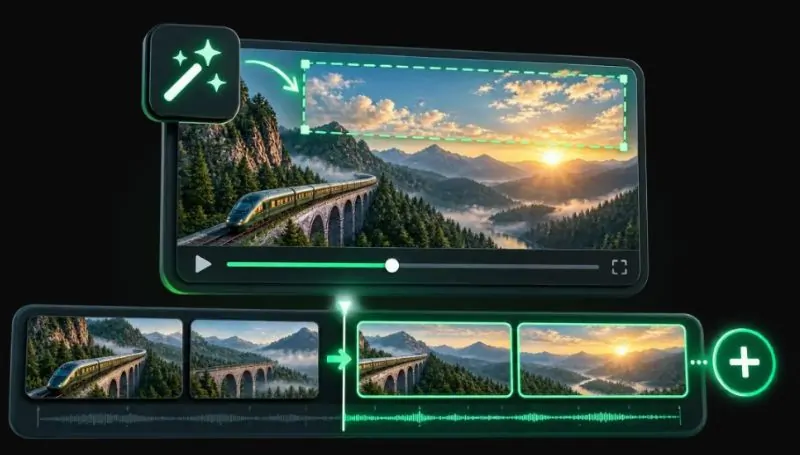
For an interpretation like this, the video generation capabilities of seedance 3.0 offer a way to combine a written scene description with visual and audio references. I could supply an image of a suitable tabletop arrangement and describe the intended movement in text. The result would be a generated video sequence, not a newly discovered view of a historical room.
I would make the reference arrangement specifically for the concept, using plain paper and a simple surface. Any authentic document shown later would be treated separately, with its source and reproduction permissions checked. Keeping these materials distinct would also improve the creative brief: the generated opening needs atmosphere and a readable composition, while the documentary section needs legible evidence.
Let light reveal the fold
The camera would begin far enough away to show the table edge and the complete sheet. As it moves closer, the brighter side of the fold would become the visual centre. I would keep the light direction fixed throughout the shot. A moving shadow might look dramatic, but it could pull attention away from the paper and imply an event that the narration never explains.
For this Seedance 3.0 scene, the desired action would be slight: one corner of the paper lifting and settling, as though a small current of air crossed the table. I would describe that single movement rather than ask the entire letter to unfold. A full unfolding would introduce several changing surfaces and might encourage the viewer to expect a readable message.
If that corner movement proved distracting in the draft, I would remove it. The camera approach alone could provide enough change. Stillness is useful when the narrator is about to introduce a difficult question, such as how much one person’s words can tell us about a wider society. The visual should create room for that question instead of competing with it.
Make references serve different parts of the scene
An image reference would establish the paper’s position and the relationship between the table and window light. A short movement reference could demonstrate a steady forward camera motion. For sound, I would consider a quiet room texture or a restrained musical phrase that leaves space for narration. Each reference would have a defined role, and none would be presented as a surviving historical recording.
Seedance 3.0 supports reference-based video generation using different kinds of input, but a coherent scene still starts with coherent choices. If the photograph suggests hard midday light while the movement clip shows a dim interior, I would clarify which appearance the finished video should follow. Adding more material would not resolve an unclear artistic decision.
The audio would avoid a theatrical flourish when the paper corner moves. I would prefer a soft rustle, or even silence beneath the voice. A loud sound could make the movement feel like a revelation, when the opening is only introducing an object of inquiry. Later, a direct reading from a verified source could provide the emotional emphasis that the invented scene deliberately withholds.
Revise what the camera asks us to believe
When reviewing a Seedance 3.0 draft, I would first look for changes in the paper’s outline, unexplained lettering and unstable contact with the table. A crease that appears in one moment and vanishes in the next would interrupt the viewer’s attention. I would respond by simplifying the movement or choosing a reference with clearer edges, rather than hiding the problem under a heavier colour treatment.
Next I would inspect the candle holder and the background. If either became too ornate, I would simplify the set description. An elaborate object can imply a period, region or social setting, even when the writer has made no such claim. For this opening, a plain arrangement would keep the illustration from suggesting more historical specificity than the accompanying discussion can support.
The transition into real evidence would be planned early. I would end the generated shot with the sheet occupying the lower half of the frame, then cut to a sourced document shown clearly enough to examine. The narrator could explain the change from illustrative scene to actual material. Typography and source labels would be added during editing, where their spelling and placement can be controlled.
Give the evidence the final word
I would also plan a second version of the opening with no paper movement at all. Comparing the two would answer a narrow creative question: does the moving corner invite attention, or does it suggest a story that the evidence cannot tell? The answer should come from how the sequence supports the narration, not from which draft contains the more elaborate animation.
The role of Seedance 3.0 in this project would remain limited and useful: creating a short interpretive video that leads into a discussion of historical sources. I would keep it brief enough that the genuine document arrives while curiosity is still fresh. The finished introduction would leave us with a fold, a patch of light and a question, then let the surviving words take over.
About the Author