The furnace stopped working again. It’s the third service call this winter. The first technician replaced a part, and the heat came back for a few weeks. The second replaced a different part, and the same thing happened. Now the homeowner is cold, frustrated, and running out of patience.
Sound familiar? It’s a common story, and it highlights a big difference in the HVAC world. Replacing parts can sometimes make a problem go away for a while. Finding out why the problem happened in the first place is a whole different skill.
That’s where deep diagnostic expertise comes in. A certified HVAC technician Loveland CO homeowners trust is expected to do more than swap components. They need to understand how the entire system works, measure what’s really happening, and keep learning as technology evolves.
Why HVAC Diagnostics Require More Than Mechanical Skills
A furnace might look like a metal box, but it’s really several systems working together. Combustion creates heat by burning fuel. Airflow carries that heat through the house. Electrical controls coordinate everything. Heat transfer happens through the heat exchanger. Safety mechanisms watch for trouble.
When something goes wrong in one area, it often shows up somewhere else. A restricted airflow problem might look like a faulty limit switch. A venting issue might look like an ignition problem. Treating the symptom without finding the cause just sets up the next service call.
That’s why good diagnostics take more than mechanical know-how. Technicians need to understand combustion, electricity, airflow, and controls, and how each one affects the others. It’s a bit like being part mechanic, part electrician, and part detective.
The Hidden Science Behind Furnace Performance
Combustion analysis is one of the most powerful diagnostic tools. Using specialized instruments, technicians can measure gases in the exhaust to evaluate how efficiently and safely fuel is burning. Problems with combustion can affect performance and safety.
Temperature rise and static pressure tell another part of the story. Temperature rise measures how much the furnace heats the air passing through it. Static pressure shows how hard the blower is working to move air through the ductwork. Both can reveal airflow problems that might otherwise stay hidden.
Venting matters too. Exhaust gases have to leave the home safely, and venting issues can cause shutdowns or create hazards. The common thread is measurement. Instead of guessing, skilled technicians use data to understand what’s really happening inside the system.
Why Heat Exchangers Demand Specialized Attention
The heat exchanger sits at the heart of a furnace. It separates the combustion process from the air that circulates through your home. Hot combustion gases pass through it, warming its metal surfaces, while household air flows over the outside and picks up that heat.
Over time, heat exchangers can develop problems. Repeated heating and cooling, corrosion, and overheating from poor airflow can stress the metal. Cracks or holes can form, which may affect safety and performance. It’s the reasoning behind the readings that counts.
Inspecting a heat exchanger isn’t always easy. Parts of it may be hidden, and some flaws are difficult to see without proper tools and techniques. That’s why qualified evaluation matters. Getting it right is important both for safety and for making fair, accurate recommendations to homeowners.
How Continuing Education Helps Technicians Keep Up
HVAC technology doesn’t stand still. Furnaces now include advanced controls, variable-speed blowers, and high-efficiency designs that work differently than older equipment. Technicians who don’t keep learning can fall behind quickly. Precision protects people.
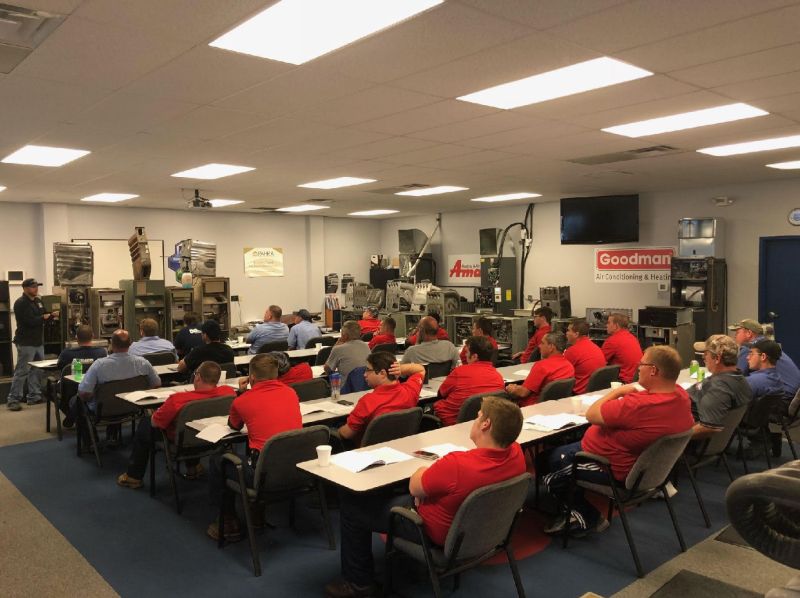
Technical seminars and manufacturer training help bridge that gap. These programs cover new equipment, updated safety procedures, and practical diagnostic techniques that technicians can use in the field. Hands-on training often makes complex concepts click.
Continuing education also sharpens fundamentals. Revisiting combustion, airflow, and heat exchanger principles helps technicians catch problems others might miss. The best professionals treat learning as an ongoing part of the job, not something that ended the day they got certified.
Conclusion
There’s a big difference between replacing a part and solving a problem. A furnace that keeps failing often has an underlying cause that won’t go away until someone finds it. Guesswork just delays the inevitable.
Strong diagnostics rely on a working knowledge of combustion, airflow, electrical controls, heat transfer, and safety systems. Tools like combustion analysis, temperature rise, and static pressure measurements turn guesswork into real answers. Heat exchangers deserve particular care and qualified evaluation. That’s the craft in a nutshell.
The best technicians know why something failed. Continuing education, disciplined testing, and real technical knowledge support safer, more reliable HVAC service, and fewer frustrating repeat visits for homeowners who just want to stay warm. Homeowners can feel that difference.
About the Author