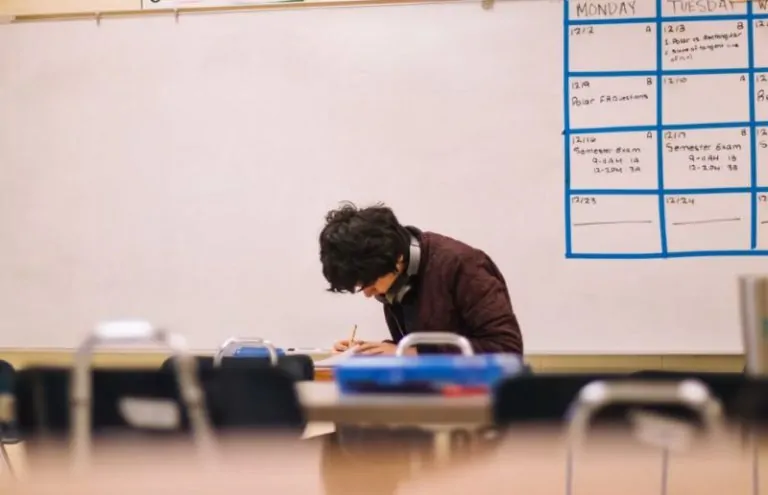
A classroom can look ordinary at first glance, rows of desks, a board at the front, notes being taken without much noise. But something unusual starts to unfold when the structure of learning is not confined to a single subject. A pattern-breaking kind of thinking begins to take shape, where connections are drawn between ideas that were once treated as separate. That shift does not happen instantly. It builds slowly, quietly, as students move between disciplines and begin to see how knowledge interacts.
This is where a different kind of academic path stands out. Instead of focusing on one narrow field, a broader approach is taken, and it allows students to engage with ideas from multiple angles. The result is not confusion, as some might assume. It is clarity, built through contrast and comparison. A student begins to understand not just what something is, but why it matters in a wider context.
It Starts With Curiosity, Not A Checklist
A liberal studies path often begins with a simple question: what happens when learning is not restricted? Students are introduced to subjects that may not seem directly related at first. Literature is studied alongside social theory. Science is explored next to philosophy. That mix creates a learning environment where curiosity is encouraged rather than contained.
Access to such programs has expanded, and options like a liberal studies degree online have made it easier for students to engage with this kind of education without being tied to a single location. This flexibility allows individuals to shape their academic experience based on their interests, which leads to a deeper level of engagement.
Assignments are designed to challenge assumptions. Instead of repeating information, students are asked to interpret, to question, and to connect. A historical event might be analyzed not only for its timeline but also for its cultural and economic impact. That layered approach develops a habit of thinking that goes beyond memorization.
Why does this matter? Because curiosity-driven learning creates individuals who do not stop at the surface. They look deeper, and that ability carries into professional and personal situations.
Different Subjects, One Thinking Style
A shift happens when multiple disciplines are studied together. The mind begins to look for patterns. Ideas that once seemed unrelated start to connect, and those connections create a stronger understanding of complex issues.
Consider a situation where a student studies environmental science alongside economics. The scientific data explains what is happening, while economic principles explain why certain decisions are made. When these perspectives are combined, a more complete picture emerges.
This approach trains the brain to handle complexity without becoming overwhelmed. Instead of isolating problems, students learn to view them as part of a larger system. That skill becomes valuable in situations where simple answers do not exist.
Have you ever faced a problem that could not be solved with a single viewpoint? That is where this type of thinking proves its worth. It allows for flexibility, and it encourages a deeper level of analysis.
Skills That Stick Beyond The Classroom Walls
The impact of a liberal studies path is not limited to academic performance. It extends into practical skills that are used in everyday situations. These skills are developed through consistent exposure to varied subjects and methods of thinking.
- Critical thinking is strengthened through analysis of different viewpoints
- Communication improves as ideas are expressed across diverse contexts
- Problem-solving becomes more effective when multiple perspectives are considered
- Adaptability grows as students move between different types of content
These skills are not taught in isolation. They are built through experience, through repeated engagement with challenging material. A student who has practiced connecting ideas will find it easier to approach unfamiliar situations.
A scenario can make this clearer. A team is working on a project that involves both technical data and community impact. One member, trained in a liberal studies approach, bridges the gap between technical experts and stakeholders. That role becomes essential, not because of specialized knowledge alone, but because of the ability to translate and connect.
Is that not the kind of skill that stands out in any environment? The ability to bring clarity where confusion exists is often more valuable than knowing a single subject in depth.
Learning That Moves Beyond The Textbook
Education is often measured by exams and grades, but the deeper effect lies in how knowledge is applied. A liberal studies path encourages students to think about real-world implications, to consider how ideas influence actions and decisions.
Projects are designed to reflect real situations. Students may be asked to analyze social issues, propose solutions, and evaluate outcomes. This process develops a sense of responsibility, as learning is tied to real consequences.
This is where the concept of education that creates real-world impact becomes relevant. It is not enough to understand a theory. The focus shifts to how that theory can be used to address actual challenges. Students are encouraged to think about the broader implications of their work, which adds depth to their learning experience.
A question arises here: what is the purpose of education if it does not extend beyond the classroom? When learning is connected to real situations, it gains meaning, and that meaning drives engagement.
A Mindset That Refuses To Stay Narrow
The final outcome of a liberal studies path is not just a set of skills. It is a mindset, one that resists limitations and seeks out connections. Students are not confined to a single way of thinking. They are encouraged to explore, to question, and to adapt.
This mindset becomes particularly valuable in environments where change is constant. New challenges require new approaches, and those who can think across disciplines are better equipped to respond. They do not rely on fixed methods. They adjust, they learn, and they move forward.
A broader education does not dilute expertise. It enhances it by providing context. A specialist who understands related fields can make more informed decisions. That combination of depth and breadth creates a well-rounded thinker.
In a world where problems rarely fit into neat categories, the ability to connect ideas becomes a powerful tool. It allows individuals to approach challenges with confidence, knowing that they can draw from a wide range of knowledge.
The question then becomes clear. What kind of thinker is needed in today’s world? One who can adapt, who can connect, and who can see beyond boundaries. That is the kind of thinker shaped by a liberal studies path.
About the Author