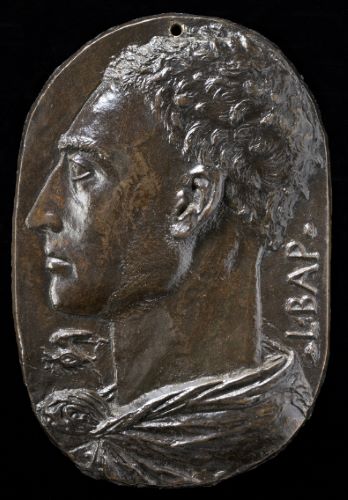
Leon Battista Alberti framed fatherhood as moral formation, household governance, education, and social discipline within late medieval family life.

By Dr. Juliann Vitullo
Associate Professor of Italian
Arizona State University
Although only the first book of Alberti’s fifteenth-century dialogue I libri della famiglia focuses on the art of raising children, one could argue that the whole structure of the dialogue depends on the subject. In the text Lorenzo Alberti is in his death bed waiting for his brother Riccardo to arrive so that he can entrust his sons to him and be assured that his brother will guide them to become good and virtuous men. What disturbs him about dying is that he has not completed the important task of raising his sons; he emphasizes the real work involved in active parenting by describing it as an “incarco” (responsibility), “soma” (burden) and “fatica” (a hard job).1 All these terms emphasize that the raising of children is a weighty, strenuous responsibility. Fatherhood is the first “family” matter that the Alberti men discuss in the fictional dialogue, but even when they are not directly addressing the subject, the dialogue itself serves as an important model for how fathers should teach their sons with both reason and passion. As the elder Lorenzo lies sick in bed, the Alberti patriarchs discuss diverse domestic topics with younger family members, illustrating three of Alberti’s central points about parenting: 1) children’s development into happy, active adults depends not only on their own individual characteristics but on how those qualities evolve in relationships with others, 2) fathers must spend intimate time with their children observing, playing and talking so that their children will learn how to create strong relationships within the larger communities, and 3) that fathers also benefit from their relationships with children because they allow them to express strong emotions and passion.

Whether designing the new facciata for Santa Maria Novella or writing a dialogue on the family, Leon Battista Alberti began to fashion his own work by studying carefully classical models. Although Alberti’s text on family and fatherhood draws heavily from both Xenophon’s Oeconomicus and the pseudo-Aristotelian Oeconomica, he adapted the tradition of the household dialogue to address concerns of his own contemporaries about the future of important families in mercantile urban centers of Northern Italy during difficult times of economic, political and social change.2

In book three of his dialogue, which focuses on the domestic economy and closely follows Xeonophon’s text, Alberti, through the words of the patriarch Giannozzo, reiterates a purely classical ideal of the citizen-farmer who devotes most of his time to the running of his own estate in order to provide himself, his family, and his city with long-term security. Xenophon’s dialogue clearly states that ideal citizens should be farmers because they provide the necessities for life, and are physically strong and thus able to defend their city. He contrasts the work of farmers to artisans and declares that craftsmen make weaker citizens because they are used to sitting and thus would probably not possess the necessary virility and courage to defend their cities: “… if the farmers were to be separated from the craftsmen and asked whether they preferred to defend the land or to retreat from the open country to guard the city walls. We thought that in such a situation those who are occupied with the land would vote to defend it, but the craftsmen would vote not to fight but to remain sitting down, as they have been trained to do, and to avoid exertion and danger.”3 Paradoxically Alberti takes a classical tradition that is extremely concerned with notions of virility and hierarchy, and uses it to suggest that the skills related to the manual arts and to the new mercantile economy can help maintain a household and that patriarchs should express their manliness by paying more attention to the domestic routine, especially the raising of their children. By focusing on fatherhood, Alberti also stresses the importance of emotion not just reason or physical power in the development of both the family and the city.
In book I, Alberti lists the different duties of the head of a household: “… quale dee pesare piu al padre, ο la bottega, lo stato, la mercatantia, ο il bene e salvamento del figliuolo?”4 [What must weigh more for a father, his business, the state, possessions, or the welfare and safety of his son?] The patriarch poses this rhetorical question to emphasize that the rearing of children was indeed men’s work, but the metaphor he uses to express this notion suggests Alberti’s own interest in including the skills of a merchant and of an artisan in his humanistic dialogue. He uses a mercantile metaphor “pesare” to suggest that citizens balance different kinds of work and responsibility. Alberti’s world of mercantile craft and trade considered the process of weighing or gauging materials an important skill for many professions including painters.5 Here he uses the term “to weigh” to suggest that raising children is truly hard work and also to emphasize that a patriarch best balances his responsibilities if he first focuses on his most important possessions, his offspring. He then goes on to underscore that men’s traditional duties outside of the home, including the protection and prosperity of their family and city, make sense only if they first guarantee that their male offspring will be able to fulfill the same responsibilities.
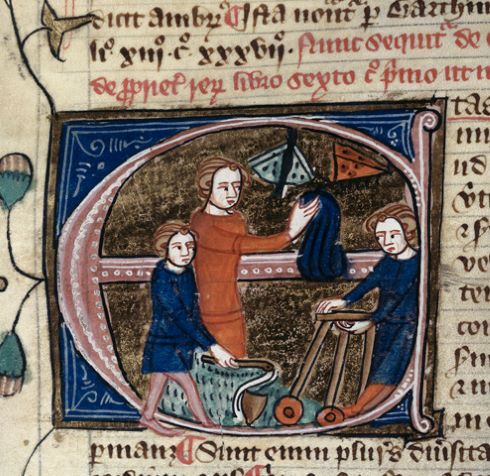
Following closely the model of Xenophon’s Oeconomicus, Alberti stresses that a man’s most important role is to take care of his possessions or his masserizia. The patriarch Giannozzo defines this activity in book 3: “Dissi io la masserizia sta in bene adoperare le cose non manco che in conservalle .. .”6 [I said that masserizia is not just conserving things but also using them well] This definition allows Alberti to discuss “fare masserizia” or conserving in both very concrete and abstract terms. He advises younger men to “far masserizia” of both their mind and their body, and especially of their time.7 This notion is illustrated well in the first quotation I read about the different duties that weigh on a man. The best way for a man to “far masserizia” of his time is to make raising children his first priority. Alberti’s notion that a father’s pedagogical role in his house is a key element of a good mercantile strategy is complemented by the description of parenting as an art in which careful observation, composition, and proportion play important roles. The first step for a man who wants to take his role of father seriously is to observe carefully the disposition, natural abilities and weaknesses of his sons. In his treatise, On Painting, Alberti encourages an artist “to be wide awake with his eyes” so that he can remember the detail of bodies and movements such as “how graceful are the hanging legs of him who is seated.”8 In a similar fashion, Alberti suggests that even from the first day of life, a child shows his natural character and disposition but it is the responsibility of the father to observe and remember even the smallest details of his son’s movements:
. . . .e’ parvuli, quando e’ ti veggono cosi grillare colle mani, allora se vi badano, se vi si destano, dimonstrano essere composti alii essercizii virili e all’arme. Ε se piü loro piace que’ versi e canti co’ quali si sogliono ninnare e acquietare, significa che sono nati all’ozio e riposo delle lettere e alle scienze.
[… children, when they see you agitate with your hands, if they then pay attention and rouse themselves, they show that they are made for virile exercises and for arms. And if they like more those poems and songs with which you put them to sleep and quiet them, it means that are born for the leisure and repose of letters and science.]9
A father must not only distinguish a child’s abilities but also help develop them so they are useful for others: ” la natura stessa dal primo di che qualunque cosa esce in luce abbia loro iniunte e interserte certe note e segno potentissimi e manifesti, co’ quali porgono si tale che gli uomini possono conoscerle quanto bisogna e saperle usare in quelle utilita siano state create” [Nature herself also seems to have boned and incorporated in things, from the first day that they see the light, clear indications and manifest signs by which they fully declare their character. Men are able, therefore, to recognize and use them according to the uses for which they were created].10 The father, then, must not only distinguish the child’s natural inclinations but then adjust the child’s activities and environment as well as the style of discipline to his own observations of his child’s behavior, using praise and examples rather than punishment whenever necessary.
The idea that children’s behavior and activities were important to observe and study is apparent in other texts of the period as well. The preacher Giovanni Dominici believed that children needed to pretend to perform the roles they would play as adults.11 He also suggests that the toys children play with will influence their professions; boys who play with swords will become violent while those who play with cards might become gamblers.12 A visual representation of this intense interest in children’ play is an unusual portrait by Giovanni Francesco Caroto, a Veronese painter who worked at the beginning of the sixteenth century in Northern Italy. Unlike other children’s portraits of the period, the purpose of the painting is not to show the status and wealth of the youth’s family by focusing on the child’s luxurious clothes, but rather to display the satisfaction of the child in his own work. The child looks directly at the viewers and interacts with them by sharing his drawing of a figure with a gleeful smile. Like Alberti’s treatise, this painting focuses on children’s play as a subject worthy of adults’ attention. The self-reflexive portrait within the portrait also makes yet another connection between a child’s play and an adult’s profession. This visually represents Alberti’s idea that fathers need to carefully observe children’s actions so that they can help guide them to a proper profession for their abilities and temperament.
Like other male pedagogues of the period, Alberti recognized the importance of honoring a child’s natural character and talent, and yet also stressed reconciling an individual’s natural inclinations with the needs of Florence’s collectives, especially the family and the Commune. In discussing how fathers should help their sons choose a profession, Alberti has one of his characters list all the factors a man should consider:
“. . . quale arte, quale scienza, qual vita piü si confaccia alia natura del figliuolo, al nome della famiglia, al costume della terra, alle fortune, a’ tempi e condizione presenti, alle occasioni, alle espettazioni de’ cittadini”
[… which trade, which way of life is appropriate for his son’s natural character, his family’s reputation, his land’s customs, his fortunes, the present time and circumstances, the opportunities, and the citizens’ expectations].13
Alberti’s list of paternal considerations emphasizes the complexity of a father’s responsibility to help a son choose an art. Diligently observing a child’s natural inclinations is just the first step since a father must also think in terms of composition or how his child will interact with other figures in the diverse planes of Florence’s culture. Since the son will one day be a father and citizen himself, the patriarch must think about his son’s need to develop skills that will allow him to interact with and lead people within different social groups and communities. As in his treatise on painting, Alberti suggests that fathers must also think about how the “parts fit together” in the istoria of his family and city.14 Alberti’s notion of child development is relational in the sense that he understands that children do not just transform into adults as individuals but in a complex network of relationships. According to Alberti’s art of parenting a father should not only observe and nurture a child’s own individual qualities and talents, but also imagine how the child will interact with others both inside and outside the family. Alberti reiterates this concept later when he asserts that every boy should learn a profession that he can perform “con sua industria e mani” or with his own labor and hands even if his father is rich and noble.15 Once again, this advice clearly defies the classical tradition of household treatises that Alberti is imitating.
In a moving description of his deceased ten-year-old son, Giovanni Morelli, a merchant and contemporary of Alberti, emphasized how his little boy’s skills had earned him the love of different groups within the community:
Piacca a Lui avere posto fine all’affanno, fatiche e passioni, che a mio parere porto al mondo insino dall sua puerizia. La quale, da se istessi, nel tempo d’anni quattro, voile ire a bottega, in sei seppe il Saltero, in otto il Donadello; e Seppe iscrivere per modo mandava lettere di sua mano a’ nipoti ο alia madre quando erano in villa …. Avea buona memoria, buona lingua, buona ritenitiva, buono aspetto e gentile e costumato La perdita di questo figliuolo fu dolore inistimabile al padre e alia madre: eziandio fu dolore a’ parenti suoi che Ί conoscevano e a’ vicini, al maestro suo, agli Scolari, a’ contadini e alia famiglia di casa, e cosi a tutti quelli che Ί conoscevano e che l’aveano mai veduto.16
[May it be pleasing to Him to have ended the pain, suffering and torment that in my view he carried in this world through his childhood. He himself at the age of four wanted to go to the store, at six learned the Psalter, and at eight Latin grammar (il Donadello); and he knew how to write well enough to send letters written by his own hand to his counsins and to his mother when they were in the country …. He had a good memory, good speech, good retention, good appearance, and was noble and polite …. The loss of this son was of inestimable sorrow to the father and mother: it was also a sorrow for his relatives who knew him and to his neighbors, his teacher, his fellow students, to the peasants and servants, and also to all those who knew him or who had ever seen him.]17
Morelli quickly moves from praising his son’s skills with language and social skills to remarking how those abilities helped him to gain the respect of many different groups within the community. Although Morelli did not develop a pedagogical theory like Alberti, it is clear that he also shared a relational notion of a child’s development in which Florentines did not view children’s development just as individuals but as figures within a complex composition of different social planes.
In order to form bonds with others and learn social skills, Alberti argues that children need to avoid “solitudine” and “ozio.”18 They need to spend their time talking with others and developing virtuous skills. As the entire dialogue illustrates, the most valuable gift that fathers can give their children is “i ricordi e instruzioni” or memories and instruction rather than money.19 In a passage from a later work, De Iciarchia, Alberti creates a visual description of older men dining with youth and he warns elders that the next generation will listen to them only if they earn their trust and confidence. It is the duty of the elders to tell stories about subjects that will interest the young such as stories about animals and athletic prowess and also to avoid too much severity for a more loving demeanor: ma soprattutto darano piix opera e’ vecchi in essere conosciuti amorevoli, pieni di fede e di bontä, che di parere molto pesati e circospetti20 [it is the responsibility of the elders to be known as loving, full of faith and goodness rather than very heavy and circumspect.] It is clearly the responsibility of the patriarchs not only to find pleasurable ways of teaching the young, but also to create bonds of affection with them.21 This notion is powerfully represented by Domenico Ghirlandaio in his portrait of a grandfather and grandson (1480). In this portrait the bond between the elder and the young child is obvious both in the way they embrace and in their steady gaze. The look of devotion and the loving touch of the child suggest the kind of powerful attachment that we often see in early modern depictions of lovers.
Male pedagogues in Renaissance Florence participated in debates about different styles of discipline with the assumption that the emotional bonds that children form with adults would influence their own behavior as citizens. Pedagogues stressed the importance of recreation when they discussed the need to raise children with love, joy, and serenity. Morelli chastises himself for perhaps having contributed to his son’s illness by not allowing him time off from his work as a student and in the family business. Alberti specifically recommends that children have time off for playing, praising fathers who allowed their children to regularly participate in games and recreation.22 Even the traditional pedagogue and preacher, Giovanni Domenici, advocates recreation as an important part of raising virtuous children: “… prudentemente t’ingegna di farlo correre, saltare, giucare e trastullare, si che da Dio no si parta …” [prudently arrange to have him run, jump, play and amuse himself so that he doesn’t separate himself from God …]23

Although he views playtime as an important part of childhood, Domenici also reprimands parents for devoting too much money and time on their children’s recreation. He first chides them for buying too many toys such as wooden horses, beautiful cymbals and golden drums. He then continues by listing the games parents play with their children that he believes encourage the little ones to enjoy the world just a little too much: “Or ben guadagni e lavori, tutt Ί di tenergli in collo, baciargli, e con la lingua leccare, cantar lor canzone, narrare bugiarde fa vole, … con essi fare a capo nascondere, e tutta sollecitudine porre in fargli belli, grassi, lieti, ridenti e secondo la sensualitä in tutto contend?” [How do you earn and work well all day keeping them around your neck, kissing them and licking them with your tongue, singing them songs, telling them false tales,. .. playing peek-a-boo with them and taking care to make them beautiful, fat, happy, smiling and … in all sensual ways contented?].24 His long and detailed harangue encourages us to believe that many Florentine parents bought toys for their children and openly played with them, despite Fra Domenici’s displeasure. In fact, his text depicts a community in which adults dedicate a good amount of time and resources to their children’s happiness and play. Despite Domenici’s concern about spoiling children with toys and affection, he clearly believed that recreation played an essential part of any child’s education.
Like Domenici, Alberti also promotes the use of pleasurable forms of recreation within measure. He emphasizes a sense of balance and proportion in his art of parenting. A father should not force his child to work or study constantly, the error for which Morelli chastises himself, but rather use recreation to serve as an important balance in the art of pedagogy. In a passage about the importance of literacy Lionardo says that he doesn’t want fathers to keep their sons continually imprisoned among books: “incarcerati al continuo tra’ libri,” but rather that the young should regularly enjoy “sollazzi” or diversions for recreation.25 In the third book, Giannozzo reiterates the necessity of exercise by stating that “lo essercizio piacevole” was the best remedy for staying healthy.26 In several passages in his treatise on architecture Alberti stresses the importance of exercise for youth by recommending that both private and public space be created just for that purpose. In book 5 of his treatise Alberti recommends that “just in front of the vestibule nothing can be more noble than a handsome portico, where the youth . . . may employ themselves in all manner of exercise.”27 In books 4 and 8, he makes the same suggestions for public spaces recommending that piazzas be dedicated as open space for young people’s exercise and he even refers to the authority of Plato when he states that “in all piazzas there should be spaces left for nurses with their children to meet.”28 The square would also serve as a refuge for the elders as well as children: “a handsome portico, under which the old men may spend the heat of the day or be mutually serviceable to one another. Besides that, the presence of the fathers may deter and restrain the youth… from the mischief and folly natural to their age.”29 Alberti depicts an ideal communal space dedicated to children of all ages, even nursing newborns, but he also reiterates the notion that this space provides yet another opportunity for fathers to interact with the young.
Alberti’s treatise on architecture is a work from his later life and so is the treatise, De Iciarchia. In fact his treatise on the iciarca or the ideal prince is the only treatise on morality from this period. In this work he extends the early arguments of I libri della famiglia describing the ideal prince as a father who establishes his authority “amando e beneficando.”30 This link reinforces the connections between oikos and polis that Alberti had inherited from Greek thought and already affirmed in I libri della famiglia, and also helps him to compare parenting or the construction of a family to yet another trade—architecture. In the first book of his treatise on architecture, Alberti states that the household is like a little city and that “if a City, according to the Opinion of Philosophers, be no more than a great House, and, on the other Hand, a House be a little City; why may it not be said, that the Members of that House are so many little Houses.”31 Just as an architect has the responsibility to help create buildings that will aid the commune, a father has a responsibility to help raise citizens who will also benefit the public good.
In Florentine writings about the family, citizenship carries two meanings. Following the classical tradition, authors referred to citizens as the elite group of men who had the social and economic capital to be included in the list of families whose members can run for communal offices. At the same time, however, these same writers described citizenship as the participation in social networks that had less to do with an ideal form of masculinity and more to do with the everyday cooperation necessary to make a collective work. Thus, authors such as Alberti stressed that sons, who would one day be citizens, must learn how to communicate with and earn the admiration of family members, neighbors, and even servants. In order to teach their sons how to function well in these networks, Florentine pedagogues wrote about issues that were usually reserved for women. Emotions play an important part in describing proper discipline for fathers and teachers as well as explanations of proper behavior for children. Alberti, for instance, recommended that fathers discipline children with love rather than fear: “Vero e che io sempre con ogni industria e arte mi sono molto ingegnato d’essere da tutti amato piü che temuto, ne mai a me piacque apresso di chi mi riputasse padre volere ivi parere signore.” [ It is true that I always worked with every effort and art to be loved rather than feared by all, never did I like to seem a lord close to those who considered me a father.]32 In this quotation Alberti has one of his characters clarify the link between fatherhood and citizenship; fathers must model for sons how to win respect through love so that one day their sons will be able also to gain power through social connection rather than through violence.33
The emotional intensity with which many male writers describe their relationship to their children is striking. Tears are not uncommon in these texts as men not only express the importance of forging a bond with their children, but also the great joy and satisfaction they themselves gain from the experience.34 In Alberti’s treatise Leonardo says that he could hardly hold back tears listening to other men in his family discussing the “pleasure” and “sweetness” of raising children.35 Morelli tells his readers about the tears he shed when his son died, not only because of his loss, but also because of the remorse he felt for having clung to a more traditional, rigid relationship with his son:
tu gli volevi bene e mai di tuo bene nol facesti contento; tu nollo trattavi come figliuolo ma come istrano; tu non gli mostrasti mai un buon viso; tu nollo baciasti mai una volta che buon gli paress; tu l’amacerasti alia bottega e colle molte ispesse e aspre battiture.36
[you loved him and yet you never made him happy with your love; you didn’t treat him like a son but a stranger; you did not show him your happiness; you never kissed him even once when he was good; you consumed him at the shop and with too many transactions and harsh beatings.]
Another contemporary of Alberti, Giannozzo Manetti, wrote an entire treatise on paternal consolation approving the practice of expressing intense grief over the loss of a child.37 It is also interesting to note that Manetti was one of several workers involed in the construction of the Florentine children’s hospital, the Ospedale degli Innocenti, who either wrote treatises on the family or were fictional participants in dialogues on the subject.38 This suggests very strongly that the philosophical connection between family and city inherited from the Greeks was not just a matter of an abstract ideal for Alberti and his contemporaries but also part of everyday practices that influenced public space and even professional activities.
In Alberti’s dialogue, fathers encourage younger relatives to look forward to parenting and accept joyfully the responsibility it requires: “… per tutti se ne dice ch’ e’ putti sono conforto e giuoco a’ padri e a’ suoi vechi. Ne credo si truovi si obligato di faccende, ne si carco di pensieri padre alcuno a chi non sia la presenza de’ fanciulli suoi molto sollazzosa.” [for everyone says that children are a comfort and pleasure to fathers and to the elders. I don’t believe one finds a father so burdened with obligations or heavy with worries to whom the presence of his children is not a great joy].39 If fathers want to raise sons who make enjoyable company for others, they must be the ones to model the pleasures of social connection. Alberti fashions fatherhood as a rational craft based on observation of both the individual child and the composition of the social body, yet he also stresses that emotion is equally important for the process of raising citizens. Fathers need to experience parenting not only as a responsibility or a burden but also as a joy.40
Philippe Aries asserted that, starting in the fifteenth century, childhood began to change in the West, particularly for the mercantile class. He believed that the change occurred because children stayed within their nuclear families for longer periods of time, forging a closer bond between parents and their offspring.41 In addition, the literacy and mathematics skills that children needed to acquire demanded more leisure time. Children required a certain amount of time away from physical labor and activity in order to become literate. I agree with the notion that childhood in the mercantile urban centers of fifteenth-century Europe was shaped at least in part by the needs of the mercantile and administrative classes to create literate citizens. Pedagogues such as Alberti clearly saw a connection between the importance of leisure, tranquility, and recreation in childhood and the building of mature, competent adults. Yet, I do not think that this represented a revolutionary change in the relationship between parents and children.42 Alberti makes clear in his dialogue that he is aware of different notions of pedagogy and chooses a model of affection and positive enforcement that had already been detailed by classical thinkers such as Quintillian.43 What Alberti’s work shows is that in fifteenth-century Florence there was a debate about how to raise children and the most prevalent ideal was of a benevolent parent who tries to encourage children with praise rather than punish them with physical abuse. The relationship between adults and children that Alberti supports was not revolutionary but it was strongly endorsed by many male writers in fifteenth-century Florence. What I find particularly interesting about fifteenth-century pedagogical writings in Florence is the intense focus on the importance of men in the raising of children and on the importance of emotional bonds between parents and their offspring. For Alberti and many of his contemporaries, the father does not just pass on his blood and social status to a child but instead must take an active role in helping that child become a citizen.
Although I believe that parents had strong bonds of affection with their children before the fifteenth century, I also agree with Aries that the rise of the monetary economy and mercantile urban centers influenced how parents thought of childhood and interacted with children. Money allowed more fluid identities in class and to a lesser degree in gender. One of the ways that men had defended their social and legal superiority was their physical strength. The Oeconomicus is a good example of the use of that defense of patriarchy in classical thought. In fifteenth-century Florence, however, men often did not achieve status by farming or by defending their city with arms but with reading, writing, and accounting skills. The otium required to obtain those skills not only gave children more recreation and freedom but also forced men to refigure ideal masculinity so that it included characteristics such as leisure and emotion that had been associated with women. Alberti and other male pedagogues refigured masculinity to include the characteristics that would bring success to themselves and their household. The skills of nurturing and bonding with others served as an important part of what it meant to be a citizen in fifteenth-century Florence.
The encouragement that many male pedagogues gave to younger men to take on the responsibility of raising children and enjoy it also suggests that although benevolent and diligent parenting was the ideal, it needed to be constantly reinforced. In a similar fashion, many family treatises contain long harangues against the use of wet nurses, and encourage mothers to breast-feed their own children. Once again, the ideal is to create a strong, intimate bond between parents and children.44 believe that authors reiterated this ideal because fifteenth-century Florence was a relatively wealthy community. Much like middle-class people in western cultures today, wealthy merchants could afford to pay others to raise and educate their children for them. Pedagogues like Alberti, however, saw this as a danger for both the family and the larger culture. The rise of the monetary economy reinforced the notion that children should be raised in a tranquil environment in which they could gain the skills to be successful. Paradoxically the same new social groups that promoted that notion of childhood also enjoyed the privilege of having enough money to be able to hire or buy slaves to perform the often burdensome tasks of raising children. Alberti focused on the joy of paternity in part because he realized that many parents had choices about how to spend their time. His parental preaching strongly suggests that active, benevolent fathers were the cultural ideal of fifteenth-century Florence, but it also suggests that vestiges of other models persisted and that some parents continued to see parenting as just a burden and not a pleasure.
Endnotes
- Leort Battista Alberti, I libri della famiglia, ed. Ruggiero Romano and Alberto Tenenti (Turin: Einaudi, 1980), 15-17.
- For an important study of the influence of this classical tradition on Alberti, see Massimo Danzi, “Fra oikos e polis: il pensiero familiare di Leon Battista Alberti,” La memoria e la citta, scritture storiche tra Medioevo ed eta moderna, ed. Claudia Bastia e Maria Bolognani (Bolognail Nove, 1995), 47-62; here 56; Id., “Leon Battista Alberti e le ‘strutture’ del discorso familiare fra Medioevo e Rinascimento,” Versants: Reime Suisse des Literatures Romanes/Rivista Svizzera di Letterature Romanze/Schweizerische Zeitschrift fiir Romanische Literaturen (2000): 61-77.
- Sarah B. Pomeroy,ed., Xenophon, Oeconomicus: A Social and Historical Commentary (Oxford: Oxford Clarendon Press, 1994), 135.
- Alberti, ί libri, 63.
- One example of the importance of this skill is the genre of mercantile manuals that focus almost exclusively on how different cities weigh different materials, see Cesare Ciano, ed. La ‘Pratica de mercantura’datiniana (Milan: Dott. A. Giuffre, 1964). The art historian Michael Baxandall writes: “It is an important fact of art history that commodities have come regularly in standard-sized containers only since the nineteenth century: previously a container—the barrel, sack or bale—was unique, and calculating its volume quickly and accurately was a condition of business.” See his Painting and Experience in Fifteenth-Century Italy (Oxford: Oxford University Press, 1988), 86.
- Alberti, I libri, 63.
- Alberti, I libri, 63-65.
- Leon Battista Alberti, On Painting, trans. John R. Spencer (New Haven: Yale University Press, 1979), 92.
- Alberti, I libri, 55. Trans. Renee Neu Watkins, The Family in Renaissance Florence (Columbia, SC: University of South Carolina Press, 1969), 61.
- Alberti, I libri, 57. Trans. Watkins, The Family, 60.
- Beato Giovanni Dominici, Regola del governo di cura familiare, ed. Donato Salvi (Florence: Angiolo Garinel Libraio, 1860), 146-47.
- Dominici, Regola, 145.
- Alberti, I libri, 49. Trans. Watkins, The Family, 56.
- Alberti, On Painting, 72.
- Alberti, I libri, 92.
- Vittore Branca, ed., Ricordi di Giovanni di Pagolo Morelli (Florence: Le Monnier, 1956), 456-57.
- See Eva Parra Membrives’ contribution to this volume, which also discusses evidence of parents’ grief in the early medieval period.
- Alberti, I libri, 57-59.
- Alberti, De iciarchia, in Opere volgaridi Leon Battista Alberti, ed. Cecil Grayson (Bari: Laterza, 1966) II, 210.
- Alberti, De iciarchia, 276.
- See Albrecht Classen’s Introduction to this volume in which he critiques Philipe Aries’s notion that medieval and early modem parents did not form strong emotional bonds with their parents.
- Alberti, I libri, 87.
- Dominici, Regola, 145.
- Dominici, Regola, 151.
- Alberti, I libri, 87.
- Alberti, I libri, 213.
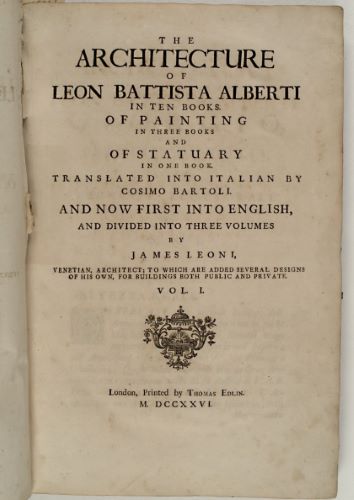
- Leon Battista Alberti, Ten Books on Architecture, trans. James Leoni. Tiranti Library, 5 (London: A. Tiranti, 1955), 85.
- Alberti, Ten Books, 173.
- Alberti, Ten Books, 173.
- Alberti, De Iciarchia 193. I am indebted to the analysis of Elisa Frauenfelder on the connection between Alberti’s two works. See her II pensiero pedagogicodi Leon Battista Alberti (Naples: Edizioni Scientifiche Italiane, 1995), 80.
- Alberti, Ten Books, 13.
- Alberti, I libri, 19. Trans. Watkins, The Family, 26.
- See Alison P. Coudert’s article in this volume in which she describes the harsher forms of discipline recommended later in Protestant Europe. The evidence in our articles strongly suggests that disciplinary methods in Europe did not continually evolve into more modern, enlightened practices but rather that there are competing notions of how children should be taught throughout the late medieval and early modern period.
- See Albrecht Classen’s Introduction to this volume for a summary of recent literature on the history of emotions in the medieval and early modern periods.
- Alberti, I libri, 34.
- Morelli, Ricordi, 501.
- For a detailed analysis of Manetti’s dialogue, which also shows expresses conflicting ideas about men and emotion in early modern Florence, see James R. Banker, “Mourning a Son: Childhood and Paternal Love in the Consolateria of Gianozzo Manetti,” History of Childhood 3 (1976): 351-62. For the role of children in funeral sermons, see Albrecht Classen, “Die Darstellung von Frauen in Leichenpredigten der Frühen Neuzeit. Lebensverhältnisse, Bildungsstand, Religiosität, Arbeitsbereiche,” Mitteilungen des Institutsfiir Österreichische Geschichtsforschungl 08 (2000):291-318; see also the volume Grief and Gender: 700-1700, ed. Jennifer C. Vaught with Lynne Dickson Bruckner (New York: Palgrave, 2003).
- Philip Gavitt, Charity and Children in Renaissance Florence: The Ospedale degli Innocenti 1410-1536 (Arm Arbor: The University of Michigan Press, 1990), 150.
- Alberti, I libri, 40. Trans. Watkins, The Family, 50.
- See Mary Dzon’s article in this volume, which analyzes the role of the father in medieval legends about Joseph and Jesus.
- Philippe Aries, Centuries of Childhood: A Social History of Family Life, trans. Robert Baldick (1960; New York: Alfred A. Knopf, 1962), 369-71.
- For a more thorough critique of this evolutionary model of childhood in western culture, see Albrecht Classen’s Introduction to this volume.
- Another writer of the fifteenth century, Matteo Palmieri, also is aware of the classical debate and makes similar pedagogical recommendations, see his Vita civile, ed. Gino Bellini (Florence: Sansoni, 1982), 35.
- For a detailed study of these treatises and their advice see Rudolph M. Bell, How to Do It: Guides to Good Living for Renaissance Italians (Chicago and London: The University of Chicago Press, 1999), 124-45. Bell believes that previous scholars have exaggerated how much wet nursing was used by Florentines: “I would suggest . . . that the reason advice manuals do not give advice on visiting infants put out to nurse is that very few infants were put out to nurse, at least not by the middle-class people who bought these books.” (136).
Contribution (341-353) from Childhood in the Middle Ages and Renaissance, edited by Albrecht Classen (Walter de Gruyter, 07.18.2005), published by OAPEN under the terms of a Creative Commons Attribution-NonCommercial-NoDerivs 3.0 Unported license.
About the Author