A forged document created in late imperial Russia evolved into one of the most influential conspiracy texts in modern history, amplified by mass media and extremist propaganda.

By Matthew A. McIntosh
Public Historian
Brewminate
Introduction: Forgery, Conspiracy, and the Power of Print
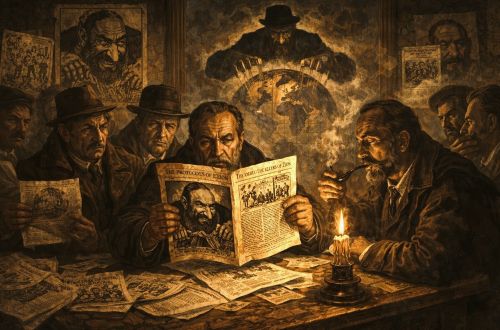
At the beginning of the twentieth century, a fabricated document titled The Protocols of the Elders of Zion emerged from the political environment of late imperial Russia and quickly became one of the most influential conspiracy texts in modern history. Presented as the secret minutes of a clandestine Jewish council plotting global domination, the document claimed to reveal a plan to manipulate governments, control the press, and undermine Christian civilization. Although the text was entirely fictitious, it appeared in print at a moment when modern mass communication networks were expanding rapidly. Newspapers, pamphlets, and political publications allowed such material to circulate far beyond its original context. A forgery produced within a specific political environment soon acquired international significance.
The Protocols did not arise in a historical vacuum. By the late nineteenth century, conspiracy narratives and antisemitic political myths were already deeply embedded within segments of European political culture. In the Russian Empire, these ideas intersected with a volatile environment shaped by social unrest, political repression, and anxieties about modernization. Reactionary groups searching for explanations for political instability increasingly turned to conspiratorial interpretations that portrayed Jews as a hidden force behind revolutionary movements and social change. These suspicions intensified as the empire experienced rapid economic transformation, urbanization, and growing radical political movements. Conservative elites and nationalist activists often interpreted these developments not as consequences of modernization but as evidence of coordinated subversion. Antisemitic publications, political pamphlets, and reactionary newspapers circulated claims that Jews were responsible for revolutionary agitation, financial manipulation, and the erosion of traditional social hierarchies. A fabricated document that appeared to confirm these fears could easily gain credibility in this atmosphere of suspicion and political polarization among audiences already predisposed to accept such claims as explanations for the upheavals they were witnessing.
The origins of the Protocols lay in deliberate fabrication rather than authentic political documentation. Scholars have demonstrated that large portions of the text were plagiarized from earlier works of political satire, most notably Maurice Joly’s Dialogue in Hell between Machiavelli and Montesquieu (1864), which had originally been written as a critique of authoritarian rule under Napoleon III. In the early twentieth century, passages from Joly’s work were adapted and transformed into a supposed record of a Jewish conspiracy. The document was then presented as authentic evidence of a secret political program. By framing the text as a confidential revelation of hidden plans, its promoters attempted to give fabricated material the appearance of authoritative political intelligence.
Despite exposure as a forgery in the early 1920s, the Protocols continued to circulate widely across Europe and the United States. Newspapers, political organizations, and extremist movements reproduced the text, often ignoring or dismissing evidence of its fraudulent origins. In an era of expanding print networks and rising political radicalization, the document proved remarkably adaptable as a propaganda tool. Its survival illustrates how modern systems of mass communication could amplify fabricated documents into powerful ideological weapons capable of shaping political belief on an international scale.
Antisemitism and Conspiracy Culture in Late Imperial Russia
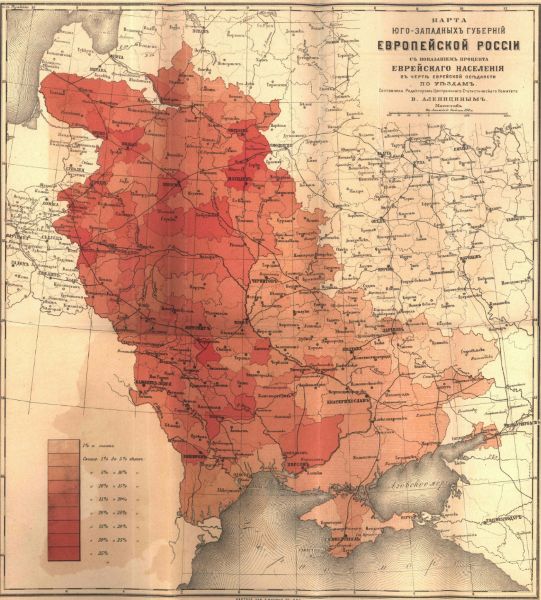
Antisemitism in the Russian Empire developed within a broader European tradition of religious hostility, economic suspicion, and political scapegoating directed toward Jewish communities. For centuries, Jews in Eastern Europe had been subject to legal restrictions that limited where they could live, the occupations they could pursue, and their participation in political life. Within the Russian Empire these limitations were formalized through the system known as the Pale of Settlement, established at the end of the eighteenth century. The Pale confined most Jewish residents of the empire to specific western regions, reinforcing both geographic segregation and social marginalization. This legal framework contributed to a political culture in which Jews were perceived as outsiders within imperial society.
During the nineteenth century, modernization and social transformation intensified these tensions. The Russian Empire experienced rapid economic change, including the expansion of industrial production, urban growth, and the gradual erosion of traditional rural structures. These developments generated widespread uncertainty among elites and ordinary citizens. Reactionary commentators often attributed the social disruption associated with modernization to hidden conspiracies rather than structural economic forces. Jews, already marginalized and widely stereotyped in popular discourse, became convenient targets for explanations that framed social unrest as the product of deliberate subversion.
Political instability further reinforced the spread of conspiracy narratives. Revolutionary movements gained strength in the late nineteenth century as radical intellectuals and underground organizations challenged the authority of the autocratic state. Many conservative officials and nationalist activists interpreted revolutionary activity through an antisemitic lens, arguing that Jewish individuals or networks secretly directed these movements. Although Jewish participants were present in some revolutionary groups, the claim that revolution itself was part of a coordinated Jewish conspiracy reflected ideological prejudice rather than empirical evidence. Such interpretations were reinforced by the broader atmosphere of fear surrounding political radicalism, particularly after the assassination of Tsar Alexander II in 1881 by members of the revolutionary organization Narodnaya Volya. In the aftermath of the assassination, reactionary commentators increasingly portrayed revolutionary violence as evidence of hidden networks working to destroy the Russian state. Antisemitic conspiracy narratives merged with these anxieties, suggesting that revolutionary movements were merely the visible instruments of a deeper and more dangerous plot. These interpretations simplified complex political developments into a narrative of intentional subversion, making conspiracy theories appear plausible to audiences seeking explanations for growing instability within the empire.
Violence against Jewish communities intensified in the final decades of the nineteenth century, particularly through waves of pogroms that erupted in various regions of the empire. These attacks were often justified by rumors accusing Jews of economic exploitation, ritual crimes, or political subversion. Reactionary newspapers and nationalist organizations helped spread these accusations, reinforcing a climate in which conspiracy theories could circulate widely. Printed pamphlets and political propaganda frequently portrayed Jews as enemies of both the Russian state and the Christian social order.
Fabricated documents claiming to expose hidden conspiracies gained rapid credibility. The popularity of such narratives reflected not only entrenched antisemitic attitudes but also the broader culture of political paranoia that developed in late imperial Russia. Conspiracy theories offered simplified explanations for complex social transformations, allowing reactionary activists to attribute economic change, political unrest, and revolutionary agitation to deliberate plots rather than structural forces. These narratives also served important political functions for defenders of the autocratic regime. By portraying dissent as the result of hidden conspiracies rather than genuine political grievances, authorities and nationalist movements delegitimized opposition and redirected public anger toward marginalized communities. Antisemitic conspiracy culture became intertwined with the political strategies of reactionary groups seeking to preserve traditional authority in the face of mounting social pressures. Amidst this ideological tension, political instability, and expanding print propaganda that the Protocols of the Elders of Zion would later appear and find receptive audiences.
The Origins of the Forgery
The document known as The Protocols of the Elders of Zion did not originate as a record of any genuine political meeting or secret organization. Instead, it emerged from the political culture of late imperial Russia, where reactionary activists and elements within the security apparatus sought ideological tools to discredit political reform and revolutionary movements. Scholars widely agree that the text appeared in the early years of the twentieth century, circulating first within monarchist circles before being published in serialized form in Russian newspapers. From the outset, the document was presented as a secret transcript of discussions among Jewish leaders plotting to undermine Christian civilization and establish global domination.
Historical research has demonstrated that the Protocols were constructed largely through plagiarism and adaptation from earlier political writings. The most significant source was Joly’s Dialogue, a political satire criticizing the authoritarian rule of Napoleon III in France. In Joly’s work, the character of Machiavelli describes a cynical strategy for manipulating political institutions and controlling society. The authors of the Protocols copied extensive passages from this text and reworked them into statements allegedly made by members of a Jewish conspiracy. By replacing the fictional dialogue between philosophical characters with a supposed record of secret deliberations, the plagiarists transformed a critique of authoritarianism into a fabricated conspiracy narrative.
The political context in which the forgery emerged suggests that it served specific ideological purposes. Late imperial Russia faced increasing unrest during the final decades of the nineteenth century and the early years of the twentieth. Revolutionary movements, labor agitation, and demands for political reform threatened the stability of the autocratic regime. Reactionary activists searching for explanations for these developments frequently relied on conspiratorial interpretations that portrayed revolutionary movements as instruments of hidden enemies. The Protocols offered a convenient narrative that linked social unrest to a supposed international Jewish plot, thereby redirecting political frustration toward a marginalized minority.
Although the precise circumstances of the document’s creation remain debated among historians, most scholarship connects the forgery to circles associated with the Russian secret police, known as the Okhrana. Agents of the Okhrana operated both within Russia and in exile communities abroad, where they monitored revolutionary organizations and conducted political intelligence activities. Some researchers argue that individuals connected to these networks helped produce or disseminate the forged text as part of broader efforts to discredit liberal and revolutionary movements. These operations often relied on covert propaganda, surveillance, and the manipulation of political information to weaken opposition to the tsarist regime. A fabricated document that appeared to expose a secret conspiracy offered a powerful political instrument. By presenting the text as confidential evidence of a hidden international plot, its promoters could reinforce existing antisemitic suspicions while simultaneously portraying revolutionary movements as part of a coordinated campaign against the Russian state. Even though the exact authorship of the document cannot be attributed with absolute certainty, the methods used to construct and distribute it reflect broader patterns of political manipulation characteristic of late imperial Russian intelligence operations. The Protocols illustrate how fabricated texts emerged from the intersection of political repression, conspiratorial ideology, and modern systems of print communication.
Early Publication and Dissemination in Russia
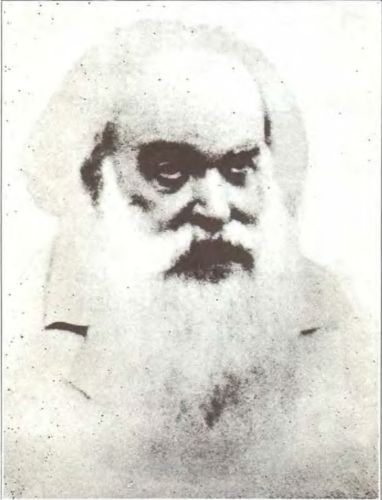
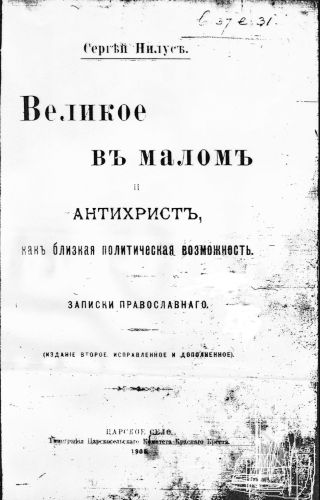
A key figure in the early spread of the Protocols was the Russian writer and mystic Sergei Nilus. Nilus included the text in his book The Great within the Small and Antichrist as a Near Political Possibility, published in 1905. In Nilus’s interpretation, the document served as evidence of a looming spiritual and political crisis that threatened Christian civilization. By embedding the Protocols within a broader apocalyptic narrative, Nilus presented the text not simply as political commentary but as a warning about an approaching global catastrophe. Nilus’s writings drew upon existing currents of Russian Orthodox mysticism and millenarian thought, which often interpreted contemporary political events as signs of a coming struggle between Christian civilization and forces of moral corruption. The alleged conspiracy described in the Protocols appeared to confirm fears that hidden enemies were working to undermine religious faith and social order. Nilus’s presentation of the text gave it a powerful ideological resonance among readers who were already inclined to interpret political change in apocalyptic terms. His book circulated widely among conservative religious audiences, monarchist sympathizers, and nationalist activists, helping to embed the Protocols within a broader discourse of spiritual crisis and political decline.
The political turmoil surrounding the Russian Revolution of 1905 provided an environment in which the document could gain additional attention. The revolution brought widespread strikes, demonstrations, and political violence across the empire, challenging the authority of the autocratic regime. Reactionary groups seeking explanations for the unrest often relied on conspiratorial narratives that attributed revolutionary activity to hidden forces. The Protocols appeared to offer documentary confirmation of claims that political instability was the result of an organized international conspiracy rather than domestic grievances. For many readers, the timing of the document’s publication reinforced its apparent credibility. The coincidence of revolutionary upheaval and the appearance of a text describing a global plot seemed to validate long-standing antisemitic suspicions. Reactionary commentators used the document to argue that the revolutionary movement was not simply a product of social dissatisfaction but part of a coordinated effort to destroy the Russian state and Christian civilization. The Protocols functioned as a political narrative that helped frame the revolution as evidence of hidden conspiratorial forces rather than structural problems within the imperial system.
Reactionary newspapers and monarchist organizations played a central role in spreading the text to broader audiences. Publications sympathetic to nationalist and antisemitic political movements reproduced excerpts or discussed the alleged conspiracy described in the document. These networks of print propaganda allowed the Protocols to circulate within political circles supporting the defense of autocratic rule and traditional social hierarchies. By repeatedly presenting the text as authentic evidence, these publications reinforced the perception that the document revealed genuine political secrets.
Through these early publications, the Protocols began to move beyond a small circle of conspiratorial activists and enter wider public discussion. The expansion of print culture in the Russian Empire enabled pamphlets, newspapers, and books to distribute such material rapidly across regions. Although the document initially circulated primarily within reactionary and monarchist networks, its presence in print helped establish the foundation for its later international dissemination. The early Russian publications marked the beginning of a process through which a fabricated document would gradually acquire global influence.
Mass Communication and the Spread of Conspiracy Narratives

The rapid expansion of modern mass communication in the late nineteenth and early twentieth centuries created an environment in which conspiracy narratives could circulate widely and acquire significant political influence. Newspapers, pamphlets, serialized publications, and inexpensive books allowed political ideas to reach audiences far larger than those accessible in earlier periods. Improvements in printing technology, literacy rates, and transportation networks further accelerated the circulation of information across national boundaries. Expanding railway systems and postal networks enabled printed material to move quickly between cities and regions, while growing urban populations created new markets for newspapers and popular political literature. Sensational claims and dramatic narratives often attracted significant public attention, making conspiracy theories particularly adaptable to the emerging mass communication system. Publications that promised to reveal hidden plots or secret enemies captured readers’ curiosity and circulated widely through the commercial print market.
The Protocols spread within precisely this type of informational landscape. Once the document appeared in print, it could be reproduced and distributed through the same networks that circulated newspapers, political pamphlets, and other forms of popular literature. Print culture did not require centralized coordination to disseminate such material. Instead, publishers, translators, and political activists could independently reproduce the text and introduce it to new audiences. This decentralized process allowed the Protocols to move rapidly beyond the political circles in which it first appeared.
Translation played an important role in transforming the document into an international phenomenon. Editions of the Protocols appeared in multiple European languages during the years following its initial publication in Russia. These translations allowed the text to circulate across national boundaries, reaching readers in countries that had little direct connection to Russian political life. Each new edition often included introductions or commentaries that framed the document within local political debates, adapting its conspiratorial claims to different national contexts. Translators and publishers sometimes modified the presentation of the text to emphasize themes that resonated with particular audiences, linking the alleged conspiracy to domestic political concerns. Through this process of translation and reinterpretation, the document became embedded in political debates far removed from the circumstances of its original creation.
Newspapers and political organizations helped amplify the reach of the text even further. Reactionary groups and antisemitic activists frequently cited the Protocols as supposed documentary evidence supporting their political arguments. Articles discussing the alleged conspiracy appeared in newspapers that reached large audiences, introducing the narrative to readers who might never encounter the original text itself. The conspiracy described in the Protocols spread not only through direct publication but also through repeated references in broader political discourse.
The growth of mass communication also increased the persuasive power of repetition. When the same narrative appeared across multiple publications, readers could interpret its widespread circulation as evidence of authenticity. This phenomenon allowed conspiracy theories to gain credibility even when their factual basis was weak or nonexistent. Repetition created an illusion of confirmation as readers encountered similar claims in newspapers, pamphlets, speeches, and political commentary. Each appearance of the narrative seemed to reinforce the others, creating a self-reinforcing cycle in which widespread discussion was mistaken for verification. In the case of the Protocols, the repeated reproduction of its claims across different media outlets gradually transformed the document from a localized forgery into a widely recognized political myth that many readers treated as legitimate evidence.
The spread of the Protocols illustrates how modern communication networks amplified fabricated information on an international scale. The combination of expanding print markets, translation networks, and political propaganda created an environment in which conspiracy narratives could move rapidly across borders and social groups. Once embedded within these communication systems, the text acquired a persistence that proved difficult to challenge even after its fraudulent origins were exposed.
Exposure as a Forgery
By the early 1920s, the authenticity of the Protocols began to face serious scrutiny from journalists and scholars who examined the text closely. As the document circulated more widely across Europe after the Russian Revolution of 1917, investigators became increasingly interested in verifying its origins. Critics suspected that the text was not an authentic record of secret political meetings but rather a constructed document assembled from earlier sources. Careful comparison of the Protocols with other nineteenth-century publications soon revealed striking similarities that cast doubt on its credibility.
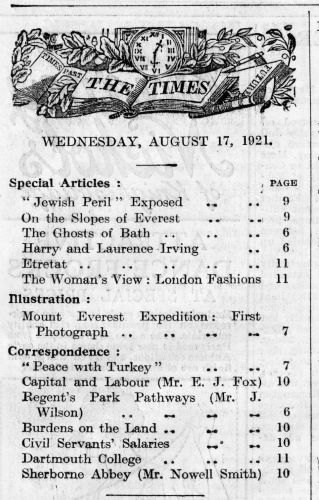
The most decisive exposure occurred in 1921 through an investigation published in The Times of London. The newspaper demonstrated that large sections of the Protocols had been copied almost verbatim from Joly’s political satire. In his work, Machiavelli outlines a cynical strategy for manipulating political institutions to secure authoritarian power. When investigators compared the two texts, they discovered that the authors of the Protocols had reproduced many of Joly’s passages with only minor modifications, replacing references to political figures with claims about a supposed Jewish conspiracy.
This discovery made it clear that the document could not be an authentic record of secret political deliberations. The original text from which the passages had been copied was itself a fictional dialogue written decades earlier for a completely different political purpose. The Protocols had been constructed through deliberate plagiarism rather than derived from genuine documentary evidence. Journalists and scholars publicized these findings widely, presenting detailed comparisons between the two texts that demonstrated the extent of the copying. Despite the clarity of this evidence, exposure of the forgery did not immediately end the influence of the Protocols. In many cases, supporters of the conspiracy narrative dismissed the investigations as attempts to conceal the truth. Some defenders argued that even if portions of the document had been plagiarized, the underlying conspiracy described in the text remained valid. Others claimed that the similarities with Joly’s work were coincidental or deliberately planted to discredit the document. These responses reflected the resilience of conspiracy thinking, in which contradictory evidence can be reinterpreted as confirmation of the conspiracy itself.
The persistence of the Protocols after their exposure illustrates an important characteristic of conspiracy narratives within modern mass communication systems. Once a fabricated claim becomes embedded within political ideology and widely circulated through media networks, factual refutation alone may not be sufficient to eliminate its influence. The history of the Protocols demonstrates how a forged document could continue shaping political discourse even after its fraudulent origins were publicly established.
Adoption by Antisemitic and Extremist Movements

Despite the exposure of the Protocols as a forgery, the document gained renewed prominence during the political upheavals that followed the First World War. The collapse of empires, economic instability, and the spread of revolutionary movements created an atmosphere in which conspiracy narratives found receptive audiences. Political activists seeking explanations for rapid social change often turned to simplified ideological interpretations that blamed hidden enemies for national decline. The Protocols offered a ready-made narrative that appeared to explain political unrest as the product of a coordinated international conspiracy.
Right-wing nationalist movements in Europe were among the earliest groups to adopt the text as a political weapon. Reactionary organizations in countries such as Germany, Hungary, and France circulated translations of the document through pamphlets and political publications. These groups frequently argued that the alleged conspiracy described in the Protocols provided evidence that Jewish individuals were responsible for revolutionary movements, economic crises, and political instability. By framing social upheaval as the result of a hidden plot rather than structural conditions, extremist activists used the document to mobilize supporters against perceived internal enemies.
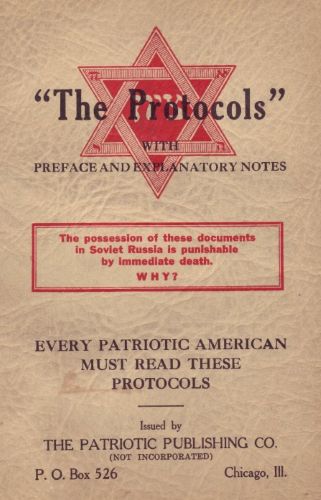
The text also gained significant attention in the United States during the early 1920s. One of the most influential promoters of the Protocols was the industrialist Henry Ford, who used his newspaper The Dearborn Independent to publish a series of articles claiming that the document revealed an international Jewish conspiracy. These articles were later compiled and distributed in book form under the title The International Jew. Ford’s publications introduced the conspiracy narrative to a large American audience and helped normalize its presence within certain political circles. The Dearborn Independent had a wide circulation, and the series of articles reached readers who might never have encountered the Protocols through other sources. Ford’s influence as a prominent industrial figure gave additional visibility to the claims presented in the publication. Many readers interpreted the articles as authoritative commentary on international politics rather than fringe conspiracy theory. Although Ford eventually issued a public apology and withdrew support for the publication after legal pressure and widespread criticism, the damage had already been done. The widespread distribution of The International Jew helped entrench the conspiracy narrative within segments of American political discourse and ensured that the Protocols would remain part of the broader culture of antisemitic propaganda.
In many cases, extremist movements treated the Protocols not merely as a political argument but as a foundational text that confirmed their ideological worldview. The document’s structure, which presented the conspiracy as a systematic plan for global domination, made it particularly adaptable for propaganda. Activists could point to passages within the text as supposed documentary evidence supporting claims that Jews controlled financial institutions, political movements, and media organizations. These interpretations reinforced existing antisemitic stereotypes and provided a framework for interpreting complex social developments as the deliberate actions of a hidden network.
The ability of the Protocols to survive repeated exposure as a forgery reflected the broader dynamics of conspiratorial political thinking. For believers in the conspiracy narrative, evidence challenging the authenticity of the document could be dismissed as part of the conspiracy itself. Self-reinforcing logic allowed the text to maintain influence even after scholars and journalists had demonstrated its fraudulent origins. As the document continued to circulate through newspapers, pamphlets, and political speeches, it gradually became embedded within the ideological culture of extremist movements.
By the 1920s and 1930s, the Protocols had become one of the most widely distributed antisemitic texts in the world. Its circulation across different countries and political movements demonstrated how modern communication networks could transform a fabricated document into a durable ideological symbol. The adoption of the text by extremist organizations ensured that its conspiracy narrative would continue shaping political discourse long after its origins had been exposed.
Nazi Propaganda and the Institutionalization of the Myth

The rise of National Socialism in Germany transformed the Protocols from a fringe conspiracy document into a central element of state-sponsored propaganda. Nazi leaders embraced the text because it appeared to offer documentary confirmation of their ideological claims about a global Jewish conspiracy. Combined with Nazi racial ideology, the Protocols served as supposed proof that Jews were not merely a religious or cultural minority but an organized political force seeking world domination. The document fit neatly into the regime’s broader narrative that Germany was engaged in a defensive struggle against a hidden international enemy.
Adolf Hitler himself referenced the Protocols in Mein Kampf, describing them as evidence of Jewish political ambitions and arguing that their authenticity was less important than the broader “truth” they allegedly revealed about Jewish influence. Nazi propagandists frequently repeated this argument, claiming that even if the document had been questioned, it accurately reflected the supposed behavior of Jewish political and financial elites. Rhetorical strategy allowed the regime to sidestep scholarly critiques while continuing to present the text as a legitimate source of insight into global politics.
Under the direction of Joseph Goebbels and the Ministry of Propaganda, the Protocols became embedded within a wide range of Nazi communication channels. The document was referenced in newspapers, political speeches, pamphlets, and educational materials designed to indoctrinate German citizens. Propaganda exhibitions and lectures frequently cited passages from the text as supposed proof that Jews controlled international finance, communism, and Western liberal democracy simultaneously. These claims were deliberately framed to reinforce the regime’s portrayal of Jews as an omnipresent threat operating behind the scenes of global politics. By presenting communism, capitalism, and liberal democracy as different instruments of the same conspiracy, Nazi propagandists attempted to create a coherent ideological narrative that could explain multiple political developments through a single enemy. This allowed the regime to interpret both the Soviet Union and Western democracies as expressions of the same alleged Jewish plan for domination. By incorporating the conspiracy narrative into multiple forms of media, the regime ensured that the ideas associated with the Protocols would circulate widely among the population and become part of the everyday political vocabulary of Nazi Germany.
The Nazi regime also promoted the document internationally through translation and distribution. Editions of the Protocols were published in multiple languages and circulated through sympathetic political movements outside Germany. In some cases, Nazi organizations worked directly with foreign publishers and extremist groups to distribute the text more widely. These efforts were part of a broader strategy to cultivate international networks of antisemitic activism that aligned with Nazi ideological goals.
Within Germany itself, the conspiracy narrative was reinforced through visual propaganda and mass media campaigns. Films, posters, and political rallies portrayed Jews as manipulative figures orchestrating global events from behind the scenes. Although these propaganda forms did not always quote the Protocols directly, they frequently echoed its central themes. Nazi propaganda films and illustrated publications often depicted Jewish figures controlling banks, newspapers, and political movements, visually reinforcing the conspiratorial narrative described in the text. Educational materials distributed in schools and youth organizations also echoed these ideas, presenting antisemitic conspiracy theories as historical fact rather than ideological propaganda. By integrating these themes into education, entertainment, and political messaging, the regime ensured that the conspiracy narrative would reach audiences across multiple social and generational groups. Constant repetition across media forms helped normalize the myth and embed it within the broader ideological culture of the Third Reich.
The incorporation of the Protocols into Nazi propaganda had profound consequences. The text helped legitimize policies that increasingly excluded Jews from German society and eventually justified violent persecution. By presenting antisemitism as a rational response to a supposed global conspiracy, Nazi propagandists transformed an invented document into a tool that supported one of the most destructive ideological systems in modern history.
Historiography: Interpreting the Protocols
Scholarly interpretations of the Protocols have evolved significantly since the document first gained international notoriety in the early twentieth century. Early commentators often focused primarily on demonstrating that the text was fraudulent, emphasizing the ways in which it plagiarized earlier works of political satire and political criticism. Journalists and scholars sought to identify the textual borrowings within the document and to expose the mechanisms by which the forgery had been constructed. These efforts were particularly important in the 1920s, when newspapers and researchers demonstrated that large portions of the text had been copied from earlier sources. Historians increasingly shifted their attention toward explaining why the document proved so influential despite its obvious fabrication. Rather than treating the Protocols merely as a historical curiosity or a simple example of political deception, modern scholarship approaches the text as a case study in the political power of conspiracy narratives and the mechanisms through which misinformation can shape public discourse. The shift in emphasis reflects a broader trend within historical research that seeks to understand not only the origins of propaganda but also the social conditions that allow such narratives to gain credibility and influence.
One of the central questions in the historiography concerns the origins and authorship of the forgery. Scholars have traced large portions of the text to Maurice Joly’s nineteenth-century political satire Dialogue aux enfers entre Machiavel et Montesquieu (1864), which had originally been written as a critique of Napoleon III. By copying and modifying passages from Joly’s work, the authors of the Protocols transformed a fictional dialogue into a supposed record of secret conspiratorial planning. Historians have carefully compared the two texts, identifying passages that were reproduced almost verbatim and then reframed within an antisemitic narrative. These textual comparisons played a crucial role in exposing the fraudulent nature of the document and demonstrating that it had been assembled through deliberate manipulation of earlier writings. Scholars have also debated the degree to which Russian imperial authorities were directly responsible for the document’s creation, though many studies have linked its circulation to networks associated with the Okhrana, the secret police of the Russian Empire. While the exact circumstances surrounding the text’s production remain the subject of ongoing scholarly discussion, most historians agree that it emerged within an environment shaped by political repression, revolutionary unrest, and widespread antisemitic agitation in late imperial Russia.
Research into the text’s dissemination has also expanded scholarly understanding of the political environment in which it gained influence. Historians examining the late imperial Russian context have emphasized the role of reactionary political movements that sought to mobilize antisemitic sentiment against revolutionary activity. The Protocols functioned as a propaganda tool designed to reinforce existing prejudices and channel political frustration toward Jewish communities. By presenting revolutionary unrest as part of a coordinated conspiracy, the document allowed political activists to reinterpret complex social conflicts through a simplified narrative of hidden control.
Other historians have emphasized the importance of modern mass communication in explaining the document’s international impact. The rapid growth of newspapers, pamphlet publishing, and transnational political networks in the early twentieth century enabled the Protocols to circulate far beyond its original context. Once translated into multiple languages, the text became adaptable to a wide range of political movements, each of which interpreted its contents according to local ideological priorities. Te influence of the Protocols cannot be understood solely through its origins but must also be examined through the broader communication systems that enabled its global distribution.
A related area of historiographical debate concerns the persistence of belief in the document despite repeated scholarly exposure of its fraudulent origins. Historians studying conspiracy theories have argued that such narratives possess a unique resilience because they reinterpret contradictory evidence as confirmation of the conspiracy itself. In the case of the Protocols, accusations that the document was fabricated could be dismissed by believers as part of the alleged plot to conceal the truth. This dynamic illustrates a broader pattern that scholars have identified in the study of conspiracy thinking. When a narrative is structured around the assumption that powerful hidden actors control political and cultural institutions, any attempt to challenge the narrative can be interpreted as further proof of its accuracy. As a result, efforts to debunk conspiracy theories may fail to weaken belief among committed adherents. Historians have emphasized that the persistence of the Protocols reflects not simply the influence of antisemitic ideology but also the psychological and social mechanisms through which conspiratorial narratives maintain credibility in the face of contradictory evidence.
Modern historiography treats the Protocols not simply as a forgery but as an example of how fabricated texts can become powerful political symbols. Scholars increasingly analyze the document within broader frameworks that examine propaganda, misinformation, and the cultural dynamics of conspiracy thinking. By studying how the Protocols moved across different political contexts and media systems, historians have been able to illuminate the mechanisms through which false documents can acquire enduring ideological influence.
Comparative Perspective: Conspiracy Documents and Modern Misinformation
The history of the Protocols provides a useful construct for understanding the broader phenomenon of fabricated documents in political culture. Although the Protocols emerged within the specific context of late imperial Russia, the mechanisms through which it gained influence were not unique to that environment. Throughout modern history, fabricated texts and manipulated documents have been used to construct narratives that portray political opponents as members of secret conspiracies. By examining these patterns comparatively, historians can identify recurring features that allow such documents to gain credibility even when their authenticity is disputed.
One of the most significant similarities between the Protocols and other conspiracy documents lies in the way they present complex social developments as the result of hidden coordination. Conspiracy texts typically claim to reveal secret plans that supposedly explain political crises, economic disruptions, or cultural transformations. This narrative structure allows readers to interpret complicated historical processes through a simplified framework that attributes events to intentional design rather than structural conditions. By framing historical change as the product of deliberate manipulation, conspiracy documents transform uncertainty into narrative coherence. Readers are offered a story in which events that might otherwise appear chaotic or unpredictable are explained as parts of a carefully orchestrated strategy. This structure can be particularly persuasive during periods of political instability, when individuals seek explanations for rapid social change. The authority of the document derives not only from its claims but also from the narrative clarity it appears to provide. By presenting themselves as suppressed or hidden knowledge, such documents often claim a privileged status as revelations of truth rather than ordinary political argument.
The dissemination of conspiracy documents has also been closely connected to the development of new communication technologies. In the early twentieth century, the expansion of mass-circulation newspapers and pamphlet publishing enabled the Protocols to reach audiences far beyond the small political circles in which it first appeared. Later developments in radio broadcasting, television, and digital media have similarly transformed the speed and scale at which conspiracy narratives can circulate. Each technological shift has created new opportunities for the rapid distribution of misinformation while simultaneously complicating efforts to verify authenticity.
Historians studying modern misinformation frequently emphasize the role of ideological networks in sustaining conspiracy narratives. Fabricated documents rarely circulate in isolation; instead, they are promoted by organizations, political movements, and media platforms that share a common ideological orientation. These networks amplify the document’s claims by repeatedly referencing it as evidence within broader narratives about political and social conflict. In many cases, the authority of the document is reinforced not by direct proof of authenticity but by the frequency with which it is cited within sympathetic communities. The circulation of such texts within ideologically aligned networks can create an environment in which the document’s authenticity is rarely questioned. Supporters often treat the document as foundational evidence for their worldview, incorporating it into speeches, publications, and political messaging. As the document is repeated across multiple platforms, its claims can become embedded within the shared assumptions of the community that circulates it. This process demonstrates how conspiracy documents can gain influence not only through their initial publication but also through the sustained reinforcement provided by ideological communication networks.
The enduring influence of the Protocols illustrates a broader pattern in the relationship between conspiracy narratives and modern communication systems. Fabricated documents can achieve lasting political significance when they intersect with existing ideological tensions and rapidly expanding media networks. By comparing the history of the Protocols with later examples of misinformation, historians have been able to identify structural conditions that allow false narratives to spread across societies and persist despite repeated exposure as fraud.
Conclusion: Fabrication, Propaganda, and the Power of Mass Communication
The history of The Protocols of the Elders of Zion demonstrates how fabricated documents can acquire extraordinary political influence when they intersect with powerful ideological movements and expanding communication systems. Created through plagiarism and political manipulation, the text was originally intended to serve the immediate purposes of reactionary politics in late imperial Russia. Yet the document’s impact soon extended far beyond its initial context. Through newspapers, pamphlets, and political networks, the forgery circulated across national boundaries and ideological movements, transforming from a local propaganda tool into one of the most widely disseminated conspiracy texts in modern history.
The persistence of the Protocols also illustrates the limits of factual refutation in the face of ideological commitment. Journalists and scholars exposed the text as a forgery as early as the 1920s, demonstrating its reliance on earlier political satire and identifying the mechanisms through which it had been constructed. Detailed textual comparisons revealed that entire passages had been copied from Maurice Joly’s nineteenth-century satire and repurposed to create the appearance of a secret political blueprint. These revelations were widely reported in major newspapers and discussed in scholarly publications, leaving little doubt about the fraudulent nature of the document. Despite this evidence, however, the conspiracy narrative embedded within the text continued to circulate widely among political movements that were already predisposed to accept its claims. For many believers, challenges to the text’s authenticity were interpreted not as disproof but as further confirmation that powerful forces were attempting to suppress the truth. The logic of conspiracy thinking allowed the narrative to absorb criticism rather than collapse under it. The history of the Protocols illustrates how misinformation can survive exposure when it is integrated into broader ideological systems that interpret contradictory evidence as proof of hidden manipulation.
The adoption of the Protocols by extremist movements, particularly within Nazi Germany, further illustrates how fabricated documents can become institutionalized through political power. Once incorporated into state propaganda, the conspiracy narrative was repeated across newspapers, educational materials, public speeches, and visual media. The authority of the state gave additional legitimacy to the claims embedded in the document, allowing propaganda networks to present the forgery as historical evidence rather than ideological fiction. The Protocols became more than a text; it became a symbolic framework through which political leaders justified discrimination, exclusion, and eventually mass violence.
The broader historical lesson of the Protocols lies in its demonstration of how misinformation can operate within modern mass communication systems. As printing, journalism, and political media expanded in the twentieth century, the capacity for fabricated narratives to spread across societies increased dramatically. The case of the Protocols reveals a critical dynamic in the relationship between propaganda and communication technology. Modern communication systems allow information to circulate rapidly across large populations, but they also create conditions in which emotionally powerful narratives can travel faster than careful historical analysis. When conspiracy narratives are amplified by political movements, media institutions, or state authorities, they can become embedded within public discourse even after their origins have been discredited. The endurance of the Protocols across decades and across different political contexts demonstrates how misinformation can persist when it resonates with existing ideological fears and is reinforced through expanding communication networks.
Bibliography
Affiliate disclosure: Amazon links on this site are paid links. As an Amazon Associate I earn from qualifying purchases.
- Boym, Sveltana. “Conspiracy Theories and Literary Ethics: Umberto Eco, Danilo Kiš and The Protocols of Zion.” Comparative Literature 51:2 (1999), 97-122.
- Briggs, Asa, and Peter Burke. A Social History of the Media: From Gutenberg to the Internet. Cambridge: Polity Press, 2002.
- Bronner, Stephen Eric. A Rumor about the Jews: Reflections on Antisemitism and the Protocols of the Learned Elders of Zion. New York: Oxford University Press, 2000.
- Cohn, Norman. Warrant for Genocide: The Myth of the Jewish World Conspiracy and the Protocols of the Elders of Zion. New York: Harper & Row, 1966.
- De Michelis, Cesare G. The Non-Existent Manuscript: A Study of the Protocols of the Sages of Zion. Lincoln: University of Nebraska Press, 1998.
- Hagemeister, Michael. “The Protocols of the Elders of Zion: Between History and Fiction.” New German Critique 35, no. 1 (2008): 83–95.
- Hasian, Marouf, Jr. “Understanding the Power of Conspiratorial Rhetoric: A Case Study of The Protocols of the Elders of Zion.” Communication Studies 48:3 (1997), 195-214.
- Herf, Jeffrey. The Jewish Enemy: Nazi Propaganda during World War II and the Holocaust. Cambridge, MA: Harvard University Press, 2006.
- Hofstadter, Richard. The Paranoid Style in American Politics and Other Essays. New York: Vintage, 1996.
- Joly, Maurice. Dialogue in Hell between Machiavelli and Montesquieu. 1864.
- Kauders, Anthony. “A Lie and a Libel: The History of the Protocols of the Elders of Zion.” History of European Ideas 23:2-4 (1997), 130-137.
- Klier, John D. Imperial Russia’s Jewish Question, 1855–1881. Cambridge: Cambridge University Press, 1995.
- Lipstadt, Deborah E. Antisemitism: Here and Now. New York: Schocken Books, 2019.
- Nilus, Sergei. The Protocols. Botson: Small, Maynard & Company, 1920.
- Pipes, Richard. Russia under the Old Regime. New York: Charles Scribner’s Sons, 1974.
- Singerman, Robert. “The American Career of the ‘Protocols of the Elders of Zion’.” American Jewish History 71:1 (1981), 48-78.
- Sunstein, Cass R., and Adrian Vermeule. “Conspiracy Theories: Causes and Cures.” Journal of Political Philosophy 17, no. 2 (2009): 202–227.
- Weinberg, Robert. The Revolution of 1905 in Odessa: Blood on the Steps. Bloomington: Indiana University Press, 1993.
Originally published by Brewminate, 03.19.2026, under the terms of a Creative Commons Attribution-NonCommercial-NoDerivatives 4.0 International license.
About the Author