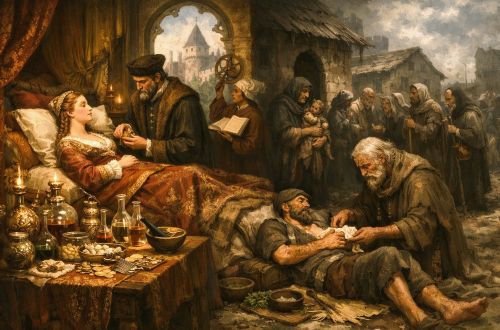
Medical care in the medieval world reflected social hierarchy, where wealth determined access, treatment quality, and outcomes revealed deep structural inequalities in healthcare systems.

By Matthew A. McIntosh
Public Historian
Brewminate
Introduction: Health as a Function of Wealth
In the medieval world, health was not a universal condition but a social privilege, shaped as much by economic standing as by disease itself. Access to medical knowledge, trained practitioners, and effective treatment depended heavily on one’s position within the social hierarchy. While illness affected all levels of society, the ability to respond to it varied dramatically. For elites, medicine could offer personalized attention and costly remedies, while for the majority, treatment remained uncertain, limited, or entirely inaccessible.
Medical practice in medieval Europe operated within a layered system that blended learned theory, inherited tradition, and economic negotiation. University-trained physicians, educated in centers such as Salerno, Bologna, and Paris, represented the highest tier of medical authority. Their knowledge, rooted in Galenic and Hippocratic traditions, carried intellectual prestige but came at a significant financial cost. The scarcity of such practitioners further intensified their exclusivity, ensuring that their services remained largely confined to those with the means to pay for them.
Beyond this elite sphere, healthcare took on a more practical and decentralized character. Surgeons, barber-surgeons, and local healers formed the backbone of everyday medical care, offering treatments that were often more accessible but less formally recognized. In both urban and rural settings, individuals relied heavily on experiential knowledge, household remedies, and community-based healing traditions. Payment for these services was frequently negotiated, sometimes in coin but often in goods or labor, reflecting a broader economic culture in which flexibility was necessary for survival.
The result was a system in which health outcomes were inseparable from wealth, reinforcing the social divisions that defined medieval life. Institutions such as hospitals and monastic infirmaries provided limited relief, but their primary emphasis often lay in spiritual care rather than medical intervention. The cost of wellness extended beyond financial expense to encompass access, knowledge, and social position. Medieval healthcare was not simply a matter of treatment, but a reflection of a deeply stratified society in which economic status shaped both the experience of illness and the possibility of recovery.
Elite Medicine: Wealth, Prestige, and Exotic Treatment
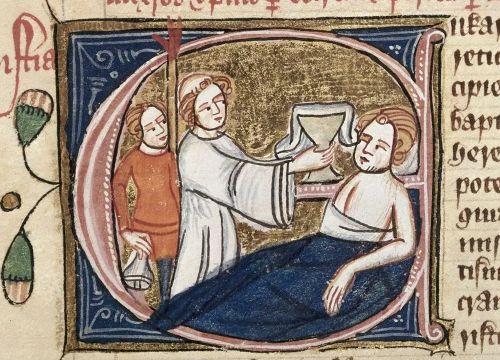
Among the medieval elite, medicine functioned not only as a means of healing but as an expression of status, learning, and refinement. Wealthy patients had access to university-trained physicians whose education in the liberal arts and medical theory distinguished them sharply from other practitioners. These physicians, often attached to courts or noble households, operated within a framework that emphasized both intellectual authority and social prestige. Their presence alone signaled a level of cultural sophistication, reinforcing the idea that health, like education, was a privilege reserved for those of means.
The intellectual foundation of elite medicine rested on the revival and transmission of classical knowledge, particularly the works of Galen and Hippocrates, which were studied, translated, and expanded upon in medieval universities. Medical faculties did not simply preserve ancient texts but engaged with them critically, producing commentaries that shaped diagnosis and treatment for centuries. Physicians trained in these traditions relied on humoral theory as the central organizing principle of the body, interpreting illness as an imbalance of the four humors and prescribing regimens designed to restore equilibrium. Diagnosis involved detailed attention to pulse, urine, complexion, and lifestyle, often supported by written case notes and learned consultation. This approach required not only education but also time and intellectual labor, making it inherently expensive. Moreover, the language of medicine, frequently conducted in Latin, created an additional barrier between practitioner and patient, reinforcing the exclusivity of elite care and distancing it from the vernacular practices of everyday healing.
Treatment at this level often involved the use of rare and costly ingredients, many of which were imported through long-distance trade networks. Substances such as ambergris, musk, spices, and even powdered precious stones appeared in elite pharmacological recipes, not only for their supposed medicinal properties but also for their symbolic value. The use of such materials reflected a broader culture of luxury consumption, in which rarity and expense were themselves markers of effectiveness. Medical care became intertwined with display, as treatments demonstrated both wealth and access to global resources.
Payment for elite medical services reinforced these distinctions. Physicians could command substantial fees, often supplemented by gifts, patronage, or long-term financial arrangements that bound them to noble households. In some cases, they were retained as permanent or semi-permanent members of a court, receiving stipends, housing, and protection in exchange for ongoing care. These arrangements placed physicians within the social hierarchy they served, elevating their status while ensuring loyalty to their patrons. Payment could take many forms, including coin, luxury goods, or political favor, reflecting the broader economy of exchange that characterized elite society. Such financial flexibility did not make care more accessible. Instead, it reinforced exclusivity, as only those with sufficient wealth or influence could sustain these relationships.
Despite the sophistication and expense of elite medicine, its effectiveness remained uncertain. Treatments grounded in humoral theory were based on internally coherent logic, yet they did not consistently yield successful outcomes in practice. Elaborate compound remedies, while impressive in composition, could introduce new complications or fail to address the underlying condition. Physicians themselves were aware of these limitations and often framed their work in probabilistic or conditional terms, acknowledging that success depended on factors beyond their control. Even so, the authority of learned medicine remained largely unchallenged within elite circles. Its association with classical knowledge, intellectual rigor, and personalized care sustained confidence in its value, even when results were inconsistent or inconclusive.
Elite medicine served as both a medical and cultural institution, reinforcing social hierarchy through access to knowledge and resources. It provided the wealthy with a distinct experience of illness, one shaped by attention, luxury, and intellectual engagement. Yet this system also highlighted the broader inequalities of medieval healthcare, in which the most elaborate and expensive treatments were available only to a small segment of society, leaving the majority to navigate illness with far fewer options and far less support.
The Middle Strata: Practical Medicine and Negotiated Cost

Between the elite world of university-trained physicians and the largely charitable or informal care available to the poor stood a broad and varied middle stratum whose medical experience was defined by pragmatism, negotiation, and accessibility. This group included merchants, artisans, shopkeepers, and skilled urban laborers who occupied an increasingly important position in medieval economic life. While they possessed some disposable income and social mobility, they lacked the wealth and patronage networks necessary to secure the services of elite physicians on a consistent basis. Their engagement with medicine was shaped by calculation and necessity, weighing cost against perceived effectiveness. For this group, healthcare was neither a luxury nor a guarantee, but a negotiated service embedded within the rhythms of everyday economic exchange.
Central to this middle tier were surgeons and barber-surgeons, whose work focused on the physical and visible aspects of illness and injury. Unlike physicians trained in university settings, these practitioners developed their skills through apprenticeship and guild systems, emphasizing hands-on experience over theoretical learning. They treated wounds, set bones, performed minor operations, and addressed common ailments that required immediate intervention. In many cases, their practical expertise made them more effective than physicians in dealing with trauma, even if their social standing remained lower.
The cost of such care was neither fixed nor standardized but instead reflected the broader economic culture of medieval society, where negotiation was expected and often necessary. Fees could vary depending on the complexity of the procedure, the urgency of the situation, and the patient’s perceived ability to pay. Practitioners frequently adjusted their charges based on reputation, demand, and local conditions, creating a flexible but unpredictable pricing structure. Payments were often made in coin, but they could also take the form of goods, services, or ongoing obligations, particularly in smaller communities where barter remained common. This adaptability allowed a wider segment of the population to access medical care, but it also reinforced the idea that treatment was contingent on one’s economic and social position rather than guaranteed by need alone.
Urban environments fostered a more structured marketplace for medical services, reflecting the growing complexity of medieval towns and cities. Guilds played a significant role in regulating the practice of surgery and related trades, establishing standards of training, apprenticeship, and, in some cases, acceptable conduct and pricing. These organizations helped to legitimize practitioners who might otherwise have been dismissed as unlearned, offering a measure of institutional credibility that reassured patients. The concentration of practitioners in urban centers created competition, which could lead to more responsive service or more affordable rates. Yet this same environment also produced disparities, as more reputable or experienced practitioners could command higher fees, leaving less experienced individuals to serve those with fewer resources.
Despite these advantages, middle-stratum medicine was not without its limitations. The absence of formal academic training among many practitioners meant that their understanding of disease could be uneven, and their treatments were often based on experience rather than systematic theory. While this practical orientation could be beneficial in certain contexts, it also meant that care was inconsistent, varying widely from one practitioner to another. Patients navigating this system had to balance affordability against trust, often relying on reputation and local knowledge rather than formal credentials.
Medical care for the middle strata represented a negotiated space between accessibility and uncertainty. It lacked the intellectual prestige and material luxury of elite medicine, but it offered a degree of responsiveness and practicality that was largely absent at both extremes of the social spectrum. The cost of care remained a defining factor, shaping not only who could receive treatment but also what kind of treatment they could expect. Healthcare in this middle tier reflected both the opportunities and constraints of a society in which economic position determined the boundaries of possibility.
The Poor: Charity, Faith, and Limited Access

For the poorest members of medieval society, access to medical care was shaped less by choice than by circumstance and often depended on the availability of charity rather than any ability to pay. Illness in this context carried not only physical danger but also profound economic and social risk, as even minor ailments could disrupt already fragile livelihoods built on daily labor. A period of sickness could mean lost wages, inability to secure food, and increased vulnerability to further hardship. Without savings or institutional support, the poor were particularly exposed to the cascading effects of illness. Healthcare was not simply about treatment but survival, with individuals and families forced to navigate a landscape in which resources were scarce and uncertainty was constant.
Central to this system were hospitals, monasteries, and other charitable foundations, which provided care to the sick, elderly, and destitute. These institutions were typically funded by donations, endowments, and religious patronage, and their mission was grounded in Christian ideals of charity and compassion. Care within these settings was often offered freely, but it operated within institutional limits that shaped both its scope and quality. Patients might receive food, a bed, and basic attention, but the availability of trained medical personnel varied widely. Many hospitals were not designed as centers of active medical treatment but as places of hospitality and refuge. Their organization reflected a broader moral economy in which providing care for the poor was seen as an act of piety rather than a specialized medical service, reinforcing the distinction between charitable care and professional medicine.
The emphasis within these institutions frequently rested on the care of the soul as much as, or more than, the care of the body. Illness was commonly interpreted through a spiritual lens, understood as a test, punishment, or opportunity for repentance. Practices such as confession, prayer, and preparation for death were central components of care. Medical treatment, when it occurred, was often secondary to these spiritual concerns, and the goal was not always recovery but the proper ordering of the individual’s relationship with God.
Outside institutional settings, the poor relied heavily on informal networks of care rooted in local knowledge and experience. Wise women, herbalists, and community healers played a crucial role in addressing everyday ailments, drawing on traditions passed down through generations. These practitioners were embedded within the communities they served, often known personally to those who sought their help, and their treatments reflected the resources available in the local environment. Remedies made from herbs, roots, and household materials offered a form of care that was both accessible and adaptable, particularly in rural areas where formal institutions were distant or nonexistent. While these healers lacked formal recognition and were sometimes viewed with suspicion by authorities, their role was indispensable, providing continuity of care in contexts where other options were limited or unavailable.
Despite the presence of charitable care and community-based healing, access to consistent and effective treatment remained limited. Hospitals varied widely in quality, and their resources were often stretched thin by the number of people in need. Informal practitioners, while accessible, could not always address more serious or complex conditions. In many cases, the poor were left to endure illness with minimal intervention, turning to faith and endurance when practical options were exhausted.
Healthcare for the poor was defined by dependence, improvisation, and constraint. The absence of financial resources shaped every aspect of the medical experience, from the availability of treatment to the expectations of recovery. While charity provided an essential safety net, it did not eliminate the broader inequalities that structured medieval society. Instead, it underscored them, revealing a system in which the cost of wellness was measured not only in money but in access, opportunity, and the limits imposed by poverty.
Barber-Surgeons and the Economy of Practical Care

Barber-surgeons occupied a distinctive and essential position within the medical landscape of medieval Europe, bridging the gap between learned medicine and everyday necessity. Unlike university-trained physicians, whose authority rested on classical texts and theoretical knowledge, barber-surgeons operated within a practical tradition rooted in manual skill and direct intervention. Their work addressed immediate and visible conditions such as wounds, fractures, infections, and external injuries, making them indispensable in both urban and rural settings. In a society where accidents, violence, and labor-related injuries were common, the demand for their services was constant. Their presence in marketplaces and towns made them highly visible figures, and their accessibility ensured that they were often the first point of contact for those in need of medical attention.
Their training typically followed an apprenticeship model, often organized through guild structures in urban centers. This system emphasized repetition, observation, and hands-on experience, allowing practitioners to develop competence in procedures such as bloodletting, wound treatment, bone setting, and minor surgical operations. While they lacked the academic credentials of physicians, barber-surgeons cultivated expertise through practice, and their services were widely sought in contexts where theoretical medicine offered little practical assistance.
Economically, barber-surgeons were more accessible than physicians, positioning them as a primary source of medical care for much of the population. Their fees were generally lower, reflecting both their social status and the nature of the services they provided. Rather than lengthy consultations or complex regimens, their work was often procedural and immediate, allowing for more straightforward pricing. Payment structures remained flexible, with compensation given in coin, goods, or services depending on local custom and individual circumstance. This adaptability allowed barber-surgeons to serve a broad clientele, from artisans and laborers to lower-ranking members of the urban population. Their role within the medical economy was defined not only by affordability but by responsiveness, offering care that aligned with the practical and financial realities of their patients.
Despite their practical importance, barber-surgeons occupied a lower social and professional status within the hierarchy of medical practitioners. Learned physicians often viewed them as inferior, emphasizing the distinction between intellectual medicine and manual labor. This divide was reinforced by educational differences, as barber-surgeons did not participate in university training or engage with the same body of theoretical knowledge. Nevertheless, their ability to deliver tangible results, particularly in cases of injury or acute illness, ensured their continued relevance and demand.
Barber-surgeons exemplified the economic and functional realities of medieval healthcare. Their work highlighted the importance of affordability, accessibility, and practical skill in a system otherwise dominated by status and theoretical authority. While they lacked the prestige associated with elite medicine, they provided a form of care that was immediate, adaptable, and often effective, making them a cornerstone of medical practice for those navigating the constraints of cost and availability.
Pricing Medicine: Reputation, Risk, and Ability to Pay
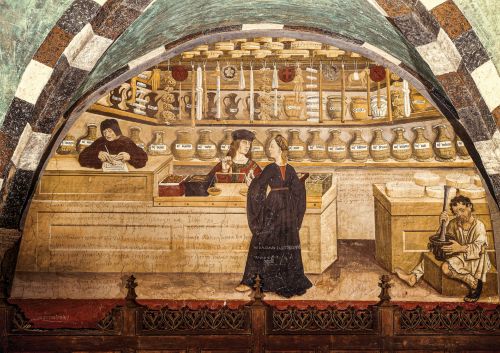
In the medieval medical marketplace, pricing was neither standardized nor fixed, but instead shaped by a complex interplay of reputation, perceived risk, and the patient’s ability to pay. Medical services existed within a broader economic culture that emphasized negotiation and flexibility rather than uniform rates. Physicians and practitioners adjusted their fees according to circumstance, creating a system in which cost was not simply a reflection of the treatment provided, but of the social and economic relationship between practitioner and patient.
Reputation played a central role in determining the price of care. Well-known physicians, particularly those with university training or courtly connections, could command higher fees based on their perceived expertise and social standing. Their authority was reinforced not only by education but by visibility within elite circles, written works, and associations with powerful patrons. In some cases, physicians built reputations through successful treatments that circulated by word of mouth, further enhancing their demand and allowing them to increase their fees accordingly. Patients, especially those of higher status, often equated reputation with reliability, seeking out recognized names even when costs were significantly higher. This dynamic contributed to a tiered system in which prestige itself became a measurable component of medical pricing.
Risk also influenced pricing, particularly in cases where treatment carried uncertainty or potential danger. Complex procedures, severe illnesses, or cases that required extended care could result in higher fees, reflecting both the time involved and the possibility of failure. Practitioners were aware that difficult cases carried reputational consequences, and they often adjusted their compensation to account for the potential impact on their standing. In some instances, agreements were structured around outcomes, with payment contingent upon improvement or recovery, though such arrangements varied widely. This element of risk introduced an additional layer of negotiation, as both patient and practitioner attempted to balance financial cost against uncertain results. The unpredictability of disease meant that pricing could never be entirely stable, reinforcing the fluid nature of the medical economy.
The patient’s ability to pay remained one of the most decisive factors in determining cost. Practitioners frequently scaled their fees according to the wealth and status of the individual seeking treatment, ensuring that services remained economically viable while still accessible to a broader range of clients. Wealthier patients were expected to pay more, not only because they could afford it, but because higher payment reinforced social expectations regarding status and obligation. Conversely, poorer patients might receive reduced fees or alternative payment arrangements, though such accommodations were often limited.
Payment itself could take multiple forms, reflecting the diverse economic practices of medieval society. While coin was increasingly used in urban settings, goods, services, and ongoing obligations remained common forms of compensation. Physicians and practitioners often accepted food, clothing, or other valuable items, particularly in regions where cash circulation was limited. In some cases, long-term relationships developed in which patients provided ongoing support or patronage in exchange for continued care. These arrangements were not purely economic but embedded within social networks that linked practitioner and patient through mutual dependence. Such flexibility allowed medical care to function across different economic contexts, but it also reinforced inequalities, as those with more resources could secure more consistent and reliable treatment.
These factors produced a medical economy defined by flexibility, inequality, and negotiation. Pricing was not merely a matter of cost but a reflection of broader social structures, in which reputation, risk, and wealth shaped access to care. The absence of standardized fees allowed for adaptability but also reinforced disparities, ensuring that the experience of illness remained closely tied to one’s position within the social hierarchy. The pricing of medicine in the medieval period offers a clear window into the economic and cultural dynamics that governed healthcare as a whole.
Hospitals and Institutional Care: Charity over Commerce

Medieval hospitals occupied a distinctive place within the broader landscape of healthcare, functioning less as centers of clinical treatment and more as institutions of charity and religious obligation. Their primary purpose was not to cure disease in the modern sense but to provide care, shelter, and spiritual support to the sick, poor, and vulnerable. Rooted in Christian ideals of mercy and almsgiving, these institutions reflected a moral economy in which caring for the afflicted was understood as a pathway to salvation for both the giver and the recipient. Hospitals were not merely medical spaces but expressions of religious and social values, embedded within communities as visible signs of piety and compassion. Their existence demonstrated a collective acknowledgment of suffering, even as the means of addressing that suffering remained limited by contemporary knowledge and resources.
The organization and daily operation of hospitals reinforced this emphasis on spiritual care. Many were attached to monasteries or religious orders, and their routines often mirrored monastic life, structured around prayer, liturgy, and communal discipline. Patients were expected to participate in religious observance as part of their stay, and care frequently included confession, last rites, and preparation for death. While some medical treatment was provided, it was typically limited in scope, with greater attention given to comfort, nourishment, and the orderly management of the institution’s residents.
Funding for these hospitals came largely from donations, endowments, and patronage by wealthy individuals seeking spiritual merit. Benefactors supported hospitals as acts of piety, ensuring that resources were available for the care of those who could not afford treatment. These endowments could include land, rents, or monetary gifts, creating a financial foundation that allowed hospitals to operate over long periods. Reliance on such patronage also introduced variability, as the stability and quality of care depended on the continued generosity of donors and the effectiveness of institutional management. In some regions, well-funded hospitals developed more substantial facilities and could accommodate larger numbers of patients, while in others, limited resources constrained both capacity and quality. This funding model ensured access for the poor but did not guarantee uniform standards of care.
Despite their charitable mission, medieval hospitals were not entirely separate from the broader medical world. In some urban centers, particularly in later periods, they began to incorporate more structured forms of medical care, including the occasional presence of physicians or surgeons and the adoption of more organized treatment practices. These developments reflected broader changes in urban life, where increasing population density and economic activity created new demands for institutional care. Even so, these medical elements remained secondary to the hospital’s primary religious function. The integration of medical practitioners did not fundamentally transform the institution into a clinical space but rather supplemented its existing role, adding limited therapeutic capability without displacing its spiritual priorities.
Hospitals represented both a vital source of support and a reflection of the limitations of medieval healthcare. They provided access to care for those who would otherwise have none, yet they did so within a framework that prioritized spiritual well-being over physical recovery. The absence of a commercial model ensured that care was available to the poor, but it also constrained the development of more advanced or consistent medical practices. As such, medieval hospitals reveal a system in which compassion and constraint coexisted, shaped by the values and resources of the society that sustained them.
The Cost of Treatment: Simple Remedies vs. Luxury Medicine

The cost of medical treatment in the medieval period was not a fixed measure but a reflection of material access, trade networks, and social hierarchy. What a patient received depended not only on the skill of the practitioner but on the ingredients available and, more importantly, what could be afforded. Medical care existed along a continuum, ranging from simple, locally derived remedies to elaborate compounds assembled from rare and expensive materials. This division did more than shape treatment options. It defined entirely different medical experiences across social classes.
At the most accessible end were remedies drawn from the immediate environment. Herbs, roots, and common household substances formed the backbone of everyday treatment, often prepared as poultices, teas, or salves. These remedies were inexpensive, widely understood, and deeply embedded in local tradition. Knowledge of their use was frequently passed down through families or shared within communities, making them a stable and reliable form of care in the absence of formal medical access. While these treatments were limited in scope and often lacked the theoretical framework of learned medicine, they provided a practical means of addressing common ailments and maintaining basic health.
For wealthier patients, treatment took on a markedly different character. Elite medicine frequently relied on complex pharmacological compounds that incorporated imported and costly ingredients such as spices, resins, and animal-derived substances like ambergris. Some preparations even included powdered precious materials, reflecting both the reach of medieval trade and the symbolic value attached to rarity. These compounds were recorded in learned medical texts and required careful preparation, often overseen by trained physicians or specialized apothecaries. Their cost was not incidental but integral to their meaning, reinforcing the association between expense and efficacy within elite culture. The more elaborate the preparation, the greater its perceived authority, regardless of its actual therapeutic value.
The availability of such treatments depended heavily on long-distance trade networks that connected Europe to regions across the Mediterranean, the Middle East, and Asia. These routes supplied the spices, aromatics, and other materials that made luxury medicine possible, but they also introduced instability into the system. Prices could fluctuate based on political conditions, supply disruptions, or changes in trade access, meaning that even among elites, certain treatments could become temporarily scarce or prohibitively expensive. Medicine was tied directly to the broader currents of medieval commerce, linking the body to global systems of exchange.
Yet the relationship between cost and effectiveness was far from straightforward. Many simple remedies, grounded in generations of practical experience, proved useful in treating common conditions. By contrast, expensive compounds often derived their authority from tradition and symbolism as much as from measurable results. The cultural weight attached to rarity and complexity meant that costly treatments were often perceived as inherently superior, even when their benefits were uncertain. This dynamic reinforced existing social hierarchies, as the wealthy could access treatments that appeared more sophisticated, while the poor relied on methods that, though sometimes equally effective, lacked the same prestige and recognition.
This contrast reveals a deeper truth about medieval healthcare. The distinction between simple and luxury medicine was not merely about price but about access to entire frameworks of treatment. Patients were not choosing between equivalent options at different costs. They were operating within fundamentally different medical worlds, shaped by what they could obtain and what practitioners could provide. The cost of treatment did more than limit access. It structured the very possibilities of care, reinforcing a system in which economic position determined both the form and scope of medical intervention.
Historiography: Interpreting Inequality in Medieval Medicine
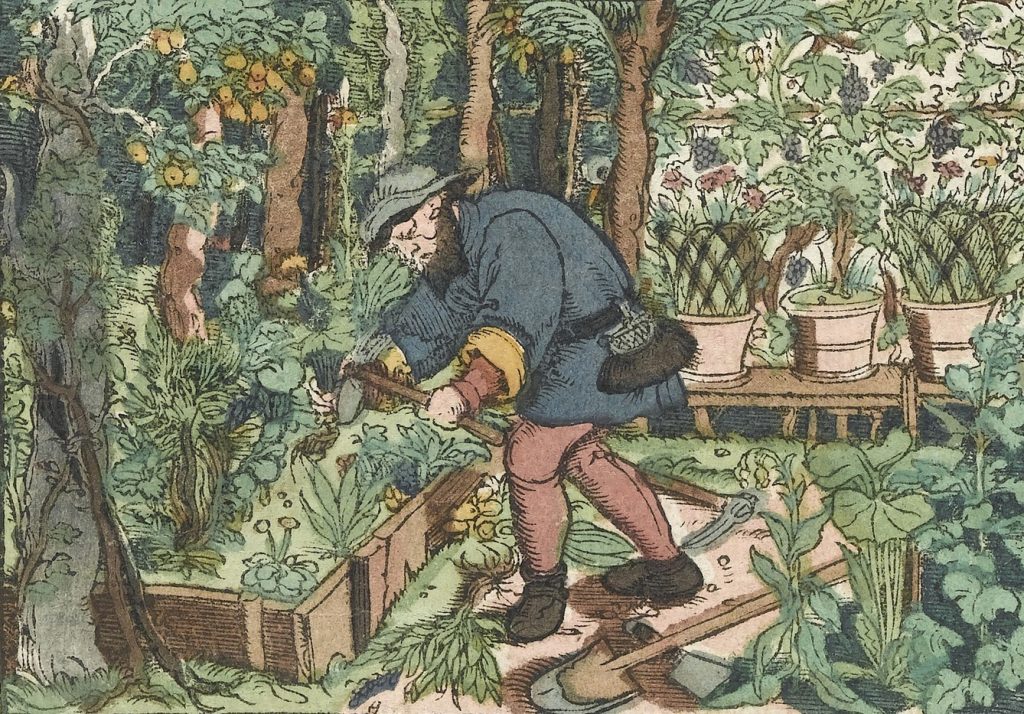
The historiography of medieval medicine has evolved significantly over the past century, shifting from a dismissive view of the field as primitive and ineffective to a more nuanced understanding of its internal logic and social function. Earlier scholarship often portrayed medieval healthcare as a failed precursor to modern scientific medicine, emphasizing superstition, lack of empirical method, and limited therapeutic success. This perspective tended to flatten distinctions within medieval society, treating medical practice as uniformly inadequate rather than socially differentiated. More recent historians have challenged this interpretation by situating medical practice within its broader cultural, intellectual, and economic contexts, revealing a system that, while limited by contemporary knowledge, was structured and meaningful within its own framework.
Central to this reassessment has been a growing recognition of the relationship between medicine and social hierarchy. Scholars have increasingly emphasized that access to care, quality of treatment, and the very definition of illness were shaped by economic status and social position. Rather than viewing medieval medicine as a monolithic system, historians now analyze it as a stratified landscape in which different groups experienced fundamentally different forms of care. This approach has drawn attention to the ways in which inequality was embedded not only in access to practitioners and remedies but in the organization of medical knowledge itself, which privileged learned traditions associated with elite institutions.
Historians have debated the effectiveness of medieval treatments and the extent to which outcomes should factor into historical evaluation. Some scholars argue that the limited success of many treatments underscores the inadequacy of the system as a whole, reinforcing older narratives of medical failure. Others contend that such assessments impose modern standards on a pre-modern context, overlooking the practical knowledge embedded in everyday remedies and the adaptive strategies employed by practitioners and patients alike. This debate highlights a broader methodological tension between judging the past by present criteria and understanding it on its own terms.
Another important strand of historiography has focused on the role of institutions, particularly hospitals, in shaping access to care. Earlier interpretations often dismissed these institutions as ineffective or purely symbolic, emphasizing their spiritual orientation over their medical function. More recent studies have complicated this view, demonstrating that while hospitals were indeed grounded in religious practice, they also played a meaningful role in providing care, especially for marginalized populations. This reassessment has contributed to a more balanced understanding of institutional medicine, recognizing both its limitations and its significance within medieval society.
These historiographical developments underscore the importance of viewing medieval medicine through a lens that accounts for both inequality and context. Rather than reducing the system to a narrative of failure or progress, modern scholarship reveals a complex and stratified medical landscape shaped by economic, cultural, and intellectual forces. The cost of wellness, as historians now recognize, cannot be understood solely in terms of price or effectiveness, but must be examined as part of a broader social structure in which access to care was deeply uneven and historically contingent.
Conclusion: Health, Hierarchy, and the Limits of Care
The structure of medieval healthcare reveals a system in which access to treatment was inseparable from social and economic position. From elite physicians employing costly and elaborate remedies to the poor relying on charity and local knowledge, medical care was distributed along the same lines that defined wealth and status. Illness, while universal in its reach, was experienced in fundamentally different ways depending on one’s place within this hierarchy. The ability to seek treatment, the type of care received, and the expectations of recovery were all conditioned by material resources and social standing.
Across this landscape, the diversity of medical practice did not produce equality but reinforced division. Elite medicine offered prestige and complexity, often emphasizing theoretical knowledge and expensive treatments that reflected both intellectual authority and social display. Middle-stratum care emphasized practicality and negotiation, providing accessible services that balanced cost with immediate need but varied in consistency and scope. Charitable institutions, meanwhile, provided limited but essential support for those without means, prioritizing care and shelter even when medical intervention was minimal. Each layer of this system operated according to its own logic, shaped by distinct expectations and constraints, yet all were connected by a shared dependence on economic capacity. The result was not a coherent or unified medical system, but a fragmented one in which care was unevenly distributed, shaped by status, and frequently uncertain in its outcomes.
Medieval healthcare cannot be reduced solely to its limitations. Within each stratum, individuals and communities developed strategies to manage illness using the resources available to them, demonstrating a degree of adaptability often overlooked in earlier interpretations. Practical remedies provided by local healers offered continuity of care in the absence of formal institutions, while hospitals created spaces where the sick could receive attention and support even if cure was not always the primary goal. Learned medicine, despite its theoretical constraints, represented a serious intellectual effort to understand the body and disease within the framework of available knowledge. These varied approaches reveal a system that, while deeply unequal, was not static or entirely ineffective. Instead, it reflected a society attempting to respond to illness within the limits imposed by its economic structures, cultural values, and intellectual traditions.
Ultimately, the cost of wellness in the medieval era extended far beyond monetary expense. It encompassed access to knowledge, proximity to care, and the social networks that made treatment possible. Health was not simply a biological condition but a reflection of hierarchy, shaped by structures that determined who could be treated, how, and with what expectation of success. In examining these dynamics, medieval medicine offers a clear window into the broader realities of inequality, reminding us that the relationship between wealth and health has deep historical roots that continue to resonate long after the period itself.
Bibliography
- Demaitre, Luke. Medieval Medicine: The Art of Healing, from Head to Toe. Santa Barbara: Praeger, 2013.
- Green, Monica H. Making Women’s Medicine Masculine: The Rise of Male Authority in Pre-Modern Gynaecology. Oxford: Oxford University Press, 2008.
- Henderson, John. The Renaissance Hospital: Healing the Body and Healing the Soul. New Haven: Yale University Press, 2006.
- Horden, Peregrine. Hospitals and Healing from Antiquity to the Later Middle Ages. Aldershot: Ashgate, 2008.
- Horden, Peregrine, and Nicholas Purcell. The Corrupting Sea: A Study of Mediterranean History. Oxford: Blackwell, 2000.
- McVaugh, Michael R. Medicine before the Plague: Practitioners and Their Patients in the Crown of Aragon, 1285–1345. Cambridge: Cambridge University Press, 1993.
- Nutton, Vivian. Ancient Medicine. 2nd ed. London: Routledge, 2012.
- Orme, Nicholas, and Margaret Webster. The English Hospital, 1070–1570. New Haven: Yale University Press, 1995.
- Park, Katharine. Secrets of Women: Gender, Generation, and the Origins of Human Dissection. New York: Zone Books, 2006.
- Rawcliffe, Carole. Medicine and Society in Later Medieval England. Stroud: Sutton Publishing, 1995.
- Siraisi, Nancy G. Medieval and Early Renaissance Medicine: An Introduction to Knowledge and Practice. Chicago: University of Chicago Press, 1990.
- Slack, Paul. “Responses to Plague in Early Modern Europe: The Implications of Public Health.” Social Research 55:3 (1988), 433-453.
- Touwaide, Alain. A Census of Greek Medical Manuscripts: From Byzantium to the Renaissance. London: Routledge, 2016.
Originally published by Brewminate, 04.01.2026, under the terms of a Creative Commons Attribution-NonCommercial-NoDerivatives 4.0 International license.
About the Author