
The Medici bank rose to dominate Renaissance Europe by fusing finance with political power, yet its collapse in 1494 revealed the limits of wealth, influence, and control.

By Matthew A. McIntosh
Public Historian
Brewminate
Introduction: Banking Power and Political Fragility
The rise of the Medici family in fifteenth-century Florence illustrates the profound capacity of financial power to reshape political systems without formally dismantling them. Florence remained, in theory, a republic governed by councils, magistrates, and rotating offices, yet the growing influence of the Medici bank introduced a new form of authority rooted not in constitutional position but in economic leverage. Banking wealth allowed the Medici to operate across traditional boundaries, linking local governance to international finance and embedding their influence within both civic institutions and private networks. Political fragility did not arise from institutional weakness alone but from the increasing ability of private capital to direct public outcomes. The Medici example demonstrates how financial dominance could coexist with, and overshadow, republican forms, creating a system in which formal structures remained intact even as their practical function was altered. This tension between appearance and reality lies at the heart of Florence’s political instability, revealing how economic power could quietly erode the foundations of civic balance without provoking immediate institutional rupture.
The Medici Bank itself was central to this transformation. By the early fifteenth century, it had developed into one of the most sophisticated financial enterprises in Europe, with branches in major commercial centers and a close relationship with the Papacy that ensured steady revenue and prestige. Its structure allowed for both expansion and flexibility, enabling the Medici to move capital across regions and respond to shifting economic conditions with remarkable agility. Yet this same structure also concentrated decision-making within the family, intertwining financial success with personal authority. The accumulation of wealth translated into a form of influence that extended far beyond commerce, shaping alliances, patronage, and governance within Florence.
This fusion of economic and political power was most evident under Cosimo de’ Medici, whose dominance relied less on overt control than on strategic influence. Rather than abolishing republican institutions, Cosimo worked through them, using his financial resources to cultivate loyalty, manage factions, and neutralize opposition. Loans, gifts, and patronage became instruments of political alignment, allowing the Medici to guide decision-making while maintaining the appearance of collective governance. This indirect mode of rule masked the extent of their control, making it more difficult to challenge and more deeply embedded within the fabric of Florentine society. The republic continued to function, but its balance had shifted in favor of those who controlled the flow of credit and capital. This system created a dependency among political actors, who increasingly relied on Medici resources to sustain their own positions, further entrenching the family’s influence. What emerged was not a formal tyranny but a network of obligations and expectations that subtly redirected the mechanisms of governance, demonstrating how financial tools could achieve political ends without overt coercion.
The eventual collapse of Medici dominance in 1494 reveals the limits of this system. Financial power, while formidable, remained vulnerable to external shocks and internal instability, particularly when political legitimacy faltered. The expulsion of Piero de’ Medici during a moment of crisis exposed the underlying tensions between private influence and public authority, demonstrating that economic dominance could not indefinitely substitute for political accountability. The Medici experience provides a critical case study in the relationship between finance and governance, highlighting both the possibilities and the constraints of economic power within a republican framework. It is within this tension, between wealth and legitimacy, that the fragility of the Florentine state becomes most apparent.
The Structure of the Medici Bank: Innovation and Expansion

The Medici Bank’s rise to prominence in fifteenth-century Europe was rooted in a combination of structural innovation and strategic expansion that distinguished it from earlier banking enterprises. Founded in 1397 by Giovanni di Bicci de’ Medici, the bank quickly evolved beyond a single Florentine institution into a network of semi-autonomous branches operating across major commercial centers. This decentralized structure allowed the Medici to manage risk more effectively than their predecessors, such as the Bardi and Peruzzi, whose centralized models had contributed to their collapse in the fourteenth century. By distributing operations geographically while maintaining familial oversight, the Medici created a system that could adapt to local conditions while preserving overall cohesion.
Central to this system was the branch model, which combined local management with centralized control. Each branch operated as a partnership, often involving trusted associates or family members, who were responsible for day-to-day operations and shared in the profits. These managers were granted a degree of autonomy that enabled them to respond quickly to regional economic conditions, yet they remained accountable to the central office in Florence. Regular reporting, audits, and correspondence ensured that information flowed back to the Medici leadership, allowing for coordinated decision-making across the network. This system of internal communication was essential, as it allowed the Florentine headquarters to monitor performance, adjust strategies, and intervene when necessary without micromanaging each location. The reliance on personal trust and familial ties functioned as both a strength and a limitation, reinforcing loyalty while potentially constraining the pool of capable administrators. The balance between autonomy and control was not merely administrative but deeply social, rooted in networks of trust that underpinned the bank’s broader operations.
The geographical reach of the Medici Bank further amplified its influence. Branches in cities such as Rome, Venice, Bruges, London, and Avignon connected Florence to the broader European economy, facilitating the movement of capital, goods, and information. The Roman branch played a crucial role due to its relationship with the Papacy, managing papal finances and collecting revenues from across Christendom. This connection provided both financial stability and political leverage, as the Medici became indispensable intermediaries between the Church and the wider economic world. The presence in northern Europe, especially in Bruges and London, allowed the bank to engage directly with emerging commercial hubs, linking Mediterranean and northern markets in ways that enhanced both profitability and influence. Through these interconnected branches, the Medici were able to respond to regional variations in demand, currency, and credit conditions, creating a flexible yet integrated system that extended their reach far beyond Florence. The bank operated as a transregional network that anticipated later developments in international finance.
Innovations in accounting and financial management also contributed significantly to the Medici Bank’s effectiveness. The use of double-entry bookkeeping, though not unique to the Medici, was refined within their operations to provide a clearer and more systematic record of transactions. This allowed for greater transparency within the organization and facilitated more accurate assessments of profit and loss across different branches. Bills of exchange further enabled the transfer of funds without the physical movement of coin, reducing the risks associated with long-distance trade. These techniques enhanced both efficiency and security, reinforcing the bank’s reputation as a reliable and sophisticated institution.
Despite these strengths, the very features that enabled the Medici Bank’s expansion also introduced vulnerabilities. The reliance on trusted managers created opportunities for mismanagement or corruption, particularly in distant branches where oversight was more difficult to enforce. The complexity of the network made it challenging to maintain consistent standards, and variations in local conditions could lead to uneven performance. Moreover, the concentration of ultimate authority within the Medici family meant that strategic decisions were closely tied to the priorities and capabilities of individual leaders. As the bank grew, maintaining coherence across its operations became increasingly difficult, exposing structural weaknesses that would later contribute to its decline.
The Medici Bank represents a critical stage in the development of early modern finance, combining innovation with ambition to create a system of unprecedented scale. Its structure allowed it to dominate European banking for much of the fifteenth century, yet it also revealed the limits of expansion in the absence of fully institutionalized controls. The balance between flexibility and oversight, so central to its success, proved difficult to sustain. The Medici Bank not only transformed the economic landscape of Renaissance Europe but also anticipated many of the challenges faced by large financial institutions in later periods.
Wealth into Power: The Medici and Florentine Politics

The transformation of Medici wealth into political authority represents one of the most striking features of Florentine history in the fifteenth century. Unlike traditional ruling elites who relied on hereditary titles or formal offices, the Medici built their dominance through financial leverage, converting economic capital into influence over civic institutions. Florence remained a republic in structure, with its complex system of councils and magistracies, yet the Medici were able to shape outcomes without openly dismantling it. Their power operated through influence rather than formal sovereignty, allowing them to maintain legitimacy while exercising control behind the scenes.
Cosimo stands at the center of this transformation. Returning from exile in 1434, he established a model of governance that relied on subtlety and strategic engagement rather than overt domination. Cosimo avoided holding the highest offices for extended periods, instead working through allies who occupied key positions within the government. By financing public projects, supporting religious institutions, and extending credit to influential families, he created a network of obligation that bound much of the Florentine elite to his interests. This approach allowed him to guide political decisions while preserving the outward appearance of republican governance, making his authority both pervasive and difficult to challenge. His political method depended not only on generosity but on careful calibration, rewarding loyalty while marginalizing opposition without provoking outright rebellion. Exile, taxation, and selective pressure were applied when necessary, but always in a way that maintained the fiction of collective decision-making. Cosimo’s rule was as much about perception as power, ensuring that the mechanisms of the republic continued to function even as their outcomes were increasingly shaped by his influence.
Patronage played a crucial role in sustaining Medici influence. Wealth enabled the family to act as benefactors across multiple domains, from art and architecture to charity and public works. These acts of patronage were not merely expressions of cultural or religious devotion but strategic investments in social capital. Artists, scholars, clergy, and political figures all benefited from Medici support, creating a broad base of loyalty that extended beyond the formal structures of government. This network reinforced the Medici position by aligning diverse interests with their continued dominance, embedding their influence within the cultural and intellectual life of Florence as well as its political institutions.
Financial instruments themselves became tools of political control. Loans were extended not only for commercial purposes but also to secure alliances and exert pressure on rivals. Indebtedness created dependency, allowing the Medici to influence decisions indirectly by shaping the economic circumstances of key individuals and families. This use of credit as a mechanism of power blurred the line between economic and political activity, transforming financial relationships into instruments of governance. The ability to control access to capital translated into the ability to shape the direction of the republic, reinforcing the Medici position without requiring formal authority. In many cases, this influence operated quietly, as debt obligations constrained the options available to political actors without the need for explicit coercion. The Medici could support allies in times of need while withholding assistance from opponents, creating a system in which economic survival and political alignment became closely intertwined. This subtle but pervasive form of control made resistance difficult, as it was embedded within the everyday functioning of Florentine economic life.
Despite its effectiveness, this system was inherently unstable. It depended heavily on the personal authority and judgment of individual Medici leaders, particularly Cosimo and later Lorenzo de’ Medici. While Lorenzo, known as “the Magnificent,” maintained the family’s dominance through a combination of diplomacy, patronage, and cultural leadership, the system showed signs of strain during his later years. The increasing complexity of Florentine politics, combined with external pressures from rival states, placed growing demands on Medici leadership. As the network of influence expanded, so too did the challenges of maintaining cohesion and loyalty within it. Lorenzo’s success masked underlying vulnerabilities, as his personal skill compensated for structural weaknesses that had not been resolved. Financial strain, diplomatic challenges, and factional tensions all accumulated beneath the surface, creating conditions in which the system’s dependence on individual leadership became increasingly apparent. Without consistent and capable direction, the intricate web of relationships that sustained Medici power risked unraveling.
The fragility of Medici political power became evident in the succession to Piero de’ Medici. Lacking the political acumen of his predecessors, Piero struggled to manage both internal dissent and external threats, particularly during the crisis precipitated by the French invasion of 1494. His failure to navigate these challenges led to the rapid collapse of Medici authority and his subsequent exile from Florence. This episode underscores the limitations of a system built on personal networks and financial influence rather than institutionalized power. The Medici had succeeded in transforming wealth into political control, but they had not created a structure capable of sustaining that control in the absence of effective leadership.
Banking, Charity, and Public Finance

The Medici bank operated at the intersection of commerce, piety, and public responsibility, blurring distinctions that modern economies tend to separate more clearly. In Renaissance Florence, wealth was expected to carry social obligations, and banking families were judged not only by their profits but by their contributions to the common good. The Medici embraced this expectation, positioning themselves as both financial innovators and civic benefactors. Their charitable activities were not incidental but integral to their broader strategy of legitimacy, reinforcing their public image while deepening their influence within the city.
Charitable giving in Florence was closely tied to religious belief and social standing. Endowments to churches, monasteries, and confraternities allowed wealthy families to demonstrate piety while also shaping the urban landscape. The Medici funded chapels, supported clergy, and contributed to institutions that provided aid to the poor, sick, and marginalized. These acts of generosity carried both spiritual and political significance, as they reinforced the family’s reputation as protectors of the city’s moral and material well-being. Charity functioned as a form of social investment, strengthening ties between the Medici and the broader population.
The Medici were deeply involved in the financial mechanisms that sustained the Florentine state. Public finance in Florence relied heavily on systems of taxation, forced loans, and state debt, particularly the Monte system through which citizens invested in government bonds. The Medici bank played a significant role in managing and facilitating these financial structures, providing expertise and liquidity that the state itself often lacked. Their involvement allowed them to exert influence over fiscal policy and public expenditures, linking their private financial interests to the functioning of the republic. This relationship created a dynamic in which the boundaries between public and private finance became increasingly porous, with the Medici occupying a central position in both spheres.
The overlap between banking and public finance also created opportunities for abuse and suspicion. Accusations periodically emerged that the Medici used their position to manipulate state resources for private gain, whether through preferential access to funds, favorable terms in financial arrangements, or the redirection of charitable resources. While definitive evidence of systematic embezzlement remains debated among historians, the perception of such practices contributed to growing resentment among segments of the Florentine population. The very mechanisms that enabled Medici dominance also exposed them to criticism, as their influence over public finance raised questions about accountability and fairness within the republic.
The integration of banking, charity, and public finance was both a source of strength and a point of vulnerability for the Medici. Their ability to present themselves as benefactors of Florence enhanced their legitimacy and secured broad support, but it also tied their fortunes to the stability of the state and the trust of its citizens. When that trust eroded, particularly in times of crisis, the same networks that had sustained their power could quickly become liabilities. The Medici experience illustrates the complex relationship between economic power and public responsibility, revealing how financial influence can both sustain and destabilize political authority.
Crisis and Decline: Structural Weaknesses of the Medici Bank
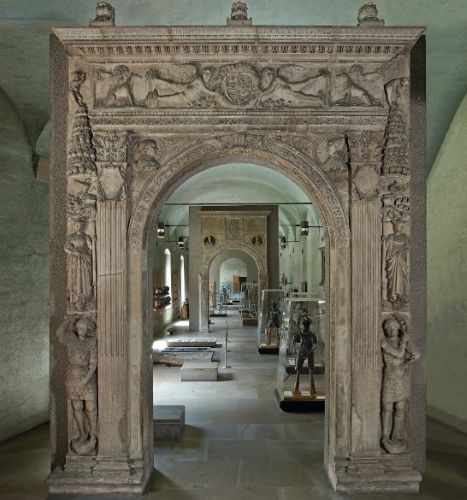
The decline of the Medici bank in the late fifteenth century was not the result of a single catastrophic failure but the culmination of structural weaknesses that had developed over decades. While the bank had achieved remarkable success through innovation, expansion, and political integration, these same factors introduced vulnerabilities that became increasingly difficult to manage. The Medici system relied heavily on trust, decentralized management, and complex networks of credit, all of which functioned effectively under strong leadership but proved fragile when oversight weakened. By the time of its collapse in 1494, the bank’s internal structure had become a liability rather than a strength.
One of the central weaknesses of the Medici bank lay in its branch system. Offices spread across Europe, from London to Bruges to Rome, operated with a significant degree of autonomy, often managed by partners who had considerable discretion in their dealings. While this structure allowed for flexibility and rapid response to local conditions, it also created opportunities for mismanagement and fraud. Communication between branches was slow and imperfect, making it difficult for the central administration in Florence to maintain effective oversight. Losses could accumulate in distant offices without immediate detection, undermining the overall stability of the institution. The reliance on trust, while initially a strength, became a critical vulnerability when individual managers pursued risky or self-interested strategies that diverged from the bank’s broader interests.
The Roman branch illustrates the dangers inherent in the Medici model. As the primary financial agent for the papacy, this branch handled vast sums of money, including revenues from indulgences, taxes, and ecclesiastical payments. Its proximity to the papal court offered immense opportunities for profit but also exposed it to political pressures and financial risks. Loans to the papacy and other powerful clients were often extended under conditions that prioritized political relationships over financial prudence. When these loans went unpaid or were delayed, the consequences for the bank were severe. The Roman branch became both a source of wealth and a point of instability, reflecting the broader tension between profit and influence that characterized Medici operations. The scale of exposure in Rome magnified the consequences of miscalculation, tying the fortunes of the bank too closely to the financial reliability of its most powerful clients.
Another critical factor in the bank’s decline was the increasing entanglement of financial decision-making with political considerations. As the Medici family became more deeply involved in Florentine and Italian politics, their banking operations were increasingly used to support diplomatic and strategic objectives. Loans were extended to allies, concessions were made to secure political favor, and financial discipline was sometimes sacrificed in pursuit of broader goals. While this approach reinforced Medici influence in the short term, it weakened the bank’s long-term stability by prioritizing relationships over profitability. The blending of economic and political priorities introduced a systemic imbalance, making the institution more susceptible to financial strain. This dynamic was particularly evident in dealings with rulers and elites whose political importance outweighed their creditworthiness, creating a pattern in which risk was knowingly assumed for strategic gain. As these obligations accumulated, the bank’s ability to absorb losses diminished, revealing the limits of a system that subordinated financial prudence to political ambition.
Leadership also played a decisive role in the bank’s fortunes. Under Cosimo and Lorenzo, the institution benefited from careful management and strategic oversight. Both figures possessed the ability to balance risk and reward, maintaining the bank’s stability while navigating complex political landscapes. After Lorenzo’s death in 1492, this leadership continuity was broken. Piero de’ Medici lacked the experience and skill necessary to manage either the political or financial dimensions of the family’s enterprise. His misjudgments exacerbated existing weaknesses, accelerating the bank’s decline at a moment when it required decisive and competent direction. Without effective leadership, the intricate system that had sustained Medici power began to unravel, exposing the fragility that had long been masked by earlier success. The absence of strong oversight allowed problems that might once have been contained to spread unchecked, compounding the effects of earlier structural issues.
External pressures further contributed to the bank’s collapse. The political landscape of late fifteenth-century Italy was marked by instability, shifting alliances, and the growing involvement of foreign powers. The French invasion of 1494, led by Charles VIII, created a crisis that the Medici were ill-prepared to manage. The resulting upheaval in Florence led to Piero’s exile and the dissolution of Medici authority within the city. This political collapse had immediate financial consequences, as the bank’s operations depended heavily on the family’s position within Florentine society. Without that foundation, the institution could not sustain itself, and its remaining assets were quickly dispersed or absorbed by competitors.
The fall of the Medici bank reveals the inherent tensions within a system that combined commercial enterprise, political ambition, and social responsibility. Its success had depended on the integration of these elements, but this very integration made it vulnerable to disruption. Structural weaknesses, managerial challenges, and external shocks converged to produce a collapse that was both sudden and long in the making. The Medici experience underscores the limits of financial power when it is intertwined with political authority, illustrating how institutions that appear unassailable can falter when their underlying foundations are exposed.
1494: Political Upheaval and the Fall of Medici Power
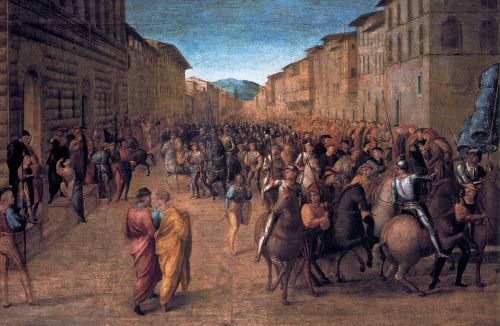
The year 1494 marked a defining moment in Florentine history, when long-standing tensions surrounding Medici dominance culminated in political collapse. The fragile balance that had sustained Medici authority for decades gave way under the combined pressure of internal dissatisfaction and external invasion. Although the family had weathered crises before, the events of this year exposed the limits of their system, revealing how dependent their position had become on both effective leadership and favorable political conditions. What followed was not merely the fall of a ruling family, but a dramatic reconfiguration of Florence’s political order.
The immediate catalyst for this upheaval was the invasion of Italy by King Charles VIII of France. Advancing southward with a formidable army, Charles sought to press his claim to the Kingdom of Naples, drawing the Italian states into a rapidly escalating crisis. His campaign was not simply a regional conflict but part of a broader transformation in European warfare, as large, centralized monarchies increasingly projected power into the fragmented political landscape of the Italian peninsula. Florence, positioned along key routes of movement and commerce, became strategically significant within this unfolding contest. The city’s leadership faced a difficult dilemma, as resisting the French risked destruction, while accommodation threatened political humiliation and internal instability. Piero de’ Medici, who had inherited leadership of the family after Lorenzo’s death, was thrust into a situation that demanded not only diplomatic skill but also the ability to command confidence among Florence’s governing elites and broader population. His decisions would be judged not only on their immediate outcomes but on what they revealed about his capacity to preserve both the security and dignity of the republic in a moment of profound uncertainty.
Piero’s handling of the French threat alienated key segments of Florentine society. In an effort to avoid conflict, he conceded to Charles VIII a series of demands, including the surrender of strategic fortresses such as Pisa and Livorno. These concessions were widely perceived as humiliating and unnecessary, signaling weakness at a moment when strength was expected. The decision not only damaged Piero’s credibility but also fueled resentment among citizens who viewed his actions as a betrayal of Florence’s interests. Political rivals quickly capitalized on this perception, framing Piero’s choices as evidence of incompetence and self-interest rather than prudence. Within the councils and public forums of the city, criticism intensified, and the legitimacy of Medici leadership came under direct challenge. The erosion of trust was not confined to elite circles but spread more broadly among the population, where rumors and anxieties amplified dissatisfaction. As confidence in Piero collapsed, the intricate web of alliances and obligations that had sustained Medici authority began to weaken, leaving the regime increasingly exposed at precisely the moment it most required cohesion and support.
As opposition intensified, the political structure that had sustained Medici influence began to unravel. The networks of patronage and obligation that once secured loyalty proved insufficient in the face of widespread discontent. Florence’s republican institutions, long overshadowed by Medici dominance, reasserted themselves as vehicles for resistance. Public assemblies and influential figures called for the restoration of a more traditional republican order, framing the crisis as an opportunity to reclaim civic autonomy. The Medici, who had operated effectively within these institutions for decades, now found themselves excluded from the very mechanisms they had once controlled.
The collapse came with remarkable speed. In November 1494, facing mounting pressure and the threat of violence, Piero de’ Medici fled Florence, effectively ending the family’s rule. His exile marked the dissolution of Medici political power and the opening of a new phase in the city’s history. In the aftermath, Florence established a republic that sought to distance itself from the perceived excesses and corruption of Medici governance. The rise of figures such as Girolamo Savonarola further transformed the political and moral landscape, introducing a period of intense religious reform and ideological fervor that reshaped the city’s identity.
The fall of the Medici in 1494 illustrates the vulnerability of systems built on personal influence and informal control. While the family had successfully navigated the complexities of Florentine politics for much of the fifteenth century, their authority ultimately depended on conditions that could not be guaranteed. External shocks, leadership failures, and internal opposition converged to produce a collapse that was both abrupt and revealing. The events of 1494 stand as a powerful example of how quickly entrenched power can disintegrate when its underlying foundations are exposed.
State Response: Reasserting Civic Control
The expulsion of the Medici in 1494 created both an opportunity and a crisis for Florence, as the city sought to restore republican governance while stabilizing a volatile political environment. The immediate challenge lay in reconstructing institutions that had long operated under Medici influence, redefining authority in a system where informal power had previously guided formal structures. Civic leaders moved quickly to reestablish collective decision-making, emphasizing the principles of republican participation and accountability. Yet this process was not simply a return to an earlier model, but an attempt to adapt traditional frameworks to new political realities shaped by recent upheaval.
Central to this reassertion of civic control was the expansion of participatory institutions, most notably the creation of the Great Council. Modeled in part on earlier republican practices, the council significantly broadened political involvement by allowing a larger segment of the citizen body to participate in governance. This shift represented both an ideological commitment to popular sovereignty and a practical effort to prevent the concentration of power in the hands of a single family or faction. By dispersing authority across a wider political base, Florentine leaders sought to create a more resilient system capable of resisting future domination. The enlargement of participation introduced new complexities, as the management of a broader and more diverse political body required careful coordination and consensus-building.
Legal reforms accompanied these institutional changes, aimed at reinforcing accountability and limiting the reemergence of oligarchic control. Mechanisms were introduced to regulate officeholding, monitor financial activity, and ensure that public resources were managed transparently. These measures reflected a growing awareness of the ways in which economic power had previously been leveraged for political ends. By tightening oversight and formalizing procedures, the republic attempted to draw clearer boundaries between private wealth and public authority. The effectiveness of these reforms depended on consistent enforcement, which remained a persistent challenge in a system still navigating the aftermath of political transformation.
The influence of Girolamo Savonarola added a distinctive dimension to the republic’s response. His emphasis on moral reform and religious renewal shaped the ideological framework within which political change occurred. Savonarola’s vision of a purified Christian republic infused civic life with a sense of spiritual urgency, linking political legitimacy to moral conduct. Through his sermons and political involvement, he encouraged citizens to view governance not merely as a matter of institutional arrangement but as a reflection of collective virtue and divine favor. This perspective strengthened support for reform by framing political participation as a moral duty, yet it also narrowed the space for dissent by associating opposition with spiritual failure. Savonarola’s campaigns against perceived corruption, luxury, and vice culminated in highly visible acts such as the “Bonfire of the Vanities,” which symbolized the rejection of worldly excess in favor of religious discipline. While these efforts resonated with segments of the population seeking renewal, they also generated resistance among those who viewed such measures as excessive or coercive. The blending of religious authority with political governance introduced both cohesion and conflict, shaping a republic that was at once energized by moral purpose and destabilized by ideological division.
Despite these efforts, the reassertion of civic control remained incomplete and contested. The structures established after 1494 sought to address the weaknesses exposed by Medici dominance, but they did not fully resolve the underlying tensions between wealth, influence, and governance. External pressures, internal divisions, and the lingering legacy of Medici networks continued to shape Florentine politics. The republic’s response represents both a moment of renewal and a reminder of the enduring challenges inherent in maintaining a balance between economic power and civic authority.
Comparative Perspective: Medieval Banking and “Too Big to Fail”
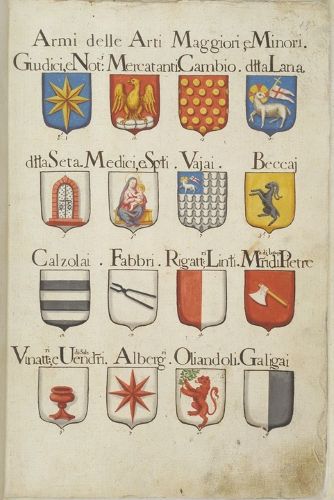
The rise and fall of the Medici bank invites comparison with modern financial institutions often described as “too big to fail.” Although separated by centuries and vastly different economic systems, both contexts reveal similar tensions between private financial power and public stability. In Renaissance Florence, the Medici did not operate within a centralized regulatory framework comparable to modern states, yet their economic dominance created conditions in which their success or failure had wide-reaching consequences. Their banking network, deeply embedded in both commerce and governance, functioned as a critical pillar of the Florentine economy, making its stability a matter of collective concern rather than purely private interest.
Unlike modern financial systems, which are supported by central banks, deposit insurance, and formal regulatory agencies, medieval banking operated within a more fluid and less institutionalized environment. The Medici bank relied on reputation, personal relationships, and contractual obligations rather than codified oversight. This absence of formal safeguards meant that financial crises could unfold rapidly, with limited mechanisms for containment. It placed greater emphasis on trust and credibility, as the stability of banking institutions depended heavily on their perceived reliability. In this context, the Medici’s prominence amplified both their influence and the risks associated with their operations, creating a situation in which their failure could destabilize broader economic networks.
The concept of “too big to fail” in the modern sense implies the likelihood of state intervention to prevent systemic collapse. In contrast, Florence lacked both the capacity and, in many cases, the inclination to rescue failing institutions. When the Medici bank encountered difficulties, there was no formal mechanism for bailout or restructuring on a state level. Instead, the consequences of failure were borne directly by the institution and its stakeholders, including partners, clients, and associated political networks. This distinction highlights a key difference between medieval and modern systems, as the burden of financial risk in Florence was more immediate and less mediated by public policy. Nevertheless, the absence of formal intervention did not eliminate the broader social impact of banking failure, which could still disrupt commerce, credit, and political stability.
Despite these differences, parallels between the Medici experience and modern financial crises are striking. In both cases, the concentration of economic power within a single institution or network creates vulnerabilities that extend beyond the institution itself. The intertwining of financial and political interests further complicates this dynamic, as decisions are shaped not only by economic considerations but also by strategic and ideological factors. The Medici bank’s decline illustrates how such entanglements can undermine financial stability, as political priorities distort economic judgment and increase exposure to risk. Modern examples, while operating within more complex regulatory environments, continue to grapple with similar challenges, particularly when large institutions wield significant influence over both markets and policy.
The comparison underscores the enduring nature of the relationship between financial scale and systemic risk. Whether in Renaissance Florence or the contemporary global economy, institutions that achieve extraordinary reach and influence occupy a position that is both powerful and precarious. The Medici case demonstrates that the absence of formal recognition as “too big to fail” does not prevent an institution from practically functioning as such. Their story serves as a reminder that the challenges associated with managing large financial entities are not unique to modern capitalism but are rooted in deeper historical patterns of economic organization and political power.
Historiography: Interpreting Medici Power and Collapse

The historiography of the Medici bank and its political dominance reflects broader debates about the nature of power in Renaissance Italy. Early narratives, often shaped by contemporaries and near-contemporaries such as Niccolò Machiavelli and Francesco Guicciardini, emphasized the interplay between individual leadership and civic institutions. These accounts framed the Medici as figures who operated within, yet subtly transformed, the republican structure of Florence. Their rise was interpreted less as a formal seizure of power than as a gradual reconfiguration of political practice, achieved through influence, patronage, and strategic positioning. This perspective established a foundation for later scholarship, which has continued to grapple with the ambiguous character of Medici authority.
Nineteenth- and early twentieth-century historians tended to adopt a more moralizing tone, often portraying the Medici as emblematic of the corruption and decline of republican ideals. Influenced by broader narratives of Renaissance decadence, these interpretations emphasized the erosion of civic virtue and the emergence of oligarchic control. The fall of the Medici bank and the exile of Piero de’ Medici were read as both a political and moral reckoning, reinforcing the idea that excessive concentration of wealth and power inevitably leads to instability. While these accounts contributed to a dramatic and compelling narrative, they often simplified the complexities of Florentine society, reducing structural dynamics to questions of character and virtue.
In the mid-twentieth century, scholars shifted attention toward the economic foundations of Medici power. Their work emphasized the technical and institutional aspects of banking, exploring how financial innovation, credit networks, and commercial practices shaped the Medici enterprise. By grounding analysis in archival evidence, these historians provided a more nuanced understanding of the bank’s operations and its eventual decline. The focus on economic structures revealed the internal weaknesses of the institution, highlighting issues such as branch mismanagement, risky lending practices, and the challenges of maintaining oversight across a dispersed network. Meticulous reconstruction of Medici account books and correspondence demonstrated how seemingly successful branches could conceal underlying instability, while broader economic analysis situated these problems within the wider commercial environment of Renaissance Italy. Together, their work moved the historiography away from moral judgment and toward structural explanation, emphasizing systemic pressures over individual failings. This shift also opened the door for more interdisciplinary approaches, linking economic history with political and social analysis in ways that reshaped the study of Renaissance finance.
More recent scholarship has integrated political, social, and cultural perspectives, examining the Medici within the broader context of Renaissance society. Historians have explored the ways in which patronage, social networks, and civic identity contributed to Medici dominance. This work emphasizes the relational nature of power, arguing that the Medici were able to sustain their position not merely through wealth but through their ability to embed themselves within the fabric of Florentine life. This perspective acknowledges the limitations of such a system, as its reliance on personal relationships made it vulnerable to disruption when those relationships broke down.
Debates continue regarding the relative importance of structural versus contingent factors in the Medici collapse. Some scholars emphasize long-term weaknesses within the banking system, pointing to financial mismanagement and overextension as key drivers of decline. Others highlight the role of external events, particularly the French invasion of 1494, as decisive in precipitating the fall of Medici power. Still others focus on leadership, contrasting the effectiveness of Cosimo and Lorenzo with the shortcomings of Piero. These differing interpretations reflect the multifaceted nature of the Medici experience, suggesting that no single explanatory framework is sufficient to account for both their rise and their fall. Increasingly, historians have sought to synthesize these approaches, recognizing that structural vulnerabilities, contingent crises, and individual agency interacted in complex ways. Rather than privileging a single cause, recent analyses emphasize the convergence of multiple factors, arguing that the Medici collapse can only be understood through a holistic examination of economic systems, political dynamics, and historical circumstance. This integrative perspective underscores the importance of viewing the Medici not as an isolated case but as part of a broader pattern of institutional fragility in premodern financial and political systems.
The historiography of the Medici illustrates the evolving nature of historical interpretation itself. Each generation of scholars has brought new questions, methods, and perspectives to the study of Florence, reshaping our understanding of the relationship between finance and power. The Medici remain a compelling subject not only because of their historical significance but also because their story continues to resonate with contemporary concerns about economic influence and political authority. In tracing the development of these interpretations, historians reveal as much about their own intellectual contexts as they do about the Renaissance world they seek to understand.
Conclusion: Finance, Power, and the Limits of Control
The history of the Medici bank reveals a fundamental tension at the heart of financial power: the more expansive and influential an institution becomes, the more difficult it is to control. What began as a remarkably successful banking enterprise evolved into a complex system that intertwined commerce, politics, and social obligation. This integration allowed the Medici to dominate Florence without formally dismantling its republican institutions, yet it also created dependencies that proved increasingly difficult to manage. The very mechanisms that enabled their rise became sources of instability, demonstrating that scale and influence do not guarantee durability.
The Medici experience underscores the limits of informal authority in sustaining long-term control. Their power rested not on codified structures but on relationships, reputation, and strategic patronage. While this approach offered flexibility and adaptability, it lacked the institutional resilience necessary to withstand crises. When leadership faltered and external pressures intensified, the absence of formal safeguards left the system vulnerable to rapid collapse. The fall of the Medici illustrates how systems built on personal influence can achieve remarkable success yet remain inherently fragile.
The collapse of Medici power highlights the broader challenges of balancing private wealth with public responsibility. Their role in Florentine society extended beyond banking, encompassing charity, public finance, and political governance. This multifaceted position allowed them to shape the city’s development but also exposed them to scrutiny and resentment. As their influence grew, so too did concerns about accountability and fairness, reflecting enduring questions about the proper relationship between economic power and civic authority. The Medici case demonstrates that when these boundaries become blurred, the legitimacy of both financial and political systems can be called into question.
The story of the Medici is not simply one of rise and fall but of the enduring complexity of financial systems embedded within political life. Their achievements and failures continue to resonate because they illuminate patterns that persist across time: the concentration of economic power, the interplay between finance and governance, and the challenges of maintaining stability in the face of change. The Medici bank serves as both a historical case study and a broader reflection on the limits of control in any system where wealth and power converge.
Bibliography
- Connell, William J. Society and Individual in Renaissance Florence. Berkeley: University of California Press, 2002.
- de Roover, Raymond. “The Medici Bank Organization and Management.” The Journal of Economic History 6:1 (1946), 24-52.
- —-. The Rise and Decline of the Medici Bank, 1397–1494. Cambridge, MA: Harvard University Press, 1963.
- Fazzini, Marco, Luigi Fici, Alessandro Montrone, and Simone Terzani. “A Modern Look at the Banco De’ Medici: Governance and Accountability Systems.” International Business & Economics Research Journal (IBER) 15:6 271-286.
- Goldthwaite, Richard A. The Economy of Renaissance Florence. Baltimore: Johns Hopkins University Press, 2009.
- —-. “The Medici Bank and the World of Florentine Capitalism.” Past and Present 114 (2016), 3-31.
- Guicciardini, Francesco. The History of Italy. Translated by Austin Parke Goddard. London: Z. Stuart, 1763.
- Hankins, James. Virtue Politics: Soulcraft and Statecraft in Renaissance Italy. Cambridge, MA: Harvard University Press, 2019.
- Henderson, John. Piety and Charity in Late Medieval Florence. Oxford: Clarendon Press, 1994.
- Hibbert, Christopher. The House of Medici: Its Rise and Fall. New York: Harper & Row, 1974.
- Hunt, Edwin S., and James M. Murray. A History of Business in Medieval Europe, 1200–1550. Cambridge: Cambridge University Press, 1999.
- Kent, Dale. Cosimo de’ Medici and the Florentine Renaissance: The Patron’s Oeuvre. New Haven: Yale University Press, 2000.
- Kindleberger, Charles P., and Robert Z. Aliber. Manias, Panics, and Crashes: A History of Financial Crises. 6th ed. New York: Palgrave Macmillan, 2011.
- Machiavelli, Niccolò. History of Florence and of the Affairs of Italy. Translated Unknown. London: W. Walter Dunne, 1901.
- Najemy, John M. A History of Florence 1200–1575. Malden, MA: Blackwell Publishing, 2006.
- Padgett, John F. and Paul D. McLean. “Economic Credit in Renaissance Florence.” The Journal of Modern History 83:1 (2011), 1-47.
- Reinhart, Carmen M., and Kenneth S. Rogoff. This Time Is Different: Eight Centuries of Financial Folly. Princeton, NJ: Princeton University Press, 2009.
- Reynolds, Robert L. “Origins of Modern Business Enterprise: Medieval Italy.” The Journal of Economic History 12:4 (1952), 350-365.
- Weinstein, Donald. Savonarola and Florence: Prophecy and Patriotism in the Renaissance. Princeton, NJ: Princeton University Press, 1970.
Originally published by Brewminate, 04.09.2026, under the terms of a Creative Commons Attribution-NonCommercial-NoDerivatives 4.0 International license.
About the Author