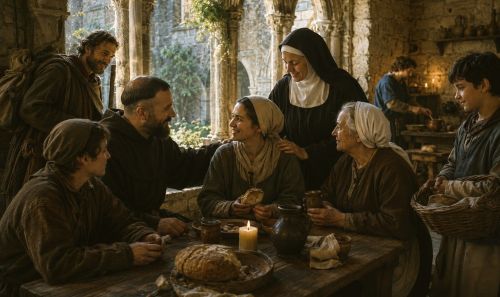
Medieval society prized bloodline, inheritance, and lineage, but people also made family through baptism, fosterage, households, vows, guilds, convents, and memory.

By Matthew A. McIntosh
Public Historian
Brewminate
Introduction: The Myth of the Blood-Only Middle Ages
The medieval world is often imagined as a civilization of bloodlines. Kings ruled by descent, nobles guarded inheritance through marriage, peasants worked land held through family obligation, and legal identity was frequently anchored in parentage, legitimacy, household, and lineage. This picture is not wrong, but it is incomplete. Medieval people did live in societies where blood mattered intensely, especially when property, succession, status, and political memory were at stake. Yet the same societies also developed elaborate ways to create kinship outside biology. A child could acquire spiritual parents through baptism. A young person could be raised in another household and form durable bonds of fosterage, loyalty, and dependence. Men could become ritual brothers. Women could create networks of devotion, patronage, and sisterhood. Guild members, monks, nuns, apprentices, servants, widows, and neighbors could belong to communities that functioned as practical families, even when no shared blood joined them.
The modern phrase “families of choice” must be used with care. Medieval people did not generally imagine the self in the language of modern therapeutic identity, personal autonomy, or voluntary emotional replacement. They did not speak of chosen family as a contemporary person might, especially in relation to estrangement, queer survival, or self-fashioned domestic belonging. But if the phrase is treated as an analytical lens rather than a direct medieval category, it reveals something historically real. Medieval kinship was not only inherited. It was also performed, witnessed, sanctified, contracted, remembered, and enforced. The household itself was not identical to the nuclear family. As David Herlihy’s work on medieval households makes clear, domestic life could gather together blood relatives, servants, apprentices, retainers, dependents, and others whose place within the household was structured by labor, obedience, care, and shared survival. The medieval family was not a sealed biological container. It was a social institution porous enough to absorb people who became bound to one another through obligation as much as ancestry.
Christianity sharpened this complexity rather than simplifying it. The church insisted on the moral and sacramental importance of marriage, but it also created forms of kinship that competed with, expanded, or sometimes restricted biological kinship. Baptismal sponsorship produced spiritual kinship, or cognatio spiritualis, a bond serious enough to generate marriage impediments in canon law. That fact is crucial. The church did not treat godparenthood as a mere courtesy or affectionate title. It treated spiritual kin as kin, sufficiently real that sexual or marital unions within those ritual bonds could be prohibited as incestuous. Likewise, monastic communities called their members brothers and sisters not as decoration, but as a disciplined social reality. Guilds and confraternities used the language of fraternity to organize work, charity, burial, prayer, memory, and mutual aid. The vocabulary of kinship traveled widely because medieval society repeatedly needed kinship to do work that blood alone could not do.
Medieval “families of choice” existed not as modern liberal self-invention, but as structured and socially recognized bonds of belonging beyond blood. These bonds were never free from hierarchy, coercion, gender restriction, class exclusion, or ecclesiastical control. A foster child, a godchild, an apprentice, a sworn brother, a nun, or a guild sister did not simply step into an equal alternative family of affection. Each entered a world of rules, duties, expectations, and power. But that is precisely why these relationships mattered. Medieval chosen kinship was not sentimental residue around the edges of “real” family. It was one of the ways medieval people organized survival, loyalty, devotion, labor, memory, and salvation. Bloodline structured power, but chosen and fictive kinship helped structure life.
Late Antiquity and the Christian Recasting of Kinship

The Christian recasting of kinship began before the Middle Ages in the religious, social, and political transformations of late antiquity. Christianity did not simply reject the family. It inherited Jewish, Greek, and Roman assumptions about household authority, marriage, descent, inheritance, and obedience, then placed them under a new theological pressure. The Roman household had long been a unit of property, hierarchy, patronage, and moral order, governed by ideas of paternal authority and civic respectability. Christian writers did not abolish that world. They often accepted household discipline and sometimes reinforced it. Yet they also spoke of a more ultimate family made through baptism, faith, ascetic discipline, and shared membership in the body of Christ. In that language, men and women who were not biologically related could become brothers and sisters, bishops could become fathers, elder holy women could become mothers, and the church itself could be imagined as a household whose bonds reached beyond descent.
This was not merely metaphorical ornament. In the Gospels, discipleship could disrupt ordinary kinship by demanding allegiance to Christ above father, mother, spouse, child, or household. In the letters attributed to Paul, Christian communities were addressed as brothers and sisters, while believers were adopted as children of God and incorporated into a collective body that crossed ethnic, legal, and social divisions. These texts did not create social equality in any simple modern sense, and late antique Christian communities still reproduced many hierarchies of gender, status, and wealth. But they provided a language in which kinship could be remade through religious belonging. The Christian convert did not cease to have parents, children, or lineage. Rather, conversion placed inherited kinship inside a larger imagined family, one defined by sacrament, discipline, charity, and eschatological hope.
Asceticism intensified this transformation by making the renunciation or reordering of ordinary family life a visible sign of spiritual seriousness. From the third and fourth centuries onward, monks, virgins, widows, hermits, and consecrated women challenged the assumption that marriage, reproduction, and household continuity were the only honorable destinations for adult life. Their choices were rarely free in the modern sense, and they were often shaped by family strategy, patronage, inheritance, local expectation, and ecclesiastical authority. Still, ascetic communities created new forms of belonging that made spiritual kinship visible and durable. The monk who entered a desert community or monastery did not become socially weightless. He entered a brotherhood under a spiritual father, a disciplined community in which obedience, correction, prayer, labor, and shared poverty substituted for the claims of ordinary domestic life. The woman who embraced consecrated virginity or communal religious life did not simply withdraw from society. She could become part of a network of female sanctity, patronage, instruction, mutual care, and memory, sometimes gaining a kind of moral authority unavailable to her through marriage alone. These communities offered a different way to imagine human attachment: not through marriage and biological continuation, but through discipline, prayer, imitation, teaching, and shared devotion. They also complicated the boundary between departure and belonging. To leave one household for Christ was not necessarily to become isolated. It could mean entering another household, one organized around spiritual hierarchy rather than blood descent, and around salvation rather than inheritance. In that sense, late antique asceticism did not destroy kinship. It dramatized the possibility that kinship could be remade around holiness, discipline, and chosen religious commitment.
The title “father” became especially important in this new Christian social vocabulary. Bishops, abbots, confessors, and holy men exercised authority in ways that borrowed from household and patriarchal language while redirecting it toward spiritual care. This could be nurturing, protective, and communal, but it could also be hierarchical and controlling. Late antique Christianity did not escape patriarchy by spiritualizing kinship. It often reproduced patriarchal power in new forms. Yet the very transfer of familial language to bishops, monks, abbots, and spiritual guides reveals how flexible kinship had become. A man could be father not because he generated children, but because he taught, disciplined, protected, interpreted scripture, mediated divine grace, or governed a religious community. A woman could be mother through ascetic authority, patronage, holiness, teaching, or the formation of other women. Christian kinship expanded the meaning of family even as it remained entangled with authority.
By the end of late antiquity, the medieval world had inherited a powerful double vision. Blood family remained necessary, honored, and legally consequential, but Christian belonging had made it impossible to treat biology as the only true foundation of kinship. The church imagined itself as a family of believers. Monasticism made brotherhood and sisterhood into lived institutions. Baptism would soon generate formal spiritual kinship with legal consequences. Saints, bishops, abbots, abbesses, godparents, monks, nuns, widows, and patrons all participated in a Christian social order where family language could be detached from reproduction and applied to bonds of faith, discipline, charity, and salvation. The result was not a modern “chosen family,” but it was unmistakably a world in which kin could be made.
Baptism, Godparenthood, and the Making of Spiritual Kin
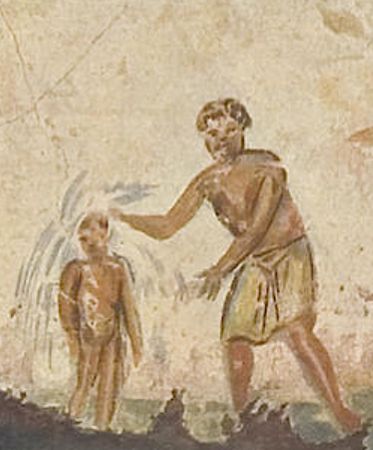
This spiritual kinship became one of the clearest medieval examples of kinship made rather than inherited. Joseph H. Lynch’s work remains essential because it shows that baptismal sponsorship developed into a serious kinship system in early medieval Europe, not simply a devotional custom. The godparent stood in a relationship not only to the child but also, in many understandings, to the child’s parents and wider household. Bernhard Jussen’s study sharpens the point by treating spiritual kinship as a social practice, one that shaped relationships among families, communities, and institutions. Through baptism, people could become connected in ways that resembled kinship because medieval Christianity treated sacramental relationship as socially real. This was not metaphor pretending to be law. It was ritual producing obligation.
The seriousness of that bond is visible most clearly in marriage restrictions. Medieval church authorities treated spiritual kinship as an impediment to marriage, meaning that certain unions between godparents, godchildren, biological parents, and spiritually related persons could be forbidden as incestuous. The exact scope of those restrictions changed over time and varied according to region, ecclesiastical interpretation, and reforming pressure, but the principle is unmistakable: spiritual kinship was kinship strong enough to regulate sexuality and marriage. This matters because medieval society reserved incest prohibitions for relationships considered dangerously close. To classify godparental bonds within that moral and legal field was to declare that baptism had created a real family tie. A godfather or godmother was not simply an honored friend. The church could imagine that person as kin in a way that affected future marriage choices, household strategy, and social alliance.
Godparenthood also allowed families to build relationships across households and, at times, across social rank. Parents did not choose sponsors casually. A sponsor might be selected because of piety, friendship, local reputation, patronage potential, political usefulness, neighborhood connection, or family alliance. In elite circles, baptismal sponsorship could reinforce lordship, patronage, and dynastic association. In village or urban communities, it could bind neighbors and households into networks of obligation that mattered in ordinary life. The godparent might assist in religious instruction, provide moral oversight, offer protection, or serve as a social connection in moments of vulnerability. The relationship did not automatically create equality, and it could reflect the inequalities already embedded in medieval society. A powerful sponsor might raise a family’s standing, while a dependent household might seek protection through spiritual association. Yet that only underscores the importance of the practice. People used baptismal kinship because it could do social work that blood kinship alone could not always accomplish.
The gendered dimension of godparenthood is equally important. Godmothers were not decorative additions to a male-centered ritual system. They could play significant roles in the religious and social lives of children and families, especially in the practical worlds of birth, baptism, neighborhood care, and female association. Medieval Christianity often restricted women’s formal authority, but godmotherhood gave women a recognized role in the transmission of Christian identity and spiritual responsibility. It did not overturn patriarchal order, and it did not make women ecclesiastical officeholders. Still, it placed women within a sanctioned network of spiritual kinship where they could become morally significant figures outside the biological line. Godmotherhood belongs to the larger history of women’s chosen and semi-chosen ties, linking maternity, devotion, sponsorship, and community responsibility in ways that did not depend solely on childbirth.
Baptismal kinship shows how medieval society could make family through sacrament. It joined theology to social structure, ritual to law, and spiritual duty to everyday life. The child received not only a Christian identity but a broadened network of belonging. The biological parents gained new spiritual relatives. The sponsor accepted a role that could carry moral, social, and legal consequences. Like other medieval forms of chosen kinship, godparenthood was not modern freedom dressed in older clothing. It was controlled, hierarchical, and shaped by ecclesiastical authority. But precisely because it was regulated so closely, it reveals the depth of the medieval conviction that kinship could be created outside blood. At the baptismal font, the Christian community did not merely bless a child. It made new kin.
Fosterage, Householding, and Children Raised into Other Families
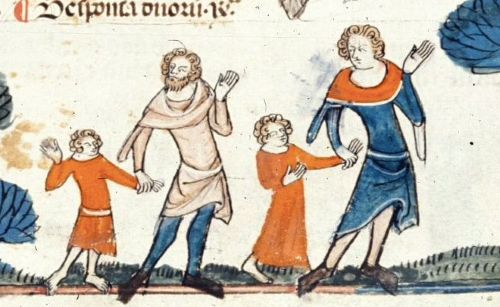
Fosterage moved the making of kinship from the church font into the household itself. If godparenthood created spiritual kin through sacrament, fosterage created social kin through residence, nourishment, education, discipline, and daily care. Medieval children did not always grow up only within the homes into which they were born. Some were sent into other households for training, alliance-building, protection, service, education, or political strategy. Others entered religious communities, noble courts, craft households, or the homes of relatives and patrons. The reasons varied by region, rank, gender, and local custom, but the result was often similar: a child’s identity and loyalties could be shaped by people who were not biological parents. Kinship, in this setting, was not only a matter of descent. It was also made by feeding, teaching, correcting, sheltering, and raising.
The practice was especially visible in societies where fosterage carried formal social and legal meaning. Medieval Ireland offers one of the richest examples. There, fosterage was not a casual arrangement but a recognized institution, often structured by law, status, payment, expectation, and emotional obligation. A child could be placed with a foster family and raised in ways that created lasting bonds between the child, the foster parents, and the foster siblings. Thomas C. O’Donnell’s work emphasizes that fosterage in medieval Ireland must be understood not only as a legal or political institution, but as an emotional history, one in which attachment, grief, loyalty, and memory mattered deeply. The law might frame fosterage as a contract between men, especially between the birth father and the foster father, but the lived experience of fosterage exceeded contract. A child who grew up in another household did not merely acquire training. That child acquired another set of people to whom affection, obligation, and identity could attach.
Fosterage could also serve the interests of power, and this made it especially valuable among aristocratic families whose survival depended on alliance, reputation, training, and political trust. Sending a child into another household could create or reinforce loyalty between kin groups, lords, clients, and neighboring elites. A young noble raised in the household of another lord might learn manners, arms, governance, language, hunting, hospitality, religious observance, and the codes of deference and command that marked elite life. But the child was not only being educated in skills. He or she was being absorbed into a social world where affection and obligation could become politically useful. The host family might become a second household of memory, and foster siblings could become allies whose closeness rested on childhood intimacy rather than blood descent. Such arrangements could soften rivalry, deepen patronage, and bind families together through the body and memory of a child. Fosterage worked differently from marriage alliance but could serve a related purpose. Marriage joined houses through reproductive futurity. Fosterage joined houses through upbringing, imitation, and shared daily life. It made the child a living bridge between households, and the intimacy of childhood could give that bridge emotional force. The foster brother, foster father, or foster mother might become part of a person’s remembered moral world long after childhood ended, shaping later loyalties in war, inheritance disputes, lordship, and local politics. That is precisely why fosterage mattered so much. It did not merely move a child from one roof to another. It redistributed trust.
The same pattern appeared in less formal but equally consequential ways through household placement. Medieval households were rarely limited to parents and their biological children. They could include servants, apprentices, wards, poor relatives, clerks, retainers, guests, and dependents, many of whom were young. For children and adolescents, entry into another household could be a passage into adulthood. A girl might enter service and learn domestic, textile, dairy, or market skills. A boy might be placed with a craftsman, merchant, cleric, or lord. Apprenticeship, though most visible in later medieval urban settings, belonged to this broader world of household formation. The apprentice did not simply attend a workplace. He often lived with the master, ate within the household, learned discipline under domestic authority, and entered a relationship that blended labor, moral supervision, education, and dependency. The master was not the apprentice’s father, but the structure could borrow paternal authority and create durable social bonds.
This does not mean that fosterage or household placement should be romanticized. Many children entered other households because of poverty, strategy, parental calculation, labor demand, or social pressure. A foster child might be valued, but also disciplined. A servant might be protected, but also exploited. An apprentice might gain a trade, but also endure harsh correction. Medieval kinship beyond blood often carried affection and belonging, but it also carried hierarchy. The household was a place of care and formation, but also of authority, surveillance, and work. That tension is central to the history of chosen and fictive kinship. These bonds were real not because they were free of power, but because medieval society treated power, care, labor, and belonging as deeply entangled. To be raised by another family could be loving, strategic, coercive, or all three at once.
Fosterage and householding reveal a medieval world in which childhood itself could be a site of kin-making. The child’s body, habits, speech, loyalties, memories, and skills were formed in the daily world of those who raised or trained them. Bloodline still mattered. A child’s birth family could retain claims of inheritance, name, status, and dynastic memory. Yet the people who fed, taught, disciplined, protected, and lived with the child also helped make that child socially legible. In baptism, spiritual kinship was created by ritual. In fosterage and household placement, kinship was created by time. The medieval family was not only the family that begot the child. It could also be the family that raised the child into the world.
The Medieval Household as a Chosen, Mixed, and Expansive Unit
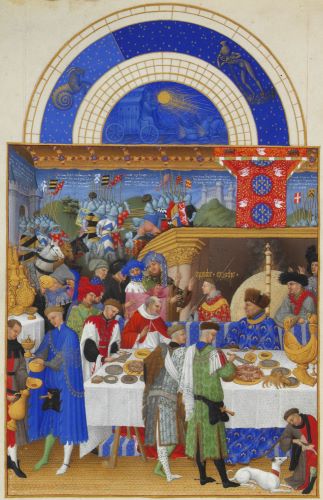
The medieval household was never simply the nuclear family wearing older clothing. It was a broader and more elastic institution, at once domestic, economic, moral, religious, and political. A household might include husband, wife, children, and blood relatives, but it could also contain servants, apprentices, wards, retainers, clerks, foster children, lodgers, laborers, poor dependents, and guests. Some members were born into it. Others entered through contract, patronage, necessity, apprenticeship, service, charity, or strategic placement. The household became one of the most important medieval spaces in which non-biological belonging was made ordinary. Kinship did not always need a ritual as formal as baptism or a legal structure as distinctive as fosterage. Sometimes it was produced by the daily facts of eating at the same table, sleeping under the same roof, working under the same authority, and sharing the moral identity of a house.
This expansiveness reflected the practical realities of medieval life. The household was not merely a private refuge from the world. It was a unit of production, consumption, discipline, training, and reputation. Work and family life were not sharply separated. Food preparation, craft labor, agricultural work, textile production, trade, child-rearing, hospitality, and religious observance often took place within or around the same domestic structure. Because the household was also a workplace, it absorbed outsiders into its rhythms. A servant girl, an apprentice boy, a widowed aunt, a clerk attached to a lord’s service, or a young person sent away for training might all become part of the same domestic economy. Their status differed, and their rights were unequal, but their lives were organized through a shared household order. The medieval house was not only where kin lived. It was where people became socially formed.
This made the head of household a figure of immense importance. Whether imagined as father, master, mistress, lord, prior, abbess, or craft master, the person who governed a household exercised authority over people who were not always blood kin. Medieval writers and legal customs often treated household order as a moral hierarchy, one that extended beyond biological parenting into service, training, guardianship, and discipline. The master of an apprentice might correct behavior, regulate movement, supervise religious practice, and teach a trade. The mistress of a household might oversee servants, food, textiles, child care, and the internal discipline of domestic life. A lordly household could train young nobles in manners, loyalty, and public identity. These structures could be affectionate, but they were not egalitarian. The language of family could soften dependence, but it could also naturalize obedience. That double edge is essential. The medieval household could make kin-like bonds, but it could also make hierarchy feel intimate.
Apprenticeship shows this pattern with special clarity. In later medieval towns, an apprentice often entered a master’s household for a term of years, learning not only technical skills but also discipline, conduct, reputation, and the expectations of urban life. The apprentice was not simply an employee. He was a young person placed under domestic authority, often living with the master and participating in the household’s daily order. He might eat with the family, sleep in the house, attend church under supervision, observe business negotiations, learn the etiquette of customers and suppliers, and become known publicly through the master’s reputation. The relationship was contractual, but it was also formative, because craft training was never merely mechanical. It involved moral regulation, bodily habit, speech, punctuality, trust, and the slow acquisition of a place within the urban economy. Like fosterage, apprenticeship made identity through time, proximity, and instruction. The apprentice did not become the master’s biological child, but the arrangement borrowed from paternal power and created a bond that could continue into adulthood through patronage, trade networks, guild membership, or later partnership. A successful apprentice might eventually become a journeyman or master in his own right, but his path into that future was shaped by the household that received him. The master’s roof was not only shelter. It was a social threshold, a place where an outsider could be remade into a skilled member of a craft community.
Servants occupied a similar but distinct place in the mixed household. Many medieval servants were young and unmarried, and service could function as a life-cycle stage between childhood and marriage, especially in parts of late medieval England and northwestern Europe. Service was labor, and sometimes difficult labor, but it was also a way of entering another household’s discipline and protection. A servant could gain food, lodging, wages, training, contacts, and social experience, while the household gained labor and loyalty. This did not mean that servants were treated as equal family members. Many were vulnerable to exploitation, dismissal, sexual danger, and harsh correction. Yet their presence complicates any narrow definition of family. They lived inside the domestic unit, helped sustain it, and often knew its internal life more intimately than distant blood relatives did. Medieval belonging was not always measured by affection alone. It was also measured by dependence and participation.
The noble and royal household magnified these dynamics on a far larger and more politically visible scale. Great households gathered together kin, servants, officers, knights, pages, clerics, cooks, grooms, ladies-in-waiting, administrators, entertainers, and clients. They were centers of power as much as residences, and their internal organization could mirror the political order beyond their walls. To belong to such a household could define a person’s career, loyalties, political identity, and future prospects. Young people placed in elite households learned how to serve, command, speak, dress, fight, pray, and perform status. They absorbed the gestures, habits, expectations, and allegiances of the house itself. Their household affiliation could matter as much as their bloodline in determining opportunity, because proximity to lordship created access to favor, marriage prospects, military training, administrative experience, and advancement. The noble household functioned as a school of power and a theater of kin-like association. It did not erase birth. Indeed, elite households were deeply attentive to rank and lineage. But they also created bonds of service and patronage that could become intensely personal. Loyalty to a house could mean loyalty to a family, a lord, a memory, a place, and a future. A retainer might speak of service in the language of honor. A page might grow into knighthood under the shadow of a lord who was not his father. A lady-in-waiting might become tied to the fortunes, griefs, and strategies of a noblewoman’s household. The household did not merely contain power. It manufactured loyalty.
Women’s labor and authority were central to this household world. Medieval domestic space is sometimes imagined as passive or private, but households depended on the managerial, economic, and disciplinary work of women. Wives, widows, mothers, mistresses, abbesses, craftswomen, and female servants participated in the making and maintenance of household identity. In urban settings, women could help train younger workers, manage shops, supervise servants, and sustain family businesses. In rural settings, women’s work in food production, dairying, brewing, textile work, child care, and household management was indispensable. Female-headed households, especially those of widows, could become important centers of support for children, servants, apprentices, and poorer dependents. The household as mixed family was not only a male-governed structure, even though medieval law and custom often privileged male authority. Women made households livable, productive, and socially coherent.
The medieval household reveals how ordinary and practical chosen kinship could be. It did not always require dramatic vows, sacred sponsorship, or formal brother-making rituals. Often it emerged from the lived structure of dependence: who fed whom, who taught whom, who slept under whose roof, who gave correction, who shared work, who protected, who remembered, and who mourned. These relationships were not pure chosen family in the modern sense, because they were shaped by inequality, necessity, labor, age, gender, and status. But they were also not reducible to employment or biology. The household was a social organism that could incorporate outsiders and make them part of its daily identity. In medieval life, blood might define inheritance, but household belonging defined much of the ordinary world in which people learned who they were.
Sworn Brotherhood, Ritual Friendship, and the Problem of Interpretation
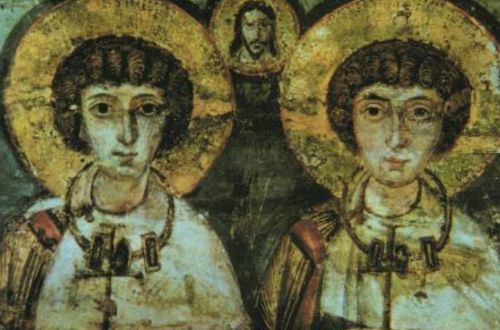
Sworn brotherhood brings the question of medieval chosen kinship into especially sensitive territory because it sits at the intersection of ritual, friendship, loyalty, religion, politics, and modern debates about sexuality. Medieval people could make bonds between unrelated men that were publicly recognized, emotionally intense, and sometimes ritually marked. These bonds might be described through the language of brotherhood, friendship, peace, alliance, charity, or spiritual companionship. They were not biological kinship, yet they could claim some of kinship’s moral force. A sworn brother might pledge loyalty, protection, assistance, memory, or mutual defense. In some contexts, ritual actions such as shared prayers, joined hands, exchanged kisses, shared cups, or liturgical blessing gave these ties public form. Such practices do not allow simple translation into modern categories, but they do show that medieval society possessed ways to bind unrelated people together in relationships deeper than ordinary acquaintance.
The Eastern Christian rite often discussed under the name adelphopoiesis, or brother-making, has attracted particular attention because it appears to ritualize the creation of brotherhood between men. Claudia Rapp’s work is especially important here because it places brother-making in the broader world of late antique and Byzantine social practice rather than treating it as an isolated curiosity. The rite could connect monks, laymen, patrons, friends, or associates through a sacred bond shaped by Christian language and ritual performance. It did not simply announce private feeling. It made a relationship visible before God, community, and ecclesiastical authority. That visibility matters. Medieval chosen kinship was often strongest when it could be witnessed and placed within a recognized moral framework. Brother-making did not necessarily make two men legal brothers in every sense, but it did create a ritual language through which loyalty and affection could be solemnized.
The Western evidence is different but equally important. Elizabeth A. R. Brown’s study of ritual brotherhood in Western medieval Europe cautions against treating Eastern rites as the whole story or assuming that brother-making belonged only to Byzantine practice. Western medieval societies also had forms of sworn brotherhood, artificial kinship, and ritual friendship that joined men through oath, pledge, or ceremony. These could appear in aristocratic, military, civic, and devotional contexts. They might serve peace-making after conflict, reinforce lordship, establish mutual defense, or create alliances where blood kinship was absent or insufficient. The oath itself was a powerful medieval instrument because it joined speech, honor, memory, and divine accountability. To swear brotherhood was not merely to express affection. It was to place the relationship under the weight of public promise.
This is where interpretation becomes difficult, and where I must move carefully. John Boswell famously argued that certain premodern same-sex union ceremonies could be understood as same-sex unions with deep analogies to marriage. His work forced scholars to confront evidence that had often been ignored, minimized, or sanitized, especially evidence for same-sex affection and ritualized bonds between men. Yet later scholarship has often been more cautious, not because the bonds were shallow, but because medieval categories do not map cleanly onto modern sexual identity or marital law. Alan Bray’s work on friendship, for example, shows that premodern friendship could carry profound emotional, spiritual, and social weight without being reducible to either modern friendship or modern marriage. Mark D. Jordan’s work on the theological construction of sodomy also reminds us that medieval Christian thought developed increasingly anxious and punitive categories around same-sex sexual behavior, which makes any simple identification of sworn brotherhood with erotic partnership historically risky.
The most responsible reading is neither denial nor overtranslation. It would be wrong to strip ritual friendship and sworn brotherhood of emotional depth simply because medieval sources do not speak in modern language. Medieval men could love one another intensely, grieve one another publicly, bind themselves through oaths, share devotional life, and imagine their relationships through sacred language. It would also be wrong to assume that every formalized bond between men was a disguised marriage or a coded sexual relationship. Some were political. Some were spiritual. Some were military. Some were devotional. Some may have contained erotic feeling, though the sources often cannot prove that with certainty. The historian’s task is not to make medieval people either safer or more modern than they were. It is to recognize the variety of bonds their own world allowed, blessed, feared, and regulated.
Sworn brotherhood matters for the history of chosen kinship because it shows that medieval people could make brotherhood by act, not only by birth. The language of brotherhood could be applied to monks, guild members, crusaders, sworn companions, political allies, and intimate friends. It could create solidarity among men who needed a relationship stronger than contract but different from blood. In a violent and unstable world, such bonds could have practical force. A sworn brother might be expected to defend, support, remember, ransom, shelter, avenge, or advocate for the other. The relationship could also carry symbolic force, presenting loyalty as something sanctified by honor and, at times, by religious ritual. This was especially important in societies where trust was both necessary and precarious. Written agreements, lordship ties, and kinship obligations all mattered, but personal sworn loyalty gave relationships a moral intensity that could not always be supplied by law alone. A man who lacked sufficient blood allies might seek security through sworn companionship. A lord might use brotherhood-like ties to stabilize followers. A warrior, pilgrim, monk, or urban associate might bind himself to another man in a way that made obligation personal, memorable, and sacred. Brother-making belongs beside godparenthood, fosterage, householding, and guild fraternity as part of the medieval repertoire for creating kin-like ties outside biological descent. It shows that medieval society did not merely tolerate invented kinship at the margins. It repeatedly built institutions, gestures, and vocabularies through which chosen loyalty could become socially legible.
The problem of interpretation is not a weakness in this evidence. It is the point. Medieval chosen kinship rarely appears in forms that modern categories can absorb without remainder. Sworn brotherhood was not simply friendship, not simply adoption, not simply contract, not simply political alliance, and not simply marriage. It occupied a borderland where affection, obligation, ritual, and power met. That borderland is precisely where much medieval kinship was made. Bloodline remained crucial, especially for inheritance and dynasty, but sworn brotherhood reveals another medieval truth: people could deliberately create bonds that claimed the seriousness of family without requiring the facts of birth. These bonds might be difficult for modern readers to classify, but they were not vague to the people who entered them. They were promises made before others, remembered through ritual, and sustained by the belief that loyalty itself could make kin.
Confraternities, Guilds, and the Family of the Trade

Confraternities and guilds carried chosen kinship into the public and occupational life of the medieval town. Unlike baptismal sponsorship, fosterage, or household placement, these associations were not centered primarily on the child. They organized adults and adolescents around work, worship, charity, discipline, memory, and mutual aid. Their members were not kin by blood, yet they often spoke and acted in the language of brotherhood, sisterhood, fellowship, and fraternity. In a world where urban life could separate migrants from birth families, where illness or widowhood could threaten survival, and where work depended on reputation as much as skill, guilds and confraternities provided a structured community of belonging. They were not families in a sentimental modern sense. They were corporate bodies with rules, officers, dues, rituals, exclusions, and obligations. But precisely because they were structured, they could make non-biological bonds durable.
The medieval confraternity was often devotional before it was occupational. Men and women joined together to honor a saint, maintain an altar, support a chapel, pray for the living and dead, sponsor processions, fund candles, assist poor members, and secure burial rites. These were not minor gestures in a society where salvation, memory, and communal reputation mattered intensely. To be remembered in prayer after death was a profound form of belonging. To have fellow members attend one’s funeral, provide candles, support surviving dependents, or keep one’s name alive in the association’s records was to be woven into a community that outlasted the individual body. Confraternity transformed religious practice into social kinship. It allowed unrelated people to become bound through shared devotion, mutual obligation, and the expectation that no member should pass entirely alone from life into memory.
Guilds developed related forms of solidarity through the world of trade and craft. A craft guild might regulate apprenticeship, workmanship, prices, tools, working conditions, feast days, religious observances, and entry into the trade. A merchant guild might protect commercial privilege, negotiate civic power, and defend the interests of its members. Yet these associations were not merely economic mechanisms. Gervase Rosser’s work is especially useful here because it emphasizes the moral and social art of solidarity within medieval guild life. Guilds created fellowship through shared meals, annual feasts, common worship, processions, collective funds, dispute settlement, and care for members in distress. The trade became more than a means of livelihood. It became a community through which people learned who could be trusted, who belonged, who owed help, and who would be remembered. This was especially important in towns where economic life depended on reputation, credit, training, and mutual recognition. A craftsperson did not simply sell labor into an anonymous marketplace. He or she worked within a visible community where skill, honesty, reliability, and religious participation shaped public standing. Guild fraternity could give occupational life the texture of kinship. Members might gather at an altar, march together in civic ceremony, share a feast, contribute to a common chest, assist a sick colleague, support a widow, or ensure a proper burial. These repeated actions made the guild into a moral household beyond the household, a body that joined labor to memory and livelihood to obligation. Its members were not siblings by birth, but the language of brotherhood and fellowship made social sense because the guild claimed the right to discipline, protect, represent, and remember them.
Apprenticeship tied the guild world back to the household, making the family of the trade both domestic and corporate. A young apprentice entered a master’s house, but he also entered the moral orbit of a craft. He learned not only how to make shoes, bake bread, work metal, cut cloth, brew ale, or handle accounts, but also how to behave as someone worthy of trust in that occupational community. The guild helped define the meaning of that trust. It could police bad work, punish dishonesty, regulate entry, and protect the collective reputation of the craft. The guild functioned as a wider kin group for labor. It did not replace the master’s household, but it extended its logic into public life. The apprentice’s future depended on more than bloodline. It depended on whether he could be formed into a recognized member of the trade’s moral family.
Women’s participation in guild and confraternal life complicates any simple picture of these associations as exclusively male brotherhoods. Many formal guild structures privileged men, especially in crafts where citizenship, workshop ownership, and public office were tied to male status. Yet women worked throughout the medieval urban economy as brewers, textile workers, food sellers, servants, shopkeepers, widows continuing family businesses, and sometimes independent craft producers. Confraternities also included women in devotional and charitable roles, and widows could remain connected to the occupational networks of their husbands or households. The language of fraternity often appears male, but the lived communities around work, worship, and charity were frequently more mixed. Women’s inclusion was uneven, regulated, and often subordinate, but it was real enough to matter. The family of the trade could include wives who managed shops, widows who preserved businesses, daughters who learned skills, servants who sustained production, and female members whose devotional labor strengthened the association’s spiritual identity.
The kinship created by guilds and confraternities was also exclusionary. Belonging always defined outsiders. Guilds could restrict entry by status, citizenship, sex, legitimacy, training, religion, wealth, or reputation. They could protect quality and mutual aid, but they could also defend monopoly, privilege, and hierarchy. Confraternities offered charity, but not always to everyone equally. Their obligations were strongest toward members, and membership itself required resources, sponsorship, reputation, or conformity. This is why guild kinship should not be romanticized as a medieval welfare system floating above social conflict. It was a chosen or semi-chosen family with gates. Like biological kinship, it protected some by drawing boundaries around others. Its power came partly from solidarity and partly from exclusion.
Still, guilds and confraternities reveal how thoroughly medieval people could turn association into kinship. Their members worked together, prayed together, ate together, processed together, regulated one another, buried one another, and remembered one another. They made community through repetition: the feast kept each year, the candle lit before the altar, the apprentice sworn into service, the widow assisted, the dead member named in prayer, the dishonest craftsman corrected, the poor brother supported from the common fund. These acts formed a practical family of trade and devotion. Bloodline might determine inheritance, but guild fellowship could determine livelihood, reputation, aid in crisis, and memory after death. In the medieval town, chosen kinship was not only found in private affection or sacred ritual. It could be built into the very organization of work.
Monasteries, Convents, and the Family of Souls

Monasteries and convents made chosen kinship one of the central organizing principles of medieval religious life. To enter a religious house was, at least ideally, to leave behind the ordinary claims of marriage, reproduction, inheritance, and household ambition to join another family ordered toward salvation. This did not mean that monks and nuns became isolated individuals. Quite the opposite. They entered communities structured by rule, obedience, prayer, shared labor, correction, meals, memory, and mutual responsibility. The monastery or convent was not a retreat from kinship so much as a remaking of it. Its members became brothers or sisters not because they shared ancestry, but because they shared a vowed life.
The Rule of Saint Benedict gave one of the most influential western forms to this spiritual family. Benedict imagined the monastery as a disciplined community under an abbot whose title itself meant father. The abbot was expected to teach, correct, protect, and govern, while the monks were repeatedly described as brothers whose life together required obedience, humility, patience, mutual service, and fraternal charity. The Rule did not present monastic life as emotional freedom or personal self-expression. It was demanding, hierarchical, and regulated in detail. Yet the very language of fatherhood and brotherhood reveals how fully monasticism translated family into religious discipline. The abbot’s authority was not supposed to be arbitrary domination, even though real abbots could certainly abuse power. Benedict framed it as paternal responsibility before God, requiring the superior to adjust correction to the needs of different temperaments, care for the weak, restrain the proud, and answer spiritually for those entrusted to him. The monks, in turn, were not imagined as solitary seekers sharing a building by convenience. They were members of a moral household whose daily life trained them to surrender private will for common discipline. Eating, sleeping, praying, working, confessing faults, receiving correction, caring for the sick, welcoming guests, and burying the dead all became acts through which spiritual kinship was made habitual. The monastery became a household without marriage, a family without descent, and a lineage formed through rule rather than blood.
Convents worked through similar patterns while also revealing the gendered limits and possibilities of medieval spiritual kinship. Women who entered religious communities became sisters under the authority of an abbess, prioress, or other superior, and their lives were shaped by prayer, enclosure, labor, reading, liturgy, and communal discipline. For some women, especially those from elite families, convent life could be shaped by dynastic strategy, dowry arrangements, education, or family politics. For others, it offered a rare form of female community that could endure across generations. A convent might become a place where women taught one another, preserved memory, managed property, cultivated devotion, cared for the sick, received visitors, and exercised authority within the limits allowed by ecclesiastical structures. The language of sisterhood was not sentimental. It named a real institutional life in which women shared space, obligation, discipline, and spiritual identity.
The religious family was also a family of the dead. Medieval monasteries and convents cultivated memory with extraordinary seriousness, praying for founders, patrons, former members, benefactors, relatives, and the wider community of the faithful. Burial within or near a religious house could bind lay families to monastic communities, while commemorative practices kept the dead present within the rhythms of prayer. This mattered because medieval kinship was not only about birth and marriage. It was also about remembrance. A biological family might preserve name, property, and lineage, but a religious community could preserve the soul in prayer. The monastery expanded kinship across time, joining the living and dead in a spiritual household sustained by liturgy. To be remembered by monks or nuns was to belong to a family whose work continued after one’s own body had disappeared.
These religious communities were not pure chosen families in the modern sense. Many children entered monasteries as oblates through the decisions of parents. Noble families could use convents to manage daughters, widows, inheritance, and alliances. Monasteries could reproduce class privilege, clerical hierarchy, and gendered control. Entry into religious life might be sincere, pressured, strategic, or some mixture of all three. Yet even when the initial act of entry was shaped by family strategy, the community itself could still become a new kinship world. A child oblate grew up among monks or nuns. A widow might enter a convent and exchange marital householding for spiritual sisterhood. A monk might spend more of his life with his brothers than he ever had with his birth family. The fact that these communities were not always freely chosen does not make them irrelevant to chosen kinship. It makes them medieval: structured, constrained, sacred, and socially consequential.
Monasteries and convents reveal one of the clearest medieval alternatives to the blood family. They made kinship through vows, rule, liturgy, obedience, shared memory, and the hope of salvation. Their members called one another brothers and sisters because they lived inside a disciplined spiritual household. Their leaders became fathers and mothers because authority was imagined through care as well as command. Their dead remained present because prayer extended belonging beyond death. The family of souls was not a metaphor hovering above medieval life. It was an institution, a place, a routine, a hierarchy, and a memory system. Bloodline produced heirs. The religious house produced spiritual descendants, communal identity, and the promise that no soul entrusted to its care would be entirely alone.
Women’s Chosen Kinship: Convents, Companionship, Patronage, and Survival
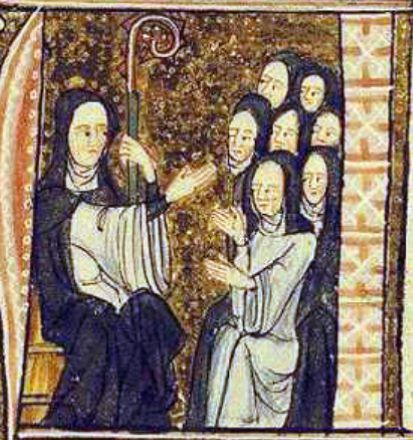
Women’s chosen kinship in the medieval world must be understood within the limits placed on women’s bodies, labor, property, mobility, and authority. Medieval women were often defined through relationships to fathers, husbands, sons, lords, confessors, and ecclesiastical superiors, yet those constraints did not eliminate female agency or female solidarity. Women formed bonds outside biological kinship through convents, beguine communities, godmotherhood, household service, neighborhood association, patronage, devotional friendship, and shared labor. These ties were not always formally named as family, but they often performed family-like work. They offered instruction, shelter, memory, intercession, economic assistance, emotional recognition, and survival in a world where biological kin could be absent, dead, abusive, distant, impoverished, or politically inconvenient. This is especially important because women’s access to security was often mediated through households they did not fully control. Marriage could provide status, but it could also bring vulnerability. Widowhood could open limited authority, but also expose a woman to economic pressure, litigation, or predatory kin. Religious life could offer refuge, but also discipline and enclosure. Female networks were not decorative. They were practical structures of endurance. They allowed women to share knowledge, protect reputations, negotiate danger, preserve memory, and create belonging where patriarchal family structures were insufficient or unsafe.
Convents offered one of the most visible institutional forms of female chosen kinship. A woman entering religious life became part of a community of sisters governed by rule, liturgy, enclosure, hierarchy, and shared spiritual purpose. This could be restrictive, especially when families used convents to manage daughters, widows, property, or reputation. Yet convents also created spaces where women could live with other women, cultivate learning, preserve memory, manage estates, educate girls, produce manuscripts, exercise administrative authority, and develop devotional cultures not reducible to marriage or motherhood. The abbess or prioress could become a spiritual mother, while fellow nuns became sisters through vowed life rather than blood. For some women, especially elite women with access to education and patronage, the convent could become not a disappearance from the world, but a different kind of world.
Beguine communities and other semi-religious female associations expanded this pattern beyond formal monasticism. In the towns of the Low Countries, France, and parts of Germany, beguines created forms of communal life that did not fit neatly into marriage, conventual enclosure, or ordinary household dependency. They lived pious lives, often in groups or courts, supporting themselves through labor, teaching, nursing, textile work, and charitable service. They were not always permanently vowed, and their status could make them vulnerable to suspicion from clerical authorities. Yet their communities reveal how powerfully women sought forms of belonging outside the binary of wife or nun. The beguine world allowed women to build spiritual companionship, mutual aid, and practical independence while remaining embedded in urban devotional life. That independence was always precarious, but its very precariousness shows why chosen kinship mattered. For women whose lives did not or could not conform to marriage, alternative communities could become the difference between marginality and meaningful belonging.
Female friendship and devotional companionship also shaped medieval women’s chosen bonds. Women exchanged letters, prayers, counsel, books, visions, and spiritual encouragement. Holy women gathered disciples and supporters. Visionaries depended on confessors and scribes, but also on female listeners, patrons, companions, and communities that preserved their authority. The language of sisterhood could be spiritual, emotional, and practical at once. Women’s religious writing often emerged from networks rather than solitary genius: a woman experienced, interpreted, dictated, remembered, copied, protected, or circulated sacred knowledge with the help of others. These networks could be especially important because women’s public authority was frequently contested. A woman’s holiness often had to be witnessed and defended. Chosen companions, patrons, and sisters helped make that possible.
Patronage gave female kinship another powerful form. Noblewomen, queens, widows, abbesses, and urban women with resources could support religious houses, hospitals, poor women, clerics, artists, writers, dependents, and servants. Patronage was never purely charitable. It carried expectations of prayer, loyalty, reputation, remembrance, and influence. A widow might turn to a convent for spiritual support and burial memory. A queen might cultivate religious women as allies and intercessors. A noblewoman might sponsor a house where daughters, widows, relatives, and unrelated women could find security. These relationships joined material support to spiritual kinship. They also gave women ways to exercise power in a society that often denied them formal public office. Through gifts, protection, founding, advocacy, and memory, women could make networks of obligation that resembled extended families of devotion and dependence. Such networks could cross the boundary between household and institution. A woman might use her dower lands, household resources, political influence, or widow’s autonomy to sustain communities that then prayed for her, sheltered women connected to her lineage, supported the poor, or preserved her name after death. The exchange was spiritual, but also social and political. Patronage allowed women to convert material resources into memory, authority, and chosen attachment. It created bonds in which the giver was not merely a benefactor and the receiver was not merely dependent. Both parties entered a relationship of obligation. Prayer, protection, commemoration, counsel, and loyalty formed a reciprocal economy of belonging.
Women’s chosen kinship was not a romantic alternative floating outside medieval patriarchy. It was built inside a world of restriction, danger, and unequal power. Precisely for that reason, it mattered. Convents, beguine houses, godmother relationships, neighborhood networks, household service, female patronage, and devotional companionship gave women ways to endure, act, remember, and be remembered beyond the narrow claims of bloodline and marriage. These bonds did not abolish hierarchy, and they could be shaped by class, rank, enclosure, clerical control, and economic vulnerability. But they made space for women to belong to one another. In a society that often defined women by the families into which they were born or married, chosen and semi-chosen female kinship allowed women to create other circles of care, authority, and survival.
Chosen Kinship, Law, and the Limits of Belonging
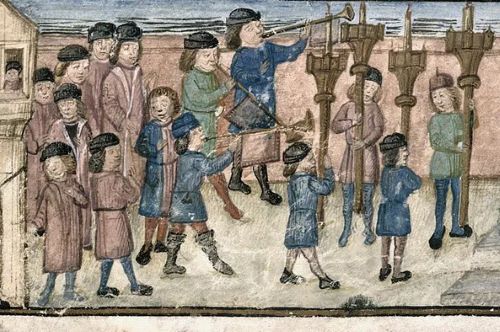
Chosen kinship in the medieval world was powerful, but it was never unlimited. Medieval societies could make kin through baptism, fosterage, vows, householding, guild fellowship, monastic profession, and patronage, yet these bonds existed within legal and social orders that still privileged blood, marriage, legitimacy, rank, gender, and property. The same world that recognized spiritual kinship also defended inheritance lines. The same household that absorbed servants and apprentices could dismiss or discipline them. The same guild that called its members brothers could exclude outsiders from work. The same convent that offered women sisterhood could be used by families to manage daughters, widows, and estates. Medieval chosen kinship mattered precisely because it was real enough to carry obligation, but its reality did not make it equal to every other form of belonging.
Canon law reveals both the seriousness and the limits of made kinship. Spiritual kinship created through baptism could generate marriage impediments, which means ecclesiastical authorities treated godparents, godchildren, and related parties as connected in ways that affected the regulation of sexuality and marriage. That is a remarkable statement about the power of ritual to create kin, because marriage prohibitions were not casual matters in medieval Christian society. They shaped household strategy, parish life, local reputation, and the legitimacy of children. If a bond made at the font could prevent a later marriage, then the church had clearly given sacramental kinship a force that extended beyond pious language. Yet canon law did not treat spiritual kinship as identical to biological descent in every domain. A godparent might be kin for purposes of marriage prohibition, moral responsibility, and spiritual formation, but that did not automatically make the godparent an heir, guardian, or member of the lineage in the property-bearing sense. Nor did spiritual kinship dissolve the practical authority of biological parents, household heads, or local inheritance custom. The church could expand kinship sacramentally while secular law and family strategy continued to protect bloodlines, names, estates, and dynastic claims. This was not contradiction so much as layered belonging. Different institutions recognized different kinds of kin for different purposes. The font could create one kind of family, the marriage bed another, the household another, and inheritance law another still. Medieval people did not need all these forms of kinship to collapse into one meaning. They lived among overlapping systems, each powerful in its own field.
Inheritance law made those limits especially clear. Medieval property transmission, particularly among elites, depended heavily on legitimate birth, marital alliance, recognized descent, and the preservation of lineage. A foster child might be loved. A sworn brother might be trusted. A servant might spend decades inside a household. A monk might call another monk brother more sincerely than he ever addressed a blood relative. Yet inheritance usually followed rules that favored blood or formally recognized legal arrangements. Affection could influence gifts, patronage, dowries, corrody arrangements, benefactions, or testamentary bequests, but it did not automatically overturn the claims of lineage. Blood mattered most where property and power were at stake because medieval families were not only emotional units. They were mechanisms for transmitting land, office, status, memory, and political advantage.
The law also marked some people as less able to belong. Illegitimacy, servile status, poverty, gender, religious difference, and foreignness could restrict access to kinship-like protections. A child born outside marriage might be loved, fostered, patronized, or spiritually supported, but could face legal disadvantage in inheritance and status. A servant might belong to a household in daily life while remaining socially inferior and vulnerable. A woman might enter a convent, guild network, or patronage circle, yet her choices were shaped by male guardianship, dowry expectations, widowhood law, clerical authority, and the economic pressures of survival. Jewish, Muslim, heretical, enslaved, or otherwise marginalized people could be excluded from Christian forms of corporate belonging or incorporated only under unequal and coercive conditions. Medieval kin-making did not operate in a neutral social field. It worked through structures that assigned different people different capacities for recognition.
Guilds and confraternities show this double structure with particular clarity. They could provide mutual aid, burial, prayer, feast, discipline, professional identity, and a language of fraternity. But they also guarded membership. To belong to the family of the trade required entry through training, reputation, dues, citizenship, legitimacy, patronage, or acceptance by existing members. Guild solidarity depended on boundaries. It protected insiders by limiting outsiders. This does not make guild fellowship false. It makes it historically intelligible. Medieval corporate kinship often worked by defining who counted as a brother, sister, fellow, member, or neighbor, and who did not. The very warmth of belonging was produced by exclusion’s cold edge. A guild could bury its poor brother with dignity while preventing another laborer from entering the trade at all.
Religious communities had similar limits. Monasteries and convents created families of souls, but they were not socially blank spaces. Elite houses could reproduce aristocratic privilege. Some communities required dowries or entry payments. Children could be offered as oblates before they were capable of meaningful consent. Abbots and abbesses exercised authority that could nurture, discipline, or control. Convent life could offer women education, sisterhood, and spiritual authority, but it could also serve family strategies that removed daughters from marriage markets or contained widows’ property. A monk or nun might find genuine chosen belonging inside the cloister, but the route into that belonging could be shaped by pressures outside the self. Medieval religious kinship was both liberating and constraining, both chosen and imposed, both spiritual and institutional.
The limits of chosen kinship do not weaken the larger argument. They strengthen it by showing that medieval belonging was never simply a matter of feeling. Kinship became socially powerful when it was recognized, ritualized, regulated, remembered, or placed inside an institution capable of enforcing obligation. Medieval people could make kin, but they usually made kin through structures that already had authority: church, household, lordship, craft, law, neighborhood, monastery, or confraternity. This is why medieval chosen kinship cannot be equated with modern elective intimacy. It was less individualistic and more corporate, less private and more public, less free-floating and more rule-bound. Yet within those limits, it mattered enormously. Bloodline could decide inheritance, but chosen kinship could decide who raised a child, who prayed for the dead, who protected a widow, who trained an apprentice, who stood beside a sworn companion, and who made survival possible.
Late Medieval Urban Life and the Multiplication of Social Families
The following video from “Medieval History” explores the medieval home:
Late medieval urban life multiplied the need for social families because the town gathered people who were often separated from the protections of birth kin. Migrants came seeking work, apprenticeship, trade, service, charity, or protection, but arrival in a city did not automatically bring security. A young apprentice might live far from parents. A servant might depend on wages, lodging, and the goodwill of an employer. A widow might need neighbors, confraternity members, or parish ties to defend her reputation and livelihood. A poor laborer might survive through informal credit, shared lodging, charity, and the fragile kindness of others. The late medieval town did not dissolve kinship into individualism. It created conditions under which kinship-like belonging had to be multiplied. When blood relatives were absent, dead, distant, or economically powerless, urban people turned to households, guilds, confraternities, parishes, hospitals, neighbors, patrons, and work communities to fill the gaps.
The parish was one of the most important urban arenas for this expanded belonging. It gathered residents into a local religious community organized around baptism, confession, marriage, burial, feast days, processions, sermons, almsgiving, and the rhythms of the liturgical year. Parish life did not make everyone equal, and parish communities could be divided by wealth, gender, occupation, reputation, and status. Still, the parish gave urban people a shared religious geography. It marked where children entered Christian society, where couples married, where the sick sought intercession, where the dead were buried or remembered, and where neighbors encountered one another as members of a moral community. The parish helped make strangers legible to one another. It did not replace the family, but it provided a wider frame in which local belonging could become visible, ritualized, and remembered.
Hospitals, almshouses, and charitable institutions also reveal how late medieval cities created forms of social care beyond the blood household. Medieval hospitals were not hospitals in the modern clinical sense alone. Many functioned as religious and charitable houses for the poor, sick, elderly, disabled, orphaned, pilgrim, or otherwise vulnerable. Their care was shaped by Christian ideals of mercy, but also by hierarchy, discipline, selection, and reputation. Not everyone received help, and charity could reinforce social boundaries even as it relieved suffering. Yet these institutions matter because they show the city developing organized ways to support people whose biological families could not or would not sustain them. To receive food, shelter, nursing, prayer, burial, or institutional remembrance was to be drawn into a community of care that operated outside ordinary descent. The urban poor were not always embraced as kin, but they were sometimes treated as spiritual dependents within a Christian economy of mercy.
The Black Death and later plague outbreaks intensified the importance of such non-biological networks. Mass mortality fractured households, disrupted inheritance, created orphans and widows, weakened labor systems, and exposed the fragility of relying on blood kin alone. Plague did not create chosen kinship, but it made its necessity harder to ignore. Survivors needed neighbors to witness wills, guilds to protect trades and dependents, confraternities to bury the dead, parishes to maintain rites, and charitable institutions to absorb some of the social shock. The crisis also made memory urgent. Who would pray for the dead when families were broken? Who would maintain a burial, a candle, an anniversary, a name? In late medieval cities, social families became one way communities answered mortality. They gave structure to grief and continuity to people who might otherwise vanish from the record of the living. In a plague-struck town, the ordinary assumptions of household continuity could collapse with terrifying speed, leaving property unsettled, children unprotected, workshops without masters, servants without employers, and bodies without the usual circle of mourners. Urban institutions could not repair all of that damage, and they often failed the poorest most harshly, but they provided frameworks through which some fragments of care could continue. A guild chest might help with burial costs. A confraternity might preserve prayers for members whose biological families had disappeared. A parish priest or neighbor might become the witness through whom a dying person’s last wishes entered the record. These were not replacements for lost parents, spouses, siblings, or children in any simple emotional sense. They were social mechanisms for surviving the rupture of family itself. The plague years reveal the depth of medieval dependence on constructed belonging. When blood households broke under the pressure of mortality, the wider families of parish, craft, charity, and devotion became part of the fragile architecture that kept urban life from dissolving entirely.
By the later Middle Ages, urban society had produced a dense web of belonging that could not be reduced to bloodline. The city contained households, guilds, parishes, confraternities, hospitals, neighborhoods, patronage networks, and devotional groups, each capable of making people responsible to one another in different ways. These bonds were not always warm, equal, or freely chosen. They could be conditional, hierarchical, exclusionary, and fragile. But they were indispensable. Late medieval urban life shows that the “family of choice” was not a single institution but a field of overlapping practices through which people survived mobility, labor, poverty, widowhood, illness, death, and memory. Blood kinship remained important, but the city made clear that no society could live by blood alone.
Conclusion: The Family Medieval People Made When Blood Was Not Enough
The medieval world never abandoned blood. Lineage remained central to inheritance, dynastic legitimacy, social rank, landholding, household memory, and political power. A name, estate, title, craft, or marriage alliance could depend on birth, legitimacy, and descent. Yet the history of medieval kinship becomes distorted when blood is treated as the only meaningful bond. Medieval people lived in societies where kin could also be made through baptism, nurture, residence, vows, work, worship, patronage, charity, burial, and remembrance. They did not use the modern language of “families of choice,” and their world did not organize belonging around modern ideas of individual autonomy. But they understood, often with remarkable seriousness, that human beings needed ties beyond the biological household. When birth kin were absent, insufficient, distant, dangerous, dead, or politically inadequate, other forms of kinship could be created.
These created bonds were not marginal ornaments around the “real” family. They structured daily life. Godparents became spiritual parents at the baptismal font. Foster families raised children into loyalties that could last a lifetime. Households absorbed servants, apprentices, wards, retainers, guests, and dependents into shared routines of work and discipline. Sworn brothers and ritual friends pledged loyalty where blood did not reach. Guilds and confraternities transformed labor, devotion, feast, charity, and burial into corporate belonging. Monasteries and convents made brothers and sisters through rule, liturgy, and shared salvation. Women built networks of sisterhood, patronage, godmotherhood, devotional companionship, and survival inside the limits of patriarchal society. Late medieval towns multiplied these forms of social family because urban life made biological kinship both fragile and insufficient. The result was not one alternative family system, but many overlapping ways of making people responsible to one another.
The limits of these bonds matter as much as their power. Medieval chosen kinship was rarely free, equal, or purely emotional. It was shaped by law, rank, gender, wealth, ecclesiastical authority, household discipline, guild exclusion, and the uneven realities of dependence. A godparent was not necessarily an heir. A servant was not an equal child. A nun’s sisterhood could be both refuge and enclosure. A guild’s brotherhood could protect members while shutting others out. A sworn friendship could be emotionally intense without fitting modern categories of romance, marriage, or identity. These limits should not make us dismiss medieval chosen kinship. They should make us understand it on its own terms. Medieval kin-making worked best when it was ritualized, witnessed, disciplined, remembered, or embedded in an institution with authority. It was not modern elective intimacy. It was structured belonging.
That is why the phrase “families of choice,” used carefully, can illuminate rather than distort the medieval past. It points to a deep truth: medieval people repeatedly made family where blood was not enough. They did so because survival required more than ancestry. Children needed formation. Workers needed protection. Women needed networks. The sick needed care. The dead needed memory. The poor needed advocates. The isolated needed households, parishes, guilds, convents, patrons, companions, and spiritual kin. Bloodline could transmit property, but it could not carry the whole burden of medieval life. The family medieval people made beyond blood was not always gentle, and it was never simple. But it was real. It was sacred, practical, hierarchical, emotional, legal, and communal all at once. It reminds us that family has always been more than biology. It has also been the human labor of choosing, binding, remembering, and remaining responsible for one another.
Bibliography
Affiliate disclosure: Amazon links on this site are paid links. As an Amazon Associate I earn from qualifying purchases.
- Aquinas, Thomas. Summa Theologica. Translated by Fathers of the English Dominican Province. New York: Benziger Bros., 1947.
- Augustine of Hippo. Sermons. Translated by Edmund Hill. Hyde Park, NY: New City Press, 1990–1997.
- Bain, Jennifer, ed. The Cambridge Companion to Hildegard of Bingen. Cambridge: Cambridge University Press, 2021.
- Bennett, Judith M. Women in the Medieval English Countryside: Gender and Household in Brigstock before the Plague. New York: Oxford University Press, 1987.
- Berman, Constance H. The Cistercian Evolution: The Invention of a Religious Order in Twelfth-Century Europe. Philadelphia: University of Pennsylvania Press, 2000.
- Boswell, John. Same-Sex Unions in Premodern Europe. New York: Villard Books, 1994.
- Bray, Alan. The Friend. Chicago: University of Chicago Press, 2003.
- Brown, Elizabeth A. R. “Ritual Brotherhood in Western Medieval Europe.” Traditio 52 (1997), 357–381.
- Brown, Peter. The Body and Society: Men, Women, and Sexual Renunciation in Early Christianity. New York: Columbia University Press, 1988.
- Brundage, James A. Law, Sex, and Christian Society in Medieval Europe. Chicago: University of Chicago Press, 1987.
- Bynum, Caroline Walker. Holy Feast and Holy Fast: The Religious Significance of Food to Medieval Women. Berkeley: University of California Press, 1987.
- Cassidy-Welch, Megan. Monastic Spaces and Their Meanings: Thirteenth-Century English Cistercian Monasteries. Turnhout: Brepols, 2001.
- Clark, Elaine. “City Orphans and Custody Laws in Medieval England.” The American Journal of Legal History 34:2 (1990), 168-187.
- —-. “Social Welfare and Mutual Aid in the Medieval Countryside.” Journal of British Studies 33:4 (1994), 381-406.
- Clark, Gillian. Women in Late Antiquity: Pagan and Christian Life-Styles. Oxford: Clarendon Press, 1993.
- Constable, Giles. The Reformation of the Twelfth Century. Cambridge: Cambridge University Press, 1996.
- Cooper, Kate. The Fall of the Roman Household. Cambridge: Cambridge University Press, 2007.
- Epstein, Steven A. Wage Labor and Guilds in Medieval Europe. Chapel Hill: University of North Carolina Press, 1991.
- Farmer, Sharon. Surviving Poverty in Medieval Paris: Gender, Ideology, and the Daily Lives of the Poor. Ithaca, NY: Cornell University Press, 2002.
- Goldberg, P. J. P. Women, Work, and Life Cycle in a Medieval Economy: Women in York and Yorkshire c.1300–1520. Oxford: Clarendon Press, 1992.
- The Goodman of Paris. A Medieval Home Companion: Housekeeping in the Fourteenth Century. Translated and edited by Tania Bayard. New York: HarperCollins, 1991.
- The Gospel According to John. In The New Oxford Annotated Bible with Apocrypha: New Revised Standard Version, edited by Michael D. Coogan. 4th ed. New York: Oxford University Press, 2018.
- The Gospel According to Mark. In The New Oxford Annotated Bible with Apocrypha: New Revised Standard Version, edited by Michael D. Coogan. 4th ed. New York: Oxford University Press, 2018.
- The Gospel According to Matthew. In The New Oxford Annotated Bible with Apocrypha: New Revised Standard Version, edited by Michael D. Coogan. 4th ed. New York: Oxford University Press, 2018.
- Gratian. The Treatise on Laws with the Ordinary Gloss. Translated by Augustine Thompson and James Gordley. Washington, DC: Catholic University of America Press, 1993.
- Hanawalt, Barbara A. Growing Up in Medieval London: The Experience of Childhood in History. New York: Oxford University Press, 1993.
- —-. “Medievalists and the Study of Childhood.” Speculum 77:2 (2002), 440-460.
- —-. The Ties That Bound: Peasant Families in Medieval England. New York: Oxford University Press, 1986.
- Helmholz, R. H. Marriage Litigation in Medieval England. Cambridge: Cambridge University Press, 1974.
- Herlihy, David. Medieval Households. Cambridge, MA: Harvard University Press, 1985.
- Hilton, R. H. The English Peasantry in the Later Middle Ages. Oxford: Clarendon Press, 1975.
- Howell, Martha C. The Marriage Exchange: Property, Social Place, and Gender in Cities of the Low Countries, 1300–1550. Chicago: University of Chicago Press, 1998.
- Jordan, Mark D. The Invention of Sodomy in Christian Theology. Chicago: University of Chicago Press, 1997.
- Jussen, Bernhard. Spiritual Kinship as Social Practice: Godparenthood and Adoption in the Early Middle Ages. Translated by Pamela Selwyn. Newark: University of Delaware Press, 2000.
- The Life of Christina of Markyate. Translated and edited by C. H. Talbot. Oxford: Clarendon Press, 1959.
- Lynch, Joseph H. Godparents and Kinship in Early Medieval Europe. Princeton, NJ: Princeton University Press, 1986.
- Lynch, Katherine A. Individuals, Families, and Communities in Europe, 1200–1800: The Urban Foundations of Western Society. Cambridge: Cambridge University Press, 2003.
- Macy, Gary. The Hidden History of Women’s Ordination: Female Clergy in the Medieval West. Oxford: Oxford University Press, 2007.
- Mayke de Jong. “To the Limits of Kinship: Anti-Incest Legislation in the Early Medieval West, 500–900.” In From Sappho to De Sade: Moments in the History of Sexuality, edited by Jan Bremmer, 36–59. London: Routledge, 1989.
- McNamara, Jo Ann. Sisters in Arms: Catholic Nuns through Two Millennia. Cambridge, MA: Harvard University Press, 1996.
- Mertes, Kate. The English Noble Household, 1250–1600: Good Governance and Politic Rule. Oxford: Basil Blackwell, 1988.
- Miller, Tanya Stabler. The Beguines of Medieval Paris: Gender, Patronage, and Spiritual Authority. Philadelphia: University of Pennsylvania Press, 2014.
- Newman, Barbara. Sister of Wisdom: St. Hildegard’s Theology of the Feminine. Berkeley: University of California Press, 1987.
- O’Donnell, Thomas C. Fosterage in Medieval Ireland: An Emotional History. Amsterdam: Amsterdam University Press, 2020.
- The Ordinances of the London Craft Guilds. In English Historical Documents, 1327–1485, edited by A. R. Myers. London: Eyre & Spottiswoode, 1969.
- Orme, Nicholas. From Childhood to Chivalry: The Education of the English Kings and Aristocracy, 1066–1530. London: Methuen, 1984.
- —-. “The Culture of Children in Medieval England.” Past & Present 148 (1995), 48-88.
- —-. Medieval Children. New Haven, CT: Yale University Press, 2001.
- Parkes, Peter. “Fosterage, Kinship, and Legend: When Milk Was Thicker Than Blood.” Comparative Studies in Society and History 46:3 (2004), 587–615.
- Paul. The First Epistle to the Corinthians. In The New Oxford Annotated Bible with Apocrypha: New Revised Standard Version, edited by Michael D. Coogan. 4th ed. New York: Oxford University Press, 2018.
- Pollock, Linda A. Forgotten Children: Parent-Child Relations from 1500 to 1900. Cambridge: Cambridge University Press, 1983.
- Rapp, Claudia. Brother-Making in Late Antiquity and Byzantium: Monks, Laymen, and Christian Ritual. Oxford: Oxford University Press, 2016.
- —-. Holy Bishops in Late Antiquity: The Nature of Christian Leadership in an Age of Transition. Berkeley: University of California Press, 2005.
- Rawcliffe, Carole. Medicine and Society in Later Medieval England. Stroud: Sutton Publishing, 1995.
- Rosser, Gervase. The Art of Solidarity in the Middle Ages: Guilds in England 1250–1550. Oxford: Oxford University Press, 2015.
- Rubin, Miri. Charity and Community in Medieval Cambridge. Cambridge: Cambridge University Press, 1987.
- The Rule of Saint Benedict. In RB 1980: The Rule of St. Benedict in Latin and English with Notes, edited by Timothy Fry. Collegeville, MN: Liturgical Press, 1981.
- Shahar, Shulamith. Childhood in the Middle Ages. London: Routledge, 1990.
- Simons, Walter. Cities of Ladies: Beguine Communities in the Medieval Low Countries, 1200–1565. Philadelphia: University of Pennsylvania Press, 2001.
- Swanson, Heather. Medieval Artisans: An Urban Class in Late Medieval England. Oxford: Basil Blackwell, 1989.
- Ward, Benedicta. The Sayings of the Desert Fathers: The Alphabetical Collection. Kalamazoo, MI: Cistercian Publications, 1975.
Originally published by Brewminate, 05.25.2026, under the terms of a Creative Commons Attribution-NonCommercial-NoDerivatives 4.0 International license.
About the Author