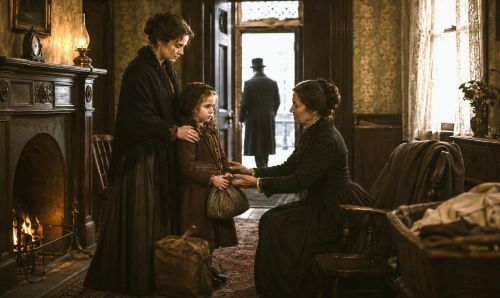
Before modern adoption law, Victorian children moved through kinship, charity, workhouses, secrecy, labor, and rescue, exposing family’s fragile moral boundaries.

By Matthew A. McIntosh
Public Historian
Brewminate
Introduction: Adoption Before Adoption
To write about adoption in the Victorian era is to begin with a necessary act of translation, because the word itself carries a modern legal certainty that nineteenth-century families, charities, courts, and Poor Law officials did not yet possess. In present usage, adoption suggests a formal transfer of parental rights, a judicial act, a legally recognized parent-child relationship, and a state-certified claim of belonging. In much of the Victorian world, especially in Britain, those assumptions would be anachronistic. Children were taken in, boarded out, apprenticed, hidden within kinship networks, sent to orphanages, placed in workhouses, handed to wet nurses, absorbed by neighbors, or moved through charitable institutions, but these arrangements did not amount to adoption in the modern statutory sense. In England and Wales, legal adoption did not arrive until the Adoption of Children Act of 1926, after Victoria’s reign had already passed into memory. The Victorian era offers not a history of adoption as a settled institution, but a history of adoption before adoption, when children crossed household boundaries long before the law knew how to name what had happened to them.
That absence of formal law did not mean an absence of practice. On the contrary, the nineteenth century was crowded with children whose lives depended on informal systems of placement, rescue, concealment, discipline, or exchange. Poverty, parental death, illegitimacy, desertion, migration, disease, and urban overcrowding all placed pressure on families and communities that were already stretched thin. Some children found genuine care in the homes of relatives or strangers. Others were treated as burdens to be transferred, mouths to be fed, moral dangers to be corrected, or future workers to be trained. The category of the “orphan” itself could be elastic, often describing not only children whose parents had died, but also those whose parents were absent, destitute, unmarried, morally condemned, incarcerated, ill, or judged incapable of proper care. Victorian adoption-like arrangements emerged from a social world in which family feeling, economic necessity, religious charity, and public suspicion were constantly entangled.
I treat Victorian adoption as a broad field of child placement rather than a narrow legal category. That wider frame is essential, because the history cannot be understood by looking only for court decrees that did not yet exist in Britain or that existed unevenly in the United States. In Britain, the central story is one of informality, secrecy, Poor Law administration, charitable intervention, institutional care, and later reform. In the United States, the picture developed differently after Massachusetts enacted its 1851 adoption statute, often described as the first modern adoption law because it placed judicial attention, however imperfectly, on the welfare of the child rather than solely on adult interests. Yet even in America, statutory adoption did not immediately displace orphanages, indenture, apprenticeship, almshouses, child labor placements, or the massive relocation of children through the orphan train movement. Law and practice moved at different speeds, and children often lived in the gap between them.
The central argument, then, is not that Victorians lacked concern for children. Many clearly cared, and the century produced powerful languages of rescue, innocence, domestic affection, and child protection. The deeper problem is that these ideals operated within systems that still punished illegitimacy, moralized poverty, valued labor discipline, and left enormous discretion in the hands of private adults, charitable institutions, and local authorities. Victorian adoption before adoption was a revealing contradiction. It showed a society increasingly sentimental about childhood, yet still unwilling or unable to guarantee every child a secure legal identity, a stable household, or protection from exploitation. Before adoption became a legal act of family formation, it was a landscape of need, secrecy, improvisation, and unequal mercy.
Before the Victorian Era: Kinship, Parish Relief, Apprenticeship, and Informal Absorption
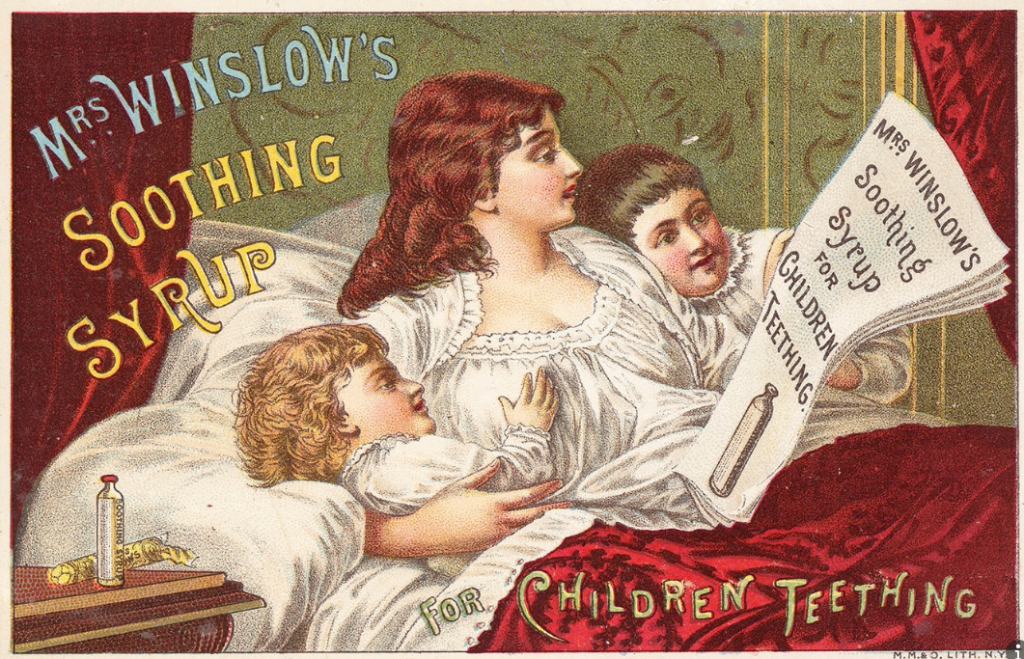
Long before the Victorian period gave child welfare a new vocabulary of rescue, sentiment, and reform, children without secure parental care moved through older systems of kinship, parish responsibility, charity, and labor. These arrangements were not “adoption” in the modern sense, because they did not usually create a new legal parent-child relationship or permanently transfer the full status of family membership. Instead, they reflected a social order in which household belonging was flexible, practical, and often temporary. A child might be raised by grandparents, an aunt, an older sibling, a neighbor, a master, a charitable institution, or a parish-appointed caretaker, depending less on abstract ideas of children’s rights than on custom, necessity, reputation, and the economic capacity of adults. The household was not merely a private emotional unit. It was also a workplace, a unit of discipline, a site of moral training, and a local mechanism for managing dependency.
Kinship was the first and most natural refuge, though never a guaranteed one. In a world of high mortality, remarriage, migration, precarious employment, and frequent economic shocks, children often spent parts of their lives in households other than those of their birth parents. Such movement did not necessarily carry the stigma that later secretive adoption arrangements might acquire, because early modern households regularly included servants, apprentices, lodgers, boarders, stepchildren, nieces, nephews, and unrelated dependents. Yet kinship care was shaped by resources as much as affection. A widowed mother might leave a child with relatives while she worked. A poor family might send a son or daughter into service. An illegitimate child might be quietly absorbed by maternal kin, especially if secrecy could protect the family from scandal. These arrangements could be loving, but they were also fragile, because they relied on the continuing goodwill and solvency of adults rather than on enforceable legal security for the child.
Where kinship failed or poverty overwhelmed it, the parish became the crucial institution. Under the English Poor Laws, local communities bore responsibility for relieving their own poor, including children whose parents had died, disappeared, fallen into destitution, or become unable to provide support. Parish officers did not operate from the modern assumption that dependent children should be placed in emotionally nurturing substitute families. Their task was administrative, moral, and fiscal: to prevent starvation and disorder while controlling costs and discouraging dependency. Parish relief could keep some children with parents or relatives through small payments, food, clothing, lodging, or temporary assistance, but it could also separate children from families if officials judged another arrangement cheaper, more orderly, or more morally corrective. This made parish responsibility both protective and coercive. It could keep a child alive, but it could also redefine that child as a charge upon the rates, a local burden to be managed, or a future laborer whose usefulness needed to be secured. Settlement law sharpened the problem because responsibility for poor relief depended on local belonging. A child’s fate could be shaped not only by need, kinship, or affection, but by the bureaucratic question of which parish had to pay. The parish functioned as a pre-Victorian child welfare authority, but one built around settlement, labor discipline, and public economy rather than the later language of adoption.
Apprenticeship was central to this older system because it seemed to solve several problems at once. It removed dependent children from parish expense, placed them under adult supervision, trained them for work, and reinforced the belief that labor was the proper cure for poverty. Parish apprenticeships were especially significant for poor children, who could be bound to masters in agriculture, domestic service, trades, or manufacturing. In theory, apprenticeship promised instruction, maintenance, and a future livelihood. It could range from genuine training to hard exploitation, depending on the master, the trade, the child’s age, and the degree of local oversight. This is one reason the history of adoption before adoption cannot be separated from the history of labor. Many children were “placed” not because adults imagined them primarily as sons or daughters, but because they could be made useful within a household economy.
Charitable institutions added another layer to this pre-Victorian landscape. The London Foundling Hospital, founded in the eighteenth century, became one of the most important examples of institutional response to illegitimacy, abandonment, and infant vulnerability. Its purpose was not adoption in the modern statutory sense, but rescue, maintenance, moral management, and, eventually, training. The institution also exposed the central contradiction that would persist into the Victorian era: society condemned unmarried motherhood while needing institutions to deal with the children produced under that condemnation. Foundling care could preserve infant life, but it could also require maternal separation, anonymity, and the transformation of a private crisis into an institutional record. Admission itself was shaped by moral judgment, institutional capacity, and the difficult distinction between pity for the child and suspicion of the mother. The mother’s body, sexuality, poverty, and reputation became part of the child’s administrative fate, even when the child had done nothing except be born into a world that treated illegitimacy as evidence of disorder. The Foundling Hospital belonged to a wider culture in which charity could be merciful without being egalitarian. It might save a child while also erasing, disciplining, or morally classifying the woman who bore that child. In this respect, the foundling system anticipated later adoption secrecy, not because it created adoptive families, but because it helped normalize the idea that a child’s origins might be hidden, renamed, or administratively rearranged for the sake of social order.
By the eve of the Victorian era, then, the basic elements of later adoption debates were already present, though not yet gathered under one legal concept. Children could be absorbed informally into kin networks, maintained by parish relief, bound as apprentices, sent into service, placed in institutions, or hidden within family stories that concealed illegitimacy or poverty. These practices were not marginal. They were part of the ordinary machinery by which society managed dependency before the rise of modern child welfare law. What changed in the nineteenth century was not the movement of children itself, but the moral and political pressure placed upon that movement. As industrialization, urbanization, evangelical reform, and sentimental ideals of childhood intensified, older systems began to look increasingly inadequate. Victorian adoption before adoption would inherit these premodern mechanisms, but it would also expose their limits with new urgency.
The Poor Law World: Workhouses, Pauper Children, and the State’s Reluctant Responsibility

The Victorian history of adoption before adoption cannot be separated from the Poor Law, because the poor child was one of the central figures through whom nineteenth-century Britain negotiated the boundaries between family responsibility, public obligation, moral discipline, and state reluctance. The New Poor Law of 1834 did not create poverty, child abandonment, orphanhood, illegitimacy, or family separation, but it reorganized the institutional world through which destitute children were managed. Its central principle was deterrence. Relief was to be made less attractive than the lowest condition of independent labor, and the workhouse became the symbol of that philosophy. Yet children complicated this logic from the beginning. They could not be blamed in the same way adults were blamed. They were dependents, not failed providers; victims of parental death, unemployment, desertion, illness, low wages, or the collapse of household support rather than authors of their own destitution. Even when officials spoke of pauperism as a moral danger, childhood made that language unstable, because the child seemed at once vulnerable and dangerous, innocent and potentially corruptible, deserving of protection yet feared as the carrier of inherited dependency. Still, the system that took charge of pauper children was designed less around nurture than around economy, order, surveillance, and the prevention of long-term pauper dependency.
The workhouse was never simply one thing. It was an institution of relief, discipline, shelter, punishment, classification, and moral instruction, and its meaning changed according to age, gender, family status, and local administration. For adult paupers, it often represented humiliation and social defeat. For children, it could be both refuge and rupture. A child entering the workhouse might receive food, clothing, basic schooling, and some protection from neglect or starvation, but that care came at the cost of institutional separation and social stigma. Families were often divided by sex and age inside workhouse walls, weakening the ordinary bonds of household life even when parents and children technically remained under the same roof. The institution occupied an uneasy place in the history of child welfare. It could save children from immediate destitution, but it also absorbed them into a system that marked poverty as a moral and administrative problem before it recognized it as a family crisis.
Pauper children forced Victorian officials to confront a question that older parish systems had never fully resolved: were poor children to be treated as extensions of their parents’ poverty, or as future citizens who might be remade through education, discipline, and removal from corrupting environments? The answer shifted across the century, but never cleanly. Early Poor Law administration often treated children as part of a family unit whose relief had to be controlled, limited, and supervised. Yet reformers increasingly argued that children should be separated from adult paupers, not merely physically but morally and socially. Workhouse childhood was thought dangerous not only because of deprivation, but because children might learn pauper habits from parents and other inmates. This fear helped produce district schools, separate pauper schools, industrial training schemes, and later forms of boarding out. It also changed how officials imagined the child’s future. The pauper child was no longer only a present expense to be contained, but a possible adult pauper to be prevented. Education, labor training, religious instruction, and removal from workhouse contamination were justified as investments in social order as much as acts of mercy. The goal was not adoption as family formation. It was rescue from inherited pauperism, a project that combined humanitarian concern with deep suspicion of poor families.
The language of rescue must be read with caution. Many Victorian reformers sincerely believed that poor children deserved a better start than the workhouse could provide, and some reforms did improve children’s lives by expanding schooling, removing them from adult wards, and criticizing brutal or negligent administration. Yet rescue was often defined against the child’s own family. Parents who were poor, unmarried, unemployed, criminalized, sick, disabled, or judged morally deficient could be treated less as people in need of support than as dangers from which children needed extraction. This did not mean Victorian child welfare was heartless. It means its compassion often traveled through class judgment. The poor child could be pitied as innocent precisely when the poor parent was condemned as irresponsible. That distinction became one of the defining moral habits of nineteenth-century welfare thinking, and it would later shape adoption, fostering, child rescue, and institutional placement.
The practical machinery of Poor Law childhood was varied. Some children remained with parents who received outdoor relief, though the New Poor Law officially discouraged such aid to able-bodied paupers. Others entered workhouses temporarily during periods of family crisis. Some were sent to district schools or separate institutions designed to remove them from the supposedly contaminating atmosphere of adult pauperism. Older children might be apprenticed, trained for domestic service, placed in industrial schools, or sent into employment as soon as they were considered capable of work. In some unions, children were boarded out with families, a practice that moved closer to later foster care but still differed from legal adoption because it did not permanently transfer parenthood. Each arrangement carried a different balance of care, discipline, economy, and risk. The child might be protected from hunger, but exposed to institutional regimentation. The child might escape the workhouse, but enter a household where labor expectations outweighed affection. The system’s central weakness was that it asked placement to solve poverty without fully confronting the poverty that made placement necessary.
This is where the Poor Law world connects most directly to adoption before adoption. Victorian Britain did not yet possess a legal adoption system that could make a child fully the son or daughter of new parents, but it did possess a dense administrative culture for moving poor children away from birth households, into institutions, into training, into employment, or into supervised private homes. These practices accustomed officials and reformers to the idea that children could be separated from one family and placed under the authority of another adult body, whether a master, matron, school superintendent, foster family, or charitable guardian. But because the system was rooted in poor relief rather than family law, the child’s legal and emotional status remained unstable. Was the child a pauper, a pupil, a servant, an apprentice, a boarder, a rescued innocent, or a future worker? The answer depended less on the child’s own identity than on the institution that claimed responsibility.
By the late Victorian period, criticism of workhouse childhood had grown sharper, and the idea that children should be raised outside the workhouse gained increasing strength. That shift mattered enormously, because it marked a gradual movement from mere poor relief toward child welfare as a distinct moral and administrative field. District schools, boarding-out schemes, child-rescue organizations, and reform campaigns all reflected the growing conviction that the workhouse was an unsuitable environment for the young, even if reformers disagreed about what should replace it. Yet the movement remained incomplete. The state’s responsibility was still reluctant, mediated through local boards, guardians, inspectors, charities, and reform campaigns rather than expressed through a comprehensive right to family care. This reluctance is crucial. Victorian Britain could increasingly recognize that children needed protection from the workhouse, but it had not yet accepted that every child needed a secure legal family or that poor parents deserved support before removal became necessary. The Victorian Poor Law did not create modern adoption, but it prepared the ground for later debates by making visible the inadequacy of leaving children to poverty, stigma, and institutional improvisation. In that world, the pauper child stood at the threshold of a new idea: that children might require protection not only from destitution, but from the very systems built to manage it.
Illegitimacy, Shame, and the Secret Movement of Children

Illegitimacy was one of the great engines of adoption before adoption, not because every child born outside marriage was placed elsewhere, but because Victorian society made unmarried motherhood a public crisis long before it treated the child’s welfare as an independent legal concern. The illegitimate child carried a stigma that attached first to the mother, then to the household, and finally to the child’s future prospects. Respectability was not a decorative value in Victorian life. It was a form of social currency that shaped employment, marriageability, housing, charity, religious standing, and family reputation. A woman who bore a child outside marriage could face dismissal from service, rejection by kin, exclusion from respectable courtship, or confinement within institutions that described her condition in the language of sin, fallenness, and moral rescue. The child, meanwhile, became evidence. Birth itself could become an accusation.
This is why secrecy mattered so deeply. Children did not simply move because parents died, households collapsed, or poverty made care impossible. They also moved because their existence threatened a story that families, employers, parishes, and charitable institutions wanted to control. An infant might be sent to a wet nurse, placed with a relative, raised as a sibling rather than a child, boarded with a stranger, left at an institution, or absorbed quietly into another household under a rearranged identity. In middle-class families, concealment could preserve inheritance, marriage prospects, and public standing. Among poorer women, secrecy could be more desperate, tied to wages, domestic service, food, lodging, and the hope of avoiding total ruin. A servant who became pregnant might lose not only employment but shelter, reference, and access to respectable future work, making the removal or concealment of the child a matter of survival rather than simple reputation. Families could collude in these fictions, sometimes from cruelty, sometimes from calculation, and sometimes from a complicated desire to protect both mother and child from a social world that offered little mercy. The movement of children was not only practical. It was narrative. To place a child elsewhere was often to rewrite the visible record of sexual transgression.
The Poor Law sharpened this stigma by treating illegitimacy not merely as a private moral failing but as a fiscal and administrative problem. Bastardy law, affiliation proceedings, parish settlement, and disputes over maintenance all asked who should pay for the child. In theory, putative fathers could be pursued for support, but women often bore the heavier burden of proof, shame, and immediate responsibility. The unmarried mother had to navigate a world in which her sexual history could be examined, her credibility doubted, and her need for assistance interpreted as evidence of moral disorder. The child’s placement could be shaped by these pressures before any question of affection or long-term belonging was considered. If a parish feared expense, if relatives feared disgrace, or if an employer feared scandal, the child might be moved not because a better family had been found, but because too many adults had an interest in making the problem disappear.
Charitable institutions both challenged and reinforced this culture of shame. Foundling hospitals, penitentiaries, maternity charities, rescue homes, and religious reform societies could offer food, shelter, medical attention, moral instruction, or temporary protection, and for some women these institutions were the only available refuge. Yet their help often came through the language of repentance. The unmarried mother was not usually treated as a citizen entitled to support, but as a fallen woman to be corrected, supervised, or restored. The child might be pitied as innocent, but that pity depended on separating the infant’s moral status from the mother’s alleged failure. This distinction created one of the most durable patterns in nineteenth-century child welfare: the child could be saved by distancing the child from the mother. Institutions that accepted infants or assisted unmarried women often required investigation, moral scrutiny, religious discipline, or some form of maternal surrender, making charity both a refuge and a mechanism of control. Even when administrators acted with genuine sympathy, they worked inside assumptions that placed motherhood under judgment and treated concealment as a practical solution to scandal. In later adoption culture, that pattern would harden into a powerful assumption that secrecy, separation, and reinvention could protect everyone involved.
The emotional consequences of this system are difficult to recover precisely because secrecy did its work so well. Records are often fragmentary, euphemistic, institutional, or written by authorities rather than by mothers and children themselves. A child recorded as “orphaned” might have had a living mother. A niece or nephew in a census household might have been a concealed illegitimate child. A boarded infant might represent a temporary arrangement, a desperate maternal strategy, or a permanent severing of contact. This archival uncertainty is not merely an obstacle for historians. It is part of the history itself. Victorian secrecy did not just hide individual stories from neighbors. It hid them from the future. The social demand that illegitimacy be concealed left later historians with shadows: changed names, missing fathers, ambiguous kinship terms, institutional admissions, and silences where ordinary family memory should have been.
The secret movement of children reveals the moral architecture of adoption before adoption. Victorian society did not lack family feeling, nor did it lack compassion for vulnerable children. But its compassion was filtered through a culture that treated female sexual transgression as contamination, poverty as suspicion, and respectability as something that had to be protected from inconvenient births. Informal placement could save a mother’s reputation, preserve a family’s standing, keep a child alive, or create a loving household where none had seemed possible. It could also erase origins, sever maternal bonds, and make the child’s identity dependent on adult silence. Before adoption became a legal mechanism for forming families, it was often an unofficial mechanism for managing shame. The child moved quietly through that system, carrying not only the need for care, but the burden of secrets adults had made necessary.
Informal Adoption Inside Families and Communities

If the workhouse and the charity revealed the institutional side of adoption before adoption, the family household revealed its quieter and more ordinary form. Many children who could not remain securely with their birth parents did not enter a formal institution at all. They were taken in by grandparents, aunts, uncles, older siblings, neighbors, employers, godparents, family friends, or married couples whose motives ranged from affection to obligation to economic usefulness. These arrangements often left few traces because they were woven into everyday domestic life rather than recorded as legal events. A child might appear in a census as a niece, nephew, boarder, servant, orphan, adopted child, or simply another member of the household, but those terms could conceal as much as they revealed. In this world, adoption was not a single act. It was a gradual absorption into another home, sometimes open and acknowledged, sometimes veiled by silence, and sometimes so ordinary that no one thought to describe it as adoption at all.
Kinship remained the most socially acceptable form of this absorption because it preserved the appearance of family continuity. A child whose mother died, whose father deserted, or whose parents could not afford another mouth might be placed with relatives without necessarily being treated as a stranger. Such arrangements could be tender and stabilizing, especially when extended families understood care as a shared duty. Yet kinship did not erase hierarchy. A child taken in by relatives might be loved as family while also expected to work, help raise younger children, contribute wages, or accept a lesser emotional status than biological children in the household. The line between care and dependence was thin. A niece could be cherished, but she could also become unpaid domestic labor. A nephew could be educated and protected, but he could also be sent early into service or apprenticeship. Informal adoption within kin networks shows the complexity of family care before modern law: belonging could be real without being equal, and security could depend on temperament, resources, inheritance expectations, and the shifting loyalties of adults.
Outside blood kinship, community-based placements depended even more heavily on reputation and local knowledge. Neighbors might take in a child after a death, a crisis, or a scandal. A childless couple might raise an infant informally. A family friend might provide temporary care that became permanent. In villages, towns, and working-class urban districts, these arrangements could rest on dense networks of familiarity, where people knew who had room, who needed help, who could be trusted, and who might exploit vulnerability. Such local knowledge could serve as a form of protection, but it could also enforce silence. A community that knew the truth about a child’s birth might agree not to say it aloud, especially when illegitimacy, desertion, or family disgrace lay behind the placement. In that sense, the neighborhood could be both witness and accomplice, sheltering the child while preserving the fiction that made the arrangement socially survivable. But urbanization weakened some of those protections. In expanding cities, anonymity made informal placement easier to arrange and harder to supervise. A child could disappear into another household with little public scrutiny, especially if poverty, illegitimacy, or shame made silence convenient for everyone involved. The absence of legal adoption meant that no court necessarily asked whether the placement was stable, whether the child was wanted, whether the birth parent retained contact, or whether the receiving household understood itself as a family rather than merely a place of maintenance.
The emotional range of these informal adoptions was broad. Some children found enduring homes and became, in every practical and emotional sense, sons and daughters. They shared meals, names, memories, work, grief, inheritance hopes, and domestic identity. Others occupied more ambiguous positions. They might be “brought up” by a family without being fully claimed by it, included in daily life but excluded from inheritance, affection, or social presentation. The very informality that made such care possible also made it unstable. A caretaker’s death, remarriage, financial decline, migration, pregnancy, quarrel, or change of feeling could unsettle the child’s place. Without legal recognition, the child’s belonging remained dependent on the continuing consent of adults. This mattered especially for children whose origins were concealed. If a child’s place in the household depended on a family fiction, then truth itself could become dangerous. The revelation of parentage, illegitimacy, or prior poverty might alter how the child was treated or how the household was judged. The child’s emotional life could be structured by uncertainty even in a household that appeared stable from the outside. A child might know, half-know, or suspect that something about their place was different, while adults managed the truth through euphemism, silence, or carefully arranged kinship language. Informal adoption could create real attachment, but it could also make belonging conditional on not asking too many questions.
Informal adoption inside families and communities sits at the center of Victorian adoption before adoption because it reveals both the humane flexibility and the legal fragility of nineteenth-century child placement. These arrangements could protect children from the workhouse, preserve maternal reputation, keep siblings or kin connected, and create genuine bonds where law offered no mechanism. But they also left children vulnerable to silence, unequal treatment, labor exploitation, and sudden displacement. The modern temptation is to see legal adoption as replacing chaos with order, and in many ways it did provide a framework that informal care lacked. Yet the older world was not simply chaotic. It was intimate, local, morally negotiated, and deeply uneven. Children survived through it because people made room for them, but whether that room became a home depended almost entirely on the character and circumstances of the adults who opened the door.
Baby Farming: Paid Care, Infant Death, and the Dark Side of Unregulated Placement
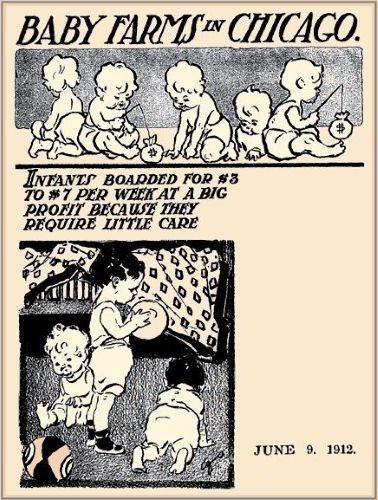
Baby farming was one of the bleakest expressions of adoption before adoption because it transformed the need for infant care into a market that operated in the shadows of shame, poverty, and legal neglect. The phrase referred broadly to arrangements in which infants or young children were taken in by paid caretakers, often women, either for regular payments or for a lump sum that implied longer-term custody. Not every such arrangement was murderous or even consciously cruel. Some resembled wet-nursing, boarding, fostering, or emergency childcare in a society where unmarried mothers, widows, domestic servants, and poor working women had few alternatives. Yet the structure itself was dangerous. Payment created an incentive to accept children, secrecy protected the transaction from scrutiny, and the absence of regulation left infants almost entirely dependent on the honesty, competence, and humanity of the person who had taken them in. The practice also exposed a brutal asymmetry in Victorian moral life: a mother might be condemned for seeking such care, while the society that made open motherhood impossible could pretend to be shocked when hidden arrangements turned deadly. Baby farming was not merely a deviant corner of child placement. It was the underside of a wider system that displaced vulnerable infants without giving them enforceable protection.
The mothers who used baby farmers were often not careless women discarding unwanted children, though Victorian commentary frequently implied as much. Many were trapped by circumstances that respectable society helped create and then condemned. A domestic servant who became pregnant might lose her position, her housing, and her reference, leaving her with almost no way to earn wages while nursing an infant. An unmarried mother might be rejected by kin, unable to enter service with a baby, or forced to conceal the birth to preserve any chance of future employment or marriage. Even married women could turn to paid nursing or boarding if poverty, illness, migration, or wage labor made infant care impossible. Baby farming grew from the same conditions that shaped informal adoption more broadly: the fragility of women’s work, the punishment of illegitimacy, the weakness of public support, and the social demand that inconvenient children be moved out of sight.
The economics of the system made neglect terribly easy. When a caretaker received weekly payments, the child’s survival at least preserved a source of income, though poverty and overcrowding could still produce severe neglect. When a lump sum was paid, the logic could become more sinister, because the infant’s continued life no longer brought continued payment. This did not mean every lump-sum placement ended in deliberate murder, but it did create an obvious moral hazard in a world with little inspection. Infants required costly, sustained, exhausting care: milk, warmth, clean bedding, medical attention, and constant supervision. A baby farmer operating on thin margins, or one who had accepted too many infants, could reduce costs by underfeeding, dosing children with sedatives, neglecting hygiene, or failing to seek medical help. In that environment, death could be presented as natural, unavoidable, or one more tragedy among the already high rates of infant mortality. The danger lay not only in individual cruelty, but in the way the system made cruelty, indifference, and plausible denial so easy to hide.
Public anxiety about baby farming intensified in the middle and later nineteenth century, especially through newspaper exposés, medical commentary, coroners’ inquests, and criminal trials. The British Medical Journal played an important role in defining baby farming as a social and medical scandal, though its language often mixed genuine concern for infant life with class and gender suspicion directed at poor women caretakers. The most infamous cases, including those involving women who took in multiple infants under false promises of care, helped create an image of the baby farmer as a predatory figure profiting from death. Such cases were real and horrifying, but their very notoriety could distort the larger issue. Baby farming was not merely the work of monstrous individuals. It was a system made possible by respectable households seeking secrecy, employers who would not tolerate unmarried maternity, parishes reluctant to assume costs, and a legal order that intervened only after infants had already vanished into private arrangements. The press could turn the baby farmer into a symbol of female depravity, but that image often let other actors escape scrutiny: the absent father, the employer who dismissed the pregnant servant, the family that refused support, the parish that guarded its rates, and the culture that treated scandal as worse than abandonment. In that sense, the baby-farming panic revealed as much about Victorian respectability as it did about criminal neglect. Public horror gathered around the dead child, but the machinery that had delivered the child into danger remained broader, quieter, and more socially respectable than the accused woman in the dock.
The scandal also exposed the contradiction at the heart of Victorian moral culture. Society condemned unmarried mothers for bearing children outside marriage, but it provided few honorable means for them to keep those children. It denounced baby farmers when children died, but it tolerated the social conditions that sent infants into their care. It celebrated maternal feeling but treated some mothers as morally unworthy of support. The result was a cruel division of sympathy. The dead infant could become an object of public pity, while the living mother might remain an object of blame. Even reform could carry this contradiction forward, because the demand for inspection and regulation often focused on the paid caretaker rather than on the deeper structures of illegitimacy, low wages, domestic service, housing insecurity, and the absence of maternal assistance. Baby farming revealed not only the danger of unregulated child placement, but the limits of a society that preferred to punish symptoms rather than relieve causes.
Legislative reform came slowly and imperfectly. The Infant Life Protection Act of 1872 was an important early attempt to regulate paid infant care, requiring registration for those who received more than one infant under a specified age for more than a short period. Its purpose was to bring hidden arrangements into some degree of public visibility. But the law was limited, difficult to enforce, and easy to evade. A caretaker could take only one infant, shift children between addresses, avoid formal registration, or operate below the threshold that triggered inspection. Later legislation, including the Infant Life Protection Act of 1897 and the broader Children Act of 1908, reflected growing recognition that infant care, fostering, and informal adoption required public oversight. Yet these reforms remained reactive. They emerged after scandal, death, and investigative pressure had demonstrated what secrecy had already allowed.
Baby farming belongs at the dark center of Victorian adoption before adoption. It was not adoption in the legal sense, and it was not identical with fostering, nursing, or ordinary informal care. It was a commercialized zone where all those practices could overlap under conditions of desperation and secrecy. Some infants may have been cared for adequately or even kindly, but the whole system exposed the lethal consequences of treating child placement as a private bargain rather than a public responsibility. In the larger history of adoption, baby farming forced a question Victorian society had long avoided: when a child is transferred from one household to another, who is responsible for ensuring that the new arrangement is not merely convenient for adults, but safe for the child? The answer would eventually require law, inspection, and a broader theory of child welfare. In the Victorian era, too often, it came only after the child was already dead.
Orphanages, Charities, and the Victorian Child-Rescue Movement

The Victorian child-rescue movement emerged from the same world that produced workhouse childhood, informal adoption, and baby farming, but it gave the problem of dependent children a more public and morally urgent form. By the middle and later nineteenth century, reformers, clergy, philanthropists, doctors, journalists, and charitable organizers increasingly described neglected, orphaned, destitute, abused, or abandoned children as figures who could be saved from the moral dangers of poverty and the physical dangers of the street. This language mattered. It shifted attention from the poor child as merely a parish expense to the poor child as a vulnerable being whose future might be remade. Yet the word “rescue” was never neutral. It carried assumptions about who endangered children, who had the authority to save them, and what kind of life counted as salvation.
Orphanages were among the most visible expressions of this impulse, though the term “orphan” often did more moral work than factual work. Many children housed in orphanages, homes, refuges, and charitable institutions were not literally parentless. They might have one living parent, a mother in domestic service, a father who had deserted, parents in poverty, relatives unable to care for them, or family members judged morally unsuitable by charitable authorities. The orphan, in Victorian imagination, was not only a child whose parents had died. The figure could also stand for a child whose family had failed, disappeared, or been declared unfit. This elastic language made rescue emotionally powerful, but it also obscured the continued existence of poor families who had not necessarily abandoned their children so much as lost the ability to keep them under conditions of economic and moral pressure. A mother who placed a child in an institution might have done so temporarily, hoping to reclaim the child after finding work, recovering from illness, or escaping destitution. A father might have been absent through death, desertion, imprisonment, military service, or migration rather than simple indifference. Yet institutional language often compressed these complicated family histories into cleaner categories: orphan, waif, stray, foundling, deserted child, destitute child. Such terms helped charities organize care and appeal to donors, but they also transformed living family crises into institutional identities. Once a child entered that vocabulary, the child’s relationship to birth family could become increasingly fragile, not always because affection had failed, but because poverty had been translated into abandonment.
Charitable homes offered real forms of care. They could provide food, clothing, shelter, schooling, religious instruction, medical attention, and training for future employment. In that respect, they could be preferable to the workhouse, the street, or a dangerous private placement. Many children almost certainly survived because a charitable institution intervened. Yet the care offered by these institutions was rarely simply domestic. It was organized, inspected, moralized, and disciplined. Children were often trained for service, industrial labor, domestic work, emigration, or other forms of respectable productivity. The goal was not merely to comfort the child, but to remake the child into a useful, obedient, Christian, self-supporting adult. Rescue joined compassion to social engineering. The child was loved, or at least pitied, but also shaped.
Dr. Thomas John Barnardo became one of the most famous figures in this charitable world, and his homes helped define the public image of Victorian child rescue. Barnardo’s work drew attention to children living in poverty, especially in urban districts where overcrowding, casual labor, disease, and family breakdown appeared to reformers as signs of moral and social emergency. His institutions cultivated a powerful rhetoric of saving children from neglect, vice, criminality, and urban danger. The famous promise that no destitute child would be refused captured both the emotional appeal and the institutional ambition of his movement. But Barnardo’s career also reveals the tensions inside rescue philanthropy. His methods generated controversy, including disputes over parental rights, religious identity, removal, emigration, and the authority of charitable institutions to decide what was best for a child. In the history of adoption before adoption, Barnardo matters not only because he housed children, but because his work dramatized the question of who had the right to claim a child when poverty made family life vulnerable.
Other organizations built parallel systems of rescue, shelter, and placement. The Church of England Waifs and Strays Society, founded in 1881 by Edward de Montjoie Rudolf, developed homes for destitute and neglected children within a distinctly Anglican framework. The National Children’s Home, founded by Thomas Bowman Stephenson in the Methodist tradition, likewise reflected the religious energies of Victorian philanthropy. These institutions often presented themselves as alternatives to the workhouse and as protectors of children from moral ruin. They also built records, routines, inspection practices, and networks of supporters that helped make child welfare into a specialized field. Their work did not create legal adoption, but it created administrative habits that later adoption and foster-care systems would inherit: application forms, case histories, moral assessments, placement decisions, follow-up, institutional guardianship, and the classification of children according to age, health, religion, character, and prospects. This mattered because Victorian child rescue was not only a sentimental movement. It was also an information-gathering movement. Charities learned to investigate families, document children, evaluate homes, solicit donors, track placements, and justify intervention through written narratives of danger and redemption. They helped create the bureaucratic culture of modern child welfare, even before the state fully assumed responsibility. The child moved from being a local burden or private secret into a recorded subject whose life could be summarized, assessed, circulated, and managed by institutions claiming protective authority.
The child-rescue movement also depended on storytelling. Charities raised money by narrating children’s lives as dramas of danger and transformation: the starving street child cleaned, clothed, converted, trained, and made respectable; the abandoned infant saved from death; the young girl protected from vice; the boy rescued from criminality and turned toward honest work. These stories could awaken genuine public sympathy, and they gave donors a sense of participation in moral repair. But they could also simplify poor families into background scenery for philanthropic virtue. Parents might appear as drunkards, criminals, absentees, or corrupting influences, while the charity became the agent of redemption. This narrative structure helped raise funds, but it also made it easier to imagine removal as the natural solution to poverty. The more innocent the child appeared, the more guilty the surrounding adult world had to become.
Class judgment was built into much of Victorian child rescue, even where compassion was sincere. Middle-class reformers often interpreted working-class family life through assumptions about cleanliness, discipline, thrift, religion, gender roles, and respectability. A home that seemed disorderly to a visitor might also be a household struggling under low wages, overcrowding, illness, widowhood, or unstable employment. The line between neglect and poverty could be painfully difficult to draw, but charitable intervention often depended on drawing it. This does not mean that abuse, abandonment, and neglect were imaginary. They were real, and some children urgently needed protection. The problem is that Victorian rescue culture could treat poverty itself as evidence of moral failure, and then treat child removal as proof of benevolence. The child’s welfare was invoked in ways that could weaken rather than support poor family claims.
In the larger history of adoption, orphanages and child-rescue charities occupy a transitional place. They did not usually make children full legal members of new families, and they did not overcome the instability of informal placement. Yet they made child transfer more organized, more public, more moralized, and more bureaucratic. They taught Victorians to think of some children as needing not merely relief, but relocation into better moral environments. They also generated pressure for regulation by exposing the inadequacy of the workhouse, the dangers of uninspected private care, and the limits of leaving vulnerable children to charity alone. Victorian child rescue was both a breakthrough and a warning. It expanded sympathy for children, but it also revealed how easily sympathy could become authority over the poor. Between the workhouse and modern adoption stood this charitable empire of rescue, where children were protected, disciplined, classified, and moved in the name of saving them.
Boarding Out, Apprenticeship, and the Labor Value of Children

Boarding out occupied an uneasy position between institutional care, foster care, and informal adoption. It usually meant placing a pauper, orphaned, neglected, or otherwise dependent child with a private household, often for payment or under some form of local supervision. To reformers, it seemed to offer a humane alternative to the workhouse or large institution. A child placed in a family home might experience ordinary meals, domestic rhythms, neighborhood life, and personal attention in ways no workhouse ward could provide. Yet boarding out did not create a legal parent-child relationship, nor did it necessarily produce emotional permanence. The child remained under the shadow of an authority outside the household: a Poor Law union, a board of guardians, a charitable society, or another supervising body. The arrangement might look like family life, but it was not secure family belonging in the modern adoptive sense.
The appeal of boarding out grew partly from dissatisfaction with institutional childhood. Workhouses, district schools, and orphanages could shelter children, but critics increasingly feared that institutions produced dependency, regimentation, disease, moral contamination, or emotional deprivation. A family home seemed more natural, more economical, and more morally restorative. It could remove children from adult paupers, expose them to respectable domestic habits, and prepare them for ordinary working life. But this ideal rested on a large assumption: that the receiving household would treat the boarded child as more than a paid charge. In some cases, that hope was fulfilled. Children were fed, clothed, taught, and folded into household life with real kindness. In others, payment encouraged households to accept children whom they did not truly want, or to treat them as cheap helpers whose maintenance should cost less than the allowance received for them. Boarding out carried the same ambiguity that marked so many Victorian child-placement practices. It promised rescue through domesticity, but it could also cloak exploitation in the language of home.
Apprenticeship made that labor logic even more explicit. Older systems of parish apprenticeship had long placed poor children under masters who were expected to provide maintenance and training in exchange for service. By the Victorian period, apprenticeship no longer held the same universal economic place it had in earlier centuries, but the underlying belief remained powerful: dependent children should be trained into usefulness. Boys might be prepared for trades, agriculture, maritime work, military service, or industrial labor. Girls were commonly directed toward domestic service, laundry work, needlework, household management, or other forms of feminized labor. These paths were defended as practical and moral. Work would discipline the child, protect against idleness, and reduce future dependency. Yet this meant that the child’s value was often measured through future productivity. The placement asked not only who would care for the child, but what the child could become useful for.
The line between training and exploitation was never stable. Apprenticeship could provide genuine opportunity, especially for a child who otherwise faced the workhouse, street poverty, or casual labor without skill or protection. A decent master or mistress might offer food, instruction, discipline, and a pathway into adult independence. But apprenticeship could also become a mechanism for extracting labor from vulnerable children whose parents lacked power and whose legal guardians were distant, indifferent, or overburdened. A child bound to service might endure long hours, harsh discipline, poor food, isolation, or neglect while adults described the arrangement as moral improvement. Girls placed in domestic service faced particular vulnerability because their work occurred inside private households, where inspection was limited and obedience was expected. Boys placed in agricultural, maritime, or industrial settings could likewise find themselves far from kin, dependent on masters who controlled food, wages, movement, and discipline. If mistreatment occurred, the child’s capacity to complain was limited by age, status, fear, and the presumption that poor children required firmness. The Victorian language of character formation could make suffering appear educational. Hardship was not always seen as abuse. It could be interpreted as training, correction, preparation, or providential discipline, especially when the child came from a pauper background and adults assumed that softness would only reproduce dependency.
This is why the labor value of children must remain central to the history of adoption before adoption. Victorian society increasingly sentimentalized childhood, but that sentiment did not erase the expectation that poor children should work. Middle-class children might be imagined as sheltered dependents whose innocence required protection, but poor children were often imagined as future laborers whose moral rescue depended on discipline and usefulness. Boarding out, apprenticeship, service training, industrial schooling, and charitable placement all reflected this divide. The child of poverty was pitied, but also prepared. The aim was not simply to give that child a family, but to prevent the child from becoming a future pauper, criminal, prostitute, vagrant, or burden on the rates. In that sense, child placement operated as a technology of social prevention. It moved children through households and institutions to shape the adult poor before they came into being.
Boarding out and apprenticeship reveal a crucial limit in Victorian child welfare. Reformers could criticize the workhouse, denounce neglect, and seek more humane placements, yet still accept that poor children’s lives should be organized around discipline, service, and economic usefulness. These practices sometimes saved children from worse fates, and they could create real bonds, real training, and real chances for survival. But they also show why modern adoption cannot simply be projected backward onto the Victorian world. The central question was often not whether a child had found permanent family belonging, but whether the child had been placed somewhere orderly, supervised, respectable, and productive. This distinction matters because it changes the moral center of the story. The Victorian placement system did not ask first what would make the child feel securely loved, legally claimed, or emotionally rooted. It asked whether the child could be removed from danger, trained out of dependency, and fitted into the laboring order. That was not nothing. For many children, it may have meant food, shelter, discipline, and a path into adulthood. But it was not the same as belonging. Before adoption became a legal act centered on parenthood, placement often remained a social act centered on management. The child was to be cared for, yes, but also trained, corrected, watched, and made useful.
The American Divergence: Massachusetts, Legal Adoption, and the Child Welfare Ideal
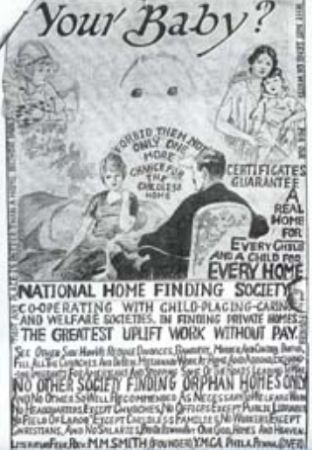
The American history of adoption followed a different legal path from Britain, even while sharing many of the same nineteenth-century anxieties about poverty, illegitimacy, orphanhood, labor, and moral rescue. In England and Wales, legal adoption would not arrive until 1926, leaving Victorian child placement to kinship, Poor Law administration, private arrangement, charitable intervention, and institutional care. In the United States, Massachusetts enacted a statute in 1851 that is often treated as the first modern adoption law because it gave adoption a formal judicial structure and required official consideration of whether the proposed arrangement was proper. This did not mean that American adoption instantly became modern, child-centered, or free from older habits of indenture and labor placement. It meant something more limited but historically crucial: adoption began to move from private arrangement and economic utility into the language of law, family formation, and child welfare. The contrast is especially important because both societies faced similar problems, but they did not institutionalize the solution at the same pace. American law began, unevenly and imperfectly, to treat adoption as a judicially recognized creation of family status, while Britain continued to rely on a patchwork of informal placement, guardianship, charity, and poor relief. The divergence was not simply legal. It marked a different willingness to let the state certify a new kinship bond.
The Massachusetts law mattered because it formalized a transfer that older systems had often handled through custom, contract, guardianship, apprenticeship, or informal household absorption. Adoption under the statute required court approval, and the judge was expected to determine whether the adopting petitioners were suitable and whether the adoption served an appropriate purpose. That shift gave the state a role in defining family membership. It also suggested that the child’s interests could not be left entirely to private adults, even if nineteenth-century courts did not yet possess anything like a modern social-work apparatus for investigating homes, documenting psychological needs, or evaluating long-term emotional welfare. The idea was still embryonic, but it was powerful. Adoption was no longer only something a household did. It became something the law could recognize, authorize, and record.
Still, the divergence should not be overstated. The United States did not leap from informal care to modern adoption in a single statute. Older child-placement systems continued beside legal adoption for decades. Children remained in almshouses, orphan asylums, religious institutions, charitable homes, apprenticeships, domestic service, and private arrangements. Some were indentured or placed in households where labor expectations mattered at least as much as affection. Others were raised by relatives without formal adoption because kinship care seemed socially sufficient or because legal procedure was inaccessible, unnecessary, or undesirable. The Massachusetts statute created a new legal possibility, but it did not eliminate the social conditions that made children movable in the first place. Poverty, illegitimacy, parental death, desertion, migration, and urban overcrowding continued to push children through a mixed system in which family, charity, labor, and law overlapped.
The American legal shift also reflected a changing ideal of childhood. By the middle of the nineteenth century, reformers increasingly described children as impressionable beings whose futures could be shaped by proper domestic surroundings. This belief gave adoption a moral logic different from older apprenticeship. A child might still be expected to work, obey, and contribute, but the adoptive household was increasingly imagined as a place of nurture rather than only training. The language of “best interests” had not yet developed into the modern legal doctrine it would become, but the Massachusetts law helped open that conceptual path by making the child’s welfare relevant to judicial approval. This was a profound change. It did not abolish adult motives, including infertility, inheritance planning, domestic help, religious mission, or the desire for companionship. But it required those motives to pass through a public claim that the placement was suitable for the child. In other words, the law did not remove adult desire from adoption, but it began to discipline that desire through an emerging child-welfare ideal. The household receiving the child now had to be imagined, at least formally, as beneficial to the child rather than merely useful to the adults. That distinction was imperfect, but it mattered. It signaled a movement away from the child as transferable labor or dependent property and toward the child as a person whose future environment required public moral judgment.
Secrecy remained central to the American adoption story. Legal adoption could stabilize a child’s status, give adoptive parents recognized authority, and create a new family identity, but it could also formalize the erasure of origins. Illegitimacy, infertility, poverty, and abandonment all carried social shame, and adoption law offered a way to transform a child’s visible identity while muting the circumstances of birth. American legal adoption both diverged from and resembled British informality. It differed because the court could confer a recognized legal relationship; it resembled Britain because the social desire to conceal irregular origins remained strong. The law gave adoption structure, but it did not free adoption from the moral assumptions of the age. A child could be legally claimed by one family while another family, often poorer and more stigmatized, disappeared from the public story.
The American divergence lies not in a simple contrast between legal progress and British backwardness, but in the earlier fusion of law with the older world of child placement. Massachusetts gave adoption a statutory form in 1851, and other states gradually followed, but the meaning of adoption remained contested. Was it a child-welfare measure, a solution to adult childlessness, a substitute for apprenticeship, a rescue from poverty, a way to regularize informal kinship, or a mechanism for concealing illegitimacy? It could be all of these. What made the American development significant was that it began to place these questions before courts and legislatures rather than leaving them entirely to households, charities, and local custom. The Victorian-era United States did not invent the modern adoptive family fully formed, but it did begin the legal transformation that Britain would delay until the twentieth century: the recognition that when a child entered a new household permanently, the arrangement needed more than private intention. It needed public authority.
The Orphan Train Movement: Rescue, Migration, Labor, and Family-Making in the United States
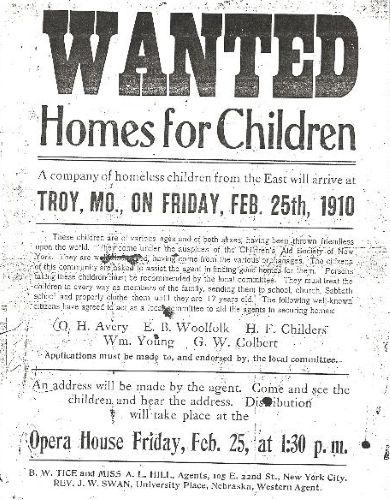
The orphan train movement carried the American divergence into one of its most ambitious and morally complicated forms. Beginning in the 1850s and continuing into the early twentieth century, thousands of children were transported from crowded Eastern cities to rural communities, especially in the Midwest and West, where they were placed with families who might raise, employ, educate, or adopt them. The movement is often associated with Charles Loring Brace and the New York Children’s Aid Society, whose placing-out system reflected a deep fear of urban poverty and a powerful faith in rural domestic life. In the eyes of its advocates, the city threatened children with vice, idleness, crime, Catholic immigrant poverty, and hereditary pauperism, while the countryside promised fresh air, labor discipline, Protestant morality, and family order. This contrast between city and country was not merely descriptive. It was ideological. Urban poverty was treated not only as material deprivation but as moral atmosphere, something that could infect children if they remained too long within it. The rural household, by contrast, was imagined as corrective, a place where work, supervision, and domestic order might remake the child before adult dependency or criminality took root. The orphan train was not merely a transportation system. It was a social theory put on rails.
The term “orphan train” can mislead if taken too literally, because many children sent west were not orphans in the strict sense. Some had lost one parent. Some had living parents who were too poor, ill, imprisoned, unemployed, or socially vulnerable to keep them. Some had been living on the streets, in lodging houses, in institutions, or in unstable family arrangements. Others were surrendered under pressure, placed temporarily, or taken into charitable systems by adults who believed removal was necessary. As in Britain, the word “orphan” performed moral work. It made the child easier to pity and the intervention easier to justify. A parentless child appeared to require rescue; a poor child with living parents raised harder questions about poverty, parental rights, religious identity, and the authority of reformers to decide that migration was salvation.
Brace’s Children’s Aid Society believed that poor urban children could be saved by placing them in respectable rural households rather than confining them in almshouses, orphan asylums, or reform institutions. This vision was shaped by antebellum Protestant reform culture, fear of urban disorder, and confidence in the moral power of labor. Children were sent in groups by train, accompanied by agents, and presented to local communities where families could select them. The process could be intensely public. Children might stand before assembled townspeople in churches, halls, or depots while prospective caretakers looked them over. Advocates described this as opportunity, a chance for children to enter wholesome homes and escape the city. Yet the spectacle also revealed the child’s vulnerable status. The child was being displayed, evaluated, and chosen, often by strangers whose motives could range from sincere affection to the desire for labor. The public nature of selection made the language of family-making uneasy, because the child’s body, age, health, gender, temperament, and perceived usefulness could all become part of the decision. Younger children might be desired for their emotional malleability, while older children might be valued for immediate work. Boys and girls could be judged through different expectations, with boys linked to farm labor and girls to domestic service. The placement ritual exposed the orphan train’s central tension: it invited communities to imagine children as future family members while also allowing them to be assessed as laboring assets.
The placements themselves varied widely. Some children were legally adopted, especially as adoption law expanded in the states. Some became emotionally integrated members of families even without formal adoption. They received education, affection, inheritance, and enduring kinship. For these children, placing out could indeed offer a new life that would have been difficult to imagine in the crowded institutions or precarious streets of New York, Boston, Philadelphia, or other Eastern cities. But other children entered households as workers more than sons or daughters. Boys were useful on farms, and girls were useful in domestic labor. The line between family-making and labor placement was often blurred, especially when children were old enough to contribute meaningfully to the household economy. A placement could be described as rescue while functioning as apprenticeship, service, or cheap labor.
This ambiguity was not accidental. It stood at the center of the orphan train system. Brace and other reformers did not necessarily see labor as exploitation. Like many nineteenth-century child-saving advocates, they considered work morally formative. Rural labor would teach discipline, self-reliance, obedience, thrift, and Protestant respectability. The child’s usefulness was part of the rescue. Yet that belief left children exposed to uneven treatment because the receiving household’s expectations mattered so much. A younger child might be cherished as a son or daughter; an older boy might be valued for fieldwork; a girl might become an unpaid servant under the softened language of family membership. Some children later remembered kindness, education, and belonging. Others remembered loneliness, harsh discipline, religious pressure, overwork, or the knowledge that they had been taken in because they were useful. The orphan train movement forces the historian to hold competing truths together: it saved some children, exploited others, and placed many somewhere in between.
The system also raised difficult questions about supervision and consent. The Children’s Aid Society and similar organizations developed correspondence, follow-up visits, and placement records, but oversight was uneven across distance. Once a child had been sent hundreds or thousands of miles away, the practical power of Eastern agencies was limited. Children might be moved again, renamed, incorporated into local kinship networks, or lost to institutional follow-up. Parents who had not intended permanent separation could find it difficult or impossible to recover children after they were sent west. Religious conflict also mattered, especially when Protestant agencies placed children from Catholic immigrant backgrounds into Protestant rural homes. What reformers called rescue could look to birth families, immigrant communities, or Catholic authorities like cultural and religious dispossession. The orphan train belonged not only to the history of adoption, but also to the history of migration, assimilation, religious conflict, and contested parental rights.
The movement’s American character lay in its scale and geography. Britain had child migration and imperial child-rescue schemes of its own, but the orphan train movement drew on a specifically American faith in space as moral cure. The crowded city was imagined as corrupting, while the rural interior was imagined as regenerative. The railroad made that moral geography practical. It allowed reformers to convert child welfare into relocation, sending children from places where they appeared excessive, dangerous, or endangered to places where they were imagined as needed and redeemable. This was not simply charity. It was redistribution: of children, labor, religious influence, and social risk. The movement treated the nation itself as a field of placement, with the West functioning as both refuge and instrument of reform.
In the larger story of Victorian adoption before adoption, the orphan train movement shows how legal adoption, informal placement, labor demand, and child rescue could coexist within a single system. It was more organized than neighborhood absorption, more mobile than boarding out, more family-oriented than the workhouse, and more public than the hidden movement of illegitimate infants. Yet it still did not resolve the central question of whether the child was being claimed as kin or managed as a dependent. That uncertainty is precisely why the movement matters. It stands as one of the clearest nineteenth-century examples of adoption’s unfinished transformation: from child placement as rescue and labor management toward adoption as legally recognized family formation. The train carried children toward homes, but not always toward belonging.
Secrecy, Sentiment, and the Victorian Ideal of the Family
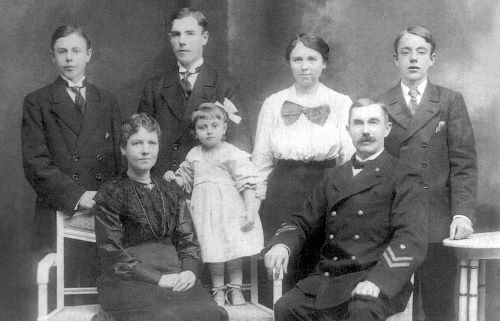
The secrecy surrounding adoption before adoption was not merely a practical response to missing laws. It was rooted in the Victorian ideal of the family itself. Nineteenth-century domestic ideology gave the household extraordinary moral weight, presenting the respectable family as a private refuge from the harshness of public life, a school of virtue, a sanctuary of affection, and a sign of social stability. The family was imagined as natural, intimate, orderly, and morally transparent. Yet the very strength of that ideal made irregular children difficult to place within it openly. A child born outside marriage, taken in from poverty, transferred from another household, or raised under a concealed identity disturbed the fiction that respectable family life emerged cleanly from marriage, biology, and proper domestic order. This mattered because the Victorian household was not only a place where people lived. It was a public moral claim disguised as private life. To appear respectable was to appear properly ordered, sexually disciplined, economically stable, and emotionally coherent. An informally adopted child could be loved inside such a household, but the circumstances that brought the child there might expose precisely the disorder the household was supposed to transcend. Adoption-like arrangements had to solve two problems at once: the child needed care, and the household needed a story.
This is why secrecy could appear merciful. It protected unmarried mothers from ruin, shielded adoptive or informal caretaking families from gossip, and allowed children to be folded into homes without carrying the full public burden of illegitimacy, pauperism, abandonment, or institutional origin. A child might be described as a niece, nephew, cousin, orphan, ward, servant, or “little one” rather than as an illegitimate child or an informally adopted dependent. Such language softened the social facts. It allowed families to practice care while avoiding the direct acknowledgment of scandal. Yet mercy and erasure were never easy to separate. The secrecy that protected a child from stigma could also deprive that child of origins, kinship knowledge, inheritance claims, and a coherent story of self. In Victorian domestic culture, silence often functioned as a kind of social glue. It held households together by keeping certain truths unsaid.
Sentiment intensified this contradiction. The Victorian period helped elevate childhood into a powerful emotional category, increasingly associated with innocence, vulnerability, moral purity, and the need for protection. Middle-class literature, religious culture, philanthropy, and domestic advice all helped sacralize the child as an object of tenderness and moral responsibility. This sentimental vision could inspire real compassion. It encouraged criticism of brutal institutions, fed the child-rescue movement, and made public indifference to suffering children harder to defend. But sentiment was selective. The ideal child was innocent partly because the child could be separated imaginatively from adult failure. The abandoned child could be pitied; the unmarried mother might still be condemned. The rescued street child could be idealized; the poor family might be portrayed as dangerous. The sentimental child was often saved by being detached from the social world that produced the child’s vulnerability.
The Victorian family ideal also made infertility, childlessness, and substitute parenthood sensitive matters. Adoption-like arrangements could answer adult longing for children, provide heirs, offer companionship, or complete a household that otherwise appeared incomplete. Yet because formal adoption law did not exist in Britain, and because family status remained tied to blood, marriage, inheritance, and legitimacy, such arrangements could remain socially delicate. A couple might raise a child with genuine devotion while leaving the child’s legal position uncertain. A family might present an informally adopted child as kin to avoid awkward questions. A household might welcome a child emotionally but hesitate to acknowledge publicly the circumstances that brought the child there. The Victorian cult of domesticity created a powerful longing for family fullness, but it also made non-biological family formation difficult to describe without embarrassment, euphemism, or concealment. This was especially true where inheritance, name, and lineage mattered. A child could become central to daily affection while remaining peripheral to legal certainty, a beloved presence whose place depended on private recognition rather than public status. The contradiction could be painful: the home might act as if the child belonged, while law, property, and social convention refused to make that belonging fully secure.
Literature reveals how deeply these anxieties ran. Victorian fiction is crowded with orphans, foundlings, wards, hidden children, uncertain heirs, secret parentage, and displaced young people whose identities must be discovered, managed, or morally interpreted. These plots were not accidental melodrama. They reflected a society in which family identity carried legal, emotional, economic, and moral consequences. The orphan could be a figure of vulnerability, but also of narrative possibility. The foundling could expose the cruelty of social judgment. The hidden child could threaten inheritance, reputation, or domestic peace. The revelation of parentage could restore order or shatter it. Fiction gave symbolic form to what informal adoption and child placement produced in life: children whose belonging depended on stories adults constructed around them. The popularity of these plots suggests that Victorians recognized, even if indirectly, that family was not always as natural, stable, or transparent as domestic ideology claimed.
This does not mean Victorian secrecy was always malicious. Many adults concealed origins because they believed, sometimes rightly, that open knowledge would harm the child. In a society where illegitimacy could mark a person for life, secrecy might be understood as protection. In families where affection was genuine, withholding the past could seem like a way of giving the child a fresh beginning. Yet the moral cost remained. A child’s protection depended on a social lie, and that lie could become part of the child’s identity. Secrecy also protected adults and institutions from scrutiny. It hid the father who disappeared, the family that rejected the mother, the employer who dismissed a pregnant servant, the charity that remade a child’s story, and the broader society that made open care so difficult. The question, then, is not whether secrecy ever helped. It is why Victorian society made secrecy feel necessary in the first place. That necessity was produced by respectability itself, by a culture that often preferred a well-managed fiction to an honest account of poverty, sexuality, infertility, or abandonment. The child might benefit from the fiction, but the child also bore its weight. To be protected by silence was still to live inside silence, and silence could become a second kind of inheritance.
Secrecy, sentiment, and the ideal of the family shaped adoption before adoption at its most intimate level. The same culture that praised the sacredness of home often refused to acknowledge how many homes were assembled through loss, poverty, concealment, kinship improvisation, and moral compromise. The same society that sentimentalized children could treat their origins as stains to be hidden. The same domestic ideal that made family life emotionally precious made irregular family formation socially difficult. Victorian adoption practices exposed the fragility of the very family ideal they tried to preserve. Children moved quietly into households, institutions, and new identities not because Victorians lacked feeling, but because feeling was trapped inside a culture of respectability. The child could be loved, but the truth of how that child came to be loved often had to remain outside the parlor door.
Toward Legal Adoption: From Victorian Improvisation to Twentieth-Century Reform
The following video from “AdoptED by Gladney” discusses the orphan train movement:
By the end of the Victorian era, the older world of informal placement had become increasingly difficult to defend as sufficient. Children still moved through kinship networks, charitable homes, boarding-out schemes, apprenticeships, institutions, and private household arrangements, but these practices now existed under stronger public scrutiny than before. Baby-farming scandals had exposed the dangers of paid private care. Criticism of workhouse childhood had strengthened the argument that children required something more humane than institutional containment. Philanthropic child-rescue organizations had demonstrated both the possibilities and dangers of organized placement. Meanwhile, the spread of adoption law in the United States showed that family transfer could be made into a formal legal act, even if American practice remained uneven and imperfect. Britain did not move immediately toward statutory adoption, but the pressure was building. The central Victorian contradiction had become harder to ignore: children were being transferred without a legal framework adequate to define who they belonged to, who was responsible for them, and what protections they possessed.
The late nineteenth and early twentieth centuries saw child welfare gradually detach itself from the older language of poor relief and become a more distinct field of public concern. This shift did not occur in a single moment. It emerged through overlapping reforms: compulsory education, factory and labor regulation, infant-life protection, campaigns against cruelty, inspection of institutions, and the growing belief that children were not merely dependents within adult households but persons requiring special safeguards. The National Society for the Prevention of Cruelty to Children, founded in 1884 as the London Society for the Prevention of Cruelty to Children and incorporated nationally in 1889, helped make abuse and neglect public matters rather than purely domestic ones. The Prevention of Cruelty to, and Protection of, Children Act of 1889 marked a major step in giving the state greater authority to intervene when children were mistreated. Such developments did not create adoption law, but they changed the moral environment in which adoption became thinkable. The child was increasingly understood not simply as an appendage of parental authority, parish responsibility, or charitable discretion, but as a vulnerable person whose treatment could justify public inquiry. That was a significant ideological shift. It did not erase class judgment, moral surveillance, or suspicion of poor families, but it did expand the idea that private households were not beyond scrutiny when children were at risk. Once cruelty, neglect, paid infant care, school attendance, labor conditions, and institutional treatment became matters of law and inspection, permanent child placement could no longer appear as a purely private arrangement. Once the state claimed a protective interest in children inside families, it became harder to argue that the permanent transfer of children between families should remain wholly informal.
The movement toward legal adoption also required a change in how family itself was understood. Victorian law had long privileged blood, marriage, legitimacy, guardianship, and inheritance, while informal child-rearing rested on custom, affection, secrecy, or charity. Legal adoption asked the law to do something more radical: to recognize a socially created parent-child bond as legally real. That was not a simple adjustment. It raised questions about inheritance, parental consent, religious upbringing, illegitimacy, secrecy, birth records, and the rights of biological parents. It also unsettled the assumption that family identity flowed naturally from birth. In Britain, resistance to legal adoption reflected these anxieties. Some feared fraud, improper transfers, inheritance manipulation, or the weakening of natural family claims. Others worried about children being treated as commodities. Yet these concerns coexisted with the growing recognition that informality had its own dangers. A child could be loved for years by caretakers who lacked secure legal authority, or could be handed over privately with little protection at all. Law increasingly appeared not as a threat to family feeling, but as a necessary means of stabilizing it.
The Adoption of Children Act of 1926 finally gave England and Wales a statutory adoption process, allowing courts to make adoption orders that transferred parental rights and duties to adopters. The act came after the Victorian era, but it cannot be understood apart from Victorian experience. It answered problems that nineteenth-century practices had exposed: the insecurity of informal adoption, the vulnerability of children placed through private arrangements, the secrecy surrounding illegitimacy, and the lack of clear legal status for children raised outside birth families. Yet the new law did not simply replace Victorian assumptions with modern openness. It preserved and formalized aspects of secrecy, especially the desire to give children new identities and to shield illegitimacy, infertility, and family disruption from public view. In that sense, legal adoption was both a reform and an inheritance. It offered children and adoptive parents a recognized legal bond, but it also carried forward the older belief that a child’s origins might need to be hidden for the new family to appear whole.
The path from Victorian improvisation to twentieth-century adoption law was not a straight march from cruelty to compassion, or from disorder to enlightenment. It was a slower and more ambiguous transformation. Victorian society had already developed many of the practices that adoption law would later organize: removal, placement, supervision, secrecy, substitute parenthood, child rescue, and the moral evaluation of households. What it lacked was a coherent legal structure centered on the child’s permanent status within a new family. The twentieth century supplied that structure, but it did so by gathering up Victorian habits as well as correcting Victorian failures. Adoption became legal because informal mercy had proven too fragile, private arrangements too dangerous, institutions too impersonal, and secrecy too powerful to remain unregulated. The modern adoptive family was born not outside Victorian history, but from within its contradictions.
Conclusion: The Child as Burden, Gift, Laborer, Secret, and Legal Person
The history of adoption in the Victorian era is best understood not as the history of a settled institution, but as the history of a society moving children through imperfect systems before law had caught up with life. The child without secure parental care could become many things at once: a burden on the parish, a gift to a childless household, a laborer in training, a moral object of rescue, a secret to be hidden, an institutional charge, or a future citizen to be shaped. These identities overlapped because Victorian adoption before adoption was not governed by one coherent principle. It was assembled from kinship obligation, poverty management, religious charity, labor discipline, domestic longing, public scandal, and private silence. The child moved through that world according to adult need as much as child welfare, and the meaning of placement changed depending on whether the child entered a relative’s home, a workhouse, an orphanage, a farm household, a baby farmer’s room, or an adoptive family recognized by American law.
This complexity should not flatten the moral range of Victorian practice. Some children were genuinely loved, protected, educated, and given homes they would not otherwise have had. Informal adoption could be an act of mercy. Boarding out could spare children the regimentation of the workhouse. Charitable homes could provide food, shelter, training, and survival. American legal adoption could give a child a recognized place in a new household. Even the language of rescue, for all its class judgment and paternalism, reflected a growing refusal to accept child suffering as merely private misfortune. Yet the same systems that saved some children endangered others. Informality could conceal exploitation. Secrecy could protect reputation while erasing origins. Apprenticeship could become labor extraction. Baby farming could turn desperation into death. Orphanages and rescue societies could defend children while weakening the claims of poor families. Victorian child welfare was neither simply cruel nor simply compassionate. It was a field of unequal mercy, where care depended too often on class, gender, respectability, institutional judgment, and adult convenience.
The central transformation of the nineteenth and early twentieth centuries was the gradual recognition that child placement required more than private intention. It required accountability. The Victorian world had already created many of the practices that modern adoption would inherit: investigation, relocation, substitute parenthood, household evaluation, secrecy, record-making, and the moral claim that children should be placed where they could flourish. What it lacked was a stable legal framework that made the child’s status clear and protected the child from being passed through arrangements designed primarily for adults. Britain’s eventual move toward statutory adoption in 1926 did not emerge from nowhere. It answered the long Victorian record of improvisation, scandal, affection, institutional experiment, and administrative failure. The law arrived late because Victorian society had spent decades trying to manage children through charity, poor relief, household custom, and moral pressure before admitting that private care needed public form.
Adoption before adoption reveals one of the deepest contradictions of Victorian family life. A society that sentimentalized childhood often treated vulnerable children as problems to be managed. A culture that exalted the home often depended on institutions, strangers, and secret transfers to sustain the appearance of domestic order. A moral world that condemned illegitimacy and poverty then built hidden pathways through which their children could disappear. Yet out of that contradiction came a modern question that could no longer be avoided: when a child is moved from one life into another, what does society owe that child? The Victorian era did not fully answer that question, but it made the question unavoidable. Before the child became, in law, a son or daughter by adoption, that child had already been a burden, a blessing, a worker, a secret, and slowly, a person whom the law had to see.
Bibliography
Affiliate disclosure: Amazon links on this site are paid links. As an Amazon Associate I earn from qualifying purchases.
- Adoption of Children Act, 1926, 16 & 17 Geo. 5 c. 29.
- Arnot, Margaret L. “Infant Death, Child Care and the State: The Baby-Farming Scandal and the First Infant Life Protection Legislation of 1872.” Continuity and Change 9:2 (1994), 271–311.
- Bastardy Act, 1845, 8 & 9 Vict. c. 10.
- Behlmer, George K. Child Abuse and Moral Reform in England, 1870–1908. Stanford: Stanford University Press, 1982.
- Berebitsky, Julie. Like Our Very Own: Adoption and the Changing Culture of Motherhood, 1851–1950. Lawrence: University Press of Kansas, 2000.
- Brace, Charles Loring. The Dangerous Classes of New York, and Twenty Years’ Work Among Them. New York: Wynkoop and Hallenbeck, 1872.
- Carp, E. Wayne. Adoption in America: Historical Perspectives. Ann Arbor: University of Michigan Press, 2002.
- —-. Family Matters: Secrecy and Disclosure in the History of Adoption. Cambridge: Harvard University Press, 1998.
- Children Act, 1908, 8 Edw. 7 c. 67.
- Children’s Society. “A Brief History of the Waifs and Strays’ Society.” Hidden Lives Revealed. https://www.hiddenlives.org.uk/articles/history.html.
- Crowther, M. A. The Workhouse System, 1834–1929: The History of an English Social Institution. Athens: University of Georgia Press, 1981.
- Cunningham, Hugh. Children and Childhood in Western Society Since 1500. London: Routledge, 1995.
- —-. The Children of the Poor: Representations of Childhood Since the Seventeenth Century. Oxford: Blackwell, 1991.
- Davidoff, Leonore, and Catherine Hall. Family Fortunes: Men and Women of the English Middle Class, 1780–1850. London: Hutchinson, 1987.
- Driver, Felix. Power and Pauperism: The Workhouse System, 1834–1884. Cambridge: Cambridge University Press, 1993.
- Englander, David. Poverty and Poor Law Reform in Nineteenth-Century Britain, 1834–1914: From Chadwick to Booth. London: Longman, 1998.
- Frost, Ginger S. Illegitimacy in English Law and Society, 1860–1930. Manchester: Manchester University Press, 2016.
- —-. “‘Your Mother Has Never Forgotten You’: Illegitimacy, Motherhood, and the London Foundling Hospital, 1860–1930.” Annales de démographie historique 127:1 (2014), 45–72.
- Furneaux, Holly. “Children of the Regiment: Soldiers, Adoption, and Military Tenderness in Victorian Culture.” Victorian Review 39:2 (2013), 79-96.
- Grey, Daniel. “‘More Ignorant and Stupid than Wilfully Cruel’: Homicide Trials and ‘Baby-Farming’ in England and Wales in the Wake of the Children Act 1908.” SOLON Crimes and Misdemeanours: Deviance and the Law in Historical Perspective 3:2 (2009), 60–77.
- Grossberg, Michael. Governing the Hearth: Law and the Family in Nineteenth-Century America. Chapel Hill: University of North Carolina Press, 1985.
- Haller, Dorothy L. “Bastardy and Baby Farming in Victorian England.” Loyola University New Orleans, 1990.
- Hendrick, Harry. Child Welfare: England 1872–1989. London: Routledge, 1994.
- Herman, Ellen. Kinship by Design: A History of Adoption in the Modern United States. Chicago: University of Chicago Press, 2008.
- Herridge, John. Dr. Barnardo: The Foster Father of “Nobody’s Children.” London: S. W. Partridge & Co., 1904.
- Higginbotham, Peter. The Workhouse: The Story of an Institution. Stroud: History Press, 2012.
- Hindle, Steve. On the Parish? The Micro-Politics of Poor Relief in Rural England, c. 1550–1750. Oxford: Clarendon Press, 2004.
- Holt, Marilyn Irvin. Children of the Western Plains: The Nineteenth-Century Experience. Chicago: Ivan R. Dee, 1992.
- —-. The Orphan Trains: Placing Out in America. Lincoln: University of Nebraska Press, 1992.
- Homrighaus, Ruth Ellen. “Wolves in Women’s Clothing: Baby-Farming and the British Medical Journal, 1860–1872.” Journal of Family History 26:3 (2001), 350–372.
- Hulonce, Lydia. Pauper Children and Poor Law Childhoods in England and Wales, 1834–1910. Swansea: University of Wales Press, 2016.
- Infant Life Protection Act, 1872, 35 & 36 Vict. c. 38.
- Keating, Jenny. A Child for Keeps: The History of Adoption in England, 1918–45. Basingstoke: Palgrave Macmillan, 2008.
- Koven, Seth. Slumming: Sexual and Social Politics in Victorian London. Princeton: Princeton University Press, 2004.
- Levene, Alysa. Childcare, Health and Mortality at the London Foundling Hospital, 1741–1800. Manchester: Manchester University Press, 2007.
- Levene, Alysa, Thomas Nutt, and Samantha Williams, eds. Illegitimacy in Britain, 1700–1920. Basingstoke: Palgrave Macmillan, 2005.
- Massachusetts Adoption of Children Act, 1851, St. 1851, c. 324.
- McCauliff, C. M. A. “The First English Adoption Law and Its American Precursors.” Seton Hall Law Review 16:3 (1986), 656–677.
- Murdoch, Lydia. Imagined Orphans: Poor Families, Child Welfare, and Contested Citizenship in London. New Brunswick: Rutgers University Press, 2006.
- Nelson, Claudia. “Adoption, Fostering, and the Poor.” Victorian Review 39:2 (2013), 57-61.
- —-. Family Ties in Victorian England. Westport, CT: Praeger, 2007.
- O’Connor, Stephen. Orphan Trains: The Story of Charles Loring Brace and the Children He Saved and Failed. Boston: Houghton Mifflin, 2001.
- Patrick, Michael, and Evelyn Goodrich Trickel. Orphan Trains to Missouri. Columbia: University of Missouri Press, 1997.
- Peterson, M. Jeanne. “The Victorian Governess: Status Incongruence in Family and Society.” Victorian Studies 14:1 (1970), 7-26.
- Pinchbeck, Ivy, and Margaret Hewitt. Children in English Society. Vol. 1 and 2, From Tudor Times to the Eighteenth Century. London: Routledge and Kegan Paul, 1969.
- Poor Law Amendment Act, 1834, 4 & 5 Will. 4 c. 76.
- Prevention of Cruelty to, and Protection of, Children Act, 1889, 52 & 53 Vict. c. 44.
- Rose, Lionel. The Massacre of the Innocents: Infanticide in Britain, 1800–1939. London: Routledge and Kegan Paul, 1986.
- Shanley, Mary Lyndon. Feminism, Marriage, and the Law in Victorian England, 1850–1895. Princeton: Princeton University Press, 1989.
- Slack, Paul. The English Poor Law, 1531–1782. Cambridge: Cambridge University Press, 1990.
- Swain, Shurlee, and Margot Hillel. Child, Nation, Race and Empire: Child Rescue Discourse, England, Canada and Australia, 1850–1915. Manchester: Manchester University Press, 2010.
- Thompson, F. M. L. The Rise of Respectable Society: A Social History of Victorian Britain, 1830–1900. Cambridge, MA: Harvard University Press, 1988.
- Wagner, Gillian. Barnardo. London: Weidenfeld and Nicolson, 1979.
- Warren, Andrea. We Rode the Orphan Trains. Boston: Houghton Mifflin, 2001.
- Wolff, Larry. “’The Boys Are Pickpockets, and the Girl Is a Prostitute’: Gender and Juvenile Criminality in Early Victorian England from ‘Oliver Twist to London Labour’.” New Literary History 27:2 (1996), 227-249.
Originally published by Brewminate, 05.25.2026, under the terms of a Creative Commons Attribution-NonCommercial-NoDerivatives 4.0 International license.
About the Author