
Across centuries, Christians have identified the Antichrist in emperors, popes, and politicians, revealing how fear, power, and crisis continually reshape apocalyptic belief.

By Matthew A. McIntosh
Public Historian
Brewminate
Introduction: The Antichrist as a Moving Target
The figure of the Antichrist occupies a paradoxical position within Christian thought, at once narrowly defined in its earliest textual appearances and expansively reinterpreted across centuries of theological reflection and historical experience. In the New Testament, the term “antichrist” appears only in the Johannine epistles, where it refers not to a singular apocalyptic tyrant but to multiple deceivers who deny the identity of Jesus as the Christ. These early references emphasize doctrinal deviation rather than political domination, suggesting that the original concept functioned as a marker of theological error within emerging Christian communities. Yet this limited and plural usage would prove insufficient for later generations seeking to understand broader patterns of opposition and crisis.
As Christian interpretation developed, the Antichrist became increasingly associated with other biblical figures that were never explicitly labeled as such in the earliest texts. The “little horn” of the Book of Daniel, widely understood as a symbolic representation of Antiochus IV Epiphanes, was reinterpreted as a prototype for a future adversary. Similarly, Paul’s description of the “man of sin” in the Second Epistle to the Thessalonians and the Beast of the Book of Revelation were drawn into a growing network of apocalyptic imagery. Through this process of synthesis, disparate symbolic figures were gradually consolidated into the expectation of a singular, climactic enemy who would appear at the end of history, opposing Christ and deceiving the faithful.
This expansion of the Antichrist concept reflects a broader pattern in religious thought, in which ambiguous or symbolic elements are reconfigured to address evolving historical circumstances. As Christianity spread and encountered new forms of political power, internal division, and cultural transformation, the need for a clearly defined adversary became more pronounced. The Antichrist provided a flexible framework through which believers could interpret persecution, heresy, and social upheaval, transforming abstract eschatological ideas into concrete figures of opposition. This adaptability allowed the concept to move fluidly between contexts, functioning at times as a theological warning against doctrinal corruption and at others as a political label applied to perceived enemies. The Antichrist became both a product of scriptural interpretation and a tool of historical meaning-making, shaped by the specific pressures and uncertainties of each era in which it was invoked.
The history of Antichrist identification reveals not a consistent lineage of interpretation but a recurring pattern of projection, in which contemporary fears are mapped onto biblical imagery. From Roman emperors to medieval rulers, from the papacy to modern political leaders, individuals and institutions have repeatedly been labeled as embodiments of ultimate evil. These identifications often tell us more about the anxieties and conflicts of the communities making them than about any objective fulfillment of prophecy. The Antichrist, as it has been imagined across time, is best understood as a moving target, continually redefined at the intersection of scripture, history, and human fear.
Biblical Foundations: Seeds of the Adversary

The concept of the Antichrist does not emerge fully formed within the biblical corpus but instead develops from a constellation of symbolic and apocalyptic figures drawn from both the Hebrew Bible and the New Testament. These texts do not present a unified doctrine of a singular end-times adversary; rather, they offer a series of images and warnings that later interpreters would weave together into a more coherent narrative. The foundations of the Antichrist tradition are best understood as interpretive constructions built upon diverse and often ambiguous scriptural sources.
One of the earliest and most influential precursors appears in the Book of Daniel, particularly in the figure of the “little horn” described in Daniel 7 and 8. This figure, widely interpreted by scholars as a reference to the Seleucid ruler Antiochus IV Epiphanes, represents a historical instance of persecution and sacrilege, most notably in the desecration of the Jerusalem temple in 167 BCE. While originally tied to a specific historical context, the imagery of the “little horn” proved adaptable, serving as a template for later visions of a tyrannical ruler who would oppose God and oppress the faithful. The symbolic language of Daniel, shaped by the experience of crisis under foreign domination, allowed subsequent readers to detach the imagery from its original setting and apply it to new circumstances. Daniel provides an early example of how concrete historical events can be transformed into enduring apocalyptic symbols that transcend their immediate context and become part of a broader interpretive tradition.
The New Testament contributes additional layers to this emerging framework, particularly in Paul’s Second Epistle to the Thessalonians. Here, the figure of the “man of sin” or “man of lawlessness” is introduced as one who exalts himself above all that is called God and takes his seat in the temple. Unlike the more symbolic language of Daniel, Paul’s description suggests a more individualized and eschatological adversary, though the identity of this figure remains deliberately obscure. The passage reflects early Christian expectations of an impending end, as well as the uncertainty surrounding how such events would unfold, leaving room for a wide range of later interpretations.
The Book of Revelation further expands the symbolic repertoire through its depiction of the Beast, a figure associated with imperial power, persecution, and blasphemy. Often interpreted as a coded critique of the Roman Empire, particularly under emperors such as Nero or Domitian, the Beast embodies both political authority and spiritual opposition. Its imagery, including the infamous number 666, invites interpretation while resisting definitive identification, allowing it to function simultaneously as a commentary on contemporary conditions and a template for future adversaries. The layered symbolism of Revelation reflects the complexities of early Christian experience under imperial rule, where overt criticism could be dangerous and had to be expressed through coded language. The Beast becomes a flexible and enduring symbol, capable of representing not only a specific historical power but also any future force perceived as hostile to divine authority and the faithful community.
The Johannine epistles provide the only explicit use of the term “antichrist” in the New Testament, yet their usage differs significantly from later developments. In 1 and 2 John, “antichrist” refers not to a singular apocalyptic figure but to multiple individuals who deny that Jesus is the Christ or who reject the incarnation. This plural and doctrinally focused definition emphasizes internal theological conflict rather than external political threat. The presence of “many antichrists” suggests that opposition to Christ is an ongoing reality within the community, rather than a singular future event, complicating later attempts to identify a definitive Antichrist figure.
These biblical sources do not present a unified doctrine of the Antichrist but instead offer a set of images, warnings, and interpretive possibilities that later traditions would synthesize and expand. The process by which these elements were combined reflects the dynamic nature of scriptural interpretation, in which texts are continually re-read in light of new circumstances. The seeds of the adversary, planted in these early writings, would grow into a complex and evolving tradition that extends far beyond its original textual foundations.
Early Church Interpretations (1st–5th Century): From Symbol to Expectation
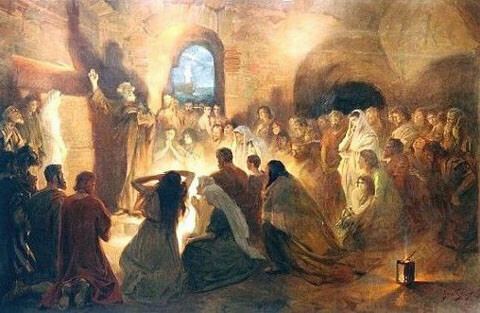
In the centuries following the composition of the New Testament, early Christian thinkers began to transform the diffuse and symbolic elements of scripture into a more defined expectation of a singular Antichrist figure. This process unfolded within a context of persecution, theological development, and the gradual institutionalization of the Church. As Christians sought to interpret their experiences and anticipate the future, the adversarial figures of biblical texts were increasingly synthesized into a coherent eschatological narrative centered on a final opponent of Christ.
One of the earliest and most influential identifications of the Antichrist emerged in relation to the Roman Empire, particularly through the figure of Emperor Nero. The memory of Nero’s persecution of Christians, combined with the legend of his expected return, gave rise to the Nero redivivus myth, in which Nero was imagined as a future tyrant who would reappear at the end of time. This association allowed early Christians to connect contemporary political realities with apocalyptic expectations, transforming a historical ruler into a prototype of the ultimate adversary. The symbolic flexibility of biblical imagery made such identifications both plausible and compelling within the context of ongoing imperial pressure. Moreover, this interpretation reflects how early Christians navigated their precarious position within the Roman world, using apocalyptic language to process trauma, assert identity, and articulate hope for eventual divine justice.
Early Church Fathers played a critical role in systematizing these ideas, moving from scattered interpretations to more structured theological frameworks. Irenaeus of Lyons, writing in the second century, sought to reconcile the various scriptural references to adversarial figures, arguing for the emergence of a single Antichrist who would appear before the end of the age. He engaged in detailed speculation, including interpretations of the number 666 and its possible connections to specific names, while maintaining a degree of caution about definitive identification. Hippolytus of Rome further elaborated on these themes, presenting the Antichrist as a counterfeit Christ who would deceive many by mimicking divine authority. These efforts represent an important moment in the consolidation of Christian eschatology, as theological reflection began to impose coherence on diverse and often ambiguous textual traditions.
As these interpretations developed, additional layers of detail were added to the expected profile of the Antichrist. Some early writers speculated that he would be of Jewish origin, often associating him with the tribe of Dan based on interpretations of Genesis and later traditions. This idea reflected both exegetical reasoning and the complex relationship between early Christianity and Judaism, illustrating how theological constructs could intersect with broader cultural and social dynamics. The Antichrist was imagined not only as a political tyrant but also as a religious deceiver who would emerge from within a recognizable framework.
The transition from symbolic to more concrete expectation also reflects a broader shift in early Christian eschatology. While the earliest communities anticipated an imminent end, later generations, facing the continued persistence of the world, began to develop more elaborate timelines and scenarios. The Antichrist became a central figure within these narratives, serving as a precursor to the final judgment and the return of Christ. This development allowed believers to situate themselves within a larger unfolding story, even as the anticipated end remained deferred.
By the fifth century, the concept of the Antichrist had taken on a more defined and enduring form, shaped by both scriptural interpretation and historical experience. Although variations in detail persisted, the general expectation of a singular adversary who would oppose Christ at the end of time had become a widely recognized element of Christian thought. This transformation laid the groundwork for later developments, in which the Antichrist would be continually reinterpreted in response to new political, social, and theological challenges. It also ensured that the figure would remain adaptable, capable of absorbing new meanings and serving as a lens through which successive generations could interpret crisis, conflict, and change within their own historical moments.
Late Antiquity and Early Medieval Thought (5th–10th Century): Internalizing the Threat

In the period following the consolidation of early Christian doctrine, interpretations of the Antichrist underwent a subtle but significant transformation. As Christianity moved from a persecuted minority to an established and eventually dominant institution within the Roman and post-Roman world, the immediacy of apocalyptic expectation began to recede. Rather than anticipating the imminent appearance of a singular end-times tyrant, theologians in Late Antiquity increasingly framed the Antichrist within broader and more flexible interpretive schemes. This shift reflected changing historical conditions, in which the Church was no longer primarily defined by external oppression but by internal organization and doctrinal development.
A key figure in this transformation was Augustine of Hippo, whose writings profoundly shaped medieval Christian thought. Augustine approached apocalyptic expectations with caution, emphasizing the symbolic and often unknowable nature of prophetic texts. While he did not deny the eventual appearance of an Antichrist, he resisted attempts to identify specific individuals or predict precise timelines. Instead, Augustine suggested that the forces associated with the Antichrist could already be present within the world, particularly in forms of deception, pride, and false teaching. This perspective marked a shift away from concrete identification toward a more generalized understanding of opposition to Christ. By reframing apocalyptic language in this way, Augustine helped to stabilize Christian eschatology within a long-term historical vision, reducing the urgency of immediate expectation while preserving the theological significance of ultimate judgment.
The Antichrist began to be associated not only with external enemies but also with internal threats to the unity and orthodoxy of the Church. Heretics, schismatics, and false teachers were increasingly described in terms that echoed earlier apocalyptic imagery, effectively broadening the scope of the adversarial concept. This internalization allowed the Church to address doctrinal disputes and institutional challenges using a familiar symbolic framework, reinforcing boundaries between orthodoxy and deviation. The Antichrist became less a distant future figure and more a present reality manifested in various forms of error and dissent.
The changing political landscape of the early medieval period further influenced these interpretations. With the fragmentation of the Western Roman Empire and the rise of new political entities, the clear identification of a single imperial persecutor became less relevant. Instead, the focus shifted to maintaining order and stability within a decentralized and often unstable environment. Apocalyptic expectations did not disappear, but they were reframed in ways that emphasized moral vigilance and spiritual preparedness rather than immediate anticipation of a specific adversary.
Popular beliefs and apocalyptic traditions continued to circulate alongside more cautious theological approaches. Texts such as the Apocalypse of Pseudo-Methodius and various prophetic writings kept alive the expectation of a future Antichrist who would arise during times of great turmoil. These traditions often reflected contemporary anxieties, including fears of invasion, political collapse, and religious decline. The vivid imagery and narrative structure of these works made them particularly accessible to broader audiences, allowing apocalyptic ideas to spread beyond elite theological circles. The Antichrist remained a potent and adaptable symbol, capable of being reshaped to fit new crises while retaining its core association with ultimate opposition to divine order.
By the end of the first millennium, the concept of the Antichrist had become both more diffuse and more deeply embedded within Christian thought. It functioned as a versatile symbol capable of addressing internal and external challenges, adapting to changing historical circumstances while retaining its core association with opposition to Christ. This period laid the groundwork for later developments, in which the Antichrist would once again be externalized and more explicitly linked to specific political and religious figures, particularly in the context of medieval conflict and reform movements.
High and Late Middle Ages (11th–15th Century): Political Weaponization
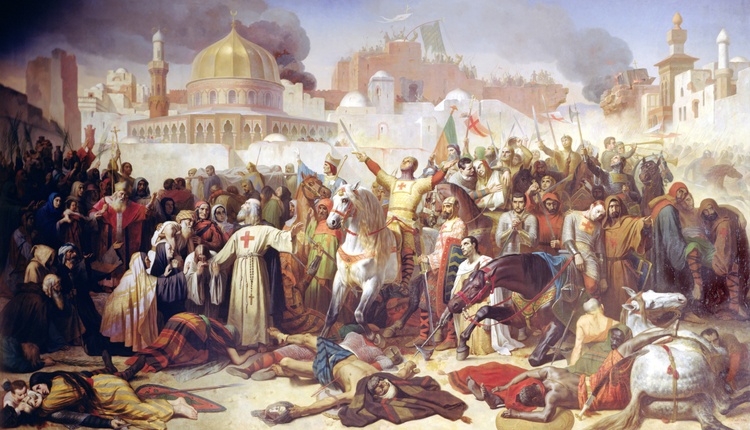
During the High and Late Middle Ages, the figure of the Antichrist underwent a renewed transformation, becoming increasingly entangled with political conflict and institutional rivalry. While earlier theological traditions had emphasized either a distant apocalyptic figure or a generalized internal threat, medieval society brought the Antichrist into more immediate and practical use. As Christendom expanded, fractured, and confronted both internal dissent and external pressures, the language of ultimate opposition proved a powerful rhetorical tool. The Antichrist was no longer only a figure of future expectation, but also a means of interpreting and condemning present realities.
Medieval theology continued to maintain the expectation of a singular Antichrist who would appear before the end of time, often described in increasingly detailed and vivid terms. This figure was imagined as a deceptive ruler who would perform false miracles, claim divine authority, and lead many astray before being defeated by Christ. Texts such as Adso of Montier-en-Der’s Libellus de Antichristo synthesized earlier traditions into a coherent narrative that became widely influential throughout medieval Europe. These descriptions provided a structured framework that shaped both scholarly discourse and popular imagination, reinforcing the expectation of a climactic confrontation between good and evil. The elaboration of these narratives also reflects the medieval tendency to systematize inherited traditions, transforming earlier, more fragmentary ideas into comprehensive theological accounts that could be taught, transmitted, and adapted across generations.
The concept of the Antichrist was actively employed in political and ideological struggles. Rulers, popes, and rival factions were frequently accused of embodying or serving the Antichrist, particularly during periods of intense conflict. One notable example is the Holy Roman Emperor Frederick II, who was denounced by some of his contemporaries, including papal critics, as an Antichrist figure due to his perceived challenge to papal authority and his complex relationships with both Christian and Muslim powers. Such accusations reveal how apocalyptic language could be mobilized to delegitimize opponents and frame political disputes in stark, cosmic terms.
The Crusades further contributed to this process of political weaponization, as enemies of Christendom were sometimes portrayed using apocalyptic imagery associated with the Antichrist. While Islamic rulers were not always directly identified as the Antichrist, the broader rhetoric of holy war often drew upon similar symbolic frameworks, casting conflicts as part of a larger struggle between divine truth and opposing forces. This use of apocalyptic language reinforced group identity and justified extreme measures by situating contemporary events within a sacred narrative of ultimate significance.
In addition to political conflicts, the later Middle Ages witnessed a proliferation of apocalyptic movements and popular expectations concerning the end times. Figures such as Joachim of Fiore introduced complex prophetic systems that reinterpreted history as a series of divinely ordained stages, heightening anticipation of transformative events. These movements often revived and reshaped the figure of the Antichrist, integrating it into new visions of historical change and spiritual renewal. The spread of such ideas demonstrates the enduring appeal of apocalyptic frameworks in periods marked by uncertainty and upheaval. These movements reveal how apocalyptic thought could both challenge and reinforce existing authority, offering hope for renewal while also intensifying fears of imminent catastrophe.
By the fifteenth century, the Antichrist had become a deeply embedded and highly flexible symbol within European thought, capable of functioning simultaneously as a theological expectation, a political accusation, and a cultural narrative. Its adaptability allowed it to respond to shifting circumstances while maintaining its core association with ultimate opposition to Christ. This period of political weaponization set the stage for the even more explicit and sustained use of the Antichrist concept during the Reformation, when it would be directed not only at individuals but at entire institutions.
The Reformation (16th–17th Century): Institutional Antichrist

The Protestant Reformation marked one of the most decisive reinterpretations of the Antichrist in Christian history, transforming it from a future individual into a present and identifiable institution. In contrast to medieval expectations of a singular end-times tyrant, reformers such as Martin Luther argued that the Antichrist was already active within the structures of the Church itself. This shift reflected both theological conviction and the intense conflicts of the period, as reformers sought to challenge the authority of the Roman Catholic Church while framing their opposition in terms of ultimate spiritual truth.
Martin Luther’s identification of the papacy as the Antichrist was rooted in his critique of ecclesiastical authority and doctrine. He argued that the pope’s claims to spiritual supremacy, along with practices such as the sale of indulgences, represented a distortion of the gospel and a usurpation of Christ’s role. Drawing on biblical passages such as Paul’s “man of sin” and the imagery of Revelation, Luther contended that the Antichrist was not an external enemy but an internal corruption that had arisen within the very heart of Christianity. This interpretation allowed reformers to present their movement not merely as a call for reform, but as a necessary response to a profound theological crisis.
Other reformers, including John Calvin and John Knox, reinforced and expanded this interpretation, further solidifying the identification of the papacy with the Antichrist. Their writings emphasized the idea that the Antichrist operates through deception and imitation, presenting itself as a legitimate authority while undermining true faith. This emphasis on institutional corruption aligned with broader Reformation concerns about the nature of authority, scripture, and salvation. The Antichrist became a powerful symbol through which reformers articulated their critique of the existing religious order. It also provided a unifying framework that connected diverse reform movements across different regions, allowing them to frame their struggles as part of a shared confrontation with a common adversary. By interpreting the papacy through apocalyptic imagery, reformers elevated their disputes beyond doctrinal disagreement, casting them as battles over the very integrity of Christianity itself.
The polemical nature of Reformation discourse also led to the widespread use of visual and literary imagery that depicted the pope in explicitly apocalyptic terms. Pamphlets, sermons, and illustrations portrayed the papacy as a monstrous or deceptive force, often drawing directly on the imagery of the Beast in Revelation. These representations were not merely rhetorical flourishes, but strategic tools designed to shape public perception and mobilize support. The identification of the Antichrist with a visible and powerful institution made the concept more immediate and politically potent than ever before.
Catholic thinkers responded with their own interpretations, rejecting Protestant claims and, in some cases, applying the language of Antichrist to reformers themselves. This mutual exchange of accusations underscores the extent to which the concept had become a weapon of ideological conflict, adaptable to competing narratives and perspectives. Catholic theologians sought to reaffirm traditional interpretations that placed the Antichrist in the future, thereby undermining Protestant claims of present fulfillment. They emphasized continuity with earlier theological traditions and resisted the politicization of apocalyptic language. The resulting discourse reveals how deeply embedded the concept had become in the religious imagination, capable of sustaining multiple and conflicting interpretations within a shared symbolic framework.
Early Modern and Enlightenment Era (18th Century): Transition and Diffusion

The eighteenth century marked a transitional phase in the history of Antichrist interpretation, as the intellectual currents of the Enlightenment began to reshape traditional religious frameworks. While earlier periods had treated the Antichrist as a central figure in eschatological expectation and theological controversy, the rise of rationalism, scientific inquiry, and critical approaches to scripture led many thinkers to reevaluate apocalyptic beliefs. Among educated elites, the emphasis shifted away from literal interpretations of prophecy toward more symbolic or allegorical readings, reducing the immediate prominence of the Antichrist as a concrete historical expectation.
Despite this shift in intellectual culture, the concept of the Antichrist did not disappear. Instead, it underwent a process of diffusion, persisting in popular religious movements and in regions where traditional forms of belief remained influential. Millenarian groups and revivalist preachers continued to draw on apocalyptic imagery, interpreting contemporary events as signs of the approaching end times. In these contexts, the Antichrist retained its role as a figure of ultimate opposition, though its identification became less consistent and more varied, reflecting the diversity of local concerns and interpretations.
The Enlightenment also contributed to a gradual secularization of the Antichrist concept, as the language of ultimate evil began to be applied beyond strictly theological contexts. Philosophers and political commentators, while often rejecting literal apocalyptic expectations, continued to use religious imagery to critique perceived threats to moral and social order. The Antichrist began to function as a metaphor for tyranny, corruption, or ideological extremism, bridging the gap between religious tradition and emerging secular discourse. This transformation reflects a broader shift in which religious vocabulary was retained even as its underlying assumptions were questioned or redefined. By detaching the concept from strict doctrinal frameworks, Enlightenment thinkers and their successors allowed it to circulate more freely within political and philosophical debates, expanding its relevance while altering its meaning.
Political upheavals in the eighteenth century further reinforced this transformation. Events such as the American Revolution and the early stages of the French Revolution prompted renewed interest in apocalyptic themes, as observers sought to interpret dramatic social change within familiar frameworks. While not all commentators invoked the Antichrist explicitly, the underlying structure of apocalyptic thought remained influential, shaping perceptions of crisis and transformation. In some cases, revolutionary movements were seen as heralds of a new era; in others, they were viewed as manifestations of disorder and moral decline.
Biblical criticism and historical scholarship began to challenge traditional readings of apocalyptic texts, including those associated with the Antichrist. Scholars increasingly examined the historical contexts of books such as Daniel and Revelation, identifying their connections to specific events and political circumstances rather than treating them as purely predictive of future developments. This approach did not eliminate belief in the Antichrist but reframed it within a broader understanding of scripture as a product of its time. The result was a growing tension between traditional interpretations and emerging critical perspectives. As this scholarly movement gained influence, it encouraged a more nuanced engagement with biblical texts, prompting readers to consider the intentions of their authors and the conditions of their composition rather than relying solely on inherited theological frameworks.
By the end of the eighteenth century, the Antichrist had become a more diffuse and adaptable concept, no longer confined to a single theological framework. It persisted in popular religion, influenced political rhetoric, and was reinterpreted through the lens of historical and critical scholarship. This period of transition set the stage for the nineteenth century, in which the Antichrist would reemerge in new forms, often tied to the dramatic figures and ideologies of an increasingly interconnected and turbulent world.
The Nineteenth Century: Napoleon and Apocalyptic Nationalism
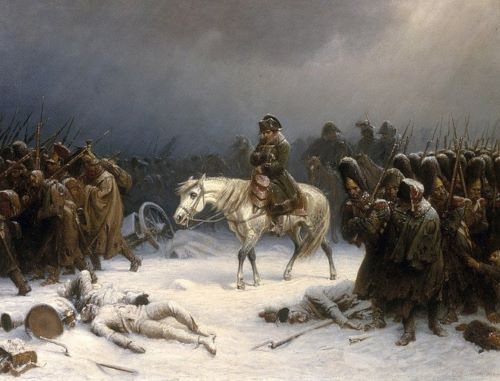
The nineteenth century witnessed a renewed personalization of the Antichrist, as political upheaval and the rise of nationalism created fertile ground for identifying contemporary figures with apocalyptic prophecy. Among these, Napoleon Bonaparte emerged as one of the most frequently cited candidates for the role of the Antichrist, particularly in regions destabilized by his military campaigns. His rapid ascent, sweeping reforms, and expansive ambitions seemed to align with long-standing expectations of a powerful, charismatic ruler who would dominate the world stage and disrupt established order.
In Russia and parts of Eastern Europe, Napoleon’s invasion in 1812 intensified these interpretations, as religious and cultural anxieties converged with the immediate threat of war. Clergy and lay commentators alike drew upon biblical imagery to frame Napoleon as a figure of ultimate opposition, casting the conflict in explicitly apocalyptic terms. This perspective found literary expression in works such as Leo Tolstoy’s War and Peace, where characters interpret Napoleon’s actions through a lens shaped by religious expectation and national identity. The identification of Napoleon with the Antichrist reflects not only theological speculation but also the powerful influence of historical context in shaping interpretation. It reveals how moments of crisis can amplify apocalyptic thinking, encouraging communities to interpret geopolitical conflict as part of a larger cosmic struggle between good and evil.
The association of Napoleon with the Antichrist also illustrates the growing connection between apocalyptic thought and emerging forms of nationalism. As European societies began to define themselves more explicitly in terms of shared language, culture, and political identity, the Antichrist became a means of delineating the boundaries between “us” and “them.” Napoleon’s role as both a revolutionary figure and an imperial ruler made him an ideal candidate for such projections, embodying both the promise of transformation and the threat of domination. The Antichrist concept was adapted to serve the needs of a changing political landscape.
The nineteenth century saw the continued influence of religious revival movements, particularly in Protestant contexts, where interest in biblical prophecy remained strong. These movements often revisited earlier apocalyptic frameworks, incorporating contemporary events into detailed schemes of interpretation. Napoleon’s career, with its dramatic reversals and ultimate downfall, provided ample material for such analyses, reinforcing the perception that history was unfolding according to a divinely ordained plan. The Antichrist remained a central figure through which believers could interpret the meaning of historical change. These interpretations were not uniform and often varied according to regional, denominational, and political perspectives, demonstrating the flexibility of apocalyptic frameworks in adapting to diverse contexts.
By the latter part of the nineteenth century, the identification of specific individuals as the Antichrist had become both more widespread and more varied, extending beyond Napoleon to include other political and cultural figures. This proliferation reflects the increasing complexity of modern society, in which rapid change and expanding global connections created new sources of uncertainty and anxiety. The Antichrist continued to function as a powerful interpretive tool, allowing individuals and communities to make sense of these developments by situating them within a familiar apocalyptic framework.
The Twentieth Century: Totalitarianism and Global Fear

The twentieth century marked a dramatic intensification in the identification of Antichrist figures, as unprecedented global conflicts and the rise of totalitarian regimes reshaped both political reality and religious interpretation. The scale of violence witnessed in two world wars, combined with the emergence of powerful authoritarian leaders, provided fertile ground for apocalyptic frameworks to reassert themselves with renewed urgency. The Antichrist was no longer a distant or abstract possibility, but a figure seemingly embodied in the very real and immediate threats posed by modern political systems.
Adolf Hitler quickly became one of the most prominent candidates for Antichrist identification, particularly among Christian groups seeking to make sense of the atrocities committed under the Nazi regime. His cult of personality, authoritarian control, and role in orchestrating the Holocaust aligned closely with traditional expectations of a tyrannical and deceptive adversary. Some interpreters pointed to his manipulation of symbols, rhetoric, and mass media as evidence of a figure who sought not only political dominance but also a form of ideological and quasi-religious allegiance. Hitler came to represent a convergence of political and spiritual opposition that resonated deeply with apocalyptic imagery. The scale of destruction associated with his regime, combined with its ideological ambition, made him an especially compelling candidate for those seeking to identify a historical embodiment of ultimate evil, reinforcing the enduring power of apocalyptic interpretation in moments of extreme crisis.
Similarly, Benito Mussolini and other fascist leaders were sometimes framed within apocalyptic narratives, though less consistently than Hitler. The broader phenomenon of totalitarianism itself began to be understood as a potential manifestation of Antichrist-like power, extending the concept beyond individual figures to encompass entire systems of control. The Antichrist was no longer confined to a single ruler but could be associated with ideologies that sought to reshape society, suppress dissent, and assert absolute authority. This shift reflects a growing recognition of the structural dimensions of power in the modern world. Rather than focusing solely on individual leaders, interpreters began to consider how systems of governance and ideology could embody forms of opposition that paralleled earlier descriptions of the Antichrist, broadening the scope of apocalyptic interpretation.
The Cold War further expanded the scope of Antichrist identification, as ideological conflict between the United States and the Soviet Union introduced new forms of existential anxiety. In many Western Christian contexts, communism was portrayed as inherently opposed to religious belief, leading some to interpret it as an Antichrist system. The atheistic stance of Soviet ideology, combined with its global ambitions, reinforced the perception of a struggle between fundamentally incompatible worldviews. The nuclear threat added a new dimension to apocalyptic thought, making the possibility of global destruction more immediate and tangible than ever before.
The twentieth century also saw the rise of evangelical and fundamentalist movements that placed renewed emphasis on biblical prophecy and end-times scenarios. These groups often developed detailed interpretive frameworks that sought to map contemporary events onto scriptural predictions, identifying potential Antichrist figures or systems within an increasingly complex global landscape. The proliferation of media, including radio, television, and later print publications, allowed these ideas to reach wider audiences, further embedding apocalyptic interpretations in popular culture. This expansion of communication technologies enabled apocalyptic narratives to circulate more rapidly and broadly than in previous periods, contributing to a more immediate and widespread engagement with end-times speculation.
By the end of the century, the concept of the Antichrist had become both more expansive and more diffuse, capable of encompassing individuals, ideologies, and global systems alike. This flexibility reflects the challenges of interpreting a rapidly changing world, in which traditional categories of political and religious opposition are continually redefined. The Antichrist remained a powerful symbolic tool, enabling individuals and communities to articulate their fears and interpret their experiences within a framework that connected contemporary events to a larger narrative of cosmic conflict.
Contemporary Era: Political Polarization and Pop Apocalypticism
In the contemporary era, the identification of Antichrist figures has become increasingly diffuse, shaped by global interconnectedness, rapid information exchange, and deepening political polarization. Unlike earlier periods, where specific leaders or institutions dominated apocalyptic speculation, the modern landscape is characterized by a proliferation of candidates, often reflecting the fragmented nature of contemporary society. The Antichrist is no longer a singular, widely agreed-upon figure, but a flexible symbol applied across ideological divides.
Political leaders have become frequent targets of Antichrist comparisons, especially in highly polarized environments. In the United States and elsewhere, presidents, prime ministers, and international figures have all been labeled as potential embodiments of apocalyptic opposition, often by critics who perceive their policies or rhetoric as fundamentally threatening. These identifications frequently reveal more about the anxieties and partisan commitments of those making them than about any consistent theological framework, demonstrating the enduring adaptability of the Antichrist concept.
The rise of digital media has significantly amplified these tendencies, enabling apocalyptic interpretations to spread rapidly and reach global audiences. Online platforms provide spaces where speculative interpretations can circulate with little oversight, allowing individuals to construct elaborate narratives that link contemporary events to biblical prophecy. This has contributed to the emergence of what might be termed “pop apocalypticism,” in which traditional theological concepts are repurposed within informal, often sensationalized discourse. Contemporary apocalyptic thinking often incorporates elements of conspiracy theory, blending religious imagery with political and cultural narratives. Ideas about hidden elites, global control, and secret plots are frequently intertwined with interpretations of the Antichrist, creating hybrid frameworks that draw on both religious and secular sources. This convergence reflects broader patterns in modern thought, where boundaries between different modes of explanation are increasingly fluid.
Despite these transformations, certain core features of the Antichrist tradition remain remarkably consistent. The figure continues to function as a representation of ultimate opposition, embodying fears about deception, power, and the potential for moral and social collapse. Whether applied to individuals, institutions, or abstract systems, the Antichrist serves as a means of articulating concerns about the direction of contemporary society and the perceived erosion of foundational values. The Antichrist has become less a fixed theological entity and more a cultural and rhetorical tool, capable of adapting to a wide range of interpretive needs. Its persistence across time underscores its utility as a framework for understanding crisis and opposition, even as its specific manifestations continue to evolve. The contemporary era represents not a decline in apocalyptic thinking, but a transformation in its form, shaped by the unique conditions of the modern world.
Thematic Analysis: Patterns in Antichrist Identification
Across the long history of Antichrist identification, several recurring patterns emerge that reveal the underlying logic of this enduring tradition. One of the most consistent features is the tendency to associate the Antichrist with periods of crisis, whether political, social, or religious. Moments of instability generate a heightened need for explanation, and the Antichrist provides a ready-made framework through which individuals and communities can interpret disruption as part of a larger, meaningful narrative. This pattern underscores the close relationship between apocalyptic thought and historical experience.
A second recurring theme is the projection of the Antichrist onto perceived enemies, both external and internal. In some cases, this involves identifying foreign rulers or rival political systems as embodiments of ultimate opposition. In others, it takes the form of internal critique, where dissenters, reformers, or institutional authorities are cast in the role of the adversary. This dual capacity allows the concept to function both as a means of boundary formation and as a tool of ideological contestation within a community.
Another significant pattern is the gradual expansion of the Antichrist from a singular figure to a more diffuse category that can include institutions, ideologies, and even abstract systems of power. While early interpretations often focused on a future individual who would appear at the end of time, later developments increasingly allowed for multiple or ongoing manifestations. This shift reflects broader changes in how power and authority are understood, particularly in the modern era, where systemic forces often appear as influential as individual actors. It also demonstrates how theological categories adapt to intellectual and social transformations, incorporating new ways of conceptualizing authority, influence, and opposition without abandoning their core symbolic structure.
The element of imitation also plays a crucial role in Antichrist identification. Drawing on the dual meaning of the Greek prefix anti, which can signify both opposition and substitution, many interpretations emphasize the deceptive nature of the Antichrist as one who mimics or replaces Christ. This focus on imitation highlights concerns about authenticity, authority, and the potential for false appearances to conceal underlying realities. It also reinforces the idea that the most dangerous forms of opposition are those that operate under the guise of legitimacy.
A further pattern involves the localization of the Antichrist within the interpreter’s own historical and cultural context. Rather than remaining a distant or abstract possibility, the Antichrist is repeatedly situated within the immediate world of those making the identification. This tendency reflects the inherently present-oriented nature of apocalyptic thought, which seeks to connect contemporary experience with a larger narrative of cosmic significance. Each generation effectively redefines the Antichrist in terms that resonate with its own concerns and anxieties. This process ensures the continual relevance of the concept, allowing it to serve as a flexible interpretive tool that evolves alongside changing historical circumstances while maintaining its core symbolic function.
These patterns reveal that the Antichrist functions less as a fixed entity and more as a dynamic interpretive category. Its enduring relevance lies in its ability to adapt to changing circumstances while maintaining a core set of symbolic associations. By examining these recurring themes, it becomes clear that the history of Antichrist identification is not merely a record of mistaken predictions, but a window into the ways in which human communities grapple with the problem of opposition, evil, and uncertainty.
Historiography: Interpreting the Antichrist Tradition
Scholarly interpretations of the Antichrist tradition have evolved significantly over time, reflecting broader changes in historical method, theological inquiry, and cultural analysis. Early academic treatments, often rooted in confessional perspectives, tended to approach the Antichrist as a legitimate theological expectation grounded in scriptural exegesis. These works frequently focused on identifying the figure within historical or future contexts, mirroring the interpretive strategies found within religious communities themselves. Early historiography often reproduced rather than critically examined the assumptions underlying Antichrist identification.
By the nineteenth and early twentieth centuries, the development of critical historical methods began to reshape this approach. Scholars increasingly situated Antichrist traditions within their historical contexts, examining how interpretations emerged from specific political, social, and religious circumstances. This shift marked a move away from attempts to identify the Antichrist toward an analysis of why such identifications occur. The figure was no longer treated primarily as a theological reality but as a cultural construct that could be studied in relation to broader patterns of belief and behavior.
The work of historians represents a significant milestone in this development, offering comprehensive analyses of the Antichrist tradition across two millennia. Their approach emphasizes the continuity and adaptability of the concept, demonstrating how it has been repeatedly reinterpreted to changing historical conditions. Rather than viewing the Antichrist as a static idea, this scholarship highlights its dynamic nature, tracing its transformations across different periods and contexts. It provides a framework for understanding the persistence of apocalyptic thinking within Western religious culture.
More recent scholarship has further expanded the scope of analysis by incorporating insights from sociology, anthropology, and cultural studies. Researchers have explored the role of apocalyptic belief in shaping modern political and social movements, particularly in the United States. These studies examine how the Antichrist functions within broader systems of meaning, often intersecting with conspiracy theories, media narratives, and collective anxieties. This interdisciplinary approach has enriched the historiography by situating the Antichrist within a wider landscape of symbolic and cultural expression.
These historiographical developments reveal a gradual shift from theological affirmation to critical analysis, and from singular explanations to multifaceted interpretations. The Antichrist is now understood less as a figure to be identified and more as a lens through which to examine the interplay between belief, power, and historical experience. This evolution in scholarship underscores the value of the Antichrist tradition not only as a subject of religious inquiry but also as a key to understanding how human societies construct and respond to the idea of ultimate opposition.
Conclusion: The Antichrist as a Reflection of Fear and Power
Across two millennia of interpretation, the Antichrist has remained one of the most enduring and adaptable figures in Christian thought, continually reshaped to meet the needs of changing historical contexts. From its origins in the New Testament as a category describing deceivers within the community, the concept evolved into a powerful symbol capable of encompassing emperors, institutions, ideologies, and entire systems of power. This transformation reflects not only the flexibility of apocalyptic language but also the persistent human desire to locate and define ultimate opposition.
At its core, the Antichrist tradition reveals how communities respond to fear, uncertainty, and perceived threats to identity and order. Whether in the face of imperial persecution, religious division, revolutionary upheaval, or modern political polarization, the figure of the Antichrist has provided a framework for interpreting crisis as part of a larger, meaningful narrative. By identifying a singular embodiment of opposition, individuals and groups are able to impose structure on events that might otherwise appear chaotic or incomprehensible.
The recurring tendency to identify contemporary figures as the Antichrist underscores the deeply present-oriented nature of apocalyptic thinking. Each generation reinterprets inherited symbols in light of its own circumstances, projecting its anxieties onto figures who seem to embody the dangers of the moment. The Antichrist functions less as a fixed entity and more as a mirror, reflecting the fears, conflicts, and power struggles that define a given historical period. The persistence of this pattern suggests that the impulse to locate ultimate opposition is not merely theological but deeply rooted in the broader dynamics of human perception and social organization.
The history of Antichrist identification is not simply a record of mistaken predictions or exaggerated fears, but a testament to the enduring power of symbolic thought in shaping human experience. By tracing the evolution of this figure across time, it becomes clear that the Antichrist serves as a lens through which societies articulate their deepest concerns about truth, authority, and the potential for corruption. The Antichrist remains a vital and revealing component of both religious tradition and cultural imagination.
Bibliography
Affiliate disclosure: Amazon links on this site are paid links. As an Amazon Associate I earn from qualifying purchases.
- Adso of Montier-en-Der. Libellus de Antichristo. Translated in Bernard McGinn, Antichrist: Two Thousand Years of the Human Fascination with Evil. New York: Columbia University Press, 1994.
- Alexander, Paul J. The Byzantine Apocalyptic Tradition. Berkeley: University of California Press, 1985.
- Arendt, Hannah. The Origins of Totalitarianism. New York: Harcourt, Brace & Company, 1951.
- Augustine. The City of God. Translated by Henry Bettenson. London: Penguin Classics, 2003.
- Aune, David E. Revelation 1–5. Word Biblical Commentary, vol. 52A. Dallas: Word Books, 1997.
- Barkun, Michael. A Culture of Conspiracy: Apocalyptic Visions in Contemporary America. Berkeley: University of California Press, 2013.
- Billington, James H. Fire in the Minds of Men: Origins of the Revolutionary Faith. New York: Basic Books, 1980.
- Boyd, Gregory A. God at War: The Bible and Spiritual Conflict. Downers Grove: InterVarsity Press, 1997.
- Boyer, Paul. When Time Shall Be No More: Prophecy Belief in Modern American Culture. Cambridge: Harvard University Press, 1992.
- Calvin, John. Institutes of the Christian Religion. Translated by Henry Beveridge. Peabody, MA: Hendrickson Publishers, 2008.
- Chadwick, Owen. The Secularization of the European Mind in the Nineteenth Century. Cambridge: Cambridge University Press, 1975.
- Collins, John J. The Apocalyptic Imagination: An Introduction to Jewish Apocalyptic Literature. 3rd ed. Grand Rapids, MI: Eerdmans, 1984.
- —-. Daniel: A Commentary on the Book of Daniel. Hermeneia. Minneapolis: Fortress Press, 1993.
- Daley, Brian E. The Hope of the Early Church: A Handbook of Patristic Eschatology. Cambridge: Cambridge University Press, 1991.
- Davies, Norman. Europe: A History. Oxford: Oxford University Press, 1996.
- Fornari, Guiseppe. “Figures of Antichrist: The Apocalypse and Its Restraints in Contemporary Political Thought.” Contagion: Journal of Violence, Mimesis, and Culture 17 (2010), 53-85.
- Frend, W. H. C. The Rise of Christianity. Philadelphia: Fortress Press, 1984.
- Herman, Didi. “The New Roman Empire: European Envisionings and American Premillennialists.” Journal of American Studies 34:1 (2000), 23-40.
- Hippolytus of Rome. On Christ and Antichrist. Translated by T. C. Schmidt. Washington, DC: Catholic University of America Press, 2017.
- Irenaeus. Against Heresies. Translated by Dominic J. Unger. New York: Paulist Press, 1992.
- Israel, Jonathan I. Radical Enlightenment: Philosophy and the Making of Modernity 1650–1750. Oxford: Oxford University Press, 2001.
- Kershaw, Ian. Hitler: A Biography. New York: W. W. Norton, 2008.
- Knox, John. The First Blast of the Trumpet Against the Monstrous Regiment of Women. Geneva, 1558.
- Koester, Craig R. Revelation and the End of All Things. 2nd ed. Grand Rapids, MI: Eerdmans, 2018.
- Lindermayer, Orestis. “‘The Beast of the Revelation’: American Fundamentalist Christianity and the European Union.” Etnofoor 8:1 (1995), 27-46.
- Luther, Martin. On the Babylonian Captivity of the Church. Translated by A. T. W. Steinhaeuser. Philadelphia: Fortress Press, 1959.
- Marsden, George M. Fundamentalism and American Culture. New York: Oxford University Press, 1980.
- McGinn, Bernard. Antichrist: Two Thousand Years of the Human Fascination with Evil. New York: Columbia University Press, 1994.
- O’Leary, Stephen D. Arguing the Apocalypse: A Theory of Millennial Rhetoric. New York: Oxford University Press, 1994.
- Oberman, Heiko A. Luther: Man Between God and the Devil. New Haven: Yale University Press, 1989.
- Outram, Dorinda. The Enlightenment. Cambridge: Cambridge University Press, 2013.
- Pagels, Elaine. The Origin of Satan: How Christians Demonized Jews, Pagans, and Heretics. New York: Random House, 1995.
- Porter, Roy. Enlightenment: Britain and the Creation of the Modern World. London: Penguin Books, 2000.
- Reeves, Marjorie. The Influence of Prophecy in the Later Middle Ages: A Study in Joachimism. Notre Dame: University of Notre Dame Press, 1969.
- Schwartz, Adam. “Confronting the ‘Totalitarian Antichrist’: Christopher Dawson and Totalitarianism.” The Catholic Historical Review 89:3 (2003), 464-488.
- Southern, R. W. Western Society and the Church in the Middle Ages. London: Penguin Books, 1990.
- The Holy Bible, King James Version.
- Tolan, John. Saracens: Islam in the Medieval European Imagination. New York: Columbia University Press, 2002.
- Tolstoy, Leo. War and Peace. Translated by Louise and Aylmer Maude. Oxford: Oxford University Press, 2010.
- Weber, Eugen. Apocalypses: Prophecies, Cults, and Millennial Beliefs through the Ages. Cambridge: Harvard University Press, 1999.
- Wojcik, Daniel. The End of the World as We Know It: Faith, Fatalism, and Apocalypse in America. New York: NYU Press, 1997.
Originally published by Brewminate, 04.21.2026, under the terms of a Creative Commons Attribution-NonCommercial-NoDerivatives 4.0 International license.
About the Author