Across centuries, individuals have obeyed irrational commands that led to their deaths, revealing how authority, identity, and belief can override survival itself.

By Matthew A. McIntosh
Public Historian
Brewminate
Introduction: When Authority Overrides Survival
Across history, individuals and groups have repeatedly obeyed commands that defy logic, self-interest, and even the instinct for survival. These moments, often remembered as acts of loyalty, bravery, or discipline, reveal a deeper and more troubling dynamic: the capacity of authority to override rational judgment. Whether in the context of warfare, religious devotion, or political hierarchy, obedience has frequently functioned as a binding force that compels individuals to act against their own preservation. Such behavior is not confined to a single culture or period but appears across vastly different societies, suggesting that the mechanisms behind it are both persistent and deeply embedded in human social organization.
The examples examined here span more than two millennia, from archaic Greece to medieval Europe, yet they share a common structure. In each case, individuals followed a leader or adhered to a code in circumstances where the outcome was either clearly futile or actively self-destructive. The followers of Cylon of Athens remained in a besieged sanctuary despite overwhelming odds. The Spartans at Thermopylae chose death over retreat once their position was compromised. Soldiers under Alexander the Great engaged in a lethal drinking contest, driven by ritual and loyalty rather than reason. Roman troops obeyed the absurd commands of Emperor Caligula, and the knights of King John of Bohemia rode into certain death out of devotion to their sovereign. These cases differ in context and motivation, but they converge in their demonstration of obedience carried to its extreme.
To understand this phenomenon, it is necessary to distinguish between rational discipline and irrational obedience. In many contexts, obedience serves a functional purpose, enabling coordination, cohesion, and collective action. Military structures depend on the ability of individuals to follow orders even under dangerous conditions, where hesitation or dissent could undermine the effectiveness of the group. Yet there are moments when this obedience becomes detached from strategic or practical necessity, persisting even when it leads directly to harm or death. At this point, obedience is no longer a tool of survival but a force that suppresses it, reshaping the decision-making process itself. Individuals no longer evaluate actions based on personal risk or outcome, but on conformity to authority and expectation. The transition from rational compliance to self-destructive conformity often occurs gradually, shaped by cultural norms, social pressures, and the internalization of authority. Obedience can become so deeply embedded that it is experienced not as a choice but as an obligation, narrowing the perceived range of possible actions and rendering alternatives, including survival, psychologically inaccessible.
Blind obedience emerges from a combination of hierarchical structures, identity formation, and symbolic meaning that redefines what is perceived as rational behavior. Survival is not always the highest value; honor, loyalty, and belonging can take precedence, transforming actions that appear irrational from an external perspective into necessary or even virtuous ones. By examining these cases in chronological order, this study explores how different societies have constructed systems in which individuals willingly subordinate their own survival to the demands of authority. The result is a recurring pattern in which obedience, rather than protecting life, becomes the mechanism through which it is sacrificed.
Cylon of Athens: Sacred Space and Fatal Obedience (7th Century BCE)

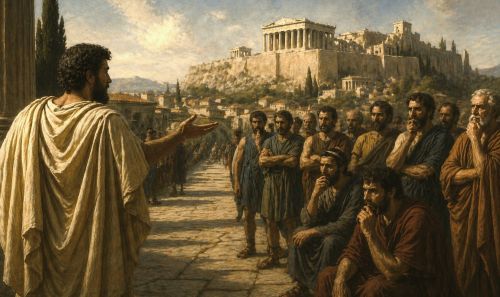
The failed coup of Cylon of Athens in the seventh century BCE provides one of the earliest recorded examples of collective obedience carried to a fatal conclusion. Cylon, an aristocrat and Olympic victor, attempted to seize power in Athens by force, likely drawing upon both personal prestige and claims of divine favor. When the uprising faltered, he and his supporters retreated to the Acropolis and sought refuge within sacred precincts, placing themselves under the protection of the gods. This decision transformed a political failure into a religious crisis, as the boundaries between sanctuary, authority, and survival became increasingly entangled. What followed was not merely the suppression of a revolt, but a demonstration of how belief in sacred protection could override practical considerations.
The concept of sanctuary in archaic Greek religion carried profound significance. Temples and altars were understood as spaces in which divine protection could be invoked, creating a moral and ritual barrier against violence. By taking refuge in that space, Cylon’s followers were not simply hiding but asserting a claim to inviolability grounded in religious tradition. This belief imposed obligations not only on those seeking refuge but also on their adversaries, who risked impiety if they violated the sanctity of the site. The decision to remain within the sanctuary was not irrational from the perspective of the participants; it reflected a deeply embedded understanding of how divine and human authority interacted.
Yet the situation quickly revealed the limits of this protection. Surrounded by forces led by Megacles of the powerful Alcmaeonid family, the followers of Cylon found themselves in a position that was both physically untenable and ritually charged. While some accounts suggest that Cylon himself managed to escape, many of his supporters remained within the sanctuary, bound not only by circumstance but by their commitment to the symbolic framework they had invoked. The expectation that the sanctity of the space would ensure their safety created a form of psychological commitment that made withdrawal difficult, even as the practical realities of the siege became increasingly dire. The longer the standoff persisted, the more the decision to remain became reinforced by group dynamics, as individuals were influenced by the collective presence and shared belief of their companions. Leaving the sanctuary would not only have required abandoning the protection of the gods but also separating from the group whose identity had become intertwined with that sacred space. The physical confinement of the sanctuary was matched by a conceptual confinement, in which alternatives to remaining were progressively narrowed or dismissed.
The eventual outcome underscores the tragic consequences of this dynamic. According to later traditions, the besieged followers were persuaded to leave the sanctuary under the promise of safe conduct, only to be killed, in some versions by stoning, after crossing its boundary. In other accounts, they were seized while still clinging to sacred objects, their deaths constituting a violation of religious norms that would have lasting political repercussions in Athens. Regardless of the precise details, the episode was remembered as an act of sacrilege that brought a curse upon the Alcmaeonid family, illustrating the enduring power of religious belief even in the aftermath of violence. For the followers themselves, the outcome was fatal, their adherence to the logic of sanctuary leading directly to their destruction.
What makes this episode particularly significant is the way in which obedience was mediated through both leadership and religious belief. The followers of Cylon did not simply obey a political leader; they acted within a framework that fused personal loyalty with divine expectation. Their decision to remain in the sanctuary can be understood as an expression of this dual commitment, in which abandoning the space would have meant not only surrendering to their enemies but also relinquishing their claim to divine protection. Obedience was reinforced by a system of meaning that made alternative actions difficult to conceive, even when survival depended on them. The authority of Cylon as a leader was inseparable from the religious context in which his followers operated, amplifying his influence beyond the purely political sphere. This fusion of roles created a situation in which obedience was not experienced as submission but as fidelity to a higher order, further entrenching the decision to remain despite mounting danger.
Cylon illustrates a foundational pattern in the history of obedience: the capacity of symbolic systems to redefine rational behavior. Within the religious logic of archaic Greece, remaining in a sacred space under threat could be understood as an assertion of faith and legitimacy, even when it entailed extreme risk. The fatal outcome of this decision does not negate its internal coherence but rather highlights the power of belief to shape action in ways that transcend immediate self-interest. This early example sets the stage for later cases in which authority, identity, and meaning combine to produce forms of obedience that challenge conventional notions of rationality.
Thermopylae: Law, Honor, and the Logic of Death (480 BCE)
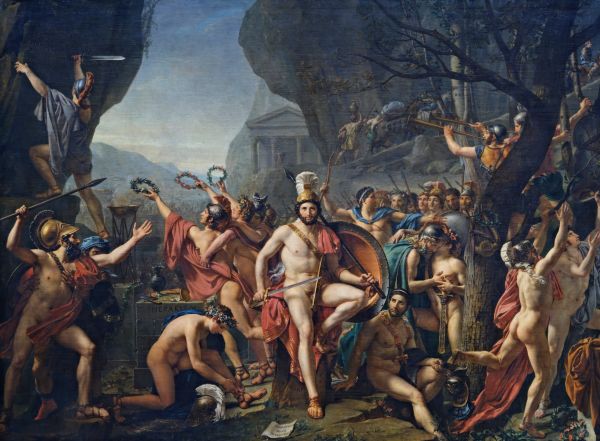
The stand at Thermopylae in 480 BCE has long been framed as a defining moment of courage in Greek history, yet it also provides a powerful example of obedience overriding rational survival. When the Persian army under Xerxes outflanked the Greek defensive position, the strategic logic of the situation shifted decisively. Retreat was not only possible but, for most forces, necessary. Many contingents withdrew in response to the new reality, preserving their strength for future engagements. The Spartans under King Leonidas chose to remain, fully aware that the decision would result in their deaths. This choice, while often celebrated as heroic, reflects a system in which obedience to law and honor was elevated above practical considerations of survival.
At the core of this decision was the Spartan social and legal framework, which conditioned its citizens from an early age to prioritize collective identity over individual life. Spartan law and custom discouraged retreat in battle, not merely as a tactical principle but as a moral imperative embedded in the fabric of society. The agoge, the rigorous system of education and training through which Spartan males passed, reinforced discipline, endurance, and absolute loyalty to the state. From childhood, individuals were taught to subordinate personal desire to communal expectation, internalizing a worldview in which obedience was inseparable from virtue. The decision to remain at Thermopylae was not experienced as an extraordinary act of sacrifice but as the fulfillment of a deeply internalized expectation. To abandon one’s position would not simply have been a strategic withdrawal but a violation of identity itself, carrying consequences that extended beyond the battlefield into the realm of social and moral judgment.
The authority of King Leonidas further intensified this dynamic, as leadership in Spartan culture was closely tied to example. Leonidas did not merely issue orders; he embodied the ideals that his followers were expected to uphold. When he chose to remain, he set a standard that others were compelled to follow, not through coercion alone but through shared commitment to a code that defined their existence. The presence of the king transformed the decision into a collective affirmation of Spartan values, reinforcing the idea that obedience was inseparable from honor. Dissent or retreat would have required not only a rejection of authority but a rejection of the cultural system that gave that authority meaning.
The participation of the famed “300” Spartans, along with a smaller number of allied forces who also remained, illustrates how group cohesion can reinforce self-destructive decisions. Once the choice to stay was made, it became self-sustaining, as each individual’s commitment was validated by the presence of others. The shared expectation of death did not weaken resolve but strengthened it, creating a feedback loop in which loyalty and identity were continually reaffirmed. This collective dynamic reduced the likelihood of individual deviation, as the social cost of withdrawal would have been immense. To break ranks would not only mean abandoning comrades but also risking lasting dishonor within a society that defined worth through adherence to its codes. Obedience was maintained not only through formal structures but through the internal pressures of group belonging, where identity and action were tightly bound together.
From a strictly strategic perspective, the decision to remain has been debated by historians, some of whom argue that the delay inflicted on the Persian advance had broader military significance. Yet even if the action possessed some tactical value, it does not fully account for the willingness of the Spartans to accept certain death once the outcome was clear. The persistence of their stand reflects a logic that cannot be reduced to strategy alone, one in which the preservation of honor and adherence to law outweighed considerations of survival. This distinction is crucial, as it highlights the extent to which cultural frameworks can redefine what constitutes a rational choice. What appears from one perspective as unnecessary sacrifice may, within another framework, represent the only acceptable course of action, revealing the powerful influence of social conditioning on individual decision-making.
The example of Thermopylae reveals how obedience can be transformed into a virtue that supersedes life itself. Within the Spartan system, to die in accordance with law and honor was not a failure but the highest form of success. This inversion of values demonstrates the power of social conditioning to reshape human priorities, aligning individual action with collective ideals even at the cost of survival. As with the followers of Cylon, the Spartans acted within a framework that made their decision internally coherent, even as it appears irrational from an external perspective. The enduring legacy of Thermopylae reflects both admiration for this commitment and an implicit recognition of its profound implications.
Alexander’s Army: Ritual, Excess, and Lethal Devotion (323 BCE)

The events following the death of the philosopher Calanus in 323 BCE offer a striking example of obedience expressed not through battlefield discipline, but through ritualized excess. Calanus, an Indian ascetic who had joined the court of Alexander the Great during his eastern campaigns, chose to end his life through self-immolation, an act that deeply impressed both Alexander and his army. His death was interpreted not simply as a personal decision, but as a philosophical and symbolic gesture, reinforcing themes of endurance, detachment, and mastery over the body. Alexander organized elaborate commemorations, culminating in a drinking contest intended to honor the deceased. What followed demonstrates how ritual, when combined with hierarchical authority, can produce behavior that disregards physical limits and rational judgment.
The drinking contest was framed as both a celebration and a test of endurance, inviting participants to consume large quantities of unmixed wine. In Greek culture, the consumption of diluted wine was the norm, and drinking undiluted wine was associated with excess and loss of control. By encouraging the latter, Alexander transformed a familiar social practice into an extreme demonstration of loyalty and participation. The competitive nature of the event further intensified its impact, as soldiers were not merely drinking but striving to surpass one another in a display of devotion. The act of drinking became symbolic, representing not indulgence but commitment to the communal experience and to the authority that had sanctioned it.
The consequences were immediate and severe. Ancient sources report that dozens of participants died as a result of alcohol poisoning, with others suffering lasting harm. These deaths were not accidental in the sense of unforeseen risk, but the predictable outcome of pushing the body beyond its limits. Yet the participants continued, driven by a combination of competitive pressure, ritual expectation, and loyalty to their leader. The willingness to engage in such behavior reflects a broader pattern within Alexander’s army, where acts of endurance and excess were often used to reinforce cohesion and demonstrate allegiance. Refusal or moderation could be interpreted as weakness or disloyalty, further narrowing the range of acceptable responses. The escalation of the contest itself reveals how individual limits were subsumed into collective momentum, as each successive act of excess validated and intensified the expectations placed upon others. What might have begun as a voluntary demonstration of loyalty became a compounding cycle in which withdrawal grew increasingly difficult, both socially and psychologically. Participants were not simply competing against one another but responding to an implicit standard that equated endurance with devotion, creating a situation in which restraint appeared incompatible with belonging.
The role of Alexander himself is central to understanding this dynamic. As a leader, he cultivated an image that blended military authority with elements of divine or heroic status, encouraging his followers to see him as more than a conventional commander. His presence and approval lent significance to the contest, transforming it from a social gathering into an act of participation in a larger symbolic framework. The soldiers were not simply obeying an order; they were engaging in a ritual that affirmed their connection to the leader and to each other. This fusion of authority and meaning amplified the pressure to conform, as the stakes extended beyond individual action to the maintenance of collective identity.
The event highlights the interaction between cultural practices and evolving imperial identity. Alexander’s campaigns brought together diverse traditions, including Greek symposiastic customs and Indian philosophical influences, creating a hybrid environment in which new forms of expression could emerge. The self-immolation of Calanus itself introduced a model of extreme bodily discipline that may have shaped the interpretation of the subsequent rituals. The drinking contest can be seen as part of a broader process of cultural negotiation, in which familiar practices were reinterpreted and intensified. Experimentation and excess created conditions in which boundaries were more easily transgressed, contributing to the fatal outcome.
The episode of the drinking contest illustrates how obedience can manifest in forms that are not immediately recognizable as coercion. The participants were not forced in a direct sense, yet the combination of authority, ritual, and group dynamics produced a situation in which participation became effectively obligatory. The resulting deaths reveal the extent to which social and symbolic pressures can override individual judgment, leading to actions that are both voluntary and self-destructive. As with earlier examples, the behavior of Alexander’s soldiers was shaped by a framework that redefined rationality, aligning it with values that prioritized loyalty and participation over survival.
Caligula’s Soldiers: Absurd Orders and Imperial Power (c. 40 CE)
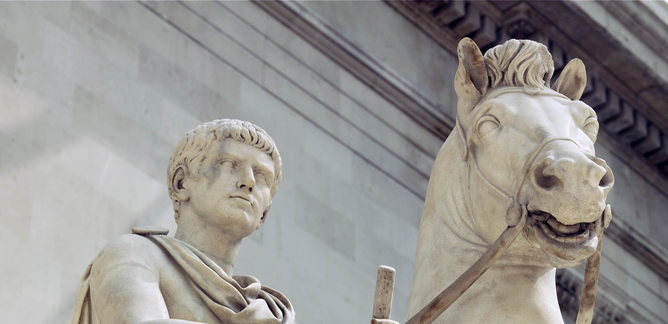
The reign of Caligula provides one of the most striking examples of obedience detached from rational purpose. In an episode widely recorded by ancient sources, the emperor led his forces to the northern coast of Gaul, ostensibly in preparation for an invasion of Britain. Instead of launching a campaign, he ordered his soldiers to gather seashells from the shore, declaring them spoils taken from the sea god Neptune. The act, which appears absurd from any practical or military perspective, was nevertheless carried out without recorded resistance. This moment illustrates how imperial authority could compel compliance even when commands lacked coherence or strategic value.
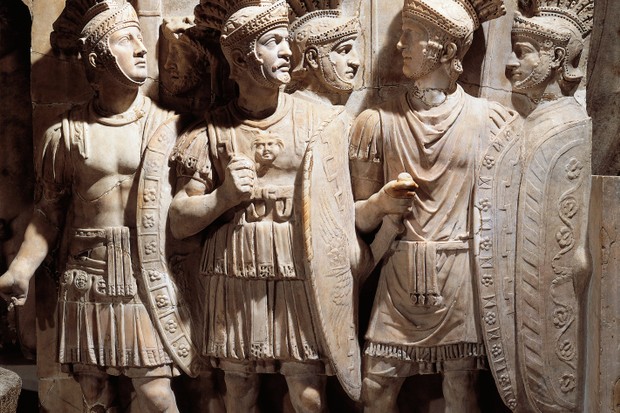
The structure of the Roman military helps explain this response. Roman soldiers operated within a rigid hierarchy in which obedience to command was not optional but foundational to discipline and effectiveness. Orders were to be executed, not questioned, and the consequences of disobedience could be severe, ranging from corporal punishment to execution. This system was designed to ensure cohesion in battle, where hesitation could prove fatal, but it also cultivated habits of compliance that extended beyond the battlefield. Training, discipline, and daily routine reinforced a mindset in which obedience became reflexive rather than deliberative, reducing the space for individual judgment. The distinction between meaningful action and meaningless ritual could become blurred, as the act of obedience itself took precedence over the content of the order. The soldiers’ response to Caligula’s command reflects not a failure of understanding, but the successful internalization of a system that prioritized conformity over evaluation.
Caligula’s position as emperor further intensified this dynamic. As princeps, he occupied a role that combined political authority with elements of divine association, particularly as imperial ideology evolved to emphasize the emperor’s unique status. His commands were not merely instructions but expressions of power that reinforced his position within the imperial system. By framing the collection of seashells as a symbolic victory over Neptune, Caligula transformed an arbitrary act into a performance of dominance, both over nature and over his own army. The soldiers’ compliance served not only to execute an order but to affirm the hierarchical structure that placed the emperor at its apex.
The absence of resistance in this episode reflects the extent to which obedience had been internalized within the Roman military. Individual soldiers may have recognized the irrationality of the command, yet the social and institutional pressures to conform were overwhelming. To refuse would have been to challenge not only the emperor but the entire system of authority that defined their role and identity. The act of gathering seashells becomes a demonstration of how power operates through expectation and discipline, shaping behavior even in situations where compliance appears to contradict common sense.
This episode reveals a form of obedience that differs from earlier examples while sharing their underlying logic. Unlike the followers of Cylon or the Spartans at Thermopylae, Roman soldiers were not motivated by sacred sanctuary or honor-bound codes of death, but by the structural demands of imperial hierarchy. Yet the outcome is similar: individuals acted in ways that subordinated personal judgment to external authority. The story of Caligula’s soldiers underscores a broader principle, namely that obedience does not require rational justification to function effectively. Once embedded within a system of power, it can sustain actions that are symbolic, performative, or even nonsensical, provided that the authority issuing the command remains unquestioned.
King John of Bohemia: Loyalty unto Death (1346)
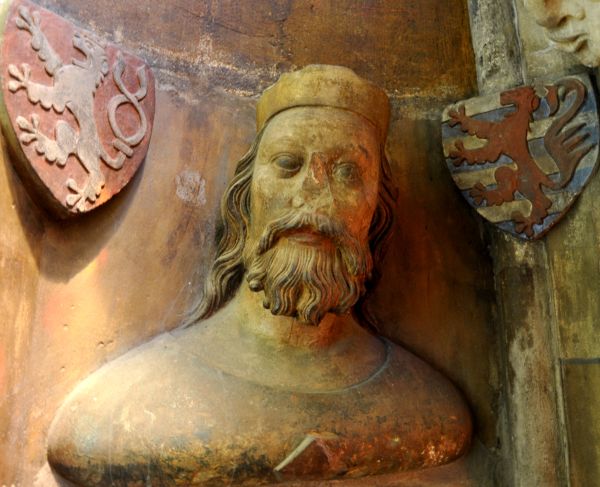
The death of John of Bohemia at the Battle of Crécy in 1346 offers a medieval example of obedience shaped not by institutional discipline or ritual excess, but by the values of chivalric loyalty and honor. By the time of the battle, John was elderly and completely blind, having lost his sight years earlier. Despite this, he insisted on participating in the conflict alongside his allies during the early phases of the Hundred Years’ War. His condition made independent action impossible, yet his determination to take part reflects a cultural framework in which kingship and martial identity were inseparable, even in the face of physical limitation.
The decision of John’s companions to join him in this endeavor reveals the collective dimension of loyalty within chivalric culture. According to chroniclers such as Jean Froissart, the king’s knights responded to his wish to strike a blow in battle by tying their horses’ reins to his, ensuring that they would remain together as they charged into combat. This act was not a spontaneous gesture but a deliberate expression of fealty, demonstrating the willingness of retainers to subordinate their own survival to the honor of their lord. In a system where personal bonds defined political and military relationships, such actions were understood as the fulfillment of obligation rather than acts of irrational sacrifice. The physical act of binding themselves to the king symbolized more than practical assistance; it represented an irreversible commitment to shared fate, eliminating the possibility of retreat and reinforcing their unity. The gesture functioned as both a literal and symbolic affirmation of loyalty, transforming individual decision-making into a collective act that prioritized honor over survival.
The broader context of the Battle of Crécy underscores the extent to which this loyalty operated independently of strategic calculation. The French forces, to which John was allied, faced significant disadvantages against the English army, particularly due to the effectiveness of English longbowmen. The conditions of the battlefield made success unlikely, and the chaotic nature of the engagement further reduced the possibility of coordinated action. Yet the decision to charge alongside a blind king carried symbolic weight that transcended tactical considerations. The act itself became a statement of identity, reinforcing the ideals that governed noble conduct even in the face of overwhelming odds.
The fatal outcome of this charge illustrates the consequences of such a value system. John and the knights who accompanied him were killed in the engagement, their bodies later found together, still linked by their reins. This detail, preserved in historical accounts, has contributed to the enduring memory of the episode as a powerful example of loyalty carried to its ultimate conclusion. While modern perspectives may emphasize the futility of the act, contemporary interpretations framed it as an affirmation of chivalric virtue, demonstrating the extent to which honor could redefine the meaning of rational action.
What distinguishes this case from earlier examples is the absence of coercion or explicit command. John did not order his companions to follow him to their deaths; rather, they chose to do so within a shared cultural framework that elevated loyalty above life. This voluntary dimension highlights the internalization of values that made such decisions possible. The knights’ actions were not driven by fear of punishment or immediate necessity, but by a sense of identity that bound them to their lord and to the ideals of their class. Obedience was not imposed from above but generated from within, emerging as a natural extension of social and moral expectations. The willingness to embrace death alongside their king reflects a worldview in which personal survival was secondary to the maintenance of honor and reputation, both individual and collective. Such values were reinforced through upbringing, social expectation, and the narratives that celebrated similar acts, ensuring that the choice to follow was not only understandable but, within that framework, inevitable.
The example of John of Bohemia demonstrates how systems of honor can produce forms of obedience that are both voluntary and self-destructive. Within the chivalric tradition, the willingness to die in service of one’s lord was not merely accepted but celebrated, reinforcing a hierarchy of values in which loyalty and reputation outweighed survival. This inversion of priorities aligns with the broader pattern in which authority, identity, and meaning converge to shape behavior. As in earlier cases, the actions of John and his companions appear irrational from an external perspective, yet within their own framework, they represented the highest expression of fidelity and purpose.
Patterns Across Time: Why People Obey the Irrational
The cases examined here, though separated by centuries and cultural context, reveal a striking consistency in the mechanisms that drive individuals to obey irrational or self-destructive orders. Whether in archaic Greece, classical Sparta, the Hellenistic world, imperial Rome, or medieval Europe, obedience emerges not as an anomaly but as a predictable outcome of structured authority and shared belief. In each instance, individuals acted within systems that redefined rationality according to internal values, making actions that appear senseless from an external perspective entirely coherent within their own frameworks. This continuity suggests that the impulse to obey is not merely situational, but rooted in enduring features of human social organization.
One of the most significant factors in this pattern is the role of hierarchical authority. In each case, obedience was reinforced by a clearly defined structure in which power flowed from a central figure, whether a political leader, military commander, or monarch. The presence of such authority simplifies decision-making by transferring responsibility from the individual to the leader, allowing actions to be justified through obedience rather than independent judgment. This dynamic reduces the cognitive burden of evaluating complex or dangerous situations, but it also creates the conditions under which irrational commands can be followed without resistance. Once authority is accepted as legitimate, the content of its directives becomes secondary to the fact of their issuance.
Closely connected to hierarchy is the role of identity and belonging. Individuals do not act in isolation but as members of groups whose values shape perception and behavior. In the cases of the Spartans, the followers of Cylon, and the knights of John of Bohemia, identity was inseparable from adherence to a code that defined acceptable action. To disobey would not merely have been a personal decision but a rupture of identity, severing the individual from the community that gave meaning to their actions. This fusion of self and group transforms obedience into a form of self-preservation at the social level, even when it leads to physical destruction.
Ritual and symbolic meaning further reinforce this process by framing actions within a larger narrative. The drinking contest under Alexander the Great, the sanctuary of Cylon’s followers, and the ceremonial elements of chivalric warfare all demonstrate how behavior can be shaped by the meanings attached to it. Rituals provide structure and context, allowing individuals to interpret their actions as part of something greater than themselves. They can override immediate physical concerns, redirecting attention toward symbolic goals such as honor, devotion, or divine favor. This reframing makes it possible for individuals to engage in actions that would otherwise be rejected as irrational. Ritual also functions as a mechanism of reinforcement, as repeated participation strengthens commitment and normalizes behavior that might initially provoke hesitation. The symbolic significance of the act can eventually eclipse its material consequences, creating a situation in which individuals perceive meaning and value in actions that are objectively harmful. Ritual does not merely accompany obedience but actively sustains it, embedding it within a system of interpretation that resists external critique.
Another recurring element is the suppression of dissent through social and institutional pressure. Even when individuals recognize the risks or absurdity of a situation, the cost of noncompliance can be prohibitive. In tightly structured environments such as the Roman army or Spartan society, deviation from expected behavior carries consequences that extend beyond the immediate moment, including punishment, dishonor, or exclusion. These pressures create a context in which obedience becomes the safer option, not because it preserves life, but because it maintains alignment with the system that defines acceptable existence. The fear of isolation or condemnation operates alongside loyalty and belief, reinforcing compliance.
These patterns reveal that obedience to irrational orders is not simply the result of individual weakness or error, but the product of deeply embedded social forces. Authority, identity, ritual, and pressure interact to create environments in which survival is no longer the primary measure of rationality. Instead, actions are evaluated according to their alignment with collective values and expectations, even when this alignment leads to destruction. The persistence of these dynamics across time underscores their significance, suggesting that the tension between obedience and self-preservation is a fundamental aspect of human history rather than an exception to it. What emerges from this analysis is not a series of isolated incidents, but a coherent pattern in which obedience is cultivated, reinforced, and normalized within specific cultural frameworks. These frameworks do not eliminate individual agency, but they shape it in ways that make certain choices more conceivable than others, often narrowing the perceived options to those that align with authority. Actions that appear irrational from the outside become, within their own contexts, the only viable path, revealing the profound influence of social structures on human behavior.
Historiography: Interpreting Obedience, Agency, and Responsibility
The following video, “Operation Barbarossa: The Invasion That Doomed Nazi German,” is provided by “War Stories“:
The interpretation of obedience in historical contexts has generated sustained debate among scholars, particularly concerning the balance between individual agency and structural constraint. Classical sources such as Herodotus, Arrian, and Jean Froissart often present acts of extreme loyalty in a moralizing framework, emphasizing virtues such as courage, honor, and fidelity. These narratives do not typically question the rationality of obedience but instead situate it within a system of values that celebrates sacrifice. The primary sources themselves contribute to the construction of obedience as an ideal, shaping the way these events have been remembered and transmitted.
Modern historiography has approached these cases with greater analytical distance, often drawing on sociological and psychological frameworks to reinterpret their significance. Scholars influenced by Max Weber have emphasized the role of charismatic authority and its instability, highlighting how personal leadership can generate intense loyalty while remaining structurally fragile. The work of Hannah Arendt has shifted attention toward the ordinary mechanisms through which individuals participate in systems of power, suggesting that obedience does not necessarily arise from fanaticism but from conformity and the normalization of authority. These perspectives have expanded the scope of analysis, moving beyond individual cases to examine broader patterns of behavior. They have also reframed obedience as a phenomenon that operates within systems rather than solely within individuals, emphasizing how social expectations, institutional norms, and shared assumptions shape the range of possible actions. This shift in focus allows historians to explore not only why individuals obey, but how entire structures of authority sustain and reproduce obedience.
The influence of psychological studies, particularly those conducted by Stanley Milgram, has further reshaped the historiographical landscape. Milgram’s experiments demonstrated the extent to which individuals are willing to obey authority figures even when doing so conflicts with personal conscience, providing empirical support for interpretations that emphasize situational factors over individual disposition. While these findings originate in a modern context, they have been applied retrospectively to historical cases, offering a framework for understanding how ordinary individuals could participate in actions that appear irrational or self-destructive. This approach has been both influential and controversial, raising questions about the extent to which modern models can be applied to premodern societies.
Historians have cautioned against reducing complex historical phenomena to universal psychological explanations. Cultural context remains essential for understanding how obedience is constructed and experienced in different societies. The values that shaped Spartan discipline, Roman military hierarchy, or medieval chivalry cannot be fully explained through abstract models alone; they require careful attention to the specific meanings and expectations that informed behavior. This perspective emphasizes the importance of integrating sociological insights with detailed historical analysis, ensuring that interpretations remain grounded in the particularities of each case.
The historiography of obedience reflects an ongoing tension between structural explanation and individual responsibility. While social and cultural forces clearly shape behavior, they do not eliminate the possibility of choice, leaving open the question of how to assign responsibility for actions carried out under authority. This tension is particularly evident in the contrast between admiration for historical acts of loyalty and concern about their implications. On one hand, warriors such as the Spartans at Thermopylae or the companions of John of Bohemia have been celebrated as exemplars of courage and fidelity. On the other, modern perspectives raise critical questions about the costs of such obedience and the extent to which it should be valorized. By examining these cases through multiple interpretive lenses, historians continue to explore the complex interplay between obedience, agency, and moral judgment, recognizing that the answers are neither simple nor definitive and that each framework reveals different dimensions of the same phenomenon.
Conclusion: The Danger of Following Without Thinking
The cases examined here demonstrate that obedience, far from being a neutral or purely functional trait, can become a force that overrides the most basic human instinct for survival. From the sanctuary of Cylon’s followers to the battlefield of Thermopylae, from the ritual excess of Alexander the Great’s army to the absurd commands of Caligula, and finally to the fatal loyalty of John of Bohemia, individuals acted within systems that redefined rationality according to the demands of authority, identity, and belief. In each instance, the decision to obey was not experienced as irrational but as necessary, even virtuous, within the framework that shaped it. This convergence of authority and meaning reveals how easily the boundaries of reason can be shifted when embedded in powerful social structures.
What emerges from these examples is not a condemnation of obedience itself, but a recognition of its dual nature. In many contexts, obedience enables coordination, discipline, and collective action, making it an essential component of social and political life. Yet when detached from critical judgment, it can lead to outcomes that are destructive both to individuals and to the groups they serve. The transition from rational compliance to blind adherence often occurs gradually, reinforced by hierarchy, ritual, and the internalization of values that prioritize loyalty over evaluation. Once this shift takes place, the capacity for independent decision-making is diminished, and individuals may find themselves acting in ways that contradict their own interests without perceiving the contradiction.
The persistence of this pattern across time suggests that the tension between obedience and autonomy is a fundamental aspect of human societies. Cultural systems do not merely encourage certain behaviors; they shape the very criteria by which actions are judged. In environments where honor, duty, or divine mandate are elevated above all else, the instinct for self-preservation can be subordinated to collective expectations. This does not eliminate agency, but it constrains it, narrowing the range of choices that individuals perceive as available or acceptable. The resulting actions, though often extreme, are best understood not as anomalies but as expressions of deeply embedded social dynamics.
The danger lies not in obedience alone but in the absence of reflection that can accompany it. To follow without thinking is to relinquish the capacity to evaluate the consequences of one’s actions, leaving individuals vulnerable to the demands of authority regardless of their content. The historical examples explored here serve as reminders of the power of such dynamics, illustrating how easily loyalty and discipline can be transformed into instruments of self-destruction. Recognizing this pattern does not diminish the complexity of the past, but it does offer a framework for understanding how similar processes might operate in different contexts, past and present alike.
Bibliography
Affiliate disclosure: Amazon links on this site are paid links. As an Amazon Associate I earn from qualifying purchases.
- Arendt, Hannah. Eichmann in Jerusalem: A Report on the Banality of Evil. New York: Viking Press, 1963.
- Arrian. Anabasis of Alexander. Translated by P. A. Brunt. Cambridge, MA: Harvard University Press, 1976.
- Barrett, Anthony A. Caligula: The Corruption of Power. New Haven: Yale University Press, 1989.
- Bosworth, A. B. Conquest and Empire: The Reign of Alexander the Great. Cambridge: Cambridge University Press, 1988.
- Cartledge, Paul. Spartan Reflections. London: Duckworth, 2001.
- —-. Thermopylae: The Battle That Changed the World. New York: Overlook Press, 2006.
- Cassius Dio. Roman History. Translated by Earnest Cary. Cambridge, MA: Harvard University Press, 1914–1927.
- Davis, Winston. “Heaven’s Gate: A Study of Religious Obedience.” Nova Religio: The Journal of Alternative and Emergent Religions 3:2 (2000), 241-267.
- DeVries, Kelly. Infantry Warfare in the Early Fourteenth Century: Discipline, Tactics, and Technology. Woodbridge: Boydell Press, 1996.
- Foucault, Michel. Discipline and Punish: The Birth of the Prison. New York: Vintage Books, 1977.
- Froissart, Jean. Chroniques. Translated selections in Geoffrey Brereton, Froissart: Chronicles. Harmondsworth: Penguin, 1968.
- Hanson, Victor Davis. The Western Way of War: Infantry Battle in Classical Greece. Berkeley: University of California Press, 1989.
- Herodotus. Histories. Translated by Robin Waterfield. Oxford: Oxford University Press, 1998.
- Hornblower, Simon. A Commentary on Thucydides. Vol. 1. Oxford: Oxford University Press, 1991.
- Ingram, Peter. “Deception, Obedience and Authority.” Philosophy 54:210 (1979), 529-533.
- Kaeuper, Richard W. Chivalry and Violence in Medieval Europe. Oxford: Oxford University Press, 1999.
- Lane Fox, Robin. Alexander the Great. London: Penguin, 1973.
- Lazenby, J. F. The Defence of Greece 490–479 BCE. Warminster: Aris & Phillips, 1993.
- Milgram, Stanley. Obedience to Authority: An Experimental View. New York: Harper & Row, 1974.
- Morelli, Mario F. “Milgram’s Dilemma of Obedience.” Metaphilosophy 14:3/4 (1983), 183-189.
- Parker, Robert. Miasma: Pollution and Purification in Early Greek Religion. Oxford: Clarendon Press, 1983.
- Plutarch. Plutarch’s Lives, translated by Bernadotte Perrin. Cambridge, MA: Harvard University Press, 1916.
- Pritchett, W. Kendrick. The Greek State at War. Berkeley: University of California Press, 1974.
- Stoneman, Richard. Alexander the Great: A Life in Legend. New Haven: Yale University Press, 2008.
- Suetonius. The Twelve Caesars. Translated by Robert Graves. London: Penguin Classics, 2007.
- Sumption, Jonathan. The Hundred Years War, Volume I: Trial by Battle. Philadelphia: University of Pennsylvania Press, 1990.
- Thucydides. History of the Peloponnesian War. Translated by Rex Warner. Revised by M.I. Finley. London: Penguin Classics, 1972.
- Weber, Max. Economy and Society: An Outline of Interpretive Sociology. Translated by Guenther Roth and Claus Wittich. Berkeley: University of California Press, 1978.
- Winterling, Aloys. Caligula: A Biography. Translated by Deborah Lucas Schneider. Berkeley: University of California Press, 2003.
- Young, Gary. “Socrates and Obedience.” Phronesis 19:1 (1974), 1-29.
Originally published by Brewminate, 04.29.2026, under the terms of a Creative Commons Attribution-NonCommercial-NoDerivatives 4.0 International license.
About the Author