Augustus’s Res Gestae turned civil war, coercion, and autocracy into a polished public memory of peace, restraint, and republican restoration.

By Matthew A. McIntosh
Public Historian
Brewminate
Introduction: The Monument That Pretended to Be a Record
The Res Gestae Divi Augusti announces itself with the quiet authority of stone. It does not argue, confess, apologize, or defend in any obvious way. It lists. It records offices, honors, victories, payments, buildings, priesthoods, settlements, spectacles, and benefactions, as though the life of Augustus could be reduced to a public account book of service rendered to Rome. Yet that restraint is precisely the source of its power. The text was not a neutral historical record but a political monument, composed by the man whose career had ended the Roman Republic while claiming to have restored it. Its form is deceptively plain. Its purpose is anything but. By arranging his life as a sequence of civic achievements, Augustus made domination appear cumulative, lawful, generous, and almost inevitable.
The document’s posthumous setting deepened that illusion. Augustus left the account with his will, and the text was later displayed publicly, most famously through the inscriptional tradition preserved at Ancyra. A private self-assessment became public memory, and public memory became imperial instruction. Readers were not invited to weigh competing interpretations of the past. They were placed before an authorized version of Augustan history, one carved into the visual and civic landscape of empire. The medium mattered. Inscription did not merely preserve the words; it disciplined them, giving Augustus’s claims the aura of permanence, legality, and communal acceptance. In Rome, where public monuments had long served as instruments of aristocratic competition, collective memory, and civic prestige, the transformation of Augustus’s own account into an inscription gave personal narrative the force of institutional truth. It also removed the text from the ordinary instability of political speech. Speeches could be answered, pamphlets could be mocked, and memories could be contested by surviving enemies, but a monumental inscription stood as if the community itself had already judged. The provincial preservation of the text sharpened this effect even further, because it allowed Augustus’s self-presentation to circulate beyond the city of Rome as an imperial lesson in loyalty, order, and gratitude. The princeps who had mastered Roman politics in life continued to manage Roman memory after death.
The propaganda of the Res Gestae lies less in crude invention than in selective truth. Augustus did raise armies, distribute money, settle veterans, restore temples, celebrate games, receive honors, defeat rivals, and reshape Rome’s political order. Many of the events he records happened. The deeper distortion lies in the meaning assigned to them and in the silences surrounding them. The proscriptions vanish into the background. Civil wars become acts of liberation. Political rivals lose their names or appear as factions, criminals, or foreign threats. Extraordinary power becomes reluctant service. Autocracy becomes restoration. The text’s honesty at the level of isolated fact makes its larger dishonesty more durable, because it allows the reader to mistake accuracy for truthfulness.
I treat the Res Gestae not as a simple lie but as one of antiquity’s most sophisticated exercises in political memory. Augustus did not merely record what he had done; he taught Rome how to interpret what he had done. He created a narrative in which the violence of revolution disappeared behind the language of consensus, benefaction, piety, and constitutional repair. That narrative was central to the Augustan settlement itself, because the new regime depended on a paradox: monarchy had to speak the language of republican virtue. The Res Gestae was the monument that pretended to be a record, and its greatest achievement was not preserving Augustus’s life but disguising the political transformation that life had made irreversible.
The Crisis of 44 BCE: Adoption, Vengeance, and the Invention of Legitimacy

The political career that Augustus later presented as a rescue mission began in the shock of assassination. On the Ides of March in 44 BCE, Julius Caesar was murdered by senators who claimed to be defending liberty from monarchy, but the act did not restore the republic. It exposed how fragile republican authority had become after decades of factional violence, emergency commands, military strongmen, and civil war. The assassins had imagined that killing Caesar might free Rome from one-man rule, yet they had no adequate political machinery for governing the aftermath, no unified program that could command broad consent, and no reliable control over the soldiers and veterans whose loyalties had become essential to power. Into that broken world stepped Gaius Octavius, still a young man and politically untested, who learned that Caesar’s will had adopted him as son and heir. The adoption was not merely a family matter. It gave him a name, a claim, and a political inheritance that could be turned into legitimacy. It also placed him inside a symbolic economy of memory, loyalty, and obligation, where Caesar’s veterans, clients, friends, and beneficiaries could be summoned not only by money or ambition but by the language of duty to the dead. From that moment, the future Augustus began the work of transforming dynastic succession into public service.
The Res Gestae opens by making this transformation seem almost natural. Augustus declares that at nineteen he raised an army “on his own initiative and at his own expense” and used it to free the republic from domination by a faction. The phrasing is extraordinary. A private citizen’s military mobilization, which in another context might have looked like rebellion, is presented as patriotic intervention. The language strips the act of its danger. No anxious republic appears here, no legal ambiguity, no risk that another ambitious Caesar had emerged from Caesar’s ashes. Instead, the young heir becomes the defender of the state, acting before formal authority could catch up with necessity. Augustus’s genius was to place emergency before legality and then make legality appear grateful afterward.
That opening claim also reveals how carefully Augustus managed the moral meaning of his rise. He did not introduce himself as a grieving son seeking revenge, though vengeance for Caesar’s murder remained central to his early appeal. Nor did he present himself as a factional commander competing with Mark Antony, the Senate, Caesar’s assassins, and other armed interests for control of Rome. He presented himself as the man who liberated the republic from oppression. This language did two things at once. It allowed him to claim continuity with Caesar through adoption while also claiming continuity with the republic through rescue. The result was a political identity built out of contradiction: he was Caesar’s son, yet not merely Caesar’s avenger; he was an armed claimant, yet not merely another warlord; he was an outsider to established senatorial leadership, yet supposedly the republic’s necessary champion.
The tension was especially sharp because Octavian’s first moves depended on the same military logic that had already damaged republican government. He courted Caesar’s veterans, accepted the symbolic capital of Caesar’s name, and entered politics through armed force rather than ordinary civic advancement. The Roman Republic had always made room for aristocratic competition, but by 44 BCE competition had become militarized. Commanders no longer simply won offices and then armies; they used armies to force political recognition. This was not a minor procedural distortion but a structural crisis in which legality increasingly followed coercion rather than restraining it. Octavian’s youth made the problem even more striking, because he possessed neither the seniority nor the magistracies that traditionally marked a statesman’s ascent. What he possessed was Caesar’s name, access to Caesar’s legacy, and the willingness to mobilize armed men before the political order had decided what to do with him. Augustus’s later account turns that pattern upside down. He implies that the army he raised was not a symptom of republican collapse but a remedy for it. In the Res Gestae, the means by which the republic was being hollowed out are retrospectively described as the means by which it was saved.
The adoption itself became the hinge on which this moral reclassification turned. As Caesar’s heir, Octavian could draw on loyalty, memory, money, and obligation; as Caesar’s adopted son, he could claim pietas, the sacred duty owed to father, family, and gods; as a political actor, he could translate that duty into public vengeance. The assassination gave him more than a grievance. It gave him a story. Caesar’s killers could be framed not as defenders of republican liberty, however self-serving that claim may also have been, but as murderers whose crime had wounded the state itself. By merging filial duty with civic duty, Octavian made private revenge look like public justice. This fusion would remain essential to Augustan memory, because it allowed violence committed in the name of Caesar to be remembered as violence committed on behalf of Rome.
The first section of the Res Gestae is not a simple beginning but a manifesto in miniature. It teaches the reader how to understand everything that follows. Augustus will speak as though power came to him because Rome needed him, not because he pursued it with ruthless intelligence. He will represent armed intervention as liberation, vengeance as justice, and personal inheritance as constitutional service. The crisis of 44 BCE did not produce a restorer standing above faction. It produced a gifted young competitor who learned faster than his rivals how to make faction sound like patriotism. The later emperor’s legacy began there, in the gap between what Octavian did and what Augustus taught the world to call it.
43 BCE and the Triumvirate: The Omitted Terror of the Proscriptions

The year 43 BCE exposed the brutal contradiction at the heart of Octavian’s later claim to have rescued the republic. After Caesar’s assassination, Roman politics did not return to senatorial deliberation or constitutional order. It moved toward a new concentration of armed power in the hands of three men: Octavian, Mark Antony, and Marcus Aemilius Lepidus. The Second Triumvirate was not merely an informal alliance among ambitious commanders. It was legally constituted by the Lex Titia as a board of three men for the reconstitution of the state, a phrase whose constitutional blandness masked its revolutionary character. The triumvirs received extraordinary authority to remake Roman politics by force. The republic was supposedly being reorganized, but the instrument of reorganization was a temporary dictatorship shared among men whose armies, ambitions, and resentments had already made ordinary republican government nearly impossible.
The Res Gestae handles this moment with astonishing restraint, which is to say with astonishing evasion. Augustus mentions that he was triumvir for the settling of the commonwealth, but he does not dwell on what that office actually meant or what it made possible. The title appears as one step in a sequence of public responsibilities, not as the legal framework for purge, confiscation, and terror. This is one of the most revealing silences in the whole text. Augustus did not need to deny that he had been triumvir. The office was known, and its formal existence could be presented as constitutional. What he suppressed was the political reality beneath the formula: the triumvirate allowed the violence of civil war to enter the machinery of the state itself.
That violence took its most infamous form in the proscriptions. Lists of condemned men were published, property was seized, rewards were offered, and political killing became a sanctioned public act. The victims were not only military enemies. Senators, equestrians, local elites, and men whose wealth or associations made them useful targets were drawn into a machinery of death and confiscation. The proscriptions helped fund armies and bind supporters to the new regime through property and fear. They also destroyed the moral fiction that the triumvirs were simply restoring order. A government that claims to save the republic while authorizing murder lists has already revealed the nature of its restoration. The silence of the Res Gestae on this point is not accidental. It is structural. Augustus’s later memory of legality depended on removing the blood by which legality had been regained.
Cicero’s death gave the proscriptions their most enduring symbolic force. He had attacked Antony in the Philippics, defended a senatorial vision of political authority, and briefly imagined that Octavian might be used against Antony without becoming a threat in his own right. That miscalculation proved fatal. Cicero’s murder was not merely the death of a famous orator. It marked the collapse of a political world in which speech, reputation, and senatorial prestige could still pretend to stand against organized military power. The severed display of his head and hands, reported by ancient sources, became a grotesque image of what the new politics had done to republican eloquence. In Augustan memory, there was no room for Cicero as victim of the regime’s birth. To remember him fully would have been to remember that the road to Augustan peace passed through the silencing of men who had tried, however imperfectly, to speak for the old order.
The proscriptions also complicate any simple opposition between chaos and Augustan order. It is true that Rome had been destabilized by decades of political violence before Octavian’s rise, and it is true that many Romans later accepted the Augustan settlement because it ended repeated civil war. But the triumviral terror was not merely the disorder that Augustus overcame. It was part of the process by which he became capable of overcoming others. Confiscated wealth, veteran expectations, eliminated rivals, and frightened elites all helped create the conditions in which the future princeps could later appear as Rome’s indispensable stabilizer. The regime’s later peace cannot be separated from the coercive formation of its power. The Res Gestae asks readers to begin with rescue and restoration. The history of 43 BCE forces them to begin with emergency power, legalized vengeance, and the conversion of murder into public policy.
This omission matters because it reveals the central method of the Res Gestae. Augustus did not falsify his past by claiming never to have held extraordinary power. He falsified its meaning by separating office from consequence. The triumvirate appears, but the terror vanishes. Constitutional language remains, but the condemned disappear. The state is said to be restored, but the men killed in the name of that restoration are denied a place in the official memory of it. Here the Res Gestae becomes most dangerous as propaganda, not because it invents a world out of nothing, but because it teaches the reader to see only the polished surface of power. The massacre is outside the frame, and the frame is the lie.
Philippi and the Politics of Vengeance: Turning Civil War into Justice
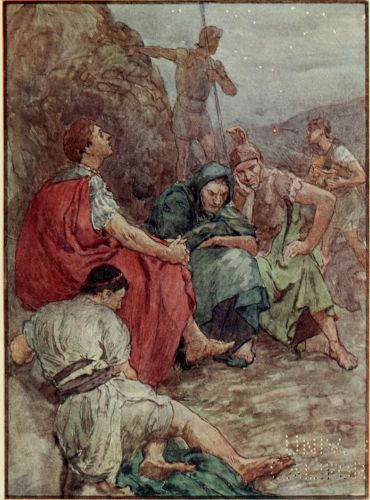
The defeat of Marcus Junius Brutus and Gaius Cassius Longinus at Philippi in 42 BCE gave Octavian and Antony more than a military victory. It gave them a moral story. Caesar’s assassins had tried to cast themselves as liberators, men acting in defense of republican freedom against monarchy. Their opponents recast them as murderers whose defeat avenged a crime against Rome itself. This distinction mattered deeply for Octavian’s later memory. If Philippi was a civil war between competing Roman visions, then Octavian was one armed claimant among others. If Philippi was punishment for parricide, sacrilege, and treason, then his violence could be remembered as justice. The Res Gestae depends on this second framing, reducing the political complexity of Caesar’s murder to a moral drama in which vengeance and public order became almost indistinguishable.
Augustus’s language in the Res Gestae makes this transformation clear. He says that he drove into exile those who murdered his father, punishing their crime through legal judgments, and afterward defeated them twice in battle when they brought war against the republic. The sentence is compact, but its ideological work is enormous. The assassins are not named as defenders of liberty, aristocratic republicans, or political opponents. They are killers first, enemies second. Their later military resistance becomes an attack on the republic rather than a continuation of the struggle over what the republic meant. Augustus compresses law, family duty, and battlefield victory into a single moral sequence. The killers were judged, they resisted, and they were defeated. The story leaves no room for the uncomfortable fact that the republic itself had become the prize claimed by every armed side.
Philippi also allowed Octavian to strengthen the identity that adoption had given him. He was no longer merely Caesar’s heir in name or beneficiary in law. He had acted as the avenger of the divine Julius, a role that carried emotional, religious, and political force. Roman culture placed immense value on pietas, the duty owed to family, ancestors, gods, and country. Octavian’s pursuit of Caesar’s killers could be presented as filial devotion elevated into public necessity. Yet that elevation was precisely the propagandistic move. Private vengeance did not cease to be private simply because it was draped in civic language. The young Caesar’s duty to his murdered adoptive father aligned conveniently with his need to eliminate powerful rivals. The Res Gestae turns that alignment into moral inevitability, as though Octavian’s ambitions were merely the instrument through which justice moved. It also allows the reader to forget how unstable the category of justice had become in the late republic, where legality could be manufactured by force and moral language could be claimed by every faction. Brutus and Cassius had their own vocabulary of duty, liberty, and ancestral obligation; Octavian’s triumph lay partly in ensuring that their language would not define the official memory of the conflict. By winning the war, he won the right to decide which form of pietas counted as legitimate. The son’s vengeance eclipsed the republicans’ claim to liberation.
The aftermath of Philippi complicates the clean moral arc Augustus later preferred. Victory did not restore ordinary republican government. It intensified the division of power among the triumvirs and deepened the dependence of Roman politics on armies, confiscations, and veteran settlement. The dead at Philippi did not include only villains in a simple tale of retribution; they included men attached to a senatorial and republican cause that still possessed ideological force. Nor did the victory end civil war. It cleared one field of rivals while leaving Antony, Lepidus, Sextus Pompey, and Octavian himself locked in the wider contest for supremacy. The claim that Caesar’s murderers had been punished was emotionally powerful, but it could not conceal the larger pattern: every victory in the name of restoring order created new conditions for further domination. In Italy especially, the needs of the victorious armies produced painful settlements, confiscations, and social disruption, reminding ordinary communities that the politics of vengeance did not end at the battlefield. The defeated cause could be morally condemned, but the victors still had to feed soldiers, reward loyalty, and translate military success into durable control. That process made the language of justice even more useful, because it offered a moral cover for policies that otherwise looked like coercion. Philippi gave Octavian prestige, but it did not give Rome peace. It gave him one more step toward supremacy while allowing him later to narrate that step as if it had been taken on behalf of the republic rather than over its body.
The politics of vengeance at Philippi reveal another essential feature of Augustan memory. Augustus did not merely omit inconvenient facts; he assigned moral categories that made opposition seem illegitimate before it could be understood. Brutus and Cassius were not treated as men whose political claims had to be answered. They were made into criminals whose defeat confirmed the justice of the avenger. This was not a minor rhetorical choice. It helped establish a habit of interpretation that runs through the Res Gestae: Augustus’s enemies appear as murderers, pirates, factions, or foreignized threats, while Augustus himself appears as the servant of law, order, family duty, and the Roman people. Philippi was remembered not as one civil war among Romans, but as the punishment of crime. In that transformation, vengeance became justice, and justice became one of the founding myths of autocracy.
Sextus Pompey, “Pirates,” and the Erasure of Political Rivals
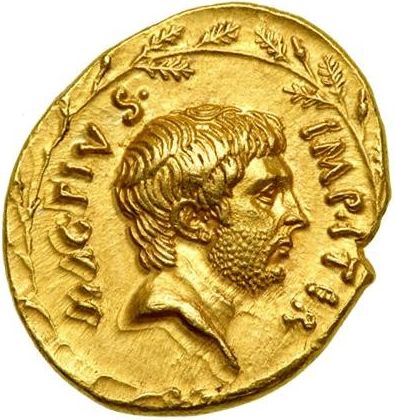
The struggle against Sextus Pompey shows how easily Augustan memory could turn a political rival into a public menace. Sextus was not a marginal criminal operating outside Roman politics. He was the son of Pompey the Great, heir to one of the most powerful names of the late republic, and a commander whose naval strength made him indispensable to the politics of the 40s and 30s BCE. From his bases in the western Mediterranean and especially Sicily, he threatened Rome’s grain supply, sheltered fugitives from the triumviral regime, and attracted men displaced by the violence of the proscriptions. That made him dangerous in practical terms, but also symbolically dangerous. He represented a surviving Pompeian alternative to Caesarian supremacy, a reminder that Octavian’s claim to embody the republic was contested by other Roman memories, other loyalties, and other victims of the new order. His power also exposed the incompleteness of triumviral control, because a man outside the formal architecture of the regime could still command ships, followers, territory, and political imagination. Sextus’s appeal rested partly on name and inheritance, but also on circumstance: the triumvirs had created enemies faster than they could absorb them, and the sea offered those enemies a place from which to resist. To reduce him to a pirate was not merely an insult. It was a strategy for making an unresolved civil war appear to be a problem of public security.
The Res Gestae refuses to grant Sextus that political dignity. Augustus presents the conflict as the suppression of piracy, claiming that he freed the sea from pirates and restored peace to a world endangered by maritime disorder. The phrase is effective because it changes the category of the war. A struggle against Sextus as Pompey’s son would have looked like another chapter in Roman civil conflict. A campaign against pirates looked like public protection. The language erased lineage, ideology, and grievance. It replaced them with criminality. Sextus’s control of Sicily and the sea lanes could certainly be experienced in Rome as a crisis, especially when grain supplies were threatened, but the label “pirate” did more than describe naval disruption. It stripped a Roman opponent of political legitimacy before readers could ask what his cause represented.
This rhetorical move was especially important because Sextus’s following complicated the triumviral story of order against chaos. Many of those who came to him were not simply bandits or enemies of civilization. Some were survivors, exiles, dispossessed elites, runaway slaves, or men whose lives had been shattered by the proscriptions and confiscations that Augustus would later omit from his public memory. Sextus could present himself as protector of the persecuted and as heir to the republican prestige of Pompey, even if his position also depended on coercion, opportunism, and control of the grain routes. The point is not to romanticize him. It is to recognize what Augustan language suppresses. By calling the conflict a war against pirates, Augustus made the refugees of triumviral violence disappear into a story of maritime disorder, and he made his own campaign look like the restoration of normal life rather than the elimination of a rival center of power.
The defeat of Sextus in 36 BCE also helped Octavian reposition himself within the triumvirate. The victory was achieved in large part through the naval competence of Marcus Vipsanius Agrippa, whose role would become indispensable to Octavian’s success, but the political credit served Octavian’s larger ascent. Lepidus was soon pushed aside after attempting to assert control in Sicily, leaving Octavian dominant in the West while Antony remained powerful in the East. The suppression of Sextus did not simply make the seas safer. It changed the balance among Rome’s remaining rulers. A campaign advertised as liberation from piracy became another stage in the consolidation of one man’s power. The Res Gestae records the benefit while muting the consequence: the restoration of security also narrowed the field of political competition.
The treatment of Sextus Pompey reveals one of the central habits of Augustan self-presentation. Augustus did not always need to deny that rivals existed. He needed to decide what kind of people they were allowed to be in memory. Brutus and Cassius became murderers. Sextus became a pirate. Antony would become a factional and foreignized threat. In each case, the political rival was morally reduced before being historically remembered. This reduction made Augustus appear less like a participant in civil war and more like the agent by which Rome was rescued from criminals, traitors, and enemies of order. The move was especially powerful because it let Augustus preserve the appearance of factual accuracy while emptying events of their political complexity. He could point to a real naval crisis, real disruption, real danger to Rome’s grain supply, and real popular anxiety, but he could arrange those realities so that the deeper civil conflict disappeared. The erasure was not total; Sextus still appears as a defeated threat. But he appears without the political complexity that made him dangerous. That is the deeper propaganda of the Res Gestae: it preserves the victory while deleting the rival’s claim to meaning.
Antony, Cleopatra, and the Foreign Mask over Roman Civil War

The final conflict between Octavian and Mark Antony was, in political reality, the last great civil war of the Roman Republic. It was a struggle between two Roman commanders, both heirs to Caesar’s world, both beneficiaries of triumviral power, and both claiming to act in defense of Roman order. Yet in Augustan memory, this conflict could not be allowed to remain a civil war in its full meaning. If Actium were remembered primarily as one Roman dynast defeating another, Octavian would appear as the final victor in the same brutal competition that had consumed the republic for a generation. The ideological problem was obvious. A restorer of the republic could not look too much like the most successful participant in its destruction. Augustus’s solution was to place a foreign mask over a Roman war, making Antony’s defeat appear less like the elimination of a rival and more like the liberation of Rome from eastern corruption, queenly domination, and monarchical danger.
Cleopatra VII made that transformation possible. As queen of Egypt, she could be turned into everything Roman political culture feared when it imagined the loss of civic freedom: monarchy, luxury, eastern excess, female rule, and foreign influence over Roman men. This did not require Octavian to invent Antony’s relationship with her, nor did it require him to deny Egypt’s real strategic importance. Antony had built a political and military base in the East, Cleopatra was his ally and partner, and Egypt’s wealth mattered enormously to the future of Roman power. The propaganda lay in the arrangement of emphasis. Cleopatra became not merely an ally of Antony but the visible center of the threat, while Antony himself could be represented as compromised, seduced, and displaced from proper Roman loyalties. The Donations of Alexandria, in which Antony distributed eastern territories among Cleopatra and her children, offered Octavian especially useful material for this portrayal, because they could be framed as evidence that Roman authority was being parceled out under the influence of an Egyptian queen. Whether Antony understood those gestures as dynastic strategy, eastern statecraft, or political theater, Octavian’s version made them look like betrayal. The old Roman fear of kingship could be redirected away from Octavian’s own concentration of power and toward Alexandria, where monarchy already had a recognizable face, court, language, and queen. The conflict was still a Roman struggle for supremacy, but Augustan rhetoric made it feel like a war of Rome against an alien court.
The Res Gestae reflects this strategy through its careful refusal to dignify Antony by name. Augustus writes that all Italy swore allegiance to him voluntarily and demanded him as leader in the war in which he was victorious at Actium; he also presents support from provinces and colonies as part of a broad consensus. Antony disappears into the language of opposing force, while Cleopatra and Egypt help define the conflict’s foreign character. This is not merely personal pettiness. Naming Antony as a rival would have acknowledged the civil nature of the war and the legitimacy of a competing Roman commander. By leaving him unnamed, Augustus reduces him to the shadow of a faction and shifts attention toward the collective will of Italy, the unity of the Roman world, and the necessity of Octavian’s leadership. Silence becomes a weapon. Antony is not debated; he is absorbed into disorder.
Actium itself, fought in 31 BCE, became the symbolic turning point of the Augustan story, even though the war did not end fully until the conquest of Egypt and the deaths of Antony and Cleopatra in 30 BCE. The battle’s later memory mattered as much as its military consequences. It could be imagined as the moment when Rome chose order over chaos, West over East, discipline over indulgence, and lawful leadership over dynastic enslavement. This opposition was never clean. Octavian’s own power was deeply personal, dynastic, and military; his later regime would depend on family succession, provincial armies, and the political management of monarchy without the name. Yet Actium allowed him to project those anxieties outward. The monarchical danger was made to reside in Cleopatra’s Egypt and Antony’s supposed betrayal of Roman identity, not in Octavian’s own consolidation of supreme command. The victory purified him by contrast. He became the man who defeated kingship by building a monarchy that refused to call itself one.
The conquest of Egypt sharpened the contradiction. Egypt was not simply liberated or neutralized; it became a crucial possession of the new order, governed under arrangements that kept it closely tied to the princeps. Its wealth helped stabilize Octavian’s position, fund his promises, pay soldiers, and support the benefactions that later filled the Res Gestae. The destruction of Antony and Cleopatra opened the material basis for Augustan peace. Yet the text does not present this as the capture of resources needed by a victorious warlord. It presents the outcome as the completion of civil peace and the expansion of Roman honor. Egypt’s incorporation also gave Octavian a victory that could be displayed without openly celebrating the massacre of Roman opponents. A triumph over Antony would have advertised civil war too plainly, but Egypt could be represented as conquest, and Cleopatra could bear the symbolic burden of defeat. This was politically invaluable. It allowed Octavian to enjoy the prestige, wealth, and public spectacle of victory while shifting the emotional weight of the war away from Roman-on-Roman violence. The dead Roman rival faded; the defeated foreign queen remained. Again, the facts are not the main falsehood. Antony was defeated, Egypt was taken, and Rome did emerge from decades of civil war. The deception lies in the moral conversion of conquest into healing.
The foreign mask placed over the war against Antony and Cleopatra reveals one of the most important operations of the Res Gestae: it turns the last and most decisive civil war into an act of national salvation. Augustus could not erase the memory of Roman bloodshed altogether, but he could reorganize it so that the final enemy appeared less Roman than he was. Brutus and Cassius had been murderers. Sextus Pompey had been a pirate. Antony became the servant of a foreign queen and the representative of a faction rather than a legitimate Roman rival. In each case, Augustus narrowed the moral field until his own violence seemed defensive, cleansing, and necessary. Actium was the culminating example. It allowed Octavian to end the republic by claiming to save Rome from monarchy, and it allowed Augustus to remember civil war as liberation from an enemy conveniently dressed in foreign colors.
28–27 BCE: “Restoring the Republic” While Keeping the Power

The defeat of Antony and Cleopatra left Octavian with a problem that victory alone could not solve. He had eliminated his last major rival, commanded unmatched military resources, controlled enormous wealth, and stood at the center of a political world exhausted by civil war. Yet Roman political culture still hated the language of kingship and remained haunted by the memory of Julius Caesar’s dictatorship and assassination. To rule openly as monarch would have been dangerous. To pretend that nothing had changed would have been absurd. Octavian needed a settlement that preserved the appearance of republican legality while making his supremacy practically irreversible. The constitutional drama of 28 and 27 BCE answered that need. It did not simply disguise power; it reorganized power through forms Romans could be persuaded to honor. The old republic had already been battered by emergency commands, civil conflict, and personal armies, but its symbols still mattered enormously. Senate, people, magistracies, law, ancestral custom, and public honor remained the language through which legitimate authority had to speak. Octavian’s achievement was to recognize that he did not have to destroy that language. He could occupy it, rearrange it, and make it describe a new political reality without forcing Rome to admit how fully the old one had died.
The Res Gestae gives this moment its most famous and most misleading formulation. Augustus claims that after he had extinguished civil wars, he transferred the republic from his power to the control of the Senate and Roman people. On the surface, this is the language of renunciation. The conqueror gives back what emergency had placed in his hands. Disorder ends, legality resumes, and the old civic partnership of Senate and people appears restored. But the sentence is doing far more than reporting a political act. It frames the entire Augustan regime as the opposite of seizure. Power seems to move away from Augustus at the very moment when it is being secured around him. The language of transfer creates the illusion that authority returned to the republic, when in fact the republic had been refitted to function under one man’s permanent predominance. Its brilliance lies in the way it makes domination appear almost self-effacing. Augustus does not say that he conquered Rome, disciplined the Senate, neutralized rivals, and converted military supremacy into constitutional authority. He says he gave the state back. That formulation turns the victor into a trustee, the usurper into a guardian, and the architect of autocracy into the servant of republican continuity. The lie is not that a settlement occurred. The lie is the moral direction assigned to it.
The settlement of 27 BCE was not a restoration in any simple sense. Republican institutions remained visible: the Senate met, magistracies continued, laws were passed, elections survived in altered form, and public honors were still granted through traditional channels. This survival of form mattered because it allowed Roman elites to participate in their own subordination without naming it as such. Augustus did not abolish the political language of the republic; he colonized it. He accepted the title “Augustus,” received honors, retained immense prestige, and held decisive military authority through command over key provinces and armies. The Senate could deliberate, but its deliberations now took place beneath the weight of his auctoritas, resources, and unrivaled command. The state had not been restored to what it had been. It had been taught to speak as though continuity remained while sovereignty had shifted.
The genius of this arrangement lay in its refusal to look like dictatorship. Sulla had ruled through terror and abdicated. Caesar had accumulated honors and powers so visibly that his enemies could imagine tyrannicide as liberation. Octavian learned from both examples. He did not need the title of king, and he did not need to present himself as perpetual dictator. He needed powers distributed across acceptable republican categories, reinforced by military control, public gratitude, priestly prestige, family symbolism, and the memory of peace after civil war. This made his rule harder to attack. An open monarch could be named. A “first citizen” who claimed to have restored the republic while quietly monopolizing the conditions of political life was more difficult to oppose, especially after decades in which opposition had so often led to death, exile, or confiscation.
The phrase “by universal consent,” so central to Augustan self-presentation, must be read within this atmosphere of exhaustion and constraint. Many Romans likely did consent in a meaningful sense. They wanted peace, grain, stable government, restored temples, paid veterans, safer roads, and an end to the cycle of armed strongmen tearing the state apart. Augustus delivered much of that. But consent after civil war is never innocent. It grows in the soil of fear, relief, dependency, and diminished alternatives. The Res Gestae turns that complicated reality into moral unanimity, as though Rome freely recognized the best man because his virtue was self-evident. In truth, Augustus had helped create the world in which his supremacy appeared necessary. The settlement worked because it answered real needs, but the needs themselves had been shaped by years of violence in which Octavian had been an actor, not merely a savior. The language of consensus does two things at once: it records a genuine longing for stability and conceals the pressures that narrowed the field of political imagination. A man who controls armies, wealth, patronage, veterans, honors, and the memory of victory does not require universal enthusiasm to produce public agreement. He requires enough relief, enough fear, and enough institutional choreography to make resistance look reckless, ungrateful, or already obsolete.
The “restoration of the republic” was the central fiction of Augustan legitimacy, but it was not a clumsy fiction. Its effectiveness came from its partial truth. Rome did receive order after chaos. The Senate did retain prestige. Traditional offices did continue. Laws, rituals, and civic language survived. Yet the political meaning of those forms had changed. Augustus kept the power while returning the symbols. The Res Gestae asks readers to admire the return of those symbols as proof of restraint, but the deeper historical reality is sharper: the republic was not restored; it was preserved as the ceremonial vocabulary of a new autocracy. That was Augustus’s constitutional masterpiece. He made monarchy possible by making it look like the republic had finally been saved.
Honors, Refusals, and the Theater of Restraint
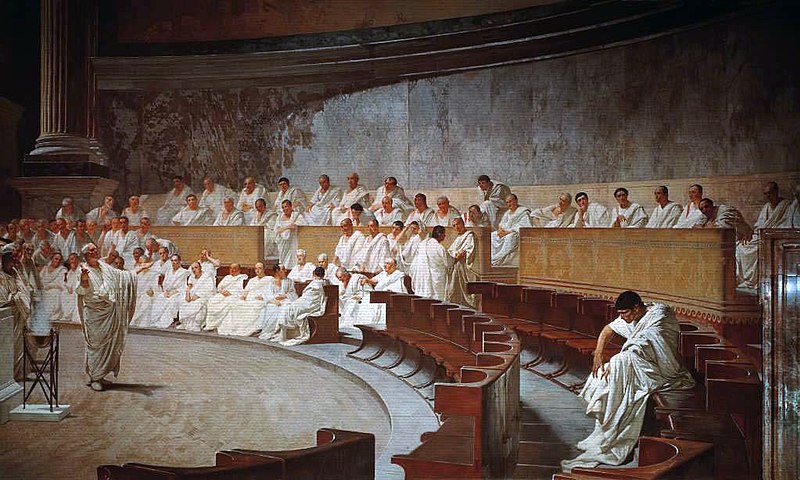
Augustus’s settlement depended not only on the powers he held but on the manner in which he appeared to hold them. After the civil wars, naked domination would have been politically dangerous, especially in a culture still trained to distrust kingship, dictatorship, and excessive personal elevation. The solution was not to avoid honor but to choreograph it. Augustus accepted some distinctions, declined others, and repeatedly allowed public deference to appear as something pressed upon him by Senate, people, soldiers, and communities across the empire. This careful rhythm of acceptance and refusal made power seem moderated by restraint. The ruler who could command almost everything presented himself as the citizen who would not take too much.
The Res Gestae repeatedly stages this image of disciplined self-limitation. Augustus notes offices and powers he refused, emphasizes that honors were granted to him by public bodies, and presents extraordinary recognition as the result of consensus rather than ambition. This matters because Roman political culture had long treated the pursuit of excessive honor as a sign of moral danger. To appear too hungry for supremacy was to invite comparison with tyrants and kings. Augustus’s answer was to make refusal itself part of the performance of supremacy. He could decline titles or offices whose symbolism was too dangerous while retaining the practical means of control. The refusal became evidence of virtue, even when the surrendered form mattered less than the power he kept. It also allowed Augustus to control the tempo of political elevation. Honors could be offered, refused, modified, accepted in safer form, or redirected into language that appeared compatible with republican tradition. In that rhythm, the Senate and people seemed to remain active participants in public life, while Augustus remained the indispensable center around whom their gestures revolved. Refusal did not diminish his authority. It dramatized his supposed mastery over himself, and self-mastery was precisely the virtue a ruler needed to display after a generation of men whose ambition had shattered the state.
This theater of restraint was especially effective because it drew on recognizable republican values. Roman aristocrats had always competed for honor, but they were also expected to cloak ambition in the language of service, modesty, and public duty. Augustus magnified that elite habit into a governing principle. He did not claim to rule because he desired mastery. He claimed to serve because Rome had judged him uniquely worthy. The distinction was artificial, but politically potent. If honors came from the Senate and people, then Augustus could appear as the object of public gratitude rather than the author of his own elevation. The regime taught Romans to see obedience as appreciation and hierarchy as moral recognition.
The refusals also helped separate Augustus from the dangerous memory of Julius Caesar. Caesar’s accumulation of honors, offices, statues, priestly privileges, and quasi-monarchical gestures had helped convince his enemies that liberty could be saved only through assassination. Augustus learned from that failure. He accepted preeminence while avoiding the most inflammatory symbols of kingship and dictatorship. He did not need to be called rex. He did not need the dictatorship as a permanent title. He could present himself as princeps, the first man of the state, whose authority rested on prestige, service, and consensus. This was not weakness. It was a more durable form of domination, because it made supremacy appear compatible with the inherited language of civic freedom. The contrast with Caesar was not accidental but programmatic. Augustus understood that Roman hatred of monarchy was often attached less to power itself than to its visible style, its vocabulary, and its offenses against elite dignity. If the Senate could still meet, if magistrates could still hold office, if honors could still be voted, and if Augustus could still refuse what seemed excessive, then the old political culture could tell itself that the line between republic and monarchy had not been openly crossed. The line had been crossed, but it had been crossed ceremonially, with enough restraint to make recognition difficult and enough continuity to make resistance seem theatrical rather than patriotic.
Yet the performance should not be mistaken for hypocrisy alone. Its success depended on a real political exchange. Augustus gave Rome stability, money, buildings, military victory, restored rituals, and a framework in which elites could still possess status, careers, and dignity. In return, Rome accepted a narrowing of political possibility. Honors functioned as the currency of this exchange. They allowed the Senate to speak as though it were still conferring greatness freely, while Augustus’s position made such conferral almost unavoidable. Each honor confirmed what everyone already knew: the state now revolved around him. Each refusal reassured them that this revolution would not be named too bluntly. The result was a political culture in which domination and gratitude became difficult to separate.
The Res Gestae turns restraint into one of the central proofs of Augustan legitimacy. Augustus appears not as a man who seized everything, but as one who accepted only what the commonwealth, in its wisdom, insisted on giving him. That image was indispensable to the survival of the principate. The new monarchy could not announce itself as monarchy. It had to be seen as the disciplined refusal of monarchy by the only man powerful enough to become king. This was the paradox at the heart of Augustan honors: the more he refused, the safer his supremacy became. Restraint was not the opposite of power. In the Augustan system, restraint was one of power’s most persuasive disguises.
Money, Gifts, Buildings, and the Purchase of Public Memory
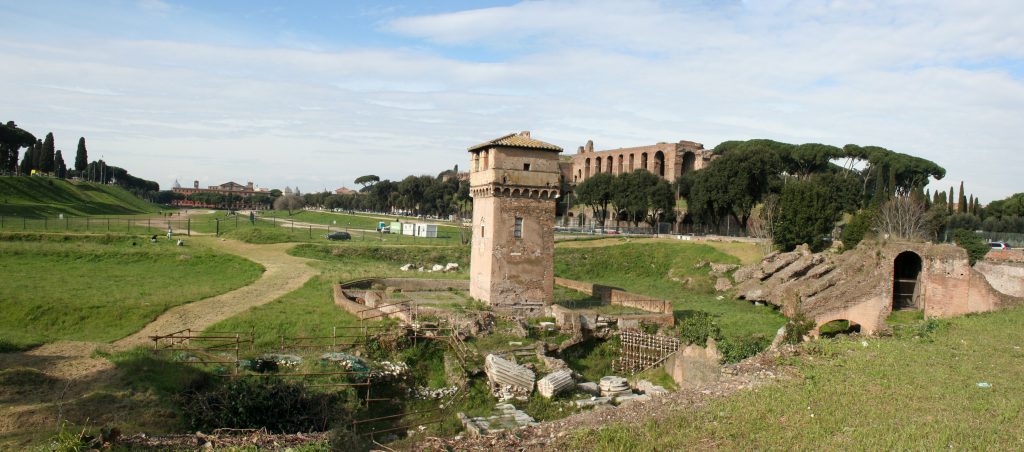
Augustus’s generosity in the Res Gestae is presented as civic virtue made visible through money. He lists distributions to citizens, payments to soldiers, gifts to colonies and municipalities, expenditures on games, repairs, temples, public works, and buildings. The accumulation is deliberate. It overwhelms the reader with the sense of a ruler whose private resources continually flowed outward for the benefit of Rome. Yet generosity in Roman political culture was never innocent. Elite benefaction had always created obligation, prestige, and hierarchy; Augustus simply raised that old aristocratic practice to imperial scale. The Res Gestae transforms the economics of domination into a ledger of public gratitude. It asks readers to see money not as an instrument of political consolidation, but as proof that one man had rescued the state through almost superhuman liberality.
The distributions to soldiers and citizens were especially important because they helped bind the unstable aftermath of civil war into a new social order. Veterans expected rewards, citizens expected relief, and communities disrupted by war needed visible signs that peace would bring material benefit. Augustus could meet these expectations because victory had given him access to immense resources, including the wealth drawn from Egypt after the defeat of Antony and Cleopatra. In the Res Gestae, the source of wealth matters less than the moral posture attached to its use. The giver stands at the center of the narrative. Soldiers are settled, citizens are paid, and the Roman people receive spectacles and support, but the deeper political exchange remains understated: material benefits helped convert dependency into loyalty. This was especially important after decades in which armies had become political constituencies in their own right and veterans had learned to expect land, money, and security from victorious commanders. Augustus’s payments did not merely reward past service; they helped prevent future instability by absorbing dangerous expectations into a new order of imperial patronage. The same was true, in a different register, for the urban populace. Cash distributions and public entertainments reminded citizens that peace under Augustus produced immediate, visible, and pleasurable benefits. The man who gave money also defined the conditions under which gratitude would be remembered.
Buildings made that gratitude permanent. Augustus did not simply pay; he inscribed his presence into the city itself. Temples were restored, public structures repaired, new monuments raised, and sacred spaces renewed. These works had practical, religious, and aesthetic value, but they also turned Rome into a landscape of Augustan memory. Every restored shrine and public building suggested that the new order had repaired what civil war had damaged. The city became an argument in stone, marble, bronze, and ritual space. This is why the building program was more than beautification. It made the regime physically unavoidable. Romans could walk through a city that seemed to testify, again and again, that Augustus had restored not only government but the visible world of civic life.
This strategy also allowed Augustus to connect himself with tradition while quietly redefining it. Restoration is one of the most powerful words in Augustan political culture because it suggests continuity rather than innovation. A restored temple does not appear to announce a new regime; it appears to honor ancestral religion. A repaired public building does not look like revolution; it looks like care for the commonwealth. Yet the restorer receives the credit. Augustus could bind himself to Rome’s past while making that past dependent on his intervention. The more he claimed to revive ancestral forms, the more he placed himself between Rome and its own memory. Public works became political theology: the gods, the city, the Senate, and the people all appeared to stand within an order whose repair had required Augustus.
The Res Gestae presents benefaction as evidence of moral greatness, but its deeper function is to convert power into public memory. Money softened coercion. Games produced delight. Buildings created permanence. Religious restoration gave domination an aura of sacred duty. None of this means that Augustus’s gifts were unreal or that Romans did not benefit from them. They did. That is precisely why the propaganda worked. The gifts were tangible, the buildings visible, the payments remembered, and the restored temples usable. A hungry citizen, a rewarded veteran, a priest serving in a repaired sanctuary, or a spectator attending games did not encounter Augustan power as an abstraction. They encountered it as food, coin, spectacle, architecture, ritual, and urban renewal. Those experiences mattered because they embedded the regime in ordinary life, giving people reasons to associate Augustus not only with victory but with stability, pleasure, and civic repair. But the meaning of those benefits was carefully managed. Augustus did not merely purchase loyalty in a crude sense. He purchased the conditions under which later generations would experience his supremacy as generosity, his wealth as service, and his regime as the restored face of Rome itself.
Piety, Morality, and the Sacred Costume of Power

Augustus’s political restoration was never only constitutional. It was also religious, moral, and symbolic. The Res Gestae presents him not merely as the man who ended civil war, rewarded soldiers, paid citizens, and restored public buildings, but as the guardian of Rome’s sacred order. This mattered because Roman politics and religion were not separate spheres in the modern sense. Temples, priesthoods, vows, sacrifices, festivals, omens, and ancestral rites formed part of the civic structure through which Rome understood its relationship with the gods and with its own past. After decades of civil war, violence could be interpreted not only as political breakdown but as moral and religious disorder. Augustus stepped into that crisis wearing the costume of piety, presenting his rule as the repair of a wounded relationship between Rome, its gods, and its ancestral customs. The claim was powerful because it reached deeper than legality. A constitution could be adjusted, offices reassigned, and powers redistributed, but sacred repair suggested something more fundamental: the restoration of cosmic and civic balance. Augustus could present his supremacy not merely as useful government but as the condition through which Rome’s broken order became whole again.
The Res Gestae repeatedly emphasizes religious restoration. Augustus records temples built or repaired, priesthoods held, sacred honors received, vows fulfilled, and rituals renewed. These claims were not empty. His regime did restore and reshape Rome’s sacred landscape, and his association with religious renewal became one of the strongest elements of Augustan public culture. Yet the propaganda lies in the way piety becomes inseparable from political authority. To restore temples was to restore Rome, but it was also to make Augustus the visible mediator of that restoration. The gods appeared to receive renewed honor through him. The city appeared to recover its sacred order through him. Ancestral religion appeared not as something that survived independently of power, but as something rescued and reorganized by the princeps.
This sacred presentation also softened the memory of violence. The same career that had passed through private armies, proscriptions, confiscations, civil wars, and the destruction of rivals could be recast as a moral mission. Piety gave continuity to a life that otherwise looked dangerously revolutionary. The young Octavian who raised troops in 44 BCE and the Augustus who restored temples could be joined in one narrative of duty: duty to Caesar, duty to Rome, duty to the gods, and duty to ancestral order. That fusion mattered because it allowed power to appear purified by purpose. Violence committed on the road to supremacy could be remembered as the painful precondition of sacred repair. The political victor became the moral physician of the state.
Augustan morality worked in similar fashion. The regime’s concern with marriage, family, discipline, fertility, and traditional conduct presented social order as part of political restoration. Rome was not merely to be governed; it was to be morally reformed. That program had real anxieties behind it, especially among elites worried about inheritance, family continuity, luxury, and civic decline. But moral legislation and public ideology also gave Augustus another way to enter private life as guardian of the commonwealth. The ruler who claimed to restore the republic now claimed authority over the household, the marriage bed, the lineage, and the moral habits of citizens. This widened the meaning of restoration until it reached into the intimate structures of Roman society. Political obedience, family discipline, sexual conduct, and ancestral virtue could all be gathered into one language of renewal, making the Augustan order seem not simply administrative but civilizational. The irony was sharp, since Augustus’s own family would become a site of scandal, exile, and dynastic anxiety. Yet the power of the moral program did not depend on perfect consistency. It depended on the claim that Rome’s disorder had been ethical as well as political, and that Augustus alone possessed the authority to correct both.
The sacred costume of power allowed Augustus to make autocracy look like restoration at the deepest level of Roman identity. The Res Gestae does not simply list religious offices and restored temples as decorative achievements. It folds them into a larger argument that Rome had been healed through one man’s leadership. Piety, morality, and tradition became the language through which domination could present itself as reverence. This was one of the most effective features of Augustan propaganda because it made resistance seem not only political but impious, ungrateful, and hostile to Rome’s recovered order. Augustus did not merely rule the state. He taught Romans to imagine that the gods, ancestors, laws, families, and public monuments all pointed toward the legitimacy of his rule. In that sacred arrangement, power did not look seized. It looked consecrated.
Empire, Victory, and the Universalizing of Augustan Rule

The Res Gestae does not confine Augustus’s achievement to Rome. Once his domestic supremacy has been framed as restoration, the text widens its field until the whole known world appears to move around him. Provinces are pacified, foreign peoples submit, kings seek friendship, standards are recovered, colonies are settled, and Roman authority expands across a landscape that seems almost naturally drawn toward Augustan order. This globalizing structure matters. Augustus is not presented merely as the man who solved Rome’s internal crisis, but as the figure through whom Roman power became coherent, disciplined, and universal. The violence of expansion and the coercion of empire are softened by the language of victory, diplomacy, settlement, and peace. Rome’s dominance appears not as appetite but as destiny managed by a ruler uniquely capable of giving conquest moral form.
The recovery of the Roman standards from Parthia in 20 BCE shows this process especially clearly. The standards lost by Marcus Licinius Crassus at Carrhae in 53 BCE had long represented a wound to Roman honor, and their return under Augustus carried immense symbolic weight. Yet the achievement was diplomatic rather than the result of a new Roman conquest of Parthia. That distinction did not weaken its value; it made the propaganda more flexible. Augustus could claim the emotional reward of victory without paying the cost of a major eastern war. The recovered standards became proof that Roman honor had been restored under his leadership, while the method of recovery allowed him to appear both strong and prudent. He did not need to annihilate Parthia to make Parthia serve the story of Augustan greatness. The symbolic defeat was enough. Its power lay precisely in that symbolic economy: Rome received back what had been lost, Augustus received credit for reversing humiliation, and the absence of a costly war could be reframed as evidence of controlled superiority rather than limitation. The standards became more than military objects. They became ritualized proof that Roman disgrace could be redeemed through Augustus’s authority, even when victory came through negotiation rather than conquest. In the Augustan imagination, diplomacy did not diminish glory. It showed that Rome’s enemies could be made to acknowledge Roman honor without Rome needing to bleed for it.
This was one of the deeper skills of Augustan imperial representation: it could make diplomacy look like triumph and submission look like consensus. The Res Gestae lists embassies, kings, distant peoples, and foreign rulers who sought friendship with Rome, creating the impression of a world recognizing Augustan supremacy. Such claims were not without foundation. Roman power was immense, and the prestige of Augustus’s regime did draw rulers and communities into negotiated relationships with the empire. But the text arranges these relationships as if foreign peoples naturally acknowledged Rome’s superiority and Augustus’s centrality within it. Diplomacy becomes a theater of hierarchy. Friendship becomes an admission of subordination. The world comes to Augustus, and by coming to him, it confirms that his rule is not merely Roman but universal in scope.
Military victory receives similar treatment. Campaigns and settlements across Spain, Gaul, the Alps, Illyricum, and other regions are folded into a narrative in which disorder yields to Roman peace. The reality was harsher. Imperial consolidation involved conquest, displacement, taxation, military pressure, and repeated resistance. The Augustan language of pacification turns those processes into the necessary extension of order. A people defeated by Rome could be described as pacified; a region brought under tighter control could be described as secured; a frontier stabilized through violence could be remembered as the reach of peace. The word peace itself becomes ideologically charged. It does not mean the absence of domination. It means the successful imposition of Roman order after resistance has been broken or absorbed.
The universalizing impulse of the Res Gestae also served a domestic function. By presenting Augustus as the ruler before whom foreign peoples, kings, and provinces stood in recognition, the text reinforced his authority at home. Empire validated monarchy without naming it. If the world beyond Rome acknowledged Augustus as the organizing center of power, then Roman elites could more easily accept his centrality within the state. Foreign victories, provincial settlements, and diplomatic submissions became arguments for domestic obedience. The ruler who commanded the margins of the world could hardly be treated as an ordinary magistrate within the city. The empire helped solve the ideological problem of the principate. Augustus could remain “first citizen” in republican vocabulary while appearing, in imperial reality, as the axis around which Rome and its world revolved. The scale of imperial recognition magnified his domestic prestige, because it suggested that his authority had been ratified not only by the Senate and Roman people but by the behavior of the wider world. A king seeking friendship, a province accepting settlement, a people sending envoys, or a frontier brought under control all became pieces of evidence in the same political argument: Rome’s order now had a human center, and that center was Augustus. The empire made his supremacy seem too large to be merely personal ambition. It looked like world-historical necessity.
The Res Gestae turns empire into evidence of legitimacy. Augustus’s power is not shown as narrow, selfish, or merely Roman in the local sense; it becomes the principle through which the world is ordered. The same text that masks civil war as liberation and autocracy as restoration also masks imperial domination as peace. Again, the genius lies in selective truth. Augustus did expand, secure, negotiate, settle, and stabilize. But the meaning of those actions is carefully controlled. Conquest becomes order, diplomacy becomes submission, foreign recognition becomes universal consent, and Roman power becomes a gift to the world. In that arrangement, empire is not something Augustus possesses. It is something his rule appears to justify.
The Missing Dead: Silence, Memory, and the Cost of Augustan Peace
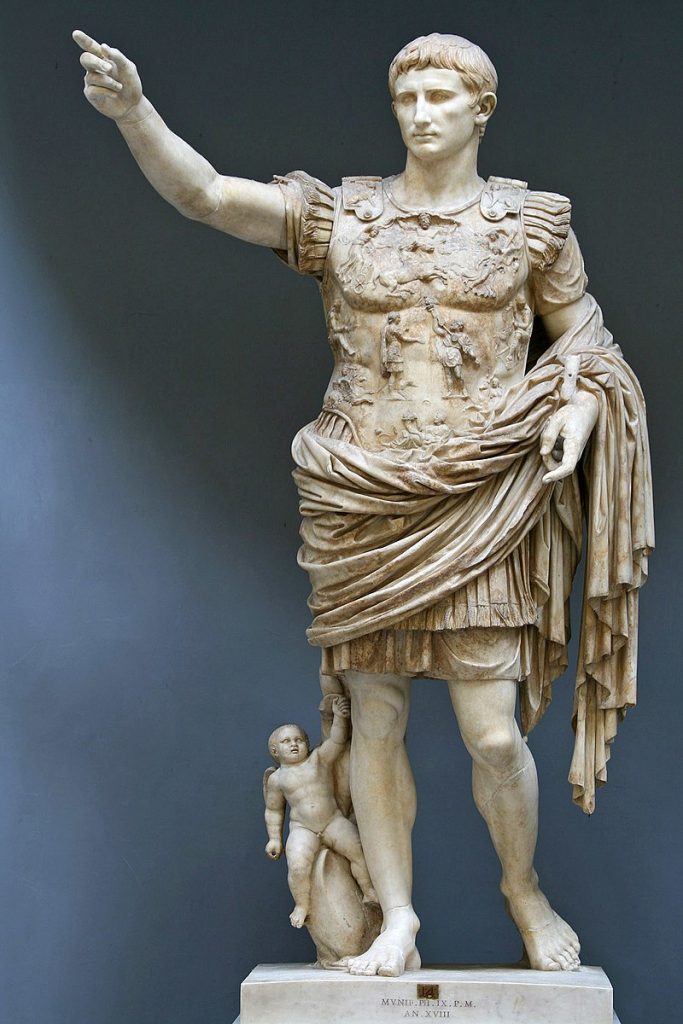
The peace celebrated in the Res Gestae has no graveyard. Augustus writes as though civil war had been extinguished by his leadership and replaced by order, prosperity, restored religion, and universal consent. What disappears is the human cost by which that peace was made possible. The proscriptions, confiscations, battlefield deaths, exiles, ruined families, and silenced political alternatives are not allowed to trouble the monument. This silence is not incidental. It is one of the text’s central political operations. A regime born from civil violence could endure only if that violence were reorganized in memory as the necessary prelude to healing. The dead had to disappear so that peace could look clean.
The omissions are especially striking because Augustus’s career had passed through some of the most brutal episodes of late republican history. Men were condemned by proscription. Property was seized. Communities were disrupted by veteran settlements. Political enemies were killed, exiled, or absorbed. Families that had once belonged to Rome’s governing elite found themselves dispossessed or dependent on the mercy of victors. Yet the Res Gestae does not give these people narrative weight. They are not remembered as citizens whose losses formed part of the price of the new order. They exist, if at all, as unnamed obstacles already morally disqualified by the categories Augustus assigns them: murderers, pirates, factions, enemies, threats. By denying them political complexity, the text also denies them historical mourning.
This is why the language of peace in the Res Gestae must be read with suspicion, not because peace was unreal, but because it was made to seem morally uncomplicated. Many Romans undoubtedly welcomed the end of civil war. After decades of crisis, the appeal of stability was not merely propaganda; it was lived relief. Roads became safer, armies were regularized, temples were restored, elite careers resumed, and the city could imagine itself delivered from endless emergency. But relief does not erase coercion. The same peace that gave Romans security also narrowed the boundaries of permissible political life. Augustus’s order made violence less visible by monopolizing it. The absence of open civil war became proof of legitimacy, while the earlier violence that had made such monopoly possible was pushed outside the authorized frame. Peace became both an experience and an argument. People could feel its benefits while being taught not to examine too closely the conditions that produced it. The regime’s success lay in making that emotional relief do political work. Gratitude for survival, exhaustion after conflict, and fear of renewed chaos all helped make Augustus’s supremacy seem not only acceptable but merciful.
The most powerful silence in the Res Gestae may be the silence surrounding alternatives. Augustus presents his supremacy as the answer to chaos, but the text does not ask what forms of republican recovery, senatorial accommodation, or political pluralism had been destroyed before his answer became unavoidable. The old republic was deeply damaged before Octavian rose, and no serious account should pretend that it could simply have been restored by good intentions. Yet Augustan memory goes further. It makes the narrowing of possibility look like destiny. Once every rival has been morally reduced and every act of domination recoded as service, the reader is left with only one conclusion: Rome needed Augustus because no other future remained. The trick is that Augustus himself had helped eliminate those futures. He did not create the republic’s crisis alone, but he profited from its collapse, deepened its militarization, and then presented the political vacuum as evidence of his necessity. The dead and defeated were not merely omitted as individuals. They were omitted as possible histories. Their disappearance allowed the Augustan settlement to look less like one outcome among several violently contested possibilities and more like the natural conclusion of Roman history itself.
The missing dead expose the ethical center of the Res Gestae. The document is not false because it praises peace. It is false because it separates peace from its victims. It asks Rome to remember stability without terror, restoration without confiscation, consensus without coercion, and victory without the men and women crushed beneath it. That is the cost of Augustan memory. The regime did not merely win power; it won the right to decide which suffering mattered and which suffering could be buried beneath marble, ritual, and gratitude. The Res Gestae is not only a monument to what Augustus claimed to have done. It is a monument to what he required Rome to forget.
The Afterlife of the Text: Monument, Model, and Imperial Memory
The following video from “Classics and Ancient History @Warwick” covers the Res Gestae:
The Res Gestae did not end with Augustus’s death. In some ways, that is when it began its most important work. As a text attached to his testament and displayed publicly after his passing in 14 CE, it transformed the life of the princeps into an authorized memory of the regime. Augustus had spent decades shaping political reality while alive; after death, the inscription helped shape the terms on which that reality would be remembered. This was not ordinary commemoration. It was an act of posthumous governance. The dead ruler continued to speak, not as a private man defending his reputation, but as the founder of a political order instructing Rome how to understand the past it had survived.
The monumental form was central to that instruction. A text carved and displayed in public space did not invite the same kind of response as a speech, pamphlet, or historical narrative. It stood with the authority of civic inscription, appearing less like argument than record. The reader encountered Augustus’s life as something already ratified by the state, already organized into achievement, already purified of dispute. That physical permanence strengthened the illusion of objectivity. Stone did not make the claims true, but it made them feel settled. By transforming a selective autobiography into public inscription, the Augustan regime gave memory an official architecture. The text became part of the same world as temples, altars, statues, forums, and restored buildings: a landscape in which power presented itself as gratitude, order, and historical fact. Its setting also mattered because monuments do not simply communicate information; they discipline attention. They tell viewers where to stand, what to read, what sequence to follow, and what kind of reverence the past deserves. In that environment, Augustus’s career was not encountered as a contested political argument but as a civic fact embedded in the public world. The inscription gave his version of history the same visual seriousness as the monuments through which he had already remade Rome. It made memory architectural.
The survival of the text in provincial copies, especially the Greek and Latin inscription at Ancyra, also reveals the imperial reach of Augustan memory. The Res Gestae was not only for Rome’s senatorial elite or urban populace. It spoke to subjects across the empire, translating the founder’s career into a language of benefaction, peace, victory, and universal order. In provincial settings, the text taught communities how to locate themselves within the Augustan world. Rome’s civil wars became distant prehistory; Augustus’s settlement became the foundation of present stability; imperial rule became the frame within which local loyalty could be expressed. The provincial afterlife of the inscription mattered enormously. It turned one man’s curated Roman memory into a shared imperial script.
The Res Gestae also became a model for the political grammar of later emperors. Few successors could match Augustus’s peculiar combination of civil war victory, constitutional reinvention, dynastic charisma, and longevity, but all inherited the need to justify concentrated power in moral terms. The Augustan vocabulary remained useful: service rather than domination, consensus rather than coercion, peace rather than conquest, restoration rather than revolution, benefaction rather than dependency. Later rulers would adapt these claims to their own circumstances, but the template had already been made. Augustus showed that monarchy in Rome did not have to describe itself honestly to endure. It could speak as public service, paternal care, military guardianship, sacred duty, and civic continuity.
Yet the afterlife of the Res Gestae was not only institutional. It also shaped the modern problem of reading Augustus. Historians confront a ruler who left behind an extraordinarily polished self-portrait, one that cannot simply be discarded because much of it is factually grounded. The text records real offices, gifts, honors, victories, and buildings, but it arranges them inside a moral universe designed by Augustus himself. To use it responsibly is to read both with and against the grain. Its claims must be taken seriously as evidence for what Augustus wanted remembered, not simply as evidence for what happened. In that sense, the Res Gestae is one of the most valuable sources for Augustan history precisely because it is propaganda. It preserves not only information but intention. It tells us how Augustus wanted causation to work, which enemies deserved names, which crimes could disappear, which honors proved virtue, and which forms of power could be made to look like service. The historian’s task is not to throw the text aside in frustration, but to keep asking what each sentence includes, what it excludes, and what kind of political world its arrangement asks the reader to accept. The monument is a source, but it is also a trap. Its usefulness begins when its elegance no longer disarms suspicion.
The afterlife of the text reveals the full success of Augustan political memory. Augustus did not merely defeat rivals, control armies, restore monuments, or reorganize the state. He produced a story durable enough to outlive the circumstances that created it. The Res Gestae made the principate look like the answer to history rather than one possible outcome of violence, improvisation, and elite accommodation. Its monumentality gave selective memory the appearance of public truth. Its provincial circulation made Roman civil war part of imperial legitimacy. Its language offered later rulers a way to sound virtuous while holding extraordinary power. The text survived because it was useful, and it was useful because it made domination legible as restoration. That was Augustus’s final victory: not simply to rule Rome, but to teach Rome, and much of the empire after it, how to remember being ruled.
Conclusion: The Lie That Did Not Need to Invent Facts
The Res Gestae Divi Augusti endures because it is not the work of a fool, a braggart, or a crude falsifier. Its danger lies in its discipline. Augustus did not need to invent a career from nothing, because the raw material of his achievement was already immense. He had defeated rivals, ended civil war, secured provinces, rewarded soldiers, restored temples, built monuments, recovered standards, received honors, and reshaped the Roman world. Much of what he recorded had happened. But historical truth does not reside merely in whether isolated claims can be verified. It also resides in causation, proportion, moral framing, and silence. The Res Gestae is most deceptive where it is most factual. It tells enough truth to command belief while arranging that truth so carefully that violence becomes service, coercion becomes consensus, and autocracy becomes restoration.
The central fraud of the text is not fabrication but transfiguration. Octavian’s private army becomes patriotic rescue. Vengeance for Caesar becomes justice for the state. The triumvirate becomes an office for settling the commonwealth rather than the legal machinery of terror. The proscriptions disappear. Sextus Pompey becomes a pirate, Antony becomes a shadowed faction corrupted by foreign monarchy, and Cleopatra bears the symbolic weight of a civil war that Rome preferred to remember as national deliverance. The constitutional settlement of 27 BCE becomes the return of the republic, even though real sovereignty had been reorganized around Augustus himself. Gifts become generosity without dependency. Buildings become restoration without domination. Piety becomes proof that the gods, ancestors, and moral order all stood behind the new regime. Even restraint becomes a form of conquest, because every refused title and moderated honor helps make supremacy look disciplined rather than absolute. This is the deepest brilliance of the Augustan performance: each category of danger is renamed before it can indict him. Illegality becomes emergency. Revenge becomes duty. Elimination becomes justice. Possession becomes stewardship. Victory becomes peace. The old words of the republic remain in circulation, but their meanings are quietly bent around the authority of one man. The genius of the Res Gestae is that it does not deny the road Augustus traveled. It repaves it in marble.
That is why the text must be read not only as autobiography or inscription, but as a monument to controlled memory. Augustus understood that power is never secured by armies alone. It must also command the language through which later generations describe it. The Res Gestae offered Rome a vocabulary for accepting what had happened without fully naming it: peace instead of exhaustion, consensus instead of constrained choice, restoration instead of constitutional defeat. Its silences are as important as its claims, because they reveal what the regime could not afford to remember openly. The dead of the proscriptions, the displaced by confiscation, the defeated alternatives to Augustan rule, and the republican meanings crushed beneath the language of rescue all stand outside the frame. Their absence is not a gap in the monument. Their absence is the monument’s method.
Augustus’s final victory was interpretive. He did not merely become the first emperor while pretending not to be a king. He made that pretense durable enough to become political common sense. The Res Gestae taught Rome to see monarchy in republican costume, domination in the language of service, and historical rupture as ancestral renewal. That does not make Augustus insignificant, nor does it make his achievements unreal. It makes him more formidable. He understood that the strongest political lies often do not require invented facts. They require selection, sequence, emphasis, omission, and a public willing to mistake relief for freedom. The Res Gestae is one of antiquity’s great monuments because it preserves both the achievement and the deception. It shows not only what Augustus wanted remembered, but what power looks like when it has learned how to write its own innocence.
Bibliography
- Appian. The Civil Wars. Translated by John Carter. London: Penguin Classics, 1996.
- Augustus. Res Gestae Divi Augusti. In Alison E. Cooley, ed. and trans., Res Gestae Divi Augusti: Text, Translation, and Commentary. Cambridge: Cambridge University Press, 2009.
- Beard, Mary, John North, and Simon Price. Religions of Rome, 2 Vols. Cambridge: Cambridge University Press, 1998.
- Bosworth, Brian. “Augustus, the Res Gestae and Hellenistic Theories of Apotheosis.” The Journal of Roman Studies 89 (1999), 1-18.
- Cassius Dio. Roman History. Translated by Earnest Cary. Cambridge, MA: Harvard University Press, 1914–1927.
- Cicero. Philippics 1–6. Edited and translated by D. R. Shackleton Bailey. Cambridge, MA: Harvard University Press, 2009.
- —-. Philippics 7–14. Edited and translated by D. R. Shackleton Bailey. Loeb Classical Library. Cambridge, MA: Harvard University Press, 2010.
- Eck, Werner. The Age of Augustus. Translated by Deborah Lucas Schneider. 2nd ed. Malden, MA: Blackwell, 2007.
- Eder, Walter. “Augustus and the Power of Tradition.” In The Cambridge Companion to the Age of Augustus, edited by Karl Galinsky, 13–32. Cambridge: Cambridge University Press, 2005.
- Elsner, Jaś. “Inventing Imperium: Texts and the Propaganda of Monuments in Augustan Rome.” In Art and Text in Roman Culture, edited by Jaś Elsner, 32–53. Cambridge: Cambridge University Press, 1996.
- Favro, Diane. The Urban Image of Augustan Rome. Cambridge: Cambridge University Press, 1996.
- Flower, Harriet I. Roman Republics. Princeton: Princeton University Press, 2010.
- Galinsky, Karl. Augustan Culture: An Interpretive Introduction. Princeton: Princeton University Press, 1996.
- Goldsworthy, Adrian. Augustus: First Emperor of Rome. New Haven: Yale University Press, 2014.
- Gruen, Erich S. “Augustus and the Ideology of War and Peace.” In The Cambridge Companion to the Age of Augustus, edited by Karl Galinsky, 332–357. Cambridge: Cambridge University Press, 2005.
- —-. “Augustus and the Making of the Principate.” In The Cambridge Companion to the Age of Augustus, edited by Karl Galinsky, 33–51. Cambridge: Cambridge University Press, 2005.
- —-. The Last Generation of the Roman Republic. Berkeley: University of California Press, 1974.
- Güven, Suna. “Displaying the Res Gestae of Augustus: A Monument of Imperial Image for All.” Journal of the Society of Architectural Historians 57:1 (1998), 30-45.
- Hekster, Olivier. Emperors and Ancestors: Roman Rulers and the Constraints of Tradition. Oxford: Oxford University Press, 2015.
- Hekster, Olivier, and Ted Kaizer, eds. Frontiers in the Roman World: Proceedings of the Ninth Workshop of the International Network Impact of Empire. Leiden: Brill, 2011.
- Hickson, Frances V. “Augustus ‘Triumphator’: Manipulation of the Triumphal Theme in the Political Program of Augustus.” Latomus 50:1 (1991), 124-138.
- Hinard, François. Les proscriptions de la Rome républicaine. Rome: École Française de Rome, 1985.
- Hölbl, Günther. A History of the Ptolemaic Empire. Translated by Tina Saavedra. London: Routledge, 2001.
- Holleran, Claire. Shopping in Ancient Rome: The Retail Trade in the Late Republic and the Principate. Oxford: Oxford University Press, 2012.
- Kienast, Dietmar. Augustus: Prinzeps und Monarch. 3rd ed. Darmstadt: Wissenschaftliche Buchgesellschaft, 1999.
- Kleiner, Diana E. E. Cleopatra and Rome. Cambridge, MA: Belknap Press of Harvard University Press, 2005.
- Millar, Fergus. The Crowd in Rome in the Late Republic. Ann Arbor: University of Michigan Press, 1998.
- —-. “State and Subject: The Impact of Monarchy.” In Caesar Augustus: Seven Aspects, edited by Fergus Millar and Erich Segal, 37–60. Oxford: Clarendon Press, 1984.
- Nicolaus of Damascus. Life of Augustus. Translated by Clayton M. Hall. In Mark Toher, ed., Nicolaus of Damascus: The Life of Augustus and The Autobiography. Cambridge: Cambridge University Press, 2016.
- Noreña, Carlos F. Imperial Ideals in the Roman West: Representation, Circulation, Power. Cambridge: Cambridge University Press, 2011.
- Osgood, Josiah. Caesar’s Legacy: Civil War and the Emergence of the Roman Empire. Cambridge: Cambridge University Press, 2006.
- Plutarch. Lives, Volume VI: Dion and Brutus, Timoleon and Aemilius Paulus. Translated by Bernadotte Perrin. Loeb Classical Library. Cambridge, MA: Harvard University Press, 1918.
- Plutarch. Lives, Volume IX: Demetrius and Antony, Pyrrhus and Gaius Marius. Translated by Bernadotte Perrin. Loeb Classical Library. Cambridge, MA: Harvard University Press, 1920.
- Powell, Anton, and Kathryn Welch, eds. Sextus Pompeius. Swansea: Classical Press of Wales, 2002.
- Raaflaub, Kurt A., and Mark Toher, eds. Between Republic and Empire: Interpretations of Augustus and His Principate. Berkeley: University of California Press, 1990.
- Rich, J. W., and Graham Shipley, eds. War and Society in the Roman World. London: Routledge, 1993.
- Rowe, Greg. Princes and Political Cultures: The New Tiberian Senatorial Decrees. Ann Arbor: University of Michigan Press, 2002.
- Severy, Beth. Augustus and the Family at the Birth of the Roman Empire. New York: Routledge, 2003.
- Southern, Pat. Antony and Cleopatra: The Doomed Love Affair That United Ancient Rome and Egypt. Stroud: Amberley, 2009.
- —-. Augustus. London: Routledge, 1998.
- Starr, Raymond J. “Augustus as ‘Pater patriae’ and Patronage Decrees.” Zeitschrift für Papyrologie und Epigraphik 172 (2010), 296-298.
- Suetonius. Lives of the Caesars, Volume I: Julius. Augustus. Tiberius. Gaius. Caligula. Translated by J. C. Rolfe. Revised by Donna W. Hurley. Loeb Classical Library. Cambridge, MA: Harvard University Press, 2014.
- Syme, Ronald. The Roman Revolution. Oxford: Oxford University Press, 1939.
- Turpin, William. “Res Gestae 34.1 and the Settlement of 27 B.C.” Classical Quarterly 44, no. 2 (1994): 427–437.
- Wallace-Hadrill, Andrew. “Mutatas Formas: The Augustan Transformation of Roman Knowledge.” In The Cambridge Companion to the Age of Augustus, edited by Karl Galinsky, 55–84. Cambridge: Cambridge University Press, 2005.
- Welch, Kathryn. Magnus Pius: Sextus Pompeius and the Transformation of the Roman Republic. Swansea: Classical Press of Wales, 2012.
- Woolf, Greg. Rome: An Empire’s Story. Oxford: Oxford University Press, 2012.
- Zanker, Paul. The Power of Images in the Age of Augustus. Ann Arbor: University of Michigan Press, 1988.
Originally published by Brewminate, 05.18.2026, under the terms of a Creative Commons Attribution-NonCommercial-NoDerivatives 4.0 International license.
About the Author