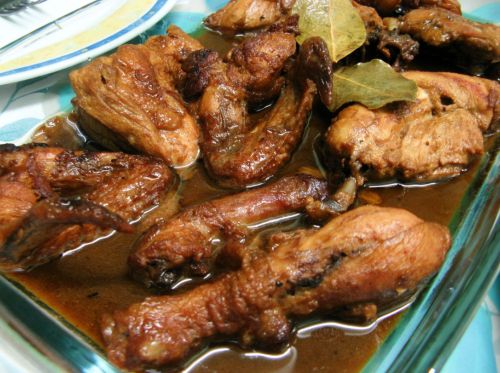
Few dishes are as deeply connected to Filipino identity as adobo. Found in homes, restaurants, celebrations, and even lunchboxes across the country, adobo is often the first dish that comes to mind when people think of Filipino cuisine.
Yet despite its popularity, many are surprised to learn that adobo’s history stretches back centuries, long before the Philippines became the nation it is today.
The story of adobo is one of cultural exchange, practicality, and adaptation. Like many aspects of Filipino culture, it reflects the country’s ability to absorb influences while preserving something uniquely its own.
Today, adobo is widely regarded as the Philippines’ unofficial national dish, a title earned through generations of tradition and regional creativity.
Adobo Before the Spanish Arrived
The roots of adobo can be traced to the pre-colonial Philippines. Long before refrigeration existed, preserving food was a necessity. Coastal and inland communities alike developed methods to keep meat fresh in the tropical climate.
One of the most effective preservation techniques involved cooking meat in vinegar and salt. Vinegar’s natural acidity inhibited bacterial growth, allowing food to last longer even in warm conditions. Indigenous Filipinos commonly used local vinegars made from coconut sap, sugarcane, nipa palm, and other native ingredients.
Pork, chicken, fish, and even wild game were often simmered in vinegar-based mixtures. These dishes varied from region to region, but they shared the same purpose: preservation and flavor enhancement.
At this stage, the dish we now recognize as adobo already existed in principle, though it did not yet carry that name.
How Adobo Got Its Name
The term “adobo” entered the Filipino vocabulary during the Spanish colonial period, which began in the 16th century.
When Spanish explorers arrived in the Philippines, they encountered local dishes prepared with vinegar and seasonings. The cooking method reminded them of “adobar,” a Spanish word meaning “to marinate” or “to season.”
Spanish chroniclers began referring to these native dishes as adobo because the preparation resembled familiar marinating techniques from Spain. However, Filipino adobo was distinct from Spanish adobo.
Spanish adobo often relied on paprika, olive oil, and various herbs. Filipino adobo, on the other hand, centered on vinegar, soy sauce (introduced later through Chinese trade), garlic, black peppercorns, and bay leaves.
Over time, the Spanish label remained, even as the dish itself retained its indigenous roots. The result was a uniquely Filipino creation carrying a Spanish name.
The Chinese Influence on Modern Adobo
Another important chapter in adobo’s evolution came through centuries of trade with Chinese merchants.
Soy sauce, now considered a defining ingredient in many adobo recipes, was introduced through Chinese influence. While traditional versions relied primarily on vinegar and salt, soy sauce gradually became a popular addition as it contributed color, depth, and umami flavor.
Today, many Filipinos associate soy sauce with adobo so strongly that it is difficult to imagine the dish without it. Yet some regional recipes still emphasize vinegar as the dominant ingredient, preserving older culinary traditions.
This blend of indigenous preservation methods, Spanish naming conventions, and Chinese ingredients perfectly illustrates the multicultural nature of Filipino cuisine.
Regional Variations Across the Philippines
One reason adobo remains beloved nationwide is its remarkable flexibility. In fact, nearly every province has developed its own version.
Below are some of the most popular versions you’ll find in a Filipino carinderia (eatery).
Adobong Puti
Often considered closer to the earliest forms of adobo, adobong puti uses vinegar, garlic, and salt while omitting soy sauce. The result is a lighter-colored dish with a sharper, tangier flavor.
Adobong Dilaw
Popular in parts of the Visayas and Mindanao, this variation incorporates turmeric, giving the dish its distinctive yellow hue and earthy taste.
Adobo sa Gata
In regions where coconuts are abundant, cooks add coconut milk to create a richer and creamier version. The combination of vinegar and coconut milk produces a uniquely balanced flavor profile.
Adobong Pusit
Seafood lovers often enjoy squid cooked in its own ink alongside vinegar and seasonings. This variation showcases the adaptability of the adobo technique beyond meat-based dishes.
Adobong Manok at Baboy
Perhaps the most familiar version nationwide, this combines chicken and pork in a savory mixture of vinegar, soy sauce, garlic, peppercorns, and bay leaves.
Each variation reflects local ingredients, cultural influences, and family traditions passed down through generations.
Why Adobo Became the Unofficial National Dish
Unlike some countries that formally designate a national dish, the Philippines has never officially declared one. Nevertheless, adobo consistently emerges as the strongest candidate.
Several factors contribute to this status.
First, adobo is found throughout the entire archipelago. While recipes differ, the dish is recognizable from Luzon to Mindanao.
Second, it is accessible. The ingredients are affordable, widely available, and easy to prepare. Families from different economic backgrounds can create their own versions.
Third, adobo represents Filipino ingenuity. Its origins as a preservation method demonstrate practical problem-solving adapted to local environmental conditions.
Finally, adobo embodies cultural fusion. Indigenous cooking methods, Chinese ingredients, and Spanish terminology all come together in a single dish. Few foods tell the story of Philippine history so effectively.
Adobo in Modern Filipino Culture
Today, adobo remains a staple of Filipino life. It appears at family gatherings, fiestas, office lunches, and holiday celebrations. Many Filipinos have strong opinions about the “correct” way to prepare it, usually based on treasured family recipes.
The dish has also gained international recognition. Filipino restaurants around the world frequently feature adobo as a signature offering, introducing global audiences to Philippine cuisine.
Its enduring popularity reflects a broader truth: food is more than nourishment. It serves as a connection to heritage, identity, and memory.
Even modern forms of entertainment often intersect with food culture. During casual gatherings where friends enjoy local dishes and activities, conversations may flow as naturally as a quick round of Bingo PH, with adobo often occupying the center of the table and the center of attention.
Final Thoughts
The history of adobo is the history of the Philippines itself. Born from indigenous preservation techniques, named during Spanish colonization, and enriched through Chinese influence, it evolved into a dish that transcends regional boundaries.
Its countless variations prove that there is no single “correct” adobo. Instead, every version tells a story about a family, a community, or a region. This diversity is precisely what makes the dish so special.
For many Filipinos, adobo is more than a recipe. It is a symbol of resilience, creativity, and cultural identity. Whether prepared with chicken, pork, seafood, coconut milk, or simply vinegar and garlic, adobo continues to unite generations through a shared appreciation of one of the country’s most beloved culinary traditions.
About the Author