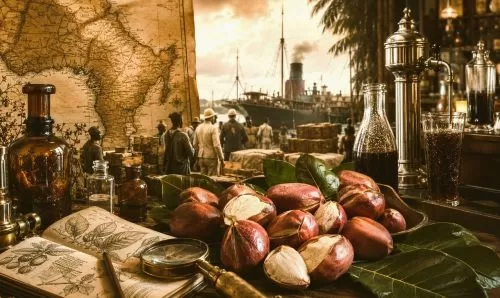
The kola nut’s history stretches from West African ritual and medicine to colonial science, global trade, and the rise of modern cola.

By Lalita Kaplish
Digital Content Editor
Wellcome Trust
How did a nut that’s been prized across West Africa for centuries come to be integral in the development of the world’s most ubiquitous soft drink? The story is a surprising mix of colonialism, 19th-century science and consumerism. Lalita Kaplish explores the commodification of the kola nut, and how its history is entwined with other plant-based stimulants.

Kola nuts are the fruit of the kola – or cola – tree. They’re indigenous to West Africa, where they have long been valued for their medicinal and restorative properties. Despite their bitter taste, kola nuts have been used to combat fatigue and increase alertness, improve digestion, and reduce coughing. They continue to be an integral part of many local traditions in the region, often shared as tokens of respect and good fortune. You’ll find them served at weddings, naming ceremonies, funerals and on the completion of successful business deals.
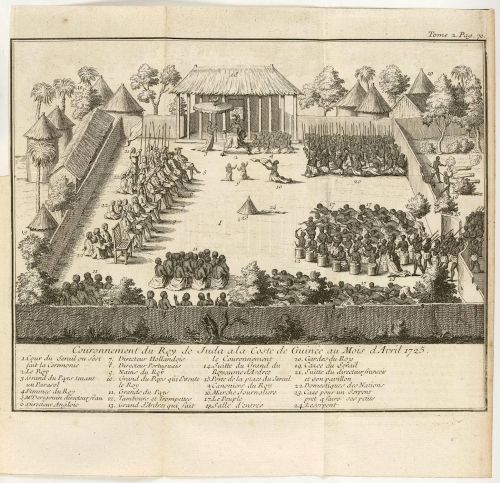
In the 16th century, kola nuts joined the steady trickle of flora and fauna sent home by European travellers to Africa. Reynaud Des Marchais, the French navigator and slave-ship captain, travelled extensively along the west coast of Africa between 1704 and 1727. Des Marchais forged alliances with local kingdoms for land and trade – including slavery – and gathered information about plants and animals. He was among several Europeans who observed that kola nut made “the bitterest or sourest Things taste Sweet after it.”
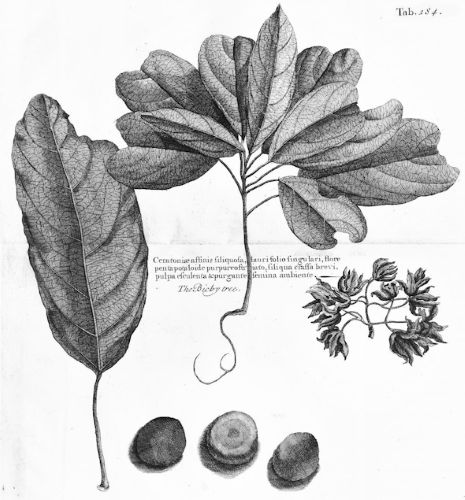
Kola nuts were used to improve the taste of poor-quality drinking water on ships sailing to the Americas, including those used in the transatlantic slave trade. Enslaved African people in the Caribbean planted some of the transported nuts around their dwellings, drawing on their heritage to establish local folk medicine and traditions. By the time the English physician and explorer Hans Sloane travelled to the Caribbean in the 1720s, the mature kola plants were known locally as bichy trees. The term ‘bichy’ or ‘bissy’ is derived from the Akan (from present-day Ghana) term for kola nut. It’s also the local name for kola nuts in Jamaica, and bissy tea is still drunk in the Caribbean.
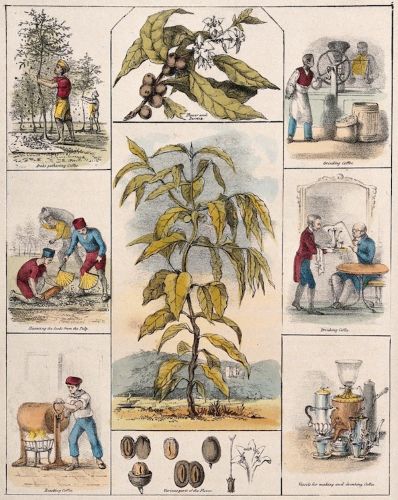
The global spread of the West African kola nut is similar to that of tobacco, coffee and tea. Wellcome Collection holds a series of six prints from the 1840s that illustrate the economic system in which the plants were cultivated and harvested by local people, including enslaved and indentured workers in large-scale plantations. The plants were then shipped to factories in North America and Europe to be processed and sold to European and North American consumers. In the case of the coffee harvest pictured here, the locals shown are “Arabs” from the North African regions where arabica coffee beans originated. With fortunes to be made from such commodities, enterprising plant hunters were always on the lookout for the next tobacco or coffee plant.
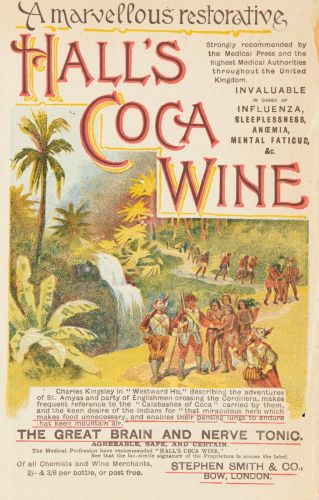
In the late 19th century, new biosciences such as physiology and nutrition began to connect lifestyle with health, and new markets for health products emerged. These products often contained plant extracts, with the traditional uses of “exotic” ingredients considered a selling point. An example is Hall’s Coca Wine, marketed as a restorative “nerve tonic”. Wine or alcohol were traditional solvents for extracting medicinal value from plants, in this case from South American coca leaves. This label describes how intrepid explorers observed their luggage bearers using coca leaves, a “miraculous herb which makes food unnecessary and enables their panting lungs to endure that keen mountain air”.
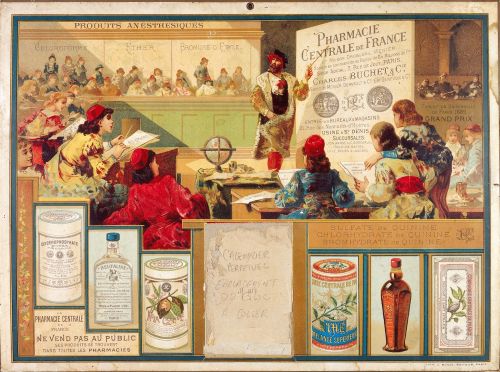
With further developments in chemical and biological sciences, plants like coffee, kola and coca were analysed for their health-enhancing properties, and their active chemical agents were isolated. Kola nut was revealed to contain at least twice the caffeine of coffee beans, as well as theobromine, a bronchodilator that helps with breathing. The labelling on health products gradually began to use scientific language, no longer highlighting folk remedies and traditional uses. This advert shows the range of products made by the Pharmacie Centrale de France: from newly developed anaesthetics to the processed granules, tonics and powders manufactured from plant-based ingredients such as quinine, chocolate and kola nut.
![Kola Granulee label, J.J. Lemoine Imprimerie Lithographie Etiquettes Cartonnages, [1890?/1900?]](https://brewminate.com/wp-content/uploads/2026/06/060526-28-Food-History.jpg "The Kola Nut: Colonialism, 19th-Century Science, and the Birth of Cola 10")
Around the turn of the 20th century, the words ‘tobacco’, ‘coffee’ and ‘coca’ were replaced on health-product labels by ‘nicotine’, ‘caffeine’ and ‘cocaine’. These chemicals were classified as stimulants because of their ability to combat fatigue and increase mental activity. Today, stimulants are defined as substances that affect the central nervous system. They have very specific physiological effects such as increasing heart rate, blood pressure and speech, and supressing appetite. This label for kola granules shows the shift towards a more processed product, which contains all the active chemicals from fresh kola nut, including theobromine. Curiously, it doesn’t mention caffeine, although the suggested dose of two spoons in your coffee must have provided quite a hit!
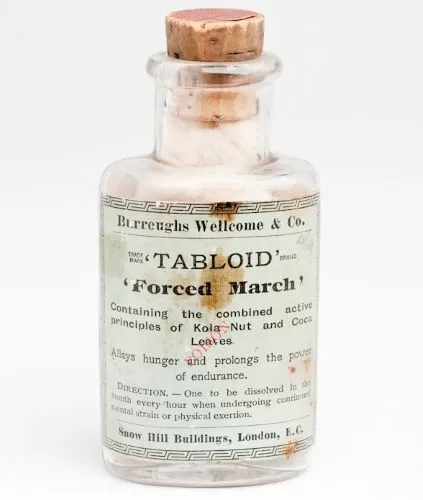
The kola nut, so steeped in West African tradition, was transported, extracted and reinvented as an example of modern Western know-how. Pharmaceutical company Wellcome Burroughs & Co. developed a range of products derived from plant-based chemicals, including a kola-nut/coca-leaf stimulant. Forced March Tabloids contained the “active principles of Kola Nut and Coca Leaves” to “allay hunger and prolong the power of endurance”. The product was aimed at explorers, travellers and the military. Ernest Shackleton carried a Burroughs Wellcome medicine chest containing Forced March on his 1910 expedition to the Antarctic, and it may even have been used by colonial armed forces in West Africa.
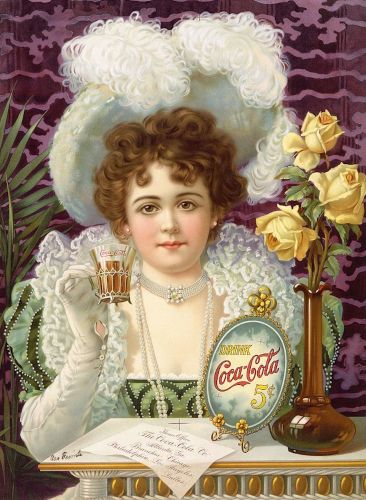
In the American state of Georgia, pharmacist John Pemberton developed his own product from coca leaves and kola nut. His nerve tonic – Pemberton’s French Wine Coca – was based on European coca wines, but flavoured with kola nut and made more palatable with sugar syrup and carbonated water. With the institution of Prohibition laws in Georgia in 1886, a non-alcoholic version was created and marketed as “Coca-Cola: the temperance drink”. Adverts, such as this one from 1900 featuring a smart young woman, added to its broad appeal. Coca-Cola was sold as a patent medicine from drugstore soda fountains and claimed to cure many diseases, from indigestion to morphine addiction, until the company gradually moved away from its pharmaceutical roots.

Cocaine was made illegal in the USA in 1914 and, with the development of synthetic caffeine, Coca-Cola no longer claimed to contain either coca leaf or kola nut, but the brand name that these two plants inspired has stuck. The kola nut remains big business in Africa and beyond, exported worldwide for caffeine extraction and widely sold in African markets and as bissy tea in the Caribbean. Annual production is over 300,000 tonnes, the majority grown in West Africa. ‘Cola’ has become the generic name for a distinctive flavour of soft drink and some of these products still use kola nut as a natural flavouring agent. And you can even find a soda that contains both the eponymous ingredients of the original coca-cola.
Originally published by Wellcome Collection, 01.30.2025, under the terms of a Creative Commons Attribution 4.0 International license.
About the Author