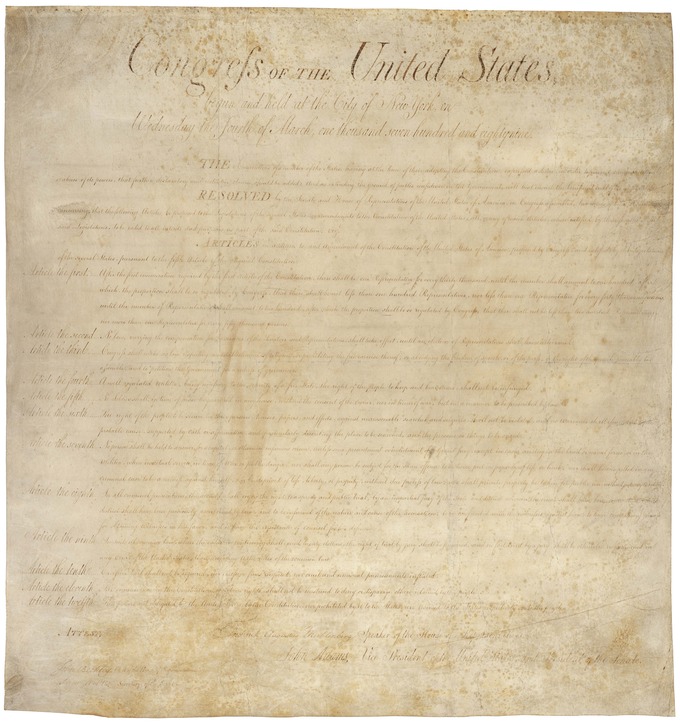
From Magna Carta to Miranda and digital encryption, the Fifth Amendment restrains prosecution, bars compelled testimony and double jeopardy, requires due process, and protects private property.

By Matthew A. McIntosh
Public Historian
Brewminate
Introduction: More Than the Right to Remain Silent
Few provisions of the United States Constitution possess a cultural identity as vivid as the Fifth Amendment. In courtrooms, crime dramas, congressional hearings, and ordinary conversation, to “plead the Fifth” means refusing to answer a question that might expose oneself to criminal liability. The amendment is similarly associated with the warning that suspects have a right to remain silent, although that familiar language comes from the Supreme Court’s twentieth-century regulation of custodial interrogation rather than from the constitutional text itself. This popular shorthand captures something essential about the government’s inability to compel self-accusation, but it also reduces a complex constitutional provision to only one of its protections. The Fifth Amendment governs how the federal government accuses, prosecutes, punishes, deprives, and appropriates. Its history extends far beyond the interrogation room and encompasses questions of criminal procedure, lawful government, personal liberty, and private property.
The amendment contains five principal safeguards. It ordinarily requires a grand-jury presentment or indictment before the federal government may prosecute a capital or otherwise infamous crime; prohibits placing a person twice in jeopardy for the same offense; protects against compelled self-incrimination in a criminal case; forbids the deprivation of life, liberty, or property without due process of law; and requires just compensation when private property is taken for public use. These guarantees did not descend together from a single English document or emerge fully formed from one political controversy. Grand juries developed from medieval institutions of local accusation and inquiry, while protection against double jeopardy drew upon common-law pleas barring repeated prosecution after acquittal or conviction. The privilege against self-incrimination acquired its symbolic force through resistance to compulsory oaths, ecclesiastical jurisdiction, the High Commission, and Star Chamber, although its practical effectiveness also depended upon the later rise of defense counsel and adversarial criminal procedure. Due process possessed a different lineage in the medieval language of the “law of the land,” subsequently transformed by English legislation, colonial practice, revolutionary declarations, and American judicial interpretation. The Takings Clause arose from still another body of ideas concerning public necessity, legislative authority, property, and compensation. What the First Congress assembled in 1789 was not a single inherited right but a constitutional convergence of historically distinct restraints upon governmental power.
That convergence did not immediately produce the Fifth Amendment familiar to modern Americans. Ratified in 1791, the amendment originally restricted only the federal government, leaving state criminal justice and property regulation largely beyond its reach. Its clauses also developed unevenly: some remained comparatively narrow, while others became foundations for extensive bodies of constitutional doctrine. Reconstruction and the Fourteenth Amendment eventually allowed most protections associated with the Fifth Amendment to be enforced against the states, but not through a simple or simultaneous transfer, and the federal grand-jury requirement still has not been incorporated. Judicial decisions transformed due process, double jeopardy, self-incrimination, and takings law in response to industrialization, administrative government, professional policing, and changing understandings of citizenship. The modern amendment is consequently both an eighteenth-century constitutional text and the product of more than two centuries of contest over what its language demands.
The history that follows rejects a straightforward narrative in which ancient English liberties passed intact through Magna Carta, survived the abuses of Star Chamber, and culminated inevitably in the words of James Madison. Such a lineage is too orderly for institutions whose meanings changed as legal procedures, political structures, and relations of power changed around them. The amendment sometimes restrained official coercion, but its language could also defend established interests, as when Fifth Amendment due process was invoked to protect slaveholders’ claims to human property before the Civil War. Its guarantees have offered indispensable protections while leaving significant exceptions, including successive prosecutions by separate sovereigns, compelled production of some incriminating evidence, and unequal access to the resources needed to make formal rights effective. Nevertheless, the five clauses share a durable constitutional logic: government may wield its enormous powers only through legally bounded procedures, and it must bear burdens that arbitrary authority would prefer to impose upon the individual. It must justify serious accusations, accept the finality of lawful judgments, establish guilt without forcing the accused to provide testimonial evidence against themselves, follow law before depriving a person of protected interests, and compensate owners when private property is appropriated for public purposes. The Fifth Amendment is best understood not as an unchanged inheritance or merely as the source of the right to remain silent, but as a historically layered demand that government account for the ways it prosecutes, punishes, and takes.
Magna Carta: The Distant Ancestry of Due Process
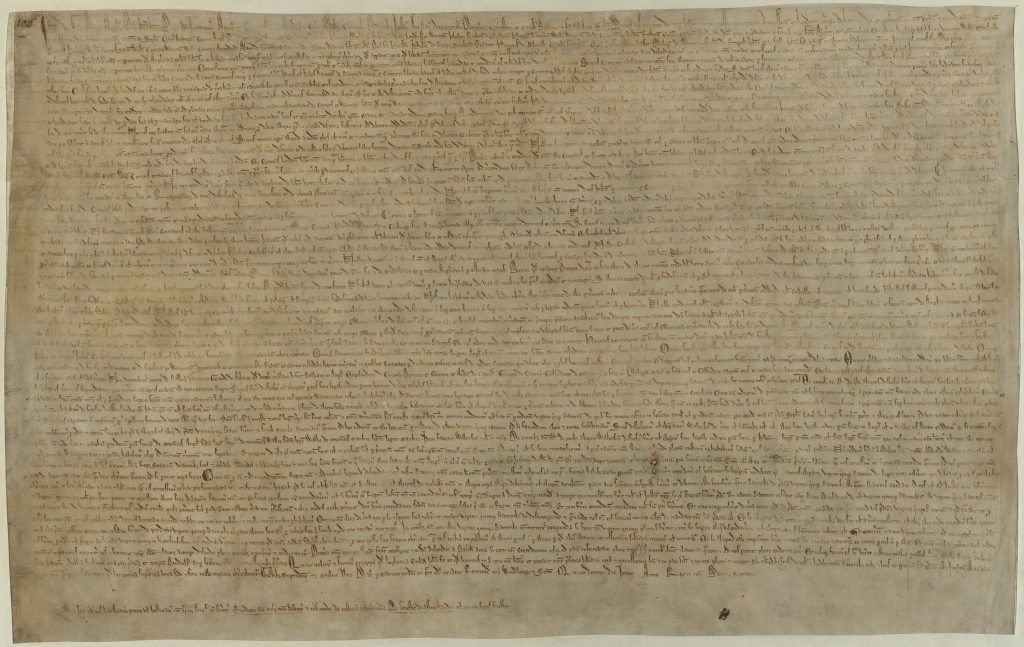
The Fifth Amendment’s command that no person shall be deprived of life, liberty, or property without “due process of law” is often traced to Magna Carta. That connection is genuine, but it is neither direct nor simple. The barons who confronted King John at Runnymede in June 1215 were not designing a universal constitutional right, much less anticipating the procedural protections of the United States Constitution. They were attempting to restrain a particular king whose arbitrary financial demands, military failures, manipulation of justice, and disregard for customary privileges had alienated much of the English political elite. Magna Carta nevertheless gave enduring textual form to a principle capable of outliving its feudal setting: coercive power should operate through law rather than solely through the ruler’s will.
The crucial language appeared in chapter 39 of the 1215 charter. It declared that no free man was to be seized, imprisoned, dispossessed, outlawed, exiled, or otherwise ruined except by the lawful judgment of his equals or by the law of the land. Chapter 40 added the promise that justice would not be sold, denied, or delayed. These provisions responded to identifiable abuses of Angevin government, including arbitrary disseisin, punitive amercements, prolonged litigation, and royal interference with property and inheritance. “Law of the land” did not designate a written constitution superior to all other law in the modern American sense. It referred more immediately to recognized law, established modes of proceeding, and the customs governing the king’s exercise of jurisdiction. Yet the phrase mattered because it denied that royal command alone necessarily supplied a sufficient legal basis for punishment or dispossession. Even a king exercising extensive prerogative authority was expected to proceed through forms that his political community could recognize as lawful.
The protections were sharply limited by medieval status. Chapter 39 spoke of the “free man” in a society containing large numbers of unfree villeins, while the rights and remedies available to women, Jews, laborers, and the poor differed markedly from those enjoyed by barons and substantial landholders. The “judgment of his peers” referred to judgment by social and legal equals and should not be read as a straightforward guarantee of the modern criminal jury. Nor did Magna Carta forbid government from taking life, liberty, or property; it principally insisted that certain deprivations occur pursuant to lawful authority. Its historical importance rests less in the breadth of the rights it immediately conferred than in the much broader uses later generations made of its language.
The original charter was itself an unstable settlement. Pope Innocent III annulled it within weeks, and the ensuing civil war demonstrated that parchment alone could not resolve the struggle between John and his opponents. After John’s death, the minority government of Henry III reissued revised charters in 1216 and 1217 to secure political allegiance, and Henry issued another authoritative version in 1225 in exchange for a grant of taxation. In that version, the substance of the original chapters 39 and 40 was combined in chapter 29. Edward I confirmed the 1225 charter in 1297, helping establish it as part of the statutory and political inheritance of the realm. Repetition changed its character: what began as an emergency peace agreement gradually became a recurring standard against which subjects could measure royal conduct. Parliament, judges, lawyers, and petitioners cited the charter in conflicts that its original authors could not have foreseen. Magna Carta survived not because its meaning remained fixed, but because its compact language could be detached from the circumstances of 1215 and applied to new disputes over imprisonment, jurisdiction, taxation, and property.
The expression “due process of law” emerged from that continuing reinterpretation. A statute enacted under Edward III in 1354 declared that no person, whatever his estate or condition, should be removed from land or tenement, taken, imprisoned, disinherited, or put to death without being brought to answer by due process of law. The change in vocabulary did not announce an entirely new constitutional philosophy; “due process” described authorized legal proceedings through which a person could properly be called to answer. Related fourteenth-century legislation referred to indictment, presentment by trustworthy accusers, and original writs, thereby associating lawful deprivation with regular procedures rather than unsupported accusation or executive command. Lawyers came to treat “due process of law” and “law of the land” as closely related, sometimes interchangeable, expressions. The linguistic bridge between Magna Carta and the Fifth Amendment was constructed gradually through statutes, legal argument, and institutional practice.
Sir Edward Coke became the most influential early modern architect of Magna Carta’s enlarged reputation. Writing amid conflicts between common-law courts and Stuart claims of prerogative, Coke interpreted chapter 29 as a fundamental protection against imprisonment or dispossession unsupported by indictment, presentment, original writ, or other lawful proceeding. His readings were not neutral recoveries of thirteenth-century intent; they frequently projected the procedures and constitutional controversies of his own age backward onto the medieval charter. Nevertheless, Coke supplied later English and colonial readers with a powerful account of Magna Carta as an enduring restraint on arbitrary authority. The Petition of Right of 1628 similarly invoked Magna Carta and the statutes of Edward III when protesting imprisonment without stated cause, forced loans, billeting, and martial-law commissions. Through such arguments, the charter became less a catalogue of feudal concessions than a symbol of government under law. Its authority depended upon a productive mixture of history, professional legal memory, and constitutional mythmaking.
By the seventeenth and eighteenth centuries, English settlers and their descendants in North America regularly claimed the “rights of Englishmen” and treated Magna Carta as evidence that lawful government was constrained by inherited liberties. Colonial pamphleteers, lawyers, and revolutionary constitution-makers often read the charter through Coke rather than through the narrower political conditions of 1215. State declarations of rights subsequently converted the ancient language of lawful judgment and the law of the land into explicit written restraints upon government, creating far more immediate precedents for the Fifth Amendment. When the First Congress adopted the phrase “due process of law” in 1789, it drew upon this accumulated Anglo-American tradition rather than copying a rule that had remained unchanged since Runnymede.
Magna Carta belongs to the ancestry of due process because it furnished durable language for opposing arbitrary deprivation, not because it contained the modern doctrine in embryonic form. Its journey from baronial settlement to constitutional symbol reveals a recurring pattern in legal history: inherited texts acquire new power when later societies reinterpret limited protections as statements of general principle.
The Fifth Amendment’s Several English Inheritances

Read as a single sentence, the Fifth Amendment can create the impression that its protections always belonged together. Nothing in English legal history united grand-jury accusation, finality after acquittal, freedom from compelled self-accusation, due process, and compensation for appropriated property within one coherent declaration of rights. Each emerged from a different institutional setting, and each changed meaning as courts, Parliament, lawyers, and political movements adapted it to new circumstances. English law furnished Americans with practices, maxims, historical memories, and warnings about the abuse of power rather than a ready-made Fifth Amendment. The American achievement was to select from these several inheritances, reformulate them as individual rights, and place them beyond the ordinary discretion of the national government.
The oldest institutional ancestor was the presenting jury. The Assize of Clarendon of 1166 required sworn groups of local men to identify persons reputed or suspected to have committed serious crimes, thereby enabling royal officials to extend criminal administration throughout England. These bodies were not originally protective panels standing between an accused person and an ambitious prosecutor; they were instruments of royal inquiry whose accusations could send suspects to trial by ordeal. During the later Middle Ages, the accusing jury became increasingly distinguishable from the smaller trial jury that determined guilt, producing the division eventually represented by the grand and petit juries. The grand jury received allegations, evaluated whether an accusation was sufficiently supported, and returned an indictment as a “true bill” or rejected it as unfounded. Because prosecution for serious crime ordinarily depended upon that intermediate judgment, the institution could function both as an engine of accusation and as a barrier to unsupported charges. Seventeenth-century refusals to indict defendants targeted by the Crown, most famously the London grand jury’s rejection of a treason charge against the Earl of Shaftesbury in 1681, strengthened its reputation as an independent shield against political prosecution, although that protective character was never absolute.
Protection against repeated prosecution possessed a less visible but equally important common-law history. English defendants could plead autrefois acquit or autrefois convict, previous acquittal or previous conviction, to bar a new prosecution for the same felony, while a royal pardon could supply another plea in bar. These rules drew upon overlapping concerns about the conclusiveness of judgments, the legitimacy of judicial proceedings, and the cruelty of exposing a person repeatedly to punishment, but their medieval and early modern application depended upon technical questions about jurisdiction, the validity of the first indictment, the identity of the offense, and the type of prosecution employed. By the eighteenth century, William Blackstone could describe the pleas as grounded in the universal principle that no person should be brought into jeopardy of life more than once for the same offense, even though common-law practice remained narrower and more intricate than that general language suggested. The Fifth Amendment transformed this historically qualified collection of pleas into a constitutional command directed at the prosecuting government itself.
The inheritance behind the privilege against self-incrimination was more contested because it arose from a conflict between legal systems and modes of procedure. Variants of the maxim nemo tenetur se ipsum accusare or nemo tenetur prodere se ipsum expressed the proposition that no person should be required to accuse or betray themselves. Roman-canon learning recognized protections against self-accusation in certain circumstances, yet ecclesiastical tribunals also developed inquisitorial procedures that could require suspected persons to answer under oath. In early modern England, the High Commission and Star Chamber used the oath ex officio to demand answers before an accused person necessarily knew the charges, evidence, or accusers. Resistance to that practice made compulsory self-disclosure a constitutional grievance and associated forced answering with religious persecution, prerogative jurisdiction, and arbitrary punishment. Parliament abolished both tribunals in 1641, and common lawyers increasingly celebrated their own procedure as hostile to inquisitorial compulsion. Nevertheless, ordinary felony defendants remained unable to testify under oath and were generally expected to speak for themselves against the prosecution’s case, making silence dangerous long after the compulsory oath had become discredited. The English inheritance consisted not of a completely realized right to remain silent but of a powerful maxim, a political memory of abusive questioning, and an unresolved tension between refusing compelled testimony and surviving a criminal trial without answering.
Due process and protection for property followed still other paths. The “law of the land” language of Magna Carta, the fourteenth-century appearance of “due process of law,” and the arguments of Edward Coke linked legitimate deprivation to recognized legal authority and regular modes of proceeding. That tradition did not prevent government from taking life, liberty, or property, but it denied that unsupported accusation or executive will alone necessarily made such action lawful. English property thought added strong declarations concerning possession and ownership: medieval charters restricted certain royal requisitions, common-law remedies protected land and goods, and Blackstone described property as an absolute right while maintaining that public necessity required full indemnification when private land was appropriated. Yet parliamentary sovereignty meant that no English court could invalidate an act of Parliament merely because it authorized a taking without adequate compensation, and historical practice did not consistently honor the ideals proclaimed by legal commentators. The American Takings Clause consequently drew upon English reverence for property and expectations of compensation while departing from England by elevating those expectations into enforceable constitutional law.
These several inheritances did not converge automatically. Grand juries emerged from royal administration, double-jeopardy rules from pleas and judgments, the self-incrimination principle from jurisdictional and religious conflict, due process from the law governing legitimate deprivation, and compensation from property doctrine and resistance to arbitrary expropriation. Nor were all five protections equally developed when Americans received them; some were settled procedures, others were broad principles, and still others were political aspirations contradicted by actual practice. Colonial experience and revolutionary constitution-making supplied the intermediary through which English institutions were criticized, selected, and rewritten. Once joined in the Fifth Amendment, the protections acquired a shared constitutional function: they distributed the burdens of government power away from the isolated individual and back toward the government exercising coercion. The resulting text preserved English legal memory while denying the new federal legislature, executive, and judiciary the final authority to decide whether those inherited restraints were convenient. Its unity was not genealogical but constitutional, a deliberate American arrangement of several distinct histories around the problem of arbitrary power.
The Oath Ex Officio and the Star Chamber
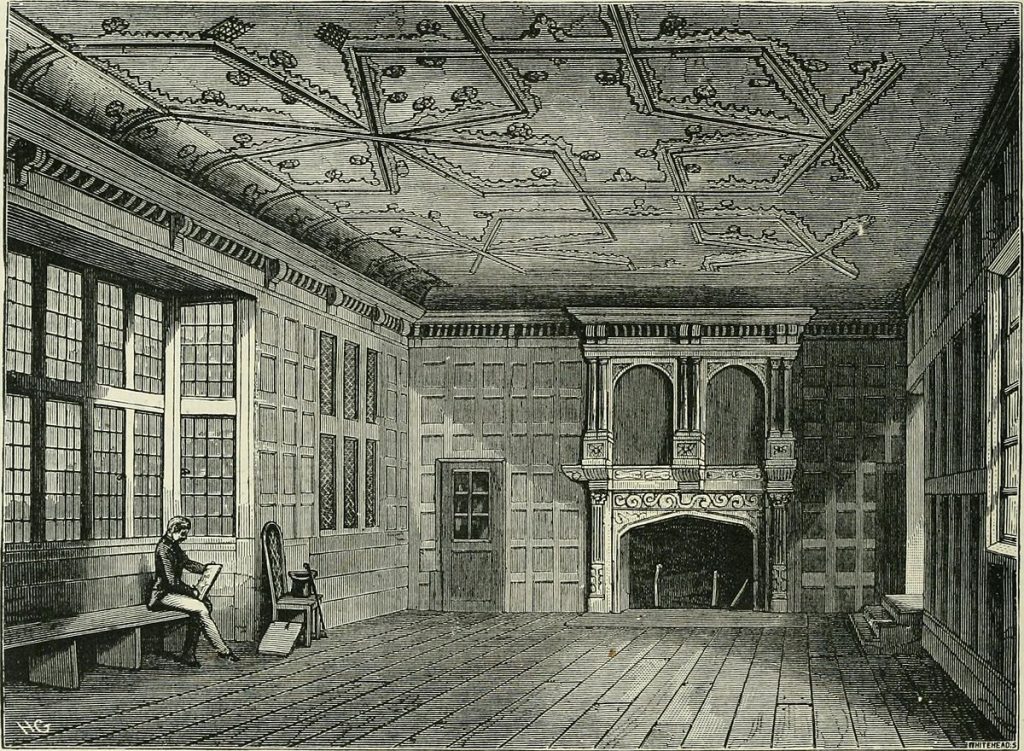
The oath ex officio became one of the most potent symbols in the history of compelled self-accusation because it joined investigative power to the religious obligation to speak truthfully. Later accounts often merged the Court of High Commission and the Star Chamber into a single machinery of Stuart repression, but the two bodies possessed different origins, jurisdictions, and institutional purposes. The High Commission exercised ecclesiastical authority under royal supremacy, whereas the Star Chamber developed from the king’s council and heard political, administrative, and criminal matters outside the ordinary common-law process. Both nevertheless employed forms of sworn examination that permitted officials to obtain evidence from the person under investigation. Their procedures helped transform what might otherwise have remained a technical jurisdictional controversy into a constitutional argument over whether government could force a person to become the instrument of their own prosecution.
To proceed ex officio mero meant that a judge or tribunal acted by virtue of office rather than in response to a formal accusation brought by an identifiable private party. The procedure had roots in the Roman-canon tradition, under which ecclesiastical judges could investigate notorious wrongdoing when public reputation, denunciation, or other preliminary evidence supplied lawful grounds for inquiry. Once called, the suspected person might be required to swear to answer truthfully before receiving a complete account of the allegations or seeing the articles upon which the examination would proceed. The oath was not merely a promise to avoid an ordinary falsehood; in a culture that treated perjury as a grave offense against God, it bound the conscience as well as the body. Truthful answers might establish the respondent’s guilt, evasive or false answers risked perjury, and refusal could produce contempt, imprisonment, or ecclesiastical punishment, the predicament later described as the “cruel trilemma.” Interrogatories could also demand the names, meetings, statements, and practices of associates, making the respondent an investigator against an entire religious community. Canon lawyers insisted that the oath was legitimate when supported by prior accusation, public fame, or adequate suspicion, and they distinguished lawful inquiry from an indiscriminate search for unknown offenses. Opponents replied that these formal limitations were too easily manipulated and that an oath administered before a definite charge amounted to a spiritual and judicial fishing expedition.
The High Commission was not one continuously constituted court but a succession of royal commissions through which the English monarchy supervised religion after the Reformation. Its authority expanded under Elizabeth I, especially after John Whitgift became archbishop of Canterbury in 1583 and required ministers to subscribe to articles affirming royal supremacy, the Book of Common Prayer, and the Thirty-Nine Articles. Commissioners used sworn interrogatories to investigate unauthorized preaching, disputed ceremonies, presbyterian organization, separatist worship, recusancy, prohibited books, and associations among suspected nonconformists. The commission could suspend or deprive clergy, impose ecclesiastical censures, order imprisonment for disobedience, and refer related offenses to other authorities, giving its questioning power consequences extending well beyond religious admonition.
Star Chamber followed a different trajectory. Emerging from the judicial work of the king’s council, it was not originally a secret chamber created solely to destroy political opponents, nor was it simply the product of a statute enacted under Henry VII. Tudor lawyers and litigants often valued the court because it could act against riot, intimidation, perjury, corruption, forgery, maintenance, and misconduct by powerful people capable of frustrating local justice. Its judges included privy councillors and common-law judges, and its written procedure allowed a complainant to submit a bill to which the defendant ordinarily answered under oath, followed by interrogatories, depositions, and argument by counsel. Because there was no trial jury and because sworn answers could expose related wrongdoing, the process appeared dangerously inquisitorial to those accustomed to presenting juries and oral common-law trials. Star Chamber could not impose a capital sentence, but it could inflict ruinous fines, indefinite imprisonment, the pillory, branding, mutilation, and other punishments intended to disgrace as well as discipline. Under the early Stuarts, it became increasingly involved in the enforcement of proclamations, regulation of printing, prosecution of seditious speech, and suppression of religious and political opposition. The spectacular sentences imposed upon William Prynne, John Bastwick, and Henry Burton in 1637 (fines, imprisonment, pillorying, and the mutilation of their ears) made the court’s severity visible far beyond Westminster. Such cases did not represent the entirety of Star Chamber’s work, much of which concerned ordinary disputes and recognizable offenses, but they fixed its public identity as a tribunal in which royal policy, episcopal authority, compulsory answering, and exemplary punishment reinforced one another.
Resistance arose from several directions and did not initially express one settled right against self-incrimination. Puritans objected that compulsory oaths forced believers either to betray conscience and fellowship or to accept punishment for refusing cooperation, while common lawyers challenged ecclesiastical proceedings that exceeded the church courts’ jurisdiction or lacked the accusation required by law. Parliamentary critics such as James Morice attacked unrestricted examinations during the 1590s, and common-law judges sometimes issued prohibitions when commissioners appeared to inquire into matters beyond ecclesiastical competence. Defenders of the High Commission, including the civilian lawyer Richard Cosin, responded that ecclesiastical discipline could not function if concealed offenses were immune from inquiry and that canon law supplied safeguards against baseless examination. The controversy involved competing jurisdictions, rival conceptions of church government, and disagreement about what counted as a lawful accusation as much as it involved an abstract individual right. By the 1630s, the refusal of defendants such as John Lilburne to submit to broad interrogatories converted those technical disagreements into public demonstrations of resistance to arbitrary power.
The Long Parliament’s abolition of Star Chamber and the High Commission in 1641 marked a constitutional repudiation of the institutions most closely associated with prerogative and ecclesiastical compulsion. Parliament condemned Star Chamber as an intolerable burden and an instrument for introducing arbitrary government, grounding its indictment in Magna Carta, the law of the land, due process, and the requirement that people be properly brought to answer. Abolition destroyed the principal jurisdictions in which the contested oath had acquired its political notoriety, but it did not immediately create a comprehensive modern privilege applicable throughout English criminal procedure. Common-law felony defendants were not ordinarily sworn as witnesses, yet they were expected to answer accusations personally and usually lacked counsel capable of conducting a defense while they remained silent. Much early resistance to the oath concerned the absence of a definite charge, the ecclesiastical character of the tribunal, or demands to reveal the misconduct of others rather than an absolute privilege to refuse every incriminating question. Even so, the struggle established a durable constitutional lesson: proceedings that began without a known accuser and then compelled the suspect to supply the missing evidence could transform adjudication into an instrument of official discovery. The oath ex officio, the High Commission, and the Star Chamber consequently supplied later Anglo-American thought with both a warning and a vocabulary through which protection against compelled self-accusation could be imagined more broadly.
John Lilburne and the Politics of Compelled Self-Accusation
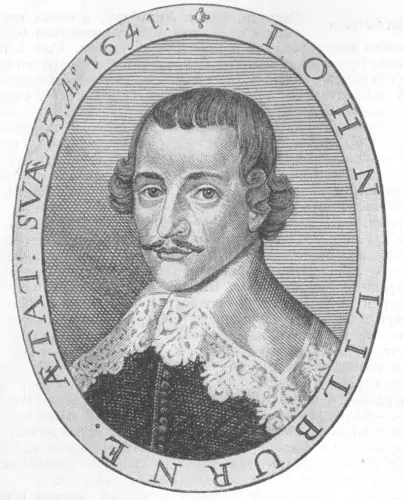
John Lilburne became the most celebrated English opponent of compelled self-accusation not because he formulated a complete modern doctrine of testimonial privilege, but because he transformed a disputed legal procedure into a public confrontation between individual conscience and governmental power. Born around 1615 into a minor gentry family, Lilburne was apprenticed to the London cloth merchant Thomas Hewson and drawn into the capital’s networks of Puritan religious opposition. In 1637, he helped arrange the printing and importation from the Netherlands of works attacking the English episcopacy, thereby violating the Crown’s increasingly stringent regulation of the press. Authorities arrested him in December and sought information about the books, printers, distributors, and associates involved in their circulation. His case began as an investigation of illicit publishing but quickly became a test of whether officials could compel a suspected person to disclose the evidence needed to prosecute both themselves and others. Lilburne’s importance arose from his refusal to accept that the government’s power to interrogate carried a corresponding duty of self-betrayal.
When brought before the Star Chamber, Lilburne was ordered to take the oath ex officio and answer interrogatories concerning matters that had not been fully specified in a formal accusation. He objected that he should not be forced to swear before knowing what offense was alleged against him, who accused him, or what evidence supported the proceeding. His position was narrower than an unconditional modern right to remain silent: he demanded a lawful and particular charge and denied that officials could use a general oath to search his conscience for undiscovered offenses. That distinction was crucial because the oath placed the burden of investigation upon the suspected person. A truthful answer might establish guilt or expose associates, a false answer would invite the spiritual and legal consequences of perjury, and refusal subjected the respondent to punishment for contempt. Star Chamber sentenced Lilburne in February 1638 to a fine of £500, whipping, the pillory, and imprisonment until he submitted to the court. On April 18, he was whipped from Fleet Prison to Westminster and placed in the pillory, where he continued denouncing the bishops and the illegality of the proceedings until authorities gagged him. His punishment did not silence the controversy; its public severity made the structure of compelled self-accusation comprehensible to people who might never have encountered arguments over ecclesiastical jurisdiction or Roman-canon procedure. The spectacle presented government as demanding not merely obedience but active participation in one’s own destruction.
Lilburne and his supporters then converted suffering into political authority through print. In The Christian Mans Triall, published in 1641, his examinations appeared as a contest between an isolated believer armed with Scripture and English law and officials wielding secretive, arbitrary jurisdiction. The narrative was carefully constructed rather than dispassionate, but its partisanship was precisely what made it effective: legal objections became a story of conscience, courage, and persecution capable of circulating far beyond the courtroom. The Long Parliament secured Lilburne’s release, condemned his Star Chamber sentence, and abolished both Star Chamber and the High Commission in 1641. Parliamentary vindication did not establish every proposition Lilburne later attached to his case, yet it confirmed that his refusal could be remembered as lawful resistance rather than criminal obstinacy.
Lilburne’s campaign against compulsory answering soon became part of a much broader politics of legal accountability. After serving Parliament during the Civil War, he turned against the emerging concentration of authority among parliamentary leaders and army commanders, accusing former allies of reproducing the arbitrary practices they had once opposed. Pamphlets such as England’s Birth-Right Justified and The Free-Man’s Freedom Vindicated connected freedom from self-accusation with notice of charges, public proceedings, access to legal rules, confrontation with accusers, trial by jury, and protection against imprisonment by mere command. These demands helped create the political identity for which he became known as “Freeborn John,” an identity grounded in the claim that lawful liberty belonged to English people by birth rather than by governmental favor. Within the Leveller movement, such arguments joined campaigns for representative reform, religious toleration, equality before the law, and restrictions upon the authority of Parliament itself. Lilburne’s repeated imprisonments demonstrated that even a legislature claiming to represent the people could become an oppressor when it detained critics or manipulated judicial procedure. At his treason trial in 1649, he again turned the courtroom into a public forum, challenged the legality of the case against him, appealed directly to the jury, and won an acquittal that supporters celebrated as a victory over the new Commonwealth. His language of universal “freeborn” liberty nevertheless retained assumptions and exclusions characteristic of seventeenth-century political society and should not be confused with modern democratic equality. Its radicalism lay chiefly in making officials answerable to known law and in denying that any institution (king, church, Parliament, or army) could rightfully compel individuals to furnish the means of their own condemnation.
Lilburne consequently occupies an important but contested place in the history of the Fifth Amendment. Leonard Levy’s influential interpretation treated resistance to the oath ex officio, and Lilburne’s ordeal in particular, as a decisive stage in the emergence of the privilege against self-incrimination. Later scholars have complicated that genealogy by identifying protections against self-accusation within medieval canon law and by emphasizing that ordinary English criminal defendants remained expected to answer accusations personally long after Star Chamber disappeared. John Langbein has argued forcefully that an effective right to silence could not flourish until defense counsel and adversarial procedure allowed the accused to contest the prosecution without personally conducting the defense. Lilburne did not create a finished common-law privilege that passed unchanged into the American Bill of Rights. His achievement was instead political and rhetorical: he exposed the general oath as a method by which government could manufacture evidence from conscience, portrayed refusal as the defense of lawful liberty, and helped attach compelled self-accusation permanently to the historical memory of arbitrary rule. The constitutional tradition inherited not a complete doctrine from Lilburne, but a powerful question that would survive him: whether a government entitled to prosecute may also force the accused to help construct the prosecution.
From a Maxim to a Workable Criminal-Procedure Right
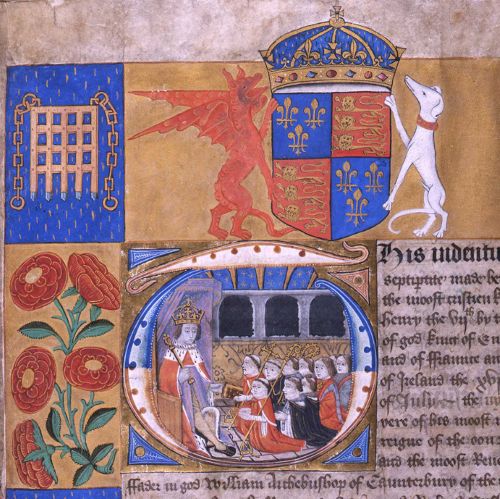
The abolition of Star Chamber and the High Commission removed the institutions most closely associated with the oath ex officio, but it did not immediately give English defendants a modern right to remain silent. The maxim nemo tenetur se ipsum accusare, no person is bound to accuse themselves, could condemn compulsory sworn interrogation without resolving how an accused person was supposed to behave during an ordinary criminal trial. Common-law defendants generally were not placed under oath, and were not forced to give formal testimony in the manner imposed by prerogative or ecclesiastical courts. Yet this apparent protection concealed a practical difficulty: defendants accused of serious crimes were ordinarily denied defense counsel and had to answer the prosecution personally. Silence might avoid explicit self-accusation, but it could also leave incriminating testimony unchallenged and appear to confirm guilt. The transformation of the maxim into a workable criminal-procedure right consequently required changes not merely in doctrine, but in the structure of the criminal trial itself.
The early modern felony trial was organized around what John Langbein has called the “accused speaks” model. Proceedings were generally brief, judges questioned witnesses and defendants directly, and the accused was expected to explain suspicious conduct, expose contradictions, identify favorable facts, and appeal to the jury. Because prosecution witnesses usually presented their evidence orally in the defendant’s presence, answering them became the principal means of defense. A person who declined to speak was not necessarily punished for contempt, but without an advocate to cross-examine witnesses or construct an alternative account, remaining silent could amount to surrender.
Pretrial criminal investigation further weakened the distinction between voluntary explanation and compelled self-disclosure. The Marian committal statutes of 1554 and 1555 required justices of the peace to examine accused persons and witnesses before trial and to record the substance of their statements for use in felony proceedings. These examinations were not necessarily conducted under the oath ex officio, but suspects lacked a general right to counsel, formal warnings, or an effective means of terminating questioning. Magistrates could press for explanations while the accused was detained, uncertain of the evidence, and dependent upon officials for access to witnesses or information. Statements obtained during these examinations could then be introduced at trial as evidence against the defendant. The accused remained legally incompetent to testify under oath and could not call upon the evidentiary authority granted to sworn witnesses. The law created an asymmetrical position: defendants were expected to speak when their answers might incriminate them, yet their favorable assertions lacked the status of sworn testimony. Protection against the compulsory oath had eliminated one mechanism of coercion without eliminating the criminal process’s reliance upon the accused as a source of evidence.
A more effective privilege became possible as adversarial procedure developed during the eighteenth century. The Treason Act of 1696 granted defendants accused of high treason important protections, including the assistance of counsel, but ordinary felony defendants remained formally subject to the rule denying them full legal representation until the Prisoners’ Counsel Act of 1836. Long before that statute, judges increasingly permitted counsel to assist felony defendants by examining and cross-examining witnesses, arguing points of law, and gradually assuming greater responsibility for presenting the defense. Lawyers made prosecution witnesses rather than the accused the central objects of courtroom testing, while rules of evidence increasingly required the government to establish guilt through admissible proof. Once counsel could challenge testimony, emphasize evidentiary gaps, and address the jury, a defendant’s refusal to answer no longer necessarily left the prosecution’s narrative intact. The privilege became practically usable because adversarial institutions supplied ways to defend without personally responding to every accusation.
This procedural transformation complicates any claim that the privilege against self-incrimination sprang fully formed from resistance to Star Chamber. The older maxim supplied a language of opposition to compulsory self-betrayal, while the memory of the oath ex officio associated forced disclosure with arbitrary government. Neither alone created a criminal trial in which silence could be exercised without destroying the defense. That possibility depended upon defense counsel, cross-examination, evidentiary rules, a clearer burden of proof, and the growing expectation that the prosecution must establish guilt through evidence independent of the accused’s compelled assistance. Even then, the right remained incomplete: defendants could not testify under oath in their own behalf, and jurors could still interpret silence according to ordinary assumptions about innocence and concealment. American constitution-makers inherited both a celebrated principle and an unfinished procedural arrangement. By placing protection against compelled self-incrimination in written declarations of rights and ultimately in the Fifth Amendment, they constitutionalized the principle before Anglo-American criminal procedure had fully determined how it would operate in practice.
Colonial Law and the Constitutionalization of Inherited Rights

English settlers did not carry a complete and uniform legal system across the Atlantic. Royal charters commonly promised colonists the liberties, franchises, and immunities enjoyed by English subjects, but distance, local conditions, religious commitments, and differing forms of colonial government shaped what those promises meant. Colonial assemblies enacted their own statutes, courts adapted common-law rules to unfamiliar circumstances, and communities sometimes preserved customs that English judges would not have recognized. English law generally operated only insofar as colonists considered it applicable or appropriate to their circumstances, although imperial officials disputed the extent of that discretion. The colonies consequently developed related but distinct legal cultures rather than miniature reproductions of Westminster. Their inhabitants nevertheless learned to justify local rights by invoking Magna Carta, the common law, colonial charters, and the inherited liberties of English subjects.
The grand jury illustrates how an English institution could acquire a distinct colonial political significance. Colonial grand juries investigated crimes, evaluated accusations, issued indictments, and reported conditions affecting their communities. Their presentments might address defective roads, public disorder, official misconduct, taxation, or other matters extending beyond individual prosecutions, allowing locally selected men to participate directly in government. They could assist imperial administration, enforce religious and moral regulations, and amplify the priorities of propertied local elites. Yet they could also obstruct prosecutions that appeared partisan or oppressive. When New York grand juries declined to indict printer John Peter Zenger for seditious libel in the 1730s, the attorney general proceeded against him by information, demonstrating both the grand jury’s potential independence and the government’s ability to circumvent it. Colonists similarly inherited the common-law pleas of previous acquittal and previous conviction, although their availability depended upon technical rules concerning the identity of the offense, the validity of the first proceeding, and the jurisdiction of the court. Grand-jury screening and protection against repeated jeopardy existed before independence as recognizable practices, but neither yet operated as a uniform constitutional command binding every colonial authority.
Protection against compelled self-accusation developed even less consistently. The Massachusetts Body of Liberties of 1641 restricted the use of torture to obtain confessions, but its carefully drawn exception for certain capital cases reveals how far colonial criminal procedure remained from an absolute privilege against self-incrimination. Magistrates questioned suspects, communities placed great value upon confession, and defendants without counsel frequently had to speak for themselves, leaving the inherited maxim against self-accusation dependent upon the procedure in which it was invoked. Revolutionary declarations transformed that incomplete inheritance by stating the protection affirmatively: Virginia and Pennsylvania declared in 1776 that an accused person could not be compelled to give evidence against themselves, while the Massachusetts Constitution of 1780 provided that no subject should be compelled to accuse or furnish evidence against themselves.
The colonial ancestry of due process likewise consisted of overlapping texts and practices rather than a settled judicial doctrine. Charters, statutes, and legal arguments invoked trial by jury, lawful judgment, known procedures, and the “law of the land,” while colonists cited Magna Carta as an authoritative statement that official power must possess a legal foundation. These principles mattered in conflicts over imprisonment, taxation, property, religious conformity, and the jurisdiction of imperial courts. They did not invariably authorize judges to invalidate legislation, nor did they prevent colonial governments from enacting harsh laws against enslaved people, Indigenous communities, religious dissenters, servants, and the poor. Colonial claims of inherited liberty were often expansive when directed against distant imperial authority and considerably narrower when local majorities governed vulnerable populations. Property received extensive protection through common-law remedies and colonial legislation, but public projects could still require land, materials, labor, and taxation, and compensation practices varied. The emerging American principle was not that government could never interfere with liberty or property, but that coercive action required lawful authority and, increasingly, procedures capable of being stated in advance and defended before the political community. That principle supplied material from which revolutionaries could construct written limitations, even though colonial practice had repeatedly violated the ideal.
The imperial crisis gave inherited rights a new constitutional purpose. Opposition to writs of assistance, juryless vice-admiralty proceedings, parliamentary taxation, military coercion, and altered colonial governments encouraged Americans to portray English liberties as restraints that even Parliament could not legitimately disregard. Independence then required them to decide which of those claimed liberties should bind their own governments. The Virginia Declaration of Rights joined notice of the accusation, confrontation with witnesses, compulsory process, jury trial, protection against self-incrimination, and the law of the land within a written declaration, while Pennsylvania, Massachusetts, and other states arranged related guarantees in different combinations. Several state constitutions also stated that private property appropriated for public necessity required compensation, converting an expectation associated with justice and legislative practice into constitutional language. These declarations did more than catalogue familiar procedures: they elevated selected rights above ordinary governmental convenience and identified the people, rather than the English constitutional order, as their ultimate source.
The constitutionalization of inherited rights remained incomplete until Americans imposed comparable restraints upon the new national government. The Constitution drafted in 1787 contained important procedural protections, including limits upon treason prosecutions and prohibitions of bills of attainder and ex post facto laws, but it lacked a comprehensive declaration of individual rights. During ratification, critics warned that federal power over criminal law, courts, taxation, and property might reproduce the abuses for which Americans had condemned Britain. The Virginia and New York ratifying conventions consequently recommended protections involving grand juries, double jeopardy, self-incrimination, due process, and other features of criminal justice. Drawing upon these proposals and the state declarations, James Madison introduced amendments in June 1789 that prohibited compelled self-testimony and deprivation without due process while also requiring compensation when private property was taken for public use. Congress placed those protections beside the grand-jury and double-jeopardy clauses in what became the Fifth Amendment. Ratification in 1791 did not resolve their meanings, and the amendment initially restrained only the federal government rather than the states whose declarations had supplied many of its immediate models. Its decisive innovation was nevertheless clear: institutions, maxims, and expectations that had once depended upon common-law practice, legislative judgment, or contested claims to the rights of Englishmen had become commands of a written national Constitution. Colonial Americans had not merely preserved inherited rights; through revolution and constitution-making, they had changed the authority by which those rights could be asserted.
Revolutionary Declarations of Rights and Early State Constitutions
Independence changed not only the institutions governing Americans but also the authority upon which their legal rights rested. Before 1776, colonists usually described grand juries, jury trials, lawful judgment, security of property, and protection against compelled self-accusation as inherited liberties of English subjects. Revolutionaries increasingly presented such protections as rights belonging to the people and capable of restraining the governments created in their name. Written declarations placed selected principles at the beginning of new constitutional orders, where they could function as public standards rather than customs dependent entirely upon judges or legislatures. This transformation was incomplete because the states neither selected the same rights nor agreed immediately about how declarations of rights would be enforced against elected majorities.
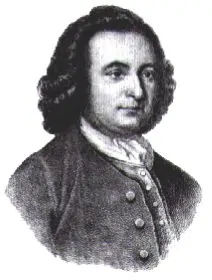
The Virginia Declaration of Rights, adopted on June 12, 1776, supplied the most influential early arrangement of criminal-procedure protections. George Mason’s draft declared that a person facing a capital or criminal prosecution possessed the right to know the accusation, confront accusers and witnesses, obtain favorable evidence, and receive a speedy trial before an impartial local jury. Section 8 added that the accused could not be compelled to give evidence against himself and could not be deprived of liberty except by the law of the land or the judgment of his peers. These provisions placed protection against self-incrimination within an interconnected structure of accusation, evidence, defense, and adjudication rather than treating it as an isolated moral maxim. The declaration did not expressly constitutionalize every protection later assembled in the Fifth Amendment: it contained no general double-jeopardy clause, and it did not require grand-jury indictment in the language later adopted by the federal Constitution. Its references to the “law of the land” and judgment by peers also retained the vocabulary of Magna Carta while applying that language to a government claiming authority from the people. Section 6 protected property against taxation or appropriation for public uses without the consent of the owner or elected representatives, but it did not establish the federal rule of just compensation. Virginia supplied an immediate model for several Fifth Amendment principles without producing anything identical to the eventual amendment.
Pennsylvania’s Declaration of Rights, adopted in September 1776, borrowed from Virginia while embedding the borrowed protections within a more democratic constitutional experiment. Its criminal-procedure article guaranteed notice, confrontation, favorable evidence, a speedy public jury trial, and protection against being compelled to give evidence against oneself. It also declared that liberty could not justly be taken except by the laws of the land or the judgment of one’s peers, while a separate provision prohibited the taking or application of property to public uses without the owner’s consent or that of lawful representatives. These formulations made lawful procedure and representative authorization central to legitimate coercion, but they did not yet distinguish with modern precision among taxation, regulation, physical appropriation, and judicial punishment.
Other states selected differently from the same Anglo-American inheritance. Maryland’s Declaration of Rights guaranteed an accused person notice of the charge, a copy of the indictment, the assistance of counsel, confrontation with witnesses, compulsory process, and protection against being compelled to give evidence against himself. Delaware likewise declared that no person in a common-law court ought to be compelled to give evidence against himself, wording that preserved an institutional limitation inherited from the contest between common-law and inquisitorial jurisdictions. North Carolina constitutionalized the law-of-the-land principle and the traditional criminal jury but did not expressly include a self-incrimination clause comparable to those of Virginia, Pennsylvania, Maryland, and Delaware. Georgia’s Constitution of 1777 protected jury trial and lawful deprivation without assembling an extensive declaration of criminal rights. These variations demonstrate that Americans had not discovered a single authoritative catalogue waiting to be copied. Constitution-makers evaluated particular institutions according to local experience, available models, political ideology, and the abuses they most feared.
Protection for appropriated property developed along a partly separate constitutional path. Vermont’s Declaration of Rights of 1777 acknowledged that private property could be made subordinate to public necessity but required an owner whose property was taken for public use to receive an equivalent in money. The Massachusetts Declaration of Rights of 1780 similarly provided that when public exigencies required the appropriation of an individual’s property, the owner should receive reasonable compensation. These clauses went beyond provisions that relied principally upon the consent of the owner or the owner’s representatives, because they recognized that lawful public authority could compel an appropriation while still owing something directly to the burdened individual. The Fifth Amendment’s requirement of “just compensation” was rooted in state constitutional experimentation, although its precise wording did not simply reproduce any single English or state formula.
The Massachusetts Constitution of 1780 offered one of the period’s most elaborate statements of procedural protection. Article XII prohibited holding a person to answer for an offense until the accusation had been fully and formally described, protected against being compelled to accuse or furnish evidence against oneself, and guaranteed the opportunity to produce evidence, confront witnesses, and be heard personally or through counsel. It then joined those trial protections to the older assurance that no subject could be arrested, imprisoned, dispossessed, or deprived of life, liberty, or estate except by the judgment of peers or the law of the land. New Hampshire’s Constitution of 1784 adopted much of this language and added a direct prohibition against trying a person again for the same offense after an acquittal. That provision approached the double-jeopardy principle later stated in the Fifth Amendment, although it focused upon retrial following acquittal rather than describing every circumstance in which jeopardy might attach. Grand-jury accusation remained more commonly secured through inherited practice and legislation than through uniform state constitutional language. New York’s Constitution of 1777, meanwhile, contained no comprehensive declaration of rights, instead preserving jury trial and continuing much of the received common law subject to legislative alteration. New Jersey also adopted a comparatively spare constitution, confirming jury trial and parts of the inherited legal order without reproducing Virginia’s catalogue. Constitutional silence did not mean that a state rejected a familiar protection, but it left the protection’s authority more dependent upon common law, statutes, and institutional custom. The early state constitutions consequently represented several different methods of preserving liberty rather than one settled model of American constitutional design.
The revolutionary declarations also exposed the limits of the liberty they proclaimed. References to “men,” “freemen,” and “subjects” operated within societies that denied political equality and often basic legal security to enslaved people, women, Indigenous peoples, servants, the propertyless, and religious minorities. Even rights stated in universal language could be narrowed by discriminatory statutes, selective enforcement, limited access to courts, and judicial deference to legislatures. Nevertheless, the declarations established textual formulations that reformers, defendants, lawyers, and judges could invoke against governments claiming popular legitimacy. They converted resistance to particular English abuses into affirmative standards concerning accusation, compelled testimony, lawful deprivation, repeated prosecution, jury judgment, and public appropriation of private property. When James Madison and the First Congress considered amendments to the federal Constitution, they worked from this diverse collection of state provisions rather than directly from English law alone. The Fifth Amendment would join rights that the states had treated separately, giving several revolutionary experiments a new national arrangement without erasing the differences in their origins.
The Constitution of 1787 and the Missing Declaration of Rights

The Constitution produced at Philadelphia in September 1787 contained no general declaration of individual rights comparable to those adopted by Virginia, Pennsylvania, Massachusetts, and several other states. It did not expressly prohibit compelled self-incrimination, repeated prosecution for the same offense, deprivation without due process, or the uncompensated taking of private property. Nor did it require a grand-jury indictment before the federal government could prosecute a serious crime. The absence was conspicuous because the proposed Constitution would create national courts, authorize punishment for federal offenses, permit taxation and military action, and operate directly upon individuals rather than merely upon states. The framers were constructing a government capable of coercion while leaving many familiar protections to implication, institutional design, and future legislation. What later appeared to be a fundamental defect was embedded in the original constitutional settlement.
This did not mean that the framers were indifferent to procedural liberty. Article III guaranteed jury trial for federal crimes other than impeachment and required that trials ordinarily occur in the state where the offense had been committed. The Constitution narrowly defined treason, demanded the testimony of two witnesses to the same overt act or a confession in open court, and restricted the consequences of attainder. Article I prohibited bills of attainder and ex post facto laws, while the Suspension Clause protected the writ of habeas corpus except during rebellion or invasion when public safety required suspension. Other provisions forbade religious tests for federal office and prohibited both federal and state grants of titles of nobility. These protections reflected the framers’ preference for identifying particular abuses and controlling governmental structure instead of beginning with an abstract catalogue of natural or inherited rights. Separation of powers, bicameralism, federalism, regular elections, jury trial, and carefully enumerated powers were expected to make oppression more difficult by distributing authority among competing institutions. Yet those arrangements protected liberty indirectly, whereas a declaration of rights would have spoken directly to officials, judges, defendants, and citizens. None of them told a federal prosecutor that an accused person could not be forced to furnish incriminating evidence or subjected repeatedly to jeopardy. The Constitution’s specific guarantees were substantial but incomplete when measured against the protections already expressed in several state constitutions.
Some delegates believed a federal declaration unnecessary because the national government would possess only the powers granted to it. State constitutions commonly created governments of broad legislative authority and appeared to require express reservations of rights, whereas Congress supposedly could exercise no authority that the Constitution had not conferred. From this perspective, a provision declaring that Congress could not violate freedom of the press, compel self-accusation, or seize property without compensation might dangerously imply that it otherwise possessed those powers. The argument depended upon confidence that enumerated grants concerning taxation, regulation, war, federal courts, and implementation of national authority would not be interpreted expansively.
The issue received remarkably little sustained consideration during most of the Philadelphia Convention. Delegates debated the composition of Congress, presidential selection, representation, slavery, federalism, and the division of governmental power in extraordinary detail, but they did not systematically compare the proposed Constitution with the declarations of rights adopted by the states. On September 12, as the Convention approached its conclusion, George Mason observed that the draft contained no declaration of rights and argued that one could be prepared quickly with the state declarations as models. Elbridge Gerry seconded his proposal for a committee, but the state delegations rejected the motion without recorded dissent. The brevity of the episode did not necessarily indicate a deliberate rejection of every right that Mason wished to protect. Delegates were exhausted, anxious to complete the Constitution, doubtful that agreement on a comprehensive declaration could be reached without reopening settled controversies, and conscious that the entire project remained vulnerable. Even Mason’s claim that a declaration could be drafted within hours underestimated the differences among state texts and the difficulty of deciding which protections should apply to the federal government. Nevertheless, the vote ensured that the Constitution would be presented to the public without express safeguards against several of the most recognizable abuses of criminal and property power.
The omission quickly became one of the Anti-Federalists’ most effective objections to ratification. Federalists answered that the Constitution itself was a bill of rights because it enumerated governmental powers and incorporated specific protections, while James Wilson and Alexander Hamilton argued that declaring exceptions to powers never granted might create dangerous implications. Their reasoning was logically coherent but politically vulnerable: the proposed government’s powers were broad enough that opponents could easily imagine federal officials claiming authority to prosecute critics, manipulate courts, compel testimony, or interfere with property. The Constitution also declared federal law supreme, created an independent judiciary, and authorized Congress to enact laws necessary and proper for carrying its powers into execution, making assurances about limited authority less comforting than they appeared in theory. More fundamentally, Americans accustomed to written state declarations increasingly expected restraints upon government to be stated rather than inferred. The missing declaration became a test of whether structural safeguards and enumerated powers provided sufficient security when the government itself would determine the reach of its authority. Ratification would depend upon a political compromise: adoption of the Constitution first, followed by amendments converting disputed implications into explicit constitutional commands.
Madison’s Proposal and the Work of the First Congress
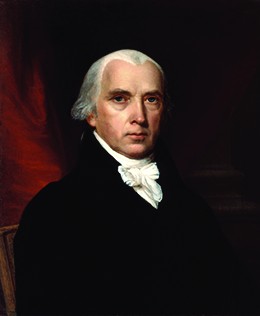
James Madison introduced his proposed constitutional amendments in the House of Representatives on June 8, 1789, less than three months after the First Congress convened. Although he had defended the Constitution during ratification without insisting upon a declaration of rights, he now treated amendments as both a political obligation and a means of strengthening the new government’s legitimacy. Several ratifying conventions had recommended protections against grand-jury-free prosecutions, double jeopardy, compelled self-incrimination, unlawful deprivation, and uncompensated appropriations of property. Madison drew heavily upon those recommendations, the revolutionary state declarations, and familiar common-law formulations. He deliberately excluded structural changes that might reopen disputes over federal power or undermine the constitutional settlement achieved in 1788. His objective was to isolate provisions capable of commanding broad support while denying Anti-Federalists an opportunity to reconstruct the government through amendment. The resulting proposal represented a calculated act of constitutional consolidation rather than a simple transcription of inherited rights.
Madison initially proposed inserting the amendments into the relevant portions of the Constitution instead of attaching them as a separate declaration. Among his additions to the limitations upon federal authority was a cluster of protections that would eventually form much of the Fifth Amendment. His draft declared that no person, except in cases of impeachment, should endure more than one trial or punishment for the same offense. It further provided that no person should be compelled to be a witness against himself or be deprived of life, liberty, or property without due process of law. When private property was necessary for public use, the owner could not be obliged to relinquish it without just compensation. Madison placed the requirement of grand-jury accusation elsewhere among his proposed criminal-procedure guarantees, making presentment or indictment an essential preliminary for crimes punishable by loss of life or limb, subject to military exceptions. The proposal contained the future amendment’s principal elements but had not yet joined them in their final sequence or wording. It also revealed their different legal ancestries: grand-jury accusation came from common-law criminal practice, protection against self-accusation from resistance to compelled examination, due process from the law-of-the-land tradition, and compensation from emerging state constitutional rules governing public necessity. Madison was not presenting a single ancient right but assembling several restraints upon the federal government’s power to investigate, prosecute, punish, and appropriate.
The House referred Madison’s proposals to a committee of eleven, which reported a revised version on July 28. Representatives eventually rejected Madison’s plan to weave the amendments into the original Constitution, accepting Roger Sherman’s argument that the document ratified by the states should remain textually intact and that alterations should appear as supplemental articles. During consideration of the self-incrimination provision, Representative John Laurance successfully moved to add the words “in any criminal case,” giving the protection a more definite relationship to criminal liability. The House otherwise discussed the clause only briefly, offering little evidence that members had reached a comprehensive agreement about its application to legislative inquiries, pretrial examinations, documentary demands, or testimony concerning the crimes of others. That sparse debate would later make the text itself, rather than an elaborate congressional explanation, the principal object of constitutional interpretation.
The Senate substantially compressed the amendments approved by the House, reducing seventeen proposed articles to twelve. Because the Senate conducted its deliberations behind closed doors and preserved no full account of its debates, the reasoning behind several consequential revisions remains uncertain. During this process, Madison’s protection against more than one trial or punishment became the prohibition against being “twice put in jeopardy of life or limb” for the same offense. The grand-jury provision was broadened from crimes punishable by loss of life or limb to “a capital, or otherwise infamous crime,” while retaining exceptions for cases arising in the land or naval forces and in the militia during war or public danger. The language requiring an owner not to be obliged to relinquish property was refined into the more direct command that private property should not be “taken for public use, without just compensation.” Grand-jury indictment, double jeopardy, self-incrimination, due process, and just compensation were then placed together in a single article, giving protections with distinct histories a permanent textual relationship. The Senate also removed the House proposal that would have prohibited states from violating certain rights of conscience, press, and criminal jury trial, leaving the amendments to restrain only the federal government. A conference committee reconciled the remaining differences, and on September 25, 1789, Congress approved twelve amendments for submission to the states.
The combined protections appeared as Article Seven in the amendments transmitted for ratification because two proposals concerning congressional apportionment and compensation preceded the substantive declarations of rights. When those first two articles failed to receive the necessary approval at that time, Article Seven became the Fifth Amendment. Virginia’s ratification on December 15, 1791, completed the required number of state approvals and placed the amendment within the Constitution. Neither Madison nor the First Congress supplied a definitive theory explaining how all five clauses should interact, and the brevity of the recorded debates cautions against attributing one precise understanding to every participant. Their achievement was institutional as much as intellectual: they transformed recommendations scattered among state declarations and ratifying conventions into enforceable language belonging to the nation’s supreme law. The amendment established that the federal government’s authority to prosecute and govern carried constitutional limits at successive stages, from accusation and trial to compelled evidence, deprivation, and appropriation. Madison initiated that synthesis, but the collective revisions of the First Congress created the durable constitutional text.
Ratification and the Constitutional Logic of Five Clauses
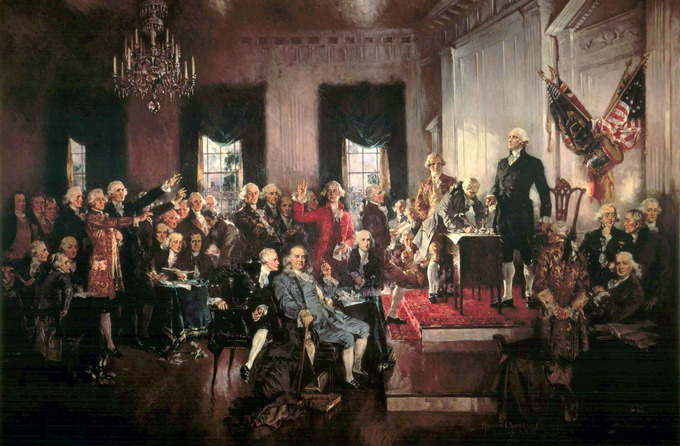
Congress submitted twelve proposed amendments to the states on September 25, 1789, but the article that became the Fifth Amendment attracted little recorded controversy during ratification. State legislatures could approve or reject each proposed article separately, and their proceedings generally reveal votes rather than sustained explanations of constitutional meaning. Public attention centered more visibly upon the broader question of whether the promised declaration of rights adequately answered Anti-Federalist objections to the new federal government. The protections collected in Article Seven were already familiar from state declarations, ratifying-convention recommendations, common-law practice, and the law-of-the-land tradition. Familiarity encouraged agreement, but it also meant that ratifiers could accept the language without sharing an exact understanding of every term. The resulting historical record supports confidence in the importance of the protections more readily than certainty about all their intended applications.
The states ratified the proposed amendments unevenly and over more than two years. New Jersey acted first in November 1789, followed by several states during the winter and spring, but the required constitutional threshold was not reached until Virginia gave its approval on December 15, 1791. Because the two proposals preceding Article Seven failed to secure the necessary number of state ratifications at that time, the article became the Fifth Amendment rather than the seventh. The process confirmed a political bargain made during the struggle over the Constitution: the new federal government would remain structurally intact, but explicit restraints would be added to the authority exercised under it. Ratification did not incorporate the amendment against the states, rewrite state criminal procedure, or establish federal judicial supervision over every claimed individual right. It bound the government created by the Constitution whose potentially expansive powers had generated the original demand for amendments. The Fifth Amendment was national in authority but initially limited in governmental reach. Its adoption marked neither the beginning of the five protections nor the completion of their development; it changed their status by placing them beyond ordinary federal legislation.
The first clause regulated the initiation of serious federal prosecutions by requiring grand-jury presentment or indictment for capital or otherwise infamous crimes, while preserving exceptions for military and militia cases arising under specified conditions. This protection placed an accusatory body between federal officials and a person exposed to grave criminal punishment. The second clause prevented the government from placing the same person twice in jeopardy of life or limb for the same offense, limiting official power after prosecution had begun rather than before it commenced. Read together, the two clauses restrained successive stages of criminal process: the government first had to obtain a legally sufficient accusation, and it could not repeatedly renew its attempt to convict after jeopardy had attached. Neither guarantee was absolute, because the text left unresolved such questions as when jeopardy began, whether a mistrial permitted another prosecution, and how closely two charges had to resemble one another to constitute the same offense.
The self-incrimination clause addressed not the formal accusation or the number of prosecutions, but the means by which the government could establish criminal liability. By declaring that no person could be compelled in a criminal case to be a witness against themselves, it repudiated the use of governmental coercion to convert the accused into an evidentiary instrument of the prosecution. Its wording did not simply constitutionalize a general freedom from questioning, nor did it explain whether the protection extended to documents, physical evidence, legislative investigations, or testimony sought in proceedings other than a criminal trial. Those boundaries would emerge through later judicial interpretation. The clause nevertheless imposed a fundamental allocation of responsibility: the government that charged an offense bore the burden of proving it without compelled testimonial self-condemnation. This principle complemented the first two clauses because all three restrained the machinery of criminal justice at different points. Grand-jury review controlled the accusation, double jeopardy controlled repetition, and the privilege controlled a method of proof. Together they prevented federal prosecutors from treating an individual merely as an object from whom accusation, conviction, and renewed prosecution could be extracted. The due process clause broadened the amendment’s field beyond the specific dangers identified in its criminal-procedure provisions. Its command that no person be deprived of life, liberty, or property without due process of law drew upon Magna Carta’s law-of-the-land tradition while employing language already familiar in American constitutional thought. Unlike the first three clauses, it was not expressly confined to criminal cases, infamous offenses, or repeated prosecutions. It announced a general condition of legitimate federal coercion: a deprivation had to proceed through law and through whatever procedures the Constitution required for the kind of governmental action involved. The clause did not define “due process,” and its ratifiers left no comprehensive catalogue of the hearings, notices, tribunals, or substantive limitations that the phrase encompassed. That indeterminacy made it simultaneously foundational and incomplete. It could reinforce the amendment’s particular criminal guarantees while also reaching governmental action involving property and civil liberty outside prosecution. Its placement near the amendment’s center gave the text a bridge between rules governing criminal adjudication and the final limitation upon the public acquisition of private property.
The Takings Clause completed the sequence by addressing an exercise of governmental power that could be lawful in purpose and procedurally regular yet still impose an exceptional burden upon an individual owner. Private property could be taken for public use, but only upon payment of just compensation. Unlike the preceding clauses, it did not prohibit the relevant governmental action outright; it accepted public appropriation while requiring the public to bear its cost. The five clauses did not express one undifferentiated right, and their combination should not be mistaken for proof that every member of the First Congress or every ratifying legislator embraced a single theory uniting them. They nevertheless possess a discernible constitutional logic. Each begins from the vulnerability of the “person” confronting federal power and then regulates a distinct form of coercion: accusation, repeated jeopardy, compelled testimony, deprivation, or appropriation. The amendment moves from precise rules of criminal procedure to more general protections of life, liberty, and property, recognizing both actions government may not take and burdens it may impose only under constitutional conditions. Ratification made that layered structure part of the nation’s supreme law, leaving later generations to determine how five historically distinct restraints would operate as one constitutional text.
A Federal Protection in the Early Republic
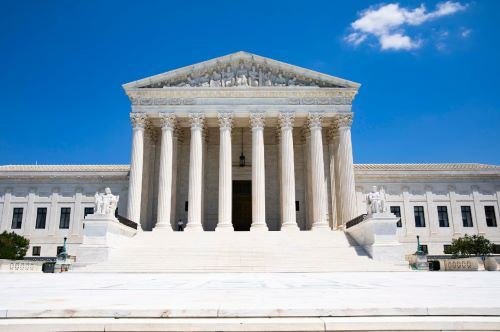
Ratification transformed the Fifth Amendment into binding law, but it did not provide federal courts with a comprehensive code explaining how its protections should operate. The Judiciary Act of 1789 established district and circuit courts whose judges, lawyers, marshals, and jurors relied heavily upon inherited common-law practices and locally familiar procedures. Congress’s Crimes Act of 1790 defined offenses such as treason, piracy, counterfeiting, and crimes committed within federal jurisdiction, giving the amendment an expanding field of practical application. Serious federal prosecutions ordinarily proceeded through grand-jury indictment, with locally drawn jurors evaluating accusations before defendants faced trial. Grand juries could refuse charges, initiate presentments upon their own knowledge, or assist officials in enforcing national law, making them both potential restraints upon prosecutors and instruments of prosecution. The politically charged trials conducted under the Sedition Act of 1798 demonstrated the limits of procedural protection: federal officials could obtain indictments, conduct jury trials, and observe formal constitutional requirements while still using criminal law in ways opponents regarded as partisan and repressive.
The self-incrimination clause initially operated within a legal system very different from one governed by modern interrogation rules. Criminal defendants generally remained incompetent to testify under oath, although they could address the court and jury through unsworn statements, leaving the privilege most visibly contested when witnesses were ordered to answer potentially incriminating questions. In Marbury v. Madison in 1803, Attorney General Levi Lincoln objected to questions concerning events that had occurred while he temporarily supervised the Department of State. Chief Justice John Marshall distinguished confidential governmental matters from personal exposure and stated that Lincoln was not obliged to disclose anything that might incriminate him. The 1807 prosecution of Aaron Burr produced a more sustained confrontation when Burr’s secretary, Charles Willie, refused to say whether he understood the cipher used in an allegedly incriminating letter. Marshall ruled that Willie had to answer that preliminary question because acknowledging knowledge of the cipher would not by itself expose him to prosecution, although the witness could object if subsequent questions threatened self-incrimination. The ruling treated the privilege as extending beyond defendants to witnesses while also assigning judges responsibility for deciding whether a feared danger was sufficiently real. These early disputes reveal a protection already recognized as applicable during judicial inquiry but still dependent upon common-law reasoning, question-by-question adjudication, and a procedural world without modern warnings, exclusionary doctrines, or a general law of custodial interrogation.
The double-jeopardy clause received its most enduring early interpretation in United States v. Perez in 1824. Perez faced a capital prosecution for piracy, but the jury could not agree upon a verdict and was discharged without his consent. When the government sought another trial, Marshall held that the first proceeding did not create an absolute constitutional bar. Courts could discharge a jury whenever “manifest necessity” required it or when the ends of public justice would otherwise be defeated. The decision protected final acquittals and convictions while recognizing that an inconclusive trial, particularly one ending with a genuinely deadlocked jury, need not grant permanent immunity from prosecution.
The amendment’s due-process and takings clauses generated far less developed doctrine during the same period. Federal administration remained comparatively small, and many disputes over property, punishment, debt, and civil procedure arose under state law rather than through direct exercises of national power. In Bank of Columbia v. Okely in 1819, the Supreme Court considered a summary debt-collection remedy created under Maryland law and continued within the District of Columbia, examining it through Maryland’s law-of-the-land guarantee rather than squarely defining the Fifth Amendment’s Due Process Clause. The Court upheld the remedy because the debtor had voluntarily accepted it and retained an opportunity to contest the debt before a jury, while describing law-of-the-land protections as safeguards against arbitrary governmental action unconstrained by established principles of private right and justice. The case suggested an emerging relationship among due process, settled legal procedure, individual consent, and protection against arbitrary power, but it did not produce a comprehensive federal doctrine. The Takings Clause remained similarly underdeveloped because the national government frequently acquired land through purchase, relied upon state condemnation mechanisms, or exercised authority most directly within federal territories. Its original force was strongest against physical appropriations of private property, whereas the modern category of regulatory takings had not yet emerged.
The clearest early statement about the Fifth Amendment’s reach came through a case in which the claimed protection failed. In Barron v. Baltimore in 1833, wharf owner John Barron alleged that municipal street construction had diverted streams and deposited sediment near his property, making the water too shallow for profitable use. He argued that the resulting damage amounted to a taking of private property without the compensation required by the Fifth Amendment. Writing for a unanimous Supreme Court, Marshall concluded that the Bill of Rights restricted only the federal government and did not govern states or their municipalities. The Constitution had created a national government and imposed limitations upon the powers granted to that government, while each state constitution separately determined the restraints applicable to state authority. Residents seeking protection from state deprivations had to rely upon state constitutions, state declarations of rights, statutes, and common-law remedies. The ruling confirmed that the Fifth Amendment was genuinely federal in two senses: it possessed the supreme authority of the national Constitution, but it applied only when power attributable to the national government threatened the person or property involved. That boundary left most American criminal justice beyond its reach because states prosecuted the overwhelming majority of crimes. In the early republic, the amendment consequently operated less as a comprehensive national code of individual rights than as a collection of developing restraints within the comparatively narrow jurisdiction of the federal government.
Slavery and the Fifth Amendment’s Troubled Uses
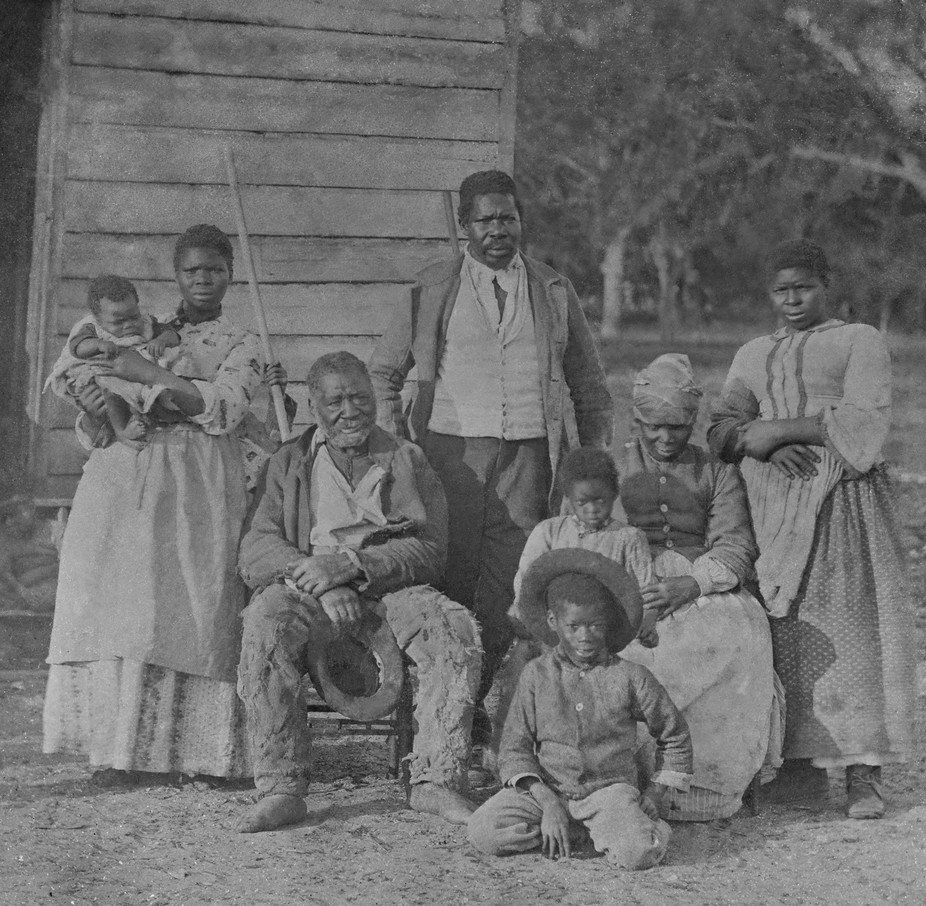
The founding Constitution had already established the political conditions under which that conflict developed. Its slavery-related provisions avoided the words “slave” and “slavery,” describing enslaved people instead as “Persons,” persons held to service or labor, and persons whose migration or importation Congress initially could not prohibit. This vocabulary acknowledged their humanity for purposes of representation, taxation, migration, and rendition without preventing state law from treating them as property. The Fifth Amendment inherited rather than resolved that dual status. Its use of “person” did not depend expressly upon citizenship, but constitutional protection required access to institutions willing to recognize and enforce the claim. Its reference to “property” similarly left the identification of protected property largely to existing law. Because Barron v. Baltimore confined the Bill of Rights to the federal government, the amendment ordinarily could not be invoked against the state statutes and local authorities responsible for maintaining slavery. Federal power nevertheless governed the District of Columbia, the territories, interstate fugitive-slave enforcement, the international slave trade, and other matters in which slavery became a national constitutional question. The Fifth Amendment consequently entered the slavery controversy most forcefully where federal authority and state-created property claims intersected.
Fugitive-slave enforcement revealed how readily constitutional procedure could be subordinated to an asserted right of ownership. The Fugitive Slave Act of 1793 allowed an owner or agent to seize an alleged fugitive and obtain a removal certificate after presenting evidence to a federal judge or state magistrate, while Prigg v. Pennsylvania in 1842 treated the federal fugitive-slave guarantee as overriding state efforts to impose additional protections. The Fugitive Slave Act of 1850 created federal commissioners, rewarded them more generously when they issued certificates of removal, and expressly denied the alleged fugitive’s testimony admission in the proceeding, provoking widespread arguments that free people as well as fugitives could be carried into slavery without meaningful due process. Although the Fifth Amendment’s reference to “person” could support demands for notice, evidence, an impartial hearing, and an opportunity to contest identity, federal constitutional doctrine generally privileged summary rendition and the slaveholder’s claim over the liberty interest of the person seized.
The most infamous conversion of the Fifth Amendment into a defense of slavery came in Dred Scott v. Sandford in 1857. Dred Scott argued that residence with his owner in Illinois and the federal territory north of the Missouri Compromise line had made him free. Chief Justice Roger B. Taney’s opinion first denied that people of African descent whose ancestors had been enslaved could belong to the political community contemplated by the Constitution and concluded that Scott could not sue as a citizen in federal court. Taney nevertheless proceeded to address Congress’s authority over slavery in the territories, despite the jurisdictional conclusion that should have ended the case. He reasoned that the Missouri Compromise’s exclusion of slavery from designated federal territory deprived slaveholders of property merely because they entered that territory and violated the Fifth Amendment’s Due Process Clause. The opinion treated ownership of enslaved people as constitutionally protected property and denied Congress the power to attach freedom to territorial residence. Justices John McLean and Benjamin Curtis rejected that reasoning, disputing both Taney’s racial theory of citizenship and his restriction of congressional territorial authority. The decision transformed due process from a potential safeguard against enslavement into a substantive limitation upon federal antislavery legislation, showing how a provision framed as a restraint upon coercive government could be interpreted to preserve one person’s dominion over another.
Civil War emancipation forced the government to confront slaveholders’ property arguments more directly. The District of Columbia Compensated Emancipation Act of 1862 freed enslaved people in the national capital while paying loyal claimants for their asserted losses, combining liberation with continued recognition that ownership deserved compensation. Congress considered broader compensated-emancipation plans for loyal slave states, while the Confiscation Acts and the Emancipation Proclamation increasingly treated the destruction of slavery in rebellious areas as an exercise of war power rather than an ordinary compensated taking. These measures distinguished emancipation undertaken against an enemy’s labor system from the government’s peacetime appropriation of conventional property, but they also reflected political uncertainty about how completely constitutional property doctrine could be separated from slavery. The Thirteenth Amendment resolved the central issue by abolishing slavery throughout the United States without compensating former owners, thereby destroying the legal status upon which their Fifth Amendment claims depended.
The Fifth Amendment’s entanglement with slavery demonstrates that constitutional rights do not carry fixed moral consequences independent of the legal order interpreting them. Due process could be invoked for an alleged fugitive’s liberty, yet it could also be used in Dred Scott to protect the slaveholder’s control. Property could designate land, goods, and economic security, but antebellum law allowed the category to absorb human beings and then present their liberation as a constitutional injury to owners. It would be misleading to describe the Fifth Amendment as exclusively proslavery, since its clauses were not drafted solely or principally to preserve slavery and its language contained principles capable of challenging arbitrary detention and coerced removal. It would be equally misleading to detach the amendment from the society that ratified it, where racial exclusion determined whose liberty received protection and whose property claims commanded official respect. The antebellum record exposes a central weakness of formally general constitutional language: when the underlying legal system defines domination as ownership, a guarantee against deprivation of property can fortify domination unless another constitutional principle repudiates the definition itself. Only the abolition of slavery removed human beings from the nation’s constitutionally cognizable categories of property, allowing the Fifth Amendment’s protection of persons and property to operate without that particular contradiction.
Reconstruction and the Uneven Nationalization of Fifth Amendment Rights

The abolition of slavery removed human beings from the category of constitutionally protected property, but it did not ensure that state governments would respect the life, liberty, or property of the newly freed. Southern legislatures enacted Black Codes that restricted movement, employment, contracting, property ownership, and access to courts, while local officials used criminal law and coercive labor arrangements to preserve much of slavery’s social order. Because Barron v. Baltimore had confined the Bill of Rights to the federal government, the Fifth Amendment offered no direct remedy when a state or municipality deprived a person of liberty without adequate procedure. Reconstruction presented a constitutional problem larger than emancipation: the nation needed a means of restraining state governments whose laws and institutions had become principal instruments of racial subordination. The answer would draw upon the language and principles of the Fifth Amendment without simply extending that amendment, clause by clause, across the states.
Congress first attempted to protect national citizenship through the Civil Rights Act of 1866, which declared that citizens of every race possessed the same rights to make contracts, sue, testify, inherit, purchase property, and receive the benefit of laws protecting persons and property. Doubts about Congress’s authority to enact the statute, together with fears that a future Congress might repeal it, strengthened the demand for a constitutional amendment. Section 1 of the Fourteenth Amendment established national and state citizenship, prohibited states from abridging the privileges or immunities of United States citizens, and forbade any state to deprive any person of life, liberty, or property without due process of law. It also required equal protection of the laws, adding a principle with no direct counterpart in the Fifth Amendment as originally written. The Due Process Clause deliberately repeated the Fifth Amendment’s central language while changing the governmental actor from the federal government to the states. Its protection extended to every “person,” not merely to citizens, whereas the Privileges or Immunities Clause expressly protected citizens of the United States. Representative John Bingham, the principal author of Section 1, repeatedly described the amendment as a means of empowering the nation to enforce fundamental constitutional guarantees against state action. Yet the congressional debates did not produce one uncontested explanation of whether every provision in the first eight amendments would become directly applicable to the states, whether only fundamental rights would receive protection, or whether the Privileges or Immunities and Due Process Clauses would perform different parts of that work. Ratification in 1868 created the constitutional possibility of national protection, but it left the mechanism and extent of that protection open to judicial construction.
The Supreme Court sharply narrowed one possible route in the Slaughter-House Cases of 1873. New Orleans butchers argued that a state-created slaughterhouse monopoly violated the Privileges or Immunities Clause, but the Court held that the clause protected only a limited set of rights arising from national citizenship rather than the broad body of civil rights traditionally regulated by states. The majority did not definitively decide the application of every Bill of Rights guarantee, yet its restrictive interpretation made the clause an inhospitable foundation for incorporating those guarantees against the states. Justices Stephen Field, Joseph Bradley, and Noah Swayne dissented, warning that the decision stripped the Reconstruction Amendment of much of its capacity to protect fundamental rights from hostile state legislation.
The Court consequently developed the Fourteenth Amendment’s Due Process Clause as the principal route through which selected protections associated with the Fifth Amendment could constrain state governments. That development began unevenly. In Hurtado v. California in 1884, the Court upheld a murder prosecution initiated by an information filed by a prosecutor rather than by grand-jury indictment. It rejected the argument that every procedure required by the federal Bill of Rights necessarily belonged to the “due process of law” demanded of the states. Due process could encompass lawful procedures that differed from those specified for federal prosecutions, provided that they preserved fundamental principles of justice. In Chicago, Burlington and Quincy Railroad Co. v. Chicago in 1897, the Court held that a state could not take private property without providing just compensation consistent with due process, effectively making the substance of the Fifth Amendment’s Takings Clause applicable to state and local action. The contrast with Hurtado was decisive: one Fifth Amendment protection became a national minimum, while another remained exclusively federal. In Twining v. New Jersey in 1908, the Court acknowledged that some protections in the Bill of Rights might be fundamental enough to bind the states through due process, but it concluded that the privilege against self-incrimination did not then meet that standard. Nationalization proceeded through judicial selection rather than wholesale constitutional transfer.
The Court’s selective approach continued well into the twentieth century. In Palko v. Connecticut in 1937, it held that the protection against double jeopardy was not indispensable to the “very essence of a scheme of ordered liberty” and did not bind the states. That conclusion lasted until Benton v. Maryland in 1969, when the Court overruled Palko and held the Double Jeopardy Clause applicable to state prosecutions. The privilege against self-incrimination followed a similar path: Malloy v. Hogan in 1964 rejected Twining and required states to honor the same constitutional privilege governing federal proceedings. The grand-jury requirement remained the conspicuous exception, for Hurtado continued to permit states to initiate serious criminal prosecutions without a federal-style indictment. Meanwhile, the Fourteenth Amendment’s own Due Process Clause restrained state deprivations directly rather than through incorporation of the Fifth Amendment’s identically worded clause.
This doctrinal unevenness had enormous practical consequences because state and local governments conducted most criminal prosecutions, policing, imprisonment, and property regulation. During Reconstruction, Black Americans confronted discriminatory arrests, coerced labor contracts, racially exclusionary juries, mob violence, and official complicity that formal constitutional language did not automatically overcome. Decisions such as United States v. Cruikshank and the Civil Rights Cases restricted federal power by emphasizing state action and limiting congressional authority over private violence and discrimination. Other rulings, including Strauder v. West Virginia, used the Equal Protection Clause to invalidate racial exclusion from juries, demonstrating that the national defense of criminal justice rights did not depend upon the Fifth Amendment alone. Reconstruction altered the amendment’s constitutional world more profoundly than its text: principles once directed solely against federal power became possible standards for evaluating state action through the Fourteenth Amendment. Yet the Supreme Court determined separately which principles were fundamental, producing a patchwork in which compensation for takings received national protection before self-incrimination and double jeopardy, while grand-jury indictment never did. The Fourteenth Amendment nationalized most Fifth Amendment rights, but Reconstruction’s promise emerged through a prolonged and contested process rather than a single act of incorporation.
The Grand Jury: Popular Shield or Prosecutorial Instrument?
The grand jury entered American constitutional law carrying two identities that had developed across centuries. Its distant medieval predecessors were summoned to report crimes and identify suspected offenders, making accusation rather than protection their original function. As English criminal procedure evolved, grand jurors acquired the capacity to refuse charges sought by the Crown, and celebrated refusals in politically sensitive cases helped transform an investigative body into a symbol of resistance to arbitrary prosecution. Colonial grand juries performed an even wider range of tasks, inspecting roads and public buildings, reporting local misconduct, issuing presentments, and evaluating accusations submitted by officials. Two New York grand juries refused to indict printer John Peter Zenger for seditious libel in the 1730s, although authorities circumvented them by proceeding through an information. Revolutionary-era grand juries likewise sometimes resisted imperial enforcement while presenting Loyalists and other perceived enemies of the revolutionary cause. The founding generation consequently inherited neither a purely defensive institution nor a passive charging panel, but a body through which members of the community could both assist and restrain governmental power.
The Fifth Amendment constitutionalized the grand jury’s screening function by requiring a presentment or indictment before a person could be held to answer for a federal capital or otherwise infamous crime. In Mackin v. United States, the Supreme Court associated an “infamous” offense principally with the character of the authorized punishment, particularly imprisonment in a penitentiary, rather than with the prosecutor’s description of the crime. The clause expressly excludes cases arising in the land or naval forces and in the militia when actually serving during war or public danger. It does not require grand-jury approval for ordinary misdemeanors or permit a defendant to insist upon indictment when the Constitution does not demand one. Nor does it govern state prosecutions, because Hurtado v. California held that the Fourteenth Amendment allowed a state to prosecute a serious crime upon a prosecutor’s information accompanied by other procedures satisfying due process. Federal law nevertheless treats the grand jury as indispensable when the constitutional clause applies, and a defendant cannot waive indictment unless the charged offense is noncapital and the waiver complies with prescribed safeguards. Under Rule 6 of the Federal Rules of Criminal Procedure, a federal grand jury consists of sixteen to twenty-three members, and at least twelve must concur before it may return an indictment. Prosecutors present witnesses, evidence, proposed charges, and legal instructions, but the grand jurors deliberate and vote without prosecutors or judges in the room. The constitutional design reserves the ultimate accusatory decision to citizens even though government lawyers organize nearly everything preceding that decision.
Several features of grand-jury practice preserve a meaningful shield against unfounded public accusation. Secrecy protects witnesses from intimidation, reduces the risk that suspects will flee or destroy evidence, insulates jurors from outside pressure, and guards the reputation of a person whom the grand jury declines to indict. A “no bill” can prevent the government from carrying a proposed felony charge into federal court, while jurors may request additional evidence, question witnesses, or reject the prosecutor’s interpretation of the case. The shield depends upon the grand jury’s legitimate representation of the community rather than merely its formal existence. The historical exclusion of Black citizens and other disfavored groups allowed supposedly popular bodies to reproduce local hierarchies, particularly when grand juries accused members of subordinated communities or declined to act against officials and private citizens who injured them. Decisions invalidating racially discriminatory grand-jury selection recognized that exclusion damages both the accused and the authority of the justice system. Popular participation can restrain prosecution only when the public permitted to participate is not defined by race, sex, wealth, or political loyalty.
The same procedures that preserve secrecy and investigative flexibility also make the grand jury extraordinarily dependent upon the prosecutor. Its subpoena power can compel witnesses to appear and produce documents, while witnesses who invoke the privilege against self-incrimination may sometimes be required to testify after receiving legally sufficient immunity. The ordinary rules governing admissibility at trial do not control grand-jury proceedings. In Costello v. United States, the Supreme Court upheld an indictment founded entirely upon hearsay and refused to authorize preliminary trials into the competence or adequacy of the evidence considered by grand jurors. United States v. Calandra held that the exclusionary rule ordinarily does not prevent a grand jury from questioning a witness on the basis of unlawfully seized evidence. In United States v. Williams, the Court further concluded that federal judges could not dismiss an otherwise valid indictment merely because the prosecutor had failed to present substantial exculpatory evidence. The suspect normally has no right to appear, present witnesses, cross-examine adverse testimony, or have counsel present inside the grand-jury room, although a witness may leave temporarily to consult an attorney. Prosecutors generally decide which witnesses will be heard, what documentary evidence will be introduced, how the law will be explained, and how the proposed indictment will be worded. Even a refusal to indict may be presented to another grand jury because jeopardy has not attached before a trial begins. These asymmetries permit the grand jury’s investigative authority to magnify prosecutorial power more readily than its screening authority limits it.
It would nevertheless be inaccurate to describe the federal grand jury as nothing more than an administrative subdivision of the Department of Justice. In Williams, the Supreme Court characterized it as a constitutional institution belonging to none of the three branches and serving as a buffer between government and the people. Grand jurors possess the legal authority to refuse a charge despite strong prosecutorial pressure, and secrecy allows them to deliberate without having to justify that refusal publicly. Their independence becomes most visible in exceptional cases involving politically unpopular laws, official misconduct, or community distrust of the government’s account. Yet the rarity and unpredictability of such resistance cannot by themselves prove that the institution consistently performs its protective function. When grand jurors receive their evidence and law almost entirely from one advocate, formal independence may coexist with practical dependence.
The grand jury is both a popular shield and a prosecutorial instrument, but the balance between those functions is produced by procedure rather than guaranteed by its constitutional name. Its protective force is greatest when jurors understand their independence, represent the full community, receive accurate legal instructions, and encounter enough evidence to assess the proposed accusation critically. Its instrumental character dominates when secrecy conceals one-sided presentations, targets cannot answer allegations, and judicial review extends only to a narrow range of structural or prejudicial errors. Proposed reforms have consequently included requiring presentation of substantial exculpatory evidence, recording and disclosing legal instructions, allowing targets a qualified opportunity to testify, restricting repeated submissions after a refusal to indict, and providing grand jurors with advice independent of the prosecutor. Each proposal carries costs, since turning the grand jury into a miniature adversarial trial could slow investigations, expose witnesses, and weaken the secrecy that also protects innocent people. Abolition would remove prosecutorial control over the institution but also eliminate the constitutional requirement that citizens authorize serious federal charges. The deeper problem is not that the grand jury lacks all power, but that its substantial powers are usually activated and directed by the official it was expected to check. The Fifth Amendment preserves a community veto over federal prosecution, yet it does not ensure that the community receives what it needs to exercise that veto independently.
Double Jeopardy and the Government’s Demand for Finality

Once a grand jury authorizes an accusation, the Double Jeopardy Clause limits the number of opportunities the government receives to convert that accusation into punishment. English common law had recognized the pleas of autrefois acquit and autrefois convict, through which a defendant could show that an earlier acquittal or conviction barred another prosecution for the same offense. The Fifth Amendment transformed that inherited principle into a constitutional prohibition against placing any person “twice in jeopardy of life or limb.” American courts did not confine the guarantee literally to capital cases or corporal punishments, but understood it to protect against repeated prosecution and unauthorized multiple punishment for the same offense. The protection rests partly upon the finality of judgments, but its deeper concern is the unequal contest between an individual and a government possessing extensive investigative, financial, and coercive resources. Repeated trials would allow prosecutors to refine their case, exhaust the accused, increase the cost of resistance, and continue until one jury finally convicted. Yet the constitutional rule also had to accommodate the government’s demand for a conclusive adjudication when the first proceeding ended without a valid determination of guilt or innocence.
The point at which jeopardy begins is critical. In a jury trial, it attaches when the jury is empaneled and sworn; in a bench trial, it begins when the court starts receiving evidence. A deadlocked jury does not necessarily terminate the government’s authority to prosecute, because United States v. Perez established that a court may declare a mistrial when “manifest necessity” requires it. Retrial is also ordinarily permitted when the defendant requests a mistrial, although Oregon v. Kennedy recognized an exception when prosecutorial misconduct was intended specifically to provoke that request. These rules preserve the accused’s interest in having the chosen tribunal complete the case while acknowledging that accident, juror incapacity, procedural collapse, or genuine deadlock may prevent the first trial from producing a legitimate result.
Final acquittals receive substantially stronger protection than inconclusive proceedings. In United States v. Ball, the Supreme Court held that an acquitted defendant could not be retried even though the indictment had been defective, while codefendants whose convictions were reversed could face another trial. Fong Foo v. United States extended that principle to an acquittal entered improperly before the prosecution had finished presenting its evidence. The Court later confirmed in Evans v. Michigan that an acquittal remained final even when the trial judge had mistakenly required the prosecution to prove an element that the offense did not contain. What matters is whether the ruling resolved criminal culpability, not whether the judge’s reasoning was correct. The government may sometimes appeal a ruling entered after a guilty verdict when success would simply restore that verdict without requiring another trial, as United States v. Wilson demonstrated. It may not appeal an acquittal when reversal would expose the defendant to renewed fact-finding concerning guilt. The corresponding rule for defendants is deliberately asymmetrical: a defendant who overturns a conviction because of trial error ordinarily may be retried, but Burks v. United States held that a reversal for legally insufficient evidence is equivalent to an acquittal and ends the prosecution. Green v. United States similarly treated conviction of a lesser offense as an implied acquittal of a greater charge when the jury had received both options but convicted only on the lesser one. Constitutional finality attaches most powerfully to a determination that the government failed to establish guilt, even when that determination resulted from legal error.
Determining what constitutes the “same offense” has proved far less protective than the rule against retrying an acquitted defendant. Under Blockburger v. United States, two statutory crimes are ordinarily distinct when each requires proof of an element that the other does not, even if both charges arise from a single act or transaction. Brown v. Ohio applied the rule to prohibit successive prosecution of a greater offense and its lesser-included offense, while Ashe v. Swenson prevented the government from relitigating an ultimate factual issue that a prior acquittal had necessarily resolved. In multiple-punishment cases, legislative intent assumes special importance: Missouri v. Hunter permitted cumulative sentences imposed in one proceeding when the legislature had clearly authorized punishment under separate statutes.
The dual-sovereignty doctrine creates an even larger qualification because state and federal governments derive authority from different sources and may define the same conduct as separate offenses against each sovereign. The Supreme Court reaffirmed that doctrine in Gamble v. United States, allowing a federal prosecution following a state conviction arising from the same possession of a firearm. Although statutes, state constitutional provisions, and prosecutorial policies may discourage such successive cases, the Fifth Amendment itself does not generally prohibit them. The clause promises finality for an offense as legally defined, not complete immunity from every charge another legislature can construct from the same conduct.
Double-jeopardy law reflects a constitutional compromise between finality and public adjudication, but it does not weigh those interests equally at every stage. The government is entitled to one fair and complete opportunity to prove its charge, not an unlimited series of attempts and not a guarantee that its first trial will be free of every prosecutorial or judicial mistake. A hung jury, a defendant-requested mistrial, or reversal for procedural error may preserve the prosecution because none necessarily establishes that the accused should have been acquitted. Once a tribunal resolves guilt in the defendant’s favor, the government’s dissatisfaction cannot ordinarily reopen the question. That asymmetry recognizes that an erroneous acquittal leaves one alleged offender unpunished, whereas repeated exposure to prosecution would weaken the security of every person who had once been cleared. Finality is consequently not a neutral administrative preference shared identically by prosecution and defense. The finality of an acquittal protects liberty against official persistence, while the finality of a conviction remains subject to appellate correction and other forms of legal review sought by the condemned. By forcing the government to accept most judgments of innocence while granting limited opportunities to complete interrupted or defective proceedings, the Double Jeopardy Clause makes prosecutorial power finite without making every failed trial irrevocable.
Self-Incrimination Beyond the Defendant’s Trial

The Fifth Amendment’s reference to compulsion “in any criminal case” might suggest a protection limited to defendants testifying at their own trials, but the Supreme Court has interpreted the privilege more broadly. Its protection can arise whenever the government seeks testimonial communication that could furnish evidence for a present or future criminal prosecution. A person may invoke it before a grand jury, congressional committee, administrative agency, civil court, or other official tribunal, even when the immediate proceeding is not criminal. The controlling danger is not the label attached to the proceeding but whether an answer could reasonably contribute to the person’s prosecution. In McCarthy v. Arndstein, the Court confirmed that a witness in bankruptcy proceedings could claim the privilege because testimony demanded in a civil setting might expose him to criminal liability. The clause protects witnesses as well as defendants, preventing government from escaping the constitutional restriction by compelling incriminating testimony outside the courtroom in which it ultimately intends to use that testimony.
Grand-jury proceedings demonstrate both the breadth and the procedural limits of this protection. A subpoenaed witness ordinarily must appear, take the oath, and invoke the privilege to particular questions rather than refusing categorically to participate. Under Hoffman v. United States, an answer need not constitute a complete confession; it is protected when it might supply a link in the chain of evidence leading to prosecution. Judges determine whether the feared danger is sufficiently real, but they must consider the implications of the question in its factual setting rather than require the witness to explain the risk so fully that the explanation itself becomes incriminating. Government may overcome a valid claim by granting immunity that replaces the protection otherwise supplied by silence. In Counselman v. Hitchcock, the Court rejected an immunity statute that failed to protect the witness adequately from derivative prosecutorial use, while Brown v. Walker upheld a broader form of transactional immunity. Kastigar v. United States later held that immunity from the use and derivative use of compelled testimony is constitutionally sufficient even if it does not prohibit prosecution altogether. Once such immunity is granted, the witness may be held in contempt for refusing to answer, but the prosecution bears the burden of proving that any later evidence came from legitimate sources wholly independent of the compelled testimony. Murphy v. Waterfront Commission further prevented state and federal governments from circumventing the privilege through one another, ensuring that testimony compelled by one sovereign could not be used by another. Congressional committees and administrative investigators must likewise respect the privilege, although disputes over invocation, waiver, immunity, and contempt have repeatedly exposed witnesses to substantial legal danger.
Civil litigation presents a different balance because the privilege may block compelled testimony without shielding the claimant from every practical consequence of silence. A party may refuse to answer interrogatories, deposition questions, or courtroom inquiries that create a genuine risk of criminal prosecution, especially when civil and criminal investigations concern the same conduct. The Constitution does not necessarily require the civil proceeding to stop until the criminal danger passes, leaving courts to balance fairness, delay, prejudice, and the public interest. In Baxter v. Palmigiano, the Supreme Court permitted adverse inferences from silence in a civil prison-disciplinary proceeding, distinguishing such consequences from the prosecution’s prohibited use of a defendant’s silence as substantive evidence of guilt at a criminal trial. Yet government may not deliberately manufacture coercion by forcing a person to surrender either the privilege or an important public benefit. Garrity v. New Jersey made statements obtained from public employees under threat of dismissal unusable in criminal proceedings, while Lefkowitz v. Turley rejected governmental efforts to compel potentially incriminating answers by threatening the loss of public contracts. These doctrines distinguish an evidentiary consequence within civil adjudication from an official penalty specifically designed to make assertion of the privilege prohibitively costly.
The privilege also depends upon what government compels, not merely where the demand occurs. Schmerber v. California distinguished testimonial communication from physical evidence, allowing compelled extraction and analysis of a blood sample because the procedure did not force the suspect to disclose knowledge or communicate an assertion of fact. Fingerprints, photographs, voice exemplars, handwriting samples, and participation in identification procedures generally fall outside the privilege for the same reason, even though they may be powerfully incriminating. Documents require a more intricate distinction between their contents and the act of producing them. Under Fisher v. United States, voluntarily created records do not ordinarily become privileged merely because their contents are incriminating, since government did not compel their original creation. Producing them may nevertheless communicate that the records exist, are authentic, and are possessed or controlled by the person responding to the demand. United States v. Hubbell protected an act of production that required extensive use of the respondent’s knowledge to identify and assemble responsive materials, preventing prosecutors from making derivative use of the resulting disclosures. The collective-entity doctrine creates a major exception: corporations possess no Fifth Amendment privilege, and custodians generally cannot withhold corporate records on the ground that producing them would incriminate the custodian personally. In Braswell v. United States, the Court required a corporate representative to produce such records while limiting the government’s ability to characterize the representative’s individual act of production as personal evidence against him.
Beyond the defendant’s trial, the privilege becomes less a simple right to remain silent than a system for regulating how information moves among institutions. Witnesses may be compelled to appear but protected from particular answers, immunized and ordered to testify, or subjected to civil consequences that would be impermissible in a criminal prosecution. Legislatures, grand juries, regulators, employers, and civil litigants can all generate information with criminal implications, making the protection necessary long before a prosecutor introduces evidence before a jury. Its operation nevertheless remains narrower than a general right to privacy or a universal freedom from governmental demands. It protects compelled testimonial self-incrimination, not every compelled act, every incriminating object, or every disadvantage associated with refusing to speak. The distinction can appear formalistic because a document, blood sample, corporate record, or physical characteristic may reveal more than an oral answer while receiving less constitutional protection. Yet the distinction reflects the clause’s historical concentration upon governmental efforts to force a person to become a communicative source of evidence against themselves. By following potentially incriminating testimony across institutional boundaries, the Fifth Amendment prevents government from accomplishing indirectly (through civil process, legislative inquiry, administrative pressure, or another jurisdiction) what it could not constitutionally compel at the defendant’s criminal trial.
The Meaning of “Testimonial” Compulsion

The privilege against self-incrimination does not protect a person from becoming the source of every kind of incriminating evidence. Its constitutional language prohibits compulsion “to be a witness” against oneself, directing attention toward communication rather than toward the mere use of a person’s body, possessions, or physical characteristics. Modern doctrine asks whether government has compelled evidence, whether the compelled act is testimonial, and whether the resulting disclosure could be incriminating. Compulsion may arise through a subpoena, contempt sanction, threat of dismissal, custodial pressure, or another governmental consequence sufficiently coercive to overcome a genuinely voluntary choice. Evidence is testimonial when it requires a person to disclose knowledge, communicate an assertion of fact, or reveal the contents of the mind. The privilege applies even when the communication supplies only one evidentiary link rather than a complete admission of guilt. Much of the clause’s difficulty lies in determining when a compelled act merely displays something that exists independently and when performing that act implicitly tells the government something it did not already know.
The Supreme Court drew its foundational distinction between communication and physical evidence in Holt v. United States in 1910. Prosecutors introduced evidence that the defendant had been compelled to put on a blouse and that the garment fitted him, but the Court rejected the argument that this violated the Fifth Amendment. Justice Oliver Wendell Holmes reasoned that the privilege prohibited compelled communications rather than the use of the accused’s body as evidence. Schmerber v. California applied the distinction to the involuntary extraction of a blood sample from a driver suspected of intoxication. Because the chemical analysis revealed physical information rather than compelled testimony, the privilege did not apply, although the procedure remained subject to the Fourth Amendment’s reasonableness requirement and the Due Process Clause. The Court similarly permitted compelled participation in a lineup in United States v. Wade, handwriting exemplars in Gilbert v. California, and voice exemplars in United States v. Dionisio. Requiring a person to speak specified words may display vocal characteristics without compelling acceptance of the words’ truth, just as handwriting may reveal physical traits without forcing the writer to compose an incriminating narrative. Fingerprints, photographs, measurements, scars, tattoos, gait, appearance, and other identifying features generally fall on the physical side of the constitutional line. The government may force a suspect to exhibit characteristics that could establish identity while remaining forbidden to force that person to explain where they were, what they intended, or what they knew.
The distinction becomes unstable when bodily performance itself communicates knowledge. In Pennsylvania v. Muniz, the Court treated a drunken-driving suspect’s slurred speech and impaired physical manner as non-testimonial evidence, yet regarded his inability to calculate the date of his sixth birthday as a testimonial response because the question compelled him to use and reveal his mental faculties. Estelle v. Smith likewise held that statements elicited during a court-ordered psychiatric examination could not be used to establish future dangerousness at a capital sentencing proceeding when the defendant had not received appropriate warnings or an opportunity to consult counsel. These decisions show that words are not invariably testimonial and bodily acts are not invariably physical: what matters is whether government demands disclosure of knowledge or instead observes characteristics displayed independently of the truth of any assertion. The apparent clarity of the physical-testimonial distinction dissolves whenever an act simultaneously demonstrates capacity, control, recognition, memory, and belief.
Private papers once appeared to receive much broader Fifth Amendment protection. In Boyd v. United States in 1886, the Supreme Court treated a compulsory order for the production of an invoice as closely analogous to forcing the owner to testify against himself, joining Fourth Amendment privacy with Fifth Amendment self-incrimination. The decision reflected an older understanding that a person’s private papers embodied thought and conscience so intimately that government should not compel their surrender for use in a prosecution. During the twentieth century, the Court dismantled much of Boyd’s fusion of property, privacy, and testimony. Fisher v. United States held that the contents of voluntarily prepared documents ordinarily receive no Fifth Amendment protection because the government did not compel their creation. An incriminating diary, ledger, letter, or accounting record does not become constitutionally privileged merely because its author recorded facts that prosecutors later wish to use. Producing the document may nevertheless have testimonial significance by admitting that it exists, that it is authentic, and that the responding person possesses or controls it. United States v. Doe accordingly distinguished unprivileged business-record contents from a protected act of production that would communicate incriminating facts. Under the “foregone conclusion” doctrine associated with Fisher, production may lose its testimonial character when government already knows the documents’ existence, location, and authenticity with sufficient particularity, so that compliance adds little or nothing to its information. The doctrine places enormous weight upon what investigators knew before issuing the demand rather than simply upon what they discovered afterward.
Other rules substantially narrow the protection available for papers. Under the required-records doctrine represented by Shapiro v. United States, government may compel production of certain records maintained as part of a valid regulatory system. The collective-entity doctrine denies corporations and similar organizations a Fifth Amendment privilege, while Braswell v. United States required a corporate custodian to produce company records even when their contents might incriminate the custodian personally. United States v. Hubbell nevertheless demonstrated that a broad documentary demand can become testimonial when the recipient must use extensive knowledge to identify, locate, and assemble responsive materials, effectively guiding prosecutors through a previously unknown body of evidence.
Digital devices intensify the problem because a single phone may contain communications, photographs, financial information, location histories, credentials, and records spanning years of a person’s life. Compelling a memorized password appears testimonial when it requires disclosure of knowledge, whereas compelling a fingerprint or facial scan can resemble the collection of a physical identifier. Yet using even a biometric feature to unlock a particular device may implicitly communicate that the person possesses, controls, or can access the information within it. The Supreme Court has not supplied a comprehensive Fifth Amendment rule for compelled device decryption, leaving lower courts divided over how the testimonial and foregone-conclusion doctrines apply to passwords, biometric unlocking, and encrypted files. A distinction developed for blouses, handwriting, and paper records consequently struggles when the demanded physical act instantaneously opens an archive of thought.
The category of testimonial compulsion reflects a deliberate constitutional choice, but it also exposes the privilege’s limits. A person may be protected from stating an incriminating fact while being forced to display physical evidence that proves the same fact more convincingly. Papers may reveal intimate beliefs without protection because they were created voluntarily, while the comparatively modest act of producing them may be privileged because it communicates possession or authenticity. These results make sense if the Fifth Amendment is understood principally as a prohibition against forcing people to participate communicatively in their own prosecution rather than as a general guarantee of privacy, dignity, or evidentiary fairness. Protection for bodily integrity, unreasonable searches, access to counsel, and private information must consequently come from the Fourth, Sixth, and Fourteenth Amendments, statutes, evidentiary rules, and institutional safeguards. Even so, the testimonial limitation cannot be applied mechanically, because every compelled act occurs in a context that may transform conduct into communication. Unlocking a device, selecting responsive files, reproducing a combination, or performing a mental calculation can disclose knowledge without resembling conventional testimony from a witness stand. The enduring constitutional question is not whether government has obtained evidence from a paper or a body, but whether it has forced a person to reveal the mental relationship connecting themselves to that evidence. As technologies make bodies into keys and private records into searchable extensions of memory, the meaning of being compelled “to be a witness” grows more consequential rather than less.
Coerced Confessions and the Rise of Professional Policing

The emergence of organized urban police forces during the nineteenth century changed both the production of confessions and the constitutional problems surrounding them. Earlier constables, sheriffs, magistrates, and night watches certainly used threats and violence, but their authority was dispersed and their investigative capacities were limited. Beginning in the 1830s and 1840s, cities such as Boston, New York, and Philadelphia created permanent departments capable of arresting suspects, detaining them in police-controlled spaces, and assigning officers specifically to investigate crimes. These early departments were deeply entangled with local political machines and did not immediately possess the training or bureaucratic discipline later associated with professional policing. Nevertheless, station houses and detective bureaus placed suspects under sustained official control beyond the observation of judges, juries, families, and the public. Interrogation became a repeatable institutional practice rather than an occasional encounter between an accused person and a magistrate. As departments accumulated records, personnel, communications systems, and specialized detectives, a confession could be pursued through isolation, coordinated questioning, and prolonged detention. The modern police station thereby created a new site of testimonial compulsion that the Fifth Amendment’s courtroom-centered language had not expressly anticipated.
Nineteenth-century courts generally regulated confessions through the common-law requirement that they be voluntary. A statement induced by threats, promises, fear, or hope of advantage could be excluded because such pressures made it unreliable and because government should not profit from improper coercion. In Hopt v. Utah, the Supreme Court stated that a confession had to be freely and voluntarily made, while Bram v. United States connected involuntary confession doctrine more explicitly to the Fifth Amendment’s privilege against self-incrimination. Yet these decisions arose within federal judicial authority, and the Fifth Amendment did not directly govern the local police departments conducting most American interrogations. State courts applied divergent evidentiary standards, often examining the words used by interrogators while overlooking the larger custodial environment in which a suspect had spoken.
By the late nineteenth and early twentieth centuries, the pursuit of confessions had become associated with the “third degree,” a flexible term encompassing physical brutality, threats, deprivation, deception, exhausting questioning, and other forms of secret coercion. Suspects could be held incommunicado, denied sleep, questioned by relays of detectives, threatened with violence or prosecution of relatives, or confronted with fabricated claims that accomplices had already confessed. Beatings were particularly likely to disappear from the official record because officers could testify that a prisoner had spoken voluntarily while the injured prisoner confronted a united institutional account. The problem grew alongside the Progressive campaign to professionalize policing. Reformers such as August Vollmer advocated education, centralized records, crime laboratories, communications technology, and trained detectives as substitutes for partisan patronage and crude force. Those reforms could reduce arbitrary violence by improving investigative competence, but they also increased police capacity to isolate suspects, assemble information, and conduct psychologically informed interrogations. Administrators who measured effectiveness through arrests, cleared cases, and convictions gave detectives powerful incentives to obtain admissions, especially when forensic evidence was scarce. Professionalization contained a paradox: the same bureaucratic organization that promised lawful, scientific investigation could make coercive interrogation more systematic and institutionally defensible. The National Commission on Law Observance and Enforcement exposed the scale of the problem in its 1931 report on lawlessness in law enforcement. Commonly called the Wickersham Commission, it concluded that physical and psychological abuse remained widespread despite official denials and that courts, prosecutors, and police administrators frequently tolerated practices they publicly condemned.
The Supreme Court began subjecting state-obtained confessions to meaningful constitutional scrutiny in Brown v. Mississippi in 1936. Mississippi officers and their collaborators had brutally whipped Black defendants until they confessed to murder, and those confessions supplied the essential evidence supporting their convictions. Because the Fifth Amendment privilege had not yet been incorporated against the states, the Court relied upon the Fourteenth Amendment’s Due Process Clause to reverse the convictions. Brown established an unmistakable minimum: a state could not base a criminal judgment upon a confession extracted by physical torture. Its facts were so extreme that the decision left unresolved how constitutional law would treat coercion produced through detention, isolation, fatigue, fear, and persistent questioning rather than visible bodily injury. Police could abandon the whip without necessarily abandoning compulsion.
The Court gradually expanded due-process protection beyond cases of demonstrable physical torture. In Chambers v. Florida, Black suspects were held and questioned over several days amid intense community pressure before prolonged overnight interrogation produced confessions. The Court emphasized that psychological domination could make a statement involuntary even without proof of a final beating. Ashcraft v. Tennessee condemned a confession obtained after approximately thirty-six hours of continuous questioning under conditions the Court regarded as inherently coercive. Age, education, mental capacity, access to counsel, the duration and location of questioning, threats, deception, and the conditions of detention all became relevant under the “totality of the circumstances” test. Haley v. Ohio applied special concern to the overnight interrogation of a fifteen-year-old boy, while Payne v. Arkansas addressed a confession obtained from a vulnerable young suspect who had been isolated and threatened with mob violence. In Spano v. New York, the Court found a confession involuntary after police ignored repeated requests for counsel and used a childhood friend serving as an officer to manipulate the accused. This approach allowed judges to recognize coercion that could not be reduced to a single threat or blow, but it offered officers no precise boundary separating forceful questioning from unconstitutional pressure. Its case-by-case character also made relief depend upon judges reconstructing encounters that had occurred privately and choosing between the testimony of suspects and police.
Other doctrines attempted to constrain the custodial environment before a confession reached trial. In McNabb v. United States and Mallory v. United States, the Supreme Court excluded confessions obtained during unlawful delays in bringing federal prisoners before a magistrate. The McNabb–Mallory rule rested upon the Court’s supervisory authority over federal criminal procedure rather than upon a constitutional command binding the states, but it recognized that unreviewed detention gave interrogators opportunities for coercion. Access to an attorney offered another possible safeguard. Escobedo v. Illinois excluded an incriminating statement obtained after an investigation had focused upon a suspect in custody, police had denied his requests to consult counsel, and officers had not adequately informed him of his right to remain silent. Meanwhile, Malloy v. Hogan held in 1964 that the Fourteenth Amendment made the privilege against self-incrimination applicable to the states. Miranda v. Arizona then replaced exclusive reliance upon retrospective voluntariness review with standardized precautions for custodial interrogation. The Court reasoned that a police-dominated environment generated pressures capable of undermining free choice even when officers used no overt violence. Before questioning, police were required to inform a suspect of the right to remain silent, the possible use of statements against them, the right to an attorney, and the availability of appointed counsel for those unable to pay. A valid waiver had to be made knowingly, intelligently, and voluntarily, placing upon government the burden of demonstrating that the decision to speak followed adequate warnings. Miranda did not prohibit interrogation or equate every unwarned statement with a tortured confession. It instead treated professional custody itself as a constitutionally significant form of pressure and established procedures intended to make the suspect’s participation a recognizable choice.
Professional policing did not invent coerced confession, but it transformed its setting, frequency, and institutional power. Centralized departments could investigate crimes more effectively than the fragmented officials they replaced, yet they could also conceal coercion behind station-house walls and present resulting statements through trained, mutually supportive witnesses. Constitutional doctrine accordingly migrated from asking whether a confession appeared reliable at trial to examining how police had produced it before trial. The progression from Brown through Miranda also marked a shift from condemning exceptional brutality to regulating ordinary custodial practice. Even after warnings became familiar, disputes persisted over waiver, deception, implied coercion, vulnerable suspects, and the difference between tactical persuasion and an overborne will. Confessions remained attractive because they could resolve uncertainty, organize other evidence, encourage guilty pleas, and provide juries with an apparently direct account of guilt. The enduring problem was not simply whether police should question suspects, but whether an institution possessing control over a person’s surroundings could elicit testimony without converting custody into compulsion.
Miranda v. Arizona and the Constitutional Regulation of Interrogation

On June 13, 1966, the Supreme Court transformed the constitutional regulation of police questioning with its decision in Miranda v. Arizona. Rather than reviewing only whether a particular confession had been produced by threats, violence, or an overborne will, the Court established procedural safeguards intended to govern custodial interrogation before a suspect spoke. The decision resolved four consolidated cases (Miranda v. Arizona, Vignera v. New York, Westover v. United States, and California v. Stewart) involving defendants questioned while isolated from attorneys, relatives, and other sources of assistance. Across those cases, police had obtained incriminating statements without fully explaining that the suspects could refuse to answer or consult counsel during questioning.
Chief Justice Earl Warren’s majority opinion treated this recurring institutional setting, rather than demonstrable brutality in any single interrogation, as the central constitutional problem. The decision did not forbid officers from questioning suspects, but required them to establish that any decision to speak followed adequate notice of constitutional rights. It thereby moved the Fifth Amendment from retrospective courtroom review into the police station itself.
Ernesto Miranda’s interrogation provided the principal factual setting. Phoenix police arrested him in March 1963 during an investigation into the kidnapping and rape of an eighteen-year-old woman, placed him in a lineup, and questioned him in an interrogation room. After approximately two hours, Miranda orally confessed and signed a written statement, although officers had not informed him that he had a right to remain silent or a right to consult an attorney before and during questioning. The printed form described the confession as voluntary and asserted that Miranda understood his legal rights, but those general declarations could not substitute for rights the police had never specifically communicated. Arizona courts admitted the confession and affirmed his convictions. The Supreme Court reversed, concluding that prosecutors could not use statements obtained through custodial interrogation unless officers had employed procedures sufficient to protect the privilege against compelled self-incrimination.
The majority’s reasoning began with the character of custody. Warren defined custodial interrogation as questioning initiated after a person had been arrested or otherwise significantly deprived of freedom, distinguishing it from volunteered statements and ordinary inquiries conducted before that degree of official restraint existed. Police custody created an atmosphere in which officers controlled the location, timing, information, and psychological conditions of the encounter. Drawing upon interrogation manuals, the opinion described techniques that encouraged isolation, confidence-building, deception, minimization of moral blame, presentation of supposed evidence, and strategic manipulation of hope and fear. Such methods were less visible than the beatings condemned in Brown v. Mississippi, but they were designed to overcome resistance and obtain admissions from a person unable to leave. The Court did not declare every custodial statement involuntary under the traditional totality-of-the-circumstances test. It instead reasoned that the pressures were sufficiently pervasive to require safeguards before courts could accept a suspect’s apparent willingness to speak. This approach eliminated the need for defendants to prove overt coercion as the preliminary condition for constitutional protection. It also recognized that the privilege would offer little protection if government could compel incriminating speech in the station house and merely wait to introduce it during the subsequent criminal case. Miranda regulated the process by which police obtained testimony, not simply the evidentiary reliability of the finished confession.
The required safeguards soon became among the most recognizable formulas in American law. Before custodial questioning, officers had to inform a suspect of the right to remain silent, warn that statements could be used in court, explain the right to have an attorney present, and state that counsel would be appointed if the suspect could not afford one. The Court did not prescribe one immutable verbal script, but the warning had to communicate each essential protection effectively. If the suspect indicated a desire to remain silent, interrogation had to stop; if the suspect requested counsel, questioning could not continue in counsel’s absence under the framework established by the opinion. A suspect could waive these rights, but the waiver had to be knowing, intelligent, and voluntary. The prosecution bore a substantial burden of proving waiver and could not infer it merely from the fact that the suspect eventually answered questions after prolonged silence. Officers remained free to investigate through physical evidence, witnesses, surveillance, and other lawful means, while volunteered remarks remained admissible because they were not products of interrogation. The decision sought to preserve legitimate questioning while making the suspect’s participation depend upon an informed choice rather than ignorance of constitutional protection.
The dissenters regarded this framework as an unjustified transformation of the Constitution. Justice John Marshall Harlan argued that the Fifth Amendment had historically protected against compelled testimony through legal process, not every confession obtained through police questioning, while Justice Byron White warned that the new restrictions would prevent reliable admissions from reaching juries and allow guilty offenders to escape punishment. Justice Tom Clark favored continued reliance upon a more flexible examination of the circumstances. Their objections anticipated a political reaction that portrayed Miranda as judicial interference with crime control, and Congress responded in 1968 by enacting a statute that attempted to restore voluntariness as the principal standard for admitting federal confessions. The Supreme Court eventually held in Dickerson v. United States that Congress could not legislatively displace Miranda because its warnings rested upon a constitutional rule applicable to the states through the Fourteenth Amendment.
Police departments adapted by placing warnings on cards, forms, posters, and standardized reports, making constitutional notification part of routine arrest procedure. Miranda himself was retried without the disputed confession and convicted through other evidence, demonstrating that exclusion of an unwarned statement did not necessarily terminate a prosecution. Studies have disagreed over the decision’s precise effects upon confession and clearance rates, but the catastrophic collapse in law enforcement predicted by some critics did not occur. At the same time, routine warnings did not eliminate coercion, guarantee comprehension, or prevent suspects from waiving rights they only imperfectly understood. The apparent simplicity of the warning formula could obscure disparities in age, literacy, mental capacity, language, fear, and previous experience with police. Later decisions would create exceptions, define interrogation more narrowly, and permit waivers under circumstances that weakened some of Miranda’s original protective force. Nevertheless, the decision established a lasting constitutional principle: the legality of custodial interrogation depends not only upon the absence of physical violence but also upon whether government has respected the suspect’s informed capacity to choose silence.
Miranda’s Retrenchment and Cultural Afterlife
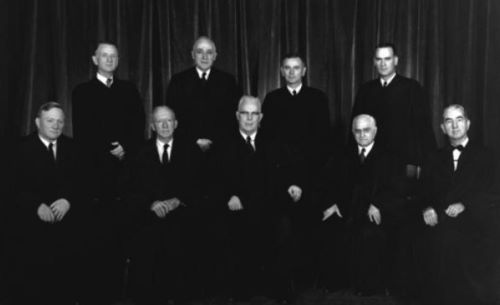
The constitutional revolution announced in Miranda v. Arizona immediately generated demands for its restriction or reversal. Critics contended that the decision released guilty suspects, imposed judicially invented procedures upon police, and transformed voluntary confessions into inadmissible evidence merely because an officer had omitted prescribed words. Richard Nixon made attacks upon the Warren Court part of his 1968 presidential campaign, connecting Miranda to broader anxieties about crime, disorder, and judicial power. Congress responded through the Omnibus Crime Control and Safe Streets Act of 1968, whose section 3501 attempted to restore voluntariness as the governing standard for confessions in federal prosecutions. The Supreme Court initially avoided deciding whether Congress could displace the warnings, while police departments adapted sufficiently well that the predicted collapse of criminal investigation never occurred. Rather than overruling Miranda directly, the Burger and Rehnquist Courts gradually narrowed its reach through restrictive definitions of custody and interrogation, permissive waiver rules, exceptions to exclusion, and limitations upon the consequences of violations.
Much of that retrenchment occurred through decisions determining when warnings were required at all. Beckwith v. United States held that an interview conducted by Internal Revenue Service agents in a taxpayer’s home was not custodial merely because the investigation had focused upon him. In Oregon v. Mathiason, a suspect who voluntarily came to a police station, was told he was not under arrest, and left after questioning was likewise deemed outside custody despite the station-house setting and an officer’s deceptive assertion that his fingerprints had been found at the scene. Rhode Island v. Innis defined interrogation as express questioning or its functional equivalent, police words or conduct they should know are reasonably likely to elicit an incriminating response. That formulation protected suspects from deliberate psychological prompting but excluded many remarks characterized as unforeseeable, indirect, or unrelated to eliciting testimony. Illinois v. Perkins permitted an undercover officer posing as an inmate to obtain statements from an incarcerated suspect because the suspect did not know he was speaking to police and did not experience the police-dominated pressure addressed by Miranda. Berkemer v. McCarty extended the warning requirement to misdemeanor arrests but held that ordinary roadside questioning during a traffic stop was generally too brief and public to constitute custody. The governing question became not whether government had deliberately sought incriminating information, but whether the encounter combined interrogation with a formally or functionally custodial restraint.
The Court also made the rights to silence and counsel easier to waive than Miranda’s emphatic language initially appeared to contemplate. North Carolina v. Butler rejected the proposition that waiver must always be express, allowing courts to infer it from a suspect’s words and conduct after adequate warnings. Michigan v. Mosley held that invocation of silence did not permanently bar renewed questioning when police had “scrupulously honored” the initial decision, waited before approaching the suspect again, administered fresh warnings, and questioned him about another crime. Requests for counsel initially received stronger protection under Edwards v. Arizona, which prohibited police-initiated interrogation after such a request unless counsel was present or the suspect reopened communication. Minnick v. Mississippi reinforced that protection by holding that a consultation with counsel did not by itself authorize police to resume interrogation without counsel present. Later decisions nevertheless required suspects to express the request with substantial clarity. Under Davis v. United States, officers need not stop questioning when a reference to counsel is ambiguous or equivocal, even though hesitation and uncertainty may be predictable consequences of custody. Berghuis v. Thompkins similarly held that prolonged silence did not invoke the right to remain silent and that a suspect who eventually answered an incriminating question could impliedly waive the right after receiving and understanding the warnings. Moran v. Burbine found a valid waiver even though police failed to tell a suspect that an attorney retained by his sister had called and was attempting to reach him, because events unknown to the suspect could not affect whether his choice was knowing. These decisions shifted much of the burden back to individuals, who had to understand formal warnings, articulate the desired protection clearly, and resist questioning without assuming that silence itself would communicate refusal.
Retrenchment also appeared in the limited consequences assigned to an unwarned statement. Harris v. New York allowed prosecutors to use a voluntary but unwarned statement to impeach a defendant who testified inconsistently at trial, reasoning that Miranda should not become a license for perjury. New York v. Quarles created a public-safety exception permitting officers to ask urgently necessary questions, such as the location of an abandoned firearm, before administering warnings. In Oregon v. Elstad, the Court held that an initial voluntary but unwarned admission did not ordinarily contaminate a later confession given after proper warnings, whereas Missouri v. Seibert restricted deliberate “question first, warn later” strategies designed to make the second confession repeat the first. United States v. Patane permitted physical evidence derived from voluntary unwarned statements because the Self-Incrimination Clause principally protects against compelled testimonial evidence introduced in a criminal case. Even the traditional voluntariness doctrine narrowed in Colorado v. Connelly, which required coercive government conduct rather than mental illness alone before a confession could be deemed constitutionally involuntary. These decisions distinguished unwarned statements from actually coerced confessions and denied Miranda violations the broad derivative-evidence exclusion often associated with unconstitutional searches.
Yet Miranda survived the sustained campaign against it, and its survival exposed an unresolved tension in its constitutional status. In Dickerson v. United States, the Court invalidated Congress’s attempt to replace the warning framework with section 3501’s voluntariness test. Writing for the majority, Chief Justice William Rehnquist, long identified with criticism of Miranda, declared that the 1966 decision had announced a constitutional rule that Congress could not supersede through ordinary legislation. He also emphasized its integration into routine police practice and American culture, concluding that the Court lacked sufficient justification to overrule a precedent that had become embedded in national life. That reaffirmation did not transform every failure to warn into an independently actionable constitutional injury. Chavez v. Martinez indicated that coercive questioning does not violate the Self-Incrimination Clause unless resulting statements are used in a criminal case, although abusive interrogation may implicate other constitutional protections. Most recently, Vega v. Tekoh held that admission of an unwarned statement does not create a claim for damages under the federal civil-rights statute simply because police failed to comply with Miranda. The warnings occupy an unusual doctrinal position: constitutionally grounded and enforceable principally through suppression, yet often described as prophylactic safeguards rather than rights whose violation produces the full range of constitutional remedies.
Outside the courts, Miranda achieved an authority more sweeping than its judicial doctrine. Police procedurals, films, novels, news reports, and televised arrests turned its warnings into a civic ritual recognizable far beyond the United States. “You have the right to remain silent” became shorthand for lawful arrest, even though warnings are required before custodial interrogation rather than at the instant police place someone under arrest. The expression “Miranda rights” entered ordinary language as if the decision had created the underlying rights instead of prescribing safeguards for protections rooted in the Fifth and Sixth Amendments. Its cultural prominence educated generations of Americans about silence and counsel, while also encouraging the mistaken belief that an arrest becomes invalid whenever officers delay or omit the familiar recitation. Familiarity with the words does not necessarily produce comprehension of their consequences, particularly among juveniles, people with cognitive impairments, nonnative speakers, and suspects frightened or exhausted by custody. Many individuals waive their rights quickly because they believe silence will appear guilty, assume innocence makes counsel unnecessary, or underestimate the interrogator’s ability to use apparently informal conversation against them. Standardized warnings can even legitimize the interrogation that follows by allowing courts, juries, and officers to treat a signed form or verbal acknowledgment as evidence of autonomous choice. Miranda’s cultural triumph has consequently coexisted with its doctrinal contraction and uncertain practical protection. It survives because police incorporated it into professional routine, courts preserved its symbolic core, and the public embraced its language as part of the constitutional identity of American criminal justice. Its afterlife demonstrates both the power and the limitation of legal ritual: a warning can make rights visible to an entire society without ensuring that every person placed alone in an interrogation room can use them effectively.
Due Process: From Required Procedure to a Broader Constitutional Restraint
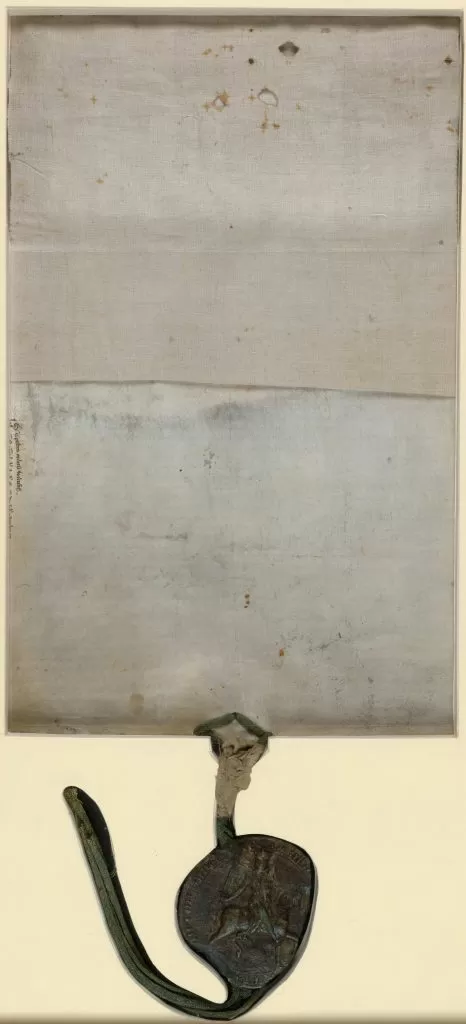
The Due Process Clause originated in a centuries-long effort to place lawful procedure between governmental power and the individual. Chapter 39 of Magna Carta declared in 1215 that no free person could be imprisoned, dispossessed, outlawed, exiled, or destroyed except by the lawful judgment of equals or by the law of the land. Although the charter initially protected a restricted political community and emerged from a struggle between King John and his barons, later generations transformed its language into a general symbol of resistance to arbitrary rule. An English statute enacted in 1354 rendered the principle as a prohibition against depriving anyone of life, liberty, land, or possessions without being brought to answer by “due process of law.” English lawyers gradually associated the phrase with indictment, notice, hearing, trial, judgment, and other established forms through which authority had to operate. Colonists carried those assumptions into British North America, where complaints against general warrants, prerogative courts, property seizures, and punishment without representative authorization strengthened the connection between legal process and political liberty. Revolutionary state constitutions frequently employed either “law of the land” or “due process” language, making lawful procedure a familiar component of American constitutionalism before the federal Bill of Rights. The Fifth Amendment brought those traditions into the national Constitution by declaring that no person could be deprived of life, liberty, or property without due process of law. Its wording did not enumerate every required safeguard, leaving courts to decide whether due process meant compliance with established procedures, adherence to fundamental principles of justice, or a deeper restriction upon what government could lawfully do.
Early American understandings generally emphasized the regularity and authority of legal procedure. Government could take liberty or property, and capital punishment remained constitutionally possible, but such deprivations had to occur through lawfully constituted institutions exercising recognized powers. In Murray’s Lessee v. Hoboken Land and Improvement Company, the Supreme Court upheld a federal summary procedure for recovering money from a customs collector while refusing to equate every procedure enacted by Congress with constitutional due process. The Court examined the Constitution, inherited English practice, and procedures accepted when the Constitution was adopted, thereby treating historical legitimacy as a limit upon legislative choice. If Congress could make any deprivation constitutional merely by labeling its chosen mechanism “process,” the clause would impose no genuine restraint. Yet a strictly historical test risked freezing eighteenth-century forms into constitutional commands and provided uncertain guidance for institutions, administrative systems, and social relationships the founding generation had never encountered.
The transformation of due process from a procedural requirement into a substantive limitation began unevenly and controversially. In Dred Scott v. Sandford, Chief Justice Roger Taney argued that congressional exclusion of slavery from federal territories deprived slaveholders of property without due process, converting a clause concerned with lawful deprivation into a restriction upon legislative policy itself. That use of due process was bound to one of the Court’s most discredited judgments, but the conceptual move survived the Civil War. The Fourteenth Amendment placed a second Due Process Clause against the states, alongside guarantees of privileges or immunities and equal protection. After The Slaughter-House Cases construed the Privileges or Immunities Clause narrowly, litigants increasingly turned to due process as the constitutional vehicle for protecting rights against state legislation. In Allgeyer v. Louisiana, the Court recognized a liberty of contract extending beyond freedom from physical restraint, and Lochner v. New York invalidated a maximum-hours law for bakers as an unjustified interference with that liberty. The resulting doctrine did not condemn all economic regulation; courts upheld some measures protecting health, safety, and vulnerable workers while striking down others they considered arbitrary or insufficiently related to legitimate public purposes. Its critics nevertheless charged that judges were converting contested economic theories into constitutional law and displacing legislation enacted through democratic institutions. The Court retreated during the constitutional transformation of the 1930s, with West Coast Hotel v. Parrish sustaining minimum-wage regulation and emphasizing government’s authority to respond to unequal bargaining power and social need. Economic legislation thereafter received highly deferential review, but the demise of Lochner-era liberty of contract did not eliminate substantive due process. It redirected the doctrine away from most economic rights and toward interests involving family, bodily autonomy, intimate relationships, and personal identity.
Due process also became the principal means by which most protections in the Bill of Rights came to bind the states. The Fifth Amendment originally restricted only the federal government, while state criminal justice remained governed primarily by state constitutions and the general requirements of the Fourteenth Amendment. In Hurtado v. California, the Supreme Court held that due process did not require states to use a grand-jury indictment in every serious criminal case, demonstrating that the Fourteenth Amendment did not automatically reproduce the first eight amendments as a complete package. During the twentieth century, the Court developed selective incorporation, asking whether particular guarantees were fundamental to ordered liberty and deeply rooted in American legal tradition. Freedom of speech, protection against unreasonable searches, the right to counsel, the privilege against self-incrimination, and protection against double jeopardy were among the guarantees eventually applied to the states. Malloy v. Hogan incorporated the self-incrimination privilege, while Benton v. Maryland did the same for double jeopardy; the federal grand-jury requirement, by contrast, remained unincorporated. Due process created a national constitutional floor without making federal and state procedure identical in every respect. The doctrine profoundly expanded federal judicial supervision of state courts, police, prisons, schools, and administrative institutions, transforming a general prohibition against unlawful deprivation into the conduit for much of modern American civil liberty.
Procedural due process simultaneously developed beyond criminal trials and traditional courts. The government increasingly affected individuals through licensing boards, regulatory commissions, welfare agencies, public schools, public employment, taxation, immigration administration, and other bureaucratic institutions whose decisions could impose grave consequences without resembling a conventional prosecution. Courts had to determine both what interests counted as life, liberty, or property and what procedures were required before government could impair them. In Board of Regents v. Roth, the Supreme Court explained that property interests could arise from statutes, contracts, regulations, or mutually understood entitlements rather than from the Constitution alone, although an abstract desire or unilateral expectation was insufficient. Once a protected interest existed, government could not avoid constitutional scrutiny simply by assigning the decision to an administrator rather than a judge. Goldberg v. Kelly required an evidentiary hearing before terminating essential welfare benefits, emphasizing the devastating effect that an erroneous interruption could have upon recipients dependent upon them for subsistence. Mathews v. Eldridge later adopted a more flexible balancing test that considered the private interest affected, the risk of error and probable value of additional safeguards, and the governmental burdens those safeguards would impose. Due process might require notice, disclosure of the case against the individual, an opportunity to respond, an impartial decision-maker, representation, confrontation of adverse evidence, a statement of reasons, or some avenue of review, but it did not demand every element of a judicial trial in every administrative setting. Timing also mattered: an urgent seizure or emergency intervention might occur before a hearing if meaningful review followed promptly, while a foreseeable and irreversible deprivation generally demanded stronger advance protection. This contextual approach allowed procedure to adapt to different institutions, yet it also made constitutional protection dependent upon judicial estimates of cost, error, urgency, and administrative efficiency. Due process became less a fixed checklist than an inquiry into whether government had respected the individual as a participant entitled to challenge an official decision before suffering an unjustified deprivation.
The broader substantive dimension of due process remained the doctrine’s most powerful and disputed development. Decisions such as Meyer v. Nebraska and Pierce v. Society of Sisters protected parental and educational choices, while Griswold v. Connecticut, Lawrence v. Texas, and Obergefell v. Hodges recognized constitutional protection for intimate decisions and relationships not expressly identified in the constitutional text. Bolling v. Sharpe also interpreted the Fifth Amendment’s Due Process Clause to prohibit racial segregation by the federal government, reasoning that profoundly unjustifiable discrimination could violate due process even though the Fifth Amendment contains no Equal Protection Clause. Courts have attempted to discipline substantive due process through competing methods: Washington v. Glucksberg demanded a carefully defined right deeply rooted in national history and tradition, whereas other decisions emphasized dignity, autonomy, evolving understandings of liberty, and the relationship among established constitutional protections. In Dobbs v. Jackson Women’s Health Organization, the Court applied a history-and-tradition analysis to abortion, overruled Roe v. Wade and Planned Parenthood v. Casey, and returned regulatory authority over abortion largely to elected governments. That judgment demonstrated both the reach and vulnerability of rights resting upon substantive due process, since their recognition can depend heavily upon how courts define the claimed liberty, select the relevant historical tradition, and reconcile precedent with democratic authority. Critics maintain that the doctrine permits judges to constitutionalize personal values, while defenders argue that a government could otherwise extinguish fundamental liberty through perfectly regular procedures. Due process consequently evolved far beyond a command to follow the correct steps: it became a guarantee of fair participation, a source of nationally protected rights, an equality principle restraining the federal government, and, within contested boundaries, a prohibition against certain deprivations no procedure can legitimate.
The Takings Clause and the Price of Public Power

The Fifth Amendment concludes with a provision unlike its prohibitions against double jeopardy, compelled self-incrimination, and deprivation without due process: private property may be taken for public use, but only upon payment of just compensation. The Takings Clause does not grant government the power of eminent domain, which was understood as an attribute of sovereignty, but places constitutional conditions upon its exercise. It acknowledges that roads, fortifications, public buildings, canals, railways, and other collective projects may require the compulsory acquisition of property while refusing to make selected owners finance those projects through uncompensated loss. Colonial legislatures and revolutionary state governments had exercised eminent-domain powers, although practices concerning compensation varied and several state constitutions protected property before 1791.
James Madison’s proposed amendment converted an emerging principle of political justice into an express restriction upon the federal government. In Barron v. Baltimore, the Supreme Court nevertheless held that the Bill of Rights did not constrain state and municipal governments, rejecting a wharf owner’s claim for damage caused by Baltimore street construction. More than six decades later, Chicago, Burlington & Quincy Railroad Co. v. Chicago treated just compensation as an element of Fourteenth Amendment due process and thereby extended federal constitutional protection against state takings. Every modern claim consequently raises four connected questions: whether the claimant possesses constitutionally recognized property, whether government has taken it, whether the taking serves a public use, and whether adequate compensation has been provided.
“Public use” might appear to require government ownership or direct access by the public, but American law has rarely maintained so narrow a boundary. Legislatures historically authorized takings for mills, drainage systems, railroads, utilities, and redevelopment projects operated partly or entirely by private parties because those enterprises were understood to serve public purposes. In Berman v. Parker, the Supreme Court upheld the acquisition of property within a comprehensive redevelopment district even though parcels would eventually pass to private developers, reasoning that public welfare could include aesthetic, economic, and community concerns. Hawaii Housing Authority v. Midkiff similarly sustained a land-redistribution program intended to dismantle an unusually concentrated ownership structure. The doctrine reached its most controversial modern expression in Kelo v. City of New London, where the Court accepted a carefully formulated economic-development plan as a public use despite the contemplated transfer of condemned homes to private owners, while reiterating that government could not employ eminent domain merely to bestow a private benefit upon a favored party. Public opposition to Kelo prompted many states to tighten their constitutions or eminent-domain statutes, demonstrating that federal doctrine establishes a minimum limitation rather than the final political judgment about permissible condemnation.
Just compensation ordinarily means the property’s fair market value at the time of the taking, the amount a willing buyer would pay a willing seller under prevailing conditions. The goal is to place the owner in approximately the same monetary position they would have occupied had the property not been taken, not to award punitive damages or a share of the project’s anticipated public benefits. United States v. Miller excluded value created solely by the government project itself, preventing either the owner or the condemning authority from manipulating compensation through increases or decreases attributable to the planned acquisition. When government takes only part of a parcel, compensation may include injury to the remainder, offset in some circumstances by special benefits produced by the improvement. Market value remains an imperfect measure because it may omit relocation costs, sentimental attachment, lost community relationships, business disruption, and other consequential injuries unless legislation provides additional payment. Constitutionally protected property also extends beyond complete ownership of land to such interests as leases, easements, liens, water rights, trade secrets, personal property, and certain accrued funds. Horne v. Department of Agriculture confirmed that personal property does not receive lesser protection merely because the government appropriates raisins rather than real estate, while Tyler v. Hennepin County held that a government could not retain the value of a tax-foreclosed home exceeding the debt owed. Physical occupation receives particularly strong protection: Loretto v. Teleprompter Manhattan CATV Corp. treated a permanent government-authorized installation as a categorical taking, and Cedar Point Nursery v. Hassid applied that principle to a regulation appropriating a recurring right of access for union organizers. The constitutional “price” of public power is calculated through legal definitions of property and value that can protect formal ownership precisely while compensating the lived consequences of dispossession only incompletely.
The more difficult cases arise when government regulates property without formally acquiring title or installing a permanent occupation. Zoning, environmental protection, rent regulation, historic preservation, public-health rules, and restrictions upon hazardous uses can substantially reduce value while remaining legitimate exercises of the police power for which no compensation is owed. In Pennsylvania Coal Co. v. Mahon, Justice Oliver Wendell Holmes Jr. announced that regulation becomes a taking when it goes “too far,” but supplied no mechanical test for locating that boundary. Penn Central Transportation Co. v. New York City subsequently established an expressly contextual inquiry emphasizing the regulation’s economic impact, its interference with reasonable investment-backed expectations, and the character of the governmental action. That framework generally considers the property as a whole rather than isolating the particular segment, development right, or period most severely affected. Lucas v. South Carolina Coastal Council recognized a categorical taking when regulation eliminates all economically beneficial use of land, unless the prohibited use was already barred by background principles of property or nuisance law. Tahoe-Sierra Preservation Council v. Tahoe Regional Planning Agency refused to treat a temporary development moratorium as a total taking merely because construction was forbidden during the regulated period. Lingle v. Chevron U.S.A. Inc. further clarified that a regulation’s failure to advance its stated purpose may support other constitutional objections but is not itself the test for whether property has been taken. A separate line of decisions governs land-use exactions: Nollan v. California Coastal Commission requires an essential nexus between a permit condition and a legitimate land-use objective, while Dolan v. City of Tigard demands rough proportionality between the condition and the proposed development’s effects. Koontz v. St. Johns River Water Management District extended this scrutiny to certain monetary demands and rejected evasion through denial of a permit after an owner refuses an unconstitutional condition. Sheetz v. County of El Dorado later held that legislatively imposed permit conditions are not categorically exempt from the Nollan–Dolan framework, preventing government from avoiding constitutional scrutiny simply by imposing an exaction through general legislation rather than an individualized administrative order.
The Takings Clause is ultimately remedial as much as prohibitory: government may pursue a lawful public project, but a compensable taking creates an obligation to pay rather than an automatic command to abandon the undertaking. First English Evangelical Lutheran Church v. County of Los Angeles recognized compensation as the appropriate remedy for the period during which a regulation actually effects a temporary taking. Knick v. Township of Scott later allowed an owner to pursue a federal takings claim once local government takes property without providing compensation, eliminating the former requirement that the owner first litigate through state compensation procedures. In DeVillier v. Texas, the Court allowed landowners alleging that a highway project had converted their property into stormwater storage to proceed through Texas’s inverse-condemnation cause of action, while leaving unresolved whether the Takings Clause itself always supplies a direct cause of action when no alternative vehicle exists. These procedural disputes matter because a constitutional promise of payment offers little protection if owners cannot obtain a forum capable of enforcing it. At its strongest, the clause embodies the principle articulated in Armstrong v. United States: burdens properly belonging to the public should not be concentrated without compensation upon a few individuals. Its critics disagree over which danger is greater, judicial expansion of property rights that obstructs democratic regulation or judicial deference that permits redevelopment, taxation, and land-use policies to impose devastating losses upon politically vulnerable owners. The Takings Clause cannot eliminate that conflict, but it forces public power to acknowledge that collective progress has costs and that constitutional government must decide openly who will bear them.
The Fifth Amendment in the Digital and Administrative Age

The Fifth Amendment entered the modern era in a world increasingly governed through compulsory records, regulatory disclosures, electronic devices, and immense stores of personal data. Its Self-Incrimination Clause still protects a person from being compelled to provide testimonial evidence that may be used against them in a criminal case, but those terms have become difficult to apply when information exists as blood chemistry, fingerprints, passwords, encrypted files, cloud accounts, or automatically generated records. In Schmerber v. California, the Supreme Court held that compelled extraction and analysis of a blood sample was not testimonial because the suspect was required to provide physical evidence rather than communicate knowledge. Similar reasoning generally permits government to compel fingerprints, handwriting exemplars, voice samples, participation in lineups, and other identifying characteristics. The distinction is not simply between words and objects because conduct can communicate facts as effectively as speech. Producing a document, unlocking a device, identifying an account, or selecting responsive files may reveal that a person knows the material exists, possesses it, controls it, and believes it authentic. Modern Fifth Amendment disputes turn less upon the medium containing information than upon whether government is compelling a person to disclose the contents of the mind. Digital technology has made that boundary both more consequential and less intuitively visible.
The act-of-production doctrine supplies the principal framework for compulsory records. In Fisher v. United States, the Court held that the contents of documents voluntarily created before a subpoena ordinarily are not compelled merely because government later demands them, but acknowledged that producing those documents can itself communicate incriminating facts. Production loses its testimonial significance when the government already knows the relevant facts with such certainty that the response adds little or nothing, the “foregone conclusion” principle. United States v. Hubbell prevented that exception from becoming unlimited by rejecting a broad demand that required the recipient to search through extensive records, identify responsive materials, and thereby furnish investigators with information they did not previously possess. A subpoena may consequently compel surrender of known evidence without compelling a suspect to construct the government’s case through memory, judgment, and disclosure.
Encryption places extraordinary pressure upon that distinction. A demand that someone state a memorized password appears testimonial because it directly requires disclosure of knowledge, but an order to enter the password without revealing it presents a more complicated communicative act. Compliance may still demonstrate that the person knows the credential, controls the device, and can access its contents. Lower courts have divided over whether the foregone-conclusion inquiry should focus narrowly upon knowledge of the password or more broadly upon the particular files government expects to find after decryption. In In re Grand Jury Subpoena Duces Tecum Dated March 25, 2011, the Eleventh Circuit protected compelled decryption where prosecutors could not establish sufficiently that the encrypted drives contained specific accessible files. Other courts, including those deciding Commonwealth v. Gelfgatt and State v. Andrews, have permitted compelled decryption or passcode production when government independently demonstrated the defendant’s knowledge and control. Seo v. State resisted using the exception to authorize a sweeping search of a smartphone whose responsive contents remained uncertain. Biometric unlocking raises another unsettled question because a face or fingerprint resembles the physical characteristics traditionally outside the privilege, yet using one to open a particular device can communicate possession, control, and authentication. The Supreme Court’s decisions in Riley v. California and Carpenter v. United States recognized under the Fourth Amendment that smartphones and historical location records expose quantities of private information unimaginable in earlier searches, but they did not decide when compelled access becomes Fifth Amendment testimony. Courts have applied doctrines developed for paper ledgers and locked containers to devices capable of preserving years of correspondence, movements, photographs, financial activity, medical information, and intimate thought. The central danger is that the foregone-conclusion doctrine, if defined too generally, could allow government to compel access whenever it knows that a device belongs to someone, even though it lacks prior knowledge of the evidence concealed within it.
The administrative state presents a parallel problem because modern government depends upon mandatory reporting and recordkeeping. Taxpayers, employers, banks, physicians, manufacturers, licensed professionals, vehicle operators, and recipients of public benefits may all be required to preserve or disclose information that later acquires criminal significance. Under the required-records doctrine associated with Shapiro v. United States, the privilege generally does not protect records maintained pursuant to a legitimate regulatory program when the reporting obligation is essentially regulatory, the records are of a kind customarily kept, and they possess public aspects connecting them to oversight. The Court nevertheless refused in Marchetti v. United States and Grosso v. United States to enforce federal gambling registration and taxation requirements against people whose compliance would have identified them as participants in conduct widely subject to criminal prosecution. Leary v. United States similarly rejected punishment based upon failure to comply with a marijuana-transfer requirement carrying a substantial risk of self-incrimination. By contrast, California v. Byers upheld a generally applicable duty requiring drivers involved in accidents to stop and identify themselves because the law served a noncriminal regulatory purpose and applied to the public at large rather than to a group inherently suspected of crime. These decisions attempt to preserve ordinary administration without permitting government to disguise an interrogation as a filing requirement.
The privilege also follows a witness beyond the criminal courtroom. A person may invoke it during a civil lawsuit, legislative inquiry, licensing proceeding, tax examination, administrative investigation, or employment hearing whenever an answer could furnish a meaningful link in a possible criminal prosecution. Government may overcome the refusal by granting immunity broad enough to replace the constitutional protection; under Kastigar v. United States, use-and-derivative-use immunity prevents prosecutors from using either the compelled testimony or evidence derived from it, although it does not confer complete immunity from prosecution. Public institutions cannot ordinarily force individuals to surrender the privilege by threatening an otherwise impermissible penalty. Garrity v. New Jersey barred the criminal use of statements obtained from police officers under threat of losing their jobs, while Spevack v. Klein protected an attorney from disbarment imposed solely for invoking the privilege. Lefkowitz v. Turley likewise prevented government from requiring contractors to waive immunity or lose eligibility for public work. These decisions distinguish compelling performance of legitimate occupational duties from demanding incriminating testimony without constitutional protection. The line remains imperfect because regulatory systems routinely attach serious consequences to noncooperation, and individuals may have difficulty determining whether an ostensibly civil inquiry could later become criminal. Baxter v. Palmigiano also permits adverse inferences from silence in many civil proceedings, even though silence alone cannot establish guilt in a criminal prosecution. An individual may possess the right not to answer while still suffering significant noncriminal consequences for exercising it.
Organizations occupy a more exposed constitutional position. Under the collective-entity doctrine, corporations and many other artificial organizations possess no Fifth Amendment privilege against producing their records, and a custodian generally cannot withhold those records by asserting personal self-incrimination. Braswell v. United States required a corporate custodian to comply with a subpoena even though his act of production might incriminate him, while limiting the government’s ability to present that act as his personal testimony. A sole proprietor may receive greater protection because the business records and the individual’s personal custody are not separated by an independent corporate identity. In an economy dominated by corporations, platforms, financial intermediaries, employers, and cloud-service providers, government can also obtain vast amounts of information from third-party record holders without compelling the investigated person to testify at all.
The digital and administrative age has produced a Fifth Amendment paradox. Individuals generate more revealing evidence than ever before, but much of it falls outside the privilege because it was created voluntarily, recorded automatically, held by an organization, or classified as physical rather than testimonial. A subpoena to an email provider, bank, cellular carrier, employer, or internet platform ordinarily compels the intermediary rather than the person whose life the records describe. Artificial intelligence and automated data analysis intensify the problem by allowing government to infer relationships, movements, intentions, and patterns from records that no individual was compelled to explain. Yet the privilege remains vital wherever government attempts to force a person to identify, assemble, authenticate, decrypt, or interpret incriminating information through the contents of the mind. Its future will depend upon whether courts treat digital access as the mere surrender of an object or recognize that opening an encrypted archive can itself communicate knowledge and control. Administrative government likewise requires courts to distinguish broadly applicable regulation from disclosure schemes that effectively target suspected wrongdoing. Neither the scale of a database nor the convenience of electronic compliance should erase the constitutional difference between discovering evidence and compelling a person to supply it. The enduring principle is not that every private fact must remain secret, but that government must build its criminal case without conscripting the accused as an unwilling witness against themselves.
Ancient Bulwark or Retrospective Constitutional Construction?
The following video from Khan Academy covers the fifth amendment:
The familiar portrayal of the Fifth Amendment presents it as the constitutional culmination of an ancient struggle between individual liberty and arbitrary power. Its protections appear to descend in an orderly line from Magna Carta, medieval maxims, English common law, colonial resistance, and the revolutionary generation. Yet the amendment was not a single inherited principle translated directly into constitutional language. It gathered five distinct protections (grand jury indictment, double jeopardy, self-incrimination, due process, and compensation for takings) whose histories developed through different institutions and addressed different dangers. Some arose from common-law criminal procedure, some from broader ideas about lawful government, and others from comparatively recent debates over property and legislative power. The amendment’s spare language concealed ambiguities that neither English precedent nor the ratification debates conclusively resolved. Historians disagree not only about what particular clauses meant in 1791 but also about whether later courts discovered their true implications or constructed new doctrines beneath the authority of inherited words. The most defensible interpretation lies between reverence and debunking: the Fifth Amendment possessed genuine historical foundations, but the unified bulwark recognized today was assembled through generations of constitutional argument.
The claim of uninterrupted antiquity is particularly difficult to sustain for the privilege against self-incrimination. Medieval canonists and common lawyers knew variations of the maxim that no person should be compelled to accuse themselves, but these principles operated within jurisdictions and procedures unlike the modern criminal trial. English defendants ordinarily could not testify under oath in felony cases, lacked a general right to counsel, and were expected to respond personally to accusations, making silence less a freely exercisable constitutional choice than one element within an accusatorial system. The struggles against the ecclesiastical ex officio oath, Star Chamber, and prerogative prosecutions during the seventeenth century gave resistance to compelled answers enormous political importance, yet scholars continue to dispute whether those conflicts created a broad common-law privilege or a narrower prohibition associated with oath-bound interrogation. When the Fifth Amendment declared that no person “shall be compelled in any criminal case to be a witness against himself,” it drew upon that inheritance without settling later questions about police interrogation, documentary production, immunity, adverse inference, corporate records, or the point at which a criminal case begins.
The remaining clauses likewise resist incorporation into a single timeless genealogy. The grand jury could protect suspects by refusing unsupported accusations, but it also served government by investigating crime, compelling witnesses, and presenting charges beyond those initially proposed by prosecutors. Double-jeopardy rules expressed an old aversion to repeated prosecution, yet English and early American practice contained uncertainties about mistrials, appeals, separate sovereigns, multiple punishments, and when jeopardy attached. Due process descended linguistically from the “law of the land,” but Magna Carta did not establish the elaborate constitutional review later associated with the phrase. Its medieval guarantees initially protected a restricted social order rather than an egalitarian population possessing nationally enforceable civil rights. The Takings Clause reflected a recognizable principle that public burdens should not be imposed upon individual owners without compensation, although neither eighteenth-century practice nor early judicial doctrine supplied a complete theory of regulatory takings. Even the amendment’s reference to “persons” coexisted with slavery, disenfranchisement, Indigenous dispossession, limited legal capacity for married women, and criminal systems stratified by race and status. Constitutional protection was universal in grammatical form but profoundly unequal in practical availability. Calling the amendment ancient can obscure these discontinuities by projecting modern conceptions of autonomy, equality, privacy, and police power backward onto legal cultures that organized rights very differently.
Much of the Fifth Amendment recognized today emerged after 1791. Barron v. Baltimore confirmed that the Bill of Rights originally restrained the federal government rather than the states, leaving most criminal justice and property disputes outside its direct reach. The Fourteenth Amendment and selective incorporation later transformed the Fifth Amendment’s protections into national standards, but that process was uneven: self-incrimination and double jeopardy became binding upon the states, while the federal grand-jury requirement did not. Decisions such as Chicago, Burlington & Quincy Railroad Co. v. Chicago, Malloy v. Hogan, and Benton v. Maryland consequently altered the amendment’s practical structure by connecting its clauses to Fourteenth Amendment due process. Modern doctrines governing custodial warnings, regulatory takings, administrative entitlements, compelled decryption, and prosecutorial remedies arose from conditions the founding generation could not have anticipated. These developments were not mere applications requiring no judicial choice; they involved decisions about which historical purposes should control, which analogies should survive technological and institutional change, and which governmental pressures counted as constitutional compulsion.
Describing this history as constitutional construction does not necessarily expose the Fifth Amendment as fraudulent or invented. Written guarantees require interpretation because their terms (“same offence,” “compelled,” “due process,” “public use,” and “just compensation”) cannot resolve every dispute without judgments about purpose, precedent, and changing institutions. Historical memory has nevertheless sometimes been simplified to legitimize contested outcomes, allowing courts and advocates to present relatively recent doctrines as commands transmitted intact from Magna Carta. The opposite error is to assume that because modern protections were not fully formed in 1791, they possess no legitimate relationship to the constitutional text. A principle can be historically rooted without having remained doctrinally unchanged, just as later construction can extend an inherited safeguard without severing it from its origin. The Fifth Amendment’s durability comes partly from this combination of continuity and reinvention: old prohibitions against arbitrary accusation, repeated prosecution, compelled confession, unlawful deprivation, and uncompensated seizure supplied a vocabulary through which later generations confronted new forms of power. Its authority depends not upon proving that medieval barons, seventeenth-century dissenters, and eighteenth-century ratifiers shared a modern constitutional consciousness, but upon showing how their narrower struggles created principles capable of further development. The amendment is both an ancient bulwark and a retrospective constitutional construction, an inheritance whose present coherence was produced through the long and disputed history of interpreting it.
Conclusion: The Government Must Make Its Own Case
The Fifth Amendment unites several constitutional protections through a common distrust of power exercised without sufficient legal justification. Government may prosecute crime, punish the convicted, regulate conduct, and acquire property for public purposes, but it must do so through institutions and procedures that recognize the individual as more than an object of administration. The grand jury requires federal prosecutors to obtain an independent accusation before placing someone on trial for a serious offense. The Double Jeopardy Clause limits repeated attempts to secure a conviction after the state has already received a fair opportunity to prove its charge. The Self-Incrimination Clause forbids compelling the accused to become the source of testimonial evidence against themselves. Due process demands lawful authority and fair procedure while also protecting certain liberties against governmental invasion regardless of the procedure employed. The Takings Clause permits public acquisition but requires the public to bear its cost through just compensation. Different histories produced these guarantees, yet each rejects the idea that official necessity alone can legitimate coercion.
Their practical force has never been uniform or complete. Grand juries often follow prosecutors, double-jeopardy doctrine permits successive proceedings in circumstances that seem inconsistent with ordinary understandings of finality, and the privilege against self-incrimination does not protect every compelled disclosure. Due process can provide essential hearings and substantive protection, but its flexibility also makes its boundaries dependent upon judicial judgment. Property owners may receive compensation for a recognized taking while remaining uncompensated for losses that constitutional doctrine classifies as ordinary regulation. The amendment is neither an absolute shield against government nor a guarantee that every exercise of state power will produce a just result.
Its history nevertheless reveals a profound change in the constitutional relationship between accusation and authority. Earlier legal systems frequently assumed that an accused person should answer, explain, confess, clear suspicion, or assist officials in discovering the truth. The Fifth Amendment gradually came to represent a different principle: suspicion does not create an obligation to help the government convert suspicion into proof. That principle survives even though the modern state can assemble evidence through surveillance, compulsory records, forensic science, digital platforms, administrative reporting, and third-party data holders on a scale unimaginable in 1791. Many of those investigative methods fall beyond the amendment because they do not compel testimonial communication from the person accused. Others remain contested because entering a password, decrypting a device, identifying files, or producing records may disclose knowledge while appearing superficially similar to surrendering physical evidence. The amendment’s future will depend partly upon whether courts attend to what compelled conduct communicates rather than merely to the technology through which it occurs. It will also depend upon whether procedural protections remain meaningful when criminal investigation merges with civil regulation, corporate recordkeeping, and automated analysis. Constitutional doctrine cannot prevent government from learning incriminating facts, but it can preserve the distinction between evidence independently discovered and testimony extracted from the mind of the accused. Without that distinction, the privilege would endure in language while disappearing wherever technological convenience made compelled assistance most valuable.
The Fifth Amendment’s deepest commitment is consequently not to silence for its own sake, nor to property, procedure, or finality considered in isolation. It is to a constitutional allocation of responsibility under which government must justify coercion, observe lawful limits, and carry the burden created by its own decisions. If officials accuse, they must establish the charge; if they fail after a fair opportunity, they ordinarily may not begin again; if they compel testimony, they must provide protection equivalent to the privilege; if they deprive, they must afford due process; and if they take property for the public, the public must pay. These commands do not make prosecution impossible or administration powerless. They make the state responsible for the methods by which it converts authority into judgment. Across more than two centuries of reinterpretation, incorporation, expansion, and contraction, that remains the amendment’s governing proposition: the government may investigate and prosecute, but it must make its own case.
Bibliography
Affiliate disclosure: Amazon links on this site are paid links. As an Amazon Associate I earn from qualifying purchases.
- “An Act to Establish the Judicial Courts of the United States.” 1789. 1 Stat. 73.
- “An Act to Facilitate the Administration of Justice in Cases of Persons Accused of Felony.” 1836. 6 & 7 Will. IV, c. 114.
- “An Act to Protect All Persons in the United States in Their Civil Rights, and Furnish the Means of Their Vindication.” 1866. 14 Stat. 27.
- “An Act for the Punishment of Certain Crimes Against the United States.” 1790. 1 Stat. 112.
- “An Act for Regulating of the Privy Council and for Taking Away the Court Commonly Called the Star Chamber.” 1641. 16 Car. I, c. 10.
- “An Act for Regulating of Trials in Cases of Treason and Misprision of Treason.” 1696. 7 & 8 Will. III, c. 3.
- “An Act for the Release of Certain Persons Held to Service or Labor in the District of Columbia.” 1862. 12 Stat. 376.
- “An Act for Repeal of a Branch of a Statute Primo Elizabethae, Concerning Commissioners for Causes Ecclesiastical.” 1641. 16 Car. I, c. 11.
- “An Act Respecting Fugitives from Justice, and Persons Escaping from the Service of Their Masters.” 1793. 1 Stat. 302.
- “An Act to Suppress Insurrection, to Punish Treason and Rebellion, to Seize and Confiscate the Property of Rebels, and for Other Purposes.” 1862. 12 Stat. 589.
- Alexander, Gregory S. “The Social-Obligation Norm in American Property Law.” Cornell Law Review 94:4 (2009), 745–820.
- Allen, Ronald J., and M. Kristin Mace. “The Self-Incrimination Clause Explained and Its Future Predicted.” Journal of Criminal Law and Criminology 94:2 (2004), 243–294.
- Allgeyer v. Louisiana. 165 U.S. 578. 1897.
- Alschuler, Albert W. “A Peculiar Privilege in Historical Perspective: The Right to Remain Silent.” Michigan Law Review 94:8 (1996), 2625–2672.
- Amar, Akhil Reed. The Bill of Rights: Creation and Reconstruction. New Haven, CT: Yale University Press, 1998.
- Armstrong v. United States. 364 U.S. 40. 1960.
- “Articles in Addition to, and Amendment of, the Constitution of the United States of America.” “Bill of Right,” 1789.
- Ashcraft v. Tennessee. 322 U.S. 143. 1944.
- Ashe v. Swenson. 397 U.S. 436. 1970.
- “Assize of Clarendon.” 1166. In English Historical Documents, 1042–1189, edited by David C. Douglas and George W. Greenaway. 2nd ed. London: Eyre Methuen, 1981.
- Baker, John H. An Introduction to English Legal History. 4th ed. Oxford: Oxford University Press, 2005.
- Bank of Columbia v. Okely. 17 U.S. (4 Wheat.) 235. 1819.
- Bank of Nova Scotia v. United States. 487 U.S. 250. 1988.
- Barnes, Thomas G. “Star Chamber Mythology.” American Journal of Legal History 5:1 (1961), 1–11.
- Barron v. Mayor and City Council of Baltimore. 32 U.S. (7 Pet.) 243. 1833.
- Baxter v. Palmigiano. 425 U.S. 308. 1976.
- Beale, Sara Sun, et.al. Grand Jury Law and Practice. 2025-2026 Edition. Eagan, MN: Thomson Reuters, 2025.
- Beattie, J. M. Crime and the Courts in England, 1660–1800. Princeton, NJ: Princeton University Press, 1986.
- Beckwith v. United States. 425 U.S. 341. 1976.
- Beeman, Richard. Plain, Honest Men: The Making of the American Constitution. New York: Random House, 2009.
- Benton v. Maryland. 395 U.S. 784. 1969.
- Berghuis v. Thompkins. 560 U.S. 370. 2010.
- Berkemer v. McCarty. 468 U.S. 420. 1984.
- Berman v. Parker. 348 U.S. 26. 1954.
- Bestor, Arthur. “State Sovereignty and Slavery: A Reinterpretation of Proslavery Constitutional Doctrine, 1846–1860.” Journal of the Illinois State Historical Society 54:3 (1961), 117–180.
- Bilder, Mary Sarah. The Transatlantic Constitution: Colonial Legal Culture and the Empire. Cambridge, MA: Harvard University Press, 2004.
- Blackstone, William. Commentaries on the Laws of England. Vol. 1. Oxford: Clarendon Press, 1765.
- Blockburger v. United States. 284 U.S. 299. 1932.
- Board of Regents v. Roth. 408 U.S. 564. 1972.
- Bolling v. Sharpe. 347 U.S. 497. 1954.
- Boyd v. United States. 116 U.S. 616. 1886.
- Braddick, Michael J. The Common Freedom of the People: John Lilburne and the English Revolution. Oxford: Oxford University Press, 2018.
- Brailsford, H. N. The Levellers and the English Revolution. Edited by Christopher Hill. Stanford, CA: Stanford University Press, 1961.
- Bram v. United States. 168 U.S. 532. 1897.
- Brandwein, Pamela. Rethinking the Judicial Settlement of Reconstruction. Cambridge: Cambridge University Press, 2011.
- Braswell v. United States. 487 U.S. 99. 1988.
- Brown v. Ohio. 432 U.S. 161. 1977.
- Brown v. Mississippi. 297 U.S. 278. 1936.
- Brown v. Walker. 161 U.S. 591. 1896.
- Burks v. United States. 437 U.S. 1. 1978.
- Cairns, David J. A. Advocacy and the Making of the Adversarial Criminal Trial, 1800–1865. Oxford: Clarendon Press, 1998.
- California v. Byers. 402 U.S. 424. 1971.
- Carpenter v. United States. 585 U.S. 296. 2018.
- Cassell, Paul G. “Miranda’s Social Costs: An Empirical Reassessment.” Northwestern University Law Review 90:2 (1996), 387–499.
- Cedar Point Nursery v. Hassid. 594 U.S. 139. 2021.
- Chambers v. Florida. 309 U.S. 227. 1940.
- Chapin, Bradley. Criminal Justice in Colonial America, 1606–1660. Athens: University of Georgia Press, 1983.
- Chapman, Nathan S., and Michael W. McConnell. “Due Process as Separation of Powers.” Yale Law Journal 121:7 (2012), 1672–1807.
- Chavez v. Martinez. 538 U.S. 760. 2003.
- Chicago, Burlington and Quincy Railroad Co. v. Chicago. 166 U.S. 226. 1897.
- Civil Rights Cases. 109 U.S. 3. 1883.
- Clegg, Cyndia Susan. “Censorship and the Courts of Star Chamber and High Commission in England to 1640.” Journal of Modern European History 3:1 (2005), 50–80.
- Cogan, Neil H., ed. The Complete Bill of Rights: The Drafts, Debates, Sources, and Origins. New York: Oxford University Press, 1997.
- Coke, Edward. The Second Part of the Institutes of the Laws of England: Containing the Exposition of Many Ancient and Other Statutes. London, 1642.
- Colorado v. Connelly. 479 U.S. 157. 1986.
- Commonwealth v. Gelfgatt. 468 Mass. 512. 2014.
- Congressional Globe. 39th Cong., 1st sess. 1866.
- Corwin, Edward S. “The Doctrine of Due Process of Law Before the Civil War.” Harvard Law Review 24:5 (1911), 366–385.
- Costello v. United States. 350 U.S. 359. 1956.
- Counselman v. Hitchcock. 142 U.S. 547. 1892.
- Cover, Robert M. Justice Accused: Antislavery and the Judicial Process. New Haven: Yale University Press, 1975.
- Crist v. Bretz. 437 U.S. 28. 1978.
- Curtis, Michael Kent. No State Shall Abridge: The Fourteenth Amendment and the Bill of Rights. Durham, NC: Duke University Press, 1986.
- Davis v. United States. 512 U.S. 452. 1994.
- Delaware. Declaration of Rights and Fundamental Rules of the Delaware State. 1776.
- DeVillier v. Texas. 601 U.S. 285. 2024.
- Dickerson v. United States. 530 U.S. 428. 2000.
- Dobbs v. Jackson Women’s Health Organization. 597 U.S. 215. 2022.
- Dolan v. City of Tigard. 512 U.S. 374. 1994.
- Dred Scott v. Sandford. 60 U.S. (19 How.) 393. 1857.
- Edwards v. Arizona. 451 U.S. 477. 1981.
- Elliot, Jonathan, ed. The Debates in the Several State Conventions on the Adoption of the Federal Constitution. 2nd ed. 5 vols. Washington, DC, 1836–1845.
- Ely, John Hart. Democracy and Distrust: A Theory of Judicial Review. Cambridge, MA: Harvard University Press, 1980.
- Escobedo v. Illinois. 378 U.S. 478. 1964.
- Estelle v. Smith. 451 U.S. 454. 1981.
- Evans v. Michigan. 568 U.S. 313. 2013.
- Fairfax, Roger A., Jr. “Grand Jury Discretion and Constitutional Design.” Cornell Law Review 93:4 (2008), 703–762.
- Federal Rules of Criminal Procedure. Rules 6 and 7.
- Fehrenbacher, Don E. The Dred Scott Case: Its Significance in American Law and Politics. New York: Oxford University Press, 1978.
- Finkelman, Paul. Slavery and the Founders: Race and Liberty in the Age of Jefferson. 2nd ed. New York: Routledge, 2001.
- “The First Charter of Virginia.” 1606.
- First English Evangelical Lutheran Church of Glendale v. County of Los Angeles. 482 U.S. 304. 1987.
- Fischel, William A. Regulatory Takings: Law, Economics, and Politics. Cambridge, MA: Harvard University Press, 1995.
- Fisher v. United States. 425 U.S. 391. 1976.
- Foner, Eric. The Second Founding: How the Civil War and Reconstruction Remade the Constitution. New York: W. W. Norton, 2019.
- Fong Foo v. United States. 369 U.S. 141. 1962.
- Foxley, Rachel. The Levellers: Radical Political Thought in the English Revolution. Manchester: Manchester University Press, 2013.
- Friedland, Martin L. Double Jeopardy. Oxford: Clarendon Press, 1969.
- Friedman, Lawrence M. Crime and Punishment in American History. New York: BasicBooks, 1993.
- Gamble v. United States. 587 U.S. 678. 2019.
- Gallanis, T. P. “The Rise of Modern Evidence Law.” Iowa Law Review 84:3 (1999), 499–560.
- Garrity v. New Jersey. 385 U.S. 493. 1967.
- Georgia. Constitution of the State of Georgia. 1777.
- Gilbert v. California. 388 U.S. 263. 1967.
- Goldberg v. Kelly. 397 U.S. 254. 1970.
- Graber, Mark A. Dred Scott and the Problem of Constitutional Evil. Cambridge: Cambridge University Press, 2006.
- Green v. United States. 355 U.S. 184. 1957.
- Greene, Jack P. The Constitutional Origins of the American Revolution. Cambridge: Cambridge University Press, 2010.
- Gregg, Pauline. Free-Born John: A Biography of John Lilburne. London: George G. Harrap, 1961.
- Griswold v. Connecticut. 381 U.S. 479. 1965.
- Grosso v. United States. 390 U.S. 62. 1968.
- Hale, Matthew. Historia Placitorum Coronae: The History of the Pleas of the Crown. 2 vols. Edited by Sollom Emlyn. London: E. and R. Nutt and R. Gosling, 1736.
- Haley v. Ohio. 332 U.S. 596. 1948.
- Hamilton, Alexander. “Federalist No. 84.” In The Federalist Papers, 1788.
- Harris v. New York. 401 U.S. 222. 1971.
- Hawaii Housing Authority v. Midkiff. 467 U.S. 229. 1984.
- Helmholz, R. H. “The Early History of the Grand Jury and the Canon Law.” University of Chicago Law Review 50:2 (1983), 613–627.
- —-, et.al. The Privilege against Self-Incrimination: Its Origins and Development. Chicago: University of Chicago Press, 1997.
- Hoffer, Peter Charles. The Treason Trials of Aaron Burr. Lawrence: University Press of Kansas, 2008.
- Holt v. United States. 218 U.S. 245. 1910.
- Holt, J. C. Magna Carta. 3rd ed. Cambridge: Cambridge University Press, 2015.
- Hopt v. Utah. 110 U.S. 574. 1884.
- Horne v. Department of Agriculture. 576 U.S. 350. 2015.
- Howard, A. E. Dick. The Road from Runnymede: Magna Carta and Constitutionalism in America. Charlottesville: University Press of Virginia, 1968.
- Hudson, John. The Formation of the English Common Law: Law and Society in England from King Alfred to Magna Carta. 2nd ed. Abingdon: Routledge, 1996.
- Hudson, William. “A Treatise of the Court of Star Chamber.” In Collectanea Juridica, vol. 2, edited by Francis Hargrave. London, 1792. Written ca. 1621.
- Hulsebosch, Daniel J. Constituting Empire: New York and the Transformation of Constitutionalism in the Atlantic World, 1664–1830. Chapel Hill: University of North Carolina Press, 2005.
- Hurtado v. California. 110 U.S. 516. 1884.
- Illinois v. Perkins. 496 U.S. 292. 1990.
- In re Grand Jury Subpoena Duces Tecum Dated March 25, 2011. 670 F.3d 1335. 11th Cir. 2012.
- Jurow, Keith. “Untimely Thoughts: A Reconsideration of the Origins of Due Process of Law.” American Journal of Legal History 19:4 (1975), 265–279.
- Kadish, Mark. “Behind the Locked Door of an American Grand Jury: Its History, Its Secrecy, and Its Process.” Florida State University Law Review 24:1 (1996), 1–56.
- Kamisar, Yale. “A Dissent from the Miranda Dissents: Some Comments on the ‘New’ Fifth Amendment and the Old ‘Voluntariness’ Test.” University of Illinois Law Forum 65:1 (1966), 59-104.
- —-. “On the ‘Fruits’ of Miranda Violations, Coerced Confessions, and Compelled Testimony.” Michigan Law Review 93:5 (1995), 929–1010.
- —-. Police Interrogation and Confessions: Essays in Law and Policy. Ann Arbor: University of Michigan Press, 1980.
- Kastigar v. United States. 406 U.S. 441. 1972.
- Kelo v. City of New London. 545 U.S. 469. 2005.
- Kerr, Orin S. “Decryption Originalism: The Lessons of Burr.” Harvard Law Review 134:3 (2021), 905–973.
- Kesselring, K. J., and Natalie Mears, eds. Star Chamber Matters: An Early Modern Court and Its Records. London: University of London Press, 2021.
- Knick v. Township of Scott. 588 U.S. 180. 2019.
- Koontz v. St. Johns River Water Management District. 570 U.S. 595. 2013.
- Labunski, Richard. James Madison and the Struggle for the Bill of Rights. New York: Oxford University Press, 2006.
- Langbein, John H. “The Historical Origins of the Privilege against Self-Incrimination at Common Law.” Michigan Law Review 92:5(1994), 1047–1085.
- —-. The Origins of Adversary Criminal Trial. Oxford: Oxford University Press, 2003.
- Lawrence v. Texas. 539 U.S. 558. 2003.
- Leary v. United States. 395 U.S. 6. 1969.
- Lefkowitz v. Turley. 414 U.S. 70. 1973.
- Leipold, Andrew D. “Why Grand Juries Do Not (and Cannot) Protect the Accused.” Cornell Law Review 80:2 (1995), 260–324.
- Leo, Richard A. “The Impact of Miranda Revisited.” Journal of Criminal Law and Criminology 86:3 (1996), 621–692.
- —-. Police Interrogation and American Justice. Cambridge, MA: Harvard University Press, 2008.
- Levy, Leonard W. Origins of the Fifth Amendment: The Right against Self-Incrimination. New York: Macmillan, 1968.
- Lilburne, John. The Christian mans triall, or, A trve relation of the first apprehension and severall examinations of Iohn Lilbvrne with his censure in Star-chamber. London: William Larnar, 1641.
- —-. England’s Birth-Right Justified. London, 1645.
- —-. The Free-Man’s Freedom Vindicated. London, 1646.
- Lincoln, Abraham. “Emancipation Proclamation.” Washington, DC, January 1, 1863.
- Lingle v. Chevron U.S.A. Inc. 544 U.S. 528. 2005.
- Lochner v. New York. 198 U.S. 45. 1905.
- Loretto v. Teleprompter Manhattan CATV Corp. 458 U.S. 419. 1982.
- Lucas v. South Carolina Coastal Council. 505 U.S. 1003. 1992.
- Lutz, Donald S. The Origins of American Constitutionalism. Baton Rouge: Louisiana State University Press, 1987.
- Madison, James. Notes of Debates in the Federal Convention of 1787. Edited by Adrienne Koch. Athens: Ohio University Press, 1966.
- —-. Proposed Amendments to the Constitution. Annals of Congress, June 8, 1789.
- —-. “Speech in the House of Representatives, June 8, 1789.” In The Papers of James Madison, vol. 12, edited by Charles F. Hobson and Robert A. Rutland, 196–210. Charlottesville: University Press of Virginia, 1979.
- Mackin v. United States. 117 U.S. 348. 1886.
- Malloy v. Hogan. 378 U.S. 1. 1964.
- Mallory v. United States. 354 U.S. 449. 1957.
- Magna Carta. 1215.
- Magna Carta. 1225.
- Marbury v. Madison. 5 U.S. (1 Cranch) 137. 1803.
- Marchetti v. United States. 390 U.S. 39. 1968.
- Maryland. Declaration of Rights. 1776.
- Massachusetts. The Body of Liberties. 1641.
- Mathews v. Eldridge. 424 U.S. 319. 1976.
- McCarthy v. Arndstein. 266 U.S. 34. 1924.
- McNabb v. United States. 318 U.S. 332. 1943.
- McNaughton, John T. “The Privilege Against Self-Incrimination: Its Constitutional Affectation, Raison d’Être and Miscellaneous Implications.” Journal of Criminal Law, Criminology, and Police Science 51:2 (1960), 138–154.
- Merrill, Thomas W. “The Economics of Public Use.” Cornell Law Review 72:1 (1986), 61–116.
- Meyer v. Nebraska. 262 U.S. 390. 1923.
- Michelman, Frank I. “Property, Utility, and Fairness: Comments on the Ethical Foundations of ‘Just Compensation’ Law.” Harvard Law Review 80:6 (1967), 1165–1258.
- Michigan v. Mosley. 423 U.S. 96. 1975.
- Minnick v. Mississippi. 498 U.S. 146. 1990.
- Miranda v. Arizona. 384 U.S. 436. 1966.
- Missouri v. Hunter. 459 U.S. 359. 1983.
- Missouri v. Seibert. 542 U.S. 600. 2004.
- Moglen, Eben. “Taking the Fifth: Reconsidering the Origins of the Constitutional Privilege against Self-Incrimination.” Michigan Law Review 92:5 (1994), 1086–1130.
- Monkkonen, Eric H. Police in Urban America, 1860–1920. Cambridge: Cambridge University Press, 1981.
- Moran v. Burbine. 475 U.S. 412. 1986.
- Murphy v. Waterfront Commission of New York Harbor. 378 U.S. 52. 1964.
- Murray’s Lessee v. Hoboken Land and Improvement Company. 59 U.S. (18 How.) 272. 1856.
- Nagareda, Richard A. “Compulsion ‘To Be a Witness’ and the Resurrection of Boyd.” New York University Law Review 74:6 (1999), 1575–1652.
- National Commission on Law Observance and Enforcement. Report on Lawlessness in Law Enforcement. Washington, DC: Government Printing Office, 1931.
- Nelson, William E. The Common Law in Colonial America. 4 vols. Oxford: Oxford University Press, 2008–2018.
- —-. The Fourteenth Amendment: From Political Principle to Judicial Doctrine. Cambridge, MA: Harvard University Press, 1988.
- New Hampshire. Constitution of the State of New Hampshire. 1784.
- New Jersey. Constitution of New Jersey. 1776.
- New York v. Quarles. 467 U.S. 649. 1984.
- New York. Constitution of the State of New York. 1777.
- Newmyer, R. Kent. The Treason Trial of Aaron Burr: Law, Politics, and the Character Wars of the New Nation. Cambridge: Cambridge University Press, 2012.
- Nollan v. California Coastal Commission. 483 U.S. 825. 1987.
- North Carolina v. Butler. 441 U.S. 369. 1979.
- North Carolina. Declaration of Rights. 1776.
- Oakes, James. Freedom National: The Destruction of Slavery in the United States, 1861–1865. New York: W. W. Norton, 2013.
- Obergefell v. Hodges. 576 U.S. 644. 2015.
- Oregon v. Elstad. 470 U.S. 298. 1985.
- Oregon v. Kennedy. 456 U.S. 667. 1982.
- Oregon v. Mathiason. 429 U.S. 492. 1977.
- Orth, John V. Due Process of Law: A Brief History. Lawrence: University Press of Kansas, 2003.
- Palko v. Connecticut. 302 U.S. 319. 1937.
- Payne v. Arkansas. 356 U.S. 560. 1958.
- Penn Central Transportation Co. v. New York City. 438 U.S. 104. 1978.
- Pennsylvania Coal Co. v. Mahon. 260 U.S. 393. 1922.
- Pennsylvania v. Muniz. 496 U.S. 582. 1990.
- Pennsylvania. Constitution of the Commonwealth of Pennsylvania. 1776.
- Pierce v. Society of Sisters. 268 U.S. 510. 1925.
- Preyer, Kathryn. “Jurisdiction to Punish: Federal Authority, Federalism and the Common Law of Crimes in the Early Republic.” Law and History Review 4:2 (1986), 223–265.
- Prigg v. Pennsylvania. 41 U.S. (16 Pet.) 539. 1842.
- Prynne, William. A New Discovery of the Prelates Tyranny, in Their Late Prosecutions of Mr. William Pryn, Dr. John Bastwick, and Mr. Henry Burton. London, 1641.
- Rakove, Jack N. Declaring Rights: A Brief History with Documents. Boston: Bedford Books, 1997.
- —-. Original Meanings: Politics and Ideas in the Making of the Constitution. New York: Alfred A. Knopf, 1996.
- Reid, John Phillip. The Constitutional History of the American Revolution: The Authority of Rights. Madison: University of Wisconsin Press, 1986.
- Rhode Island v. Innis. 446 U.S. 291. 1980.
- Riley v. California. 573 U.S. 373. 2014.
- Robertson, David. Reports of the Trials of Colonel Aaron Burr for Treason and for a Misdemeanor. 2 vols. Philadelphia: Hopkins and Earle, 1808.
- Rose, Carol M. “Mahon Reconstructed: Why the Takings Issue Is Still a Muddle.” Southern California Law Review 57:3 (1984), 561–599.
- Rudstein, David S. Double Jeopardy: A Reference Guide to the United States Constitution. Westport, CT: Praeger, 2004.
- Sacharoff, Laurent. “Unlocking the Fifth Amendment: Passwords and Encrypted Devices.” Fordham Law Review 87:1 (2018), 203–244.
- Schmerber v. California. 384 U.S. 757. 1966.
- Schulhofer, Stephen J. “Reconsidering Miranda.” University of Chicago Law Review 54:2 (1987), 435–478.
- Schwartz, Bernard. The Great Rights of Mankind: A History of the American Bill of Rights. New York: Oxford University Press, 1992.
- Seo v. State. 148 N.E.3d 952. Ind. 2020.
- Shagan, Ethan H. “The English Inquisition: Constitutional Conflict and Ecclesiastical Law in the 1590s.” Historical Journal 47:3 (2004), 541–565.
- Shapiro v. United States. 335 U.S. 1. 1948.
- Sheetz v. County of El Dorado. 601 U.S. 267. 2024.
- Sigler, Jay A. Double Jeopardy: The Development of a Legal and Social Policy. Ithaca, NY: Cornell University Press, 1969.
- Simmons, Ric. “Re-examining the Grand Jury: Is There Room for Democracy in the Criminal Justice System?” Boston University Law Review 82:1 (2002), 1–56.
- Slaughter-House Cases. 83 U.S. (16 Wall.) 36. 1873.
- Slobogin, Christopher. Privacy at Risk: The New Government Surveillance and the Fourth Amendment. Chicago: University of Chicago Press, 2007.
- Somin, Ilya. The Grasping Hand: Kelo v. City of New London and the Limits of Eminent Domain. Chicago: University of Chicago Press, 2015.
- Spano v. New York. 360 U.S. 315. 1959.
- Spevack v. Klein. 385 U.S. 511. 1967.
- State v. Andrews. 243 N.J. 447. 2020.
- “Statute of 28 Edward III.” 1354. 28 Edw. III, c. 3.
- Strauder v. West Virginia. 100 U.S. 303. 1880.
- Stuntz, William J. “Self-Incrimination and Excuse.” Columbia Law Review 88:7 (1988), 1227–1296.
- Sunstein, Cass R. “Lochner’s Legacy.” Columbia Law Review 87:5 (1987), 873–919.
- Tahoe-Sierra Preservation Council, Inc. v. Tahoe Regional Planning Agency. 535 U.S. 302. 2002.
- TenBroek, Jacobus. Equal Under Law. New York: Collier Books, 1965.
- Thomas, George C., III. Double Jeopardy: The History, the Law. New York: New York University Press, 1998.
- Thomas, George C., III, and Richard A. Leo. Confessions of Guilt: From Torture to Miranda and Beyond. New York: Oxford University Press, 2012.
- Thompson, Faith. Magna Carta: Its Role in the Making of the English Constitution, 1300–1629. Minneapolis: University of Minnesota Press, 1948.
- Treanor, William Michael. “The Origins and Original Significance of the Just Compensation Clause of the Fifth Amendment.” Yale Law Journal 94:3 (1985), 694–716.
- The Triall, of Lieut. Collonell John Lilburne, by an Extraordinary or Speciall Commission of Oyer and Terminer at the Guild-Hall of London, the 24th, 25th, and 26th of October, 1649. London, 1649.
- Turner, Ralph V. Magna Carta: Through the Ages. Harlow: Pearson Education, 2003.
- Twining v. New Jersey. 211 U.S. 78. 1908.
- Tyler v. Hennepin County. 598 U.S. 631. 2023.
- United States v. Ball. 163 U.S. 662. 1896.
- United States v. Calandra. 414 U.S. 338. 1974.
- United States v. Dionisio. 410 U.S. 1. 1973.
- United States v. Doe. 465 U.S. 605. 1984.
- United States v. Hubbell. 530 U.S. 27. 2000.
- United States v. Miller. 317 U.S. 369. 1943.
- United States v. Patane. 542 U.S. 630. 2004.
- United States v. Perez. 22 U.S. (9 Wheat.) 579. 1824.
- United States v. Wade. 388 U.S. 218. 1967.
- United States v. Williams. 504 U.S. 36. 1992.
- United States v. Wilson. 420 U.S. 332. 1975.
- United States Congress. Annals of Congress. 1st Cong., 1st sess. 1789.
- United States Constitution. 1787.
- —-. Amendment V.
- United States Code. Title 18, sec. 3501.
- United States House of Representatives. Journal of the House of Representatives of the United States. 1st Cong., 1st sess. 1789.
- United States Senate. Journal of the First Session of the Senate of the United States of America. 1789.
- Usher, Roland G. The Rise and Fall of the High Commission. Oxford: Clarendon Press, 1913.
- Vasquez v. Hillery. 474 U.S. 254. 1986.
- Vega v. Tekoh. 597 U.S. 134. 2022.
- Vermont. Constitution of the State of Vermont. 1777.
- Virginia. Virginia Declaration of Rights. 1776.
- Walker, Samuel. A Critical History of Police Reform: The Emergence of Professionalism. Lexington, MA: Lexington Books, 1977.
- —-. Popular Justice: A History of American Criminal Justice. 2nd ed. New York: Oxford University Press, 1998.
- Wang, Xi. The Trial of Democracy: Black Suffrage and Northern Republicans, 1860–1910. Athens: University of Georgia Press, 1997.
- Washington v. Glucksberg. 521 U.S. 702. 1997.
- Weisselberg, Charles D. “Saving Miranda.” Cornell Law Review 84:1 (1998), 109–192.
- West Coast Hotel Co. v. Parrish. 300 U.S. 379. 1937.
- White, G. Edward. The Constitution and the New Deal. Cambridge, MA: Harvard University Press, 2000.
- Wiecek, William M. The Sources of Antislavery Constitutionalism in America, 1760–1848. Ithaca, NY: Cornell University Press, 1977.
- Williams, Ryan C. “The One and Only Substantive Due Process Clause.” Yale Law Journal 120:3 (2010), 408–512.
- Wilson, James. “Speech in the State House Yard, October 6, 1787.” In The Works of James Wilson, edited by Robert Green McCloskey. 2 vols. Cambridge, MA: Harvard University Press, 1967.
- Witt, John Fabian. “Making the Fifth: The Constitutionalization of American Self-Incrimination Doctrine, 1791–1903.” Texas Law Review 77:4 (1999), 825–922.
- Wood, Gordon S. The Creation of the American Republic, 1776–1787. Chapel Hill: University of North Carolina Press, 1969.
- Younger, Richard D. The People’s Panel: The Grand Jury in the United States, 1634–1941. Providence, RI: Brown University Press, 1963.
Originally published by Brewminate, 08.07.2026, under the terms of a Creative Commons Attribution-NonCommercial-NoDerivatives 4.0 International license.
About the Author