Ancient Mesoamerican rulers relied on far more than bodyguards. Palaces, armies, sacred authority, dynastic alliances, tribute, intelligence, and fear all helped secure the throne.

By Matthew A. McIntosh
Public Historian
Brewminate
Introduction: The Ruler at the Center of the Target
Near the beginning of the ninth century CE, Cancuén possessed many of the outward signs of a flourishing Classic Maya kingdom. Its rulers occupied an immense palace beside the Pasión River and supervised a strategic commercial center connecting the Maya highlands, lowlands, and distant exchange routes. Around 800 CE, Cancuén’s final known king, Kan Maax, and numerous members of his court were killed, their remains deposited in reservoirs near the royal palace. Precious ornaments and inscribed objects identified some of the dead as members of the highest elite, suggesting the deliberate destruction of the governing dynasty rather than the indiscriminate slaughter of a defeated population. The violence extinguished more than individual lives: it removed the people through whom political authority, foreign relationships, ritual obligations, and control of exchange had been organized. Cancuén’s monumental palace survived as architecture, but the network that had made it a center of power did not. The episode exposes the essential problem confronting rulers throughout ancient Mesoamerica: the person positioned at the center of the political order was also positioned at the center of every serious attempt to overturn it.
Royal security in Mesoamerica meant far more than keeping one individual alive. A Classic Maya k’uhul ajaw, a Nahua tlatoani, a Mixtec dynastic lord, or a Purépecha irecha embodied an office sustained by ancestry, ritual performance, political recognition, and command over people and resources. The ruler’s body linked the living court to royal ancestors and supernatural powers while providing a visible point around which nobles, warriors, priests, tributaries, and subject communities could organize their obligations. Capturing, humiliating, or killing that body could consequently fracture alliances, invalidate claims of divine favor, interrupt succession, and reorder relations among entire kingdoms. The ruler was not simply another potential casualty of political violence; he was its most consequential target.
No single system of royal protection operated unchanged across the many societies conventionally grouped under the name Mesoamerica. Their political institutions ranged from relatively small dynastic kingdoms to powerful city-states, tributary empires, confederated capitals, and territorially organized states, while the surviving evidence varies dramatically by place and period. Archaeology preserves palace plans, weapons, defensive works, destruction deposits, and human remains, whereas inscriptions, codices, painted ceramics, and early colonial accounts reveal the relationships and ideals that gave those materials political meaning. These sources collectively disclose recurring layers of protection. Courtiers, relatives, servants, and armed retainers controlled physical proximity; palaces filtered visitors through courtyards, passages, reception rooms, and increasingly restricted spaces; fortified settlements, defensible terrain, garrisons in some regions, and mobilized armies protected capitals against external attack. Beyond those material defenses, rulers cultivated marriage alliances, kept subordinate nobles close to court, rewarded warriors and officeholders, redistributed tribute, gathered intelligence, punished disloyalty, and represented themselves as victorious intermediaries between human society and the sacred powers governing the world. None of these arrangements constituted a professional security service in the modern sense, but together they made an attack upon the ruler more difficult, politically costly, and potentially sacrilegious.
The deepest vulnerability of Mesoamerican rulership lay inside these protections. A guard could become an assassin, a royal relative a claimant, a subordinate lord a rebel, a marriage alliance a competing inheritance, and a military commander the possessor of an independent following. Palace restrictions kept strangers at a distance but necessarily admitted the courtiers, servants, priests, and nobles capable of acting at close range. Sacred authority inspired obedience, yet it required rulers to appear publicly, conduct ceremonies, receive petitioners and emissaries, travel through their territories, and sometimes demonstrate martial leadership in person. Walls could delay an enemy, but they could not preserve a dynasty abandoned by its allies or betrayed by its own court. Protecting a ruler in ancient Mesoamerica was not primarily a matter of surrounding an isolated sovereign with stone and weapons; it was the continuous political work of maintaining relationships strong enough to keep the sacred center from becoming an exposed target.
Many Mesoamericas, Uneven Evidence: Reconstructing Royal Security
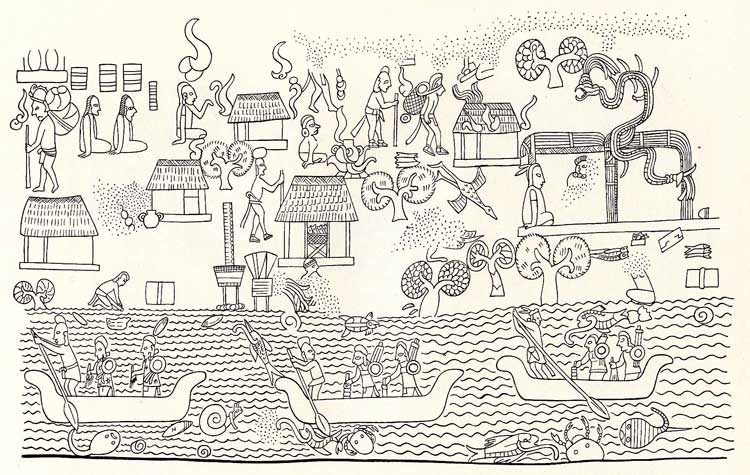
The phrase “ancient Mesoamerica” can misleadingly suggest a coherent civilization possessing common political institutions and a single model of kingship. Mesoamerica is instead a modern scholarly category devised to describe societies that shared certain crops, technologies, calendrical systems, ritual practices, and forms of exchange across what is now Mexico and much of Central America. The region was never united under one dynasty, governed by a common code, or organized around a universally recognized sovereign. Over more than two millennia, its inhabitants created small chiefdoms, dynastic kingdoms, competitive city-states, confederations, tributary empires, and states exercising varying degrees of territorial administration. Classic Maya kingdoms, Zapotec and Mixtec polities, the cities of Central Mexico, and the Purépecha state all developed within different political histories and ecological settings. Any reconstruction of royal security must begin with difference rather than assume that evidence from Tenochtitlan can be projected backward onto Teotihuacan or transferred unchanged to a Maya court.
Even the identity and constitutional position of “the ruler” differed substantially among these societies. Classic Maya kings commonly bore the title k’uhul ajaw, or “holy lord,” grounding authority in dynasty, place, ancestry, ritual performance, and recognition by other lords. Nahua tlatoque, whose title identified them as “speakers,” governed individual altepetl, while the Mexica huey tlatoani of Tenochtitlan stood at the center of an expanding imperial network without eliminating the dynasties of most subject cities. Mexica succession drew from eligible males within the royal house and depended upon selection by powerful nobles rather than following automatic father-to-eldest-son primogeniture. Mixtec rulers constructed authority through genealogies, marriages, conquests, and claims linking named individuals to particular communities, as vividly recorded in surviving screenfold manuscripts. The Purépecha irecha presided over a comparatively centralized state whose provincial officers, tribute organization, military frontiers, and relationship with the deity Curicaueri differed from both Maya and Mexica arrangements. Teotihuacan presents an even greater difficulty because its political imagery generally suppresses or anonymizes individual rulers, leaving scholars divided over whether authority was monarchical, collective, corporate, or transformed substantially during the city’s history. Measures intended to preserve one form of rulership cannot simply be assumed to have protected all the others.
The surviving archive compounds these differences because it illuminates some periods and political traditions far more clearly than others. Classic Maya inscriptions name rulers, wars, captures, marriages, accessions, subordinate lords, and courtly offices, whereas Teotihuacan has left no comparable readable dynastic history. Mixtec codices preserve intricate genealogical narratives, while information about Late Postclassic Central Mexico is amplified by pictorial manuscripts and alphabetic accounts produced after the Spanish invasion. What appears to be an institutional difference may consequently reflect a difference in preservation, decipherment, colonial documentation, or the interests of those who created the record.
Archaeology provides the broadest chronological reach, but physical remains rarely announce their political functions unambiguously. Palaces can be identified through scale, location, differentiated rooms, restricted approaches, elite goods, administrative activity, and association with royal monuments, yet no single architectural feature proves that a building was a royal residence. Successive patios and narrow passages may have controlled access to a ruler, but they could also have organized ritual movement, separated domestic activities, displayed social rank, or protected privacy. Thick walls might have resisted attackers, marked a sacred boundary, supported an elevated platform, enclosed valuable stores, or redirected water. The same difficulty applies to weapons discovered in elite compounds: they may indicate armed retainers, household defense, military office, ritual deposition, craft production, or the ordinary martial identity of noble occupants. Even large earthworks demand caution, as the long features surrounding portions of Tikal have been interpreted variously as defensive barriers, territorial boundaries, agricultural works, and hydraulic infrastructure. Stronger interpretations emerge when architectural restrictions coincide with weapons, guardrooms, hurried barricades, evidence of attack, abandonment deposits, or texts describing military danger. Archaeology can reveal how movement was constrained and violence anticipated, but assigning conscious security intentions requires context rather than architectural intuition alone.
Written and pictorial sources create a different set of interpretive hazards. Royal monuments were commissioned to present victories, legitimate successions, honor ancestors, and place individual reigns within sacred history, not to provide disinterested descriptions of government. Images of rulers towering above bound captives communicate domination, yet they do not establish how often kings won battles, how closely they were guarded, or whether their subjects accepted the intended message. Maya inscriptions are historical records of extraordinary value, but their formulaic language privileges dynastic events and the actions of elites while largely excluding the ordinary labor that sustained courts and armies. Mixtec manuscripts organize the past through genealogy, place signs, ritual events, marriages, and conquest, requiring interpretation rather than literal translation into a continuous narrative. Nahua and Purépecha accounts produced during the sixteenth century preserve extensive Indigenous testimony, but that testimony was recorded after epidemic disease, military defeat, Christianization, and the reorganization of Native political life under Spanish authority. Cortés and other conquistadors introduced additional distortions by presenting unfamiliar institutions through European analogies and arranging events to defend their conduct before the Crown. Nevertheless, works such as the Florentine Codex, the Codex Mendoza, the Relación de Michoacán, and the surviving Mesoamerican screenfolds remain indispensable when read alongside archaeology, Indigenous-language analysis, and preconquest imagery.
“Royal security” must consequently be used as an analytical category rather than treated as the name of a unified Indigenous institution. It encompasses practices that restricted access to rulers, reduced the likelihood of capture or overthrow, preserved dynastic succession, secured military assistance, monitored potential enemies, and made loyalty politically or spiritually compelling. Such practices need not have been created exclusively, or even primarily, for personal protection to have contributed to a ruler’s survival. The reconstruction must distinguish direct evidence from plausible inference, identify where regional comparison is justified, and acknowledge when silence in the archive prevents certainty. Approached in this manner, uneven evidence does not make the history of Mesoamerican royal protection impossible; it reveals why that protection must be understood as a variable combination of architecture, people, ritual, force, and political relationships.
A Crown Surrounded by Enemies: The Political Geography of Danger
Political danger in Mesoamerica had a geography. Mountain ranges, forests, rivers, lakes, seasonal roads, and long distances divided populations while making communication and military movement uneven, allowing rulers to exercise strong influence in some places and only intermittent authority in others. Classic Maya kingdoms were frequently composed of personal relationships linking a paramount king to lesser lords rather than uniformly administered territories enclosed by permanent borders. Mixtec power similarly rested upon shifting combinations of dynastic possession, marriage, conquest, and recognition, while the Mexica tribute empire generally preserved local rulers beneath the supremacy of the Triple Alliance. Distance allowed subordinate elites to withhold information, redirect tribute, negotiate with rivals, or declare independence before an overlord could respond. Yet danger was not confined to the distant frontier, for the ruler also occupied a court filled with relatives, commanders, servants, priests, and visiting nobles whose proximity made government possible while placing potential enemies within reach.
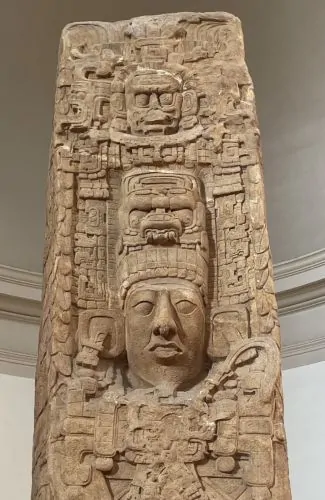
Among the Classic Maya, capturing a ruler represented one of the most politically valuable outcomes of warfare. Inscriptions repeatedly record attacks, defeats, captures, and the taking of named nobles, while monumental images display bound prisoners beneath victorious kings. The most dramatic example occurred in 738 CE, when K’ak’ Tiliw Chan Yopaat of Quiriguá captured Waxaklajuun Ubaah K’awiil, the long-reigning king of Copán, and had him put to death. Quiriguá had once existed within Copán’s political orbit, making the victory not simply a foreign invasion but the successful rejection of an established hierarchy by a subordinate ruler. The precise military circumstances remain uncertain, and Quiriguá may have benefited from wider alliances, including its relationship with the Kaanul kingdom, but the political consequences are unmistakable. Copán experienced a long interruption in royal monument building, while Quiriguá entered an extraordinary period of monumental construction and increasingly assertive kingship. A kingdom far smaller than Copán could not readily destroy all of its population or occupy its entire territory, but it could strike at the person in whom Copán’s supremacy had been concentrated. Royal capture transformed a military encounter into a public judgment upon the defeated dynasty’s legitimacy, alliances, and claims to supernatural favor.
Not every enemy stood outside the ruling family. Succession brought together ambitious relatives, elite electors, military leaders, widowed royal women, and competing branches of dynasties, creating periods when the authority of the throne was unsettled. Central Mexican traditions offer conflicting explanations for the death of the Mexica ruler Chimalpopoca during the Tepanec crisis of the late 1420s, variously attributing it to execution, suicide in captivity, or conspiracy, and that disagreement itself reveals how later political factions struggled to control the memory of a suspicious royal death. Mixtec accounts of Lord Eight Deer Jaguar Claw likewise depict a career built through conquest and calculated alliances that ended in capture and ritual execution, demonstrating how accumulated enemies could unite against an exceptionally successful ruler. Royal kin provided heirs, marriage partners, governors, generals, and diplomatic connections, but the same blood that established eligibility for office could also furnish a rival with a plausible claim.
Rebellion posed its greatest danger when dissatisfaction among subject communities converged with the ambitions of local elites. Mexica imperial power relied upon tribute demands, military intimidation, strategic marriages, appointed officials in selected areas, and cooperation from rulers who ordinarily retained considerable authority within their own cities. This arrangement reduced the administrative cost of governing distant provinces, but it also meant that imperial control could weaken rapidly when local dynasties ceased to cooperate. The Purépecha state confronted a different problem along its eastern frontier, where fortified settlements, military populations, and defended corridors reflected sustained rivalry with Mexica expansion.
Classic Maya rulers depended upon subordinate lords who commanded local followers, participated in campaigns, controlled routes, and could transfer their allegiance to a competing hegemon. Rivers and roads that carried tribute, merchants, envoys, and armies into a capital could carry conspiratorial messages and hostile forces in the opposite direction. Seasonal limitations on campaigning and the absence of rapid communication gave rebels time to fortify settlements, seek allies, or confront royal forces on favorable ground. The political geography of danger was consequently a map of dependencies: every distant lord entrusted with soldiers, information, or resources extended the ruler’s power while creating another point at which that power could fracture.
Withdrawal from public life could not solve these dangers because visibility was one of the foundations of Mesoamerican rulership. Kings performed calendrical ceremonies, received tribute and petitions, hosted foreign dignitaries, presided over councils, dedicated monuments, traveled between important places, and demonstrated military leadership. These appearances confirmed hierarchy and sacred authority, but they also carried rulers beyond the most restricted areas of their residences and placed them among crowds whose loyalty could never be assumed completely. The surviving evidence records warfare, royal capture, dynastic competition, and political defection far more clearly than it documents secret poisoning or the routine discovery of private assassination plots, making those public and institutional threats the most defensible center of analysis. Even so, the division between external and internal enemies was never absolute: a rival army might depend upon a disaffected courtier, while a palace faction might seek support from a foreign king. The essential security problem was not how to make the ruler invisible, but how to regulate the necessary movement of people around him. Protection began by transforming dangerous proximity into an ordered court in which access, rank, service, and armed force were made to appear inseparable from loyalty.
The King’s People
The first protective barrier surrounding a Mesoamerican ruler was composed not of stone but of people. Royal courts gathered relatives, subordinate lords, military commanders, priests, scribes, messengers, artisans, servants, and visitors around the sovereign, creating a social institution that could travel even when the palace could not. Some courtiers controlled access, some preserved records, some organized ceremonies, and others commanded warriors or carried royal instructions beyond the capital. Their collective presence allowed the ruler to govern while surrounding him with individuals whose status depended upon continued royal favor. Yet only a portion of these people were armed, and even fewer can be identified securely as personal bodyguards. The court protected its ruler primarily by organizing proximity, information, service, and loyalty rather than by maintaining an undifferentiated ring of soldiers.
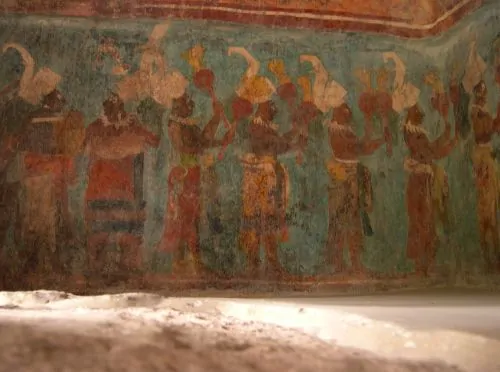
Classic Maya inscriptions and court scenes provide unusually rich evidence for this human environment. Painted vessels show rulers seated upon elevated thrones while courtiers approach, converse, present objects, receive instructions, or wait according to rank. The murals of Bonampak enlarge that world into a complex assembly of royal relatives, foreign guests, musicians, dancers, warriors, captives, and richly dressed nobles. Hieroglyphic texts name secondary figures carrying titles such as sajal and ajk’uhuun, although their precise responsibilities varied across regions and remain subjects of epigraphic debate. A sajal was a subordinate lord who could exercise local political and martial authority, especially in the western Maya lowlands, rather than merely a palace servant. Holders of the ajk’uhuun title appear close to kings, sometimes as witnesses to ritual or as individuals directly affiliated with a particular ruler, but the title cannot be translated confidently as “bodyguard.” Other courtiers acted as scribes, ritual specialists, emissaries, standard bearers, tribute presenters, and supervisors of elite production. Their titles and regalia made degrees of closeness visible, transforming the royal court into a hierarchy whose members could recognize who possessed legitimate access to the sovereign. The resulting order provided protection by making unauthorized proximity conspicuous, although surviving images emphasize ceremony and status more readily than everyday guard duty.
The royal household also included people whose work rarely appeared in political inscriptions. Royal women, children, nurses, cooks, weavers, cleaners, gardeners, craftspeople, and domestic servants sustained the food, clothing, regalia, ritual equipment, and residential routines upon which public kingship depended. Noble women could transmit dynastic claims, arrange or embody alliances, supervise valuable textile production, participate in ritual, and occasionally govern, making them political actors rather than passive inhabitants of secluded rooms. Servants and artisans handled objects that touched the ruler’s body and moved repeatedly between private and public spaces. Their familiarity made them indispensable, but it also meant that household security rested upon trust among people whose activities were largely invisible to monumental history.
Late Postclassic Central Mexico supplies more explicit descriptions of palace populations. The Florentine Codex portrays the tecpan as both the ruler’s residence and a governmental center containing councils, courts, storerooms, dining areas, workshops, guest quarters, and spaces occupied by numerous attendants. High officers such as the cihuacoatl, tlacochcalcatl, and tlacateccatl combined judicial, administrative, and military responsibilities, placing experienced nobles close to the tlatoani. Visiting rulers and distinguished warriors attended palace deliberations, received food and gifts, and competed for offices through which royal policy was carried into the provinces. The Codex Mendoza and alphabetic accounts describe military advancement through the taking of captives, with successful warriors earning distinctive clothing, insignia, privileges, and sometimes administrative appointments. Eagle and Jaguar warriors belonged to this prestigious martial environment and could possess privileged access to the palace, but they should not be converted automatically into a permanent imperial bodyguard. The sources identify them most clearly through military achievement, rank, dress, and battlefield service rather than through a corporate responsibility to stand watch over the ruler day and night. Motecuhzoma could surround himself with proven warriors and the armed followers of nobles without assigning every elite military order a specialized protective function.
Comparable patterns appeared outside the Maya and Nahua worlds, although the surviving evidence differs. Mixtec pictorial histories portray rulers accompanied by relatives, priests, emissaries, allies, and armed followers whose participation made conquest and dynastic ceremony possible. The Relación de Michoacán describes the Purépecha ruler as the center of a court containing dozens of named palace and state offices concerned with warfare, tribute, justice, ritual, communication, storage, and the reception of emissaries. Many positions were embedded in hereditary relationships and obligations linking the ruling Uacúsecha dynasty to subordinate elites. These institutions gave the irecha access to specialized service and military force, but they do not establish that the Mixtec or Purépecha courts possessed guard organizations identical to those imagined for Tenochtitlan.
Armed retinues nevertheless formed an important element of royal protection. Great nobles could arrive at court with servants and warriors of their own, while rulers traveled to ceremonies, hunts, military encampments, and diplomatic meetings accompanied by followers whose number proclaimed status and discouraged attack. Early colonial descriptions of Motecuhzoma’s enormous escort and crowded palace may magnify spectacle, but they preserve the credible principle that the ruler’s safety was inseparable from the visible attendance of dependent lords. Such followings were not impersonal military units supported by a separate state budget; they were coalitions held together through kinship, honor, gifts, food, offices, land, tribute, and expectations of future reward. A warrior protected the ruler not simply because he occupied a guard post but because his social identity and political prospects were tied to the royal house. This personal quality made retinues adaptable, allowing armed support to accompany the sovereign wherever he went. It also made them unstable, since followers could transfer loyalty, great lords could withhold their men, and commanders could use royal favor to build power bases of their own. The larger and more magnificent the court became, the more the ruler depended upon other elites whose armed strength he could influence but never possess completely.
The king’s people were consequently both his first defense and his most intimate vulnerability. Courtiers recognized unfamiliar faces, regulated audiences, carried warnings, supplied escorts, interpreted commands, and filled the spaces through which an attacker would have to pass. The same people knew the ruler’s movements, habits, health, relationships, and moments of isolation. No surviving evidence justifies treating them as a unified Mesoamerican equivalent of a modern protective service, but their overlapping duties produced many of the effects associated with personal security. Rank, etiquette, patronage, and controlled attendance helped transform a potentially dangerous crowd into an ordered royal following. Palace architecture gave that human hierarchy physical form, arranging courtiers, guards, petitioners, servants, and strangers according to how closely each was permitted to approach the ruler.
A Palace of Thresholds
A Mesoamerican palace protected its ruler less by functioning as an impregnable fortress than by regulating proximity. Although palatial compounds differed enormously across regions and periods, many separated exterior gathering places from increasingly restricted courtyards, halls, passageways, and residential chambers. Each transition created an opportunity to identify visitors, limit the size of their entourages, display royal authority, and determine who could proceed farther. A petitioner might enter a public court without gaining access to the audience hall, while even an honored noble could remain excluded from the rooms occupied by the ruler’s family. Royal security began with the organization of movement: who approached, by which route, under whose supervision, and how close that person could come to the ruler.
One of the earliest archaeologically documented examples comes from El Palenque in the Valley of Oaxaca, a political center occupied during the Late Formative period between approximately 300 and 100 BCE. Its palace complex combined residential quarters with spaces apparently used for governmental meetings, public business, storage, and ritual activity. Perimeter walls and restricted entrances distinguished the compound from surrounding civic space, while internal courtyards distributed movement among separate buildings and functional zones. Visitors entering the complex would not immediately have encountered every activity occurring within it; walls, doorways, and changes in elevation divided the palace into areas of unequal accessibility. Large chambers furnished with masonry benches could accommodate councils or formal receptions, whereas smaller rooms offered more controlled settings for household and administrative work. The complex consequently allowed the ruler and senior officials to receive subjects without surrendering the privacy of the entire residence. Nothing in its plan proves the existence of a permanent guard organization, and its walls should not automatically be interpreted as fortifications constructed for battle. Nevertheless, El Palenque demonstrates that the architectural management of access had become part of rulership long before the better-documented royal courts of the Classic Maya or the Late Postclassic Nahua world.
Classic Maya palaces elaborated this principle through elevated platforms, connected buildings, nested courtyards, and rooms arranged according to different degrees of visibility. Broad stairways could lead delegations into formal courts, but narrower entrances and lateral passages restricted movement into adjoining residential or administrative areas. Interior benches, sometimes enlarged into throne-like seats, established where an authoritative person sat and how others were expected to face or approach that person. Because many palace rooms opened onto courtyards rather than disappearing behind massive sealed walls, their protective effectiveness depended upon guarded custom, controlled admission, and the presence of attendants as much as upon masonry.
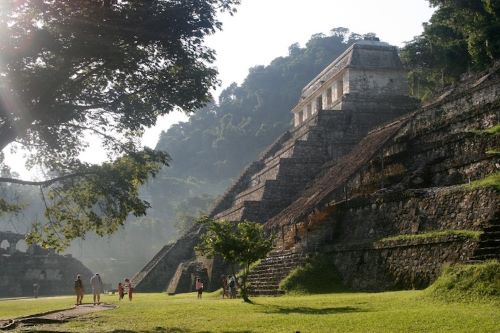
The Central Acropolis at Tikal illustrates how a royal compound could grow into a dense architectural landscape whose courtyards, stairways, corridors, and chambers accumulated over generations. Successive construction produced spaces that varied sharply in elevation and ease of approach, making the palace simultaneously a dynastic residence, an administrative center, and a material record of royal continuity. At Palenque in Chiapas, galleries, subterranean passages, elevated rooms, courtyards, and prominent stairways likewise organized encounters between rulers, courtiers, ritual specialists, and petitioners. Such features did not form a single defensive plan in the manner of a purpose-built citadel; they emerged through repeated construction intended to serve ceremony, governance, residence, display, and seclusion. Evidence from Aguateca reveals the material life concealed behind these formal settings, because the rapid abandonment of its royal and elite compounds left tools, ornaments, weapons, and household possessions in unusually revealing contexts. The presence of weapons within elite residences shows that courtly households were capable of participating in their own defense, but it does not establish that every resident was a professional guard. Aguateca’s violent end instead demonstrates the limits of palatial protection: once an enemy penetrated the larger defensive perimeter, the spaces that ordinarily ordered court life could not guarantee the ruler’s survival. These Maya examples show that palace security arose from the interaction of architecture, household organization, political ritual, and armed personnel rather than from any single defensive device.
Late Postclassic descriptions of Nahua palaces present an even more explicit picture of graded access, although these accounts must be read through the distortions of conquest-era observation. The palace of Motecuhzoma II at Tenochtitlan contained numerous courtyards, audience spaces, council chambers, storerooms, workshops, residential quarters, and facilities for receiving visiting rulers and ambassadors. Its outer areas accommodated the business of government, enabling judges, messengers, tribute officials, warriors, artisans, petitioners, and foreign representatives to enter the royal establishment without receiving unrestricted access to its innermost rooms. Deeper within the compound, attendants and court officers could regulate admission to the ruler’s presence, while separate chambers protected the activities of the royal household. The elevated position of the tlatoani during audiences transformed controlled distance into a statement of political hierarchy: visitors not only approached the ruler through designated spaces but encountered him according to prescribed forms of speech, posture, and deference. A large staff of stewards, servants, officials, and warriors animated the palace plan, turning architectural boundaries into enforceable social boundaries. The Spaniards’ eventual admission into Motecuhzoma’s presence underscores an important point because access was not determined by walls alone; it could be granted through diplomacy, ritual hospitality, calculation, deception, or political misjudgment.
The Purépecha royal establishment at Tzintzuntzan provides a valuable comparison because it joined the residence of the irecha to institutions concerned with tribute, warfare, ritual service, and the management of dependent lords. The Chronicles of Michoacán depicts a court populated by officeholders and attendants whose positions brought them into carefully differentiated relationships with the ruler, even though the surviving narrative describes offices more fully than it reconstructs individual palace doorways. Archaeological knowledge of the compound’s internal circulation remains less complete than the evidence available for several Maya palaces, making detailed claims about gates or guard stations hazardous. Even so, the Purépecha case confirms that controlled proximity depended upon an organized royal household and hierarchy of service, not simply upon enclosing the king behind stone.
Thresholds acquired protective force only when people recognized, supervised, and defended them. Doors could be closed, but attendants had to know who possessed the right to pass; courtyards could separate visitors from the ruler, but officials had to receive delegations, disarm suspicion, and watch for violations of protocol. Inner rooms probably reduced exposure by limiting daily contact largely to relatives, senior courtiers, servants, ritual specialists, and other trusted dependents. Privacy, ceremony, and security consequently reinforced one another, since the same spatial restrictions that magnified the ruler’s dignity also narrowed the number of people capable of approaching his body. Yet this arrangement created a persistent vulnerability: those admitted deepest into the palace were precisely the people best positioned to observe its routines, exploit its passageways, or collaborate with a rival. Palaces also made rulers politically visible and geographically locatable, concentrating the royal family, wealth, records, ritual objects, and administrative personnel in one prestigious target. Once hostile forces entered the compound, or once insiders ceased to enforce its distinctions, narrow passages and enclosed courts could become channels of entrapment rather than layers of protection. The palace was a security system built from graded relationships, one whose architecture remained effective only while the ruler’s human guardians continued to control its thresholds.
The Capital as Shield
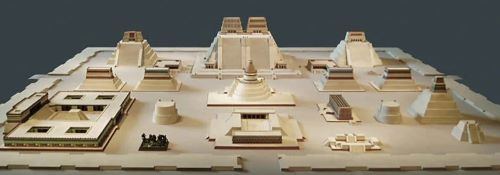
For Mesoamerican rulers, the capital formed an outer defensive perimeter around the palace and the royal body. A city established on an island, hilltop, escarpment, or defensible plateau could delay hostile armies while concentrating loyal warriors, tribute resources, and political dependents near the ruler. Yet natural terrain rarely provided security by itself, because approaches still had to be observed, roads controlled, water secured, and vulnerable gaps reinforced. Walls, ditches, terraces, gates, palisades, canals, and causeways transformed geographical advantages into systems for channeling movement. The capital protected its ruler most effectively when terrain, constructed defenses, military organization, and civic loyalty operated together.
Tenochtitlan offers the clearest example of water serving as both protective environment and political infrastructure. Its island location in Lake Texcoco separated the Mexica ceremonial and royal center from much of the surrounding basin, forcing large bodies of people to approach by canoe or along a limited number of causeways. Those causeways connected the capital to the mainland while simultaneously narrowing the routes by which hostile forces could enter, and openings crossed by wooden bridges could be enlarged or defended during an emergency. Within the city, canals moved people, food, tribute, building materials, and warriors more efficiently than overland streets alone, allowing defenders to shift personnel and supplies among districts. Dikes and hydraulic works regulated water levels and protected freshwater zones, although most were constructed for flood control, transportation, and agriculture rather than exclusively for warfare. The city’s dependence on external freshwater, especially the aqueduct from Chapultepec, nevertheless created a strategic vulnerability that enemies could exploit. During the Spanish-Mexica fighting of 1521, the destruction of bridges, attacks along the causeways, deployment of armed brigantines, and interruption of the water supply turned the lake into an active theater of siege. Tenochtitlan’s watery setting had long made sudden conquest difficult, but once the Spaniards and their Indigenous allies controlled the lake and its approaches, the same restricted routes helped confine the defenders.
At Becán in the central Maya lowlands, a massive ditch and accompanying embankment enclosed the monumental core. Although commonly called a moat, the excavation was probably dry rather than permanently filled with water, and material removed from the ditch contributed to the raised barrier beside it. A limited number of causeways crossed this obstacle, directing entry toward predictable points where approaching people could be observed and challenged. The enclosed area contained major ceremonial, administrative, and elite residential buildings, so the earthwork protected a politically important precinct rather than every household belonging to the wider settlement. Scholars continue to debate the precise chronology of its construction, the duration of its use, and whether defense was its sole purpose. Even with those qualifications, Becán demonstrates that Maya rulers could reshape an urban center to impede direct access and make the political core more defensible.
The increasingly violent political environment of the Late Classic Maya lowlands produced more hurried and intrusive forms of fortification. In the Petexbatun region, rulers who had once advertised their power through temples, palaces, monuments, and open ceremonial plazas began protecting their centers with walls, barricades, palisades, and restricted entrances. After the defeat of Dos Pilas in the eighth century CE, defenders constructed concentric barriers across parts of the city, sometimes dismantling existing buildings and monuments to obtain material. These walls cut through spaces previously designed for public movement and royal display, revealing that immediate survival had displaced older ceremonial priorities. Aguateca possessed formidable natural defenses in the form of steep escarpments and a deep chasm, but its inhabitants also erected walls and palisades across more accessible approaches. Additional barricades divided sections of the ceremonial center, creating successive positions from which defenders might resist an assault. Archaeological evidence for rapid abandonment shows that these measures delayed neither the city’s violent disruption nor the flight of much of its elite population indefinitely. At Tikal, extensive earthworks north of the monumental center have also been interpreted as defensive barriers, although irregular alignments and connections with local topography have generated competing explanations involving territorial demarcation, water management, and agricultural use. The contrast is instructive: some Maya defenses were emergency constructions responding to immediate attack, whereas others were long-lived landscape features whose military purpose remains uncertain. A wall-like earthwork cannot be identified as a royal defense merely because it enclosed space.
Hilltop capitals pursued the same goal through elevation. Xochicalco occupied a fortified ridge whose terraces, retaining walls, restricted approaches, and commanding views made large-scale attack difficult while placing ceremonial and governing institutions above surrounding settlements. The ascent itself exposed approaching forces, reduced the number of routes available to them, and gave defenders the advantage of higher ground. Mayapán, by contrast, enclosed much of its densely occupied urban core within a substantial perimeter wall pierced by controlled entrances, while additional settlement extended beyond that boundary. The wall protected temples, elite residences, administrative activity, and a considerable urban population rather than isolating only the ruling family. Its gates helped structure movement between the political center and the surrounding countryside, but they also connected the capital to the food, labor, and exchange networks upon which it depended. Neither Xochicalco’s elevation nor Mayapán’s enclosure prevented internal political conflict from destabilizing the ruling order. Defensive landscapes could frustrate an invading army without neutralizing factional violence among people already inside them.
Urban form also created protection without leaving unmistakable military remains. Plazas could hold mustered warriors, elevated buildings could serve as observation points, and roads could accelerate the movement of reinforcements toward threatened districts. Restricted entrances and processional routes made collective movement more legible to authorities, but broad avenues and open courts also served commerce, ceremony, and public display. Conversely, narrow or irregular passages were not necessarily designed to trap attackers, since they might result from incremental construction, household boundaries, drainage requirements, or dense urban growth. The defensive value of a capital cannot be reconstructed from architectural shape alone; it must be evaluated alongside chronology, settlement patterns, evidence of destruction, and the city’s political history.
The capital shielded the ruler by creating distance between his body and the first point of hostile contact. Watchers at an outer approach, warriors at a gate, defenders on a causeway, and retainers inside the palace represented successive opportunities to detect danger and organize resistance. Concentrated populations could supply troops and labor, while royal storehouses and tributary resources supported defenders during short emergencies. The same concentration increased the consequences of siege by gathering the ruler, court, treasury, temples, archives, and political leadership within one target. Large urban populations required continuous access to food and water, making aqueducts, agricultural zones, roads, canals, and harbor facilities potential pressure points. Fortifications also offered limited protection against conspirators, rival nobles, rebellious districts, or enemies admitted through diplomacy. If defenders lost the outer perimeter, the capital’s controlled approaches could obstruct escape as effectively as they had once obstructed attack. Terrain and architecture extended the ruler’s protective network across an entire urban landscape, but they could only delay political collapse when the human alliances sustaining that landscape had already begun to fail.
Force Within Reach
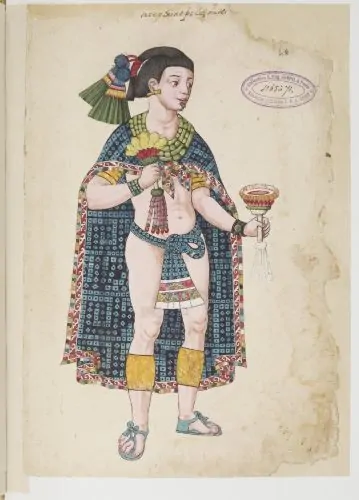
Ancient Mesoamerican rulers required armed force within reach, but this requirement did not ordinarily produce a standing army in the modern sense. Most states lacked permanently mobilized bodies of uniformed soldiers who lived in barracks, received continuous salaries, and answered through a centralized chain of command. Rulers instead assembled military power from royal households, experienced warrior elites, noble followings, community levies, allied cities, tributary provinces, and strategically placed frontier forces. Some of these men remained close enough to defend a palace or suppress sudden disorder, while much larger armies had to be summoned through political and social institutions. Royal security depended not merely upon possessing warriors but upon ensuring that the right warriors could be mobilized quickly and would remain loyal after arriving.
Mexica military organization illustrates the scale that such mobilization could attain without becoming a fully professional standing army. The tlatoani occupied the summit of military command, consulted senior nobles, appointed leading officers, and participated personally in decisions concerning campaigns. Powerful officials such as the tlacochcalcatl and tlacateccatl combined military authority with high political standing, placing commanders near the center of government and frequently within the succession politics of the ruling dynasty. Beneath them, urban communities organized contingents through local structures generally associated with the calpolli, whose members assembled under recognized leaders and marched as identifiable groups. The telpochcalli trained many commoner youths in discipline, public labor, and warfare, while the calmecac educated noble youths and selected others for religious, administrative, and military responsibilities. Neither institution was simply a barracks producing full-time soldiers, but together they helped make military service an expected component of civic life. Tenochtitlan could also call upon Texcoco, Tlacopan, subordinate city-states, and tributary communities, creating armies far larger than the permanent population immediately surrounding the Mexica ruler. Experienced warriors and senior commanders provided a reliable core, but messengers, local officials, tribute stores, porters, and regional allies made large-scale deployment possible. The military strength of the tlatoani consequently rested upon a broad mobilization network whose participants retained obligations to their own neighborhoods, nobles, cities, and provincial communities.
The Eagle and Jaguar warriors belonged to this world of rewarded military achievement, but they should not be described automatically as a permanent royal bodyguard. Their prestigious titles, costumes, and privileges marked success in taking captives and distinguished experienced fighters within Mexica society. Men of such status could accompany rulers, occupy honored positions during ceremonies, lead troops, and defend politically important places. The availability of elite warriors near the palace undoubtedly strengthened the ruler’s immediate protection, yet surviving sources do not establish that every Eagle or Jaguar warrior served regular guard shifts around the royal person. Palace defense more plausibly drew upon selected warriors, household retainers, military officers, and attendants whose specific responsibilities could change with circumstance.
Permanent or semipermanent military deployment becomes more visible at vulnerable frontiers. The Mexica Empire usually governed tributary territories through local rulers rather than filling every conquered province with occupation troops, but strategically dangerous regions demanded a stronger presence. Garrisons and fortified settlements near the contested western frontier, including Oztuma, watched routes connecting Mexica territory with lands threatened by Purépecha expansion. Such positions could contain troops and transplanted populations whose loyalty was tied to imperial patronage and whose presence discouraged rebellion as well as foreign invasion. Their distance from Tenochtitlan meant that they did not function as the ruler’s immediate palace guard, but they extended his defensive perimeter by attempting to stop hostile armies before they approached the Basin of Mexico. The Purépecha state developed its own guarded frontier facing Mexica power, maintaining fortified positions, commanders, and concentrations of warriors along strategically sensitive approaches. From Tzintzuntzan, the irecha and his officials could summon forces from subject communities and direct them toward regional commanders responsible for defending the kingdom. These frontier systems show that a ruler’s personal safety could depend upon soldiers stationed many days away, because the survival of the capital required threats to be detected and contained at the edges of the realm.
Classic Maya military forces were organized through a different political landscape of kingdoms, subordinate centers, noble houses, and shifting alliances. Inscriptions and monuments identify rulers as war leaders, commemorate attacks and captures, and associate subordinate lords with campaigns conducted under the authority of more powerful kings. The k’uhul ajaw could command his own retainers and call upon dependent nobles, but the resulting force was not necessarily a permanent national army detached from household and community obligations. Subordinate lords, including some individuals bearing the title sajal, could lead warriors, govern secondary centers, and provide regional military support, although the meaning and authority of such titles varied among kingdoms. Campaigns depended upon assembling men, provisions, porters, weapons, and allies for particular objectives, which favored relatively short operations more than continuous field deployment. At threatened capitals such as Dos Pilas and Aguateca, nobles, retainers, and residents could be drawn into local defense, especially after barriers and fortifications had been constructed. Maya royal protection rested upon a hierarchy of personal allegiances whose military effectiveness could expand rapidly but could also disintegrate when subordinate lords withdrew support or transferred their loyalty.
Mixtec pictorial histories similarly present warfare as an undertaking of named rulers, noble companions, dynastic allies, and forces attached to particular communities. Lord Eight Deer Jaguar Claw expanded his authority through campaigns that were inseparable from marriage alliances, ritual legitimization, and relationships with other ruling houses. The codices emphasize elite actors and memorable conquests rather than explaining how ordinary troops were recruited, supplied, or stationed, so they cannot sustain confident reconstructions of permanent Mixtec guard units or standardized armies. What they reveal more clearly is a military order in which armed support followed lordship, kinship, alliance, and personal obligation, making a ruler’s retinue the concentrated expression of a much wider political network.
Mobilization protected rulers only when speed and loyalty converged. Messengers had to reach provincial authorities, local leaders had to assemble their contingents, storehouses had to release provisions, and commanders had to move forces toward the danger before a rebellion or invasion overwhelmed the capital. Yet every successful commander accumulated prestige, followers, military knowledge, and access to armed men, potentially making him a political rival as well as a defender. Garrisons could resist an external enemy, but isolated troops might become entangled in provincial interests or fail when reinforcement and supplies did not arrive. Noble armies were double-edged because the king needed their strength while lacking complete control over the relationships that held them together. Excessive dependence upon one commander or lineage could allow that faction to dominate the court, whereas attempts to weaken powerful nobles could deprive the ruler of necessary military support. The most secure rulers distributed offices, honors, tribute, and opportunities for advancement widely enough to prevent any single warrior faction from monopolizing force. Military protection in Mesoamerica was a continuing political achievement: rulers remained safe only so long as they could summon violence more quickly, command it more convincingly, and reward it more effectively than their rivals.
Sacred Armor, Sacred Exposure: The Ritual Body of the Ruler
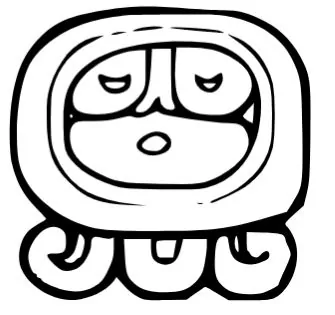
Sacred authority surrounded the Mesoamerican ruler with a form of protection that no wall or armed retinue could provide. By presenting royal government as necessary to communication with gods, ancestors, and cosmic forces, courts made disobedience appear more dangerous than an ordinary political offense. Rituals transformed loyalty to a particular person into loyalty to the order upon which rain, fertility, military victory, and communal survival supposedly depended. This ideological protection was never merely invented propaganda, since rulers and subjects alike could participate sincerely in the religious world that made kingship meaningful. Sacred status nevertheless functioned as armor only while enough people accepted the ruler’s ability to fulfill his supernatural obligations.
Among the Classic Maya, the title k’uhul ajaw, conventionally translated as “holy lord” or “divine lord,” distinguished certain rulers from lesser officeholders. It did not necessarily mean that every king was understood as a god in a simple or permanent sense, because royal sacredness was created through ancestry, office, ritual performance, and relationships with supernatural beings. Accession ceremonies established the ruler as the legitimate successor to a dynastic line and connected his body to regalia, shrines, patron gods, and remembered founders. Royal bloodletting allowed kings and queens to demonstrate discipline, nourish relationships with supernatural powers, and make their bodies instruments of collective renewal. Dance, incense burning, offerings, calendrical observances, and the dedication of monuments further presented the ruler as an indispensable mediator between human society and the sacred landscape. Maya images sometimes show rulers wearing the attributes of gods or merging visually with supernatural beings, producing a controlled convergence between human officeholder and divine power. References to royal ancestors placed the living king within a lineage that extended beyond death, making rebellion against him potentially an assault upon the accumulated authority of generations. Priests, attendants, scribes, musicians, dancers, and nobles helped stage these performances, surrounding the ruler with both ritual specialists and socially prominent witnesses. Such ceremonies strengthened protection by making elite cooperation visible and by reaffirming the king’s position before assembled subjects. They also required the ruler to appear in prescribed places and at predictable times, exposing the sacred body that the performance was intended to exalt.
Regalia operated as a kind of visual armor by making royal authority immediately recognizable. Monumental headdresses, jade ornaments, elaborate textiles, shields, staffs, diadems, and elevated seats enlarged the ruler’s presence and associated him with gods, ancestors, warfare, and territorial sovereignty. Mixtec pictorial histories similarly portray named lords receiving insignia, undergoing rituals, and participating in sacred journeys that converted dynastic ambition into legitimate authority, most famously in the career of Lord Eight Deer Jaguar Claw. Yet regalia also identified the ruler unmistakably, ensuring that an enemy on the battlefield or within a ceremonial gathering could recognize the most valuable target.
Mexica rulership combined sacred legitimacy with a pronounced theology of obligation. The tlatoani, or “speaker,” governed as the supreme representative of his city and exercised authority closely associated with gods such as Tezcatlipoca and Huitzilopochtli, but he was not simply worshiped as a deity. Accession required fasting, instruction, ritual seclusion, the receipt of insignia, and normally a successful campaign that produced captives for sacrifice. Formal speeches reminded the new ruler that he had been selected to bear an exhausting public burden and warned that arrogance, negligence, or injustice could bring divine punishment upon him and his people. Conquest-era descriptions emphasize rules of deference surrounding Motecuhzoma II, including lowered eyes, removed footwear, formal modes of address, and carefully regulated audiences. These accounts preserve genuine features of court protocol, although Spanish writers sometimes exaggerated royal seclusion to present Mexica government as an exotic tyranny. Purépecha rulership followed a different sacred tradition centered upon the fire deity Curicaueri, whose worship and history of conquest helped legitimize the authority exercised from Tzintzuntzan. The irecha served as ruler, military leader, distributor of tribute, and guardian of a religious order sustained by priests, temples, sacred fires, and narratives of divinely authorized expansion. In both states, the ruler’s ritual authority strengthened political obedience while subjecting his conduct to sacred expectations that he could not safely disregard.
Calendars, divination, purification, and priestly counsel attempted to protect rulers from dangers that warriors could neither see nor repel. Ritual specialists identified favorable days, interpreted dreams and omens, supervised offerings, and prescribed responses to signs of drought, defeat, illness, or cosmic instability. These practices gave courts procedures for confronting uncertainty, but they also granted interpreters considerable influence over royal decisions. An omen could justify postponing an undertaking, intensifying sacrifice, investigating misconduct, or identifying a political crisis as evidence of supernatural displeasure. Ritual protection consequently depended upon an alliance between ruler and priesthood, while leaving open the unsettling possibility that religious specialists might judge the ruler himself to be the source of disorder.
The sacred ruler was not inviolable; he was exceptionally valuable to enemies precisely because his body represented the political community. Capturing a king could be presented as proof that his gods, ancestors, and ritual claims had failed, while killing or humiliating him could transfer prestige to the victor. When K’ak’ Tiliw Chan Yopaat of Quiriguá captured Waxaklajuun Ubaah K’awiil of Copán in 738 CE and subsequently put him to death, the act shattered an established political relationship and elevated the victorious ruler’s status. Maya monuments that displayed bound captives or recorded royal defeats transformed violence against elite bodies into statements about supernatural as well as military power. A ruler was also physically exposed during dances, processions, sacrifices, diplomatic receptions, military reviews, and public appearances, even when attendants and warriors controlled the surrounding space. Avoiding such occasions would have reduced immediate danger but weakened the visibility upon which royal legitimacy depended. Military defeat, famine, epidemic disease, or failed prophecy could reverse the meaning of sacred kingship, making the ruler responsible for the disasters he had promised to prevent. Sacred authority protected by raising the moral and cosmic cost of rebellion, yet it simultaneously raised the symbolic reward for capturing or destroying the king. The ritual body was armored by belief, but that armor made the person inside it the most consequential target in the realm.
Victory Made Visible
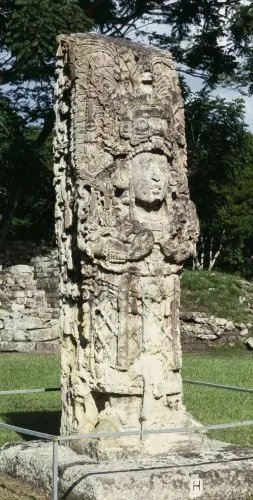
A military victory protected a ruler most effectively when its political meaning survived the battle. Monuments, painted histories, public ceremonies, trophies, and captive displays transformed temporary success into an enduring claim that the ruler could defeat enemies and punish disobedience. These forms of communication did more than record events, because they selected, enlarged, and ritualized victories while minimizing setbacks. Fear operated alongside admiration, encouraging subjects and rival elites to imagine the consequences of challenging a king who appeared favored by gods and surrounded by successful warriors. Royal security depended partly upon controlling how violence was seen, remembered, and retold.
Classic Maya rulers inscribed victory into the ceremonial landscapes of their capitals. Stelae, altars, lintels, stairways, wall panels, and painted vessels showed kings standing above captives, carrying weapons, receiving tribute, or performing rituals made possible by military success. Hieroglyphic captions identified defeated individuals, named victorious rulers, and connected particular conflicts to dynastic chronologies. Placement mattered because monuments positioned near stairways, doorways, plazas, and ceremonial buildings confronted audiences as they moved through politically important space. Sculptures at Yaxchilan presented royal warriors and bound prisoners within an architectural program celebrating dynastic authority, while monuments at Toniná repeatedly displayed humiliated captives as evidence of the kingdom’s military power. At Quiriguá, the capture and execution of the Copán ruler Waxaklajuun Ubaah K’awiil in 738 CE became the foundation for an ambitious program of monumental commemoration under K’ak’ Tiliw Chan Yopaat. By recording the overthrow of a former overlord, Quiriguá converted one royal body into proof that an established hierarchy had been reversed. Such displays reshaped political memory by making victory appear inevitable in retrospect and by presenting the reigning dynasty as the proper beneficiary of supernatural favor. They were assertions rather than neutral chronicles, and their confident imagery concealed the uncertainty that had preceded the triumph.
The murals of Bonampak reveal the theater of victory with unusual intensity. Room 2 of Structure 1 moves from chaotic combat to the formal presentation of defeated nobles, whose stripped clothing, wounded hands, submissive postures, and exposed bodies contrast sharply with the elaborate regalia of the victorious ruler and his companions. Courtiers, warriors, musicians, and attendants turn the aftermath of battle into a public event in which spectators help confirm the meaning of defeat. The mural does not merely illustrate violence; it shows humiliation being organized as a performance capable of distinguishing loyal insiders from conquered enemies.
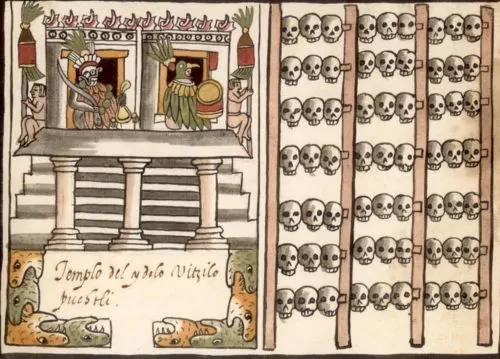
Mexica political spectacle carried captive display from the battlefield into the ceremonial center of Tenochtitlan. Victorious warriors brought prisoners home, where processions, dances, presentations, and sacrificial festivals allowed the capital’s inhabitants to witness the human results of imperial warfare. During ceremonies associated with Tlacaxipehualiztli, selected captives could be dressed, displayed, sacrificed, and incorporated into rituals linking agricultural renewal with military conquest. The tethering of a captive to a sacrificial stone for unequal combat converted his defeat into a controlled reenactment witnessed by rulers, priests, warriors, visiting dignitaries, and assembled residents. Skull racks made death visible after the sacrifice itself, accumulating human remains into durable signs of the state’s reach and the ritual authority of its ceremonial institutions. The Templo Mayor brought tribute, warfare, sacrifice, and sacred geography together at the center of the capital, ensuring that imperial violence was represented as a cosmic necessity rather than private royal aggression. On the monument known as the Stone of Tizoc, the ruler appears grasping defeated figures associated with conquered places, each victory rendered through a repeated visual formula that makes domination appear orderly and comprehensive. Whether every conquest claimed by such imagery corresponded to permanent political control was less important to the intended message than the repetition of the victorious relationship. The ruler remained visually dominant while defeated enemies became interchangeable demonstrations of his capacity to command violence. This ceremonial theater warned subordinate lords that rebellion could end not simply in death but in public degradation before the gods and political community.
Other Mesoamerican societies created comparable messages through different media. Mixtec screenfold manuscripts recorded genealogies, marriages, sacred journeys, place conquests, and the careers of ambitious rulers through named figures and conventional signs. The victories of Lord Eight Deer Jaguar Claw appear as stages in a dynastic history that connected military achievement to ritual authorization and alliance building. These manuscripts were smaller and more mobile than Maya stelae, but elite readers and performers could unfold, interpret, and recite them before politically significant audiences. Purépecha evidence is preserved largely through archaeology and the colonial-period Chronicles of Michoacán, whose text and illustrations portray conquest, tribute, royal justice, sacrifice, and the punishment of wrongdoers. The chief priest known as the petamuti publicly recounted the history of the kingdom and the commands of the deity Curicaueri, joining collective memory to judicial discipline and political loyalty. Although these traditions cannot be treated as identical to carved Maya monuments or Mexica sacrificial displays, each made past violence relevant to present obedience.
Visibility did not guarantee a single interpretation. Hieroglyphic texts required specialized knowledge, pictorial conventions had to be learned, and many public performances depended upon speakers, priests, or heralds who explained what spectators were seeing. Colonial descriptions of Mexica sacrifice were also shaped by European horror, Christian polemic, and Spanish efforts to justify conquest, even when they preserved substantial Indigenous testimony. Monuments could be damaged, buried, moved, recarved, or appropriated by later rulers, demonstrating that political memory remained contestable rather than permanently fixed.
The theater of fear worked by converting remembered violence into a prediction about future resistance. A bound noble or defeated king represented more than one unfortunate enemy, because his treatment implied what might happen to any lord who challenged the victorious ruler. Loyal elites could view the same spectacle as reassurance that their sovereign possessed the strength to protect privileges, maintain tribute routes, and defeat external threats. Yet the repeated need to proclaim invincibility exposed a central weakness in monumental politics: images could not compel obedience when military alliances, harvests, or dynastic legitimacy deteriorated. Rivals could seize the victorious imagery of one court, invert its meaning, and make the former conqueror into the captive displayed beneath another king. Excessive reliance on terror could also encourage subject communities to defect when an alternative power offered protection from tribute, punishment, or sacrificial demands. Public violence was most effective when joined to successful patronage, credible military force, and widely accepted ritual authority. Monuments and captives did not form a passive backdrop to royal security; they continually taught audiences how power was supposed to operate. Victory protected the ruler by being made visible, but every representation of a conquered enemy also reminded spectators that kings could be defeated.
Bloodlines of Protection
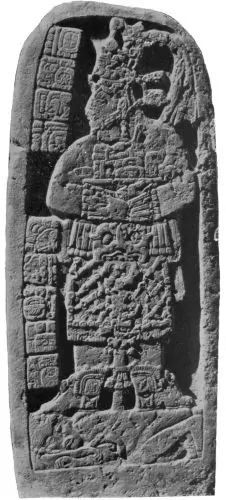
The safest ruler was rarely an isolated sovereign, because royal security depended upon relationships extending across generations and political boundaries. Marriage could turn a competing dynasty into an ally, provide access to soldiers and resources, or establish channels through which disputes might be negotiated before they became wars. An orderly succession reassured nobles that their offices and privileges would survive the ruler’s death, reducing the temptation to support a premature transfer of power. Bloodlines also made authority appear continuous by presenting each ruler as the inheritor of ancestral achievements rather than a temporary possessor of force. Kinship offered protection only by creating additional people with plausible claims upon the throne.
Classic Maya dynasties used marriage to connect royal houses whose relationships ranged from alliance and dependence to open rivalry. A woman who moved from one court to another could carry ancestral prestige, political contacts, ritual knowledge, and claims capable of strengthening the receiving dynasty. Such marriages sometimes accompanied the influence of a stronger kingdom over a subordinate center, turning kinship into an instrument of regional strategy. Lady Six Sky, a woman from the Dos Pilas dynasty, arrived at Naranjo in 682 CE and played a central role in restoring its royal fortunes after a period of political disruption. Her son, K’ak’ Tiliw Chan Chaak, inherited a revitalized kingship, while her own prominence in monuments demonstrates that dynastic women could exercise authority far beyond ceremonial marriage. At Palenque, royal women similarly preserved continuity when the male succession became uncertain, and Lady Sak K’uk’ transmitted a powerful dynastic claim to her son K’inich Janaab Pakal. These arrangements show that Maya succession was not governed everywhere by inflexible father-to-eldest-son primogeniture. Brothers, collateral relatives, royal women, and children connected through maternal lines could all become essential when the survival of the dynasty demanded flexibility. Monumental records of births, parentage, accessions, and anniversaries were political declarations establishing who belonged within the protected circle of legitimate descent. By making a ruler’s genealogy public, the court attempted to discourage challengers before they could convert an ambiguous succession into civil conflict.
Royal women were not merely symbolic links exchanged between male rulers. They could maintain correspondence between courts, sponsor rituals, possess estates, arrange marriages for descendants, and gather followers whose loyalties crossed political boundaries. Their presence might protect a young heir or reconcile competing branches of a dynasty. Yet a queen’s relatives and attendants could also form a court faction whose interests conflicted with those of the ruler’s other wives, sons, or advisers.
In the Mixtec world, marriage diplomacy provided much of the connective tissue linking numerous relatively small kingdoms. Pictorial manuscripts traced marriages with extraordinary care because the right to govern a community frequently depended upon descent from recognized ruling couples. A marriage could unite claims to separate places, repair a feud, or give a ruler allies for a campaign against another dynasty. The career of Lord Eight Deer Jaguar Claw demonstrates how military success, sacred authorization, strategic marriage, and genealogical politics could reinforce one another. His rise involved relationships with several ruling houses, but the expansion of his power also disrupted existing lines of inheritance and intensified hostility among dispossessed relatives. Mixtec manuscripts consequently record not a stable system of intermarried peace but a political field in which marriages repeatedly rearranged rights, obligations, and rivalries. Children born from these unions embodied diplomatic agreements while also preserving claims that could be revived in a later generation. Dynastic marriage reduced immediate isolation, but its long-term consequences depended upon which descendants survived and how effectively their competing genealogies were interpreted.
Mexica succession likewise combined hereditary legitimacy with political selection. The tlatoani had to belong to the recognized royal dynasty, yet the throne did not automatically pass to the deceased ruler’s eldest son. Senior nobles selected among eligible male relatives, favoring candidates with military experience, political competence, and support within the governing elite. This flexibility allowed the Mexica to choose mature rulers, including brothers or collateral relatives, rather than accept an incapable child merely because of birth order. It also meant that every succession required negotiation among powerful men capable of promoting different candidates. Royal polygyny multiplied alliances by connecting the ruler to noble and ruling families, but it also produced numerous sons whose maternal ancestry could support competing ambitions. Mexica traditions surrounding Acamapichtli emphasized links with the prestigious dynasty of Colhuacan, while subsequent marriages bound the ruling house to leading families within Tenochtitlan and other altepetl. During the imperial period, marriage into the Mexica dynasty could reward subordinate rulers and tie their descendants to Tenochtitlan, although kinship did not erase resentment over tribute or political subordination. The rapid elevation of Cuitlahuac after the death of Motecuhzoma II and of Cuauhtemoc after Cuitlahuac’s death in 1520 demonstrates how a broad pool of eligible dynasts could preserve leadership during catastrophe. The system strengthened continuity by avoiding dependence upon a single direct heir, but it made royal security inseparable from the judgment and loyalty of the nobles who determined which relative would rule.
Purépecha accounts placed the ruling dynasty at the center of political expansion from the Lake Pátzcuaro basin. The narrative of Tariacuri and his descendants explained the distribution of authority among Pátzcuaro, Ihuatzio, and Tzintzuntzan through relationships among sons, nephews, and other royal kinsmen. Delegating territories to relatives extended dynastic supervision, but it also created branches capable of developing independent interests and competing for preeminence. The eventual dominance of Tzintzuntzan did not eliminate the underlying tension between kinship as an instrument of integration and kinship as a source of alternative authority.
Dynastic diplomacy protected rulers by embedding their survival in the interests of other powerful people. A father-in-law, brother, queen, heir, or subordinate lord might defend the reigning king because that person’s own status depended upon the continuation of the royal household. Clearly recognized heirs also discouraged opportunistic seizures of power by promising retaliation and continuity after an assassination. Marriage alliances could import foreign influence into the palace, and rival mothers could organize support for different sons. A child successor might possess impeccable ancestry while lacking the military reputation and patronage necessary to control adult nobles. An experienced collateral relative could provide stability during a crisis but might also decide that he was better qualified to rule than the designated heir. Successful dynasties managed these dangers by distributing offices, arranging marriages, publicizing genealogies, and incorporating competing relatives into a hierarchy centered upon the throne. Bloodlines protected rulers not because relatives were naturally loyal, but because political institutions made the survival of the dynasty more profitable than its destruction.
Kept Near the Throne
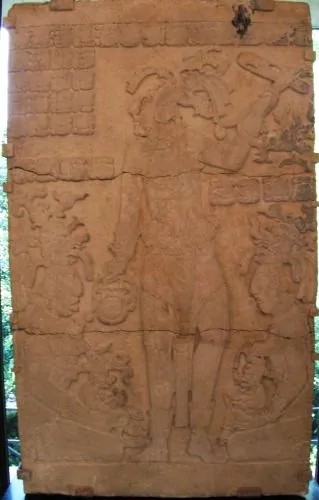
The language of hostage-taking must be applied carefully to ancient Mesoamerica. No surviving source describes a uniform institution through which every conquered ruler regularly surrendered children to a central court under standardized rules. The evidence instead reveals overlapping practices of captivity, fosterage, court education, dynastic marriage, temporary residence, ceremonial attendance, and compelled service. A high-born person living near another ruler might be an honored guest, subordinate courtier, prospective spouse, political pledge, or closely watched prisoner, sometimes occupying several of those positions at once. Royal security was strengthened by controlling elite movement, but the degree of compulsion behind that movement is often difficult to recover.
Keeping potentially dangerous nobles near the throne offered advantages that imprisonment alone could not provide. A provincial lord residing at court could be observed, separated from his local supporters, and required to demonstrate obedience before the ruler’s household. His presence also reduced his ability to organize rebellion without detection, while making him available for consultation, military service, judgment, or ritual performance. A child raised or educated at an overlord’s court might learn its language of rank, form friendships with its nobles, and become dependent upon its patronage. Extended residence could transform an outsider into a court insider whose ambitions were tied to the survival of the dominant dynasty. Compelled attendance at coronations, festivals, tribute presentations, and military gatherings similarly forced subordinate elites to appear within spaces controlled by the ruler. Their participation created visible evidence that distant communities acknowledged the center’s authority, even when their loyalty remained uncertain. Yet hospitality and coercion were not opposites in court society, because lavish treatment could honor a noble while reminding him that permission to depart rested with the ruler. The political usefulness of such arrangements depended precisely upon their ambiguity.
Classic Maya inscriptions provide abundant evidence for the capture of named elites but much less information about long-term hostage administration. Victorious kings recorded “chop” and “capture” events, commissioned images of bound prisoners, and sometimes identified captives by title and place of origin. Some defeated rulers were killed in highly publicized acts, while others disappear from the record without any surviving account of confinement, release, or reinstatement. The evidence is consequently strongest for politically meaningful captivity and weakest for a routine system in which royal children were exchanged as continuing guarantees of peace.
Even royal capture did not always lead immediately to execution. K’inich K’an Joy Chitam II of Palenque was captured by Toniná in 711 CE, yet later evidence has encouraged debate over whether he survived, returned to Palenque, or retained some form of authority after his defeat. The uncertainty surrounding his fate illustrates how a living captive could possess diplomatic value beyond the spectacle of his seizure. A defeated king might be used to validate tribute demands, influence a disputed succession, or communicate with factions inside his former kingdom. Subordinate lords also appeared at the courts of stronger kings, where participation in rituals and the receipt of titles made hierarchy personally visible. Royal women and younger dynasts moved between courts through marriage, alliance, and political intervention, carrying claims that could either stabilize or challenge local successions. Court residence gave ambitious outsiders access to patrons, scribes, warriors, and ritual knowledge unavailable in their home communities. It could integrate a dependent dynasty while preparing one of its members to rule in a manner favorable to the dominant king. Nothing about that outcome requires the resident to have been called a hostage, although the possibility of coercion remained embedded in the unequal relationship.
The Mexica Empire generally preserved local ruling houses rather than replacing every conquered lord with an administrator from Tenochtitlan. Subject rulers collected tribute, supervised labor, mobilized warriors, and maintained local order, making their cooperation more useful than their permanent imprisonment. They could nevertheless be summoned to imperial ceremonies, required to contribute forces to campaigns, and expected to appear in settings where obedience was publicly measured. Time spent in Tenochtitlan brought provincial elites into contact with imperial officials and exposed them to the wealth, ritual grandeur, and military reach of the Triple Alliance. Young nobles throughout central Mexico received disciplined religious and political education, but the surviving evidence does not justify the claim that Tenochtitlan routinely filled its schools with hostage children from every tributary province. Mexica conquest narratives more clearly describe defeated lords submitting, accepting tribute obligations, receiving threats, or being removed when resistance continued. Dynastic marriages and noble kinship created additional reasons for regional rulers to visit or reside near the capital, especially when succession disputes required imperial recognition. Such proximity enabled the tlatoani to reward cooperative nobles and watch doubtful ones without openly treating all of them as prisoners. Mexica policy relied upon selective coercion and compelled participation rather than a single empire-wide hostage bureaucracy.
Purépecha rulers likewise bound subject communities to Tzintzuntzan through tribute, military service, appointed officials, ritual obligations, and attendance before the royal court. The Chronicles of Michoacán describes subordinate lords and officeholders appearing within ceremonies of judgment and historical recitation, where political loyalty was evaluated under the authority of the irecha and the priesthood. Mixtec pictorial histories show nobles moving through marriage, war, conquest, and ritual alliance, while defeated elites could be captured or sacrificed rather than maintained as permanent diplomatic wards. Neither tradition supports a universal hostage system, but both show that control over the location and movement of noble bodies was an important expression of sovereignty.
Keeping elites near the throne reduced distance but did not eliminate danger. A ward who became culturally attached to the court might later govern as a dependable ally, while one who experienced residence as humiliation could return home determined to rebel. A hostage could discourage hostile action only if his relatives valued his survival more than they valued resistance. Compelled attendance made subordinate lords easier to watch, but it also brought potential conspirators into contact with one another and placed them physically close to the ruler. The strategy worked best when proximity offered genuine advantages (marriage, office, gifts, education, military advancement, or imperial recognition) alongside the threat of punishment. It became brittle when nobles believed they had nothing to gain and when detention advertised the ruler’s distrust more clearly than his generosity. Terms such as “ward,” “guest,” “courtier,” and “hostage” should be understood as positions along a political spectrum rather than fixed categories recoverable from every source. The ruler protected himself by keeping important people close, yet proximity remained secure only when those people saw continued cooperation as preferable to escape, conspiracy, or revenge.
Loyalty Has a Price

Royal security required material resources because loyalty could not be sustained through sacred authority and intimidation alone. Rulers fed retainers, rewarded warriors, clothed officials, supported priests, provisioned armies, entertained visiting nobles, and maintained households whose splendor advertised dependable power. These distributions were political acts that converted accumulated wealth into relationships of obligation. A noble who received office, land, insignia, or access to tribute acquired a personal interest in defending the ruler who confirmed those privileges. The security of the throne depended upon circulation as much as accumulation, since wealth hidden in storehouses protected little unless it bound influential people to the royal order.
The Mexica tributary system supplied Tenochtitlan with enormous quantities of textiles, food, cacao, feathers, military clothing, precious materials, manufactured goods, and other regional products. Tribute registers preserved in the Codex Mendoza show that assessment was organized by province and demanded goods associated with the productive capacities of particular territories. These deliveries sustained temples, palaces, officials, armies, artisans, and ceremonial distributions while demonstrating that distant communities acknowledged imperial domination. Cotton garments could be bestowed upon warriors and nobles according to rank, making clothing both a practical reward and a visible statement of status. Military success brought captives, honor, access to privileged dress, and opportunities for advancement, giving ambitious men reasons to serve the tlatoani. High office similarly offered authority, prestige, and a share in the resources moving through the imperial capital. Visiting rulers and ambassadors encountered gifts, banquets, elaborate lodgings, and ceremonial abundance that displayed the advantages of cooperation with Tenochtitlan. Generosity did not erase coercion, because tribute remained an obligation backed by the threat of military punishment. It did allow the ruler to return part of the imperial surplus to the elites whose administrative and military service kept the system functioning. Mexica political economy protected the throne by ensuring that many powerful households benefited from the continuation of conquest and tribute.
Tribute, gifts, and feasts should not be treated as interchangeable forms of generosity. Tribute moved upward under recognized obligation and usually expressed political subordination, even when local rulers retained authority over its collection. Gifts created relationships through the expectation of gratitude, reciprocity, and future service, although refusal or inadequate repayment could reveal hostility. Feasts transformed stored resources into public experiences, allowing rulers to rank guests, recognize allies, display abundance, and make hierarchy temporarily pleasurable.
Classic Maya courts also converted valuable goods and food into political attachments, although their economic institutions differed from those of the Mexica Empire. Subordinate centers and noble households supplied labor, agricultural produce, crafted objects, military assistance, and other resources to royal establishments. Kings redistributed portions of this wealth through ceremonies, feasts, funerals, diplomatic exchanges, and rewards to courtiers. Painted ceramic vessels bearing dedicatory texts could circulate as prestigious gifts, carrying the names and titles of royal patrons into the households of nobles and allies. Jade ornaments, textiles, feathers, cacao, food, and access to specialized craftsmanship similarly communicated rank and intimacy with the court. Archaeological concentrations of serving vessels, food remains, and performance spaces show that feasting brought political communities together while preserving distinctions among hosts, honored guests, attendants, and ordinary participants. Titles such as sajal or ajk’uhuun could place individuals within royal service, but their authority and material benefits varied among kingdoms and cannot be reduced to a standardized salary. The Maya ruler’s protection emerged from this personalized political economy, in which office, hospitality, valuable objects, and public recognition tied noble ambition to continued royal patronage.
Mixtec dynastic politics likewise relied upon prestigious gifts, marriage exchanges, feasts, and the allocation of authority among related ruling houses. Pictorial histories portray nobles presenting objects, visiting courts, participating in rituals, and forming relationships whose political significance extended beyond the material value of the goods exchanged. Such transactions affirmed equality between some participants while marking dependence between others. In the Purépecha state, tribute from subject communities supported the irecha, temples, officials, warriors, artisans, and the administrative institutions concentrated around Tzintzuntzan. The Chronicles of Michoacán describes offices concerned with collecting, supervising, storing, and distributing resources, revealing a political order in which service to the ruler brought both responsibilities and access to royal favor. Food, clothing, land, honors, and official positions rewarded those who performed military, ritual, and administrative duties. The ruler’s generosity was financed by compulsory extraction, joining coercion and redistribution within the same structure of authority.
Loyalty had a price, but it was not purchased once and permanently secured. Retainers expected continued support, successful warriors expected advancement, nobles defended inherited privileges, and subordinate rulers judged whether cooperation still offered greater rewards than rebellion. Heavy tribute could finance guards and armies while simultaneously creating the grievances that made those forces necessary. Gifts strengthened allies, but sufficiently generous rewards could also give a commander or court faction the wealth needed to build an independent following. Offices extended royal supervision into provinces and institutions, yet officeholders could convert delegated authority into personal power. A stable ruler had to extract enough wealth to sustain government without making resistance preferable to compliance. He also had to distribute rewards broadly enough to prevent one lineage, military order, or administrative faction from monopolizing access to royal favor. Material security depended upon a continuing balance between demand and return, fear and benefit, hierarchy and reciprocity. Tribute filled the ruler’s storehouses, but gifts, feasts, and offices turned those contents into people willing to defend him.
Eyes and Ears of Power
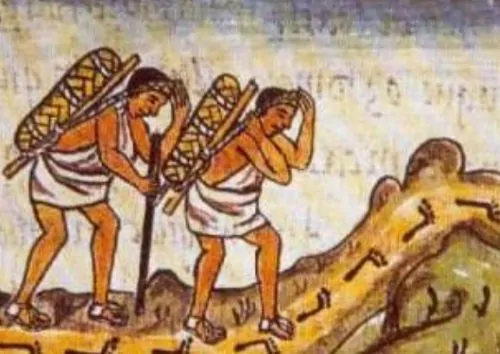
A ruler protected by walls and warriors remained vulnerable if information arrived too late. Reports of rebellion, suspicious troop movements, failed tribute deliveries, disputed successions, crop shortages, or unfamiliar foreigners could determine whether a court acted before a threat reached the capital. Mesoamerican governments relied upon messengers, provincial officials, military scouts, merchants, tributary rulers, and diplomatic visitors to carry knowledge across political space. These people did not constitute a centralized intelligence service in the modern bureaucratic sense, but some performed functions recognizable as reconnaissance, surveillance, reporting, and strategic assessment. Political security began with the ruler’s ability to learn what was happening beyond his immediate field of vision.
Information traveled through a combination of spoken reports, memorized messages, pictorial records, tribute documents, and material objects. Trained runners could move along established routes more quickly than armies or tribute caravans, while canoe traffic connected capitals and provinces across rivers, lakes, lagoons, and coastal waters. Relay systems reduced the time required to carry urgent news, although their precise organization varied among states and is incompletely documented. Messengers required safe stopping places, knowledge of roads, and recognition from local authorities who might otherwise detain them as suspicious strangers. Pictorial documents could preserve names, places, tribute obligations, genealogical claims, and sequences of events, but an informed bearer was often needed to interpret their meaning. Oral communication remained indispensable because diplomacy depended upon tone, formal speech, remembered instructions, and the ability to answer questions not anticipated by a painted record. Officials receiving tribute could also report whether a province appeared prosperous, evasive, divided, or openly resistant. Communication networks gathered political intelligence even when their primary purpose was administrative rather than clandestine.
Markets and merchants created another stream of information. Traders heard rumors, observed shortages, learned which roads were unsafe, and discovered where unusual goods or armed men were accumulating. Their mobility allowed them to compare conditions across regions that most farmers, artisans, and palace residents experienced only indirectly. Commercial knowledge could become political intelligence without every merchant becoming a royal spy.
The Mexica state made particularly effective use of the information carried by long-distance merchants. The pochteca formed organized communities with their own leaders, rituals, courts, commercial knowledge, and relationships extending far beyond the Basin of Mexico. They transported valuable goods, negotiated in distant markets, and entered regions where openly identified Mexica soldiers or ambassadors might encounter resistance. Some specialized merchants known as naualoztomeca traveled in disguise or concealed their political affiliations while entering foreign territory. Their observations could include routes, resources, settlements, political divisions, military preparations, and the attitudes of local rulers toward Tenochtitlan. Reports brought home by such travelers helped imperial leaders evaluate the wealth and vulnerability of territories that might later become targets of conquest. Merchants could also serve as diplomatic intermediaries, and mistreatment of Mexica traders sometimes supplied a grievance through which military intervention was justified. This relationship did not make all pochteca obedient intelligence officers, because they pursued commercial profit, guarded corporate privileges, and possessed interests distinct from those of the royal court. Their information was most useful for assessing distant regions, not necessarily for detecting conspiracies developing within the palace. Provincial officials, tribute collectors, ambassadors, scouts, and allied rulers + remained essential sources whose reports could be compared with merchant testimony. The Mexica intelligence network was powerful precisely because political knowledge moved through several overlapping channels rather than one specialized corps.
Classic Maya rulers also depended upon envoys, subordinate lords, traders, and travelers, although the surviving evidence does not reveal an institution directly comparable to the Mexica merchant organizations. Hieroglyphic texts record royal visits, arrivals, warfare, accessions, marriages, tribute relationships, and encounters involving people from different kingdoms. Such movements required messengers capable of announcing intentions, negotiating passage, and carrying formal communications between courts. Subordinate rulers who attended ceremonies at a dominant capital could gather information about alliances, court factions, dynastic health, and military strength while publicly demonstrating loyalty. River corridors, coastal routes, and overland paths moved jade, obsidian, cacao, salt, feathers, ceramics, and other goods across political boundaries, allowing commercial travelers to carry news along with commodities. Maya kings could exploit these contacts, but no surviving text establishes that long-distance merchants generally served as a formal intelligence branch. Diplomacy itself remained a method of observation, since every embassy allowed the visitor to study the court that received it. The same openness created risk because foreign envoys could report weaknesses as readily as they communicated friendship.
Purépecha government relied upon messengers and officials to connect Tzintzuntzan with subject communities and fortified frontiers. Reports from tribute administrators, military commanders, and local lords helped the irecha assess whether resources were arriving and whether border defenses required reinforcement. Mixtec pictorial histories similarly depict rulers, priests, warriors, and emissaries moving between named places to arrange marriages, alliances, rituals, and campaigns. Neither record supports the reconstruction of a permanent corps of secret agents, but both reveal political systems in which reliable communication among dispersed courts was indispensable.
Information protected the ruler only after it had been interpreted correctly. A warning about rebellion could prompt the dispatch of troops, the summoning of a doubtful lord, the strengthening of palace access, or the distribution of gifts intended to preserve loyalty. False reports could produce the opposite result by directing soldiers away from a genuine threat or persuading the ruler to punish an innocent rival. Messengers might exaggerate danger to secure resources, provincial officials might conceal unrest to protect their positions, and merchants might shape reports around commercial interests. Courtiers controlling access to the ruler could filter unwelcome information and isolate him within a reassuring but inaccurate picture of the realm. Maintaining several channels of communication reduced that danger, although it also created competition among officials claiming privileged knowledge. Intelligence depended upon credibility, comparison, and the ruler’s willingness to hear reports that challenged his expectations. The eyes and ears of power extended royal awareness across roads, markets, courts, and frontiers, but they also placed extraordinary influence in the hands of those who decided what the ruler would see and hear.
The Punishment of Disloyalty
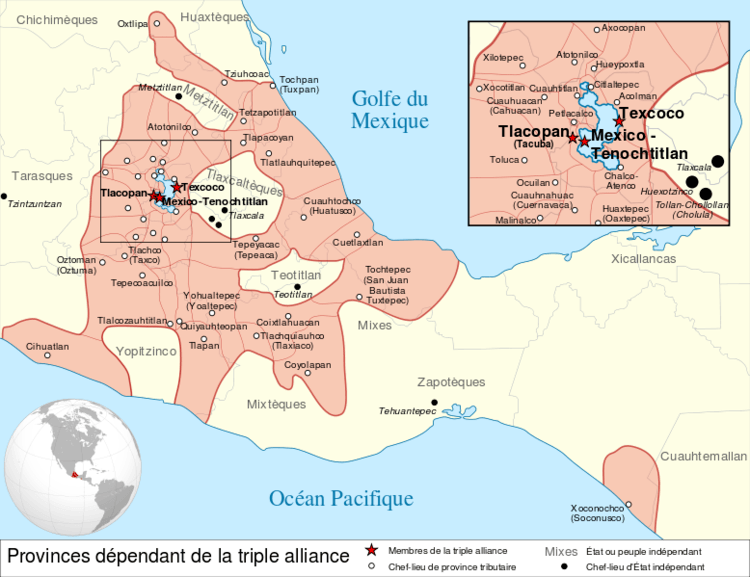
“Treason” is a useful comparative term, but it can obscure the political diversity of ancient Mesoamerica. No universal law defined offenses against every ruler in the same way, and surviving sources rarely distinguish cleanly among rebellion, betrayal, desertion, sacrilege, refusal of tribute, and resistance to foreign domination. Conduct condemned as disloyalty by an imperial capital might be remembered as legitimate independence within the resisting community. Rulers nevertheless treated certain violations as direct attacks upon the political order and answered them with execution, humiliation, confiscation, removal from office, heavier tribute, or destruction of the offending dynasty. Punishment protected the throne by attempting to make the cost of betrayal visible before others considered following the same path.
Nahua sources describe severe penalties for officials, nobles, soldiers, and subject rulers who violated obligations associated with their positions. These accounts were written or compiled after the Spanish conquest and sometimes present idealized law codes, but they consistently portray high office as a conditional privilege rather than protection from royal judgment. Imperial disloyalty could include withholding tribute, killing merchants or ambassadors, assisting an enemy, refusing military service, or attempting to withdraw from the authority of the Triple Alliance. A rebellious altepetl might face invasion, the destruction of its defenses, increased tribute demands, redistribution of land, or closer supervision by imperial officials. Its ruler could be killed, removed, or replaced by a more cooperative relative while much of the existing local administration remained intact. The defeat of Tlatelolco by Tenochtitlan in 1473 provides a particularly important example because the conflict ended the independent rule of Moquihuix and subordinated the neighboring city more directly to Mexica authority. Accounts disagree about whether Moquihuix was killed, cast down from a temple, or died while attempting to flee, revealing how later histories reshaped the circumstances of a politically significant death. Tlatelolco’s loss of an independent tlatoani mattered as much as the death itself because it demonstrated that even a closely related and economically powerful city could be stripped of sovereign leadership. Punishment altered institutions, tribute relationships, and political memory rather than ending with physical violence. The message to other rulers was unmistakable: privileged proximity to Tenochtitlan did not excuse defiance.
Exemplary punishment required an audience. Execution in a palace chamber might remove a conspirator, but public degradation could warn nobles, warriors, officials, and tributary communities simultaneously. Stripping insignia, binding the body, displaying severed heads, dismantling monuments, or denying honorable burial attacked the social identity of the condemned as well as his life. The punished body became political evidence that rank existed only so long as the ruler continued to recognize it.
Classic Maya evidence reveals punitive violence primarily through inscriptions, monuments, and archaeological destruction rather than surviving legal codes. Kings commemorated the capture of named enemies, displayed bound nobles beneath victorious rulers, and recorded attacks against centers that had challenged established hierarchies. A subordinate lord who changed allegiance or resisted an overlord could provoke an expedition intended to restore tribute, seize dynastic hostages, or install a more dependable regime. Captured rulers carried exceptional value because their humiliation represented the defeat of the kingdoms, patron gods, and noble houses attached to them. The execution of Waxaklajuun Ubaah K’awiil of Copán by K’ak’ Tiliw Chan Yopaat of Quiriguá in 738 CE shows how punitive violence could overturn rather than merely preserve hierarchy. From Copán’s perspective, Quiriguá’s ruler had broken a subordinate relationship; from Quiriguá’s later monumental perspective, he had defeated an overlord and established legitimate independence. The victor controlled the commemorative language, transforming rebellion into sacred triumph and the former enforcer into a condemned captive. Maya evidence demonstrates that “treason” was not a neutral category but a claim whose credibility depended upon the outcome of conflict.
Mixtec histories likewise portray punishment within a competitive world of dynastic claims rather than a stable territorial state possessing one criminal code. Defeated rulers could be captured, sacrificed, displaced, or deprived of the places over which their genealogies claimed authority. Lord Eight Deer Jaguar Claw used conquest and ritual violence to eliminate rivals, but his own eventual capture and sacrifice demonstrated how quickly a victorious ruler could become the condemned enemy in another dynasty’s history. Purépecha government produced clearer descriptions of official discipline through the Chronicles of Michoacán. The narrative depicts rulers, priests, tribute administrators, military officers, and local lords as accountable for performing duties assigned within the kingdom’s political and sacred order. Public proceedings associated with the petamuti reviewed offenses and reminded assembled communities that negligence, theft, disobedience, and abuse of office could bring severe punishment. Because the royal government depended upon officials dispersed across a large territory, exemplary justice warned them that delegated authority remained subject to judgment at the center.
Deterrence was never automatic, regardless of how spectacular the penalty appeared. Excessive punishment could convince uncertain nobles that surrender offered no safety, encouraging them to resist until death or seek protection from a rival kingdom. Collective reprisals could weaken rebellious communities while transmitting grievances to survivors and descendants. Terror was most effective when punishment appeared selective, predictable, and supported by enough force to make further resistance seem futile.
Royal justice consequently combined violence with political calculation. A conspirator might be executed, but a defeated ruler could instead be reinstated under stricter obligations if his local authority remained useful. Confiscation rewarded loyal supporters, replacement of officeholders disrupted hostile networks, and public judgment reassured cooperative elites that rebellion would not be allowed to destroy their privileges. Yet every punishment revealed the ruler’s dependence upon interpretation, since subjects had to believe that the condemned person was guilty rather than merely an inconvenient rival. Priests, scribes, heralds, monuments, and ceremonial performances helped frame violence as lawful defense of the community. When that framing succeeded, exemplary punishment isolated the offender and strengthened the throne. When it failed, execution could create a martyr, intensify factional hatred, or expose the ruler’s fear. The punishment of disloyalty protected rulers not through severity alone but through the ability to define betrayal, control its public memory, and persuade observers that obedience remained safer than resistance.
When the Shield Broke: Captured Kings and Fallen Courts
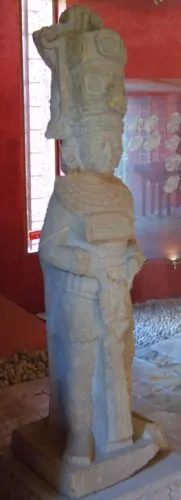
Protective systems become most visible at the moment they fail. The capture of a ruler could expose divided loyalties, defective intelligence, inadequate fortifications, military defeat, or the betrayal of people already admitted into the royal presence. Yet royal capture did not always destroy the kingdom, because councils, heirs, commanders, and subordinate nobles might preserve government after the king disappeared. Conversely, a court could collapse even when the ruler’s personal fate remained uncertain if the relationships supplying food, tribute, information, and military support disintegrated around him. The shield broke through cumulative political failure more often than through the simple absence of guards.
Classic Maya history supplies several cases in which royal captivity transformed relations among kingdoms. K’inich K’an Joy Chitam II of Palenque was captured by Toniná in 711 CE and depicted as a defeated prisoner, a powerful reversal for a ruler belonging to one of the most prestigious dynasties of the western lowlands. Later evidence has produced disagreement over whether he survived captivity or regained some authority, reminding us that seizure did not necessarily result in immediate execution. An even more consequential reversal occurred in 738 CE, when K’ak’ Tiliw Chan Yopaat of Quiriguá captured Waxaklajuun Ubaah K’awiil of Copán. The circumstances of the confrontation remain uncertain, but Quiriguá’s monuments state that the Copán king was seized and subsequently put to death. By destroying the body of a former overlord, Quiriguá demonstrated that Copán could no longer enforce the hierarchy it had once dominated. K’ak’ Tiliw Chan Yopaat translated the victory into new monuments, expanded architecture, and a more assertive royal image, converting one captured king into the foundation of another dynasty’s greatness. Copán nevertheless continued under later rulers, although its political position and monumental activity were affected by the defeat. Royal capture could rupture an international order without immediately erasing the defeated capital.
Cancuén presents a more concentrated vision of courtly destruction. Around 800 CE, King Kan Maax and numerous members of the royal establishment were killed in or near the palace, with bodies deposited in a water feature at the edge of the complex. The concentration of elite victims suggests a targeted destruction of the ruling court rather than an indiscriminate burning of the entire settlement. Cancuén’s great palace, which had organized diplomacy, exchange, residence, and administration, became the setting in which the human relationships sustaining those functions were annihilated. Its fate demonstrates how quickly a center built upon controlled access could collapse once attackers reached the innermost political community.
The seizure of Motecuhzoma II by Hernán Cortés and his companions in 1519 provides the most extensively narrated Mesoamerican example of a ruler trapped within his own capital. The Spaniards did not prevail through personal daring alone, because they depended upon Indigenous interpreters, porters, informants, warriors, and alliances with enemies of Mexica power. Once admitted to Tenochtitlan, they exploited courtly hospitality and physical proximity to place Motecuhzoma under custody while initially preserving the appearance that he continued to govern. Palace rooms became detention spaces, and established channels of command allowed orders issued under coercion to travel outward through Mexica institutions. The sacred dignity of the tlatoani and uncertainty among the political elite may have delayed an immediate attack that risked killing the ruler. Detention nevertheless weakened Motecuhzoma’s credibility because a king expected to protect his people now appeared unable to protect himself. Spanish and Indigenous accounts disagree sharply over his death in 1520, with some blaming stones cast by Mexica opponents and others accusing the Spaniards of killing him. His death did not end resistance, since Cuitlahuac assumed power and helped drive the Spaniards from the city before dying during the smallpox epidemic. Cuauhtemoc then organized the final defense against a coalition that controlled the lake, attacked along the causeways, cut supplies, and subjected Tenochtitlan to a devastating siege. His capture while attempting to leave the collapsing city in August 1521 marked the defeat of organized resistance within the capital, although Spanish fears of renewed opposition continued. The later execution of Cuauhtemoc in 1525 showed that a captive ruler could remain politically dangerous long after losing his throne.
Other regions preserve comparable stories of dynastic reversal. Mixtec histories record the capture and sacrifice of Lord Eight Deer Jaguar Claw in 1115 CE after a career constructed through warfare, marriage, ritual authority, and alliances among numerous ruling houses. The political relationships that had enabled his ascent could not prevent rivals from isolating and defeating him, and his death reopened the order he had attempted to dominate. The Purépecha ruler Tangáxuan II faced a different crisis when Spanish forces entered Michoacán after the fall of Tenochtitlan. Rather than expose his kingdom to immediate devastation, he accepted Spanish supremacy in 1522 and attempted to preserve elements of the existing government through accommodation. That policy protected neither his autonomy nor his person after colonial demands, factional accusations, and increasingly violent intervention undermined the arrangement. Nuño de Guzmán ordered Tangáxuan’s torture and execution in 1530, eliminating the ruler whose cooperation had initially facilitated Spanish entry. His fate reveals the limits of traditional diplomatic survival when an external power refused to honor the political expectations that had made negotiated submission rational.
Captured kings mattered because Mesoamerican governments concentrated authority, sacred legitimacy, diplomacy, and patronage in royal bodies. Removing the ruler could disrupt commands, divide nobles over succession, encourage provincial rebellion, and allow enemies to claim that supernatural favor had shifted. Still, the outcome depended upon whether institutions and alliances remained strong enough to produce a successor and continue resistance. Palenque and Copán survived royal captures, while Cancuén’s targeted massacre erased the court that coordinated its political economy. Tenochtitlan fell only after detention, internal conflict, epidemic disease, blockade, military siege, and the mobilization of an immense Indigenous coalition converged. Tangáxuan II survived initial submission but could not secure himself against a colonial regime operating through escalating coercion. Walls, guards, sacred authority, intelligence, and dynastic networks failed when the relationships connecting them ceased to reinforce one another. A captured king was not merely an individual casualty; he was the point at which the strengths or fractures of the entire political system became impossible to conceal.
A Security System or the Ordinary Machinery of Kingship?
The following video from “Timeline – World History Documentaries” is a discussion of Mesoamerica’s ancient empires.
We must be cautious not to gather the ordinary institutions of kingship under an anachronistic label. Palaces housed rulers, armies fought wars, priests conducted rituals, nobles arranged marriages, and tribute supported government whether or not anyone regarded these activities as components of royal security. Calling them a “system” risks imposing modern expectations of specialized personnel, coordinated planning, intelligence services, and permanent protective procedures upon societies that organized power through households and personal relationships. No known Mesoamerican language has yielded an exact equivalent for a royal security apparatus conceived as a distinct branch of government. The modern category may create an institutional unity that ancient actors neither named nor intended.
Archaeology preserves walls, courtyards, weapons, burned buildings, hurried barricades, and human remains, but material features rarely reveal every purpose for which they were built or used. A restricted doorway could express privacy, ritual hierarchy, climate adaptation, or household organization without having been designed primarily to stop an assassin. An elite warrior buried near a royal compound was not necessarily a bodyguard, just as a distant fortified settlement was not necessarily constructed for the personal safety of the king. Indigenous pictorial histories and inscriptions emphasize successful rulers, legitimate genealogies, captured enemies, and sanctioned ceremonies rather than routine guard rotations or failed threat assessments. Spanish-period narratives preserve valuable testimony, but their authors interpreted Indigenous government through European categories of monarchy, tyranny, noble service, espionage, and treason. Later historians can compound the problem by selecting every reference to guards, merchants, messengers, priests, or walls and assembling them into an apparatus more coherent than the scattered evidence allows. Documentation is also distributed unevenly, with the Mexica receiving far more detailed institutional descriptions than many earlier or smaller societies. The resulting reconstruction can easily make distinct Maya, Mixtec, Nahua, Zapotec, and Purépecha practices appear like regional versions of a single Mesoamerican model. At its weakest, the concept of royal security becomes unfalsifiable because almost any institution supporting the ruler can be redescribed as protective.
Protection may have been inseparable from rulership itself. The courtier who served at an audience, the noble who led troops, and the priest who confirmed legitimacy were not necessarily performing secondary security functions; they were participating in the relationships that constituted political authority. Tribute did not first create a government and then finance its defenses, because collection and redistribution were themselves acts of rule. From this perspective, “security” names the continued success of kingship rather than an independent system operating around it.
Yet this does not eliminate evidence of deliberate protection. Some measures were clearly responses to identifiable dangers, including emergency barricades at Maya centers, garrisons on contested frontiers, controlled access to royal audiences, military escorts, the punishment of rebellious lords, and the rapid summoning of forces after reports of invasion. Courts repeatedly distinguished between people permitted into public spaces and those admitted near the ruler’s body. Rulers also manipulated marriage, office, gifts, compulsory attendance, and captive display with an evident awareness that allies could become rivals and that distant subordinates required supervision. These practices were not identical or centrally administered, yet their recurrence shows sustained concern with controlling approach, detecting hostility, deterring rebellion, and preserving dynastic continuity. Intentionality operated at different scales: a wall might have several functions while still impeding attack, and a feast might reinforce hierarchy while also reducing the danger of noble defection. Royal security is a legitimate analytical category so long as it is not mistaken for a specialized institution documented uniformly across Mesoamerica.
The most defensible interpretation replaces a singular security apparatus with a shifting security configuration centered upon the ruler. Its components belonged to the ordinary machinery of kingship, but they acquired protective force when coordinated against particular threats. The palace regulated proximity, the court screened access, noble households supplied armed support, political economy rewarded cooperation, sacred performance raised the cost of disobedience, and communication networks made distant danger knowable. No central bureau necessarily united these activities, because the ruler and his household served as their point of intersection. Their relative importance changed across time and place: Tenochtitlan relied heavily upon lake geography, imperial mobilization, and tributary resources, while smaller Maya kingdoms depended more visibly upon dynastic courts, subordinate lords, and situational alliances. The same institution could protect in one crisis and create vulnerability in another, as royal kin became claimants, commanders became rivals, and controlled palace access enabled hostile guests to approach the king. This counterpoint narrows rather than destroys the central argument. Ancient Mesoamerican rulers possessed no single, standardized security system, but their survival depended upon a recognizable protective logic embedded within governance. What guarded the ruler was the machinery of kingship itself, and when that machinery ceased to command cooperation, no separate apparatus remained to save him.
Conclusion: The Ruler Was Safest Inside Relationships
No single barrier protected the rulers of ancient Mesoamerica. Elite warriors could defend the royal body, palaces could regulate approach, capitals could delay invasion, and sacred authority could discourage rebellion, but each measure depended upon people willing to make it effective. Walls required defenders, armies required commanders and provisions, rituals required priests and audiences, while tribute required local officials capable of collecting it without provoking destructive resistance. The ruler stood at the center of a layered political order extending from private chambers to distant frontiers. His security was relational before it was architectural, military, or ceremonial.
The configuration of those relationships differed across Mesoamerican societies. Classic Maya kings relied upon royal households, subordinate lords, dynastic marriages, ritual performance, and alliances among courts whose loyalties could change rapidly. Mexica rulers drew upon the institutions of Tenochtitlan, the resources of the Triple Alliance, community-based military mobilization, long-distance merchants, provincial tribute, and carefully ranked noble offices. Mixtec lords operated within a political landscape where genealogy, marriage, sacred journeys, and personal alliances connected numerous competing dynasties. Purépecha rulers coordinated tribute officials, priests, military commanders, subject communities, and defended frontiers from the royal center at Tzintzuntzan. Geography altered the balance among these strategies, making lake systems, hilltops, escarpments, walls, causeways, and roads more important in some capitals than in others. Political scale mattered as well, because a regional empire faced different protective problems from a smaller kingdom whose ruler personally knew many of its leading nobles. Uneven archaeological, pictorial, epigraphic, and colonial evidence prevents these societies from being fitted into one standardized model. Their shared principle was not institutional uniformity but the need to control proximity, information, resources, violence, and succession through dependable human connections.
Those connections were strongest where benefit, obligation, and belief reinforced one another. They were also the principal source of danger because relatives became claimants, courtiers became conspirators, commanders became rivals, and subject rulers became rebels. A palace could exclude strangers while admitting the insider who posed the greater threat. Sacred kingship could discourage attack while making the captured ruler an exceptionally valuable symbol of victory.
The durability of royal protection ultimately depended upon whether enough people believed that preserving the ruler would preserve their own status, community, or cosmic order. A successful king rewarded service, distributed authority without surrendering supremacy, received unwelcome information, maintained credible force, and presented dynastic continuity as preferable to political rupture. He was safest not when hidden from society but when nobles, warriors, priests, merchants, officials, relatives, and subjects remained invested in keeping him alive. Captured kings and massacred courts reveal what happened when those relationships fractured or when an external coalition overwhelmed them. The fall of Cancuén, the capture of Waxaklajuun Ubaah K’awiil, the confinement of Motecuhzoma II, and the execution of Tangáxuan II were different events, but each exposed the limits of protection once royal authority ceased to coordinate effective cooperation. Ancient Mesoamerica did not possess a single royal security apparatus separable from government. It possessed many political arrangements whose ordinary operation produced a protective effect around the ruler. The guarded throne endured while those arrangements held together, and the king became vulnerable the moment the people forming his shield no longer acted as one.
Bibliography
Affiliate disclosure: Amazon links on this site are paid links. As an Amazon Associate I earn from qualifying purchases.
- Alcalá, Jerónimo de. Relación de Michoacán. Coordinated by Moisés Franco Mendoza. Zamora, Michoacán: El Colegio de Michoacán; Morelia: Gobierno del Estado de Michoacán, 2000.
- Anderson, Arthur J. O., and Susan Schroeder, eds. and trans. Codex Chimalpahin: Society and Politics in Mexico Tenochtitlan, Tlatelolco, Texcoco, Culhuacan, and Other Nahua Altepetl in Central Mexico. 2 vols. Norman: University of Oklahoma Press, 1997.
- Ardren, Traci, ed. Ancient Maya Women. Walnut Creek, CA: AltaMira Press, 2002.
- Baron, Joanne P. Patron Gods and Patron Lords: The Semiotics of Classic Maya Community Cults. Boulder: University Press of Colorado, 2016.
- Berdan, Frances F. Aztec Archaeology and Ethnohistory. Cambridge: Cambridge University Press, 2014.
- Berdan, Frances F., et.al. Aztec Imperial Strategies. Washington, DC: Dumbarton Oaks Research Library and Collection, 1996.
- Berdan, Frances F. and Patricia Rieff Anawalt. The Codex Mendoza. 4 vols. Berkeley: University of California Press, 1992.
- Bernardino de Sahagún. Florentine Codex: General History of the Things of New Spain. Translated by Arthur J. O. Anderson and Charles E. Dibble. Santa Fe: School of American Research, 1950.
- Blanton, Richard E., et.al. “A Dual-Processual Theory for the Evolution of Mesoamerican Civilization.” Current Anthropology 37:1 (1996), 1–14.
- Boone, Elizabeth Hill. Stories in Red and Black: Pictorial Histories of the Aztecs and Mixtecs. Austin: University of Texas Press, 2000.
- Byland, Bruce E., and John M. D. Pohl. In the Realm of 8 Deer: The Archaeology of the Mixtec Codices. Norman: University of Oklahoma Press, 1994.
- Calnek, Edward E. “Settlement Pattern and Chinampa Agriculture at Tenochtitlán.” American Antiquity 37:1 (1972), 104–115.
- Carrasco, David. City of Sacrifice: The Aztec Empire and the Role of Violence in Civilization. Boston: Beacon Press, 1999.
- Carrasco, Pedro. The Tenochca Empire of Ancient Mexico: The Triple Alliance of Tenochtitlan, Tetzcoco, and Tlacopan. Norman: University of Oklahoma Press, 1999.
- Chimalpahin Quauhtlehuanitzin, Domingo. Codex Chimalpahin: Society and Politics in Mexico Tenochtitlan, Tlatelolco, Texcoco, Culhuacan, and Other Nahua Altepetl in Central Mexico. Edited and translated by Arthur J. O. Anderson and Susan Schroeder. 2 vols. Norman: University of Oklahoma Press, 1997.
- Christie, Jessica Joyce, ed. Maya Palaces and Elite Residences: An Interdisciplinary Approach. Austin: University of Texas Press, 2003.
- Clendinnen, Inga. Aztecs: An Interpretation. Cambridge: Cambridge University Press, 1991.
- Cook, Duncan E., Timothy Beach, and Arthur A. Demarest. “Soil and Slaughter: A Geoarchaeological Record of the Ancient Maya from Cancuén, Guatemala.” Journal of Archaeological Science: Reports 15 (2017), 330–343.
- Cortés, Hernán. Letters from Mexico. Translated by Anthony Pagden. New Haven: Yale University Press, 1986.
- Demarest, Arthur A., et.al. “Classic Maya Defensive Systems and Warfare in the Petexbatun Region: Archaeological Evidence and Interpretations.” Ancient Mesoamerica 8:2 (1997), 229–253.
- —-, et.al. “Economy, Exchange, and Power: New Evidence from the Late Classic Maya Port City of Cancuen.” Ancient Mesoamerica 25:1 (2014), 187–219.
- —-. The Petexbatun Regional Archaeological Project: A Multidisciplinary Study of the Maya Collapse. Nashville, TN: Vanderbilt University Press, 2006.
- Díaz del Castillo, Bernal. The True History of the Conquest of New Spain. Translated by Alfred Percival Maudslay. London: The Hakluyt Society, 1910.
- Durán, Diego. The History of the Indies of New Spain. Translated by Doris Heyden. Norman: University of Oklahoma Press, 1994.
- Evans, Susan Toby. “Aztec Noble Courts: Men, Women, and Children of the Palace.” In Royal Courts of the Ancient Maya. Vol. 1: Theory, Comparison, and Synthesis, edited by Takeshi Inomata and Stephen D. Houston, 237–273. Boulder, CO: Westview Press, 2001.
- Evans, Susan Toby, and Joanne Pillsbury, eds. Palaces of the Ancient New World. Washington, DC: Dumbarton Oaks, 2004.
- Fash, William L., and E. Wyllys Andrews, eds. Copán: The History of an Ancient Maya Kingdom. Santa Fe, NM: School of American Research Press, 2005.
- Feinman, Gary M., and Joyce Marcus, eds. Archaic States. Santa Fe, NM: School of American Research Press, 1998.
- Foias, Antonia E. Ancient Maya Political Dynamics. Gainesville: University Press of Florida, 2013.
- Garraty, Christopher P., and Barbara L. Stark, eds. Archaeological Approaches to Market Exchange in Ancient Societies. Boulder: University Press of Colorado, 2010.
- Gillespie, Susan D. The Aztec Kings: The Construction of Rulership in Mexica History. Tucson: University of Arizona Press, 1989.
- Gorenstein, Shirley, and Helen Perlstein Pollard. The Tarascan Civilization: A Late Prehispanic Cultural System. Nashville, TN: Vanderbilt University, 1981.
- Graham, Ian. Corpus of Maya Hieroglyphic Inscriptions, Volume 1: Introduction. Cambridge, MA: Peabody Museum of Archaeology and Ethnology, Harvard University, 1974.
- Harrison, Peter D. The Lords of Tikal: Rulers of an Ancient Maya City. London: Thames and Hudson, 1999.
- Hassig, Ross. Aztec Warfare: Imperial Expansion and Political Control. Norman: University of Oklahoma Press, 1988.
- —-. Mexico and the Spanish Conquest. Norman: University of Oklahoma Press, 1994.
- Hassig, Ross. War and Society in Ancient Mesoamerica. Berkeley: University of California Press, 1992.
- Hirth, Kenneth G., ed. Archaeological Research at Xochicalco. Vol. 1, Ancient Urbanism at Xochicalco: The Evolution and Organization of a Pre-Hispanic Society. Salt Lake City: University of Utah Press, 2000.
- Houston, Stephen, and David Stuart. “Of Gods, Glyphs, and Kings: Divinity and Rulership among the Classic Maya.” Antiquity 70:268 (1996), 289–312.
- —-. “Peopling the Classic Maya Court.” In Royal Courts of the Ancient Maya. Vol. 1: Theory, Comparison, and Synthesis, edited by Takeshi Inomata and Stephen D. Houston, 54–83. Boulder, CO: Westview Press, 2001.
- Houston, Stephen, and Takeshi Inomata. The Classic Maya. Cambridge: Cambridge University Press, 2009.
- Houston, Stephen, David Stuart, and Karl Taube. The Memory of Bones: Body, Being, and Experience among the Classic Maya. Austin: University of Texas Press, 2006.
- Inomata, Takeshi. “King’s People: Classic Maya Courtiers in a Comparative Perspective.” In Royal Courts of the Ancient Maya. Vol. 1: Theory, Comparison, and Synthesis, edited by Takeshi Inomata and Stephen D. Houston, 27–53. Boulder, CO: Westview Press, 2001.
- —-. “The Last Day of a Fortified Classic Maya Center: Archaeological Investigations at Aguateca, Guatemala.” Ancient Mesoamerica 8:2 (1997), 337–351.
- —-, et.al. “In the Palace of the Fallen King: The Royal Residential Complex at Aguateca, Guatemala.” Journal of Field Archaeology 28:3-4 (2001), 287–306.
- —-. “Plazas, Performers, and Spectators: Political Theaters of the Classic Maya.” Current Anthropology 47:5 (2006), 805–842.
- Inomata, Takeshi, and Stephen D. Houston, eds. Royal Courts of the Ancient Maya. 2 vols. Boulder, CO: Westview Press, 2001.
- Ixtlilxochitl, Fernando de Alva. History of the Chichimeca Nation. Edited and translated by Amber Brian, Bradley Benton, and Pablo García Loaeza. Norman: University of Oklahoma Press, 2019.
- Jackson, Sarah E. Politics of the Maya Court: Hierarchy and Change in the Late Classic Period. Norman: University of Oklahoma Press, 2013.
- Joyce, Rosemary A. Gender and Power in Prehispanic Mesoamerica. Austin: University of Texas Press, 2000.
- Kellogg, Susan. Law and the Transformation of Aztec Culture, 1500–1700. Norman: University of Oklahoma Press, 1995.
- Kirchhoff, Paul. “Mesoamérica: Sus límites geográficos, composición étnica y caracteres culturales.” Suplemento de la revista Tlatoani Núm. 3 (1960).
- LeCount, Lisa J. “Like Water for Chocolate: Feasting and Political Ritual among the Late Classic Maya at Xunantunich, Belize.” American Anthropologist 103:4 (2001), 935–953.
- Looper, Matthew G. Lightning Warrior: Maya Art and Kingship at Quirigua. Austin: University of Texas Press, 2003.
- —-. To Be Like Gods: Dance in Ancient Maya Civilization. Austin: University of Texas Press, 2009.
- Marcus, Joyce. Mesoamerican Writing Systems: Propaganda, Myth, and History in Four Ancient Civilizations. Princeton, NJ: Princeton University Press, 1992.
- Martin, Simon. Ancient Maya Politics: A Political Anthropology of the Classic Period 150–900 CE. Cambridge: Cambridge University Press, 2020.
- —-. “Court and Realm: Architectural Signatures in the Classic Maya Southern Lowlands.” In Royal Courts of the Ancient Maya. Vol. 1, Theory, Comparison, and Synthesis, edited by Takeshi Inomata and Stephen D. Houston, 168–194. Boulder, CO: Westview Press, 2001.
- Martin, Simon, and Nikolai Grube. Chronicle of the Maya Kings and Queens: Deciphering the Dynasties of the Ancient Maya. 2nd ed. London: Thames & Hudson, 2008.
- Masson, Marilyn A., and Carlos Peraza Lope, eds. Kukulcan’s Realm: Urban Life at Ancient Mayapán. Boulder: University Press of Colorado, 2014.
- Masson, Marilyn A., and David A. Freidel, eds. Ancient Maya Political Economies. Walnut Creek, CA: AltaMira Press, 2002.
- McAnany, Patricia A. Living with the Ancestors: Kinship and Kingship in Ancient Maya Society. Rev. ed. Austin: University of Texas Press, 2014.
- Miller, Mary Ellen. The Murals of Bonampak. Princeton, NJ: Princeton University Press, 1986.
- Miller, Mary, and Claudia Brittenham. The Spectacle of the Late Maya Court: Reflections on the Murals of Bonampak. Austin: University of Texas Press, 2013.
- Miller, Mary, and Simon Martin. Courtly Art of the Ancient Maya. New York: Thames and Hudson, 2004.
- Mundy, Barbara E. The Death of Aztec Tenochtitlan, the Life of Mexico City. Austin: University of Texas Press, 2015.
- Nuttall, Zelia, ed. The Codex Nuttall: A Picture Manuscript from Ancient Mexico. Introduction by Arthur G. Miller. New York: Dover Publications, 1975.
- O’Neil, Megan E. Engaging Ancient Maya Sculpture at Piedras Negras, Guatemala. Norman: University of Oklahoma Press, 2012.
- Offner, Jerome A. Law and Politics in Aztec Texcoco. Cambridge: Cambridge University Press, 1983.
- Olivier, Guilhem. Mockeries and Metamorphoses of an Aztec God: Tezcatlipoca, “Lord of the Smoking Mirror.” Translated by Michel Besson. Boulder: University Press of Colorado, 2003.
- Pohl, John M. D. The Politics of Symbolism in the Mixtec Codices. Nashville: Vanderbilt University Publications in Anthropology, 1994.
- Pollard, Helen Perlstein. Taríacuri’s Legacy: The Prehispanic Tarascan State. Norman: University of Oklahoma Press, 1993.
- Redmond, Elsa M., and Charles S. Spencer. “Ancient Palace Complex (300–100 BCE) Discovered in the Valley of Oaxaca, Mexico.” Proceedings of the National Academy of Sciences 114:15 (2017), 3805–3814.
- Reents-Budet, Dorie. Painting the Maya Universe: Royal Ceramics of the Classic Period. Durham, NC: Duke University Press, 1994.
- Restall, Matthew. When Montezuma Met Cortés: The True Story of the Meeting That Changed History. New York: Ecco, 2018.
- Rojas, José Luis de. Tenochtitlan: Capital of the Aztec Empire. Gainesville: University Press of Florida, 2012.
- Routledge, Bruce. Archaeology and State Theory: Subjects and Objects of Power. London: Bloomsbury, 2014.
- Schele, Linda, and Mary Ellen Miller. The Blood of Kings: Dynasty and Ritual in Maya Art. New York: George Braziller, 1986.
- Schroeder, Susan. Chimalpahin and the Kingdoms of Chalco. Tucson: University of Arizona Press, 1991.
- Smith, Michael E. Aztec City-State Capitals. Gainesville: University Press of Florida, 2008.
- Smith, Michael E., and Frances F. Berdan, eds. The Postclassic Mesoamerican World. Salt Lake City: University of Utah Press, 2010.
- Smith, Michael E., and Katharina J. Schreiber. “New World States and Empires: Economic and Social Organization.” Journal of Archaeological Research 13:3 (2005), 189-229.
- Spores, Ronald. The Mixtecs in Ancient and Colonial Times. Norman: University of Oklahoma Press, 1984.
- Stuart, David. “Kings of Stone: A Consideration of Stelae in Ancient Maya Ritual and Representation.” RES: Anthropology and Aesthetics, nos. 29–30 (1996), 148–171.
- Tate, Carolyn E. Yaxchilan: The Design of a Maya Ceremonial City. Austin: University of Texas Press, 1992.
- Tokovinine, Alexandre. Place and Identity in Classic Maya Narratives. Washington, DC: Dumbarton Oaks Research Library and Collection, 2013.
- Townsend, Camilla. Fifth Sun: A New History of the Aztecs. New York: Oxford University Press, 2019.
- Townsend, Richard F. State and Cosmos in the Art of Tenochtitlan. Washington, DC: Dumbarton Oaks Research Library and Collection, 1979.
- Traxler, Loa P., and Robert J. Sharer. “Copan and Quirigua: Shifting Destinies in the Southeastern Maya Lowlands.” Contributions in New World Archaeology 4 (2012), 141-158.
- Trigger, Bruce G. Understanding Early Civilizations: A Comparative Study. Cambridge: Cambridge University Press, 2003.
- Warren, J. Benedict. The Conquest of Michoacán: The Spanish Domination of the Tarascan Kingdom in Western Mexico, 1521–1530. Norman: University of Oklahoma Press, 1985.
- Webster, David. Defensive Earthworks at Becán, Campeche, Mexico: Implications for Mayan Warfare. New Orleans: Middle American Research Institute, Tulane University, 1976.
- —-. “Spatial Dimensions of Maya Courtly Life: Problems and Issues.” In Royal Courts of the Ancient Maya. Vol. 1, Theory, Comparison, and Synthesis, edited by Takeshi Inomata and Stephen D. Houston, 130–167. Boulder, CO: Westview Press, 2001.
- Wells, E. Christian, and Karla L. Davis-Salazar, eds. Mesoamerican Ritual Economy: Archaeological and Ethnological Perspectives. Boulder: University Press of Colorado, 2007.
- Yoffee, Norman. Myths of the Archaic State: Evolution of the Earliest Cities, States, and Civilizations. Cambridge: Cambridge University Press, 2005.
Originally published by Brewminate, 08.20.2026, under the terms of a Creative Commons Attribution-NonCommercial-NoDerivatives 4.0 International license.
About the Author