At Maní in 1562, Franciscan authorities used testimony, coercion, and local knowledge to expose Maya religious practices hidden from colonial view.

By Matthew A. McIntosh
Public Historian
Brewminate
Introduction: The Religion the Friars Could Not See
In the spring of 1562, the Franciscan project in Yucatán confronted a problem more unsettling than open resistance. In and around Maní, Maya communities that had been baptized, instructed in Christian doctrine, and incorporated into the missionary network were discovered to be maintaining religious practices that friars believed conversion should have extinguished. Reports of ritual activity and the discovery of sacred objects in a cave near Maní suggested that the Christianity visible to missionaries in churches and public ceremonies did not necessarily describe what people did beyond Franciscan observation. The problem was not simply that an old religion had survived conquest. It was that missionaries could not readily determine where it survived, who practiced it, or how deeply participation extended through communities that outwardly appeared Christian. A Maya person might attend Mass and observe the outward requirements of the new faith while continuing to participate in ceremonies that Spanish clergy classified as idolatry. Once the Franciscans accepted that possibility, religious conformity could no longer be judged from public behavior alone. The search for prohibited religion consequently became a search for what people did when the authorities were not watching.
That uncertainty was built into the missionary enterprise itself. The Spanish conquest of much of northern Yucatán had created institutions through which tribute, labor, Christian instruction, and political obedience could be demanded, but conquest did not give friars continuous access to Maya households or the many spaces in which ritual life could persist. Franciscan monasteries and doctrinal centers brought people into concentrated settings where missionaries could preach, catechize, baptize, supervise marriages, and punish visible departures from Christian norms. Yet Maya society extended far beyond those points of contact, and religious practice was woven into agriculture, healing, kinship, local authority, relations with the landscape, and understandings of misfortune or supernatural power. Conversion could not be measured simply by counting baptisms or observing attendance at Christian ceremonies. The friars could see conformity; what they could not see was whether that conformity had displaced older religious obligations or merely existed beside them.
Diego de Landa and his fellow Franciscans interpreted evidence of continuing ritual not as an expected consequence of incomplete cultural transformation but as a grave betrayal by people who had already received Christian instruction. That distinction helps explain the intensity of the response. From a Franciscan perspective, baptized Maya who returned to prohibited practices were not simply uninstructed outsiders awaiting evangelization: they were Christians believed to be knowingly reverting to error, perhaps under the influence of religious specialists whom the missionaries regarded as agents of the devil. Yet the category the Spaniards called “idolatry” could gather together practices whose meanings were considerably more complicated for Maya participants. Offerings associated with rain or agricultural fertility, curing rites, inherited ritual knowledge, ceremonies at sacred places, and the possession of images or other sacred objects did not necessarily constitute a single clandestine religious movement consciously organized against Christianity. Nor does outward participation in Christian life prove that Maya practitioners understood the two religious worlds as absolutely incompatible. The evidence reaching the friars was filtered through a Christian conceptual construct that tended to convert cultural persistence and religious adaptation into evidence of apostasy. The investigation that followed would attempt to resolve that uncertainty by forcing private practice into categories Spanish authorities could identify, prosecute, and punish. Yet it would also create a serious evidentiary problem: much of what colonial officials believed they learned about hidden Maya religion would come from testimony produced under the pressure of the investigation itself.
The celebrated auto-da-fé at Maní on July 12, 1562, has long dominated popular memory of the episode because the destruction of Maya manuscripts and sacred objects offers an extraordinarily vivid symbol of cultural conquest. But the bonfires were the culmination of a process more revealing than the spectacle itself. Before objects could be condemned, people had to identify them; before participants could be punished, authorities had to discover who they were. What began as evidence of forbidden ritual became an inquiry into relationships, places, past ceremonies, and the knowledge that Maya people possessed about one another. Interrogation could produce a confession, but a confession could also produce another name, another location, or another allegation requiring investigation. Maní became a crisis of religious surveillance long before it became a public drama of destruction. The central history of 1562 lies in the effort to make private belief and concealed behavior visible, and in what happened when colonial authorities concluded that the most reliable way to penetrate an unseen religious world was to compel the people living within it to reveal one another.
Conquest Was Not Conversion: Franciscan Yucatán before 1562
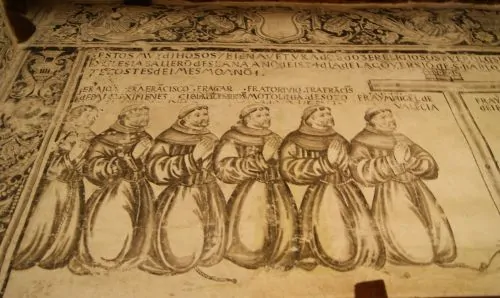
Spanish military domination of northern Yucatán was recent, uneven, and incomplete when the Franciscan mission began to take institutional form in the 1540s. The Montejo campaigns had established Spanish towns and imposed colonial claims over much of the peninsula, but conquest did not erase the political geography that had preceded it. Maya communities retained local leaders, kinship structures, agricultural routines, memories of earlier political affiliations, and religious obligations that Spanish occupation could disrupt without immediately replacing. The encomienda system imposed tribute and helped bind indigenous towns to the colonial order, while Spanish officials increasingly reorganized local government around forms they considered administratively legible. Yet the ability to collect tribute or compel labor was not evidence that Maya people had adopted Spanish religious assumptions. Political submission could be demonstrated through payment, service, and obedience to officials; conversion demanded something much harder to measure. Christianity required missionaries to persuade people to reinterpret the supernatural world itself, abandoning inherited ritual obligations in favor of doctrines that were not merely foreign but grounded in unfamiliar understandings of sin, salvation, divine authority, and exclusive religious truth.
The Franciscans entered this landscape with ambitions extending far beyond the construction of churches. By the late 1540s they were establishing a network of convents, doctrinal centers, and dependent communities from which comparatively small numbers of friars attempted to evangelize a large and dispersed indigenous population. Maní became one of the early centers of that effort, strategically important because of its relationship to the powerful Xiu region and the surrounding towns. Diego de Landa, who arrived in Yucatán while still a young friar, belonged to a generation that understood missionary work as a demanding struggle to replace what they considered error with Christian truth. Their task was territorial and institutional, but it was also profoundly intellectual: they had to learn enough about Maya language and society to transform them.
Language was indispensable to that project. Friars who hoped to hear confessions, teach doctrine, explain the sacraments, identify prohibited practices, and distinguish Christian orthodoxy from indigenous religious concepts could not depend indefinitely on Spanish. Missionaries studied Maya, developed grammatical and lexical tools, translated Christian concepts, and trained indigenous assistants who helped carry instruction into communities beyond the continuous presence of a friar. Children of indigenous elites were particularly important because schools attached to the missionary system could prepare them to read, write, sing Christian liturgy, assist with worship, and communicate doctrine to others. Some became teachers, singers, scribes, interpreters, sacristans, or local religious functionaries, occupying positions from which the new faith was transmitted through indigenous society rather than simply delivered to it from outside. This process gave the Franciscans an impressive capacity to extend their influence with limited manpower, but it also made evangelization dependent upon mediation. Christian concepts passed through Maya language and Maya minds before returning to communities whose social relationships the missionaries only partially understood. As William Hanks has emphasized, conversion in Yucatán consequently involved the transformation of language itself, as missionaries attempted to construct a vocabulary capable of expressing Christian categories within an indigenous linguistic world. The process was never unilateral. Maya speakers learned the language of colonial Christianity while simultaneously making that language usable within their own intellectual and social environment.
Missionaries also sought to reshape the physical organization of Maya life. Congregation into more compact settlements, the construction of churches, the creation of doctrinal jurisdictions, and the establishment of indigenous municipal offices made populations easier to administer and brought Christian institutions into the visible center of community life. Bells regulated time, feast days reordered the calendar, and public worship created repeated occasions on which attendance and outward behavior could be observed. Indigenous officials could be given responsibilities for assembling people for instruction or discouraging practices colonial authorities condemned. None of these mechanisms amounted to continuous supervision. The same town whose plaza displayed the architecture of Christian rule contained homes, family networks, and private spaces that remained largely beyond the friars’ sight.
There were signs well before 1562 that the distinction between public Christianization and deeper religious change was troubling colonial observers. During his visitation of Yucatán in the early 1550s, royal official Tomás López Medel confronted evidence that indigenous lords continued to exercise forms of authority connected to older ritual traditions. His ordinances attempted to prevent Maya leaders from teaching ancient ceremonies or reviving the memory of their gods, revealing that Spanish authorities already understood local political influence as a potential vehicle for religious continuity. That concern exposed a contradiction within colonial rule. Spaniards needed indigenous leaders because those leaders could organize labor, collect tribute, transmit orders, and govern communities more effectively than a thin layer of European officials could manage on its own. Yet the same authority that made a Maya governor or noble useful to the colonial administration could make him dangerous if people also regarded him as a custodian of ancestral knowledge. Christianization depended partly upon preserving indigenous structures of command while stripping those structures of religious meanings that had helped sustain their legitimacy. The difficulty was magnified by the fact that older ritual practices were not confined to a professional priesthood that could simply be removed. Agricultural ceremonies, healing, divination, offerings, relationships with sacred places, and rites connected to community welfare could be embedded in ordinary life. The Franciscans were trying to separate “religion” from a social world in which Spaniards themselves were often the ones insisting that such a separation existed.
This helps explain why the apparent progress of the mission could coexist with the crisis that erupted in 1562. By then the Franciscans could point to churches, baptisms, Christian marriages, schools, indigenous assistants, and communities participating visibly in Catholic life. Those achievements were real, and it would be misleading to describe every Maya profession of Christianity as mere deception. Conversion could be sincere without being complete, and adoption of Christianity did not necessarily require indigenous people to understand inherited practices in the mutually exclusive terms demanded by European clergy. A baptized Maya might accept important elements of Christian teaching while continuing a ritual that missionaries regarded as proof of apostasy. What the Franciscans increasingly feared was precisely this ambiguity. Their institutions had made Christianity highly visible across Yucatán, but visibility could not tell them whether the religious world beneath it had actually disappeared. When evidence of prohibited ritual surfaced around Maní, the discovery threatened more than individual offenders: it raised the possibility that years of missionary success had produced a Christian landscape whose outward appearance concealed a religious reality the friars had never learned to see.
Inventing “Idolatry”: The Colonial Category of a Hidden Crime

The Franciscans did not arrive in Yucatán merely observing a religion that they then neutrally described as “idolatry.” They brought the category with them. In Christian theology, idolatry meant directing worship toward created beings or objects rather than toward God, and centuries of European polemic had associated false worship with demonic deception, superstition, and spiritual treason. Applied to the Maya, that framework reorganized a complex religious world into a set of offenses that missionaries already believed they understood in essential terms. Images could become idols, offerings could become sacrifices to demons, divination could become superstition, and ritual specialists could be interpreted as ministers of a false religion. Baptism made the stakes still higher. Once Maya people had been instructed and admitted into Christianity, continued participation in condemned practices could be construed not simply as ignorance but as a rejection of truths they had supposedly accepted. The missionary problem was defined in advance by a theological assumption: Christianity and what Spaniards called idolatry were incompatible allegiances, even when Maya practitioners may not have experienced their religious lives in such mutually exclusive terms.
The word idolatría consequently covered an extraordinary range of behaviors. Colonial clergy could apply it to the possession of sacred images, ceremonies associated with agricultural cycles, offerings made at caves or other sacred places, ritual intoxication, divination, healing practices, invocations, and consultation with indigenous religious specialists. These activities did not necessarily have the same significance, participants, or social setting, yet Spanish observers could classify them as manifestations of a common religious error. Such classification made heterogeneous practices appear more unified than they may actually have been. It also encouraged investigators to look behind particular acts for a larger construct that supposedly connected them.
This distinction matters because Maya religious practice was embedded in relationships that the Christian category of “religion” only imperfectly captured. Agricultural success, illness, rainfall, childbirth, hunting, death, community leadership, sacred geography, and the reckoning of time could all involve ritual knowledge without existing as separate compartments of life. A household offering or consultation with a healer might seem to a Maya participant to address a particular danger or obligation rather than constitute a declaration of resistance to Christianity. Colonial conversion complicated matters further because Maya people did not simply choose between two intact systems and discard one when they accepted the other. Christian saints, crosses, prayers, sacraments, and devotional practices entered communities already possessing elaborate ways of understanding supernatural agency, reciprocal obligation, and sacred power. Some people undoubtedly resisted Christianity consciously, while others appropriated elements of it into older frameworks or maintained inherited practices alongside sincere Christian commitments. Missionaries had far less tolerance for such ambiguity. Their theology demanded distinctions between legitimate and illegitimate supernatural power, so practices that participants could combine or compartmentalize were separated administratively into Christianity on one side and idolatry on the other. William Hanks’s work on missionary language is useful here because it demonstrates that conversion required the construction of colonial vocabularies through which Christian distinctions could be expressed in Maya. The creation of a Christian linguistic world was simultaneously an attempt to define what stood outside it.
The category also changed the meaning of secrecy. A traditional ceremony performed away from a church might have been private because of custom, location, family participation, or the sacred character of the place, but once missionaries prohibited it, privacy could be interpreted as concealment. Sacred objects kept inside a house or cave now seemed hidden from Christian authority. A ritual specialist consulted discreetly could appear to be operating clandestinely. The more missionaries expected idolatry to survive underground, the more ordinary limits on their knowledge could themselves become suspicious.
That dynamic created the conditions for an investigative escalation. If idolatry consisted only of openly visible acts, friars could identify offenders by observation; hidden idolatry required information about activities they had not witnessed. The authorities had to reconstruct prohibited religion through objects discovered after ceremonies, statements made by witnesses, accusations within communities, and confessions extracted from alleged participants. Once an investigator accepted “idolatry” as a coherent hidden offense, each fragment of evidence could be interpreted as pointing beyond itself. A sacred object suggested an owner or custodian; a ceremony implied participants; a ritual specialist implied clients and perhaps teachers; testimony about one event raised questions about previous events that had escaped detection. John F. Chuchiak has shown that the meaning of idolatry in colonial Yucatán continued to develop through precisely such ecclesiastical encounters, as clergy repeatedly translated indigenous practices into categories of prosecutable religious deviance. The importance of Maní lies partly in seeing an early and unusually violent version of that process taking shape. The Franciscans did not simply discover a clearly bounded crime that had been waiting for them to uncover. By gathering disparate practices under the single category of idolatry and presuming that prohibited ritual was being deliberately concealed, they created an investigative framework capable of transforming uncertainty about Maya religious life into evidence of a hidden religious threat.
Whose Inquisition? Jurisdiction before Maní
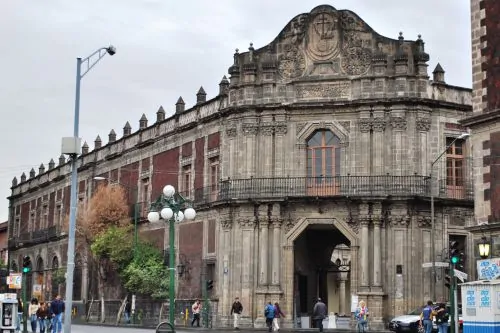
Calling the events of 1562 an “Inquisition” is useful only if the term is handled carefully. The famous tribunal of the Holy Office in New Spain, headquartered in Mexico City, was not formally established until 1571, nearly a decade after the proceedings at Maní. Nor did that later tribunal exercise ordinary jurisdiction over indigenous people, who were treated as recent converts whose religious offenses normally belonged to episcopal rather than Holy Office jurisdiction. Yet inquisitorial methods and institutions had existed in New Spain long before 1571. Bishops could investigate offenses against the faith, and mendicant missionaries had exercised extraordinary ecclesiastical powers in regions where diocesan structures remained weak or absent. Proceedings could resemble an inquisition without belonging to the centralized institution later associated with the name. Historians have sometimes described campaigns such as Landa’s as an “Indian Inquisition,” but that shorthand risks suggesting a stable tribunal where there was instead a contested mixture of missionary privilege, episcopal jurisdiction, civil cooperation, and improvised enforcement.
The ambiguity had deep roots in the early evangelization of Spanish America. Pope Adrian VI’s 1522 bull Exponi nobis fecisti, commonly known as the Omnimoda, granted unusually broad faculties to mendicant missionaries working where bishops were unavailable, allowing religious superiors to perform functions normally reserved to episcopal authority. Such privileges were practical responses to enormous territories in which a small number of clergy were expected to organize Christian life before ordinary diocesan institutions could function effectively. They also created obvious possibilities for conflict once bishops arrived and claimed the powers that missionaries had exercised in their absence. Yucatán entered the 1560s precisely at that unstable institutional moment.
Diego de Landa’s authority in 1562 must be understood within this transitional setting. As the leading Franciscan provincial authority in Yucatán, he did not regard himself as a private cleric deciding on his own initiative to prosecute Maya religion. He and his defenders understood the missionary privileges granted to the mendicant orders as permitting him to act as an ecclesiastical judge while no resident bishop was exercising effective jurisdiction in the province. When evidence of prohibited ritual appeared, Landa could conceive of investigation, arrest, interrogation, and punishment as extensions of an authority the Franciscans had long exercised in the work of evangelization. The distinction between teaching Christianity and coercively enforcing it was much less sharp from his perspective than it appears retrospectively. A missionary charged with protecting newly converted Christians from apostasy could imagine himself obliged not merely to preach against idolatry but to identify and punish those believed to be spreading it. Landa also called upon the secular arm, notably alcalde mayor Diego Quijada, because ecclesiastical authority depended upon civil power for arrests, custody, movement of prisoners, and other forms of enforcement. The resulting machinery was neither wholly monastic nor wholly governmental. Religious investigation and colonial administration became mutually reinforcing parts of the same campaign.
The vulnerability in Landa’s position was that extraordinary missionary faculties were not equivalent to unlimited inquisitorial jurisdiction. Questions remained about whether baptized Maya should be treated as fully culpable heretics or more leniently as neophytes whose understanding of Christianity was incomplete, and there were corresponding disputes over what punishments could legitimately be imposed. There was also a fundamental distinction between possessing some ecclesiastical authority and possessing every power that an inquisitorial judge might claim. Landa’s proceedings pushed directly into those uncertainties, especially when interrogation involved severe corporal coercion and when large numbers of indigenous people were drawn into the investigations. What may have appeared to the provincial as vigorous defense of Christianity could appear to another churchman as an unlawful assumption of episcopal power.
That other churchman was Francisco de Toral, the first resident bishop of Yucatán, whose arrival in August 1562 transformed an abstract jurisdictional ambiguity into an institutional confrontation. Toral did not dispute the Christian obligation to combat indigenous practices he considered idolatrous; the disagreement was not between persecution and religious toleration. He challenged the authority under which Landa and the friars had proceeded, the severity of their methods, and their treatment of Maya converts as though missionary zeal itself authorized inquisitorial coercion. Toral asserted episcopal control, ordered prisoners released, reviewed proceedings, and eventually denounced the Franciscan excesses to the Crown, while Landa maintained that he had acted under powers legitimately available before a bishop was resident. The dispute eventually followed Landa to Spain, where his conduct and jurisdiction were examined and where learned opinion proved less simple than a straightforward finding that he had possessed no authority at all. That later controversy is crucial because it reveals that Maní was not merely a case of an individual friar violating an obvious legal boundary. The boundary itself was unsettled. In 1562 the search for hidden Maya religion unfolded in a colonial church still deciding who had the right to investigate indigenous belief, how far that right extended, and what coercive powers could be used to turn religious suspicion into judicial knowledge.
The Discovery at Maní: When Hidden Practice Became Visible
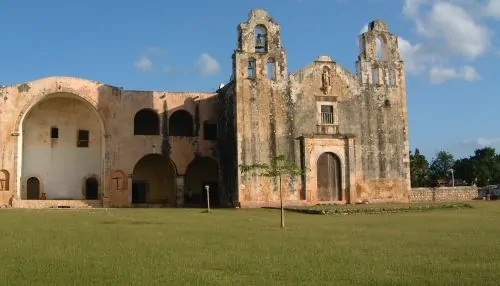
The investigation that transformed Maní in 1562 began not with a planned Franciscan sweep but with an accidental discovery. According to testimony collected in the aftermath of the crisis, two Maya boys from Maní came upon a cave in the countryside roughly a league from the town and found objects that they understood to be associated with prohibited ritual practice. Later witnesses described clay figures or “idols” and human skulls among the materials discovered there, while other testimony associated the place with offerings and the odor or use of copal incense. The boys reported what they had found rather than concealing it, an important detail because it complicates any simple picture of an indigenous community united in protecting traditional religion from Spanish scrutiny. Their reasons cannot be recovered with confidence: they may have accepted Franciscan teachings, feared the objects, understood that the friars considered such things forbidden, or acted from motives that never entered the surviving record. What matters is that knowledge ordinarily confined to a place outside routine missionary observation suddenly crossed into the Franciscan informational network. The cave itself did not move, and no friar had discovered it through systematic surveillance. Instead, people who could move between Maya spaces and Christian institutions carried information from one world into the other.
The surviving evidence for the discovery must nevertheless be handled cautiously. Much of the detailed reconstruction depends on testimony recorded several years after the events, when Landa’s campaign, the actions of civil officials, and the treatment of the Maya had already become subjects of investigation and political dispute. Witnesses remembered the cave through the consequences that followed from its discovery. Statements about skulls, ritual objects, sacrifice, and the circumstances in which the materials were found cannot simply be treated as an archaeological inventory made at the scene. Inga Clendinnen’s warning about reading the Yucatecan inquisitorial record as transparent ethnography applies from the beginning of the episode: later testimony preserves invaluable evidence while also reflecting memory, accusation, institutional interest, and the categories imposed by Spanish questioning. Even so, the broad sequence is unusually well supported. A cave associated with prohibited ritual activity was discovered by Maya youths, Franciscan authorities were informed, and the find became the immediate catalyst for a much larger inquiry.
To the Franciscans, a cave containing ritual objects was not merely evidence that a few forbidden artifacts had escaped destruction. Caves occupied important positions within Maya sacred geography, and missionaries already knew that indigenous religious practice did not depend exclusively on monumental temples that could be demolished or converted to Christian purposes. A cave could preserve ritual associations beyond the normal field of Franciscan observation precisely because access to it was limited and because its religious importance did not require a conspicuous public building. The objects reportedly found near Maní suggested continuity not only of belief but of practice. Someone had placed or maintained them there; someone knew the location; someone might have performed ceremonies or brought offerings.
Once investigators began thinking in those terms, the evidentiary meaning of the discovery expanded rapidly. A clay image ceased to be merely an object and became evidence of human agency, while skulls or other remains raised questions about when they had been deposited and what had happened to the people from whom they came. The physical evidence could not answer those questions by itself. To transform objects into a history of prohibited behavior, the friars needed testimony.
That transition, from discovery to inquiry, was decisive. Landa and other Franciscans did not respond by simply destroying the materials and warning the inhabitants of Maní against repeating the offense. They sought to determine who was responsible and how extensive the practices might be, while alcalde mayor Diego Quijada supplied the secular assistance that allowed ecclesiastical investigators to proceed with greater coercive power. Quijada later remembered that once “idols and sacrifices” had been discovered in a cave in the province of Maní, further inquiry began revealing what he described as greater evils. His retrospective phrasing captures the logic through which the investigation developed: an initial find became evidence of a larger problem because questioning appeared to uncover additional offenses. The discovery consequently altered the friars’ perception of the missionary landscape. Practices they had not observed now became practices that might be occurring elsewhere without their knowledge. Every unseen cave, household, or isolated ritual place could potentially contain something analogous. The problem was no longer confined to what had been found near Maní; it became what remained undiscovered.
This transformation of uncertainty into suspicion is the real importance of the cave. Before the discovery, Franciscan authorities already knew that traditional practices had not vanished completely, but they could still assess religious progress largely through the Christian institutions they had created and the violations that came visibly to their attention. After Maní, hidden space itself acquired evidentiary importance. The fact that a ritual site had remained beyond Franciscan knowledge demonstrated how limited ordinary missionary observation could be, and the only obvious way to overcome that limitation was to obtain information from people who possessed knowledge unavailable to the friars. The discovery did more than expose a surviving ceremony. It created an investigative question without a natural boundary: if these practices had occurred without detection, what else had occurred, who had participated, and who knew about it? Answering those questions required moving from material evidence to human relationships. The cave made hidden practice visible for a moment; the ensuing investigation would attempt to make an entire concealed religious world visible by asking Maya people to identify its participants.
From Objects to People: The Investigation Begins
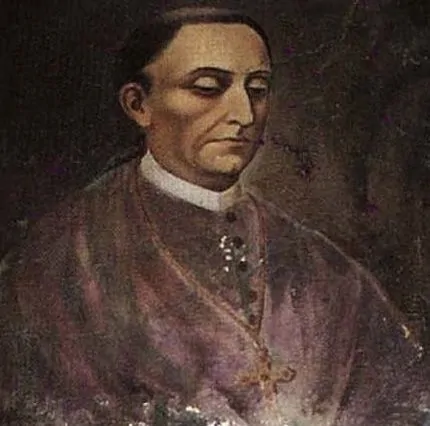
Once the evidence near Maní had been treated as proof of surviving “idolatry,” the problem facing the Franciscans changed immediately. Ritual objects could demonstrate, at least within the missionaries’ interpretive framework, that prohibited practices had occurred, but they could not explain who had performed them or how far participation extended. To learn that, investigators had to move from things to people. An image might suggest worship, human remains might suggest sacrifice, and traces of offerings might suggest ceremony, yet every conclusion about responsibility depended upon testimony connecting a person to what had been found. The friars began asking who knew about the place, who had visited it, who had performed rites there, and who possessed similar objects elsewhere. The investigation became an effort to reconstruct invisible behavior from human memory.
This transition gave information supplied by Maya witnesses a new kind of power. Someone who had merely seen a ceremony could become valuable because he or she could identify those who had participated in it. A person accused of taking part might know the name of a ritual specialist or remember another occasion on which forbidden practices had occurred. Knowledge that had previously circulated within households and communities could now become evidence in an ecclesiastical proceeding.
Landa and the friars working with him consequently required a machinery capable of obtaining, translating, recording, and acting upon such knowledge. Suspected participants could be summoned or arrested, questioned about particular objects or ceremonies, and pressed to identify other people associated with them. Maya interpreters were indispensable because the substance of the investigation depended on statements made in Maya but transformed into records meaningful within Spanish Christian jurisprudence. Indigenous officials and other intermediaries could help locate suspects, identify households, recognize community relationships, or carry instructions between friars and towns. Secular power also mattered, especially through alcalde mayor Diego Quijada and subordinate colonial officials whose assistance gave the religious inquiry practical force beyond the walls of the convent. Ecclesiastical suspicion could thereby produce arrest, confinement, transportation, or searches because colonial authorities supplied capacities the friars did not possess independently. The resulting investigation was collaborative in institutional terms even when the participants did not share identical motives or understandings of what was occurring. Missionaries defined the religious offense, indigenous intermediaries made local society intelligible to them, and civil officers helped turn accusations into enforceable actions. Yet the process depended most fundamentally upon people speaking about other people. Without that flow of information, the friars possessed isolated objects rather than a map of prohibited religious practice.
The first interrogations also changed the scale at which the original discovery could be interpreted. If questioning had revealed only a few individuals responsible for one recent ceremony, the affair might conceivably have remained local. Instead, testimony appeared to connect prohibited practices with additional participants and other episodes that had never come to Franciscan attention. Each such disclosure suggested that the cave was not an isolated survival but one visible fragment of a larger religious problem. The crucial transformation was epistemic before it was geographical: the investigators began to believe that what they had discovered represented only part of what existed.
That belief gave questioning an increasingly open-ended purpose. Investigators were no longer trying simply to establish whether a particular accused person had committed a particular act; they were attempting to discover the extent of an unseen religious world. Questions about one ceremony could lead backward toward earlier rites and outward toward people who had not yet been suspected. Ritual specialists were important because their knowledge implied relationships with clients, assistants, patrons, or other practitioners, while politically prominent Maya could attract scrutiny because their authority potentially connected religious activity to broader community networks. Even apparently minor participants could become informationally significant if they knew who had organized an event or where sacred objects had been kept. An accusation possessed consequences beyond the person against whom it was initially directed. Once authorities considered the information credible, it could justify another examination, which might in turn produce additional statements requiring investigation. The process did not need a preexisting list of suspects because the inquiry could generate its own targets. That characteristic would become one of the most dangerous features of the proceedings in Yucatán during 1562.
The apparent success of this method contained an evidentiary problem from the beginning. Every new name seemed capable of confirming the Franciscans’ growing conviction that clandestine ritual was widespread, yet the conditions under which information was obtained increasingly affected the reliability of what investigators believed they were discovering. Suspects understood that answers had consequences, and as detention and coercion intensified, confession could become a means of responding to what interrogators demanded rather than a transparent account of past behavior. Translation added another layer of uncertainty because Maya descriptions of ritual had to be rendered into Spanish legal and theological categories already structured around concepts such as idolatry, apostasy, and sacrifice. None of this means that continuing Maya religious practices were invented by the investigators; substantial evidence demonstrates that they persisted. It does mean that the expanding picture of a clandestine religious system cannot be separated from the procedures used to construct it. At Maní, the inquiry ceased to be merely a search for forbidden objects and became something more consequential: a search through the social knowledge of Maya communities themselves.
The Confession That Named Another Person: An Expanding Web of Suspicion
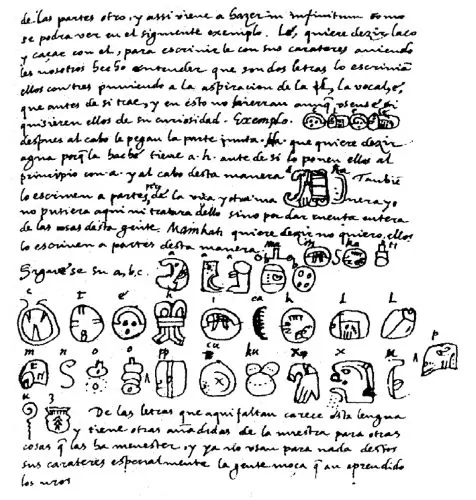
The most consequential information produced during the investigations of 1562 was not necessarily a confession of personal guilt. It was the name of someone else. Once an accused Maya acknowledged participating in a prohibited ceremony and then identified companions, organizers, ritual specialists, or witnesses, the statement ceased to concern only the person under examination. It became a lead. The newly named individual could be summoned, confined, questioned about the same event, and asked in turn about other participants or previous ceremonies. A proceeding that had begun with material evidence could reproduce itself through testimony, with each examination potentially enlarging the population considered relevant to the inquiry. This did not require the Franciscans to possess a comprehensive list of suspected practitioners before they began. The investigation could manufacture its own list as it proceeded.
That structure helps explain how suspicion could spread beyond the people most obviously connected to the original discovery at Maní. A person might enter the inquiry because someone claimed to have seen him at a ceremony, because she was said to possess a sacred object, or because another suspect identified a household in which ritual activity supposedly occurred. Even a comparatively peripheral participant could become important if that person knew who had presided over a rite or where other objects had been concealed. Testimony functioned simultaneously as evidence about the past and as instructions for where investigators should look next.
The resulting field of suspicion extended into the political and religious leadership of Maya communities. Those implicated in the proceedings included caciques, governors, principales, traditional religious specialists, teachers, and young men associated with mission schools, alongside less prominent participants whose names entered the record through accusation or confession. For the Franciscans, elite involvement was particularly alarming because it seemed capable of explaining how prohibited practices had survived despite years of evangelization. A traditional religious specialist who conducted ceremonies implied people who sought his services, while a political leader who tolerated or sponsored those ceremonies might connect the practice to an entire community. A teacher or school-trained youth was disturbing for a different reason: such people stood close to the institutions through which the Franciscans expected Christianity to reproduce itself. Their implication could be read as evidence that concealment had penetrated the missionary system itself. Once such assumptions took hold, investigators were encouraged to search for connections rather than isolated offenses. A confession describing one rite could prompt questions about who had instructed the participants, who had supplied ritual objects, which leaders had known of the gathering, and whether comparable ceremonies had occurred in neighboring towns. The inquiry consequently moved outward from Maní into surrounding communities, following the social relationships revealed or alleged during interrogation. What the friars increasingly believed they were uncovering was not a handful of survivals but a hidden structure capable of sustaining traditional religion beneath the visible institutions of Christianity.
The word “network” must nevertheless be used cautiously. There is no need to imagine a centralized underground organization coordinating resistance across Yucatán, and the surviving records do not justify reconstructing one. Maya ritual practice could persist through kin groups, local specialists, political loyalties, household customs, and community traditions without anyone directing them as parts of a single clandestine movement. The network visible in the proceedings was partly a network of actual relationships and partly an investigative creation produced by asking suspects to connect people to one another. That distinction becomes essential when assessing what the Franciscans thought their accumulating testimony proved.
The logic of confession also created a powerful confirmation mechanism. If investigators suspected that idolatry was widespread and questioning produced additional names, every new accusation appeared to verify the original suspicion that the problem was larger than anyone had known. The next suspect could then produce still more information, which seemed to demonstrate that the previous confession had opened another part of the concealed religious world. Yet such apparent corroboration becomes increasingly difficult to evaluate once coercion enters the process. A prisoner suffering punishment or fearing further torment had strong incentives to provide answers, and an interrogator already convinced of widespread apostasy had reasons to regard additional names as signs of successful investigation. Later retractions under Bishop Francisco de Toral would expose precisely this problem, as Maya defendants challenged statements extracted during the earlier proceedings. The existence of coercion does not permit historians simply to declare every confession false; continuing indigenous ritual practice is documented independently of Landa’s most extreme claims. It does mean that the number of accusations generated by the inquiry cannot itself be treated as straightforward proof of the scale of the religious activity being investigated. A process in which confession produced suspects and suspects produced more confessions could enlarge the evidentiary record even when the underlying behavior was less organized, less extensive, or differently understood than the record suggested.
This recursive process makes Maní revealing as a history of surveillance without modern surveillance technology. The Franciscans could not continuously watch Maya households or follow people through forests, caves, fields, and neighboring towns, so they attempted instead to acquire the knowledge already circulating among the people who inhabited those spaces. Interrogation converted social relationships into channels of information: who had been present, who knew the prayers, who kept the objects, who had performed the rites, and who else should be questioned. The crucial expansion of surveillance occurred not when authorities gained better powers of observation but when they learned to make one person’s testimony expose another person’s private behavior. At that point suspicion no longer depended primarily upon what a friar had personally witnessed. It could travel through a community from accusation to interrogation and from interrogation to another accusation, producing an expanding map of religious life that was simultaneously discovered by the authorities and constructed through the procedures they used to investigate it.
Watching from Inside the Community
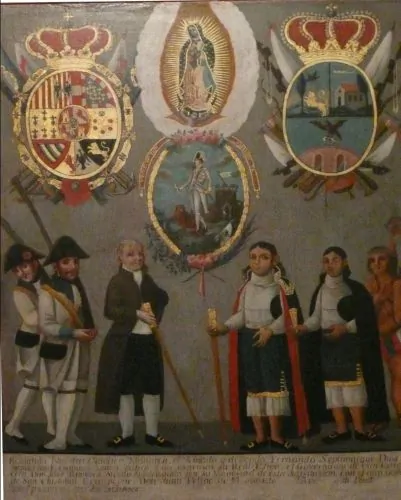
The Franciscan investigations could not have expanded through Yucatán by Spanish observation alone. Even missionaries who spoke Maya remained outsiders to the dense web of kinship, neighborhood, political allegiance, ritual expertise, and personal history that structured everyday life within indigenous towns. A friar might recognize a prohibited object, but he usually needed Maya knowledge to learn who owned it, who had used it, or who might possess something similar elsewhere. Colonial officials confronted the same limitation when they attempted to identify individuals named during interrogations or locate places described by witnesses. The search for hidden religion depended upon information originating inside the communities being investigated. Maya people identified other Maya people, interpreted statements, located households, transmitted orders, explained relationships, and sometimes provided the initial information that brought prohibited practices to Franciscan attention. The apparent reach of colonial surveillance was consequently much greater than the number of Spaniards in Yucatán might suggest because the authorities could appropriate indigenous knowledge rather than generate all of their information independently. What made the system intrusive was not continuous Spanish observation but the ability to recruit, request, or compel people who already knew what the friars wanted to discover.
The missionaries themselves had helped create some of the intermediaries upon whom such a system depended. Franciscan schools trained selected Maya boys and young men in Christian doctrine, alphabetic literacy, liturgical service, and forms of communication useful to the colonial church. Schoolmasters and their assistants could become unusually well positioned between friars and indigenous communities because they understood missionary expectations while remaining embedded in Maya society. The Franciscans had expected these men to extend Christian instruction into places where missionaries could not always be present. By 1562, that arrangement had produced an alarming reversal: some of the very people entrusted with advancing Christianity were themselves accused of participating in traditional ceremonies.
Landa’s response reveals how profoundly this apparent betrayal disturbed the missionary project. In a letter of June 9, 1562, he complained that caciques, principales, and schoolmasters had been trusted almost as partners of the friars in preaching and instructing the Maya, while royal government had likewise elevated indigenous men to positions as governors, alcaldes, alguaciles, and other local officers. If such figures were implicated in idolatry, the problem could no longer be blamed solely on remote ritual specialists hiding beyond Christian influence. The colonial system had deliberately placed certain Maya individuals in positions of mediation because Spanish authority required people capable of moving between indigenous communities and European institutions. Those individuals possessed precisely the qualities that made them indispensable: command of local language, knowledge of community relationships, recognized standing, and access to information that Spaniards lacked. Yet their usefulness also made them potentially threatening. A schoolmaster capable of transmitting Christian doctrine could transmit other knowledge as well, while a governor who assembled people for colonial purposes could retain authority grounded partly in older social relationships. Maya intermediaries did not occupy a neutral space between two sealed societies. They belonged to both the colonial institutions being constructed and the indigenous communities those institutions sought to transform, and their loyalties could not be assumed merely from the offices they held.
Translation made this dependence particularly visible. Testimony about ceremonies, sacred objects, ritual specialists, sacrifice, or supernatural forces often originated in Maya and had to become intelligible within Spanish ecclesiastical procedure. An interpreter did more than substitute one word for another; he helped move statements between intellectual systems whose concepts did not correspond perfectly. The appearance of Maya such as Jorge Xiu as interpreters in investigations associated with the 1562 crisis shows how indispensable bilingual intermediaries could become. Their linguistic skill gave colonial authorities access to testimony, but it also placed another human judgment between the original speaker and the written Spanish record.
Local political authority further complicated the flow of information because denunciations never occurred in a socially empty environment. Maya towns contained factions, rival lineages, contested offices, personal grievances, inherited disputes, and struggles over status that continued under colonial rule. An accusation of idolatry might arise from genuine Christian conviction, but it could also serve interests that had little to do with theology. A rival could become vulnerable if his ritual practices were revealed to the friars, while someone threatened by an investigation might redirect attention toward another household or political faction. Indigenous officials could cooperate because they accepted Christian prohibitions, because colonial authorities demanded their assistance, or because cooperation protected their own standing. Conversely, the same person might assist friars in one context while protecting relatives or community practices in another. It would be misleading to divide the population neatly into Christian informers and traditionalist resisters. Colonial rule encouraged strategic movement between institutions, and Maya actors could use the structures imposed upon them for purposes the Spaniards neither intended nor fully understood. Later petitions by Yucatecan caciques, including requests favoring the return of Landa and other Franciscans, demonstrate how difficult it is to infer indigenous political positions from the violence of 1562 alone. Maya elites were not a unified bloc, and neither opposition to nor cooperation with Franciscan authority had a single meaning.
Even the term “informant” requires caution. Some people deliberately denounced practices they considered wrong, but others entered the informational chain simply because they were questioned about what they had seen or knew. Witnesses could become sources without having sought the role, while prisoners under coercion could provide names because investigators demanded them. A person who identified another suspect under threat was participating in the production of information, but calling that person a willing collaborator would badly distort the circumstances. The surveillance system at Maní depended less upon a permanent class of voluntary informers than upon colonial authorities’ capacity to turn many different kinds of social knowledge into evidence.
That capacity placed unusual pressure on relationships ordinarily beyond the direct reach of government. Knowledge acquired as a neighbor, relative, student, political subordinate, ritual participant, or member of a household could suddenly become relevant to an ecclesiastical investigation. The friars did not have to be present at a ceremony if someone who had been present could later be induced to describe it. They did not have to know where sacred objects were stored if a person familiar with the household could identify their location. They did not need an independent understanding of every town’s political hierarchy if indigenous officials and interpreters could tell them whose name belonged to whom. This was the intimate power of the Maní investigation: it turned the community itself into an instrument through which hidden behavior might be reconstructed. Yet the process never gave Spaniards unmediated access to Maya life. Every accusation arrived through relationships shaped by memory, fear, rivalry, translation, coercion, religious commitment, and calculation. The more the Franciscans depended upon indigenous intermediaries, the more their supposedly authoritative picture of clandestine religion was produced through Maya social worlds they only partially comprehended. The investigation could penetrate communities from within, but what it learned there was never independent of the people through whom colonial power was forced to see.
Where Religion Could Hide

Franciscan power in Yucatán was spatially uneven. It was most visible around churches, convents, schools, plazas, and the concentrated settlements where missionaries could summon people for instruction and public worship. Bells could announce Mass, friars could observe attendance, and indigenous officers could help enforce Christian expectations within these colonial centers. Beyond them lay a much larger landscape that could not be continuously supervised. Houses contained family relationships and possessions inaccessible to routine clerical inspection, while agricultural lands carried Maya men and women away from town for substantial periods. Paths connected settlements to caves, cenotes, abandoned structures, wooded areas, and other places whose meanings were not necessarily apparent to Spaniards. The geographical reach of Christianity was not identical to the geographical reach of Christian observation. A church could dominate the center of a town without giving the friars equivalent access to everything its inhabitants did beyond the plaza.
The household represented perhaps the most intimate limit on that observation. Missionaries could regulate marriage, condemn domestic practices they considered improper, and sometimes search houses when specific suspicions arose, but they did not ordinarily occupy the private spaces in which families stored possessions or transmitted knowledge. Small sacred objects could be kept inside a home without requiring the conspicuous infrastructure of a temple. Ritual instructions could pass between relatives without creating a public institution that missionaries could easily identify. The destruction of monumental religious buildings did not eliminate forms of religion capable of surviving at the scale of the household.
Caves presented a striking challenge because their importance within Maya sacred geography long predated Spanish conquest. Across the Maya region, caves could be understood as places of extraordinary supernatural significance, associated with forces governing water, fertility, origins, ancestors, and access to realms beyond ordinary human space. Northern Yucatán’s karstic landscape, with its caves and cenotes, made such places physically common even though only some possessed particular ritual importance. Their sacred significance did not depend upon the monumental architecture that Spaniards associated most readily with indigenous religion. A cave could remain ritually powerful after temples had been dismantled, images publicly destroyed, and Christian buildings erected in indigenous towns. It could also be difficult for a missionary to distinguish an ordinary feature of the landscape from a place known locally as sacred. The discovery near Maní was disturbing in part because it revealed a religious geography that the Christian reconstruction of the town had failed to erase. The friars could dominate the built religious center while Maya practitioners continued to recognize sacred places elsewhere. Amara Solari’s work on colonial Yucatán has shown how deeply conquest involved competing attempts to define and transform sacred space, as Franciscans appropriated indigenous locations for Christianity while Maya understandings of place persisted and adapted. Maní exposed the limits of that transformation: changing the visible religious architecture of a community did not necessarily change the sacred meanings attributed to the landscape surrounding it.
Agricultural space presented a different problem. Maya subsistence required regular movement between settlements and milpas, and activities connected with planting, rainfall, harvests, and the health of crops carried inherited ritual associations that were difficult to detach from everyday work. A ceremony performed near cultivated land might require neither a permanent sanctuary nor a large gathering. Offerings, prayers, ritual drinking, or consultation with a specialist could accompany practical concerns about weather and survival. From a Franciscan perspective, such practices could constitute idolatry; from the perspective of participants, they could remain part of the obligations by which human communities maintained appropriate relationships with powerful forces in their environment.
The landscape also offered opportunities for religious practices to become less visible precisely because colonial authorities had declared them illicit. Prohibition could change where a ceremony occurred without eliminating the reason people wanted to perform it. A rite once associated with a public or easily recognized location could be moved farther from missionary centers, while portable objects could be concealed or transported when necessary. Ritual specialists did not require fixed temples if their authority rested upon knowledge, memory, calendrical expertise, curing abilities, or familiarity with appropriate prayers and offerings. Nor did practitioners necessarily have to abandon Christian objects when they moved into these less supervised spaces. Colonial Maya religious life could incorporate crosses, saints, Christian prayers, and older understandings of sacred power in combinations that missionaries rejected as improper even when participants did not experience them as contradictions. The opposition between Christian town and pagan wilderness was consequently never as clean as Franciscan rhetoric implied. Christianity itself traveled into houses and fields, just as practices condemned as idolatrous persisted inside communities outwardly organized around churches. What varied from place to place was not simply religion but the degree to which ecclesiastical authorities could see, classify, and intervene in what people were doing.
This geography helps explain why the events at Maní so quickly became an information problem. The Franciscans could not solve the limits of physical observation by stationing a friar in every house, cave, field, or sacred location. They could overcome those limits only by acquiring knowledge from people who moved through those spaces themselves. A witness could reveal that a ceremony had occurred beyond town; a participant could identify the place where objects had been kept; a relative might know what was stored inside a household; someone familiar with local terrain could lead investigators to a site no Spaniard would otherwise have recognized as significant. Searches followed information, and information made previously opaque spaces available to colonial power. Yet even this process did not prove that Maya practitioners had deliberately constructed an underground religion designed to escape surveillance. In many cases, the places in which rituals persisted were simply the places where Maya religious life had long been embedded.
What changed after conquest was the political meaning of being beyond Franciscan sight. A house became capable of concealing prohibited objects, a cave could harbor condemned ceremonies, and an agricultural landscape could contain religious behavior invisible from the church plaza. The problem confronting Landa in 1562 was not merely that indigenous religion had survived. It had survived within a landscape whose everyday spaces placed much of Maya life beyond direct observation, forcing colonial authorities to rely upon searches, testimony, and the knowledge of other Maya people if they wished to penetrate it.
The Wide Reach of Suspicion
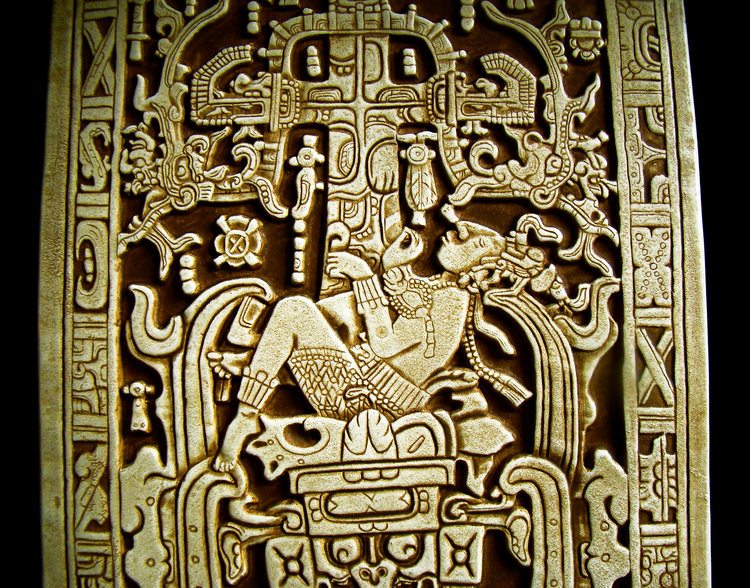
The expanding investigations of 1562 did not treat every Maya inhabitant as equally significant. From the beginning, Franciscan anxiety focused heavily on people whose positions allowed them to influence others: caciques, governors, principales, traditional religious specialists, and the indigenous teachers whom missionaries had entrusted with Christian instruction. Landa’s own correspondence reveals the depth of his disillusionment with these figures. He complained that some of the caciques, principales, and schoolmasters upon whom the friars had relied were not faithful Christians, despite having been treated almost as partners in the religious instruction of their communities. The accusation mattered because these were not marginal figures preserving practices beyond the reach of the mission. They occupied precisely the positions through which the Franciscans and Spanish government had hoped to transform Maya society. If they were maintaining or encouraging prohibited rites, then the problem appeared to exist inside the structures of colonial Christianization itself. Elite involvement made isolated ritual survival look to the missionaries like organized religious relapse.
Maya lords attracted particular suspicion because political authority and religious life had never been as neatly separated as colonial institutions wished them to become. Caciques and principales possessed status rooted in preconquest social arrangements even when they held positions recognized by Spanish authorities. Their influence could extend through kinship, landholding, patronage, community memory, and relationships with ritual specialists. To the friars, a lord who sponsored, tolerated, or participated in traditional rites could appear capable of drawing many others into apostasy. The investigation of an elite figure was consequently never only an inquiry into individual belief; it raised questions about everyone who depended upon, served, or associated with him.
Traditional Maya religious specialists presented a more obvious target. Landa explicitly blamed indigenous priests for helping turn supposedly instructed Christians back toward older rites, and the proceedings at Maní implicated an ah kin along with secular leaders and other participants. Such specialists were threatening because their authority was portable. A temple could be destroyed and a sacred image confiscated, but ritual knowledge retained in memory could survive those losses and be reproduced elsewhere. Specialists could know appropriate prayers, calendrical reckonings, offerings, methods of divination, techniques of healing, or ceremonies associated with agricultural and communal welfare. Their continued existence offered the Franciscans an explanation for how practices they believed they had suppressed could repeatedly reappear. Investigating a ritual specialist naturally encouraged questions about the people who consulted him, received instruction from him, or participated in ceremonies he conducted. The priest was important not simply as an offender but as a potential node connecting many otherwise separate acts. Once investigators pursued those connections, religious expertise became a pathway through which suspicion could spread through a community.
The implication of indigenous schoolmasters and their assistants was in some respects even more disturbing. Franciscan education had deliberately created Maya intermediaries capable of teaching doctrine where the small missionary population could not provide constant instruction. Literacy, catechetical knowledge, and proximity to the convent could give these young men opportunities for status and access to offices within indigenous government. Yet the Maní proceedings suggested that Christian education had not necessarily severed them from older Maya relationships or ritual practices. Some schoolmasters and mozos de escuela were accused alongside the very people they had supposedly been helping the friars to convert. Their implication undermined one of the central assumptions of the missionary program: that intensive Christian formation would produce indigenous agents whose loyalty to the new religion could be trusted.
Suspicion did not stop with socially prominent people. The public punishments associated with Maní and the wider investigations eventually encompassed large numbers of Maya whose significance derived less from formal rank than from alleged participation, knowledge, or proximity to prohibited activity. Ordinary inhabitants could enter the proceedings because they had attended a ceremony, contributed an offering, possessed ritual objects, assisted a specialist, knew where a rite had taken place, or were named by someone already under examination. This widening social reach followed logically from the way communal religious practice operated. If a ceremony required participants, spectators, food, drink, offerings, musicians, assistants, or people who provided access to a location, then an inquiry centered initially on leaders could readily descend into the broader population. Household religion made the boundary still more difficult to maintain because practices transmitted among relatives implicated people without formal religious offices. Women, children, dependents, servants, and other people who appear less prominently in the surviving Spanish record could nevertheless live within the domestic environments where objects were stored and ritual knowledge circulated. The documentary record is treacherous here because colonial investigators were much more interested in certain categories of defendants than in reconstructing the full social composition of Maya religious life. Absence from detailed prosecution records cannot simply be equated with absence from traditional practice. It would be equally mistaken to conclude from the breadth of prosecution that every social group participated uniformly. What the proceedings demonstrate most securely is that investigators increasingly treated religious deviance as something capable of moving across rank rather than remaining confined to a surviving priestly caste.
That expansion had political consequences for Maya communities. Accusing a cacique or governor could destabilize local authority, while implicating a schoolmaster compromised a person whose colonial status depended partly upon Franciscan trust. Accusing ordinary participants could expose households and relationships that had previously escaped direct ecclesiastical scrutiny. The investigation created different vulnerabilities according to social position, but no position guaranteed immunity. Prestige could actually increase danger because investigators assumed that influential people could corrupt others.
The social range of suspicion ultimately helps explain why Maní became so much larger than an investigation of particular sacred objects. The Franciscans increasingly imagined prohibited religion as something reproduced through relationships between leaders and subjects, specialists and clients, teachers and pupils, relatives and neighbors. That interpretation encouraged investigators to move continually between levels of Maya society. An accused lord might lead them toward ritual specialists; a specialist might identify participants; testimony from participants could implicate another household or official. Yet the apparent breadth of the resulting network must not be confused automatically with proof that all those people belonged to a consciously organized underground religion. Some may have shared ceremonies without sharing identical beliefs, while others may have participated because particular rites remained inseparable from obligations of family, agriculture, healing, or community. What colonial authorities saw as a hierarchy of apostasy may have been a far less centralized landscape of overlapping religious practices. Even so, the investigation’s reach was real. By 1562 the question confronting the Franciscans was no longer merely whether old priests had preserved forbidden rites, but how deeply practices categorized as idolatry extended through the social body of communities that colonial authorities had already declared Christian.
Making People Speak
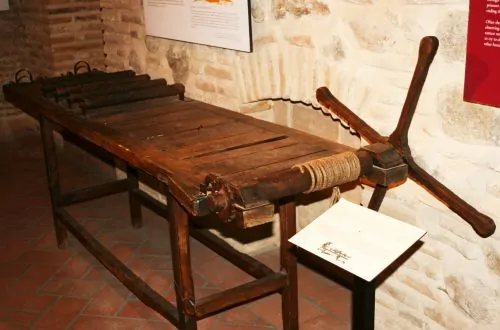
As the investigations widened during 1562, the Franciscan search for hidden religion increasingly depended on coercion. Arrest did more than secure the presence of an accused person for questioning; it removed that person from the ordinary protections of household, kin, office, and community and placed him or her within an institutional environment controlled by the investigators. Prisoners could not know how long detention would last, what others had already said, or what accusations might be waiting for them. The friars were seeking information about acts that by definition had occurred beyond their sight, which meant that denial could easily be interpreted not as evidence of innocence but as another form of concealment. An investigator convinced that a suspect possessed knowledge could treat refusal to confess as obstinacy rather than uncertainty. The fundamental imbalance was stark: the accused knew that authorities wanted answers, while authorities believed that the truth existed somewhere inside the accused and had only to be extracted. Under those conditions, confinement itself became part of the interrogation.
Physical coercion carried that logic much further. Maya complainants later described prisoners being suspended by their hands, sometimes with heavy stones attached to their feet, beaten or whipped, subjected to the windlass, and exposed to forms of water torture. Their 1567 complaints to Philip II alleged deaths and lasting injuries resulting from these punishments, making clear that the memory of 1562 remained intensely political five years later. Those petitions cannot be treated as disinterested transcripts of what occurred, since they were written within later struggles over Landa, the Franciscans, and colonial authority. Yet the use of severe torture itself is not seriously in doubt. It appears across the documentary controversy that followed the proceedings and became central to Bishop Francisco de Toral’s condemnation of the Franciscan methods.
The suspension torture became so closely associated with the crisis that later Franciscan chronicler Bernardo de Lizana recorded a revealing expression preserved among the Maya: the tiempo de la cuelga, the “time of the hanging.” Lizana wrote decades after the events and for purposes very different from those of the Maya petitioners, so his account requires the usual caution attached to retrospective ecclesiastical chronicles. Even so, the phrase conveys something that judicial records alone cannot easily express: the investigations survived in collective memory through the physical experience of interrogation. Suspension was not merely punishment delivered after guilt had been established. It was used to compel people to speak during the attempt to establish what had happened in the first place. The distinction is essential. When torture becomes a means of inquiry, suffering is incorporated into the process through which authorities claim to acquire knowledge. Pain is supposed to overcome concealment and reveal truth, but it simultaneously gives the victim powerful reasons to supply whatever information appears most likely to stop the pain. At Maní, that problem became dangerous because investigators were not merely asking suspects to confess their own actions. They were asking them about ceremonies, objects, locations, and other people.
The methods reflected a broader inquisitorial assumption about confession. Investigators did not ordinarily understand torture as manufacturing a story from nothing; they regarded it as a means of breaking resistance so that an already existing truth could emerge. That distinction could make coercion appear epistemically defensible to those administering it. If the examiner was already certain that idolatry had occurred, a persistent denial might seem to demonstrate concealment rather than weaken the accusation.
The difficulty was that the questions being asked at Maní could generate consequences far beyond the prisoner undergoing examination. A suspect under torment who admitted participating in a ceremony might then be asked who else had attended, who conducted the rite, where sacred objects had been kept, whether similar ceremonies had occurred previously, and which community leaders knew about them. Every answer could create another lead. If a prisoner named five people, investigators acquired five potential witnesses or defendants who could themselves be imprisoned and questioned about still more people. The violence of interrogation had a multiplier effect. Torture did not simply increase the pressure upon individual suspects; it accelerated the production of an expanding body of information that appeared to reveal the dimensions of clandestine religion. Once subsequent interrogations produced overlapping names or descriptions, investigators could interpret the apparent convergence as corroboration. Yet the same coercive environment might itself help produce that convergence, especially if suspects understood what their interrogators expected to hear or were questioned about people already under suspicion. The investigative system was capable of reinforcing its own premises. Evidence of hidden idolatry justified harsher questioning, harsher questioning produced more evidence, and the growing volume of testimony appeared to confirm that the original fear of widespread apostasy had been correct.
None of this requires concluding that the religious practices described in the proceedings were imaginary. Traditional Maya ritual demonstrably persisted after conquest, and the original discoveries around Maní provided evidence independent of later torture that Franciscan expectations of straightforward conversion had been mistaken. The problem concerns the transition from that limited proposition to much larger claims about the number of participants, the frequency of ceremonies, and the apparent organization of religious activity across communities. Coercive interrogation is poorly suited to establishing those distinctions because the same process that uncovers genuine information can also distort its scale. A truthful admission may sit beside an exaggerated accusation, a remembered ceremony beside a story shaped to satisfy an interrogator. Historians cannot simply choose between believing the entire record and rejecting it as the product of torture. The more difficult task is to recognize that genuine religious continuity and coercively inflated knowledge could coexist within the same body of testimony.
Toral’s arrival in Yucatán in August 1562 exposed that problem with extraordinary force. As the new bishop examined what Landa and the other friars had done, prisoners repudiated statements and challenged the conditions under which confessions had been obtained. Toral’s objections were not based on modern opposition to coercive punishment as such; he belonged to a sixteenth-century ecclesiastical world in which corporal discipline could be considered legitimate. His alarm was directed at the severity, jurisdiction, and evidentiary consequences of the Franciscan proceedings. If people had confessed because they were tortured until they supplied the desired answers, then the expanding documentary proof of apostasy could not be accepted at face value. This is why the violence at Maní matters to the history of surveillance as much as to the history of colonial brutality. Landa’s investigators confronted an invisible offense and attempted to overcome their lack of direct observation by forcing people to disclose what they knew. Imprisonment made bodies available for interrogation; torture sought to convert those bodies into sources of information; the information generated names that delivered more bodies into custody. The resulting records gave colonial authorities an increasingly detailed picture of hidden Maya religion, but the very techniques that made that picture possible also made its accuracy impossible to take for granted. Maní demonstrates the fundamental danger of coercive knowledge production: an authority can become more certain that it understands a hidden world at precisely the moment when its methods have made the evidence describing that world least trustworthy.
The Problem of Knowing What Was True
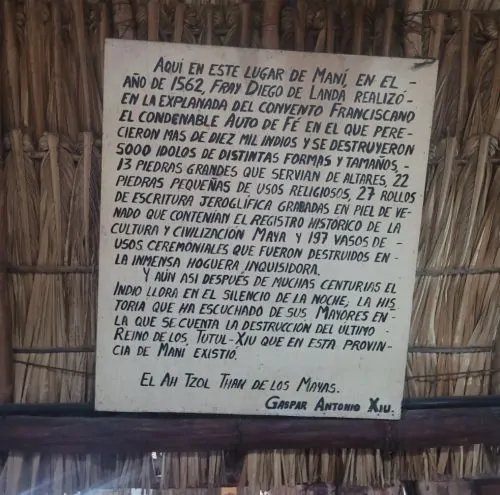
The documentary abundance created by the investigations of 1562 presents historians with an unusual temptation. Compared with the fragmentary evidence available for much of early colonial Maya religious life, the inquisitorial proceedings seem to provide voices describing ceremonies, participants, sacred objects, locations, and alleged sacrifices in remarkable detail. Yet those records were not produced because Maya people independently decided to describe their religious practices for posterity. They emerged from encounters in which authorities already believed that concealed idolatry existed and demanded answers from people whose liberty, physical safety, and social standing were at risk. A confession was simultaneously testimony about an alleged past and the product of a highly unequal present. The more detailed the record becomes, the more necessary it is to ask how those details were obtained. Maní consequently poses an uncomfortable historical paradox: some of the richest evidence for surviving Maya religion comes from procedures that make straightforward belief in that evidence particularly hazardous.
The arrival of Bishop Francisco de Toral exposed that problem almost immediately. Prisoners and other Maya defendants challenged earlier testimony, and some retracted or denied confessions obtained during the Franciscan investigations. Such reversals provided Toral with powerful reasons to doubt both the procedures employed and the reliability of the resulting accusations. Retraction did not automatically establish that every earlier statement had been fabricated; a defendant freed from coercive pressure could also possess reasons to minimize genuine participation. The historian encounters two potentially interested statements, the confession and the retraction, rather than one obviously false account followed by one unquestionably true one.
The conditions under which the first statements were produced nonetheless place a heavier evidentiary burden upon them. Torture was designed to overcome denial, which meant that interrogators began from the premise that the accused possessed a truth they were refusing to disclose. Under such circumstances, continued denial could confirm suspicion instead of weakening it, while confession offered at least the possibility that suffering might end. The difficulty becomes greater when interrogators wanted not only admission of personal conduct but descriptions of other participants and previous ceremonies. A prisoner could truthfully acknowledge one practice while exaggerating another, repeat information already circulating among the accused, or provide a name because silence had become physically unbearable. Translation further complicated the passage from spoken testimony to written record. Maya descriptions had to be rendered through interpreters into Spanish and then organized according to ecclesiastical categories that defined certain acts as idolatry, sacrifice, apostasy, or dealings with the devil. The surviving document represents several acts of interpretation layered upon one another. What a Maya speaker remembered, what that person decided to say, what an interpreter understood, and what a Spanish recorder considered legally meaningful were related but not identical things.
Historians have disagreed substantially over how much factual weight such records can bear. France V. Scholes and Ralph L. Roys treated many of the confessions as substantially credible and used them to argue for a significant revival or persistence of traditional religion, including human sacrifice, after the conquest. Inga Clendinnen later subjected that confidence to a searching critique, emphasizing discrepancies, patterns of interrogation, selection within the surviving record, and the distortions introduced by coercion. Her intervention did not require denying the persistence of Maya ritual life. Rather, it demonstrated why inquisitorial testimony cannot simply be removed from the circumstances that produced it and treated as ethnographic description.
The problem becomes particularly acute when multiple testimonies appear to corroborate one another. At first glance, several prisoners naming the same participant or describing similar ceremonies seem to offer independent confirmation, and in some instances they may indeed preserve genuine shared memories. Yet inquisitorial proceedings were not controlled experiments in which witnesses were necessarily isolated from every source of common knowledge. Investigators could ask different suspects about people already named, accusations could circulate through frightened communities, and defendants might infer from questions which answers authorities expected. The surviving archive is itself selective. Not every interrogation was recorded with equal fullness, not every statement survived, and the documents later assembled around the dispute over Landa were preserved partly because his conduct became controversial. Apparent agreement within the record must be examined rather than merely counted. Ten statements generated through interconnected questioning are not necessarily equivalent to ten independent witnesses spontaneously reporting the same event. This is important for sensational allegations of human sacrifice, whose evidentiary history has generated some of the sharpest scholarly disagreement over the 1562 proceedings. The question is not whether preconquest Maya sacrifice existed (it unquestionably did) but whether particular postconquest incidents described under interrogation occurred exactly as recorded. The distinction prevents skepticism about coercive testimony from becoming an implausible denial of indigenous religious continuity while also preventing knowledge about the preconquest past from being used to authenticate every colonial accusation.
Retraction does more than weaken individual confessions; it exposes a fundamental problem in the production of colonial knowledge. Landa and his associates believed that coercive examination allowed them to penetrate concealment and reveal a religious reality hidden beneath Christian appearances. Toral’s intervention demonstrated that the same methods could make it impossible to determine where disclosure ended and compliance began. Modern historians inherit both sides of that contradiction. The records of Maní contain genuine traces of Maya ritual persistence, but those traces are embedded within translations, accusations, institutional assumptions, and statements produced under extraordinary pressure. The responsible conclusion is neither that the friars uncovered an entirely imaginary conspiracy nor that their confessions provide a transparent map of clandestine religion. What can be known with considerably greater confidence is that Maya religious practices survived, that Franciscan investigators greatly expanded their inquiry through compelled testimony, and that the resulting archive reflects the workings of surveillance as much as the practices being surveilled. Uncertainty is not an obstacle outside the history of Maní. It is one of the episode’s central facts: colonial authorities tried to eliminate uncertainty about private belief by forcing people to speak, only to create a body of evidence whose coercive production ensured that certainty would remain elusive.
July 12, 1562: The Auto-da-Fé as Culmination, Not Beginning
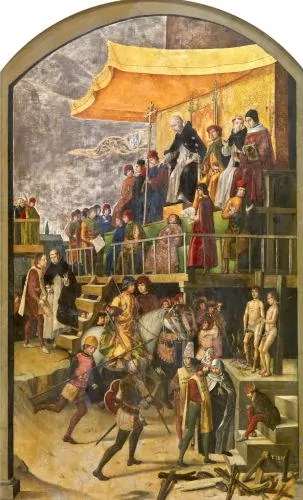
On July 12, 1562, the investigations centered on Maní emerged from prisons, interrogation rooms, households, caves, and scattered ritual sites into a deliberately public setting. The auto-da-fé associated with Diego de Landa brought accused Maya, confiscated sacred materials, ecclesiastical judgment, and punishment together before a gathered population. By then the crucial investigative work had already occurred. Suspects had been detained and examined, testimony had produced additional accusations, sacred objects had been located, and the friars had come to believe that prohibited practices extended far beyond the original discovery that had triggered their inquiry. The ceremony did not announce that the Franciscans had begun looking for idolatry; it announced that they claimed to have found it. Hidden religious activity was transformed into a public demonstration of guilt, while objects removed from private or sacred settings became visible evidence of the danger missionaries said had existed beneath outward Christian conformity. The spatial reversal was striking. Practices that had survived partly beyond Franciscan observation were now represented before the community in a spectacle controlled by Franciscan authority.
An auto-da-fé was more than an occasion for destroying prohibited objects. It was a carefully structured act of religious discipline through which offenses against Christianity were named, condemned, and made exemplary before an audience. Penitents could be publicly associated with their alleged crimes, sentences could be proclaimed, and punishment could instruct those who had not themselves been prosecuted. In Maní, that exemplary function was particularly important because the investigation had convinced the friars that private religious behavior posed a communal danger. The spectacle made an argument through visibility: Christianity would expose what had been concealed and would convert the exposure itself into a warning.
The objects assembled for destruction gave material form to that argument. Accounts of the Maní proceedings describe large quantities of indigenous sacred images and ritual objects, including carved figures, stones associated with ceremonies, vessels, and Maya manuscripts containing hieroglyphic writing. Later inventories and historical accounts have circulated striking numerical totals, including thousands of objects and several dozen manuscripts or rolls, although the precision and relationship of particular figures to the single July ceremony should be treated with appropriate caution. What is beyond serious dispute is that the destruction was substantial and that written materials formed only one part of a much larger assemblage condemned as evidence of idolatry. Landa later remembered finding Maya books whose contents he regarded entirely as superstition and diabolical falsehood and acknowledged that their destruction caused profound distress among the Maya. That statement has understandably become one of the most frequently cited passages associated with his career. Yet concentrating solely on the manuscripts can obscure why the friars destroyed them alongside images, vessels, and other ritual materials. They did not understand themselves to be attacking “literature” as a modern category; they believed they were dismantling the physical means by which forbidden religion was remembered, interpreted, and performed. A written divinatory or calendrical text, an image used in ritual, and an offering vessel could all be understood as components of the same religious danger. The bonfire represented an attempt to destroy not merely objects but the material infrastructure through which ritual knowledge could endure after conversion.
The human punishments gave the spectacle a more immediate force. Maya defendants were subjected to public penance and penalties that varied according to the offenses attributed to them and the judgments imposed during the proceedings. The significance of those punishments extended beyond the individuals who received them because public humiliation transformed private accusation into a communal lesson. People witnessing the ceremony were shown both what the friars defined as apostasy and what could happen when such conduct was discovered. The message depended upon an important asymmetry: colonial authorities could not observe every prohibited ceremony, but they could make examples of those whom their investigations succeeded in identifying.
For that reason, the auto-da-fé can be understood as the public face of an information system that had operated largely out of sight. Every object displayed or destroyed had acquired evidentiary meaning through a prior process connecting it to a person, place, or alleged ceremony. Every defendant appearing as a penitent represented a sequence of accusation, identification, detention, questioning, and judgment. The spectacle erased much of that complicated process by presenting its conclusions as settled facts. Observers did not see the uncertainties of translation, the pressure under which testimony had been given, the disputes between witnesses, or the possibility that interrogators had helped shape the narratives they recorded. Instead they confronted the apparently tangible results of successful investigation: named offenders and material proof assembled together in public. That transformation mattered politically as well as religiously. An investigation dependent upon fragmentary reports and compelled speech could appear at the auto-da-fé as a coherent victory over an organized evil. The greater the accumulation of confiscated objects and punished defendants, the more persuasive the Franciscan claim that a serious concealed threat had been uncovered could seem. Public spectacle converted information into authority. What investigators believed they had learned about hidden Maya religion was staged before the community as knowledge no longer open to uncertainty.
The destruction of the manuscripts remains an irreparable loss and cannot be reduced to a minor detail, but allowing it to dominate the history of July 12 distorts the sequence that made the destruction possible. The books did not simply fall into Landa’s hands in a single moment of iconoclastic fury. They belonged to a widening field of persons, objects, spaces, and practices exposed during a campaign meant to discover how extensively forbidden religion had survived beneath the Christian order. The auto-da-fé was both destructive and declarative: it destroyed religious materials while proclaiming that Franciscan investigators had successfully penetrated a concealed Maya world. Its importance for the history of surveillance lies precisely in that movement from invisibility to spectacle. The friars could not publicly condemn what they had not first learned to identify, and they could not identify much of it without extracting information from Maya communities themselves. July 12 was consequently not the beginning of the Maní crisis but its most visible moment. The bonfire has survived in historical memory because fire provides a dramatic image, while interrogation, accusation, searches, and compelled disclosure are less easily represented. Yet those quieter mechanisms explain how the objects reached the fire and how the people associated with them reached the place of punishment.
Francisco de Toral Arrives: The Investigation Comes under Investigation
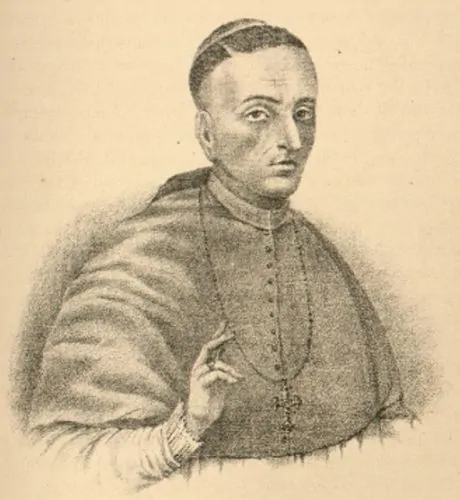
By the time Francisco de Toral reached Yucatán and formally took possession of his diocese in August 1562, the campaign against Maya “idolatry” was already in full motion. The auto-da-fé at Maní had taken place the previous month, but arrests, investigations, punishments, and disputes generated by the Franciscan proceedings had not ended with the public ceremony. Toral was himself a Franciscan, which makes the confrontation that followed particularly revealing: the disagreement cannot be reduced to a clash between a mendicant campaign and an inherently more tolerant secular clergy. He shared Landa’s conviction that baptized Maya should abandon practices the church classified as idolatry, and he accepted the Christianizing mission that made suppression of those practices an ecclesiastical responsibility. What he challenged was the authority under which Landa had acted and, with increasing intensity, the means used to obtain confessions and punish the accused. His arrival introduced a second source of ecclesiastical power into a province where the friars had previously exercised extraordinary autonomy. Almost immediately, the investigators discovered that their own decisions could now be reviewed by someone claiming superior jurisdiction.
Toral’s intervention altered the treatment of Maya prisoners and placed restrictions on the punishments generated by the Franciscan investigations. He reviewed cases, modified sentences, and released people whom the friars had imprisoned, while questioning whether Landa possessed legitimate authority to conduct proceedings of this severity against indigenous neophytes. That distinction between a recent convert and an obstinate heretic mattered enormously in sixteenth-century ecclesiastical law. Maya who continued traditional practices might certainly be disciplined, but Toral rejected the assumption that Franciscan provincial authority permitted Landa to proceed as though he possessed an unrestricted inquisitorial jurisdiction. The dispute was not simply about whether wrongdoing had occurred; it concerned the legal machinery by which wrongdoing could be discovered and punished.
The use of torture brought the disagreement into sharp focus. For Landa, coercive interrogation had helped expose what he understood as a concealed and extensive religious relapse, and the accumulation of confessions seemed to demonstrate the seriousness of the danger. Toral confronted the opposite implication: if defendants had been subjected to extreme physical pressure until they admitted offenses or supplied names, then the methods used to reveal the supposed truth had compromised the evidence on which judgments depended. Some Maya repudiated earlier statements when the episcopal regime altered the conditions under which they were being heard, while complaints about suspension, whipping, imprisonment, and other abuses increasingly circulated beyond the immediate proceedings. Toral did not need to believe that indigenous idolatry was imaginary in order to find the investigative methods objectionable. He could accept that prohibited rituals persisted while doubting whether particular accusations, confessions, or claims about their extent had been established legitimately. That distinction threatened the logic on which the Franciscan inquiry had expanded. Landa’s investigators had treated additional testimony as evidence that their methods were penetrating an increasingly extensive hidden world; Toral treated the methods themselves as a reason to question what that testimony proved. The arrival of episcopal authority inverted the evidentiary relationship. Confession was no longer simply evidence against an accused Maya person; the circumstances under which confession had been obtained became evidence relevant to judging the friars.
The jurisdictional conflict quickly became entangled with wider divisions inside colonial Yucatán. Secular officials, encomenderos, members of municipal government, Franciscans, and the bishop did not form stable camps determined solely by abstract questions of canon law. Existing disputes over indigenous labor, ecclesiastical privilege, political authority, and personal rivalries affected how different Spaniards responded to the controversy. Diego Quijada had supported Landa’s campaign and supplied secular assistance, while other colonial figures increasingly regarded the Franciscan proceedings as excessive or dangerous. Toral’s intervention consequently provided an institutional center around which grievances that had previously lacked sufficient authority to restrain Landa could gather.
The reversal became still more consequential when complaints moved beyond Yucatán. Toral reported the controversy to the Crown, and indigenous grievances, secular accusations, and disputes over Franciscan conduct contributed to a larger examination of what had occurred in 1562. Landa eventually resigned as provincial and left Yucatán for Spain in 1563, where his authority and actions became subjects of legal and ecclesiastical scrutiny; the controversy would continue for years before he was ultimately cleared sufficiently to return to Yucatán as bishop in the following decade. That later vindication should not be projected backward as proof that Toral’s objections were trivial, any more than Toral’s condemnation demonstrates that every allegation against Landa was ultimately accepted as legally dispositive. The importance of Toral’s intervention lies in the institutional reversal it produced at the height of the crisis. Until his arrival, the Franciscans had pursued the question of whether Maya people were concealing forbidden practices, and they had used interrogation to test the reliability of outward Christian conformity. Toral redirected scrutiny toward the mechanisms by which the friars claimed to know what was concealed. Who had authorized the questioning, what could legitimately be done to a baptized Maya defendant, and how trustworthy was information extracted through torment? The investigation had been designed to expose discrepancies between public Christianity and private religious behavior; now another authority was asking whether an equally serious discrepancy existed between the friars’ proclaimed defense of the faith and the procedures through which they had pursued it. At that moment, the search for hidden idolatry became an investigation of the investigators themselves.
Maya Complaints and the Politics of Testimony
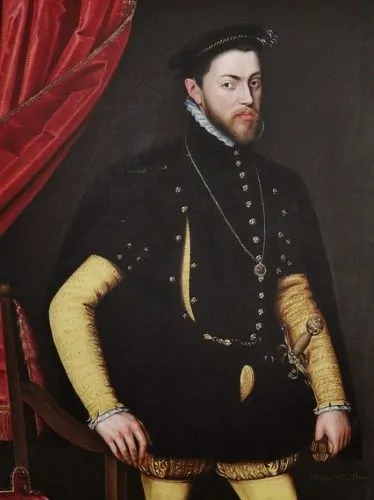
The arrival of Francisco de Toral did more than interrupt Landa’s proceedings; it created opportunities for Maya defendants and communities to challenge the way those proceedings had been conducted. People who had previously spoken while imprisoned or under physical coercion could now give different accounts before an ecclesiastical authority openly skeptical of Franciscan methods. Some repudiated confessions, while complaints concerning torture, excessive punishment, detention, deaths, injuries, and material losses became part of the controversy surrounding 1562. The reversal was striking because testimony had been one of the principal mechanisms through which the Franciscan investigation expanded. Maya speech had first been used to expose alleged idolatry and implicate additional suspects; it could now be used to describe what the investigators themselves had done. That did not place Maya complainants outside the colonial system. On the contrary, their ability to contest Franciscan treatment depended increasingly upon learning how to operate within competing institutions of Spanish rule.
One of the most powerful surviving examples came from the governors of Maní, Panabchen, and Texul, who addressed Philip II in April 1567. Their petition recalled the events of 1562 as a period of persecution in which Franciscans who had been expected to provide Christian instruction instead subjected Maya people to suspension, whipping, weighted restraints, the windlass, and water torture. They attributed deaths and permanent injuries to the severity of the proceedings and complained that Diego Quijada had supported the friars rather than protecting indigenous defendants. The document was written five years after the crisis and in the context of continuing political struggles, so its accusations require the same critical scrutiny applied to Franciscan records. Nevertheless, it demonstrates that Maya political leaders understood the violence of 1562 not simply as private suffering but as a grievance that could be presented to the king as a failure of legitimate colonial government.
That choice of audience was itself politically significant. Maya petitioners were not appealing to an imagined world outside Spanish rule; they were appealing upward through that rule, distinguishing between abusive colonial agents and a monarch whom they represented as the ultimate source of justice. Such petitions adopted a familiar strategy of the Spanish imperial system, in which subjects portrayed themselves as loyal while alleging that local officials had violated the king’s laws or intentions. Maya elites learned remarkably quickly to use petitions, testimony, municipal institutions, interpreters, notaries, and other components of colonial legal culture to defend local interests. Caroline Cunill’s work on indigenous access to justice in sixteenth-century Yucatán has shown that this participation should not be mistaken for passive assimilation. Familiarity with Spanish legal forms could become a political resource, allowing Maya litigants to exploit jurisdictional rivalries among bishops, friars, governors, encomenderos, municipal authorities, and royal officials. The conflict surrounding Maní offered precisely such an opportunity because Spanish authorities themselves disagreed over Landa’s jurisdiction and methods. Toral’s intervention supplied Maya complainants with an ecclesiastical ally whose objections overlapped with their grievances even though his reasons were not identical to theirs. A Maya defendant might condemn torture because he had suffered it; Toral might condemn the same procedure because it exceeded legitimate jurisdiction or corrupted ecclesiastical justice. Their interests could converge without their understandings of the controversy being the same.
The resulting documents must be read as political acts rather than unfiltered transcripts of indigenous experience. Petitioners selected grievances likely to matter to royal authorities, adopted conventions associated with legitimate subjects seeking redress, and presented events in ways designed to support particular outcomes. Translators, scribes, legal advisers, and Spanish documentary conventions could stand between Maya experience and the surviving written text. Even documents bearing indigenous signatures or written partly in Maya cannot automatically be treated as direct expressions untouched by colonial mediation. The politics of testimony operated in both directions: Spanish institutions shaped the forms through which Maya complaints could become audible, while Maya petitioners learned to use those forms against particular Spaniards.
The complexity becomes clear when the anti-Landa complaints are placed beside another remarkable group of documents from 1567. Several Yucatecan caciques sent letters to Philip II praising the Franciscans and requesting the return of Landa and other friars associated with the missionary enterprise. These letters make it impossible to construct a simple opposition in which Maya society uniformly condemned Landa while Spaniards defended him. Yet they cannot simply be counted as spontaneous indigenous endorsements either. Zoraida Raimúndez Ares’s close study of the surviving Maya and Spanish versions has demonstrated that the pro-Franciscan letters followed highly standardized forms and that their Maya texts appear to have been translated from Spanish compositions rather than the other way around. That finding does not prove that the indigenous signatories disagreed with their contents, but it makes the circumstances of composition central to interpretation. Some Maya elites may genuinely have valued Franciscan schools, protection, religious instruction, or the political relationships they had developed with individual friars. Others may have calculated that supporting Landa served local interests, strengthened alliances, or positioned them advantageously within colonial disputes. Communities themselves were divided by status, lineage, office, personal history, and political rivalry, so there is little reason to expect a single collective response to the events of 1562. The coexistence of petitions condemning Franciscan cruelty and petitions seeking Landa’s return reveals not confusion in the archive but the contested politics through which indigenous testimony was produced.
The aftermath of Maní complicates any notion that surveillance moved only from colonial authorities downward into Maya communities. The same expansion of writing, translation, testimony, and jurisdiction that allowed Spaniards to gather information about hidden ritual also created records through which Maya people could expose colonial conduct to authorities far beyond Yucatán. Those mechanisms were profoundly unequal, and indigenous petitioners could not control how their statements were translated, preserved, judged, or used by competing Spanish factions. Even so, they were not merely objects recorded in somebody else’s archive. They learned to make accusations, construct claims of lawful treatment, and place rival authorities under scrutiny. The politics of testimony after 1562 reversed one of the central dynamics of the Maní investigations: people who had been compelled to reveal what occurred inside Maya communities began telling the Crown what had occurred inside Franciscan prisons.
Landa on Trial: From Investigator to Defendant
The confrontation with Francisco de Toral eventually reversed Diego de Landa’s position more completely than anything that had occurred during the investigations themselves. In 1562 Landa had been the ecclesiastical authority demanding explanations from Maya defendants, judging whether their testimony was credible, and defending coercive interrogation as a means of uncovering concealed religious offenses. Within a few years, his own actions were being reconstructed from testimony, correspondence, accusations, and documentary evidence for authorities in Spain. “Landa on trial” is convenient shorthand, although the process was more complicated than a single criminal proceeding before one tribunal. The Council of the Indies examined the controversy while Landa’s Franciscan superiors conducted the formal inquiry that ultimately determined his standing within the order. The central questions closely resembled those Landa himself had posed at Maní, but now they concerned his conduct: what authority had he possessed, what had he ordered, and how should conflicting testimony about his actions be interpreted? The investigator had become the subject of an investigation.
Landa did not initially leave Yucatán as a prisoner being forcibly deported to Spain. As opposition mounted and complaints reached the Crown, he resigned the Franciscan provincialate and decided to return to defend himself, embarking in April 1563. Illness delayed him in Santo Domingo, and an arduous journey prevented his arrival in Spain until October 1564. By then royal orders had been issued requiring colonial authorities to send him and other friars associated with the proceedings before the Council of the Indies under custody. The chronology matters because it shows that the case against him developed while information about Maní traveled across the Atlantic through multiple and competing channels.
The accusations placed the jurisdictional question at the center of the controversy. Critics charged that Landa had exceeded the extraordinary powers available to Franciscan provincials and effectively usurped authority properly belonging to bishops or inquisitorial judges. They also pointed to the severe treatment of Maya defendants, including torture used to obtain confessions and the deaths or lasting injuries attributed to the proceedings. Landa did not deny the underlying campaign against idolatry or retreat from his conviction that serious religious offenses had been uncovered. Instead, his defense emphasized the apostolic privileges historically granted to mendicant missionaries in territories lacking effective episcopal government and the responsibilities those privileges imposed upon religious superiors confronting apostasy among baptized converts. He maintained that the extraordinary circumstances in Yucatán demanded action and portrayed the alleged persistence of idolatry as sufficiently grave to justify vigorous intervention. His reasoning rested partly on intention: he had not sought to seize authority for personal advantage but believed himself obligated to defend Christianity against a danger that ordinary missionary instruction had failed to eradicate. The defense could not escape the question of proportionality. Even if Landa had possessed some legitimate ecclesiastical jurisdiction before Toral’s arrival, that did not automatically establish that every form of punishment or interrogation employed under his authority had been lawful. The dispute consequently forced Spanish and Franciscan authorities to distinguish between the existence of missionary power and the limits governing its exercise.
The formal inquiry eventually turned significantly in Landa’s favor. On May 2, 1565, Franciscan investigator Francisco de Guzmán completed a report sufficiently favorable that it recommended Landa be permitted to return to Yucatán, citing among his qualifications his knowledge of the Maya language and extensive experience in the province. That recommendation did not immediately end the controversy, and a definitive sentence was still years away. During the intervening period Landa composed the work now known as the Relación de las cosas de Yucatán, a text whose extraordinary description of Maya society has often been treated separately from the crisis surrounding its author. María del Carmen León Cázares has persuasively suggested that the work should also be understood within the circumstances of Landa’s self-vindication, demonstrating the knowledge of Yucatán that made him valuable to imperial authorities even while his conduct there remained contested.
The continuing flow of testimony shows that the favorable report of 1565 did not silence either Landa’s supporters or his opponents. Maya governors wrote to Philip II in 1567 describing torture and other abuses, while other caciques sent letters praising the Franciscans and requesting Landa’s return. These competing documents have sometimes been treated as votes for and against the friar, but their political circumstances make that interpretation too simple. The anti-Landa complaints emerged from communities seeking royal redress for violence and unlawful treatment, while the supportive correspondence was shaped by Franciscan relationships and standardized documentary forms whose composition complicates assumptions about spontaneous indigenous endorsement. Neither body of evidence can be allowed to speak for “the Maya” as a whole. More importantly, neither ultimately determined the legal outcome by itself. The institutional process weighed jurisdiction, missionary privilege, testimony about abuses, Landa’s explanations, and assessments of his usefulness to the church and Crown. On January 29, 1569, the Franciscan provincial of Castile, Antonio de Córdoba, issued the definitive sentence in Toledo absolving Landa. The man accused of exceeding his authority at Maní had survived the investigation of his conduct without receiving the institutional condemnation his opponents had sought.
His subsequent career demonstrates how complete that rehabilitation became. Francisco de Toral died in 1571, leaving the bishopric of Yucatán vacant, and the Crown soon selected Landa to succeed the man who had once challenged his authority. By 1572 he was bishop-elect, and papal bulls confirming the appointment followed in November of that year. The choice did not mean that Spanish authorities retroactively endorsed every act committed during the investigations of 1562, nor did it erase the suffering recorded in Maya complaints. It revealed instead that Landa’s linguistic knowledge, missionary experience, familiarity with Yucatán, and uncompromising commitment to Christian discipline could outweigh the controversy that had nearly destroyed his career. The irony is difficult to miss. In 1562 Landa had exercised contested authority while searching for hidden religion; a decade later he returned with episcopal jurisdiction far less vulnerable to precisely the challenge Toral had raised. His transformation from investigator to defendant and then from defendant to bishop illustrates that the conflict at Maní never turned simply on whether indigenous religious practices should be suppressed. The enduring institutional question was who possessed legitimate power to investigate them, what methods that power permitted, and how colonial authorities would judge the knowledge produced when coercion was used in the name of religious certainty.
After Maní: From Improvised Inquisition to Continuing Extirpation
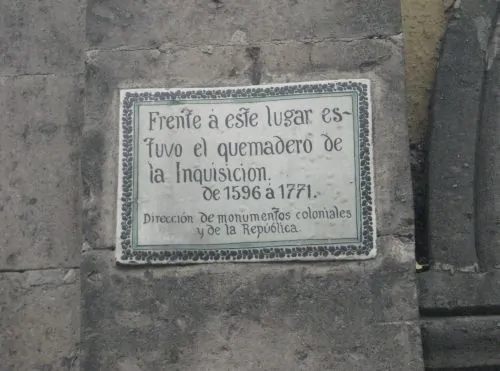
The collapse of Landa’s authority in 1562 did not end the campaign against Maya religion. What Toral opposed was the Franciscans’ disputed assumption of inquisitorial power, the severity of their procedures, and the manner in which they had treated indigenous converts, not the larger ecclesiastical objective of suppressing practices classified as idolatry. Under episcopal government, jurisdiction over indigenous religious offenses became more clearly attached to the bishop and to judges acting under episcopal authority. This development gradually transformed what had been a highly improvised Franciscan campaign into a more regular system of ecclesiastical investigation. The distinction was consequential because it placed the policing of Maya religious behavior within institutions capable of surviving individual missionaries and particular moments of crisis. Maní had demonstrated the dangers of leaving investigation to friars claiming exceptional powers in the absence of a resident bishop. Its aftermath did not abolish religious policing; it encouraged the colonial church to regularize who could conduct it.
The establishment of the Mexican Holy Office in 1571 further clarified the institutional landscape. Indigenous people were excluded from its ordinary jurisdiction over heresy, leaving their offenses against the faith principally to episcopal authorities. In Yucatán, the developing provisorato de indios provided an ecclesiastical framework through which bishops and their delegated judges could investigate idolatry, sorcery, heterodox religious practices, and related offenses. The searches for concealed Maya religion continued, but increasingly under recognizable diocesan authority rather than the uncertain missionary jurisdiction that had made Maní so controversial.
The irony became unmistakable when Landa returned to Yucatán as bishop in 1573. The friar whose jurisdiction Toral had challenged now possessed the episcopal authority whose absence had helped create the legal crisis of 1562, and he resumed the extirpation of idolatry with considerable energy. In 1574 he commissioned Franciscan Gregorio de Fuente Ovejuna as a judge of idolatry and sent him into the Campeche region, where investigations spread through a series of Maya towns and implicated indigenous governors, alcaldes, caciques, and other inhabitants. Large numbers of people were arrested, and punishments again included severe corporal penalties and exile. Landa also undertook episcopal visitation, including activity in Tabasco during 1575 and 1576, where he reported encountering extensive idolatry and practices Spaniards classified as witchcraft. Other local friars continued to discover suspected rituals and forward cases to episcopal authority, sometimes receiving commissions empowering them to investigate further. The resemblance to 1562 is striking, but there was an important institutional difference. Landa was no longer acting primarily on the disputed claim that Franciscan privileges substituted for an absent bishop; he was the bishop. His authority to investigate indigenous offenses against the faith was consequently much more difficult to challenge on the grounds that had animated Toral’s opposition.
That did not mean jurisdictional conflict disappeared. Episcopal judges investigating idolatry frequently needed assistance from secular officials to make arrests, hold prisoners, enforce sentences, or move through colonial districts. Governors and corregidores could cooperate, obstruct, or dispute ecclesiastical claims, and Landa’s episcopate generated new conflicts over precisely where religious authority ended and civil jurisdiction began. His clashes with Governor Francisco Velázquez de Gijón during the 1570s demonstrate that institutionalization could sharpen jurisdictional boundaries without eliminating competition. The struggle after Maní was not over whether surveillance of indigenous religion would continue, but over which authorities would control its information, procedures, and punishments.
More important still, the system outlived Landa. John F. Chuchiak’s reconstruction of the Yucatecan provisorato de indios demonstrates that episcopal courts and delegated ecclesiastical judges continued pursuing Maya idolatry for generations, producing investigations that stretched far beyond the spectacular crisis of 1562. Bishops, secular clergy, Franciscan guardians, local vicars, and specially commissioned judges participated at different times in campaigns intended to uncover practices occurring beyond ordinary Christian supervision. The institutional forms varied, as did the intensity of enforcement, and Franciscan efforts to regain greater disciplinary authority periodically generated new disputes with bishops and civil officials. Yet the informational problem remained remarkably familiar. Authorities still relied on denunciations, witnesses, interpreters, searches, confiscated objects, confessions, and knowledge supplied from inside Maya communities to discover rites they could not observe directly. was neither an aberration entirely repudiated by the colonial church nor a stable model simply repeated unchanged. It was an early, violent experiment whose jurisdictional excesses helped expose the need for a more durable machinery of control. The spectacular auto-da-fé passed into memory, but the search for concealed ritual became routine enough to acquire courts, officials, procedures, and archives of its own. What had been improvised in 1562 gradually became institutionalized: the colonial church continued trying to make private Maya religious life visible long after the fires at Maní had gone out.
Surveillance before the Surveillance State: What Maní Reveals

To describe Maní as a history of surveillance requires resisting the temptation to make sixteenth-century Yucatán look more modern than it was. Landa possessed no professional police force, centralized intelligence bureau, technological means of observation, or administrative apparatus capable of continuously tracking the population. Yet surveillance in its broadest historical sense does not require cameras or a modern state. It requires authorities who seek systematic knowledge about behavior that people do not voluntarily make visible and who develop methods for obtaining that knowledge. The Franciscans wanted to know whether baptized Maya continued practices condemned as idolatry when missionaries were absent, and ordinary public observation could not answer that question. The proceedings of 1562 combined direct observation with denunciation, interrogation, searches, compelled disclosure, translation, and written records in an effort to reconstruct conduct occurring beyond ecclesiastical sight. In this limited but important sense, Maní reveals surveillance as an informational relationship between power and people long before surveillance became associated with specialized state institutions.
Observation was only one component of that relationship, and often it was the least effective one. A friar could see who attended Mass or appeared for Christian instruction, but attendance revealed little about ceremonies conducted in a cave or practices maintained within a household. Colonial authorities could make public Christianity highly visible without making private religious life equally knowable. Their solution was to acquire information from people who possessed access unavailable to them. The effective reach of surveillance consequently depended less on how many Spaniards were watching than on how much Maya knowledge colonial authorities could draw into an investigation.
That distinction helps explain the extraordinary importance of testimony at Maní. The friars did not need to witness every prohibited ceremony if someone who had attended could describe it afterward. A confiscated sacred object could prompt questions about its owner, while one accused participant could identify another person whose conduct had never previously attracted attention. Interpreters transferred those statements into Spanish proceedings, and indigenous officials or other local intermediaries could help authorities locate the people and places that testimony brought under suspicion. Information could move farther than direct observation ever could. The process also transformed relationships within Maya society into potential sources of investigative knowledge. What someone knew because he was a relative, neighbor, political subordinate, ritual participant, or community official could acquire a new meaning when an ecclesiastical investigator demanded that knowledge. There was no need for every source to become a permanent informer. A person might disclose information voluntarily, answer under official pressure, or speak while imprisoned and facing physical coercion. Those radically different circumstances all fed information into the same expanding investigation. The resulting surveillance was embedded in social relationships rather than imposed solely through an external apparatus hovering above the community.
Writing intensified that power because information acquired in one encounter could survive the encounter itself. Statements were translated, summarized, incorporated into proceedings, compared with accusations, and used to justify further action. A spoken name could become a documented suspect after the original speaker was no longer present. Inquisitorial procedure thereby gave information a degree of institutional mobility that ordinary rumor lacked. The transformation of Maya speech into Spanish documentation made the population more legible only according to categories colonial authorities considered meaningful. Practices entered the record as idolatry, apostasy, sacrifice, or superstition rather than necessarily under the concepts Maya participants would have used to understand them. The archive was not merely storing knowledge about Maya religion; it was reorganizing that knowledge into a form through which ecclesiastical power could act.
The most dangerous feature of this informational system was its capacity to turn incomplete knowledge into expanding suspicion. The discovery of one hidden ritual site proved that the friars had failed to see at least some prohibited activity, but it could not establish how much remained undiscovered. Once investigators assumed that concealment itself was widespread, every new confession appeared capable of revealing another portion of the unseen problem. A newly named suspect might then supply additional names, and the accumulation of testimony could be interpreted as confirmation that the original fears had been justified. Coercion made that logic particularly unstable because the methods intended to overcome secrecy simultaneously increased the incentive to provide whatever answers interrogators appeared to demand. Maní demonstrates a problem that extends well beyond the particular religious conflict of 1562: surveillance can generate apparent certainty from information whose production has already been shaped by suspicion. The more aggressively authorities search for hidden connections, the more connections their procedures may produce. This does not mean that the underlying activity was imaginary, since Maya ritual persistence is independently well established. It means that the informational system could blur the boundary between discovering the extent of a practice and enlarging the documentary appearance of that practice through the manner in which the investigation was conducted.
Maní belongs in a history of surveillance not because Landa anticipated the institutions of a modern surveillance state, but because the crisis exposes a recurring problem of governing what cannot easily be seen. Public obedience could be inspected; private conviction could only be inferred. Faced with that limit, Franciscan authorities sought access to hidden behavior by converting objects, testimony, local knowledge, and social relationships into actionable information. Their success was substantial enough to expose real continuities in Maya religious life, yet their coercive procedures ensured that the full extent of what they claimed to discover remained uncertain. The episode reveals a fundamental paradox of surveillance: the determination to eliminate uncertainty can produce increasingly elaborate knowledge while simultaneously making the reliability of that knowledge harder to judge.
Was There Really a Secret Maya Religious Network to Discover?
The following video from “ASMR Historian” discusses torture methods used during the Inquisition:
The surveillance interpretation of Maní rests on a potential danger that should be confronted directly: it can reproduce the Franciscans’ own assumption that behind outward Christian conformity stood a coherent clandestine religious organization waiting to be uncovered. Landa believed that baptized Maya had been led back into idolatry by indigenous priests and influential lords, and the multiplying confessions seemed to provide a map of that concealed apostasy. Read too literally, the surviving proceedings can make his interpretation appear self-evident. Names connect to other names, ceremonies connect to additional communities, and ritual specialists appear linked to groups of participants. Yet those connections do not necessarily demonstrate the existence of an organized underground movement whose members consciously understood themselves as participants in a unified secret religion. They may instead record overlapping practices maintained through households, local communities, kinship relationships, ritual expertise, and political authority without centralized coordination. The strongest counterargument to the surveillance interpretation is not that the Franciscans found nothing, but that historians risk mistaking the architecture of the investigation for the architecture of Maya religion itself.
The category of “idolatry” intensifies that problem because it imposed unity upon practices whose indigenous meanings could differ substantially. A curing ceremony, an agricultural offering, divination, ritual drinking, consultation with a traditional specialist, and the keeping of sacred objects might all become evidence of the same offense once translated into Franciscan theological language. Maya participants did not necessarily understand these activities as parts of a single alternative religion opposed to Christianity. By classifying them together, the investigators could create conceptual coherence where Maya practice may have been local, situational, or religiously mixed.
The evidentiary process then risked giving that imposed coherence a social structure. Once investigators asked who had attended a ceremony, who had performed it, and who else knew about similar practices, testimony inevitably generated connections between people. Those connections were not necessarily fictional: people genuinely worshiped together, consulted ritual specialists, shared knowledge, and maintained ceremonies after baptism. The problem lies in what investigators inferred from those relationships. A ritual specialist with clients could become evidence of an organized priesthood; an indigenous lord who permitted ceremonies could look like the political protector of a clandestine religious system. When coercive interrogation generated still more names, the expanding record could appear to confirm that a hidden organization extended through entire communities. Inga Clendinnen’s critique of the 1562 inquisitorial materials is particularly important because it demonstrates how interrogation, torture, retrospective testimony, and the selection of surviving documents complicate any attempt to read the confessions as straightforward descriptions of Maya religious behavior. Multiple accusations do not necessarily provide independent corroboration when the people making them were caught inside the same investigative process. The supposed network was partly discovered and partly constructed: real social relationships entered a documentary system whose questions encouraged those relationships to be reorganized into a pattern of collective apostasy.
There is also a danger of exaggerating secrecy itself. Once Franciscan authorities prohibited inherited rituals, practices conducted outside missionary observation naturally acquired the appearance of clandestinity, but not everything unseen by friars had been deliberately hidden from them. Caves, agricultural fields, household spaces, and local sacred places had supported Maya ritual life long before Spanish conquest. Continuing to perform ceremonies there could represent cultural persistence as much as calculated concealment. Prohibition may have encouraged greater discretion, but privacy should not automatically be translated into conspiracy.
These objections significantly modify my argument, but they do not eliminate the surveillance dimension. The Maní proceedings do not require the existence of a centralized secret Maya religious network to demonstrate an intrusive search for private behavior. On the contrary, the absence of such a coherent organization makes the episode more revealing. Franciscan authorities confronted genuine evidence that Maya ritual practices persisted, but because they could not determine their boundaries through direct observation, they used testimony and coercive investigation to impose boundaries upon them. Diverse behaviors became manifestations of “idolatry,” social acquaintances became connections among suspects, and uncertainty about what remained unseen encouraged additional searches. The surveillance system helped create the apparent object that it claimed merely to discover. Maní should not be understood as the successful exposure of a single underground Maya religion, nor as a panic fabricated from nothing. It was an encounter between real religious continuities and a colonial investigative apparatus that reorganized those continuities into a more unified hidden threat than the evidence can securely sustain. That qualification ultimately strengthens the larger interpretation: surveillance becomes most consequential not only when it uncovers secret networks that actually exist, but when its methods transform ambiguous relationships and dispersed private behavior into a network of suspicion.
Conclusion: The Search for What Could Not Be Seen
The crisis at Maní began with a problem that the Franciscan mission could never solve through public conversion alone. Baptism could be recorded, attendance at worship observed, Christian instruction administered, and sacred architecture placed conspicuously at the center of Maya towns. None of those achievements allowed a friar to know with certainty what happened inside a household, at an agricultural site, or in a cave beyond ordinary missionary supervision. When evidence of continuing ritual surfaced in 1562, that limit on Franciscan knowledge suddenly appeared dangerous. If practices condemned as idolatry had survived without detection, outward Christianity could no longer be assumed to reveal the full religious life of the communities the friars claimed to have converted. Landa and his associates responded by trying to bridge the gap between visible conformity and invisible conduct. They sought information from people who knew what the missionaries themselves could not see, turning testimony and local knowledge into instruments for penetrating private behavior. The resulting crisis was about more than the persistence of Maya religion. It was about the determination of colonial authorities to know whether people were obeying them even when those authorities were absent.
That determination explains why an investigation initially prompted by material evidence became increasingly concerned with relationships among people. Objects could be confiscated, but objects alone could not reveal who had used them or what other ceremonies had escaped detection. Questioning supplied names, and names supplied new subjects for questioning. Maya governors, ritual specialists, school-trained intermediaries, householders, and ordinary participants could all become significant because each possessed different kinds of knowledge about practices occurring within communities. The investigative reach of colonial authority expanded not primarily because the Franciscans became better observers but because they learned to appropriate the observations of others.
That system also carried within it the means of distorting what it claimed to discover. Once investigators expected widespread apostasy, additional accusations could easily appear to confirm that expectation, while the use of imprisonment and torture placed enormous pressure on defendants to produce information. Translation then moved statements into Spanish theological and judicial categories that could impose a coherence absent from the original Maya descriptions. Practices with different local purposes were gathered under the encompassing label of idolatry, and social relationships revealed during questioning could appear as evidence of an organized clandestine religious structure. None of this requires imagining that the Franciscans invented religious continuity from nothing. Maya ritual practices demonstrably survived conquest and Christianization, and the discovery that triggered the Maní investigations reflected a real limitation of missionary success. What remains uncertain is how closely the network described in Franciscan records corresponded to a network consciously experienced by Maya practitioners themselves. The later retractions, Toral’s objections, and subsequent complaints make that uncertainty impossible to dismiss. They reveal an investigative apparatus capable of producing an abundance of information while simultaneously compromising the conditions under which that information had been obtained. Maní consequently warns against equating the volume of surveillance with the accuracy of the knowledge surveillance produces.
The confrontation between Landa and Francisco de Toral gave that problem an institutional dimension. Toral did not defend Maya religious freedom or question the church’s right to suppress practices regarded as idolatrous; he challenged the authority, procedures, and severity through which the Franciscans had pursued that objective. His intervention placed the investigators under scrutiny and exposed the unsettled jurisdiction behind their campaign. Yet Landa’s eventual rehabilitation and return as bishop demonstrated that the colonial project of discovering hidden religion survived the controversy surrounding the methods used in 1562.
The famous destruction at the Maní auto-da-fé belongs at the culmination of this history rather than at its center. Before sacred objects and manuscripts could be burned publicly, they had to be discovered, associated with prohibited practices, and incorporated into an investigative account that identified offenders. The fire has endured as the most recognizable image of Landa because destruction is easier to visualize than the slow accumulation of accusations and compelled disclosures that preceded it. But the quieter process exposes something more fundamental about colonial power. Authorities confronting a population whose private convictions could not be inspected developed ways to make people reveal what they knew about themselves and one another, and the information produced through that process continually invited further inquiry. Maní shows that surveillance does not begin with modern technology or a bureaucratic surveillance state; it begins with the desire of power to reach conduct occurring beyond its direct sight. In Yucatán in 1562, that desire transformed religious uncertainty into investigation and investigation into an expanding field of suspicion. The search for hidden religion could never finally answer the question that had generated it, because belief itself remained invisible. What the Franciscans could expose were people, practices, objects, and relationships and the violence required to make those things visible ultimately revealed as much about the colonial demand for religious certainty as it did about the Maya world the friars were trying to uncover.
Bibliography
Affiliate disclosure: Amazon links on this site are paid links. As an Amazon Associate I earn from qualifying purchases.
- Brady, James E., and Keith M. Prufer, eds. In the Maw of the Earth Monster: Mesoamerican Ritual Cave Use. Austin: University of Texas Press, 2005.
- Chuchiak, John F., IV. El castigo y la reprensión: El juzgado del provisorato de indios y la extirpación de la idolatría maya en el obispado de Yucatán, 1563–1763. Mexico City: Universidad Nacional Autónoma de México, Instituto de Investigaciones Jurídicas, 2022.
- —-. “El regreso de los autos de fe: Fray Diego de Landa y la extirpación de idolatrías en Yucatán, 1573–1579.” Península 1 (2005), 29–47.
- —-. “In Servitio Dei: Fray Diego de Landa, the Franciscan Order, and the Return of the Extirpation of Idolatry in the Colonial Diocese of Yucatán, 1573–1579.” The Americas 61:4 (2005), 611–646.
- —-. “‘It Is Their Drinking That Hinders Them’: Balché and the Use of Ritual Intoxicants among the Colonial Yucatec Maya, 1550–1780.” Estudios de Cultura Maya 24 (2003), 137–171.
- —-. “Toward a Regional Definition of Idolatry: Reexamining Idolatry Trials in the ‘Relaciones de Méritos’ and Their Role in Defining the Concept of ‘Idolatría’ in Colonial Yucatán, 1570–1780.” Journal of Early Modern History 6:2 (2002), 140–167.
- Clendinnen, Inga. Ambivalent Conquests: Maya and Spaniard in Yucatan, 1517–1570. Cambridge: Cambridge University Press, 1987.
- —-. “Reading the Inquisitorial Record in Yucatán: Fact or Fantasy?” The Americas 38:3 (1982), 327–345.
- Cunill, Caroline. “La alfabetización de los mayas yucatecos y sus consecuencias sociales, 1545–1580.” Estudios de Cultura Maya 31 (2008), 163–192.
- —-. “El uso indígena de las probanzas de méritos y servicios: Su dimensión política (Yucatán, siglo XVI).” Signos Históricos 16:32 (2014), 14–47.
- —-. “‘Nos traen tan avasallados hasta quitarnos nuestro señorío’: Cabildos mayas, control local y representación legal en el Yucatán del siglo XVI.” Histórica 40:2 (2016), 49–80.
- de la Garza, Mercedes, et.al., eds. Relaciones histórico-geográficas de la Gobernación de Yucatán: Mérida, Valladolid y Tabasco. 2 vols. Mexico City: Universidad Nacional Autónoma de México, Instituto de Investigaciones Filológicas, Centro de Estudios Mayas, 1983.
- Farriss, Nancy M. Maya Society under Colonial Rule: The Collective Enterprise of Survival. Princeton, NJ: Princeton University Press, 1984.
- Gobernadores de Maní, Panabchen, and Texul. Letter to Philip II. Maní, April 12, 1567. Archivo Histórico Nacional, Diversos-Colecciones, 25, N. 2.
- Greenleaf, Richard E. “The Inquisition and the Indians of New Spain: A Study in Jurisdictional Confusion.” The Americas 22:2 (1965), 138–166.
- —-. The Mexican Inquisition of the Sixteenth Century. Albuquerque: University of New Mexico Press, 1969.
- Hanks, William F. Converting Words: Maya in the Age of the Cross. Berkeley: University of California Press, 2010.
- Landa, Diego de. Landa’s Relación de las Cosas de Yucatan. Translated and edited by Alfred M. Tozzer. Papers of the Peabody Museum of American Archaeology and Ethnology 18. Cambridge, MA: Peabody Museum, Harvard University, 1941.
- Lentz, Mark. “Los intérpretes generales de Yucatán: Hombres entre dos mundos.” Estudios de Cultura Maya 33 (2009), 135–158.
- León Cázares, María del Carmen. “De la persuasión evangélica a la compulsión inquisitorial: Reflexiones historiográficas e históricas sobre la biografía de fray Diego de Landa.” Estudios de Cultura Maya 60 (2022), 251–289.
- —-. “Fray Diego de Landa, obispo electo de Yucatán, según su información de legitimidad y nobleza de 1572.” Estudios de Cultura Maya 58 (2021), 295–336.
- Lizana, Bernardo de. Historia de Yucatán: Devocionario de nuestra Señora de Izamal y conquista spiritual. Mexico City: El Museo Nacional de México, 1893.
- López de Cogolludo, Diego. Historia de Yucathan. Madrid: Juan García Infanzón, 1688.
- Ministerio de Fomento. Cartas de Indias. Madrid: Imprenta de Manuel G. Hernández, 1877.
- Quezada, Sergio. Pueblos y caciques yucatecos, 1550–1580. Mexico City: El Colegio de México, 1993.
- Raimúndez Ares, Zoraida. “Las ‘cartas de los caciques’ de Yucatán de 1567: Nuevas perspectivas. Aportaciones desde la edición crítica y la traducción.” Estudios de Cultura Maya 54 (2019), 219–253.
- Restall, Matthew et.al. The Friar and the Maya: Diego de Landa and the Account of the Things of Yucatan. Louisville: University Press of Colorado, 2023.
- —-. The Maya World: Yucatec Culture and Society, 1550–1850. Stanford: Stanford University Press, 1997.
- Scholes, France V., et.al., eds. Documentos para la Historia de Yucatán II: La Iglesia en Yucatán, 1560–1610. Mérida: Compañía Tipográfica Yucateca, 1938.
- Scholes, France V., and Eleanor B. Adams, eds. Don Diego Quijada, Alcalde Mayor de Yucatán, 1561–1565: Documentos sacados de los archivos de España. 2 vols. Mexico City: Antigua Librería Robredo de José Porrúa e Hijos, 1938.
- Scholes, France V., and Ralph L. Roys. “Fray Diego de Landa and the Problem of Idolatry in Yucatan.” In Cooperation in Research, 585–620. Carnegie Institution of Washington Publication 501. Washington, DC: Carnegie Institution of Washington, 1938.
- Solari, Amara. Maya Ideologies of the Sacred: The Transfiguration of Space in Colonial Yucatan. Austin: University of Texas Press, 2013.
- Timmer, David E. “Providence and Perdition: Fray Diego de Landa Justifies His Inquisition against the Yucatecan Maya.” Church History 66:3 (1997), 477–488.
Originally published by Brewminate, 08.26.2026, under the terms of a Creative Commons Attribution-NonCommercial-NoDerivatives 4.0 International license.
About the Author