In 1885, a vaccine-safety failure turned Montreal’s smallpox epidemic into a crisis of trust, giving rumor new force and making compulsory vaccination a flashpoint for riot.

By Matthew A. McIntosh
Public Historian
Brewminate
Introduction: A Riot at the End of a Long Failure
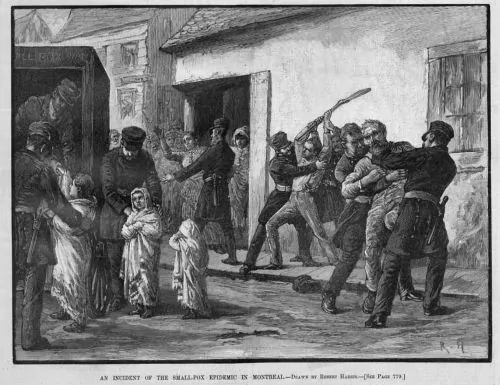
On the evening of September 28, 1885, a crowd descended upon the eastern branch of Montreal’s Health Department on Sainte-Catherine Street. Stones shattered its windows, the building was ransacked, and warning placards and disinfectants were dragged outside and burned. The crowd then moved westward, attacking pharmacies that supplied vaccine, the residences of physicians and aldermen, City Hall, and newspaper offices identified with the campaign for stronger health measures. Police officers were driven back, shots were fired, and Police Chief Hercule Paradis was badly injured before the remaining rioters dispersed after midnight. By the following day, militiamen guarded public buildings and officials’ homes while armed patrols watched for another uprising. Viewed in isolation, the night appeared to be a spontaneous explosion against compulsory vaccination, but the violence represented the culmination of failures that had been accumulating for months and, in some respects, for decades.
The recognized chain of infection had begun on February 28, when George Longley, a railway conductor arriving from Chicago, was found ill at Bonaventure Station. Montreal’s civic smallpox hospital had been closed after several years without an epidemic, and the Montreal General Hospital refused to admit him. Longley was consequently taken to Hôtel-Dieu, where his comparatively mild case was mishandled and he remained near other patients rather than under effective isolation. Pélagie Robichaud, an employee who encountered his infected laundry, contracted smallpox and died, followed shortly afterward by her sister Marie. As cases multiplied inside the hospital, Hôtel-Dieu discharged most of its approximately 240 patients during an attempted evacuation and disinfection, releasing people who appeared healthy but were possibly incubating the disease. The municipal response then produced another disaster: vaccine supplied to public vaccinators caused severe inflammation, extensive eruptions, and cases of erysipelas among children, probably through bacterial contamination, defective handling, or both. Officials first minimized the injuries and then suspended public vaccination on May 12, leaving the program inactive through the crucial summer months. Montreal confronted an expanding epidemic with inadequate hospitals, weak surveillance, unreliable disease reporting, fragmented suburban jurisdictions, and a vaccination service that had visibly harmed some of the people it was supposed to protect.
None of this meant that the antivaccinationists were medically correct. Successful vaccination reduced both the likelihood and the severity of smallpox, whereas cleaner streets, better sewers, and improved nutrition could not prevent transmission of the variola virus. Yet vaccination in 1885 was not a uniformly manufactured modern product: lymph varied in quality and potency, immunity diminished over time, techniques were inconsistent, and secondary infection remained a genuine risk. Physicians Joseph-Emery Coderre and Alexander Milton Ross exploited those weaknesses, combining real cases of injury with claims that vaccination spread smallpox, syphilis, tuberculosis, and other diseases. Their propaganda reached working-class French Canadian neighborhoods already suspicious of a municipal establishment associated with anglophone wealth, commercial power, intrusive sanitary policing, and contemptuous newspaper attacks. Placarded homes lost customers and visitors, hospitalization divided families, quarantine jeopardized wages, and compulsory measures appeared to transfer control of children’s bodies from parents to officials. Stories that vaccinators intended to invade women’s bedrooms or tie down resisting children were false, but earlier forced removals and abrasive household inspections made such stories imaginable. Misinformation acquired force because it fastened itself to experiences that were neither imaginary nor evenly distributed.
The riot consequently cannot be explained as a simple contest between enlightened medicine and an ignorant crowd. Institutional incompetence made falsehoods credible, organized opponents converted reasonable fear into rejection of effective protection, and coercion transformed a medical procedure into a struggle over class, language, family authority, and bodily control. That context does not absolve those who concealed infections, destroyed warnings, or discouraged vaccination while smallpox killed more than three thousand people in Montreal proper, overwhelmingly children and French Canadians. It instead reveals the epidemic as a feedback loop in which official failure and popular resistance continually strengthened one another. Montreal possessed the means to limit the disaster, but the authorities administered those means so badly that they helped their adversaries persuade thousands of people not to trust them.
Montreal before 1885: A City Poorly Defended against Disease
On the eve of the 1885 epidemic, Montreal was Canada’s leading industrial city, its busiest port, and a central junction in the continental railway network. The population within the municipal boundary had risen from 90,323 in 1861 to 140,747 in 1881, while the contiguous urbanized area already contained approximately 170,000 people. Migrants arrived from the Quebec countryside and the British Isles, drawn by employment in factories, railway yards, construction, domestic service, and the port. The same transportation systems that generated wealth also brought passengers into the city faster than diseases could be identified or contained. Montreal’s vulnerability arose from a widening mismatch: metropolitan growth had accelerated more rapidly than the institutions responsible for protecting the population.
This expansion produced a city divided by wealth, language, religion, and access to urban space. French Canadians constituted roughly three-fifths of the population in 1881; most other Montrealers belonged either to the Irish Catholic community or to several British-origin Protestant communities. These divisions were not absolute as there were prosperous French Canadians and impoverished anglophones, but class and ethnicity overlapped strongly enough to shape patterns of exposure. English-speaking Protestants remained disproportionately prominent in banking, commerce, major industry, and municipal reform organizations, while French Canadian migrants were heavily represented among labourers and factory workers in the eastern and lower portions of the city. Many working families occupied subdivided houses, rear dwellings, or crowded rooms close to workshops, stables, and industrial nuisances. Household survival frequently depended on the wages of more than one family member, including adolescents and unmarried women. Taking in lodgers could help meet the rent, but it also increased domestic crowding. Under such conditions, an order to remain at home, surrender a sick child to an isolation hospital, or lose several days of work imposed costs that wealthier advocates of sanitary discipline did not experience in the same way.
Montreal had developed an extensive municipal water supply, but the quantity of water available disguised the incompleteness of the sanitary transformation. Effective sewerage lagged behind urban expansion, particularly in peripheral districts, and many properties continued to depend on privy pits, defective drains, or poorly maintained waste systems. Refuse accumulated in yards and vacant lots, while animals and the wastes associated with them remained part of the densely inhabited city. These conditions did not cause smallpox, which spread primarily through contact with infected people and contaminated articles. They did intensify other infectious diseases, burden poor households with recurring sickness, and make domestic isolation exceptionally difficult.
Municipal health administration had evolved through repeated emergencies rather than according to a continuous provincial plan. Montreal created temporary boards during the cholera epidemics of the nineteenth century, only to let extraordinary sanitary measures recede when immediate danger passed. A more durable municipal organization began to take shape in 1865–66, and Alphonse-Barnabé Larocque, appointed health officer in 1870, became the city’s first full-time medical health officer in 1875. Under Mayor William Hales Hingston, himself a physician and sanitary reformer, By-Law No. 105 of 1876 gave the health authorities broad responsibilities for nuisances, contagious disease, vaccination, inspection, and vital statistics. Yet institutional permanence remained uncertain. The Board of Health became a separate municipal department in 1877, was dissolved in 1879, and was restored on a more permanent footing only in 1881. Its formal powers also exceeded its practical reach: in 1880, merely four inspectors were expected to examine housing conditions and record vaccination status across the growing city. Garbage collection could be entrusted to an inadequate private contractor, Larocque’s request for a sanitary engineer went unanswered, and enforcement remained vulnerable to aldermanic economy or political hesitation. Beyond Montreal, Quebec possessed no permanent provincial board capable of coordinating surveillance, quarantine, or vaccination among the independent municipalities surrounding the city. Municipal boundaries consequently divided a single urban disease environment into multiple jurisdictions of unequal competence.
The city nevertheless possessed specific defenses against smallpox. It offered free vaccination, employed district vaccinators during periods of danger, and from 1880 obtained calf lymph from a local vaccine establishment. These measures had helped reduce smallpox after the epidemics of the early 1870s, but vaccination remained intermittent and substantially voluntary. When the council considered compulsory vaccination during the outbreak of 1875, organized opponents rallied a hostile crowd, stones were thrown, Larocque’s residence was attacked, and the proposal was abandoned. That episode established an important precedent: municipal leaders learned that compulsion could provoke political disorder, while vaccination opponents learned that public pressure could make the council retreat. The subsequent decline of smallpox deaths (only five were officially recorded in 1881 and none during the following three years) further weakened the sense of urgency. New children entered the population without protection, vaccination scars were not systematically verified, and the city allowed its dedicated smallpox hospital to close. Should the disease return, control would depend on hurried cooperation among municipal officers and hospitals belonging to distinct confessional networks.
Montreal was poorly defended in 1885 without being wholly defenseless. It possessed sanitary regulations, medical officers, vaccinators, hospitals, and increasingly sophisticated mortality statistics, but these elements had not been consolidated into a reliable system. Control still depended on physicians reporting suspicious cases, families admitting inspectors, patients accepting removal, and neighbouring municipalities acting in concert. Each step required public confidence, yet the city had invested more consistently in regulatory authority than in the relationships and services needed to make that authority legitimate. Years of administrative instability had also encouraged officials to treat epidemic measures as temporary expenditures rather than permanent civic obligations. When smallpox reappeared, a single mistake would not have been enough to produce catastrophe; the danger lay in how readily one failure could pass through every weak connection in Montreal’s public-health defenses.
A Vaccine That Worked and Could Still Harm

To understand the force of Montreal’s vaccination controversy, two questions that contemporaries repeatedly collapsed must be kept separate: whether vaccination protected against smallpox and whether every dose was safely produced and administered. Jennerian vaccination was not variolation, the older practice of inserting material from a smallpox patient into a healthy person. Instead, a vaccinator introduced “vaccine lymph,” containing a related orthopox virus, through shallow scratches in the skin. Variolation could initiate true smallpox and transmit it to others, whereas vaccination elicited protection without causing variola. By 1885, decades of epidemic experience had made the protective value of vaccination strongly evident, even though neither the precise identity of vaccinia nor the mechanisms of immunity were understood in modern terms.
That protection was neither uniform nor necessarily lifelong. A dose might fail because the lymph had lost potency, because it never entered the skin adequately, or because the recipient did not develop a proper “take,” conventionally judged by the evolution of the vesicle and the scar it left. Immunity could also diminish with time, which was why revaccination became increasingly important in military and public-health practice. Even after a genuine take, occasional breakthrough disease remained possible, but it was ordinarily milder and markedly less fatal than smallpox among the unvaccinated. Nineteenth-century confidence rested chiefly on recurring contrasts observed in households, hospitals, armies, and epidemics rather than on experimental trials conducted to later standards: vaccinated populations suffered fewer deaths, and the most severe outcomes clustered among people without credible evidence of vaccination. Those comparisons were persuasive without being methodologically immaculate. Officials often had to infer vaccination status from a scar or family testimony, while age, previous exposure, incomplete case reporting, and differences in access to vaccination complicated crude totals. Some advocates weakened their own position by describing vaccination as permanent or nearly infallible, promises that experience could plainly contradict. A vaccinated patient who contracted smallpox exposed the limits of a particular vaccination history; the case did not erase the much larger protective pattern.
The procedure itself made harm conspicuous. A vaccinator scarified the upper arm with a lancet and applied lymph to the broken skin, after which a successful vaccination was expected to produce a vesicle, surrounding inflammation, and eventually a crust and scar. Pain, swelling, fever, and temporary incapacity could belong to the intended biological reaction, yet the resulting open wound also provided an entrance for bacterial infection. To a frightened household confronting a hot, suppurating arm or a seriously ill child, the distinction between a normal reaction, an avoidable infection, and the disease vaccination was meant to prevent was neither obvious nor especially reassuring.
The system through which vaccine lymph was obtained created a second, more preventable category of danger. Earlier vaccinators commonly transferred lymph from the vesicle of one recently vaccinated person to another, a method known as arm-to-arm vaccination. That practice sustained vaccine supplies but could transmit human disease, and rare but genuine episodes of vaccinal syphilis gave lasting credibility to warnings about contaminated lymph. Animal vaccination, in which lymph was cultivated on calves, offered a significant safety improvement by removing the human donor from the chain. By the late 1870s, the Montreal physician William E. Bessey was producing calf lymph, and locally prepared animal vaccine soon became integral to the city’s program. Animal origin did not make the product sterile. A calf’s skin had to be shaved and scarified, the contents of mature lesions collected, and the resulting material prepared for storage or distribution on coated points or in capillary tubes. Contamination could enter through the animal’s skin, the instruments, the handlers, or the substances used to dilute and preserve the lymph. Potency also deteriorated during storage and transport, leaving vaccinators with material that might produce no take or tempt them to repeat the procedure. At the point of use, inadequately cleaned lancets, hurried technique, and poor care of the wound added risks that were independent of the vaccine’s protective action. A live vaccine could itself cause rare serious complications, particularly in unusually vulnerable recipients, but many injuries described simply as “bad arms” were compatible with secondary infection. Glycerinated lymph, systematic bacteriological testing, enforceable production standards, and reliable refrigeration would improve vaccine safety later; in 1885, quality still depended heavily upon the judgment and cleanliness of individual producers and vaccinators.
Both sides of the controversy tended to efface this distinction between efficacy and safety. Anti-vaccination writers treated reports of inflamed arms, failed takes, and contaminated lymph as evidence that vaccination was inherently poisonous or that it generated smallpox itself. Medical defenders often answered by emphasizing vaccination’s population-level success while dismissing adverse reports as ignorance, coincidence, or deliberate agitation. The first argument converted preventable failures in production and administration into a rejection of the preventive principle; the second underestimated how completely a visible injury could destroy confidence in that principle. Vaccine effectiveness did not excuse careless manufacture, unsanitary technique, or official evasiveness about injury. Nor did those failures demonstrate that remaining unvaccinated was safer during a smallpox epidemic. Montreal entered 1885 possessing an effective means of prevention but lacking the dependable system of production, oversight, and public accountability required to make coercive vaccination credible.
The Passenger at Bonaventure Station: Smallpox Enters Hôtel-Dieu
At about nine o’clock on the evening of February 28, 1885, George Longley arrived at Montreal’s Bonaventure Station aboard a train from the west. Longley worked as a porter and conductor on the Grand Trunk Railway route connecting Montreal with Chicago, making him part of the mobile workforce that bound rapidly growing cities together. He was feverish and had developed an eruption that an examining physician recognized as possible smallpox. Later accounts made Longley Montreal’s unequivocal “patient zero,” the single outsider who carried catastrophe across the border. Municipal investigators subsequently uncovered evidence that another sleeping-car employee named Shattuck had become ill after an exposure on the same railway network and may have infected Longley. Longley is safest understood as the first traceable case in the chain that produced the Hôtel-Dieu outbreak, rather than as the demonstrably first infectious traveler to enter Montreal. His importance lies less in being unique than in revealing how routinely a continental railway could deliver disease to an unprepared city.
Thomas Rodger, the physician who examined Longley, faced an immediate problem: Montreal had no functioning isolation hospital ready to receive him. The city’s smallpox hospital had been closed after several years without reported cases, leaving a theoretical public-health responsibility without an operational institution behind it. Because Longley was Protestant, Rodger first sought admission for him at the Montreal General Hospital, the principal hospital serving the city’s anglophone Protestant population. Its resident physician declined to accept a patient suspected of carrying a highly contagious disease into crowded general wards. Longley consequently spent the night isolated in a room at Rodger’s office while another placement was sought. The following morning, Rodger brought him to the Catholic Hôtel-Dieu with authorization from William Hales Hingston, a senior surgeon there and a former mayor of Montreal. The Religious Hospitallers of Saint Joseph admitted a sick man whom another institution had refused, but they did so in a hospital containing approximately 240 other patients. What can look retrospectively like denominational buck-passing was also a failure of municipal preparation: sectarian hospitals were being asked to improvise a quarantine system that the city had allowed to disappear.
Longley’s illness was diagnostically treacherous. He had apparently been vaccinated previously, and the resulting modified smallpox, often called varioloid, could produce a less severe and less recognizable eruption than classic smallpox. Rodger seems to have suspected the correct disease, while uncertainty at Hôtel-Dieu led at least some attendants to regard the case as chickenpox. Surviving accounts differ over when the smallpox diagnosis became definitive, but they agree that the early isolation measures were inadequate for the danger. By the time Longley was treated as an unmistakable smallpox patient, opportunities for transmission had already accumulated around his room and belongings.
Longley recovered after several weeks and left the hospital, but the virus remained behind. Contemporary investigators linked the next fatal infection to Pélagie Robichaud, a young Acadian woman employed in the Hôtel-Dieu laundry who handled bedding used during his illness. Smallpox could spread through close respiratory exposure, yet contaminated clothing and linen also remained infectious, making hospital laundry exceptionally dangerous. Robichaud died on April 2 according to the parish burial record, becoming the epidemic’s first recorded fatality. Her sister Marie, who also worked at Hôtel-Dieu, died approximately ten days later. Other employees and patients developed symptoms as the consequences of the original exposure emerged after the disease’s long incubation period. Under pressure from the hospital, municipal authorities reopened the old smallpox facility near Mount Royal around April 9, but it was little more than a converted farmhouse requiring staff and equipment before it could function adequately. By April 11, Hôtel-Dieu itself appeared to be in the midst of an outbreak. Its administrators then discharged or transferred roughly four-fifths of the approximately 240 patients who had been inside during the period of exposure. Some could have been incubating smallpox without yet displaying symptoms, so a decision intended to empty a dangerous institution risked carrying infection into households and other hospitals. The precise number of later cases produced by this dispersal cannot be reconstructed, but it widened the routes through which a contained hospital cluster could become community transmission.
The municipal inquiry convened after the disaster judged that the central error had been allowing an imported case of smallpox into one of Montreal’s largest charitable institutions. That verdict identified a genuine containment failure, although it could shift the moral burden too easily onto those who admitted Longley. Refusing him care would merely have left an infectious man in a physician’s office, a lodging house, or the street. The necessary alternative was a permanent isolation capacity able to accept suspected cases immediately, supported by procedures that did not depend on improvisation among denominational hospitals. The Hôtel-Dieu sisters accepted personal danger when the city provided no satisfactory destination, but charity could not substitute for epidemic infrastructure. Montreal’s failure was already visible before resistance to vaccination became a mass political force: officials had recognized the disease, yet they lacked the institutional readiness required to contain it. What turned an imported infection into sustained transmission was the absence of a dependable isolation system; diagnostic uncertainty and the dispersal of exposed patients made that weakness contagious.
The Vaccine Failure That Made Fear Credible

In the weeks after smallpox appeared at Hôtel-Dieu, vaccination offered Montreal its best means of preventing the hospital outbreak from becoming a citywide epidemic. Much of the lymph used in the campaign came from calves and was supplied by Dr. William E. Bessey, a prominent advocate of animal vaccination. By early May, physicians and families were reporting severe inflammation, suppuration, fever, and cases diagnosed as erysipelas after vaccination. Some redness and swelling constituted an expected “take,” but the severity and apparent clustering of these injuries distinguished them from ordinary reactions. They presented health officials with a genuine safety signal rather than merely another anti-vaccination invention. The resulting illnesses did not demonstrate that vaccinia had transformed into smallpox or that vaccination lacked protective value. They showed instead that an effective vaccine could become dangerous when its production, distribution, or administration failed.
The surviving evidence does not establish that every injured recipient received lymph from one contaminated batch, despite the later tendency to describe the episode simply as a case of “bad vaccine.” Calf lymph passed through a chain of harvesting, preservation, transportation, handling, and inoculation that lacked the standardized bacteriological controls expected of modern vaccine production. Disease-causing organisms could conceivably have entered the vaccination wound through contaminated lymph, an inadequately cleaned lancet, the vaccinator’s hands, the recipient’s skin, or subsequent contact with dirt and infectious material. Crowded dwellings and limited access to clean water could make aftercare more difficult, but those conditions should not be used to transfer responsibility from the program to the families it served. Municipal authorities possessed neither dependable lot tracing nor a sufficiently rigorous investigation capable of assigning each injury to a particular point in the chain. Contaminated lymph remains a plausible explanation for at least some cases, but the record cannot prove that it caused all of them. Instructions issued later in the year by Mayor William Hales Hingston reveal how many hazards physicians themselves recognized: vaccinators were to obtain bovine lymph from reputable sources, reserve a lancet exclusively for vaccination, work in a clean and well-ventilated room, and stop using a supply if excessive inflammation followed its use in more than one patient. Hingston also warned against vaccinating near cases of erysipelas, diphtheria, or scarlet fever. These precautions amounted to a retrospective acknowledgment that safety depended upon an entire system of controlled practices. What Montreal experienced was consequently broader than the possible contamination of a vial: it was a failure to ensure the integrity of the procedure from calf to healing arm.
For parents, the distinction between contaminated lymph and contaminated instruments could offer little immediate comfort. They saw children who had appeared healthy before a municipal operation develop painfully swollen, suppurating arms and serious constitutional illness afterward. That sequence did not prove the expansive claims made by opponents of vaccination, but it gave families rational grounds to doubt unconditional official assurances. Statistical protection against a disease not yet visible in many neighborhoods seemed abstract beside an injury that could be seen, touched, and remembered.
The controversy acquired public force with the appearance of “Bad Results from Vaccination” in the Montreal Gazette on May 11. Faced with reports of erysipelas and suspicion surrounding the available lymph, health officials suspended public vaccination for roughly three months. Considered narrowly, halting the use of a suspect supply was medically defensible; continuing to inoculate children while serious adverse events were clustering would have been reckless. The larger administrative response was nevertheless disastrous. Montreal lacked a system capable of immediately securing a trusted replacement, tracing affected recipients, identifying the precise source of infection, and publishing a convincing account of what had happened. Instead, the principal preventive campaign was interrupted while smallpox continued to circulate through households that were imperfectly reported and poorly isolated. Because deaths remained comparatively limited during part of the early summer, the immediate danger of vaccination could appear more tangible than the still-developing epidemic. The suspension did not by itself cause the later catastrophe, since failures of notification, isolation, sanitation, and relief continued independently of it. It did squander a critical interval in which immunity might have been extended before transmission accelerated. A decision intended to contain one medical danger increased the city’s exposure to another.
Anti-vaccinationists did not need to invent the first premise of their case: some people had plainly become ill after an official vaccination. Their more radical claims transformed that limited truth into assertions that vaccination poisoned the blood, generated smallpox, transmitted chronic diseases, or concealed an assault upon children by self-interested physicians. Such conclusions did not follow from the erysipelas cases, and they disregarded the extensive evidence that properly performed vaccination reduced smallpox mortality. Yet the municipal suspension gave those arguments a credibility that denunciation alone could not remove. Hingston later conceded that unfortunate accidents had occurred and that they had done more than anything else to strengthen resistance to vaccination. His October instructions attempted to separate preventable procedural injuries from the protective action of the vaccine, but they also exposed hazards that earlier assurances had minimized. The city never turned this partial admission into a sufficiently public investigation explaining whose practices had failed, how many people had been injured, and what safeguards would prevent a recurrence.
When vaccination resumed as the epidemic worsened, officials confronted a population whose distrust had been produced partly by the health campaign itself. Even if new lymph and stricter procedures made subsequent vaccination safer, families were being asked to trust an intervention that authorities had recently withdrawn without providing a persuasive public accounting. Physicians increasingly interpreted refusal as ignorance, political agitation, or clerical obstruction, while many residents remembered damaged arms, frightened neighbors, and an abrupt suspension that appeared to confirm their warnings. The two judgments were not medically equivalent: vaccination remained effective, whereas claims that it inherently produced smallpox were false. Nevertheless, the superiority of the medical evidence could not erase the institutional failure through which the public had encountered it. Rumor became powerful because it attached extravagant allegations to an authentic episode of injury and uncertainty. Stories about vaccinators invading homes, exposing women, or restraining children could now draw upon demonstrated evidence that officials were willing to enter intimate domestic life with instruments they had not always controlled safely. By the time coercive vaccination returned as municipal policy, Montreal faced not a simple contest between science and superstition but a crisis in which scientific authority had forfeited part of the trust required to make its knowledge effective.
Doctors against Doctors: Professional Dissent and an Existing Antivaccination Movement
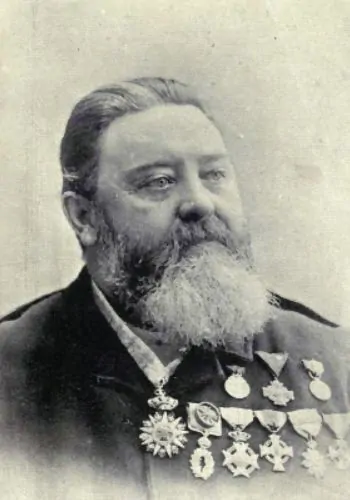
The defective-lymph episode of spring 1885 did not create Montreal’s antivaccination movement; it supplied an organized movement with its strongest local evidence in years. Montreal already possessed physicians who disputed vaccination in professional societies, published challenges to municipal policy, and collected accounts of children allegedly injured by the procedure. Their opposition had developed alongside the expansion of public vaccination during the 1870s and had already helped defeat an attempt at compulsion. It is misleading to imagine frightened residents suddenly converted by a few sensational rumors once the epidemic began. The most consequential propaganda of 1885 entered neighborhoods where arguments against vaccination had circulated for more than a decade. Joseph Emery-Coderre and Alexander Milton Ross gave those arguments medical credentials, although they addressed different audiences and arrived at their conclusions through somewhat different intellectual traditions.
Joseph Emery-Coderre was no marginal healer masquerading as a physician. A professor at the Montreal School of Medicine and Surgery from 1847 and a member of the Hôtel-Dieu medical staff from 1857, he had helped establish important professional organizations and enjoyed a successful surgical practice. His opposition to vaccination had an intensely personal foundation: Coderre attributed the deaths of two of his eleven children to illnesses that followed their vaccination. That account establishes a temporal sequence, not the medical cause of the deaths, which cannot now be recovered with confidence. For Coderre, the losses became decisive evidence that physicians had gravely underestimated the danger of the operation. He publicly discussed harmful vaccination outcomes before the Institut Médical as early as 1868 and presented a sustained critique to the Montreal Medical Society in 1872. Around that time he joined other physicians in forming Canada’s first organized antivaccination league. Because he spoke as a senior surgeon and medical teacher, officials could not dismiss his arguments without confronting the uncomfortable fact that professional standing did not produce professional unanimity.
Coderre framed his position as an empirical challenge rather than a rejection of medical reasoning. He gathered hospital reports, cemetery returns, foreign medical publications, and histories of individual patients, then emphasized the substantial number of vaccinated people who nevertheless contracted smallpox. From this he concluded that vaccination neither prevented infection nor reliably reduced its severity. The inference was defective because the proportion of patients who had been vaccinated could not establish comparative risk without dependable information about vaccination rates in the underlying population. Hospital figures were also distorted by uncertain vaccine histories, waning immunity, revaccination practices, and differences in age or social condition between the groups being compared. Coderre correctly observed that poverty and nutrition could affect survival, but he applied such complications primarily when they weakened evidence favoring vaccination. He also embraced the erroneous theory that cowpox was merely a variable form of smallpox capable of recovering its virulence and initiating new epidemics. Yet other parts of his safety argument rested on recognized dangers, particularly the possibility that arm-to-arm vaccination could transmit syphilis or that contaminated instruments could introduce serious infection. His case consequently combined genuine procedural hazards with mistaken biological conclusions and inadequate statistical comparisons. Its persuasiveness came partly from the tendency of vaccination’s defenders to answer every apparent failure by declaring the vaccination imperfect and every subsequent illness coincidental. When official claims approached promises of absolute protection, even a poorly interpreted exception could appear to refute the entire system.
The controversy escaped the meeting room through the LeBlanc and Labelle cases of the mid-1870s, in which children developed alarming lesions after receiving public vaccination. Coderre circulated descriptions of the injuries and a photograph of a damaged arm, arguing that residents who financed municipal vaccination had a right to witness its consequences. Medical Health Officer Alphonse-Barnabé LaRocque and allied physicians disputed the alleged causal connection, while Coderre accused them of defining even severe ulceration as a successful vaccination. He proposed a public commission composed of a vaccinator, an antivaccinationist, and a third physician acceptable to both sides; William Hales Hingston answered instead with a declaration supporting vaccination signed by 146 physicians. The exchange revealed a dispute over jurisdiction as well as medicine: municipal doctors maintained that trained professionals should interpret difficult cases, whereas Coderre insisted that expert judgment affecting public policy must remain publicly contestable. By August 1875, approximately 18,000 vaccination notices had been issued as the city prepared to enforce a provincial requirement that infants be vaccinated. When the proposed municipal bylaw came before the council on August 9, a crowd mobilized by its opponents gathered outside city hall, hurled stones through the chamber windows, and injured two aldermen. Demonstrators then vandalized LaRocque’s residence, after which the council postponed the measure and quietly allowed it to disappear. Ten years before the famous epidemic riot, organized resistance had already shown that intimidation could stop compulsory vaccination in Montreal.
Alexander Milton Ross broadened that resistance beyond Coderre’s Francophone professional constituency. An Anglophone physician who had gained public distinction through abolitionism and natural history, Ross understood reform as a struggle against entrenched authority. His medical outlook was shaped by hygienic and hydropathic thought, leading him to treat smallpox chiefly as a consequence of filthy surroundings. He advocated sanitation and isolation rather than simple inaction, but neither measure could substitute for vaccination in a densely populated city where smallpox spread primarily through close contact. Beginning in 1883, Ross distributed thousands of copies of Slaughter of Innocents and related tracts attacking compulsory vaccination. Whereas Coderre initially sought to convert other physicians, Ross addressed the public directly and treated professional disapproval as evidence that an interested medical establishment feared open debate.
Ross constructed an alternative system of authority from recognizable pieces of nineteenth-century public culture. His pamphlets invoked celebrated foreign opponents of vaccination, quoted former vaccinators who had changed sides, reproduced local injury reports, and reminded readers that physicians had once defended treatments later abandoned as dangerous. During the 1885 epidemic, he seized upon the illnesses associated with Bessey’s lymph as confirmation of warnings he had been issuing for years. One of his most frequently repeated local examples came from Civic Hospital figures published in August: of 133 admitted smallpox patients, 73 were reported as vaccinated, while 18 of the 44 deaths occurred among vaccinated patients. The numbers were authentic, but they did not reveal the relative size, age structure, quality of vaccination, or previous exposure of the vaccinated and unvaccinated populations from which those patients came. Ross nevertheless presented them as direct proof that vaccination was useless and sometimes claimed that the procedure itself propagated smallpox. He also portrayed public vaccinators as financially interested agents of “doctorcraft,” most dramatically in a broadside announcing that there was money in repeated demands to vaccinate. Medicine did possess a record of discarded treatments, and compulsory programs placed their heaviest burdens on people with little control over their employment or domestic privacy. Those truths did not establish that physicians promoted vaccination chiefly for profit or erase the marked difference in mortality between effectively vaccinated and unvaccinated populations. When the Montreal Medical Society overwhelmingly endorsed vaccination on September 5, it recorded the dissent of Ross and Coderre but specially censured Ross’s circulars as unprofessional, confirming his isolation from the medical majority without depriving him of the public identity of a doctor.
Coderre and Ross made Montreal’s controversy more complicated than a confrontation between science and an ignorant populace. Coderre supplied French-speaking resistance with professional respectability and a record of disputed local injuries, while Ross connected Montreal to an international literature of sanitary reform and opposition to medical compulsion. Their second Canadian antivaccination league was not formally consolidated until December 1885, but it drew upon associations, arguments, and campaigning methods already established before the epidemic. It would be equally mistaken to attribute every refusal to their propaganda, since families interpreted vaccination through their own experiences of illness, municipal intrusion, and uncertain medical care. The two physicians nevertheless performed important causal work by preserving stories of injury, giving them an explanatory framework, and demonstrating how resistance could be organized. The successful disruption of the 1875 bylaw also supplied a precedent for direct action when petitions or professional debate appeared unlikely to stop compulsion. Once the 1885 vaccination failure produced another group of visibly injured children, the older warnings no longer seemed hypothetical. Public-health authorities were not entering an empty field of opinion but confronting an alternative medical narrative that had been cultivated long enough to interpret each official mistake as confirmation.
Three Lost Months: The Epidemic Takes Root
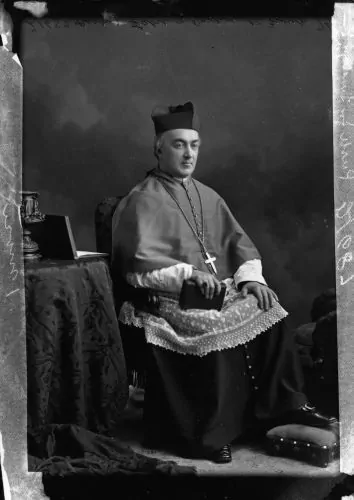
On 11 May 1885, acting health officer William E. Bessey suspended Montreal’s public vaccination service after erysipelas and other alarming complications had been associated with recent vaccinations. The decision was defensible as an immediate safety measure, since continuing to administer suspect lymph under questionable conditions risked further injuries and deeper distrust. Yet officials neither secured a replacement supply quickly nor presented the public with a convincing investigation of what had gone wrong, and municipal vaccination did not resume until early August. Private physicians could still vaccinate, but that distinction offered little comfort to poorer families who depended upon free public stations. During the interruption, smallpox continued passing through households whose members were unvaccinated, incompletely vaccinated, or no longer protected by childhood vaccination. The “three lost months” were not a period in which nothing happened; they were the interval in which an initially containable outbreak acquired durable roots while the city’s principal preventive program remained disabled.
At first, the mortality figures made delay appear less dangerous than it was. Montreal registered six smallpox deaths in April, ten in May, and thirteen in June, numbers small enough to encourage the belief that the outbreaks remained scattered and manageable. Viewed separately, each infected household could be treated as an exception rather than evidence of sustained community transmission. Smallpox’s roughly two-week incubation period obscured the connections among cases, while the additional interval between symptoms and death meant that mortality described infections contracted weeks earlier. Case reports provided an even less reliable guide. Louis Laberge later acknowledged that, at the epidemic’s beginning, sanitary law did not ensure prompt compulsory notification of contagious disease and that some physicians supplied incomplete information. The municipal totals consequently omitted cases that were mild, concealed, misdiagnosed, or never attended by a doctor. What officials saw in the spring was not the epidemic itself but a delayed and badly fragmented representation of it. The subsequent rise to forty-six recorded deaths in July and 239 in August revealed that transmission had been intensifying beneath the reassuringly low early totals.
Geography widened the gap between the disease and the authority attempting to control it. By early June, reports indicated that two or three new cases were being discovered each day, many of them in Saint-Jean-Baptiste, a densely settled, predominantly French-speaking working-class municipality adjoining Montreal. Saint-Jean-Baptiste remained administratively separate from the city, so Montreal’s health department could not impose a seamless program across what was, epidemiologically, a continuous urban district. Crowded dwellings increased opportunities for close contact, while inadequate sewerage and irregular refuse removal visibly demonstrated the weakness of local public services. Such conditions did not generate smallpox as the virus spread principally between people, but they made isolation difficult and lent credibility to claims that sanitation, rather than vaccination, was the neglected remedy. The large Saint-Jean-Baptiste festivities held on 24 June show how fully ordinary communal life continued amid the outbreak, although the surviving evidence does not establish the celebration itself as a specific transmission event.
Officials also encountered families who denied that illness was smallpox, concealed patients, or resisted their removal to hospital. Contemporary observers frequently attributed such behavior to ignorance or fanaticism, but that judgment overlooked the practical risks imposed by official intervention. Removal might separate a sick child from a parent, deprive a household of a wage earner, expose the family to public stigma, and place the patient under unfamiliar authority. Placarding a dwelling could also disrupt employment and warn landlords, customers, and neighbors away. Nor did Montreal possess a hospital system capable of inspiring confidence. The makeshift smallpox hospital on Mount Royal had reopened in April, but by the middle of July its roughly twenty-five places were filled; beds were reportedly installed in the attic while officials planned an additional ward. Families who had heard stories about inadequate accommodation could reasonably fear that removal meant abandonment rather than expert care. Bessey and other physicians spent valuable time attempting to persuade householders who did not trust either the hospital or the vaccinators connected with it. Municipal authorities even sought Archbishop Édouard-Charles Fabre’s assistance in encouraging reporting and hospital removal, an appeal that exposed the health department’s limited authority within many Catholic communities. These refusals were understandable within the circumstances, but they were not epidemiologically harmless. When infectious patients remained in crowded homes, the dangers avoided by one family were transferred to relatives, neighbors, visitors, and eventually the wider city.
Administrative turnover further weakened the response. Alphonse-Barnabé LaRocque, Montreal’s longstanding health officer, departed during the spring, leaving Bessey to direct operations in an acting capacity before the younger Louis Laberge assumed the position in June. Bessey’s limited command of French made persuasion difficult in districts where distrust of English-speaking civic authorities was already pronounced. Laberge’s bilingualism offered an advantage, but a change of personnel could not immediately repair inadequate reporting powers, insufficient hospital space, unreliable vaccination practices, and divided municipal jurisdictions. The health department was simultaneously expected to trace cases, supervise isolation, answer complaints, improve sanitation, and rebuild confidence in vaccination. Antivaccination physicians could point to overflowing refuse and defective drainage as proof that officials had neglected the environmental foundations of health. Their criticism contained an important truth about Montreal’s administration, but cleanliness alone could not close the immunity gap through which smallpox was spreading.
By July, the arithmetic was becoming harder to dismiss. Recorded deaths rose from thirteen in June to forty-six in July and then increased more than fivefold in August. Early that month, the city announced that its public stations would resume vaccination with a new supply of purportedly pure lymph obtained from the Boston Vaccine Institute. As demand increased, the network of free vaccination stations expanded from four locations to thirteen. Nevertheless, vaccination required time to produce protection and could do nothing for people already infected. The renewed campaign was confronting transmission chains established during the suspension and already several generations ahead of the official response.
During August, an outbreak that had seemed socially confined began to threaten Montreal’s reputation and commerce. Hospitals filled, death notices accumulated, and manufacturers worried that customers elsewhere would cancel orders or treat goods from the city as contaminated. Some employers began demanding evidence that workers and their families had been vaccinated, converting a medical recommendation into a condition of continued employment. Newspaper interpretation divided along linguistic and political lines: portions of the French-language press minimized the epidemic’s scale, while English-language papers increasingly portrayed French Canadian resistance as the central cause of the disaster. Neither position adequately represented the whole crisis. Minimization drew plausibility from defective statistics and understandable suspicion of coercion, but it delayed recognition of a rapidly worsening emergency; Anglophone alarm more accurately registered the danger, yet too often transformed administrative failure into an indictment of an ethnic population. By 2 September, the Board of Health estimated that approximately two thousand cases existed in the city, far beyond the capacity of ordinary case-by-case containment. The lost months cannot be assigned to a single mistaken order, because vaccine safety failures, weak surveillance, household resistance, inadequate hospitals, jurisdictional fragmentation, and official hesitation reinforced one another. When authorities finally moved decisively, they did so in a city where the disease was widespread and institutional credibility had already been depleted, making coercion appear both increasingly urgent to officials and increasingly threatening to the people expected to submit.
The City above and below the Hill: Poverty and Unequal Risk
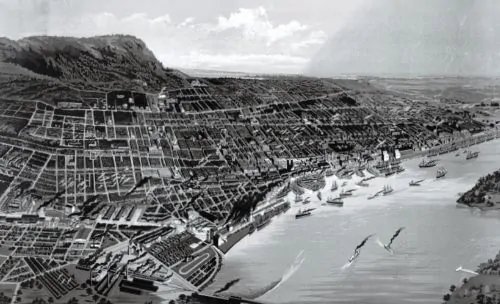
Mount Royal offered nineteenth-century Montreal an almost too convenient image of the city’s social order. Merchant families occupied substantial houses on and near its slopes, while many industrial workers lived in lower districts extending eastward and toward the waterfront. When Herbert Brown Ames later contrasted the “city above the hill,” inhabited by the comfortable classes, with the “city below the hill,” occupied by the laboring masses, he gave memorable language to a division already visible in 1885. His formulation postdated the epidemic and imposed greater neatness than Montreal’s actual geography possessed, but the underlying disparity was real. French Canadians formed the city’s largest population group and supplied much of its industrial workforce, whereas an English-speaking Protestant minority remained disproportionately powerful in commerce and finance. Irish Catholics shared many of the French working class’s material hardships, and neither linguistic community was socially uniform. The hill consequently marked a gradient of wealth and political influence rather than a perfect border between two peoples.
That gradient shaped who encountered smallpox and what options remained after infection. In the eastern working-class wards, families commonly rented small dwellings near factories, workshops, slaughterhouses, and railway facilities, often sharing entrances or yards with other households. A single infected resident could expose siblings, lodgers, neighbors, and anyone entering to deliver food or provide care. Smallpox did not originate in accumulated refuse or defective drains, as older sanitary theories suggested, but crowded housing increased the frequency and intimacy of human contact through which it spread. A wealthy household could place a patient in a separate bedroom, hire assistance, summon a private physician, and reduce contact without surrendering the sick person to municipal authorities. A laborer’s family might possess only one or two rooms and depend upon every available adult wage. Quarantine could eliminate income at the moment when medicine, food, and funeral expenses were rising. Mothers and older daughters shouldered much of the nursing, placing caregivers in prolonged contact with infectious patients while also making hospital removal feel like an assault upon family responsibility. Poverty did more than increase exposure; it narrowed the range of actions that could plausibly be taken once the disease entered a home.
Age made this disparity particularly brutal. In the commonly cited municipal accounting, 2,717 of Montreal’s 3,234 smallpox deaths were children younger than ten, although totals vary slightly according to the dates and boundaries used. This concentration cannot be explained by an alleged French Canadian indifference to children, a charge repeatedly insinuated by hostile contemporaries. High French Canadian birth rates and a comparatively young population placed more children within the susceptible age groups, while many had never received a successful primary vaccination. Adults were more likely to possess some protection from earlier vaccination or a previous encounter with smallpox. The epidemic’s ethnic appearance was partly the demographic consequence of destroying children in the neighborhoods where young, insufficiently protected families were most heavily concentrated.
Vaccination history widened the divide. Among the 1,332 patients recorded in Montreal’s smallpox hospitals, officials classified 603 of 852 French Canadian patients, approximately 70 percent, as unvaccinated, compared with 202 of 480 English and other patients, approximately 42 percent. French Canadian patients who had been vaccinated were also less likely to display the multiple well-formed scars that physicians increasingly treated as evidence of reliable protection. These figures identify a substantial immunity gap, but they do not constitute a representative survey of Montreal’s entire population. Hospitals disproportionately received severe cases, patients without adequate home care, and people whose dwellings made private isolation impossible. Mild infections remained underreported, while hurried examinations made the distinction between absent, doubtful, and unsuccessful vaccination uncertain. Poor families were more dependent upon public vaccinators, whose assembly-line methods could produce inferior results even when the lymph itself was sound. Wealthier residents could choose private physicians, seek revaccination, and avoid the municipal program after hearing reports of contaminated or badly administered vaccine. The injuries associated with public vaccination in the spring consequently fell upon precisely the population officials later condemned for refusing it. Even so, Laberge’s tables showed markedly milder disease among patients bearing stronger evidence of successful vaccination, so unequal access and defective practice should not be mistaken for proof that vaccination lacked value. The most defensible interpretation is that “vaccinated” and “unvaccinated” recorded differences in medical protection while also concealing disparities in quality, timing, and access.
Isolation policy transformed those disparities into unequal encounters with government. The Board of Health allowed patients to remain at home when officials believed that a household possessed enough space to isolate them safely, a standard that favored families with larger dwellings. Tenement residents were more likely to have relatives removed to the smallpox hospital and their doors marked with a warning placard. The Recorder’s Court report listed 156 sanitary prosecutions during the epidemic, more than 90 percent of them involving French Canadians. The concentration of smallpox in French working-class districts explains part of that imbalance, but inspection committees also directed their house-to-house operations overwhelmingly toward the eastern neighborhoods. Affluent opponents of vaccination could voice resistance with far less danger of having an inspector enter their homes or carry away their children. From below the hill, public health accordingly appeared not as a service distributed equally across Montreal but as police power brought forcefully into poor households.
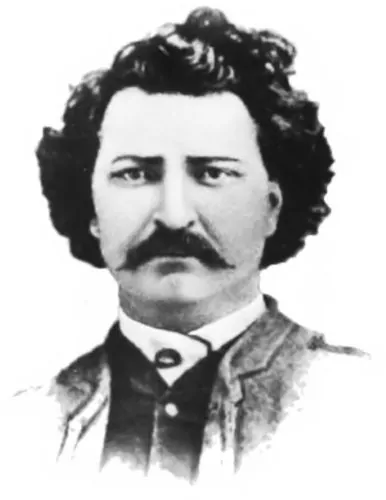
Language converted unequal exposure into mutual accusation. English-language newspapers increasingly described the epidemic as the product of French Canadian ignorance, sometimes reviving stereotypes that associated poverty with personal uncleanliness. Several commentators urged manufacturers to dismiss French employees unless they and their families produced evidence of vaccination, turning a public-health dispute into a threat against livelihoods. French-language editors answered that the English commercial establishment valued orders and reputation more than the lives or autonomy of workers. That response acquired additional political force during the trial and approaching execution of Louis Riel, when many French Canadians already believed that English Canadian institutions were suppressing a vulnerable national minority. The Riel crisis did not cause resistance to vaccination, but it supplied a powerful interpretive frame through which compulsory medical orders could appear as another assertion of English domination. Yet the division was never simply English science against French superstition: French physicians and clergy supported vaccination, while Alexander Milton Ross and other prominent Anglophone opponents attacked it. Language became the vocabulary through which class conflict was expressed, even when the opposing camps cut across linguistic boundaries.
The geography of mortality was unmistakable, but ethnicity alone explains very little. Smallpox struck bodies that lacked sufficient immunity, and successful vaccination remained the most effective protection available. French Canadians suffered disproportionately because their population contained large numbers of vulnerable children and because many working families lived where infection was difficult to isolate. Their dependence upon a mistrusted public vaccination service deepened the disparity when that service failed and then disappeared for nearly three months. Individual decisions still mattered: concealing cases, tearing down placards, or deliberately avoiding vaccination allowed transmission to continue beyond the household. Recognizing the constraints behind those decisions does not erase their consequences, just as acknowledging vaccine efficacy does not vindicate discriminatory enforcement.
Above the hill, protection often arrived through private physicians and spacious homes; below it, public health increasingly appeared in the form of inspectors, removal wagons, and threatened prosecution. By September, the epidemic had made Montreal’s social geography medically consequential, and the coercive campaign that followed would carry those inequalities directly to the city’s doors.
Newspapers and the Racialization of an Epidemic
During August, Montreal’s commercial community began treating smallpox as a metropolitan crisis rather than a misfortune confined to poor eastern neighborhoods. As the cumulative death toll passed two hundred and reports circulated beyond Quebec, merchants feared that buyers would avoid the city or reject products associated with it. The Montreal Gazette acknowledged on 19 August that newspapers elsewhere were magnifying the danger, but it also warned that fear of contagion might reduce the number of buyers arriving to purchase autumn and winter stocks. Reports followed of canceled or threatened orders for clothing, leather goods, and cigars in Canadian and American markets. Fear attached to ordinary merchandise often exceeded the demonstrated danger it posed, yet the economic consequences of that fear could be real regardless of its medical accuracy. Commercial alarm gave the epidemic an urgency that months of concentrated mortality among working-class children had failed to generate. Smallpox became intolerable to influential Montrealers when it threatened to cross not only neighborhood boundaries but also the boundaries separating suffering from profit.
Newspapers did more than reflect this change; they helped organize it. The Gazette occupied an unusually powerful position because Richard and Thomas White controlled its publishing company, while Richard soon became one of the unelected citizens appointed to strengthen the Board of Health. The paper printed extensive accounts of board meetings, promoted vaccination, explained official regulations, and attacked methods used to evade inspectors. Its coverage became so closely integrated with municipal administration that newspaper reports were sometimes pasted into the Board of Health’s minute books in place of separately written summaries. This did not mean that every Gazette article was dictated by health officials, but it made the boundary between reporting and official advocacy exceptionally porous. Other English-language papers, particularly the Montreal Herald, adopted more inflammatory positions while claiming the authority of sanitary science. French-language readers encountered a different selection of statistics and stories, including detailed accounts of vaccine injuries and official intrusions that English papers tended to subordinate to the epidemic’s mortality. Reliable case totals remained unavailable, and even vaccination status could depend upon an inspector’s interpretation of an old scar. Editors filled those evidentiary gaps by choosing which deaths, refusals, medical opinions, and rumors would stand for the epidemic as a whole.
“Racialization” describes the interpretive move by which an unequal distribution of disease became evidence about the character of an entire people. French and English Canadians regularly called themselves distinct “races,” although the term combined ancestry with language, religion, and nationality rather than corresponding exactly to later biological racial categories. Once smallpox was labeled a French Canadian disease, poverty could be redescribed as dirtiness, incomplete vaccination as hereditary obstinacy, and distrust of municipal officials as incapacity for responsible citizenship. English-speaking institutions then appeared orderly and modern because the worst mortality lay elsewhere. The administrative failures that had helped create the disparity receded from view.
The Montreal Herald made the logic explicit on 2 September. Its editorial placed responsibility for the epidemic upon French Canadian workers, characterizing them as unclean and unwilling to vaccinate while predicting that Montreal would remain diseased as long as English-speaking leaders tolerated their conduct. It urged English capitalists and manufacturers to dismiss their French employees and replace them with vaccinated English-speaking workers. That proposal crossed the boundary between protecting a workplace and imposing collective economic punishment upon an ethnic population. A clothing manufacturer soon advertised that the men employed in his establishment had been brought from New York and vaccinated, using the origin and medical status of his workforce as assurances that his goods were safe. Vaccination certificates and visible scars were becoming credentials of employability, while workers could also be held responsible for the vaccination status of family members beyond the factory. The accusations were not built from nothing: official figures showed disproportionate illness and death among French Canadians, and inspectors encountered substantial resistance in several French-speaking districts. Yet those facts did not establish the explanation offered by the Herald. They did not account for the younger age structure of the French Canadian population, its greater dependence upon the defective public vaccination service, or the difficulty of isolating patients in working-class housing. Nor did the paper apply its condemnation consistently to affluent English-speaking opponents such as Alexander Milton Ross, whose public antivaccination campaign did not make English workers collectively suspect. A universal public-health argument would have required identifying and protecting susceptible people across Montreal. The racialized argument instead made nationality a proxy for danger and unemployment a proposed instrument of sanitary reform.
French-language newspapers answered this assault by placing epidemic reporting within a struggle for collective survival. In late August, La Patrie minimized the scale of the outbreak and disputed whether Montreal was experiencing an epidemic in the proper sense. After calls to remove French workers appeared, the paper interpreted them as an effort to drive French Canadians from the factories they had helped make profitable and leave their families to starve. L’Étendard retaliated against English commercial hostility by proposing that French Canadians avoid English shops, offices, and warehouses. Concern about economic discrimination was justified, since exclusion had been openly recommended rather than merely imagined. Epidemiological minimization was much harder to defend as deaths rose steeply, and it encouraged readers to treat accurate warnings as further acts of national aggression. French nationalist papers did not invent the vaccine injuries or the threat of coercion, but some used those realities to sustain claims that understated the danger of smallpox. Their counterattack defended a community under insult while also making it more difficult for that community to receive trustworthy information about an advancing epidemic.
The polemic quickly escaped Montreal. Newspapers in Toronto and American cities repeated accounts of uncontrolled smallpox, civic disorder, and French Canadian resistance, giving distant customers reasons to avoid Montreal without independently evaluating conditions there. Reports of canceled orders then returned to the city as evidence that stronger action was required, creating a cycle in which alarming coverage produced economic harm and that harm justified still more alarming coverage. Merchants and manufacturers pressed municipal leaders to enlarge the vaccination campaign and impose more decisive sanitary controls. In September, specially appointed citizens entered the Board of Health and supplied the administrative determination that elected aldermen had previously lacked. Richard White’s simultaneous position within the board and the Gazette strengthened a coalition between commercial influence, municipal medicine, and press advocacy. What business leaders wanted was not merely fewer infections but visible proof that the city had become governable: workers would carry certificates, infected houses would be marked, and resistant families would be made to comply. These measures could assist disease control, but they also made bodily submission part of Montreal’s campaign to recover commercial confidence. The merchant’s fear of quarantine and the physician’s fear of contagion converged upon the same demand for enforceable obedience.
Neither linguistic press camp can be reduced to simple truth or falsehood. Anglophone editors recognized the magnitude of the epidemic earlier than several of their French-language counterparts, but some explained a real danger through ethnic contempt and advocated penalties unrelated to individual conduct. French nationalist editors identified genuine discrimination and official hypocrisy, yet portions of their coverage dangerously minimized smallpox or implied conspiratorial intent where negligence and coercive paternalism offer stronger explanations.
The positions were not medically equivalent: smallpox was spreading rapidly, and successful vaccination substantially reduced the risk of severe disease. Racialization did not require inventing the mortality disparity; it operated by treating that disparity as proof of a collective moral defect while obscuring the conditions that produced it. Every new refusal could then be cited as confirmation of French Canadian backwardness, while every hostile editorial confirmed nationalist warnings that vaccination served English domination. By binding public health to commercial respectability and ethnic loyalty, Montreal’s newspapers reduced the space in which uncertainty could be discussed without appearing disloyal. They did not merely report the antagonism that culminated in riot; they helped transform an epidemic into a struggle over which population belonged in the modern city.
The Citizens’ Committee and the New Public-Health Regime
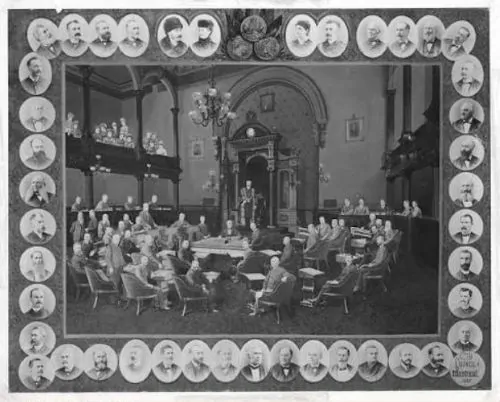
By September 1885, Montreal’s elected government had lost the confidence of both public-health advocates and the commercial interests demanding immediate action. The City Council responded by adding six specially appointed citizens to the Board of Health: George E. Desbarats, Louis Perrault, W. Masterman, A. Levesque, Hugh Graham, and Richard White. They were not medical experts as a group, but they possessed money, organizational experience, newspaper influence, and access to the city’s governing elite. Their linguistic backgrounds make it misleading to describe their appointment simply as an English seizure of a French institution. What united them more clearly was social position and a belief that the epidemic required centralized executive action. Elected aldermen had to consider neighborhood opposition and the consequences of coercion at the next municipal election; the new members carried no comparable constituency-based burden. They soon dominated the emergency response, giving the Citizens’ Committee much of the practical authority of a temporary government.
The committee’s immediate achievement was to impose coordination upon a response previously scattered among weak municipal offices. It divided work among specialized bodies responsible for vaccination, isolation, hospital accommodation, inspection, and enforcement. Richard White, Masterman, and Perrault formed the Vaccination Committee, while another committee supervised the discovery and removal of smallpox cases. Inspectors were expected to identify infected houses, determine whether isolation at home was adequate, arrange transport when it was not, and oversee disinfection afterward. Vaccinators reopened public stations and prepared for systematic visits beyond them. Hospital capacity was enlarged, ambulances and burial arrangements received closer supervision, and daily information was gathered with greater regularity. These measures were not medically irrational intrusions devised solely to discipline the poor. Smallpox control required finding cases quickly, separating infectious patients from susceptible people, and increasing immunity faster than the disease could spread. The earlier board had failed in large part because it lacked the personnel and resolve to accomplish those tasks at metropolitan scale. The Citizens’ Committee supplied both, but it also reconceived Montreal as a population to be enumerated and acted upon rather than a collection of households whose cooperation had to be negotiated. Administrative capacity and coercive reach expanded together.
The legal foundation beneath this activity was less secure than the committee’s confidence suggested. On 4 September, the lieutenant governor invoked existing public-health provisions, beginning the cumbersome process through which a provincial board could authorize local health bodies and issue regulations superseding ordinary municipal rules. The relevant machinery had been designed for temporary emergencies rather than a permanent provincial system. Some regulations upon which later prosecutions depended were not formally published in the Quebec Official Gazette until December. Montreal still possessed sanitary bylaws and emergency powers before that publication, but their application to compulsory vaccination and forced entry had not been decisively tested. The Citizens’ Committee was not operating without law, yet it pushed against uncertain legal boundaries that courts would eventually be asked to define.
Richard White embodied the unusually close relationship among commerce, journalism, and emergency administration. He and his brother Thomas controlled the Montreal Gazette, while fellow appointee Hugh Graham was already an influential newspaper proprietor. The Gazette promoted the board’s campaign so extensively that its reports of health meetings were sometimes inserted into the official minute books as the record of proceedings. This arrangement gave the board a rapid means of publishing instructions and rebutting antivaccination claims. It also allowed men shaping policy to influence the newspaper narrative by which that policy was explained and defended. The citizen appointments had been authorized by the council and were publicly known, so they were not a clandestine commercial conspiracy. Nevertheless, the committee gained its celebrated efficiency by removing much of the hesitation generated by electoral accountability. Municipal policy was now being driven by men whose understanding of the emergency included the restoration of Montreal’s commercial reputation as well as the preservation of life.
The financial record reveals how thoroughly vaccination had become an administrative campaign. Year-end accounts indicate that enforcing compulsory vaccination cost approximately $7,000, while only about $1,500 went directly toward vaccine and vaccinators. The remaining expense supported inspectors, supervision, record keeping, police assistance, and the machinery required to locate or prosecute people who resisted. This distribution does not by itself prove that the money was wasted, since a mass campaign necessarily required organization. It does show that compulsion was far more expensive than the medical procedure being compelled. For many working-class residents, the vaccination program consequently arrived less as a lancet offered by a physician than as an expanding apparatus of lists, certificates, inspectors, and threatened penalties.
On 25 September, the Board of Health authorized vaccination by house-to-house visitation for people who had not been successfully protected. The resolution described vaccination as an offer, but inspectors were also expected to determine who remained unvaccinated and to record refusals for later action. Three days afterward, White moved that municipal employees and their families be required to submit to vaccination under threat of dismissal. The proposal extended the city’s authority beyond its workforce and into the bodies of spouses and children who held no municipal employment. To committee members confronting hundreds of deaths, such measures represented a belated attempt to close an immunity gap that voluntary appeals had failed to eliminate. To affected households, they suggested that employment, domestic privacy, and parental authority could all be made conditional upon obedience to health officials. Residents of French working-class districts had already experienced defective vaccination, forcible removals, placarded homes, and hostile newspaper coverage. Under those circumstances, the distinction between a free medical service and an invading compulsory apparatus became easy for rumor to erase. The Citizens’ Committee did not create every fear attached to vaccination, but it gave those fears a visible institutional object. By the end of September, Montreal possessed a more capable public-health regime precisely when a substantial part of the population had become prepared to meet that regime as an enemy.
“They Will Enter Your House”: Rumor and Bodily Sovereignty
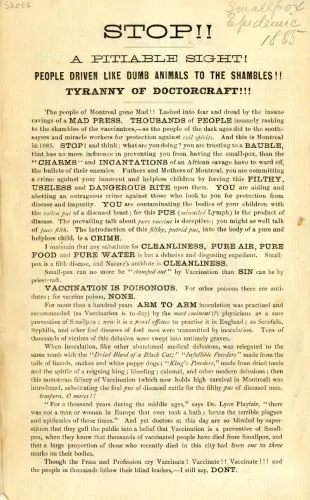
The resolutions of late September changed the meaning of Montreal’s vaccination campaign. On 25 September, the Board of Health authorized house-to-house visits to vaccinate people who lacked evidence of successful protection. Three days later, Richard White proposed requiring municipal employees and their families to be vaccinated under threat of dismissal. Opponents translated these administrative decisions into a more immediate warning: vaccinators would enter private homes, invade bedrooms, expose women’s bodies, and seize children who resisted. The precise origins and circulation of individual stories are difficult to reconstruct because many survive only in hostile newspaper reports, official rebuttals, and later descriptions of the riot. It would be unsafe to treat every sensational detail as a documented event. Yet the central claim, that officials intended to carry vaccination across the household threshold without waiting for voluntary consent, was no invention.
The rumor derived much of its force from things health officers were already empowered to do. Inspectors entered dwellings to determine whether illness was smallpox, questioned family members, marked infected houses, and evaluated whether patients could remain at home. When they judged domestic isolation inadequate, they could order removal to a smallpox hospital, even against a family’s wishes. Officials could also supervise disinfection and seal rooms or doors believed to present a danger. Sanitary police accompanied health personnel when resistance was expected, converting what might otherwise have appeared to be a medical visit into an encounter backed by force. The new vaccination resolution added another purpose to these rounds by directing officials to identify people whose scars were missing, doubtful, or considered insufficient. Examination itself could become intrusive, since determining vaccination status required access to the upper arm and sometimes ended in immediate revaccination. From the board’s perspective, inspection, isolation, and vaccination were distinct procedures governed by different needs. From inside a targeted household, they could appear as successive stages of the same official invasion.
The domestic setting made the conflict sharply gendered. Women performed most bedside nursing and were often the adults present when male inspectors or vaccinators arrived during working hours. Victorian political language idealized the home as a protected moral sphere, yet poor women possessed little practical power to keep landlords, police, or sanitary officers outside it. Adult vaccination could require a woman to uncover part of her arm before an unfamiliar man, while the examination of a sleeping patient might take an official farther into the dwelling. Bedroom rumors magnified these possibilities into scenes of sexual humiliation, whether or not such scenes had actually occurred. “Bodily sovereignty” is a modern analytical phrase, but the contemporary language of modesty, parental right, domestic authority, and personal liberty expressed a closely related objection.
Antivaccination propaganda made the endangered mother and child its most emotionally powerful figures. One widely circulated illustration showed a French Canadian mother fleeing with her child from a vaccinator holding a bloodied lancet, with Death following close behind. The image reversed the official account of risk: smallpox disappeared, and the procedure intended to prevent it became the approaching killer. Stories that vaccinators tied down struggling children carried the same message in more literal form. Surviving evidence does not establish that municipal vaccinators routinely restrained children in this manner, and repetition cannot substitute for corroboration. Officials nevertheless claimed authority to vaccinate over parental refusal, and police participation made some degree of physical compulsion entirely conceivable. Later sanitary-court proceedings exposed the intensity of the underlying conflict when Mme Martel threatened a health officer with an axe rather than permit the removal of her seventeen-year-old daughter. Weeping before the court, she insisted that no one could care for the girl better than her mother could, but officials ruled that the family dwelling could not provide adequate isolation. Other women hid from visiting vaccinators or confronted officers attempting to placard their homes. Such incidents did not prove the most lurid rumors, but they demonstrated that mothers really were losing control over decisions involving sick or vulnerable children. Because children had suffered severe post-vaccination infections earlier in the year and were now dying from smallpox in devastating numbers, parental fear cannot be dismissed as simple credulity. Propaganda succeeded by erasing the difference between an uncommon vaccine injury and the far greater danger of remaining susceptible during the epidemic, but it attached that distortion to experiences families recognized.
Health officials had a serious answer to claims of absolute domestic autonomy. Smallpox was contagious, and an infected person remaining in a crowded dwelling could expose neighbors who had never consented to accept that danger. A house could not function as an inviolable refuge when people moved between it and streets, workplaces, churches, or markets. Successful vaccination reduced the likelihood of severe disease, while isolation and disinfection addressed risks that extended beyond the individual household. Nevertheless, medical necessity did not determine how those measures had to be carried out. Consent obtained under threat of unemployment was not meaningfully voluntary, and a campaign accompanied by police could not rely upon the reassuring language of a freely offered service. Montreal’s earlier vaccine failure also deprived officials of the moral advantage they might otherwise have claimed when asking families to trust their competence. The board’s objectives were defensible, but its methods made the boundary between preventing harm and commandeering bodies genuinely contested.
Rumor transformed that contested boundary into an approaching emergency. Coderre, Ross, and organized antivaccinationists supplied arguments about poisoned lymph and medical tyranny, while French nationalist newspapers connected bodily compulsion to a wider history of English political domination. They did not need to invent every bedroom story themselves; repetition through conversations, handbills, workplaces, and neighborhood encounters allowed claims to change as they traveled. Nor did everyone who resisted need to hold a settled belief that vaccination was useless. A person might fear the vaccine, resent an inspector’s authority, defend a neighbor’s doorway, or react to the spectacle of police entering a familiar street. By 28 September, the announcement of expanded compulsion made these motives converge around the warning that officials were coming into people’s homes. The phrase “they will enter your house” condensed a complicated administrative program into a threat that was immediate, intimate, and easy to communicate. It placed women’s modesty and parental authority at the center of a dispute previously argued through mortality tables and medical testimony. Rumor did not cause the coming riot by itself, but it gave accumulated distrust a vivid scene in which the city’s new public-health regime appeared not as protection but as invasion.
September 28, 1885: From Mme Chaput’s Door to City Hall
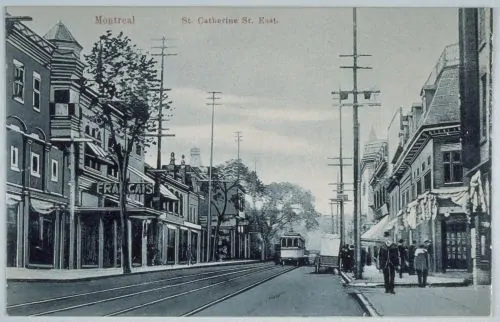
On the evening of September 28, the machinery of Montreal’s epidemic response reached the door of Mme Chaput on Sainte-Catherine Street. According to contemporary accounts reconstructed by later historians, sanitary constables intended to place a warning placard on the house, identifying it as infected with smallpox. Mme Chaput reportedly seized the placard from them rather than allow it to be displayed. When officers attempted to restrain her, her husband emerged and shouted that they were assaulting his wife. Neighbors gathered around what now appeared to be an attack upon a woman at her own doorway. The constables tried to explain their authority but soon found themselves confronted by a crowd large enough to force their withdrawal. Nothing in this incident establishes that Mme Chaput opposed vaccination itself; her immediate objection concerned placarding and the official power that followed it. The sign could expose a household to stigma, threaten its income, and prepare the way for a patient’s forcible removal. At her door, an administrative measure intended to warn against infection became a public struggle over whether officials possessed the right to mark and control a family home.
The retreating constables returned to the East End Branch Health Office, but part of the crowd followed them. At approximately seven o’clock, stones began striking the building and its windows were shattered. Furniture and records inside were damaged as protesters forced their way into or around the office. Police chief Hercule Paradis was badly assaulted when he attempted to intervene, although reports differ over precisely where and how his injuries occurred. Contemporary estimates placed the crowd anywhere from roughly one thousand to more than two thousand people, figures that should be treated as impressions rather than careful counts. The branch office had become the visible neighborhood headquarters of the system responsible for placards, removals, and compulsory vaccination, making its destruction symbolically more important than its modest physical size.
From the health office, the disturbance spread through the streets rather than proceeding as one continuously organized march. Some groups moved westward along Sainte-Catherine Street, gathering participants and spectators while repeated police interventions kept the crowd in motion. Pharmacies known to provide vaccine had their windows broken, turning commercial dispensaries into targets of anger against the public-health campaign. The attacks treated vaccine sellers as participants in coercion rather than neutral suppliers of a medical product. Other groups went after the residences of physicians and officials associated with compulsory measures. Stones struck the home of Louis Laberge, and threats were reportedly made against the medical health officer’s life. Protesters also sought the residence of Emmanuel-Persillier Lachapelle, a prominent physician and member of the provincial health authorities who supported vaccination. They attacked a house belonging to another Lachapelle, an error that exposed how easily rumor and a familiar surname could direct collective violence toward an uninvolved person. Cries of “Kill the vaccinators” reduced a complicated network of physicians, inspectors, pharmacists, and administrators to a single category of enemy. The choice of targets was purposeful even when the identification of particular individuals was not. The crowd was following a mental map of the vaccination regime through the city.
By later that evening, protesters had reached City Hall and Place Jacques-Cartier. Stones smashed municipal windows while the central police authorities attempted to assemble enough men to clear the surrounding streets. Some rioters carried revolvers, and newspaper reports described shots fired toward police. Officers were said to have discharged weapons above the crowd in an effort to frighten it back, only to be answered with jeers. Batons remained the police’s principal means of dispersal, producing close and often indiscriminate fighting. The conflicting accounts make it difficult to establish the number of people injured or whether every reported gunshot belonged to the riot rather than the panic surrounding it. City Hall nevertheless marked the point at which a neighborhood confrontation became an open challenge to Montreal’s governing authority.
The crowd also attacked newspaper offices, demonstrating that the riot concerned the public narration of the epidemic as well as its administration. Windows at the Montreal Herald near Victoria Square were bombarded while printers continued preparing the next edition inside. The offices of the Montreal Star were targeted as the disturbance moved through the city. These choices were not accidental, since the English-language press had repeatedly blamed French Canadians for spreading smallpox and had supported stronger compulsion. The Herald had gone further by recommending that manufacturers dismiss French employees and replace them with vaccinated English-speaking workers. Smashing newspaper windows did not answer those accusations, but it showed that protesters understood editorial language as an exercise of social power rather than detached commentary. The crowd identified the press as part of the same establishment that defined French neighborhoods as diseased and authorized officials to enter them. Newspaper descriptions of a uniformly French Canadian mob must still be read cautiously, because reporters did not conduct a census of participants and often interpreted dress, location, or shouted language as conclusive evidence of identity. The crowd probably consisted mainly of French-speaking workers from the affected districts, but it also accumulated onlookers and opportunistic participants as it moved. No persuasive evidence demonstrates that Coderre, Ross, or the organized antivaccination leagues centrally directed the night’s violence.
Mayor Honoré Beaugrand went to City Hall despite suffering from severe asthma and being advised to remain at home. He requested assistance from harbor police and summoned the militia to support the civil authorities. Approximately six hundred militiamen were reportedly placed at the city’s disposal, while additional police guarded vaccinators and threatened public buildings. Police charges gradually broke the larger crowd into smaller groups, some of which returned east and attempted to damage or burn health property before dispersing. By about one o’clock on the morning of September 29, the principal disturbance had ended. The militia’s presence helped prevent renewed mass gatherings, but the troops did not fight a sustained battle with an organized insurgency. Reports of injuries were numerous and inconsistent, while claims of deaths cannot be established securely enough to repeat as fact. The following day, health officers operated under greater police protection, confirming to opponents that the vaccination campaign had become an armed undertaking.
The city eventually calculated the property damage at $2,221.21, a substantial amount but far short of the devastation suggested by some sensational reports. Calling the event an antivaccination riot is accurate because compulsory vaccination supplied its immediate political setting and vaccinators became explicit targets. The label is incomplete because the confrontation at Mme Chaput’s home began over a smallpox placard and the authority to control an infected household. Forced isolation had generated resistance before compulsory vaccination was announced, while removal to a feared hospital carried dangers that no reassurance about vaccine purity could address. The crowd attacked a recognizable chain of institutions extending from the neighborhood health office to City Hall, with pharmacies and hostile newspapers situated between them. That pattern distinguishes the riot from random destruction without excusing assaults upon police, threats against physicians, or damage inflicted upon uninvolved householders. Months of municipal failure had made official authority suspect, and the city then attempted to recover control through measures experienced most aggressively in poor French-speaking districts. The riot condensed those accumulated conflicts into several hours of violence, but it did not force the government to abandon vaccination as the riot of 1875 had done. Instead, it hardened the emergency regime and moved opposition from the streets toward prosecutions, legal challenges, and a more formally organized antivaccination campaign.
After the Stones: Troops and the Employers’ Needle
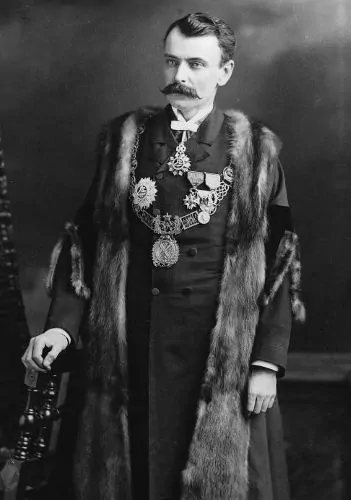
The riot ended after midnight, but the struggle over vaccination did not end with it. In the hours that followed, Mayor Honoré Beaugrand’s administration treated the violence as both an emergency and a test of whether municipal government could still enforce its decisions. Harbor police, regular constables, and militia detachments were mobilized or held ready, while guards protected health offices, public buildings, and officials believed to be in danger. Sanitary inspectors and vaccinators resumed their work under police protection, and some reportedly carried weapons or sought permission to do so. The troops were not transformed into vaccination squads, nor were residents ordinarily inoculated at bayonet point. Their principal purpose was to deter another attack and secure the administrative machinery through which vaccination would proceed. Yet their presence gave that machinery a newly martial appearance. Rather than forcing the city to abandon vaccination, the riot produced a guarded campaign conducted beneath the visible protection of armed authority.
Continuation was nevertheless accompanied by a retreat from the most provocative meaning of compulsion. On September 25, the Board of Health had authorized house-to-house visits “offering vaccination” to residents who could not demonstrate that they had already been successfully vaccinated. The mild wording obscured the intended reach of the measure: vaccinators were to enter every district, examine evidence of immunity, record refusals, and identify households for further action. On September 28, Citizens’ Committee chairman Richard White moved that municipal employees and their families be vaccinated under threat of dismissal. After the riot, officials repeatedly insisted that compulsory vaccination did not mean breaking into homes, binding unwilling residents, or forcibly driving lancets into their arms. A householder could refuse the immediate operation, although the refusal might be recorded and followed by inspection, prosecution, a fine, or some other disadvantage. Compulsion became less a single act of physical force than a sequence of administrative pressures. The distinction was real, since most opponents were not literally seized and vaccinated, but it did not make the policy voluntary in any ordinary sense. Authorities were narrowing the spectacle of coercion while retaining its consequences. Their retrenchment was tactical: bodily force had become politically combustible, whereas documentation, surveillance, and penalties could pursue much the same objective with fewer opportunities for another crowd to gather.
The uniforms surrounding the campaign carried contradictory meanings. To merchants, physicians, and property owners alarmed by the riot, troops promised that health workers and public offices would not again be surrendered to a mob. To many residents of the eastern wards, the same deployment appeared to confirm that vaccination belonged to an alien apparatus of police, employers, and English-speaking reformers. Rumors that officials intended to invade homes had already converted the vaccinator into an imagined assailant. Military readiness restored order, but it also widened the interpretive distance between those who saw protection and those who saw occupation.
The workplace offered officials and reformers a less dramatic but often more effective instrument. Employers had begun demanding evidence of vaccination before the September riot, particularly in establishments where an outbreak could close workshops, interrupt railway operations, or expose an entire labor force. After the stones were thrown, this practice supplied an attractive model of enforcement because it transferred immediate pressure from the municipality to the wage relationship. White’s September 28 motion regarding municipal employees and their families made that transfer explicit: vaccination would become a condition of continued public employment rather than an operation imposed directly by a policeman. Private manufacturers similarly required workers to present certificates, submit to vaccination, or face dismissal. No constable needed to hold a worker’s arm when refusal could mean the loss of rent money and food. The resulting consent was legally and physically different from forcible vaccination, but it was shaped by a severe inequality of bargaining power. Public employees faced an additional contradiction because the city acted simultaneously as health authority and employer. Extending the requirement to family members carried workplace discipline into the household, making a wife’s or child’s vaccination status relevant to a male employee’s livelihood. Wealthier opponents such as Alexander Milton Ross could publish pamphlets, consult sympathetic physicians, and challenge the authorities without immediately losing their income. A laborer confronted by a foreman or municipal supervisor possessed far less room for principled refusal. This does not mean that employers’ fears were invented, since smallpox genuinely threatened workers, production, commerce, and neighboring communities. It does mean that the costs of achieving collective protection were distributed through existing hierarchies of class and dependence.
Workers and families did not simply choose between obedience and open revolt. Some obtained medical certificates stating that illness, constitutional weakness, pregnancy, or another condition made vaccination inadvisable. On October 3, the Board of Health responded to the accumulation of such certificates by directing that allegedly unfit employees be examined at the Health Office rather than relying automatically on private physicians’ judgments. Two weeks later, the board was still complaining that even municipal employees had failed to provide satisfactory proof of vaccination. Others complied publicly while trying to defeat the operation privately: a Canadian Pacific shops worker was reported to have rubbed tobacco juice into the vaccinated area in the hope that the vaccine would not “take.” One anecdote cannot establish how common such sabotage was, but it exposes a form of resistance obscured by vaccination totals, the outwardly obedient patient who attempted to preserve control over the result.
The campaign consequently became a contest over evidence as well as bodies. A vaccination scar or signed certificate could determine whether a person was judged protected, recalcitrant, medically exempt, or in need of another operation. False and carelessly issued certificates circulated, giving officials a legitimate reason to verify doubtful documents, but suspicion was not applied in a socially neutral fashion. Certificates supplied by French-speaking private physicians were vulnerable to challenge within a health administration already divided by professional, political, and linguistic distrust. A document acceptable to a patient’s family doctor might be rejected by an inspector demanding examination or revaccination. Sanitary regulations extended this credential system beyond the workplace: station masters, railway and streetcar conductors, and omnibus or coach drivers could require people arriving from infected houses or districts to show evidence of vaccination or freedom from infection before permitting them to travel. The certificate became a rudimentary health passport governing access to wages, transport, and public space. Municipal spending reveals the administrative weight of this system. One accounting placed the cost of enforcing compulsory vaccination at approximately $7,000, while only about $1,500 went directly toward vaccine and vaccinators; enumeration, supervision, policing, and legal enforcement consumed much of the remainder.
The aftermath was neither an uncomplicated victory for municipal authority nor a surrender to the rioters. Vaccination continued, protection around health personnel increased, and the city soon added a special sanitary tribunal, which first sat on October 24 as the epidemic approached its catastrophic peak. Yet surviving court summaries identify only nineteen people charged specifically with refusing vaccination, and only one appears to have persisted through the full process. That small number does not show that compulsion was imaginary. It shows that prosecution was merely one, and probably not the most pervasive, means of applying it. Officials had learned that spectacular bodily force invited resistance, exposed weaknesses in the law, and threatened to turn each doorway into another Mme Chaput’s. They relied increasingly on certificates, inspections, employment rules, travel restrictions, and the selective threat of legal punishment. These measures could raise vaccination rates without producing daily scenes of policemen restraining householders, but they also concealed coercion inside apparently ordinary administrative decisions. The “employers’ needle” was more than a metaphor: the medical instrument remained in the vaccinator’s hand, while the authority behind it increasingly came from the power to hire, dismiss, certify, and exclude. What changed after the stones was not the ambition to achieve universal protection, but the social route through which Montreal pursued it.
The Children of the East End: Counting the Human Cost

By the time the street violence subsided, the epidemic was advancing toward its deadliest month. Louis Laberge’s municipal report recorded 3,164 smallpox deaths within Montreal during 1885, nearly 1.9 percent of a population of approximately 168,000. His monthly series assigned 659 deaths to September, 1,393 to October, and another 633 to November, making the autumn peak less a sudden catastrophe than an extended period of mass bereavement. Seventy additional deaths in 1886 brought the municipal epidemic total to 3,234. Later provincial summaries reported 3,259 deaths for Montreal and its vicinity, within a Quebec-wide total of 5,964 deaths among at least 19,905 reported cases. Some historical works instead give 5,864 provincial deaths, usually without explaining the hundred-death discrepancy. These figures should not be silently combined, because they employ different geographical limits, reporting periods, or retrospective compilations. Laberge himself warned that early notifications had been incomplete and that physicians sometimes failed to supply information requested by the health authorities. The most defensible conclusion is that smallpox killed more than 3,200 people in Montreal and approximately 6,000 across Quebec, while the apparent precision of any single total exceeds the precision of the surviving records.
Age transformed that immense mortality into something still more disturbing. Of the 3,157 Montreal deaths successfully classified by age and community in the 1885 return, 2,717 were children younger than ten, approximately 86 percent of the recorded total. No fewer than 2,036 were younger than five, including 531 infants who had not reached their first birthday and 1,505 children between one and five. Adults dominated the public controversy, wrote the regulations, circulated the pamphlets, and threw the stones, but children overwhelmingly occupied the death register. Their vulnerability reflected the lethality of smallpox in childhood as well as their lack of immunity from an earlier infection or a successful vaccination. The phrase “children of the East End” describes the central demographic fact of the epidemic rather than merely supplying it with a tragic image.
A mortality table cannot convey what those deaths required families to endure. Smallpox commonly began with fever, exhaustion, severe pain, and vomiting before the eruption appeared and lesions developed into deep pustules across the face and body. A child who survived the acute illness might remain scarred, lose vision, or experience prolonged weakness; a child who died often did so after days of unmistakable suffering. In a crowded dwelling, separating one patient from siblings was nearly impossible, and a mother nursing the first sick child could watch the eruption appear on another before the first crisis had passed. Municipal removal promised isolation, but many parents associated the smallpox hospital with separation and death, especially after the city’s earlier administrative failures. Their efforts to conceal cases could spread infection, yet their reluctance cannot be understood without recognizing what surrendering a child to an unpopular institution meant. Parish burial registers preserve the result in repetitive entries whose ages are measured in months or single years. Behind each line stood a household confronting not merely bereavement but the possibility that the remaining children were already infected.
The deaths also traced Montreal’s social geography with brutal clarity. Sainte-Marie and Saint-Jacques, the predominantly French Canadian eastern wards most closely associated with the crisis, contained roughly 27 percent of the city’s population but sustained about 66 percent of its smallpox fatalities. In the municipal table, 2,884 of 3,157 classified deaths, slightly more than 91 percent, were assigned to French Canadians, compared with 178 among other Catholics and 95 among Protestants. Those categories were not symmetrical measurements of language or ethnicity: “French Canadian” denoted an ethnocultural population, while the other columns relied principally on religious identity. They nevertheless demonstrate a disparity too large to dismiss as a statistical artifact. French Canadian families generally included more young children, placing a greater share of their population within the ages most vulnerable to smallpox. Lower vaccination coverage increased that susceptibility, while dense housing allowed an infection introduced into one room to pass rapidly through an entire family. Open drains and privy pits did not cause smallpox, as some sanitary reformers implied when they blurred distinct diseases into a general indictment of filth, but overcrowding intensified close personal exposure and made isolation impracticable. Poverty also reduced a family’s capacity to nurse the sick or endure the loss of wages associated with quarantine. Yet poverty alone cannot explain the ethnic distribution, since poor Irish Catholic families inhabited unhealthy districts without suffering proportionate smallpox mortality. Differences in vaccination, previous immunity, household composition, and relations with medical authority must be considered alongside material deprivation. The epidemic was biologically indiscriminate only in the narrow sense that the virus possessed no ethnic preference; the conditions determining who encountered it without protection were profoundly unequal.
The surviving vaccination statistics reinforce that interpretation, although they do not permit the certainty sometimes claimed for them. Among 4,771 reported cases for which officials attempted to assess vaccination status, 2,471 were classified as unvaccinated and 1,187 as vaccinated, while the remaining cases involved doubtful scars or uncertain histories. Raw totals cannot establish precise vaccine effectiveness because the records provide no reliable denominator for the vaccinated and unvaccinated populations from which those cases arose. The categories were also unstable: a person described as vaccinated might have received an ineffective operation years earlier, while a scar could be misread and a family’s recollection could be incomplete. Laberge expressly acknowledged missing reports and inadequate information, especially during the epidemic’s early months. Even with those limitations, the concentration of severe disease among populations containing large numbers of unprotected children, together with the comparative experience of more thoroughly vaccinated communities, strongly supports the protective value of successful vaccination. The presence of vaccinated patients among the sick does not demonstrate that vaccination was useless, any more than the protection it offered erases the genuine injuries caused by contaminated material or careless administration. Montreal’s evidence sustains both conclusions: the early program gave families legitimate reasons for alarm, and remaining unvaccinated left their children exposed to a far greater danger.
Those children died at the intersection of failures they had no power to correct. Municipal officials allowed smallpox into an unprepared hospital, lost critical months after the vaccine scandal, and attempted to recover through measures that many residents experienced as hostile. Antivaccination physicians and pamphleteers then converted a genuine safety failure into sweeping claims that protection itself was fraudulent or poisonous. Parents were not merely ignorant victims of propaganda; many made choices under uncertainty while trying to defend their children from an intervention they had reason to distrust. By the autumn peak, the mounting deaths had made the danger of continued refusal unmistakable, and children bore the consequences of decisions made for them. Responsibility cannot be confined to either negligent authorities or resistant families, although acknowledging shared causation does not make every contribution equal. Newspapers carefully itemized the cost of the riot’s broken windows, but the death register recorded a loss that no municipal reimbursement could repair. The epidemic’s clearest verdict was written in the ages of its victims: those possessing the least authority over Montreal’s crisis paid most heavily for it.
What Ended the Epidemic and What Montreal Learned

October marked the epidemic’s apex rather than its immediate defeat. Montreal recorded 1,393 smallpox deaths that month, but the total fell to 633 in November and 165 in December. On December 23, officials reported a day without a new case for the first time since June, although isolated infections continued to appear. By the end of January, the remaining chains of transmission seemed sufficiently limited for authorities to declare the epidemic over on January 31, 1886. That declaration simplified a messier ending, since smallpox caused another seventy Montreal deaths during 1886. The temporal sequence nevertheless matters: mortality began its sustained decline several weeks after the city intensified vaccination, isolation, and household inspection. Those measures did not produce an instantaneous reversal because recently infected people continued to develop disease and die after the campaign expanded. The falling curve records the delayed effect of interventions applied only after the epidemic had already acquired enormous momentum.
Vaccination was the most important controllable factor, although the available totals do not permit a simple claim that compulsory vaccination alone ended the epidemic. Laberge estimated that approximately 80,000 vaccination operations were performed during the emergency, but at least three-quarters were revaccinations rather than first vaccinations. The distinction is crucial because many of those receiving boosters already possessed some protection, while thousands of young children who most needed primary vaccination remained difficult to reach. The Citizens’ Committee obtained animal lymph from a Boston vaccine institute, allowing vaccinators to distance the renewed campaign from the contaminated or badly administered material that had caused the spring scandal. Free stations, house-to-house visits, clerical appeals, and workplace requirements greatly increased the number of protected residents. By December 28, the vaccination committee reported persuading 451 people who had initially refused, while many others produced certificates from private physicians. Meanwhile, health officers removed patients from homes where isolation was judged impossible, guarded quarantined dwellings, disinfected contaminated property, and expanded hospital accommodation. These measures reduced the opportunities for infectious patients to encounter susceptible neighbors. The epidemic’s own destructive passage also left survivors with immunity and removed many vulnerable people from its path, gradually breaking transmission within the families and streets it had already invaded. Contemporary reformers such as Richard White credited the house-to-house campaign with the rapid improvement, whereas antivaccinationists argued that smallpox had merely run its natural course. Each explanation isolated the evidence most favorable to its advocates. The decline is better understood as the combined result of rising immunity and increasingly effective separation of cases, with no surviving data capable of assigning an exact proportion to either process.
The end of transmission did not mean that Montreal had achieved universal protection. Even in February 1886, health officials acknowledged that tens of thousands of residents remained unvaccinated, and the city’s optimistic estimate of 20,000 primary vaccinations included adults as well as children. Only a tiny fraction of recorded refusers ever reached the Sanitary Court. Smallpox subsided because enough routes of transmission had been interrupted, not because every susceptible person had submitted to the needle. Montreal remained vulnerable to imported cases and experienced later outbreaks, although none reproduced the scale of 1885. The epidemic had been contained, but the conditions for another epidemic had not been entirely removed.
The clearest institutional lesson was that emergency improvisation had failed. Montreal had entered 1885 with its smallpox hospital closed, weak reporting requirements, uncertain legal authority, and no dependable system for securing safe vaccine on the scale an epidemic required. The post-epidemic inquiry condemned the original admission of an infected railway worker to Hôtel-Dieu and the subsequent dispersal of patients before officials knew how widely infection had spread. A permanent smallpox hospital opened on Moreau Street in the winter of 1887, providing a purpose-built institution separated from the general hospitals whose administrators had been forced to improvise during the crisis. Provincial reform followed as well. On June 21, 1886, Quebec sanctioned legislation establishing a provincial health commission, which was organized in 1887 and subsequently developed into the Conseil d’hygiène de la province de Québec. The new body was intended to coordinate local boards, standardize epidemic regulations, and provide continuity beyond the lifespan of a temporary citizens’ committee. It also supported the Institut vaccinogène at Sainte-Foy, creating a more reliable provincial source of animal lymph and making vaccine quality a matter of public supervision rather than dependence on a few local suppliers. These changes did not immediately produce a modern public-health system, but they marked a shift from episodic municipal reaction toward permanent provincial responsibility. The state had learned that disease moving along railways and across municipal boundaries could not be governed effectively by institutions assembled only after deaths began to rise.
Montreal’s municipal retreat complicates any story of straightforward progress. Honoré Beaugrand won reelection in March 1886, demonstrating that the riot had not destroyed his political position, but the expensive emergency apparatus did not survive intact. The Citizens’ Committee was not reconstituted, the Sanitary Court disappeared, and systematic house-to-house vaccination ended as the perceived danger receded. Municipal attention returned to disputes over garbage collection, privy pits, and other chronic problems that had occupied the health administration before smallpox arrived. A subsequent law requiring childhood vaccination was widely ignored, leaving primary vaccination difficult to enforce in ordinary years. Antivaccination organization also endured: Joseph Emery Coderre’s L’Antivaccinateur canadien-français began publication as the epidemic waned, while Alexander Milton Ross and his allies petitioned against stronger provincial powers. Officials had learned how rapidly authority could be mobilized during catastrophe, but they also learned how difficult it was to sustain that authority once the immediate terror passed.
Montreal consequently learned no single lesson because its inhabitants had not experienced a single epidemic. Public-health reformers concluded that reliable vaccine, dedicated isolation facilities, and provincial coordination were indispensable, an interpretation strongly supported by the failures of 1885. Antivaccinationists instead remembered contaminated vaccine, employment coercion, and successful legal resistance, allowing them to treat the retreat from compulsion as vindication of their broader claims. Working-class families could recognize that smallpox vaccination protected children while still resenting institutions that had approached their homes through inspectors and police. The evidence does not justify equating these interpretations: sanitation alone could not have stopped smallpox, and claims that vaccination offered no protection were false. Yet medical efficacy did not excuse unsafe production or erase the political damage caused when officials treated mistrust chiefly as defiance. The epidemic ended before those contradictions were reconciled. Montreal became better equipped to fight the next outbreak, but it did not repair with equal success the relationship between public-health authority and the population whose confidence it had forfeited.
Was This Really a Crisis of Trust Rather than a Failure to Vaccinate?
The following video from “Curiouscast Podcasts” discusses the Montreal vaccination riots:
The strongest challenge to the interpretation I have developed here is that it may mistake an explanation for an epidemiological cause. Montreal’s immediate problem was not an abstraction called mistrust but a large population without effective immunity to smallpox. The virus did not spread because residents felt humiliated by English-speaking officials or resented sanitary police. It spread when infectious people encountered susceptible neighbors, many of whom had never been successfully vaccinated. Cleaner streets and better sewers would have improved life in the eastern wards, but neither could provide immunity against variola. By foregrounding contaminated vaccine, coercion, poverty, and ethnic antagonism, historians risk turning consequential refusals into passive reactions for which no individual bears responsibility. Context can become exoneration if every harmful decision is attributed to forces outside the decision-maker. The objection insists that Montreal’s catastrophe was fundamentally a failure to vaccinate, while the riot was a politically vivid but epidemiologically secondary event.
The quantitative evidence gives that objection substantial force. Of the 3,157 deaths classified by age and community in Montreal’s 1885 return, 2,717 occurred among children younger than ten, the population least likely to possess immunity from previous infection and most dependent on parental decisions about vaccination. The incomplete case table recorded 2,471 unvaccinated patients, compared with 1,187 described as vaccinated and a large remainder whose vaccination status was doubtful. Those figures cannot yield an exact measure of effectiveness because population denominators are missing, scars were imperfect evidence, and unsuccessful operations might still be recorded as vaccinations. Yet imperfect evidence does not make every causal explanation equally plausible. French Canadians accounted for more than 91 percent of classified deaths, while impoverished Irish Catholics living under some of the same urban disadvantages did not suffer mortality on a comparable scale. Ontario, connected to Montreal by rail and repeatedly exposed to imported infection, recorded only about thirty smallpox deaths after provincial authorities combined vaccination with rapid inspection and isolation. Within Montreal, the expansion of vaccination during the autumn was followed by a steep decline from 1,393 deaths in October to 633 in November and 165 in December. Isolation contributed to that reversal, and infection itself left survivors immune, but the timing is consistent with vaccination removing opportunities for continued transmission. From this perspective, the simplest explanation retains considerable power: too many Montreal children were unvaccinated when smallpox arrived, and many remained so until the epidemic had already become catastrophic.
“Trust” also presents a methodological difficulty because it gathers many different motives beneath a modern interpretive label. Newspapers recorded denunciations, confrontations, and rumors far more readily than quiet acceptance or ordinary uncertainty. The September riot involved perhaps one or two thousand participants in a city of approximately 168,000, and there is no reason to assume that the crowd represented every French Canadian resident or even every person who declined vaccination. Some families opposed the procedure on principle, whereas others delayed because of illness, inconvenience, uncertain access, or advice from a physician. Describing the entire epidemic as a crisis of trust could allow an unusually visible minority to stand in for a much larger and more heterogeneous population.
That objection weakens an overly expansive use of mistrust, but it does not make mistrust irrelevant. Saying that Montreal suffered because too few children were vaccinated only restates the condition that permitted the epidemic; it does not explain why low coverage persisted after the danger became apparent. The spring injuries supplied parents with direct evidence that vaccination could be mishandled, and the three-month suspension announced that officials themselves lacked confidence in the existing program. Health authorities then reversed direction under commercial pressure, promising safer lymph while demanding rapid compliance from people who remembered the earlier harm. Their failure to prepare an adequate smallpox hospital made removal appear dangerous, while inconsistent enforcement suggested that rules could change with political urgency. Antivaccination physicians exploited these weaknesses by converting documented complications into the false claim that vaccination offered no protection at all. Their professional standing mattered because distrust of one medical authority often required trust in another. Employers and police could compel outward compliance, but coercion did little to establish confidence in the information accompanying it. None of this demonstrates that refusal was medically sound. It demonstrates that trust was a causal intermediary affecting whether an effective intervention would be accepted before compulsion became necessary.
The strongest interpretation is not a choice between failed vaccination and failed trust. Epidemiologically, Montreal’s disaster was a failure to vaccinate enough susceptible children before smallpox became widely established. Politically, that failure became prolonged and explosive because municipal errors made false claims about vaccination easier to believe. Authorities bear responsibility for unsafe administration, interrupted prevention, and a coercive recovery campaign, but antivaccination leaders also exercised agency when they continued depicting all vaccination as poisonous after safer lymph became available. Parents’ fears were understandable without every conclusion drawn from those fears being correct. The main argument must consequently be narrowed: mistrust did not kill independently of the virus, and social inequality did not render vaccination unnecessary. Instead, they shaped the distribution of immunity through which the virus produced its unequal toll. Timely, competently administered vaccination could have prevented most of the catastrophe, but Montreal attempted to secure that protection through institutions that had already given many residents reason to doubt them.
Conclusion: When a Real Failure Made Falsehoods Deadly
The riot of September 28 was neither the beginning of Montreal’s crisis nor its complete meaning. It was the visible eruption of failures accumulating since George Longley entered Bonaventure Station and was carried into an unprepared Hôtel-Dieu. Hospital administrators released exposed patients, health officials underestimated the danger, and the city’s inadequate isolation system allowed smallpox to move into crowded neighborhoods. Vaccination might still have contained the outbreak, but infections following the first operations made an effective procedure appear unsafe. Suspending public vaccination for three months protected officials from immediate controversy while leaving thousands of children susceptible. By the time the city returned with imported lymph and compulsory measures, opponents could portray every vaccinator as an agent of the same system that had already caused harm. The stones thrown that September night marked the end of a long collapse in credibility rather than a spontaneous rejection of medical progress.
Two conclusions must remain together. Vaccination worked, and Montreal’s low level of effective childhood vaccination was the immediate condition that allowed smallpox to kill more than 3,200 people in the city. The concentration of deaths among unvaccinated children, the relative protection of better-vaccinated communities, and the epidemic’s decline after vaccination expanded cannot reasonably be explained by sanitation alone. Antivaccination leaders nevertheless presented every adverse event as evidence that the entire practice was poisonous, converting uncertainty into categorical falsehood. Their claims mattered because they encouraged families to reject the only available intervention capable of producing specific immunity. Yet those families had not invented the contaminated vaccine, the closure of the smallpox hospital, or the municipal hesitation that allowed infection to spread. Many encountered vaccination through employers threatening dismissal or inspectors arriving with police protection, while English-language newspapers treated French Canadian mortality as proof of racial backwardness. Recognizing these conditions does not absolve people who concealed cases or refused protection for their children. It explains why medically false claims acquired social authority. The epidemic became catastrophic when genuine institutional failures gave misinformation a foundation sturdy enough to survive mounting evidence of death.
The riot did not defeat vaccination, but it changed how compulsion operated. Troops guarded officials and public buildings while municipal authorities avoided making forcible inoculation their ordinary method. Pressure migrated into employment rules, vaccination certificates, court proceedings, and restrictions on movement. These mechanisms produced compliance without requiring daily confrontations at household doors, although they burdened wage earners more heavily than affluent opponents. Montreal restored order by making coercion less spectacular, not by resolving the dispute over bodily authority that had brought the crowd into the streets.
Montreal learned enough to prevent an exact repetition, but not enough to transform public health at once. The epidemic encouraged Quebec to establish a permanent provincial health authority, improve oversight of vaccine production, and support dedicated isolation facilities. At the municipal level, the Sanitary Court disappeared, emergency committees dissolved, and house-to-house enforcement receded after the danger passed. Antivaccination organizations survived and used the campaign’s excesses as evidence for later resistance, even as the medical case for vaccination grew stronger. The enduring lesson is more demanding than the claim that authorities should communicate better with a hesitant public. Confidence cannot be summoned after officials have failed to ensure safety, and distrust does not become medically correct merely because it has understandable origins. Effective public health requires reliable practice before persuasion can succeed, while citizens remain responsible for testing alarming claims against the consequences of accepting them. Montreal’s disaster was that preventable failures gave falsehoods a foothold, after which smallpox imposed consequences that no later correction could reverse.
Bibliography
- Allard, Michel, Robert Lahaise, and Édouard Desjardins. L’Hôtel-Dieu de Montréal, 1642–1973. Montréal: Hurtubise HMH, 1973.
- Anctil, Hervé, and Marc-André Bluteau. La santé et l’assistance publique au Québec, 1886–1986. Québec: Ministère de la Santé et des Services sociaux, 1986.
- Ames, Herbert Brown. The City Below the Hill: A Sociological Study of a Portion of the City of Montreal, Canada. Montreal: Bishop Engraving and Printing, 1897.
- “The Anti-Vaccination League.” Canada Medical and Surgical Journal 13 (1885), 438–439.
- “Anti-Vaccination Riot: A Mob’s Reckless Work—The Majesty of the Law Upheld.” Montreal Weekly Witness, September 30, 1885, 1.
- “Bad Results from Vaccination.” Montreal Gazette, May 11, 1885.
- Ballstadt, Carl. “Ross, Alexander Milton.” In Dictionary of Canadian Biography, vol. 12. Toronto: University of Toronto/Université Laval, 1990.
- Baxby, Derrick. Jenner’s Smallpox Vaccine: The Riddle of Vaccinia Virus and Its Origin. London: Heinemann Educational Books, 1981.
- Bennett, Michael. War against Smallpox: Edward Jenner and the Global Spread of Vaccination. Cambridge: Cambridge University Press, 2020.
- Berman, Jonathan M. “When Antivaccine Sentiment Turned Violent: The Montréal Vaccine Riot of 1885.” CMAJ 193, no. 14 (2021), E490.
- Bliss, Michael. Plague: A Story of Smallpox in Montreal. Toronto: HarperCollins, 1991.
- Bradbury, Bettina. Working Families: Age, Gender, and Daily Survival in Industrializing Montreal. Toronto: McClelland & Stewart, 1993.
- Canada. Department of Agriculture. Census of Canada, 1880–81. 4 vols. Ottawa: Department of Agriculture, 1882–1885.
- Coderre, J. Emery. Étude sur les effets de la vaccination. Montréal: La Minerve, 1875.
- Curtis, Bruce. “Sanitary Medicine and the Social Body: The Case of National Civil Registration and Statistics in Canada, 1855–75.” Canadian Bulletin of Medical History 21:1 (2004), 73–101.
- Dagenais, Michèle. Montreal, City of Water: An Environmental History. Translated by Peter Feldstein. Vancouver: UBC Press, 2017.
- Desjardins, Édouard. “Emery-Coderre, Joseph.” In Dictionary of Canadian Biography, vol. 11. Toronto: University of Toronto/Université Laval, 1982.
- Durbach, Nadja. Bodily Matters: The Anti-Vaccination Movement in England, 1853–1907. Durham, NC: Duke University Press, 2004.
- Esparza, José, Seth Lederman, Andreas Nitsche, and Clarissa R. Damaso. “Early Smallpox Vaccine Manufacturing in the United States: Introduction of the ‘Animal Vaccine’ in 1870, Establishment of ‘Vaccine Farms,’ and the Beginnings of the Vaccine Industry.” Vaccine 38:30 (2020), 4773–4779.
- Farley, Michael, Othmar Keel, and Camille Limoges. “Les commencements de l’administration montréalaise de la santé publique (1865–1885).” HSTC Bulletin: Journal of the History of Canadian Science, Technology and Medicine 6:1-2 (1982), 24–46, 85–109.
- Farley, Michael, Peter Keating, and Othmar Keel. “La vaccination à Montréal dans la seconde moitié du 19e siècle: Pratiques, obstacles et résistances.” In Sciences et médecine au Québec: Perspectives sociohistoriques, edited by Marcel Fournier, Yves Gingras, and Othmar Keel, 87–128. Quebec: Institut québécois de recherche sur la culture, 1987.
- Firth, Donald. “A Tale of Two Cities: Montreal and the Smallpox Epidemic of 1885.” Master’s thesis, University of Ottawa, 1983.
- Gaumer, Benoît, Georges Desrosiers, Othmar Keel, and Céline Déziel. “Le service de santé de Montréal de l’établissement au démantèlement (1865–1975).” Les Cahiers du Centre de recherches historiques 12 (1994).
- Goad, Charles E. Atlas of the City of Montreal: From Special Survey and Official Plans, Showing All Buildings and Names of Owners. Montreal: Charles E. Goad, 1881.
- Goubert, Jean-Pierre. “La ville, miroir et enjeu de la santé: Paris, Montréal et Alger au XIXe siècle.” Histoire, économie & société 20:3 (2001), 355–370.
- Hingston, William Hales. Remarques sur la vaccination. Montréal: Compagnie d’imprimerie Perrault, 1876.
- Horman, Mary M. “‘Unnatural, Filthy, Unclean and Positively Dangerous to Health and Life’: Smallpox Vaccine Refusal and Sectional Violence in Montréal, 1885.” Major research paper, University of Windsor, 2024.
- Jenner, Edward. An Inquiry into the Causes and Effects of the Variolae Vaccinae, a Disease Discovered in Some of the Western Counties of England, Particularly Gloucestershire, and Known by the Name of the Cow Pox. London: Printed for the author by Sampson Low, 1798.
- Keelan, Jennifer E. “The Canadian Anti-vaccination Leagues, 1872–1892.” PhD diss., University of Toronto, 2004.
- L’Étendard. September 9, 1885.
- La Patrie. August 26, 1885; September 9, 1885.
- Laberge, Louis. Rapport sur l’état sanitaire de la cité de Montréal pour l’année 1885. Montreal: Compagnie d’imprimerie Perrault, 1886.
- Larocque, Alphonse-Barnabé. Rapport sur l’état sanitaire de la cité de Montréal pour l’année 1880. Montreal: City of Montreal, 1881.
- Larocque, Alphonse-Barnabé. Rapport sur l’état sanitaire de la cité de Montréal pour l’année 1883. Montreal: City of Montreal, 1884.
- Lévêques, Adolphe, and Hugh Graham. Rapport du sous-comité du Conseil d’hygiène de Montréal sur l’origine de l’épidémie de la variole. Montreal: Conseil d’hygiène de Montréal, 1886.
- Linteau, Paul-André. Histoire de Montréal depuis la Confédération. 2nd ed. Montréal: Boréal, 2000.
- MacDougall, Heather, and Laurence Monnais. “Not without Risk: The Complex History of Vaccine Resistance in Central Canada, 1885–1960.” In Public Health in the Age of Anxiety: Religious and Cultural Roots of Vaccine Hesitancy in Canada, edited by Paul Bramadat, Maryse Guay, Julie A. Bettinger, and Réal Roy, 129–162. Toronto: University of Toronto Press, 2017.
- McLaren, Gabrielle. “Following the Recipe: Scale, Crisis, and Revisiting Vaccine Rejection in Montreal’s Last Smallpox Epidemic.” Synapsis, May 5, 2022.
- Montréal, Archives de Montréal. Fonds du Comité de santé, VM45. Minutes of the Civic Board of Health, September 1885.
- Montréal. By-Law No. 105: By-Law concerning Health. Passed December 21, 1876. Montréal, 1876.
- Montréal. Conseil d’hygiène. Rapport du sous-comité du Conseil d’hygiène de Montréal sur l’origine de l’épidémie de la variole. Montréal: Conseil d’hygiène de Montréal, 1886.
- Montreal Daily Star. September 29–30, 1885.
- Montreal Gazette. August 10, 1875; August 8, 15, 18, 19, and 26, 1885; September 2 and 4, 1885; September 24–29 and October 24, 1885; September 29–30, 1885; September–December 1885 and January 1886.
- Montreal Herald. September 2, 1885; September 29–30, 1885.
- Montréal, Recorder’s Court. Annual Report of the Recorder’s Court for 1885. Montréal, 1886.
- Montreal Weekly Witness. September–December 1885.
- Olson, Sherry, and Patricia Thornton. Peopling the North American City: Montreal, 1840–1900. Montreal and Kingston: McGill-Queen’s University Press, 2011.
- Paroisse Notre-Dame de Montréal. “Sépulture de Pélagie Robichaud.” Registre des sépultures, April 1885. Fonds Drouin, Bibliothèque et Archives nationales du Québec.
- Québec. An Act to Establish a Provincial Board of Health and for Other Purposes Respecting the Public Health. 49–50 Victoria, chap. 33. Assented June 21, 1886.
- Québec. Statuts refondus du Bas-Canada. Chap. 38, “De la santé publique.” Québec, 1861.
- Robert, Jean-Claude. “The City of Wealth and Death: Urban Mortality in Montreal, 1821–1871.” In Essays in the History of Canadian Medicine, edited by Wendy Mitchinson and Janice Dickin McGinnis, 18–38. Toronto: McClelland & Stewart, 1988.
- Ross, Alexander Milton. The Anti-Vaccinator, and Advocate of Cleanliness. Montreal, 1885–86.
- Rutherford, Paul. A Victorian Authority: The Daily Press in Late Nineteenth-Century Canada. Toronto: University of Toronto Press, 1982.
- Seaton, Edward Cator. A Handbook of Vaccination. London: Macmillan, 1868.
- Tétreault, Martin. “Les maladies de la misère: Aspects de la santé publique à Montréal, 1880–1914.” Revue d’histoire de l’Amérique française 36:4 (1983), 507–526.
- Thornton, Patricia, and Sherry Olson. “A Deadly Discrimination among Montreal Infants, 1860–1900.” Continuity and Change 16:1 (2001), 95–135.
- —-. “Mortality in Late Nineteenth-Century Montreal: Geographic Pathways of Contagion.” Population Studies 65:2 (2011), 157–181.
- Valverde, Mariana. The Age of Light, Soap, and Water: Moral Reform in English Canada, 1885–1925. Toronto: McClelland & Stewart, 1991.
Originally published by Brewminate, 09.09.2026, under the terms of a Creative Commons Attribution-NonCommercial-NoDerivatives 4.0 International license.
About the Author