Dickens asked for a private burial near Gad’s Hill, but a secret service in Westminster Abbey turned his grave into a contested site of national memory and literary possession.

By Matthew A. McIntosh
Public Historian
Brewminate
Introduction: A Funeral Hidden, a Grave Exposed
Before most Londoners knew that Charles Dickens was to be buried in Westminster Abbey, the funeral was already over. On the morning of Tuesday, June 14, 1870, his coffin entered the Abbey while its ordinary doors remained closed, accompanied by only a small group of relatives and intimate friends. There had been no public announcement of the time and place, no ceremonial procession through crowded streets, and no spectators waiting at Poets’ Corner. The service was brief, the coffin plain, and the near-empty church supplied a solemnity that Dickens had insisted should not be manufactured through display. Yet this privacy lasted only until the Abbey admitted its ordinary visitors. Once news circulated, people converged upon the still-open grave, leaving flowers and mourning a man most had encountered only through print. A burial conducted in secrecy became, almost immediately, an occasion of collective possession.
Dickens had tried to prevent precisely the kind of funerary appropriation that celebrity made possible. His will required an inexpensive, unostentatious, and strictly private burial; forbade advance notice of its time or place; limited the procession to three plain mourning coaches; rejected conventional funeral accessories; and asked that no monument, memorial, or testimonial be created in his honor. He rested his claims to remembrance upon his published works. In procedural terms, the Westminster funeral observed these instructions with considerable care. The deeper dispute concerns location, because the will itself did not specify a burial place. John Forster later maintained that Dickens wished to lie in the burial ground beneath Rochester Castle wall or, should that prove impossible, near the Kentish churches at Cobham or Shorne. Surviving records also show that preparations for an interment in Rochester Cathedral had advanced as far as the digging and costing of a grave. Some local alternatives faced genuine legal or practical obstacles, but the household’s conduct makes Dickens’s preference for a burial near his Kent home difficult to dismiss. Westminster did not plainly violate the written will; it displaced the expected geography of Dickens’s burial, replacing the claims of home and locality with those of a national institution.
The dispute mattered because Dickens had spent decades cultivating an unusual intimacy with an enormous reading public. Serialized fiction, editorial addresses, journalism, and public performance allowed strangers to experience his voice as part of their domestic and emotional lives. Their grief in June 1870 was not an invention of Dean Arthur Penrhyn Stanley, Forster, or The Times, although each could interpret and direct it. Readers possessed no formal authority over Dickens’s remains, but the intensity of their response enabled others to speak as though the nation had acquired such a right.
Forster’s Life of Charles Dickens eventually gave the episode a reassuring shape: national sorrow found expression in The Times, the Kentish alternatives proved unavailable, Westminster offered the appropriate resting place, and the family gratefully consented. That account governed biographies for generations, but archival research has exposed the private approaches and abandoned local arrangements concealed beneath its apparent inevitability. Leon Litvack’s reconstruction demonstrates that Stanley’s willingness to receive Dickens was communicated through Frederick Locker before the newspaper issued its public appeal, while the prepared Rochester grave shows how late the destination changed. William F. Long’s examination of the local evidence nevertheless cautions against replacing Forster’s providential narrative with an equally tidy conspiracy, since the proposed Kentish sites were not uniformly available and the surviving record reveals hesitation as well as pressure. Dickens’s burial is best understood as a negotiated posthumous transfer in which authentic public mourning furnished moral authority for decisions made within a small circle around the family and the Abbey. The private service and the exposed grave were not contradictory accidents: together they honored Dickens’s rejection of spectacle while making his body permanently available to national memory. He controlled much of the ritual, but the meaning of his death passed into other hands.
The Author Who Had Made Strangers Feel Like Friends
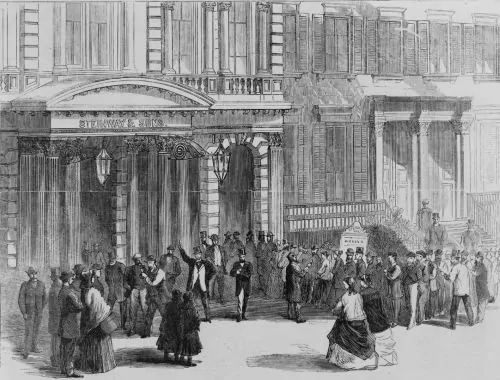
When Charles Dickens announced the purposes of Household Words in 1850, he described an ambition more intimate than the ordinary promise of a new journal. It would, he said, “live in the Household affections” and become “the comrade and friend of many thousands” whose faces its conductors might never see. That declaration identified the central paradox of Dickens’s fame: industrial print could carry one recognizable personality into homes whose occupants he would never meet. His fiction had already taught readers to recognize the confidential turns of his narrators and share their indignation at cruelty; characters who returned over months could acquire the familiarity of difficult neighbors or cherished companions. Dickens did not merely offer stories for consumption but repeatedly placed an implied reader beside him as an observer and moral confidant. By 1870, a death announced in the newspapers could feel less like the disappearance of a remote man of letters than the loss of a familiar presence in everyday life.
Serialization gave this relationship duration and rhythm. From The Pickwick Papers onward, most of Dickens’s novels first reached the public in monthly or weekly installments rather than as completed books. Each part ended while lives remained unresolved, obliging readers to wait under the same calendar as the characters and their author. During the interval, they could debate motives, predict outcomes, repeat memorable phrases, and discuss the latest number before the next one arrived. Copies circulated among relatives and acquaintances, while domestic reading aloud allowed one purchase to generate numerous encounters with the text. These formats were less expensive than the completed multivolume novels common in the Victorian book trade, although literacy, leisure, and money continued to limit access; Dickens’s purchasers should not simply be equated with the entire British population. His actual readership extended beyond those purchasers, but claims that every social class encountered him in the same way belong more to the later national legend than to demonstrable publishing history. Dickens watched sales closely and paid attention to reactions conveyed through correspondence or personal conversation, so public response entered his working environment even when it did not dictate his plots. Serial readers were active participants in the experience of publication: they anticipated, judged, remembered, and occasionally protested while a story remained unfinished. What accumulated across more than three decades was consequently not just a large audience but a history of repeated appointments with one author’s imagination.
Weekly journalism intensified the impression that Dickens was speaking in the present tense. Household Words, founded in 1850, and All the Year Round, established in 1859, entered homes with social investigation, commentary, fiction, and accounts of the changing world, while their mastheads continually announced that they were “conducted by Charles Dickens.” Much of their material was written by other contributors and originally appeared without attribution, yet Dickens’s name made each heterogeneous issue sound like the product of a single household voice; this effect rested upon both commercial branding and his frequently forceful editorial intervention. Readers were invited to treat Dickens less as the distant proprietor of a periodical than as the recurring intelligence selecting what deserved their attention each week.
The public readings transformed mediated familiarity into an encounter with Dickens’s living body. After early charitable appearances beginning in 1853, he launched a professional reading career in 1858, eventually performing throughout Britain and Ireland before undertaking an exhausting American tour in 1867–1868. He did not simply pronounce passages from his books. Working from heavily adapted texts, Dickens shifted his voice, posture, expression, and tempo until a succession of characters appeared to emerge from the single figure standing behind the reading desk. The restrained stage arrangement made the apparent directness of the encounter more powerful: the audience saw the famous author without elaborate scenery separating his person from his creations. Listeners responded audibly, and contemporary accounts repeatedly described rooms moving between laughter and intense silence, with some spectators overcome during the most emotional scenes. These performances were profitable commercial enterprises, but the money they generated does not make the attachment they displayed artificial; packed halls and receipts translated affection into visible, countable forms. When illness forced the cancellation of engagements in 1869, Dickens later returned for a limited final series, ending at St. James’s Hall on March 15, 1870, with the declaration that “from these garish lights I vanish now for evermore.” His death less than three months later turned a theatrical farewell into what seemed, retrospectively, a personal leave-taking from the public.
That intimacy must not be mistaken for reciprocity. Readers knew a public Dickens fashioned through narrative voice, editorial authority, controlled appearances, and the circulation of his image; they did not know the private man with comparable depth. The distinction became particularly visible in 1858, when his statement titled “Personal” appealed to his long-standing “relations with the Public” while attempting to control reports about his separation from Catherine Dickens without disclosing his relationship with Ellen Ternan. He treated the reading public as a constituency whose confidence mattered, even as he tried to determine which parts of his domestic life it might legitimately examine. His destruction of much received correspondence further demonstrates that an author who invited strangers into a figurative household did not intend to surrender his actual privacy. Yet mediation did not make the readers’ attachment fraudulent, any more than Dickens’s commercial skill rendered their later grief insincere. No reader chose Poets’ Corner, but the accumulated belief that Dickens had spoken to strangers as friends supplied the emotional premise for those who claimed that his body belonged among the nation’s honored dead.
“I Rest My Claims to Remembrance”: Dickens Directs His Funeral
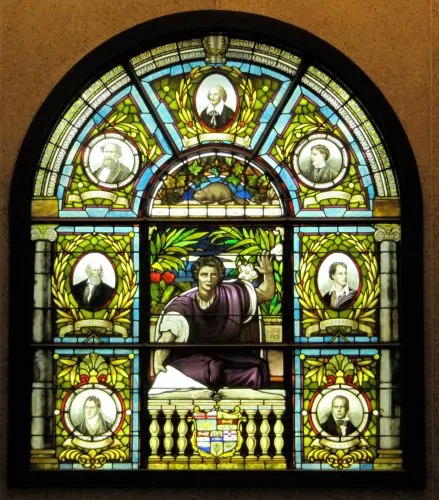
On May 12, 1869, less than three weeks after illness had forced him to abandon a reading tour, Charles Dickens signed the will that would govern his estate and shape the controversy over his burial. The document performed the ordinary work of distributing property, maintaining provisions for family members, and appointing Georgina Hogarth and John Forster as executors. It also became a final exercise in authorship. Dickens used the will to prescribe how his body should be conveyed to the grave, how mourners should appear, what could be written above him, and where his reputation should reside after death. A codicil signed on June 2, 1870, transferred his interest in All the Year Round to his eldest son, demonstrating that he remained engaged in ordering his affairs only a week before his death. He did not leave the character of his funeral entirely to the judgment or sentiment of those who survived him.
The funeral clause begins with unusual force: “I emphatically direct.” Dickens required an “inexpensive, unostentatious, and strictly private” burial and prohibited any public announcement of its time or place. No more than three plain mourning coaches were to be employed, while those attending were forbidden to wear the scarves, cloaks, elaborate hatbands, or other accessories he dismissed as “revolting absurdity.” This language was not a rejection of grief itself but an attack upon the conversion of grief into compulsory display. In Household Words, Dickens had criticized the enormous sums consumed by the “fripperies of death,” the profitable apparatus through which undertakers and mourning warehouses translated bereavement into purchases that supposedly measured respectability. His fiction returned repeatedly to those who made their living from death, from the calculating Sowerberry and the jovially predatory Mould to the more humane Omer and the socially observant Trabb. Their differences matter because Dickens did not regard every funeral tradesman as a villain; his recurrent target was a system that allowed commercial convention to dictate how sorrow should look. The will attempted to protect his survivors from that by separating sincere loss from the public merchandise of mourning.
The instruction for the grave was even more austere. Dickens wanted his name inscribed in “plain English letters,” without “Mr.” or “Esquire,” and he implored his friends not to make him the subject of any monument, memorial, or testimonial. “I rest my claims to the remembrance of my country upon my published works,” he declared, while leaving his friends to remember him through their experience of his company. The word “claims” prevents the passage from becoming a performance of false modesty: Dickens expected remembrance, but he insisted that it be earned and sustained through reading rather than manufactured in stone.
His directions continued into an explicitly Christian statement. Dickens committed his soul to the mercy of God through Jesus Christ and urged his children to follow the New Testament in its “broad spirit,” placing no faith in any man’s narrow construction of isolated passages. The simplicity of his desired funeral should not be mistaken for religious indifference or hostility toward Christian burial. He objected to social display and constricted dogma, not to the emotional or spiritual significance of death. The will imagines remembrance as something practiced by the living through reading, recollection, and ethical conduct rather than something secured by an imposing tomb. It also reveals the characteristic religious position identified by scholars of Dickens: deeply Christian in moral language but suspicious of institutions or interpreters claiming exclusive possession of Christian truth. A plain burial was consistent with that faith because it redirected attention from rank and ceremony toward the life that had already been lived.
One crucial instruction is absent: Dickens did not specify where he was to be buried. Popular retellings often combine the funeral clause with his reported preference for Kent and then describe both as provisions of the will, but the distinction is essential. Forster later wrote that Dickens would have preferred the small graveyard beneath Rochester Castle wall or the churchyards at Cobham or Shorne. That testimony deserves considerable weight because Forster had been Dickens’s closest confidant and was entrusted with intimate knowledge unavailable to most members of the family. It must nevertheless be treated as biographical evidence rather than as the language of the testament itself, especially because Forster also participated in the decision that carried the coffin to Westminster and subsequently constructed the authoritative narrative explaining that outcome. The family’s initial inquiries and the preparations eventually undertaken at Rochester Cathedral corroborate an expectation that Dickens would remain near Gad’s Hill. They do not transform that expectation into a signed command or prove that every preferred site was legally available. To say that the Westminster burial simply violated Dickens’s will is imprecise: it changed the location he appears to have wanted while observing many of the ceremonial conditions he had expressly imposed.
Even Dickens’s emphatic testament could not grant him complete posthumous sovereignty. His will disposed of property, but practical authority over the body passed to the people responsible for its burial, who had to make decisions before the document was admitted to probate on July 19. Twelve years later, Williams v. Williams would make explicit in English law that a corpse was not property and that funeral instructions in a will did not bind executors in the same manner as financial bequests. In 1870, the moral force of Dickens’s directions was consequently more important than any mechanism available to enforce them. Forster, Hogarth, and the family could obey those directions, interpret them under changing circumstances, or decide that competing obligations justified compromise. The conflict that followed was already latent in the distinction Dickens had drawn: he intended his body to remain private while his published works belonged to the country, whereas burial in Westminster Abbey would make the body itself an instrument of national remembrance.
Death at Gad’s Hill and the Sudden Transfer of Authority
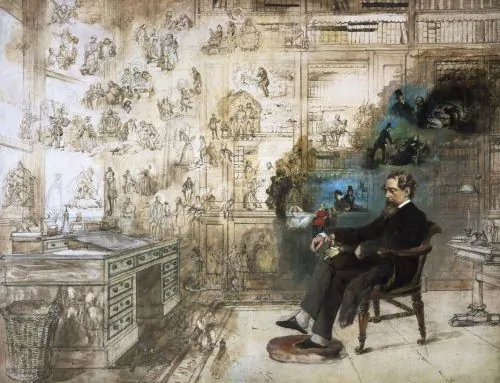
On Wednesday, June 8, 1870, Charles Dickens spent nearly the whole day in the Swiss chalet across the road from Gad’s Hill Place, working on The Mystery of Edwin Drood. He came back to the house for luncheon and then, against his usual practice, returned to his desk, a small departure from routine that John Forster later invested with the pathos of a final labor. The last page he wrote described Cloisterham, the fictional counterpart of Rochester, under the light of a brilliant summer morning, but neither its imagery nor the novel’s incompletion should be made to predict a death that Dickens himself plainly did not expect. Before dinner he answered correspondence and arranged to meet Charles Kent in London the following day. Dinner had been ordered for six, with a walk in the lanes intended afterward. Everything in that schedule (the serial under construction, the appointment, the planned walk) belonged to an ordinary future, which makes the abrupt destruction of that future more historically important than the temptation to turn the day into a composed literary farewell.
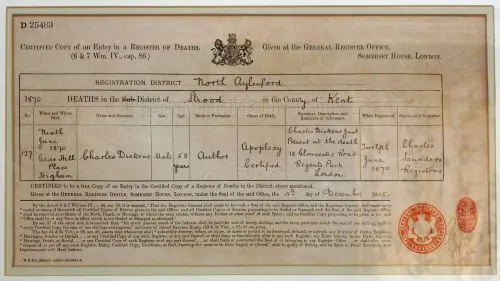
At dinner, Georgina Hogarth noticed what Forster described as an expression of pain and trouble in Dickens’s face. When she proposed summoning medical assistance, he resisted and told her that “for an hour” he had been very ill, yet wished the meal to continue. According to Forster, these were the only fully coherent words Dickens spoke during the attack. His conversation scattered among an impending sale at a neighbor’s house, the whereabouts of William Macready’s son, and his own intention of going immediately to London; when he rose, Hogarth’s intervention prevented him from falling where he stood. She attempted to guide him toward the sofa, but he sank heavily onto his left side, answering her with the words “On the ground” shortly after ten minutes past six. The local surgeon, Stephen Steele, arrived quickly, while telegrams summoned Dickens’s children and his regular medical attendant, Francis Carr Beard. Mary Dickens and Kate Perugini returned that night and met Beard at the station; Dickens’s eldest son, Charles Dickens Jr., arrived early the next morning, while Henry Dickens came from Cambridge too late to see his father alive. The physician John Russell Reynolds subsequently joined the consultation, but Dickens never recovered consciousness. He died at ten minutes past six on Thursday, June 9, almost exactly twenty-four hours after collapsing, at the age of fifty-eight. Forster called the condition an “effusion on the brain,” while the death certificate recorded apoplexy; a catastrophic stroke is the safest modern description, although attempts to specify its precise mechanism exceed the surviving clinical evidence.
The evidentiary basis of this familiar sequence must nevertheless be acknowledged: Forster was in Launceston when Dickens collapsed and learned of the death by telegram on the night of June 9, so the account published in 1874 was a reconstruction derived principally from Hogarth, the family, and the attending doctors. Claire Tomalin later revived the conjecture that Dickens had collapsed while visiting Ellen Ternan in Peckham and had been transported to Gad’s Hill to prevent exposure of their relationship, a possibility built from secrecy, circumstantial gaps, and much later recollections rather than a demonstrable contemporary chain of evidence. The Dickens household certainly possessed strong reasons to protect his reputation, but no surviving document establishes the proposed journey or explains how an unconscious and exceptionally recognizable man could have been moved to Kent without generating corroborating testimony. The Gad’s Hill narrative should be read critically as a family-mediated account rather than a transparent transcript, while still being recognized as substantially better attested than the dramatic alternative.
In the interval between collapse and death, authority moved first not to a church, a newspaper, or an abstract nation, but to the household. Hogarth summoned doctors, contacted the children, supervised the stricken man’s care, and supplied the account from which much of the accepted narrative would be formed. Her position had unusual depth: she was Dickens’s sister-in-law and domestic manager, but she was also named with Forster as an executor and was designated to receive his private papers. These testamentary powers did not formally operate while Dickens remained alive, yet his incapacity had already made Hogarth the practical center of decision at Gad’s Hill. Death then activated the executors’ authority over the estate and placed Forster, despite his absence from the final scene, alongside Hogarth in the management of Dickens’s posthumous affairs. The children occupied different positions: Mamie and Kate were witnesses and mourners, while Charley carried the additional visibility of the eldest son. Mamie later wrote that she made it her “duty to guard the beloved body as long as it was left to us,” language in which affection, custody, and the awareness of an approaching separation converge. Catherine Dickens, the estranged wife and mother of his children, had long been excluded from the Gad’s Hill household; her absence from its final crisis reflected that separation rather than demonstrating an absence of grief. Ellen Ternan’s intimate connection to Dickens likewise furnished no publicly acknowledged status from which she could claim a place in the decisions now beginning, showing that emotional proximity and legitimate posthumous authority followed sharply different maps.
Death also changed the scale upon which authority over Dickens would be exercised. The first telegrams sent from Gad’s Hill summoned doctors and relatives, but the same communications network rapidly carried the news beyond the household. On June 10, The Times described Dickens as one whom readers had regarded as a personal friend and predicted that millions would experience his death as a personal bereavement. Queen Victoria communicated her regret, newspapers throughout Britain produced notices and retrospectives, and reports circulated abroad with remarkable speed. These responses were not simply manufactured by Forster or by later funeral arrangements; they expressed the genuine shock produced by the loss of a writer whose serial fiction had entered domestic life for more than three decades. Yet the language of public grief also performed an act of appropriation, converting a death in a private Kent dining room into a national event before any final burial place had been settled. By placing Dickens among the “foremost Englishmen” of the age, the press implied that the disposition of his remains could not be treated solely as a family matter. His collapse after a day’s work on the unfinished Edwin Drood simultaneously encouraged the image of the author dying in service to his readers, even though his declining health and the medical warnings prompted by his public readings made the death less inexplicable than that image suggested. Dickens’s will prohibited advance publication of the time or place of his funeral, but it did not demand secrecy about his death. Publicity surrounding the loss could coexist with secrecy surrounding the service, while creating precisely the pressure under which the executors’ apparently private decisions would acquire national significance.
The sudden transfer of authority was not a single seizure but an immediate fragmentation. Hogarth and the children controlled the household scene, the doctors defined the bodily event, the executors acquired administrative responsibility, and the press began determining what the death meant to the nation. None possessed complete control: even Dickens’s written instructions now depended upon living interpreters, while his body remained at Gad’s Hill and accounts of him traveled far beyond it. Before Arthur Stanley or Westminster Abbey had entered the arrangements, the central premise of the coming funeral conflict was already established, a corpse held in private custody had been claimed symbolically by a vast reading public. Dickens had spent his career making strangers feel entitled to mourn him as a friend; after his death, that imagined intimacy began to intrude upon decisions he could no longer supervise or revise.
Kent’s Claim and the Grave Prepared at Rochester
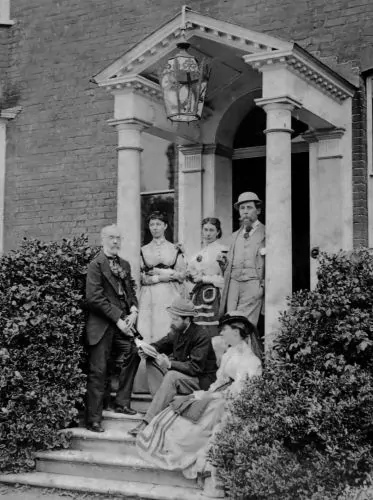
Kent’s claim to Charles Dickens did not rest upon a legal instruction or an uncontested choice of cemetery. It grew from the overlap between his life and a landscape that had entered his imagination during childhood, reappeared throughout his fiction, and eventually became his permanent home. Chatham supplied formative memories, Gad’s Hill embodied his later success, and Rochester provided recognizable settings for works extending from The Pickwick Papers to The Mystery of Edwin Drood. Burial nearby would have returned Dickens to a place where the celebrated author was also known as a resident who walked the roads, visited the town, and received his neighbors. Yet that broad local attachment did not identify one indisputable grave, and the distinction became important as several Kent institutions attempted to interpret what he had wanted.
The evidence for Dickens’s local preference is persuasive but imprecise. According to John Forster, Dickens remarked on June 7 that he wished his name to remain associated with Gad’s Hill and imagined lying in the little graveyard beneath Rochester Castle wall. Forster’s later biography widened the possible locations to that burial ground and the churchyards at Cobham or Shorne, presenting them as several acceptable expressions of the same desire. Mamie Dickens remembered the preference differently, writing that her father had often spoken of the quiet churchyard at Shorne and that arrangements were initially made to bury him there. None of these recollections appears in the signed will, which carefully prescribed the funeral’s manner without naming its location. They establish a meaningful preference for burial near Gad’s Hill, but they do not prove that Dickens had selected one plot with the finality sometimes attributed to him.
The hurried search for a grave after Forster reached Gad’s Hill on Saturday, June 11, reveals why these distinctions matter. A contemporary report in the Chatham News stated that an application was made concerning the section of St. Nicholas burial ground immediately beneath Rochester Castle wall. The Home Secretary reportedly answered that he lacked authority to permit Dickens’s burial there because the novelist had not been a parishioner of St. Nicholas, a detail obscured by descriptions of the site as though it belonged directly to the Cathedral. Cobham was then considered, but its churchyard was said to be so crowded that local authorities were reluctant to surrender scarce space to a nonresident. Mamie’s later account places Shorne more prominently in the sequence, suggesting either that several approaches were pursued or that family memory subsequently simplified an uncertain process. Forster compressed these separate difficulties into the assertion that the local graveyards were “closed.” Leon Litvack’s examination of the parish records shows that Cobham and Shorne continued to receive burials, making Forster’s wording literally inaccurate and potentially misleading. The local newspaper nevertheless indicates that genuine restrictions involving parish membership and available space complicated the preferred arrangements, so the obstacles should not be dismissed as pure invention. The nearby grounds were not uniformly sealed, but neither were they automatically available to executors trying to arrange a private funeral within a few days.
Rochester Cathedral offered a solution that was local, practicable, and sufficiently honorific for a writer of Dickens’s stature. The Dean and Chapter invited the family to place him inside the Cathedral, and the proposal advanced well beyond informal discussion. On Monday, June 13, workmen employed by John Foord & Sons opened a grave in St. Mary’s Chapel, at the east end of the nave, and constructed a vault intended to receive the coffin. The Cathedral’s records later confirmed payment for the work, demonstrating that the burial had been authorized, costed, and physically prepared before the Westminster decision displaced it. In minutes recorded after Dickens had been buried elsewhere, the Chapter maintained that no more fitting place could have been chosen than one amid scenes he loved and among people who had known him as a neighbor. Georgina Hogarth similarly wrote that the family would have preferred Rochester and that abandoning it had deeply disappointed the local community. The prepared grave represented an actual regional claim upon Dickens, not a hypothetical alternative invented after Westminster had secured him. Burial beneath a cathedral floor would already have elevated him beyond the anonymity of the modest churchyard he appears to have imagined, preserving locality while introducing its own form of institutional commemoration.
The Rochester arrangements show that Dickens’s family did not move directly from his death to the rejection of his local preferences. They first attempted to locate him within the Kentish world that had shaped his childhood and final years, even if uncertainty persisted over the precise churchyard. Yet the Cathedral grave also marked the beginning of his conversion from private resident into commemorated public figure. On Tuesday morning, as the Cathedral bell tolled for the funeral occurring in London, workmen refilled the empty vault and restored the pavement above it. Kent lost Dickens not because it lacked a credible claim, but because its claim of personal association was overtaken by a national demand carrying greater cultural authority.
Dean Stanley’s Opening: The Route Through Frederick Locker
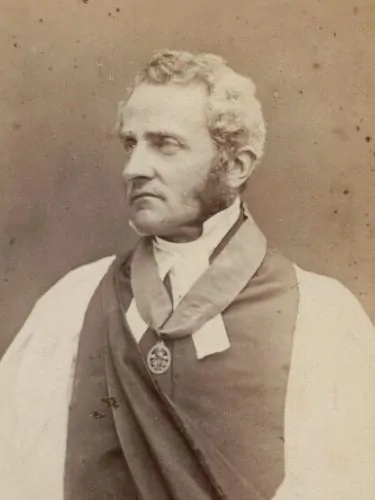
John Forster’s published account arranged events so that public feeling appeared to precede institutional action: the nation demanded Westminster Abbey, and Arthur Penrhyn Stanley responded to that demand. In this sequence, the Dean became a receptive custodian rather than an initiator, while the burial acquired the appearance of an honor spontaneously conferred by collective consent. Leon Litvack’s reconstruction of the surviving correspondence materially alters that chronology. Stanley had privately indicated his willingness to consider Dickens for the Abbey within hours of the novelist’s death, several days before The Times publicly urged a national burial. Yet this was an opening rather than a formal offer, since the Dean made his willingness conditional upon receiving a proposal from someone entitled to speak for Dickens. The distinction prevents the archival revision from hardening into a counter-myth of conspiracy. What the documents reveal is quieter but no less consequential: Westminster had entered the field before national opinion was publicly summoned.
The person who connected Stanley with the Dickens family was Frederick Locker, the poet, bibliophile, and social intimate who later took the name Locker-Lampson. His position within overlapping literary and aristocratic circles made him an unusually effective intermediary. Locker was acquainted with Dickens, while his marriage to Lady Charlotte Bruce made him Stanley’s brother-in-law after the Dean married Charlotte’s sister, Lady Augusta Bruce. The route to Westminster did not begin through an official communication between institutions; it passed through a private network founded upon kinship, hospitality, and personal confidence. Locker’s retrospective memoir recalled that he and Stanley had discussed burials in the Abbey before Dickens’s death, including the Dean’s power to admit or exclude distinguished figures from its commemorative community. When Dickens’s name arose, Stanley expressed a wish to meet him, and Locker subsequently arranged a dinner attended by the novelist and one of his daughters. Stanley recorded that he was “much struck” by Dickens’s conversation, although their acquaintance had begun too late to develop into friendship. The dinner acquired added significance after June 1870 because it allowed Stanley to regard Dickens as someone personally encountered rather than merely as a celebrated name awaiting institutional judgment. It would nevertheless exceed the evidence to interpret that meeting as a funeral compact: it established interest and access, not a settled plan.
On June 9, after learning from Locker that Dickens had died, Stanley replied with regret that the event they had imagined as distant had already overtaken them. He thanked Locker for having enabled him to meet Dickens while there was still time and declared himself “quite prepared” to entertain proposals concerning the burial if they were made to him. Within the context of their earlier conversation, the implication of Westminster Abbey was unmistakable, even though Stanley did not issue a direct invitation. His letter predates both the newspaper campaign and any known application from Dickens’s representatives.
Locker recognized the significance of this conditional assurance and, on June 10, copied Stanley’s letter for Charles Dickens Jr. His covering message was deliberately restrained: he thought the Dean’s words would “explain” themselves and offered his assistance if it were wanted. Charley was Dickens’s eldest son and an obvious point of access to the family, although he was not one of the executors named in the will. By approaching him, Locker avoided the appearance of placing public pressure upon Georgina Hogarth or John Forster while they were still confronting the immediate consequences of the death. The communication was neither an instruction nor a ceremonially phrased invitation, but it placed a prestigious alternative before a household then preparing to honor Dickens’s preference for burial near his Kent home. No immediate answer followed. That silence may have reflected shock, practical confusion, disagreement, or simply the speed with which several burial possibilities were developing; the correspondence does not disclose which explanation is correct. Its political effect is clearer. Because Stanley’s willingness passed through a private intermediary, the Dean could open the Abbey without publicly soliciting Dickens’s body, while the family retained the formal appearance of initiative should it decide to approach him. The indirect route also made possible a later narrative in which Westminster seemed to answer a national call rather than to have quietly announced its availability in advance.
Stanley’s private correspondence shows that the possibility remained active while the Dickens household hesitated. On June 11 he told his cousin Louisa Stanley that, although he had met Dickens only that year, it was “not improbable that I may bury him.” This remark does not prove that the Dean had begun manipulating the funeral arrangements, but it demonstrates that he already imagined himself performing the burial before any public movement for the Abbey had appeared. When Locker’s approach produced no immediate request, Stanley turned on June 13 to another literary intermediary, Richard Monckton Milnes, Lord Houghton, again indicating that he was ready to receive a proposal and inviting Houghton to act as he thought best. Stanley was more than the passive recipient portrayed in the conventional account, although no surviving evidence establishes that he composed, commissioned, or controlled the leader published by The Times that morning. His conduct is better understood as institutional cultivation: he made the Abbey available through discreet personal channels while waiting for another authority to convert availability into demand. By the time national entitlement acquired its public voice, the door to Poets’ Corner had already been opened in private.
The Times Speaks for the Nation
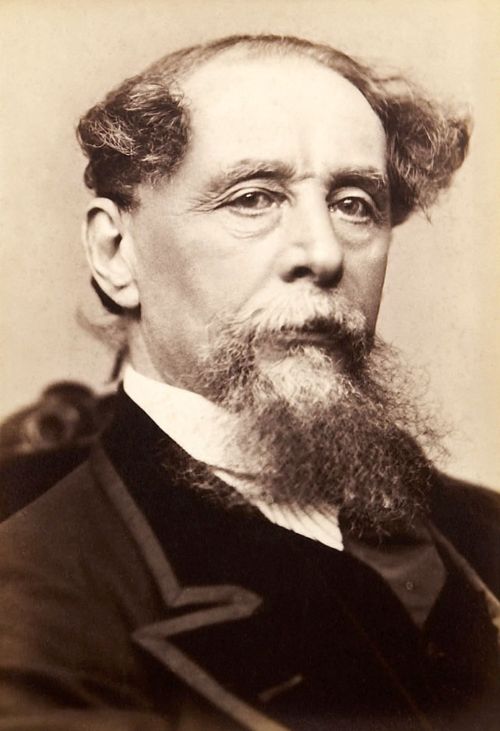
On Monday, June 13, 1870, The Times published an unsigned leader titled “Charles Dickens and Westminster Abbey.” Appearing in the newspaper’s authoritative editorial voice, the article did more than recommend a burial place: it presented Westminster as the destination already demanded by Dickens’s national significance. A Victorian leader carried no individual byline, allowing an argument devised within the newspaper to sound like an impersonal judgment upon public affairs. The title itself joined the dead author to the Abbey before the article had made its case, converting one possible arrangement into the question that England was supposedly required to resolve. Publication did not prove that the country had deliberated and reached a collective decision. It showed that its most influential newspaper was prepared to announce what the nation ought to want and then describe that prescription as national feeling.
The leader began from the genuine shock produced by Dickens’s sudden disappearance, observing that even the commonness of death could not diminish the melancholy and wonder attending the loss of such a man. It then moved from mourning to possession by calling him the “great and genial novelist” whose imagination had made him an intimate presence within countless homes. Popularity became a qualification for public custody: because Dickens had entered domestic life through print, the household reader acquired a claim upon his remains. Westminster Abbey was described as the “peculiar resting-place of English literary genius,” where few could be considered more worthy of a home than Dickens. The word “home” subtly displaced Gad’s Hill and the Kent communities with which Dickens had identified himself, making Poets’ Corner appear to be the place where he naturally belonged. The leader further elevated him from entertainer to moral authority by naming him the “greatest instructor of the nineteenth century.” His fiction was thereby recast as a form of national education whose proper monument had to stand where Englishmen gathered to contemplate their exemplary dead. The article’s language was emphatically English, although the readership being claimed for Dickens extended across Britain and far beyond it; metropolitan Englishness was made to stand for a much larger cultural community.
The leader’s boldest argument concerned Dickens’s own intentions. It acknowledged that he had spoken from a modest estimate of himself, but treated that modesty as the reason his wishes should not determine the result. Had Dickens understood how deeply the English nation wished to honor him, the article insisted, he would have been the last person willing to disappoint the people he loved. This reasoning transformed disobedience into fidelity: the nation could override Dickens while claiming to fulfill the generous impulses that supposedly lay beneath his instructions.
The origin of the leader remains less certain than its effect. Because The Times published such articles anonymously, no conclusive documentary trail identifies its writer or demonstrates who first carried the Westminster proposal into the newspaper’s office. Leon Litvack’s archival chronology nevertheless makes the traditional sequence untenable, since Arthur Penrhyn Stanley had privately signaled his willingness to receive an Abbey proposal through Frederick Locker before the leader appeared. Stanley’s later recollection states that he had received no application from a person possessing authority and had taken no formal step, but he had already allowed his consent to be communicated privately to Charles Dickens Jr. When John Forster and Charley visited the Deanery on June 13, Forster reportedly asked whether the article had been written with Stanley’s concurrence. Stanley denied any involvement while admitting that he had privately made it understood that he would consent if Dickens’s representatives demanded interment in the Abbey. The surviving evidence does not justify the stronger claim that Stanley planted or commissioned the leader, nor does it establish that Forster secretly arranged its publication. It does show that the newspaper’s proposal emerged after the institutional possibility had already been opened within a closely connected literary and ecclesiastical world. The Times need not have invented either the idea or the grief surrounding Dickens to perform the decisive political work of defining what that grief required.
The article’s practical force became apparent within hours. Forster and Charley could approach Stanley not merely as private individuals reconsidering Dickens’s burial, but as representatives answering what a powerful newspaper had declared to be the desire of England. The leader supplied public authority at the moment when Rochester Cathedral had already prepared a grave and the family still faced competing claims upon the body. Georgina Hogarth later wrote that they would have preferred Rochester but had been obliged to yield to the “larger demand,” a phrase that captured how quickly newspaper advocacy had become indistinguishable from national will. Forster’s biography subsequently made The Times the first mover, allowing his decision to appear as a grateful response to an honor initiated elsewhere. That account concealed the earlier private opening from Stanley while preserving the newspaper as an apparently independent witness to popular feeling. By speaking for the nation, The Times helped create the nation whose wishes it claimed merely to report, turning a contestable alteration of Dickens’s funeral into an act that seemed historically inevitable.
John Forster and the Right to Decide
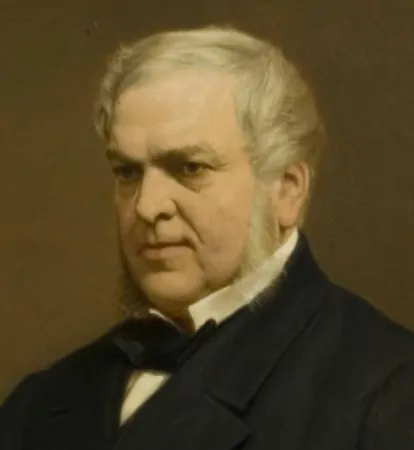
When John Forster reached Gad’s Hill on Saturday, June 11, he entered a household already struggling to convert Charles Dickens’s preferences into a practicable burial. He was not merely another grieving friend. Since meeting Dickens in 1836, Forster had served as his literary adviser, manuscript reader, business confidant, and trusted recipient of secrets withheld even from members of the family. Dickens had also named him an executor alongside Georgina Hogarth, giving him an administrative standing that few other mourners could equal. Yet Forster had been absent when Dickens collapsed and died, while Hogarth and the children had confronted the crisis directly. His subsequent prominence arose from a combination of testamentary office, intimate knowledge, and the confidence with which he assumed the role of Dickens’s representative.
The will gave Forster substantial authority, but it did not give that authority to him alone. Dickens appointed both Forster and Hogarth to administer his estate and act as guardians for any children who remained minors. His funeral directions specified an inexpensive and strictly private ceremony, prohibited advance announcement, and limited the procession to three plain mourning coaches. They did not name a burial place. The preference for Rochester Castle’s graveyard, Cobham, or Shorne survives principally through testimony supplied after the death rather than through a binding clause in the will. English law would later clarify in Williams v. Williams that a corpse was not property and that testamentary directions concerning its disposal were not legally enforceable, while the executor possessed the body only for the purpose of arranging burial. That 1882 decision should not be projected mechanically backward as though Forster consciously relied upon it in 1870, but it expresses the legal tradition that made executorial status important. Even so, Forster possessed no exclusive right derived from the will: Hogarth was his co-executor, the children held compelling familial claims, and Arthur Penrhyn Stanley controlled admission to Westminster Abbey.
Forster’s more distinctive power came from his reputation as the person who knew Dickens’s mind. He had advised the novelist upon plots, contracts, proofs, and public controversies, while preserving the autobiographical account of the blacking warehouse that Dickens had entrusted to him. This history allowed Forster to speak not only about what Dickens had written but also about what he supposedly would have chosen under altered circumstances. In a household stunned by sudden death, such interpretive confidence could carry almost as much force as formal authority.
The burial decision made on June 13 demonstrates both the extent and the limits of Forster’s control. Rochester Cathedral had offered Dickens an honored place, and a vault had already been prepared in St. Mary’s Chapel when The Times called for interment in Poets’ Corner. Forster then accompanied Charles Dickens Jr. to the Deanery, giving the approach the appearance of support from both the executor and the novelist’s eldest son. According to Stanley’s later recollection, Forster began by asking whether the newspaper leader had been published with the Dean’s concurrence. Stanley denied involvement but acknowledged that he had privately communicated his readiness to consent if a request came from Dickens’s representatives. The visitors then supplied the application Stanley had been waiting to receive. His promise that the Abbey service could remain private allowed Forster to argue that Westminster would violate neither the explicit instructions concerning ceremony nor the prohibition against advance publicity. The change nevertheless displaced the local preference attributed to Dickens and rendered the newly prepared Rochester grave unnecessary. Forster did not make this decision in complete isolation, since Charley participated and the household ultimately accepted the arrangement. He did function as the spokesman who transformed family assent into an authorized request.
Forster’s later account made that exercise of agency considerably less visible. In The Life of Charles Dickens, he wrote that the preferred Kent burial grounds had all been found closed, that The Times expressed a general wish for Westminster, and that Stanley’s offer made acceptance a “grateful duty.” Local burial records complicate the blanket assertion that every churchyard was closed, while the Locker correspondence disproves the implication that Stanley became interested only after the newspaper spoke. By omitting the earlier private approach to Charley, Forster arranged the story so that public opinion initiated the change and Dickens’s representatives merely complied. Leon Litvack consequently interprets Forster as one of the principal architects of an engineered Abbey burial and suggests that Poets’ Corner supplied a suitably monumental ending for the biography he would write. The first conclusion is strongly supported: Forster exercised influence and later minimized it. The proposed biographical motive remains an inference because no surviving contemporary statement records him choosing Westminster for the sake of his future book. Georgina’s admission that the family preferred Rochester but yielded to a “larger demand” also indicates a collective surrender to pressure rather than an entirely unilateral seizure by Forster.
Once Westminster had been chosen, Forster helped turn the decision into an accomplished fact. He coordinated the private arrangements, communicated with the Abbey, and later remitted the burial fees in his executorial capacity. He then exercised a second form of authority by writing the account through which generations encountered the death and funeral. The first role enabled him to help determine where Dickens would lie; the second allowed him to explain why that outcome had been proper. These functions reinforced one another, because the grave in Poets’ Corner validated the national stature celebrated by the biography, while the biography made the grave appear to have answered an irresistible public claim. Forster did not possess Dickens’s body as property, nor did he act without the concurrence of others, but he occupied the position from which a disputed choice could be made legitimate and then remembered as inevitable.
From Gad’s Hill to Poets’ Corner
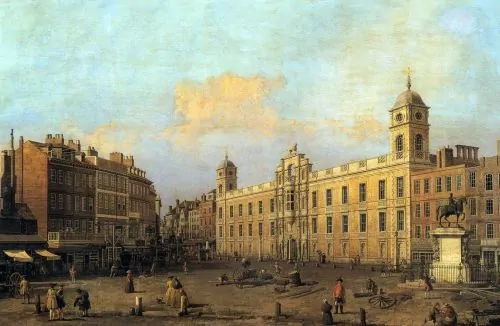
The decision reached on Monday, June 13, left scarcely a day in which to convert Dickens’s requested privacy into a Westminster funeral. At six o’clock the following morning, the plain oak coffin was removed from Gad’s Hill Place and carried to Higham station, beginning a journey almost no one outside the arrangements knew was taking place. A special train conveyed the body to Charing Cross, where it arrived at about nine o’clock. The use of a private train did not contradict the funeral’s simplicity so much as reveal the institutional resources required to preserve it: secrecy depended upon privileged coordination. The route also enacted a posthumous change of jurisdiction. Dickens departed from the Kentish household in which he had expected his burial to remain a local affair and entered London as a body already committed to national commemoration. There was no public procession through which that transformation might be witnessed or contested; by the time the capital could respond, the transfer would be complete.
At Charing Cross, a waiting room had been reserved for the mourners during the short interval before the cortege departed. The coffin was placed in a plain hearse without feathers, heraldic display, or the elaborate trappings associated with fashionable Victorian funerals. Only three mourning coaches followed, precisely the number Dickens had permitted in his will, and the party left the station at approximately a quarter past nine. Shortly before half past nine, the vehicles entered Dean’s Yard, after which the Abbey doors were closed and the coaches were sent away rather than allowed to wait conspicuously outside. When the service ended, ordinary cabs and a private brougham carried the mourners from Westminster, further diminishing the funeral’s visibility. These details were not incidental economies but components of an intricate choreography designed to produce the appearance and experience of privacy. Dickens’s prohibition against ostentation was observed with notable care, yet that observance was made possible by a special train, access to a closed Abbey, and cooperation extending from railway officials to Westminster’s clergy. The ceremony was plain without being ordinary. Its simplicity concerned surfaces, sounds, and numbers; its exceptional character lay in who could command the railway timetable, close a national church, and complete a burial before the public was admitted. The arrangements reconciled the wording of Dickens’s instructions with a destination he had not chosen by treating privacy as a matter of procedure rather than place.
The restricted company consisted chiefly of Dickens’s children, Georgina Hogarth, his sister Letitia Austin, John Forster, and a small number of relatives and intimate friends. Catherine Dickens, his estranged wife, was absent, an absence that exposed how decisively the household of Gad’s Hill had replaced the marriage from which Dickens had withdrawn. Contemporary reporting introduced a more elusive uncertainty: The Times stated that fourteen mourners attended but supplied only thirteen names. Robert Garnett has proposed that the unnamed mourner may have been Ellen Ternan, whose presence could not safely have been acknowledged without threatening the guarded structure of Dickens’s private life. The discrepancy makes that hypothesis possible, but it does not establish it; the surviving evidence permits suspicion rather than identification.
Dean Arthur Penrhyn Stanley received the coffin and led the Burial Office as it was carried into the Abbey. Resident and minor canons assisted, but the choir was absent, the customary psalm was not chanted, and neither anthem nor hymn enlarged the service into a public act of celebration. Even the responses and “Amen” were spoken rather than intoned, while the organ supplied the ceremony’s only sustained music. The coffin rested temporarily upon a bier in the choir before being borne to the open grave in Poets’ Corner. There, the clerk of works cast earth upon it as the prescribed words of committal were spoken, and the mourners placed wreaths and flowers beside the grave. The service retained the austerity Dickens had requested, but its setting prevented austerity from meaning insignificance. Around the mourners stood the Abbey’s accumulated claims about English greatness, embodied in the graves and memorials of writers, actors, composers, and statesmen. Dickens was lowered into ground associated with Addison and Sheridan, close to the monumental presence of Shakespeare and near the memorial recently erected to Thackeray. No funeral monument had to be commissioned because the architecture of national memory already surrounded the coffin. The location supplied the grandeur that the ceremony withheld, making literary consecration appear to arise naturally from sacred geography rather than from decisions taken during the previous forty-eight hours. Poets’ Corner did more than honor an established reputation. It converted popular attachment into institutional custody by placing Dickens within a succession that represented English literature as a national inheritance.
At almost the same time, workmen at Rochester Cathedral were erasing the material evidence of Kent’s displaced claim. The vault opened in St. Mary’s Chapel on Monday was filled again on Tuesday morning, and the pavement was restored while the cathedral bell tolled for the funeral taking place in London. Rochester mourned a burial it had expected to perform as Westminster silently completed another. The juxtaposition captures the result more precisely than either a story of faithful obedience or one of straightforward betrayal: Dickens received the unostentatious ceremony he had prescribed, but the locality implicit in his wishes was overridden. His funeral remained private in attendance and duration while becoming national through its destination. It ended before ten o’clock, the hour at which visitors were normally admitted to the Abbey, leaving almost no opportunity for interruption or public scrutiny. Yet the secrecy that secured the burial could not govern what followed, because a grave in Poets’ Corner belonged to a public culture of visitation and display. The funeral had been successfully hidden; the grave was about to be exposed.
After the Secret Service, the Public Arrives
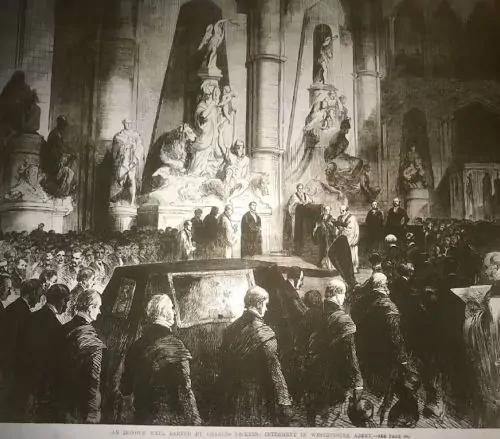
At ten o’clock on Tuesday morning, Westminster Abbey resumed its ordinary public hours. The burial service had ended, the mourning party had departed, and Dickens’s coffin lay at the bottom of the still-open grave. News of what had occurred spread rapidly through London, bringing hundreds of people into the Abbey before the day was far advanced. Officials erected a railing around the grave to prevent crowding and preserve an orderly passage through Poets’ Corner. The funeral’s secrecy had succeeded only until the act it concealed was irreversible. Within hours, an almost empty church had become the setting for an improvised public commemoration. The same institution that had excluded the public from the burial now gave it controlled access to the result.
The stream of visitors continued through the remainder of Tuesday and throughout the following day, prompting Dean Arthur Penrhyn Stanley to secure permission for the grave to remain unfilled until Thursday. People approached the railing, looked down at the coffin, and deposited flowers upon it. Others contributed written verses or small memorial objects, creating a collection that had not been selected by the family or arranged by professional undertakers. Stanley later remembered that “every class of the community” appeared, including poor visitors who wept as they stood over the grave. By Tuesday afternoon, the accumulation of flowers had reportedly concealed the coffin from view. The transformation was material as well as emotional: the polished oak surface seen by the first visitors disappeared beneath offerings made by strangers. These mourners had been denied the conventional role of accompanying Dickens to burial, but the open grave allowed them to perform another kind of participation. They did not merely observe a national honor bestowed from above. By leaving tangible evidence of their grief, they made the grave temporarily into a memorial created from below.
It would be mistaken to interpret the scene either as a wholly manufactured demonstration or as a public referendum on the choice of Westminster. There is no evidence that the visitors were assembled, hired, or instructed, and the speed of the first response strongly suggests that much of it was spontaneous. Contemporary reports initially spoke of hundreds, whereas later recollections described thousands passing through over several days, making any precise total unreliable. What the crowds establish is widespread attachment to Dickens; they do not prove that those same people had previously demanded his removal from Kent.
For most visitors, the coffin offered the first physical point of contact with a man they believed they knew. Their relationship with Dickens had been formed through serialized installments read over many years, shared family readings, theatrical adaptations, and the public performances at which he had embodied his own characters. His death abruptly revealed the one-sidedness of that intimacy: readers possessed memories of his voice and imaginative world, while most had never entered his private life. The open grave gave that diffuse attachment a location and a material object. Flowers could express affection where no personal reminiscence existed, while verses allowed readers to answer an author who had spoken to them through print. Even looking down at the coffin carried significance, for it joined the familiar name to the evidence of an actual death. The railing organized these individual encounters into a visible succession, turning isolated feelings into the appearance of collective mourning. Yet the accessibility remained carefully managed. Visitors could approach the grave only after the family had left, after the destination had been settled, and after Dickens’s body had passed beyond anyone’s power to return it to Kent. The public participated within terms established by the Abbey. It could mourn, contribute, and witness, but it could not decide. The sequence converted popular attachment into retrospective approval for a burial whose location had been negotiated without popular consultation.
Newspaper coverage extended this transformation beyond those able to reach Westminster. On June 15, The Times, the Daily News, and provincial papers disclosed the route, the restricted attendance, and the exact character of a funeral deliberately hidden from public view. The detailed report in The Times drew partly upon information Wilkie Collins supplied to the journalist William Stebbing after John Forster proved too overwhelmed by grief to communicate it himself. What appeared as an independent reconstruction consequently incorporated testimony from within Dickens’s intimate circle. Reports emphasized that his requirements concerning ceremonial privacy had been honored, while the destination was presented as the satisfaction of a national desire. The arriving crowds then furnished visible evidence for that interpretation. Newspapers described the mourners; new readers learned that the grave remained accessible; further visitors came and added themselves to the scene the press was already defining. Print did not create the grief that filled the Abbey, but it gathered many personal responses beneath the singular name of “the nation.”
By Sunday, June 19, Stanley had given this public response an explicitly religious and national meaning. In his sermon beside the newly closed grave, he described readers in both the Old World and the New as drawn toward Dickens’s resting place as though toward that of a personal friend. He suggested that those crowding around it could almost imagine themselves standing over the graves of the vulnerable fictional children Dickens had created for their companionship. The Abbey became, in Stanley’s formulation, the “home and hearth of the English nation,” while Dickens’s sympathy for the poor supplied the moral justification for placing him there. Stanley then read the provisions of the will, insisted that its funerary instructions had been carried out “to the very letter,” and reminded his listeners that Dickens had rejected any monument or testimonial beyond his works. He resolved the apparent contradiction by proposing that generosity and kindness practiced by readers were memorials the author would have accepted, available even to the humblest mourner. This interpretation did not invent the affection demonstrated at the open grave, but it translated that affection into the language of Christian fellowship and national unity. The grave had been filled on Thursday, yet visitors continued to approach it and fresh flowers continued to appear. Readerly grief had become the evidence through which the Abbey’s custody of Dickens could be represented as the natural fulfillment of his life.
Poets’ Corner and the Manufacture of Literary Ancestry
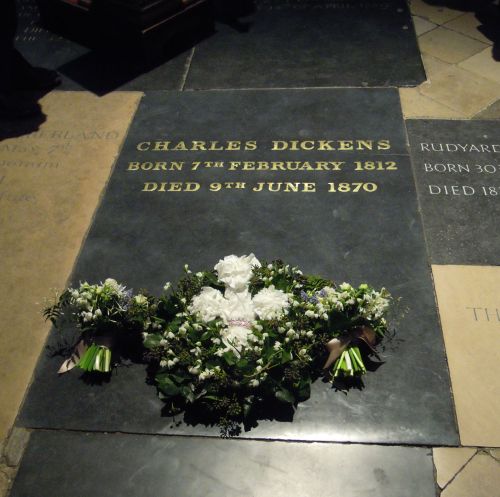
Poets’ Corner did not merely recognize a literary ancestry that already existed; it made ancestry visible and gave it institutional form. By 1870, the south transept could appear to visitors as an ancient national pantheon in which greatness had naturally gathered around greatness. Its graves, statues, busts, and inscriptions compressed centuries of writing into a single field of vision, allowing physical proximity to imply intellectual descent. Yet no founding statute had created an English literary hall of fame, and no consistent body had chosen its membership according to settled rules. The place emerged through accidents of burial, private patronage, clerical permission, and changing judgments of reputation. Its “manufacture” did not consist in inventing Dickens’s importance, which required no ecclesiastical endorsement, but in assigning that importance a lineage and a national address. Westminster changed the category of his fame: the popular novelist became an heir within an authorized history of English letters.
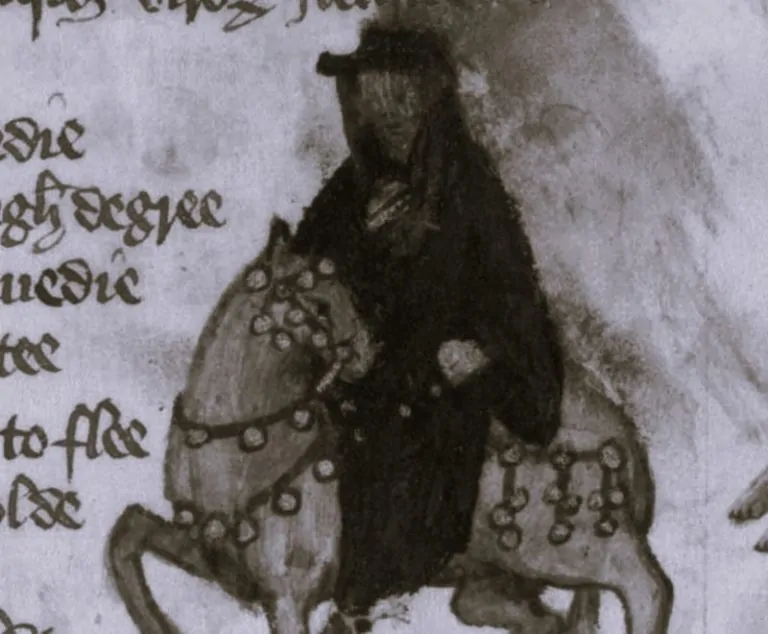
That history began with contingency rather than canonization. Geoffrey Chaucer was buried at Westminster in 1400 because of his connections to royal service and residence within the Abbey precinct, not because medieval authorities intended to establish a shrine to English poetry. When Nicholas Brigham erected a new tomb for Chaucer in the south transept in 1556, the relocation gave a more imposing material form to a literary reputation that had expanded during the intervening century and a half. The tomb allowed later generations to reinterpret an administrative burial as the resting place of the “father” of English poetry. Edmund Spenser’s burial nearby in 1599 supplied the decisive second point from which a tradition could be drawn. William Camden recorded that poets attended Spenser’s hearse and cast elegies into the grave along with the pens that had written them, joining literary production materially to the poet’s body. Whether every detail of that evocative account can be verified matters less than what its early circulation reveals about the meaning already assigned to the site. Spenser was being placed beside Chaucer as a successor, not simply deposited in available ground. An accidental grave had become a precedent through repetition.
Once such a precedent existed, each addition made the pattern appear older and more deliberate. Francis Beaumont and John Dryden joined the company of writers buried in the south transept, while monuments gradually supplied visible presences for others. An elegy traditionally attributed to William Basse asked the dead poets to move nearer one another and make room for William Shakespeare, imagining Chaucer’s vicinity as a shared household whose occupants possessed the authority to admit another member. Shakespeare remained at Stratford-upon-Avon, but the poem demonstrated that literary rank could already be expressed through imagined proximity to Westminster’s dead. In 1711, Joseph Addison called the area the Abbey’s “poetical quarter,” while wryly observing that it contained poets without monuments and monuments without poets. His joke exposed the mismatch between reputation, physical remains, and commemoration even as it helped establish the space as a recognizable cultural category. Thomas Fitzgerald’s “Upon the Poets’ Corner in Westminster-Abbey,” published in 1733, supplied the first known printed use of the name that endured. By 1741, a publicly funded monument to Shakespeare had corrected what admirers regarded as the site’s most conspicuous absence without disturbing his Stratford grave. The monument made the absent playwright visually dominant, proving that symbolic presence could be manufactured without possession of a body. As further writers were buried or commemorated nearby, the transept came to resemble a physical anthology whose selections were expressed in marble rather than print. Its juxtapositions encouraged visitors to read literary history as a succession of great individuals gathered beneath the protection of church and nation.
Like any anthology, Poets’ Corner defined a tradition through omission as well as inclusion. In 1870, its literary population was overwhelmingly male, and several writers now regarded as indispensable to the nineteenth-century canon had no place there. Jane Austen remained buried at Winchester, while the Brontë sisters had neither graves nor memorials in the Abbey. Burial, commemoration, and monument were separate distinctions, granted through different combinations of reputation, advocacy, money, and ecclesiastical approval. The result was not a neutral register of achievement but a record of which reputations particular gatekeepers had been willing and able to institutionalize. Its incompleteness did not weaken its authority in the eyes of visitors; it made inclusion appear all the more selective.
William Makepeace Thackeray’s commemoration reveals how directly Dickens understood that selective process. After Thackeray’s death in 1863, Dickens joined other writers and artists in petitioning for permission to erect a memorial to him in Poets’ Corner. The resulting marble bust, completed in 1865, was placed near Addison’s statue, although Thackeray himself remained buried at Kensal Green Cemetery. Dickens’s participation shows that he did not oppose the Abbey’s literary commemorations in principle, but it does not amount to consent to his own interment there. On the contrary, Thackeray’s case demonstrates that Westminster could recognize a novelist without acquiring his remains. Had Dickens been buried in Kent, a later bust or tablet could still have incorporated his name into the national literary company. Bringing his coffin to the Abbey made a stronger claim than commemoration alone required. A memorial would have said that Dickens deserved remembrance at Westminster; an actual grave made the Abbey the permanent destination of that remembrance.
Once Dickens occupied the ground, John Forster transformed architectural proximity into a literary genealogy. At the end of The Life of Charles Dickens, he described the memorials surrounding the grave and emphasized the theatrical associations represented by David Garrick and other performers. He then directed attention toward Chaucer, Shakespeare, and Dryden, whom he called the “three immortals who did most to create and settle the language” to which Dickens had given another undying name. The formulation did more than praise its subject. It placed Dickens at the end of a developmental history in which English passed from medieval poetry through Renaissance drama and Augustan authority into the Victorian novel. This was not a demonstrable account of literary influence, since Dickens’s imaginative ancestry could not be reduced to the occupants of one transept. It was a lineage produced by location and then explained through biography. The proximity of theatrical memorials also absorbed Dickens’s public readings and dramatic self-presentation into an older tradition of English performance. Luke Fildes’s image of the grave, reproduced with Forster’s account, reinforced the spatial argument by showing the modest inscription surrounded by monumental presences. Readers who might never visit Westminster could consequently visualize Dickens as already integrated into the Abbey’s historical company. The simple stone obeyed his prohibition against a personal monument, while the surrounding architecture performed the monumental work on his behalf.
Arthur Penrhyn Stanley understood Westminster Abbey as an institution capable of narrating national history through accumulated remains. In Historical Memorials of Westminster Abbey, published two years before Dickens’s death, he treated the building as a record in which successive burials connected religious history with the public life of the nation. Dickens’s interment expanded that record by giving the modern popular novel a bodily presence beside older forms of literary authority. The crowds and flowers at the open grave strengthened the impression that institutional recognition and public judgment had converged. Samantha Matthews has argued that the response helped renew support for nationally significant Abbey graves for writers, a tendency later consolidated by the burials of Robert Browning and Alfred Tennyson. Dickens’s burial did not create his readership or establish his reputation from nothing. It converted popular fame into sanctioned ancestry and made a historically improvised collection of tombs appear to have been waiting for him. The novelist who had entrusted his memory to his published works was now also fixed within a story told by stone.
The Biography That Made the Burial Seem Inevitable
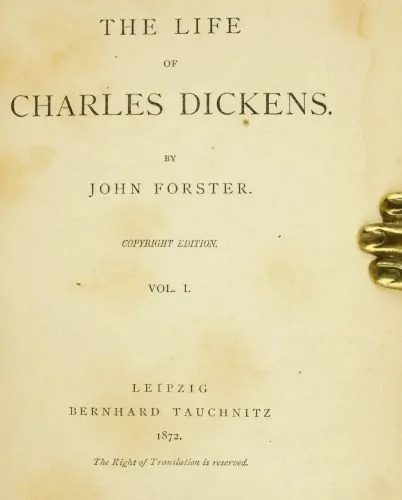
John Forster’s Life of Charles Dickens, published in three volumes between 1872 and 1874, did not determine where Dickens’s body lay; it determined how later readers understood why it lay there. The final volume appeared four years after the funeral, when urgent decisions had hardened into recollection and recollection could be arranged as history. As Dickens’s friend, literary adviser, confidant, and executor, Forster possessed an authority unmatched by newspaper editors or Abbey officials. He could move seamlessly from private conversations to public events, presenting both as parts of a single intelligible life. His account consequently appeared less like one participant’s version than the funeral’s authoritative inner history. Its most consequential achievement was to transform a hurried negotiation among competing interests into a sequence whose destination, Poets’ Corner, seemed retrospectively foreordained.
Much of what could be known about Dickens passed through Forster’s study. Dickens had entrusted him with the autobiographical fragment concerning the blacking factory, a disclosure that enabled the biography to reveal the childhood humiliation hidden beneath the novelist’s public success. Forster also possessed letters, manuscripts, remembered conversations, and knowledge accumulated during more than three decades of intimacy. By dedicating the biography to Mary and Kate Dickens and identifying himself as their father’s friend and executor, he placed familial sanction beside personal access. Readers were encouraged to treat proximity as a guarantee of completeness. Yet privileged access also conferred extraordinary powers of selection: Forster determined which letters to reproduce, how much of them to quote, and where private testimony should enter the narrative. Some Dickens letters now survive only through the extracts he printed, while the disappearance of Forster’s working notes makes it difficult to recover what he rejected or silently condensed. This archival imbalance does not establish wholesale fabrication, but it does mean that his omissions cannot be treated as empty spaces without historical significance. The biographer who possessed the fullest record also shaped the conditions under which his own conduct would later be judged.
The burial chapter displays this shaping most clearly. Forster begins not with Dickens’s testamentary injunctions or with a family discussion, but with the emergence of a national demand. The Times, he writes, “took the lead” in declaring Westminster Abbey the only appropriate resting place, after which Arthur Penrhyn Stanley supposedly responded without delay to the general wish. Only when public desire and ecclesiastical assent have been established does Forster introduce Dickens’s preference for an obscure local burial. He acknowledges the attraction of the churchyards at Cobham and Shorne, along with the small burial ground beneath Rochester Castle, but disposes of them with the categorical assertion that “all these were found to be closed.” A practical impediment eliminates Dickens’s own choices before any conflict between those choices and Westminster must be confronted. Rochester Cathedral appears merely as a possibility that had been “entertained,” language that minimizes the substantial preparations already made there. Stanley’s assurance that the Abbey service could remain private then reconciles national homage with Dickens’s prohibition of funerary display. Acceptance of Westminster becomes, in Forster’s resonant phrase, a “grateful duty.” The grammar assigns initiative first to public opinion and then to Stanley, leaving the family to consent while Forster himself almost disappears. What had been a branching sequence of proposals, inquiries, and reversals becomes a chain of necessities in which every alternative closes just before the Abbey opens.
Archival evidence breaks that chain at its most important hinge. Parish records show that the churchyards at Cobham and Shorne were not closed to burial as Forster claimed. The Rochester grave was also more than a proposal: it had been excavated, costed, and entered in a tradesman’s account. These findings do not prove that a local funeral could have proceeded without difficulty or disagreement. They do establish that Westminster displaced an operative arrangement rather than rescuing Dickens’s mourners from the absence of any possible grave.
The reconstructed chronology also restores Forster to the negotiations from which his biography removes him. On June 13, after the leader in The Times appeared, Forster and Charles Dickens Jr. approached Stanley and asked whether the article had been published with the dean’s concurrence. Stanley replied that it had not, although his willingness to consider an Abbey burial had already been communicated privately through Frederick Locker. The surviving evidence suggests reciprocal signaling among people anxious to discover what could be proposed without appearing to propose it too eagerly. Forster’s published account compresses this cautious exchange into Stanley’s ready compliance with a spontaneously expressed national wish, omitting the biographer’s own overture. Leon Litvack interprets that omission as part of a broader effort to manufacture an ending suitable for Dickens’s public stature and for the monumental life Forster intended to write. Such an interpretation is persuasive, but private motivation cannot be recovered as securely as the chronology itself: Forster was bereaved and acting under pressure, while Victorian biography conventionally sought moral coherence rather than a complete record of hesitation. The caveat nevertheless does not restore neutrality to his account. Whatever Forster consciously intended, his arrangement suppresses the moment of choice and transfers responsibility for Westminster to an impersonal nation acting through its dean.
Forster’s final pages then provide the public ratification that the preceding negotiations had lacked. He recounts Stanley’s decision to leave the grave open while crowds passed through the Abbey, laying flowers and displaying a grief that plainly exceeded the small circle admitted to the funeral. That mourning was genuine, and its force does not depend upon accepting Forster’s interpretation of it. Yet because the crowds enter the story only after the secret interment, their response functions as a retrospective plebiscite: the public seems to approve a national appropriation about which it had never been consulted. Forster then fixes Dickens spatially within Poets’ Corner, directing the reader’s attention to the monuments of Geoffrey Chaucer, William Shakespeare, and John Dryden. Physical adjacency becomes literary succession, while the Abbey’s historically uneven collection of graves and memorials is presented as an ordered genealogy culminating in Dickens. Mary Dickens’s later recollections reproduced the same essential structure, portraying the Abbey invitation as the expression of a general desire that the family reluctantly but properly honored. Successive biographers, dependent upon Forster’s documentary access and attracted by the elegance of his conclusion, repeated the narrative long after its factual premises had ceased to be examined. The burial drew meaning from the biography, and the biography acquired authority from the seemingly self-evident grandeur of the burial.
The new evidence requires a more exact verdict than the simple accusation that Forster lied. His assertion about the closed churchyards was inaccurate, and his description obscured the active part he played, but his account of the private ceremony and the subsequent crowds retains substantial evidentiary value. The deeper problem lies in arrangement: he placed incompatible wishes and disputed decisions into an order that made them appear naturally reconciled. The Life of Charles Dickens should consequently be read neither as a transparent record nor as a source rendered useless by interested narration. It is itself one of the principal instruments through which Dickens’s posthumous identity was constructed. The funeral transferred the novelist’s body from Kent to Westminster, but the biography accomplished a second transfer by making national custody appear to have been the ordinary completion of his life. Through Forster’s closing design, Poets’ Corner ceased to look like the victorious outcome of a contested decision and became the place toward which Dickens had always seemed to be moving.
A Memorial Without a Monument
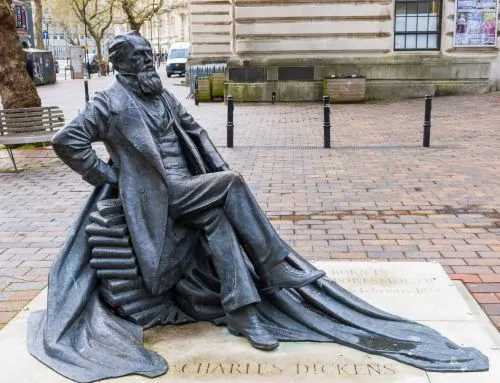
Charles Dickens’s will did not demand anonymity, nor did it forbid the marking of his grave. It authorized a tomb inscription, but only in “plain English letters,” without the social distinctions conveyed by Mr. or Esquire. Dickens implored his friends not to make him the subject of any “monument, memorial, or testimonial whatever.” He instead rested his public claim to remembrance upon his published works, while leaving personal remembrance to those who had known him. The distinction was deliberate: a grave marker could identify the dead man, but it should not become a sculptural interpretation of his greatness. This is best read as an attempt to control the medium of his survival rather than a wish to disappear. Dickens trusted the continuing encounter between reader and book more than the commemorative authority of committees, subscribers, or public institutions. His burial in Westminster Abbey created the paradox that would govern his afterlife: his prohibition could be observed in its material details while being overturned by the symbolic power of the place.
The Abbey could claim a narrow compliance with Dickens’s instructions. The horizontal stone placed over his grave carried little more than his name and the dates of his birth and death. It offered no portrait, heraldic device, honorific title, or epitaph instructing visitors how to judge him. Yet the slab lay beneath the architecture of Westminster Abbey and within a space already crowded with assertions of literary immortality. Its restraint did not neutralize that setting; it concentrated attention upon it. The simpler the stone appeared, the more completely Poets’ Corner supplied the monument Dickens had refused.
Arthur Penrhyn Stanley began converting this apparent absence into a commemorative program within days of the burial. Preaching in the Abbey on June 19, he quoted Dickens’s testamentary instructions and maintained that the directions concerning the funeral’s manner had been carried out “to the very letter.” Stanley then reinterpreted the forbidden monument as an ethical rather than a material form. Readers who learned generosity from Dickens, responded more sympathetically to suffering, or carried his social teaching into their conduct would create the memorials the novelist could have accepted. This interpretation honored the language of the will while loosening its restrictive force, because nearly any morally serious response to Dickens could now be understood as legitimate commemoration. The behavior of visitors during the preceding days had already anticipated that solution. Flowers thrown into the open grave were perishable and individually anonymous, but their accumulation made public feeling visible without requiring a committee or permanent structure. John Forster noted that flowers were still being placed there four years later, indicating that an immediate gesture of grief had become a repeated practice. Because such acts arose from readers rather than from a formally commissioned monument, they could be represented as spontaneous affection rather than disobedience. They collectively created precisely the public testimonial that Dickens had declined. The grave became a renewable memorial whose meaning was produced by each new visitor.
Later commemoration widened the paradox beyond the Abbey. The Dickens Fellowship, founded in London in 1902, organized admiration into a durable international association and eventually helped secure 48 Doughty Street as the Dickens House Museum, which opened in 1925. Its continuing wreath-laying at Westminster transformed the anniversary of Dickens’s death into a recurring ceremony involving admirers, descendants, scholars, and representatives of institutions connected with his life. Material commemoration also appeared despite his expressed preference. Francis Edwin Elwell completed Dickens and Little Nell in 1890, and the bronze group was installed in Philadelphia’s Clark Park in 1901. The will’s appeal to Dickens’s friends was a powerful moral instruction, but it could not permanently govern strangers, civic bodies, or later generations that claimed their own relationship with him. Elwell’s pairing was revealing because Little Nell made the statue seem an homage to the fiction even as it restored the novelist’s physical figure in bronze. The published work Dickens had chosen as his memorial became the justification for a form of memorialization he had rejected.
A memorial without a monument was an accommodation rather than an uncomplicated fulfillment of Dickens’s wishes. He received the plain inscription he had requested, and no imposing statue or laudatory epitaph rose above his body in the Abbey. Yet the location of that body made modesty itself serve a monumental purpose. The unadorned stone allowed Westminster burial to appear deferential, softening the fact that others had decided where Dickens would belong and what his grave would signify. His books did sustain the remembrance upon which he had rested his claim, but the Abbey converted that literary relationship into pilgrimage, ceremony, and national custody. No single mass of marble was required because Poets’ Corner, its accumulated associations, and the visitors continually returning to the grave performed the work of a monument together.
Was Dickens Really Taken from Himself?
The following video from “Free Movies” is a documentary about Charles Dickens:
The argument that Charles Dickens became a national possession after death can imply a more complete act of dispossession than the evidence supports. No one seized his body against an explicit testamentary command naming Rochester, Cobham, Shorne, or any other place of burial. His will governed the expense and privacy of the funeral, prescribed the lettering on his tomb, and rejected commemorative monuments. It did not designate a cemetery or forbid Westminster Abbey. Dickens’s preference for burial near Gad’s Hill survives chiefly through John Forster’s biography and family recollections, making it morally significant but less formally binding than his written instructions. His executors and relatives possessed genuine discretion when an unexpected alternative arose. From this perspective, accepting Poets’ Corner was not necessarily the theft of Dickens from himself; it could be understood as a defensible decision made by those whom he had entrusted with responsibility after his death.
The funeral also honored his stated wishes in substantial ways. It occurred early on June 14 without advance public announcement, and only a small company of relatives and close associates entered the Abbey. There was no public procession through London or elaborate ceremonial performance constructed around the coffin. The service followed the ordinary burial office rather than becoming an occasion for laudatory speeches. His grave was covered by a plain stone bearing his name and dates, without the honorifics he had rejected. If Dickens’s principal fear was ostentatious display, the arrangements devised by Arthur Penrhyn Stanley and the family preserved much of the austerity he had demanded.
Nor was Dickens merely a private individual overwhelmed by a public identity created against his will. Throughout his career he had cultivated an unusually intimate relationship with readers, first through serial fiction and later through public readings in which his physical presence became part of the experience of authorship. He edited periodicals in a strongly personal voice and addressed social questions as a figure whose name carried moral authority. His tours demonstrated that he understood both the emotional force and the commercial value of appearing before audiences who felt they already knew him. Dickens had also supported the campaign for a memorial to William Makepeace Thackeray in Westminster Abbey, even though Thackeray’s body remained at Kensal Green. He could oppose a monument to himself without rejecting the wider principle that literary achievement merited public commemoration. The leader in The Times did not manufacture national attachment from nothing; it articulated a claim already made plausible by decades of reading and by Dickens’s own management of his public personality. The crowds entering the Abbey and the flowers placed at the grave were not simply evidence of institutional orchestration. Their grief supplied a democratic argument that the novelist belonged, in some meaningful sense, to people beyond his household.
The archival challenge to Forster must likewise be kept within the limits of what it proves. The churchyards at Cobham and Shorne were not closed, the Rochester grave had been prepared, and Forster’s biography concealed his own active approach to Stanley. These discoveries overturn the account in which practical necessity eliminated every local alternative before Westminster was considered. They do not, by themselves, establish that Forster acted from vanity or that Stanley cynically exploited Dickens’s death. Both men were making decisions within days of an unexpected loss, when incomplete information and fear of public controversy could easily shape their language. The family’s acceptance also matters, even if grief and Forster’s influence made that consent unequal to Dickens’s earlier opportunity for deliberation. Mary Dickens later expressed regret that her father had not remained near Gad’s Hill, but she presented the Abbey decision as a concession to widespread feeling rather than an act imposed upon a resistant family. It is safer to identify narrative management and institutional interest than to infer a fully coordinated conspiracy. National memory was being constructed, but construction need not mean that every participant acted insincerely.
This objectoin succeeds against the strongest version of the dispossession argument. Dickens was not wholly deprived of posthumous agency: his written instructions shaped the service, restrained the grave’s appearance, and prevented Poets’ Corner from receiving another imposing Victorian monument. His family exercised recognizable authority, while the public response possessed an emotional reality independent of Forster’s account. Yet these qualifications do not remove the conflict over possession. A known local preference was superseded, an already prepared grave was abandoned, and the resulting biography made that contingent decision appear unavoidable. Dickens retained control over the manner in which he was buried, but others determined the cultural meaning of where he lay. He was not simply taken from himself; rather, his posthumous authority was divided, leaving personal wishes visible in the grave’s austerity while Westminster, Forster, and the reading public claimed the larger power to define what the grave represented.
Conclusion: The Author Who Could Not Keep His Death Private
Charles Dickens attempted to draw a firm boundary around his posthumous self. His will demanded an inexpensive and strictly private funeral, permitted only a plain inscription, and directed his friends away from monuments. He assigned the remembrance of his country to his published works and left personal memory to those who had known him. Yet his fame had already made that division difficult to preserve. When he died on June 9, 1870, the question was not whether Britain would mourn, but who possessed the authority to translate mourning into action. The contrast between the nearly empty morning service and the crowds that entered Westminster Abbey afterward captured the resulting compromise. Privacy was maintained as a funerary procedure while the exposed grave announced that Dickens’s death had become a public event.
The transfer of authority began at Gad’s Hill, where Dickens’s sudden incapacity left others to interpret instructions that could no longer be clarified. Rochester responded first, and the preparation of a grave made burial in Kent an immediate reality rather than a sentimental possibility. Frederick Locker’s approach to Arthur Penrhyn Stanley opened a different route, while The Times converted the suitability of Westminster into an argument about national entitlement. John Forster and Charles Dickens Jr. then entered negotiations with a dean already receptive to receiving the novelist’s body. No single participant controlled this process, and its speed discourages an interpretation based upon a fully organized conspiracy. The decision instead emerged from converging interests whose participants could each believe they were protecting some part of Dickens’s legacy. His family retained the private service, while Stanley incorporated a major writer into his conception of the Abbey as the nation’s historical sanctuary. Forster secured an ending that joined his friend to an established literary ancestry, and The Times saw its cultural judgment embodied in consecrated ground. Forster’s biography completed the process by suppressing abandoned possibilities and presenting Westminster as the solution toward which circumstances had naturally moved.
Poets’ Corner did more than receive Dickens’s remains. It placed his body within a visible canon whose accumulated graves and memorials could make historical accident resemble orderly succession. The plain stone technically respected his opposition to a monument, but its surroundings supplied monumentality on a scale no statue could have achieved. Flowers left by anonymous visitors, followed eventually by organized anniversary observances, turned the grave into a continually renewed site of literary pilgrimage. To describe this memory as manufactured is not to dismiss the grief as false. Institutions manufactured national memory by giving durable form and authoritative location to emotions that were already real.
The counterpoint remains necessary because Dickens was not wholly deprived of agency. His will did not specify a burial place, his family consented to Westminster, and the service observed much of the austerity he had requested. Describing him as simply stolen obscures the genuine discretion and sincere affection involved. Yet public attachment did not create an uncontested right to determine where his body should lie, and family consent did not erase the local preferences that Forster himself recorded. Readers had known Dickens through print, but that imaginative relationship became an argument for physical custody once he could no longer answer it. The novelist who had transformed strangers into intimate companions was thereby transformed from a popular author into an English cultural institution. His published works continued to make the strongest claim upon remembrance, as he intended, but the Abbey grave taught succeeding generations to read that remembrance as part of Britain’s national inheritance. Dickens could direct the words placed upon his grave, but he could not prevent Britain from writing the meaning around them.
Bibliography
Affiliate disclosure: Amazon links on this site are paid links. As an Amazon Associate I earn from qualifying purchases.
- Addison, Joseph. “On Westminster Abbey.” The Spectator, no. 26, March 30, 1711.
- Adrian, Arthur A. “Charles Dickens and Dean Stanley.” The Dickensian 52 (1956), 152–56.
- Andrews, Malcolm. Charles Dickens and His Performing Selves: Dickens and the Public Readings. Oxford: Oxford University Press, 2006.
- Basse, William. “On Mr. William Shakespeare, He Died in April 1616.” In Poems: Written by Wil. Shake-speare, Gent., edited by John Benson. London: Thomas Cotes, 1640.
- Bell, Emily. “Writing the Death of Dickens.” Victoriographies 10:3 (2020), 270–291.
- Bell, Emily, and Claire Wood. “Dickens, Death, and Afterlives: Introduction.” Victoriographies 10:3 (November 2020), 213–227.
- Bodenheimer, Rosemarie. Knowing Dickens. Ithaca, NY: Cornell University Press, 2007.
- Chatham News. Report on the proposed burial of Charles Dickens. June 18, 1870.
- Collins, Wilkie. “To William Stebbing, June 14, 1870.” In The Public Face of Wilkie Collins: The Collected Letters, edited by William Baker, Andrew Gasson, Graham Law, and Paul Lewis. 4 vols. London: Pickering & Chatto, 2005.
- Conway, Heather. The Law and the Dead. Abingdon: Routledge, 2016.
- Davies, James A. John Forster: A Literary Life. Totowa, NJ: Barnes & Noble Books, 1983.
- Dickens, Charles. “From the Raven in the Happy Family. No. 2.” Household Words 1:11 (June 8, 1850), 241–242.
- —-. Last will and testament, May 12, 1869, with codicil dated June 2, 1870. Proved July 19, 1870. Principal Probate Registry, London.
- —-. The Letters of Charles Dickens. Vol. 12, 1868–1870. Edited by Graham Storey, Margaret Brown, and Kathleen Tillotson. Oxford: Clarendon Press, 2002.
- —-. The Mystery of Edwin Drood. London: Chapman and Hall, 1870.
- —-. My Father as I Recall Him. Westminster: Roxburghe Press, 1896.
- —-. “Personal.” Household Words 17:429 (June 12, 1858), 601.
- —-. “A Preliminary Word.” Household Words 1:1 (March 30, 1850), 1–2.
- —-. The Public Readings. Edited by Philip Collins. Oxford: Clarendon Press, 1975.
- —-. The Speeches of Charles Dickens. Edited by K. J. Fielding. Oxford: Clarendon Press, 1960.
- Dickens, Charles, Jr. Letter to Frederick Locker, June 14, 1870. Locker Collection, Armstrong Browning Library, Baylor University, Waco, TX.
- Dickens Fellowship. “Annual Wreath-Laying Ceremony.” May 12, 2023.
- Drew, John M. L. Dickens the Journalist. Basingstoke: Palgrave Macmillan, 2003.
- Fitzgerald, Thomas. “Upon the Poets’ Corner in Westminster-Abbey.” In Poems on Several Occasions, 24–25. London: J. Watts, 1733.
- Forster, John. The Life of Charles Dickens. Vol. 3, 1852–1870. London: Chapman and Hall, 1874.
- “Funeral of Mr. Charles Dickens.” The Times (London), June 15, 1870, 12.
- Garnett, Robert. “The Mysterious Mourner: Dickens’s Funeral and Ellen Ternan.” Dickens Quarterly 25:2 (2008), 107–117.
- Hampton, Mark. Visions of the Press in Britain, 1850–1950. Urbana: University of Illinois Press, 2004.
- Hayward, Jennifer. Consuming Pleasures: Active Audiences and Serial Fictions from Dickens to Soap Opera. Lexington: University Press of Kentucky, 1997.
- Henderson, Heather. “‘To You Only’: Forster to C. E. Norton on Dickens’s Death.” John Forster Newsletter 1:2 (1979), 32–40.
- Hervouet-Farrar, Isabelle. “(Auto)biography and Authority: Dickens and Forster’s Reconstruction of a ‘National Treasure.’” Cahiers victoriens et édouardiens 88 (2018).
- Hogarth, Georgina. Letter to Frederic Ouvry, July 1870. Farrer Ouvry Papers, envelope 17/34, Charles Dickens Museum, London.
- Illustrated London News. “The Grave of Charles Dickens in Poets’ Corner, Westminster Abbey.” June 25, 1870, 662.
- John, Juliet. Dickens and Mass Culture. Oxford: Oxford University Press, 2010.
- Jones, Aled. Powers of the Press: Newspapers, Power and the Public in Nineteenth-Century England. Aldershot: Scolar Press, 1996.
- Laqueur, Thomas W. The Work of the Dead: A Cultural History of Mortal Remains. Princeton: Princeton University Press, 2018.
- Leary, Patrick. “How the Dickens Scandal Went Viral.” In Charles Dickens and the Mid-Victorian Press, 1850–1870, edited by Hazel Mackenzie and Ben Winyard, 305–325. Buckingham: University of Buckingham Press, 2013.
- Litten, Julian. The English Way of Death: The Common Funeral since 1450. London: Robert Hale, 1991.
- Litvack, Leon. “Charles Dickens and Westminster Abbey: The Elusive Times Leader of 13 June 1870.” The Dickensian 116:1 (2020), 49–53.
- —-. “Dickens’s Burial in Westminster Abbey: The Untold Story.” In Reading Dickens Differently, edited by Leon Litvack and Nathalie Vanfasse, 15–45. Chichester: Wiley Blackwell, 2020.
- Locker-Lampson, Frederick. My Confidences: An Autobiographical Sketch Addressed to My Descendants. Edited by Augustine Birrell. 2nd ed. London: Smith, Elder & Co., 1896.
- Long, William F. “‘Particulars as to the Proposed Interment of Charles Dickens at Rochester.’” Dickens Quarterly 39:2 (June 2022), 176–199.
- —-. “‘Surely This Is Not Right’: Contemporary Reaction to Dickens’s Will.” Dickens Quarterly 36:1 (March 2019), 105–114.
- Malcolmson, Catherine. “‘A Veritable Dickens Shrine’: Commemorating Charles Dickens at the Dickens House Museum.” 19: Interdisciplinary Studies in the Long Nineteenth Century 14 (2011).
- Matthews, Samantha. Poetical Remains: Poets’ Graves, Bodies, and Books in the Nineteenth Century. Oxford: Oxford University Press, 2004.
- McManus, I. C. “Charles Dickens: A Neglected Diagnosis.” Dickens Quarterly 25:2 (2008), 98-106.
- Nayder, Lillian. The Other Dickens: A Life of Catherine Hogarth. Ithaca, NY: Cornell University Press, 2010.
- Parker, David. “Dickens’s Death: The Peckham Conjecture.” Dickens Quarterly 25:3 (2008), 190–193.
- Patten, Robert L. Charles Dickens and His Publishers. Oxford: Clarendon Press, 1978.
- —-. “Dickens Wills.” Dickens Quarterly 36:1 (March 2019), 60–94.
- Prendergast, Thomas A. Poetical Dust: Poets’ Corner and the Making of Britain. Philadelphia: University of Pennsylvania Press, 2015.
- Prothero, Rowland E. The Life and Correspondence of Arthur Penrhyn Stanley, D.D., Late Dean of Westminster. 2 vols. London: John Murray, 1893.
- Sanders, Andrew. The Short Oxford History of English Literature. Oxford: Clarendon Press, 1994.
- Schlicke, Paul, ed. The Oxford Reader’s Companion to Dickens. Oxford: Oxford University Press, 1999.
- Skelton, Christine. Charles Dickens and Georgina Hogarth: A Curious and Enduring Relationship. Manchester: Manchester University Press, 2023.
- Slater, Michael. Charles Dickens. New Haven, CT: Yale University Press, 2009.
- Sneddon, Karen J. “Memento Mori: Death and Wills.” Wyoming Law Review 14:1 (2014), 211–252.
- Stanley, Arthur Penrhyn. Historical Memorials of Westminster Abbey. London: John Murray, 1886.
- —-. Letter to Frederick Locker, June 9, 1870. Locker Collection, Armstrong Browning Library, Baylor University, Waco, TX.
- —-. Letter to Louisa Stanley, June 11, 1870. Westminster Abbey Muniments, WAM 63525, London.
- —-. Letter to Richard Monckton Milnes, Lord Houghton, June 13, 1870. Houghton Papers, Houghton 23/148, Trinity College Library, Cambridge.
- —-. “Recollections of Events Connected with Westminster Abbey,” 1875–80. Transcript of manuscript reminiscences, Westminster Abbey Muniments, London.
- —-. Sermon Preached by Arthur Penrhyn Stanley, D.D., Dean of Westminster, in Westminster Abbey, June 19, 1870 (the First Sunday after Trinity), Being the Sunday Following the Funeral of Charles Dickens. London: Macmillan and Co., 1870.
- The Times (London). “Charles Dickens and Westminster Abbey.” June 13, 1870, 11.
- —-. “The Late Mr. Charles Dickens.” June 11, 1870, 9.
- —-. “Mr. Charles Dickens’s Will.” July 22, 1870, 9.
- Tomalin, Claire. Charles Dickens: A Life. London: Viking, 2011.
- —-. The Invisible Woman: The Story of Nelly Ternan and Charles Dickens. London: Viking, 1990.
- Walder, Dennis. Dickens and Religion. London: George Allen & Unwin, 1981.
- Waters, Catherine. “Materializing Mourning: Dickens, Funerals, and Epitaphs.” 19: Interdisciplinary Studies in the Long Nineteenth Century, 14 (2011), 1–20.
- Williams v. Williams. 20 Ch. D. 659 (1882).
- Witheridge, John. Excellent Dr Stanley: The Life of Dean Stanley of Westminster. Norwich: Michael Russell, 2013.
- Wolffe, John. Great Deaths: Grieving, Religion, and Nationhood in Victorian and Edwardian Britain. Oxford: Oxford University Press for the British Academy, 2000.
- Wood, Claire. “Dickens and the Art of Epitaph.” Victoriographies 10:3 (November 2020), 248–269.
- —-. Dickens and the Business of Death. Cambridge: Cambridge University Press, 2015.
- Wynne, Deborah. “Readers and Reading Practices.” In The Oxford History of the Novel in English. Vol. 3, The Nineteenth-Century Novel, 1820–1880, edited by John Kucich and Jenny Bourne Taylor, 22–36. Oxford: Oxford University Press, 2012.
Originally published by Brewminate, 09.03.2026, under the terms of a Creative Commons Attribution-NonCommercial-NoDerivatives 4.0 International license.
About the Author