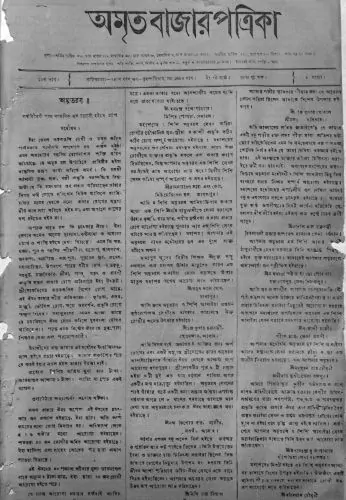
The Vernacular Press Act targeted Indian-language newspapers. Amrita Bazar Patrika responded in English, preserving its dissent while reducing direct access for Bengali readers.

By Matthew A. McIntosh
Public Historian
Brewminate
Introduction: The Newspaper That Crossed a Legal Boundary
In March 1878, the British government in India made the language of a newspaper a determining factor in its exposure to a new construct of press control. The Vernacular Press Act, passed on March 14 under Viceroy Edward Robert Bulwer-Lytton, subjected publications in Indian languages to exceptional administrative restraints while exempting newspapers published in English. For Amrita Bazar Patrika, a Calcutta weekly already appearing in Bengali and English, that exemption provided a means of responding to the threat. Its editors shifted entirely to English, keeping their publication in circulation through a change that placed it outside the coverage of the new legislation.
The newspaper’s response rested on an established capacity to work in two languages. Its earlier use of English helps explain how its editors could make a consequential adjustment without creating an unfamiliar kind of publication from the beginning. The exemption would have offered a different prospect to a newspaper dependent entirely on Bengali copy and a readership unable to read English. At Westminster that July, William Ewart Gladstone drew attention to the unequal treatment of an argument published in English and the same argument translated into an Indian language. He also challenged the assumption that English readers could safely evaluate political criticism while readers of Indian languages could not. His objection makes the intended audience central to understanding the controversy. The government’s classification assigned different legal risks to communication according to the language through which readers encountered it, while the Patrika demonstrated that an Indian-owned newspaper could move between those categories. The effectiveness of that maneuver depended on capabilities that other publishers could not necessarily reproduce, making its success inseparable from the unequal conditions of the colonial press.
English publication nevertheless remained subject to the government’s wider authority. The change did not repeal the criminal law or establish a general right to criticize colonial rule without fear of punishment. It removed the newspaper from the operation of one particularly intrusive statute. Assessing the editors’ achievement requires attention to the specific restraint they avoided and to the means of coercion that remained available.
The consequences were less straightforward for readers than the newspaper’s survival might suggest. Those who understood English could continue consulting it directly, while readers literate only in Bengali would require some form of mediation. Translation or oral discussion might extend the circulation of its arguments, but the extent of that circulation cannot be inferred from the continued appearance of the newspaper itself. Nor does the language change establish how many subscribers were lost, whether new readers replaced them, or how the balance of its audience developed. These uncertainties make access an essential part of the historical problem. The Patrika preserved an institution capable of challenging colonial policy by adopting a language privileged within the imperial order. Its adaptation exposed a limit in the government’s chosen instrument of censorship while raising a further question about the relationship between editorial independence and the ability of an existing readership to participate in political discussion.
From Jessore to Calcutta: Building a Bilingual Opposition Paper
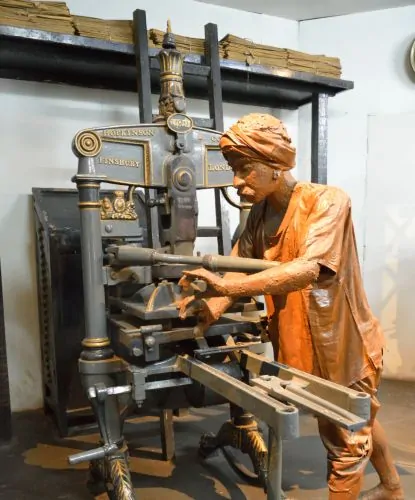
Founded in 1868 at Amrita Bazar in the Jessore district of Bengal, Amrita Bazar Patrika developed from a family enterprise with an existing interest in education and print. The project brought together Sisir Kumar Ghosh and his brothers Hemanta Kumar and Motilal, drawing on experience associated with an earlier Bengali periodical, Amrita Prabahini. Their elder brother Basanta Kumar had conducted that publication before his death. The new weekly began in Bengali and took its name from the locality where it appeared. Sisir’s involvement in public affairs reached further back, including support for cultivators resisting European indigo planters during the rebellion of 1859–60. His subsequent editorial career emerged from a provincial setting in which agricultural grievances had already become matters of public controversy.
Producing a newspaper required the brothers to undertake work extending well beyond the preparation of articles. In Motilal’s retrospective account, reproduced in Paramananda Dutt’s 1935 biography, they worked with a wooden press and secondhand type, learning to perform tasks that a larger establishment could distribute among specialized employees. They prepared printing ink themselves, while experiments in making paper proved unsuccessful. These recollections emphasize the labor involved in sustaining regular publication with limited resources. In 1870, an annual subscription cost five rupees when paid in advance and seven when paid at the end of the year. That difference encouraged subscribers to provide funds before the expenses of publication accumulated. Beyond the household, the paper drew assistance from professionals whose occupations connected them to potential readers and sources of information. Dutt identifies agents such as Kedar Nath Ghose, a pleader at Jhenidah, and Haralal Roy, a teacher at Calcutta’s Hare School. Such supporters furnished news and helped obtain subscriptions, joining the collection of information to the practical business of circulation. Their participation suggests that the newspaper’s reach depended partly on relationships of professional standing and personal trust, even while its production remained concentrated in a village. Although Dutt’s affectionate account celebrates the founders’ sacrifices, its description of this wider assistance also gives reason to understand the Patrika as a collective undertaking.
By 1870, the weekly’s linguistic composition was already flexible. Dutt describes an eight-page publication containing Bengali and English, with no fixed division of pages between the two. Anirban Bhattacharyya’s research provides a specific example from July 20, 1871, when the English heading “School of Hindu Music” introduced a notice otherwise written in Bengali. This arrangement suggests that language choice could operate within an individual item, alongside decisions about the contents of an entire issue. Bilingual publishing belonged to the paper’s village period and accommodated cultural announcements as well as political discussion.
The move to Calcutta in 1871 took place amid severe disruption in the home district. Dutt connects the departure to epidemic fever and flooding, reproducing newspaper reports that described illness and deteriorating rural provisioning. The editorial accompanying the resumption of publication in Calcutta on December 21, 1871, translated in his biography, combined regret at leaving Jessore with an ambition to improve the paper. Its authors recalled their attachment to village life and appealed to established supporters to continue helping them. They also acknowledged the increased expense of operating in the city, making the success of the relocation dependent on further public assistance. Calcutta’s importance as a center of government and publishing gave the decision a significance extending beyond a change of address. The editors devoted considerable attention to reassuring readers about continuity, insisting that the same people remained responsible for the newspaper’s direction. Their appeal suggests that they anticipated questions about whether a metropolitan office would alter the paper’s commitments. Maintaining the confidence of an existing constituency became part of the work of establishing the publication in its new surroundings.
Agrarian conflict soon exposed how disputed those commitments could become. During the Pabna unrest of 1873, disagreements between tenants and landlords divided Bengali journalism. Drawing on Swapan Basu’s research, Abhijit Gupta places the Patrika among publications that defended landowners and recounts criticism from the rural newspaper Grambarta Prakashika. Its complaint connected the Patrika’s departure for Calcutta with an apparent loss of sympathy for suffering cultivators, challenging the standing of a journalist previously associated with opposition to indigo oppression. That accusation came from a participant in the controversy and cannot, by itself, establish that relocation caused a wholesale reversal of policy. It nevertheless preserves evidence that the newspaper’s representative claims were contested within the Indian press. Criticism of colonial officials could coexist with positions that other editors regarded as protective of landed interests. The disagreement makes “opposition paper” a description of particular political relationships, rather than evidence of an unchanging commitment to every group that experienced subordination.
Political association supplied another means of extending the editors’ influence. Sisir and the Patrika circle helped establish the Indian League in 1875, seeking an organization that could involve people beyond the wealthy constituency associated with the British Indian Association. Newspaper advocacy and organized public activity consequently developed through overlapping personal connections. Sudhir Chandra’s study complicates the League’s founding story by examining disagreements over its formation and leadership, including the Patrika’s defense of the manner in which it had been established. The newspaper was participating in a struggle over who should organize political opinion and under whose direction collective action should proceed. Its involvement gave editorial judgments consequences beyond the reception of any individual article, because the standing of an association could also depend on their acceptance. By the middle of the decade, a publication sustained through family labor and provincial contacts had become an active presence in Calcutta’s contested politics of representation.
Reading Dissent as Danger: The Colonial Case for Intervention
Government apprehension about the press preceded Lytton’s arrival in India in 1876. Writing retrospectively about his tenure as Bengal’s lieutenant governor, Sir George Campbell acknowledged that journalism could expose abuses, but argued that an autocratic government was vulnerable to being held in contempt by its subjects. Its authority, he maintained, depended partly on confidence in the overwhelming strength of those who governed. Persistent denunciation could weaken that confidence even without producing an immediate outbreak of violence. His formulation treated attacks on official standing as potential impediments to obedience, giving newspaper controversy a significance extending beyond the accuracy of particular allegations. These concerns supplied an existing rationale for restriction when Lytton’s administration began considering a new press law.
A growing apparatus for reviewing Indian-language newspapers supplied this debate with documentary material. Leigh Denault describes the weekly translations and summaries through which officials monitored publications across British India during the 1860s and 1870s. Articles written for particular communities entered government files in a form shaped by the subjects selected for attention and the judgments of translators. The case for intervention in 1878 extended well beyond the Patrika, drawing on a collection of 150 extracts examined by Bengal’s advocate-general, whose classifications included accusations of official oppression and attacks on the conduct of Europeans. These categories brought criticism of administration into the same assessment as writings considered capable of provoking wider hostility. An accusation that officials acted unjustly might appear within such a collection as evidence of an intention to make British rule hateful, although those were different propositions requiring different kinds of proof. The compilation established that hostile language existed; its arrangement could not independently demonstrate how readers understood that language or what they subsequently did. This distinction matters because a dossier assembled to justify action presents a different view of journalism from a complete run of the newspapers concerned. Evaluating the official case requires attention to the process by which selected complaints acquired the status of evidence about public danger.
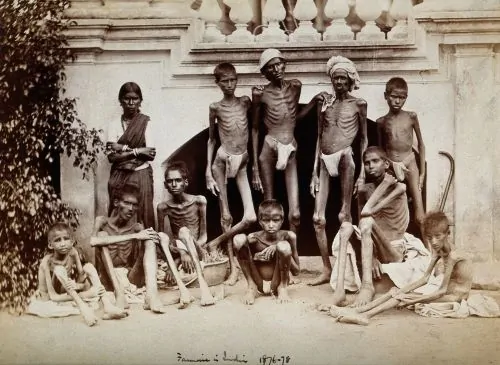
The complaints themselves arose amid circumstances that invited searching criticism of imperial government. The famines of 1876–78 made the provision of relief a test of the administration’s professed concern for Indian welfare, while the Delhi imperial assemblage of 1877 publicly celebrated the monarchy’s authority. Developments in southeastern Europe, especially the Russo-Turkish War of 1877–78, also encouraged discussion of British power and its relationship with the Ottoman Empire. These controversies allowed journalists to examine whether imperial claims to responsible government were sustained by conduct within India and in foreign affairs.
Lytton’s government answered such scrutiny by insisting that a section of the press had passed beyond criticism of individual measures into hostility toward British rule itself. The statement of objects and reasons accompanying the legislation presented this development as an increasing threat requiring early repression. The Act’s preamble also invoked intimidation and extortion, connecting political control with the protection of individuals from coercive uses of newspapers. The resulting justification allowed officials to portray intervention as a public duty while maintaining that legitimate criticism would remain permissible. In the Commons debate of July 23, 1878, Edward Stanhope explained why the government considered ordinary prosecution an unsatisfactory response. A trial could advertise an offending publication and turn its editor into a celebrated victim; an unsuccessful prosecution might damage authority further. Such reasoning deserves to be taken seriously as an explanation of administrative preference, since proceedings could indeed produce publicity beyond the government’s control. Critics countered that anticipated difficulties had become a substitute for demonstrating that existing legal remedies were inadequate. Officials sought a method of restraint that would preserve their authority while reducing the opportunities for an editor to benefit from a public contest.
Resistance to that approach also came from within imperial officialdom. The Duke of Buckingham, governor of Madras, found little in the submitted extracts to justify exceptional legislation and regarded outspoken newspapers as a valuable source of information about popular feeling. His objection made the preservation of independent reporting relevant to the practical work of government. Arthur Hobhouse, who had served as the government’s law member, similarly argued that increased education would produce discontent and impatience, developments that administrators should expect when encouraging intellectual improvement. These positions allowed for punishment of genuine offenses while questioning the wisdom of additional restraints. They also show that tolerating adversarial journalism could be defended by people committed to the continuation of British rule. The choice confronting the administration concerned competing assessments of how that rule could best be maintained. Lytton’s administration gave priority to the anticipated dangers of publication, a judgment that the new legislation would express through additional executive powers.
March 1878: How the Vernacular Press Act Worked
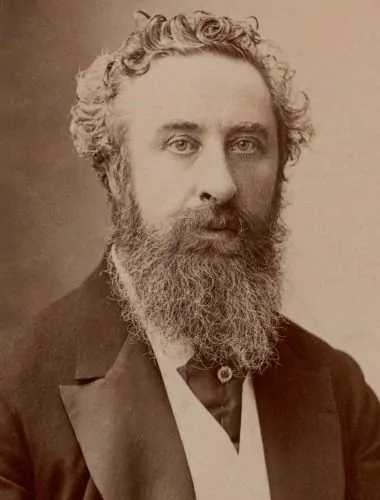
The legislative proceedings of March 14, 1878, carried the Vernacular Press Act through the Governor-General’s Council in a single sitting. Lytton had sought approval by telegram on the previous day, proposing to invoke urgency and provide a fuller account afterward. Authorization from Lord Salisbury, the secretary of state for India, enabled the administration to proceed without a meaningful interval for publishers to examine the bill and organize representations about its provisions. This accelerated passage followed an extended period of consultation among officials, concentrating deliberation within government while limiting opportunities for public participation. The resulting statute, numbered Act IX of 1878, established procedures through which financial demands and the threatened confiscation of property could influence the conduct of newspapers.
Coverage depended on a definition that explicitly included publications printed “wholly or partially in any Oriental language.” The Bengali contents of the Patrika brought its bilingual format within the statutory category, irrespective of how much English appeared elsewhere in an issue. The definition of a newspaper also encompassed a series published under different names, limiting the usefulness of a change of title as a means of avoiding regulation. By including lithography, engraving, and photography within the meaning of printing, the legislature addressed several methods of reproducing text and images. Territorial application required a separate determination. Section 1 authorized the Governor-General in Council to extend the principal domestic controls through notifications in the Gazette of India, while specified provisions applied throughout British India from the outset. Bengal was among the territories brought under the domestic machinery immediately, whereas Madras remained outside that extension. Other clauses provided for the seizure of objectionable publications arriving from beyond British India and their interception through the post. The statute consequently addressed both the production of newspapers within designated territories and the movement of printed material across administrative boundaries.
Section 3 placed the initiation of the bond procedure in the hands of a district magistrate or, in a presidency town such as Calcutta, the commissioner of police. Before acting, that officer required the sanction of the local government, meaning the provincial administration rather than a municipal authority. The printer and publisher could then be required to enter a bond, with each answerable for the obligation, in an amount determined by that administration. They undertook to refrain from publishing material likely to excite disaffection toward the government or antipathy between racial, caste, or religious communities. The undertaking also covered extortion and attempts to influence public servants through threats against them or people connected with them. Its political provisions concerned the anticipated tendency of publication, allowing action without proof that an article had produced violence. Under section 4, the magistrate or commissioner could additionally require the bond’s full amount to be deposited in money or government securities. The distinction mattered because signing a financial undertaking and surrendering the resources needed to secure it imposed different immediate burdens. No uniform deposit or statutory maximum governed every newspaper; the amount remained subject to official determination. Money committed to security was unavailable for ordinary printing expenses, giving the demand practical consequences before any question of forfeiture arose.
Confiscation followed a procedure organized around notice and subsequent publication. When the provincial government judged that a newspaper contained prohibited material or had been used for a prohibited purpose, it could publish a warning in its official gazette. A copy affixed conspicuously to the newspaper’s declared premises counted as service upon the printer and publisher. Further offending publication after that notice exposed the newspaper’s equipment, copies, and deposited security to forfeiture. The property at risk extended to machinery and stocks of paper, including materials intended for production or found about the printing premises. The government could then declare a forfeiture and authorize seizure through a warrant signed by a magistrate, with search powers reaching locations where copies were stored or distributed. These provisions threatened the establishment’s capacity to produce future issues as well as its investment in material already printed. A warning required the people responsible for publication to consider how the next editorial decision might affect the continued availability of their working equipment.
Section 5 of the original Act offered an alternative when a bond was demanded. The publisher could undertake, for the following year, to submit material to a designated officer before publication and withhold anything to which that officer objected. In return, neither a bond nor a deposit would be required during that period. Such an undertaking exchanged financial exposure for direct supervision of copy, presenting a strikingly consequential choice to a newspaper short of money. This option was removed by amending legislation later in 1878, but it formed part of the law confronting publishers in March.
An avenue of appeal remained, although its destination placed a substantial qualification on the protection it offered. Section 13 allowed a person aggrieved by specified forfeiture decisions or actions taken under seizure warrants to appeal within three months to the Governor-General in Council. That authority’s decision was final and conclusive, leaving reconsideration in the hands of the executive government. Section 16 barred challenges in civil or criminal courts to proceedings purportedly taken under the Act and protected officials against proceedings arising from such actions. The statute nevertheless employed criminal punishment to enforce compliance with its requirements. Continuing publication after a required bond or deposit had been withheld, or violating an undertaking to submit material before publication, could bring imprisonment for up to six months, a fine, or both. Its operation combined administrative control over property with criminal penalties for specified acts of noncompliance. This arrangement gave publishers strong reasons to anticipate official objections during the preparation of an issue, because the financial and procedural disadvantages became relevant well before an editor could contest the government’s assessment of a particular article.
Why English Was Exempt
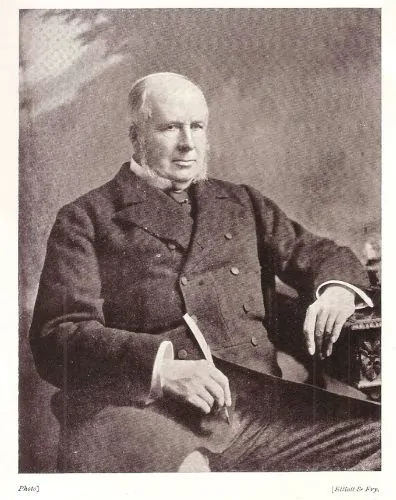
In introducing the bill, Sir Alexander John Arbuthnot acknowledged that exempting English newspapers exposed the government to a charge of unequal legislation. He nevertheless maintained that their conduct over the preceding decades justified their different treatment, describing the English press as generally loyal and useful to the administration despite its imperfections. Extending the restrictions to those publications would, in his account, impose liabilities they had done nothing to deserve. His defense made the presumed political record of a whole category of newspapers relevant to the protections its members should retain. The government presented selective restraint as a matter of fairness, treating a broadly favorable assessment of English journalism as sufficient reason to spare it the new requirements.
Lytton developed the protective justification through a revealing comparison with Britain’s regulation of obscene publications. Invoking Lord Campbell’s Act, he argued that the young people whose welfare that legislation protected possessed greater powers of judgment and self-command than the Indian population endangered by vernacular journalism. The analogy assigned adult political readers a degree of dependence exceeding that attributed to British youth. It also allowed him to describe restrictions on discussion of government as the fulfillment of a duty owed to the people subjected to them. The comparison concerned the asserted vulnerability of readers, despite the different kinds of publication involved in the two measures. His further claim that vernacular audiences lacked other sources of guidance about their rulers left little room for their experience of administration or their ability to compare competing accounts. Sir Ashley Eden, Bengal’s lieutenant governor, supplied the complementary assertion that education and interests restrained English newspaper writers and readers, whose conduct was governed by public opinion. These arguments credited a favored readership with powers of correction that officials largely denied to those reached through Indian languages. The distinction made a community’s supposed ability to regulate its own discussion an argument against subjecting it to additional state supervision.
The racial character of this reasoning did not produce a statutory division based simply on the proprietor’s ancestry. Lytton explicitly denied that the measure distinguished between Englishmen and Indians, emphasizing its application to publications in particular languages. An Indian-owned English newspaper could benefit from the exemption without any change in ownership or personnel. Yet this formal inclusion coexisted with descriptions of Indian dependence that measured political maturity against British standards, allowing selected Indians to share a privilege while leaving the larger hierarchy of judgment intact.
The social world of English journalism also exceeded the government’s reassuring account of it. Tanya Agathocleous describes an Indian Anglophone public connecting educated Indians with British communities in India and readers in Britain. Within this overlapping field, Indian editors could contest representations circulated by European writers and address audiences beyond their immediate locality. English offered opportunities to appeal over the heads of particular officials to people who might assess colonial conduct differently. Such communication did not guarantee sympathy, but it made the language useful for challenging the administration as well as conducting its business. The exemption preserved space within which disputes about imperial government could become arguments addressed to a wider readership. Officials’ confidence in the restraining influence of that readership consequently rested on an uncertain assumption about how political disagreement would develop.
For Lytton, eventual relaxation depended on the spread of education and what he regarded as enlightenment. He described press liberty as a privilege to be earned, locating its future expansion within a process whose progress the rulers themselves would assess. That position helps explain how the same administration could profess attachment to free discussion and impose exceptional controls without acknowledging an abandonment of principle. It assigned different populations different stages of preparation for exercising a freedom whose value remained nominally affirmed. The English exemption gave this assessment an immediate legal consequence, although the statute required no individual examination of an editor’s education or a reader’s judgment. Language supplied an administratively convenient substitute for the qualities invoked in its defense. This mismatch between the government’s explanation and its actual test made it possible for a publication to qualify for more favorable treatment without demonstrating the political moderation that officials associated with eligibility.
Changing the Paper: Reconstructing the Switch to English
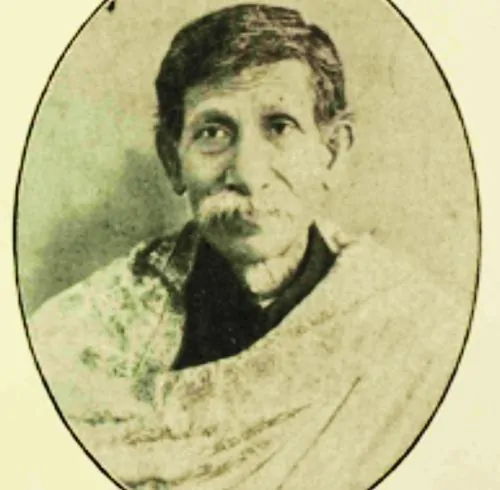
The most useful dated evidence for the change is the editorial announcement from March 21, 1878, reproduced in Paramananda Dutt’s biography of Motilal. It presents the withdrawal of the Bengali columns as an accomplished decision and explains the newspaper’s intended direction in English. Dutt identifies the same date as the appearance of the wholly English weekly, placing publication one week after the Act became law. The retained title, Amrita Bazar Patrika, associated the altered newspaper with the undertaking its supporters already knew. Its conductors were seeking acceptance of a substantial change in their publication while continuing to claim the loyalty accumulated under its earlier form.
According to the announcement, an English-only paper had been contemplated before the legislative proceedings of March. The editors stated that they had tried to introduce the new arrangement at the beginning of the year but had been unable to complete the necessary preparations until that week. They declined to explain the earlier difficulties, leaving the proposed timetable more definite than the practical obstacles behind it. This assertion complicates any account in which the exemption suddenly supplied an idea that nobody connected with the newspaper had previously considered. It also requires some caution, since a public explanation issued under political pressure could emphasize prior intentions to present an imposed adjustment as an independent editorial choice. Even allowing for that possibility, the statement supplies contemporary evidence that the conductors wanted the change understood as the realization of an existing project. The strongest inference is that the Act accelerated a decision for which discussion or planning had already occurred. Coercion could give an older proposal new urgency without eliminating the editors’ own ambitions for the paper. The publication date consequently records the completion of a change whose origins may have extended beyond the immediate legislative crisis.
A weekly schedule helps clarify what can be said about the speed of execution. March 21 was seven days after the passage of the Act, so the English issue need not be placed on the following morning. Dutt’s chapter heading describes a change accomplished in one night, but the dates he supplies do not establish when preparation began or how many hours it occupied. The interval between publication dates cannot independently establish the duration of the work, even if a decisive part of it occurred during a single evening.
At the level of production, the evidence establishes a change in the selection of material. Dutt describes the Bengali portion as abandoned, and the editorial similarly speaks of parting with those columns. English had already occupied part of the weekly, giving the conductors a usable component around which the revised paper could be organized. The account does not show whether the first English number retained the previous page total or replaced particular Bengali articles with translations. It supports continuity in the use of English without establishing the scale of any increase in English composition. The achievement lay in bringing out an issue under the new arrangement, an operation that required editorial decisions even though its surviving description is brief.
Readers were offered an explanation that combined regret with a request for continued support. The announcement credited pressure from the paper’s “friends and patrons,” whose judgment and patriotism the editors expressed confidence in. These unnamed advisers entered the public account as people entitled to influence a consequential decision, making the choice appear to carry approval beyond the immediate editorial household. Their counsel was described as sufficiently forceful to determine the step, suggesting that editorial independence could coexist with obligations to those sustaining the undertaking. The editors justified the result through the need for “an absolutely independent paper” in English, connecting the revised format to a claim about service to the country. They nevertheless acknowledged uncertainty about whether the change would produce the hoped-for benefit. Their concluding appeal recalled assistance received during earlier difficulties and asked that such sympathy continue. The announcement sought to preserve relationships of support at a moment when the object of that support had changed. Its language conveyed the need to persuade an existing constituency to sustain a new arrangement.
Later recollection gave the episode a sharper character of personal confrontation. In the account quoted by Dutt, Motilal attributed to Eden a complaint that another week’s delay would have allowed the government to strike at the Patrika through a heavy bond. That reported remark conveys how the newspaper’s circle remembered the immediacy of the threat, but it reaches the reader through a retrospective account of what Eden supposedly told others. It cannot securely establish an unissued order or a precise administrative deadline. Barns’s historical synthesis preserves the more readily supported sequence of a bilingual newspaper followed by an English issue after the legislation. Read alongside the March 21 announcement, the evidence gives the editors credit for responding promptly while allowing earlier plans and advice from supporters a place in the explanation. Their achievement consisted in carrying through a consequential publishing decision under pressure, with its success still dependent on the reception of the newspaper they produced.
Criticism after the Switch: The Limits of Legal Escape
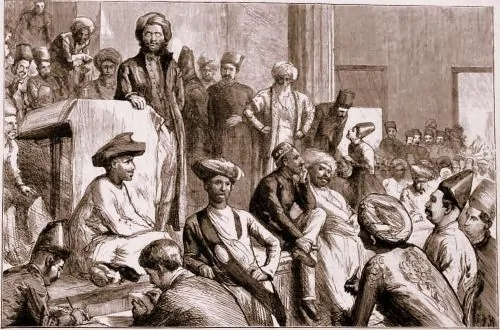
A disagreement over Russian use of the Patrika’s articles shows how official pressure could follow the newspaper into English. Dutt’s biography recounts an approach by Roper Lethbridge, the government’s press commissioner, concerning translations that were appearing in the Russian press and discrediting British administration. The editors denied responsibility for what Dutt describes as unfair translations and offered to discontinue the Russian government’s subscription if the Indian authorities compensated them for losing a customer who paid in advance. According to this retrospective account, no further communication followed. The significance of the exchange extends beyond its humorous treatment of government annoyance. Officials were asking the newspaper to answer for the uses that others made of its criticism, enlarging the controversy beyond the conduct of its own contributors. The reply challenged that assignment of responsibility while requiring the government to acknowledge the commercial consequences of restricting circulation. Here, an apparently routine communication became a negotiation over how far official expectations could govern an English newspaper’s dealings with its subscribers.
After the Vernacular Press Act’s repeal in 1882, the Ilbert Bill controversy of 1883–84 supplied a conspicuous example of continuing editorial opposition. The proposed reform would have removed a racial disqualification preventing qualified Indian magistrates outside the presidency towns from trying European British subjects. The Patrika attacked European resistance to the measure, and Dutt records that Motilal Ghose subsequently invoked the agitation when questioning European claims to exemplary loyalty. Supporting this reform meant defending an initiative of the colonial government against opponents determined to preserve racial privilege. That position complicates any description of the newspaper’s politics as indiscriminate hostility toward every exercise of British authority. Its criticism could instead expose the conflict between the administration’s professed judicial standards and the privileges demanded by influential Europeans. The language adopted in 1878 accommodated an argument that made unequal treatment within colonial institutions the subject of public accusation.
The criminal law remained available against political writing in English. Section 124A of the Indian Penal Code, introduced in 1870, punished attempts to excite disaffection without limiting the offense to publications in Indian languages. Its original explanation distinguished disaffection from disapprobation compatible with obedience to lawful authority, making the interpretation of political criticism consequential for criminal liability. As Agathocleous’s scholarship emphasizes, sedition disputes brought judgments about political feeling into the administration of colonial law. An editor’s choice of English could settle eligibility for one statutory exemption while leaving the intended effects of an article open to prosecution under another enactment.
The prosecution of Bal Gangadhar Tilak in 1897 brought this continuing danger into the Patrika’s editorial work. Tilak’s conviction concerned writing in the Marathi newspaper Kesari, but its implications attracted sustained attention in Calcutta. Dutt records that the Patrika marked the verdict on September 25 with black lines and an unusually long leading article occupying three columns. Further articles challenged Justice Arthur Strachey’s interpretation of sedition, while Motilal participated in efforts to finance Tilak’s legal defense and appeal. The newspaper subsequently opposed the 1898 legislation amending the sedition provision, making the definition of the offense itself an object of criticism.
These interventions connected editorial protest with practical assistance to a prosecuted journalist. They also gave an English newspaper a reason to defend expression in Marathi that extended beyond sympathy with an individual defendant. An expansive interpretation of disaffection could govern its own future writing. Continued publication allowed the Patrika to publicize objections to the judgment and support efforts to challenge it, even while Tilak’s imprisonment demonstrated the coercive force of the law under discussion.
A direct attempt to punish the newspaper followed its coverage of the Barisal conspiracy proceedings in 1913. In articles published between May 19 and May 30, the Patrika questioned police methods and the treatment of people awaiting trial. The passages reproduced by Dutt objected to restraints and displays of armed force against accused persons, while also challenging obstacles to obtaining documents needed for their defense. Access to those papers was consequential because defendants could scarcely answer allegations effectively without knowing the material upon which the proceedings rested. The articles invoked the presumption of innocence and contrasted the position of the accused with the treatment that the newspaper associated with English justice. They also appealed to Governor Lord Carmichael to examine the police papers. This appeal expressly allowed that defendants should stand trial if a prima facie case existed, making facilities for a fair defense central to the criticism. The editorial argument challenged how the prosecution was being conducted while acknowledging the government’s authority to bring a properly supported case. Officials nevertheless sought contempt proceedings against Motilal and the newspaper’s printer and publisher, Tarit Kanti Biswas, on the ground that its comments interfered with a pending judicial matter.
The Calcutta High Court dismissed the proceedings on different grounds for the two defendants. Chief Justice Sir Lawrence Jenkins rejected the attempt to establish Motilal’s responsibility through inadequate evidence, refusing to treat his supposed editorial position as something he was obliged to disprove. The case against Biswas reached the merits, and the court found no contempt warranting its summary intervention. These rulings show that judicial procedure could constrain an official attempt to punish criticism, although they established no unrestricted entitlement to comment on pending cases. English had provided no protection against being summoned to answer a charge carrying the prospect of imprisonment; the successful defense depended on evidentiary requirements and judicial assessment of the particular articles.
The newspaper’s continued activity consequently owed something to protections exercised within the courts as well as to the exemption obtained in 1878. Its history after the switch requires attention to both the persistence of editorial argument and the institutional means through which that argument could survive an attempt at punishment.
The Bengali Reader and the Price of Survival
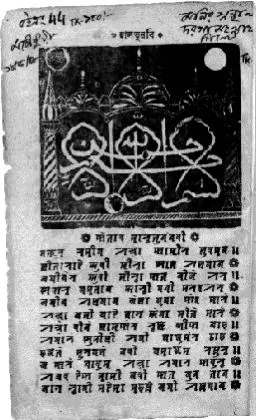
Before 1878, bilingualism gave the Amrita Bazar Patrika two forms of proximity to its audience. Paramananda Dutt’s family history explains that the Bengali portion served readers within Bengal, while English carried the weekly to other Indian provinces. Actual reading habits were probably less neatly divided, since educated Bengalis could use both languages and copies could travel far beyond their subscribers. Even so, the format acknowledged that geographical reach and linguistic access were separate matters. Removing the Bengali columns changed more than the paper’s legal classification or the amount of English type required for each issue. It ended one direct relationship between the publication and people accustomed to receiving its reporting and commentary in Bengali. No dependable sequence of circulation figures reveals how many subscribers were lost or how patterns of use changed within the bilingual readership. Numerical uncertainty should restrain claims about the scale of the loss. It still leaves intact the editorial judgment embodied in the old arrangement. Bengali had been included because part of the intended public needed it.
That public comprised far fewer people than Bengal’s entire population. Literacy remained restricted during the nineteenth century, while competence in English marked a still narrower educational opportunity. Anindita Ghosh’s study of Bengali print shows that language helped organize power within colonial society along lines of class, gender, and community. Consequently, the change affected Bengalis differently. English-trained readers retained immediate access. Bengali-only literates lost it, while people dependent on reading aloud now also needed an intermediary who knew both languages.
Printed circulation also exceeded the number of people able to decipher a page alone. Samarpita Mitra cites James Long’s 1859 estimate that roughly 600,000 copies of Bengali books reached nearly six million people, most of them listeners. Books cannot provide a circulation figure for the Patrika, but the estimate places its Bengali columns within a culture where oral transmission greatly enlarged the audience for print. Swati Moitra has likewise shown that reading aloud and reading together formed an important part of nineteenth-century Bengali women’s reading practices. One literate person could make a Bengali text available to several others without translating it. An English issue could still move through collective reading, provided someone present understood enough English to render its contents into Bengali. That extra dependence mattered. The intermediary decided which articles deserved attention and how closely to reproduce their wording and political tone, including their humor. Listeners might receive a summary, an explanation, or an argument recast for the immediate gathering rather than the text composed by the editors. Mediation extended the weekly’s influence while placing a bilingual reader between the publication and those whom the former Bengali columns had addressed more directly.
One detail in Dutt’s account keeps this history from becoming a story of total Bengali abandonment. He states that the removed portion continued separately as an earlier newspaper called Ananda Bazar Patrika, created to serve the Bengali-reading public. Hemanta Kumar Ghose edited the Bengali title, and Motilal Ghose contributed to both papers before later assuming its editorship as well. The venture closed in 1886 and was subsequently revived under the expanded name Sri Sri Vishnupriya O Ananda Bazar Patrika, combining political and religious material. This family history supplies neither circulation totals nor proof that the separate paper reproduced everything appearing in the English weekly. Its testimony nevertheless reveals an effort to retain Bengali publication within the Ghose enterprise. Separation altered the original arrangement because readers no longer found both languages assembled in a single issue under the same title. Maintaining another Bengali paper mitigated exclusion while leaving the Amrita Bazar Patrika itself entirely English.
Motilal’s later editorial style supplied another partial bridge. Dutt remembered his English as sufficiently plain for people with limited knowledge of the language and noted that some appreciative readers answered him in Bengali. His articles drew humor and illustrations from Bengali stories instead of displaying mastery through dense English literary allusion. Such choices made an English newspaper more approachable to readers educated unevenly in the colonial language. They also preserved cultural familiarity within the prose. Accessible composition lowered the threshold for partial readers, though it could offer little to someone unable to read English at all.
The burden imposed by the switch consequently varied according to education and social connection. Some readers continued through limited English or the help of bilingual intermediaries, and the separate Bengali publication offered another point of entry. Others lost the convenience and authority of encountering the Patrika’s own columns in a language they could understand unaided. Meanwhile, English strengthened the weekly’s access to administrators and educated political audiences outside Bengal, making the legally favored language attractive for reasons larger than evasion. Veena Naregal’s analysis of colonial bilingualism helps explain why this advantage carried its own hierarchy. English and Indian languages occupied unequal positions in the distribution of public authority. The editors preserved their principal newspaper by moving entirely onto the privileged side of that division. The companion publication and Motilal’s stylistic choices indicate a continuing desire to communicate with Bengali readers. Much of the labor required to sustain that connection nevertheless passed to the audience. The Vernacular Press Act failed to close the Amrita Bazar Patrika, but it influenced who could read its politics directly and who needed a bilingual intermediary or another paper.
Other Newspapers under the Act
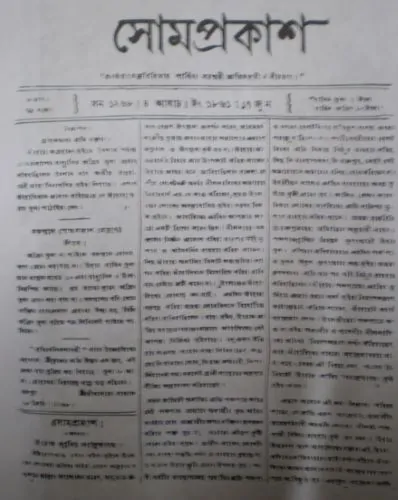
The experience of other Bengali newspapers clarifies what enforcement looked like once the statute left the Legislative Council. Few actions matured into proceedings resembling ordinary criminal prosecutions because the law was designed to obtain submission earlier. A demand for security could expose a small paper to costs it could scarcely bear, while the prospect of losing its press encouraged accommodation before forfeiture became necessary. Editors might modify an article, execute a bond, suspend an issue, or close altogether without generating a judicial decision. Historian J. Natarajan’s conclusion that there were no prosecutions “as such” should be read as a statement about legal form, not official inactivity. The contrast also locates the peculiarity of Amrita Bazar Patrika. Its managers possessed a route beyond the statute’s linguistic scope, whereas most affected editors had to answer official demands from within it.
Evidence presented at the Calcutta Town Hall on April 17, 1878, supplies the broadest contemporary inventory of early pressure. Surendranath Banerjea told the meeting that security had been demanded from Bharat Mihir of Mymensingh, Dacca Prakash, Hindu Hitaishini of Dacca, Sulabh Samachar, and the Calcutta Samachar. He further maintained that Samachar had stopped publishing after the demand, giving an immediate material meaning to a procedure that officials could describe as precautionary. The printed report was produced by opponents of the Act, and its allegations cannot simply be treated as a neutral administrative return. Its particulars nevertheless deserve attention alongside the government’s own dossier, which offered thirty-two extracts from fifteen papers out of approximately thirty-five Indian-language newspapers then published in Bengal. The reliability of that compilation was open to question because one cited title, Samachar Darpan, had ceased publication about six months earlier, yet a security notice was still sent to its editor. Banerjea also charged that official translations stripped statements from context and omitted professions of loyalty, while some demands appeared to punish material printed before the law took effect. The episode shows how hurried intelligence, contested translation, and executive transmission converted a broad suspicion of the vernacular press into consequences for particular proprietors.
The most fully documented case was Som Prakash, issued from Changripota in the Twenty-four Parganas district. Acting on instructions passed from the Government of India through the Bengal government, the district magistrate required its printer to enter into a bond over material judged seditious. The printer complied, and the newspaper soon ceased; Navabibhakar began publication in its place. When permission to revive Som Prakash was sought in 1879, the authorities granted it after receiving an undertaking of future good conduct, and the two titles subsequently operated from different presses under separate management. No criminal court had convicted the original paper, but official discretion had interrupted its continuity, encouraged the appearance of a successor, and conditioned its return.
Later official recollections portrayed enforcement as quiet and conciliatory. Sir Roper Lethbridge claimed that, during his tenure as press commissioner, he never invoked the statute’s punitive powers and only once came close to issuing a formal warning; conversations with editors usually secured an acceptable arrangement. That recollection covers his own tenure and must be placed beside the earlier action overseen during C. E. Buckland’s commissionership and the security demands reported at the Town Hall. It reveals the value administrators placed on compliance obtained through private negotiation, which allowed them to present restraint as voluntary and enforcement as sparing. Buckland’s review credited the measure with an improvement in journalistic tone, while a subsequent official assessment conceded that Indian-language papers remained strongly critical, continued to impute motives to public officers, and repeatedly protested against the statute. Officials also noticed that editors prefaced attacks with declarations of loyalty or reproduced criticism from exempt English newspapers, practices that reduced the likelihood of intervention without requiring political agreement. A preventive law did not need frequent confiscations if editors anticipated what might trigger them. Such reports register the pressure exerted by the measure precisely where formal statistics are weakest, in the editorial adjustments made while publication continued.
Placed beside these outcomes, the Patrika’s change of language emerges as an exceptional response available to a narrowly situated newspaper. The Ghose brothers could draw on years of printing in both Bengali and English, along with the compositorial and editorial skill needed to issue a complete English paper. Titles rooted more firmly in a regional-language market confronted different choices because their readership, staff, and commercial identity could not be transferred so readily. Across the surviving record, bonds were accepted, publication halted, a replacement title appeared, permission was negotiated, and rhetoric changed under observation. These responses cannot be ranked neatly as courage or surrender, since each reflected a paper’s resources and the losses its owners could absorb. Courtroom totals offer a poor measure of the Act’s reach; administrative pressure reshaped newspapers before the state needed to confiscate a press. The Patrika demonstrated that linguistic classification could be evaded, while these cases establish how strongly it constrained papers that remained subject to the statute.
From Protest to Repeal, 1878–1882
Opposition to the Act began before officials had taken many actions under it, and that timing shaped the campaign. Critics did not wait for a spectacular confiscation to prove injury; they challenged its unequal treatment by language and the unchecked executive power it created. On April 17, 1878, a public meeting at Calcutta’s Town Hall turned a newspaper grievance into organized constitutional protest. Convened with the Indian Association’s support, it heard Surendranath Banerjea and other speakers before adopting resolutions and authorizing a petition to Parliament. A committee was appointed to carry the work forward. The petition went to William Ewart Gladstone, whose prominence gave Indian objections an audience the viceregal council had denied them. Amrita Bazar Patrika’s linguistic maneuver mattered within this agitation as evidence of the statute’s irrational distinction, but collective organization carried criticism far beyond one editorial office.
A second Town Hall assembly on September 6 demonstrated the campaign’s continuity after the petition. More than one thousand people attended, and organizers read messages from the Poona Sarvajanik Sabha, the Bombay branch of the East India Association, associations in Lahore and Allahabad, and public bodies across Bengal. These communications should not be mistaken for nationwide popular mobilization, since participation rested largely with educated urban networks that could prepare printed memorials and sustain long-distance correspondence. The correspondents belonged to bodies with distinct provincial priorities and had no unified party organization. Agreement over the press law nonetheless provided a common constitutional cause without dissolving those differences. Their geographic spread mattered in a country without an elected all-India legislature through which such grievances could be represented. The meeting thanked Gladstone and sympathetic members of Parliament, then established a standing committee to gather trustworthy information about the Act and watch the conduct of executive officers. Its proposed corresponding members included public figures in Delhi, Lucknow, Amritsar, and Allahabad as well as Bengal. The new body turned protest into continuing documentation. By reporting the meetings and circulating their resolutions, newspapers helped readers recognize isolated administrative actions as parts of a shared political problem.
Westminster brought the controversy into view while leaving the statute intact. On July 23, 1878, Gladstone asked the House of Commons to require regular reports on uses of the Act, framing publicity as a check on discretionary power. He stressed the law’s hurried enactment and challenged ministers to produce an extract that actually incited rebellion. Other speakers questioned the translations and asked why criticism tolerated in English became dangerous in Indian languages. The Conservative government defended the viceroy’s responsibility and warned against subjecting Indian administration to continual parliamentary intervention. Gladstone’s motion lost by 152 votes to 208. Ministers nevertheless undertook to keep the secretary of state informed and include proceedings in official reports, meaning that future enforcement would occur before an audience outside the Indian executive.
Pressure also altered the statute before it ended. Lord Cranbrook, who had replaced Salisbury as secretary of state for India, objected to the provision under which a newspaper could escape other controls by submitting proofs to a government censor. Such review would require officials able to work in Indian languages and could make the censor responsible for effectively rewriting a paper. In October 1878, Act XVI removed the option of submitting proofs before publication. Around the same time, the administration created the office of press commissioner, partly to provide newspapers with more dependable official information. The amendment left the bond system and executive sanctions intact, and it still supplied no judicial trial when an editor was accused of sedition under the special law. Uma Das Gupta consequently characterizes the changes as minor, a judgment supported by the survival of the powers that most directly threatened a printer’s property. The partial retreat was politically significant because it showed that criticism in India, reinforced in Britain, could compel Lytton’s administration to revise a measure presented only months earlier as urgently necessary.
By 1880, imperial politics favored a fuller reversal. Gladstone’s Liberals returned to office, Lytton resigned, and Lord Ripon arrived as viceroy with a more conciliatory program. Limited enforcement weakened the case for exceptional powers, while resentment over unequal treatment remained visible. One institutional legacy proved more ambiguous. In 1881, 124 editors and proprietors reportedly asked that the press commissioner be retained because the office gave them useful access to official information, although it was abolished that March. Their petition showed that Indian journalists could value a channel created during repression independently of the censorship powers surrounding it.
Ripon’s government moved from review to commitment during 1881. A despatch dated February 28 stated that the Act would be repealed when the Government of India reassembled the following winter, and Lord Hartington repeated that assurance in the Commons on July 18. Ripon’s council presented retreat without declaring Lytton’s original action illegitimate. The circumstances said to have warranted exceptional treatment no longer existed, while ordinary law remained available against sedition. A repeal bill was introduced on December 7. This chronology explains why some accounts date the repeal to 1881, when the policy had been announced and legislation had entered the council. Legal abolition came in 1882 through the Seditious Publications Act, Act III of that year. Its second section repealed the Vernacular Press Act, ending the special system of bonds and forfeiture directed at publications printed wholly or partly in Indian languages. The new enactment also amended postal and customs law so that officers could intercept imported publications whose entry had been prohibited under the Sea Customs Act. Those retained powers were narrower and did not recreate routine security demands for domestic newspapers. Ripon’s settlement restored Indian-language journalism to the general legal position of the press without creating an unqualified liberty. Section 124A of the Indian Penal Code, contempt powers, registration requirements, and other controls over circulation remained available to the colonial state.
Responsibility for repeal was distributed across several arenas. Indian activists defined the grievance in public, preserved evidence about its operation, and found allies in Britain. Their work alone did not overcome Conservative majorities or force Lytton to withdraw the law. The Liberal victory of 1880 then placed men in office who regarded conciliation as both principle and policy, while limited enforcement made the exceptional regime easier to abandon. Amrita Bazar Patrika contributed a memorable example of evasion. Its change of language did not itself repeal the statute, but organized politics kept the law’s contradiction before audiences able eventually to act. The outcome was a real victory because it removed a disability attached to Indian languages. Its limits are equally important, since repeal ended one discriminatory instrument while the colonial government preserved other means of punishing criticism after publication. Between 1878 and 1882, the dispute established press freedom as an Indian political claim and taught emerging associations how printed documentation could support interprovincial organization and parliamentary advocacy.
Did Changing Languages Also Serve Colonial Power?
The following video from Guru Ghantal discusses the Vernacular Press Act of 1878:
A serious challenge to interpreting the switch as defiance begins with the status of English itself. By 1878, the language already possessed advantages created through colonial institutions. It dominated higher administration and elite education while connecting Indian writing to an imperial readership. The Vernacular Press Act made that hierarchy explicit by assigning different legal consequences to comparable criticism. When Amrita Bazar Patrika abandoned Bengali, it escaped regulation by entering the category the government had privileged. On this reading, the maneuver defeated one application of the law while confirming a deeper premise of British rule. Political speech acquired greater protection and authority when expressed in English.
The objection concerns more than the number of Bengali readers who lost direct access, a cost already evident from the paper’s altered circulation. Language helps define an intended public and the background knowledge a writer may assume. It also affects which arguments appear politically legible. A paper written for English-reading officials, professionals, and educated Indians could criticize empire while still operating within institutions produced by colonial schooling. Even when it addressed famine relief or official misconduct affecting a broad population, its implied interlocutors could shift toward people empowered to answer in the same idiom. Editorial selection could change as well. Subjects readily understood in Britain, or controversies expressible through liberal constitutional language, had stronger incentives for prominence than local usages requiring extensive explanation. Veena Naregal’s analysis of colonial language politics shows how bilingual elites could mediate between regional publics and the English arena, deriving influence from their control of that movement. Applied to the Patrika, this perspective recasts the switch as a conversion of linguistic skill into an advantage unavailable to most Indian publishers. The paper survived, but its success may have increased the distance between those able to speak in a legally favored medium and readers whose newspapers remained exposed. No surviving evidence establishes that officials designed the exemption to induce wholesale conversion. This concerns institutional effect. The law rewarded publishers capable of moving toward a language the Raj had already elevated.
The Ghose brothers’ own purpose points in a different direction. The paper’s conduct after 1878 gives no reason to conclude that they changed languages to endorse the unequal order established by the Act. Retaining Bengali content would have left their press within the statute and exposed it to security demands or confiscation. Coercion does not become consent merely because its target finds a workable response. Intent cannot settle the entire issue because a tactic selected against imperial policy could still reproduce the prestige of English and restrict access to Bengali print.
English also supplied resources that complicate a reading centered on accommodation. Indian journalists could appropriate the governing language and turn liberal claims about representation, legality, and public discussion against colonial officials. Nor was the Anglophone readership exclusively European. Lawyers, teachers, civil servants, and politically active readers from different linguistic regions could encounter one another through English, although access remained socially restricted. The Town Hall petition and Gladstone’s parliamentary intervention demonstrated that arguments entering this sphere could produce scrutiny even when they failed to win an immediate vote. An English Amrita Bazar Patrika could quote official documents and answer Anglo-Indian newspapers directly, reducing its dependence on translators whose selections might distort its case. Subsequent sedition and contempt proceedings against the paper further show that English did not make its criticism harmless in the government’s eyes. The state’s resort to general law indicates that the change had preserved a troublesome antagonist rather than absorbed it into loyalist journalism. Indeed, the exemption rested on an expectation that English criticism would remain containable; the Patrika used that assumption to continue publishing opposition. The same decision could strengthen English as a privileged political medium and furnish Indian critics with a larger field of action.
This challenge makes the character of the Patrika’s victory more exact. The switch succeeded against a statute organized by publication language. It did not overturn the hierarchy that made escape possible. The change transferred part of the newspaper’s public life into an arena shaped by colonial education and limited access, giving it additional reach while imposing a loss on readers who depended on Bengali. Those effects do not erase the agency involved in appropriating English for sustained opposition. Resistance occurred through an institution of empire, and the institution influenced the form that resistance assumed. That ambiguity prevents legal evasion from being confused with linguistic emancipation. Colonial authority failed to silence Amrita Bazar Patrika, but it helped determine the language in which a growing share of the paper’s criticism would be heard.
Conclusion: The Cost of Remaining in Print
The history of Amrita Bazar Patrika under the Vernacular Press Act turns on a discrepancy created by the statute itself. By attaching extraordinary executive powers to publications in Indian languages while excluding English newspapers from its reach, Act IX of 1878 made language a condition of legal vulnerability. A paper could consequently preserve its political position yet acquire a different status by changing the language in which that position appeared. Years of bilingual publication gave the Ghose brothers editorial skills and material resources that made such a change practicable. Their success neither made the legislation harmless nor reduced resistance to an ingenious trick. It demonstrated how narrowly drawn jurisdiction could fail when its intended target possessed the means to alter form without abandoning purpose.
Yet the ability to cross that statutory boundary was distributed unevenly. Editors who lacked English-language contributors, suitable type, financial reserves, or access to educated subscribers could not readily imitate the Patrika. Its conversion protected the newspaper as an institution while changing the public to whom its arguments were immediately available. Bengali readers who had encountered political criticism in their own language now faced a greater dependence on English literacy, translation, oral transmission, or summaries elsewhere. Surviving evidence does not permit a precise calculation of the readers lost, retained, or indirectly reached, and nineteenth-century habits of communal reading make any rigid division between linguistic audiences misleading. Even so, changing languages affected more than circulation figures; it altered the social relations through which the newspaper addressed Bengal. English carried the paper toward government offices, metropolitan sympathizers, and educated readers across provincial boundaries, but it also drew publication further into an arena shaped by colonial schooling and administrative prestige. The same decision could widen political reach and deepen social exclusion. What preserved the editorial voice also changed the conditions under which that voice could be heard.
The experiences of other newspapers keep the Patrika’s achievement in proportion. Security demands, undertakings, threatened forfeitures, and the interruption of Som Prakash reveal a preventive system whose effectiveness cannot be measured only by completed prosecutions. These consequences show why the Patrika’s bilingual history mattered: its path remained unavailable to much of the press that the law exposed. Repeal in 1882 ended this particular linguistic regime, although sedition law, contempt powers, and other controls continued to place Indian journalism under official pressure.
Seen in this light, the episode joins resourceful opposition to an enduring structure of inequality. Colonial officials governed newspapers through categories of language because they associated vernacular communication with audiences they considered difficult to supervise and politically dangerous. The Patrika escaped that classification by entering a field the rulers had privileged, even as its editors used that field against imperial policy. Resistance and accommodation consequently existed within the same editorial choice. The government failed to extinguish the newspaper’s criticism, but its discriminatory framework still influenced where that criticism circulated and who could receive it directly. This mixed outcome explains why the paper’s survival deserves a more careful interpretation than either heroic folklore or structural pessimism can provide. Amrita Bazar Patrika remained in print, yet the cost of endurance was a reordering of the public for whom its dissent was written.
Bibliography
- Agathocleous, Tanya. Disaffected: Emotion, Sedition, and Colonial Law in the Anglosphere. Ithaca, NY: Cornell University Press, 2021.
- Amrita Bazar Patrika. Editorial, Vol: 4; Issue: 39, December 21, 1871. Translated in Paramananda Dutt, Moti Lal Ghose, 27–29. Calcutta: Atulananda Dutta, 1935.
- —-. Calcutta. Vol: 11; Issue: 06, March 21, 1878.
- Bagal, Jogesh Chandra. History of the Indian Association, 1876–1951. Calcutta: Indian Association, 1953.
- Barns, Margarita. The Indian Press: A History of the Growth of Public Opinion in India. London: George Allen & Unwin, 1940.
- Bhattacharyya, Anirban. “From Musical Writings to Writing Music: Book-Writing Leading to Music School in Nineteenth-Century Calcutta.” Nineteenth-Century Music Review 21:3 (2024), 492–517.
- Brown, Mark. “’That Heavy Machine’: Reprising the Colonial Apparatus in 21st-Century Social Control.” Social Justice 32:1-99 (2005), 41-52.
- Chandra, Sudhir. “The Indian League and the Western India Association.” Indian Economic and Social History Review 8:1 (1971), 73–98.
- Chandrachud, Abhinav. Republic of Rhetoric: Free Speech and the Constitution of India. Gurgaon: Penguin Random House India, 2017.
- Codell, Julie F. “Introduction: The Nineteenth-Century News from India.” Victorian Periodicals Review 37:2 (2004), 106-123.
- Cohn, Bernard S. Colonialism and Its Forms of Knowledge: The British in India. Princeton, NJ: Princeton University Press, 1996.
- Denault, Leigh. “Akbar or Aurangzeb? Ethics, Empire, and Print Publics in Colonial India.” Itinerario 44:2 (2020), 260–286.
- Donogh, Walter Russell. A Treatise on the Law of Sedition and Cognate Offences in British India, Penal and Preventive: With an Excerpt of the Acts in Force Relating to the Press, the Stage, and Public Meetings. Calcutta: Thacker, Spink and Co., 1911.
- Dutt, Paramananda. Moti Lal Ghose. Calcutta: Atulananda Dutta, 1935.
- FID4SA. “Amrita Bazar Patrika.” Accessed September 12, 2026.
- Ghosh, Anindita. Power in Print: Popular Publishing and the Politics of Language and Culture in a Colonial Society, 1778–1905. New Delhi: Oxford University Press, 2006.
- —-. “Revisiting the ‘Bengal Renaissance’: Literary Bengali and Low-Life Print in Colonial Calcutta.” Economic and Political Weekly 37:42 (2002), 4329-4338.
- Government of Bengal. Report on Native Papers. No. 37, September 14, 1878. Calcutta: Bengal Secretariat Press, 1878.
- Gupta, Abhijit. The Spread of Print in Colonial India: Into the Hinterland. Cambridge: Cambridge University Press, 2021.
- Gupta, Uma Das. “The Indian Press, 1870–1880: A Small World of Journalism.” Modern Asian Studies 11:2 (1977), 213–235.
- Great Britain. Parliament. House of Commons. “Indian Vernacular Press Act: Motion for an Address.” Hansard’s Parliamentary Debates, 3rd ser., vol. 242, July 23, 1878, cols. 48–133.
- —-. Parliament. House of Commons. “The Indian Vernacular Press Act, 1878.” Parliamentary Debates (Hansard), 3rd ser., vol. 263, col. 1127, July 18, 1881.
- Headrick, Daniel R.. “A Double-Edged Sword: Communications and Imperial Control in British India.” Historical Social Research / Historische Sozialforschung 34:1-131 (2010), 51-65.
- India. Act IX of 1878. “An Act for the Better Control of Publications in Oriental Languages.” March 14, 1878.
- —-. Act XVI of 1878, Amending the Vernacular Press Act. Calcutta: Office of the Superintendent of Government Printing, 1878.
- —-. “An Act for the Better Control of Publications in Oriental Languages.” Act No. IX of 1878. March 14, 1878.
- —-. The Seditious Publications Act, 1882 (Act III of 1882). Calcutta: Office of the Superintendent of Government Printing, 1882.
- Kamra, Sukeshi. The Indian Periodical Press and the Production of Nationalist Rhetoric. New York: Palgrave Macmillan, 2011.
- Macaulay, Thomas Babington. “Minute on Indian Education, 2 February 1835.” In Bureau of Education: Selections from Educational Records, Part I (1781–1839), edited by H. Sharp, 107–17. Calcutta: Superintendent Government Printing, 1920.
- Mitra, Samarpita. “Periodical Readership in Early Twentieth-Century Bengal: Ramananda Chattopadhyay’s Prabasi.” Modern Asian Studies 47:1(2013), 204–249.
- Moitra, Swati. “Reading Together: ‘Communitarian Reading’ and Women Readers in Colonial Bengal.” Hypatia 32:3 (2017), 627–643.
- Naregal, Veena. Language Politics, Elites, and the Public Sphere: Western India under Colonialism. London: Anthem Press, 2002.
- Natarajan, J. History of Indian Journalism. New Delhi: Publications Division, Ministry of Information and Broadcasting, Government of India, 1955.
- Report of the Proceedings of a Public Meeting on the Vernacular Press Act, Held at the Town Hall on the 17th April 1878. Calcutta, 1878.
- Seal, Anil. The Emergence of Indian Nationalism: Competition and Collaboration in the Later Nineteenth Century. Cambridge: Cambridge University Press, 1968.
- The Second Town Hall Meeting on the Vernacular Press Act. Calcutta: I. C. Bose, Stanhope Press, 1878.
- Sinha, Mrinalini. Colonial Masculinity: The “Manly Englishman” and the “Effeminate Bengali” in the Late Nineteenth Century. Manchester: Manchester University Press, 1995.
- Viswanathan, Gauri. Masks of Conquest: Literary Study and British Rule in India. New York: Columbia University Press, 1989.
Originally published by Brewminate, 09.16.2026, under the terms of a Creative Commons Attribution-NonCommercial-NoDerivatives 4.0 International license.
About the Author