A negotiated Japanese victory in 1938 could have ended major fighting while entrenching imperial control. China’s political future and the road to Pearl Harbor would remain uncertain.

By Matthew A. McIntosh
Public Historian
Brewminate
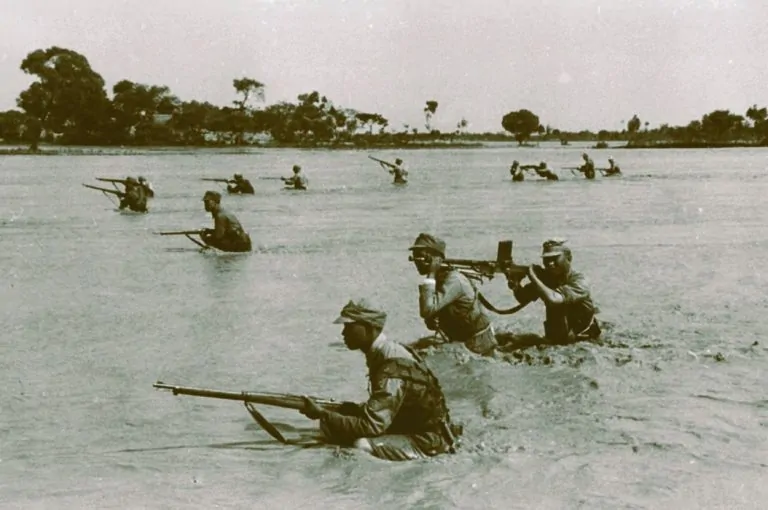
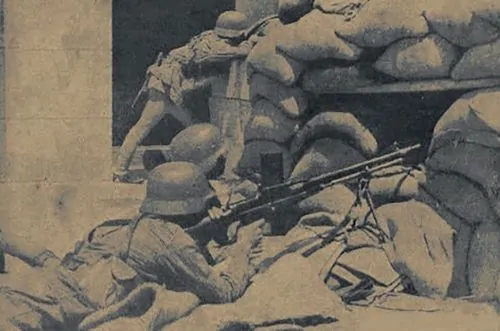
Japan captured Nanjing in December 1937 and still failed to force China’s surrender. Full-scale war had begun that July, following years of Japanese expansion, including the seizure of Manchuria in 1931. Japanese troops committed mass atrocities at Nanjing, but the Nationalist government withdrew inland and continued fighting. Communist forces also developed resistance behind Japanese lines. China remained at war until Japan surrendered to the Allies in 1945. The invaders had occupied major cities and important railways without destroying the political capacity to resist them. A durable Japanese victory would have required turning those military gains into a political settlement that China’s government would observe.
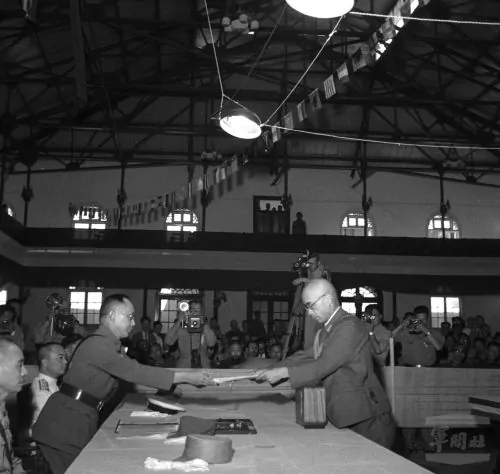
For this scenario, victory means a peace that establishes Japanese predominance in northern China while leaving a diminished Chinese republic intact. The opening comes through the German mediation attempted late in 1937. Chinese leaders indicated willingness to negotiate on the basis of Japan’s November proposals, but Tokyo subsequently increased its demands, adding indemnities. Negotiations collapsed in January 1938. The divergence comes on December 22: Japan’s government retains the earlier negotiating basis, judging that further advances might prolong the war without securing a better agreement. Assume that these talks produce a treaty by spring 1938. Chiang Kai-shek accepts restrictions on Chinese military deployments in the north and around Shanghai, together with economic concessions favorable to Japan and commitments against Communist activity. Japanese control of Manchuria remains undisturbed, although formal recognition of its puppet state, Manchukuo, need not enter this bargain. In return, Japan ends its offensive and agrees to evacuate areas outside designated security zones. Chiang’s government survives with substantial armies. These are counterfactual treaty provisions, not an agreement Chiang actually accepted. Japanese leaders must restrain their demands and make their field commanders comply, while Chiang must risk his authority by signing a humiliating peace.
For civilians, the immediate difference could be enormous. A settlement in early 1938 would offer the possibility of avoiding years of bombing and the displacement that accompanied later campaigns. Farmers might return to fields, while businesses outside the occupied regions could resume work without anticipating the next Japanese advance. Peace would nevertheless mean very different things across China. In northern districts, Japanese military influence and favored commercial interests could constrain local government long after an agreement ended major battles. Resistance might bring punitive operations even where the Nationalist government officially observed the treaty. Atrocities already committed would remain a source of grief and anger. Economic recovery under these circumstances would coexist with coercion, and protection would depend heavily on where someone lived.
Chiang’s prospects would be equally contradictory. Ending the war early could preserve troops and revenues that eight years of resistance historically exhausted. His government might retain a stronger administrative base, improving its chances against domestic rivals. Yet accepting Japanese predominance would damage the nationalist claim on which his authority depended. Provincial commanders might refuse compliance, and opponents could portray the agreement as a betrayal. The Chinese Communist Party would face a particularly uncertain future. Historically, the prolonged invasion created opportunities to organize rural populations and expand armed forces across northern China. A shorter war would reduce those opportunities and leave the Communists confronting a less battered Nationalist army. Anti-Communist provisions could also encourage renewed campaigns against their bases. Conversely, a compromised central government would give Communist organizers a powerful patriotic argument: they could claim to continue the national struggle that Chiang had abandoned. Their survival would depend on local support and the ability to evade suppression. Communist victory in 1949 would become much less predictable, but assuming that Japan’s success automatically extinguished Chinese communism would overlook the resentments occupation itself generated.
The consequences beyond China would turn on Japan’s next decisions. Historically, the continuing war encouraged efforts to cut Chinese supply routes through Indochina; wider Japanese expansion helped bring about the confrontation with Washington and the oil embargo of 1941. An early settlement could weaken that connection. Lower military consumption and continued access to imported oil might make a southern advance less urgent, reducing the likelihood of Pearl Harbor along the historical timetable. China, however, could not simply supply all the petroleum Japan wanted, and victory would leave intact ambitions for regional dominance. Leaders encouraged by success might press for further concessions or exploit European colonial weakness once war began in Europe. Forces released from major campaigns in China would expand their options, although garrison duties would still absorb troops. Avoiding a Pacific war would therefore remain a further political choice. It would not follow automatically from winning the war on the mainland.
The resulting order would probably be unstable. A Chinese government that signed under pressure could seek opportunities to revise the treaty, while Japanese commanders might demand additional guarantees whenever resistance continued. Each attempt to enforce the settlement could undermine the cooperation needed to sustain it. Japan might obtain a substantial imperial victory and still struggle to make that victory durable. The scenario exposes a central difficulty in the actual war: Chinese resistance denied Japan a cheap conclusion, but Japanese leaders repeatedly made a conclusion harder by expanding their demands. Securing an attainable victory required a restraint that battlefield success often discouraged.
Originally published by Brewminate, 10.15.2026, under the terms of a Creative Commons Attribution-NonCommercial-NoDerivatives 4.0 International license.
About the Author