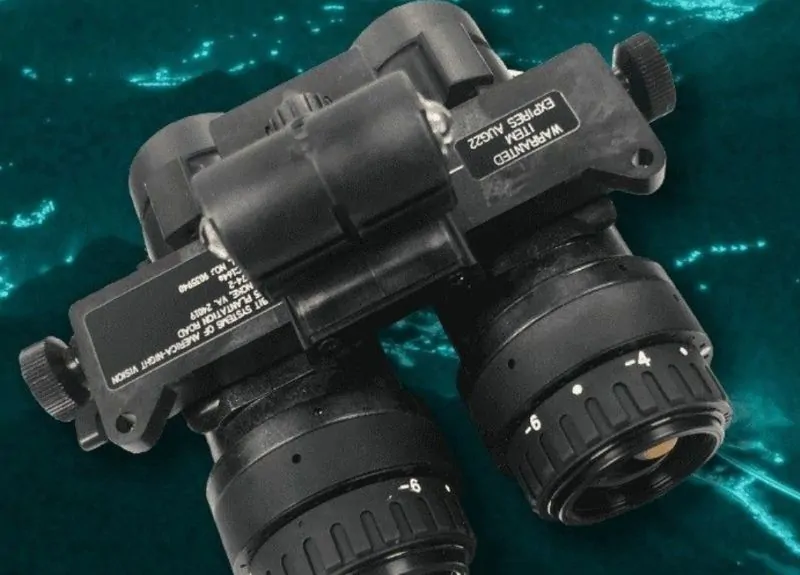
Military pilots integrating NVGs into their operations deal with challenges beyond technology. Here’s a look at the operational, training, and human factors involved.
Night vision goggles have expanded what military aviation can accomplish in darkness, but integrating them into operations isn’t as simple as putting goggles on pilots and flying. The way NVGs interact with cockpit environments, the training required to use them safely, and the planning considerations for NVG operations all require systematic attention. The technology is a capability multiplier when used well and a liability when not.
Understanding the operational dimensions of NVG use in military aviation provides context for why this capability is taken so seriously in training, certification, and mission planning.
The NVG Mission Planning Process
Planning an NVG mission requires attention to factors that don’t matter in daylight operations. Illumination planning, including moon phase, moon rise and set times, and how cloud cover will affect available light, determines the expected NVG operating conditions and whether the mission can be safely conducted as planned. The performance of white phosphor night vision goggles and similar devices is significantly affected by ambient light levels, making this planning dimension critical.
Route planning must account for terrain features that create specific NVG hazards: wires that are invisible until extremely close, terrain that can blend with background under certain illumination conditions, and features near landing zones that create obstacles that must be identified and briefed before the mission.
Cockpit Compatibility
NVG-compatible cockpit lighting is a prerequisite for NVG operations. Standard white lighting in a cockpit completely overwhelms the NVG image when a pilot looks inside the aircraft, creating a white-out that temporarily blinds the pilot in the NVG channel. NVG-compatible cockpits use lighting systems that emit in wavelengths visible to the human eye but below the detection threshold of the image intensifier tubes.
Aircraft that haven’t been modified for NVG compatibility can still be used in limited NVG applications if external lighting and displays that create the white-out problem can be managed, but this requires crew discipline and constraints on what can be done during the flight. Fully NVG-compatible cockpits allow normal cockpit operations with NVGs on, which is the capability required for sustained tactical use.
Crew Resource Management on NVG Flights
NVG operations create specific crew resource management challenges. The narrow field of view of NVGs reduces situational awareness compared to normal vision. The cognitive load of monitoring the NVG image while flying, managing cockpit instruments, and communicating with other crew members is higher than during daylight operations. Crew coordination protocols in NVG operations typically include specific cross-check patterns and communication norms that account for these increased demands.
In multi-crew aircraft, dividing the visual scan between the outside NVG world and the cockpit instruments requires explicit crew coordination so that one pilot is always focused on threat and terrain while the other manages the cockpit. This coordination is briefed before flight and managed actively during it.
Depth Perception and Low-Level Operations
Depth perception under NVGs is reduced compared to normal binocular vision. This has the greatest impact on low-level operations where accurate terrain clearance judgments are critical. Tactical low-level navigation under NVGs uses specific techniques to manage this limitation: establishing minimum altitudes above terrain, using altimeter cross-checks against the visual impression, and briefing crew members to verbally call out terrain features that appear close.
Landing and take-off operations under NVGs require specific training because the limited depth perception makes height judgment above the ground more difficult. Approaches are typically conducted with reference to specific aiming points rather than relying on the unaided depth perception that serves pilots well in daylight.
NVG Emergencies and Transition to Unaided Flight
NVG equipment can fail during flight, and pilots must be trained to transition to unaided flight when it does. The transition from NVG to unaided flight in dark conditions is disorienting because the pilot’s eyes aren’t adapted to the dark after operating through the goggles. Night adaptation takes twenty or more minutes, which isn’t available in an emergency.
Standard emergency procedures for NVG failure include increasing altitude immediately to terrain clearance margins that are comfortable without NVG capability, transitioning to instrument flight if available, and alerting ATC or ground control to the change in capability. These emergency procedures are trained and rehearsed specifically because the scenario is disorienting and time-critical.
Currency and Proficiency Standards
Military NVG currency standards require pilots to perform minimum flight hours and specific maneuvers under NVGs within defined time periods to remain qualified for NVG operations. Simply having completed initial NVG training isn’t sufficient for operational missions; ongoing currency ensures that the skills degradation that comes with lack of practice doesn’t create safety hazards.
Proficiency standards go beyond the minimums required for currency and represent the level of skill required for specific mission types. A pilot who is current on basic NVG operations may not be proficient for combat assault operations or precision NVG instrument approaches. Mission-specific proficiency standards define the additional currency requirements for more demanding NVG tasks.
Wrapping Up
Military aviation NVG operations represent a sophisticated integration of technology, training, and procedural discipline that produces significant capability advantages while managing specific safety risks. The technology itself is only part of the picture: mission planning, cockpit compatibility, crew coordination, and currency standards are the operational infrastructure that makes NVG operations safe and effective. Pilots and units that treat this capability with the rigor it deserves consistently extract more value from it.
Frequently Asked Questions
Do military helicopters and fixed-wing aircraft use NVGs differently?
Yes, with some significant differences driven by the different operating environments. Helicopter NVG operations focus heavily on low-level terrain flight, landing zone assessment, and hover operations in confined areas. Fixed-wing NVG operations more commonly involve navigation at altitude and precision approach work. The cockpit compatibility requirements are similar, but the specific skill sets trained for each platform reflect these different operational demands.
Can civilian pilots be NVG-qualified?
Yes, civilian pilots operating in specific sectors, particularly helicopter emergency medical services, law enforcement aviation, and certain aerial survey operations, have developed NVG operational programs with FAA approval. The regulatory framework has been slower to develop than in military aviation, but it’s well-established for operators who have gone through the process. Training programs, equipment specifications, and operating limitations in civilian NVG operations draw heavily on the military experience base.
About the Author