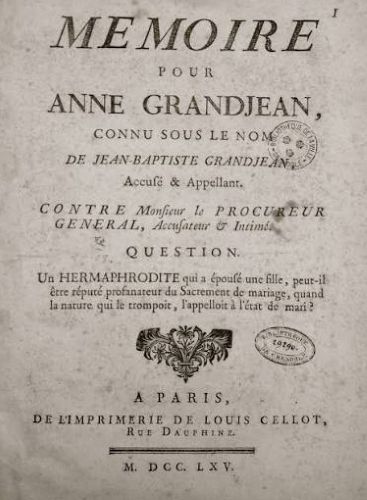
A Paris court overturned Jean-Baptiste Grandjean’s criminal sentence in 1765 while retaining commands over dress and relationships, exposing the limits of judicial protection.

By Matthew A. McIntosh
Public Historian
Brewminate
Introduction: Released from Punishment, Governed in Freedom
On January 10, 1765, the Parlement of Paris overturned the criminal sentence imposed on Jean-Baptiste Grandjean for profaning the sacrament of marriage. The Lyon proceedings had exposed him to public humiliation and bodily punishment, followed by perpetual banishment. Reversal offered substantial protection against the violence of criminal justice. Yet the notice appended to his advocate’s printed defense reported a disposition that also required Grandjean to wear women’s clothing and prohibited him from frequenting his wife, Françoise Lambert, and other women. The marriage itself was not upheld. These provisions addressed different questions, whether Grandjean should suffer criminal punishment for entering the union, and whether he could continue the life that had made the union possible. They disclose a judicial settlement in which relief from a severe sentence coexisted with continuing direction over public appearance and intimate association. The court’s intervention changed the dangers Grandjean faced while retaining authority over the terms on which he could live outside prison.
Before becoming the subject of this judgment, Grandjean had occupied an established place in a household and a working community. Raised under the name Anne, he had adopted masculine clothing and eventually married Lambert at Chambéry in 1761. According to the defense, people who knew his earlier life had recognized his subsequent position as a man. The prosecution threatened an existence sustained through everyday recognition, including a marriage whose practical and emotional significance exceeded the legal question of whether it had been validly celebrated.
Recovering that existence requires close attention to the purposes for which its surviving accounts were produced. François-Michel Vermeil’s substantial defense organized Grandjean’s history around bodily difference and good faith, making earlier obedience to family and religious guidance relevant to the rejection of criminal culpability. Its descriptions of conduct and physical characteristics belonged to an argument seeking discharge from an accusation. Medical commentary offered competing interpretations of the body on which that argument depended, while publicity made Grandjean available to readers as an extraordinary and affecting subject. Such sources preserve valuable details, but their explanatory confidence can obscure the circumstances under which those details became evidence. A statement attributed to Grandjean passed through questions, selection, and professional exposition before reaching print. Lambert’s understanding of the marriage is even harder to recover independently from the accounts that assigned her a role in its prosecution and defense. The brief published report of the appellate disposition presents a further limitation; it records the outcome without supplying the judges’ complete reasoning. Reversal cannot establish, by itself, which anatomical claims they accepted or what weight they assigned to sincere belief. Neither the disputed examinations nor the historical designation “hermaphrodite” settles a modern diagnosis or provides an exhaustive account of Grandjean’s identity.
The distinction between humane treatment and control over one’s life must accordingly be examined through the choices the proceedings actually permitted. Grandjean’s protection was meaningful even though it remained incomplete; the removal of threatened punishment deserves its own place in the history of the case. The injunctions made the boundaries of that protection significant for the household he had formed. Here, “mercy” describes this combination of relief and continuing prescription, rather than a formal pardon or a demonstrable humanitarian philosophy shared by the judges. Authorities could reconsider criminal responsibility while continuing to reserve decisions about acceptable social status and relationships to themselves. Their disagreements also created opportunities for challenge, which Grandjean’s defense attempted to use. The central problem is how far those opportunities extended: whether securing a hearing for Grandjean’s circumstances also gave his account of his own life greater authority over what he would be allowed to preserve.
Sex, Marriage, and Jurisdiction in Eighteenth-Century France

Marriage in Catholic France established obligations in which religious teaching and royal government both claimed an interest. The Church understood matrimony as a sacrament, while jurists also treated it as a contract carrying consequences for property and the standing of spouses. These were distinguishable aspects of the same union, rather than separate ceremonies corresponding to modern religious and civil weddings. A priest’s participation did not remove a marriage from scrutiny by royal magistrates. Over the preceding centuries, French courts had expanded their intervention in matrimonial affairs, especially where disputes involved the conditions under which a legally effective union could be formed. Questions of parental authorization and the protection of family interests gave that intervention considerable practical importance. As Sarah Hanley’s research demonstrates, the development of French marital jurisprudence belonged to the history of state formation. Determining who could marry, and under what conditions, helped establish the reach of royal law into households whose arrangements governed the transmission of wealth and position.
The kingdom nevertheless possessed no single, uniform body of private law comparable to a modern civil code. Royal ordinances operated alongside regional customs, with learned Roman and canon law contributing further principles whose application depended on the question and jurisdiction involved. A document acknowledging a person’s position within a family could matter greatly without settling every issue that another authority might later investigate. For someone whose accepted social status became controversial, the difficulty was partly one of legal translation. Recognition obtained through one institution had to acquire sufficient weight before another.
Ecclesiastical jurisdiction supplied an essential part of this complicated arrangement. Bishops’ courts, generally known as officialities, dealt with matrimonial questions, but royal courts claimed powers to examine ecclesiastical acts considered contrary to the kingdom’s laws or to the proper limits of clerical jurisdiction. One mechanism was the appel comme d’abus, a recourse through which an allegedly improper exercise of ecclesiastical authority could be challenged before royal justice. The word “abuse” in this context concerned legal competence or procedural irregularity; it did not necessarily describe cruelty between spouses. Nor did intervention by a royal tribunal imply religious neutrality. Magistrates could defend Catholic marriage while maintaining that its celebration remained subject to rules they were entitled to enforce. This distinction is important in Grandjean’s proceedings, because the published disposition records a challenge by the procureur général to the marriage’s celebration separately from its treatment of the criminal sentence. The two questions reached the same superior tribunal through distinguishable legal operations. A court could address the standing of a union and the punishment of a participant without treating either decision as an automatic result of the other.
Within these jurisdictions, the classification of a person as male or female carried importance because marriage presupposed a husband and a wife. Jurists inherited a long tradition of assigning people described as possessing characteristics of both sexes to the sex judged to predominate. Jean-Baptiste Denisart’s mid-eighteenth-century collection of jurisprudence stated this principle while rejecting an unrestricted preference for the other classification. Such doctrine acknowledged the possibility of bodily uncertainty without establishing an enduring legal position outside the categories of man and woman. Yet the apparent simplicity of the rule concealed difficulties in its application. Deciding what predominated required an assessment of characteristics whose meaning could be disputed, and the doctrinal instruction itself supplied no universally accepted examination capable of resolving every case. Anatomical description entered a legal inquiry already organized around the expectation that a determination would eventually be made.
Reproductive expectations did not make every childless marriage invalid. Canonical discussions distinguished sterility from impotence, with the latter concerning the capacity to consummate a marriage rather than simply the failure to produce children. Absence of offspring could encourage suspicion, but it did not by itself establish the relevant incapacity. Medical explanations and litigation could blur these distinctions when writers moved too readily from the appearance of organs to conclusions about their function.
The involvement of practitioners made physical examination matter without rendering its interpretation straightforward. Physicians and surgeons could be asked to identify bodily structures or assess capacities relevant to a matrimonial dispute, but their observations still had to answer questions framed by law. The anatomical features they described did not arrive with an uncontested statement of their juridical significance. A visible characteristic might be judged evidence of masculinity by one observer and an imperfect resemblance by another, especially where outward form and presumed reproductive function appeared to diverge. Cathy McClive’s work on early modern France shows why uncertainty should not be confined to bodies already designated exceptional. The capacities associated with an ordinary male body could also become difficult to establish under examination. Professional learning provided competing resources for explanation rather than a consistently decisive test. For an examined person, this meant that submitting to inspection could generate further argument, as the resulting description passed into reports whose legal implications remained open to interpretation.
A further distinction separated bodily condition from punishable conduct. The presence of characteristics interpreted as belonging to both sexes was not itself a discrete statutory crime under a general prohibition of anatomical ambiguity. Proceedings instead attached criminal significance to alleged acts, which could include deception or the profanation of marriage. This distinction offered opportunities for defense because an accusation concerning conduct required more than the assertion that a body was unusual. It also left considerable room for intervention. Once a person’s classification became doubtful, familiar activities could be reconsidered as acts performed without the legal capacity to undertake them. The inquiry could then move from the legitimacy of a relationship to the defendant’s knowledge and intentions, even though those questions required different kinds of evidence.
The route from a local prosecution to superior judgment was itself regulated. Lyon’s sénéchaussée exercised royal jurisdiction, while the Parlement of Paris stood above it in the appellate hierarchy relevant to Grandjean’s case. Despite its name, the Parlement was a sovereign judicial court, not a representative legislature; its Tournelle handled criminal business. The criminal ordinance of August 1670, principally a regulation of procedure rather than a comprehensive definition of offenses, required serious sentences to undergo higher review. Under title XXVI, article 6, an accused person sentenced locally to corporal punishment, perpetual banishment, or certain other penalties had to be sent with the case record to the superior court, whether an appeal had been entered or not. Access to that stage belonged to the institutional organization of royal justice. Its availability did not determine what the reviewing judges would decide, and an advocate still had to make the grounds for altering a sentence persuasive. Grandjean’s earlier dealings with family and religious advisers would acquire importance within this process because they could be assembled into evidence about the position he had occupied and the understanding on which he had acted.
Becoming Jean-Baptiste: Confession and Recognition in Grenoble
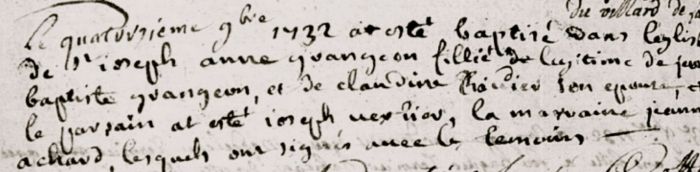
The earliest account of Grandjean’s life begins in Grenoble, where, according to Vermeil’s defense, a child was born in November 1732 to Jean-Baptiste Grandjean and Claudine Cordier. Baptism supplied the name Anne and identified the infant as a daughter. The lawyer’s explanation of that designation was carefully qualified. He supposed that female characteristics had appeared most evident when the child was born. This was an inference made decades afterward, not the reproduction of a recorded examination of the newborn. Its placement at the beginning of the narrative nevertheless mattered, because it allowed the initial designation to appear understandable without making it conclusive. Grandjean received the clothing considered appropriate for a girl and grew up among girls in the neighborhood. Vermeil established an upbringing that followed ordinary expectations while leaving room to argue that those expectations had rested on an incomplete understanding of the person they concerned. The account offers little detail about childhood beyond what would later become relevant to that argument.
Adolescence introduced the first change that the defense chose to describe at length. Grandjean reportedly developed an attraction to female companions, while the presence of men produced no corresponding interest. Vermeil situated this development in the fourteenth year of life, although his language should not be converted into an exact chronology of physical maturation. At this point in the narrative, the change consists principally of desire and its effects on association with others. The bodily descriptions that would occupy a substantial part of the legal argument appear later, and their absence here limits what can be inferred about the circumstances in which masculine dress was first adopted.
Grandjean’s father was presented as the first person to intervene. Having noticed the altered affections of his child, he reportedly asked questions and received answers that prompted him to recommend consultation with a confessor. The defense provides no reliable basis for reconstructing the father’s private feelings, whether anxious, sympathetic, or disapproving. What it does describe is his decision to seek guidance through an established religious relationship. That action gave the ensuing change a familial setting. The young person did not simply disappear from parental supervision and emerge elsewhere under an unfamiliar description. Instead, Vermeil depicted a father directing his child toward someone authorized to advise on conduct and conscience. Such an account would later help place responsibility for the change within a sequence of consultation rather than solitary invention. It also made the father’s continuing involvement significant, since paternal knowledge could support the claim that Grandjean’s subsequent appearance had not depended on hiding the circumstances of his upbringing. The narrative records an attempt to resolve an emerging difficulty through people already exercising authority within the household’s religious life.
The confessor’s reported advice combined a judgment about sex with concern over access to girls. Remaining in women’s clothing, he allegedly explained, allowed Grandjean an intimacy with female companions that could lead to wrongdoing. Masculine dress would correspond to the sex he considered predominant and alter the circumstances of those encounters. His reasoning addressed both how Grandjean should be understood and how Grandjean should behave. The recommendation cannot be treated simply as an affirmation detached from moral discipline, because regulating desire was part of its stated purpose. Equally, the defense does not document a medical examination accompanying this advice, so the precise grounds on which the confessor identified a predominant sex remain uncertain.
The resulting change was visible in Grenoble. Vermeil described the appearance in masculine clothing of someone previously known as a girl as an unusual occurrence within the town, emphasizing that it happened before people familiar with Grandjean’s earlier life. He then remarked that Grandjean appeared to be what he was, or what he believed himself to be. That qualification is revealing. The advocate could leave the ultimate bodily question open while maintaining that the conduct followed an intelligible conviction. Female neighbors were said to regard Grandjean with a new interest, suggesting a change in the social possibilities surrounding courtship as well as a change of garments. These statements make local familiarity important to the account, but they do not establish unanimous approval throughout Grenoble. The lawyer’s broad presentation suppresses the differences that might have existed between toleration, indifference, and active acceptance. Nor does it disclose how Grandjean explained the change in ordinary conversations, or whether different people understood it in different ways. What emerges most clearly is an assertion that masculine presentation could become locally recognizable without requiring everyone to forget the person who had previously worn women’s clothes. The significance of that assertion lay in the continuity it claimed between a known upbringing and a subsequent position among men.
Work supplied another means of making that position concrete. Vermeil later reinforced his narrative by stating that Grandjean undertook occupations associated with men and possessed the strength to perform them. The claim connected masculine standing to useful activity, making it part of how a person earned a living rather than something expressed through clothing alone. Because the defense does not provide a detailed occupational history for these years, the statement cannot support a reconstruction of jobs or employers. It does show the advocate treating labor as evidence that Grandjean had entered an accepted pattern of male responsibilities.
Within this account, Grandjean also began to act on the possibilities that the changed position afforded. The defense names Legrand as an early object of courtship before introducing the more sustained attachment to Lambert. Those relationships gave the adoption of masculine dress a history extending beyond the original consultation with the confessor. Religious advice could prescribe conduct, but it could not supply the whole content of the attachments and decisions that followed. Grandjean appears as someone making approaches to women and eventually seeking a recognized marital relationship, even though the surviving narrative explains those actions through the requirements of a later defense. Care is also needed with the chronology of the name Jean-Baptiste. The formal documentary episode described by Vermeil belongs after the marriage, and should not be projected backward as a single official transformation during youth. The Grenoble years instead reveal a gradual establishment of a male position through encounters with people who knew Grandjean. By the time the relationship with Lambert developed, that position had already acquired practical substance through work and courtship.
A Husband in Practice: Marriage to Françoise Lambert and Working Life

The attachment to Lambert developed through a courtship whose intimacy preceded the wedding. Vermeil described affection that grew stronger through what he called familiarities, presenting the decision to marry as the continuation of an existing relationship. His language gave Lambert a place in that decision. The couple wished to bring their attachment within a religiously sanctioned union. Grandjean’s masculine position acquired a notable significance through the prospect of becoming her husband. The relationship involved someone who had encountered him personally and was prepared to enter a household with him, although the defense leaves much about their private exchanges unstated. Marriage promised an acknowledged framework for a commitment already taking shape. Within Vermeil’s account, the couple approached that framework with the expectation that it could accommodate them, an expectation that their subsequent treatment would make central to the question of criminal responsibility.
On June 24, 1761, Grandjean and Lambert married at Chambéry. The defense specified that three publications of banns had preceded the ceremony and that no lawful impediment had been discovered. It also referred to the parish priest’s attestation that the ordinary formalities had been observed. These details made the wedding an identifiable event supported by clerical certification, giving the later defense something more substantial than an assertion that the couple had privately regarded themselves as married.
Financial preparations soon brought another institution into their affairs. Lambert wanted an accounting from her parents for their administration of her revenues, and the anticipated balance was intended to help the couple undertake commerce together. The memoir does not establish the amount involved or show that the proposed enterprise became a successful independent business. But it does identify Lambert as someone seeking access to resources that could support their common plans. Grandjean faced a separate obstacle because, under the legal arrangements described by Vermeil, his marriage had not released him from paternal authority. To conduct affairs on his own behalf, he needed emancipation, which he requested and his father agreed to grant. The act took place before a judge in Grenoble, bringing the earlier family relationship into a formal proceeding after the wedding. Since the baptismal record identified Anne as a daughter, the father used the name Jean-Baptiste in the emancipation document. Vermeil treated this acknowledgment as powerful confirmation of Grandjean’s standing as a man and husband. The transaction joined an immediate economic purpose to an explicit masculine designation. Obtaining independence from paternal control generated a document that the advocate could later use to support a much broader claim. Its significance arose from that combination, even though the defense’s expansive interpretation cannot simply be substituted for the act’s legal function.
Lyon offered the commercial possibilities that Lambert reportedly wanted the couple to pursue. Vermeil attributed the proposal to move there to her, while describing Grandjean as willing to follow her preference. Once established in the city, they lodged with a silk merchant-manufacturer and received work from others. The source does not identify their precise tasks or permit a calculation of their earnings, so their association with the silk economy should not be enlarged into an undocumented occupational history. What it supplies is a more modest picture of a married couple obtaining employment and maintaining relations with people who could judge their conduct. Vermeil emphasized the satisfaction of those who provided work, making their behavior in an economic setting relevant to the credibility of the household. Their livelihood became part of the evidence through which an advocate sought to make the marriage appear respectable.
Lambert’s part in these arrangements deserves attention independently of the assurances offered about her husband. She pursued an accounting of revenues and proposed the move that took the couple to Lyon, initiatives that give her a more substantial role than that of an unsuspecting figure carried through events by others. Yet her understanding of Grandjean’s body remains difficult to determine from the defense’s language. In describing their courtship, Vermeil suggested that intimate familiarity had satisfied her about his suitability as a partner; elsewhere, he characterized the marriage as having proceeded without suspicion about her husband’s sex. Those statements are not necessarily irreconcilable, because knowledge of a partner’s body did not automatically entail the conclusions that an examiner or magistrate might draw from it. Neither statement establishes exactly what Lambert knew about Grandjean’s baptismal designation, or how she related that information to the man she married. The lawyer had reasons to stress both marital affection and an absence of culpable knowledge, which complicates attempts to extract her perspective from his presentation. Her documented initiatives support an account of participation in building the household, while the sources leave the terms of her personal understanding incompletely expressed.
For those who encountered the couple through lodging and employment, the marriage appeared in the ordinary activities of spouses living together. Vermeil’s descriptions of happiness and restraint served his argument, but the practical details also show what the couple had attempted to establish before prosecution intervened. Their plans required money, and their move required access to work in a new city. Grandjean’s position as husband was exercised within those arrangements, with Lambert making decisions that affected their direction. The account leaves uncertain how far their commercial ambitions advanced, but it places the later accusation against a household that already had an economic history and acquaintances outside the family. Information carried from Grenoble into that setting would make their past newly important to people who had known them principally as a working married couple.
Lyon, 1764: Accusation to Criminal Punishment

Legrand’s arrival in Lyon brought an earlier acquaintance into the couple’s married life. The woman whom Grandjean had once courted learned of his marriage and spoke to Lambert, expressing surprise that she had become his wife. According to Vermeil, Legrand explained that surprise by calling Grandjean a hermaphrodite. The account does not establish her reasons for making the disclosure, and the earlier courtship supplies insufficient grounds for assigning jealousy or revenge as her motive. Her intervention nevertheless changed the meaning of information that had previously circulated in a different setting. A history familiar to people in Grenoble now reached a wife whose marriage could be questioned through it. Legrand’s description also carried an apparent explanation of bodily difference without demonstrating what she knew about Grandjean’s anatomy. Its immediate force lay in the doubts it prompted, before any examination had given those doubts an official formulation.
Lambert reportedly connected the disclosure with the absence of children from the marriage and sought advice from her spiritual director. He instructed her to discontinue marital familiarities with Grandjean. When she communicated her concerns to her husband, Grandjean proposed that they consult the grand vicar together and explain how they had been living. Vermeil presented that proposal as evidence of sincerity, but his narrative does not establish that the consultation occurred or that it initiated the prosecution.
Meanwhile, the information passed beyond the couple’s private discussion. Vermeil described news circulating through Lyon and reaching prosecuting authorities, who learned that a person represented as a female hermaphrodite had married Lambert. The royal prosecutor proceeded on the stated ground of maintaining morals, converting the disputed marriage into a matter for criminal investigation. This sequence matters for Lambert’s position. Her consultation about conscience should not be silently rewritten as a request that her husband receive corporal punishment. The complaint was attributed to a prosecuting official, whose intervention gave the inquiry purposes and procedures beyond those of religious advice. Witnesses were heard, and Grandjean was taken into custody. The defense described him confined in a dungeon with irons on his feet, emphasizing the disparity between this treatment and his declarations of innocence. That description supports an account of harsh confinement, although it supplies neither a secure duration nor evidence of judicial torture. Arrest also altered the conditions under which Grandjean could explain himself. Statements about his marriage were now answers given within an inquiry capable of turning them into evidence of wrongdoing.
Examination produced a conclusion adverse to Grandjean’s position as a husband. As Vermeil summarized the findings, the practitioners judged the predominant sex to be female, despite features that the advocate represented as belonging to the male sex. The distinction between that conclusion and its presentation in the defense must remain visible, because the memoir does not reproduce the entire examination record at this point. It reports enough to show that inspecting the body did not end the disagreement over its significance. The prosecution could use the female classification to challenge the marriage, while the advocate could draw attention to observations he believed complicated it. Grandjean’s physical characteristics became material through which opposing interpretations could be advanced, with the consequences extending to an act already performed before a priest.
The Lyon judgment imposed an elaborate public punishment. Vermeil’s compressed account described exposure at the carcan, or public iron collar, over three days, whipping by the executioner, and perpetual banishment. Sylvain Boarini’s discussion of the archival sentence supplies details that should be distinguished from that summary rather than combined into a supposedly verbatim order. Citing the Lyon proceedings, Boarini describes public penitence before the primatial church and the royal justice palace, with a rope around the neck and a burning wax torch in hand. The condemned person was to acknowledge knowingly having abused the sacrament of marriage. Exposure at the carcan was specified for two hours on three consecutive market days, and the archival account also records branding with the fleur-de-lis. These provisions made the punishment a compulsory demonstration of guilt before religious and civic audiences. The wording displayed with the condemned person supplied a further judgment about status. Boarini’s transcription identifies a girl described as a supposed hermaphrodite and uses the feminine profanatrice, whereas Vermeil’s summary gives the masculine profanateur. Even the public designation of the offense reached later readers through differently gendered accounts.
Banishment threatened to remove Grandjean from the surroundings in which the couple had obtained lodging and work. Boarini identifies the territory of the Lyon sénéchaussée, so the penalty should not be enlarged into expulsion from the entire kingdom. His archival account also places requirements concerning women’s clothing and separation from Lambert within the original sentence. These restrictions predated the Paris disposition. Their presence at the Lyon stage is essential to understanding the appeal, while the pronouncement of bodily penalties must remain distinct from evidence that they were carried out.
The case subsequently reached Paris, where Grandjean was confined in the Conciergerie while awaiting superior judgment. This transfer made another difficulty visible in Vermeil’s account of imprisonment. Other prisoners who were not facing capital punishment reportedly received access to the yard, with men and women admitted separately. Grandjean was permitted to join neither group. The advocate explained the exclusion through uncertainty over classification, presenting his client as someone denied ordinary movement because officials could place him satisfactorily with neither male nor female prisoners. His description of extreme solitude was intended to move readers and should be understood as part of an appeal for intervention. Yet the deprivation he alleged also identified an administrative impact of the controversy. The prison’s division of inmates could produce additional confinement for someone whose place within that division was disputed. While the criminal sentence awaited review, the conditions of detention themselves became part of the case Vermeil would ask judges and readers to consider.
An Advocate’s Grandjean: Reconstructing a Life for the Appeal

Vermeil’s Mémoire gave Grandjean’s circumstances a form suited to legal persuasion. It belonged to the tradition of the printed factum, through which an advocate could explain a dispute and develop arguments on behalf of a party. French lawyers had long used such publications to carry contested affairs beyond the restricted exchanges of judicial procedure, making legal reasoning available to people who might never enter the courtroom. A brief could address professional expectations while inviting a wider audience to consider the treatment of an accused person. Vermeil’s opening acknowledged public curiosity about Grandjean, then directed attention toward the possibility of an injustice that superior judges could correct. That invitation gave the reader a position from which to encounter the ensuing history. The account would explain how the marriage had occurred, while its arrangement encouraged an assessment favorable to the person prosecuted for entering it. Its circulation does not establish how some judges received it, but its printed form made the defense an intervention in the public representation of Grandjean as well as in his legal predicament.
The distinction between the headings Fait and Moyens organized that intervention. The first supplied a biographical sequence; the second announced inquiries into bodily condition, the meaning of sacramental profanation, and the application of that accusation to Grandjean. This arrangement allowed the early narrative to establish circumstances that would acquire their argumentative significance later. A reader encountered apparent continuity in Grandjean’s conduct before reaching the categories through which the advocate proposed to judge it. Chronology performed legal work even before the explicitly doctrinal discussion began.
The treatment of the body combined historical learning with an unusually as a result of the act of classification. Vermeil’s compressed account of antiquity contrasted reports of violent treatment of people designated hermaphrodites with Roman legal provisions that assigned them a place in society according to the sex considered predominant. Ancient authority supplied a precedent for incorporation, while the advocate’s rejection of astrological explanations presented disciplined inquiry as preferable to inherited speculation. He nevertheless conceded the difficulty of explaining how such bodies came into existence and redirected attention from causes to observable effects. From there, he distinguished three classes: people supposedly possessing complete reproductive capacities of both sexes, those in whom one sex predominated with its corresponding capacities, and those whose characteristics of both sexes remained imperfect. Grandjean was placed in the third class. That decision complicates any reading in which Vermeil simply attempted to prove an anatomically complete masculinity. The defense retained masculine language and the history of a husband while advancing a bodily account that denied reproductive completeness in either sex. Its categories created room to challenge an uncomplicated identification as female, but they also introduced difficulties concerning marital capacity. The lawyer’s description could unsettle an adverse judgment without yielding an equally simple replacement for it.
Presentation mattered as much as the selection of authorities. Before describing intimate anatomy, Vermeil explained that concern for the modesty of readers prompted him to use a less familiar language, and the passage that followed appeared in Latin. The choice marked these observations as material requiring learned handling, even within a publication otherwise accessible in French. Other characteristics, including the voice and the distribution of bodily hair, could be discussed without the same linguistic separation. This division gave anatomical detail a controlled place in the argument and helped represent its disclosure as a duty imposed by the search for justice. An intrusive account of the person could thereby be introduced under an assurance of professional discretion.
The evidence supporting that account came from several relationships to Grandjean. Vermeil invoked the practitioners’ report alongside answers given to judicial questions, responses to his own inquiries, and statements attributed to Lambert about her husband’s capacities. These contributions were assembled into an exposition whose coherence belonged to the advocate. An examiner’s conclusion and a spouse’s description did not necessarily answer the same question, yet the brief brought them together as resources for understanding one bodily condition. The distinction is important because Vermeil acknowledged an unfavorable medical determination while using selected findings to support his own classification. His task involved interpretation of the evidence as well as its transmission. Throughout this process, Grandjean appeared as a person who could answer questions and supply information, but whose statements reached readers through the lawyer’s decisions about their relevance. Masculine descriptions preserved the continuity of the husband within an argument increasingly occupied by uncertainty over his capacities. The resulting account prepared the way for a further legal move. The defense would ask whether the disputed condition of a person necessarily justified criminal condemnation of an act undertaken without an intention to profane marriage.
Good Faith and the Limits of Legal Innocence

Profanation, as the brief defined it, meant abusing the sacrament of marriage. Vermeil developed that definition through circumstances in which someone lacked freedom to marry, lacked the necessary capacity, or used an otherwise sufficient capacity in a prohibited manner. These were the advocate’s organizing distinctions, not the reproduction of a single statutory formula governing every matrimonial prosecution. Their importance lay in allowing him to separate a defect in a union from the culpability of the person who had contracted it. Establishing that a marriage could not stand would not, within his argument, establish that one of its participants had knowingly profaned a sacrament. The prosecution’s interpretation of Grandjean’s body left another issue unresolved: what he had understood himself to be doing when he married Lambert. Vermeil could contest punishment on that ground even while questions about physical classification remained disputed. The defense possessed a legal resource whose usefulness did not depend entirely on persuading the judges to accept its anatomical account.
A hypothetical remarriage made the distinction easier to grasp. Someone might enter a second union believing that a previous spouse had died, with an apparent death in battle providing grounds for the belief. Discovery that the first spouse remained alive would expose an obstacle to the later marriage without demonstrating that the person had deliberately violated an existing bond. Vermeil used such circumstances to show how an error could have a legitimate explanation. The analogy made sincerity legally significant while leaving the underlying prohibition against marrying during a spouse’s lifetime intact.
The latitude afforded to mistaken belief nevertheless operated within a restrictive understanding of legitimate sexuality. Vermeil continued to describe Catholic marriage as an indissoluble religious bond whose purposes included procreation, and he made bodily capacity relevant to the fulfillment of its obligations. In his exposition, someone who believed himself incapable of meeting those obligations ought to abstain from undertaking them. He also withheld the excuse of good faith from spouses who deliberately used their sexual capacities in ways he judged contrary to their proper destination. These passages show how far the defense remained committed to the moral premises that made Grandjean vulnerable in the first place. Vermeil sought an exception from criminal blame within those premises, while continuing to condemn conduct he represented as knowingly contrary to them. His placement of Grandjean among people whose reproductive capacities were incomplete in both sexes made this distinction necessary. That classification offered no uncomplicated demonstration of fitness for the marital role Grandjean had assumed. Yet it could support the argument that an unusual constitution had produced an understandable misapprehension. The advocate’s account of bodily uncertainty had a second function beyond challenging the examiners; it could help explain how someone might sincerely believe himself entitled to marry even if a tribunal ultimately decided otherwise.
To establish that sincerity, the narrative made Grandjean’s dealings with recognized authorities carry evidentiary weight. The confessor’s advice explained why masculine clothing could have appeared morally required, while the father’s participation gave subsequent conduct a history of familial acknowledgment. The emancipation document strengthened this presentation by placing the name Jean-Baptiste within a formal transaction undertaken after the wedding. Vermeil arranged these episodes to support a belief sustained over time rather than an excuse improvised after arrest. Acceptance by others could not settle the body’s classification, but it could help explain why Grandjean had acted with confidence. Within this reasoning, the question became whether conduct encouraged or acknowledged by people exercising authority should later be treated as proof that the person following it had knowingly committed sacrilege.
That strategy attached innocence to a potentially costly description of the accused. Grandjean could be presented as blameless because he had misunderstood his condition and reasonably relied on guidance, even if his own assessment was denied lasting authority. The argument protected the credibility of his intentions more readily than it established the correctness of his judgment. This consequence does not demonstrate that Vermeil privately disbelieved his client or consciously preferred a paternalistic account; the brief alone cannot resolve the relationship between professional conviction and forensic choice. It does reveal an unequal distribution of explanatory power. Grandjean’s words helped establish what he had believed, while the advocate and the practitioners supplied competing accounts of what those beliefs meant. A court could accept the possibility of honest error without endorsing the position from which the marriage had been undertaken. The claim addressed responsibility for a completed act; it supplied no equivalent principle requiring authorities to permit the couple’s continued life together.
The Judgment of January 10, 1765: Relief and Compulsion

The notice concluding Vermeil’s legal text identifies January 10, 1765, as the date on which the Tournelle of the Parlement of Paris rendered its decision. Its language moves through several judicial acts, each addressing a different part of the dispute. The procureur général’s challenge to the marriage appears first, followed by the disposition of the Lyon criminal sentence and then by instructions governing Grandjean’s conduct. This sequence matters because the judgment cannot be reduced to a single declaration that the accused had either won or lost. Each clause changed, confirmed, or prescribed something specific. The account is exceptionally compressed beside the extensive argument preceding it, and the detail available about Vermeil’s reasoning should not be mistaken for comparable knowledge of the judges’ deliberations. Close attention to the operative terms permits a more exact account of the result without requiring the court to have adopted the advocate’s entire interpretation.
The prosecutor was received as appellant comme d’abus concerning the celebration of the marriage. The union was then declared abusif, a juridical description assigning a defect to its celebration or legal standing. This part of the disposition sustained an adverse intervention against the marriage independently of the decision about criminal punishment. Lambert and Grandjean obtained no affirmation that their ceremony entitled them to continue as lawful spouses. The defense’s success on the accusation would have to be measured alongside that separate determination.
The Lyon sentence for profanation of the sacrament was infirmée, and Grandjean was mis hors de Cour. These expressions recorded reversal and dismissal from the prosecution, giving the criminal proceeding a different conclusion from the one pronounced below. The language went beyond an adjustment to the duration or severity of a penalty. The original punitive judgment was set aside. That distinction carried weight where the lower sentence had required a public acknowledgment of knowing wrongdoing. The ceremonies of penitence and exposure had been organized around an official representation of Grandjean as culpable, a representation the appellate disposition no longer allowed the sentence to enforce. Nevertheless, dismissal did not explain whether the judges rejected the bodily classification underlying the accusation, accepted the possibility of honest error, or reached their result through another assessment of the case. Vermeil’s arguments identify routes by which relief could have been justified, but the notice does not specify which route the court followed. Nor does it establish the precise moment at which Grandjean physically left custody. What it securely records is a substantial change in the legal disposition of the prosecution.
The word néanmoins, meaning “nevertheless,” introduces the commands that survived this dismissal. Grandjean was instructed to take women’s clothing, making public presentation an express object of judicial direction. The notice does not also order adoption of the name Anne, amendment of the baptismal record, or a comprehensive determination of status for every legal purpose. Its particular instruction should retain its particularity, even though clothing could communicate a classification to everyone who encountered the wearer. Conversely, the masculine grammatical forms used in the printed report cannot establish that the judges recognized Grandjean as male. Those forms belong to the language through which the disposition was transmitted, while the clothing command records what the court required.
The prohibition on association began with Lambert and extended to other persons of the same sex. Naming the wife made the order directly relevant to the relationship whose religious and legal basis had just been rejected. Its extension beyond her gave the clause a broader reach, covering association that could not be understood solely as the continuation of this marriage. Yet the verb hanter, conveying frequenting or keeping company, requires care in translation. Rendering it as an absolute ban on every incidental encounter with a woman would assign the summary a precision it does not possess. Read alongside the clothing requirement, the prohibition nevertheless presents a striking arrangement. Grandjean was directed toward a female public appearance while his company with women became an expressly regulated matter. This pairing is consistent with concern about future intimacy, although the notice supplies no detailed explanation of that concern. It gives no schedule of permitted encounters or account of how officials were expected to distinguish ordinary contact from prohibited association. The breadth of the language made it consequential without making its practical application transparent.
Comparison with the Lyon sentence shows that Paris retained restrictions already present in the lower court’s intervention. Reversal operated selectively, removing the criminal disposition while leaving specified demands in force. These surviving commands should not automatically be described through a modern category such as parole or conditional release, for which the printed notice supplies no equivalent procedural explanation. They were directions contained in the appellate settlement itself. Grandjean’s discharge from the prosecution coexisted with continuing obligations whose violation could expose his conduct to renewed official attention, even though the report does not describe any subsequent enforcement.
Champeaux’s Response: Medical Explanation and Its Claims to Authority

The 1765 Réflexions sur les hermaphrodites announced its disagreement with Vermeil in its title, identifying Grandjean as someone designated a hermaphrodite in the advocate’s memoir. Attributed to the surgeon Claude Champeaux, the pamphlet carried an Avignon imprint and was sold in Lyon by Claude Jacquenod fils. Its argument challenged the bodily description through which the defense had made Grandjean’s conduct intelligible. Champeaux’s position was also connected to examination. Scholarship identifies him among the practitioners associated with the medical report reproduced in the publication. The controversy involved a participant disputing the use made of findings to which he claimed professional access. Publishing those findings allowed him to confront the advocate’s exposition with another account of what had been observed. His authority depended on persuading readers that medical knowledge could distinguish a misleading resemblance from a feature sufficient to establish sex.
The elongated organ at the center of the dispute supplied the clearest example. The report reproduced by Champeaux identified it as a clitoris, while describing vaginal anatomy considered consistent with female classification. Erection and resemblance to a penis did not, within this interpretation, establish the capacity for male generation. The distinction separated the ability to participate in sexual acts from the reproductive function assigned to a male organ. Features that could help explain Grandjean’s understanding of himself were denied the classificatory significance that the defense attached to them.
Champeaux’s objections extended to the reliability of other physical signs. Vermeil had included the breasts’ apparent lack of sensitivity among the characteristics that complicated identification as female; Champeaux disputed the value of sensitivity as a dependable discriminator. His treatment of menstruation likewise challenged an inference from an individual bodily experience to an entire classification. The defense had made the reported absence of periods relevant to Grandjean’s belief that he could marry as a man. Champeaux answered that some women never menstruated, or ceased to do so, without thereby belonging to another sex. He supported the point with an account of a family in which a daughter had borne children despite the absence of menstrual bleeding. That example remained a reported observation, and it could establish neither Grandjean’s menstrual history nor his capacity to become pregnant. Its argumentative purpose was narrower. An absent sign could be compatible with the category the advocate sought to unsettle. Champeaux could acknowledge considerable variation among bodies classified as female while opposing the conclusion that Grandjean’s variations justified an ambiguous designation.
Surgical discussion gave this explanatory framework a further consequence. Champeaux considered amputation of an enlarged clitoris where it caused difficulty in conjugal intercourse, describing the operation as simple and without danger. He also invoked removal as an answer to doubt generated by an unusual appearance. These statements presented an anatomical feature as something practitioners might alter to eliminate an obstacle or uncertainty. The assurance of safety belonged to his argument for intervention, whose proposed purpose deserves attention alongside his descriptions of the body. Nothing in these passages establishes that Grandjean underwent such an operation or that the court ordered one.
The controversy illustrates the relationship between expertise and authority examined by the historian Palmira Fontes da Costa. In her account, unusual anatomies furnished important occasions for specialists to establish their competence to interpret appearances that other observers might misunderstand. Champeaux’s response made that claim concrete by disputing the weight assigned to certain signs and presenting professional explanation as a correction to the advocate’s synthesis. Yet neither side confined itself to a wholly separate intellectual territory. Vermeil had drawn extensively on medical learning, while Champeaux’s classifications carried implications for the conduct permitted to a person understood as female. His criticism could improve the precision of an inference without enlarging Grandjean’s ability to decide how to live. Once bodily variation was accommodated within female anatomy, attraction and sexual relations could be judged against expectations attached to that classification. The dispute concerned the validity of observations, but it also concerned who could determine what those observations authorized.
The publication’s relationship to the judgment must remain distinct from the earlier role of examination in the proceedings. A report used during an investigation and a pamphlet subsequently reproducing it were different interventions, even where they contained overlapping material. The response’s explicit engagement with Vermeil establishes its place in a printed controversy; it does not demonstrate that the Paris judges adopted its full reasoning. Champeaux’s interpretation offered readers an explanation of Grandjean that competed with the defense’s account, while the court’s reported orders supplied a separate, binding result. Judicial resolution left ample room for writers to continue contesting the person whom it had subjected to those orders.
A Public Case: Printed Sympathy and the Appropriated Voice
Different versions of the printed defense offered readers different encounters with Grandjean. An expanded edition added an Avertissement and announced the inclusion of a verse letter addressed to Lambert. These additions surrounded the legal argument with material that interpreted its subject before readers reached the detailed exposition and supplied an imagined response after the reported judgment. The opening notice assumed that people already knew something of the affair, presenting the publication as an opportunity to understand a predicament circulating beyond the proceedings. That assumption is evidence of how the publication addressed its audience, although it cannot independently establish the extent of public knowledge. The added pages also changed the balance between explanation and emotional engagement. Readers could consider the legal questions while being invited to imagine the personal experience of someone subjected to them. The expanded publication offered several ways of approaching the same case, without requiring those approaches to produce an identical understanding.
The anonymous prefatory voice made its preferred interpretation unusually explicit. It contrasted the severity of the first judges with the justice and humanity of those who had relieved Grandjean from punishment. It represented the latter authorities as having enlightened him about a mystery he had previously misunderstood, obliging him to relinquish the titles of husband and man. Compassion accompanied acceptance of an authoritative correction. The notice could condemn the treatment of Grandjean while presenting the abandonment of his former position as the result of newly acquired knowledge.
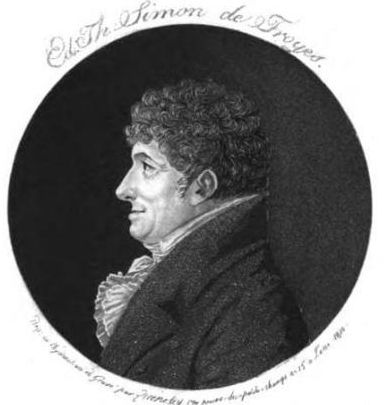
The appended poem made the question of representation still more complicated by speaking in the first person. Under the title L’Hermaphrodite, ou Lettre d’Anne Grandjean à Françoise Lambert sa femme, it offered words ostensibly addressed by the former husband to the woman from whom he had been separated. A separately issued work under the corresponding title is attributed in bibliographic catalogs to Édouard-Thomas Simon, although the appended text identifies its dedicating poet only as “S***.” That dedication, addressed to “Mademoiselle G.***,” presents the composition as an attempt to depict love, inspired by the poet’s own feelings. It establishes a literary frame distinct from a document composed by Grandjean. The Ovidian epigraph adds another layer, placing the subject within the classical account of Hermaphroditus and a form described as both and neither male and female. Such a reference supplied an educated audience with a familiar imaginative vocabulary before the supposed letter began. The poem could then claim the immediacy of personal utterance while drawing on conventions recognizable as literary invention. Its emotional specificity offers no assurance that Grandjean supplied the sentiments or authorized their expression.
Domestic scenes gave that invented voice a convincing world to remember. The poem described shared prayer at dawn, honest labor, and a modest evening meal prepared by Lambert, followed by affectionate intimacy. These details made the couple legible through familiar virtues, allowing an extraordinary public controversy to emerge from an apparently exemplary household. They should not be transferred into a reconstruction of the couple’s actual daily schedule, for which the legal account provides much less information. Likewise, the speaker’s hope of becoming a father belongs to the characterization created by the verse. Such scenes show how a writer could make Grandjean sympathetic by supplying the ordinary experiences that the documentary record leaves largely undescribed.
The account of institutional intrusion then disrupted this domestic order. Arrest and imprisonment led to an examination represented as a violation of bodily privacy, with the imagined speaker protesting the investigators’ curious gaze and invasive touch. The superior tribunal initially appeared as a place where innocence could find protection, and escape from punishment prompted a direct rebuke to a public hungry for a degrading spectacle. Compulsory separation nevertheless produced a renewed crisis within the poem. The speaker appealed to the sanctity of the marriage vows, then urged Lambert to flee into an uninhabited refuge where their attachment could continue beyond human interference. In this imagined landscape, divine protection would sustain the bond that earthly authorities had rejected. The passage briefly granted the lovers a competing source of legitimacy. The power that had created their mutual desire could also authorize their union. Its appeal to heaven made the fantasy of resistance compatible with religious devotion, exposing a conflict between divine and human judgment within the poem’s own terms. That possibility was abruptly withdrawn. The verse interrupted its vision of continued intimacy with a rebuke declaring that desires once excusable through ignorance would become culpable after the disclosure of bodily truth. The distinction between earlier innocence and future wrongdoing now operated inside the imagined speaker’s conscience. An appeal to nature followed, protesting the cruelty of an instinct that united the couple while a law separated them, but this complaint also yielded to admonition. The command to obey in silence and deserve grace received the answer, “I obey.” Submission did not eliminate grief. The closing lines dismissed Lambert while asking her to remember their attachment and shed tears over the farewell. This ending prevents the poem from being read as an uncomplicated defense of the couple’s freedom. It permitted a forceful account of injury, including anger at examination and separation, while finally requiring its sufferer to renounce the possibility of continued partnership. Those movements disclose the poet’s arrangement of an emotional conflict; they cannot establish Grandjean’s actual response to the judgment or his subsequent conduct.
Lambert remained the addressee of this performance without receiving an answering speech. Readers were allowed to overhear a supposed private farewell whose emotional terms had been selected for both spouses by someone else. Sarah Maza’s work on later eighteenth-century judicial publicity provides a useful comparison, showing how narratives of suffering could recruit readers as sympathetic spectators while directing the judgments they were invited to make. Her evidence concerns other cases and cannot establish how Grandjean’s publications were received. Here, the expanded edition demonstrates the availability of an emotional account, rather than a measurable consensus among readers. Its final request for tears preserved the value of the attachment while closing off the imagined future it had briefly opened. Printed sympathy could give the loss a moving language without returning control of that language, or the life it purported to describe, to either person concerned.
Living under the Injunction
The fuller disposition transcribed in Mathieu Laflamme’s archival research makes the prospect of future punishment explicit. Grandjean was required to resume female clothing and forbidden to abandon it under the penalties that might apply. The prohibition concerning Lambert and other women likewise carried a threat of renewed proceedings through criminal procedure. These provisions gave the instructions a continuing legal force after the original accusation had been dismissed. Their wording did not establish a system of constant supervision, but it made subsequent conduct potentially actionable. The distinction is important for understanding the period after judgment. Freedom from the sentence pronounced in Lyon did not mean that officials had exhausted their grounds for intervening. A new proceeding could arise from an alleged breach of the appellate commands, making the behavior prescribed for the future important independently of the marriage that had already been invalidated.
Clothing would make compliance visible in ordinary encounters. People who had known Grandjean as a husband could now see an appearance required by a court, without possessing a clear account of how to reconcile it with their previous acquaintance. The command could oblige him to explain himself again in settings where his position had once seemed settled. It also placed recognition partly in the hands of observers, whose responses to the prescribed garments could differ from Grandjean’s own understanding of what wearing them meant.
The effects on employment require care because the couple’s economic history does not support an assumption that female presentation necessarily excluded a person from paid work. Lambert herself had sought resources for commerce and participated in the working household established in Lyon. The more specific problem concerned the continuity of arrangements made while Grandjean was accepted as a man. Existing providers of employment might have continued to value the same work, while a publicly disputed classification could also have unsettled their dealings with him. Neither possibility supplies evidence of what actually happened. Vermeil’s description of masculine occupations and physical strength had made labor useful in defending Grandjean’s earlier position, but the judgment did not explain how those occupations were to be reconciled with its new requirements. Earning a living could become a question of maintaining relationships under altered expectations. The material risk lay in possible disruption to those relationships, rather than in an automatic disappearance of every opportunity associated with women’s work.
Financial independence presented a related difficulty. The emancipation described by Vermeil had facilitated Grandjean’s ability to conduct affairs apart from paternal authority, and the document had used the name Jean-Baptiste. The appellate instructions did not themselves provide a comprehensive account of the continuing effect of that transaction. Likewise, Lambert’s anticipated recovery of revenues and the couple’s commercial plans cannot be treated as property extinguished by the ruling. The available disposition sets out no detailed settlement of their economic affairs. It leaves unresolved how resources intended for a shared enterprise would be managed once the relationship organizing that enterprise lacked judicial recognition.
Association with women posed a different kind of practical problem because the restriction extended beyond the named former wife. Keeping company could occur through the routines of lodging and employment, as well as through an intimate attachment. An instruction governing such conduct would have to acquire meaning within certain circumstances, where ordinary contact and prohibited familiarity were not necessarily easy to distinguish. The requirement of female clothing sharpened this difficulty by prescribing a public appearance that might facilitate precisely the company the association clause placed under suspicion. This does not establish that the court intended to prohibit every encounter with women. It does show that Grandjean’s everyday sociability could fall within an uncertain area of legal exposure. For an observer aware of the judgment, renewed contact with Lambert would have been legible because she was explicitly identified. The scope for interpretation was broader where other women were concerned, giving considerable importance to what people noticed, reported, or regarded as evidence of familiarity.
Lambert also had to live with a decision that changed the recognized basis of the household. Invalidation of the marriage differed from a modern divorce between spouses whose union had previously been accepted as legally sound. Their ceremony could no longer supply an adequate justification for continuing the relationship the court had forbidden. Yet the record does not establish what Lambert wanted after judgment, or how she understood the separation. Her earlier participation in the couple’s plans makes her subsequent absence from the narrative consequential A settlement directed at Grandjean also reached a woman whose independent response remains unrecovered.
The materials considered here do not establish Grandjean’s subsequent residence or employment, nor do they document a later prosecution for violating these instructions. That gap prevents the injunction from becoming a complete biography of life after release. It also places a limit on the meaning of silence. The absence of a recorded breach cannot demonstrate willing acceptance, successful enforcement, or uninterrupted obedience. No negotiated agreement in which Grandjean chose these terms is supplied by the reported disposition. What can be examined is the position the court created, including the possibility that avoiding another accusation would require care over conduct others might interpret adversely. The judgment prescribed an acceptable future; the extent to which Grandjean managed, resisted, or accommodated its demands requires evidence beyond the prescription itself.
Reading Grandjean: Historical Identity and the Unequal Archive
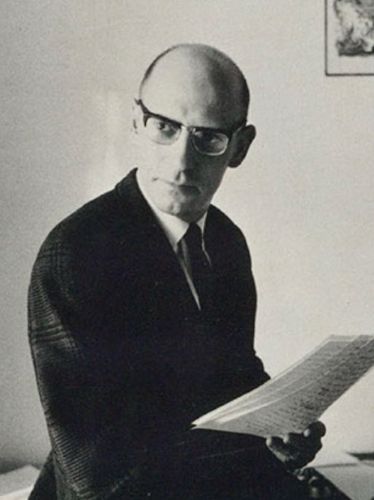
Michel Foucault gave Grandjean’s prosecution a significant place in the history of sexual classification. In his lecture of January 22, 1975, the case illustrated a change in what authorities understood as monstrous. Attention shifted from a supposedly mixed body toward the conduct of someone classified as female. Champeaux’s explanation mattered because rejecting bodily mixture could supply a different basis for condemning Grandjean’s relationship with Lambert. Foucault emphasized the regulatory possibilities created when medical explanation relocated disorder from anatomy to behavior. His interpretation raises a question about historical scale: how much explanatory weight can one prosecution bear when it becomes evidence for a broader transformation?
One difficulty emerges in Foucault’s treatment of the poem written in Grandjean’s voice. He understood its defense of attachment to Lambert as the work’s governing meaning. The speaker’s eventual submission to separation qualifies that defense within the poem’s own movement. Reading the text alongside Foucault’s interpretation reveals how a broad historical argument can flatten the tensions within its evidence, especially when sympathy and prescribed renunciation occupy the same publication.
Brendan Röder’s study of four Catholic clerical cases between 1652 and 1722 offers a useful comparison beyond France. These proceedings concerned eligibility for religious offices and communities, rather than marriage, and their different purposes affected the bodily distinctions officials considered important. Recognition as a man could open a path to priesthood, while doubts about a nun’s sex could jeopardize continued membership in a convent. Röder finds that Church officials themselves helped privilege genital anatomy over a wider collection of bodily and behavioral signs. He also identifies unequal thresholds of credibility, with people perceived as men enjoying greater authority in accounts of their own sex. These cases establish neither a uniform Catholic policy nor a direct institutional ancestry for Grandjean’s judgment. They nevertheless show that intensified classification could develop within ecclesiastical administration before 1765, and that its effects varied with the status under consideration. The history requires several intersecting institutional chronologies, rather than a single transfer of explanatory power from theology to medicine.
Historical identity presents another problem of scale, this time between an individual life and the categories through which historians establish connections across time. Chris Mowat, Joanna de Groot, and Maroula Perisanidi argue that investigating trans pasts need not assume identities that remain identical across centuries. Their approach gives historical people and their circumstances priority over an abstract fascination with crossing boundaries. Applied to Grandjean, it directs attention toward the practical substance of living as a man and securing recognition from other people. That sustained social existence provides firmer evidence than an attempt to reconstruct a complete private vocabulary of identification. Requiring such a vocabulary before considering Grandjean within trans history would make inclusion depend on a kind of testimony that the surviving proceedings were poorly equipped to preserve. Historical connection can instead rest on specific experiences of recognition, constraint, and disputed belonging, while allowing their meanings to differ across periods. An intersex history would approach the same materials through the examination and classification of bodily variation. Its central concern could be the process by which uncertain descriptions became demands for a determinate sex, without treating an eighteenth-century medical account as sufficient for a modern diagnosis. A lesbian history of the prosecution would begin elsewhere, with the punishment of a relationship that officials represented as a union between women. That approach can illuminate the vulnerability of intimacy outside an authorized marital arrangement. It would become circular if the authorities’ classification were adopted as conclusive evidence of Grandjean’s own identity. These investigations need not resolve into a contest over which field possesses the correct historical subject. Their usefulness depends on specifying the relationship under examination: a person’s lived position, the interpretation of a body, or the policing of a partnership. Grandjean’s case connects these inquiries without making their answers interchangeable.
Lambert’s testimony introduces a harder test of interpretation. In judicial passages reproduced by Mathieu Laflamme, she described Grandjean encouraging her, roughly eighteen months after the wedding, to announce that she had borne Grandjean’s child. Her statement does not independently establish that the announcement occurred. If credited, it complicates the defense’s image of an unsuspecting couple. Participation in a misleading reproductive claim would still leave open how Grandjean understood the body, the marriage, and the legitimacy of living as a man.
Other answers resist a decisive interpretation. Lambert said that she had not washed Grandjean’s linen and had not noticed whether periodic bleeding occurred. This identifies a limit to observation, rather than establishing menstruation or its absence. A recorded question to Grandjean about the same subject remained unanswered, without explaining the silence. Bodily familiarity, specific observations, and explanations offered under examination need not coincide. Judicial testimony enlarges the evidence while retaining the effects of the questions, recording practices, and pressures that produced it.
The resulting inequality concerns more than the quantity of surviving words. Professional authors could organize a life into an argument, while statements attributed to Grandjean and Lambert often reached the record as answers to questions chosen by others. Historians distinguish the coherence achieved by an explanatory document from the coherence of the life it describes. Vermeil’s carefully arranged defense cannot establish that every action followed from innocent misunderstanding; an awkward deposition cannot establish that Grandjean’s entire male existence rested on calculated fraud. Neither exemplary innocence nor complete candor should become a prerequisite for taking that existence seriously. People facing prosecution could pursue protection through selective disclosure and accommodation without leaving an account that resolves every apparent inconsistency. A history attentive to those possibilities can acknowledge strategic conduct without treating it as confirmation that prosecutors correctly understood the person before them. Reading Grandjean requires judgments proportionate to the evidence, including recognition that uncertainty about motives does not erase the documented life whose meaning remained contested.
Was the Appeal a Substantial Victory within the Old Regime?
The following video (separate from this article) from “Famous Faces, Hidden Lives” discusses the life of Chevalier d’Éon:
Measured against the sentence delivered at Lyon, the Paris judgment represented a substantial victory. An interpretation organized around the limits of self-determination must give that achievement independent weight, rather than assessing the appeal principally through the freedoms it failed to secure. Corporal punishment, public degradation, and perpetual banishment were serious injuries whose cancellation changed what authorities could lawfully do to Grandjean under the original condemnation. Their removal deserves more than acknowledgment as the favorable side of an otherwise restrictive decision. The immediate comparison is between two judicial outcomes, and the difference between them materially altered Grandjean’s position. Describing both judgments as exercises of coercive authority identifies a shared jurisdictional assumption, but it does not adequately measure the different consequences they authorized.
The language of mercy itself requires qualification because it can make a successful legal challenge sound like a discretionary favor. Grandjean obtained reversal through appellate adjudication, and the surviving account does not describe a royal pardon or establish that the court regarded the original criminal punishment as deserved. Vermeil’s insistence on innocence deserves consideration as an argument about the proper application of law, with consequences beyond the production of sympathy. His defense asked whether conduct undertaken through an asserted misunderstanding, supported by advice and previous recognition, justified criminal condemnation. Within that argument, the distinction between error and culpability supplied a reason for withholding punishment that did not depend entirely on judicial generosity. The available report does not establish that the judges adopted this reasoning, but their unexplained decision cannot simply be reduced to benevolence either. Calling the outcome humane accurately describes its comparative effects; calling it mercy introduces an interpretation of how protection was bestowed. The central vocabulary here must leave room for the possibility that the appeal achieved a measure of justice through resources already available within the legal order.
Representation also provided a means of opposition within institutions whose power could otherwise dominate the account. The appeal made the Lyon decision contestable, while the defense assembled earlier religious and social recognitions into an argument against culpability. The record does not establish how closely Grandjean directed that strategy, yet the proceedings included an effort undertaken on Grandjean’s behalf to resist condemnation. Counsel and judicial review created an avenue through which an accused person could challenge an adverse judgment, even when professional advocacy determined much of the language in which that challenge became intelligible.
Institutional disagreement further complicates an interpretation centered on the imposition of identity from above. Grandjean’s earlier recognition as a man had itself depended partly on paternal support and priestly advice, making authorized recognition a resource before other authorities overturned its practical consequences. The legal literature examined by Arnaud Paturet likewise distinguishes bodily condition from punishable conduct, demonstrating that classification and criminal responsibility did not necessarily produce identical answers. Such distinctions could protect an individual without establishing an unrestricted right to determine legal sex or marital capacity. Their limited reach does not make them historically negligible. Indeed, requiring protection to rest on a comprehensive principle of personal autonomy would discount forms of resistance that operated through narrower claims about intention, responsibility, and appropriate punishment. Dependence on recognition by others could help sustain a social position as well as expose it to interference. The injury of the retained injunctions becomes clearest when measured against Grandjean’s established life. Authorities prescribed changes that displaced earlier forms of acknowledgment and prevented the marriage from continuing on its previous terms.
My argument requires two comparisons to remain distinct. Against the Lyon condemnation, the appeal achieved major relief; against the life Grandjean had established before prosecution, it failed to restore an intimate and social existence. The judgment also retained restrictions already present in the earlier sentence, so its outcome should not be reconstructed as a negotiated exchange of release for newly demanded conformity. Nor does “softening punishment” fully describe the setting aside of the criminal condemnation, even though enforceable commands survived it. A more precise interpretation recognizes that appellate correction could substantially improve someone’s position while leaving other judicial interventions intact. The limitation lay in the scope of the victory. Success against the penal sentence did not secure the authority to resume the life that prosecution had interrupted.
Conclusion: Protection without the Last Word
Grandjean’s successful appeal exposes how unevenly a favorable judgment could reach into the life of the person who obtained it. The criminal condemnation ceased to stand, removing the authorization for grave bodily punishment and enduring exclusion. Directions concerning clothing and association nevertheless remained enforceable, extending the court’s intervention into conduct beyond the prosecution itself. These provisions addressed an existing social position and marriage, giving the decision consequences that cannot be measured solely through the penalties it overturned. The appeal deserves recognition as a substantial legal achievement whose protection extended further in some areas of life than in others.
The disagreement preserved in the publications helps explain how this outcome became possible without supplying a single intellectual foundation for it. Vermeil organized Grandjean’s history into an argument against culpability, connecting bodily uncertainty with advice received and conduct undertaken in asserted good faith. Champeaux challenged the anatomical interpretation on which part of that defense depended. Their competing explanations demonstrate that learned opinion offered several ways of making the case intelligible, each with different implications for responsibility and future behavior. The reported judgment does not disclose how the judges assessed those alternatives. An explanatory controversy could remain unresolved in the surviving record even after the court attached binding obligations to a classification. Professional representation provided important resources against condemnation, while professional disagreement left the distribution of decision-making power largely undisturbed. Grandjean could benefit from an advocate’s reconstruction without possessing equivalent influence over the account that would govern subsequent treatment. The distinction between producing an explanation and making its impacts obligatory connects the medical controversy to the judgment’s practical force.
Lambert’s place in this history makes those contributions concrete. She participated in the marriage whose continuation the authorities addressed, as well as providing testimony through which they investigated Grandjean. Their partnership had a history beyond the question of bodily capacity, although the proceedings made that question decisive for its legitimacy. The injunction concerning their association threatened the authorized continuation of an established relationship, an injury that remains identifiable even where the partners’ private understanding cannot be fully recovered.
A judicial disposition establishes what a court will recognize and require within the matters before it. Its binding force does not make its classification a comprehensive account of the person subjected to judgment. Grandjean’s documented existence as a man retains historical significance alongside the descriptions advanced by counsel, medical interpretation, and the appellate ruling. Reading these materials together permits a reconstruction attentive to the purposes of each source without allowing the prosecution to determine every subsequent question about the life it investigated. Such an approach also gives the favorable judgment its proper weight. Legal institutions contained resources through which serious punishment could be successfully challenged. The limits of that success become visible in the obligations that survived, especially where they obstructed relationships and forms of recognition established before the case began. Ending the criminal condemnation was consequential; the court’s authority to dispose of the prosecution gave it no exclusive claim to the meaning of the life it had judged.
Bibliography
- Boarini, Sylvain. “Mémoire pour Anne Grandjean. Casuistique de l’hermaphrodite.” Journal de médecine légale et droit médical 46:1 (2003), 59–80.
- Champeaux, Claude. Réflexions sur les hermaphrodites, relativement a Anne Grand-Jean, qualifiée telle dans un Mémoire de Me Vermeil, avocat au Parlement. Avignon; sold in Lyon by Claude Jacquenod fils, 1765.
- Conlin, Jonathan. “Adventurer, Saint, Celebrity: The Chevalière Deon’s Transgender Selves.” Australian Feminist Studies, 08.25.2025.
- Favier, René. “Anne, ou Jean-Baptiste Grandjean. Dire le sexe au XVIIIe siècle.” La Pierre et l’écrit 25 (2015), 185–193.
- Fontes da Costa, Palmira. “Anatomical Expertise and the Hermaphroditic Body.” Spontaneous Generations: A Journal for the History and Philosophy of Science 1:1 (2007), 78–85.
- Foucault, Michel. Abnormal: Lectures at the Collège de France, 1974–1975. Edited by Valerio Marchetti and Antonella Salomoni. Translated by Graham Burchell. London: Verso, 2003.
- Hanley, Sarah. “‘The Jurisprudence of the Arrêts’: Marital Union, Civil Society, and State Formation in France, 1550–1650.” Law and History Review 21:1 (2003), 1–40.
- Jones, Heather Rose. “The Appeal of Anne/Jean-Baptiste Grandjean.” Lesbian Historic Motif Podcast, episode 241. October 15, 2022. Transcript. Alpennia.
- Laflamme, Mathieu. “Le genre au tribunal: L’hermaphrodisme devant la justice de la France d’Ancien Régime.” Master’s thesis, University of Ottawa, 2016.
- Long, Kathleen Perry, ed. High Anxiety: Masculinity in Crisis in Early Modern France. Kirksville, MO: Truman State University Press, 2002.
- Maza, Sarah. “The Theater of Punishment: Melodrama and Judicial Reform in Prerevolutionary France.” In From the Royal to the Republican Body: Incorporating the Political in Seventeenth- and Eighteenth-Century France, edited by Sara E. Melzer and Kathryn Norberg, 182–197. Berkeley: University of California Press, 1998.
- McClive, Cathy. “Masculinity on Trial: Penises, Hermaphrodites and the Uncertain Male Body in Early Modern France.” History Workshop Journal 68:1 (2009), 45–68.
- Mowat, Chris, Joanna de Groot, and Maroula Perisanidi. “Historicising Trans Pasts: An Introduction.” Gender & History 36:1 (2024), 3–13.
- Paturet, Arnaud. “Le traitement de l’hermaphrodite dans la littérature juridique de l’Ancien Régime: Droit, société et idéologie.” Sociopoétiques 6 (2021).
- Röder, Brendan. “Essentialising Sex: Hermaphrodites and the Thresholds of Masculinity and Femininity in the Early Modern Catholic Church c.1700.” Gender & History 37:1 (2025), 109–124.
- Simon, Édouard-Thomas. L’Hermaphrodite, ou Lettre de Grandjean à Françoise Lambert, sa femme. Grenoble; sold in Paris by Cailleau and Veuve Valleyre, 1765.
- Vermeil, François-Michel. Mémoire pour Anne Grandjean, connu sous le nom de Jean-Baptiste Grandjean, accusé & appellant, contre Monsieur le Procureur Général, accusateur & intimé. Paris: Louis Cellot, 1765.
Originally published by Brewminate, 10.27.2026, under the terms of a Creative Commons Attribution-NonCommercial-NoDerivatives 4.0 International license.
About the Author