Bhoorah’s 1852 murder became a recurring reference in colonial campaigns against hijras, revealing how police registration turned assumptions about gender into enforceable restrictions.

By Matthew A. McIntosh
Public Historian
Brewminate
Introduction: When the Victim’s Community Became the Problem
On August 17, 1852, Bhoorah was found murdered in Mainpuri, in the North-Western Provinces of British India. She was a guru within a hijra discipleship lineage, and her household included two disciples. The courts concluded that her male partner, Ali Buksh, had killed her after she attempted to leave him. In the judgments examined by historian Jessica Hinchy, establishing responsibility for the killing became entangled with a condemnation of the victim’s community. Judges represented hijras as “unnatural prostitutes” and treated their feminine appearance as evidence of moral corruption. Their commentary extended beyond the circumstances of Bhoorah’s death to describe a population whose continued existence supposedly discredited British government. A prosecution concerning violence against a hijra thereby furnished material for directing official hostility toward hijras themselves.
These descriptions obscured the relationships through which hijras sustained their lives. Discipleship connected members across generations, providing a framework for authority and mutual obligations. Performances associated with births and marriages brought earnings through badhai, congratulatory gifts whose significance depended on relationships with the households and localities where hijras worked. Such arrangements could accommodate dependence and unequal power, but their existence did not establish the criminal character that officials attributed to them. The colonial designation “eunuch” further compressed people with different social positions into an apparently recognizable bodily type. Its application could encompass hijras alongside court-associated khwajasarais, despite substantial differences between their circumstances. Modern transgender history supplies valuable questions about the policing of gender, although a single contemporary identity cannot adequately describe everyone whom these records classified together. Understanding Bhoorah’s place within this history requires attention to the community affiliations through which she lived, as well as to the categories imposed upon her. Otherwise, historical explanation risks accepting the very equivalences that made collective suspicion possible.
Between the murder proceedings and the Criminal Tribes Act of 1871 lay almost two decades of disputed proposals and renewed investigations. Special legislation did not follow immediately from the 1852 case. By 1865, the provincial administration had explicitly identified the gradual “extinction” of the hijra community as an objective. Part II of the 1871 Act subsequently provided a statutory framework for registration and coercive restrictions. Enforcement centered on the North-Western Provinces and varied in practice, making the distinction between legislative authority and its actual exercise essential to the history.
The organizing question is how investigating one person’s violent death became an argument for suppressing the community to which she belonged. Bhoorah’s case mattered because officials repeatedly made its judicial descriptions serve purposes beyond determining responsibility for her murder. Those descriptions helped authorize inquiries in which assumptions about sexual conduct became grounds for supervising people’s lives. Registration gave such judgments continuing consequences. Entry rested on specified suspicions rather than a requirement of prior conviction, while the restrictions attached to registered status reached into earnings and domestic relationships. The argument developed here follows that conversion of prejudice into enforceable policy through the decisions that made it possible. It also examines the uncertainty within official knowledge, including disputes over classification and the distance between provincial ambitions and district practice. Hinchy’s archival research provides the foundation for reconstructing these processes, while the legislation establishes the powers that officials acquired. Neither source permits unmediated access to hijra experience. Testimony reached the record through institutions concerned with investigation and control. Reading those documents critically makes it possible to examine the campaign’s operation while preserving the distinction between what authorities alleged about hijras and what the surviving evidence establishes about their lives.
Hijra Communities in Nineteenth-Century North India
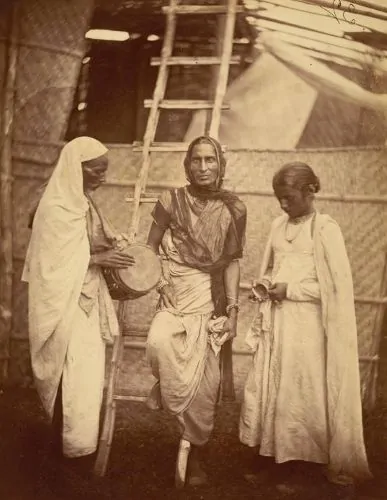
Claims to contributions at weddings in some villages appeared in the Mainpuri judgment itself. Although the judges interpreted these arrangements through their hostility toward hijras, the detail indicates an economic geography that existed independently of the prosecution. Certain households or lineages maintained recognized areas within which their members performed and sought payment. Traveling between those places could coexist with an established residence and enduring local connections. Describing hijras simply as wandering beggars obscures the organization of their work, including the relationships that made a familiar circuit of villages different from movement without a settled base.
Learning to participate in that work involved an apprenticeship whose demands extended beyond acquiring a repertoire of songs. Senior members transmitted knowledge of ceremonial occasions and the performance techniques through which a group established its presence before an audience. Disciples learned dancing alongside the use of jokes and verbal provocation, skills that required sensitivity to listeners and circumstances. Religious narratives also passed through these relationships, giving practical instruction a connection to accounts of the community’s origins and powers. The guru’s standing rested partly on possessing knowledge that younger or newly initiated members needed, but teaching was inseparable from unequal authority. A disciple’s affiliation could place labor and earnings within relationships governed by a senior person’s expectations. Kinship language expressed belonging without necessarily making the participants equals. A household might offer protection while imposing obligations that a junior member had limited power to renegotiate. Understanding discipleship requires keeping those possibilities together rather than assuming either unrestricted solidarity or universal coercion.
Permanent residents were not necessarily all hijras. Musicians’ families sometimes shared their accommodation, while widows and their children could find shelter within these domestic arrangements. Male partners also appeared among the people who lived with hijras, either continuously or for shorter periods. Some children raised in such homes were expected to marry when older rather than enter discipleship. These overlapping connections made a household’s population larger in social terms than a list of its initiated members would suggest. They also placed hijras within networks of care and employment extending into the surrounding neighborhood.
Performance income depended on the ability to make a claim that other people would acknowledge, even reluctantly. At celebrations, the assertion of a right to badhai drew force from beliefs that hijras could influence fertility through blessings or curses. Payment might involve negotiation in which religious expectation combined with the pressure of a conspicuous public encounter. Ridicule or a threatened curse could make refusal uncomfortable, while an audience’s response helped determine whether a demand succeeded. Those exchanges should not be romanticized as uncomplicated generosity, but calling every payment begging equally fails to explain the obligations participants believed were involved. Nor did ceremonial work exhaust the available means of earning. Hinchy’s research identifies cultivation and agricultural labor among hijra occupations, as well as shopkeeping and weaving. Such employment suggests that earnings could come from several activities whose relative importance differed between individuals. A person known locally as a hijra might also be encountered through ordinary transactions involving work or goods, without every interaction turning upon a ritual performance.
Many nineteenth-century hijras described themselves as Muslims, despite participating in practices associated with Hindu deities and mythology. Religious affiliation did not necessarily require the exclusive commitments that an official classification might imply. A Muslim identification could coexist with devotional observances that crossed the boundaries separating religious traditions in administrative accounts. The evidence does not establish one theology shared by every lineage, and present-day practices cannot fill every historical gap. It does indicate that religious life helped sustain forms of affiliation whose meaning exceeded a choice between two census headings. Such commitments deserve consideration as lived beliefs, rather than being reduced to explanations for why households paid performers.
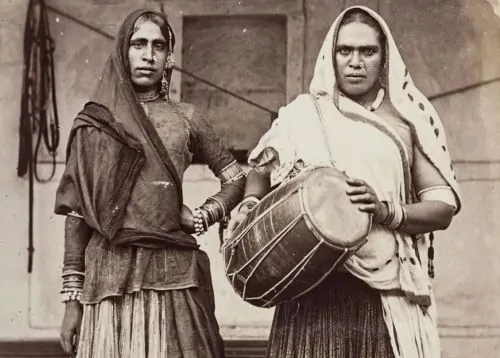
Dress and naming practices also acquired meaning through participation in a social group. Feminine clothing could make a hijra recognizable in everyday encounters, while the adoption of a feminine name marked a change that acquaintances were expected to recognize. These practices did not establish a uniform bodily history. Accounts distinguished people who had undergone castration from those described as having been born with bodily differences, although the language recording those distinctions was often imprecise. Castration itself could carry religious significance while also exposing a person to exclusion from others who treated the operation as degrading. Ritual importance offered no dependable exemption from contempt. Neither did community membership establish a single hereditary caste. People entered from differing backgrounds, and their subsequent affiliations did not remove them from the social hierarchies surrounding them. The same person might possess a valued ceremonial role and encounter rejection elsewhere, depending on who was judging and what relationship was at stake.
Royal patronage presents an important example of recognition that must be located carefully. In late eighteenth-century Awadh, Asaf-ud-daula supported itinerant hijra performers, some of whom entertained women of the ruling household. Such connections demonstrate access to elite audiences, but they should be distinguished from the political careers of khwajasarais. These court-associated eunuchs were generally understood as men and could embody prestigious forms of masculine conduct, including the education and manners expected of a noble householder. Their proximity to rulers sometimes brought substantial administrative authority. Almas Ali Khan, for example, controlled revenue collection across an extensive part of Awadh and commanded considerable military resources. His prominence existed alongside a legal status as an enslaved person, a combination that challenges assumptions that slavery necessarily excluded political power. It does not establish that hijra performers generally occupied comparable positions. Even patronage directed specifically toward hijras coexisted with ambivalent elite attitudes, including literary uses of the term as an insult. The historical landscape included powerful court servants and supported performers whose situations cannot be combined into a universal story of former privilege. British expansion altered these arrangements, but it intervened in an already differentiated society.
Entry into hijra life likewise followed more than one course. Adults could seek initiation, while children arrived through circumstances that included parental poverty or the loss of someone who had supported them. During famine, hijras sometimes took children into their homes. Evidence of kidnapping and sale also exists and requires acknowledgment, without allowing those cases to stand for every relationship involving a younger dependent. Residence alone cannot determine whether someone was an adopted child, a future disciple, or the offspring of another household member. These distinctions affected the expectations placed upon residents and the futures imagined for them. They help explain why a household organized around a senior hijra could contain people whose attachments to it differed substantially, even when outsiders assigned them all the same destination.
Bhoorah’s Household and the Killing in Mainpuri

Dullah and Mathee lived with Bhoorah as her disciples in Mainpuri. Their names give the domestic setting a specificity easily lost when the case is discussed principally as the beginning of a colonial campaign. Bhoorah occupied the senior position in these relationships, although the surviving account does not establish how long either disciple had been with her. Nor does the designation chela establish their ages; there is no basis here for assuming that either was a child. What can be identified is a household whose members were connected through Bhoorah, with affiliations that preceded the criminal investigation.
Ali Buksh belonged to this domestic history through a different relationship. According to Jessica Hinchy’s reconstruction, he had lived with Bhoorah for two years before the events that brought them before the courts. That duration indicates an ongoing partnership, although it cannot establish the quality of their life together. The report does not provide an account from Bhoorah explaining what she valued in the relationship or how her expectations changed. Shared residence also leaves unanswered questions about their material arrangements, including whether either depended financially on the other. Such uncertainties matter because the prosecution subsequently interpreted their intimacy through the circumstances of its rupture. A relationship that had lasted for years became legible to the court chiefly through the conflict surrounding its end, giving the final episode disproportionate weight in the surviving account of their association.
Shortly before her death, Bhoorah left Ali Buksh for another man. Hinchy’s discussion of the judgments indicates that the courts understood her departure within a pattern of repeated attempts to leave him. This places an effort to end the relationship within the explanation adopted by the judges. It does not disclose her reasons for choosing another partner or establish what she had experienced during the preceding two years. Nevertheless, the reported separation preserves an important action of her own; she had sought to change the circumstances in which she was living.
On August 17, 1852, Ali Buksh forced Bhoorah to return to him. The coercion described in the account distinguishes that return from a voluntary reconciliation; earlier cohabitation supplies no reason to treat her presence with him that day as freely chosen. Neighbors reportedly saw the pair arguing in the street before they entered the house. Their observation provides evidence of a dispute preceding the death, but it does not give access to everything that followed. Hinchy’s reconstruction supplies no dependable wording for their exchange, and the fact of an argument cannot establish which threats, if any, were spoken. The sequence preserved for the historian passes from an encounter observed outside to events inside the residence that required further investigation.
Bhoorah was found dead that day, with her “head nearly severed,” according to the judicial account reproduced by Hinchy. Dullah subsequently ran into the street announcing that Ali Buksh had murdered her. This report identifies Dullah as someone who publicly accused Ali Buksh, without establishing that Dullah witnessed the fatal attack. The distinction separates an accusation made in the immediate circumstances of a death from direct testimony describing the act of killing.
Dullah nevertheless appeared alongside Ali Buksh among the two suspects considered in the proceedings. The person who announced the murder was also exposed to suspicion, a circumstance that prevents a simple division of the named participants into an accused partner and an unquestioned witness. The available reconstruction does not establish why Dullah became a suspect, and membership in the household cannot supply the missing explanation. Mathee’s place in the investigation is even less visible. Being named as a resident does not establish presence during the argument or knowledge of the killing. The Mainpuri Sessions Court and subsequently the Nizamat Adalat attributed Bhoorah’s death to Ali Buksh. Their explanation connected the killing to her efforts to leave him, treating the broken relationship as the context for his responsibility. That finding identifies the courts’ conclusion while leaving a distinction between their reconstruction of the offense and the much narrower sequence of events available to us through the published scholarship.
Bhoorah’s death also brings into view the different forms of power operating around one person. Her standing as a guru placed her above Dullah and Mathee within discipleship, but that seniority did not protect her in the confrontation with Ali Buksh described by the proceedings. A position of authority in one relationship could coexist with vulnerability in another. The evidence does not permit an account of the disciples’ grief or of the arrangements made after the loss of the person with whom they had lived. But it does establish why the murder demands attention at the scale of these relationships. Before the case acquired its wider administrative significance, the courts had to determine responsibility for a killing arising from a dispute involving Bhoorah and a man she had tried to leave.
The Murder Proceedings: From Individual Guilt to Collective Character
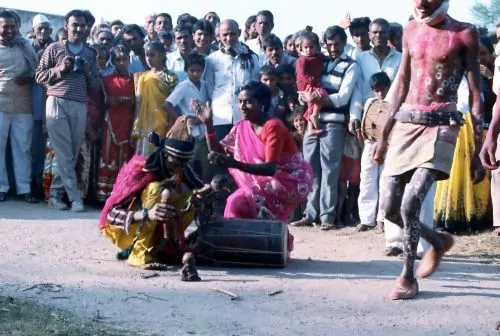
The Mainpuri Sessions Court and the Nizamat Adalat addressed a question of criminal responsibility: whether Ali Buksh had killed Bhoorah. Their conclusion concerned an identifiable defendant and an offense against a specific person. Statements about hijras who had no demonstrated involvement in the killing belonged to a different order of judgment. Those statements could acquire authority through their inclusion in the proceedings without having been established through equivalent evidence. The distinction is essential because the courts pursued the murder prosecution while also making assertions about a much larger population. Collective condemnation accompanied the adjudication of individual guilt; it did not constitute a collective criminal conviction.
Unwin, the sessions judge, presented the proceedings as an “exposure” of a disturbing social world. This language gave the prosecution a revelatory function extending beyond establishing the circumstances of the death. The household became an apparent point of entry into practices that the judge represented as previously concealed, allowing information about its occupants to support claims about hijras elsewhere. A difficulty follows from that reasoning. The exceptional event that brought the household before the court also determined the circumstances under which officials encountered it. A murder investigation necessarily concentrated attention on conflict and allegations of wrongdoing. Treating that encounter as a representative account of ordinary life gave the prosecution a descriptive reach its immediate purpose could not justify. Unwin’s confidence in what had supposedly been uncovered obscured the difference between learning something about some people and establishing the customary conduct of everyone associated with them.
The description of an “abominable trade of unnatural prostitution” illustrates how this generalization operated. Unwin connected a judgment about sexual conduct with observations concerning organized earnings, including contributions collected at weddings. The resulting account treated economic activity as confirmation of sexual commerce, even though payments associated with performances did not themselves establish that sexual services had been purchased. His description also made the organization of earnings incriminating. Regularity and recognized claims appeared to demonstrate the established character of the supposed trade. Evidence of relationships through which people obtained an income became evidence against their respectability. This interpretation did not require the court to distinguish the circumstances of certain payments or establish the activities of each person it described. The problem is not resolved by asserting that hijras never engaged in commercial sex, a proposition the evidence would not sustain. It lies in the attribution of a sexual occupation to people collectively, through reasoning that moved too readily between intimacy and livelihood. The court’s vocabulary supplied a seemingly unified explanation where the underlying observations concerned different activities.
Clothing furnished another route from observation to presumed conduct. Unwin described feminine appearance through bodily resemblance, referring to women “whom they resemble also in shape.” Hinchy also identifies judicial assertions that castration served a “vile purpose,” associating bodily alteration with sex between males. These descriptions made appearance and anatomy carry conclusions about morality. They should not be mistaken for findings from a documented clinical examination of Bhoorah. Their significance lies in the judges’ interpretation. Characteristics they regarded as departures from proper masculinity helped make the allegation of sexual vice appear self-evident.
A revealing passage concerned the allocation of villages and the authority governing claims to contributions. Unwin characterized these arrangements as an “internal government,” then declared, “They have in fact a King.” The emphatic assertion was followed by incompatible reports locating this supposed ruler in Delhi or Farrukhabad. That uncertainty deserves attention because it exposes a gap between the confidence of the description and the information supporting it. The passage acknowledged organization among hijras while rendering its form obscure and potentially objectionable. Seniority within a lineage, or agreements governing where members could earn, became intelligible through the vocabulary of political command. Nothing in the cited account establishes that hijras exercised the centralized sovereignty this language suggested. Nevertheless, the representation gave their relationships a significance beyond private misconduct: an apparently organized population possessed authorities of its own. As Hinchy argues, such descriptions helped officials imagine hijras as a challenge to colonial rule. The inference depended on translating unfamiliar relationships into a governmental structure, then treating that structure’s continued recognition as a matter requiring official concern. The competing locations of the alleged king did little to weaken the larger impression of an objectionable authority operating within British jurisdiction.
Other judicial comments made the rulers’ position explicit by describing hijras through the language of “pollution” and their continued presence as a “reproach” to government. These terms changed the implied responsibility of the authorities. Successfully prosecuting Bhoorah’s killer would address the homicide, but it could not answer an accusation that the government tolerated a morally contaminating population. Under that formulation, the existence of hijras became evidence of an administrative failure that an individual verdict could not remedy. The courts had supplied two substantially different accounts of what demanded correction. One concerned a killing attributed to Ali Buksh; the other concerned the permissibility of social arrangements whose participants had not been proved responsible for it. The latter account created a rationale for intervention reaching beyond the offense before the judges. Its force came from making toleration itself appear culpable, so that officials could regard further action as necessary even after the question of the murderer’s responsibility had been decided.
The Afterlife of a Judgment: Reports and Institutional Memory
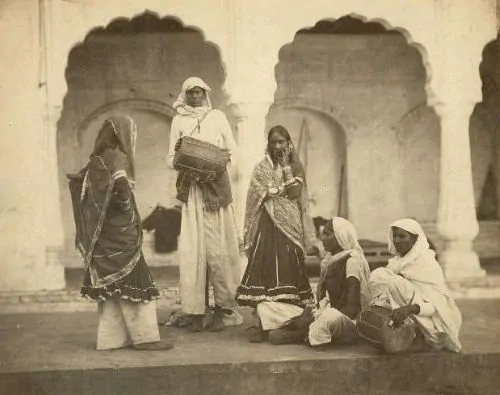
Following the proceedings, Charles Raikes, an East India Company official, was instructed to prepare a report concerning hijras. The resulting inquiry, dated to 1853 in Jessica Hinchy’s research, extended the matter beyond the responsibilities of the courts that had considered Ali Buksh’s guilt. An official now had the task of assembling information about people connected by a collective designation, including those with no involvement in Bhoorah’s death. The commission did not itself establish the accuracy of the allegations that had prompted it. Yet it did give those allegations an administrative destination; they became matters on which information was requested and a governmental response could be considered. The report’s significance lay partly in this change of task, from resolving an offense to determining whether a population required exceptional intervention.
Circulation widened the inquiry’s institutional audience. Officials who had not participated in the prosecution could consider its implications through material prepared for administrative consultation. Hinchy identifies exchanges within government as central to the development of concern, making it important to distinguish this process from a campaign driven by demonstrated popular agitation. Information traveled through offices whose occupants possessed different responsibilities and opportunities to influence policy. A description originating in a criminal case could become the starting point for a discussion about legislative necessity. Once that discussion began, the question before the recipients concerned what action should follow as well as what could be established about hijras. The circulation of a report supplied a means of organizing official attention, although the responses showed that attention did not produce agreement.
Special legislation failed to emerge from the early discussion. Hinchy attributes this outcome largely to divided official opinion about whether an additional law was necessary. The hesitation qualifies any account in which the 1852 judgment immediately determined a settled course of repression. It also requires a distinction between declining to endorse a proposed measure and defending the people whom it would affect. The absence of a new statute establishes that the legislative demand had not secured sufficient agreement; it does not establish general acceptance of hijras or freedom from other forms of interference.
The documentary basis of the inquiry was disrupted during the rebellion of 1857. Raikes’s report was destroyed, while the judgment in the murder case survived. This uneven survival shaped what officials could subsequently consult. The two documents did not remain available on equal terms. An investigation intended to supplement the proceedings was lost, leaving the earlier judicial account accessible for renewed use. The destruction occurred amid a much larger crisis of Company government, followed in 1858 by the transfer of authority to the Crown. Documents produced before that transition could still inform later administrators, but their availability depended on what had survived the upheaval. In this instance, institutional continuity rested partly on a preserved judgment whose relationship to the missing inquiry had to be explained retrospectively. The surviving text acquired additional importance because a source that might once have accompanied or qualified it could no longer be examined.
Renewed proceedings in 1860 prompted the Nizamat Adalat to retrieve its accumulated information concerning hijras. After Government v. Munsa and four others, the court forwarded material to the North-Western Provinces government that included the 1852 judgment. It also supplied recollections of what Raikes’s investigation had established. Correspondence dated December 31, 1860, forms part of the evidence through which Hinchy traces this transmission. The earlier murder proceedings thereby returned to administrative discussion in response to a different case, with the surviving judgment serving as a recoverable record and remembered findings supplementing the documentary gap.
Recollection introduced a distinct kind of authority into the exchange. Officials could read the judgment itself, whereas the contents of Raikes’s report reached them through what others remembered and selected for communication. Those materials required different kinds of assessment. A preserved document could be consulted for its wording; an account of a missing report depended on the recollector’s summary of its significance. There is no need to assume deliberate fabrication to recognize the impacts of that difference. The questions occupying administrators in 1860 could shape which elements of an earlier investigation seemed relevant enough to repeat. An abstract of the Ali Buksh case also appeared in the correspondence, indicating the preparation of the proceedings for further administrative use. Condensation made an earlier case easier to incorporate into a new discussion, while necessarily selecting from the fuller account. Institutional memory developed through these acts of retrieval and summary, giving some propositions a continuing presence even when the materials through which they might be checked were incomplete.
By February 1861, the provincial government had again decided that legislation targeting hijras was required. On February 12, Couper wrote to the North-Western Provinces member of the Legislative Council of India as part of this renewed initiative. According to Hinchy, the administration received no response to its proposal. That silence cannot be treated as an enacted measure or a documented rejection, and it supplies no secure explanation of the central authorities’ reasoning. It does establish another interruption between a provincial demand and the acquisition of additional legal powers. The concern had persisted through the retrieval of older material, but persistence did not ensure an effective route to legislation. What remained available was an unresolved request supported by a documentary history that officials could reopen when further proceedings made intervention seem urgent.
Renewed Investigations
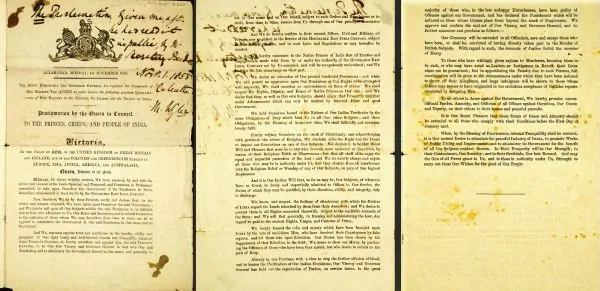
A nine-year-old boy named Gupoo stood at the center of the proceedings recorded as Government v. Munsa and Four Others in 1860. According to the judgment, Nugoo had kidnapped him and sold him to Nurm Buksh, who arranged his castration. Munsa was identified as the person who performed the operation, with others implicated as accessories. Five defendants faced charges arising from the abduction, purchase, and mutilation of the child. The court imposed prison sentences ranging from ten to fourteen years, treating the injuries as serious offenses requiring substantial punishment. These proceedings introduced circumstances markedly different from Bhoorah’s murder. A child appeared as the injured party, and the alleged crime concerned the means by which someone could be brought into a hijra household. That difference gave officials a new basis for presenting intervention as the protection of vulnerable people.
The judges acknowledged problems with evidence that depended on the testimony of two children, although they nevertheless convicted the accused. Those difficulties require attention without making the children’s accounts inherently untrustworthy. Their testimony concerned alleged violence against a child and deserved examination on its merits. The further claim that such violence explained the formation of hijra communities required evidence extending beyond the responsibility of the defendants before the court.
This growing concern developed within a provincial administration preoccupied with securing authority after the rebellion of 1857. The reorganization of policing and consolidation of criminal law accompanied efforts to identify populations whose movements or occupations officials regarded as difficult to supervise. Groups designated “criminal tribes” became particular objects of attention, while the regulation of public space brought other marginalized people within expanding police responsibilities. Hijras entered this setting through several overlapping official concerns. Their travel for work could be associated with uncontrolled movement, while allegations of kidnapping gave that movement an apparently threatening purpose. The connection was significant when officials imagined children being transferred across places and households beyond effective government oversight. Provincial anxiety concerned the supposed limits of administrative control as well as the injuries alleged in some prosecutions. Nothing in that anxiety establishes that hijras posed an insurgent danger; it explains why officials could interpret their presence as part of a wider problem of governance.
Proceedings at Shahjahanpur in 1864 and 1865 renewed demands for action. Sessions Judge R. Drummond and Magistrate W. G. Probyn examined allegations that two men working for Buheema had kidnapped two boys from Gopamau in Oudh in June 1864. Their account stated that Buheema had the boys castrated shortly afterward and brought them to Fatehgarh, where they were sold to separate purchasers. Oudh remained administratively distinct from the North-Western Provinces at this date, making the reported movement across the boundary significant to the investigation. The Shahjahanpur material comprised five cases involving thirty-one people tried for castration, kidnapping, or enslavement. Those figures describe defendants and proceedings, not thirty-one proven abductions or thirty-one convicted hijras. They nevertheless allowed officials to assemble an apparently substantial body of connected criminal activity. Drummond’s general remarks gave the separate prosecutions an additional collective interpretation, presenting them as evidence of relationships through which children could be obtained and transferred. The accounts of two injured boys assumed a prominence extending beyond the findings required in their cases.
Three of the five cases concerned adults whose castration the court acknowledged had occurred with their consent. The judges rejected consent as a sufficient defense because of the risk of death or grave injury and their view that the procedure did not benefit the person undergoing it. Their reasoning addressed the legal significance of agreement to bodily harm, rather than establishing that those adults had been kidnapped. This distinction disrupted the developing account of recruitment through stolen children. The adult cases supplied evidence of different circumstances, even though officials could incorporate them into the same demand for suppression.
Age itself became important to the presentation of the Shahjahanpur prosecutions. Hinchy observes that Drummond appears to have reduced one boy’s age in his account, placing him below ten despite his mother’s insistence that he was older. The discrepancy does not establish the boy’s exact age, but it makes the production of an emphatically young victim part of the evidence requiring scrutiny. A younger child strengthened the appeal to protective intervention and the representation of hijras as predators against defenseless families. Drummond and Probyn foregrounded the cases involving children while depicting the community as central to a wider criminal network. Genuine injuries could thereby support claims whose reach exceeded what those injuries established about other people. Assessing the prosecutions fairly requires acknowledging the alleged abuses while examining how their selection and presentation made differences between the cases less administratively important. The existence of consenting adults did not erase the suffering of children, and the suffering of children did not make every initiation an abduction.
By June 9, 1865, the North-Western Provinces government had explicitly declared an intention to reduce the number of people it classified as eunuchs and “gradually lead to their extinction.” This statement preceded the expansive investigative instruction circulated by C. A. Dodd to district police superintendents on June 30. Officers were directed to discover the “whole extent and the whole manner” of alleged crimes and to record information even when it appeared “trifling.” The wording placed information gathering within a strongly accusatory framework. Criminality was the subject to be uncovered, rather than one possible conclusion to be tested against competing explanations. The announced demographic objective also gave the protection of children a broader purpose. Preventing abuse became connected to preventing the continuation of a community whose disappearance officials had already identified as desirable. This did not ensure that every district officer would interpret the instructions identically or that the investigation would confirm provincial expectations. It did establish that the renewed inquiry began under a declared suppressive objective, with evidence about offenses being collected for a project directed toward a population’s future existence.
Writing Suppression into Law: Part II of the Criminal Tribes Act
Prosecuting kidnapping or unlawful bodily injury did not provide the continuing powers that the North-Western Provinces administration sought over hijra life. Existing criminal proceedings could determine responsibility for specific offenses, as the cases of the preceding decade demonstrated. The proposed intervention reached further, toward supervision that would remain in place without requiring a new prosecution for each act of scrutiny. Children had already been removed from hijra households through executive orders beginning in 1865, although Hinchy identifies the absence of an established legal basis for those removals. Legislation promised to regularize such interference and authorize additional restrictions. The issue was the creation of powers extending beyond the punishment of conduct already treated as criminal, including powers intended to alter the conditions under which communities continued.
Act XXVII of 1871 received assent on October 12 under the title An Act for the Registration of Criminal Tribes and Eunuchs. Its two principal parts employed different procedures. Part I provided for the notification of a tribe, gang, or class believed to engage systematically in non-bailable offenses, followed by registration and controls that included settlement and movement. Part II established a separate regime concerning people designated as eunuchs. Their inclusion in the same enactment associated these projects within a common legislative framework, but hijras were not thereby simply notified as a “criminal tribe” under Part I. The distinction matters because transferring provisions indiscriminately between the parts misrepresents the authority each supplied. Legislative discussion also acknowledged dangers within the combined measure. When moving consideration of the select committee’s report, James Fitzjames Stephen reported its awareness that the legislation could “confound the innocent with the guilty” and confer oppressive powers on unsuitable agents. His remarks concerned the bill as a whole, whose purposes he nevertheless regarded as sufficient to justify accepting some risk. The possibility of wrongful inclusion was recognized within the justification for enactment, rather than appearing only as a later criticism of its administration.
Section 24 connected a bodily designation to a further condition of suspected criminal conduct. Its definition included persons legally classified as male who acknowledged impotence or appeared impotent on medical inspection. Registration concerned those reasonably suspected of kidnapping or castrating children, committing offenses under section 377 of the Indian Penal Code, or assisting those offenses. The bodily definition alone was not the complete statutory basis for entry. Nor did registration require a prior conviction. An official assessment of suspicion could expose someone to the consequences attached to the register.
That gave Part II a reach distinct from section 377. The Penal Code provision concerned specified sexual conduct, whereas the additional legislation made registration important across activities that did not themselves require proof of such conduct. It restricted some civil capacities, including acting as a guardian or making a will, and created offenses concerning registered people’s appearance, performances, and custody of boys below the specified age. These provisions connected an initial assessment of suspicion to subsequent limitations on ordinary life. Their legal operation nevertheless requires precision.
Registration and its associated civil incapacities could precede any criminal conviction, while imprisonment or fines under the new offense provisions required adjudication of the relevant conduct. The power to arrest without a warrant under section 26 did not itself authorize a police officer to impose a sentence. The statute’s coercive force lay partly in its combination of administrative classification with newly punishable activities, making registered status relevant to what a person could lawfully do.
Authority remained dependent on territorial extension and decisions delegated to officials. The Act’s substantive reach initially concerned the North-Western Provinces, Punjab, and Oudh, while section 24 additionally required the local government to extend Part II to certain towns or places. Enactment did not establish identical supervision throughout British India. Section 25 also allowed a person to complain about an entry, with decisions on inclusion or erasure subject to review by the commissioner. This was an administrative avenue of objection whose operation depended on the officials entrusted with the register. Its existence must be considered alongside the discretion those officials retained, including their assessment of the suspicion that justified entry. The legislation supplied powers and procedures, but their practical reach would depend on whom local authorities selected and how they answered challenges to that selection.
Entering the Register: How Police Made a Suspect Population
Provincial instructions issued in 1873 gave police a practical shortcut for identifying people to register. Public performance or feminine dress could establish the suspicion required for applying Part II. These were administrative standards for interpreting the statute, rather than additional words within its definition. An officer could treat visible conduct as grounds for inclusion without identifying a particular incident of kidnapping or prohibited intercourse. The procedure made activities associated with hijra life serve as evidence of offenses that the activities did not independently establish. Selection depended substantially on how police interpreted the people they encountered.
Identifying those people required information that European administrators could not produce alone. Indian police officers interviewed local residents and drew on the knowledge of village headmen and watchmen, while people subjected to inquiry also supplied accounts of themselves. These contributions reached English-language records through processes of selection and translation that could obscure their origins. A statement attributed to a British signatory might rest on investigations conducted by an Indian subordinate whose name appeared elsewhere in the correspondence. Translation could also leave inconsistencies within the final document. Kureemun’s entry in the Muzaffarnagar list, for example, shifted between masculine and feminine pronouns. Hinchy suggests that such changes probably reflected Hindi or Urdu forms passing unevenly into English, rather than a deliberate concession by British officials concerning gender. The record’s apparent unity concealed several participants whose descriptions had not necessarily meant the same thing.
The prescribed fields changed as the administration refined its requirements. Registers initiated in 1865 sought identifying information, including names, ages, residences, and districts frequented. Earlier instructions also requested details about the place of castration and the person who performed it; later requirements substituted age at castration for those details. From 1871, officials additionally sought the father’s name and “ostensible means of livelihood.” Each category directed attention toward an aspect of a person’s history that administrators considered useful. Recorded travel supplied a geography for supervision, while the paternal identification field could encourage an inference of childhood abduction when someone could not name or remember a parent. Describing a livelihood as ostensible made room for treating reported work as a cover for another occupation. These columns did more than abbreviate a biography. They organized the questions through which a person became knowable to police, while making some answers relevant chiefly because they might corroborate an existing allegation.
Muzaffarnagar provides an unusually detailed account of this work. In October 1872, Superintendent of Police W. A. Short submitted a list while expressing doubt that its subjects required registration. Magistrate Palmer objected that the remarks column was blank and demanded fuller individual accounts, including previous circumstances, current livelihoods, and the sources from which police had obtained their information. Short then instructed Inspector Nurayan Singh to investigate. A report prepared in a north Indian language was submitted in December, and the surviving English list appears to have been based on that investigation. Although Short signed the English document, its production depended substantially on Singh’s inquiries. The resulting accounts covered eleven people and sometimes extended to one or two paragraphs apiece, supplying considerably more than a row of identifying details. Their detail arose from a dispute over whether the Act should apply, rather than from agreement that all eleven belonged under its restrictions. Palmer ultimately recommended that none should be brought within the regime.
Provincial officials rejected the district’s assessment. By 1875, Muzaffarnagar had still not formally registered anyone, prompting criticism from Inspector-General of Police R. T. Hobart. He treated the claim that no criminal eunuchs existed there as a misunderstanding and insisted that such people must be present. The authorities were also censured for failing to follow the prescribed standards of evidence and recording. Information offered locally to resist inclusion encountered a superior determination that public appearance and performance supplied sufficient grounds for suspicion.
This dispute exposes a distinction between compiling a list and enrolling its subjects under the statute. Muzaffarnagar’s surviving document is commonly described as a register, but its eleven entries cannot simply be counted as eleven completed acts of statutory registration. Their immediate purpose included demonstrating why the named people should remain outside the Act. The investigation had already made their histories available for official reconsideration. A favorable district assessment did not prevent provincial authorities from demanding a different interpretation of the same people. Administrative identification could persist even when the case for applying restrictions remained contested. The power of the register lay partly in that continuing availability. Names and recorded details allowed individuals to remain objects of scrutiny beyond the encounter through which their information had first been collected.
Examining Bodies: Medical Authority and the Instability of Classification
Impotence appeared to offer a bodily criterion through which officials could settle disputed classifications. In practice, it introduced questions that an inspection could not reliably answer. Evidence of castration, an assessment of sexual capacity, and an account of previous sexual conduct concerned different matters, although administrators frequently connected them. The category also carried judgments about masculinity that exceeded a description of physical function. Asking a clinician whether someone was impotent did not remove interpretation from the decision. It transferred part of the dispute to another official, whose conclusions might still conflict with the expectations of police or magistrates.
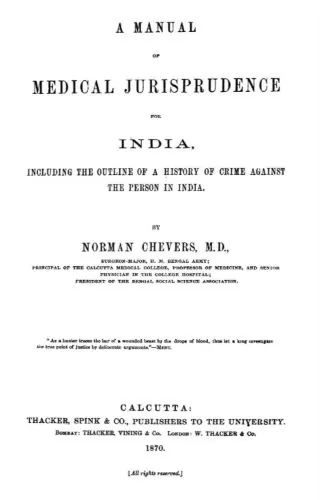
Norman Chevers’s influential Manual of Medical Jurisprudence for India, published in 1870, illustrates the assumptions through which medical writing could reinforce those expectations. The manual connected supposed congenital impotence with bodily characteristics and “female inclinations.” It also circulated claims that habitual sodomy could produce feminine characteristics and cause impotence. These were historical medical assertions, not demonstrated relationships that should be adopted as explanations today. Their structure nevertheless mattered to contemporary classification. If femininity could indicate impotence, and impotence could be associated with prohibited sexual behavior, an observer could move between appearance and alleged conduct without independently establishing either connection. Conversely, presumed sexual practices could influence the interpretation of bodily findings. Medical terminology supplied a causal explanation that made several different observations appear mutually corroborating, even when the account depended heavily on the assumptions joining them.
Earlier physicians had also sought knowledge from hijras themselves. H. Ebden’s 1856 discussion compiled observations by British and Indian doctors, including information supplied by community practitioners who performed castration and cared for people afterward. Hijras contributed practical knowledge that entered medical publication under physicians’ authority. Consultation could also expose patients to consequences beyond treatment. One account discussed by Hinchy described a request for help with urinary retention that resulted in the expulsion of hijras from a cantonment bazaar. Seeking care could bring an entire local group to official attention.
The limits placed on clinical authority became explicit at Mirzapur in 1873. Magistrate Robertson ordered examinations of three registered people whose feminine presentation and reputed conduct had supported their inclusion. The Civil Surgeon concluded that their “masculine power seemed intact,” and their names were removed. Provincial officials reprimanded Robertson, declaring that clinical observation was “neither prescribed nor contemplated by the law,” despite the statute’s express reference to medical inspection. They considered feminine dress and comportment sufficient for treating the three as eunuchs and directed that registration be restored. Robertson defended his decision by appealing to the statutory boundary. He could not see how people found neither castrated nor impotent could remain within that category. The disagreement concerned more than the reliability of a surgeon. It exposed a conflict over which evidence should govern the application of the law when bodily assessment contradicted the province’s preferred indicators. Medical findings could support release from supervision at one administrative level and be rejected at another.
Lucknow’s examinations produced a different difficulty. In 1879, five zenanas were sent to an Assistant Civil Surgeon, who could not conclusively identify any as impotent. Sajad Husain acknowledged impotence but was considered probably not impotent, while Kalu denied it and received an uncertain assessment that likewise did not establish incapacity. Neither a person’s statement nor the examiner’s observations consistently resolved the classification. The resulting administrative account questioned whether further medical inquiry would be useful. Nevertheless, when police assembled another list of seven suspects in 1882, the Deputy Commissioner ordered another examination. The earlier failure to secure a definitive answer prompted renewed use of the same method.
Clinical participation subsequently became more firmly embedded in the procedure. From the early 1880s, provincial instructions called for examinations of people classified as eunuchs who had not undergone castration. By the 1890s, examination had become a prerequisite for new additions to the register. These developments reversed the exclusionary position taken against medical evidence at Mirzapur, but they did not establish a uniformly dependable diagnostic practice. Expanding the examiner’s role increased the occasions on which an uncertain clinical judgment could influence someone’s legal treatment.
Reconstructing those encounters requires restraint because Hinchy’s evidence preserves administrators’ summaries more readily than physicians’ reports. The clinical reports for the episodes she examines were unavailable, limiting what can be established about examination techniques. An earlier case at Muttra, now Mathura, shows how little a brief official conclusion may disclose. In 1871, Dr. Pain and Dr. Playfair examined fourteen-year-old Khyratee; Pain considered the adolescent “backward in development” but physically uninjured. The distinction between delayed development and injury was important, yet it does not permit the historian to supply a complete examination narrative or a retrospective diagnosis. This episode must also remain separate from the better-known prosecution of Khairati in 1884. Similar names do not establish that the records concern the same person.
For those examined, clinical uncertainty could create opportunities alongside considerable pressure. Hinchy finds that inspections were not formally compulsory and that some people refused them, although refusal could itself encourage registration on the assumption that impotence was being concealed. Submission involved a constrained decision. An intimate examination might offer a means of avoiding restrictions that an adverse administrative inference would impose. Because doctors often could not establish impotence in uncastrated people, their hesitation could sometimes assist those seeking exclusion from the regime. Castrated hijras had less scope to pursue that challenge to classification. The consequences of medical involvement differed according to the bodies officials encountered and the grounds on which they considered someone suspect. Expertise neither consistently protected the inspected nor supplied administrators with the certainty they sought. Its practical force depended on whether officials accepted the conclusion and what options remained available to the person whose body had become the subject of inquiry.
Restricting Appearance and Performance: The Economic Consequences of Policing
Section 26 restricted two activities whose relationship was important for earning a living. Registered people could be punished for appearing publicly in feminine clothing or ornaments, but changing their appearance did not necessarily make performance lawful. Dancing, playing music, and participation in public exhibitions were separately prohibited. The provision reached beyond the imposition of a dress standard to restrict work that could remain recognizable as performance in any attire. Compliance with the clothing requirement could still leave a registered person unable to undertake an engagement legally. This distinction helps explain why some local accommodations concerning dress failed to resolve the underlying conflict over employment.
Reports from the first years of enforcement registered the disruption, although their language often presented occupational displacement as improvement. In 1874, the account transmitted from Hamirpur described people deprived of their accustomed work as scarcely knowing what to do next. Hobart reported in 1876 that people in fifteen of twenty-two districts had been forced to abandon their previous calling for work he characterized as menial. He described the replacement occupations as “honest and legitimate,” making the destruction of an established livelihood evidence of moral progress. These statements do not provide complete income histories or establish that every affected performer experienced the same loss. They nevertheless show administrators acknowledging that prohibition compelled changes in work. Skills acquired over years could no longer be exercised openly merely because there were households willing to reward them. Official approval of alternative employment did not demonstrate that suitable work was available to everyone displaced, or that its returns could sustain those who obtained it.
Convictions provide only a partial measure of this pressure. The first year of enforcement, 1872, produced just one successful prosecution for the prohibited activities, yet the impacts were not confined to the person sentenced. Surveillance and the prospect of arrest could discourage work before an offense reached court. Hinchy also identifies unregistered people who abstained from public performance and feminine dress to establish their respectability and avoid inclusion. Their withdrawal reduced exposure to the authorities at the cost of activities through which they had previously earned.
Police interference with appearance could also involve the destruction or compelled disposal of belongings. In a report dated June 21, 1876, Hobart described an older practice in which officers cut hijras’ hair, removed feminine clothing and ornaments, and sold those possessions to purchase male attire. The date belongs to his account of practices preceding the Act, rather than establishing that these actions occurred in 1876. The episode nevertheless locates statutory restrictions within a longer history of coercion affecting material resources. Clothing and ornaments had exchange value alongside their significance for presentation, and the forced sale placed control over that value in police hands. Receiving replacement garments did not restore the owner’s choice over the transaction. Such treatment altered what someone possessed and could wear, while imposing an appearance selected by officers as the acceptable basis for public life.
Some magistrates responded to the difficulty of earning by issuing written permission to perform in male clothing. These arrangements offered a limited opportunity to continue working, but they conflicted with the statute’s separate prohibition of performance by registered people. Provincial correspondence in 1880 and subsequent years criticized accommodations that local authorities had permitted. Returns from Muzaffarnagar and Kheri continued to identify singing or dancing in male attire as occupations, while Hardoi officials likewise reported public performances. The disagreement exposed different judgments about what required suppression. Some administrators regarded feminine appearance as the central problem and were prepared to tolerate the work once clothing changed; others insisted on applying the prohibition to the activity itself. For performers, continued earnings could depend on a local understanding that a superior authority might repudiate. Written permission provided evidence of an accommodation, but its inconsistency with the law prevented it from supplying dependable protection.
Moving an engagement indoors did not automatically resolve the problem. Section 26 included performance for hire in a private house, extending its economic reach into domestic celebrations. The dress provision also covered appearances deliberately intended to be seen from a public place, even when the person stood elsewhere. The law did not impose an unrestricted prohibition on feminine dress in every private circumstance. Provincial authorities rejected proposals for additional powers such as random night searches, preserving limits on intervention into domestic presentation. Those limits mattered, but they did not establish a general right to accept paid performance work behind closed doors.
Other sources of income remained, especially the collection of alms where authorities permitted it without performance. Oldham’s 1875 account helps establish this distinction between requesting contributions and undertaking activities prohibited to registered people. Such earnings could provide support after a familiar occupation became dangerous, although their continuation does not establish that earlier income levels were maintained. A later official return illustrates the difficulty of measuring the result. In 1896, fewer than ten percent of registered people were described as having a definite occupation without resorting to begging. This figure cannot be converted into a claim that everyone else was unemployed, since its categories excluded alms from the employment it recognized. Nor does it show how much support individuals obtained or whether earnings were sufficient. Read alongside the earlier reports of displacement, it indicates that officials’ expectations of replacement employment had not produced a population generally sustained by occupations they approved. The continued presence of people collecting contributions coexisted with substantial interference in how they could earn them.
Breaking Household Continuity: Children and Property
A boy’s presence in a registered person’s home could itself become grounds for prosecution under section 27. The provision concerned boys under sixteen who were kept in the residence, placed in the registered person’s charge, or otherwise under that person’s control. Establishing the offense did not require proving that the child had been kidnapped or injured. Residence and responsibility for care acquired legal significance independently of the circumstances through which the relationship began. This shifted the immediate question from whether a child had suffered an identifiable wrong to whether the person caring for him belonged to a prohibited category. Separation could follow from that classification even where the history of the child’s placement required a more discriminating assessment.
The difficulties of finding replacement care were already apparent before the Act. In 1864, information from a hijra in Mainpuri led police to two castrated boys living with performers described as buggutteas. One, Makhun, was thought to be six or seven. His recorded statement described the deaths of his parents, sale by a relative, and subsequent castration before his transfer to another performer. Removal addressed circumstances involving serious violence, but it did not produce an uncomplicated return to familial protection. Makhun’s surviving uncle refused responsibility because of the child’s perceived loss of caste. Officials also questioned the uncle’s suitability because his son had allegedly participated in the sale, while the family’s residence in the Indian-ruled state of Gwalior complicated police supervision. Admission to the Sikandra Orphanage at Agra was proposed, but Hinchy found no confirmation that the institution received him. His case establishes the need for protection while exposing the uncertainty surrounding what protection would provide after intervention.
Section 28 subsequently authorized magistrates to return boys to parents or guardians if they could be found, or arrange maintenance and education when they could not. It also permitted the use of fines imposed under section 27 toward those expenses. Such provisions acknowledged that removal created responsibilities extending beyond taking a child from a residence. Hinchy finds that officials documented separation and subsequent surveillance more consistently than education or upbringing. The statutory availability of arrangements for care cannot be treated as evidence that suitable arrangements were made in each case.
Guardianship involved another distinction between the household that lost responsibility and the person appointed to assume it. Section 29 disqualified registered people from acting as guardians of any minor, a restriction broader than section 27’s concern with boys below sixteen. Appointed guardians, meanwhile, could be required to undertake an active role in maintaining separation. Correspondence from Benares in 1875 records written agreements binding them to prevent a child’s return to former associates. These undertakings anticipated that attachment might persist after removal and that a child might seek renewed contact. They do not establish a completed escape or reveal every child’s wishes, but they show that officials considered a change of residence insufficient by itself. Continued relationships had to be interrupted through the combined supervision of the replacement guardian and the police. A relationship previously treated as dangerous could remain an object of intervention even after its participants no longer lived together.
Restrictions on gifts and wills extended this interference into the transmission of resources. Registered people were prohibited from making either, limiting ways of supporting another person during life or providing for a successor after death. The prohibition on adopting a son supplied a further impediment to a recognized form of affiliation. These provisions did not abolish ownership or prohibit every transaction involving property. Their importance lay in obstructing specified means through which an owner could direct resources toward people connected to the household.
Property recording gave officials information with which to pursue those objectives. Section 30 authorized demands for disclosure of movable and immovable property, including assets held in trust for a registered person. The resulting documents should be distinguished from the lists recording personal details. At Bulandshahr, a property register dated January 9, 1873, followed the personal register prepared earlier that month. Its subject was the resources possessed by people identified through the registration system. Such records could make assets available for administrative scrutiny without establishing that everything listed had been confiscated. They supplied information about ownership through which later transfers or succession might become matters of official concern.
For a chosen disciple, interference with succession could affect the material support available after a guru’s death. Hinchy describes arrangements through which a chela inherited the guru’s share of household property, connecting personal seniority to resources that could sustain someone who followed. Prohibiting wills and gifts threatened methods of arranging that succession, although it did not establish that every customary transfer was successfully prevented. Reports from 1881 and 1882 indicate that hijras concealed movable property from police, preserving a distinction between what they possessed and what officials could record. The concealment demonstrates that resources remained something household members sought to control despite demands for disclosure. Restrictions on care and on transfers addressed different stages of continuity: who could grow up within a home, who could assume legal responsibility, and what support could pass to another person. Their combined reach helps explain why preserving a household required more than remaining together. It also required retaining the means to provide for its members and support a successor.
Uneven Enforcement: District Decisions and Provincial Boundaries
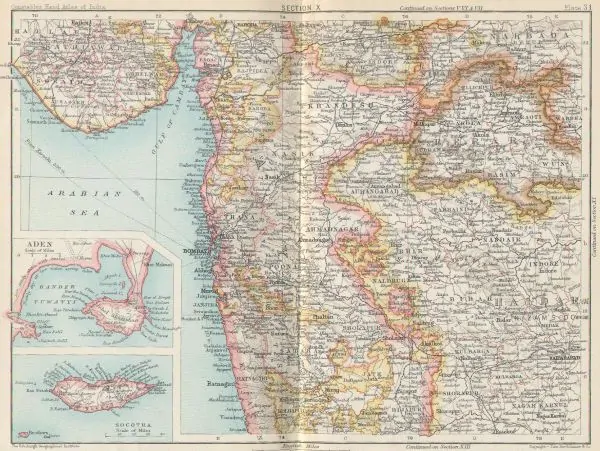
The territory named in the Criminal Tribes Act did not correspond neatly to the area in which its provisions concerning eunuchs became an established administrative practice. The North-Western Provinces remained the principal setting for the campaign, while enforcement in Oudh began in 1877, following its administrative association with the province. Oudh had already been included within the Act’s statutory scope in 1871; the later date marks a change in implementation. Punjab supplies a further distinction between legislative inclusion and administrative action. Although named in the enactment, it did not develop the comparable Part II registration campaign found in the North-Western Provinces. The much wider history of policing under the “criminal tribes” provisions cannot fill that gap, because the two parts authorized different procedures. Provincial boundaries mattered through the decisions made within them, as well as through the formal extent of the law.
Elsewhere, colonial intervention followed different institutional paths. Research on Bombay Presidency shows officials withdrawing hereditary donation-collection rights in 1853 and converting rent-free land into lifetime grants. These measures affected income and succession through arrangements inherited from earlier government, rather than reproducing the northern system of registration. A lifetime grant might maintain support for its current holder while preventing its continuation on the same terms after death. The absence of Part II does not establish that officials accepted hijra livelihoods or left community resources undisturbed. It identifies a different administrative relationship, in which existing claims on government recognition provided the means of interference. Incorporating Bombay’s experience into a single account of the northern campaign would obscure both the instruments employed and the histories through which officials acquired leverage.
Differences also appeared within the campaign’s central province. Hinchy’s comparison of registration figures identifies three entries in Kumaon against nearly one hundred in Aligarh. These are administrative totals, not reliable measurements of the relative size of hijra communities. They reflect decisions about whom officers identified and considered appropriate for inclusion, alongside differences in their ability or willingness to investigate. Reading the disparity simply as a population distribution would turn the results of policing into an apparently independent description of society.
Maintaining supervision required capacities that the provincial government could demand more readily than district officers could supply. In Banda, authorities reported information that performances continued but acknowledged that police had failed to catch the people concerned performing. The report establishes a difficulty in converting intelligence into an observed offense; it does not independently verify every allegation conveyed to the authorities. More generally, officers’ responsibilities extended well beyond this campaign, and the attention assigned to registered people competed with other administrative work. Hinchy places these limitations within the incomplete development of colonial policing, including uneven resources and the prioritization of activities considered more immediately important to government. A district’s limited enforcement could arise from constraints different from a considered objection to the law. Conversely, energetic implementation might reflect some officials’ priorities rather than a uniformly functioning system. Variation could occur between police jurisdictions within a district, making the district itself too broad a unit for assuming consistent treatment.
Judicial outcomes added another dimension to these differences. Reported sentences for prohibited appearance and performance ranged from fines of a few rupees to imprisonment lasting several months, with some reaching two years. Without the full circumstances of each prosecution, the range cannot be attributed entirely to contrasting opinions among magistrates. It nevertheless establishes materially different possible consequences under the same enactment. Identical provincial instructions did not ensure that an encounter with police would produce the same prosecution or penalty. The history of enforcement must include what happened after detection, rather than treating arrest or inclusion on a register as a sufficient account of someone’s exposure.
Movement brought these discontinuities into the practical decisions of people subjected to supervision. Part II lacked the pass system used elsewhere under the Act to restrict movement, leaving opportunities for temporary journeys across districts and political boundaries. Hinchy identifies travel into other British provinces and Indian-ruled states as means of obtaining periods in which performance or feminine presentation attracted less immediate interference. A change of location could alter which officers knew a person’s history and whether the registration regime operated locally. Crossing a district boundary did not necessarily extinguish an existing legal liability, just as entering an Indian-ruled state did not remove every form of colonial influence. Its value could instead be temporary and practical. Distance from certain officers or access to a place where supervision was less effective. Such movements made the reach of the campaign something experienced through journeys and encounters, rather than solely through the territorial descriptions printed in legislation.
Continuing under Surveillance: Historical Voice Between Negotiation and Evasion
Petitions offered one means of demanding continued access to work within the government’s own procedures. Hinchy identifies numerous appeals for permission to perform, supported by descriptions of the damage prohibition had done to livelihoods. These requests made the results of enforcement a subject on which the authorities were asked to respond. Provincial rejection did not make the act of petitioning inconsequential. Applicants had articulated claims about subsistence that officials could not incorporate easily into accounts of supposedly desirable occupational reform. Nevertheless, the surviving governmental references provide an incomplete record of what petitioners said and how their arguments developed. They establish efforts to secure concessions without allowing every appeal to be reconstructed as a declaration of opposition to colonial rule.
Other negotiations occurred through presentation rather than a written request. In Hardoi, an 1881 report described people combining elements of male and female clothing. Hinchy interprets this mixture as an accommodation to official expectations that retained aspects of feminine embodiment. The reported practice complicates a division between complete compliance and open defiance. Its significance lies in the adjustment itself, although the evidence does not establish how every observer interpreted the clothing or whether it reliably prevented prosecution.
Statements about being born a eunuch presented another difficulty for administrative expectations. In Saharanpur city in 1865, the people recorded in one apparent household shared this description of themselves. Hinchy situates its recurrence within forms of public self-representation that interacted with local knowledge and official classifications. The account cannot simply be treated as a fabrication devised in response to police pressure. Nor can its English wording establish a modern medical diagnosis or reproduce exactly the terms speakers used. It did place an account of personal origins before officials that differed from their expectation of recruitment through abduction and castration. Accepting that description would alter what an inquiry could establish about the person’s past; rejecting it required an official judgment about credibility. The encounter concerned whose explanation of a life would be allowed to stand.
Ameer Bux’s recorded history preserves a longer trajectory than the circumstances of initiation alone. Listed as sixty in the Muzaffarnagar inquiry of 1873, Ameer Bux reportedly remained with a mother until about fourteen before joining Mungloo’s household. The account described a subsequent operation elsewhere and a return to Jansath, where dancing became the principal occupation. By the time of the inquiry, Ameer Bux was identified as a guru with disciples. These details trace changes in residence and standing across several decades, placing an established teacher within a history of earlier dependence. They do not establish consent at every stage or provide an uninterrupted account of those years. Their value is that the person under investigation emerges as someone who had acquired skills and a position through which others had come into association. The official record retained enough sequence to make that development visible, despite organizing its questions around different concerns.
The same inquiry also preserved indications of fear and isolation. Pearee, listed as forty but described as old, was reported to be afraid of police attention. Kureemun, recorded as fifty, appeared as lonely and without “hope for the future.” These descriptions should remain attributed to the account that preserves them, rather than being converted into verbatim speech. Kureemun’s biography also reported childhood kidnapping and sale, making it difficult to assign the recorded outlook exclusively to the effects of registration policy. A longer personal history stood behind the moment of inquiry. Neither person needs to be represented as constantly resisting for the account to matter historically. Fear and limited expectations belong within the history of living under supervision alongside more visible attempts to obtain concessions.
Incomplete disclosure presents a related problem. A Bulandshahr entry recorded Busuuta as having been brought “from somewhere” by Fyzoo, who had since died. The statement preserved an association while leaving its location and circumstances unresolved. Such an omission might reflect an unavailable memory or information lost during the preparation of the record; deliberate withholding is another possibility, but it cannot be established from the phrase alone. Treating every silence as successful evasion would impose a confidence about intention that the surviving account does not support.
Hinchy’s disagreement with Anjali Arondekar helps clarify what historians can seek in these fragments. As discussed by Hinchy, Arondekar warns that efforts to recover a hidden sexual subject can reproduce the demand for disclosure that structured colonial documentation. Hinchy accepts the importance of examining how records were made, but argues that abandoning recovery altogether leaves too little room for investigating the lives affected by those practices. The distinction matters when an inquiry preserves both an imposed category and details that exceed it. Ameer Bux’s career and the fears attributed to Pearee cannot settle every question of self-identification, yet they permit a history extending beyond officials’ definitions of criminality. Reading them requires keeping the mediation of the document visible while allowing its subjects’ recorded actions and circumstances to become more than illustrations of administrative power.
How Much Can One Murder Case Explain?
The following video from Rohan Davis discusses the attempted erasure of trans people in colonial India:
The strongest objection to centering this history on Bhoorah’s death concerns the explanatory weight assigned to an unusually well-documented prosecution. A compelling opening can make subsequent developments appear to follow from an event whose importance was partly constructed afterward. Later officials’ references to the 1852 proceedings demonstrate that the judgment remained available for administrative use; they cannot establish that legislation would have been impossible without it. Indeed, the repeated presentation of that prosecution as an initial revelation deserves scrutiny as an official claim about the government’s own past. Administrators could give their proposals an appearance of accumulated authority by assembling earlier allegations into a continuous history of concern, even when investigation had been intermittent and agreement incomplete. An essay organized around the murder risks reproducing the coherence that those officials sought to impose upon their activities. The case’s prominence in surviving correspondence must be weighed against the wider circumstances that made its successive revivals useful.
The intervening chronology places substantial limits on any direct causal explanation. The inquiries following the murder produced no immediate special legislation, while the provincial request submitted in 1861 received no answer. These interruptions reveal that expressions of alarm could coexist with prolonged administrative inaction. Each renewed attempt required officials to persuade other authorities that existing arrangements were inadequate and additional intervention warranted. The nineteen years separating Bhoorah’s death from the Criminal Tribes Act belong within the explanation; they record opportunities for different decisions, rather than merely the time required to complete an already determined project.
A more difficult challenge comes from the evidence of abuse that entered official discussion during those years. Historians cannot evaluate allegations of kidnapping, sale, or imposed castration solely by identifying the prejudices of the people who recorded them. Hinchy’s reconstruction of Makhun’s testimony, for example, preserves an account of a child’s sale by a relative and subsequent bodily injury that demands consideration in its own right. Recognizing the mediation of that statement does not justify dismissing its substance, especially when doing so would again subordinate a child’s experience to an argument principally concerned with adults. A hijra informant’s contribution to bringing the case to police attention further demonstrates that members of the targeted community could themselves seek intervention against abuse. Such evidence gives the protective argument a seriousness that an account of wholly fabricated danger would miss. It also makes precision essential when assessing the resulting legislation. Investigating an alleged assault and prohibiting a registered person’s public feminine appearance addressed substantially different conduct. The existence of injured children supplied grounds for investigating people but could not by itself establish the culpability of unrelated householders or performers. The interpretive issue is how officials enlarged the implications of such cases until prevention encompassed restrictions on livelihoods and family relationships whose connection to a demonstrated offense could remain uncertain.
Regional comparison further weakens an explanation resting on either one prosecution or a broadly shared British moral outlook. Colonial authorities elsewhere pursued policies affecting hijra income and hereditary support through different institutional routes, while disparaging attitudes did not everywhere produce an equivalent campaign of registration. The ambivalent treatment of hijras by earlier Indian elites complicates any account in which social hostility began with the Mainpuri proceedings. These longer histories require me to explain why officials made suppression an urgent governmental responsibility at particular moments. Hinchy’s attention to administrative patronage in the North-Western Provinces is valuable here. Networks of officials committed to moral improvement helped sustain the issue across changes of office. The continuing relevance of the murder judgment depended partly on institutions and relationships that preserved an audience for its claims.
These challenges require a narrower account of the prosecution’s historical significance. Bhoorah’s death provided an occasion on which judicial officials attached general claims about hijras to the adjudication of a killing; subsequent administrators repeatedly returned to that discussion when advancing their own proposals. This documented reuse supports an argument about the transmission of authority, while leaving open how much any individual reference influenced a later decision. It also directs attention to the additional work necessary to secure legislation and implement it, including fresh investigations and contested judgments about the people who should fall within its reach. The final interpretation must distinguish the government’s retrospective account of a persistent problem from the uneven sequence through which officials actually expanded their powers. Following Bhoorah’s case remains valuable because it makes those acts of selection and enlargement unusually visible. Its explanatory force rests on revealing how a prosecution could be repeatedly repurposed within a developing campaign, without making that prosecution responsible for everything the campaign eventually became.
Conclusion: What Became Enforceable after Bhoorah’s Death
The legal transformation examined here gave an administrative designation consequences that a hostile description alone could not produce. Under Part II of the Criminal Tribes Act, officials could register people on specified grounds of suspicion without first securing a criminal conviction. Enrollment then changed the legal significance of subsequent conduct. Feminine appearance in public and forms of performance became grounds for prosecution when undertaken by registered individuals. Restrictions on household arrangements extended that intervention into relationships of dependence and care, while disabilities concerning wills and gifts obstructed the transmission of resources. These provisions enabled authorities to interfere with the conditions under which hijra households sustained themselves across generations. The resulting power exceeded the investigation of injuries because it made an official classification the basis for continuing restrictions on people whose responsibility for those injuries had never been established.
Making this system operate required repeated decisions about what evidence deserved authority. Police descriptions could turn clothing into an indication of suspected criminality, while medical assessments offered an apparently firmer basis for determining who belonged within the statutory category. Neither procedure resolved the differences among the people whom officials called “eunuchs.” Disputed examinations and changing registration practices instead reveal that enforceable decisions could emerge from knowledge that remained unsettled. The forms themselves gave fragmentary information a structured appearance, allowing an entry about an individual to be read alongside other entries as evidence about a population. Yet the resulting records depended on translations and local understandings that provincial instructions could never fully control. Their contents bear traces of that dependence, including explanations of household membership that complicated official assumptions about recruitment or abuse. Administrative authority rested partly on the ability to decide when an uncertain account was sufficient for intervention. This is the broader significance of the registers; they joined the production of knowledge to decisions that could alter someone’s means of support, without requiring the ambiguities in that knowledge to be settled beforehand.
The impacts must nevertheless be located within the districts and provincial arrangements through which officials exercised these powers. Differences in enforcement affected how readily registered people could continue earning money or preserve important relationships. Continued performance and household survival demonstrate limits to suppression, although neither establishes that the intervening pressures were slight. Evaluating the campaign solely against its ambition of eliminating hijra communities would obscure the losses imposed along the way, including disruptions that never produced a successful prosecution or a complete official account.
Bhoorah’s own position gives this history its sharpest measure of institutional responsibility. She was a person whose killing required investigation, and the judgment concerning that killing also became a source of assertions about the community to which she belonged. Following those assertions into later administration reveals how far their uses could travel beyond the circumstances that originally brought them before a court. The critical change concerned the standing of hijras as people entitled to ordinary security. Officials increasingly treated their continued collective existence as something government should constrain. Recognizing that development does not require assigning every later intervention to the murder proceedings, nor does it diminish the seriousness of acts of exploitation investigated afterward. It requires keeping the protection owed to an injured person distinct from the authority claimed over others in that person’s name. Bhoorah’s household did not have to satisfy colonial expectations of respectable life for her death to warrant justice, and the people associated with her should not have had to surrender their livelihoods or relationships to establish their own claim to protection.
Bibliography
- Arondekar, Anjali. For the Record: On Sexuality and the Colonial Archive in India. Durham, NC: Duke University Press, 2009. Discussed in Jessica Hinchy, “The Eunuch Archive,” 129–30.
- Barron. Letter to the Commissioner of Delhi, August 22, 1910. India Office Records, British Library, London, IOR/L/PJ/5/82. Cited in Jessica Hinchy, Governing Gender and Sexuality in Colonial India, 2.
- Carmichael, C. P. Letter to the Inspector-General of Police, March 24, 1875. Uttar Pradesh State Archives, Allahabad, COV/119/12. Discussed in Jessica Hinchy, “Deviant Domesticities and Sexualised Childhoods,” 275–276.
- Chevers, Norman. A Manual of Medical Jurisprudence for India, Including the Outline of a History of Crime against the Person in India. Calcutta: Thacker, Spink and Co., 1870. Discussed in Hinchy, “Troubling Bodies,” 204.
- Council of the Governor-General of India. Abstract of the Proceedings of the Council of the Governor-General of India. October 12, 1871. “Criminal Tribes’ Bill.”
- Couper, G. Letter to the North-Western Provinces member of the Legislative Council of India, February 12, 1861. India Office Records, British Library, London, IOR/P/235/33. Cited in Jessica Hinchy, Governing Gender and Sexuality in Colonial India: The Hijra, c.1850–1900 (Cambridge: Cambridge University Press, 2019), chap. 1.
- Dalmahoy, P. C. “Report on a Case of Kidnapping.” December 9, 1865. India Office Records, British Library, London, IOR/P/438/61. Discussed in Jessica Hinchy, “Deviant Domesticities and Sexualised Childhoods,” 271–272.
- —-. “Statement of Makhun Eunuch, 6 or 7 Years Old.” Circa 1865. India Office Records, P/438/61. British Library, London. Quoted in Jessica Hinchy, “Deviant Domesticities and Sexualised Childhoods.”
- Dodd, C. A. Circular to district superintendents of police, North-Western Provinces, June 30, 1865. India Office Records, British Library, London, IOR/P/438/61. Cited in Jessica Hinchy, Governing Gender and Sexuality in Colonial India, 36.
- Drummond, R. “General Remarks to Cases No. 79 of 1864, and Nos. 16, 17, 18, and 19 of 1865.” Circa 1865. India Office Records, British Library, London, IOR/P/438/61. Discussed in Jessica Hinchy, Governing Gender and Sexuality in Colonial India, 36.
- Dutta, Aniruddha. “An Epistemology of Collusion: Hijras, Kothis and the Historical (Dis)continuity of Gender/Sexual Identities in Eastern India.” Gender & History 24:3 (2012), 825–849.
- —-. Globalizing through the Vernacular: Kothis, Hijras, and the Making of Queer and Trans Identities in India. London: Bloomsbury Academic, 2024.
- Elliot, C. A. Letter to the Commissioner of Allahabad, March 19, 1873. Uttar Pradesh State Archives, Allahabad, COV/119/12. Cited in Jessica Hinchy, “The Eunuch Archive.”
- Gariyali, C. K., and Priyadarshini Rajkumar. Transgender in India—Achievers and Survivors: An Ode to Transwomen. Chennai: Saraswathi Educational Cultural and Charitable Trust, 2021.
- Government v. Ali Buksh. Decisions of the Nizamat Adalat, North-Western Provinces 2 (1852): 1314–16. Quoted in Jessica Hinchy, Governing Gender and Sexuality in Colonial India: The Hijra, c.1850–1900 (Cambridge: Cambridge University Press, 2019), 1.
- Government v. Munsa and Four Others. Decisions of the Nizamut Adawlut, North-Western Provinces 10 (1860), decision of March 6. Discussed in Jessica Hinchy, Governing Gender and Sexuality in Colonial India, 35.
- Government of India. The Criminal Tribes’ Act, 1871. Act XXVII of 1871, pt. II.
- —-. The Indian Penal Code, 1860. Act XLV of 1860, sec. 377.
- Hinchy, Jessica. “Deviant Domesticities and Sexualised Childhoods: Prostitutes, Eunuchs and the Limits of the State Child ‘Rescue’ Mission in Colonial India.” In Divine Domesticities: Christian Paradoxes in Asia and the Pacific, edited by Hyaeweol Choi and Margaret Jolly, 247–279. Canberra: ANU Press, 2014.
- —-. “The Eunuch Archive: Colonial Records of Non-Normative Gender and Sexuality in India.” Culture, Theory and Critique 58:2 (2017), 127–146.
- —-. Governing Gender and Sexuality in Colonial India: The Hijra, c.1850–1900. Cambridge: Cambridge University Press, 2019.
- —-. “Hijras and South Asian Historiography.” History Compass 20:1 (2022), e12706.
- —-. “Obscenity, Moral Contagion and Masculinity: Hijras in Public Space in Colonial North India.” Asian Studies Review 38:2 (2014), 274–294.
- —-. “‘Registers of Eunuchs’ in Colonial India.” History Workshop, April 29, 2019.
- —-. “The Sexual Politics of Imperial Expansion: Eunuchs and Indirect Colonial Rule in Mid-Nineteenth-Century North India.” Gender & History 26:3 (2014), 414–437.
- —-. “Troubling Bodies: ‘Eunuchs,’ Masculinity and Impotence in Colonial North India.” South Asian History and Culture 4:2 (2013), 196–212.
- Hobart, R. T. Letter to the Inspector-General of Police, North-Western Provinces, June 21, 1876. Uttar Pradesh State Archives, Allahabad, COV/119/12. Discussed in Jessica Hinchy, “Obscenity, Moral Contagion and Masculinity,” 284.
- —-. Letter to the Inspector-General of Police, North-Western Provinces, June 28, 1876. India Office Records, British Library, London, IOR/P/839. Discussed in Jessica Hinchy, “Obscenity, Moral Contagion and Masculinity,” 283.
- Holderness, T. W. Letter to the Inspector-General of Police, North-Western Provinces and Oudh, August 7, 1896. Uttar Pradesh State Archives, Allahabad, COA/18/5. Discussed in Jessica Hinchy, “Obscenity, Moral Contagion and Masculinity,” 283.
- Low, G. J. “Report.” September 14, 1882. India Office Records, British Library, London, IOR/P/2002. Discussed in Jessica Hinchy, “Troubling Bodies,” 205.
- Magistrate of Bulandshahr. “Register of Property Possessed by Eunuchs Borne on the Rolls of Register No. 1, Zillah Bollundshuhur.” January 9, 1873. Uttar Pradesh State Archives, Allahabad, COM/29/8. Cited in Jessica Hinchy, “Deviant Domesticities and Sexualised Childhoods,” 259.
- Magistrate of Muttra. Letter to the Commissioner of Agra, January 26, 1871. India Office Records, British Library, London, IOR/P/92. Discussed in Jessica Hinchy, “Troubling Bodies,” 205–206.
- North-Western Provinces Government. Routine proceedings, March 1873, no. 75; February 1880, no. 87; September 1880, no. 77; January 1881, no. 12. India Office Records, British Library, London, IOR/P/95, IOR/P/1467, and IOR/P/1614. Cited in Jesica Hinchy, “Obscenity, Moral Contagion and Masculinity,” 286.
- Oldham, W. Letter to the Commissioner of Benares, February 6, 1875. Uttar Pradesh State Archives, Allahabad, COV/119/12. Discussed in Jessica Hinchy, “Obscenity, Moral Contagion and Masculinity,” 285.
- Preston, Laurence W. “A Right to Exist: Eunuchs and the State in Nineteenth-Century India.” Modern Asian Studies 21:2 (1987), 371–387.
- Robertson, C. Letters to the Inspector-General of Police, North-Western Provinces and Oudh, July 12, 1880, and September 19, 1881. India Office Records, British Library, London, IOR/P/1467 and IOR/P/1614. Discussed in Jessica Hinchy, “Obscenity, Moral Contagion and Masculinity,” 283–284.
- Robertson, H. D. “Statement of Eunuchs in the Saharunpoor District.” October 24, 1865. Uttar Pradesh State Archives, Allahabad, COM/9/2. Discussed in Jessica Hinchy, “The Eunuch Archive.”
- Robertson, Magistrate of Mirzapur. Letters to the Commissioner and Officiating Commissioner of Benares, March 28, June 9, and July 1, 1873. Uttar Pradesh State Archives, Allahabad, COV/B119/SN12. Discussed in Hinchy, “Troubling Bodies,” 205.
- Short, W. A. “List of Eunuchs in the District of Mozuffurnuggur.” Circa January 1873. Uttar Pradesh State Archives, Allahabad, COM/29/8. Discussed in Jessica Hinchy, “The Eunuch Archive.”
- Simson, J. Letter to the Secretary to the Government of the North-Western Provinces, December 31, 1860. India Office Records, British Library, London, IOR/P/235/33. Cited in Jessica Hinchy, Governing Gender and Sexuality in Colonial India: The Hijra, c.1850–1900 (Cambridge: Cambridge University Press, 2019), chap. 1.
- Simson, R. Circular to commissioners of the North-Western Provinces, June 9, 1865. India Office Records, British Library, London, IOR/P/438/61. Quoted in Jessica Hinchy, Governing Gender and Sexuality in Colonial India, 2.
- Smith, O. L. Letters to the Inspector-General of Police, July 6, 1881, and May 15, 1882. India Office Records, British Library, London, IOR/P/1614 and IOR/P/1816. Discussed in Jessica Hinchy, “Deviant Domesticities and Sexualised Childhoods,” 277.
- Tyrwhitt, E. Letter to the Secretary to the Government of the North-Western Provinces, June 26, 1874. India Office Records, British Library, London, IOR/P/96. Discussed in Hinchy, “Obscenity, Moral Contagion and Masculinity,” 283.
- Vakoch, Douglas A., ed. Transgender India: Understanding Third Gender Identities and Experiences. Cham, Switzerland: Springer, 2022.
Originally published by Brewminate, 10.28.2026, under the terms of a Creative Commons Attribution-NonCommercial-NoDerivatives 4.0 International license.
About the Author