
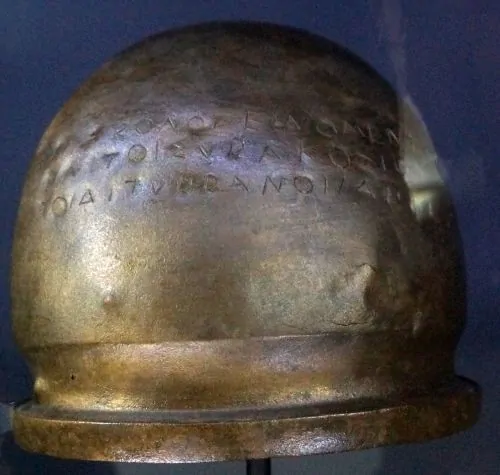
Syracuse’s overthrow of Thrasybulus ended the Deinomenid dynasty in 466–465 BCE, but the democracy that followed still had to decide who could share fully in the city’s political life.

By Matthew A. McIntosh
Public Historian
Brewminate
Introduction: When Removing the Tyrant Was No Longer Enough
In 466–465 BCE, opponents of Thrasybulus forced him to abandon Syracuse, bringing an end to the government of the Deinomenid family. He had succeeded his brother Hieron, but the authority inherited with that position proved insufficient to contain an organized revolt. Military assistance from neighboring communities strengthened the opposition, and defeats on land and at sea preceded an agreement permitting his departure for Locri in southern Italy. Another member of the ruling house did not take his place. The historical problem extends beyond explaining why Thrasybulus lost power, for his removal became the occasion for ending his family’s control of the city.
The surviving accounts offer different explanations of that transformation. Writing in the first century BCE, Diodorus Siculus presents Thrasybulus’s government as the culmination of a deterioration in the conduct of successive rulers. Executions and confiscations drove citizens toward resistance, while their selection of leaders converted hostility into coordinated action. His narrative gives considerable prominence to civic solidarity and the assistance that made armed opposition effective. Aristotle, writing much closer to the events but still more than a century afterward, locates a decisive weakness within the ruling group itself. According to his account, connections of Gelon’s son organized against Thrasybulus with the intention of preserving the tyranny, only for their confederates to exploit the opportunity and expel the ruling group altogether. This explanation introduces conflicting purposes within the opposition and separates the aims of those who helped initiate the movement from the settlement it ultimately produced. The accounts can illuminate one another, but combining them into a seamless narrative would obscure the different problems each author sought to explain.
The central argument developed here is that the overthrow became a rejection of continued family government when opponents acquired the capacity to determine a settlement beyond the dynasty’s internal arrangements. Organized resistance, reinforced by outside assistance, made a political future without a Deinomenid ruler practicable. That interpretation does not require every participant to have begun with a common constitutional program or a principled objection to hereditary government. It instead directs attention to the changing distribution of power within a coalition whose members could cooperate against Thrasybulus while disagreeing about what should follow. The emergence of Syracusan democracy must be examined through that local struggle, with due attention to the limited evidence for its early institutions.
The meaning of victory also developed through the decisions made after the ruler’s departure. Diodorus describes the establishment of a public commemoration of liberation, centered on Zeus Eleutherios and recurring celebrations of the city’s freedom. Such observances represented the overthrow as an achievement belonging to the political community, giving an enduring public interpretation to a conflict whose participants may have pursued different objectives. Yet the boundaries of that community remained disputed. Men who had received citizenship under Gelon subsequently faced exclusion from magistracies, a restriction that should not automatically be treated as the cancellation of every civic right. Their resistance exposed unresolved disagreements about whether standing acquired under the former rulers entitled its holders to participate fully in the new government. The selective character of political participation complicates any account of the revolt as an uncomplicated popular emancipation. Syracuse had ended the ruling family’s control, but the authority to govern now depended on contested judgments about who could share in the liberated city.
Reading the Revolt through Diodorus and Aristotle
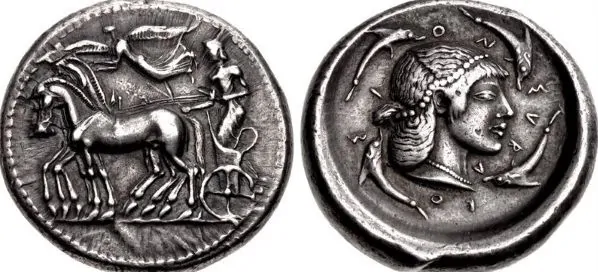
The evidentiary difficulty begins with the absence of a surviving contemporary narrative of the revolt. Neither Aristotle nor Diodorus reproduces the deliberations through which opponents of Thrasybulus determined their objectives, and neither supplies testimony that can be securely attributed to an identifiable participant. Their accounts preserve valuable information, but that information has already undergone selection and interpretation. Aristotle incorporates the episode into an investigation of political instability, whereas Diodorus gives it a place within a universal history concerned with the conduct and fortunes of rulers. Reading them critically requires attention to what each author considered worth explaining, as well as to the circumstances neither thought necessary to record.
Diodorus’s treatment of the Deinomenids reveals how moral judgment could operate as an explanation of political endurance. His praise of Gelon extends beyond approval of a successful commander to the claim that humane government produced lasting attachment. In his account of Gelon’s death, the historian explicitly presents the preservation of a benefactor’s reputation as a useful function of historical writing. This declared purpose matters when the subsequent narrative attributes declining support to the behavior of Gelon’s successors. Hieron allegedly benefited from the esteem in which his brother remained held, even among people dissatisfied with his own government. Loyalty to an earlier ruler could consequently restrain opposition to a later one. Diodorus makes that inherited reputation part of the explanation for the dynasty’s survival, rather than treating succession alone as sufficient to secure obedience. Yet his report that Hieron received heroic honors at Catana sits alongside his condemnation of Hieron’s character, reminding the reader that different communities could remember the same ruler through different relationships.
Collective descriptions demand equally close scrutiny. Diodorus represents the Syracusans as acting together, but his own account identifies the selection of leaders and an appeal for outside assistance, both of which imply decisions requiring organization. These details support the existence of coordinated resistance without revealing how widely leadership was distributed or whether disagreements preceded the decisions recorded. The language of unanimity gives the movement a coherent public identity while leaving its internal negotiations largely inaccessible.
Chronological presentation creates a separate problem because Diodorus sometimes arranges an explanation around its outcome. He announces Thrasybulus’s expulsion before returning to the earlier history of the family, allowing readers to encounter the preceding governments with their eventual collapse already in view. His assessment of the settlement then looks forward across the ensuing decades. These movements through time are explicit features of the narrative, although they can disappear when individual passages are extracted as straightforward chronological evidence. The later account of liberation ceremonies similarly returns to decisions associated with the overthrow, despite appearing under a subsequent annual heading. Its position cannot by itself establish the precise date of the inaugural celebration or demonstrate that constitutional deliberation began only in the year where Diodorus places the passage. The description of Sicilian prosperity also introduces renewed warfare and civic conflict within the same broad historical survey. Such summaries need to be read as judgments about the character of a period, with their apparent generality qualified by the episodes that follow.
Aristotle approaches the Syracusan example through distinctions established in the fifth book of the Politics. At the beginning of that discussion, he separates attempts to change a constitution from struggles to acquire control while preserving the existing form of government. This distinction gives analytical precision to his subsequent treatment of the Deinomenid collapse. The connections of Gelon’s son sought an alteration within the ruling arrangement, while the confederates’ eventual action destroyed the arrangement they intended to retain. The anecdote illustrates how cooperation against an incumbent could produce a constitutional result exceeding the purposes of some organizers. Its brevity reflects that explanatory function, leaving the recruitment of supporters and the timing of their changing relationships almost entirely undescribed.
Even translation can alter the apparent social character of Aristotle’s account. Benjamin Jowett identifies those who exceeded the dynastic faction’s objectives as “those of the people,” whereas H. Rackham uses the less socially specific expression “their confederates.” The Greek designation does not itself establish a uniform economic position or identify every associate as a representative of a clearly defined popular constituency. Describing these actors as democrats from the moment of recruitment would supply a political identity that the passage leaves uncertain, although their eventual rejection of the ruling group remains central to Aristotle’s explanation.
Agreement between the accounts does not automatically establish independent corroboration. Diodorus drew on earlier historical writing, much of which has disappeared, and the route by which information about the Deinomenids reached him cannot be recovered for every passage. Assigning his description wholesale to Ephorus or Timaeus would substitute an uncertain attribution for an acknowledged gap in the evidence. Aristotle’s notice likewise cannot simply be inserted into Diodorus’s sequence as a securely dated preliminary episode. Eric Robinson’s examination of Syracusan democracy offers a useful model for assessing scattered constitutional testimony within the different contexts in which ancient authors employed it. Applied here, that approach permits a reconstruction grounded in the reported struggle while preserving uncertainty about its participants’ changing expectations. The sources provide firmer evidence for the destruction of the dynasty’s government than for the exact sequence through which its opponents agreed upon that result.
The City the Deinomenids Had Remade
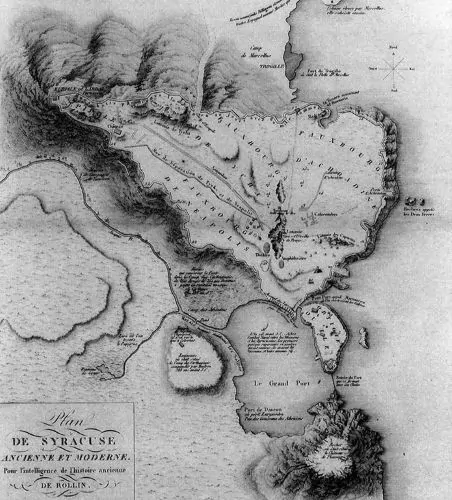
Before taking possession of Syracuse, Gelon had established his position within the military leadership of Gela. Herodotus identifies him as a cavalry commander under Hippocrates, whose campaigns had expanded Geloan power across eastern Sicily. When Hippocrates died, Gelon initially supported the dead ruler’s sons against opposition among the Geloans, then displaced those he had ostensibly defended and secured the government for himself. His advancement depended on military standing and the manipulation of an existing succession dispute. The resources he subsequently brought to Syracuse had developed through service within another ruler’s following, rather than through an established claim upon the Syracusan community. The origins of Deinomenid supremacy already demonstrated how protection of another person’s position could become an opportunity to acquire power.
At Syracuse, conventionally dated to around 485 BCE, Gelon intervened in a conflict that had divided the inhabitants before his arrival. The Gamoroi, a group of landholders, had been expelled by the citizen populace acting together with the Killyrioi, whom Herodotus describes as the landholders’ slaves. The precise composition of this dependent population remains debated, and its identification with a single indigenous ethnic group should be treated cautiously. What matters for the immediate political sequence is that the expelled landholders found an external supporter capable of restoring them. Gelon brought them back from Casmenae, after which, according to Herodotus, the Syracusan populace surrendered the city and themselves to him. His intervention therefore combined assistance to a displaced elite with the acquisition of supremacy over the community to which its members returned. The restoration provided local allies, but their recovery of position did not amount to recovery of exclusive control over Syracuse. Any account that begins with a united body of established citizens confronting the dynasty would erase the divisions through which Gelon first entered the city.
Syracuse became the principal center of Gelon’s activities, while responsibility for Gela passed to his brother Hieron. This allocation joined family relationships to the management of communities that retained their separate identities. Syracuse’s harbors and access to productive territory offered considerable advantages for maintaining forces and supporting an expanding urban population. Its development also drew upon resources acquired through the family’s operations elsewhere. Gelon’s concentration on Syracuse made the city the chief beneficiary of policies whose costs could fall heavily upon neighboring settlements. The resulting concentration of strength was inseparable from the redistribution of people, since the growth of the ruling center required decisions about where others would live and on what terms they would belong.
Population transfers gave those decisions an unusually direct expression. Herodotus reports that Gelon brought the inhabitants of Camarina to Syracuse and demolished their former town, while also transferring more than half the population of Gela. Admission to Syracusan citizenship accompanied these movements, although the conferral of civic standing should not make the displacement itself appear voluntary. Different treatment awaited the inhabitants of Megara Hyblaea and Sicilian Euboea. In describing their fate, Herodotus distinguishes the wealthier people, whom Gelon incorporated as citizens, from the commonalty sold into slavery for removal from Sicily. His account emphasizes the disturbing reversal through which wealthy Megarians implicated in resistance received favorable treatment, while people who had expected protection because they had not initiated the conflict were enslaved. Gelon’s judgment about the usefulness of prospective inhabitants outweighed any consistent correspondence between responsibility for opposition and punishment. These measures selected newcomers partly through social distinctions, but they should not be generalized into an invariable policy toward every conquered community. Syracuse grew through interventions that could confer valued membership upon some displaced people while extinguishing the freedom of others.
Military recruitment introduced another population whose place in Syracuse would outlast the circumstances of its arrival. Diodorus attributes to Gelon the admission of more than ten thousand foreign mercenaries into the citizen body. The figure comes from his later discussion of civic conflict and does not establish that every enrollment occurred in a single operation. Such grants connected service to the ruler with recognized standing within the city. Once admitted, these men possessed claims that cannot adequately be described by treating them only as an external garrison. Their relationship with Gelon helped explain their incorporation, but citizenship gave their presence a significance extending beyond continued employment by his household.
Himera supplied a different foundation for the family’s prominence. In 480 BCE, Gelon and Theron of Akragas defeated the Carthaginian expedition commanded by Hamilcar, giving Gelon a military achievement of exceptional importance within Sicilian Greek memory. The conflict itself had emerged from relationships more complicated than a confrontation between two uniformly opposed peoples. Herodotus connects Carthaginian intervention with the expulsion of Terillus from Himera by Theron and with the assistance Terillus received through Anaxilas of Rhegium. Greek rulers and displaced claimants thus participated in the circumstances that brought the expedition to Sicily. Victory nevertheless enabled Gelon to associate his leadership with protection against a formidable external force. That reputation could encourage attachment among people who valued security, even as other communities experienced the expansion of his power through dispossession. The capacity to defend and the capacity to coerce belonged to the same military establishment, although their benefits and burdens were distributed unequally.
Under Hieron, the reconstruction of eastern Sicily continued through the refoundation of Catana as Aetna, conventionally dated to 476–475 BCE. Diodorus describes the removal of the inhabitants of Catana and Naxos to Leontini, followed by the installation of a new population at Catana. His reported ten thousand settlers comprised five thousand people from the Peloponnese and an equal number drawn from Syracuse. This composition matters because the foundation cannot be reduced to the insertion of an exclusively foreign mercenary population into a local community.
Syracusans themselves participated in a settlement that displaced other inhabitants and established fresh claims upon their territory. Diodorus associates Hieron’s project with the acquisition of military strength and the prospect of receiving the honors accorded to a founder after death. The intervention joined immediate strategic advantages to an ambition for enduring recognition. For the newcomers, Aetna could become a homeland whose establishment owed much to Hieron; for the displaced Catanians, its creation represented the loss of their own city. Both relationships survived beyond the founder’s lifetime and would bear upon the loyalties available to his successor.
By the accession of Thrasybulus, the Deinomenids had altered the distribution of civic membership across a substantial part of eastern Sicily. Established Syracusan families lived alongside people whose admission followed military service or the disruption of another settlement. Outside Syracuse, communities removed from their homes coexisted uneasily with foundations that benefited from the dynasty’s decisions. These arrangements supplied potential supporters, including people whose security depended upon preserving settlements established under the brothers. They also created grievances that an opponent of Syracusan power might mobilize for purposes extending beyond the removal of an individual ruler. The successor inherited a city enlarged through interventions whose beneficiaries and victims possessed conflicting expectations about legitimate residence and political standing. Governing it required sustaining enough of those relationships to prevent the advantages accumulated by the family from becoming the grounds upon which different opponents found reason to cooperate.
Hieron’s Death and the Problem of Succession
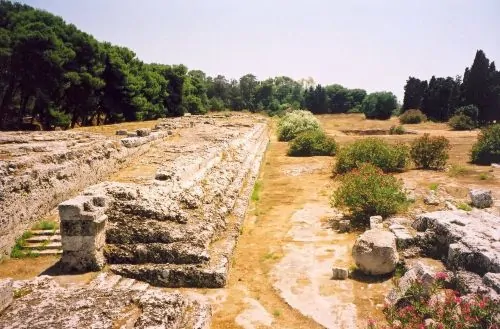
Hieron died at Catana, the city he had refounded as Aetna, after governing Syracuse for more than a decade. Diodorus records that he received heroic honors as the founder of that community. He also states that Hieron left the government to his brother Thrasybulus, whose tenure lasted approximately a year. The proximity of these notices brings the succession into sharp focus, since recognition of the dead ruler coexisted with the rapid collapse of his successor’s position.
Diodorus’s succinct account of the transfer leaves its practical arrangements largely unexplained. His statement that Hieron bequeathed the government to Thrasybulus establishes the succession as he understood it, but supplies no surviving instrument defining how that choice should take effect. The earlier passage of power from Gelon to Hieron provided a precedent for succession between brothers, although precedent alone cannot establish a binding rule. Neither can the historian’s vocabulary of kingship demonstrate that Syracuse possessed a formally constituted royal office with an agreed order of inheritance. What appears straightforward in a sequence of rulers could have involved expectations that differed among members of the household and those whose cooperation sustained it. Family membership made Thrasybulus a plausible successor without necessarily resolving every competing interest. The distinction matters because treating his accession as the ordinary operation of an accepted hereditary system would make resistance appear intelligible only as a response to his subsequent misconduct. A less restrictive reading allows the transfer itself to have exposed questions that Hieron’s continued command had kept unsettled, even though the evidence does not establish the procedures through which those questions were initially addressed.
Aristotle complicates the succession by introducing Gelon’s son, whom Thrasybulus allegedly encouraged toward indulgence so that he could exercise power himself. This notice identifies another family connection relevant to the distribution of authority, but does not describe a legally designated heir whose recognized rights Thrasybulus had violated. Nor does it securely establish a formal regency or the precise age of the son. Its immediate significance is that the dynasty contained interests which a simple account of one brother succeeding another leaves out, while the timing of Thrasybulus’s manipulation remains uncertain.
Control of the government soon acquired urgent personal and material implications for those subjected to Thrasybulus’s decisions. Diodorus attributes to him unjust executions and the expulsion of people accused on false grounds, connecting these penalties with the appropriation of their possessions. Confiscated wealth passed into the ruler’s treasury, making the destruction of an opponent’s position materially advantageous to the government responsible for it. Such measures could turn an individual grievance into a broader concern about the security of ownership, especially where accusations offered a means of obtaining property. A person who had suffered no immediate penalty could still recognize that continued possession depended upon avoiding the ruler’s hostility. The movement from punishment to apprehension is an interpretive inference, rather than a recorded statement by an identifiable Syracusan, but it follows from the kinds of action the narrative describes. Exile also removed inhabitants from the setting in which they maintained their standing and exercised whatever influence remained available to them. Its effects extended beyond the confiscated estate, potentially disturbing relationships through which relatives or associates had previously dealt with the government. Diodorus’s claim that Thrasybulus hated those he had injured, and was hated by them, presents an escalating antagonism in which the exercise of coercion increased the ruler’s reasons to fear retaliation. The succession was becoming a dispute about the conditions under which inhabitants could retain their possessions and continue to live in their own city.
Military preparations gave that antagonism an institutional expression. According to Diodorus, Thrasybulus recruited a substantial mercenary force in anticipation of confronting the citizen soldiery. Earlier Deinomenids had employed hired soldiers, but the purpose assigned to this recruitment places the ruler’s own subjects among the anticipated enemies. It would be misleading to identify every person serving him with the older soldiers whom Gelon had admitted to citizenship, since those groups entered the record through different arrangements. The account shows Thrasybulus preparing to defend his command against internal resistance, without establishing that every available source of armed support had already deserted him.
An accession also required supporters to judge what service to the new ruler would now entail. Cooperation that had previously offered protection or advancement might become more dangerous if its principal requirement became participation in conflict against fellow inhabitants. Conversely, people who feared losing advantages acquired under the dynasty could have strong reasons to support its continuation. These possibilities help explain why the successor’s position cannot be assessed through a single measure of personal popularity. The ability to retain an armed following did not guarantee that the interests surrounding the ruling household remained compatible, and hostility among citizens did not mean that its military resources had disappeared. Thrasybulus’s brief government brought those tensions into confrontation before he had established a durable basis for exercising command in his own right. His accession consequently exposed a difficulty inherent in treating family continuity as sufficient continuity of government. The next challenge would emerge within the dynasty’s own connections, where removing the incumbent could initially appear a way to preserve the arrangements his conduct was placing in danger.
A Family Divided against Its Own Ruler
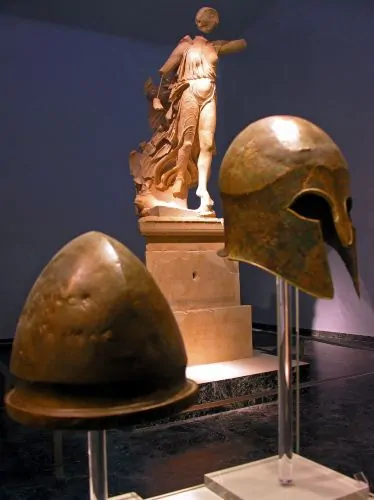
The faction Aristotle associates with Gelon’s son opposed Thrasybulus without intending to end the family’s supremacy. Its members sought to remove the incumbent while retaining the governing arrangement within which their own connections mattered. That limited objective is explicit in the Politics, although the identities of the organizers remain unrecorded. The passage establishes division within the ruling circle, rather than demonstrating that the entire Deinomenid family had adopted a common position against Thrasybulus.
Aristotle places the episode among instances in which people sharing in a tyranny fall into disagreement. His formulation recognizes that government concentrated around one ruler could nevertheless depend upon collaboration among several interested parties. Thrasybulus was a brother of Gelon as well as Hieron, and therefore an uncle of the son whose connections organized against him. Membership in the same family linked these men to a common source of distinction, but it did not make their political interests identical. Loyalty to a specific relative could compete with acceptance of the person currently exercising command. The group surrounding Gelon’s son consequently represented an alternative concentration of influence within the dynasty’s wider relationships. Its members could regard Thrasybulus as expendable while continuing to value the position that distinguished the family from other Syracusans. Their intervention exposes the limits of treating kinship as a sufficient explanation of political solidarity, since the same relationships that connected participants to the ruling house could also supply grounds for rivalry within it.
Removing Thrasybulus offered these opponents a way to dissociate continued family government from the conduct of its present representative. Their project could accommodate criticism of his behavior without conceding that the dynasty should surrender its position altogether. This distinction gave their opposition a definite boundary, since success required both the incumbent’s defeat and the survival of an arrangement through which his opponents remained influential. The difficulty was that other participants had no necessary reason to accept that boundary simply because they shared the immediate objective of opposing him.
Recruitment therefore enlarged the political problem the organizers were attempting to solve. Assistance brought additional people into the struggle, and those associates acquired a part in determining what a successful challenge should accomplish. Aristotle provides no record of the terms on which cooperation began, so the relationship cannot be reconstructed as a compact whose obligations were understood identically by everyone involved. Agreement against Thrasybulus might coexist with substantial disagreement about the advantages of retaining his family. Some participants could consider a replacement within the dynasty sufficient, while others might judge their own security to depend upon a more extensive alteration. These possibilities describe the range of interests compatible with cooperation, rather than positions that can be assigned to named individuals. The organizers’ stated aim nevertheless allows one important inference about their expectations. They anticipated a result in which their associates would help remove Thrasybulus without destroying the ruling position they wished to preserve. The subsequent outcome shows that they could not ensure that restriction remained effective, although it leaves the mechanisms of their failure obscure. Political cooperation had given their partners an opportunity to influence the settlement, and the capacity to enlist assistance proved different from the capacity to determine how it would be used.
The favorable moment exploited by the confederates receives remarkably little explanation. Aristotle attributes the enlarged outcome to their taking advantage of an opportunity, but does not identify a meeting or military engagement at which their objectives changed. His wording also leaves open whether they developed more extensive aims during the struggle or had entertained them before cooperation began. Calling their action a betrayal would introduce an obligation the surviving account does not document, converting an uncertain relationship into a moral judgment about promises that may never have been made.
The prominence given to dynastic disagreement must also be distinguished from the origins of resistance throughout Syracuse. Aristotle explains how division within the governing group contributed to its destruction; he does not establish that every opponent first entered the struggle through the initiative of Gelon’s connections. Diodorus, by contrast, presents people injured by Thrasybulus as selecting leaders and preparing to resist him. Those leaders are not identified with the organizers in Aristotle’s account, and the evidence does not permit the two groups to be matched person by person. Discontent outside the family could have developed through experiences that required no encouragement from a rival branch of the dynasty. Internal opposition might then weaken the incumbent’s position or create opportunities useful to people already hostile to him. Recognizing that possibility preserves the importance of the family dispute while allowing civic resistance an initiative of its own.
Aristotle’s statement that the confederates expelled the whole group marks the failure of the organizers’ intended settlement. Its scope is political, encompassing those whose expectation of continued rule was defeated along with Thrasybulus himself. It does not establish the removal of every genealogical relative, the confiscation of all family possessions, or a common destination for everyone displaced. What can be recovered more securely is the reversal experienced by a faction that had acted to preserve its place. Having challenged the incumbent, its members found themselves included among those whom their associates would no longer accept as governors. This result made the dynasty’s internal division significant beyond the immediate rivalry between its participants. A project conceived around control of the succession had admitted collaborators who ultimately denied the organizers the power to settle that succession on their own terms. Their defeat exposes the central limitation of the undertaking: the assistance required to remove Thrasybulus also enabled others to reject the proposed limits of his removal.
From Grievance to Organized Resistance
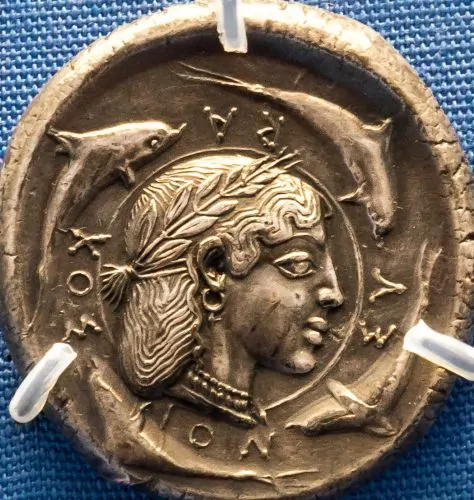
Choosing leaders changed what opponents of Thrasybulus could accomplish together. Diodorus places their selection between the accumulation of injuries and the preparation of an organized challenge to his government. The appointments gave resistance a means of reaching decisions and coordinating action beyond the immediate concerns of individual victims. People threatened separately by the ruler could now contribute to an undertaking whose direction required some recognized allocation of responsibility.
Delegation was especially important because opposition alone supplied no reliable means of deciding what to do next. Those willing to resist still needed decisions that others could understand and follow, particularly when an unsuccessful action might expose participants to punishment. Diodorus attributes the organization of the movement to the men selected to lead it, making their activity a substantive element in his explanation. He presents them as giving direction to people already disposed toward resistance, rather than creating discontent through their own initiative. Their selection also concentrated responsibility in identifiable persons who could act for a wider group. The account does not preserve the procedure used to choose them, so these appointments cannot be assigned to a documented electoral system or a formally constituted assembly. Nevertheless, the distinction between an unspecified method of selection and an unspecified exercise of command should be maintained. The former remains obscure, while the latter is explicitly credited with making collective preparation effective.
Armed capacity also enters the narrative before the detailed account of fighting. Diodorus describes Thrasybulus recruiting troops to oppose the citizen soldiery, indicating that inhabitants capable of military action formed a serious part of the challenge. His wording does not establish their equipment or a particular predominance of hoplites, and it provides no basis for calculating their numbers. It does show why the appointment of leaders mattered immediately, since directing armed participants carried demands extending well beyond the expression of a common objection.
Preparation required a degree of cooperation that could not be measured simply by counting people who disliked the ruler. Participants had to act with some understanding of their responsibilities and of the decisions being taken in their name. Remaining available for sustained action would also place demands upon their time and access to provisions. Diodorus gives no account of weapons distribution or the payment of associated expenses, leaving the material arrangements beyond reconstruction. These requirements are practical implications of mobilization, rather than evidence for particular administrative institutions. They also help explain why organization could affect the willingness of others to participate. An isolated opponent confronted the government with limited protection, whereas visible preparations offered some prospect that assistance would be available if confrontation followed. Joining such an effort still entailed danger, since association with armed resistance could make a participant a target. The effectiveness of leadership consequently depended in part upon maintaining confidence that common decisions would result in common action. Diodorus records the achievement in compressed form, but the movement’s persistence gives that achievement a significance which the brevity of his description should not obscure.
In Diodorus’s telling, freedom names the purpose toward which this effort was directed. The term gives preparation a civic meaning extending beyond revenge for a specific injury. It preserves the historian’s interpretation of the struggle, rather than the wording of a surviving declaration issued by the participants. Within that interpretation, the leaders organized an undertaking whose success would determine whether Syracuse could escape Thrasybulus’s control.
Thrasybulus initially attempted to arrest the movement through persuasion. This response is important because it places an effort to influence the opposition before the enlarged military preparations that Diodorus subsequently describes. The ruler still treated the course of events as something words might alter, even after resistance had become conspicuous. No speech survives, and the account identifies neither the audience he addressed nor the assurances he offered. It would therefore be unwarranted to reconstruct a rejected amnesty or a proposal for constitutional reform. What the sequence establishes more securely is that the movement continued despite his attempt to halt it. From the participants’ perspective, accepting an appeal from the ruler would have required some judgment about whether compliance improved their position. The danger created by renewed isolation could weigh against abandonment of a coordinated effort, although Diodorus does not record that calculation in anyone’s words. His narrative makes the failure of persuasion a turning point after which Thrasybulus sought additional armed strength.
After that failure, the opposition faced a ruler preparing for a substantial confrontation. Diodorus describes the gathering of forces drawn from connections beyond the immediate citizen body, making clear that organized resistance had not deprived Thrasybulus of the ability to respond. Commitment to the movement now required its participants to sustain cooperation against an adversary whose resources remained formidable. Their preparations had created a credible challenge, but credibility alone could not secure victory. The impending contest would test whether the leadership they had selected could maintain a force capable of surviving the ruler’s answer.
The dispatch of envoys offers a further indication of the capacity the opposition had acquired. Diodorus subsequently describes representatives seeking assistance in the name of the Syracusans and their liberation, carrying the dispute beyond the relationship between the ruler and his immediate subjects. An embassy required people authorized to communicate a shared request to another community. It also presented outsiders with an organized body whose appeal could be considered and answered. Sending representatives thus extended the leaders’ responsibilities from internal preparation to the pursuit of military support. Their ability to act in this way gave the opposition a public presence that individual complaints could not have supplied. Whether neighboring communities would commit their own resources remained uncertain, but the Syracusans had developed the means to ask for that commitment through coordinated diplomatic action.
Why Neighboring Communities Intervened
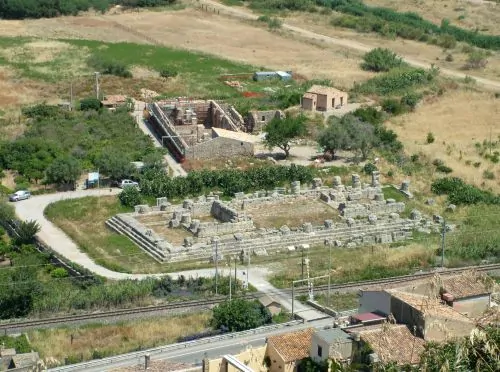
Diodorus names Gela, Akragas, Selinus, and Himera among the communities approached for assistance, together with Sicel settlements in the island’s interior. The appeal consequently reached well beyond the immediate surroundings of Syracuse. He describes a prompt and willing response, followed by the arrival of forces that substantially increased the opposition’s strength. This intervention widened the conflict by committing resources from several communities to the removal of a ruler whose government had become contested within his own city.
The contributors had encountered Deinomenid power under different circumstances. Gela had supplied the original setting for Gelon’s advancement and subsequently experienced the removal of a substantial part of its population to Syracuse. Its relationship with the dynasty included both participation in an expanding political enterprise and losses incurred through the enlargement of another city. Akragas and Himera had been connected with Gelon through earlier military cooperation, but those connections imposed no permanent obligation to sustain the government of his successors. The assistance they now provided demonstrates how relationships established around one ruler could cease to determine the choices made under another. Selinus further broadens the geographical extent of the response without receiving a separate explanation of its interests in Diodorus’s account. These histories make it hazardous to describe every contributor as a dependent community seeking release from the same experience of subjection. Earlier benefits and injuries could inform subsequent decisions, but neither gratitude nor resentment can simply be assigned as the governing motive of an entire population.
Sicel participation adds a dimension that the list of Greek cities alone would miss. Their assistance placed the Syracusan insurgents in cooperation with inland communities whose interests could include resistance to the territorial ambitions of powerful coastal governments. Diodorus does not identify the participating settlements individually or name a commander responsible for their contribution. Their presence should therefore remain evidence of specific cooperation across political and cultural boundaries, without becoming a claim that all Sicels pursued a unified policy or supported an agreed program for Syracuse.
The aid itself supplies firmer evidence of commitment than the enthusiasm attributed to those providing it. Diodorus reports contributions of infantry and cavalry from some communities, while others sent warships equipped for action. He does not assign particular contingents to named cities, leaving the distribution of these resources uncertain. Their combined effect was nevertheless considerable, because the opposition acquired support suited to fighting on both land and water. Equipped ships brought an operational capacity that could not be created simply by increasing the number of men willing to resist. Cavalry likewise offered capabilities different from those supplied by additional infantry, although its precise employment belongs to the subsequent fighting. Providing such forces also exposed the assisting communities to losses and to possible retaliation if Thrasybulus prevailed. Their intervention required material decisions made while the result remained unsettled. Whatever mixture of interests lay behind those decisions, the contributors accepted costs that declarations of sympathy would not have imposed. The speed with which Diodorus says the assistance accumulated emphasizes how rapidly regional cooperation could alter the prospects of a struggle initially centered on Syracusan grievances.
Intervention also offered plausible strategic advantages. A government occupied with armed opposition at home had less freedom to exert pressure elsewhere, and communities concerned about Syracusan predominance could benefit from prolonging or resolving that distraction in their favor. Assistance to the insurgents might help prevent Thrasybulus from restoring a position from which he could resume regional intervention. Cooperation could also establish useful relationships with people who might exercise influence after his departure. These are possible calculations rather than deliberations preserved in the sources. Their importance lies in showing why support for the revolt could serve recognizable interests beyond Syracuse, even where a contributor’s immediate security had not been demonstrably threatened.
Constitutional sympathy remains another possibility, but it cannot carry the explanation by itself. Diodorus presents the ambassadors as requesting help in liberating Syracuse, without recording a shared agreement about its future institutions. The provision of assistance does not establish that every participating community possessed a democratic government or wished to reproduce its constitution elsewhere. Opposition to Thrasybulus could attract cooperation from people who disagreed about the best distribution of authority within their own cities.
Diodorus subsequently places the growth of support for the Syracusans beside the abandonment of Thrasybulus by his allies. The contrast suggests a changing assessment of where effective cooperation remained possible, although the identities of those withdrawing from the ruler are not supplied. Their departure cannot be converted into evidence that they joined his opponents or that every previously favorable community reversed its allegiance. More securely, the narrative shows an insurgency gaining outside assistance while the incumbent’s available relationships contracted. Regional power depended upon the continued willingness of others to act, and the dynasty’s earlier reach could not guarantee that willingness during a crisis. The Syracusans’ appeals had made their resistance a practical undertaking in which outsiders could participate, with consequences extending beyond the expression of approval for its cause. The resulting support enabled preparations for sustained fighting on land and at sea, confronting Thrasybulus with an opposition whose strength now exceeded what its own inhabitants could assemble unaided.
A Divided Syracuse and the Defeat of Thrasybulus

The army assembled by Thrasybulus numbered almost fifteen thousand men in Diodorus’s estimate. It included settlers whom Hieron had established at Catana, together with other allies and hired soldiers. This combination brought resources created through the dynasty’s earlier interventions into the immediate struggle for Syracuse. With these forces, Thrasybulus occupied Achradina and Ortygia, establishing bases from which he could conduct operations against the insurgents.
Holding these districts gave the ruler defensible positions within a city he no longer controlled as a whole. Ortygia, the island at Syracuse’s center, is explicitly described as fortified, while Achradina supplied the mainland base from which his troops subsequently advanced. The distinction between the positions became operationally important because his fleet returned to the island after defeat, whereas his land forces withdrew into Achradina. Together, they allowed him to retain armed footholds even when opponents possessed other parts of Syracuse. The conflict consequently involved the use of occupied urban districts as bases for attacks upon forces established nearby. Physical possession, though, should not be confused with the allegiance of every inhabitant living within the respective areas. Diodorus’s division identifies where the opposing forces could operate; it does not provide a social map separating uniformly loyal populations. Nor does the continued occupation of these positions establish an uninterrupted ability to move freely between them. Their value lay in the protection and operational opportunities they afforded, whose effectiveness depended upon what happened when the ruler’s forces ventured beyond them.
The insurgents initially occupied the area Diodorus calls Tyche. His terminology locates their early position without establishing the district’s precise contemporary boundaries or the extent of its built environment. Later in the account, he assigns the remainder of Syracuse to the opposition, leaving Thrasybulus restricted to Achradina and Ortygia. The development between those descriptions is compressed, so a succession of neighborhood captures or a detailed course of street fighting cannot be reconstructed from the text.
The cohesion of the ruler’s army had also deteriorated by the time Diodorus describes the decisive engagements. His allies had abandoned him, leaving him dependent upon his mercenaries. This statement changes how the earlier estimate of almost fifteen thousand should be used, since the total assembled at one stage cannot simply be carried forward as the strength available throughout the campaign. Diodorus identifies neither the withdrawing contingents nor the circumstances of their departure. Their absence therefore cannot be assigned to a particular defeat or treated as evidence that they entered the opposing ranks. Its immediate military significance was the contraction of the combination upon which Thrasybulus had initially relied. Yet that contraction did not end his capacity to attack, as the subsequent operations demonstrate. The forces remaining with him could still take the initiative against the insurgents, making their battlefield performance crucial to whether his reduced position could be reversed.
At sea, Thrasybulus sailed out against the opposing force. Diodorus reports the loss of numerous triremes and a withdrawal with the remaining vessels to Ortygia. The survival of part of the fleet matters, because defeat did not eliminate every means of continuing naval resistance. It nevertheless demonstrated that possession of the island and access to ships had not enabled him to overcome the force assembled against him.
Diodorus next describes a land engagement, presenting another unsuccessful attempt to prevail beyond the ruler’s occupied districts. Thrasybulus brought his army out from Achradina and drew it up for battle in the suburbs. His troops suffered defeat and heavy losses, after which the survivors returned to Achradina. The notice distinguishes a setback sustained during an advance from the capture of the position to which the defeated force withdrew. Its location also places the encounter outside the mainland base, although the description is insufficient to identify a particular battlefield or recover the arrangement of the opposing armies. For the insurgents, victory established that their preparations and accumulated assistance could withstand a direct challenge by the ruler’s remaining troops. They had achieved more than the ability to hold territory while avoiding his forces. Success in the engagement prevented this attempt to restore his military advantage, while the losses reduced the strength with which he could contemplate another. The account supplies no casualty figures, but its emphasis on the severity of the reverse makes attrition part of the explanation for his worsening prospects.
Neither engagement produced the reported storming of Ortygia or Achradina. Thrasybulus could retain positions that protected his remaining forces while losing the contests through which he sought to improve his situation. This combination explains why his occupation continued after defeats that substantially weakened his claim to eventual victory. It also sets limits on the reconstruction, since Diodorus records no successful blockade or shortage of provisions that would justify making starvation the decisive cause of his surrender.
The military outcome left the participants with unequal prospects but continuing reasons to consider a settlement. Thrasybulus possessed places of refuge and forces capable of defending him, yet his attempts to defeat the opposition had failed on both land and water. His opponents had demonstrated superior performance in the recorded engagements without having secured possession of every defended part of Syracuse. Diodorus presents the ruler’s turn toward negotiation after these reverses, locating that decision within a deteriorating military situation. The remaining defenses offered some protection against immediate destruction, but they had not yielded a route back to command over the wider city. For the victorious side, further fighting against occupied positions could still entail costs, even after success outside them. Battlefield defeat had thus altered the terms on which the dispute could be resolved without rendering the subsequent agreement unnecessary. Thrasybulus approached that agreement as a ruler whose forces had survived, but whose efforts to recover the initiative had been decisively checked.
Why Another Deinomenid Was No Longer Enough
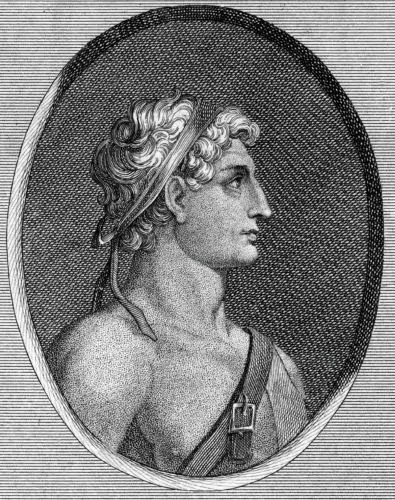
Replacing Thrasybulus with another family member would have needed to satisfy people whose cooperation had become essential to ending the conflict. Aristotle establishes that some organizers intended continued dynastic government, but their confederates defeated that objective. He does not describe a public debate over named successors or preserve the terms of an alternative arrangement. Explaining the outcome therefore requires examining what replacement might have resolved, and what it could have left dangerously unsettled.
A different ruler might genuinely have governed with greater restraint. The possibility deserves weight, since opposition to Thrasybulus’s conduct did not necessarily entail an initial objection to every form of personal leadership. Yet the adequacy of replacement depended upon how improved conduct could be sustained. If an incoming relative retained discretionary command over armed forces, the security of opponents might still rest heavily upon that individual’s willingness to respect them. The injuries attributed to Thrasybulus made this an immediate practical concern, because governmental decisions had threatened residence and possession as well as life. A change of character at the summit could offer relief while leaving considerable uncertainty about the treatment of future disagreement. The distinction is between the prospect of better decisions and the means by which those exposed to government could influence or contest them. Neither source records demands for specified safeguards, and such demands should not be supplied retrospectively. Nevertheless, control of the instruments through which punishment had been imposed provides a relevant measure of what a dynastic replacement would have needed to address. It helps explain why ending one man’s abuses could remain insufficient for opponents who had acquired the ability to resist their recurrence.
Any relative seeking to maintain the family’s supremacy would also have confronted relationships inherited with its resources. Support obtained through earlier settlements or military service could assist a successor while creating expectations that constrained the treatment of opposing interests. Such dependencies did not make reform impossible, nor establish that every potential Deinomenid would have acted alike. They meant that a candidate’s intentions would operate within an existing distribution of advantages, whose preservation could conflict with the security sought by people injured under the dynasty.
The opposition’s experience had altered its position in evaluating such an arrangement. Its members had acted through leaders of their own selection and obtained assistance through representatives who approached other communities. Those activities demonstrated that consequential decisions could be made outside the ruler’s direction. Restoring a family governor would consequently raise the question of what would become of the authority exercised during resistance. Accommodation remained conceivable, but it could no longer be understood simply as a choice within the incumbent’s circle. People who had undertaken the fighting possessed reasons to insist that their contribution carry weight in determining its result. Wartime cooperation had not yet supplied a settled institutional order, and its success cannot be treated as proof of permanent agreement. It had, though, established a capacity whose surrender would itself constitute a significant political decision. The relatives’ project presumed that assistance against Thrasybulus could culminate in the continuation of their ruling position; the actions Aristotle attributes to their associates defeated that presumption. In this reading, the decisive issue became who could authorize the next government, rather than which member of the family would exercise its command. The dynasty’s exclusion made sense within a situation where others had demonstrated both an interest in the settlement and the strength to affect it.
Rejecting continued Deinomenid government did not require erasing recognition of Gelon’s achievements. Earlier services could retain their significance without securing a corresponding claim for relatives who had not performed them. Nor does the outcome establish a rejection of distinguished ancestry or inherited property throughout Syracusan society. The break concerned the family’s privileged position in governing the city, a more specific object than the abolition of every advantage associated with descent.
These considerations explain why the organizers and their associates could apply different standards to a successful conclusion. For those seeking to preserve the dynasty, Thrasybulus’s displacement would have removed the immediate obstacle while retaining an arrangement they valued. Others could judge the same result inadequate if it restored powers whose exercise they had just learned to oppose collectively. Aristotle records the defeat of the narrower project without revealing precisely how each participant reached a different judgment. The interpretation advanced here therefore concerns the conditions that made a more extensive outcome practicable and intelligible, rather than a recovered declaration of shared principles. Another Deinomenid could remain acceptable to some while ceasing to satisfy those able to prevent that person’s installation. The incumbent’s removal and the determination of future government had become separable questions, and the ruling connections had lost the ability to provide both answers on their own terms.
Negotiating the Ruler’s Departure
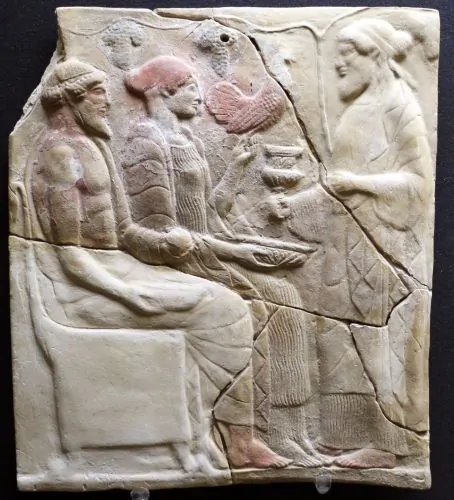
Thrasybulus initiated negotiations after abandoning hope of maintaining his government by force. Diodorus records an understanding with the Syracusans, followed by the ruler’s departure under a truce for Epizephyrian Locri in southern Italy. His account makes agreement part of the means by which the conflict ended, rather than presenting departure as the immediate result of capture. The arrangement allowed the defeated incumbent to leave alive while terminating his command of Syracuse.
The truce gave withdrawal a protection that military defeat could not itself supply. Thrasybulus still had to pass from an occupied position into circumstances where his opponents could otherwise threaten him. An agreed departure made that transition possible without requiring his captors to take custody of him, although no escort or route is described. Cooperation over his exit also required neither approval of his earlier conduct nor acceptance of a continuing claim to govern. The Syracusans could permit his movement while enforcing the political result against which he had fought. Conversely, accepting protection for departure meant that Thrasybulus acted upon an arrangement whose essential consequence was the loss of his position. Diodorus does not preserve the assurances exchanged or identify the people who conducted the discussions. The reported truce establishes an agreed interruption of hostilities for departure, but cannot be expanded into comprehensive immunity covering every earlier action. Its significance lies in the execution of a limited undertaking through which antagonists could bring the incumbent’s armed resistance to an end.
The hired soldiers received permission to withdraw from Syracuse. Diodorus records this decision separately from Thrasybulus’s departure, without assigning the troops a common destination. Nothing in the notice establishes payments upon release or the surrender of their equipment. The terms that survive concern their ability to leave, making their withdrawal another component of the settlement rather than evidence that every person formerly serving the dynasty accompanied its ruler.
Removing the active military presence had consequences different from determining the standing of people already established within Syracusan society. A force remaining available for deployment could sustain the defeated ruler’s cause even after his own departure, whereas permission to withdraw offered a way to end that immediate danger. The arrangement addressed the troops as participants in the confrontation. It should not be enlarged into an expulsion of all residents whose position had originated in a relationship with the Deinomenids. Earlier grants of citizenship had created claims that were distinguishable from continued employment in the ruler’s army. Some men connected with past military service remained sufficiently embedded in the city for their eligibility for office to become a subsequent political dispute. The negotiated ending therefore removed an armed challenge without resolving every question arising from the dynasty’s incorporation of newcomers. This distinction also changes the meaning of victory for the city itself. The defeated government’s military support could be withdrawn while relationships formed during its rule continued among the inhabitants. Authority over those unresolved relationships would now be exercised outside the arrangement that had originally created many of them. Ending the fighting established the opportunity to make such decisions; it did not provide an agreed answer to each one.
At Locri, Diodorus says, Thrasybulus spent the remainder of his life as a private individual. This brief conclusion supplies a status rather than a narrative of his later activities. He no longer appears as the holder of Syracusan command, although his survival makes clear that political defeat did not require his execution. The destination alone establishes neither Locrian sponsorship of his cause nor a plan to restore him.
The surviving description of the agreement should finally be distinguished from a complete constitutional settlement. Diodorus specifies the departure of the ruler and permission for his soldiers to withdraw, then turns to the political order following the tyranny. That sequence does not establish that the truce contained the institutions through which Syracuse would subsequently govern itself. Aristotle’s account of the ruling group’s expulsion likewise describes an outcome without preserving a legal instrument imposing permanent hereditary exclusion. Read together, the passages support the effective termination of Deinomenid government while leaving the formal treatment of many associated interests uncertain. This was nevertheless a substantial result, because the ruler’s removal had been made practicable through arrangements accepted by the parties still capable of fighting. The agreement converted military reverses into a completed departure, separating Thrasybulus’s continued life from his continued exercise of power. What followed required the victors to organize the government they had recovered the ability to determine.
Establishing Civic Government after the Dynasty

Ancient testimony identifies the government established after the Deinomenids as democratic. Diodorus describes a period of democracy lasting almost sixty years, while Aristotle elsewhere includes the family’s fall among examples of tyranny giving way to democracy. Their agreement supplies a positive basis for this constitutional identification. It does not establish that the ensuing decades possessed unchanged institutions, or that the arrangements operating immediately after Thrasybulus’s departure can be recovered in full.
The clearest early glimpse of public decision-making comes from Diodorus’s subsequent account of the Syracusans assembling to deliberate about their democracy. Citizens appear as participants in decisions affecting the community, while magistracies provide another identifiable component of government. These references move the evidence beyond the bare assertion that a tyrant had been removed. They reveal activities through which public authority could be exercised and responsibilities assigned. The relevant passage belongs to the aftermath, however, and its details should not all be dated automatically to the moment of Thrasybulus’s departure. Nor does it demonstrate that every office was newly created, since a change in the governing order could alter the political significance of institutions whose earlier history remains obscure. What matters is that consequential decisions now appear within a civic setting whose continuation did not depend upon the appointment of another Deinomenid. Establishing that order required more than an initial declaration of freedom. It required procedures through which decisions could recur and officials could exercise responsibilities recognized beyond the military emergency.
A difficulty arises from Aristotle’s description of a later constitutional change following the defeat of the Athenians in 413 BCE. He credits the people’s contribution to victory with a movement from politeia to democracy, apparently distinguishing the earlier order from the later one. The term politeia can refer generally to a constitution or more specifically to a constitutional type, conventionally translated as “polity.” Its meaning must therefore be considered in context, especially when another passage in the same work explicitly classifies the overthrow of the Deinomenids as a transition to democracy.
Eric Robinson’s interpretation addresses this apparent inconsistency without discarding the evidence for an early democratic government. He argues that Aristotle’s terminology is contextually determined, allowing the later transformation to represent development within democracy rather than its first appearance at Syracuse. On this reading, a less extensive form of popular government could be distinguished from the order that emerged after victory over Athens. The changes associated with Diocles, including the introduction of selection by lot for offices, provided grounds for describing the later constitution differently. An earlier reliance upon elected officials would not by itself exclude a democratic classification. The relevant question concerns the distribution of effective political participation, rather than whether every appointment followed a procedure familiar from another city. Robinson’s approach consequently gives weight to the explicit testimony connecting the dynasty’s removal with democracy while allowing institutional change across the following decades. It also avoids making the events of 413–412 invalidate the entire preceding constitutional history. Its strength lies in treating popular government as capable of development, although that interpretation cannot supply the missing details of the original settlement.
N. Keith Rutter likewise emphasizes the range of institutions that could fall within the ancient category of democracy. His analysis supports recognition of a Syracusan form whose operation need not reproduce the Athenian example. Lucia Cecchet adds a qualification by suggesting that Aristotle’s varying descriptions may reflect uncertainty about an unusual regime, as well as the demands of separate explanatory contexts. Her reading leaves room for democratic practices that assigned distinctive functions to prominent citizens, complicating the precision of classification without simply recategorizing Syracuse as an oligarchy.
These interpretations require careful separation of evidence from different moments in the city’s development. Cecchet’s discussion of Athenagoras draws substantially upon the assembly speech presented by Thucydides in the setting of 415 BCE, roughly half a century after the overthrow. That material can illuminate later Syracusan political expectations, but it cannot establish the machinery operating at the foundation. The same restriction applies to reforms introduced after the Athenian war. Even the early assembly notice leaves questions about the preparation of business and the relationship between deliberation and executive action unanswered. Evidence sufficient to identify collective decisions is not necessarily sufficient to reconstruct a council, its membership, or its powers. The leaders chosen during resistance also cannot automatically be converted into a permanent board of magistrates. A responsible account must retain the institutions actually attested while allowing that their procedures and relationships developed through problems encountered after the dynasty’s departure.
Civic government nevertheless had a practical content that these uncertainties should not obscure. Decisions concerning public honors and access to office were being made in the name of the Syracusans, placing matters formerly shaped by dynastic predominance within a different political framework. The composition of the participating body would itself become contentious, demonstrating how much depended upon the reach of those decisions. Democracy here identifies a consequential reorganization of authority, even where its earliest procedures remain incompletely documented. One of the first activities visible within that order was the determination of how the overthrow should be commemorated, giving the new government an opportunity to represent publicly the freedom upon which it rested.
Making Liberation a Public Memory
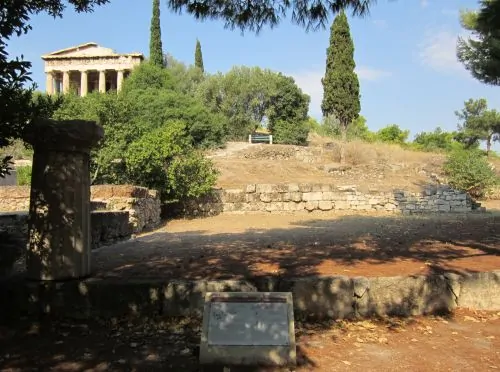
The assembly’s commemorative resolution gave the overthrow an enduring place among the city’s public concerns. Diodorus reports unanimous approval of a program honoring liberation through religious observance and recurring celebration. The decision made the meaning of victory a matter upon which citizens acted collectively, rather than leaving remembrance entirely to individual participants. His account preserves the civic interpretation endorsed by that decision, without revealing the opinions of everyone who had experienced the conflict.
Zeus Eleutherios, Zeus the Liberator, stood at the center of the proposed commemoration. The divine epithet associated deliverance with a god whose honor could be acknowledged by the community through a dedication. This attribution allowed the Syracusans to express gratitude while presenting their changed political circumstances within an established religious understanding of protection and obligation. The colossal statue prescribed by the resolution would give that relationship a conspicuous physical form. Its intended scale made visibility part of the program, even though Diodorus supplies neither its location nor enough information to reconstruct its appearance. The dedication also offered a continuing point of reference after the people immediately responsible for the victory had ceased to dominate public life. An image honoring the liberating god could represent the benefit received by Syracuse without depending upon the continuing prominence of a particular commander. The decision thereby linked the city’s account of its deliverance to an object intended to outlast the immediate political settlement.
Annual sacrifices and distinguished games were assigned to the anniversary of the overthrow. This arrangement gave a conflict involving separate engagements and negotiations a single recurring occasion of remembrance. Diodorus does not preserve the calendar date or establish which specific action determined its selection. The anniversary expressed liberation as an accomplished event, condensing the more complicated process through which the ruler’s position had become untenable.
Sacrifice and communal consumption gave the observance a material dimension. Diodorus specifies four hundred and fifty bulls to be offered to the gods in connection with the games and used for the citizens’ feast. The number conveys the scale envisaged by the reported decision, although it cannot establish attendance or the amount allocated to any participant. Obtaining animals on that scale would require substantial resources, making the festival an undertaking whose provision mattered as well as its declared purpose. The meal joined the religious honoring of liberation to an occasion of civic association. Citizens were to consume what the sacrifices supplied, participating in a celebration whose benefits were made tangible through food. Such an arrangement could make belonging visible through common observance, although the source does not describe seating or distribution. Its political significance rested in the designation of a civic body for whose enjoyment the provision was made. Liberation became something that could be enacted through an authorized public occasion, as well as recalled through a statement about the past.
The resolution records an intended standard of observance rather than a surviving series of annual accounts. Diodorus’s figure cannot prove that precisely the prescribed number of animals was obtained on every anniversary. Nor does the vote alone establish uninterrupted fulfillment of each element in the program. Its evidentiary value lies in the form of celebration the assembly reportedly approved, which reveals how the liberated city was expected to honor its deliverance.
That representation also merits comparison with the coalition that had made victory possible. Neighboring communities had supplied forces, and Sicel assistance had contributed to the opposition’s strength. The commemorative provision nevertheless centers upon the liberation of Syracuse and the feast of its citizens. This emphasis identifies the community represented as the beneficiary without establishing that outsiders were forbidden to attend the games or otherwise participate in the occasion. It also does not deny the contribution of allies whose intervention Diodorus had already described. Instead, it demonstrates how a victory dependent upon several communities could acquire a specifically Syracusan public identity. The people who helped produce the result and the civic body whose freedom the festival celebrated were overlapping categories whose boundaries should not automatically be treated as identical.
Recurrence gave the approved interpretation a future extending beyond the memories of surviving combatants. If maintained, the observance would introduce later participants to the overthrow through practices authorized after its completion. They could join a celebration of liberation without having witnessed the disagreements through which resistance developed. The account of the past embodied in the program consequently possessed a coherence that the movement itself need never have enjoyed at every stage. Honoring freedom together did not require identical recollections of the struggle, but it provided a public occasion upon which its outcome could be affirmed. The designation of citizens as the festive community would acquire further significance when the distribution of political honors among those citizens became contested.
Who Could Share Fully in the Liberated City?
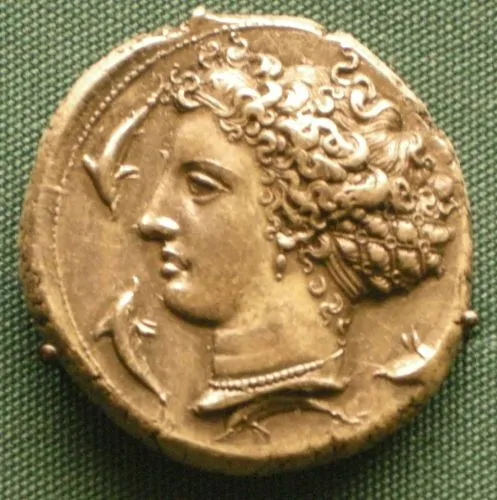
Access to magistracies exposed a division within the community that celebrated liberation. Diodorus reports that the Syracusans reserved these positions for the established citizens, excluding foreigners who had received citizenship under Gelon. The measure restricted the exercise of governing authority by men whose admission preceded the dynasty’s collapse. Its importance extended beyond possession of a civic title, because recognition as a citizen could coexist with exclusion from the public distinctions through which full participation became effective.
The affected population was substantial in Diodorus’s account. He credits Gelon with enfranchising more than ten thousand foreign mercenaries, of whom more than seven thousand remained at the time of the dispute. These figures indicate the scale he assigns to the group, although they cannot establish its proportion within the entire citizen body or explain the whereabouts of everyone originally admitted. More revealing than an uncertain demographic calculation is the persistence of the designation “foreigners” after enfranchisement. Admission had given these men a recognized position without erasing the distinction subsequently invoked against their eligibility for office. Conversely, the privileged category of established citizens should not be equated with an unchanged population descended from Syracuse’s earliest colonists. Earlier transfers had already complicated the relationship between residence, ancestry, and civic standing. Diodorus supplies no comprehensive test determining who belonged to the older body. As Davide Amendola’s discussion emphasizes, the immediate restriction concerned citizens whose capacity to share in government was diminished, making the conflict an internal dispute over the quality of membership rather than a straightforward confrontation with an external population.
Aristotle’s account of citizenship offers a useful comparative framework for assessing that distinction. His emphasis upon participation in judging and governing gives political content to membership beyond simple recognition as an inhabitant with civic standing. The Syracusan prohibition denied access to positions carrying authority and public dignity, even though Diodorus does not describe the cancellation of every right associated with citizenship. Retention of some standing therefore should not minimize the inequality imposed, since the excluded men were being told that their admission entitled them to less than the participation available to others.
Diodorus proposes alternative explanations for the decision. The established citizens may have judged the newcomers unworthy, or suspected that men accustomed to service under monarchy might attempt another political upheaval. The first explanation concerns entitlement to public distinction, while the second presents exclusion as protection against a threat. Military experience could make such suspicion consequential, especially when a large group possessed capacities that a newly established government could find difficult to contain. Yet the existence of those capacities does not establish an intention to restore tyranny. Diodorus’s subsequent statement that the feared revolt occurred can make the policy appear vindicated by its result, although his own sequence identifies exclusion as the grievance provoking resistance. Conduct following the restriction cannot automatically prove disloyalty predating it. The narrative instead permits an explanation in which unequal treatment sharpened antagonism and helped produce the danger invoked to justify that treatment. Security concerns deserve consideration, but so does the advantage obtained by those who retained exclusive access to office. Their decision distributed political benefits as well as responding to an alleged risk.
Other inhabitants stood outside this contest over eligibility for governing office. Women and enslaved people did not possess an equivalent claim to the magistracies being disputed among male citizens. Diodorus’s own picture of post-tyrannical prosperity includes an abundance of enslaved labor, placing material coercion within the society whose freedom he praises. The political liberation recognized by his narrative was compatible with forms of dependence that the overthrow had neither challenged nor abolished.
The excluded men responded by occupying Achradina and Ortygia, reopening armed conflict within the districts previously used by Thrasybulus. Their opponents retained the rest of Syracuse and constructed a wall on the side facing Epipolae, restricting access to the countryside. In this later struggle, Diodorus explicitly makes shortages of food and equipment important to the military situation. He also distinguishes numerical strength from experience, describing the rebels as fewer but more practiced in warfare and initially successful in scattered encounters. The government consequently faced adversaries whose exclusion from office had not removed their ability to challenge its decisions by force. Subsequent fighting brought a Syracusan victory at sea and then success in an open land battle, with losses on both sides. Diodorus records rewards of one silver mina each for six hundred picked troops credited with the victory. Those honors recognized service in defending the prevailing order, giving another concrete expression to the distribution of civic esteem. Victory decided which side could enforce its arrangements, while leaving the justice of the original restriction a separate question. The conflict demonstrated that ending dynastic supremacy had opened a struggle over participation which the language of common liberation could not settle.
Dismantling the Dynasty’s Regional Arrangements
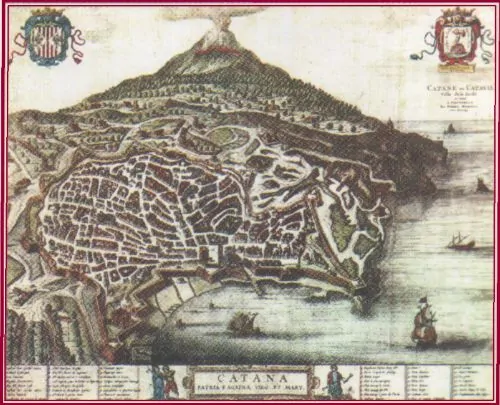
Thrasybulus’s departure had not determined who should occupy the cities and agricultural land reorganized under his predecessors. Populations established through dynastic intervention remained in possession of places from which others had been removed. For displaced communities, ending the ruler’s government offered an opportunity to press claims that extended beyond Syracuse. During the following years, dismantling the family’s arrangements required decisions about residence and possession which its overthrow alone could not resolve.
Catana became a major setting for this wider confrontation. Diodorus attributes Ducetius’s campaign against its inhabitants to a grievance over land taken from the Sicels. A Syracusan expedition also moved against the city, bringing forces with different territorial interests into cooperation against Hieron’s settlers. Their participation should not make Ducetius an instrument of Syracusan policy, since the historian gives his intervention a purpose rooted in Sicel claims. Diodorus connects the combined action with the division of territory between Syracusans and Sicels, introducing an element that complicates a purely restorative interpretation. The victorious partners possessed interests of their own in the land under dispute. Removing the population installed by Hieron could therefore support the return of earlier inhabitants while also benefiting those whose military assistance helped determine the outcome. These objectives could coincide in the campaign without becoming identical claims upon the territory. The account does not preserve boundaries sufficient to establish how every entitlement was accommodated. It does show that the defeat of a dynastic settlement created opportunities for allocation among participants whose ambitions cannot all be reduced to recovering a previous home.
Hieron’s settlers were defeated and expelled from Catana. They took possession of Inessa, the place Diodorus identifies as the later Aetna, while the earlier Catanians recovered their native city. The displaced settlers thus acquired another base instead of disappearing with the government that had established them. Recovery for one population involved renewed movement for another, transferring some consequences of the original intervention rather than extinguishing them.
Diodorus extends the account to people removed from other communities under Hieron, naming Gela, Akragas, and Himera among the places affected. Returnees expelled those occupying their former homes, asserting a priority grounded in their own displacement. The historian describes the occupants as wrongful possessors, adopting a judgment favorable to the people recovering what they had lost. That judgment identifies the direction of restoration without supplying the individual histories through which current residents had obtained their positions. The same regional survey includes the expulsion of Anaxilas’s sons by Rhegians and Zanclians. Their removal concerned a separate ruling family, showing how the disruption extended beyond the literal dismantling of Deinomenid government. Diodorus also records a distribution of land at Camarina involving Geloan settlers, adding another community whose reorganization required practical decisions about possession. These examples belong to a broader period of conflict and return, not a single operation demonstrably commanded from Syracuse. Their juxtaposition makes the overthrow there part of an extensive reordering whose participants pursued claims arising from different local histories.
The eventual accommodation is presented as a common decision by communities seeking to end the fighting. Exiles were received, and cities restored to populations identified as their original citizens. Mercenaries occupying places associated with the former tyrannies received permission to withdraw with their possessions. This provision combined the recovery of communities with recognition that departing soldiers could retain goods of their own, giving negotiated withdrawal a place alongside the expulsions already described.
Land distribution completes Diodorus’s account, with almost all the cities reportedly allotting territory among their citizens. Both the breadth of that statement and its defined beneficiaries require attention. Allocation depended upon decisions about who belonged to the body entitled to receive land, carrying disputes over membership into the material organization of the settlements. The passage does not establish equal holdings or the restoration of all Sicel possession throughout the island. Nor could a general preference for original citizens resolve every difficulty created by earlier removals, since years of residence and new civic attachments had intervened. Restoration required judgments about which past relationships deserved priority and which more recent arrangements should yield. Diodorus presents the resulting settlement as an end to widespread disorder, but the means included coerced departures as well as recognized returns. The regional order established after the Deinomenids consequently rested upon new allocations of possession whose legitimacy depended upon the claims accepted by those able to enforce the settlement.
Did Syracuse Reject Dynastic Rule, or Did a Coalition Exploit a Succession Crisis?
The following video from The Plutarchian is a short history of ancient Syracuse:
The strongest objection concerns the inference from political defeat to collective purpose. A coalition could exploit disagreement within the ruling family, obtain sufficient military assistance, and remove its competitors without sharing a developed objection to hereditary government. Its success would establish that the dynasty had lost power, but would not by itself explain that loss as a considered judgment upon its entitlement to govern. The language of rejection risks attributing a common intention to people whose cooperation may have depended upon different expectations.
This alternative has substantial support within the surviving evidence. Diodorus’s explanation centers upon the incumbent’s conduct, ultimately attributing the destruction of an established ruling position to Thrasybulus’s failings. His favorable assessment of Gelon leaves room for personal government that could have remained acceptable under a different representative. Aristotle supplies a mechanism through which the outcome could exceed the purposes of those who initiated a challenge, without requiring a shared constitutional philosophy among their associates. Military circumstances then determined which participants possessed the strength to influence the result. No surviving account describes citizens comparing named successors and rejecting every family candidate on principle. Nor do the subsequent arrangements demonstrate that all inhabitants acquired equivalent authority through victory. Restrictions upon Gelon’s enfranchised soldiers permit another interpretation, in which a successful constituency secured advantages for itself while denying governing opportunities to others. That possibility is compatible with democratic institutions understood within their ancient limits. The alternative explanation is therefore serious because it accommodates both the dynasty’s removal and the selectivity of the order that followed, without making a general repudiation of inherited authority necessary to either development.
Commemoration cannot independently resolve the question of earlier intentions. The liberation program demonstrates how the victorious government represented the overthrow after its completion, giving an approved meaning to events already concluded. Its importance does not depend upon treating that meaning as a faithful record of every participant’s original purpose. If the celebration is used to establish the ideology that supposedly caused the victory, retrospective interpretation becomes evidence for its own antecedents. The stronger use of the festival is to examine what the new civic order chose to affirm, allowing the circumstances that produced it to remain more divided.
Yet the contingent explanation should not obscure the particular settlement that emerged. Aristotle expressly distinguishes the preservation of family government from the result achieved by the confederates, making the failure of dynastic continuation part of the ancient explanation itself. Their action displaced the group that had expected to retain control over the outcome. Diodorus then presents consequential decisions being made through civic deliberation, rather than through the installation of another ruler from the same house. These developments provide grounds for identifying a change in the exercise of public authority, even when the participants’ initial commitments cannot be recovered. The distinction between common purpose and common action is crucial here. People acting for different reasons could nevertheless produce and sustain an arrangement that excluded continued Deinomenid supremacy. The inequality of participation qualifies the constituency responsible for that arrangement, but does not make its decisions politically meaningless. Recognition of such limits avoids turning democracy into a claim of universal consent while preserving the significance of government operating outside the dynasty. The evidentiary balance supports this enacted and publicly affirmed result more securely than it supports a narrative in which the entire city gradually adopted one understanding of hereditary power.
The argument must consequently be narrower than a claim that Syracuse discovered a general principle against dynastic rule during the revolt. Opposition developed through circumstances in which the interests of family connections intersected with grievances and opportunities extending beyond them. The resulting victory terminated this ruling house’s privileged position, and subsequent civic decisions represented that termination as liberation. Such an interpretation allows contingency to explain the movement’s course while recognizing the political substance of its settlement. Another Deinomenid ceased to provide an effective solution because those capable of determining the result did not preserve the family’s governing position. That conclusion concerns the authority exercised and excluded at Syracuse, without assigning identical reasoning to everyone who helped produce it. The counterpoint thus shifts the essay’s emphasis toward a demonstrable political break whose public meaning was consolidated after a struggle of less recoverable intentions.
Conclusion: Who Had the Authority to Govern Syracuse?
In 466–465 BCE, the Deinomenids lost the ability to determine Syracuse’s government through arrangements within their ruling circle. Thrasybulus’s removal was accompanied by the failure of those who sought to preserve the family’s position under different leadership. The resulting democracy placed consequential decisions within a civic body whose standing no longer depended upon a succeeding Deinomenid. This was a demonstrable political change, even though the evidence cannot establish identical purposes among everyone who contributed to it.
The transfer became possible through cooperation that extended beyond the relationships the dynasty could continue to command. Syracusan opponents acquired leadership capable of directing resistance, while assistance from other communities supplied resources that substantially improved their military prospects. Their victories made continued government by Thrasybulus untenable without requiring his capture or execution. Negotiated withdrawal then brought the armed confrontation to an effective conclusion, leaving the victors to determine how public affairs would proceed. These developments explain the practical achievement without making the eventual constitution an inevitable consequence of the first grievances. Subsequent decisions gave that achievement a public identity, most conspicuously through the observances prescribed for Zeus Eleutherios and the anniversary of liberation. The community could affirm what the overthrow had accomplished even where its participants remembered different reasons for undertaking it. Commemoration consolidated a civic account of the result, while the movement that produced it remained less uniform than that account might suggest.
The authority exercised afterward was bounded by distinctions among the inhabitants. Men enfranchised under Gelon could retain civic standing while being denied the magistracies available to established citizens. Elsewhere in Sicily, the recovery of homes and territory by displaced populations required further removals and negotiated accommodations. Such decisions reveal that liberation transferred the power to adjudicate competing claims without ensuring equal recognition of those claims. The new government’s exclusions belong within the assessment of its freedom, alongside the decisive ending of dynastic supremacy.
Diodorus and Aristotle make this interpretation possible precisely because their explanations do not coincide completely. The historian’s emphasis upon destructive conduct preserves the immediate reasons for resistance, while Aristotle’s account exposes a divergence between the objectives of dynastic opponents and the action of their associates. Neither provides access to a single collective intention, and neither should be made to supply a constitutional manifesto that has not survived. Their testimony nevertheless supports a consequential refusal to continue this family’s government, followed by decisions through which citizens exercised authority in its absence. Contingent origins and an enduring political break can therefore be understood together. Syracuse’s experience shows how people cooperating against an incumbent could acquire capacities that made his family’s preferred settlement unacceptable or unenforceable. It also shows the difficulty of converting victory into a distribution of governing opportunities that all recognized members would accept. Once the Deinomenids could no longer decide who would rule, the definition of those entitled to participate became a conflict for the liberated city itself.
Bibliography
Affiliate disclosure: Amazon links on this site are paid links. As an Amazon Associate I earn from qualifying purchases.
- Amendola, Davide. “‘Promiscuous Nations, Easily Shifting, and Easily Admitting New Commers’: πολιτογραφίαι, Manipulation of the Civic Body and Multiple Citizenships in Deinomenid Sicily.” In “Sharing in the Polis”: Citizenship and Forms of Civic Participation in the Greek World, edited by Michele Faraguna and Donatella Erdas, 279–309. Milan: Milano University Press, 2026.
- Aristotle. Politics. Translated by C. D. C. Reeve. Indianapolis: Hackett Publishing, 1998.
- Burkert, Walter. Greek Religion: Archaic and Classical. Translated by John Raffan. Cambridge, MA: Harvard University Press, 1985.
- Cecchet, Lucia. “The Speech of Athenagoras in Thucydides 6.36–40: Demagoguery and Democracy in Syracuse.” Hormos, n.s., 16 (2024), 46–68.
- Cummins, Monessa Finnerty. “Sicilian Tyrants and Their Victorious Brothers II: The Deinomenids.” The Classical Journal 106:1 (2010), 1-20.
- De Angelis, Franco. Archaic and Classical Greek Sicily: A Social and Economic History. New York: Oxford University Press, 2016.
- Diodorus Siculus. Library of History. Vol. 4, Books 9–12.40. Translated by C. H. Oldfather. Cambridge, MA: Harvard University Press (Loeb Classical Library), 1957.
- Harrell, Sarah E. “King or Private Citizen: Fifth-Century Sicilian Tyrants at Olympia and Delphi.” Mnemosyne 55:4 (2002), 439-464.
- Hau, Lisa Irene. Moral History from Herodotus to Diodorus Siculus. Edinburgh: Edinburgh University Press, 2016.
- Herodotus. The Persian Wars. Vol. 3, Books 5–7. Translated by A. D. Godley. Cambridge, MA: Harvard University Press, 1922.
- Luraghi, Nino. Tirannidi arcaiche in Sicilia e Magna Grecia: Da Panezio di Leontini alla caduta dei Dinomenidi. Florence: Leo S. Olschki, 1994.
- McNiff, Mara. “Artistic and Religious Propaganda in the Deinomenid Tyranny.” The Compass 1:4 (2017), 19-26.
- Oost, Stewart Irvin. “The Tyrant Kings of Syracuse.” Classical Philology 71:3 (1976), 224-236.
- Pitotto, Elisabetta. “Olympia and Syracuse, the Polis and Panhellas in the Epinicians for Hieron.” The Classical World 108:1 (2014), 3-26.
- Raaflaub, Kurt A. The Discovery of Freedom in Ancient Greece. Translated by Renate Franciscono. Revised and updated ed. Chicago: University of Chicago Press, 2004.
- Robinson, Eric W. Democracy beyond Athens: Popular Government in the Greek Classical Age. Cambridge: Cambridge University Press, 2011.
- —-. “Democracy in Syracuse, 466–412 B.C.” Harvard Studies in Classical Philology 100 (2000), 189–205.
- Rutter, N. Keith. “Syracusan Democracy: ‘Most Like the Athenian’?” In Alternatives to Athens: Varieties of Political Organization and Community in Ancient Greece, edited by Roger Brock and Stephen Hodkinson, 137–151. Oxford: Oxford University Press, 2000.
- Sacks, Kenneth S. Diodorus Siculus and the First Century. Princeton, NJ: Princeton University Press, 1990.
- Savocchia, Louise Mary. “The Deinomenids of Sicily: The Appearance and Representation of a Greek Dynastic Tyranny in the Western Colonies.” Master’s thesis, McMaster University, 2012.
- Thatcher, Mark. “Aeschuylus’ Aetnaeans, the Palaci and Cultural Politics in Deinomenid Sicily.” The Journal of Hellenic Studies 139 (2019), 67-82.
- —-. “Syracusan Identity between Tyranny and Democracy.” Bulletin of the Institute of Classical Studies 55:2 (2012), 73-90.
Originally published by Brewminate, 11.09.2026, under the terms of a Creative Commons Attribution-NonCommercial-NoDerivatives 4.0 International license.
About the Author