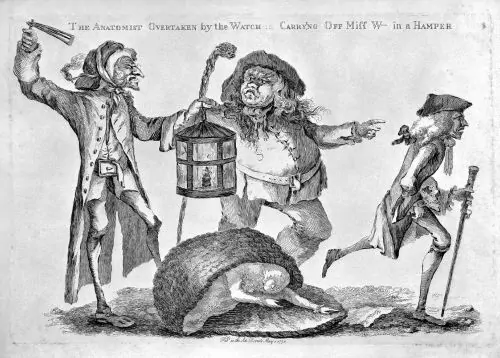
After Joseph Bowen dug up William Childers’s body for anatomists in 1717, Childers’s widow asked St. Bartholomew’s Hospital to help prosecute everyone involved. Only Bowen stood trial.

By Matthew A. McIntosh
Public Historian
Brewminate
Introduction: A Body Where Goods Should Have Been
In April 1717, the landlady of the Rose Inn in West Smithfield heard conflicting accounts of what a hamper brought to her premises contained. One man told her it held wine, while another said it carried hams from Westphalia. When she looked inside, she found the body of William Childers, who had died at St. Bartholomew’s Hospital and been buried in London’s New Churchyard. Joseph Bowen, a gravedigger, had exhumed him and supplied his remains to the surgeon John Kersey and two other medical men. The discovery initially raised suspicion of murder. The men explained that Childers had died of illness and that they intended to take his body to Oxford for anatomical instruction. Their account shifted attention from how he had died to what they and Bowen had done after his burial.
Childers’s widow turned to the hospital for help in bringing a prosecution. The governors’ minutes preserve her request, although they leave her first name unrecorded. At the Old Bailey in May, a jury convicted Bowen, who was fined and publicly whipped. The medical men avoided indictment.
For anatomists seeking human remains, a gravedigger knew things that professional standing or permission to teach could scarcely provide. He knew the ground and where the newly buried lay. His work gave him reason to be there long after mourners had left, when families depended on burial workers to respect the interments they had made. That dependence mattered because authorized supplies of bodies for dissection were small and irregular. A course of practical anatomy might need fresh material at a time when no body was available through the channels open to its teachers. The reported price of one guinea for Childers’s remains shows how much a medical purchaser might pay for a service that relied on the ordinary knowledge of burial work. The men expecting to use the body in Oxford could receive it at a London inn because someone else already knew where to find it. The transaction drew its advantage from the arrangements that had made Childers’s burial possible in the first place.
Bowen’s conviction establishes that interference with a buried body could bring criminal punishment in 1717. It also leaves a question about where that punishment fell. Robert Hartle suggests that social standing and connections helped the purchasers avoid indictment, an inference that must be weighed alongside possible differences in the evidence available against the men who received the body and the man who removed it. The widow’s request extended to everyone involved. In seeking help on those terms, she treated what happened at the grave and what happened at the inn as parts of the same wrong.
From Hospital Care to Responsibility for the Dead
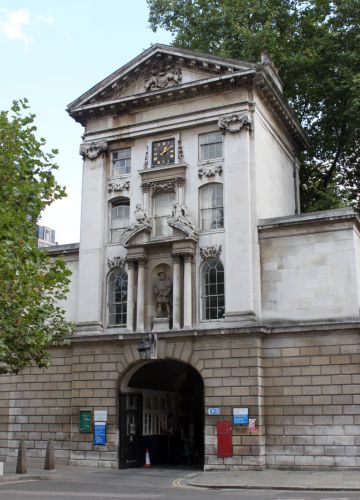
St. Bartholomew’s Hospital at Smithfield supported hundreds of sick people in its main wards at the beginning of the eighteenth century. Income from endowed property helped pay for their maintenance, and a board of governors decided how far the hospital’s resources could extend. Those decisions could produce very different terms of care within the same institution. As Kevin P. Siena has shown, the governors continued to support hundreds of patients in the main hospital while sharply restricting the number they would maintain at their own expense in the outlying wards for venereal disease. Such distinctions mattered to people who could afford little private care. They also placed the cost of looking after patients, including expenses that might arise at death, within the ordinary business of governing a hospital.
Contemporary reports attributed William Childers’s death to consumption. The word conveyed the wasting character of the illness as contemporaries understood it, and its use in a newspaper gives only a broad indication of what had brought him to the end of his life. The length of his stay and the treatment he received remain unknown. His name entered print because of what happened after his funeral, leaving his time in the ward much less visible than the dispute that followed it.
The hospital made provision for a patient’s possible burial at the point of admission. A deposit secured the expense if the patient died and no relative or friend collected the body. The charges recorded in 1731 put that sum at nineteen shillings and sixpence, a figure that documents the later schedule rather than any payment by Childers. The following year, a complaint about delayed admission prompted a committee to consider what should happen when an injured person arrived in immediate need of help. It recommended that hospital officers admit poor patients disabled by sudden accidents at once and obtain whatever security for burial they could. The proposal addressed a practical difficulty created by asking for financial assurances from people who might have come directly from the scene of an injury. It gave priority to their treatment while preserving the hospital’s expectation that the expense of a funeral would be met if one became necessary.
Families who took a body away for burial still depended on work performed by hospital staff. Under the schedule approved in November 1731, the beadle was entitled to a shilling for notifying the deceased’s friends, and bearers received two shillings for carrying the body to the hospital gate. A porter supplied a certificate for the parish where the interment would take place. The governors specified what could be charged for these services, giving the handover a recognized procedure even when the family would arrange the funeral elsewhere. The gate marked the point to which the hospital’s bearers were paid to go. From there, whoever had come for the deceased assumed responsibility for getting the body to its grave.
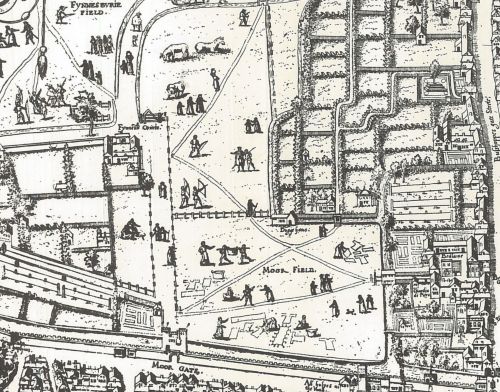
By 1717, the New Churchyard at Moorfields was receiving people buried at the hospital’s expense, including patients whose bodies no one had come to collect. Childers’s interment there is consistent with a funeral funded by the institution. His widow’s account to the governors identifies the place of burial, but it leaves open who made the arrangements and how much of the cost fell on her household. A relative could be present in a deceased patient’s life and still lack the money to arrange an independent funeral. In this instance, the records that might help resolve the question are missing. The hospital’s surviving burial registers begin in 1744, and the New Churchyard kept no central register of its own. Even the identity of the person who took charge of moving Childers from Smithfield to Moorfields remains uncertain.
The hospital’s role in training surgeons brought another set of responsibilities into the same buildings. Apprentices gained experience in the wards, where they encountered illnesses and injuries in the course of attending patients. The governors later made physical provision for some of the work associated with anatomical study. In 1726, they set aside a room beneath the ward used for operations to remove bladder stones as a repository for anatomical preparations and assigned responsibility for its key to a surgeon. A separate room under the same ward was designated to receive the dead. In 1734, the governors gave the hospital’s surgeons and assistant surgeons permission to lecture in its dissecting room, then rescinded that permission the following summer. These subsequent decisions show that the hospital could distinguish among holding the dead, keeping specimens, and authorizing instruction. They establish what the governors regulated on their own premises, while the evidence for Childers’s case places the interference with his remains after interment.
On April 27, 1717, the expense before the governors was the cost of seeking redress. The hospital undertook to bear it after hearing from Childers’s widow. By then, his treatment had ended and his body had passed out of the institution’s immediate charge. The decision gave his household practical assistance in pursuing a complaint about what had happened to him after burial.
The New Churchyard and London’s Unequal Burial Landscape
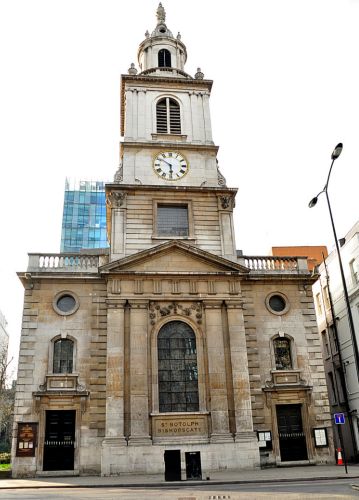
In 1569, the City of London enclosed about an acre beside the ditch that separated Bethlem Hospital from Moorfields. John Stow attributed the work to the lord mayor, Sir Thomas Rowe, and explained that the ground was intended for parishes that lacked suitable space of their own. The severe plague of 1563 had given the City reason to set aside land before another epidemic filled the churchyards. Although the enclosure lay within the parish of St. Botolph without Bishopsgate, it was a municipal burial ground that could serve people from across London. By the time William Childers was buried there, the New Churchyard had been receiving the city’s dead for nearly a century and a half.
A parish could offer several places of burial on quite different terms. Interment beneath a church floor generally cost more than a grave outside, and the churchyard itself contained places of differing desirability. Vanessa Harding has shown how families’ preferences could reflect the age of a burial place or its proximity to the church. An established grave also gave relatives a reason to return to the same ground even when space was available elsewhere. The prices recorded in some Georgian London parishes show how much the place of residence could matter. As Jeremy Boulton found, some parishes charged outsiders twice the usual rate unless they could establish poverty. Some burial grounds sought business from beyond their parish boundaries, giving families who could pay for transport and burial a wider range of choices. A household trying to keep its dead together had to reckon with the price of obtaining a grave in the place it considered home.
At Moorfields, the founding arrangements made burial space available across the City and allowed sixpence for digging a grave. The distinction between providing land and charging for the labor of interment helped keep the ground accessible. Parishes could use it when their own churchyards were crowded or when the cost of a local burial posed a difficulty. The sixpence belonged to the founding arrangements, and the expenses of a funeral in Childers’s day would have depended on what services were required and who undertook to provide them.
The people buried within the enclosure had arrived there for different reasons. A stranger who died away from home might have few local connections to help secure a grave, while some Protestant dissenters chose a burial ground outside parish control. Stow recorded that Rowe’s wife, who had persuaded him to enclose the land, was herself buried there. A much later example comes from the Jenkes family’s brick vault, where archaeologists found six burials dating from 1686 to 1714. The family had used lead coffins with decorated wooden interiors, an expenditure that set their burials apart within the common ground. A single enclosure could accommodate people who depended on public provision and families able to commission a tomb and return to it over several decades.
Space remained a problem even in a ground founded expressly to supply it. In September 1665, during the plague, the City instructed the keeper of the New Churchyard to dig single graves in place of pits, and the municipal records indicate that he complied. The order reveals an expectation about how bodies should be laid in the ground even in a period of exceptionally high mortality. Excavation at Liverpool Street found that practices changed across the life of the cemetery. Later wooden coffins had been placed in orderly east–west rows, although new grave cuts sometimes crossed older ones. The rows preserve evidence of care in placing the dead at the time of interment. The overlapping cuts show how difficult it became to preserve earlier graves intact while the ground continued to receive new burials.
From about 1700, the New Churchyard chiefly served institutions that needed burial space regularly. Bethlem and St. Bartholomew’s hospitals used it, as did the prisons at Ludgate and Poultry Compter. The scale of that reliance becomes clearer after the ground closed in 1739. In the following twelve months, the register of St. Giles, Cripplegate, recorded 178 burials of St. Bartholomew’s patients after the hospital redirected interments there. That later figure shows how much space another churchyard had to find for the dead of a single institution. Childers’s grave occupied one place in a ground that the City had to keep available for successive burials. A household that could commission a vault retained some control over the place its dead occupied and could identify it when another family member died. For people using ordinary graves, the location and continued integrity of an interment depended more heavily on the management of the common ground. The City could direct its use from Guildhall. The daily decisions about where to open a grave and how to respect those already there were made at Moorfields.
Gravedigging as Work and an Opportunity for Betrayal
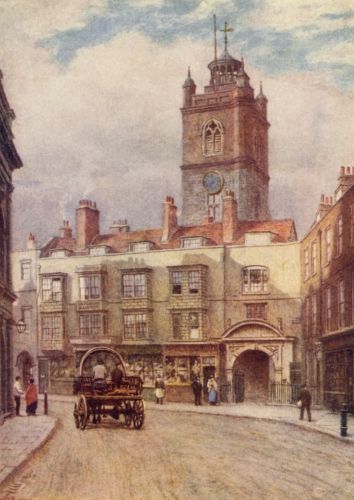
At St. Giles, Cripplegate, the vestry held the sexton responsible for seeing that graves were dug to an appropriate depth. Mary Ayres, who took up the office in 1685, did the digging herself for about twenty-five years. She also collected burial fees and kept an account of payments for the use of funeral palls. Her duties brought the physical work of opening the earth into the same office that dealt with families and received their payments. In 1710, the vestry minutes first mention a gravedigger engaged to work for her. The parish could assign the digging to another person while leaving Ayres responsible for how the work was done. As Wanda Henry’s study of London sextons shows, the division between supervising a burial and carrying it out was a choice that could change even within a single officeholder’s tenure.
At the New Churchyard, the Clitherow family held the keepership across generations. The position involved continuing management of the property and offered ways to earn money beyond any single funeral. The family, for example, allowed local people to dry cloth in the enclosure, one of the additional uses documented in Robert Hartle’s research. Bowen appears in the records in a narrower capacity, as a gravedigger. The precise terms on which he worked at Moorfields remain uncertain.
Preparing a grave called for judgments that even a detailed instruction from a vestry or a keeper could leave to the person doing the work. The opening had to accommodate a coffin in ground that might have been used several times before. At successive funerals, a worker could associate the people brought for burial with places that later looked much like one another at the surface. Others could know those places as well. The prosecution drew on witnesses who had attended Childers’s funeral, giving the case an account of the original interment independent of the purchasers’ story. Whether Bowen himself prepared the grave is less certain. What the record establishes is that he could locate and reopen a specific interment in a burial ground where his occupation regularly brought him into contact with the newly dead.
The scale of the financial inducement can be seen by setting the reported guinea against the old digging charge. At twenty-one shillings, a guinea was equal to forty-two charges of sixpence. Museum of London Archaeology has suggested that Bowen may have received sixpence for digging Childers’s grave, but the amount remains an estimate. The comparison shows the return one illicit sale could offer against a familiar charge for a single lawful task, while leaving Bowen’s usual earnings and personal finances unknown.
The Quaker meeting responsible for the Whitechapel burial ground had already confronted the question of what it could require from its gravedigger. In November 1716, Sarah Shepherd’s body was taken after burial, and John Holmes, the son of the ground’s gravedigger, was implicated. The meeting dismissed his father, Michael Holmes, and instructed his replacement to dig graves six feet deep and refill them promptly. The dismissal exercised the meeting’s authority over the person it had engaged to care for the ground. The terms imposed on his successor specified how protection was to be put into practice at each interment. Their effect still depended on how the person doing the work carried out those instructions, after the overseers had finished making their decisions and the mourners had gone.
The purpose of a gravedigger’s access was set by the burial he had been engaged to perform. Once a coffin had been lowered and the opening filled, the work was complete, and the worker’s familiarity with the place remained useful for conducting later funerals around it. Bowen’s sale gave that knowledge a fresh use at Childers’s expense. The men who wanted the body could offer money for an act that ran directly against the purpose for which burial workers had been admitted to the ground.
Why Anatomists Needed Bodies
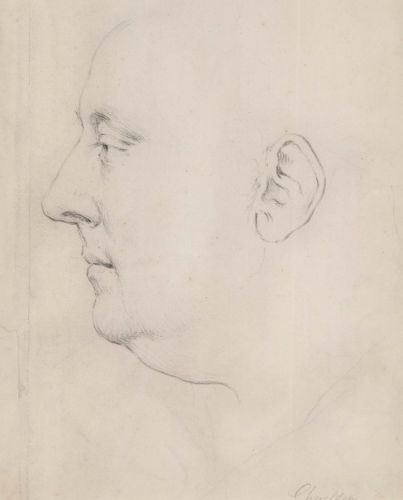
In the preface to his 1713 anatomy manual, William Cheselden observed that small blood vessels could differ even between opposite limbs of the same person. He left many such variations out of a book designed to familiarize readers with the structures most useful to know. To decide which features deserved that emphasis, he drew on observations of many human bodies. The resulting descriptions and copperplate illustrations gave students a pattern they could learn and remember. Repeated dissections gave the anatomist a way to judge where that pattern held and where a single specimen might mislead him. A surgeon who understood the difference was better equipped to recognize what he encountered in a living patient.
A course of anatomy could put several kinds of specimen to use. James Douglas, whose 1707 book compared human and canine musculature, taught with animals and prepared specimens and used fresh human bodies when he could obtain them. Cheselden’s syllabus likewise began with bones before proceeding to the internal organs of animals and then of human beings. A skeleton made the relations of bones available for repeated study, while an isolated preparation could expose a structure more clearly than it would appear during a dissection. A whole human body allowed the demonstrator to show where that structure lay among its neighbors and what came into view as the examination proceeded. Cheselden’s advertisement expressly promised to point out where surgical operations could best be performed. The sequence drew on the strengths of different materials and reserved a place for observations that required intact human remains.
People paid to see demonstrations for reasons that extended beyond preparation for surgical practice. As Anita Guerrini has shown, early lecturers in London attracted audiences interested in the workings of nature and in what the organization of the body might reveal about divine design. A person could follow an explanation of the heart with considerable interest and have no intention of treating a patient. For the lecturer, appealing to people with such different purposes enlarged the audience from which a course could draw income and professional recognition.
The advertisement appended to Cheselden’s manual named September 1, November 1, January 12, and March 12 as starting dates for successive courses. The calendar concentrated demonstrations in the cooler part of the year, when decomposition proceeded more slowly. Even then, the interval in which a lecturer could make effective use of a recently deceased person was short. An occasional dissection could be arranged around the arrival of a body. Offering a course on stated dates put the obligation the other way around, since the lecturer needed suitable material when the class reached that part of the syllabus. Substituting another demonstration might keep the class meeting, but it would change what subscribers had been told they could expect to see.
The principal lawful supply in London came through privileges granted to certain institutions. In 1540, Parliament authorized the governors of the Company of Barbers and Surgeons to take the bodies of four people executed for felony each year for instruction in anatomy. The Royal College of Physicians held a separate grant. These privileges specified who could claim bodies, so a surgeon’s right to practice gave him no independent share of the supply. As paid courses multiplied, their teachers had to work around arrangements established for institutions with teaching obligations of their own.
The Company’s minutes show how hard it could be to turn even an authorized claim into a body on the table. Friends and relatives sometimes sought to recover the executed at Tyburn for burial, and in May 1713 the Company instructed its clerk to ask the secretary at war for a guard to help secure the next body. Less than a year later, its governors reprimanded Cheselden, one of their own members, for obtaining bodies from the place of execution and dissecting them at home without permission. They complained that his actions made it harder for their beadles to collect bodies and drew people away from lectures at the Company’s hall. His promise to seek permission and refrain from dissecting while their lectures were in progress addressed both grievances. The dispute concerned the allocation of scarce material and the power to determine where anatomical instruction would take place. A physician investigating the cause of a patient’s death approached the matter under different expectations. As David Harley has shown, families could accept a private postmortem examination as a final act of care, especially when it might explain an illness that had puzzled those who attended the patient in life. Permission to make such an examination depended on its circumstances, including family agreement and, within hospitals, institutional rules. Voluntary sales or bequests of bodies were too uncommon to give teachers a dependable alternative. In 1714, the reformer John Bellers proposed that postmortem inquiry become part of the work of teaching hospitals, drawing attention to the difficulty Oxford students already faced in obtaining bodies. His proposal reveals how far some contemporaries were prepared to reconsider established practice. It described an institutional change that would have to be made before regular access could be expected.
By 1717, an instructor could publish a course in advance and find people willing to pay for it. A reliable means of obtaining human remains was harder to secure. Purchasing Childers’s body offered the medical men a way to meet a teaching need at a time of their choosing. The bargain could settle what they paid for the body, while leaving unanswered the question of who had authority to give it over.
The Purchasers and the London–Oxford Connection
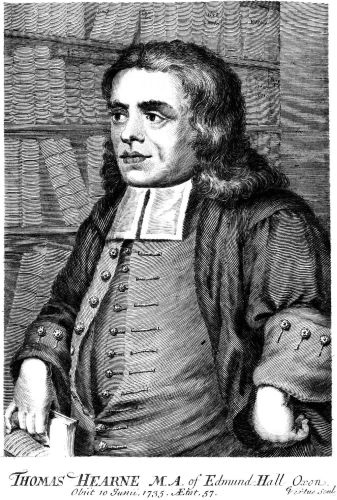
On March 30, 1717, John Woodward wrote to the Oxford antiquary Thomas Hearne about two young surgeons who had recently gone from London to Oxford to teach anatomy. He named John Kersey and Thomas Brathwaite and asked how they had acquitted themselves. The inquiry preceded William Childers’s burial by almost a fortnight. It establishes that the two surgeons were already associated with an Oxford course before the purchase brought their work to public attention.
Kersey was the son of a London lexicographer of the same name. In June 1703, he began his apprenticeship with Thomas Greenhill, a surgeon and embalmer whose published work examined the right to burial alongside the means of preserving the dead. Greenhill’s book offers a glimpse of the interests that could coexist within the practice where Kersey began his training. In April 1709, Kersey transferred to Simon Rideout, a surgeon at St. Thomas’s Hospital who had been elected a Steward of Anatomy in the Company of Barber-Surgeons the previous year. When Kersey completed his apprenticeship in June 1712, he had served under a man whose appointments connected hospital practice with the Company’s anatomical instruction. His route into surgery helps explain why he later found collaborators among men trained at St. Thomas’s, even though Childers had been a patient of a different hospital.
Some of the instruction that passed between young medical men took place in meetings they organized themselves. William Stukeley recalled gathering with William Cheselden and Thomas Forster to dissect specimens and take turns presenting papers. Robert Hartle places Kersey in that circle and suggests that he may later have assisted Cheselden with his private teaching. The record supports the proximity of their training more firmly than it supports either proposed collaboration. Cheselden’s syllabus refers to the courses in the plural and leaves any collaborator unnamed. The Oxford venture with Brathwaite is the first occasion on which Kersey’s work as a teacher comes clearly into view.
Brathwaite was about twenty-one in the spring of 1717 and was still an apprentice. He had first been bound to the army surgeon Latimer Ridley and then transferred to William Dickinson of St. Thomas’s after the Company discovered that Ridley had falsely claimed its freedom. Brathwaite and Kersey came to know the same hospital through different masters and undertook their Oxford work at different stages of their careers. Their relative seniority makes it plausible that Kersey delivered the lectures and Brathwaite performed the demonstrations, a division familiar in contemporary anatomy teaching. The surviving correspondence identifies both as teachers and leaves their respective tasks unresolved. The reports of the April purchase describe two young medical men alongside Kersey, and Woodward’s letter gives Hartle grounds to identify Brathwaite as one of them. The third may have been John Whiten, whom Kersey took as an apprentice in December 1716. The binding records that relationship, while his presence at the purchase remains an inference.
Oxford had provided for anatomical instruction through an endowed readership since 1624. Its arrangements called for the reader to procure a body after the spring assizes and engage a surgeon to prepare it for lectures. The reader was also expected to teach from bones during the terms, and the provision for dissection included an allowance for burying the remains afterward. Visiting practitioners could supplement this instruction, though finding material was their own difficulty. In 1710, the Swiss anatomist D. Lavater lectured on bones at the Ashmolean Museum after failing to obtain a body from London. His experience shows that teachers had looked to London for cadavers before Kersey and Brathwaite undertook their course. Bringing in a lecturer and securing what he needed to demonstrate were separate undertakings, and the success of one gave no assurance of the other.
A visiting surgeon needed leave from Oxford’s chancellor or vice-chancellor to lecture. Brathwaite’s uncle, also named Thomas Brathwaite, had served as vice-chancellor from 1710 to 1712. That family connection may have helped the younger man approach people familiar with the university’s procedures. How he and Kersey secured permission in 1717 remains unclear, as do the venue and financial terms of their course.
By April, the surgeons had a reason to look for teaching material in London after they had already gone to Oxford to lecture. The arrangement with Bowen attempted to send the remains of a London patient along the route the teachers had taken. Any permission they received from Oxford concerned their ability to give instruction there. The evidence for obtaining Childers’s body leads back to the purchasers’ dealings in London and provides no basis for treating the university as the buyer.
From Grave to Hamper
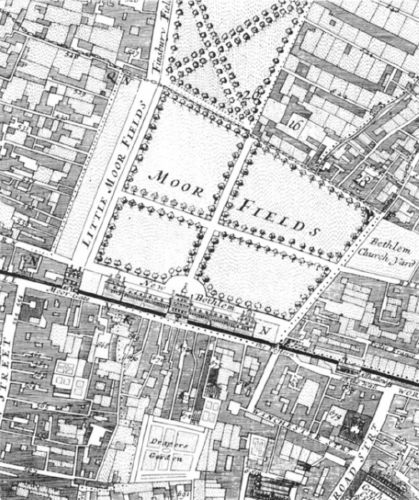
At about eleven at night, Joseph Bowen took William Childers’s body out of its grave in the New Churchyard. The hour comes from the contemporary accounts assembled by Robert Hartle, who dates the burial to April 10 or 11, 1717. Those accounts give the hour of the removal more precisely than the interval between the funeral and the reopening of the grave. They identify Bowen as the man who dug up Childers and leave uncertain whether anyone helped him lift the body.
Bowen put Childers’s body in a sack and folded it double to fit inside a hamper. The sack enclosed the remains, and the basket allowed whoever took charge of them to lift or set them down without handling the body directly. The two containers also hid what had been done to make Childers fit. At burial, people had prepared a place to receive him in the position in which they laid him to rest. In packing the hamper, Bowen changed that position to accommodate a container intended for carriage. The surviving description is brief, but it establishes a physical indignity that occurred before any anatomist could have used Childers for instruction.
The hamper went from Moorfields to the Rose Inn in West Smithfield. The surviving accounts establish those two points without identifying the route or the means of carriage between them. They also leave uncertain where Bowen put the body into the basket and who brought it through the inn’s door. The evidence is more precise about who removed Childers from the ground than about who carried him through London.
The Rose belonged to a type of establishment long used to arrange the movement of goods between London and the provinces. In 1637, John Taylor listed the Rose at Smithfield as a stopping place for carriers from Coventry, with arrivals on Thursdays and Fridays. He also recorded that a carrier from Leicestershire lodged there. Taylor designed his directory for people trying to find out where to send or collect goods and letters, so the names of inns mattered as much as the towns the carriers served. John Chartres’s study of early eighteenth-century London inns places that practice in a wider commercial system in which innkeepers and carriers helped connect provincial customers with the capital. Taylor’s listing predates Childers’s death by eighty years and cannot identify an Oxford carrier involved in the case. It does show why bringing a hamper to a Smithfield inn made practical sense as a preliminary to sending it out of London.
The contemporary accounts put the price of obtaining Childers’s body at one guinea. That figure tells us more about what the medical men stood to acquire than about how the parties arranged the exchange. The surviving evidence leaves open whether Bowen was offered the sum before he dug up Childers or whether the price was settled when the body was delivered. It also leaves the costs of transport obscure, including whether anyone had agreed to pay separately to get the hamper to Oxford.
When the governors of St. Bartholomew’s Hospital recorded the widow’s complaint on April 27, they entered the inn as the place where the proposed journey had been interrupted. Her husband’s body, the minute states, was “stopped at an Inn in a hamper to be sent to Oxford.” The statement identified a destination and placed the interruption before dispatch. It also preserved the order of events that mattered to her complaint. Childers had been buried, taken from the grave, and sold before the hamper was stopped. Preventing its departure kept his remains in London, where the circumstances of their removal could still be investigated. The inn is the last place where the surviving evidence securely locates Childers’s body. Hartle considers reburial in the New Churchyard probable. No surviving entry identifies the person who took charge of the remains or records the date of a second interment. Even a return to Moorfields would leave open whether Childers was laid again in the grave from which Bowen had taken him.
Discovery at the Rose Inn
The landlady of the Rose had two explanations for the contents of a single hamper. According to the newspaper accounts Robert Hartle brings together, one man said it contained wine, and another said it held Westphalia hams. Either answer described goods that might pass through a carrier’s inn. Hearing both gave her reason to examine the basket without alerting the men. What she found established that both explanations were false, but it gave her no immediate way to know how the man inside had died.
The Stamford Mercury supplied a detail about the men’s presence at the Rose. In its April 25 issue, under a London dateline of April 18, it reported that a surgeon came to the inn with two companions and spent some time drinking there. In the surviving excerpt, the paper also attributes the packing of the hamper to a surgeon, whereas Hartle’s reconstruction assigns it to Bowen. Who packed the basket remains uncertain. If the newspaper’s attribution is correct, a purchaser had personally prepared Childers’s body for carriage before the landlady examined it.
Much of the work of detecting an offense in early eighteenth-century London began with people who held no public office. As J. M. Beattie has shown, London’s constables and magistrates depended heavily on information supplied by the people who discovered or witnessed an incident. At the Rose, the landlady had already made the decisive observation before anyone could inquire into a possible crime. The newspaper accounts identify her by her position at the inn and preserve her decision to look inside the hamper. The steps between her inspection and the detention of the men are much harder to recover. The surviving accounts leave unclear who first intervened and who took charge of the men after the discovery.
The men were detained on suspicion of murder. A body hidden among what passed for freight gave grounds to inquire into a violent death. The reporting establishes the nature of the initial suspicion and the men’s subsequent release. It leaves the length of their detention and the grounds on which they were formally released uncertain. In answering the suspicion, the men said that Childers had died of natural causes and implicated Bowen in supplying the corpse. They also explained that it was intended for anatomical teaching at Oxford. The account gave them a reason for possessing the body that began after Childers’s death, and it disclosed their interest in obtaining it. Naming Bowen gave anyone making inquiries a person to question about the removal. The explanation could be checked against facts known outside the Rose, including Childers’s death at St. Bartholomew’s and his burial at Moorfields. Establishing those events answered the immediate suspicion about how he had died and sharpened the question of how the men had acquired him.
Evidence from witnesses associated with both the funeral and the Rose eventually reached the Old Bailey. People who had seen Childers buried could establish that his body had already been laid in the ground. Witnesses from the inn could speak to a later moment, when the remains had come back into view under circumstances that demanded an explanation. The published trial account is selective, as Robert B. Shoemaker’s study of the Proceedings cautions, but it preserves the importance of evidence from both places. For Childers’s widow, whose complaint to the hospital began with her husband’s burial, the discovery at the Rose made it possible to identify the people she wanted called to account.
Mrs. Childers and the Attempt to Prosecute
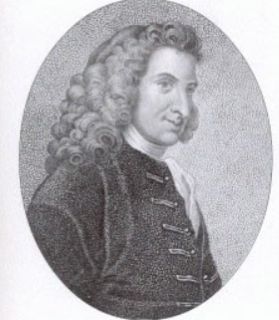
The governors of St. Bartholomew’s Hospital entered Mrs. Childers’s complaint in their minutes on April 27, 1717. The clerk identified her as William Childers’s widow and left her first name unrecorded. Her relationship to a man who had died in the hospital explained why she brought the matter to its governors. She was asking them to put the hospital’s resources behind a prosecution.
The wording of the request makes its scope clear. Mrs. Childers wanted proceedings against “the said grave-digger and Surgeons,” the men at either end of the sale. The clerk described the purchasers collectively, leaving open how much she knew about the identity or conduct of each man. Her complaint treated their acquisition of the body as part of the wrong for which she sought redress. That was a broader account of responsibility than one confined to the person who had lifted Childers from his grave. It also gave the governors a specific action to consider. She wanted them to pursue the people whose purchase had made the removal worth undertaking.
Money entered the minute as an explicit reason for seeking help. Mrs. Childers asked the governors to act “in respect to her poverty” and to bear the expense of the prosecution. The clerk recorded no sum, and the entry gives little basis for reconstructing her household circumstances. It places the financial obstacle at the outset, when she was still trying to get proceedings under way.
Private individuals in early eighteenth-century London supplied much of the initiative and expense that brought criminal cases before a court. Robert B. Shoemaker’s work on London and Middlesex shows how much discretion complainants and magistrates could exercise in deciding how to pursue misdemeanors. A formal prosecution still required someone to arrange for an indictment and secure the attendance of witnesses. John H. Langbein has shown that the burden could be substantial even for people who proceeded without hiring counsel. Writing about robbery in 1751, the London magistrate Henry Fielding used a two-shilling fee for drawing an indictment to illustrate how modest the charge on paper could look beside the expense of several days at court and the time lost in attending. Fielding was discussing felony prosecutions a generation later, but the distinction he drew helps explain the practical breadth of Mrs. Childers’s request. Paying for a prosecution meant sustaining the effort needed to get the case heard.
W. S. Church, who transcribed the appeal from the hospital records in the nineteenth century, reports that the governors undertook to do as she asked. The institution had a treasurer who oversaw expenditure and a clerk whose duties could include gathering evidence in legal cases. Mrs. Childers’s appeal could accordingly draw on administrative resources as well as money. The surviving account establishes the undertaking and leaves its execution obscure. It gives neither an itemized payment nor the name of an officer charged with carrying the matter forward.
The Old Bailey session at which Bowen was tried opened on May 1, four days after the governors recorded the complaint. His indictment establishes that proceedings against one of the parties reached trial. The medical purchasers escaped indictment, and the surviving evidence leaves open what steps, if any, were taken to bring charges against them. Mrs. Childers had sought proceedings broad enough to encompass the sale as well as the exhumation. The case that reached the courtroom was narrower than the one she had asked the hospital to pursue.
A Punishable Wrong without Ordinary Property Theft
The printed account of Joseph Bowen’s trial calls the charge a “Misdemeanor.” It describes an indictment for “breaking and entring the Church-yard” in St. Botolph’s Bishopsgate and taking away William Childers’s body for dissection. The account also records Bowen’s admission that he and another person removed the body, packed it, and conveyed it to Smithfield. That admission establishes that Bowen acknowledged assistance, although the report leaves his companion unnamed and does not assign the individual tasks. The jury found Bowen guilty on the charge as reported, which concerned the entry into the burial ground and the removal of the body.
A prosecution from the previous century shows how differently the law could treat something taken from the same grave. William Haynes removed winding sheets from four bodies and put the bodies back. His conviction for petty larceny concerned the linen and turned on whose property it was when he took it. As the legal scholar Paul Matthews has emphasized, a finding that the dead could not own their winding sheets is narrower than a rule that their bodies were incapable of being owned. William Hawkins’s treatise of 1716 still put the point in terms of who owned the cloth. A person who stripped off a shroud could be indicted for stealing it from the person who had owned it when it was put on the body.
The modern index to the Old Bailey Proceedings places Bowen’s case under theft, a broader classification than the charge stated in the original report. Witnesses at his trial recalled John Kersey saying he had given Bowen a guinea for the body. Their testimony bears directly on the bargain and the value the purchaser placed on obtaining Childers’s remains. An ordinary larceny charge would have required a property interest in the thing taken, and a reported payment supplied no evidence of such an interest.
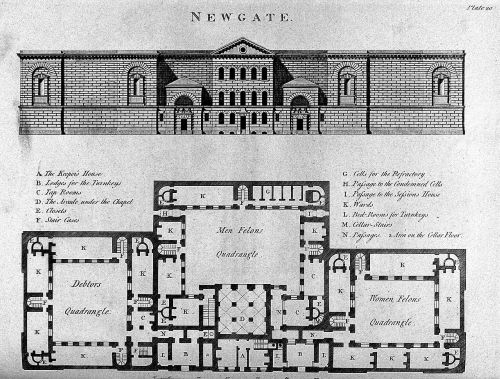
Jurisdiction raised a question of its own. Edward Coke had placed burial within the cognizance of the ecclesiastical courts, while recognizing an action at common law for damage to a monument. Edmund Gibson’s 1713 compilation of English ecclesiastical law likewise described the removal of an interred body as an act requiring a license. These authorities show that deciding who could open a grave was a legal matter in its own right, distinct from deciding who owned a shroud or monument. Bowen’s prosecution shows a secular criminal court punishing the disturbance of a burial. The account of his trial leaves the court’s understanding of the boundary between ecclesiastical and secular authority unrecorded. Bowen was fined forty shillings and, on May 29, whipped from Newgate to Smithfield Bars. The route made the punishment visible in the part of London where the affair had come to light. The printed account called the penalty “condign,” or deserved, and complained that Bowen and his “Fraternity” had made it impossible for the dead to rest quietly in their graves. The reference to other offenders places the wrong in a wider setting than the jury’s finding about one man. It presents the security of burial as a concern shared by people who had no connection to the Childers household.
Later authorities made the legal distinction more explicit. In the fourth volume of his Commentaries, published in 1769, William Blackstone distinguished stealing gravecloths from carrying away the corpse itself, which he described as a grave indecency outside the law of felony theft. In Rex v. Lynn in 1788, defense counsel argued that the removal of a body belonged to ecclesiastical jurisdiction and suggested that taking it for anatomy differed from taking it for an indecent exhibition. The King’s Bench held that unauthorized disinterment was indictable at common law as conduct contra bonos mores, contrary to accepted standards of decency. The purpose of dissection did not excuse it. The judges invoked earlier Old Bailey practice without identifying Bowen among the cases they had in mind. Their reasons clarify the later doctrine and give a point of comparison for the much briefer account from 1717.
Mrs. Childers had an interest in the security of her husband’s burial without having to claim him as property. The indictment gave the court a way to punish the interference with that burial and the removal that followed. Bowen’s admission placed him among the people who performed those acts. The responsibility of anyone who paid for or arranged them depended on what could be established about that person’s own conduct and whether a charge was brought.
Bowen’s Trial and Public Punishment

A London reader could buy the proceedings of the May 1717 Old Bailey session for threepence. The eight-page pamphlet covered four sitting days, from May 1 through May 4, and opened with the names of the presiding officials and the members of the London and Middlesex juries. Bowen’s trial occupied part of a single column. The price appeared beneath the judgments, beside the address of the bookseller who sold the issue and accepted advertisements. The witnesses first mentioned in Bowen’s case said they had attended Childers’s interment. They could establish that the man named in the indictment had been laid in his grave before the events at Smithfield. Other witnesses recalled drinking with John Kersey at the Rose when the hamper was brought in. They attributed to Kersey a statement that he had paid Bowen for the body. The distinction between what they saw and what they heard matters here. The pamphlet preserves their account of Kersey’s words without identifying anyone who testified to seeing the payment itself, and it gives no separate testimony by Kersey.
Bowen could answer to a part of the affair that had taken place before the witnesses at the Rose saw the hamper. The reporter says he “did not deny the Fact” and summarizes his acknowledgment that he took part in the exhumation and delivery. As John H. Langbein’s study of early English criminal trials shows, the accused’s personal answer had a central place in proceedings of this period. Here it gave the jurors an account of the removal from a participant. The pamphlet moves directly from that answer to the verdict, preserving the jury’s finding of guilt while leaving Bowen’s formal plea and the course of the deliberations unrecorded.
On the final page, the printer grouped seventeen defendants under a heading for whipping. Bowen appeared separately, just after Thomas Bray, who was also fined forty shillings. Bowen’s entry combined that sum with an order that he be whipped from Newgate to Smithfield Bars. The two named places fixed where the corporal punishment would begin and end.
Robert Hartle dates the whipping itself to May 29. Newgate, the prison beside the Old Bailey sessions house, stood at one end of a district whose streets led into West Smithfield. John Stow identified Giltspur Street as the connection between Newgate and Smithfield, although the sentencing entry gives only the endpoints of the whipping. Smithfield Bars marked the City’s boundary where St. John Street led north from the market district. The destination brought Bowen back into the neighborhood where the hamper had been opened. In his 1720 revision of Stow’s survey, John Strype placed the Rose among the well-frequented inns on the north side of the sheep pens. People going about ordinary business in that district could encounter the punishment without having been in the courtroom or read the proceedings.
Whipping through London’s streets often meant fastening the convicted person behind a cart. J. M. Beattie’s account of City policing shows that constables helped supervise public whippings, extending the administration of the sentence beyond the prison. The sources establish the endpoints of Bowen’s punishment and leave the number of strokes and the manner of its execution unknown. Robert B. Shoemaker has shown that exposure of this kind could damage an offender’s standing among people who knew him or might employ him. That possibility carried unique weight for a gravedigger whose work required others to trust him with their dead. The record leaves Bowen’s subsequent employment uncertain. The end of the whipping did not secure Bowen’s release. A report in the Weekly Journal or Saturday’s Post, preserved in a later transcription, says he was taken back to Newgate to be held until he paid the fine and his fees. The forty shillings specified in court were only part of what he would have had to find. Payment, rather than the expiry of a stated term, was the condition the newspaper gave for his discharge. How long Bowen remained in prison would have depended on his ability to raise the money or obtain help. The report leaves both the amount of the fees and the date of his release unknown.
The newspaper identified Bowen by his trade and explained that he had supplied the remains to surgeons for dissection. A reader could follow what happened to the gravedigger as far as his return to prison. The surgeons entered that account collectively, through the purpose for which they had obtained the body. The public punishment made the identity and fate of one participant unusually clear while leaving the legal fate of the purchasers outside the story it told.
Why the Purchasers Avoided Indictment
John Kersey entered the Old Bailey record as a man whose words were reported in a case against someone else. The May proceedings named him as the surgeon associated with the purchase, yet Bowen alone stood before the jury. The medical men had been within the scope of Mrs. Childers’s complaint, and their involvement was known when the gravedigger was tried. The evidence establishes that they escaped indictment more securely than it establishes how they did so.
Bowen’s trial report says that people suspected of complicity were “sent to the Counter,” a term for one of the City’s prisons. Its pronoun leaves the identities of those detained uncertain, and the passage supplies no separate account of their examination. The newspaper reports assembled by Robert Hartle describe the medical men being released after they explained that Childers had died naturally and implicated Bowen in obtaining the body. That explanation addressed the immediate suspicion that someone had killed the man found at the inn. It also brought a different offense into view, one that concerned what had been done to him after burial. The sequence provides no evidence of a formal agreement to protect the men from prosecution in exchange for what they said.
An accusation could stop at several points before trial. As J. M. Beattie explains, a grand jury heard the evidence supporting a proposed indictment and decided whether to return a true bill, which allowed the case to go forward to a trial jury. Bringing a bill that far required someone to pursue the complaint and assemble evidence against the accused. The hospital’s undertaking gave Mrs. Childers institutional support for doing so, while leaving the subsequent decisions about charges in other hands. No bill against the purchasers or grand jury return on such a bill has been identified in the surviving accounts of the case. Those accounts leave open whether a proposed indictment was ever put before a grand jury. The evidence against the supplier and the buyers also differed in substance. Bowen admitted taking part in the exhumation, while the statement attributed to Kersey concerned payment for the body. A case that a purchaser had procured the removal would have called for evidence about what he asked Bowen to do or what he knew before the grave was opened. The published account of Bowen’s trial leaves the terms and timing of the arrangement too obscure to tell how such a case might have been made.
Hartle regards social standing and personal connections as the probable explanation for the purchasers’ escape. He identifies two barristers in the family of Thomas Brathwaite, whom he places among Kersey’s associates in the affair. Richard Cooke was Brathwaite’s maternal uncle, and John Marsh was his mother’s cousin. A relative with legal experience could advise a suspect during an inquiry or find someone prepared to speak on his behalf before a charge was drawn up. That possibility gives Hartle’s interpretation a specific basis in Brathwaite’s family circumstances. The surviving records leave unconfirmed whether either man advised him, appeared for him, or contacted anyone responsible for the case.
A later example from the City shows how personal standing could enter a preliminary hearing. In December 1729, Edward Viccars was brought before the alderman Richard Brocas on suspicion of taking a silver tankard from a public house. Viccars said he had left before the tankard was missed, and several former employers appeared to vouch for his character. Brocas discharged him. The case, recovered by Beattie from the City’s charge book, shows how a suspect’s account of the evidence and the standing of those who supported him could bear on the same decision. In the Childers affair, the family connections are known and the equivalent record of a hearing is missing. The payment attributed to Kersey was for obtaining Childers’s body. A claim that an official was bribed would require evidence of a different payment, which the sources do not supply. The directness of the evidence against Bowen and the possibility of legal assistance for Brathwaite can both help explain how the cases diverged. The disparity is clearest in what the proceedings required of the men involved. The gravedigger had to answer a charge before a jury, while the people who sought the body never had to account for the purchase as defendants.
A Connected Trade and Its Public Exposure
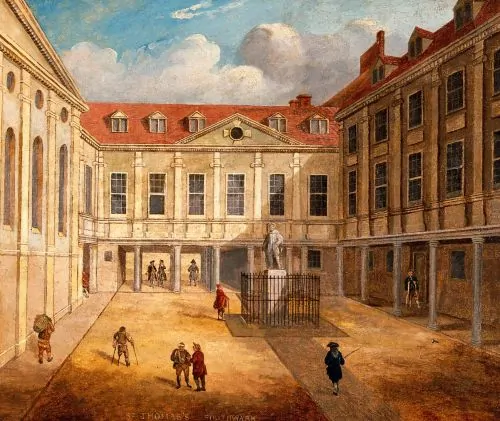
Newspaper accounts of Sarah Shepherd’s exhumation in Whitechapel in 1716 named men paid to procure and carry her body. The Stamford Mercury described a man surnamed Griffiths who sought agreements with sextons and gravediggers. He reportedly paid ten shillings to John Holmes, the Whitechapel gravedigger’s son, and six to a coachman whose name went unrecorded. The destination was identified only as a hospital in Southwark, leaving the eventual recipient uncertain. The two payments are more revealing about how the transaction worked. A man who knew whom to approach at a burial ground could arrange the removal without undertaking every part of it himself.
George Gambol’s statement after a theft in Southwark in February 1718 gave a fuller account of how such work could be divided. Gambol, a soldier, helped the gravedigger William Dod remove a woman’s body from St. Saviour’s burial ground. After turning king’s evidence, he reportedly said he had received five shillings for carrying the body. He also claimed Dod received thirty shillings for a child under two and a guinea for an adult. The figures suggest that a buyer might place different values on bodies according to age, although Gambol’s statement gives no reason for the higher reported price of a young child. As a witness for the Crown, he had an interest in presenting his own part as paid carrying work. His account identifies a familiar service for which someone could be hired independently of the digging.
The woman’s relatives reclaimed her body after it was displayed at St. Thomas’s Hospital. Other families opened graves at St. Saviour’s to see whether their own dead were still there. A broadside reported thirty bodies missing, and the Original Weekly Journal listed twenty-five children and thirteen adults. The competing totals leave the number uncertain, but the searches show what the discovery had done to families whose funerals were already over. They now had to disturb a burial themselves to find out whether someone else had done so first.
An anonymous correspondent in the Original Weekly Journal asked readers to picture a sexton or gravedigger “standing Proxie’s at the Cart-Tail.” The image was of a man taking a whipping in someone else’s place. The writer reserved much of his anger for surgeons who induced men in need of money to supply them and argued that the surgeons deserved public punishment themselves. What concerned him was the power to commission an offense while leaving the person hired to carry it out exposed to its penalties. His description of the Southwark discovery as a common subject of conversation fits what Robert B. Shoemaker has shown about the circulation of crime news in London, where reports in print mingled with what people heard and discussed in person. The letter preserves one argument that emerged from those exchanges. It made the decision to procure a body a matter of public judgment, even when the buyer’s conduct never came before a jury.
St. Thomas’s used the press for a different purpose. In a notice in the Post Boy, the hospital described the person responsible as a teacher of anatomy acting on his own account and disclaimed an association with him. Its internal inquiry took up a question the notice had left aside. Bodies had been found in Thomas Brathwaite’s lodgings in Joyner Street, and the inquiry attributed the thefts to him. On March 26, 1718, the hospital dismissed him from his apprenticeship there and barred him from entering. The governors could discipline Brathwaite because he was still an apprentice under their authority. The same connection gave the hospital reason to explain publicly where it understood its responsibility for his activities to end. A year later, Brathwaite used a London newspaper to solicit an audience in Oxford. His notice in the Daily Courant advertised a course in human and comparative anatomy in Oxford’s public schools and claimed that forty-two students had subscribed. Christopher Furneaux of Exeter College was to deliver the lectures, with Brathwaite conducting the demonstrations. By October 1719, Brathwaite had completed his apprenticeship under another London surgeon, Richard Lee. The advertisement establishes the terms on which he sought to resume teaching and the audience he claimed to have secured. The new partnership shows how he could continue to market his skills after St. Thomas’s withdrew its patronage and access.
By 1725, the anonymous author of The Town Spy could call the body suppliers a “Corporation of Corpse-stealers” and expect readers to understand the joke. He invoked the removals at St. Saviour’s and St. Giles’s as achievements of a supposedly respectable occupation. The mock title borrowed from London’s chartered trades to suggest that a person might make a living by despoiling graves. Its force came from putting a common name to incidents reported in different parishes. The payments disclosed in Whitechapel and Southwark gave the satire its basis in recognizable business arrangements.
Protecting Graves and Reading the Archaeological Evidence
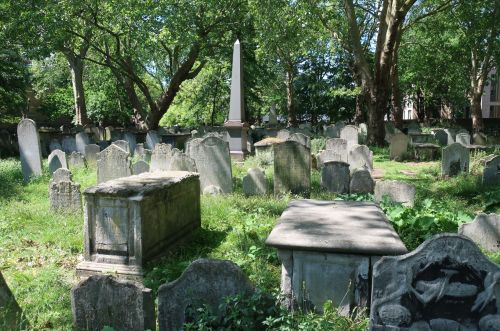
At Chequer Alley near Bunhill Fields, the Quaker meeting responsible for the burial ground ordered its gates locked at night after learning of Sarah Shepherd’s removal from a grave in Whitechapel. The meeting also wanted to replace poorer tenants in adjoining properties with fellow Quakers because it feared that someone might pay the existing tenants to take bodies. Locks were already part of burial-ground management. The Ratcliff Quakers had attended to the locks on a burial-ground door in 1694 as a matter of ordinary upkeep. At Chequer Alley, the instructions about who should live next door give the nighttime rule a purpose that a surviving lock could scarcely disclose on its own. The eleven empty coffins excavated at the New Churchyard pose a different problem. Later graves cut through earlier ones, sometimes displacing the remains and leaving only part of a burial in place. An empty coffin could also result from a removal that took place before the funeral. In October 1719, a London newspaper reported that a child’s coffin was opened on its way to burial because its weight aroused suspicion. It contained sand, and the child’s body had reportedly been sold to a surgeon. The report places the substitution before interment, a sequence that would be difficult to reconstruct from the coffin alone. Counting each empty coffin at the New Churchyard as a theft would give a single explanation to finds that may have had quite different histories.
Sand served another purpose in the grave recorded by the excavators as coffin 3999 and skeleton 4000. An undecorated wooden coffin still held its occupant. Sand filled the space above the remains, substantial stones lay directly on the lid, and more rubble was mixed into the earth used to close the grave. Robert Hartle and Michael Henderson considered whether the sand had been put there to absorb fluids and odors from decomposition. That possibility accounts for what was inside the coffin, while the stones show that someone also took trouble over what went on top of it. A person trying to reopen the grave would have had to clear the rubble, shift the stones, and free the remains from the sand. Those demands make protection against removal the most persuasive explanation for the arrangement as a whole.
The date depends on where the grave sat in the sequence of burials. The excavation monograph assigned it to a phase spanning roughly 1670 to 1739. Hartle’s later study used its stratigraphic position to suggest a date after 1700, with the closure of the ground in March 1739 setting the latest limit. That interval includes Bowen’s offense and leaves room for the precautions to have been taken years before or after it.
The skeleton belonged to an adolescent whom Hartle estimated to have been about sixteen. Its sex could not be determined from the bones. The vertebrae and other parts of the skeleton showed evidence of widespread tuberculosis, which may have caused the adolescent’s death. Childers was reported to have died of consumption, a resemblance that led Hartle to entertain the possibility that this was his body after reburial. Consumption was common enough among St. Bartholomew’s patients to make the resemblance weak evidence for an identification. No inscribed coffin plate or headstone was recovered with the burial, and no surviving register for the ground ties a name to the plot. The grave preserves an unusually detailed record of how somebody was buried, while the person’s identity remains unknown.
Ironwork from other New Churchyard coffins is harder to interpret. One lid bore the initials R R and the date 1674 in studs and was fitted with iron brackets that the excavators considered unnecessary for its construction. The brackets would have made reopening more difficult, a practical effect that can be inferred from their position. A trade card made for the coffin-maker William Grinly around 1730 depicts a coffin with similar fittings. The illustration places the design within the undertaker’s stock of goods but gives no reason for a customer to select it. The dated find pushes the use of such brackets back more than forty years before Bowen’s trial, leaving open when or whether customers began to choose them expressly for security. A later London excavation shows how the position of iron fittings can clarify their purpose. At St. James’s Gardens near Euston, the archaeologists recorded the coffin of Sarah Graham, who died in 1820, with two wooden shells held by iron bands. They interpreted that enclosure as protection against body snatching. At the same burial ground, iron bars placed across a shaft served as supports for a coffin above another interment. In Graham’s burial, the bands belonged to a structure that resisted opening. In the shaft, the iron carried weight. The metal’s relationship to the coffin supplied the evidence for its function.
The precautions most visible to excavators are those put into the ground with the dead. A rule about who locked a gate could be faithfully observed for years and survive only as an entry in a minute book. At the New Churchyard, the arrangement of sand and stone recorded a choice that no surviving order explains. Someone had made the work of burial more laborious so that opening the grave again would be more laborious too.
Does One Prosecution Establish a Betrayal Built into Burial?
The following video from thehistorysquad discusses body trade history:
Bowen came to the attention of the court because he departed from what people expected a gravedigger to do. His prosecution is a poor guide to how regularly other workers honored that expectation. The purchasers might have found another supplier had Bowen refused, and the incentive to obtain a corpse for dissection came from outside the burial ground. On that reading, the theft owed more to a ready buyer and one man’s willingness to offend than to the way London buried its dead. William Stukeley’s account of his medical training gives this objection substance. In 1708, while still a student, he helped exhume and dissect a man named Hoyes, who had died by suicide and been buried by the highway at Holbeach in Lincolnshire. Stukeley recalled displaying the skeleton in a glass case in his summerhouse and attracting visitors despite the alarm the exhumation caused. His account describes medical men procuring their own material without recording the intervention of a burial worker. A roadside grave presented a different problem from locating a newly buried patient in a crowded London cemetery. The comparison shows why the choice of supplier needs an explanation of its own. People who wanted bodies could sometimes get them directly, while their reasons for seeking help depended on where and how the dead had been buried.
The printed report of Bowen’s trial is more precise about his participation than about the advantage his occupation gave him. It records his acknowledgment that he helped remove Childers and describes the offense as breaking and entering the churchyard. It leaves open whether he dug the original grave or how he found it that night. Robert B. Shoemaker’s study of the Old Bailey Proceedings shows how heavily early trial reports were abridged, often giving readers little of a defendant’s account or of the legal arguments heard in court. In Bowen’s case, the report moves almost immediately from the acknowledgment to the verdict. That brevity matters when trying to reconstruct the use he made of his position. It also matters when judging how unusual the case was, since the circumstances that brought a theft to court were themselves exceptional enough to leave a record.
The prosecution of another London gravedigger shows how an inquiry could stall even when officials sought to widen it. After Samuel Buxton was caught with a child’s body in 1723, the vestry of St. Giles in the Fields dismissed him, paid for the prosecution, and offered ten pounds for further information. As Tim Hitchcock notes, nobody came forward to claim the reward. The vestry’s willingness to spend parish money strengthens the case that officials could take the breach seriously and still secure a conviction only against the man caught with the remains. That episode gives evidentiary difficulty real weight as an explanation for an outcome like Bowen’s. The possibility that the purchasers’ social standing helped them in 1717 remains open, and the difference in outcomes alone cannot settle it.
What the case establishes is a vulnerability in the division of work. A surgeon seeking a recently buried person could enlist someone whose ordinary occupation put him in a position to know where and when interments had taken place. The surviving cases establish that such arrangements could recur, while their frequency among London’s burials remains beyond recovery. In Childers’s case, the purchasers’ purpose gave that occupational knowledge a use no family would have contemplated when entrusting someone to the ground. The conviction answered for Bowen’s part in the removal and left the buyers’ part without a judgment.
Conclusion: The Limits of Punishing the Gravedigger
Mrs. Childers brought a broader complaint to the governors of St. Bartholomew’s Hospital than the one the Old Bailey would resolve. She asked the hospital to support proceedings against the surgeons who bought her husband’s body as well as the gravedigger who took it. The governors agreed to undertake the prosecution at the hospital’s expense, though the surviving account leaves the extent of its financial support uncertain. Her request set a measure for what accountability would mean in this case. It would have to reach the people who made the removal worth undertaking.
Bowen’s conviction gave public force to the expectation that a burial would be respected. The fine and whipping made the judgment more than a declaration of disapproval. Yet the proceedings could make use of evidence about the purchase without putting the purchasers on trial. Witnesses attributed a statement about payment to John Kersey, and the jury heard it in deciding Bowen’s case. A prosecution of the buyers would have required a judgment about their own actions, including what they knew when they agreed to the transaction. The surviving records establish how far the prosecution reached and leave uncertain why it stopped there.
Viewed from the buyers’ side, the decisive fact about Bowen was that he already knew the work of a burial ground. Payment gave someone outside that work a way to benefit from his familiarity with it. The cases that followed show that others could make similar arrangements, although they give little basis for estimating how often anyone did. The court could impose a cost on Bowen for the choice he made in 1717. Anyone looking for a body for the next course of anatomy could still seek another willing supplier.
The injury Mrs. Childers brought before the hospital also concerned what happens to a person’s place among the living after burial has been disturbed. Thomas W. Laqueur’s history of the churchyard helps explain what a place of burial could sustain. The people who had attended an interment could continue to associate the dead with a place they knew, even where the grave carried no enduring marker. Recovering remains intercepted in transit made it possible to restore that connection. Doing so required people to take charge of the body again and see it buried where it could remain. Their work lay outside the sentence the court pronounced.
Hartle considers it probable that Childers was reburied in the New Churchyard. The surviving evidence gives no secure date or location for a second burial and leaves his widow’s part in it unknown. The sentence survives in more exact terms. The published proceedings name Newgate and Smithfield Bars as the beginning and end of the whipping route. The place where Mrs. Childers might afterward have stood at her husband’s grave remains unknown.
Bibliography
Affiliate disclosure: Amazon links on this site are paid links. As an Amazon Associate I earn from qualifying purchases.
- Ayliffe, John. The Antient and Present State of the University of Oxford. Vol. 2. London: E. Curll, 1723. See p. 153, discussed in Hartle, “‘The Corporation of Corpse-stealers,’” 125–26.
- Barts Health NHS Trust Archives. “Registers of Burials in the Hospital Burial Ground, 1744–1849.” SBHB/MR/12. Administrative history.+
- Beattie, J. M. Policing and Punishment in London, 1660–1750: Urban Crime and the Limits of Terror. Oxford: Oxford University Press, 2001.
- Bellers, John. An Essay towards the Improvement of Physick. In Twelve Proposals. London: Assigns of J. Sowle for J. Morphew, 1714.
- Blackstone, William. Commentaries on the Laws of England. Vol. 4. Oxford: Clarendon Press, 1765.
- Boulton, Jeremy. “Traffic in Corpses and the Commodification of Burial in Georgian London.” Continuity and Change 29:2 (2014), 181–208.
- Carver, Jay. “London Crossrail: The New Churchyard AD1569 to AD1714. Archaeology Investigation and Dealing with Mass Exhumation.” In Proceedings of the 17th International Conference on Cultural Heritage and New Technologies 2012. Vienna: Museen der Stadt Wien–Stadtarchäologie, 2013.
- Chartres, J. A. “The Capital’s Provincial Eyes: London’s Inns in the Early Eighteenth Century.” The London Journal 3:1 (1977), 24–39.
- Cheselden, William. The Anatomy of the Humane Body: Illustrated with Twenty-three Copper-Plates of the Most Considerable Parts, All Done after the Life. London: N. Cliff, D. Jackson, and W. Innys, 1713. See the preface, syllabus, and concluding advertisement.
- Church, W. S. “Our Hospital Pharmacopœia and Apothecary’s Shop.” Saint Bartholomew’s Hospital Reports 22 (1886), 1–56.
- City of London. Journal 19, fols. 180–180v. Court of Aldermen, Repertory 16, fols. 476v, 491v–492, and Repertory 70, fols. 153v and 156. Corporation of London Records Office. Cited in Vanessa Harding, “Burial of the Plague Dead in Early Modern London.”
- Coke, Edward. The Third Part of the Institutes of the Laws of England: Concerning High Treason, and Other Pleas of the Crown, and Criminal Causes. London, 1644.
- Company of Barbers and Surgeons of London. Court of Assistants minutes, May 28, 1713, and March 25, 1714. Extracts transcribed in James Blake Bailey, The Diary of a Resurrectionist, 1811–1812, 18–21. London: Swan Sonnenschein & Co., 1896.
- Daily Courant. March 2, 1719, 2. Advertisement for an anatomy course, discussed in Hartle, 118.
- Devonshire House Monthly Meeting. Men’s Minutes, regular meetings, vol. 3, 1707–1727, 219–20, 239. Library of the Religious Society of Friends, London. Cited in Hartle, “‘The Corporation of Corpse-stealers,’” 124–25.
- Douglas, James. Myographiæ Comparatæ Specimen: Or, a Comparative Description of All the Muscles in a Man and in a Quadruped. London: W. B. for G. Strachan, 1707. Course description, 209–11, discussed in Hartle, “‘The Corporation of Corpse-stealers,’” 106.
- England. An Act Concerning Barbers and Surgeons to Be of One Company. 32 Hen. VIII, c. 42, sec. 2 (1540). Parliamentary Archives, HL/PO/PU/1/1540/32H8n40.
- Evening Post. May 4–7, 1717, 3. Cited in Hartle, 113.
- Fielding, Henry. An Enquiry into the Causes of the Late Increase of Robbers, &c. With Some Proposals for Remedying This Growing Evil. 2nd ed. London: A. Millar, 1751. Section 8.
- A Full and True Account of Thirty Dead Bodies of Men Woman and Children, That Was Taken out of One of the Burying Grounds Belonging to St. Mary Overs. London, n.d. British Library, General Reference Collection, 74/1851.c.10.(37.). Discussed in Hartle, 126n39.
- A German Gentleman [pseud.]. A View of London and Westminster: Or, the Town Spy. London: Printed for T. Warner, 1725. See 47–48
- Gibson, Edmund. Codex Juris Ecclesiastici Anglicani. Vol. 1. London: J. Baskett, 1713, 544. Cited in Lowth, 273.
- Greenhill, Thomas. Nekrokedeia: Or, The Art of Embalming. London: Printed for the author, 1705.
- Grinly, William. Undertaker’s trade card. Circa 1730. British Museum, Department of Prints and Drawings, Heal 124.38. Reproduced in Hartle, The New Churchyard, 75, fig. 58.
- Guerrini, Anita. “Anatomists and Entrepreneurs in Early Eighteenth-Century London.” Journal of the History of Medicine and Allied Sciences 59:2 (2004), 219–239.
- Harley, David. “Political Post-Mortems and Morbid Anatomy in Seventeenth-Century England.” Social History of Medicine 7:1 (1994), 1–28.
- Hartle, Robert. “‘The Corporation of Corpse-stealers’: Archaeological and Historical Evidence of Bodysnatching in Early Eighteenth-Century London.” In The Material Body: Embodiment, History and Archaeology in Industrialising England, 1700–1850, edited by Elizabeth Craig-Atkins and Karen Harvey, 100–132. Manchester: Manchester University Press, 2024.
- Hartle, Robert. St James’s Gardens Post-Excavation Assessment. Report 1CP01-MDS_MLA-EV-REP-SS08_SL44-000003, rev. C01. MOLA Headland Infrastructure, 2022. See 110–11 and 350.
- Hartle, Robert, with Niamh Carty, Michael Henderson, Elizabeth L. Knox, and Don Walker. The New Churchyard: From Moorfields Marsh to Bethlem Burial Ground, Brokers Row and Liverpool Street. Crossrail Archaeology Series 10. London: Museum of London Archaeology and Crossrail, 2017.
- Harding, Vanessa. “Burial of the Plague Dead in Early Modern London.” In Epidemic Disease in London, edited by J. A. I. Champion, 53–64. London: Centre for Metropolitan History, 1993.
- —-. The Dead and the Living in Paris and London, 1500–1670. Cambridge: Cambridge University Press, 2002.
- Hawkins, William. A Treatise of the Pleas of the Crown. Book 1. London: Eliz. Nutt for J. Walthoe and J. Walthoe, Jr., 1716, chap. 33, sec. 29.
- Haynes’s Case. 12 Co. Rep. 113, 77 Eng. Rep. 1389 (1614).
- Henry, Wanda. “Hester Hammerton and Women Sextons in Eighteenth- and Nineteenth-Century England.” Gender & History 31:2 (2019), 404–421.
- Hitchcock, Tim. “The Body in the Workhouse: Death, Burial, and Belonging in Early Eighteenth-Century St Giles in the Fields.” In Suffering and Happiness in England 1550–1850: Narratives and Representations, edited by Michael J. Braddick and Joanna Innes, 149–170. Oxford: Oxford University Press, 2017.
- Langbein, John H. “The Prosecutorial Origins of Defence Counsel in the Eighteenth Century: The Appearance of Solicitors.” Cambridge Law Journal 58:2 (1999), 314–365.
- Laqueur, Thomas W. The Work of the Dead: A Cultural History of Mortal Remains. Princeton: Princeton University Press, 2018.
- Lawrence, Susan C. Charitable Knowledge: Hospital Pupils and Practitioners in Eighteenth-Century London. Cambridge: Cambridge University Press, 1996.
- Linebaugh, Peter. “The Tyburn Riot against the Surgeons.” In Albion’s Fatal Tree: Crime and Society in Eighteenth-Century England, edited by Douglas Hay, Peter Linebaugh, John G. Rule, E. P. Thompson, and Cal Winslow, 65–117. New York: Pantheon Books, 1975.
- Lowth, Mary. “Charles Byrne, Last Victim of the Bodysnatchers: The Legal Case for Burial.” Medical Law Review 29:2 (2021), 252–283.
- Matthews, Paul. “Whose Body? People as Property.” Current Legal Problems 36:1 (1983), 193–239.
- Museum of London Archaeology. “Archaeological Research for Crossrail Reveals the Murky Past of the New Churchyard Burial Ground.” N.d.
- Old Bailey Proceedings. Trial of Joseph Bowen. May 1, 1717. t17170501-35.
- Original Weekly Journal. February 8–15, 1718, 5, and February 15–22, 1718, 4. Discussed and excerpted in Hartle, 115–116.
- Peel House Monthly Meeting. Men’s Minutes. Regular series, vol. 4, 1709–17. Entry for the twenty-ninth day of the tenth month, 1716. Cited in Hartle, “‘The Corporation of Corpse-stealers,’” 124–25n20.
- Post Boy. February 13–15, 1718, 2. St. Thomas’s Hospital notice, discussed in Hartle, 117.
- The Proceedings on the King’s Commission of the Peace, and Oyer and Terminer, and Gaol-Delivery of Newgate. Session held May 1–4, 1717. London: Printed for J. Phillips by M. Jenour and sold by J. Roberts, 1717, 1, 4, 8.
- Rex v. Lynn. 2 T.R. 733, 100 Eng. Rep. 394 (K.B. 1788). Reprinted in Report from the Select Committee on Anatomy, House of Commons paper 568, appendix 21, 145–46. London, 1828.
- Richardson, Ruth. Death, Dissection and the Destitute. 2nd ed. Chicago: University of Chicago Press, 2000.
- Roads, Judith, ed. Minute Book of the Monthly and Quarterly Meetings of Ratcliff Quakers, 1681–1701. Cambridge: Mutual Academic, 2025. See 175–176.
- Shoemaker, Robert B. “The Old Bailey Proceedings and the Representation of Crime and Criminal Justice in Eighteenth-Century London.” Journal of British Studies 47:3 (2008), 559–580.
- —-. Prosecution and Punishment: Petty Crime and the Law in London and Rural Middlesex, c. 1660–1725. Cambridge: Cambridge University Press, 1991.
- —-. “Streets of Shame? The Crowd and Public Punishments in London, 1700–1820.” In Penal Practice and Culture, 1500–1900: Punishing the English, edited by Simon Devereaux and Paul Griffiths, 232–57. Basingstoke: Palgrave Macmillan, 2004.
- —-. “Worrying About Crime: Experience, Moral Panics and Public Opinion in London, 1660–1800.” Past & Present 234 (February 2017), 71–100.
- Siena, Kevin P. Venereal Disease, Hospitals, and the Urban Poor: London’s “Foul Wards,” 1600–1800. Rochester, NY: University of Rochester Press, 2004.
- Sinclair, H. M., and A. H. T. Robb-Smith. A Short History of Anatomical Teaching in Oxford. Oxford: University Press, 1950.
- St. Bartholomew’s Hospital Archives, London. Minutes of the Board of Governors, 1708–1719. SBHB/HA/1/09, fols. 169r–169v.
- St. Bartholomew’s Hospital. Minutes of the Board of Governors, April 27, 1717. SBHB/HA/1/09, fols. 169r–169v. St. Bartholomew’s Hospital Archives, London. Extract transcribed in W. S. Church, “Our Hospital Pharmacopœia and Apothecary’s Shop,” Saint Bartholomew’s Hospital Reports 22 (1886): 32.
- St. Giles, Cripplegate. Parish burial register, March 3, 1739–February 28, 1740. Burial figures compiled in Robert Hartle, “‘The Corporation of Corpse-stealers,’” 125.
- St. Thomas’s Hospital. Minute Books of Courts and Committees. March 26, 1718. Discussed in Hartle, 117.
- Stamford Mercury. April 25, 1717, 8.
- Stow, John. A Survay of London. London: Clarendon Press, 1908. See “Bishopsgate Ward,” 127–128.
- —-. A Survey of the Cities of London and Westminster. Revised and enlarged by John Strype. Vol. 1, book 3. London: A. Churchill et al., 1720. “Farringdon Ward Without.”
- Stukeley, William. “Commentarys.” In The Family Memoirs of the Rev. William Stukeley, M.D., and the Antiquarian and Other Correspondence of William Stukeley, Roger & Samuel Gale, Etc., edited by W. C. Lukis, vol. 1, 46–47. Durham: Andrews & Co. for the Surtees Society, 1882.
- Taylor, John. The Carriers Cosmographie. London: A. G., 1637.
- Weekly Journal or British Gazetteer. April 20, 1717, 5.
- Weekly Journal or Saturday’s Post. June 1, 1717, 3. Cited in Hartle, 113.
- Weekly Packet. May 4–11, 1717, 3. Cited in Hartle, 113.
- Woodward, John. Letter to Thomas Hearne, March 30, 1717. In Remarks and Collections of Thomas Hearne, vol. 6, 35. Oxford: Printed for the Oxford Historical Society at the Clarendon Press, 1885. Quoted in Hartle, “‘The Corporation of Corpse-stealers,’” 113.
Originally published by Brewminate, 11.19.2026, under the terms of a Creative Commons Attribution-NonCommercial-NoDerivatives 4.0 International license.
About the Author