Before railroads, stagecoaches turned distance into schedules, routes, fares, mail service, and public mobility, reshaping how people traveled and imagined time on the road.

By Matthew A. McIntosh
Public Historian
Brewminate
Introduction: The Vehicle That Put Time on the Road
The stagecoach belongs to one of history’s great transitional moments: the long interval after most land travel was still shaped by mud, muscle, weather, and local custom, but before railways made speed mechanical and time national. It was not simply a horse-drawn vehicle, nor merely a picturesque inconvenience from the age before steam. It was a system. A true stagecoach journey joined vehicle design, horse power, road surfaces, inns, fares, schedules, luggage, mail contracts, stable labor, and public expectation into a repeated pattern of movement. The coach mattered because it took an older world of difficult overland travel and made it more regular, more commercial, and more legible. It did not abolish discomfort, danger, delay, or social inequality, but it made distance something that could be divided, priced, advertised, and endured according to a timetable.
The word “stage” reveals the logic of the system. Long journeys were broken into shorter segments, with teams of horses changed at designated stops so that the coach could continue at a pace no single team could sustain indefinitely. These stopping places were often coaching inns, whose yards, stables, kitchens, parlors, and beds became part of the infrastructure of movement. The coach was only the most visible piece of a much larger machine. Behind it stood ostlers, innkeepers, coach proprietors, guards, road trustees, wheelwrights, blacksmiths, postmasters, and horses by the thousands. To travel by stagecoach was to enter a network in which fatigue was anticipated, time was measured, and motion was organized through repeated exchange: tired horses for fresh ones, local roads for through routes, private inconvenience for public service.
The stagecoach helped create the habits of modern mobility before the railway transformed them. Its importance lay not only in how fast it moved, but in what it taught passengers, businesses, governments, and readers of newspapers to expect from movement. Coaches departed at announced times. Mail arrived with greater regularity. Inns became transport nodes. Roads became objects of investment and improvement. Travelers began to think in terms of routes, fares, stages, connections, and delays. In Britain, the development of turnpikes and mail coaches made the stagecoach central to the eighteenth- and early nineteenth-century transport world. In the United States, stage lines helped bind older settlements and western routes into expanding networks of commerce, migration, mail, and state power. On both sides of the Atlantic, the stagecoach turned travel into a public institution.
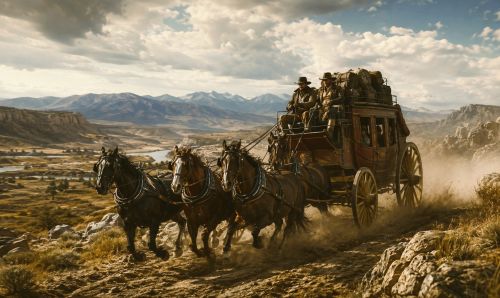
Yet the stagecoach also carries a warning for historians. Because it later became a symbol in the American memory of the Old West, it is easy to mistake the icon for the institution. The familiar image of the coach racing across an open landscape hides the labor that maintained it, the class divisions inside and outside it, the animals that powered it, the Indigenous lands crossed by western routes, and the commercial and political structures that made it profitable or useful. The stagecoach was never merely romantic. It was noisy, crowded, expensive, hierarchical, dangerous, and often uncomfortable. But precisely for that reason, it is historically revealing. It shows modern transport taking shape not as a clean leap into steam and steel, but as a rough, horse-drawn discipline of roads, schedules, relays, contracts, and human endurance.
Travel Before the Stagecoach
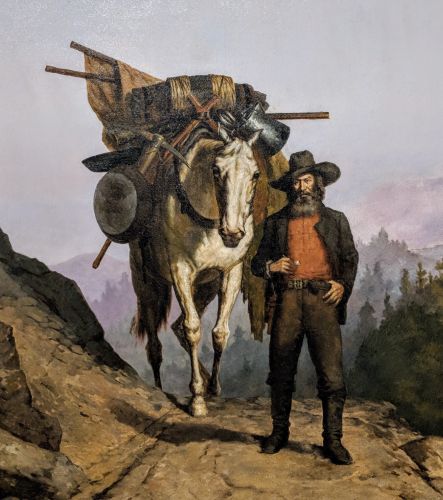
Before the stagecoach became a familiar instrument of scheduled travel, overland movement was already constant, varied, and economically essential. Medieval and early modern people did not live in a motionless world. Peasants walked to markets, pilgrims crossed regions and kingdoms, merchants sent goods by packhorse and cart, royal messengers rode in haste, soldiers marched, students traveled to universities, laborers migrated for work, and elites moved between estates, courts, towns, and spas. What the stagecoach later changed was not the existence of travel itself, but its organization. Earlier movement was often irregular, locally arranged, socially unequal, and dependent on a shifting combination of weather, road condition, animal strength, personal means, and customary obligation. Long-distance travel could certainly be done, but for most people it was not yet a public service in the later sense of advertised departures, fixed routes, regular fares, and predictable stages.
The road before the stagecoach was rarely a single, improved, state-managed highway. It was more often a layered landscape of lanes, bridges, causeways, tracks, river crossings, parish roads, market roads, drove roads, and older Roman alignments reused in altered form. Some routes were well known and heavily traveled, but maintenance was uneven and local. English statutes placed responsibility for road repair largely on parishes, which meant that the quality of a road could change dramatically from one district to the next. Rain could turn a route into mud; frost could harden ruts into hazards; rivers could interrupt movement where bridges were poor or absent. The most reliable unit of transport was often not a wheeled vehicle but a person or an animal moving with relative flexibility across difficult ground. The road was not yet a smooth channel for traffic. It was an obstacle to be negotiated.
Packhorses were among the most important instruments of this older transport world. They could travel where wheeled vehicles struggled, especially in upland districts, narrow lanes, moorland routes, and badly surfaced roads where deep ruts or soft ground made carts impractical. A train of packhorses carrying cloth, salt, metal goods, grain, books, letters, wool, lead, coal, or household items could link remote regions with towns and ports, moving along routes that were often better known to local carriers than to any central authority. Their importance reminds us that pre-stagecoach transport was not primitive simply because it was slower. It was adapted to the landscape. In many environments, pack animals made more sense than coaches or wagons. They required less road width, coped better with broken surfaces, and could be organized in strings under the control of experienced carriers who knew where animals could be watered, rested, shod, fed, and safely lodged. Packhorse transport also had a social soundscape and rhythm of its own: bells, bridles, panniers, saddles, halts at inns, and negotiated passage through villages, toll points, and market towns. The packhorse economy supported inns, farriers, saddlers, hostlers, stable boys, local markets, and regional systems of credit and trust. It was a transport network, but one organized around goods, animals, terrain, and customary routes rather than passenger timetables. In that sense, it formed one of the practical foundations from which later scheduled coaching would grow, even though the stagecoach eventually represented a different kind of mobility.
Wagons and carts also mattered, especially for heavier goods, agricultural produce, building materials, fuel, timber, stone, and regional trade. Yet their usefulness depended heavily on road quality, season, gradient, and the cost of animal power. A loaded wagon could move substantial weight, but it could also be slow, damaging to roads, and vulnerable to bogging down in mud, breaking wheels, exhausting teams, or becoming useless on steep or narrow routes. Carts served local economies well, carrying grain to market, manure to fields, goods from town to village, and household materials over short distances. Larger wagons could connect regions, but their success required passable roads, reliable stopping places, and enough demand to justify the expense of animals, drivers, and maintenance. In many regions, water transport remained preferable wherever rivers, canals, estuaries, or coastal shipping were available, because boats could often carry far heavier loads with less animal labor. This is one reason the later history of the stagecoach cannot be separated from the history of road improvement. Wheeled passenger transport required a road environment that could support speed, regularity, and repeated use. Roads had to be wide enough, firm enough, drained enough, and predictable enough for a coach to run with passengers who expected arrival rather than mere survival. Before that environment existed, overland wheeled travel remained possible but often uncomfortable, expensive, and uncertain. The coach did not simply appear because someone built a carriage; it required a landscape capable of receiving one. It required roads that could bear wheels, inns that could service teams, proprietors willing to risk capital, and travelers willing to trust that a vehicle could carry them farther than their own feet or horse could comfortably manage.
Private travel filled many of the gaps left by this irregular public world. Wealthier travelers could ride their own horses, hire mounts, use private carriages, or travel with servants and baggage animals. Officials and aristocrats could draw on household resources, patronage networks, and letters of introduction. Merchants could arrange transport through carriers and innkeepers. Poorer travelers walked. The same road carried very different experiences: a noble household in motion, a packhorse train, a cart of goods, a messenger riding hard, a pilgrim on foot, and a laborer searching for work. Distance was not the same for all of them. It was measured not only in miles, but in money, status, bodily endurance, access to animals, and the right to be received along the way. Long before the stagecoach introduced a more formal public fare, mobility was already a social hierarchy.
This pre-stagecoach world is important because it prevents us from treating the coach as a sudden invention of movement. The stagecoach emerged from older practices: the carrier’s route, the inn yard, the hired horse, the post road, the packhorse train, the market journey, and the private carriage. Its novelty lay in combining these elements into a more regular passenger service. It took the known idea of the route and gave it a schedule; it took the inn and made it a stage; it took the horse and made it part of a relay; it took the private privilege of riding or carriage travel and turned part of it into a commercial public offering. The stagecoach did not create travel out of stillness. It reorganized a busy, difficult, unequal world of movement into a system that more people could recognize, purchase, and plan around.
Early Coaches and the Birth of Scheduled Passenger Travel
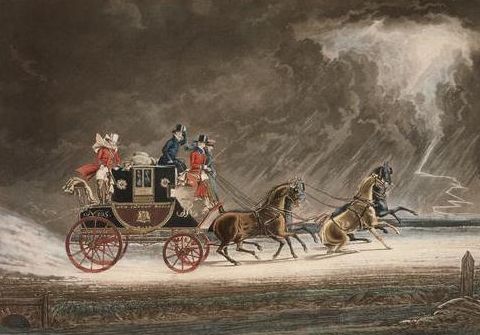
The early history of the stagecoach begins with a distinction that is easy to miss: coaches existed before stagecoaching became a popular mode of transport. Wheeled passenger vehicles had long been used by elites, courts, noble households, and wealthy travelers, but a private carriage was not the same thing as a scheduled public coach. The important development was not merely the construction of a covered vehicle pulled by horses, but the creation of a recurring service that passengers could hire, anticipate, and plan around. In that sense, the stagecoach marked a change in the public meaning of land travel. It took a privilege associated with rank, household resources, or special arrangement and gradually turned part of it into a commercial service. The coach became not only an object but an institution: a vehicle with a route, a fare, a departure point, a stopping pattern, and a promise, however imperfect, that it would go again.
The earliest public coach services in Britain were modest by later standards. The often-cited Edinburgh-to-Leith coach of 1610 suggests the beginning of regular short-distance passenger carriage, but it should not be imagined as the mature stagecoach system of the eighteenth century already in miniature. That short route connected places close enough to support repeated movement, but the logistical problem of sustaining regular long-distance coaching was much greater. Early coaches moved slowly, served limited routes, and depended on roads that were frequently hostile to wheeled traffic. Their passengers were not the broad traveling public of a later age, but people with enough money, reason, and patience to pay for an uncomfortable conveyance. Some traveled for law, commerce, family, court, education, health, or urban business; others used coaches because age, sex, illness, status, or simple dislike of riding made horseback travel undesirable. Yet even these early services mattered because they introduced a crucial idea: one could buy a place in a vehicle traveling between known points. The arrangement sounds simple, but historically it was significant. It made passenger travel repeatable in a way that private hiring, riding one’s own horse, or joining a carrier’s wagon did not quite do. The early coach stood between household mobility and public transport. It was not yet a dense national network, but it pointed toward one.
By the middle and later seventeenth century, scheduled coaches were becoming visible enough to attract comment, regulation, satire, and complaint. Routes from London to important provincial towns developed gradually, often advertised by inn signs, printed notices, or word of mouth. The coach usually departed from a known inn or yard, where passengers gathered, luggage was loaded, fares were settled, and horses were made ready. This gave the inn a new importance as a public gateway to movement. A traveler did not need to own a carriage, maintain horses, employ servants, or negotiate an entire journey from scratch. He or she could instead enter a commercial arrangement already partly organized by others. That did not make travel easy, cheap, or democratic, but it lowered the threshold of participation for those who could afford the fare.
Early coaches also generated cultural unease because they seemed to alter the moral and social order of travel. Some critics argued that coaches encouraged idleness, luxury, softness, or unnecessary mobility. Men who might once have ridden on horseback could sit enclosed in a vehicle. Women, the elderly, the infirm, and those unaccustomed to riding could travel farther than before. Servants, merchants, lawyers, students, clergy, and gentlefolk might find themselves sharing roads and sometimes vehicles in new combinations. Complaints against coaches not only about traffic, road damage, or expense. They were also about social movement in both senses of the phrase. A scheduled coach could move bodies across space, but it could also unsettle assumptions about who should travel, how publicly they should travel, and what kinds of comfort were proper.
The discomfort of early coach travel should not be underestimated. Roads were rutted, muddy, narrow, steep, and uneven; bridges could be poor; weather could transform a journey; and the suspension, seating, and body design of early vehicles offered limited protection from jolting. A coach that seemed luxurious by comparison with walking or riding in foul weather could still be physically punishing. Passengers might be delayed by broken wheels, lame horses, swollen streams, bad inns, overturned vehicles, or impassable roads. They might have to climb out and walk up hills, help lighten the vehicle, wait while repairs were made, or accept that an advertised journey would stretch well beyond its promised time. Travel times were often uncertain, and early advertisements could promise less than later timetable culture would demand. The early coach did not yet impose precision on the road; it offered a better-organized bargain with uncertainty. It gathered passengers, horses, luggage, and route knowledge into one service, but it could not command the road itself. Yet the very willingness of passengers to endure these conditions shows the value of organized carriage. People paid not because the coach was comfortable in a modern sense, but because it bundled risk, labor, direction, and animal power into a purchasable service. Even an uncomfortable coach could be preferable to days in the saddle, dangerous walking, or the trouble and expense of arranging private transport.
The growth of scheduled coaches also depended on a new kind of enterprise. Coach proprietors had to coordinate vehicles, teams, drivers, stabling, inns, fares, and route knowledge. They had to calculate whether enough passengers would travel regularly to justify the cost of horses and maintenance. Horses had to be bought, fed, rested, replaced, and supervised; coaches had to be repaired; drivers had to be hired and trusted; inns had to be integrated into a pattern of departure, arrival, meals, overnight stops, and animal care. Proprietors also had to manage delay, reputation, competition, and sometimes hostility from those who believed coaches damaged roads or disrupted older forms of transport. Their business depended on confidence before that confidence could be fully guaranteed. A coach that failed to depart, arrived dangerously late, overturned too often, used poor horses, or treated passengers badly could lose custom. A successful route could encourage imitation, rivalry, and pressure for more regular service. The early stagecoach was a business experiment as much as a transport innovation. It required trust: passengers had to believe the coach would run, innkeepers had to support the route, and proprietors had to believe that demand would return. Out of these repeated acts of confidence emerged one of the foundations of public transport: the expectation that a route could exist independently of any single traveler’s private need. The service was there before the passenger chose it, and that fact changed the relationship between the traveler and the road.
By the early eighteenth century, the stagecoach was no longer a novelty, though it remained uneven in reach and quality. It had begun to create habits that later generations would take for granted: going to a departure point, paying for a seat, trusting a route, enduring strangers, expecting stops, and measuring a journey by advertised time. The early coaches did not yet possess the speed, polish, or density of the later turnpike and mail-coach era, but they made that world possible. They transformed travel from a personal undertaking into a recurring public arrangement. This was the birth of scheduled passenger travel in its horse-drawn form: imperfect, uncomfortable, socially restricted, and often criticized, but already changing the relationship between roads, commerce, and time.
The “Stage” System and Fatigue Management
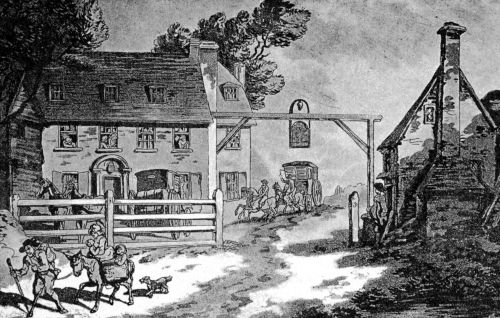
The stagecoach was built around a simple biological fact: horses tire. A coach could be improved, roads could be repaired, drivers could be trained, and timetables could be advertised, but the entire network still depended on the working limits of animal bodies. The “stage” was the answer to that limit. Instead of expecting one team to pull a loaded coach across an entire journey, operators divided the route into shorter sections, changing horses at designated stops. This converted fatigue from an unpredictable disaster into a planned feature of the journey. A tired horse did not have to mean the end of motion; it meant arrival at the next stage, where another team could take over. The stagecoach was not merely a vehicle moving through space. It was a relay system designed to manage exhaustion.
The length of a stage varied according to roads, terrain, weather, local custom, and the availability of horses, but the usual principle was clear enough: the coach traveled only as far as a team could pull at a useful pace before speed, safety, and animal condition began to decline. On good roads, a stage might be longer; in hilly, muddy, or difficult country, it might be shorter. This was one reason coaching could never be separated from local geography. A map might show a route as a line between towns, but the actual experience of the journey was broken into bodily intervals: the pull up a hill, the strain through mud, the relief of level ground, the halt at an inn yard, the steam rising from tired horses, the harness removed, the fresh team brought out. Distance was not abstract. It was measured in hooves, breath, feed, water, sweat, and recovery.
Coaching inns were the essential hinges of this system. They were not decorative backdrops to stagecoach travel, but functional transport nodes. At an inn, passengers might eat, drink, sleep, warm themselves, stretch cramped limbs, complain about the road, hear news, send letters, or wait for a connection. Horses were watered, fed, rubbed down, stabled, exchanged, or sometimes replaced in haste. Harness was checked; wheels and axles might be inspected; luggage could be shifted; fares and parcels might be settled; and information passed between drivers, innkeepers, guards, ostlers, postboys, and travelers. The inn yard was one of the great working spaces of the stagecoach world, crowded with noise, smell, labor, impatience, and anticipation. It was where the public face of travel met the hidden labor that made travel possible. The system required a large and disciplined economy of horse management. Fresh teams did not appear by magic at the roadside. They had to be bred or purchased, trained, fed, shod, housed, rested, and assigned. A coach running regularly over a route required far more horses than the few visible to passengers at any one moment. Behind a single departure stood a chain of animals stationed along the road, each expected to perform a particular section and then recover for future use. This made horses a kind of living infrastructure. They were capital, labor, risk, and vulnerability at once. If disease spread through stables, if feed became expensive, if winter weakened animals, or if overwork produced lameness and breakdown, the entire schedule suffered. The stage system made speed possible, but it did so by organizing animal fatigue on a commercial scale.
The innkeeper’s role could be as important as the coach proprietor’s. Inns supplied not only food and lodging but also stabling, fodder, local knowledge, and often horses themselves. Some inns became major coaching centers because they stood at strategic points where routes converged or where a difficult stretch of road required reliable support. Their prosperity depended on traffic, and traffic depended on their reliability. A badly managed inn could delay a journey; a well-run inn could make a route attractive. Passengers remembered where they were fed poorly, overcharged, kept waiting, or treated rudely. Drivers and guards knew where horses were ready, where ostlers were competent, where repairs could be made, and where weather or road news could be trusted. The stagecoach network rested on relationships as much as on roads: between proprietors and innkeepers, innkeepers and stable workers, drivers and horse handlers, passengers and the reputation of particular stops.
The management of fatigue also shaped the passenger’s perception of distance. A long journey by stagecoach was not experienced as one continuous movement but as a sequence of departures and arrivals. The traveler learned the rhythm of the road: climb aboard, endure the jolt and sway, descend at a stage, wait in the inn yard, hear the horses changed, resume the journey. This rhythm could be reassuring because it divided an intimidating distance into smaller, survivable parts. A route that might have seemed overwhelming when imagined as a single span from London to York, Edinburgh to London, or St. Louis to San Francisco became mentally manageable when broken into recognizable intervals: the next inn, the next team, the next meal, the next overnight stop, the next county town. The stage system gave travelers a way to think about distance in pieces. It made the road legible by turning geography into sequence. But the same rhythm could also be frustrating because every halt reminded passengers that they were dependent on things beyond their control. The road was no longer only a physical path; it became a chain of obligations. If a team was late, if another coach had taken the best horses, if an inn was crowded, if a wheel needed repair, if a driver waited for mailbags or parcels, the passenger’s journey stalled. Scheduled travel created expectations, but it also made failures more visible. A delay mattered more once arrival had been promised. The stagecoach helped create a new emotional experience of travel: impatience with lost time. Earlier travelers certainly disliked delay, but the stage system gave delay a sharper meaning because motion had been organized, priced, and predicted.
The genius of the stage system was that it turned movement into coordination. It joined animal power, commercial planning, roadside hospitality, mechanical maintenance, and passenger demand into a repeating pattern. Earlier travelers had certainly changed horses, lodged at inns, hired guides, and arranged transport, but the stagecoach made these practices part of a public service. Its achievement was not to escape the limits of the preindustrial world, but to organize those limits with unusual efficiency. Horses still tired, roads still broke, weather still intervened, and travelers still suffered discomfort. Yet this made fatigue manageable enough that speed could be advertised, routes could be trusted, and distance could be imagined in stages. Long before steam engines compressed time by mechanical force, the stagecoach compressed it by relay.
Roads Before Rails: The Infrastructure of Speed
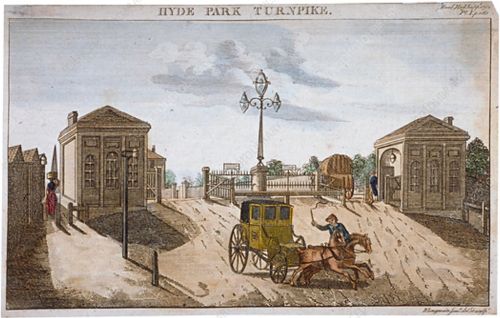
The stagecoach did not become faster simply because coachbuilders improved vehicles or drivers became more daring. Speed had to be built into the road itself. Before railways, the great obstacle to regular overland movement was not only distance but surface: mud, ruts, stones, steep gradients, poor drainage, weak bridges, and inconsistent maintenance. A team of horses could pull a coach only as quickly as the road allowed, and a badly kept road punished every part of the system at once. It slowed horses, damaged wheels, broke axles, exhausted passengers, delayed mail, and made timetables unreliable. To understand the rise of stagecoach travel, one must look beneath the wheels. The road was not passive scenery. It was the foundation of speed.
In Britain, turnpike roads became central to this transformation. Turnpike trusts were authorized to collect tolls and use the revenue for road repair, widening, drainage, bridge work, and other improvements. The system was uneven, local, and often controversial, but it changed the economics of road travel by attaching maintenance to traffic. Travelers paid at gates, and the money was supposed to return to the road in the form of better surfaces and safer passage. For coach operators, this mattered enormously. A better road reduced journey times, allowed heavier or faster vehicles, lowered damage to equipment, and made scheduled service more credible. The turnpike did not create the stagecoach by itself, but it gave coaching a firmer physical world in which to expand.
Road improvement also changed the relationship between local obligation and commercial mobility. Earlier road maintenance had often depended on parish labor and customary duties, arrangements that could be inadequate for growing interurban traffic. A village might be legally responsible for a stretch of road used by travelers, carriers, mail, and coaches whose economic importance extended far beyond the parish. Turnpikes offered one answer to that mismatch. They shifted some burden from local unpaid labor toward toll-financed improvement, though not without resentment from those who disliked paying for passage or suspected mismanagement. The road became a financial institution as well as a physical one. Gates, tollhouses, trustees, surveyors, contractors, debt, and repair accounts all became part of the infrastructure through which speed was made possible.
The improvement of roads did not mean that travel became smooth in any modern sense. Even turnpike roads varied in quality, and progress could be seasonal, regional, and fragile. Rain still mattered. Snow still mattered. Heavy wagons could still cut roads into ruts. Bad drainage could undo labor. Hills still strained teams, and local neglect or poor engineering could make one section of a route miserable while another was comparatively good. The famous road engineers of the late eighteenth and early nineteenth centuries, including Thomas Telford and John Loudon McAdam, became associated with more systematic approaches to grading, drainage, foundations, and broken-stone surfaces, but their work built on a longer history of practical experimentation and local improvement. Telford’s carefully engineered roads and bridges emphasized durable foundations, alignment, and drainage, while McAdam’s name became attached to a more economical system of compacted broken stone that depended on keeping water off the road and distributing weight across a well-prepared surface. Yet neither method abolished the ordinary labor of maintenance. Roads had to be watched, patched, scraped, drained, and defended against the very traffic that proved their usefulness. Coaching speed rested on a continuing struggle between movement and deterioration. Every coach, wagon, horse team, rainstorm, freeze, thaw, and flood threatened to consume the improvement it used. The stagecoach era was not a clean march from mud to mastery. It was a constant struggle to keep the road ahead of the traffic using it.
For the stagecoach passenger, road improvement translated into a new sense of what travel ought to be. Better surfaces made higher speeds thinkable; higher speeds made timetables more demanding; demanding timetables made delays less tolerable. This was one of the quiet revolutions of the road before the rails. The traveler began to expect not merely eventual arrival, but arrival within a socially recognized window of time. The infrastructure of speed included the advertised schedule, the coaching inn, the change of horses, the paid toll, the improved bridge, the measured mileage, and the road book that told travelers how towns and stages connected. Guidebooks and itineraries such as those by John Ogilby, Daniel Paterson, and John Cary helped make roads legible as systems of distance and sequence. The coach ran on the road, but the passenger increasingly traveled through a printed and commercial geography of expected movement.
This infrastructure also helps explain why the railway was so disruptive when it arrived. Railways did not enter a world innocent of regular travel; they entered a world already trained by coaches to value speed, punctuality, route networks, fares, departures, and public conveyance. The difference was that railways mechanized and intensified what the road system had already begun. The stagecoach had taught travelers to think in stages, schedules, and connections, but it remained dependent on horses, road surfaces, weather, and toll-financed maintenance. Its achievement was impressive precisely because it worked within those limits. Before iron rails and steam locomotives reorganized distance on a new scale, turnpikes and road maintenance had already shown that speed was not only a matter of motion. It was a built environment.
The Passenger Experience
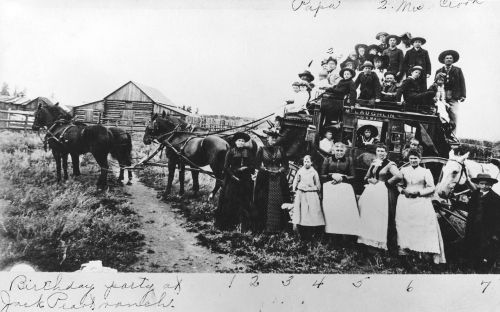
To travel by stagecoach was to enter a confined social world in motion. The vehicle promised organized movement, but it did not promise comfort in any modern sense. Passengers climbed into a space where the body was constantly reminded of the road: jolting wheels, swaying suspension, cramped knees, cold drafts, summer dust, wet clothing, aching backs, and the nervous awareness that speed depended on horses, harness, driver, weather, and road surface working together without failure. The coach was both reassuring and alarming. It gathered travelers into a managed system, but it also made them physically dependent on strangers, animals, and equipment. The passenger surrendered control in exchange for movement. Class shaped the experience from the moment a ticket was purchased. Inside seats cost more and offered greater shelter from rain, wind, mud, and cold. Outside seats were cheaper, more exposed, and often more dangerous, though some travelers preferred them for air, view, or freedom from the stuffy interior. The difference between inside and outside was not merely spatial; it was social. The coach body reproduced hierarchy in miniature, assigning bodies to places according to means, status, gender expectations, and tolerance for discomfort. Those inside might complain of crowding and stale air; those outside endured weather, dust, and the risk of being thrown. The stagecoach was public transport, but it was not egalitarian transport. It made movement purchasable, then divided that movement by price.
The interior of a coach could feel intensely intimate. Strangers sat close together for hours, sometimes days, with little room to rearrange themselves or escape one another. Knees touched, luggage intruded, tempers frayed, and ordinary bodily presence became unavoidable. Clothing carried the smell of damp wool, leather, smoke, perfume, sweat, mud, tobacco, and food. Passengers might be polite, silent, suspicious, talkative, flirtatious, quarrelsome, or ill. A person prone to motion sickness, coughing, snoring, or excessive conversation could transform the journey for everyone else. In an age before sealed, climate-controlled transport, comfort depended not only on engineering but on the manners, health, and habits of fellow travelers. The coach made society mobile, but it also made society hard to avoid.
Conversation was one of the defining features of the journey. The stagecoach brought together people who might not otherwise have shared a room: merchants, clergy, lawyers, soldiers, servants, students, widows, tourists, officials, emigrants, and local travelers moving between market towns. The enforced proximity of the coach could produce gossip, news exchange, political argument, commercial intelligence, courtship, suspicion, or fleeting companionship. Coaching inns extended this conversation into parlors, taprooms, yards, and dining rooms, where passengers met others arriving from different roads. The stagecoach was part of the information culture of the road. It carried bodies, but it also carried rumor, news, jokes, warnings, prices, scandals, and impressions of places recently passed through. Before railways and telegraphs accelerated communication further, the passenger coach helped give news a human voice.
Fear traveled with the passengers as well. Some fear came from the road itself: steep descents, sharp turns, weak bridges, darkness, fog, snow, floods, and the possibility of overturning. Some came from horses, whose strength made the journey possible but whose panic could make it deadly. A bolting team, a snapped rein, a reckless driver, or a wheel striking a rut could turn a routine journey into catastrophe. Highway robbery added another layer of anxiety, especially in cultural memory, though robbery was only one among many dangers. The coach was vulnerable because it was predictable. It followed known routes, carried money and luggage, and stopped at known places. The same regularity that made stagecoach travel useful could make it a target.
Gender also shaped the experience of coach travel. Women used stagecoaches for family visits, health journeys, domestic obligations, commercial errands, and social travel, but public movement exposed them to scrutiny in ways private travel might not. A woman in a coach entered a mixed social environment where reputation, conversation, seating, bodily proximity, and overnight stops all mattered. Respectability had to be performed under conditions that were often uncomfortable and public. The coach could expand women’s practical mobility, especially for those who did not ride well, could not travel with a large household, or needed a more organized way to move between towns. The stagecoach both constrained and enabled. It subjected passengers to the moral gaze of strangers while making journeys possible for people whom horseback travel, walking, or private carriage might have excluded.
The passenger experience reveals the stagecoach as a contradiction on wheels. It was a symbol of progress that could leave travelers bruised, nauseated, cold, frightened, and filthy. It created public mobility while preserving distinctions of class, gender, and bodily endurance. It promised speed while exposing every passenger to delay. It gave travelers conversation and companionship, but also crowding and irritation. Yet these contradictions were part of its historical importance. The stagecoach taught people to accept discomfort as the price of organized movement. It made travel less private, more scheduled, more commercial, and more socially mixed. Long before the railway carriage and the omnibus, the stagecoach turned the passenger into a participant in a shared system of public motion.
Danger on the Road
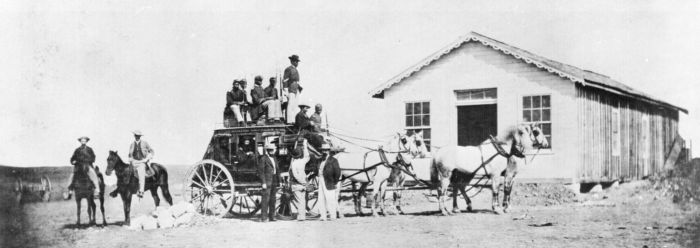
The stagecoach made overland travel more organized, but it did not make it secure. Its achievement lay in imposing schedule, route, and relay on a world still governed by mud, weather, animal behavior, darkness, fatigue, and mechanical weakness. Every journey depended on a chain of conditions holding together: horses had to remain sound, wheels had to stay whole, harness had to hold, roads had to be passable, bridges had to bear weight, drivers had to judge speed and gradient correctly, and innkeepers had to provide teams when expected. The stagecoach produced a peculiar kind of confidence. Passengers could buy a seat and trust a route, but they could not escape the fragility of motion. The same vehicle that symbolized regularity also exposed its riders to how easily regularity could fail.
Accidents were among the most ordinary dangers of coach travel. A coach could overturn on a bend, lose a wheel in a rut, slide on ice, lurch on a steep descent, or be pulled too fast by a team that the driver could no longer fully control. The height of the vehicle increased the risk, especially for outside passengers, who were more exposed to falls, branches, weather, and sudden jolts. Inside passengers had more shelter but not immunity; an overturned coach could trap, crush, or injure them. Broken axles, loose wheels, snapped reins, defective harness, and poor road surfaces all threatened the journey. Even the process of boarding, descending, or riding outside could be dangerous when passengers were tired, the coach was crowded, luggage was piled high, or horses grew restless in a noisy inn yard. Roads with steep cambers, sudden holes, narrow bridges, or sharp turns placed enormous trust in the judgment of the driver and the condition of the vehicle. Night travel added another layer of risk, since obstacles, washed-out sections, loose stones, and approaching vehicles could be hard to see until too late. The danger was intensified by the very pressure that made coaching commercially attractive: speed. A coach that moved too slowly lost reputation and custom, but a coach driven too hard risked catastrophe. Stagecoach travel sat at the edge between efficiency and recklessness. The passenger paid for motion, but that motion was never neutral. It was a wager that the coach, team, road, and driver could sustain speed without crossing the line into disaster.
Horses were another source of danger because their power was both necessary and unstable. A team had to pull together, respond to the reins, endure noise and traffic, descend hills without panic, and recover quickly enough for repeated work. A frightened or exhausted horse could endanger the entire coach. Bad roads increased the strain; steep hills demanded careful handling; crowded town streets brought carts, pedestrians, animals, and sudden obstructions. The driver’s skill mattered enormously, but skill did not eliminate risk. Horses had their own bodies, temperaments, fears, and breaking points. This made stagecoach travel different from later mechanical transport in a fundamental way. Its engine was alive. The system could organize animal fatigue, but it could not fully control animal response.
Weather was a constant enemy of reliability. Rain turned roads soft, deepened ruts, swelled streams, and soaked passengers and luggage. Snow could bury routes, obscure landmarks, and trap coaches between stages. Frost hardened roads but also made them slippery and treacherous; thaw turned them into mud. Fog and darkness reduced visibility, especially on unfamiliar or poorly marked roads. Heat brought dust, thirst, exhausted horses, and uncomfortable crowding. These conditions mattered not only because they slowed travel, but because they exposed the limits of the timetable. A schedule was a promise made against the weather, and weather often reminded passengers how provisional that promise was. Even in the improved road world of turnpikes and mail coaches, the road remained an outdoor environment. Stagecoach travel was never sealed off from the sky.
Robbery gave stagecoach danger its most dramatic cultural form. Highwaymen, ambushes, and attacks on coaches became part of the folklore of the road, especially in Britain, where the mounted robber entered ballads, newspapers, criminal biographies, popular memory, and later fiction. The stagecoach was a tempting target because it was predictable. It followed known roads, stopped at known inns, carried passengers with money and luggage, and sometimes transported mail, documents, or valuables. A coach also concentrated vulnerability. Passengers could not easily scatter, defend themselves, or conceal their possessions once the vehicle was halted on an isolated road. The same enclosure that made coach travel socially intimate could become frightening when a robber appeared at the window or the horses were stopped at pistol-point. Mail coaches, guards, firearms, and official concern over postal security added a more formal layer to this danger, because attacks on the coach could be read not only as crimes against individuals but as interruptions of communication and public order. Yet the fame of the highwayman can distort the history of danger. Robbery was frightening and real, but it was not the only or even always the most common threat. Broken roads, bad weather, accidents, animal failure, and delay were more persistent features of travel. The highwayman became memorable because he gave danger a face, a pistol, and a story. Mud, fatigue, and a shattered wheel were less theatrical, but often more representative of the traveler’s vulnerability. The romance of the highwayman, especially in later memory, could even turn violence into style, transforming fear, theft, and coercion into tales of daring. A sober history of stagecoach danger has to hold both truths together: robbery mattered, but its cultural afterlife became larger than its everyday statistical place in the hazards of the road.
The fear of robbery nevertheless shaped the social and emotional atmosphere of coach travel. Passengers watched the road, listened to rumors at inns, worried about lonely stretches, and sometimes judged fellow travelers with suspicion. Guards on mail coaches, armed protection, better roads, more regular traffic, and stronger state policing all helped reduce some risks, but they also reveal that security had to be built into the system. The coach’s regularity created both safety and exposure. More traffic could deter crime, and known routes could be supervised, but predictability also allowed criminals to plan. At night, in bad weather, or on isolated roads, the organized public nature of the coach did not erase the old anxieties of premodern travel. It placed them inside a vehicle moving on a schedule.
Danger on the road reveals the central paradox of stagecoach mobility. The stagecoach was a technology of confidence built from fragile materials: wood, iron, leather, flesh, muscle, trust, and weather-dependent roads. It made people willing to travel farther and faster because it organized risk into a service, but the risk never disappeared. Indeed, the more regular coaching became, the more visible its interruptions became. An accident was not merely misfortune; it was a failure of a system that had promised movement. A robbery was not merely theft; it was an attack on the security of public passage. A snowbound coach was not merely delayed; it showed the limits of schedule against nature. The stagecoach helped make modern expectations of travel possible, but it did so while reminding every passenger that organized motion remained breakable.
Mail Coaches and the Acceleration of Information
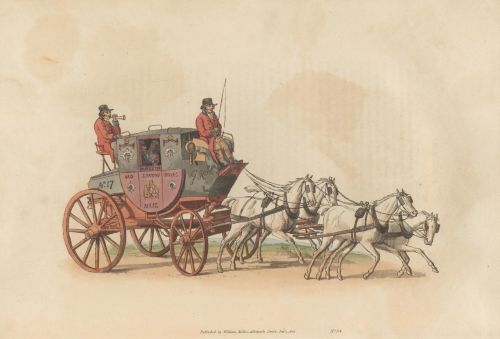
If the passenger stagecoach made movement more regular, the mail coach made regularity a matter of public administration. The carrying of letters had long depended on post riders, messengers, carriers, and local arrangements, but the late eighteenth-century mail coach gave the British post a new combination of speed, security, visibility, and discipline. Its importance lay not simply in placing mailbags on a coach that also carried passengers. It joined the authority of the Post Office to the infrastructure of roads, inns, guards, timetables, and horse relays. The mail coach turned information into scheduled cargo. Letters, newspapers, government papers, legal documents, commercial orders, bills, family news, and political intelligence moved not as occasional favors or uncertain packets, but as part of a public system increasingly expected to run through the night and keep time.
The familiar turning point was John Palmer’s reform of the postal service in the 1780s. Palmer, a Bath theater owner familiar with the practical speed of stagecoach travel, argued that mail could move faster and more securely by coach than by the older postboy method. The older arrangement could be slow, vulnerable, and irregular, particularly when mail was carried by individual riders over long distances and handed from post to post. Palmer’s insight was not merely that coaches were faster than mounted postboys in some circumstances, but that speed could be systematized. A coach could carry guarded mailbags, maintain relays of fresh horses, run by a more disciplined schedule, and use the growing network of improved roads and coaching inns. His proposal was initially resisted, as reforms of established institutions often are, but the experimental Bristol-to-London mail coach of 1784 demonstrated the power of combining fast vehicles, fresh horses, guarded mailbags, and a stricter schedule. The reform did not invent long-distance communication, but it accelerated it and gave it a new public form. It showed that the Post Office could use the commercial coaching world to make correspondence more predictable and to bind provincial towns more tightly to London. The result was not merely faster mail. It was a new public expectation that important information should move with urgency, regularity, and official protection. Once mail could be imagined as something that ought to arrive by a certain hour, delay itself became more visible as a failure rather than simply an ordinary condition of distance.
The mail coach changed the meaning of the road at night. Ordinary passenger travel had often been shaped by daylight, fatigue, weather, and the practical rhythms of inns, but mail coaches pushed the road toward continuous operation. Night travel was dangerous and uncomfortable, yet it made time useful in a new way. Hours once surrendered to darkness could be converted into distance. Lamps, guards, horns, inn yards, toll gates, and horse changes became part of a nocturnal infrastructure of communication. The sound of the mail coach arriving or passing through a town was not only a transport event; it was an announcement that the wider world was moving. News from London, business from the provinces, family letters, official orders, and printed intelligence could arrive sooner because the road itself had been reorganized around urgency.
Security was central to the mail coach’s prestige. A mail coach commonly carried an armed guard, whose presence distinguished it from ordinary passenger service and gave the vehicle a quasi-official character. The guard protected mailbags, managed the horn, helped maintain schedule discipline, and represented the authority of the postal system in motion. This mattered because the mail was more than private correspondence. It was a public trust, a financial instrument, a legal channel, and a political resource. To rob a mail coach was not merely to rob passengers; it was to interrupt the circulation of the state, the market, and private society. The mail coach made visible the link between mobility and order. Fast communication required roads and horses, but it also required discipline, trust, and the threat of punishment against those who disrupted the network.
The effects of faster mail reached far beyond the coach itself. Merchants could conduct business with greater confidence when orders, payments, prices, and market news moved more rapidly. A manufacturer waiting on instructions, a banker following credit, a shopkeeper ordering stock, a publisher gathering copy, or a merchant tracking prices in another town all depended on communication that was not only possible but reasonably predictable. Newspapers benefited from quicker circulation of political reports, foreign news, parliamentary debates, advertisements, and provincial intelligence. Faster mail helped shorten the distance between event, report, print, and response, giving readers a stronger sense that they were participating in a shared national conversation. Families experienced distance differently when letters arrived with more predictable frequency. A journey, illness, death, marriage, debt, opportunity, or family crisis could be known sooner, and that knowledge could produce action sooner. Lawyers, bankers, manufacturers, publishers, officials, and shopkeepers all depended on communication networks that made absence manageable. The mail coach helped compress the emotional and commercial geography of Britain. It did not eliminate delay, loss, or uncertainty, but it narrowed the gap between event and knowledge. A decision made in one place could matter sooner in another. That was one of the essential changes in the history of modern information: not simply that messages moved, but that more people came to expect messages to move with dependable urgency.
The mail coach also reveals why stagecoach history belongs to more than the history of transport. It was part of the history of communication, state capacity, capitalism, print culture, and time discipline. The same relay logic that changed horses at stages also changed the pace at which letters, news, and obligations moved through society. The mail coach stands between the older world of mounted posts and carriers and the later world of railways, telegraphs, and instant communication. It was still horse-drawn, weather-exposed, and dependent on inns and roads, but it pointed toward a modern assumption: information should not merely travel; it should travel quickly, securely, and on schedule. The mail coach did not conquer distance as the railway and telegraph later would, but it made distance less patient.
Time Discipline: The Social Meaning of Speed
Stagecoach travel changed not only how people moved, but how they thought about time. Earlier travelers certainly cared about duration, delay, and arrival, but scheduled coaching made time more public, more commercial, and more measurable. A coach did not simply leave when a household was ready, when a horse was saddled, or when a carrier had gathered enough business. It left, at least in principle, at an announced hour from an identifiable place. That promise altered the traveler’s relationship to the road. Time became part of the fare. To buy a seat was not merely to purchase conveyance between towns, but to enter an arrangement in which departure, arrival, stopping, and delay were increasingly judged against expectation. The stagecoach helped turn punctuality into a social value of mobility.
This did not mean that stagecoach schedules possessed the precision later associated with railways. Coaches still depended on roads, weather, horses, accidents, innkeepers, passengers, mailbags, toll gates, and daylight or darkness. Local time remained local, and the standardization of time across wider territories would become much more urgent with railways and telegraphs. Yet the stagecoach era prepared people for that later discipline by making advertised time familiar. Coaching notices, road books, itineraries, and printed guides encouraged travelers to imagine journeys as sequences of measurable intervals. A road could be described not only by landmarks and hazards, but by mileage, stages, departure times, expected duration, and connections. The journey became something one could compare, plan, and criticize. Even imperfect punctuality mattered because it created the expectation of punctuality.
The timetable also imposed discipline before the passenger even entered the coach. Travelers had to arrive at an inn or booking office in time, settle fares, arrange luggage, choose seats, and accept that the vehicle might not wait for personal convenience. This was a subtle but important change. In private travel, the traveler’s household or purse might command the departure. In public coaching, the passenger adjusted to the service. The coach gathered individual journeys into a collective schedule. A late passenger could inconvenience others; an overloaded coach could delay the route; a missing parcel or mailbag could hold up departure. The stagecoach helped create a new etiquette of shared time. One person’s lateness became a public problem because travel had become organized around coordinated expectation. Punctuality also mattered to the people who operated the system. Coach proprietors advertised speed because speed attracted customers. Inns gained or lost reputation according to whether horses were ready and service was prompt. Drivers were judged by their ability to keep pace without destroying horses or endangering passengers. Guards on mail coaches had an even sharper responsibility, because postal schedules were tied to public trust and official authority. A late coach did not merely inconvenience travelers; it threatened the credibility of the route. In this world, time became a form of reputation. To be fast was to be modern, competent, and reliable. To be slow was to seem backward, disorganized, or unsafe, even when delay resulted from weather or road conditions beyond anyone’s control.
The social meaning of speed was larger than speed itself. Faster coaching compressed distance in the imagination. Towns that had once seemed remote could feel more connected when coaches linked them by regular service. Merchants could calculate deliveries; families could plan visits; lawyers could reach assizes; tourists could fit more places into a journey; newspapers and letters could circulate with greater regularity. Speed changed the perceived size of the country by making places feel nearer not because geography had changed, but because access had become more predictable. A town served by a frequent coach was no longer only a dot on a map or a name in a road book; it became part of a lived network of possible movement. People could imagine leaving at a known hour, arriving within an expected span, and conducting business or social life around that expectation. This mattered economically, socially, and emotionally. It encouraged confidence in markets, widened the practical reach of kinship and sociability, and gave provincial towns a stronger relationship to metropolitan rhythms. But it also changed impatience. Once travelers knew that a route could be covered in a certain time, slower travel became harder to accept. A road that had once seemed merely difficult could now seem badly managed. An inn that once seemed merely crowded could now seem inefficient. A delay that earlier travelers might have treated as one of the ordinary burdens of distance could now appear as a breach of service. Progress produced a new standard against which inconvenience was measured. The stagecoach did not eliminate the old unpredictability of roads, but it made that unpredictability more annoying because it now violated a publicly advertised promise.
This emerging discipline of time also reshaped the experience of waiting. Waiting at a coaching inn was not the same as resting during a private journey. It was waiting inside a network: for fresh horses, for the driver, for the guard, for parcels, for other passengers, for the horn, for the next departure. The inn yard became a theater of timed anticipation. People listened for wheels, watched horses being harnessed, hurried meals, checked luggage, and measured delay against rumor and expectation. Printed itineraries and watches did not make the road fully predictable, but they gave travelers tools for judging whether the system was performing as it should. The stagecoach made waiting more structured because it made movement more structured. Time on the road was no longer only endured; it was monitored.
By the time railways arrived, they did not introduce time discipline into a vacuum. They intensified and standardized tendencies already visible in coaching culture: public departures, advertised routes, fare classes, connections, passenger discipline, institutional punctuality, and irritation at delay. The railway would eventually impose a more rigid temporal order because trains required coordinated movement on fixed tracks and because railway companies had the power to reshape clocks themselves. But the stagecoach had already taught travelers to imagine movement as a timed service. Its great temporal achievement was not exactness, but expectation. It made people believe that the road should keep time. That belief was one of the quiet foundations of modern transport.
Coaching as Business
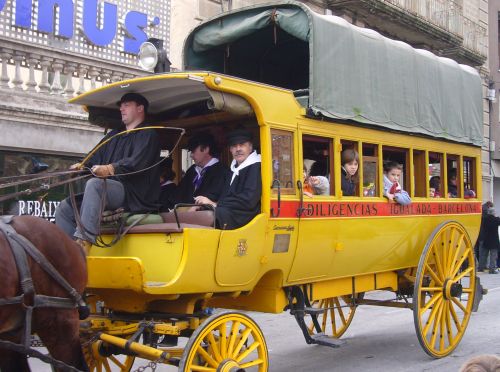
The stagecoach was a public convenience only because it was first a commercial enterprise. Behind every advertised departure stood a calculation: the cost of horses, fodder, harness, coaches, repairs, drivers, guards, tolls, inn arrangements, licensing, office work, and the uncertainty of passenger demand. A coach could look like a single vehicle moving between towns, but economically it was a moving front end of a much larger business. Proprietors had to maintain enough equipment and animal power to make regular service credible, even when seats were empty, roads were bad, or rival operators were cutting prices. The fare purchased not merely a place in the coach but access to a costly system of coordination. Stagecoach travel belonged as much to the history of business organization as to the history of roads.
Fares made mobility visible as a commodity. The passenger paid for distance, speed, placement, comfort, and sometimes status. Inside seats usually cost more than outside seats because they offered shelter and relative security; outside seats were cheaper but more exposed to weather and danger. Luggage might be charged, parcels carried, and special arrangements made according to route, operator, and demand. A fare was never simply a neutral price. It sorted travelers by means and expectation. Those who could pay more purchased less discomfort, though never freedom from discomfort altogether. Those who paid less accepted exposure, crowding, or rougher accommodation. The coach widened access to organized movement while preserving inequality within the very structure of travel.
Competition shaped the coaching world with particular force. Rival proprietors advertised faster times, lower fares, better horses, safer drivers, more convenient departures, superior inns, and improved vehicles. A successful route invited imitation; a profitable inn yard became a contested point of access; a town with growing commercial or legal importance could support multiple services. Competition could benefit passengers by increasing frequency and lowering prices, but it could also encourage dangerous speed, overworked horses, overloaded coaches, and exaggerated claims. Reputation mattered intensely. A coach known for punctuality, good teams, careful driving, and respectable company might attract custom even at a higher fare. A route associated with breakdowns, drunken drivers, bad inns, or poor treatment could lose passengers quickly. The stagecoach business depended on trust, but that trust had to be won repeatedly on the road.
Labor held the system together. Drivers, guards, ostlers, stable hands, wheelwrights, blacksmiths, harness makers, inn servants, booking clerks, coachbuilders, and road workers all contributed to what passengers experienced as a journey. Some of this labor was visible and admired, especially the skilled coachman who handled a team at speed or the mail guard who represented discipline and security. Much of it was less celebrated: feeding horses before dawn, cleaning stables, repairing wheels, loading luggage, changing teams in rain or darkness, preparing meals for impatient travelers, and maintaining the road surface that made movement possible. Stagecoach travel turned mobility into a chain of labor. The passenger sat in the coach, but the journey rested on bodies working before, during, and after the ride.
Risk was built into every part of the enterprise. Horses were expensive and vulnerable capital. They could become lame, sick, overworked, stolen, or killed. Coaches wore out; harness broke; accidents brought repair costs and reputational damage; bad weather reduced traffic; economic downturns cut travel; wars, postal changes, or legal disputes could alter routes and contracts. Even a successful line could be financially fragile because its apparent smoothness depended on constant reinvestment. Fresh teams had to be available before fares were collected for the next journey; repairs had to be made before profit could be secured; tolls and wages had to be paid whether or not every seat was filled. Mail contracts could bring prestige and steady income, but also stricter expectations and penalties for failure. Passenger service depended on demand that was regular enough to sustain the route but uncertain enough to make every departure a wager. Proprietors had to balance speed against safety, frequency against cost, and expansion against debt. Too few horses meant delay and reputational harm; too many meant idle capital eating fodder in the stable. Too cautious a schedule could lose customers to faster rivals; too ambitious a schedule could break animals, vehicles, and trust. The most successful coaching businesses were not simply those that owned vehicles, but those that managed uncertainty. They turned risk into routine by spreading costs across routes, coordinating inns and stages, cultivating reliable labor, advertising confidence, and making the public believe that the coach would run because it had run before.
This commercial structure complicates the romantic image of the stagecoach. The coach was not only a symbol of adventure, sociability, or national connection. It was also a disciplined business machine that converted roads, animals, labor, and time into revenue. Its growth depended on entrepreneurs willing to risk capital, workers willing to sustain harsh routines, passengers willing to pay for organized discomfort, and communities willing to support the inns, stables, toll roads, and services that coaching required. The stagecoach helped make travel more public, but it did so through private calculation and commercial competition. Before railways brought larger corporations, heavier capital, and more elaborate bureaucracies into transport, coaching had already shown that mobility could be planned, branded, priced, and sold.
The Driver, the Guard, and the Culture of Skill
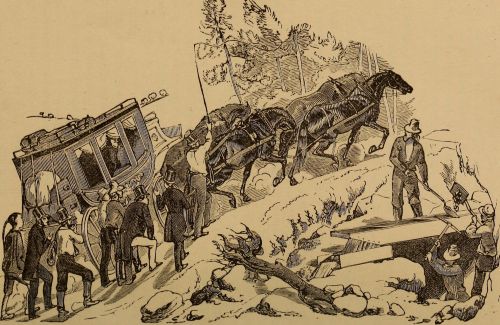
The stagecoach system depended on institutions, roads, horses, inns, and capital, but its public drama often centered on the driver. The coachman sat at the point where the entire machine became action. He handled the reins, judged the team, read the road, managed speed, watched traffic, negotiated hills, and carried the passengers’ confidence on his body. To an inexperienced traveler, the motion of a fast coach could feel like barely controlled danger. To those familiar with coaching culture, a good driver represented mastery: not merely strength or bravado, but timing, touch, judgment, memory, and restraint. He had to know when to press the horses and when to spare them, when to take a descent boldly and when to hold back, when road conditions permitted speed and when they demanded caution. The stagecoach was a system, but the driver made the system visible as skill. Driving a stagecoach was a physical craft. A coachman had to control several horses at once, often four, sometimes more, each with its own temperament, pace, fatigue, and response to pressure. The reins communicated through the hands, but successful driving depended on the whole body: posture, balance, sight, hearing, and long familiarity with the feel of a team. The driver had to recognize the difference between a horse pulling well and one tiring dangerously, between ordinary restlessness and panic, between a safe pace and a reckless one. He also had to read terrain in motion. A rut, stone, puddle, icy patch, narrow bridge, blind bend, steep camber, loose animal, or sudden obstruction could change the journey in an instant. This was knowledge acquired through repetition rather than books. The best drivers knew roads as lived surfaces, not lines on a map.
The guard occupied a different but equally important place in the culture of skill. He was responsible for the security of the mail, the sounding of the horn, the handling of official bags, and often the enforcement of punctuality. Armed and uniformed in many contexts, the mail guard represented state authority on the road. He was not merely another servant of the vehicle; he helped transform the coach into a moving institution. His horn announced arrival, departure, warning, urgency, and prestige. His presence reassured passengers and innkeepers that this was not simply a hired conveyance but a public trust in motion. When the mail coach arrived in an inn yard, it brought with it a disciplined performance of timing and authority: horses changed quickly, bags secured, horn sounded, passengers hurried, and the road resumed.
The driver and guard also mediated between passengers and the larger coaching system. Travelers might know little about the proprietor’s accounts, the innkeeper’s arrangements, or the condition of horses along the route, but they judged the service through the men who handled the coach. A driver who was calm, alert, sober, and competent could inspire confidence even on a difficult road. One who seemed drunk, careless, cruel to horses, or eager to display speed could turn every mile into anxiety. Guards and drivers carried news, warnings, gossip, and practical information from stage to stage. They knew which inns were efficient, which roads were cut up, where robberies had been rumored, where a bridge was weak, where snow might lie deep, and where rival coaches were gaining time. They were workers, but also interpreters of the road. Their knowledge made the system intelligible to those who paid to ride through it.
Coaching culture often celebrated these men in ways that mixed admiration, masculinity, and nostalgia. The skilled coachman became a figure of confidence and style: steady hands, sharp eyes, a commanding seat, and an almost theatrical command of horses and road. This admiration could be deserved, but it could also romanticize dangerous labor. Drivers worked in cold, heat, darkness, rain, dust, and snow. They faced long hours, physical strain, pressure to keep time, and the risk of being blamed for delays or accidents caused by roads, weather, animals, or equipment. The expectation of speed could reward daring and punish caution. A driver’s reputation might depend on arriving quickly, but his survival depended on knowing when not to. The culture of skill had an uneasy edge. It honored mastery while sometimes encouraging the very risks mastery was supposed to control.
The importance of drivers and guards reminds us that stagecoach travel was not only mechanical, commercial, or infrastructural. It was embodied. The route existed on paper, the fare in accounts, the schedule in advertisements, and the coach in the yard, but the journey depended on practiced human judgment. Before railways shifted authority toward engines, signals, tracks, and corporate timetables, the stagecoach placed a remarkable burden on skilled road labor. The driver and guard stood between passengers and danger, between the timetable and the road, between the promises of the proprietor and the realities of mud, gradient, horseflesh, darkness, and fear. They were not ornamental figures in the old coaching scene. They were central actors in the horse-drawn discipline of speed.
Stagecoaches in America: The Problem of the Continent
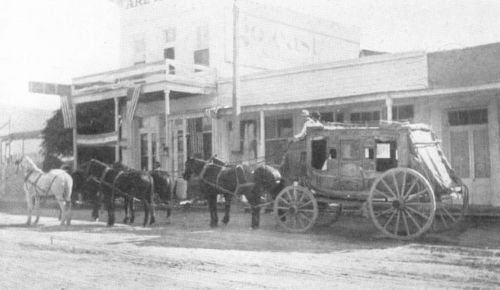
In the United States, the stagecoach entered a landscape where distance posed a different kind of problem than it had in Britain. The British coaching system developed within a relatively compact kingdom whose main routes connected London, provincial towns, ports, legal centers, and market regions across distances that were difficult but manageable by horse relay. The American stagecoach had to operate in a republic that was expanding across forests, mountains, rivers, prairies, deserts, and contested Indigenous homelands. Roads were often poor, settlements scattered, bridges unreliable, and public authority uneven. The stagecoach became not only a vehicle of passenger movement, but a tool for making a vast territory feel administratively, commercially, and politically connected. It helped turn continental distance into a series of routes, stations, contracts, and expectations.
Early American stagecoach service developed first in the older eastern seaboard world, where colonial towns, ports, and post roads created natural corridors for scheduled travel. Routes between cities such as Boston, New York, Philadelphia, Baltimore, and later Washington joined commercial life to political communication. Coaches carried merchants, lawyers, officials, newspaper editors, visiting relatives, immigrants, and travelers moving between towns that were increasingly bound into regional and national economies. These eastern lines were not always comfortable or fast, but they gave the young republic an experience of organized public movement before railroads. They made the road into a civic space. To travel by coach between major towns was to participate in a republic whose institutions depended on the circulation of people, printed matter, money, and news.
The American road system was never simply an eastern story. As settlement pushed inland, roads became instruments of expansion. The stagecoach followed and encouraged the opening of turnpikes, military roads, post roads, and privately operated routes that linked seaboard markets to interior towns. Mountain barriers such as the Appalachians made this important. Roads through passes, over ridges, and toward river valleys helped connect older coastal economies to western farms and settlements. The coach could not move everywhere, and many travelers still walked, rode horseback, used wagons, or relied on rivers and canals where possible. But wherever a stage line became regular, it signaled that a place had entered a wider system. A town served by the stage was not merely settled; it was reachable, legible, and increasingly tied to distant markets and institutions. The problem of the continent was also a problem of infrastructure. American stage lines needed roads, bridges, ferries, inns, taverns, stables, blacksmiths, and stations, but these supports were often thinly spread. In settled districts, a coach might move from town to town through a familiar world of taverns and local services. Farther west, the same logic had to be stretched over longer intervals and rougher terrain. Stations had to be placed where horses could be changed, water found, repairs made, passengers fed, and mail protected. In some regions, the stagecoach route became one of the first durable frameworks of connection. The station, like the British coaching inn, was a node of mobility, but in the American interior it could also be a fragile outpost of settlement, commerce, and state presence.
Stagecoaches also served the expanding postal system, and this gave them national significance. The United States depended on mail to hold together a dispersed political community. Newspapers, ballots, government notices, land information, commercial correspondence, and private letters all moved through postal networks that were essential to republican life. Stage contracts helped make mail delivery more regular over long distances, and the federal government’s interest in postal routes encouraged the development of roads and services beyond what passenger demand alone might have supported. This meant that the stagecoach was never only a private business. It often stood at the intersection of public need and private enterprise. Proprietors sought profit, but the mail they carried helped bind the nation’s political imagination.
The American stagecoach gained much of its later fame from the West, but that fame can be misleading if it makes the stage seem only frontier theater. The western coach was indeed dramatic: rough roads, long distances, sudden weather, river crossings, hostile terrain, isolation, breakdowns, robbery, and the possibility of violence all gave western travel a sharper edge. Yet the frontier stage was also an extension of the same basic system already seen elsewhere: routes, relays, stations, fares, timetables, contracts, drivers, horses, and risk. What changed was the scale and intensity of the problem. The stagecoach became a way of imposing sequence on immense space. It converted the continent into stages, even when those stages were separated by desert, prairie, mountain, or military danger rather than by English coaching inns and market towns. That expansion carried heavy consequences. Stagecoach routes did not cross empty land. They passed through Indigenous homelands, borderlands, hunting grounds, trading zones, and landscapes already shaped by Native nations. For settlers, officials, and business interests, the coach could symbolize communication, opportunity, and national progress. For Native communities, the same routes could represent intrusion, surveillance, military reach, ecological pressure, and the acceleration of dispossession. The belongs to the history of settler colonialism as well as transportation. It helped make U.S. expansion practical by moving mail, money, people, intelligence, and authority through contested spaces. The road connected some communities by cutting through the worlds of others.
The American stagecoach was both ordinary and imperial. It carried tired passengers between familiar towns, but it also helped organize expansion across a continent. It linked taverns and capitals, farms and courts, ports and inland markets, eastern cities and western routes. Its history cannot be reduced to the red coach of popular memory or the cinematic chase across open country. The deeper story is one of distance being disciplined by a fragile network of roads, horses, stations, contracts, and labor. In Britain, the stagecoach helped teach a compact society to travel by schedule. In America, it helped a sprawling republic imagine that even continental space could be broken into stages and brought within reach.
The Concord Coach and the Myth of the Frontier Vehicle
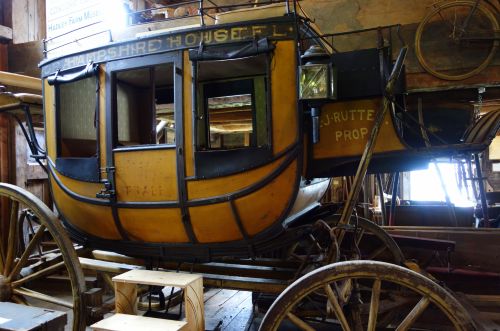
The Concord coach became the most famous American form of the stagecoach not because it invented horse-drawn passenger travel, but because it seemed to fit the physical demands and later mythology of the American road. Built in Concord, New Hampshire, and associated above all with the Abbot-Downing works, the Concord coach joined craftsmanship, durability, and regional manufacturing skill to the transportation needs of a growing republic. The Abbot-Downing Historical Society dates the first Concord coaches to 1826–1827, and the Smithsonian’s National Postal Museum preserves an 1851 Concord mail coach built in Concord by Lewis Downing, a reminder that these vehicles belonged to both passenger travel and mail service. The coach later became inseparable from the visual culture of the American West, but its importance began in a more practical question: how could a passenger vehicle survive bad roads, long distances, hard use, and repeated repair?
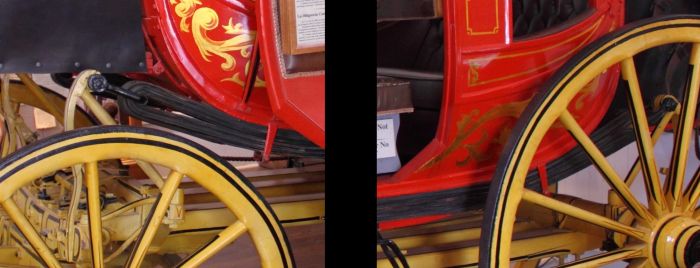
The answer lay partly in suspension. Unlike vehicles that depended on rigid metal springs, the Concord coach body was suspended on thick leather straps known as thoroughbraces. These straps allowed the coach body to swing, rock, and absorb shock as the wheels passed over ruts, stones, holes, and uneven ground. The result was not smoothness in a modern sense; passengers still endured motion, crowding, dust, heat, cold, and fear. But the motion was different from the sharper jolting of a more rigid vehicle. The famous “cradle” sensation associated with the Concord coach came from this suspended body, which swayed with the road rather than transmitting every blow directly upward. The design was not ornamental. It was an engineering response to rough surfaces. The New Hampshire Historical Society identifies the Concord coach as one of New Hampshire’s major nineteenth-century products and emphasizes the importance of its innovative design.
Durability mattered because American stage routes often punished vehicles more severely than the better roads of established coaching districts. A coach operating between eastern towns, mountain resorts, mining camps, frontier stations, or western settlements had to endure repeated shocks, hurried repairs, changing weather, and heavy loads of passengers, baggage, mail, and express goods. The Concord coach’s strength came from a combination of materials and craft: wooden bodywork, iron fittings, careful joinery, large wheels, strong running gear, leather suspension, and a design that could be maintained in a world where specialized repair facilities were not always near. Its parts had to resist strain without becoming so rigid that they shattered under it. The vehicle’s height helped it clear rough ground, its wheels were suited to broken roads, and its body was built to carry weight while absorbing the twisting and pitching of uneven surfaces. That mattered in a transport world where delay was expensive and breakdown could leave passengers, mail, or valuables stranded far from help. It was not indestructible, but it was built for long service under difficult conditions. This made it valuable to stage operators who needed not merely a handsome vehicle, but one that could remain profitable after years of punishing use. The Concord coach was not simply a triumph of design; it was a business tool. Its durability lowered risk, protected reputation, and helped stage companies make regularity plausible in places where the road itself often seemed to resist regular travel.
The Concord coach also illustrates how technology and business reputation reinforce one another. Abbot-Downing did not merely sell a vehicle; it sold confidence in a vehicle. Stage companies, mail contractors, hotel operators, and express firms needed coaches whose names implied reliability. A well-made coach reduced the risk of breakdown, helped protect passengers and cargo, and signaled professionalism to travelers. Its bright paint, curved body, high wheels, luggage boots, driver’s box, and swinging suspension became part of a public language of movement. To see such a coach at an inn yard, station, hotel, or western stop was to see an organized service made visible. Like the British mail coach, the Concord coach had a performative quality. It looked like speed, durability, and official movement even before it began to roll.
Yet the Concord coach’s later fame also simplified its history. Popular memory often places it almost automatically in the open landscapes of the Old West, pulled by teams through dust, chased by outlaws, or arriving dramatically at a frontier town. That image is not baseless, but it is incomplete. Concord coaches served eastern routes, mail routes, hotel routes, mountain tourism, regional passenger service, and express networks as well as western lines. The Henry Ford’s 1891 Abbot-Downing Concord coach, for example, was used by New Hampshire hotel operators, then on a passenger and mail route between York, Maine, and Portsmouth, New Hampshire, before later hotel use; its working life continued into the age when trolleys and automobiles were displacing older horse-drawn services. The historical Concord coach was not only a frontier vehicle. It was a flexible American passenger and mail vehicle whose western image became its most famous afterlife.
That mythic afterlife matters because it reveals what Americans later wanted the stagecoach to mean. The Concord coach came to symbolize endurance, risk, expansion, and connection across difficult space. Its leather thoroughbraces, practical durability, and recognizable form made it a real achievement of road transport, but popular culture turned that achievement into a national emblem. The historical vehicle belonged to manufacturers, drivers, passengers, horses, mail contractors, innkeepers, hotel operators, and express companies. The remembered vehicle belonged to western films, corporate logos, museum displays, tourism, and nostalgia. In that remembered world, the coach often appears as a self-contained symbol of courage and mobility, racing across an empty landscape toward settlement, rescue, profit, or danger. But the real vehicle was never self-contained. It depended on roads, stations, replacement teams, blacksmiths, harness makers, capital, contracts, and the labor of people whose names rarely entered the myth. The same coach that later suggested freedom also moved through landscapes of commercial pressure, settler expansion, military presence, and contested land. The tension between those two coaches, the working machine and the mythic icon, is precisely what makes the Concord coach so useful historically. It shows how a practical solution to rough roads became one of the most enduring symbols of American mobility, and how technology can be remembered less for the labor that sustained it than for the national stories it later seemed to carry.
The Overland Stage
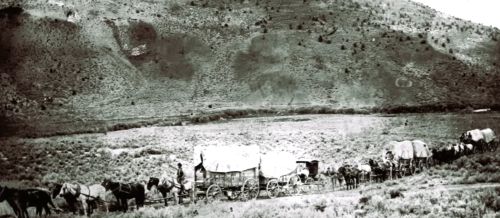
The overland stage represented the American stagecoach system at its most ambitious and most revealing. In the older eastern states, stage lines connected towns, courts, ports, markets, and political centers across distances already partly organized by settlement and road development. In the trans-Mississippi West, the problem was larger and more political. Routes had to cross enormous spaces where roads were often rough, water uncertain, stations isolated, military protection uneven, and federal authority still being asserted. The overland stage was never merely a passenger service. It was a project of connection and possession. It carried mail, travelers, express goods, commercial intelligence, government communication, and symbolic authority across landscapes that the United States was working to incorporate into its national system. To ride the overland stage was to move through a transportation network, but also through an expanding empire of roads, contracts, settlements, and claims.
The Butterfield Overland Mail made this ambition spectacularly visible. Awarded a federal mail contract in 1857 and beginning service in 1858, the company operated a vast southern route linking the Mississippi Valley to California. The journey is often remembered as roughly 2,800 miles and about twenty-five days, though the route’s precise experience varied with weather, terrain, station conditions, and the immense difficulty of keeping men, animals, vehicles, and mail moving across such a distance. It ran through a chain of places whose names reveal the political geography of the antebellum Southwest: Missouri, Arkansas, Indian Territory, Texas, New Mexico Territory, Arizona, and California, with connections that made the route both a postal corridor and a sectional compromise. Its southern path avoided the worst winter obstacles of more northern routes, but it exposed travelers and workers to deserts, heat, water scarcity, long empty stretches, and the violence of contested borderlands. It was not a straight line of romance across open country. It was a carefully staged logistical chain. Stations had to be established; animals had to be supplied; drivers, conductors, and station keepers had to be hired; roads had to be found or improved; water sources had to be managed; and passengers had to endure fatigue, heat, dust, danger, and monotony. The route’s achievement lay in making repetition possible under conditions that seemed to resist it. A coach could leave on a schedule only because hundreds of prior arrangements had been made along the way: feed stored, animals positioned, stations staffed, mailbags guarded, and local knowledge translated into operational routine. The Butterfield line showed what the stage system could become when stretched to continental scale: an immense relay of horseflesh, wheels, labor, and federal purpose.
Mail gave the overland stage its public importance. Passenger fares mattered, but the federal mail contract made the route politically meaningful and financially possible. The United States needed communication with California not simply because settlers wanted letters, but because California’s admission to the Union, the gold economy, Pacific trade, military concerns, and sectional politics all made reliable connection urgent. Before the completion of the transcontinental railroad, the overland mail helped narrow the distance between the Pacific Coast and the older centers of American power. A letter crossing the continent by stage did more than carry private news. It enacted the idea that California was not a distant appendage but part of a communicative national body. The route transformed remoteness into schedule, and schedule into a claim of sovereignty.
Gold and express business intensified that significance. The American West was not only a landscape of migration and settlement; it was a landscape of extraction, speculation, and concentrated value. Gold dust, coin, drafts, documents, and commercial correspondence required movement under conditions of risk. Companies such as Wells Fargo became famous because they operated in this world of valuable cargo, trust, danger, and distance. Their coaches and express services linked mining districts, banking networks, merchants, and coastal cities. The red-and-gold stagecoach later became one of the most recognizable corporate images in American memory, but the historical business rested on practical needs: moving value, information, and people through places where institutions were still thin and confidence was hard to maintain. Express service was not just transport. It was a promise that goods and money could move through uncertainty.
The overland stage also depended on an enormous amount of labor that popular memory often compresses into the figure of the driver. Drivers mattered, but so did station keepers, blacksmiths, stock tenders, cooks, road workers, guards, mechanics, clerks, and the people who maintained animals under harsh conditions. Stations could be lonely, exposed, and difficult places, especially in desert or frontier regions where water, fodder, and protection were never simple matters. Horses and mules had to be rested, replaced, and sometimes worked brutally hard. Coaches broke, harness wore out, wheels failed, animals sickened, and passengers complained. The apparent continuity of the route depended on countless acts of maintenance. Every successful arrival concealed a chain of feeding, repairing, watching, driving, changing teams, and making do. The overland stage was not heroic because it was effortless. It was impressive because it made routine out of exhaustion.
Yet the overland stage must also be understood as an instrument of settler colonial expansion. Its routes did not pass through empty space. They crossed Indigenous homelands and borderlands where Native nations already had histories, economies, diplomatic relationships, and claims. For federal officials, contractors, settlers, soldiers, and business interests, the stage line represented communication, order, profit, and progress. For many Indigenous communities, it represented intrusion, surveillance, environmental pressure, and the tightening grip of a state that converted roads into corridors of occupation. Stage stations could become targets not simply because of “lawlessness” or “frontier danger,” but because the road itself was part of a struggle over land and power. The overland stage carried mail and passengers, but it also carried the assumptions of an expanding republic that treated connection as entitlement. Its wheels helped turn contested territory into administered space.
The coming of the railroad would eventually make the great overland stage seem temporary, even obsolete, but its brief dominance should not be dismissed as a colorful prelude. The Butterfield line, Wells Fargo express services, and other overland routes demonstrated how transportation, communication, business, and empire could converge before steam crossed the continent. The overland stage made distance actionable. It allowed governments to contract for communication, companies to promise delivery, passengers to imagine passage, and settlers to believe that remote places could be drawn into a national timetable. Its world was fragile, violent, expensive, and dependent on animals, roads, stations, and human endurance. But for a crucial period, it made the continent legible in stages. Before the iron horse crossed the West, the horse-drawn coach had already helped map the ambitions of empire onto the road.
Indigenous Lands, Expansion, and the Violence Behind the Route
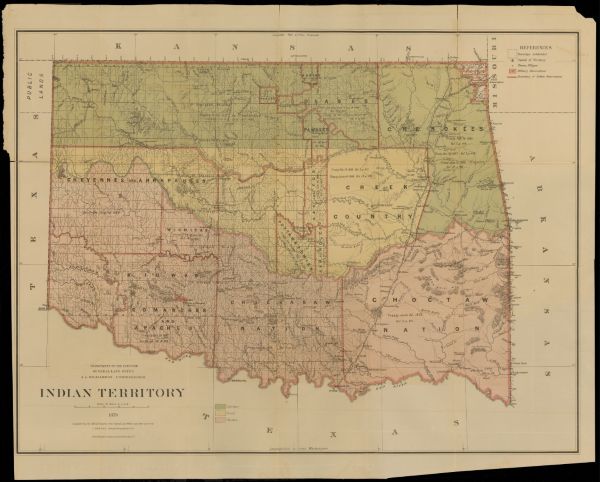
The overland stage did not cross empty country. Its routes passed through homelands, hunting territories, river corridors, trade zones, borderlands, and sacred landscapes already shaped by Indigenous nations long before U.S. contractors drew lines across maps or federal officials awarded mail contracts. This is one of the most important correctives to the romantic history of stagecoach travel. The coach is often imagined moving through “wilderness,” as if the problem were only distance, weather, mountains, deserts, and bad roads. But the lands crossed by stage routes were political spaces. They belonged to peoples with their own sovereignties, alliances, rivalries, economies, and histories of movement. To build a route through such country was not simply to solve a transportation problem. It was to enter, disturb, and often violate existing worlds.
For U.S. officials, mail contractors, settlers, and commercial interests, stage routes were instruments of connection. They made California easier to govern, mining regions easier to supply, military posts easier to communicate with, and emigrant movement easier to imagine. A road with stations, horses, drivers, guards, and scheduled departures announced that the United States intended not merely to pass through a landscape but to organize it. The stage station was more than a place to change animals. It could be a small outpost of occupation: a store of food, fodder, weapons, mail, tools, and information; a place where travelers gathered; a point from which news and rumor traveled; and a sign that a corridor of movement had been claimed. These stations also fixed American presence in space. Unlike a passing wagon train or a temporary hunting party, a stage station suggested permanence, repetition, and return. It required supplies to be brought in, animals to be kept, workers to remain, routes to be protected, and nearby resources to be used. The route created a thin but persistent geography of settlement before dense settlement necessarily existed. It made the road a line of dependency and authority, linking remote stations to contractors, postal officials, military officers, merchants, and distant political centers. For those invested in expansion, this was precisely the point: the coach made faraway places administratively imaginable. It turned a stretch of land into a corridor, a corridor into a service, and a service into evidence that national power could move where it claimed the right to move. The stagecoach helped turn geography into administered space. It made expansion practical by giving it rhythm.
For Indigenous communities, the meaning of these same routes could be very different. Roads brought strangers, livestock, soldiers, surveyors, emigrants, hunters, merchants, and disease into places where Native people had already been adapting to decades of colonial pressure. Stage lines could disrupt hunting grounds, strain water sources, draw military retaliation after conflicts, and intensify competition over animals and supplies. Stations could become flashpoints because they represented fixed intrusions in mobile and contested landscapes. Attacks on stage routes were often described by American newspapers and officials as proof of “savagery” or lawlessness, but such descriptions hid the deeper conflict. Violence along the road was frequently part of a broader struggle over land, autonomy, resources, and the right to control movement through Indigenous space. The road was not neutral. It was a claim.
The southern overland routes made this clear. The Butterfield Overland Mail passed through regions shaped by Comanche, Kiowa, Apache, Caddo, and other Indigenous histories, as well as Mexican, Spanish, and U.S. imperial contests. The borderlands were not empty margins waiting for American order. They were places where Native power had long constrained empires, redirected trade, raided settlements, negotiated treaties, and shaped the possibilities of colonial expansion. Stagecoach travel entered this world as one more instrument of pressure. Its schedules depended on fragile assumptions: that stations could remain supplied, that horses and mules could be protected, that roads could stay open, that Native resistance could be contained, and that U.S. claims to passage would be accepted or enforced. When those assumptions failed, the stage route revealed the violence hidden inside the language of communication. This does not mean that every person who rode, drove, or maintained a stagecoach thought of himself as an agent of empire. Many were workers trying to earn wages, passengers trying to reach family or opportunity, contractors trying to fulfill obligations, or station keepers trying to survive lonely and dangerous posts. Nor were Indigenous responses uniform. Native nations and communities made strategic choices under pressure: trading, negotiating, resisting, raiding, guiding, avoiding, adapting, or using new routes and markets when useful. The point is not to flatten the history into villains and victims, but to restore the political reality that the romantic stagecoach image often erases. The overland stage was made possible by ordinary labor, but it also participated in extraordinary dispossession. It connected some people by intruding on others.
The violence behind the route changes how the stagecoach should be interpreted. It was not only a vehicle of mobility, communication, and commercial modernity. It was also part of the infrastructure of settler colonialism. Its roads made state power more mobile; its mail made distant authority more immediate; its stations made occupation more permanent; its schedules made expansion feel orderly and inevitable. The coach that carried letters and passengers also carried assumptions about whose movement mattered, whose land could be crossed, and whose resistance would be treated as obstruction. To write the history of stagecoach travel honestly is to hold both realities together: the stagecoach as a remarkable system of organized motion, and the stagecoach route as a corridor through which expansion, violence, and dispossession moved.
Decline, Adaptation, and Survival after the Railroad
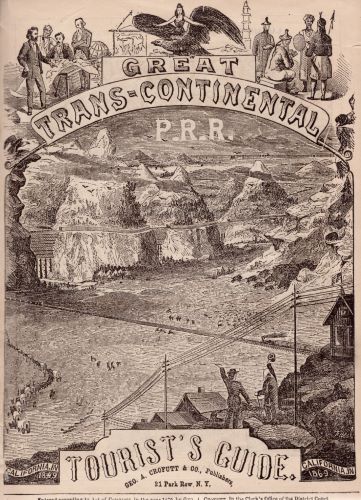
The railroad did not simply replace the stagecoach in a single dramatic moment. It displaced it unevenly, route by route, region by region, and function by function. Where rail lines reached major towns, ports, mining districts, and commercial corridors, the old logic of horse-drawn long-distance travel became increasingly difficult to defend. Trains carried more passengers, more freight, and more mail at greater speed, in larger volumes, and with a stronger claim to punctuality. They also shifted the basic terms of comparison. A delay that might once have seemed ordinary on a muddy road looked different when a train could cross the same distance with greater regularity. A crowded coach, tired team, broken axle, or rain-swollen road now had to compete in the public imagination with iron rails, steam power, covered carriages, larger stations, and printed railway timetables. A stagecoach could organize distance by stages; a railway could reorganize distance by timetable, track, and steam power. The coach had once made overland speed feel modern, but the railroad made coaching seem slow, small, expensive, and vulnerable to mud, animals, weather, and road maintenance. Its decline was not the disappearance of travel by road, but the loss of the stagecoach’s status as the premier instrument of long-distance public mobility. The road still mattered, but the road was no longer the highest symbol of organized speed.
In Britain, the effect was particularly visible because the coaching system had reached such a high level of refinement before the railway age. By the early nineteenth century, fast coaches, mail coaches, turnpikes, coaching inns, road books, and skilled drivers had created a dense culture of scheduled movement. Then railways attacked the most profitable routes first. The same corridors that had supported frequent coaches could support rail traffic, and once a railway opened between major towns, the economic foundation of long-distance coaching weakened rapidly. Passengers who had endured jolting roads and exposed outside seats could now travel faster and, often, more predictably by train. Mail contracts followed the logic of speed and capacity. Coaching inns that had once been crowded with horses, guards, porters, passengers, and drivers saw traffic fall. Some survived as hotels, posting houses, local carriers’ stops, or ordinary inns; others declined with the routes that had sustained them.
In the United States, the pattern was similar but more geographically stretched. Railroads spread across the eastern states, then pushed into the Midwest, the South, the Plains, and eventually the Pacific world. The completion of the transcontinental railroad in 1869 did not end stagecoach travel everywhere, but it permanently altered the balance of power between horse and steam. The great overland stage lines had existed because the continent needed connection before continuous rails could provide it. Once railroads crossed major distances, the stagecoach lost much of its strategic importance as a through-service. Yet the American case also shows why “decline” is too simple a word. Railroads were linear. They connected points along tracks. Many communities, farms, mining camps, resorts, military posts, and rural settlements still lay beyond the railhead. In those places, the stagecoach did not vanish; it changed jobs.
One of the most important afterlives of the stagecoach was as a feeder service. Coaches carried passengers, mail, baggage, and goods between railroad stations and places the railroad did not directly reach. The stage line became subordinate to the railway rather than its rival. A traveler might take a train for the long haul, then transfer to a coach for the last miles into a mountain town, spa, hotel, mining district, or rural county seat. This adaptation preserved many older practices: hired teams, scheduled departures, driver skill, inns or stations, fare classes, and the management of luggage and parcels. But the meaning of the journey changed. The stagecoach was no longer the great organizer of long-distance travel. It became the connector between the iron network and the road world that still lay beyond it. Its survival depended on the incompleteness of the railroad. This was not a trivial role. In many places, the last miles mattered as much as the main line, because a railroad station only transformed travel if people and goods could actually reach it. The coach became part of a layered transport system: rail for the trunk route, stage for the branch connection, wagon or horseback for the most local movement. A mining camp without a rail spur, a resort in the mountains, a courthouse town off the main line, or a ranching district beyond regular tracks still needed scheduled road service. The old coaching system survived by attaching itself to the new railway system, turning from competitor into intermediary.
Mail service also sustained the coach in altered form. Railways rapidly became essential to long-distance mail transport, but rural and remote delivery still required road vehicles, horseback carriers, wagons, and later motor vehicles. In many places, the stage carried mail because no rail line reached the community, or because the nearest station required overland connection. This kept the old relationship between public communication and private contractors alive. The vehicle might be less glamorous than the great mail coaches of Britain or the overland stage to California, but its function remained historically important. It connected households and settlements to the wider postal system. The decline of the stagecoach as icon coexisted with its persistence as service. The coach survived wherever distance was too small, too rough, too unprofitable, or too scattered for rail.
The final blow came not from the railroad alone but from the motor vehicle. Automobiles, motor buses, and trucks eventually took over many of the road functions that horse-drawn coaches had retained after rail expansion. The motor vehicle could use roads without the same dependence on horse relays, stables, fodder, and animal recovery. It could travel flexibly, reach rural places, and link communities to rail stations or larger towns with new speed. Yet even here, the stagecoach did not disappear without leaving institutional traces. Motor buses inherited the language and logic of scheduled road service. Rural carriers inherited the expectation that mail should reach dispersed communities. Hotels and resorts continued to organize transport from stations. Roadside businesses replaced, in altered form, some of the functions once performed by coaching inns. The vehicle changed, but many of the habits built by stagecoaching persisted: fixed routes, advertised departures, public fares, luggage handling, relay points, and the idea that road travel could be a regular service.
The decline of the should be understood as transformation rather than simple extinction. As a long-distance competitor to the railway, it failed. As a cultural symbol, it grew more powerful after its practical dominance faded. As a local connector, rural carrier, hotel conveyance, tourist attraction, and memory object, it survived into the twentieth century in scattered and altered forms. Its disappearance from the main arteries of transport made it easier to romanticize, but its real importance lay in the habits it passed on. The railroad made the stagecoach obsolete by surpassing its speed and capacity, but it also inherited a public already trained to think in schedules, routes, fares, stations, and connections. The stagecoach lost the road to steam and then to gasoline, but it helped create the world in which those later systems made sense.
The Stagecoach in Memory and Myth
The stagecoach became more powerful in memory after it had lost much of its practical dominance. While it was still a working vehicle, passengers often described it in terms of discomfort, danger, delay, dust, crowding, expense, and fatigue. Later memory softened those realities into romance. The coach that had once jolted bodies over bad roads became a symbol of adventure, communication, frontier courage, and national movement. This transformation was not accidental. Technologies often become most picturesque when they are no longer ordinary. Once railroads, trolleys, automobiles, and motor buses displaced the working stagecoach, the older vehicle could be remembered less as an uncomfortable necessity and more as a vanished emblem of a supposedly more vivid age. Obsolescence made nostalgia easier. Literature helped fix this transformation. In British writing, coaching could evoke social comedy, provincial movement, danger, gossip, and the older rhythms of the road. The stagecoach appears in eighteenth- and nineteenth-century travel writing and fiction as a space where strangers meet, status is tested, and the road becomes a moving theater of manners. In American literature, the coach took on a sharper association with distance, roughness, humor, and western expansion. Mark Twain’s Roughing It helped preserve the sensation of overland travel as both comic ordeal and mythic passage, full of discomfort but also narrative energy. Literary stagecoaches were rarely just vehicles. They were devices for bringing people together, exposing character, producing danger, and turning landscape into story. The coach moved plots as well as passengers.
The western film made the stagecoach one of the most recognizable images of American popular culture. John Ford’s Stagecoach in 1939 did not invent the stagecoach myth, but it gave it one of its most durable cinematic forms. The coach becomes a compressed society moving through danger: respectable women, soldiers, gamblers, bankers, outcasts, drivers, and armed men sharing a vehicle that crosses a hostile landscape. The stagecoach is rarely treated as a mundane transport business in the films. It becomes a symbol of civilization under pressure, a small moving enclosure of social order surrounded by threat. The image is powerful, but it also carries the distortions of the western genre. Indigenous people often appear as faceless danger rather than as nations defending homelands. Violence becomes spectacle; expansion becomes destiny; and the vehicle that historically participated in settler colonialism is often recast as an innocent bearer of progress.
Tourism also preserved the stagecoach by turning it into experience. Historic towns, national parks, museums, dude ranches, western reenactments, hotel resorts, and heritage attractions used coaches to give visitors a bodily taste of the past. A short stagecoach ride could condense a complicated history into motion, creaking wheels, leather, dust, horses, and a driver’s performance. This kind of heritage experience can be valuable because it reminds people that preindustrial travel was physical, noisy, and labor-intensive. Yet it can also simplify. A tourist coach rarely reproduces the exhaustion of days on the road, the smell of packed passengers, the fear of breakdown, the hierarchy of inside and outside seats, or the violence of routes crossing Indigenous lands. Heritage often preserves the object while smoothing the world that made the object meaningful.
Corporate branding gave the stagecoach another afterlife. Wells Fargo’s red-and-gold coach became a powerful symbol because it joined reliability, security, speed, and western memory in one image. The historical company’s express business operated in a world of mail, gold, documents, money, and trust; the later brand converted that history into a promise of continuity and dependable service. A stagecoach on a logo does not merely say “old.” It says that value can be carried through danger, that distance can be managed, and that the company has roots in a heroic commercial past. But corporate memory is selective by design. It highlights enterprise, courage, and reliability while softening the labor, violence, inequality, and settler expansion that made overland express service possible. The coach becomes a portable emblem of trust, stripped of many of the conflicts embedded in the roads it traveled.
Museums have played a more complex role. A preserved Concord coach, mail coach, or western stage can restore attention to craftsmanship, suspension, materials, vehicle design, and the practical intelligence of coachbuilding. Museums can also reconnect the coach to postal systems, road networks, horses, passengers, and labor. At their best, they resist pure nostalgia by showing the stagecoach as an artifact of infrastructure rather than only romance. Yet museum display always faces a challenge: a clean, stationary coach can look more elegant than it ever felt on the road. Removed from mud, smell, fear, animal strain, class division, and political conflict, the vehicle risks becoming beautiful in a way that conceals its harsher history. Interpretation must do what the display object cannot do alone: restore motion, labor, and consequence.
The mythology of the stagecoach is not simply false. It grew from real qualities: risk, endurance, distance, speed, skill, and connection. The coach really did carry mail through dangerous country; it really did link towns and settlements; it really did require brave and skilled labor; it really did become part of the drama of expansion. The problem is not that memory invented significance where none existed. The problem is that memory narrowed significance into romance. The stagecoach was not only the vehicle of the western chase, the picturesque inn yard, the comic journey, or the corporate emblem. It was a system of labor, capital, animals, roads, timetables, class distinctions, postal power, and territorial expansion. Its enduring image matters because it shows how societies remember transport: not as infrastructure alone, but as story. The stagecoach survived in culture because it made motion visible, and because later generations found in that motion the myths they wanted to tell about danger, progress, freedom, and the road.
Was the Stagecoach Really a Modern Transport Revolution?
The following video from “Explore Horses” discusses stagecoach history:
I’m afraid the stagecoach may be receiving too much credit. If modern transport means mass mobility, large-scale carrying capacity, standardized time, integrated national markets, cheap fares, and rapid movement available to broad populations, then the railway deserves the title far more than the stagecoach. Coaches were limited by animal power, road quality, weather, expense, and small passenger capacity. They served important routes but did not reach everyone equally. Many people still walked, rode horseback, used wagons, traveled by water, or remained locally bound. Even where stagecoaches were regular, they could be uncomfortable, dangerous, slow by later standards, and socially exclusive. From this perspective, the stagecoach was not a modern transport revolution at all. It was an improved preindustrial service whose later romance exaggerates its importance.
That objection has real force. The stagecoach did not democratize travel in the way later railways, streetcars, buses, and automobiles would. Fares remained meaningful barriers. Inside and outside seating reproduced class distinction. Rural communities away from routes might see little benefit. Weather and road conditions could still defeat the timetable. The system required enormous numbers of horses and workers to accomplish what a railway locomotive would later do with far greater speed and capacity. A coach could carry only a small number of passengers, and every mile depended on feed, stabling, animal recovery, road maintenance, and human labor. Its carrying power was impressive only within the limits of a horse-drawn world. Compared with a railway, it was fragile, expensive, and inefficient. Even the most famous overland American routes were vulnerable to breakdown, drought, attack, debt, isolated stations, and political conflict. Many depended on federal contracts or privileged commercial corridors rather than broad public demand. The coach could make distance manageable, but it could not make distance cheap, effortless, or truly routine for everyone. It connected some places while leaving others outside the network; it served merchants, officials, travelers of means, mail contractors, and expanding settlements better than it served the poor, the remote, or the people whose lands the routes crossed. A history that treats stagecoaching as a simple march toward modernity risks mistaking elite and commercial mobility for mass mobility, and it risks confusing the visibility of the coach with the actual reach of its service.
The counterpoint also warns against reading history backward from the railway. Because later transport systems used timetables, stations, fares, classes, routes, and connections, it is tempting to see the stagecoach as their obvious ancestor and to interpret every feature of coaching as a step toward rail modernity. But stagecoaching belonged to its own world. Its logic was still animal, seasonal, local, and bodily. Its speed depended on the management of fatigue rather than mechanical acceleration. Its infrastructure was made of roads, inns, stables, toll gates, and human judgment rather than tracks, signals, depots, and corporate command systems. Its culture was shaped by the road’s uncertainty, the intimacy of shared discomfort, and the skill of drivers and guards. To call it “modern” too quickly may flatten the difference between a horse-drawn relay system and the industrial transport order that followed.
Yet the challenge modifies rather than overturns the argument. The stagecoach was not a modern transport revolution if that phrase is used to mean industrial mass transport. It did not carry enough people, cheaply enough, fast enough, or uniformly enough to deserve that label in the railway sense. But it was revolutionary in a more specific and transitional way. It helped make overland movement regular, purchasable, scheduled, and publicly expected before steam power transformed the scale of travel. It taught passengers to gather at departure points, pay fares, trust routes, measure delay, choose between classes of service, and imagine distance as a sequence of manageable stages. It taught businesses, postal officials, innkeepers, road trustees, and contractors to coordinate movement as a repeating service. The stagecoach’s importance lies not in replacing the railway before the railway existed, but in preparing people to understand what scheduled public transport could mean.
The fairest interpretation is neither romantic nor dismissive. The stagecoach was not the birth of modern mobility in full form, but it was one of its essential apprenticeships. It remained constrained by horses, weather, roads, class, capital, and geography, yet within those limits it changed expectations. It made time part of travel, roads part of commerce, inns part of networks, and movement part of public life. It also carried the burdens of its age: inequality, danger, labor exploitation, animal strain, corporate mythmaking, and, in the American West, settler colonial expansion. The stagecoach was modern not because it escaped the preindustrial world, but because it organized that world so effectively that later systems could build upon the habits it created. Its revolution was not steam, steel, or mass capacity. It was the disciplined promise that the road could keep time.
Conclusion: The Road Before the Rails
The stagecoach belonged to a world before steam, but it should not be dismissed as merely primitive transport awaiting replacement. It was one of the great organizing systems of pre-rail mobility, built from roads, horses, inns, fares, contracts, timetables, drivers, guards, passengers, mailbags, and risk. Its genius lay in turning the limits of an animal-powered world into a workable structure. Horses tired, so journeys were divided into stages. Roads broke down, so turnpikes and maintenance became part of speed. Passengers feared uncertainty, so routes, inns, and schedules gave movement a public form. Letters and newspapers needed urgency, so mail coaches made information part of the road’s rhythm. The stagecoach did not abolish distance, but it taught people that distance could be organized.
That organization was never neutral. Stagecoach travel reflected the inequalities and violences of the societies that built it. Inside and outside seats reproduced class difference. Coaching inns depended on hidden labor. Horses bore the strain of speed. Women and poorer travelers experienced public mobility under different forms of scrutiny and limitation. In the American West, overland routes crossed Indigenous lands and helped make settler expansion more practical, regular, and enforceable. The stagecoach could connect towns, families, markets, courts, newspapers, and governments, but connection for some often meant intrusion for others. Its history is not simply a story of progress. It is a story of how mobility is made: through labor, capital, authority, exclusion, endurance, and imagination.
The railway eventually surpassed the coach so dramatically that it changed the meaning of speed itself. Trains carried more people and goods, moved faster, imposed stricter timetables, and reorganized space on an industrial scale. Yet railways did not enter a world innocent of scheduled travel. Stagecoaches had already accustomed many travelers to public departures, fares, routes, classes of service, waiting rooms, connections, delays, and the expectation that a transport system should keep time. The railroad made these habits more powerful, more mechanical, and more standardized, but it did not create all of them from nothing. The road before the rails had already trained people to think of movement as a service rather than merely an ordeal.
This is why the stagecoach remains historically important even after its practical decline. Its later image of the coach racing across the western landscape, the mail guard sounding the horn, the inn yard alive with horses, the passengers crowded into a moving box of fear and conversation, is romantic, but not empty. Behind the myth was a real transformation in how societies managed motion. The stagecoach made roads into networks, inns into transport nodes, horses into relay power, mail into scheduled cargo, and passengers into participants in public mobility. It was not modern mass transport, but it was one of modern transport’s necessary apprenticeships. Before iron rails and steam engines remade the world, the stagecoach had already put time on the road.
Bibliography
Affiliate disclosure: Amazon links on this site are paid links. As an Amazon Associate I earn from qualifying purchases.
- Abbot-Downing Historical Society. “Resources.” Concord, NH. Accessed June 27, 2026.
- Albert, William. The Turnpike Road System in England, 1663–1840. Cambridge: Cambridge University Press, 1972.
- Ambrose, Stephen E. Nothing Like It in the World: The Men Who Built the Transcontinental Railroad, 1863–1869. New York: Simon & Schuster, 2000.
- Austen, Jane. Pride and Prejudice. London: T. Egerton, 1813.
- Bagwell, Philip S. The Transport Revolution from 1770. London: Batsford, 1974.
- Baines, Edward. History of the Commerce and Town of Liverpool. London: Longman, Hurst, Rees, Orme, and Brown, 1825.
- Barr, Juliana. Peace Came in the Form of a Woman: Indians and Spaniards in the Texas Borderlands. Chapel Hill: University of North Carolina Press, 2007.
- Beattie, J. M. Crime and the Courts in England, 1660–1800. Princeton, NJ: Princeton University Press, 1986.
- Beebe, Lucius, and Charles Clegg. The American West: The Pictorial Epic of a Continent. New York: E. P. Dutton, 1955.
- Belton, John. American Cinema/American Culture. 4th ed. New York: McGraw-Hill Education, 2012.
- Blackhawk, Ned. The Rediscovery of America: Native Peoples and the Unmaking of U.S. History. New Haven, CT: Yale University Press, 2023.
- Bogart, Dan. “Turnpike Trusts and the Transportation Revolution in Eighteenth-Century England.” Explorations in Economic History 42:4 (2005), 479–508.
- Boorstin, Daniel J. The Americans: The National Experience. New York: Random House, 1965.
- Borsay, Peter. The English Urban Renaissance: Culture and Society in the Provincial Town, 1660–1770. Oxford: Clarendon Press, 1989.
- Boulton, Jeremy. “Wage Labour in Seventeenth-Century London.” Economic History Review 49:2 (1996), 268–290.
- Cary, John. Cary’s New Itinerary: Or, An Accurate Delineation of the Great Roads, Both Direct and Cross, throughout England and Wales. London: J. Cary, 1815.
- Chartres, John. “Road Carrying in England in the Seventeenth Century: Myth and Reality.” Economic History Review 30:1 (1977), 73–94.
- Dary, David. The Santa Fe Trail: Its History, Legends, and Lore. New York: Alfred A. Knopf, 2000.
- Daunton, Martin J. Royal Mail: The Post Office since 1840. London: Athlone Press, 1985.
- Defoe, Daniel. A Tour thro’ the Whole Island of Great Britain. 3 vols. London: S. Birt, 1748.
- DeLay, Brian. War of a Thousand Deserts: Indian Raids and the U.S.-Mexican War. New Haven, CT: Yale University Press, 2008.
- Dunbar, Seymour. A History of Travel in America. 4 vols. Indianapolis: Bobbs-Merrill, 1915.
- Earle, Alice Morse. Stage-Coach and Tavern Days. New York: The MacMillan Company, 1900.
- Etulain, Richard W. Re-Imagining the Modern American West: A Century of Fiction, History, and Art. Tucson: University of Arizona Press, 1972.
- Fiennes, Celia. The Journeys of Celia Fiennes. Edited by Christopher Morris. London: Cresset Press, 1947.
- Ford, John, dir. Stagecoach. Los Angeles: Walter Wanger Productions, 1939.
- Freeman, Michael J. Transport in Victorian Britain. Manchester: Manchester University Press, 1988.
- Gerhold, Dorian. Carriers and Coachmasters: Trade and Travel before the Turnpikes. Chichester: Phillimore, 2005.
- —-. “Productivity Change in Road Transport before and after Turnpiking, 1690–1840.” Economic History Review 49:3 (1996), 491–515.
- —-. Road Transport before the Railways: Russell’s London Flying Waggons. Cambridge: Cambridge University Press, 1993.
- Glennie, Paul, and Nigel Thrift. Shaping the Day: A History of Timekeeping in England and Wales, 1300–1800. Oxford: Oxford University Press, 2009.
- Hämäläinen, Pekka. The Comanche Empire. New Haven, CT: Yale University Press, 2008.
- —-. Indigenous Continent: The Epic Contest for North America. New York: Liveright, 2022.
- Harper, Charles G. Stage-Coach and Mail in Days of Yore: A Picturesque History of the Coaching Age. 2 vols. London: Chapman and Hall, 1903.
- Harris, Stanley. The Coaching Age. London: Richard Bentley and Son, 1885.
- Henry Ford Museum of American Innovation. “1891 Abbot Downing Concord Coach.” Dearborn, MI. Accessed June 27, 2026.
- Hindle, Steve. “Dependency, Shame and Belonging: Badging the Deserving Poor, c. 1550–1750.” Cultural and Social History 1:1 (2004), 6–35.
- Hine, Robert V., and John Mack Faragher. The American West: A New Interpretive History. New Haven, CT: Yale University Press, 1964.
- Holmes, Oliver W. “Stagecoach Travel and Some Aspects of the Staging Business in New England, 1800-1850.” Proceedings of the Massachusetts Historical Society 85 (1973), 36-57.
- Hyde, Anne F. Empires, Nations, and Families: A History of the North American West, 1800–1860. Lincoln: University of Nebraska Press, 2011.
- Jackman, William T. The Development of Transportation in Modern England. 2 vols. Cambridge: Cambridge University Press, 1916.
- Jackson, W. Turrentine. “Wells Fargo Stagecoaching in Montana: Final Months.” Montana The Magazine of Western History 24:4 (1979), 52-66.
- John, Richard R. Spreading the News: The American Postal System from Franklin to Morse. Cambridge, MA: Harvard University Press, 1995.
- Joyce, Herbert. The History of the Post Office from Its Establishment down to 1836. London: Richard Bentley and Son, 1893.
- Lavender, David. The Overland Migrations: Settlers to Oregon, California, and Utah. Washington, DC: National Park Service, 1980.
- Mackie, Erin. Rakes, Highwaymen, and Pirates: The Making of the Modern Gentleman in the Eighteenth Century. Baltimore: Johns Hopkins University Press, 2009.
- Mackintosh, Will. “’Ticketed Through’: The Commodification of Travel in the Nineteenth Century.” Journal of the Early Republic 32:1 (2012), 61-89.
- Matile, Roger. “John Frink and Martin Walker: Stagecoach Kings of the Old Northwest.” Journal of the Illinois State Historical Society 95:2 (2002), 119-131.
- McAdam, John Loudon. Remarks on the Present System of Road-Making. London: Paternoster Row, 1823.
- McLynn, Frank. Crime and Punishment in Eighteenth-Century England. London: Routledge, 1989.
- Moody, Ralph. Stagecoach West. New York: Thomas Y. Crowell, 1967.
- National Museum of American History. America on the Move. Washington, DC: Smithsonian Institution, 2003.
- National Postal Museum. “Concord Mail Coach.” Smithsonian Institution. Accessed June 27, 2026.
- New Hampshire Historical Society. “Concord Coach.” Concord, NH. Accessed June 27, 2026.
- Nimrod, Charles James Apperley. The Life of a Sportsman. London: Rudolph Ackermann, 1842.
- Ogborn, Miles. Spaces of Modernity: London’s Geographies, 1680–1780. New York: Guilford Press, 1998.
- Ogilby, John. Britannia: Volume the First, or, An Illustration of the Kingdom of England and Dominion of Wales. London, 1675.
- Ormsby, Waterman L. The Butterfield Overland Mail. Edited by Lyle H. Wright and Josephine M. Bynum. San Marino, CA: Huntington Library, 1942.
- Paterson, Daniel. A New and Accurate Description of All the Direct and Principal Cross Roads in Great Britain. London: T. Carnan, 1771.
- Pawson, Eric. Transport and Economy: The Turnpike Roads of Eighteenth-Century Britain. London: Academic Press, 1977.
- Robinson, Howard. Britain’s Post Office: A History of Development from the Beginnings to the Present Day. Oxford: Oxford University Press, 1953.
- Rogers, Nicholas. Mayhem: Post-War Crime and Violence in Britain, 1748–1753. New Haven, CT: Yale University Press, 2012.
- Scheiber, Harry N. Abbot-Downing and the Concord Coach. Concord, NH: New Hampshire Historical Society, 1945.
- Schivelbusch, Wolfgang. The Railway Journey: The Industrialization of Time and Space in the Nineteenth Century. Berkeley: University of California Press, 1986.
- Sharpe, J. A. Crime in Early Modern England, 1550–1750. London: Longman, 1984.
- Slotkin, Richard. Gunfighter Nation: The Myth of the Frontier in Twentieth-Century America. Norman: University of Oklahoma Press, 1992.
- Smith, Henry Nash. Virgin Land: The American West as Symbol and Myth. Cambridge, MA: Harvard University Press, 1950.
- Smollett, Tobias. The Expedition of Humphry Clinker. London: W. Johnston and B. Collins, 1771.
- Taylor, George Rogers. The Transportation Revolution, 1815–1860. New York: Rinehart, 1951.
- Taylor, John. The Carriers Cosmographie. London: A. G., 1637.
- Telford, Thomas. Reports on the Holyhead Road. London: House of Commons, 1820–1828.
- Thompson, E. P. “Time, Work-Discipline, and Industrial Capitalism.” Past & Present 38 (1967), 56–97.
- Thrupp, George A. The History of Coaches. London: Kerby and Endean, 1877.
- Tompkins, Jane. West of Everything: The Inner Life of Westerns. New York: Oxford University Press, 1992.
- Twain, Mark. Roughing It. Hartford, CT: American Publishing Company, 1872.
- United States Post Office. Table of Post Offices in the United States. Washington, DC: Government Printing Office, 1831.
- Unruh, John D., Jr. The Plains Across: The Overland Emigrants and the Trans-Mississippi West, 1840–60. Urbana: University of Illinois Press, 1979.
- West, Elliott. The Contested Plains: Indians, Goldseekers, and the Rush to Colorado. Lawrence: University Press of Kansas, 1998.
- White, Richard. “It’s Your Misfortune and None of My Own”: A New History of the American West. Norman: University of Oklahoma Press, 1991.
- Willan, Thomas Stuart. River Navigation in England, 1600–1750. London: Frank Cass, 1964.
- Winther, Oscar Osburn. The Transportation Frontier: Trans-Mississippi West, 1865–1890. New York: Holt, Rinehart and Winston, 1964.
- Zerubavel, Eviatar. Hidden Rhythms: Schedules and Calendars in Social Life. Chicago: University of Chicago Press, 1981.
Originally published by Brewminate, 07.02.2026, under the terms of a Creative Commons Attribution-NonCommercial-NoDerivatives 4.0 International license.
About the Author