Ancient medicine did not simply replace gods with science. Across Mesopotamia, Egypt, Greece, and Rome, healing often joined ritual, remedies, dreams, diagnosis, and divine power.

By Matthew A. McIntosh
Public Historian
Brewminate
Introduction: The Sickbed Between God and Remedy
The ancient sickbed was rarely a place where the patient chose between religion and medicine as separate, competing systems. A fever, seizure, infected wound, difficult birth, wasting illness, or sudden pain could call forth prayers, purifications, incantations, amulets, dreams, drugs, diet, bandages, surgery, and household remedies all at once. To modern readers, some of these interventions seem medical while others seem religious or magical, but ancient patients did not necessarily experience them that way. Illness was a physical crisis, but it was also a social, moral, cosmic, and divine disturbance. A suffering body might reveal an imbalance in diet or season, an injury to flesh, the anger of a god, the attack of a demon, the pollution of the household, the envy of a neighbor, or the frightening uncertainty of fate. Treatment had to do more than attack symptoms. It had to explain why the body had failed, who or what was responsible, and how the patient could be restored to a livable order.
This does not mean that ancient medicine was simply “superstition” before the arrival of rational science. Mesopotamian healers could recite incantations against disease-demons while also applying salves, bandages, and plant-based remedies. Egyptian priest-physicians could invoke Sekhmet, Isis, or Horus while treating wounds with honey, linen, oils, splints, and surgical procedures. Greek patients could sleep in the sanctuary of Asklepios and seek a healing dream, even as Hippocratic writers argued that diseases had natural causes and should be understood through regimen, environment, bodily constitution, and prognosis. Roman households might rely on charms and divine vows while also consulting trained physicians, using pharmacological recipes, or following learned medical advice. The important point is not that religion and medicine were always harmoniously united, but that they were historically entangled. Ritual could comfort, mislead, organize, delay, authorize, or reinforce treatment. Practical medicine could coexist with divine explanation without ceasing to be practical.
The language of “religious belief and superstition” requires care. “Superstition” is not a neutral word. It often reflects the judgment of outsiders, elites, rival professionals, later religious reformers, or modern scholars who assume that true medicine begins only when gods and spirits disappear. Ancient writers themselves sometimes used similar strategies. Hippocratic authors criticized purifiers, magicians, and wonder-workers not only because they rejected divine causation, but also because they were competing for authority over the patient’s body. Greek and Roman intellectuals could ridicule charms, amulets, or old women’s remedies while still accepting divine signs, sacred healing, astrology, or philosophical cosmologies of the body. The boundary between medicine and superstition was never fixed. It was argued over, performed, and policed by healers who wanted patients to trust their own explanations rather than someone else’s.
Religious belief in the ancient world often functioned as medical intervention, not merely as a mistaken explanation added onto real treatment. Religion gave illness meaning, gave healers authority, gave patients rituals of hope, and gave families a way to act when bodies became terrifyingly unpredictable. Religious and magical systems could constrain inquiry, stigmatize sufferers, or preserve ineffective treatments through the force of tradition. The ancient history of healing is not a simple march from superstition to science. It is a story of overlapping therapies: the exorcist and the physician, the priest and the surgeon, the dream and the diagnosis, the spell and the bandage, the god and the remedy. To understand ancient medicine, we must begin at the bedside, where the sacred and the practical were not opposites but neighboring forms of care.
Disease Before Secular Medicine: Why Illness Needed Meaning
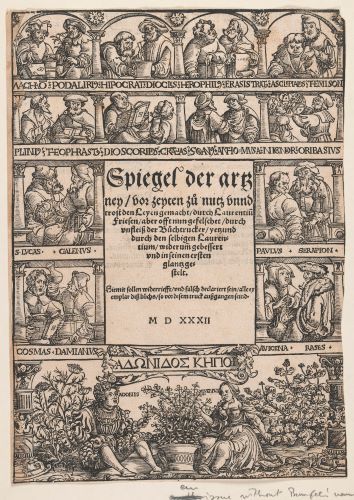
Before medicine could be imagined as a largely secular profession, illness had to be made intelligible. Pain was not only pain, and fever was not only heat in the body. A sudden seizure, a wasting disease, an infected wound, a difficult birth, a child’s unexplained death, or a plague passing through a city demanded interpretation because illness ruptured more than health. It threatened labor, inheritance, fertility, ritual purity, family continuity, and the ordinary confidence that the world made sense. Ancient patients and their households wanted relief, but they also wanted explanation. Why this body? Why this moment? Why this household? Why had ordinary life been interrupted by something invisible, violent, and frighteningly personal? A purely mechanical account of disease would not have satisfied the full crisis. Illness required meaning because suffering without meaning was almost impossible to endure.
This is one reason divine and supernatural explanations were so durable. They did not simply fill a gap left by ignorance; they answered questions that technical medicine often could not answer and often did not even try to answer. A healer might describe the visible symptoms of a condition, identify the part of the body affected, prescribe a drug, or predict whether the patient would live, but symptoms alone did not explain why the sufferer had been singled out. Gods, demons, ghosts, pollution, curses, fate, broken oaths, envy, improper ritual, and ancestral displeasure all gave illness a narrative structure. They turned the body’s collapse into a story with agents, causes, and possible remedies. A demon could be expelled. A god could be appeased. Pollution could be purified. A curse could be countered. A neglected vow could be fulfilled. Even when such explanations were frightening, they were rarely passive. They told families what to do, whom to consult, what ritual to perform, what offering to make, what words to speak, and what danger to avoid in the future. These explanations did not always cure the patient, and they could sometimes deepen fear or blame, but they gave the household a way to act when the body seemed to have become unreadable. Meaning itself became therapeutic because it converted helplessness into procedure, and procedure into hope.
Ancient medicine developed inside societies where the body was never merely private or biological. In Mesopotamia, disease could belong to a world of divine judgment, demonic attack, omen, and ritual danger, but this did not prevent healers from recording symptoms, preparing drugs, washing wounds, and making prognoses. In Egypt, the body was embedded in a sacred cosmos in which gods could injure and restore, while medical papyri preserved practical treatments for trauma, eye disease, digestive complaints, gynecological conditions, and wounds. In Greece, even the later development of naturalistic medicine did not erase older habits of explanation. Greek patients still lived in a world of miasma, sacrifice, healing gods, sacred dreams, and polluted households. Across these cultures, illness was not reduced to a single cause. It could be physical and divine, natural and moral, visible and invisible at the same time.
This helps explain why ritual and empirical treatment so often appeared side by side. A bandage addressed the wound, but a spell addressed the danger thought to stand behind or within the wound. A drug might purge, soothe, heat, cool, dry, or stimulate the body, while prayer asked for divine cooperation. A purification rite could mark the patient’s return from danger, while diet and regimen attempted to restore bodily order. These interventions were not always distinguished as “real medicine” and “mere belief.” The same therapeutic event could include touch, words, ingredients, gestures, smell, taste, time, authority, and hope. The healer’s performance mattered because the patient needed confidence that someone knew how to read the crisis. Ritual language, technical vocabulary, written recipes, divine names, and inherited formulas all made healing appear orderly in the face of bodily chaos. The search for meaning was important because ancient medicine had limited power over many serious diseases. Without antibiotics, modern anesthesia, germ theory, blood transfusion, imaging, or reliable internal surgery, healers often confronted illnesses they could observe but not control. The line between cure, care, comfort, and explanation was blurred. A treatment that did not reverse disease could still reduce terror, organize nursing, regulate diet, isolate danger, calm the family, and preserve social order around the sufferer. Prognosis itself was a form of meaning: to say that a disease was treatable, dangerous, divine, incurable, seasonal, polluted, or fated was to place the patient within a knowable pattern. Ancient medicine often had to make suffering bearable even when it could not make the sufferer well.
The later emergence of more explicitly naturalistic medicine, especially in parts of the Greek tradition, did not abolish this need for meaning. Hippocratic writers could reject the claim that epilepsy was uniquely sacred, but they still explained disease through nature, regimen, environment, season, constitution, and bodily order. That was not meaninglessness; it was a different kind of meaning. The divine cause was displaced, but the patient was still placed within a cosmos governed by patterns. The deeper historical issue is not whether ancient medicine moved from meaning to mechanism, but how different cultures joined meaning and intervention. Before secular medicine could become thinkable, healing had to address a world in which the sick body was also a sign, a warning, a social crisis, and a question directed toward the gods.
Mesopotamia: Disease-Demons, Divine Anger, and the Logic of Ritual Healing
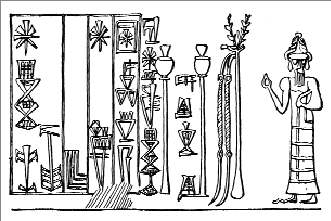
In Mesopotamia, illness belonged to a world crowded with divine powers, hostile forces, offended gods, wandering ghosts, broken oaths, unlucky signs, and dangerous moments. A diseased body was not simply a malfunctioning body. It could be the visible surface of a hidden conflict between human beings and the divine or demonic order that surrounded them. Mesopotamian healers did not begin from the assumption that the body was sealed off from the cosmos. The sufferer lived inside a universe in which gods governed fate, demons crossed thresholds, ghosts lingered when improperly cared for, and moral or ritual disorder could attach itself to flesh. Fever, paralysis, seizures, wasting, skin eruptions, pain, nightmares, and childbirth dangers could be read as symptoms, but also as signs. The sick person was not only asking what had gone wrong inside the body. He or she was asking what unseen power had entered, struck, seized, cursed, or withdrawn protection.
This did not make Mesopotamian medicine chaotic. On the contrary, one of its most striking features is its effort to classify misfortune. Disease was frightening precisely because it seemed to come from beyond ordinary control, but Mesopotamian ritual and medical traditions tried to give that danger names, patterns, and procedures. Some illnesses were associated with particular demons or divine agents. Lamaštu threatened infants and pregnant women; ghosts could trouble the living; the “hand” of a god, goddess, ghost, or demon could describe a condition experienced as an attack or affliction. The language of the “hand” is revealing because it joined bodily suffering to agency. A pain or wasting illness was not merely present; it had been laid upon the person by someone or something. To identify that agency was already to begin treatment, because a named force could be addressed, appeased, expelled, or ritually redirected. The familiar distinction between the asû and the āšipu helps explain how this system worked, though it should not be pushed too mechanically. The asû is often described as a practical physician, associated with drugs, salves, bandages, washes, poultices, and bodily treatment. The āšipu, often translated as exorcist or ritual expert, diagnosed hidden causes, interpreted signs, recited incantations, performed rituals, and confronted supernatural powers. These roles could overlap, and both belonged to learned healing culture. The important point is that Mesopotamian society did not necessarily force a patient to choose between “doctor” and “exorcist.” A household might need both. If a disease had a physical manifestation and a supernatural cause, then a purely material remedy might be incomplete, while a purely ritual remedy might fail to address the wound, swelling, discharge, or fever that threatened the body.
This cooperation reflected a larger logic of causation. Mesopotamian healing did not always separate cause, sign, symptom, and omen in ways that modern medicine would recognize. A symptom could be a bodily fact and a message. A dream could matter diagnostically. The time of onset, the part of the body affected, the patient’s behavior, the appearance of the skin, the quality of pain, the course of fever, and the presence of unusual signs could all help the healer understand what kind of danger was at work. The great diagnostic tradition often associated with the series Sakikkû arranged symptoms and prognoses in highly structured ways, showing that ritual medicine could be observational and systematic. Mesopotamian healers watched bodies closely, but they watched them as bodies embedded in divine order. Observation did not disprove supernatural causation; it helped reveal how supernatural causation had manifested. The āšipu’s work should not be reduced to theatrical superstition. Incantation, purification, substitution, figurines, offerings, fumigation, washing, and ritual speech were techniques for managing invisible danger. A demon might be ordered away. A ghost might be appeased. A patient might be cleansed of pollution or symbolically separated from the evil attached to him. Ritual objects could absorb danger; spoken formulas could identify and command hostile beings; offerings could restore relations with offended powers. These acts worked within a legal and diplomatic imagination of the cosmos. The healer addressed supernatural forces as if they could be named, charged, negotiated with, banished, or compelled by higher divine authority. Ritual healing was not merely emotional reassurance, though it could certainly reassure. It was an attempt to restore jurisdiction over a body that had fallen under the wrong power.
The asû’s remedies show how thoroughly practical treatment could coexist with this ritual world. Mesopotamian medical texts preserve recipes using plants, minerals, animal products, oils, beer, milk, honey, resins, and other substances prepared as salves, drinks, washes, tampons, poultices, and bandages. Some remedies were probably ineffective, some may have been harmful, and some may have offered genuine relief through cleansing, lubrication, protection of wounds, sedation, purging, or anti-inflammatory effects. What matters historically is that these treatments were not marginal to Mesopotamian healing. They stood beside incantations and rituals as part of the same therapeutic repertoire. A patient afflicted by a divine “hand” might still need a bandage. A demon might still be fought while an ointment was applied. The logic was cumulative: if disease crossed the boundary between body and spirit, healing had to cross that boundary as well.
Mesopotamian ritual healing reveals one of the central patterns of ancient medicine: religion did not merely explain illness after practical medicine failed. It shaped diagnosis from the beginning, determined which specialists were consulted, gave authority to treatment, and supplied procedures for acting on causes that could not be touched with the hand. Yet it did not eliminate technical care. Mesopotamian healers inhabited a world in which divine anger, demonic attack, and bodily symptoms formed a single field of interpretation. To modern eyes, a prescription and an incantation may appear to belong to opposite worlds. At the Mesopotamian sickbed, they could be neighboring responses to the same crisis. The result was not secular medicine blocked by superstition, but a learned healing system in which the body was treated as the meeting place of matter, fate, divine will, and dangerous invisible agency.
Mesopotamian Practice: Incantations, Drugs, Bandages, and Prognosis

The practical world of Mesopotamian healing was not divided neatly between magic on one side and medicine on the other. A treatment could begin with a diagnosis of divine anger or demonic attack and still proceed through substances applied to the body, liquids swallowed, wounds wrapped, oils rubbed into the skin, or fumigations breathed into the afflicted space. The healer’s task was not simply to decide whether an illness was “natural” or “supernatural,” as though these were mutually exclusive categories. It was to determine what kind of danger had entered the patient’s life, how that danger had appeared in the body, and what sequence of actions might restore order. Incantations, drugs, bandages, and prognoses were not random additions to one another. They formed a layered practice in which words, materials, gestures, and observations all had therapeutic force.
Incantation was central because Mesopotamian illness was often imagined as an invasion, seizure, attachment, or hostile claim. Spoken words could identify the evil, summon divine authority, separate the patient from danger, and command the afflicting power to depart. These words were not merely expressions of hope. They were techniques. A properly spoken incantation placed the healer within an inherited tradition and gave the ritual a legal, cosmic, and performative structure. The demon, ghost, witchcraft, curse, or divine “hand” was named and addressed. The patient was placed under the protection of gods more powerful than the force causing harm. The spoken formula made the invisible conflict visible enough to be acted upon. In that sense, the incantation did what a diagnosis also does: it turned suffering into an intelligible case.
Yet Mesopotamian treatment was also deeply material. Medical tablets preserve remedies made from plants, seeds, roots, resins, oils, minerals, animal products, beer, wine, milk, honey, fats, and other substances prepared in specific ways. Ingredients might be crushed, boiled, strained, mixed, dried, heated, cooled, drunk, rubbed on, inserted, inhaled, or bound to the body. A remedy might be applied as a poultice, salve, wash, drink, fumigation, suppository, or bandage. Some recipes probably worked through texture, heat, moisture, cleansing, sedation, purging, or simple protection of damaged tissue. Others may have been pharmacologically active in ways the ancient healer could only know through experience and repetition. Still others were likely useless or dangerous. But they were not careless. The recipes show a technical culture of preparation, sequence, dosage, and application, even when the theory behind them joined bodily effect to ritual power. They also show how ancient therapeutic knowledge accumulated without needing modern experimental method. If a plant, resin, oil, or mineral seemed to soothe a symptom, dry a lesion, loosen the bowels, dull pain, or change the course of a complaint, it could enter a tradition of use and be copied, adapted, and recombined. The result was not pharmacology in the modern sense, but neither was it pure fantasy. Mesopotamian healers worked with a world of substances whose effects were learned through inherited recipe collections, practical repetition, scribal transmission, and the authority of precedent.
Bandaging and topical treatment are important because they show Mesopotamian healers acting directly on the visible body. Wounds, sores, swellings, skin diseases, eye conditions, and injuries could be washed, anointed, covered, softened, dried, or protected. A bandage did not need to be modern antiseptic surgery to be medically meaningful. It could keep a substance in place, shield a wound from dirt, reduce irritation, absorb discharge, immobilize an injured area, or mark the patient as under treatment. The physical act of binding also had symbolic force. To bind a wound was to contain disorder; to apply a salve was to place healing matter where destructive matter had appeared; to wash the skin was to cleanse both flesh and danger. Here again, the practical and symbolic meanings reinforced rather than excluded one another.
Prognosis gave this healing system another kind of power. Mesopotamian diagnostic texts did not simply list treatments; they also trained healers to read the likely course of disease. The appearance of the patient’s face, eyes, skin, breath, speech, posture, dreams, pain, bodily emissions, and behavior could indicate whether the illness would pass, worsen, linger, or kill. This was not modern diagnosis, but it was disciplined observation. To say that a patient would recover, die, or remain in danger was to impose order on uncertainty. Prognosis also protected the healer’s authority. By distinguishing treatable from hopeless cases, the healer could decide when to intervene, when to warn the household, and when the illness had moved beyond ordinary remedy. In a society where disease might reflect divine will, prognosis was never merely clinical. It was a reading of fate as it appeared through the body. That reading mattered emotionally as well as professionally. Families needed to know whether to hope, prepare, continue treatment, call another specialist, perform additional rites, or accept that the case had become fatal. Prognostic language created a bridge between the healer’s expertise and the household’s fear. It gave suffering a temporal shape: this illness will pass, this one will linger, this one is dangerous, this one is beyond help. Even a grim prognosis could have social value, because it helped the family move from panic to preparation and placed the patient’s decline within a recognized pattern rather than leaving it as meaningless collapse.
The Mesopotamian sickbed was a place of combined action. The patient might hear an incantation, smell fumigation, swallow a drug, feel an ointment, submit to washing, wear an amulet, and be watched for signs of improvement or decline. The household might participate through offerings, ritual purity, nursing, and the careful repetition of instructions. Such treatment could fail, and often did. It could misread disease, preserve ineffective remedies, or intensify fear of demons and curses. But it also gave ancient people a coherent way to respond to suffering with the tools available to them. Mesopotamian practice reveals a healing world in which the spoken word, the prepared drug, the wrapped wound, and the predicted outcome all belonged to the same medical imagination. The body was treated not as an isolated mechanism, but as a vulnerable meeting point of flesh, signs, substances, gods, and fate.
Egypt: Priest-Physicians, Gods, and the Medical Papyrus Tradition

In Egypt, healing stood at the intersection of temple, household, body, and cosmos. Disease could be treated with bandages, splints, oils, honey, purges, eye salves, surgical procedures, and carefully prepared remedies, but it could also be addressed through prayer, spell, amulet, divine name, and ritual protection. The same medical culture that preserved strikingly practical instructions for wounds and trauma also invoked gods against invisible danger. This was not a contradiction. Egyptian medicine developed within a worldview in which divine power animated the world and human health depended on the maintenance of order. Sickness was not always interpreted as punishment, but it did represent disorder, vulnerability, and exposure to harmful forces. Healing meant more than correcting the body. It meant restoring the patient to a protected state within the cosmic and social order. The phrase “priest-physician” is useful, but it must be used carefully. Not every Egyptian doctor was simply a priest, and not every priest was a doctor. Egyptian sources preserve titles for physicians, specialists, temple personnel, ritual experts, and learned scribes whose duties could overlap without becoming identical. Still, medicine and priestly knowledge were deeply connected. Temples were centers of literacy, ritual authority, and learned transmission, and the “House of Life” associated with temple culture helped preserve religious, magical, and technical texts. A healer trained in this environment inherited more than recipes. He inherited a sacred language of the body, a set of divine patrons, a ritual vocabulary, and a belief that written words, spoken formulas, and prepared substances could all act upon reality. Medical knowledge was not secular knowledge merely housed in religious institutions. It was learned knowledge shaped by sacred authority.
The gods of Egyptian healing were not gentle abstractions. They were powerful beings who could wound, protect, destroy, and restore. Sekhmet is revealing because she embodied the frightening double edge of divine medicine. She was associated with plague, heat, violence, and sudden destruction, but also with healing and protection when properly appeased. A disease could be imagined as the blast of divine force, while recovery required turning that force aside or enlisting a god’s favor. Isis and Horus supplied another important healing language, especially through myths of injury, poisoning, maternal protection, and restoration. Thoth, the god of writing and learned wisdom, connected healing to sacred knowledge and authoritative speech. Imhotep, later revered as a healing figure, shows how human skill could be absorbed into divine or semi-divine memory. Egyptian healing drew power from a crowded sacred world in which gods were not distant symbols but active presences at the edge of the sickbed.
The medical papyri show how this sacred world could coexist with careful bodily attention. The Ebers Papyrus, Edwin Smith Papyrus, Kahun Gynecological Papyrus, Hearst Papyrus, London Medical Papyrus, and other texts preserve remedies, diagnoses, incantations, anatomical terms, prescriptions, and therapeutic procedures. Some passages are dominated by spells and ritual language; others are practical, observational, and procedural. The Edwin Smith Papyrus is famous because its trauma cases often proceed through examination, diagnosis, prognosis, and treatment with relatively little overt magical language. A wound is inspected; its location and symptoms are described; the practitioner decides whether the case is treatable, uncertain, or hopeless; and treatment may involve stitching, dressing, or immobilization. Yet that practical tone did not remove the text from Egyptian sacred culture. It shows instead that Egyptian healing could include different registers of intervention: some cases called for technical management, others for magical protection, and many for both.
Egyptian remedies also remind us that religious medicine could preserve materially effective practices. Honey, oils, fats, resins, minerals, plant preparations, milk, beer, and animal products appear in prescriptions for wounds, skin disorders, eye disease, digestive trouble, gynecological conditions, and other complaints. Linen bandaging, splinting, poultices, and topical applications gave Egyptian healers ways to act directly on injured flesh. Some remedies may have helped because they cleaned, covered, soothed, dried, lubricated, immobilized, or protected the affected area. Honey may have had real value in wound care, even though Egyptian healers did not understand microbes in a modern way. Other ingredients were probably inert, symbolic, or harmful. But the larger point is that Egyptian practice did not separate the power of a substance from the power of a word. A remedy could work because of its physical properties, its ritual associations, its place in an inherited formula, or all of these together.
The medical papyrus tradition also reveals a culture of classification and specialization. Egyptian healers did not merely invoke the gods whenever sickness appeared. They named conditions, grouped symptoms, distinguished body parts, recommended procedures, and sometimes admitted limits. Certain practitioners appear to have specialized in particular kinds of illness or body parts, including eyes, teeth, internal complaints, or trauma. Such specialization matters because it suggests that Egyptian medicine possessed a social and intellectual structure beyond general religious consolation. The sick person was not always handed over to a single undifferentiated holy man. He or she might be treated by someone whose authority rested on a recognized field of competence, a body of memorized or written knowledge, and a reputation for handling particular complaints. The healer’s authority rested partly on access to texts and training: knowing the right remedy, the right formula, the right timing, the right preparation, and the right divine protection. Written medicine gave this authority durability. A remedy did not depend only on one healer’s memory; it could be copied, preserved, taught, adapted, and placed within a longer chain of learned practice. This learned quality is crucial. Egyptian medicine was not a loose collection of folk practices. It was a written, transmitted, and socially authorized body of healing knowledge. Its sacred character did not make it intellectually empty. On the contrary, sacred authority helped stabilize and preserve the medical tradition across generations.
Egypt complicates any simple opposition between religion and practical medicine. Egyptian healers could treat wounds and invoke gods, read symptoms and recite spells, prepare drugs and rely on mythic precedent. The sacred did not merely decorate medical practice; it helped define what healing was. To restore health was to restore order, and order in Egyptian thought was never only bodily. It was cosmic, ritual, social, and divine. Yet the same system that joined medicine to religion also created space for close observation, technical skill, and durable therapeutic knowledge. Egyptian medicine was not modern science wearing priestly clothing, nor was it mere magic occasionally stumbling into useful remedies. It was an integrated healing tradition in which the physician, the priest, the scribe, the god, the written formula, and the prepared remedy all belonged to the same world of intervention.
The Edwin Smith and Ebers Papyri: Practical Medicine Inside a Magical World
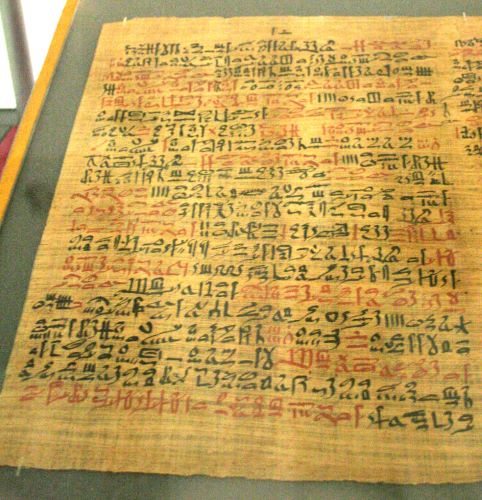
The contrast between the Edwin Smith Papyrus and the Ebers Papyrus is one of the clearest ways to see Egyptian medicine’s range. Both texts belong to a learned medical tradition, but they speak in different registers. The Edwin Smith Papyrus is famous for its trauma cases, many of which proceed with remarkable discipline: observe the injury, examine the body, describe the signs, classify the case, give a prognosis, and prescribe treatment. The Ebers Papyrus, much broader in scope, preserves hundreds of remedies for internal complaints, skin problems, eye disease, parasites, digestive disorders, gynecological concerns, wounds, and other conditions, often alongside spells and ritual language. The difference between them is not simply a difference between rational medicine and magical medicine. It is better understood as a difference of genre, purpose, and medical situation. Trauma demanded a certain immediacy: the wound, fracture, swelling, or paralysis had to be inspected and managed in the present. Internal illness, chronic complaint, reproductive trouble, or invisible affliction often invited a wider therapeutic vocabulary because the cause was harder to see and the outcome harder to control. The two texts undermine the idea that Egyptian medicine was either practical science or religious magic. It was both, and more importantly, it did not always distinguish those modes of care in the way modern readers expect.
The Edwin Smith Papyrus has often attracted attention because it looks, at moments, surprisingly clinical. Its cases are organized around injuries to the head, neck, torso, and spine, and many follow a patterned structure: title, examination, diagnosis, prognosis, and treatment. The physician is instructed to touch, inspect, smell, question, and test. A wound may be described according to its depth, location, swelling, bleeding, or effect on movement and speech. The practitioner then declares whether the case is “an ailment I will treat,” “an ailment I will contend with,” or “an ailment not to be treated.” This language matters because it shows the healer acknowledging limits. Egyptian medicine, at least in this text, was not a promise of universal cure. It included the sober recognition that some injuries lay beyond intervention. That recognition itself was a form of medical authority: the healer knew not only what to do, but when action was futile.
The treatments in the Edwin Smith Papyrus are equally important because they show practical intervention without requiring modern medical theory. The text recommends closing wounds, applying fresh meat in some cases, using grease and honey, bandaging, immobilizing, and managing injuries according to their visible condition. Such measures could have real effects. Bandaging protected wounds and held remedies in place; splinting or immobilization could prevent further injury; honey may have helped inhibit infection; grease and oils could soften tissue or keep dressings from adhering. None of this means Egyptian healers possessed germ theory, modern anatomy, or modern surgery. Their explanations were different, and some treatments were ineffective or dangerous. But the practical intelligence of the text is difficult to deny. The Edwin Smith Papyrus shows a healing tradition capable of observation, categorization, manual examination, and procedural response, even while belonging to a culture saturated with sacred meaning.
The Ebers Papyrus presents a different but equally valuable picture. It is encyclopedic, accumulative, and messy in the way many living medical traditions are messy. Its remedies draw on plants, minerals, animal substances, beer, milk, honey, oils, fats, resins, and other materials, prepared in numerous ways for drinking, applying, inhaling, inserting, or binding. It includes treatments for complaints that ancient healers could see plainly and others they could only interpret through theory, analogy, or inherited formula. This breadth matters because it captures medicine as it was used across ordinary life, not only in dramatic cases of trauma. Digestive pain, skin irritation, eye inflammation, parasites, menstrual problems, fertility concerns, headaches, weakness, swelling, and mysterious internal distress were the kinds of ailments that filled households with anxiety and sent people searching for remedies. Spells appear not as embarrassing intrusions into medicine but as part of the therapeutic apparatus. A remedy might be strengthened by words; a bodily complaint might require ritual protection; a substance might carry both physical and symbolic force. The Ebers Papyrus shows Egyptian medicine as cumulative rather than purified: a storehouse of recipes, observations, incantations, inherited authorities, and practical attempts to manage the ordinary disasters of the body. Its very disorder is historically revealing. It suggests a healing culture willing to preserve what had been received, repeat what seemed useful, and combine different kinds of intervention rather than force every illness into a single explanatory system.
The importance of these papyri is not that one represents “real medicine” and the other “magic.” That division is too simple. The Edwin Smith Papyrus reminds us that sacred cultures could produce disciplined practical healing, while the Ebers Papyrus reminds us that practical remedies could circulate within magical and religious frameworks without losing their practical function. Egyptian medicine was not moving in a straight line from superstition to science. It was preserving multiple forms of intervention because ancient illness itself demanded multiple forms of response. The wound needed dressing; the pain needed soothing; the family needed reassurance; the god or hostile force might need addressing; the healer needed authority; the patient needed hope. Inside that world, a papyrus could be both a technical manual and a sacred instrument, both a record of bodily care and a witness to the divine order in which care made sense.
Honey, Linen, Splints, and Spells: When Sacred Medicine Had Practical Effects

Egyptian medicine is useful here because some of its remedies were embedded in religious and magical language while still doing things that could matter physically. A wound treated with honey, linen, grease, resin, or a carefully wrapped dressing was not cured because Egyptian healers possessed modern bacteriology. It was treated within a sacred and symbolic system that saw the body as vulnerable to disorder, divine force, hostile magic, and material corruption. Yet the physical effects of the treatment did not depend on the accuracy of that theory. A bandage could protect flesh even if the spell spoken over it did not name the true cause of infection. Honey could inhibit some forms of bacterial growth whether or not the practitioner understood microbes. A splint could stabilize a fracture whether or not the healer explained injury through the language of cosmic disorder. Practical benefit could survive inside an explanatory world that modern medicine would not accept.
Honey is one of the most striking examples because it moved easily between material and symbolic registers. In Egyptian medicine, honey appears in wound treatments and other remedies, often alongside oils, fats, fibers, and plant or mineral ingredients. To modern eyes, honey’s value lies partly in its physical properties: it can create a protective barrier, draw moisture, reduce contamination, and in some conditions inhibit microbial growth. But ancient Egyptian healers did not need to know that mechanism to value it. They could observe that certain wounds treated with honey smelled better, discharged less, dried more cleanly, or seemed to heal more favorably. Honey’s sweetness, purity, preservative quality, and association with offering and abundance made it an appropriate substance in a ritualized healing culture. It could soothe the body and signify restoration. Its usefulness was not weakened by its sacred associations; those associations may have helped preserve its use. Linen bandaging worked in a similarly double way. Linen was not only a practical textile but also a substance deeply embedded in Egyptian ritual life, purity, and funerary practice. At the bedside, it could perform straightforward medical work. A bandage could hold honey, grease, or another preparation against a wound; absorb blood or discharge; protect damaged skin from dirt and flies; restrict movement; and make an injury visible as something being actively cared for. The act of wrapping also had symbolic force. To wrap was to contain, order, and protect. In a culture where bodies of the dead were ritually wrapped for preservation and transformation, the wrapping of the injured living body could carry meanings beyond simple dressing. But again, the symbolic meaning did not cancel the practical effect. The same strip of linen could belong to a sacred imagination of bodily order and to the ordinary mechanics of wound care.
Splints and immobilization show the same principle in trauma care. A broken or injured limb did not need a fully modern anatomy of bone remodeling to benefit from being stabilized. Egyptian healers who observed pain, swelling, deformity, weakness, or abnormal movement could recognize that some injuries required restraint. Splinting reduced motion, protected the injured area, and gave the body time to repair itself. In the case of fractures, this could make the difference between a limb that healed in usable alignment and one that healed badly, painfully, or not at all. The healer’s explanation might be framed in terms of restoring order, cooling heat, countering damage, or applying inherited procedure rather than describing cellular repair. Still, the intervention could work because bodies heal under certain conditions, and ancient healers had learned some of those conditions through repeated experience.
Spells belonged to this same therapeutic environment, even when they did not act on the body in the way honey, linen, or splints did. A spell could name danger, summon divine protection, transform the patient’s fear into a ritual sequence, and give the healer’s actions a recognized authority. It could also help enforce compliance. A patient or household might be more likely to repeat a treatment, preserve a dressing, avoid certain dangers, or trust a painful procedure if the act was framed as sacred and necessary. This is not to reduce spells to psychology, but to recognize that healing always involves expectation, discipline, reassurance, and social cooperation. In a world without modern anesthesia, antibiotics, or reliable surgical control, those effects mattered. The spell did not have to kill bacteria or set bone in order to strengthen the therapeutic event around those material interventions.
The practical effects of Egyptian sacred medicine force us to abandon a blunt distinction between useful treatment and religious belief. Some remedies were probably ineffective; others may have been harmful; many worked only as comfort, structure, or hope. But some sacredly authorized treatments also did real bodily work. Egyptian medicine preserved them not because it had escaped religion, but because religion, writing, repetition, and professional authority helped transmit them. Honey, linen, splints, and spells belonged to the same world because healing itself was imagined as the restoration of order at every level: flesh, household, ritual, and cosmos. The injured body needed protection from dirt, movement, pain, fear, and hostile powers. Egyptian healers answered with substances, wrappings, gestures, words, and gods. Sometimes, inside that mixture, the body actually improved.
Mummification, Anatomy, and the Limits of Egyptian Knowledge
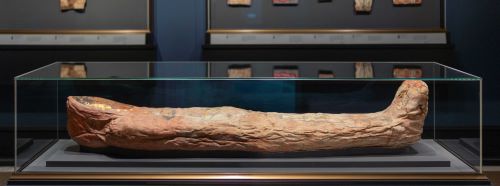
Mummification is one of the most tempting subjects in the history of Egyptian medicine because it seems, at first glance, to promise a direct path from religious practice to anatomical knowledge. Egyptian embalmers handled bodies, opened cavities, removed organs, treated tissues, preserved skin, packed the body, and wrapped the dead for eternity. Few ancient societies developed such sustained technical familiarity with the corpse. It is easy to imagine that Egyptian medicine must have gained an unusually advanced understanding of internal anatomy from funerary practice. The image is powerful: generations of specialists working with the human body, learning its hidden structures through repetition, and preserving that knowledge in a civilization famous for both medicine and the afterlife. Yet the relationship was more complicated than that. Mummification certainly brought specialists into intimate contact with the human body, but it did so for religious and ritual purposes, not primarily for medical investigation. The corpse was not an experimental object. It was a person being prepared for continued existence in the afterlife. The body was opened to preserve identity, protect the dead, and equip the person for eternity, not to produce a general anatomy for treating the living. That difference of purpose shaped what was noticed, what was recorded, and what questions could be asked.
The religious purpose of mummification shaped everything about what embalmers saw and what they needed to know. The goal was preservation, transformation, and ritual restoration, not the systematic study of living physiology. Embalmers learned how to remove, dry, pack, anoint, and protect a body so that it could endure. They learned the texture of organs, the vulnerability of tissue, the effects of decay, and the practical challenges of bodily preservation. They knew that the body was not a simple solid mass but a complex assemblage of cavities, fluids, organs, membranes, bones, and skin. That knowledge mattered, and it should not be dismissed. But it was a craft knowledge organized around death. It did not necessarily become a physician’s anatomy of the living body, still less a research program devoted to discovering how organs worked in health and disease.
This helps explain a central paradox of Egyptian medicine: a culture that handled human remains with extraordinary care did not develop anatomy in the later Alexandrian or modern sense. Embalming could expose internal organs, but exposure alone does not produce anatomical science. Knowledge depends on questions. An embalmer preparing the dead needed to know how to preserve the body and complete ritual obligations. A physician treating the living needed to know how to interpret pain, swelling, wounds, breath, pulse-like movement, digestion, fertility, bleeding, and visible symptoms. These two bodies overlapped, but they were not the same object of inquiry. The dead body could show structures, but it could not show function in the way ancient healers most needed: movement, sensation, consciousness, pain, fever, paralysis, appetite, conception, or recovery. Egyptian medical knowledge remained strong in some areas of observation and procedure while remaining limited in internal physiology.
The Egyptian concept of the body also shaped the possibilities and limits of anatomical knowledge. Medical texts refer to channels, vessels, organs, fluids, and bodily pathways, but they do not map the body according to a modern circulatory, nervous, or digestive system. The heart occupied a place of special importance, not only physiologically but morally and spiritually. It was associated with thought, character, memory, and judgment, and it remained central in funerary belief. Other organs could be removed, preserved, or ritually protected, but the meanings attached to them were not simply medical. The same organ could belong to bodily function, divine order, ritual symbolism, and afterlife expectation. This did not prevent practical healing, but it did mean that the internal body was interpreted through a framework very different from later anatomical medicine.
Mummification may also have reinforced certain boundaries around knowledge. Because the dead body was sacred, socially meaningful, and ritually dangerous, it could not be treated as a neutral object for repeated cutting, comparison, and experiment. Egyptian funerary practice allowed and required bodily intervention, but it did so under strict ritual conditions. The opening of the body was justified by preservation and afterlife preparation, not by curiosity. This distinction is crucial. A society may permit one kind of bodily cutting while forbidding or discouraging another. Embalming was not the same as dissection. The embalmer’s knife belonged to a controlled religious procedure; the anatomist’s knife, in a later sense, would have required a different permission, a different question, and a different idea of what the dead owed the living. That kind of inquiry would have asked the corpse to serve the living body as evidence, comparison, and instruction, rather than asking it to remain itself for the sake of the deceased. Egyptian funerary religion did not make bodily cutting impossible; it made bodily cutting meaningful in a particular way. That meaning could be technically productive, but it could also limit the transformation of craft knowledge into open-ended anatomical research. Egyptian religion both enabled bodily expertise and confined it within funerary purpose.
It would be unfair to say that mummification contributed nothing to medical knowledge. Egyptian healers and embalmers lived in the same cultural world of scribal learning, temple authority, ritual practice, and technical specialization. Knowledge of the body could circulate indirectly through vocabulary, analogy, craft, and social contact. The repeated handling of corpses may have encouraged familiarity with organs and bodily cavities that was unusual by ancient standards. It may also have helped sustain a broader cultural confidence that the body could be manipulated, treated, preserved, and restored through skilled procedure. But the evidence does not support a simple claim that Egyptian mummification produced a full medical anatomy. What it produced was a powerful funerary technology of the body, adjacent to medicine but not identical with it.
The limits of Egyptian anatomical knowledge strengthen my larger argument. Religion did not merely obstruct or advance medicine in a single direction. It created particular forms of knowledge while closing off others. Mummification made the body visible in ways that ordinary medical treatment rarely could, but it made that body visible as a sacred corpse, not as an anatomical specimen. It encouraged technical skill, manual precision, and respect for bodily structure, while preserving a ritual framework that did not demand experimental dissection. Egyptian medicine could be practical, observant, and materially effective without becoming anatomical science. The dead body taught Egyptian specialists many things, but it taught them through the questions religion allowed them to ask.
Purity, Pollution, and the Social Body: A Wider Ancient Near Eastern Pattern
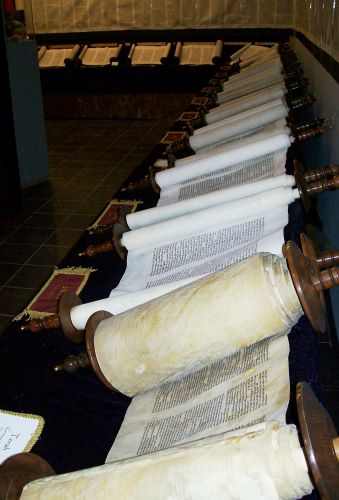
The logic joining religion and healing was not limited to Mesopotamian exorcism or Egyptian priestly medicine. Across the ancient Near East and eastern Mediterranean, illness often belonged to a broader world of purity, pollution, ritual danger, and social order. A sick body was not always treated simply as a body with a private disorder. It could become a danger to the household, a sign of divine displeasure, a source of ritual contamination, or a rupture in the boundaries that separated clean from unclean, living from dead, human from divine, and ordered society from chaos. This wider pattern matters because it shows that ancient healing was often inseparable from the management of relationships. Disease threatened the patient, but it also threatened the family, the temple, the city, and the community’s sense of moral and ritual stability.
Purity systems were not primitive public health codes in disguise, although some practices may have had practical effects. They were symbolic and social constructs that classified danger, named disorder, and gave communities rules for living with bodily vulnerability. Blood, semen, childbirth, corpses, skin disease, bodily discharge, decay, certain foods, and contact with death could all require special handling because they crossed boundaries or exposed the fragility of the body. These substances and states were powerful because they sat at the edges of ordinary classification. Blood could mean life, sacrifice, injury, childbirth, or death. Semen could mean fertility and continuity, but also loss of bodily control. Childbirth produced new life while surrounding the mother with blood, pain, danger, and liminal status. The corpse was still recognizably human, but no longer living. These concerns were not always “medical” in the narrow sense, but they shaped how illness was experienced and managed. A person with a visible skin condition, a discharge, or a mysterious wasting disease might not only suffer pain or weakness; he or she might also become socially marked. Ritual impurity could require separation, washing, waiting, sacrifice, inspection, or reintegration. Healing had a communal dimension. The patient had to be restored not only to physical strength but also to proper place.
The Hebrew Bible and related Near Eastern traditions provide a clear example of this social body. Priestly texts distinguish conditions that require examination, isolation, washing, sacrifice, and return to the community. The category often translated as “leprosy” in older English versions is better understood as a broader set of skin afflictions, surface eruptions, mold-like conditions, and ritual impurities rather than Hansen’s disease alone. What matters here is not whether these texts describe modern diseases accurately, but how they organize bodily danger. The priest’s role is not identical to that of a physician. He does not cure in the modern clinical sense. He inspects, classifies, separates, and declares. Yet this is still a form of intervention. It manages fear, protects boundaries, gives the household a procedure to follow, and provides a path back from danger when the condition changes.
Corpse contact reveals the same pattern with particular force. Death was both universal and dangerous. A dead body required care, mourning, burial, and memory, but it could also produce impurity and ritual vulnerability. This tension appears across many ancient societies. The dead had to be honored, yet contact with death often demanded purification before full return to sacred or communal life. The issue was not simply hygiene, though decay and contagion could matter in practice. Death represented a boundary crisis. It exposed the living to the disorder of mortality and to the possibility that the dead, improperly treated, might trouble the living. The corpse was simultaneously intimate and alien: the body of a parent, spouse, child, ruler, or neighbor, but also a physical sign that ordinary personhood had been transformed. Funerary rites, washing, periods of mourning, offerings, and purification ceremonies all helped transform dangerous contact into socially recognized transition. They gave the living permission to touch, grieve, bury, remember, withdraw, and return. Ritual purity was a technology for surviving the nearness of death. It did not erase grief, but it contained grief within a sequence of actions. It did not make mortality safe, but it gave the community a way to handle the dead without letting death dissolve the order of the living.
These systems could produce real practical benefits, even when their stated logic was ritual rather than biological. Temporary separation of the sick, washing after bodily emissions, careful treatment of corpses, restrictions around contaminated objects, and procedures for reintegration could sometimes reduce exposure to infection or create structured care. Isolation could have unintended medical value when a condition was contagious, even if the ancient explanation centered on impurity rather than transmission. Washing could remove dirt, discharge, odor, or visible contamination even when it was understood as ritual cleansing. Waiting periods could keep a person under observation long enough for symptoms to change, worsen, or disappear. Inspection by a recognized authority could prevent panic by turning uncertain signs into an official judgment. But their primary purpose should not be collapsed into modern public health. To do so would flatten the ancient evidence into an accidental anticipation of germ theory. Purity practices worked first by making disorder legible. They told people when danger had entered, how long it might last, who had authority to judge it, what actions were required, and how normal life could resume. Their medical importance lies partly in that structure. They gave communities a disciplined response to bodily uncertainty before secular clinical institutions existed.
Purity and pollution could deepen suffering. A patient already weakened by disease might also face exclusion, suspicion, shame, or ritual anxiety. Visible illness could be read as moral failure, divine displeasure, inherited guilt, or dangerous contamination. Families might fear the patient as much as they cared for him. Communities might protect themselves by isolating the afflicted, but that protection could become abandonment. The same ritual procedures that restored order could also mark some bodies as threatening or impure. This is one of the central ambiguities of religious medicine in the ancient world. It made illness meaningful, but meaning could wound. It gave sufferers a place in a cosmic and social order, but sometimes that place was outside the camp, outside the temple, or outside ordinary human contact.
This wider Near Eastern pattern prepares us to understand Greek healing more fully. Greek medicine did not emerge in a world empty of ritual concern. Ideas of miasma, purification, sacrifice, sacred space, divine anger, and polluted households shaped Greek responses to plague, murder, childbirth, death, and disease. The later Hippocratic insistence on natural causes developed alongside older and continuing practices that treated illness as a problem of divine and social disorder. Across the ancient Near East and Mediterranean, purity and pollution show that healing was never only a technical act performed on an isolated body. It was a way of repairing the relationships that made life livable: between body and household, household and community, community and gods, living and dead, danger and order.
Greece Before Hippocrates: Asklepios, Dreams, and Healing Sanctuaries

Greek healing did not begin with Hippocratic physicians announcing that disease had natural causes. Long before, and still alongside, the written medical traditions associated with Hippocrates, Greek patients sought help from gods, heroes, seers, purifiers, temple attendants, household healers, midwives, and local ritual specialists. Illness could be treated through herbs, diet, bathing, prayer, sacrifice, purification, dream interpretation, and pilgrimage. The sacred and the practical were not separate territories. A person in pain might consult a healer, make an offering, visit a sanctuary, sleep in a sacred precinct, and return home with instructions that included both ritual gratitude and bodily care. The later prestige of Hippocratic medicine can make this earlier and parallel healing world look like a background of superstition, but for many Greek patients it was not background at all. It was the primary route by which suffering became hopeful, interpretable, and socially recognized.
The cult of Asklepios became the most famous expression of this sacred medicine. Asklepios was not simply a god who symbolized health in the abstract. He was approached as a divine healer who could intervene in the particular misery of a particular body. His sanctuaries, notably the great center at Epidauros and later sites such as Kos, Pergamon, and Athens, drew patients who came with pain, blindness, paralysis, wounds, infertility, chronic illness, and conditions that ordinary remedies had failed to resolve. They brought offerings, performed preliminary rites, purified themselves, and entered a sacred space organized around expectation. The sanctuary was not merely a temple in the narrow sense. It could include sleeping areas, baths, altars, inscriptions, attendants, sacred animals, water sources, processional areas, and a landscape designed to separate the sufferer from ordinary life. This separation mattered. The patient left the household where illness had become familiar, frightening, and perhaps humiliating, and entered a place where suffering was reclassified as something the god might address. The sanctuary gave the sick person a script: approach, purify, sacrifice, sleep, receive, remember, and give thanks. To go to Asklepios was to place illness inside a ritual journey. It turned private pain into a public and sacred act, and it allowed the patient to imagine recovery not as random good fortune but as the result of divine attention.
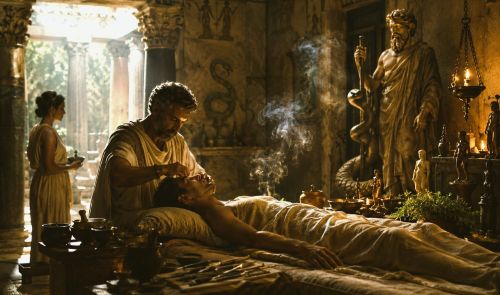
Dream healing, or incubation, lay at the center of this experience. The patient slept in the sanctuary and awaited a dream in which Asklepios, one of his divine helpers, or a sacred animal might appear. The dream could dramatize the cure itself, give instructions, prescribe a remedy, reveal the cause of the illness, or promise future recovery. Sometimes the god was imagined as performing surgery in the dream, touching the afflicted body, applying medicine, or removing the source of disease. In other cases, the dream told the patient what to do after waking. To modern readers, this can sound like fantasy, but the ritual logic was powerful. Sleep suspended ordinary control. The patient entered a space where the divine could speak directly, where the body’s hidden trouble could become visible, and where recovery could begin as an encounter before it became a physical change.
The sanctuaries also preserved their own evidence of healing. Inscriptions from Asklepian sites recorded cures, often in vivid and astonishing terms: the blind see, the lame walk, tumors vanish, wounds heal, pregnancies occur, and impossible conditions are reversed. These cure inscriptions were not neutral medical case histories. They were acts of memory, gratitude, advertisement, and devotion. They showed future patients what the god had done before and what he might do again. Their miraculous style strengthened confidence in the sanctuary’s power. Yet they are historically valuable precisely because they show how healing was narrated. A cure was not only a change in bodily condition; it was a story that linked suffering, pilgrimage, divine encounter, public testimony, and return to life. The inscription made private illness part of collective sacred memory. This does not mean that Asklepian sanctuaries were only places of illusion. They could create conditions that genuinely helped some sufferers. Pilgrimage removed patients from ordinary stress and household fear. Ritual washing, bathing, fasting, sacrifice, sleep, and regulated sanctuary life imposed order on bodies and minds. Patients received attention, rest, hope, and a clear therapeutic script. Some may have improved through time, rest, expectation, diet, hygiene, or the natural course of disease. Others may have experienced relief from pain, anxiety, or functional symptoms through the authority of the ritual setting. Still others were not cured at all, though failed cases are far less likely to appear in celebratory inscriptions. The sanctuary’s power lay partly in its ability to gather many therapeutic forces at once: environment, sleep, touch, story, communal belief, divine presence, and sometimes practical instruction.
Asklepios also complicates any simple opposition between temple healing and learned medicine. Greek physicians did not immediately replace sacred healers, and sacred healing did not vanish when physicians developed naturalistic explanations. The same cities that supported doctors could also support Asklepian sanctuaries. The island of Kos, associated with Hippocratic medicine, also had an important cult of Asklepios. Patients did not necessarily see a contradiction in moving between a physician and a god. A doctor might explain the body through regimen, humors, air, water, diet, or seasonal change, while the sanctuary explained illness through divine intervention and healing grace. Both offered authority. Both required trust. Both used disciplined procedures. The difference was not between medicine and non-medicine so much as between competing, overlapping systems for making the sick body treatable.
Greek healing before and alongside Hippocrates prepared the ground for the central contrast. When Hippocratic writers criticized divine explanations of disease, they were not speaking into an empty world. They were challenging a dense therapeutic culture of gods, dreams, rituals, purifications, testimonies, and sacred places. The Asklepian sanctuary shows why that culture endured. It gave patients something technical medicine often could not guarantee: a meaningful encounter with hope. It transformed suffering into pilgrimage, sleep into diagnosis, dream into prescription, and recovery into public gratitude. Even when Greek medicine became more naturalistic, the sick still needed more than explanation. They needed authority, reassurance, ritual, and a place where the body’s vulnerability could be brought before powers greater than itself.
The Hippocratic Turn: Natural Causes, Sacred Disease, and the Critique of Divine Explanation
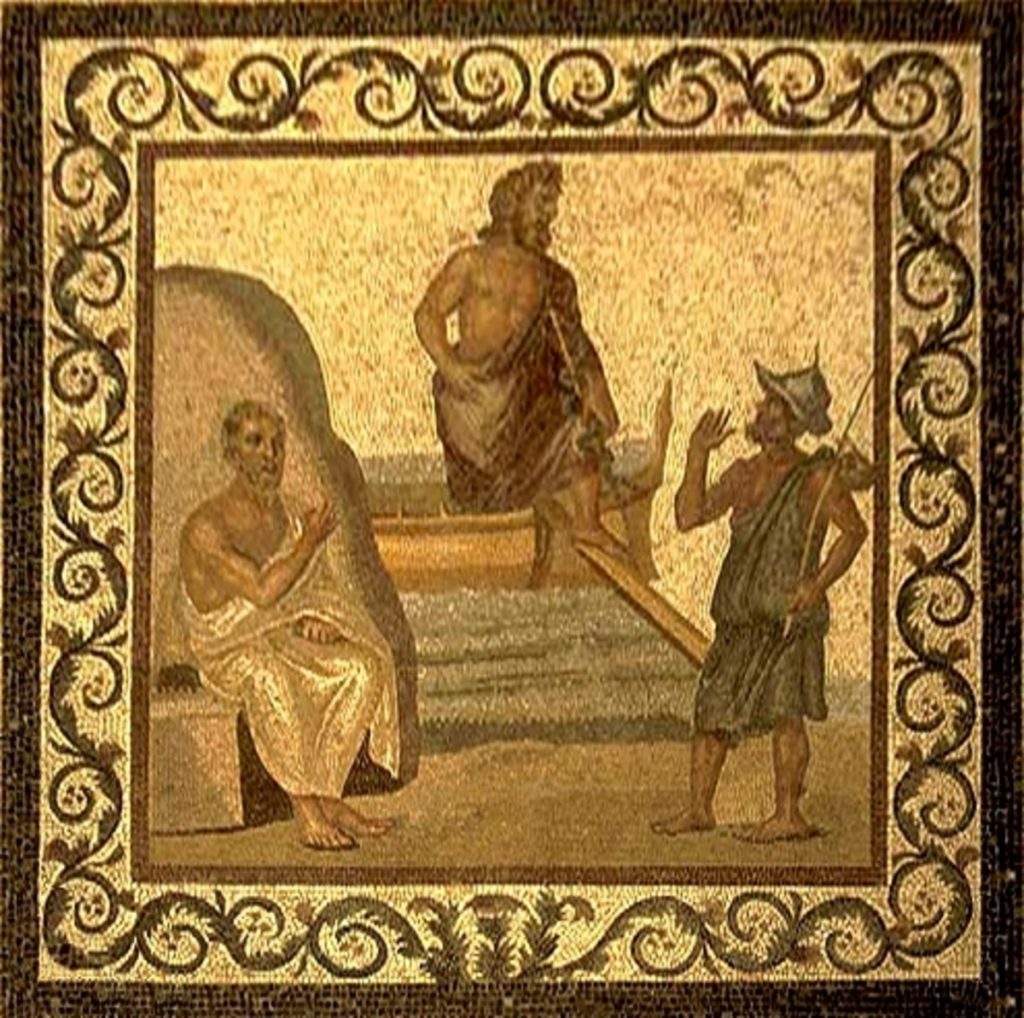
The Hippocratic tradition did not end Greek sacred healing, but it did change the terms of argument. In a world where illness could be read through gods, pollution, curses, dreams, and ritual danger, some Greek medical writers began insisting that disease should be explained through nature. This was not the sudden birth of modern science, nor was it a clean break from religion in all aspects of Greek life. It was instead a powerful reorientation of medical authority. The physician claimed the right to interpret the sick body without first appealing to divine anger or demonic agency. Disease became something to be studied through symptoms, seasons, diet, climate, bodily constitution, age, sex, regimen, and prognosis. The healer’s expertise rested not on access to secret ritual power, but on trained observation and knowledge of the body’s regular patterns. That claim did not abolish the gods, but it challenged the idea that divine explanation was necessary for medical practice.
The clearest statement of this turn appears in the Hippocratic treatise On the Sacred Disease. The disease in question is usually associated with epilepsy, a condition whose terrifying symptoms made it vulnerable to supernatural interpretation. Sudden collapse, convulsion, loss of consciousness, foaming, altered speech, and recovery after an episode could easily seem like possession, divine seizure, or contact with a power beyond ordinary bodily experience. The author of On the Sacred Disease rejects that interpretation with unusual force. The disease, he argues, is not more divine or more sacred than other diseases. It has a natural cause, and those who call it sacred do so because they do not understand it. This is more than a technical disagreement about one condition. It is a challenge to a whole class of healers who claimed authority by making frightening symptoms into signs of divine or magical action.
The polemical edge of the treatise is important. The Hippocratic author does not merely offer an alternative explanation; he attacks the social authority of purifiers, wonder-workers, magicians, and religious specialists who profit from fear. If they call the disease divine, they can avoid responsibility when the patient does not recover. If the patient improves, they can claim credit for pleasing the gods or removing pollution. The critique is both medical and professional. The author is trying to expose a rival form of healing as intellectually dishonest and socially manipulative. Yet the attack also reveals how competitive the ancient therapeutic marketplace was. Patients had options. They could consult doctors, priests, temple healers, itinerant ritual experts, household practitioners, and sellers of charms. The Hippocratic physician had to persuade patients that his account of disease was more trustworthy than the sacred explanations they already knew. That persuasion required more than medical theory. It required a new public image of the physician as disciplined, restrained, observant, and morally serious. The Hippocratic writer presents himself as the healer who does not exploit terror, does not hide behind divine mystery, and does not make the patient’s suffering into a spectacle of ritual power. On the Sacred Disease is not only about epilepsy. It is about who has the right to interpret illness, who deserves the patient’s trust, and what kind of knowledge should govern the sickbed.
The natural explanation offered by the Hippocratic writers was not modern neurology. On the Sacred Disease connects epilepsy with the brain, phlegm, bodily passages, inherited constitution, and environmental conditions, but its physiology remains ancient, speculative, and humoral. Its importance lies not in being correct by modern standards, but in relocating the cause of disease. The frightening event is brought back into the body and the natural world. It belongs to processes that can be observed, compared, predicted, and sometimes managed. This relocation changes the patient’s moral status as well. If epilepsy is not uniquely sacred, then the sufferer is not necessarily polluted, cursed, possessed, or singled out by a god. The disease may still be terrible, but it is no longer a supernatural accusation. Naturalistic medicine could reduce certain kinds of stigma even when it could not cure the condition.
Other Hippocratic texts develop this naturalizing habit in broader ways. Airs, Waters, Places explains human health through environment, climate, water, winds, seasons, geography, and local conditions. Regimen texts focus on diet, exercise, sleep, bathing, evacuation, and the management of bodily balance. Epidemic writings observe cases over time, noting symptoms, turning points, relapses, and outcomes. Across these works, the physician becomes a reader of pattern rather than a negotiator with divine powers. The patient’s body is still connected to a larger order, but that order is increasingly described as nature rather than divine intervention. Seasonal change, food, moisture, heat, cold, exertion, and habit become the forces through which illness is explained. This was a profound shift, because it made ordinary life itself medically meaningful. The cause of disease might lie not in a broken ritual or offended god, but in water, weather, diet, fatigue, imbalance, or the patient’s environment. It also made prevention and regimen central to medical thought. If health depended on the body’s relation to climate, food, movement, sleep, evacuation, and season, then medicine was not only what happened after illness struck. It was the management of daily life before crisis arrived. The physician’s authority expanded accordingly: he became an interpreter of habits, places, routines, and constitutions, not merely a rescuer at the moment of pain. Hippocratic medicine offered a different kind of moral discipline from religious purification. The patient did not only need ritual restoration; he needed ordered living.
Still, the Hippocratic turn should not be exaggerated into a total secular revolution. Hippocratic medicine existed alongside Asklepian sanctuaries, household charms, purification rituals, sacrifices, and dreams. Greek patients did not collectively abandon sacred healing because some medical writers offered natural causes. Nor were Hippocratic explanations free from cultural assumptions, speculative theory, or rhetorical self-defense. Their naturalism was real, but it was partial. The deepest significance of the Hippocratic critique is that it created a new way to argue about illness: disease could be discussed as a regular feature of nature, open to observation and professional judgment, rather than as an unpredictable message from the gods. That did not destroy religious medicine. It gave ancient patients and healers another language of intervention, one that would become extraordinarily influential precisely because it made the sick body intelligible without first making it sacred.
Regimen, Environment, and the Natural Body

The Hippocratic turn did not make the body a sealed machine. It made the body natural, but nature itself was broad, dynamic, and constantly acting upon the patient. Health depended on the body’s relationship to air, water, place, season, diet, exercise, sleep, evacuation, age, sex, climate, and habit. The physician’s task was not only to treat disease after it appeared, but to understand the conditions under which the body lived. This is one of the most important differences between ancient naturalistic medicine and modern biomedicine. Hippocratic writers did not usually look for a single internal lesion or pathogen. They looked for patterns: what the patient ate, where he lived, what winds prevailed, what season had arrived, how the body responded to cold or heat, whether the patient’s habits matched his constitution, and whether the environment itself encouraged health or disease. The body was natural, but it was also porous. It absorbed the qualities of the world around it and responded to rhythms larger than itself. A change in weather, a bad water source, excessive work, poor sleep, overindulgence, sexual activity, travel, damp air, heat, cold, or seasonal transition could all become medically significant. Hippocratic naturalism did not shrink the medical world; it expanded it. The physician had to read not only the patient’s symptoms but the patient’s surroundings, routines, exposures, and way of life. Disease was no longer primarily a divine message, but it was still relational. The body became intelligible through its ongoing exchange with the natural world.
Airs, Waters, Places gives this environmental medicine its most famous expression. The author argues that physicians should study winds, waters, seasons, geography, and local conditions if they wish to understand disease in different communities. Marshy waters, stagnant waters, exposed winds, seasonal shifts, and regional climates could shape the bodies and illnesses of populations. This was not divine punishment translated into natural vocabulary. It was an attempt to explain why people in different places became sick in different ways. Yet the result was still a deeply meaningful world. Place mattered. Climate mattered. A city’s water supply mattered. The patient’s body was part of a larger natural landscape, and the physician who ignored that landscape failed to understand the case before him. Hippocratic medicine did not remove the patient from the cosmos; it replaced a primarily divine cosmos with an environmental one.
Regimen carried this logic into daily life. Diet, exercise, bathing, sleep, sexual activity, work, rest, vomiting, purging, and evacuation all became medical concerns because they shaped the balance and movement of the body. The Greek word diaita meant more than “diet” in the modern narrow sense. It referred to a whole way of living. Food could heat, cool, moisten, dry, strengthen, weaken, thicken, loosen, or disturb the body. Exercise could build strength, but too much exertion could exhaust or inflame. Sleep could restore, but excessive sleep might dull or burden. Bathing could soften, relax, or open the body, depending on timing and condition. The physician’s advice extended into ordinary routine. Medicine became a discipline of managed living, not merely emergency intervention. The patient was asked to cooperate with nature by arranging life in accordance with bodily need. This naturalistic regimen was not morally neutral, even when it avoided divine blame. A badly ordered life could produce disease, just as an improperly ordered ritual life might produce danger in religious systems. The difference was the language of causation. Instead of saying that a god had been offended or a pollution had entered, the physician might say that the body had been overheated, chilled, overfilled, depleted, strained, or thrown out of balance by habits unsuited to constitution and season. This could be liberating because it made illness less dependent on supernatural accusation. But it could also create a new kind of responsibility. The patient’s daily choices became medically significant. How one ate, slept, moved, worked, drank, and exposed oneself to weather could now be interpreted as part of the illness itself. Hippocratic medicine replaced ritual discipline with bodily discipline, but it still asked patients to live under a system of order.
The emphasis on regimen also reveals the limits of ancient natural medicine. The physician frequently could do little more than guide the body while nature took its course. The famous Hippocratic idea that nature heals did not mean passive resignation, but it did mean that medicine often worked by assisting, restraining, or redirecting bodily processes rather than overpowering them. Acute diseases had crises, turning points, and patterns of resolution or death. Chronic conditions required long management. The physician observed, adjusted food and drink, recommended rest or movement, watched evacuations, and tried not to interfere destructively. This was a medicine of timing and judgment. Its strength lay in attentiveness to the patient’s whole condition; its weakness lay in the limited power of its interventions. Regimen could help many people, but it could not cure everything, and its theories could easily become speculative when symptoms were poorly understood.
Regimen and environmental medicine show why the Hippocratic tradition should not be described simply as “secular science” replacing religion. It offered a natural body, but that body still belonged to an ordered universe. It rejected some divine explanations, but it did not reduce healing to mechanical repair. The physician became an interpreter of nature, habits, places, seasons, and bodily tendencies. He explained suffering through patterns that could be observed and argued about, yet those patterns still gave illness meaning. The patient was no longer necessarily seized by a god or polluted by hidden danger; he was a body living in relation to air, water, food, work, sleep, and time. That was a major intellectual shift. It made disease less sacred, but not less connected. The sick body remained a body in the world.
Amulets, Charms, and Domestic Healing: Medicine Outside the Physician’s Control

Not all ancient healing took place in temples, sanctuaries, medical schools, or formal consultations with physicians. Much of it happened in houses, at bedsides, in women’s quarters, in workshops, in fields, on roads, and among families who had to respond to illness before any specialist arrived. Domestic healing was often the first and most persistent layer of care. A mother treated a child’s fever; a midwife managed childbirth; an elder remembered a remedy; a slave or servant prepared a poultice; a neighbor recommended a charm; a household head made a vow or sacrifice; a family placed an amulet on a vulnerable body. This world of healing is harder to recover than the world of learned medical texts because it left fewer formal records, but it may have shaped ordinary experience far more deeply. The physician was never the only healer. He often was not even the most accessible one.
Amulets and charms were important because they allowed protection to be worn, carried, tied, hung, buried, spoken, or placed near the body. They were portable medicine for a dangerous world. An amulet might protect a pregnant woman, infant, traveler, soldier, feverish patient, or person thought vulnerable to envy, demons, ghosts, curses, or divine harm. A charm might be recited over a wound, whispered into a child’s ear, written on a small object, attached to the body, or performed as part of a household ritual. These practices did not require a full temple cure or a formal medical visit. They placed healing power within reach of ordinary people. The object or formula made danger manageable because it gave the patient something concrete to hold, wear, repeat, or trust. At the edge of fear, the charm became a small technology of control. The appeal of amulets also lay in their ability to address uncertainty. Ancient people often knew when a body was in danger without knowing why. Infants died suddenly. Pregnancies failed. Fevers rose without warning. Pain moved. Paralysis appeared. A wound that seemed minor became foul and fatal. A household remedy aimed only at the visible symptom could feel insufficient. The family wanted protection against what could not be seen: hostile envy, wandering spirits, divine anger, night terrors, invisible poisons, sorcery, or the general vulnerability of bodies in a world without reliable cure. Amulets and charms answered that invisible dimension of illness. They did not necessarily replace drugs, diet, nursing, or bandaging. They supplemented them by surrounding the patient with protective meaning. A child could be fed, washed, and watched, but also guarded by a written formula, divine name, or protective figure.
Domestic healing also complicates the social history of ancient medicine because it draws attention to women, slaves, midwives, nurses, and non-elite practitioners. Learned medical literature was often written by elite men, but many forms of bodily care were performed by people who did not leave treatises. Childbirth, infant care, menstrual complaints, fertility, contraception, abortion, sexual disorders, chronic pain, household injuries, and care for the elderly often fell within domestic or semi-domestic networks. Midwives possessed practical knowledge of labor, bleeding, positioning, newborn care, and maternal danger. Older women preserved recipes and ritual actions that physicians might dismiss as superstition but households continued to trust. Enslaved people and servants performed the labor of washing, feeding, carrying, preparing ingredients, changing bedding, and tending bodies through long illnesses. If medicine is defined only as learned theory, this world disappears. If medicine is defined as the work of responding to suffering, it becomes central.
Elite medical writers often treated popular healing with suspicion. Greek and Roman authors could mock old women’s remedies, magical incantations, itinerant healers, sellers of charms, and religious specialists who claimed too much. Some of this criticism reflected genuine concern about fraud, danger, and false hope. Some charms were useless; some remedies were harmful; some practitioners exploited fear. But elite criticism also reflected competition for authority. A physician who wanted to present himself as rational, disciplined, and technically trained had good reason to distinguish his practice from household magic and popular religion. The accusation of superstition could function as professional boundary-making. It told patients whose knowledge counted and whose did not. It also allowed male, literate, and socially elevated forms of medicine to push aside less formal healing traditions associated with women, the poor, foreigners, slaves, and itinerant practitioners. To call a remedy “old wives’ medicine” or a spell “magic” was not simply to describe it; it was to rank it. The label marked some forms of care as ignorant, excessive, feminine, foreign, or fraudulent, even when they answered real needs that formal medicine could not meet. Yet from the patient’s perspective, the matter was often less clear. If a physician could not cure a chronic disease, a charm might still be worth trying. If a child was fragile, an amulet might offer comfort even when medicine had little to offer. If a household had limited money, distance from trained practitioners, or bad experiences with professional healers, domestic and magical remedies were not irrational alternatives so much as available ones. The sick did not always choose between truth and superstition; they chose among imperfect options in a world where failure was common.
The domestic setting also reveals why religious and magical healing endured even in cultures with sophisticated medical writing. Home care required repetition, patience, and emotional labor. A remedy had to be prepared, applied, repeated, and believed in by people living with the patient day after day. Charms, prayers, amulets, and household rites helped organize that care. They marked the sick person as protected. They reminded caregivers that something was being done. They linked the household’s labor to gods, ancestors, sacred words, or inherited custom. Even when the physical effect was minimal, the social effect could be real. A family united around a ritual might nurse more consistently, watch more carefully, or endure longer periods of uncertainty. Domestic healing was not merely a residue of ignorance beneath formal medicine. It was the practical environment in which most healing had to occur.
Amulets, charms, and domestic remedies show that ancient medicine was never fully under the physician’s control. The sick body attracted many kinds of authority: professional, priestly, familial, magical, divine, gendered, and experiential. A patient might move between them without feeling inconsistent. The household could call a doctor and still hang an amulet. A midwife could use practical skill and ritual speech. A mother could apply a poultice and invoke a goddess. A Roman patient could follow regimen while wearing a protective charm. These practices remind us that the history of medicine is not only the history of theories and institutions, but also the history of fear managed at close range. In domestic healing, religion and magic were not marginal decorations. They were among the ordinary tools by which ancient people tried to keep vulnerable bodies alive.
Why Religious Medicine Sometimes Helped and Could also Harm or Limit Knowledge
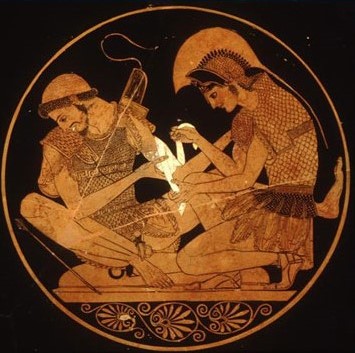
Religious medicine helped because ancient illness was never only a technical problem. A body in pain created fear, disorder, helplessness, and uncertainty long before it created a diagnosis. In societies without antibiotics, modern surgery, anesthesia, imaging, laboratory testing, or a secure theory of infection, many illnesses could not be controlled directly. Religious healing gave patients and households something to do when ordinary knowledge reached its limits. Prayer, sacrifice, purification, incubation, amulets, confession, vows, offerings, incantations, and ritual washing did not always cure disease, but they organized the experience of sickness. They turned panic into sequence. They gave the family a healer to consult, a god to approach, a danger to name, a ritual to perform, and a possible future to imagine. Even when the body did not recover, the sickbed became less meaningless.
This mattered because meaning itself can be therapeutic without being a cure. A patient who believed that a god had heard him, that a demon had been named, that pollution had been removed, or that a sanctuary had accepted his petition might experience fear differently. Hope could return appetite, sleep, cooperation, and endurance. Ritual attention could calm a household enough to continue nursing. Sacred authority could persuade a patient to submit to painful treatment, maintain a dressing, follow a diet, rest, bathe, or repeat a remedy. Temple healing could remove a sufferer from ordinary stress and place him in an environment of expectation, order, sleep, and communal testimony. Domestic charms and amulets could protect children, pregnant women, and the chronically ill in a world where vulnerability was constant. These benefits were not imaginary simply because the supernatural explanation may have been wrong. Healing has always involved trust, attention, discipline, and the patient’s sense that suffering is being met by competent care. The point is not that belief magically cured disease, but that belief altered the conditions under which suffering was endured and treatment was carried out. A frightened patient who felt abandoned might refuse food, resist handling, despair of recovery, or become socially withdrawn. A patient surrounded by ritual care, by contrast, could be drawn back into a community of action. The household, too, could become steadier when it possessed a recognized sequence of things to do. In that sense, religious medicine sometimes helped by sustaining the human environment around the sick body, and that environment mattered profoundly in a world where nursing, patience, warmth, food, cleanliness, and repeated attention could decide whether a sufferer survived.
Religious medicine also preserved practical interventions. Egyptian wound care could combine honey, linen, bandaging, and spells. Mesopotamian treatment could join incantations with salves, washes, poultices, and prognoses. Greek sanctuary medicine could coexist with bathing, rest, diet, and bodily instruction. A remedy embedded in sacred tradition could still clean, cover, soothe, immobilize, or protect the body. Indeed, religious authority may sometimes have helped transmit useful practices across generations. A remedy copied in a temple text, repeated in a ritual formula, or preserved as part of a divine healing tradition could outlive the individual practitioner who first used it. The explanation might be mythic, but the practice could still be materially effective. Honey did not need germ theory to help a wound; a splint did not need modern orthopedics to stabilize a fracture; rest did not need physiology to aid recovery.
Religious medicine also helped by giving social legitimacy to care. In the ancient world, illness could make a person frightening, shameful, polluted, useless, or burdensome. Ritual could counter that isolation by placing the sufferer inside a recognized pattern. The patient was not merely weak or disgusting; he was afflicted, endangered, visited by a god, attacked by a demon, in need of purification, or under the care of a healing power. These interpretations could be dangerous, but they could also protect the sick from being treated as meaningless failures. A sanctuary inscription, a household vow, a priestly inspection, or a purification rite made illness visible to the community. It required others to respond. Religious medicine did not only treat bodies; it managed relationships. It told families how to behave toward the sick, how to handle danger, when to separate, when to return, when to give thanks, and how to remember survival. This social work was important for chronic, frightening, or publicly visible conditions. A person whose body shook, bled, discharged, wasted, swelled, or failed to conceive could easily become an object of rumor. Religious explanation could sometimes intensify that rumor, but it could also give the condition an accepted language. The sufferer could be brought to a god, placed under protection, purified, prayed for, or reintegrated after danger had passed. The community was given not only a reason for the illness but a set of obligations around it. Care became a public and moral act, not merely a private burden hidden inside the household.
Yet the same systems could also harm. The power to give illness meaning was also the power to assign blame. If disease came from divine anger, pollution, witchcraft, broken taboo, ancestral displeasure, or moral disorder, then the sufferer could become suspect. The sick person might be treated as cursed, impure, guilty, dangerous, or spiritually contaminated. A visible skin disease could become social exclusion. A seizure could become possession. Infertility could become divine disfavor. Epidemic disease could become collective punishment. The religious interpretation that made suffering intelligible could also make it heavier. It could add shame to pain, isolation to weakness, and accusation to fear. Meaning was not always merciful. Sometimes it made the sick body carry the burden of cosmic explanation.
Religious medicine could also delay or displace practical treatment. If a healer focused too narrowly on demons, omens, curses, or ritual impurity, he might miss the wound, fever, fracture, obstruction, hemorrhage, or environmental cause that needed direct intervention. A patient might spend precious time on offerings, exorcisms, or amulets when washing, evacuation, splinting, rest, diet, surgery, or ordinary nursing mattered more. This does not mean that ritual and practical care were always opposed; often they were combined. But the danger was real. Religious confidence could make ineffective procedures look sufficient. A failed cure could be explained as inadequate faith, an offended god, the wrong ritual, or the persistence of pollution rather than as a mistaken diagnosis. Sacred authority protected the healer’s explanation from criticism and left the patient trapped inside repetition.
The limits were intellectual as well as practical. Religious frameworks could encourage careful observation when symptoms were read as signs, but they could also redirect curiosity away from mechanism. If the crucial question was which god had struck, which demon had entered, which impurity had attached, or which ritual error had occurred, then the internal processes of the body might receive less sustained investigation. Egyptian mummification created technical familiarity with the corpse, but its funerary purpose did not become systematic anatomical research. Mesopotamian diagnosis could be extraordinarily structured, but its interpretive field included divine “hands,” omens, and supernatural agency. Greek sacred healing created powerful therapeutic environments, but its miracle inscriptions emphasized divine cure rather than failed cases, ordinary recovery, or controlled comparison. Religious medicine often accumulated observations, but it did not always create methods for testing them against competing explanations. This is a crucial distinction. Observation by itself does not produce scientific medicine. A healer may notice that a symptom appears before death, that a wound smells foul, that a fever rises at a certain time, or that a remedy sometimes soothes pain, but the interpretation of those observations determines what kind of knowledge develops from them. When observations are absorbed into a system where divine will, ritual correctness, and hidden agency remain the final explanations, they may confirm the system rather than challenge it. Religious medicine could be observant without becoming experimental, learned without becoming skeptical, and practically effective in places without generating a broader method for separating cause from coincidence.
The fairest conclusion is not that religious medicine was simply helpful or harmful, but that it was powerful. It helped because it addressed fear, meaning, trust, social order, and the practical need to act under uncertainty. It harmed because those same powers could stigmatize patients, preserve false explanations, protect ineffective healers, and limit certain kinds of inquiry. Ancient medicine developed in this tension. The spell could accompany the bandage; the god could authorize the remedy; the sanctuary could calm the sufferer; the purification rite could restore the patient to the community. But the spell could also distract, the god could blame, the sanctuary could advertise miracles while hiding failures, and purification could exclude the vulnerable. Religious medicine was not the opposite of ancient healing. It was one of its central engines, capable of producing both care and constraint.
Are We Imposing a Modern Divide Between Religion and Medicine?
The following video from “Studium Historiae” discusses medicine in antiquity:
I must take care that I do not still depend too much on a modern division between religion and medicine. To ask whether religious belief “helped” or “harmed” ancient medical intervention already assumes that religion and medicine were separable domains that can be compared from the outside. But ancient patients, priests, physicians, exorcists, midwives, household healers, and temple attendants did not necessarily experience their practices in those terms. A spell spoken over a wound, a drug prepared according to a written recipe, a dream received in a sanctuary, a purification after bodily discharge, and a prognosis given by a learned healer could all belong to the same world of care. The categories that seem obvious to modern readers (science, religion, magic, superstition, medicine) were not stable ancient boxes. They are interpretive tools, and like all tools, they can reveal some things while distorting others.
This problem is sharp because “superstition” is rarely a neutral label. It has often been used by elites, rival specialists, reformers, philosophers, theologians, and modern scholars to dismiss practices they consider irrational, excessive, foreign, feminine, popular, or professionally threatening. Hippocratic attacks on purifiers and magicians, for example, should not be read simply as the voice of reason defeating superstition. They are also competitive claims made in a crowded medical marketplace. A physician who called another healer deceptive was not only making an intellectual argument; he was also defending his own authority over the sickbed. Likewise, Roman and Greek elite mockery of charms, amulets, old women’s remedies, and popular rituals may tell us as much about class, gender, and professional rivalry as about therapeutic value. What one writer condemned as magic might have been, for a patient’s household, the most available and emotionally sustaining form of care.
This does not erase real differences among ancient healing traditions. The author of On the Sacred Disease really did make a forceful naturalistic argument against treating epilepsy as uniquely divine. The Edwin Smith Papyrus really does preserve a more procedural and observational style than many magical healing texts. Mesopotamian diagnostic traditions really did combine structured symptom-reading with supernatural causation. Asklepian sanctuaries really did present healing as divine encounter in ways distinct from Hippocratic regimen. These differences matter. But they should be understood as differences within a plural medical culture, not as a simple ladder from primitive religion to rational medicine. Ancient healing was not a battlefield with religion on one side and science on the other. It was a crowded therapeutic landscape in which different kinds of authority competed, overlapped, borrowed from one another, and answered different needs.
This hesitation also reminds us that modern readers can overvalue the kinds of healing that look most familiar to us. A wound dressing, a splint, or a case history appears recognizably medical, while a dream, vow, amulet, or purification rite appears merely religious. But ancient healing was not only about biological cure. It was also about fear, legitimacy, household order, divine relationship, reintegration, and endurance. If we judge every practice only by whether it anticipated modern biomedicine, we miss much of what ancient medicine was doing. A sanctuary cure inscription was not a clinical trial, but it created public memory and hope. A purification rite was not a laboratory diagnosis, but it managed danger and return. A charm was not pharmacology, but it could organize care around a vulnerable child or patient. Ancient medicine’s social and symbolic work was not secondary decoration. It was often the very form through which care became possible.
The best conclusion is not that religion sometimes interfered with medicine and sometimes supported it, as though the two were fully separate forces. The better interpretation is that ancient healing operated along a continuum of interventions: material, verbal, ritual, environmental, social, divine, and technical. Religion could preserve useful remedies, authorize healers, comfort patients, and structure care; it could also assign blame, delay effective treatment, protect false explanations, and narrow inquiry. Naturalistic medicine could challenge divine causation and reduce some forms of stigma; it could also remain speculative, elitist, and limited in practical power. The modern divide between religion and medicine is useful only if held lightly. It helps us name tensions in the evidence, but the ancient sickbed itself was more entangled. The patient did not lie between two separate worlds. The patient lay at the point where gods, bodies, households, texts, substances, rituals, and expertise all met.
Conclusion: The Gods at the Bedside
The ancient sickbed was not divided cleanly between medicine and religion. It was a place where families prayed, watched, washed, fed, wrapped, interpreted, feared, hoped, and waited. A Mesopotamian patient might receive an incantation and a salve; an Egyptian wound might be treated with honey, linen, and sacred words; a Greek sufferer might sleep in the sanctuary of Asklepios after other remedies had failed; a household might hang an amulet over a child while also using practical care learned from experience. These actions belonged to a world in which the body was physical, social, moral, and divine at once. Illness threatened flesh, but it also threatened order. Healing had to address pain, danger, meaning, family anxiety, ritual vulnerability, and the terrifying uncertainty of whether the patient would live.
Religious medicine helped ancient people because it gave suffering a language and a procedure. It named invisible danger, gave authority to healers, preserved remedies, organized nursing, and made recovery imaginable. At times, it also preserved practices that could have real physical benefit: dressings, splints, rest, bathing, diet, wound care, and repeated attention. But the same systems could harm. They could blame the sick, delay practical treatment, protect failed healers from criticism, or direct inquiry away from bodily mechanism. The sacred explanation that comforted one patient could stigmatize another. The ritual that restored one person to the community could exclude someone else as polluted or dangerous. Ancient religious medicine was powerful not because it was always true or always false, but because it shaped what illness meant and what people were willing to do in response.
The rise of Greek naturalistic medicine changed this world, but it did not simply replace it. Hippocratic writers made a major intellectual move when they argued that disease could be explained through nature rather than divine punishment, particularly in texts such as On the Sacred Disease. They gave the physician a new authority grounded in observation, regimen, environment, and prognosis. Yet even this natural body remained part of a larger order of air, water, place, season, habit, diet, and time. The patient was no longer necessarily seized by a god, but he was still a body in relation to forces beyond immediate control. Sacred healing, meanwhile, did not disappear. Asklepian sanctuaries, household charms, amulets, purifications, vows, and prayers continued because they answered needs that technical medicine could not fully satisfy.
The history of ancient medicine is not a simple march from superstition to science. It is a history of entanglement. Gods, demons, dreams, spells, papyri, bandages, honey, splints, regimens, diagnoses, and prognoses all belonged to the ancient struggle to make suffering survivable. The most important question is not when medicine escaped religion, but how ancient cultures arranged divine power, practical knowledge, social care, and bodily observation into systems of healing. At the bedside, the god and the remedy often stood together. Sometimes that partnership healed, sometimes it failed, and sometimes it made suffering meaningful when cure was impossible. In that mixture of hope and limitation, ancient medicine found both its strength and its boundary.
Bibliography
Affiliate disclosure: Amazon links on this site are paid links. As an Amazon Associate I earn from qualifying purchases.
- Abusch, Tzvi, and Daniel Schwemer. Corpus of Mesopotamian Anti-Witchcraft Rituals. Vol. 1. Leiden: Brill, 2011.
- Aleshire, Sara B. The Athenian Asklepieion: The People, Their Dedications, and the Inventories. Amsterdam: J. C. Gieben, 1989.
- Avalos, Hector. Illness and Health Care in the Ancient Near East: The Role of the Temple in Greece, Mesopotamia, and Israel. Atlanta: Scholars Press, 1995.
- Bardinet, Thierry. Les papyrus médicaux de l’Égypte pharaonique. Paris: Fayard, 1995.
- Böck, Barbara. The Healing Goddess Gula: Towards an Understanding of Ancient Babylonian Medicine. Leiden: Brill, 2013.
- Bonner, Campbell. Studies in Magical Amulets: Chiefly Graeco-Egyptian. Ann Arbor: University of Michigan Press, 1950.
- Breasted, James Henry. The Edwin Smith Surgical Papyrus. 2 vols. Chicago: University of Chicago Press, 1930.
- Brown, David. “Astral Divination in the Context of Mesopotamian Divination, Medicine, Religion, Magic, Society, and Scholarship.” East Asian Science, Technology, and Medicine 25 (2006), 69-126.
- Craik, Elizabeth M. The “Hippocratic” Corpus: Content and Context. London: Routledge, 2015.
- Dickie, Matthew W. Magic and Magicians in the Greco-Roman World. London: Routledge, 2001.
- Douglas, Mary. Purity and Danger: An Analysis of Concepts of Pollution and Taboo. London: Routledge, 1966.
- Ebbell, Bendix, trans. The Papyrus Ebers: The Greatest Egyptian Medical Document. Copenhagen: Levin & Munksgaard, 1937.
- Edelstein, Emma J., and Ludwig Edelstein. Asclepius: Collection and Interpretation of the Testimonies. Baltimore: Johns Hopkins University Press, 1945.
- Edelstein, Ludwig. “Greek Medicine in Its Relation to Religion and Magic.” Bulletin of the Institute of the History of Medicine 5:3 (1937), 201-246.
- Faraone, Christopher A. Transformation of Greek Amulets in Roman Imperial Times. Philadelphia: University of Pennsylvania Press, 2018.
- Forbes, R. J. Studies in Ancient Technology. Leiden: Brill, 1993.
- Frankfurter, David. Guide to the Study of Ancient Magic. Leiden: Brill, 2019.
- Frymer-Kensky, Tikva. Pollution, Purification, and Purgation in Biblical Israel. Sheffield: JSOT Press, 1983.
- Geller, Markham J. Ancient Babylonian Medicine: Theory and Practice. Chichester: Wiley-Blackwell, 2015.
- Ghalioungui, Paul. The Ebers Papyrus: A New English Translation, Commentaries and Glossaries. Cairo: Academy of Scientific Research and Technology, 1987.
- —-. The House of Life: Per Ankh; Magic and Medical Science in Ancient Egypt. Amsterdam: B. M. Israel, 1973.
- Graf, Fritz. Magic in the Ancient World. Cambridge, MA: Harvard University Press, 1997.
- Heebel, Nils P. Babylonisch-assyrische Diagnostik. Münster: Ugarit-Verlag, 2000.
- Hippocrates. Airs, Waters, Places. Translated by W. H. S. Jones. Cambridge, MA: Harvard University Press (Loeb Classical Library), 1923.
- —-. On Ancient Medicine. In Hippocrates, translated by W. H. S. Jones. Loeb Classical Library. Cambridge, MA: Harvard University Press, 1923.
- —-. Epidemics I and III. In Hippocrates, vol. 1, translated by W. H. S. Jones. Cambridge, MA: Harvard University Press, 1923.
- —-. On Regimen in Acute Diseases. In Hippocrates, translated by W. H. S. Jones. Loeb Classical Library. Cambridge, MA: Harvard University Press, 1931.
- —-. On the Sacred Disease. Translated by W. H. S. Jones. Cambridge, MA: Harvard University Press (Loeb Classical Library), 1923.
- Ikram, Salima. Death and Burial in Ancient Egypt. Cairo: American University in Cairo Press, 2003.
- Ikram, Salima, and Aidan Dodson. The Mummy in Ancient Egypt: Equipping the Dead for Eternity. London: Thames & Hudson, 1999.
- Jones, W. H. S. “Ancient Roman Folk Medicine.” Journal of the History of Medicine and Allied Sciences 12:4 (1957), 459-472.
- Jouanna, Jacques. Hippocrates. Translated by M. B. DeBevoise. Baltimore: Johns Hopkins University Press, 1999.
- King, Helen. Greek and Roman Medicine. London: Bristol Classical Press, 2001.
- —-. Hippocrates’ Woman: Reading the Female Body in Ancient Greece. London: Routledge, 1998.
- Klawans, Jonathan. Impurity and Sin in Ancient Judaism. Oxford: Oxford University Press, 2004.
- Kotansky, Roy. “Greek Exorcistic Amulets.” In Ancient Magic and Ritual Power, edited by Marvin Meyer and Paul Mirecki, 243–277. Leiden: Brill, 1995.
- Labat, René. Traité akkadien de diagnostics et pronostics médicaux. 2 vols. Paris: Académie Internationale d’Histoire des Sciences, 1951.
- Leake, Chauncey D., ed. The Old Egyptian Medical Papyri. Lawrence: University of Kansas Press, 1952.
- LiDonnici, Lynn R. The Epidaurian Miracle Inscriptions: Text, Translation, and Commentary. Atlanta: Scholars Press, 1995.
- Lloyd, G. E. R. In the Grip of Disease: Studies in the Greek Imagination. Oxford: Oxford University Press, 2003.
- —-. Magic, Reason and Experience: Studies in the Origin and Development of Greek Science. Cambridge: Cambridge University Press, 1979.
- Majno, Guido. The Healing Hand: Man and Wound in the Ancient World. Cambridge, MA: Harvard University Press, 1975.
- Milgrom, Jacob. Leviticus 1–16: A New Translation with Introduction and Commentary. Anchor Yale Bible. New Haven: Yale University Press, 1991.
- Nunn, John F. Ancient Egyptian Medicine. Norman: University of Oklahoma Press, 1996.
- Nutton, Vivian. Ancient Medicine. 2nd ed. London: Routledge, 2012.
- Parker, Robert. Miasma: Pollution and Purification in Early Greek Religion. Oxford: Clarendon Press, 1983.
- Pausanias. Description of Greece. Translated by W. H. S. Jones. Cambridge, MA: Harvard University Press (Loeb Classical Library), 1918.
- Peck, William H. The Material World of Ancient Egypt. Cambridge: Cambridge University Press, 2013.
- Pinch, Geraldine. Magic in Ancient Egypt. Austin: University of Texas Press, 1994.
- Pliny the Elder. Natural History. Translated by H. Rackham et al. Cambridge, MA: Harvard University Press, 1938–1962.
- Raven, Maarten J. “Egyptian Concepts on the Orientation of the Human Body.” The Journal of Egyptian Archaeology 91 (2005), 37–53.
- Reiner, Erica. Astral Magic in Babylonia. Philadelphia: American Philosophical Society, 1998.
- Renberg, Gil H. Where Dreams May Come: Incubation Sanctuaries in the Greco-Roman World. 2 vols. Leiden: Brill, 2017.
- Ritner, Robert K. The Mechanics of Ancient Egyptian Magical Practice. Chicago: Oriental Institute of the University of Chicago, 1997.
- Sauneron, Serge. The Priests of Ancient Egypt. Translated by Ann Morrissett. Ithaca, NY: Cornell University Press, 2000.
- Scurlock, JoAnn. Sourcebook for Ancient Mesopotamian Medicine. Atlanta: Society of Biblical Literature, 2014.
- Scurlock, JoAnn, and Burton R. Andersen. Diagnoses in Assyrian and Babylonian Medicine: Ancient Sources, Translations, and Modern Medical Analyses. Urbana: University of Illinois Press, 2005.
- Stol, Marten. Birth in Babylonia and the Bible: Its Mediterranean Setting. Groningen: Styx, 2000.
- Taylor, John H. Death and the Afterlife in Ancient Egypt. Chicago: University of Chicago Press, 2001.
- van der Eijk, Philip J. Medicine and Philosophy in Classical Antiquity: Doctors and Philosophers on Nature, Soul, Health and Disease. Cambridge: Cambridge University Press, 2010.
- Vikan, Gary. “Art, Medicine, and Magic in Early Byzantium.” Dumbarton Oaks Papers (Symposium on Byzantine Medicine) 38 (1984), 65-86.
- Wickkiser, Bronwen L. Asklepios, Medicine, and the Politics of Healing in Fifth-Century Greece: Between Craft and Cult. Baltimore: Johns Hopkins University Press, 2008.
- Wright, David P. The Disposal of Impurity: Elimination Rites in the Bible and in Hittite and Mesopotamian Literature. Atlanta: Scholars Press, 1987.
Originally published by Brewminate, 06.26.2026, under the terms of a Creative Commons Attribution-NonCommercial-NoDerivatives 4.0 International license.
About the Author