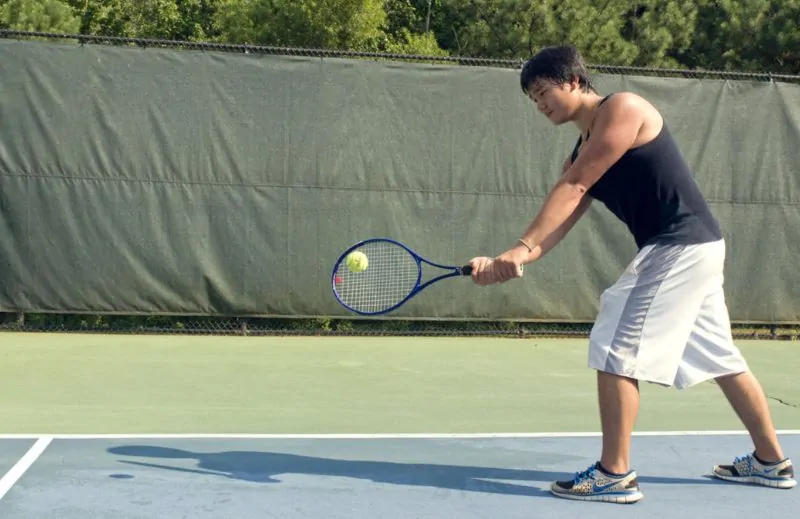
The best starter racquet should have a big head size (100-110 sq. in.) and be light (270- 290 g). It will allow you to hit balls with power and have a large sweetspot. Your racquet should be able to assist you in coping with situations where you fail to connect with the sweetspot and maneuvering your strokes.
In the beginning of playing tennis, you may experience difficulties in dealing with all the technicalities involved in this sport such as balance points, swing weights, beam width, and string pattern. However, playing on the tennis court should not be hard and frustrating. When buying starter racquets, you do not need to purchase those that professionals use. You just need a racquet that will let you hit the ball over the net easily and have fun.
The ideal shop racquets for beginners help you master tennis faster. It provides a good amount of power, reduces the impact on your joints, and allows making mistakes while practicing your footwork and strokes. Here you will get a detailed guide about what to look for when choosing a racquet for a beginner. This way, you will manage to avoid advertisements and choose a racquet that fits you.
The Core Technical Factors That Matter Most
While tennis brands talk about many new features, there are just four main things that decide if a racquet will help or stop a new player.
1. Head Size: Your Forgiveness Buffer
The full space of the racquet head decides how big the “sweet spot” is. This sweet spot is in the middle of the racquet strings. If you hit the ball here, the shot feels easy, is steady, and works well.
- Oversize Frames (105–110 sq. in.): These give you the biggest sweet spot. If you hit the ball away from the middle, the racquet will not move a lot in your hand. Oversize frames are good for people who are just starting.
- Midplus Frames (100–104 sq. in.): These are good for people who are active and plan to play often. They offer a nice mix for players. You get more help when you miss the sweet spot, and you also get more feel for where the ball goes as you swing quicker.
Stay away from frames smaller than 98 square inches. These smaller frames need you to hit the ball with exact aim and swing really hard and quick. Most beginners do not have the right skill yet to do that.
2. Static Weight and Swingability
The weight of the racquet can change how much power you get and how much stress is put on your body.
- Under 270 grams (Ultra-Light): These racquets are easy to swing. But when a strong ball comes in, they send tough vibrations to your arm.
- 270 to 290 grams (Beginner Sweet Spot): These racquets are heavy enough to stay steady when balls come at you. Still, they are light enough for you to swing for a long time. You will feel less tired in your shoulder.
- Over 300 grams (Advanced/Tour Weight): To use these racquets, you need good timing and practice. If you try a heavy racquet too soon, you hit late and may feel pain in your wrist.
Balance and Maneuverability
Balance shows how weight sits along the racquet frame. You can measure it from the end cap to the middle of the racquet.
- Head-Heavy (HH): There is more of the weight in the head of the racquet. This lets light racquets push the ball with more power. But, it is harder to make quick moves with your wrist at the net.
- Even Balance (EB): The weight is spread out evenly. This gives a steady mix of power and easy handling.
- Head-Light (HL): Most of the weight is near the handle. The racquet feels light when you hold it. You can move fast during quick rallies.
For most people who are new, an even to slightly head-light balance is best. It helps you do the right practice by making you use your own power when you hit. You will not need a top-heavy feel like a hammer.
String Patterns and Tension Considerations
The way the strings are set up in a grid affects how deep your shots go and how it feels to hit the ball.
OPEN PATTERN (16×19) DENSE PATTERN (18×20)
- More string movement
- Less string movement
- Higher ball launch
- Lower ball launch
- Easy spin & feel * Most feel & grip
Beginners should go with an open string pattern (16×19) that uses regular synthetic gut. The strings should be at lower tension, around 50–53 lbs. Lower tension helps the ball bounce off the strings more. It lets you put the ball deep in their court without much work.
How to Determine Your Correct Grip Size
Using the wrong grip size can cause you problems in your game and make your arm hurt. If the grip is too small, you have to hold it tight. This can give you tennis elbow. If the grip is too big, your wrist can’t move as it should.
The Index Finger Test
- Hold the racquet in your other hand using a standard eastern grip, like you are shaking hands with the handle.
- Put your opposite hand’s index finger into the gap between your ring finger and your palm.
- Correct Grip Size: The fit: If your index finger fits well in that gap, the grip size is correct. If you find some additional space there, then the grip is large. If your finger doesn’t fit into that gap and needs to be placed over your palm, then the grip size is small.
Rule of thumb: If you are stuck between two sizes, pick the smaller one. It is easy to make a grip bigger by using a cheap overgrip. But making a grip smaller is almost not possible.
Common Mistakes Beginners Should Avoid
- Buying an expensive tour racquet: Player racquets like the Wilson Pro Staff or Babolat Pure Strike are made for skilled players who have their own power and hit the sweet spot a lot. If you use one as a beginner, your shots feel flat and tough.
- Choosing pre-strung aluminum racquets: Cheap rackets in stores are usually made from heavy and hard aluminum, not graphite composites. They send strong vibrations right into your joints.
- Ignoring the string choice: If you leave the strings that came with the racquet for years, you lose feel for the ball. Change your strings once or twice a year. This makes hitting feel much better.
Conclusion
Finding the right racquet is easy. You need to look for a big head size, a light frame, and a string pattern that is open. These things help you play well from the start and keep you safe from getting hurt. When you feel good about your game and want to play at the court, you should shop racquets for beginners at a tennis store or a pro shop. There, you can try out different racquets and see how the weight feels in your hands before you buy it.
About the Author