A cleanroom environment is a controlled interior where airborne particles, moisture, temperature, pressure, and microbial burden stay within strict limits. Its job is prevention; contamination must remain low enough to protect sensitive work. This requirement is essential in medicine, electronics, aerospace, and research. Tiny debris, skin cells, or humidity shifts can damage products, skew test results, or create safety concerns before visible signs appear.
What Makes It Different
A cleanroom differs from an ordinary room because each environmental factor is managed as part of one coordinated system. Airflow follows planned paths. Filters remove suspended matter. Surfaces resist shedding, and staff follow gowning rules that reduce human contamination. For readers seeking a grounded explanation of these controls, https://precisioncleanrooms.com/what-is-a-cleanroom-environment shows how pressure, filtration, and disciplined movement support steady conditions for precise work.
The Core Goal
The central purpose is contamination control. That includes limiting particles, microbes, fibers, and chemical vapors that can interfere with sensitive tasks. A cleanroom creates repeatable environmental conditions that protect process stability. Reliable control helps manufacturers preserve yield, laboratories protect data integrity, and regulated facilities maintain batch quality without unnecessary variation.
ISO Classes Explain Cleanliness
Cleanrooms are commonly classified under ISO 14644. Each class sets a maximum particle count per cubic meter of air. Lower class numbers mean tighter cleanliness limits. A semiconductor line may require a stricter class than a packaging area. Selection always depends on process sensitivity, product exposure, and the practical risk created by a single particle entering the wrong place.
Air Control Does Most of the Work
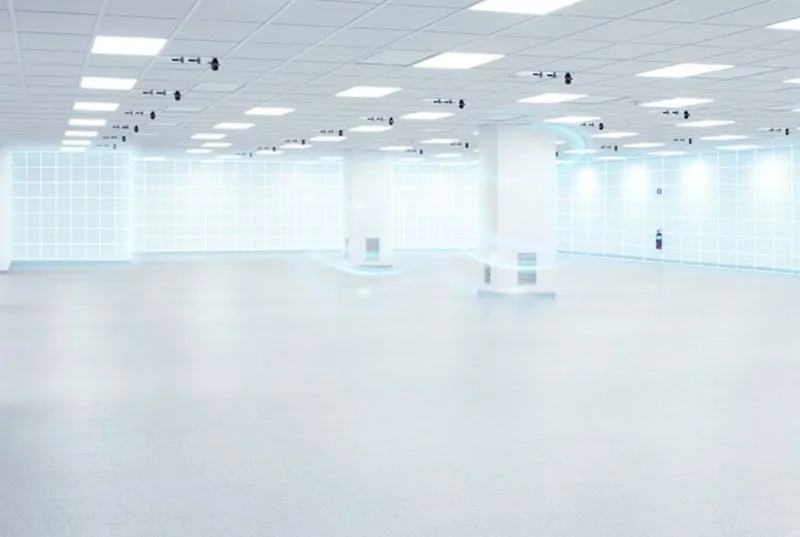
Filtration and airflow carry most of the burden inside a cleanroom. Supply air passes through high-efficiency filters, enters the space, and moves in controlled patterns that reduce particle settlement. Room air changes occur many times each hour. Positive pressure often prevents dirty outside air from drifting inward. Stable circulation also helps maintain even temperature and moisture levels across the protected area.
Surfaces Matter Too
Walls, ceilings, floors, lighting, and doors must support cleanliness. Smooth, nonporous materials are favored because they are easier to sanitize and less likely to trap dust. Joints and seams are kept to a minimum where practical. Finishes also need chemical resistance, since repeated cleaning can quickly break down ordinary construction materials used in standard commercial interiors.
People Are a Major Source
People release particles constantly through skin, hair, clothing, and movement. For that reason, staff behavior has a direct effect on room performance. Gowning reduces shedding before entry. Slower motion lowers airborne disturbance near exposed work. Entry procedures limit transfer from uncontrolled spaces. Training is essential because even a well-built room can fail when routine habits introduce contamination at the wrong time.
Monitoring Proves Performance
A cleanroom cannot rely on design intent alone. Ongoing monitoring confirms whether conditions remain within target limits during actual operation. Teams often track particle counts, differential pressure, humidity, temperature, and airflow volume. Alarm systems warn staff when readings drift. Recorded data also supports audits, internal review, and customer requirements in regulated settings where documented performance matters as much as physical construction.
How Daily Operation Remains Stable
Entry sequences separate cleaner zones from dirtier ones. Gown rooms, pass-through chambers, and airlocks reduce particle migration during staff movement and material transfer.
Cleaning follows validated schedules with approved methods and compatible agents. Regular sanitation prevents buildup on floors, benches, equipment housings, and frequently touched surfaces.
Operators follow defined workflows so tools, components, waste, and packaging move predictably through the room without avoidable disruption or unnecessary contact.
Cleanliness Depends on Use Case
A pharmaceutical suite and a semiconductor facility share basic principles, but their risk profiles differ sharply. One may focus on microbial control and sterile handling. The other may prioritize ultrafine particles that can ruin circuitry. Medical device production, battery manufacturing, and aerospace assembly each bring distinct tolerances. Cleanroom planning begins with the process itself, because appearance alone says little about actual environmental control.
Why Cleanrooms Remain Essential
Cleanrooms remain essential because many modern products fail after exposure to tiny contaminants. One particle can spoil a sterile fill, damage a sensor, or distort a precision test. Controlled environments reduce that risk through engineered airflow, suitable materials, disciplined behavior, and active monitoring. When those elements work together, a cleanroom becomes a dependable protective system that supports quality, consistency, safety, and long-term trust.
About the Author