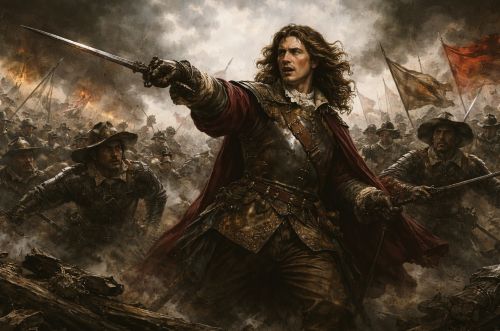
In the crisis before the English Civil War, George Digby exemplified how intellectual brilliance, unrestrained by prudence, can magnify political instability.

By Matthew A. McIntosh
Public Historian
Brewminate
Introduction: Talent without Temperance
George Digby, later second Earl of Bristol, emerged in the political crises of the 1640s as one of the most gifted and perplexing figures of his generation. Contemporaries repeatedly remarked upon his brilliance. He possessed quick intelligence, formidable rhetorical ability, and an instinct for dramatic intervention at pivotal moments. Yet admiration was almost always accompanied by unease. Digby’s career did not unfold as a steady ascent grounded in trust and prudence. Instead, it was marked by reversals, bold gambits, and decisions that magnified instability in an already volatile political environment. His example offers a window into the dangers posed not by incompetence, but by intelligence unmoored from restraint.
England on the eve of the Civil War was a polity under mounting structural strain. Fiscal disputes between Crown and Parliament had hardened into constitutional confrontation, particularly over prerogative taxation and the limits of royal authority. The Personal Rule of Charles I left deep scars, as grievances over ship money, religious conformity, and perceived Arminian influence fueled distrust among political elites. The Bishops’ Wars with Scotland exposed the Crown’s military and financial vulnerabilities, forcing the recall of Parliament under conditions of desperation rather than consensus. Religious anxieties compounded political division, as fears of popery and absolutism circulated widely in pamphlet literature and parliamentary debate. In such circumstances, political actors who commanded attention through eloquence or daring could exert outsized influence. Digby entered public life precisely at this moment of fragility, when rhetorical force could shift momentum and when a single speech might reshape alignments. His speeches during the impeachment of Thomas Wentworth, Earl of Strafford, demonstrated both his persuasive power and his capacity for sudden repositioning. That volatility would become his hallmark. Where steadier figures sought incremental negotiation and constitutional clarity, Digby often favored dramatic escalation.
His reversals were not minor adjustments but conspicuous transformations. Initially aligned with parliamentary critics of royal policy, he later became a staunch defender of the Crown and an advocate of confrontational strategies. These shifts were not simply opportunistic calculations. They reflected a temperament inclined toward intellectual audacity and theatrical persuasion. Yet in an atmosphere thick with suspicion, unpredictability eroded confidence. Political authority in times of crisis depends upon reliability as much as brilliance. Digby’s interventions repeatedly unsettled alliances and intensified polarization, suggesting that cleverness, when exercised without strategic discipline, can accelerate breakdown rather than prevent it.
Digby is a case study in “irresponsible brilliance.” His rhetorical gifts and intellectual daring, though genuine, often outpaced his prudential judgment. In a period when institutional stability depended upon cautious negotiation, Digby’s improvisational style magnified volatility. His career illustrates a broader principle relevant to revolutionary contexts: charisma and intelligence are not substitutes for disciplined judgment. When structures are under strain, leaders who mistake ingenuity for wisdom may deepen the very crises they seek to master.
England on the Brink: Structural Tensions before 1642

The outbreak of civil war in 1642 did not arise from a single miscalculation or sudden rupture. It was the culmination of long-developing structural tensions embedded within the Stuart political order. The English monarchy rested upon a delicate balance between royal prerogative and parliamentary consent, a balance that depended as much upon custom as upon statute. Under Charles I, that equilibrium steadily deteriorated. Disputes over taxation, religion, and the nature of sovereignty became increasingly intractable, exposing ambiguities within England’s constitutional framework. By the late 1630s, mistrust between Crown and Parliament had hardened into ideological division.
Fiscal conflict lay at the center of the crisis. Charles I’s decision to rule without Parliament from 1629 to 1640 forced him to seek alternative revenue sources, most controversially through the extension of ship money beyond coastal regions. Traditionally levied on maritime towns in times of naval emergency, ship money was reinterpreted as a nationwide obligation justified by the king’s assessment of defense needs. Although framed as a legal prerogative grounded in precedent, its peacetime application and geographic expansion signaled to many that the Crown intended to bypass parliamentary taxation altogether. The legal challenge brought by John Hampden transformed a financial expedient into a constitutional confrontation that reached beyond questions of revenue to the core of sovereign authority. While the majority of judges upheld the king’s right to levy the tax, dissenting opinions circulated widely and fueled public debate. Even though the Crown secured a narrow judicial victory, the broader political damage proved profound. Fiscal improvisation deepened suspicion that the monarchy sought to normalize extraordinary measures and entrench prerogative power at the expense of representative consent. Trust eroded not merely because of the sums collected, but because of what the method implied about the future of governance.
Religious policy compounded political distrust. The promotion of Archbishop William Laud’s program of ceremonial reform and ecclesiastical discipline unsettled both Puritan reformers and broader segments of the political nation. Critics feared that Laudian emphasis on liturgical uniformity and episcopal authority signaled a drift toward Catholicism or continental absolutism. These anxieties were amplified by Charles’s marriage to the Catholic Henrietta Maria and by broader European conflicts in which confessional alignment appeared inseparable from political allegiance. Religious identity became entangled with constitutional fear, transforming policy disputes into existential anxieties about the direction of the realm.
The Scottish crisis of 1637–1640 exposed the fragility of royal authority in dramatic fashion. Efforts to impose a new prayer book upon the Scottish Kirk were perceived not merely as liturgical adjustments but as assaults upon established ecclesiastical autonomy. The resulting National Covenant united broad segments of Scottish society in resistance, illustrating how religious grievance could crystallize into political mobilization. Armed confrontation in the Bishops’ Wars revealed the Crown’s military unpreparedness and financial vulnerability. Lacking adequate funds to sustain prolonged campaigning and facing reluctance among English elites to finance war against fellow Protestants, Charles was compelled to recall Parliament in 1640 after eleven years of Personal Rule. The Short Parliament’s swift dissolution underscored the depth of mistrust, while the subsequent Long Parliament assembled determined to assert its authority. What began as a search for revenue became a structural reckoning. The Scottish crisis transformed constitutional disagreement into institutional confrontation, forcing unresolved tensions into open political conflict.
By 1641, England was governed less by shared assumptions than by escalating fears. Parliamentary leaders moved to curtail royal authority through measures such as the Triennial Act and the impeachment of key royal advisers. The Grand Remonstrance revealed how deeply divided political elites had become, publicly cataloging grievances against the Crown. Structural tensions that once operated within manageable boundaries now threatened systemic rupture. It was within this environment of constitutional uncertainty, fiscal strain, and religious polarization that figures like Digby operated. His interventions would not create instability from nothing; they would unfold within a polity already balanced precariously between reform and rupture.
The Rise of George Digby: Rhetorical Fire and Parliamentary Theatrics
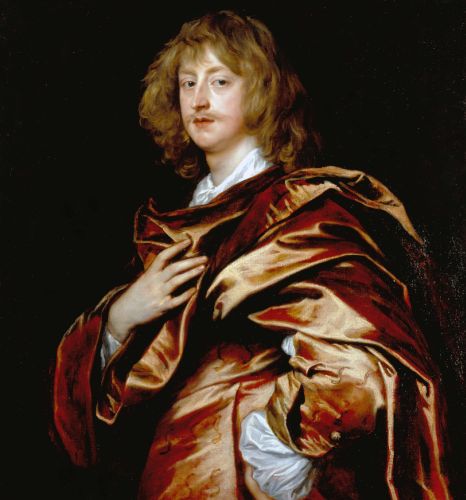
Digby entered the Long Parliament in 1640 with the advantages of lineage, education, and formidable intellectual agility. The son of John Digby, first Earl of Bristol, he inherited not only aristocratic status but also exposure to diplomatic culture and court politics. His early parliamentary posture aligned him with critics of royal policy, particularly those who viewed the excesses of Personal Rule as constitutional overreach. Digby’s speeches quickly attracted attention. He possessed a rare capacity to combine legal argument with dramatic flourish, turning debate into spectacle. In a chamber where rhetoric could shift alliances, his voice carried disproportionate influence.
The impeachment of Thomas Wentworth, Earl of Strafford, provided Digby with his most consequential early stage. Strafford, long associated with aggressive assertions of royal authority, became the focal point of parliamentary anger. Digby initially supported the prosecution, contributing to the broader effort to hold royal advisers accountable. Yet as the proceedings unfolded, he began to question the legal sufficiency of the charges, particularly the attempt to secure conviction through a bill of attainder rather than through demonstrable statutory treason. His intervention against the attainder marked a dramatic reversal. In a speech that blended legal reasoning with emotional intensity, he warned against setting a precedent that might endanger constitutional safeguards. The effect was electrifying and destabilizing.
This reversal carried significant political cost. Many who had viewed Digby as an ally interpreted his speech as betrayal. In a climate already thick with suspicion, his change of position reinforced perceptions of unpredictability. Whether motivated by principled concern for legal process or by a growing affinity for royal authority, the shift altered his standing within Parliament. Strafford’s eventual execution did not erase the memory of Digby’s defense. Instead, it marked him as a figure capable of abrupt repositioning at moments of maximum tension.
Rhetorical brilliance, in Digby’s case, proved inseparable from theatrical instinct. He seemed drawn to the dramatic pivot, the speech that overturned expectations. Such interventions amplified his visibility but weakened durable alliances. Parliamentary politics in 1640–1641 required coalition-building and incremental negotiation. Digby’s style privileged spectacle over steadiness. In moments when caution might have preserved trust, he favored intellectual daring. The result was a growing reputation for volatility.
His trajectory during the debates surrounding the Grand Remonstrance further illustrated this pattern. As Parliament cataloged grievances against Charles I, Digby increasingly gravitated toward the royalist position. He opposed measures he believed pushed beyond legitimate reform into destabilizing confrontation. Yet his manner of opposition, often framed in sharp and confrontational terms, deepened polarization. Rather than serving as mediator between factions, he became identified with one side in an escalating constitutional struggle.
By 1642, Digby’s political identity had transformed from reform-minded critic to ardent defender of the Crown. The speed and visibility of this transformation contributed to the perception that he embodied brilliance without steadiness. His rise was not a story of gradual ideological evolution but of conspicuous realignment enacted on the parliamentary stage. In a political culture already strained by distrust, such theatrical reversals carried consequences beyond personal reputation. They intensified factional division at precisely the moment when institutional restraint was most needed.
Reversal and Escalation: From Critic to Royalist Hardliner
Digby’s transition from parliamentary reformer to committed royalist unfolded with striking speed. After the Strafford debates and the intensifying conflict between Crown and Parliament, he moved decisively into the king’s orbit. This shift was not merely rhetorical. Digby became an active adviser to Charles I, encouraging resistance to what he viewed as parliamentary overreach. In doing so, he repositioned himself within a political landscape where moderation was rapidly disappearing. His allegiance to the Crown coincided with a period in which the king himself vacillated between negotiation and confrontation, further complicating efforts at stabilization.
The debates surrounding the Grand Remonstrance in late 1641 revealed the deepening fracture within Parliament and the kingdom at large. Digby opposed the Remonstrance, arguing that its sweeping indictment of royal governance would entrench division rather than facilitate reform. Yet his manner of opposition reinforced rather than softened polarization. His speeches framed the Remonstrance not simply as misguided but as constitutionally subversive, portraying it as an attempt to subordinate monarchical authority permanently to parliamentary supremacy. In a moment when anxieties about sovereignty, religion, and the balance of power were already acute, such framing intensified suspicion. Rather than positioning himself as a guardian of measured constitutionalism, Digby’s rhetoric aligned increasingly with a defense of prerogative rooted in firmness and resistance. In an environment where perception often proved as consequential as policy, his escalating tone contributed to the hardening of factions. Parliamentary debate shifted from negotiation over specific grievances to a contest over the very nature of sovereign authority.
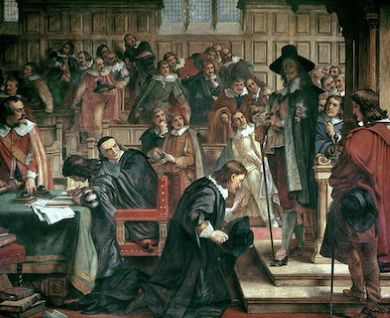
His involvement in the crisis surrounding the attempted arrest of the Five Members further damaged prospects for compromise. Although historians continue to debate the precise contours of Digby’s influence, contemporaries associated him with hardline counsel that encouraged bold confrontation. The king’s decision to enter the House of Commons in January 1642 to seize leading parliamentary critics proved disastrous, shattering residual trust and accelerating the slide toward armed conflict. Whether Digby directly orchestrated the move or merely endorsed a confrontational posture, his proximity to such decisions reinforced his reputation for risk-heavy political strategy.
Escalation rather than conciliation became his defining mode. Digby’s counsel often emphasized firmness, honor, and the assertion of prerogative, even as the political center collapsed. Where other royal advisers occasionally sought tactical retreat to preserve long-term advantage, Digby’s interventions tended toward dramatic assertion. He appeared to believe that boldness could reassert control in the face of mounting challenge. Yet in a system already destabilized by mistrust, such gestures frequently had the opposite effect. Confrontational posturing deepened suspicion among parliamentary leaders and confirmed fears that the Crown intended to bypass negotiated settlement. Uncompromising gestures can close off avenues for incremental adjustment and harden positions beyond recovery. Digby’s trajectory illustrates how intellectual confidence, when paired with an appetite for confrontation, can intensify structural crisis rather than contain it.
By the outbreak of open war in 1642, Digby had become emblematic of a broader transformation within English politics. The space for constitutional mediation narrowed, and figures who once operated within reformist frameworks now embodied hardened positions. Digby’s evolution from critic to royalist hardliner mirrored the radicalization of the political nation itself. Yet his conspicuous reversals and bold advocacy distinguished him from more cautious contemporaries. In moving from critique to escalation, he did not merely follow events; he helped accelerate them. The brilliance that once captivated Parliament now fueled a politics of polarization.
Military Command and Strategic Recklessness

Digby’s volatility did not remain confined to parliamentary debate. With the outbreak of open hostilities, he entered the military sphere, where the consequences of impulsive judgment proved more immediate and irreversible. Elevated within royalist ranks and entrusted with significant responsibility, he operated in an environment that demanded logistical precision, coordination, and disciplined restraint. The transition from parliamentary oratory to battlefield command required a different temperament. Military leadership during civil war depended upon careful reading of terrain, timing, morale, and supply. Decisions could not be revised with a subsequent speech. They unfolded in real time, under conditions of limited information and physical danger. Yet the qualities that had distinguished Digby in political theater, intellectual agility, confidence, and a flair for dramatic initiative, did not translate easily into effective command. In war, boldness detached from structured planning can destabilize an entire formation. Digby often favored audacity over calculation, assuming that decisive action might compensate for structural fragility.
His most notorious episode occurred in 1643 at the Battle of Stratton, where royalist forces under Sir Ralph Hopton confronted parliamentary troops in Cornwall. Digby commanded the royalist cavalry during the engagement. Contemporary accounts and later analyses suggest that his impetuous charge disrupted broader strategic coordination, nearly imperiling the royalist position at a critical moment. Although the battle ultimately resulted in a royalist victory, observers criticized Digby’s disregard for disciplined timing. Cavalry action in early modern warfare demanded synchronization with infantry advances and terrain awareness. Digby’s eagerness to seize initiative risked fragmenting the coherence of the assault.
Strategic recklessness extended beyond the battlefield. Digby frequently advocated expansive royalist ambitions that exceeded available resources. At moments when royalist commanders struggled with supply shortages, regional loyalties, and fragile alliances, he favored bold offensives intended to deliver decisive psychological blows. He urged concentration of force in ways that assumed swift success rather than protracted campaigning. Such proposals carried emotional appeal, particularly in a conflict framed as a struggle for honor and sovereignty. Yet early modern warfare was governed by attrition as much as by spectacle. The royalist war effort depended upon careful husbanding of limited manpower, ammunition, and credit. Local garrisons required provisioning; cavalry required remounts; infantry needed reliable pay. Enthusiastic projection of strength could not compensate for structural weakness. Digby’s strategic imagination often outpaced logistical reality, privileging symbolic triumph over sustained operational viability.
Tensions between Digby and more experienced commanders further complicated royalist cohesion. Military leadership during the Civil War relied upon cooperation among aristocratic officers, many of whom commanded loyalty through personal networks rather than rigid institutional hierarchy. Coordination required mutual trust and clarity of command. Digby’s assertiveness and intellectual self-confidence sometimes alienated those whose authority rested upon practical experience accumulated through years of campaigning. His willingness to question established strategy or to propose abrupt alterations contributed to friction within the royalist command structure. In councils of war, decisiveness could appear as impatience; innovation could appear as recklessness. In a campaign already burdened by uneven coordination and limited centralized control, such internal strain weakened collective effectiveness. Disagreement at the top magnified confusion below, eroding the steadiness required to sustain prolonged resistance.
The broader royalist military trajectory underscores the limits of improvisational boldness. Early successes could not mask the Crown’s structural disadvantages in finance, administration, and recruitment. Parliamentary forces, increasingly centralized and eventually reorganized under the New Model Army, developed institutional coherence that the royalist side struggled to match. Digby’s appetite for dramatic action did little to redress imbalance. His battlefield conduct symbolized a deeper pattern: confidence in personal brilliance as a substitute for systemic preparation.
Digby’s military career reinforced the theme evident in his parliamentary life. Intelligence and courage were not lacking. What proved deficient was disciplined judgment aligned with long-term strategic coordination. In wartime conditions, miscalculation carries consequences measured not only in reputation but in lives and territory. Digby’s example demonstrates how rhetorical daring, when transplanted into military command, can amplify risk without proportionate gain. Brilliance untethered from prudence may energize followers in the short term, yet it rarely sustains durable success in protracted conflict.
Reputation among Contemporaries: Dazzling but Dangerous
Digby’s reputation among contemporaries crystallized around a paradox. Admirers acknowledged his intellectual range, verbal dexterity, and political courage. Even critics conceded that he possessed a penetrating mind capable of dissecting legal argument and constitutional principle with unusual clarity. Yet this admiration was frequently paired with distrust. Observers described him as brilliant but unreliable, eloquent yet destabilizing. His capacity to command attention did not translate into sustained confidence. In an age when reputation functioned as political currency, such ambivalence limited his effectiveness.
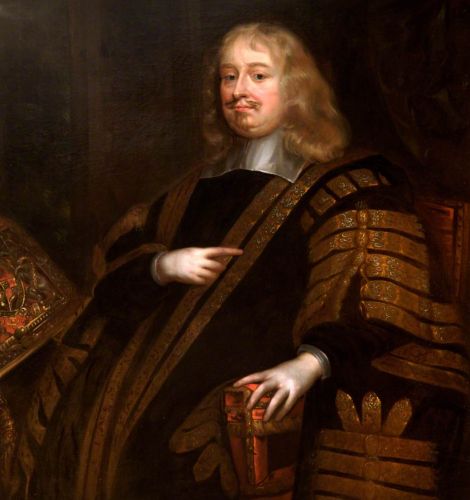
Edward Hyde, later Earl of Clarendon, offers one of the most influential contemporary portraits. Hyde admired Digby’s quickness of understanding and rhetorical force, yet he repeatedly emphasized the volatility that undermined his influence. Digby, in Hyde’s telling, was prone to dramatic shifts and impatient with gradual negotiation. His interventions could illuminate a debate, but they could also unsettle it. The very qualities that made him formidable in speech rendered him unpredictable in counsel. For royalist observers seeking steadiness amid crisis, this volatility appeared as a liability rather than an asset.
Parliamentarian critics framed Digby in even sharper terms. Pamphleteers and political opponents portrayed him as emblematic of aristocratic recklessness, a figure whose restless ambition intensified division. In the polarized print culture of the 1640s, reputation was shaped as much by polemic as by personal encounter. Digby’s conspicuous reversals provided material for caricature. To supporters, he was courageous enough to follow conviction across factional lines. To detractors, he embodied inconsistency masquerading as principle. Public discourse amplified the perception that he was dazzling but dangerous.
This mixed reputation hardened into historical memory. Later scholarship has often echoed the dual assessment found in contemporary accounts, noting the recurring tension between Digby’s intellectual sophistication and his political instability. Historians have emphasized how his early promise gave way to a pattern of alienation, as alliances fractured under the strain of his abrupt shifts and confrontational posture. His career trajectory illustrates the difficulty of sustaining authority when credibility erodes. Digby emerges neither as simple opportunist nor as misunderstood reformer, but as a figure whose intellectual gifts exceeded his political discipline. His life demonstrates that brilliance can command attention without securing loyalty, and that ingenuity untempered by prudence may inspire fascination while undermining durable influence. In a period defined by escalating crisis, steadiness proved as valuable as ingenuity. Digby’s contemporaries recognized his talent. They also recognized its peril.
Intellectual Volatility in Revolutionary Context

Revolutionary environments reward boldness while simultaneously punishing miscalculation. In moments when established authority is questioned and institutional norms weaken, decisive voices can rise rapidly. Intellectual agility becomes a weapon. Yet the same conditions that elevate daring figures also magnify the consequences of instability. Digby’s career unfolded within precisely such a volatile setting. The breakdown of trust between Crown and Parliament created space for dramatic intervention. It also narrowed tolerance for unpredictability. Intellectual brilliance could either clarify crisis or intensify it, depending upon the discipline with which it is exercised.
Digby’s volatility was not rooted in ignorance but in speed. He grasped arguments quickly and often identified weaknesses in prevailing positions before others had fully articulated them. Such sharpness allowed him to pivot with confidence and to reframe debates in ways that startled opponents and allies alike. However, rapid reassessment can appear as inconsistency when political actors depend upon reliability for survival. In a polarized environment, allies look for steadiness as assurance of shared purpose and strategic continuity. When shifts occur publicly and dramatically, even if grounded in reasoned reflection, they unsettle coalition-building and foster suspicion about underlying motives. Digby’s intellectual flexibility, admirable in theory as a mark of independence, proved destabilizing in practice because it lacked the gradualism that preserves trust. In moments when confidence was already fragile, speed without reassurance amplified doubt.
Revolutionary periods compress time. Decisions that might once have unfolded through extended negotiation must be made under pressure. The 1640s forced English political actors to respond to cascading crises: fiscal breakdown, religious fear, armed confrontation. Under such conditions, improvisation can seem not only tempting but necessary. Yet improvisation requires a stable strategic horizon. Digby’s interventions often reflected immediate intellectual conviction rather than long-term alignment. His brilliance operated tactically rather than institutionally. The result was a pattern in which acute insight at one moment contributed to structural dislocation in the next.
Comparative studies of revolutionary leadership underscore this tension between innovation and steadiness. Political systems under strain demand both creative thinking and disciplined coordination if they are to avoid fragmentation. Where one eclipses the other, instability deepens. Digby exemplifies the imbalance. He supplied rhetorical energy and conceptual daring, but he struggled to anchor these qualities within durable frameworks of trust and cooperation. Revolutionary politics operates through networks of perception. A speech alters perception, perception reshapes alliance, alliance influences policy, and policy shifts the trajectory of conflict. When volatility enters this chain, each link becomes more fragile. Intellectual instability acquires structural consequence, not because ideas lack merit, but because their rapid redeployment erodes the confidence upon which collective action depends.
Digby’s career suggests that revolutionary brilliance requires temperance to become constructive. The absence of that temperance does not negate intelligence; it refracts it. In moments of systemic strain, leaders who prize the drama of decisive intervention over the slow work of coalition-building risk accelerating polarization. Digby’s volatility did not singlehandedly cause the English Civil War. Yet it contributed to a political atmosphere in which escalation overshadowed accommodation. Revolutionary contexts amplify personality. When personality itself is unstable, crisis intensifies.
Conclusion: Charisma Is Not Judgment
Digby’s career illustrates a recurring tension in political history between talent and temperance. He was neither mediocre nor marginal. His intelligence was genuine, his rhetorical skill formidable, and his courage in debate unmistakable. Yet these qualities did not yield stability. Instead, they often accelerated fracture within a political order already under strain. Digby’s life demonstrates that brilliance, when unanchored by prudence, can intensify rather than resolve structural crisis. Revolutionary contexts magnify personality, and personality without discipline becomes combustible.
The English Civil War cannot be reduced to the decisions of any single actor. Its causes lay in decades of constitutional ambiguity, fiscal strain, and religious division. Still, individuals shaped the pace and character of escalation. Digby’s conspicuous reversals, confrontational rhetoric, and appetite for bold gestures contributed to a climate in which compromise grew ever more elusive. His trajectory underscores the danger posed not by incompetence, but by intellectual overconfidence. The capacity to see multiple sides of an issue does not guarantee the wisdom to navigate among them steadily.
Charisma carries persuasive power. It commands attention, energizes followers, and reshapes debate. Yet charisma is not judgment. Judgment requires restraint, patience, and sensitivity to institutional limits, particularly when those institutions are already fragile. Digby possessed the former in abundance and struggled with the latter. In parliamentary debate, this imbalance eroded trust and weakened the coalitions upon which reform depended. In military command, it risked operational coherence at moments when synchronization and caution were essential. In counsel to the king, it encouraged confrontational postures at moments when calibrated compromise might have preserved political space for negotiation. Charisma can mobilize; judgment must stabilize. Where the two diverge, momentum replaces deliberation. The absence of disciplined steadiness transformed talent into volatility, converting persuasive brilliance into a catalyst for polarization.
Digby’s legacy endures less as a model of principled reform than as a cautionary example. His career invites reflection on the broader relationship between intellect and power. In times of upheaval, societies often elevate figures who appear decisive and brilliant. Yet without temperance, decisiveness becomes rashness and brilliance becomes destabilizing. The English political nation of the 1640s required measured negotiation and durable trust. Digby offered rhetorical fire and daring intervention. History records both the allure and the cost of that imbalance.
Bibliography
Affiliate disclosure: Amazon links on this site are paid links. As an Amazon Associate I earn from qualifying purchases.
- Adamson, John. The Noble Revolt: The Overthrow of Charles I. London: Weidenfeld & Nicolson, 2007.
- Armitage, David. Civil Wars: A History in Ideas. New York: Knopf, 2017.
- Clarendon, Edward Hyde, Earl of. The History of the Rebellion and Civil Wars in England. Oxford: Clarendon Press, 1888.
- Gentles, Ian. The English Revolution and the Wars in the Three Kingdoms, 1638–1652. Harlow: Pearson, 2007.
- Harris, Tim. “Revisiting the Causes of the English Civil War.” Huntington Library Quarterly 78:4 (2015), 615-635.
- Hutton, Ronald. The Royalist War Effort 1642–1646. London: Routledge, 1982.
- Kishlansky, Mark. A Monarchy Transformed: Britain 1603–1714. London: Penguin, 1996.
- Macadam, Joyce. “’Wilmot’s Blots’ and Cavalier Plots, June 1644: Fresh Evidence from Captured Correspondence.” The Seventeenth Century 36:4 (2012), 579-496.
- Peacey, Jason. Politicians and Pamphleteers: Propaganda during the English Civil Wars and Interregnum. Aldershot: Ashgate, 2004.
- Prior, Charles A. “Religion, Political Thought and the English Civil War.” History Compass 11:1 (2013), 24-42.
- Russell, Conrad. The Causes of the English Civil War. Oxford: Oxford University Press, 1990.
- Sharpe, Kevin. The Personal Rule of Charles I. New Haven: Yale University Press, 1992.
- Woolrych, Austin. Britain in Revolution, 1625–1660. Oxford: Oxford University Press, 2002.
Originally published by Brewminate, 03.02.2026, under the terms of a Creative Commons Attribution-NonCommercial-NoDerivatives 4.0 International license.
About the Author