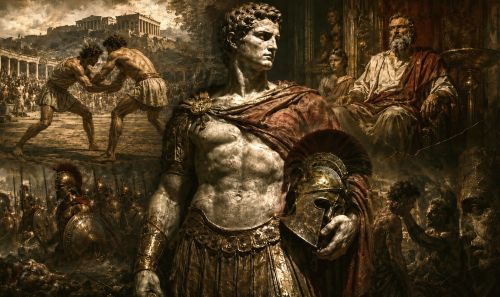
Ancient masculinity was never simply natural; it was constructed through honor, violence, self-control, domination, and the constant need for proof.

By Matthew A. McIntosh
Public Historian
Brewminate
Introduction: Masculinity as Performance, Not Nature
Masculinity has often been presented as if it were one of history’s permanent facts, a natural condition arising automatically from male bodies and expressed through courage, command, sexual power, and emotional restraint. The ancient world tells a more complicated story. In Greece, Rome, the ancient Near East, and later warrior societies, manhood was not simply possessed. It was earned, tested, displayed, defended, and judged by others. A boy became a man only when his community recognized him as one, and that recognition depended on rituals, symbols, public conduct, household authority, military discipline, sexual hierarchy, and the ability to withstand fear, pain, shame, or humiliation. Ancient masculinity was not merely biological. It was social theater with real consequences, a system of expectations through which men learned what they were allowed to feel, how they were required to act, and whom they were expected to dominate.
This does not mean that ancient societies understood gender in modern theoretical terms. They did not speak of “toxic masculinity,” “gender performance,” or “patriarchal conditioning” in contemporary language, and those terms must be used carefully rather than imposed carelessly on the past. Yet the behaviors now described under such modern categories often appear with striking force in ancient sources: the warrior whose wounded honor becomes murderous rage, the ruler who treats dissent as emasculation, the citizen whose reputation depends on self-command, the husband whose authority rests on control of the household, and the community that teaches boys to fear softness as social death. The value of the modern vocabulary is not that it allows the historian to pretend that antiquity was simply a version of the present. Its value is diagnostic. It helps identify recurring structures of power, shame, domination, and vulnerability that ancient sources themselves dramatized, celebrated, questioned, or condemned. A term such as “toxic masculinity,” then, should not be treated as a label pasted backward onto Achilles, Heracles, Cato, or Augustus. It should be used as a lens for examining patterns: the conversion of injury into violence, the belief that authority requires domination, the suspicion of tenderness, the association of sexual mastery with status, and the persistent fear that a man can be socially unmade by appearing weak before other men. This distinction matters because ancient masculinity was not uniformly destructive. It could also include courage, loyalty, endurance, public service, intellectual discipline, and moral self-command. The historian’s task is to separate those constructive ideals from the more corrosive systems that fused manhood with coercion, hierarchy, and the constant performance of invulnerability.
Homer already reveals the instability of masculine identity. Achilles embodies heroic excellence, but his rage exposes the destructive edge of a masculinity organized around honor, insult, and public recognition. Odysseus offers another model, one grounded less in overwhelming force than in endurance, cunning, speech, disguise, and survival. Greek civic culture added still other versions of manhood: the citizen-soldier, the household master, the public speaker, the philosopher, the athlete, and the self-disciplined moral agent. Rome intensified the stakes through virtus, a language of masculine excellence bound to courage, civic duty, reputation, and command. Yet Roman masculinity was famously fragile. A man could be mocked as soft, feminized, luxurious, passive, or enslaved to desire, and such accusations could damage political standing as severely as military failure. Across these cultures, masculinity functioned as a status that required repeated confirmation.
The long history of patriarchal manhood begins not with certainty, but with anxiety. Ancient men were asked to prove strength because strength was never assumed to be secure. They were taught to master others because they were expected first to master themselves. They were trained to suppress grief, fear, tenderness, and dependency because those emotions could be read as signs of weakness, even when ancient literature repeatedly showed that such suppression could deform the soul, destroy households, and turn honor into violence. The central problem was not that ancient societies admired courage, endurance, discipline, or public responsibility. Those ideals could be constructive, even noble. The danger lay in the narrowing of manhood until domination became confused with strength, emotional silence with virtue, sexual control with legitimacy, and violence with proof. That confusion did not create modern toxic masculinity by itself, but it helped establish some of the oldest scripts from which later patriarchal cultures would continue to draw.
Before the Classical World: Warrior Manhood, Fertility, and Domination in Early Patriarchal Societies

Before the classical polis and the Roman republic gave masculinity the language of citizen virtue, earlier societies had already imagined manhood through power over bodies, households, land, women, enemies, and memory. In the ancient Near East, male authority was often bound to kingship, fertility, lineage, military success, and divine favor. The “man” who mattered publicly was not simply an adult male. He was a figure capable of command, protection, reproduction, vengeance, and possession. His honor was measured through what he could defend and what he could control: wives, children, servants, captives, herds, fields, cities, and ancestral names. These were not incidental possessions attached to masculine status. They were among the visible signs through which that status was made legible to others. Patriarchy was not merely a private family arrangement. It was a political and religious grammar in which household order, royal power, and cosmic stability could be imagined as mutually reinforcing structures.
The Epic of Gilgamesh offers one of the earliest and most revealing literary explorations of this problem. Gilgamesh begins as a king whose masculinity is overwhelming, excessive, and socially dangerous. His strength is undeniable, but strength without restraint becomes tyranny. He exhausts the young men of Uruk, takes what he desires, and treats his city as an extension of his own appetite. The poem does not simply celebrate this power. It exposes its instability. Gilgamesh is “two-thirds divine,” but his partial divinity does not make him whole; it magnifies the consequences of his immaturity. He must be answered by Enkidu, a wild counterpart whose arrival redirects masculine force into rivalry, friendship, heroic action, and finally grief. Their bond does not abolish violence, but it changes the emotional structure of the poem. Gilgamesh’s journey begins in domination and ends in confrontation with mortality. That arc matters because one of the oldest surviving works of literature already understands that masculine power, when organized only around appetite, victory, and fearlessness, cannot sustain wisdom. The king must learn that the city is not his body, that the world is not his possession, and that death cannot be conquered by force.
Early patriarchal cultures also linked masculinity to fertility and descent. A man’s power often depended on his ability to generate heirs, preserve lineage, and situate himself within a chain of fathers and sons. This was not only biological reproduction. It was social continuity. Household religion in Babylonia, Syria, and Israel placed families within webs of ancestral memory, local devotion, inheritance, and obligation. Male household heads frequently stood at the intersection of cult, property, and kinship, making masculinity both domestic and sacred. The father was not merely a parent. He was a manager of continuity, a figure whose authority helped bind the living to the dead and the unborn. This helps explain why infertility, failed succession, sexual disorder, or loss of household control could become such powerful sources of narrative anxiety. Manhood was not secured by the body alone. It required a future that would remember, inherit, and legitimate the male line.
Ancient Israelite and broader Near Eastern narratives repeatedly show this masculine world under pressure. Patriarchs, kings, warriors, and judges are often measured by their ability to command households, defeat enemies, produce descendants, and preserve covenantal or political identity. Yet these same stories also expose the damage produced by patriarchal power. Women are traded, promised, protected, endangered, silenced, or strategically empowered within systems organized around male lineage and honor. The stories of Sarah, Hagar, Tamar, Dinah, Bathsheba, and other women reveal that patriarchal masculinity was never only about men proving themselves to other men. It also shaped the vulnerability and agency of women whose bodies carried the consequences of male rivalry, inheritance, desire, and fear. The point is not that all ancient men were tyrants or that all women were passive. The evidence is more complicated and more interesting than that. Rather, these narratives show how deeply masculinity was embedded in structures of kinship and power, where male identity could be made or threatened through women’s sexuality, reproduction, speech, and social placement.
Warrior manhood intensified these dynamics by attaching masculine honor to violence that could be publicly recognized. In early royal inscriptions, heroic epics, and conquest traditions, the successful male ruler or champion appears as the one who subdues enemies, protects the city, defeats chaos, and converts danger into fame. This model had constructive elements. Communities facing real threats needed defenders, and courage in battle could be imagined as service rather than mere brutality. But the same model also carried a corrosive logic. If manhood was proven through domination, then peace, compromise, tenderness, and restraint could seem insufficiently masculine. If enemies existed to be subdued, it was not difficult for women, slaves, rival kin, foreign peoples, or dissenters to be drawn into the same symbolic field. The heroic man became the one who could impose order, and the difference between protection and possession could narrow dangerously.
The world before classical Greece did not merely supply a primitive background for later masculine ideals. It established enduring patterns that later cultures would refine, contest, and inherit: the king as warrior, the father as lineage-maker, the household as a theater of male authority, the city as a projection of disciplined power, and violence as a language through which honor became visible. Yet these early traditions were not simple propaganda for domination. Their greatest texts often recognized the tragedy inside the ideal. Gilgamesh conquers monsters but cannot conquer death. Patriarchs preserve lineage but fracture households. Kings defend order but become dangerous when their own appetites go unchecked. The pre-classical world gives us one of the central tensions in the history of masculinity: societies needed courage, continuity, and protection, but they often taught men to seek those goods through control. That tension would not disappear in the classical world. It would become more elaborate, more public, and more philosophically self-conscious.
Homeric Masculinity: Achilles, Odysseus, and the Crisis of Heroic Honor
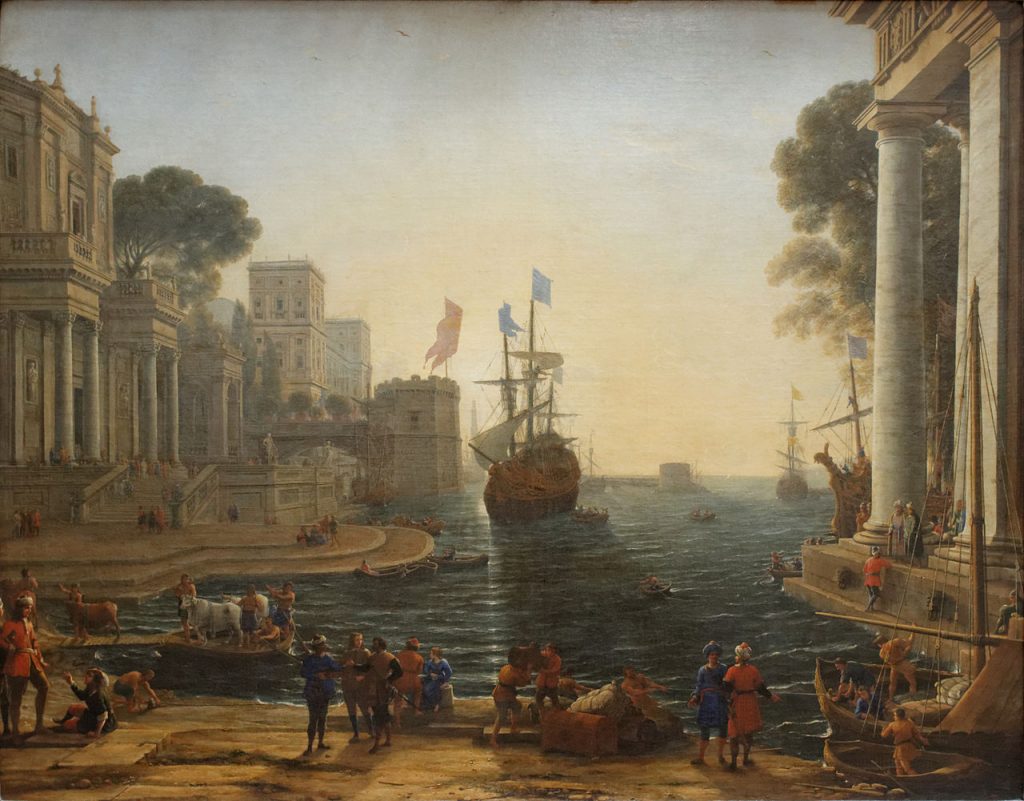
Homeric poetry gives the history of masculinity one of its most enduring and unstable foundations. In the Iliad and the Odyssey, manhood is never merely a private identity. It is a public condition measured through honor, courage, speech, loyalty, endurance, reputation, and the recognition of other men. A warrior’s worth depends on what others see, remember, praise, and repeat. Glory is not internal self-esteem. It is social memory. The Homeric hero lives under constant pressure, because his identity depends on the eyes and tongues of others. He must be brave enough to fight, disciplined enough to command, persuasive enough to speak, generous enough to reward followers, and dangerous enough to make enemies fear him. Yet this world does not offer one clean model of ideal manhood. Homeric masculinity is already divided against itself, pulled between rage and restraint, force and cunning, public honor and communal responsibility, the hunger for immortal fame and the knowledge that heroic excellence can destroy the very human bonds it claims to defend.
Achilles stands at the center of this crisis because he embodies heroic excellence in its most brilliant and destructive form. He is the greatest fighter among the Achaeans, beautiful, swift, terrifying, and indispensable. His martial superiority is never seriously in doubt. Yet the Iliad does not present greatness as moral completeness. Achilles’ rage begins with a public injury to honor when Agamemnon seizes Briseis, but the consequences of that insult expand far beyond the two men. Achilles withdraws from battle, and his refusal to fight allows Achaean suffering to multiply. The point is not that Achilles is simply petty or childish, though his anger is devastating. The deeper problem is that a culture built around honor gives him a language in which personal insult can become cosmic grievance. His manhood has been publicly diminished, and because heroic identity depends on public recognition, the wound feels existential. Achilles does not merely lose a captive woman. He loses visible confirmation of status, and in that world, status is the fragile skin around masculine worth. Briseis herself is crucial to this structure, not because the poem gives her full subjectivity in the quarrel, but because her seizure reveals how women’s bodies could function as tokens within male systems of honor. Agamemnon does not simply take property. He publicly asserts dominance over another man by stripping him of a prize that signifies rank, victory, and recognition. Achilles’ fury exposes the gendered economy of heroic masculinity: male prestige is measured through visible rewards, and those rewards may include captive women whose own suffering is subordinated to the competition between men. The crisis is personal, political, sexual, and symbolic at once. Achilles’ withdrawal becomes a refusal to participate in a world that has failed to honor him properly, but the poem steadily reveals the cost of allowing masculine recognition to outweigh communal survival.
The tragedy of Achilles is that he is emotionally intense but culturally trapped. He grieves, loves, rages, remembers, and mourns, yet his society gives him few ways to process injury except withdrawal or violence. When Patroclus dies, Achilles’ grief breaks through the heroic code with overwhelming force, but it is immediately converted into slaughter. He returns to battle not as a restored citizen-warrior but as a figure almost beyond human measure, killing with a fury that even the poem treats as dangerous. His abuse of Hector’s body marks the point where heroic vengeance becomes desecration. The killing of an enemy in battle belongs to the warrior world; the refusal to honor the dead threatens the moral order that makes warfare intelligible. Homer reveals the toxicity inside a masculine code that cannot distinguish grief from rage or honor from annihilation. Achilles is not condemned as a coward or fraud. That would be too easy. He is something more troubling: a genuine hero whose greatness exposes the violence built into the very system that made him great.
Odysseus offers a different but no less complicated model of masculine achievement. In the Iliad, he is already valued for counsel, speech, endurance, and tactical intelligence. In the Odyssey, those qualities become central. Odysseus survives not because he is the strongest man alive, but because he can adapt. He lies, disguises himself, withholds his name, reads situations, restrains impulse, and uses language as a weapon. His masculinity is not opposed to violence, since the slaughter of the suitors remains a brutal reassertion of household authority, but his heroic identity depends on more than physical force. He is “polytropos,” a man of many turns, and that multiplicity matters. Odysseus complicates any attempt to reduce Greek masculinity to open aggression. He shows that manhood could also be imagined through patience, memory, planning, verbal control, and survival under humiliation. Where Achilles cannot bear public diminishment without catastrophe, Odysseus repeatedly endures concealment, insult, and delay to reclaim his place at the right moment. His return to Ithaca depends on the very qualities that Achilles often lacks: the ability to wait, to listen, to hide anger, to absorb insult without immediate retaliation, and to recognize that timing may accomplish what force alone cannot. Even his disguises matter. To appear as a beggar, to be mocked in his own hall, and to conceal his identity before servants, rivals, and even family members requires a form of masculine self-command that does not look heroic in the conventional battlefield sense. It is humiliating, theatrical, and strategic. The poem expands heroic manhood beyond the gleaming moment of combat into the slower arts of endurance, perception, and delayed revenge. Odysseus remains dangerous, but his danger is disciplined by calculation. His masculinity is performed through control over narrative itself: when to speak, when to remain silent, when to reveal his name, and when to let others misread him.
Yet Odysseus is not a simple alternative to toxic masculinity, nor should he be turned into a modern therapeutic hero. His intelligence serves hierarchy as much as survival. His return to Ithaca culminates in the restoration of patriarchal order through calculated violence, the punishment of disloyal servants, and the reestablishment of control over household, wife, son, property, and name. Penelope’s intelligence mirrors and tests his own, but the narrative still turns on the recovery of Odysseus’ authority as husband, father, king, and master. This makes him valuable for the broader argument. Homeric masculinity is not a binary in which Achilles represents bad violence and Odysseus represents healthy wisdom. Both men operate within honor cultures that link male identity to reputation, dominance, loyalty, sexual control, and household command. The difference lies in method. Achilles seeks recognition through uncompromising force and emotional absolutism. Odysseus secures it through endurance, deception, timing, and eventual retribution.
The Homeric poems preserve an ancient debate about manhood rather than a single masculine ideal. Achilles and Odysseus became prototypes because each dramatized a recurring possibility: the man who would rather burn the world than accept dishonor, and the man who survives by bending without surrendering his claim to rule. Both models would echo across later Greek education, tragedy, philosophy, rhetoric, and Roman self-fashioning. More importantly, both reveal that masculinity in the ancient Mediterranean was already understood as precarious. It depended on reputation, and reputation depended on performance. Homer does not simply celebrate warrior manhood; he shows its cost in corpses, grief, estrangement, longing, and the fragile work of recognition. The heroic code gives men a path to glory, but it also teaches them to experience insult as annihilation, vulnerability as danger, and violence as the language through which wounded status must speak. In that tension, Homeric epic set the stage for one of antiquity’s longest arguments: whether manhood should be measured by domination, self-command, public honor, or the capacity to remain human in the face of loss.
Heracles and the Hypermasculine Body: Labor, Appetite, Rage, and Ruin
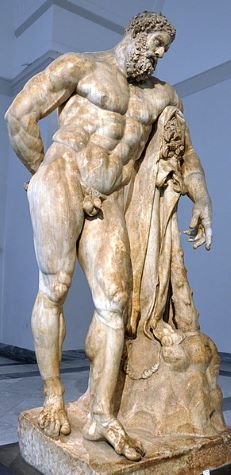
Heracles stands as one of the ancient world’s most powerful images of hypermasculinity: a body so strong that ordinary social limits can barely contain it. He is not simply brave, nor merely skilled in battle. He is excess made flesh. His strength exceeds the human scale, his appetite strains boundaries, his labors carry him beyond cities into the monstrous edges of the world, and his violence can appear both necessary and terrifying. In Greek myth, Heracles is the man who can do what others cannot. He strangles serpents in infancy, defeats beasts, cleanses polluted spaces, seizes impossible prizes, and opens paths where civilization imagines itself threatened by chaos. Yet that same overwhelming power makes him unstable. His body is socially useful because it can destroy monsters, but it is dangerous because it cannot always distinguish between the monster outside the city and the loved ones within the household. Heracles embodies one of patriarchy’s oldest fantasies and fears: the man whose strength protects the world, but whose inability to govern himself can also ruin it.
The famous Labors of Heracles turn masculine achievement into a sequence of visible trials. Each labor forces the hero to confront danger through endurance, pain, ingenuity, and violence. The Nemean Lion, the Lernaean Hydra, the Erymanthian Boar, the Ceryneian Hind, the Augean stables, the Stymphalian Birds, the Cretan Bull, the mares of Diomedes, the belt of Hippolyta, the cattle of Geryon, the apples of the Hesperides, and Cerberus all stage manhood as a test against nature, monstrosity, distance, and death. These deeds are not private achievements. They become narrative proof, the kind of feats through which a male body is transformed into cultural memory. Heracles’ strength must be seen, told, repeated, and monumentalized. He becomes a hero because his body performs publicly what ordinary men cannot perform at all. But the structure of the labors also reveals the burden of this model. Heracles must continually prove himself through tasks that intensify rather than resolve the demand for recognition. Hypermasculinity is never finished. It must always find another beast, another enemy, another impossible burden. Even the range of the labors matters, because they move across landscapes that symbolize the edges of human control: forests, marshes, mountains, stables, islands, foreign kingdoms, divine gardens, and the underworld itself. Heracles’ masculinity is imagined as geographical expansion as well as bodily power. He makes himself legible by entering spaces coded as dangerous, polluted, feminine, foreign, bestial, or deathly and emerging with visible proof of mastery. The heroic body becomes a map of conquest. Yet that map also reveals a trap. If manhood is defined by the conquest of ever more extreme frontiers, then ordinary civic, domestic, and emotional life can seem too small for the hero it has created. Heracles is necessary to the world because he exceeds it, but he is also unfitted for the very limits that make human community possible.
The mythic usefulness of Heracles depends on the redirection of violence. When his force is aimed at monsters, tyrants, and polluted landscapes, he appears as a civilizing hero. He makes roads safer, removes threats, punishes cruelty, and pushes human order into spaces imagined as wild or hostile. This is the constructive side of the heroic masculine body. Ancient communities needed figures who could dramatize courage against danger, and Heracles gave that need a superhuman form. Yet the myths also refuse to let his violence remain clean. Again and again, the same strength that defeats monsters approaches the boundary of disorder. His encounters with women, enemies, rulers, and rivals often involve seizure, coercion, humiliation, or rage. Even his heroic sexuality can appear as an extension of conquest, marking virility through possession and abundance rather than mutuality or restraint. The pattern is not accidental. Heracles represents a world in which masculine greatness is measured by overcoming resistance, but the habit of overcoming can become morally indistinguishable from domination.
The darkest form of this danger appears in the destruction of his own household. In Euripides’ Heracles, the hero returns from the underworld only to be driven into madness and murder his wife and children. The horror of the play lies partly in the collapse of the distinction between public savior and domestic destroyer. The man who conquered death’s threshold cannot protect his own home from himself. Greek tragedy here exposes the terrible instability of heroic masculinity when power is severed from self-knowledge and emotional governance. Heracles’ catastrophe is not simply that he becomes violent; violence has always been central to his heroic identity. The catastrophe is that the social order depends on a kind of force that it cannot fully control. The body trained and celebrated for destruction carries that destructiveness back into the space where tenderness, protection, and kinship should have placed limits on it. The household, supposedly the domain secured by male authority, becomes the place where the myth of protective masculinity breaks apart.
Sophocles’ Women of Trachis offers a related but distinct vision of ruin. There, Heracles’ sexual appetite, conquest, and household disorder lead toward his agonizing death. Deianeira’s attempt to recover his love through what she believes is a charm becomes the instrument of his destruction. The tragedy is not reducible to female jealousy or mistake. It arises from a wider world in which women are made vulnerable by male mobility, sexual entitlement, and heroic conquest. Heracles moves through the world as a taker of cities, enemies, prizes, and women, but the consequences of that movement accumulate within the domestic sphere. Deianeira’s insecurity is produced by a system in which her husband’s heroic masculinity repeatedly exposes her to displacement and humiliation. His body, once the sign of invincibility, becomes a body in torment, consumed by the poisoned robe. The image is devastating: the hypermasculine body that could endure impossible labors is undone not by an enemy in open combat, but by the intimate wreckage of the household order his own appetites helped destabilize. Sophocles makes the domestic consequences of heroic masculinity impossible to ignore. The world may praise the hero’s conquests, but the household must live with their aftershocks: abandoned wives, captive women, displaced affections, and the uncertainty produced by a husband whose glory depends on perpetual movement beyond home. Deianeira’s action is tragic because it is both mistaken and intelligible. She tries to act within the narrow means available to her, attempting to secure love in a world where male desire carries public prestige and female vulnerability carries private anguish. Heracles’ suffering, then, is not only punishment or accident. It is the return of consequences that heroic culture had displaced onto others.
Heracles complicates any simple celebration of ancient masculine strength. He is not merely a brute, nor merely a victim of divine persecution, nor merely a heroic benefactor. He is the mythic embodiment of productive and destructive force held in the same body. The ancient tradition admired him because courage, labor, endurance, and protection mattered. It feared him because the same qualities could become rage, appetite, coercion, and ruin when detached from self-command. His story shows that ancient cultures were capable of recognizing the danger inside the heroic ideal they cherished. The problem was not strength itself. The problem was strength without measure, appetite without restraint, labor without inward transformation, and a social imagination that repeatedly asked men to prove themselves through conquest. Heracles made the world safer by destroying monsters, but his myths also ask what happens when a society teaches a man to become monstrous to defeat them.
The Polis and the Citizen Male: Athenian Manhood, Public Speech, Household Rule, and Anxiety
Classical Athens transformed masculinity from the heroic register of epic into the civic register of the polis. The ideal male was no longer only the warrior who won glory in battle or the mythic strongman who subdued monsters. He was also the citizen who spoke in the assembly, served on juries, managed a household, defended the city, participated in religious life, and appeared before other men as competent, controlled, honorable, and free. Athenian manhood was inseparable from public visibility. To be a man in this political culture was not simply to possess an adult male body, but to occupy a recognized civic position. That position excluded women, slaves, resident foreigners, and children, defining full masculinity through participation in institutions from which others were barred. The citizen male stood at the center of Athenian democracy, but his identity depended on a network of exclusions that made his freedom legible by contrasting it with the dependency of others.
This civic masculinity was built around speech as much as force. In the assembly, the law courts, and public debate, men performed authority through persuasion, memory, accusation, self-presentation, and command of language. A man who could not speak effectively, defend his reputation, or answer an insult risked appearing socially diminished. Oratory became one of the great masculine arts of democratic Athens. Public speech was not merely communication; it was a test of character. The speaker had to seem courageous without being reckless, passionate without being uncontrolled, clever without seeming deceitful, and morally serious without appearing weak. The Athenian citizen stood before the city as an embodied argument. His voice, posture, ancestry, military record, household order, sexual reputation, and political loyalties could all become evidence in the public evaluation of his manhood. Masculinity was made audible in the courtroom and assembly, where civic identity had to be narrated persuasively before other citizens. This made language itself a field of masculine risk. To speak poorly was not simply to fail rhetorically; it could suggest defective judgment, inadequate education, cowardice, shamelessness, or an inability to command oneself before others. The successful speaker had to convert private life into public credibility, presenting his household, body, service, and moral habits as proof that he deserved trust. Athenian democracy expanded political participation among male citizens, but it also intensified the pressure on those citizens to perform themselves continuously before a judging audience. The free man was expected to have a voice, but that voice could expose him as surely as it empowered him.
Yet the public authority of the Athenian male rested heavily on household rule. The oikos was not separate from the polis; it was one of the foundations upon which civic masculinity stood. A man’s capacity to govern wife, children, slaves, property, inheritance, and domestic production helped establish his credibility as a citizen. Household management was moral, economic, and political at once. If a man could not order his own house, his ability to serve the city could be questioned. This helps explain why women’s sexuality, marriage arrangements, legitimacy, and inheritance carried such intense social weight. The citizen body reproduced itself through the household, and the household was organized through male guardianship. Athenian democracy, for all its radical language of citizen equality, depended on patriarchal domestic structures that denied political voice to women while making their reproductive and moral regulation essential to civic continuity. The free male citizen became publicly free in part because others were privately governed.
Athenian comedy and forensic rhetoric reveal how anxious this system could be. Aristophanes repeatedly imagines worlds in which gender roles are inverted, male authority is mocked, or women seize control of public life, not because such scenarios were ordinary realities, but because they made visible the fears under the civic order. In Lysistrata, women’s sexual strike exposes the dependency of men who imagine themselves as masters of war and politics. In Assemblywomen, female political control becomes a comic fantasy through which democratic instability, gender inversion, and social redistribution can be explored. The laughter matters. Comedy allowed Athens to stage the fragility of male authority while containing that fragility within performance. Forensic speeches reveal similar anxieties in a more practical register. Litigants attacked opponents by questioning their sexual conduct, family management, birth status, public service, self-control, or relation to women and slaves. A man could be made vulnerable by allegations that he was passive, luxurious, cowardly, dominated by women, sexually polluted, or insufficiently master of himself and his dependents. The male citizen was powerful, but that power required continuous public maintenance.
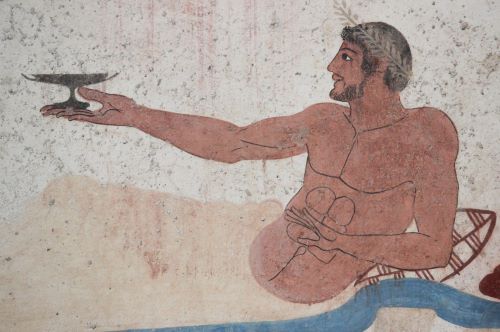
The symposium added another arena in which elite masculinity was cultivated and tested. Drinking, conversation, poetry, erotic competition, philosophical exchange, and social bonding could reinforce male solidarity, but they also exposed the dangers of excess. The symposium was a world of pleasure and hierarchy, one in which men performed refinement, wit, desire, restraint, and dominance among peers. It could produce intimacy, education, and cultural brilliance, but it also relied on exclusions and asymmetries: wives were absent, slave labor sustained the gathering, and entertainers or courtesans occupied socially vulnerable positions. The symposium embodied the contradictions of Athenian male culture. It celebrated self-cultivation while risking self-indulgence. It prized verbal skill while enabling humiliation. It trained elite men in controlled pleasure while revealing how easily control could slip into appetite. Like the assembly and courtroom, it made masculinity performative. A man had to know how to drink, speak, desire, joke, compete, and withdraw without losing face. The carefully managed pleasures of the symposium also served as a rehearsal for hierarchy. Men learned how to occupy rank, form alliances, test rivals, display taste, and participate in eroticized systems of mentorship and competition. The setting could elevate conversation into philosophy, as Plato’s Symposium famously does, but it could also expose the thin line between cultivated masculinity and indulgent domination. The ideal participant was not abstinent, silent, or detached from pleasure. He was measured by his ability to enjoy without being mastered, to desire without appearing enslaved to appetite, and to compete without losing the controlled polish expected of an elite male. In that sense, the symposium dramatized one of the central tensions of Athenian manhood: the citizen male was expected to command others, but his first and most visible test was whether he could command himself.
The Athenian polis turned masculinity into a civic discipline haunted by the possibility of failure. The citizen male was expected to command without seeming tyrannical, desire without losing self-control, speak without appearing deceptive, fight without becoming savage, rule his household without public scandal, and defend his honor without destabilizing the city. This was a demanding and unstable ideal. It did not abolish the older heroic code, but translated it into democratic life, where reputation, speech, legal standing, and domestic authority became as crucial as battlefield courage. Athenian manhood was powerful precisely because it was institutionalized, but it was anxious because it could always be challenged. The polis gave men a language of freedom, citizenship, and public dignity. It also taught them that their masculine status depended on constant demonstration before other men, and that the line between honor and humiliation could be crossed in a single speech, rumor, lawsuit, sexual accusation, or domestic failure.
Sparta and the Militarization of Manhood: The Agoge, Endurance, and the Krypteia
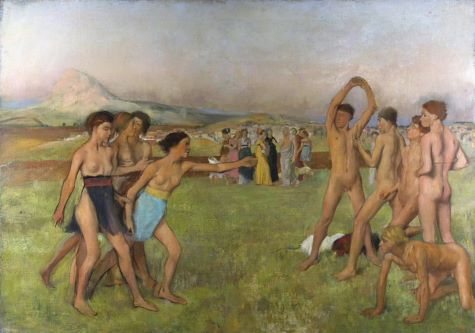
Sparta gave ancient Greek masculinity its most severe civic-military form. Where Athens imagined the citizen male through speech, legal standing, household management, and participation in democratic institutions, Sparta subordinated male identity to discipline, endurance, obedience, and collective warfare. The Spartan man was not primarily fashioned in the assembly or courtroom. He was produced through a system of public upbringing that aimed to detach boys from ordinary domestic softness and bind them to the needs of the state. Ancient writers often treated Sparta as exceptional, sometimes admiring its discipline and sometimes recoiling from its harshness. Modern scholarship has rightly warned that the “Spartan mirage” can distort the evidence, since later admirers and critics alike turned Sparta into a symbolic extreme. Yet even with those cautions, Sparta remains central to the history of masculinity because it made manhood a public project of military formation. The male body became civic property, trained not merely to fight, but to endure hunger, pain, shame, silence, and fear without visible collapse. Spartan masculinity was less a private identity than a civic technology, a deliberate process by which boys were converted into men whose bodies, voices, appetites, and loyalties could be made serviceable to the state. Its harshness was not incidental to the system. It was the system’s language. Pain, deprivation, discipline, and surveillance formed the grammar through which Spartan society taught boys that manhood meant usefulness under pressure, obedience without hesitation, and the ability to remain composed when ordinary human vulnerability might break through.
The agoge was the central institution in this production of manhood. Xenophon presents Spartan education as a deliberate alternative to other Greek systems, emphasizing public supervision, obedience, physical toughness, modesty, competition, and communal discipline. Boys were removed from the easy protections of household life and placed under collective training, where their bodies and habits could be reshaped for war. The system taught not only weapons or athletic endurance, but emotional style. A Spartan male was expected to move, speak, eat, suffer, and obey in ways that displayed control. The point was not individual self-expression. It was formation into a recognizable type: the disciplined citizen-warrior whose body belonged to the common order. Hunger, sparse clothing, exposure, corporal punishment, and ritualized competition all served the same larger goal. They made hardship ordinary, and by making hardship ordinary, they transformed endurance into identity. The boy became a man by learning to treat discomfort as evidence of worth rather than as a reason for complaint.
This militarization of manhood depended on separation from the mother and absorption into male institutions. Spartan boys did not simply grow up; they were transferred from one social world to another. The household remained important to Spartan society, especially through women’s roles in property, reproduction, and civic ideology, but male formation required distance from domestic nurture. The boy had to be remade among other boys and under adult male supervision. This pattern gave Spartan masculinity a powerful initiatory structure. Manhood was not a private maturation of the body but a social passage from dependency into disciplined usefulness. Pain and deprivation were not accidental cruelties within this system. They were pedagogical tools. To withstand them was to demonstrate readiness for the burdens of citizenship and war. To fail before them was to risk shame, exclusion, or diminished standing among peers. The Spartan male learned early that his body would be watched, measured, corrected, and judged. That watchfulness mattered because the agoge did not only train bodies; it trained boys to internalize the gaze of the community. The young Spartan learned to imagine himself as always visible, always accountable, always subject to comparison with other males whose endurance could shame or validate his own. Masculinity was not achieved in isolation. It emerged through rivalry, correction, public testing, and the constant threat of disgrace. The result was a form of manhood that fused belonging with surveillance. To become a Spartan man was to enter a brotherhood of discipline, but also to accept that one’s body and conduct were never fully private.
The famous Spartan ideal of silence and brevity belongs within this same masculine discipline. Laconic speech was not merely a stylistic quirk. It represented a deeper moral economy in which restraint signaled mastery. The man who spoke too much risked appearing undisciplined, vain, or soft. The man who endured silently appeared formed by the state’s demands. This does not mean that Spartans lacked politics, emotion, or internal conflict. Rather, their public ideal taught that the best male body was one that did not disclose weakness under pressure. The control of language, appetite, and pain became part of the same masculine grammar. Even the communal messes, where adult male citizens ate together, reinforced the idea that manhood was collective rather than merely household-based. The Spartan citizen-warrior was not free in the Athenian democratic sense. He was free because he belonged to the ruling body of Spartiates, but that freedom was inseparable from discipline, conformity, and the domination of others.
The krypteia reveals both the power and the difficulty of interpreting Spartan masculinity. Ancient evidence is limited, late, and not fully consistent. Plato describes the krypteia as a severe endurance practice in which young men went barefoot, slept without cover, served themselves, and roamed the countryside. Plutarch, drawing on traditions associated with Aristotle, gives a darker account in which selected young Spartans hid by day, moved at night, and killed helots. Modern scholars continue to debate how these traditions should be combined, whether the krypteia was primarily initiation, military training, secret policing, terror against the helot population, or some changing combination of these functions. The uncertainty matters. A responsible account should not simply repeat the most lurid popular version as settled fact. But the interpretive stakes remain clear. Whether framed as endurance training, surveillance, ritualized violence, or helot control, the krypteia placed young men in a liminal space between boyhood and full civic masculinity, testing secrecy, hardness, autonomy, and readiness to act without ordinary restraints. If the violent tradition reflects actual practice, then Spartan manhood was not only formed through suffering; it was also confirmed through domination over an enslaved population whose subjection made Spartiate freedom possible.
That connection between disciplined masculinity and social domination is essential. Sparta’s warrior ideal did not exist in abstraction. It rested on the labor and coercion of helots, who made possible the leisure, training, and military specialization of the Spartiate class. The Spartan male could appear as the pure citizen-warrior because others worked under compulsion. His disciplined body was linked to a wider structure of exploitation. This does not erase the real austerity of Spartan training, nor does it make Spartan courage imaginary. Yet it does expose the political foundation beneath the ideal. Spartan masculinity taught self-control, endurance, obedience, and willingness to die for the community. It also normalized hierarchy, suspicion, and the governance of an unfree population by fear. Sparta sharpened one of the oldest tensions in the history of manhood: the same culture that praised discipline as virtue could direct that discipline toward domination. The Spartan male was trained to master himself, but he was also trained to belong to a ruling order that mastered others.
Philosophical Alternatives: Socrates, Plato, Aristotle, and the Masculinity of Self-Mastery
Greek philosophy did not abolish the heroic or civic ideals of masculinity, but it did create alternative ways to imagine male excellence. Against the warrior who proved himself through conquest, the orator who proved himself through public persuasion, and the household master who proved himself through rule over dependents, philosophy increasingly asked whether the highest form of manhood might lie in mastery of the self. This was not a modern egalitarian rejection of patriarchy. Philosophers such as Plato and Aristotle still worked within cultures that assumed male civic superiority, household hierarchy, and the exclusion of women from full political life. Yet their writings changed the center of gravity. Courage, honor, and public reputation remained important, but they were no longer enough. The truly formed man had to govern appetite, anger, fear, pleasure, ambition, and the desire for approval. Philosophy turned masculinity inward without making it private, since self-command was still imagined as the basis of public worth.
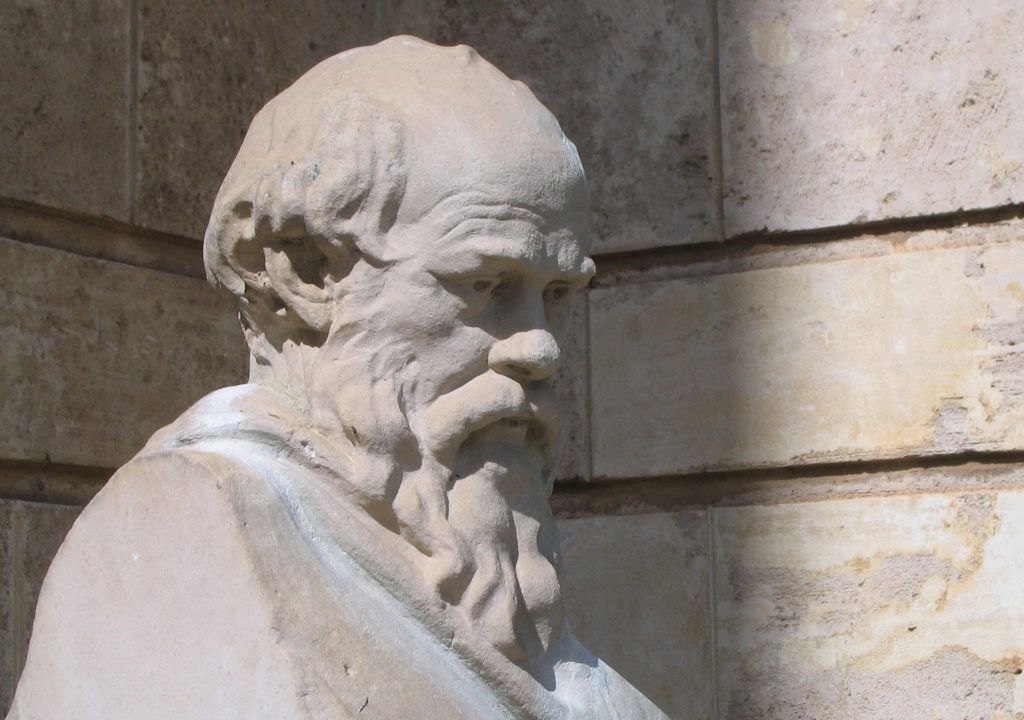
Socrates stands as the most disruptive figure in this transformation. He was not conventionally heroic in the Homeric sense, nor did he fit neatly into the competitive public masculinity of democratic Athens. He possessed no great wealth, cultivated no glamorous body, commanded no army, and did not seek power through office. Yet in Plato’s Apology, he presents himself as courageous precisely because he refuses to abandon examination, truth-telling, and moral obedience even under threat of death. His masculinity is not located in domination over others but in refusal to be governed by fear, flattery, or public anger. This does not make Socrates gentle in any simple sense. His questioning could humiliate powerful men, expose pretension, and provoke deep resentment. But the form of courage he dramatizes is different from Achilles’ rage or the Spartan’s hardened obedience. Socrates does not answer injury by slaughter, nor does he treat public disapproval as annihilation. He stands before the city and insists that the unexamined life is not worth living, making philosophical integrity a form of manly endurance. His death intensifies that point. By refusing to flee, beg, flatter the jury, or abandon his vocation, Socrates turns vulnerability into moral authority. The condemned body becomes stronger than the city that condemns it, not through physical power, but through steadfastness before death. This was a radical revaluation of masculine courage. It suggested that the bravest man might not be the one who kills most effectively, speaks most loudly, or dominates most visibly, but the one who cannot be made false by fear. In that sense, Socrates transforms the public performance of manhood into an ethical test of the soul.
Plato develops this alternative by linking justice, reason, and self-rule. In the Republic, the properly ordered soul mirrors the properly ordered city: reason should rule, spirit should support reason, and appetite should be disciplined rather than allowed to dominate. This psychology has obvious political implications, but it also matters for the history of masculinity. Plato does not merely ask what men should do; he asks what kind of inner order makes a person fit to act. The tyrannical soul, enslaved to appetite and lawless desire, becomes one of his great images of degradation. The tyrant may appear powerful, surrounded by force and fear, but inwardly he is least free because he is mastered by the worst part of himself. In that sense, Plato reverses a common masculine fantasy. The man who dominates others is not necessarily strong. He may be the most enslaved of all, driven by desires he cannot govern. Philosophical masculinity challenges heroic and political models that confuse power with excellence. A man who conquers cities but cannot govern himself remains morally disordered. Plato’s critique is especially important because it exposes domination as a possible symptom of weakness rather than proof of strength. The tyrant’s violence, sexual excess, suspicion, and hunger for control reveal not abundance of manhood but inner fragmentation. He must rule others because he cannot rule himself. This turns the heroic and political imagination inside out. The battlefield, assembly, household, and empire may all become stages on which an ungoverned soul performs its disorder. For Plato, the truly excellent man is not the one most feared by others, but the one whose reason orders desire, whose courage serves justice, and whose public action reflects inward harmony rather than compensatory aggression.
Aristotle’s account of virtue gives this self-mastery a more practical and civic form. In the Nicomachean Ethics, courage is not reckless aggression, nor is moderation lifeless abstinence. Virtue lies in trained judgment, habituated character, and the capacity to act rightly in relation to fear, pleasure, anger, honor, and desire. Aristotle’s ideal remains deeply elite and male-coded, tied to citizenship, leisure, household authority, and public recognition. His world is not free from patriarchal hierarchy. Yet he makes an important distinction between true virtue and mere display. The courageous person does not seek danger for spectacle, nor does the temperate person lack desire altogether. Excellence depends on proportion, formation, and reasoned action. This is a crucial philosophical counterweight to hypermasculinity. The man who is merely violent, boastful, pleasure-seeking, or hungry for honor is not more masculine in Aristotle’s ethical world. He is deficient, because he lacks the disciplined character that makes freedom meaningful.
These philosophical alternatives did not dismantle ancient patriarchy, and they should not be romanticized as modern models of humane masculinity. Socrates, Plato, and Aristotle all remained embedded in social worlds structured by male citizenship, slavery, and the subordination of women. Still, their work exposes a tension inside Greek masculinity that later traditions would continue to revisit. If manhood required strength, what kind of strength mattered most? If courage was necessary, was it found in killing, enduring pain, speaking truth, facing death, or resisting desire? If freedom was a masculine ideal, could a man be free while enslaved to appetite, reputation, anger, or the crowd? Philosophy did not end the ancient association between masculinity and hierarchy, but it did make domination morally insufficient. It introduced a standard by which the powerful man could be judged weak, the publicly humiliated man could appear courageous, and the self-controlled man could be imagined as superior to the conqueror. In that shift, Greek thought opened one of antiquity’s most important alternatives to violent honor: the possibility that true strength begins where performance gives way to discipline of the soul.
Alexander the Great and the Globalization of Heroic Masculinity

Alexander the Great transformed Greek heroic masculinity from an inherited literary model into an imperial performance staged across continents. He was not merely a successful king or general. He consciously inhabited the memory of Achilles, treating Homeric heroism as a script for conquest, fame, and self-fashioning. From the beginning of his campaign against Persia, Alexander linked military ambition to heroic identity, presenting himself as a warrior of extraordinary courage, endurance, speed, generosity, and destiny. His manhood was not confined to Macedonian kingship or Greek aristocratic values. It was performed before Macedonians, Greeks, Persians, Egyptians, Central Asians, and Indians, each audience requiring different gestures of authority. The result was a new scale of masculine display. Heroic manhood, once sung in epic and dramatized in the competitive world of Greek aristocrats, now moved through empire as spectacle, policy, propaganda, and personal obsession. Alexander’s body itself became part of that performance. His youth, wounds, speed, appetite for risk, and refusal to remain behind the lines all helped construct an image of kingship grounded in visible danger. He did not simply command soldiers to enact heroic violence on his behalf; he repeatedly placed himself where heroic masculinity could be witnessed, tested, and remembered. This mattered because conquest on Alexander’s scale required more than strategy. It required a narrative powerful enough to persuade men that they were not merely marching for plunder or Macedonian ambition, but participating in a world-historical drama of glory.
Alexander’s imitation of Achilles mattered because it gave conquest a mythic grammar. Arrian and Plutarch both preserve traditions in which Alexander honored Achilles at Troy, identifying himself with the greatest warrior of the Iliad. This was not antiquarian sentiment. It was political theater. Achilles offered Alexander a model of youth, glory, beauty, martial excellence, and world-consuming ambition, but he also carried the dangers already visible in Homer: rage, wounded honor, emotional intensity, and a willingness to let personal feeling become public catastrophe. Alexander’s own career repeatedly exposed that tension. His courage was real, often reckless, and physically astonishing. He fought at the front, crossed rivers, endured wounds, led forced marches, and shared hardship with his men. These actions made him legible as a warrior-king whose authority rested not only on birth, but on visible bodily risk. Yet the same need to be seen as unsurpassable pushed him toward extremes. His masculinity required constant escalation, as if each victory demanded another frontier, another battle, another act of symbolic dominance over geography, enemies, and mortality itself.
The imperial setting complicated this heroic model because Alexander had to rule as well as conquer. In Asia, he increasingly adopted Persian court practices, married Roxane, incorporated Persian elites, and attempted to fuse Macedonian military kingship with older Near Eastern forms of royal magnificence. These choices created deep tension among his Macedonian companions, for whom masculine legitimacy was tied to battlefield camaraderie, direct speech, and aristocratic recognition among peers. Proskynesis, Persian dress, and court ceremony could appear to some Macedonians as signs of oriental luxury, softness, or tyrannical self-exaltation. Alexander’s masculinity became contested within his own army. Was he still the first among warrior companions, or had he become a divine-style monarch demanding submission? The conflict reveals how fragile heroic masculinity remained even at the height of conquest. Alexander could defeat the Persian Empire and still face suspicion from his own men if his performance of kingship seemed to cross the boundary between heroic command and foreign despotism.
His violence against intimates reveals the darkest consequences of heroic self-mythologizing. The killing of Cleitus the Black, who had saved Alexander’s life at the Granicus, became one of the most disturbing episodes in the ancient tradition. In a drunken quarrel, Alexander murdered a companion who challenged his claims and criticized the diminishing status of Macedonian veterans. The episode is crucial because it collapses the distance between Achilles’ rage and imperial power. A warrior’s wounded honor becomes a king’s lethal authority. Similarly, the execution of Philotas and the killing of Parmenion exposed the paranoia and brutality that could accompany a political masculinity unable to tolerate perceived betrayal. Alexander’s grief after such acts was often intense, but grief did not undo the violence. Rather, it deepened the tragic pattern already visible in heroic literature: a man of extraordinary courage and charisma whose emotional world could convert insult, suspicion, and rivalry into irreversible destruction. The same qualities that made him magnetic to followers also made him dangerous when admiration faltered. His army could celebrate him as invincible, but no ruler surrounded by such expectations could easily accept contradiction. The heroic king had to be praised, obeyed, and believed in. When companions questioned the myth, they threatened not only a policy or decision, but the identity Alexander had built around unsurpassed greatness. That made dissent feel like betrayal and criticism feel like emasculation. Alexander’s court became a theater of masculine danger, where loyalty, rivalry, intoxication, grief, and royal anger could turn intimacy into mortal risk.
Alexander’s importance for the history of masculinity lies in the way he globalized the heroic ideal while revealing its instability. He carried the warrior code beyond the polis and beyond Macedon, fusing epic memory, kingship, conquest, divine association, bodily courage, and imperial spectacle into a single overwhelming image. Later rulers, generals, emperors, and conquerors would measure themselves against him, drawn to the fantasy of the young man who remade the world through will, speed, and force. Yet the ancient sources also preserve the cost: exhaustion, mutiny, massacre, grief, suspicion, drunken violence, and the impossibility of stopping once conquest had become identity. Alexander did not invent masculine domination, but he magnified it onto a world stage. His life shows how heroic masculinity could become imperial ideology, and how the man who must always surpass all others can become captive to the very glory that makes him great.
Roman Virtus: Manhood, Citizenship, Discipline, and the Fear of Effeminacy
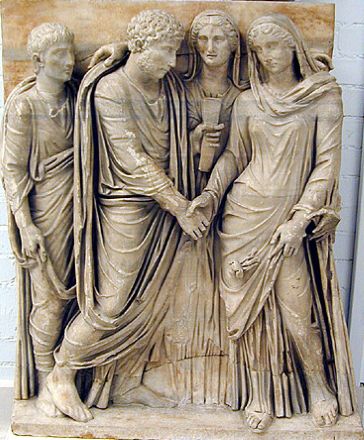
Roman masculinity gave ancient manhood one of its most durable political vocabularies. The Latin word virtus, rooted in vir, “man,” linked masculine excellence to courage, discipline, public service, command, and moral force. It did not simply mean bravery in battle, though military courage remained central to Roman self-understanding. Virtus also carried civic and ethical weight, marking the qualities expected of a free Roman male who could serve the republic, defend his household, govern dependents, endure hardship, and subordinate private appetite to public responsibility. Roman masculinity was not only bodily or sexual. It was institutional. The Roman man proved himself through military service, political participation, legal authority, household mastery, and the visible performance of self-command. Yet this very ideal made masculinity anxious, because a man’s public standing could be damaged by signs that he lacked control over his body, household, speech, desires, or reputation.
The Roman citizen male occupied a world in which freedom and dominance were closely joined. To be a freeborn Roman man was to stand above slaves, women, children, and foreigners within a hierarchy that defined liberty through the capacity to command rather than be commanded. This did not mean every Roman man possessed equal power, wealth, or status. Roman society was sharply stratified by class, rank, ancestry, citizenship, and patronage. But across those divisions, elite ideology treated masculine dignity as inseparable from autonomy, authority, and resistance to subordination. A man who appeared dependent, passive, excessively luxurious, or ruled by desire risked symbolic feminization. The fear was not only that he might seem “womanly” in a simple biological sense. It was that he might appear socially unfree, governed by forces that a proper Roman male should master. Roman masculinity depended on a constant distinction between the one who acts and the one who is acted upon, the one who commands and the one who submits. This distinction reached into politics, law, family, sexuality, dress, speech, military bearing, and bodily presentation. The respectable Roman male was expected to carry himself as a person capable of command, not as one overcome by appetite, luxury, theatricality, foreign influence, or emotional disorder. Even aristocratic refinement required limits. A man could cultivate eloquence, learning, beauty, wealth, and pleasure, but he had to do so without appearing softened by them. The Roman fear of effeminacy was not simply fear of women. It was fear of failed mastery, of a collapse in the symbolic boundary between citizen and dependent, ruler and ruled, free man and slave.
This distinction was especially visible in Roman sexual ideology. Roman moral discourse did not organize sexuality around modern categories of heterosexuality or homosexuality. It focused instead on status, dominance, penetration, self-control, and the preservation of masculine dignity. Elite Roman men could boast of sexual access, but they were also expected to avoid positions or behaviors associated with passivity, loss of control, or degradation. The problem was not desire itself. The problem was being mastered by desire or placed in a socially inferior role. This created a sexual code in which masculinity was measured less by the gender of the partner than by the citizen male’s ability to preserve dominance, reputation, and bodily integrity. Such a system could normalize coercion against socially vulnerable people while presenting male self-command as a virtue. It also made masculinity deeply fragile. A rumor, insult, poem, courtroom accusation, or political attack could portray a man as soft, penetrated, servile, luxurious, or enslaved to women, and thereby undermine his public authority.
Roman politics made these anxieties into weapons. Cicero, Catullus, Sallust, and later imperial writers repeatedly used accusations of effeminacy, sexual misconduct, luxury, drunkenness, theatricality, or Eastern softness to attack political enemies. These charges were rarely only personal. They implied civic incapacity. A man who could not master his pleasures could not be trusted to master public affairs. A man ruled by women, actors, foreign customs, or bodily indulgence appeared unfit for Roman command. This rhetoric became especially powerful in the late republic, when political competition, civil war, and elite rivalry intensified the need to perform moral authority. Julius Caesar could be mocked through sexual rumor even as he embodied military brilliance and political audacity. Mark Antony became the great negative example in Augustan propaganda: a Roman commander supposedly unmanned by Cleopatra, luxury, Egypt, and desire. The charge was not merely that Antony made poor political choices. It was that he had surrendered Roman masculine discipline to foreign seduction and feminine rule. Octavian’s political messaging depended on making Antony appear not only defeated, but disordered: a Roman man who had allowed private passion to corrupt public duty, and who had exchanged the austere discipline of Rome for the imagined softness of the East. This was propaganda, but propaganda works by activating familiar cultural fears. Antony could be represented as dangerous because he seemed to embody the nightmare Roman moralists had long warned against: the elite male who loses command of himself, his household, his army, and finally the state because he has become captive to appetite and spectacle. In that sense, accusations of effeminacy did not merely insult a man’s gender presentation. They attacked the foundation of his political legitimacy.
Augustus built his public image partly by answering that crisis. Against Antony’s alleged excess, Augustus presented himself as restorer of order, family, discipline, morality, and Roman tradition. His legislation on marriage, adultery, and elite reproduction tied political renewal to household regulation, showing again how Roman masculinity moved between state and family. The disciplined male citizen was expected to marry properly, produce legitimate children, control female sexuality within the household, and contribute to the continuity of Rome. This moral program was not simply private conservatism. It was imperial ideology. The health of Rome was imagined through the ordered household, and the ordered household depended on male authority disciplined by law, custom, and public expectation. Yet the Augustan project also reveals the contradiction at the heart of Roman masculinity. The state claimed to restore moral self-command by expanding surveillance over intimacy, desire, marriage, and reproduction. Masculine discipline became a public concern because private disorder was treated as political danger.
Roman virtus sharpened the ancient connection between masculinity, citizenship, and fear. It offered a powerful ideal of courage, service, austerity, and self-mastery, but it also created a culture in which manhood could be publicly unmade through accusations of softness, passivity, dependence, or uncontrolled desire. The Roman male was expected to rule himself so that he could rule others, but the pressure to prove that self-rule never disappeared. Like Achilles, he feared dishonor; like the Athenian citizen, he depended on public recognition; like the Spartan, he was judged by discipline and endurance. Rome gave these older patterns a legal, political, and imperial vocabulary. Its distinctive contribution was to make masculinity a test of civic fitness so intense that effeminacy became not merely a gendered insult, but a charge of public failure. The result was an ideal both formidable and brittle: a manhood built on courage and command, yet haunted by the possibility that reputation, body, appetite, or rumor could expose the Roman man as less free than he claimed to be.
Sexuality, Domination, and Victim-Blaming: Women, Violence, and the Mythic Logic of Patriarchy
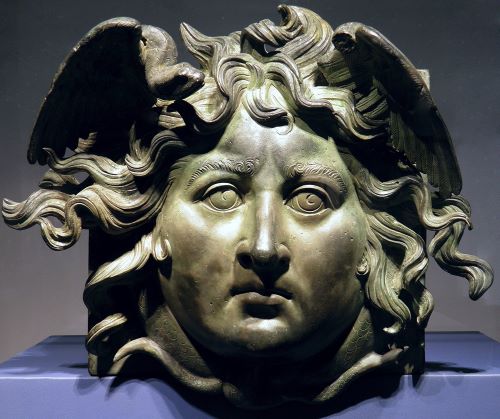
Ancient masculinity was often constructed not only through relations among men, but through the control, violation, exchange, silencing, and symbolic use of women. In myth, epic, law, and political memory, women’s bodies frequently became the terrain upon which male honor was won, lost, avenged, or restored. This does not mean that ancient women existed only as victims, nor that ancient texts are simple mirrors of social practice. Myth is never that flat. Women in Greek and Roman literature speak, deceive, resist, mourn, interpret, curse, persuade, and remember. Yet the narrative structures surrounding them often reveal the logic of patriarchy with brutal clarity. Male violence could be displaced onto female shame. Male rivalry could be expressed through female possession. Male political renewal could begin with female suffering. Again and again, the injured woman became the evidence through which men argued about honor, legitimacy, family, and power.
The myth of Medusa is especially useful because it shows how unstable and layered ancient traditions could be. In earlier Greek material, Medusa appears primarily as a monstrous Gorgon whose severed head becomes a weapon and protective symbol. In Ovid’s later Roman version, Medusa had once been beautiful and was raped by Neptune in Minerva’s temple, after which Minerva transformed her hair into snakes. This version is not the whole ancient tradition, and it should not be treated as if every Greek source told the story that way. But Ovid’s account became enormously influential because it captures a pattern that modern readers recognize as victim-blaming: the woman suffers male violence, yet the visible punishment falls on her body. Medusa becomes monstrous not because she initiates the violation, but because patriarchal and divine order mark her as the site of pollution. The result is a mythic logic in which male aggression disappears behind female transformation. The violated woman becomes the terrifying figure, while the god’s violence recedes into the background.
Lucretia offers the Roman political version of the same problem. In Livy’s account, Sextus Tarquinius rapes Lucretia, and her death becomes the moral catalyst for the overthrow of the monarchy and the founding of the Republic. Roman tradition made Lucretia an emblem of chastity, honor, and political awakening, yet the structure of the story is deeply revealing. Her violated body becomes the evidence through which men mobilize against tyranny. Her speech matters, but it is followed by suicide, and the political meaning of her suffering is taken up by male relatives and avengers. The wrong done to Lucretia becomes a wrong against husband, father, household, and Rome itself. This does not make Lucretia insignificant. On the contrary, she becomes one of the most powerful women in Roman memory. But her power is mediated through a patriarchal system that treats female sexual violation as both personal catastrophe and symbolic injury to male civic order. The birth of republican liberty is narrated through the destruction of a woman who could not survive dishonor within the moral universe Rome imagined for her. Livy’s narrative makes the paradox especially sharp because Lucretia is both morally authoritative and politically instrumentalized. She summons witnesses, gives testimony, insists on her innocence, and refuses to let the crime be hidden, but once she dies, the interpretation of her body passes into male hands. Brutus lifts the bloody knife and converts private violation into public revolution. Her death becomes a language men can use to condemn kingship, rally citizens, and define Roman liberty against tyrannical sexual violence. Yet the republic that emerges from this memory remains patriarchal, not emancipatory. Lucretia is honored as a founding figure precisely because she conforms to a standard that leaves her no livable future after rape. Her story reveals how patriarchal societies could praise female virtue while trapping women inside impossible moral expectations.
Greek tragedy repeatedly returns to similar structures, though often with more ambiguity and resistance than simple patriarchal ideology would allow. Cassandra enters Aeschylus’ Agamemnon as captive, prophet, foreign woman, and sexual prize of the victorious king. Her body marks Agamemnon’s triumph at Troy, but her voice disrupts that triumph by telling truths no one wishes to hear. She is doubly trapped: possessed by a conqueror and cursed to speak prophecy without belief. Her position exposes the violence hidden beneath heroic victory. The woman taken in war is not merely a trophy. She is a witness to the moral rot of conquest. Philomela’s story, developed most fully in Ovid, makes the connection between sexual violence and silencing even more explicit. Tereus rapes Philomela and cuts out her tongue to prevent testimony, but she transforms violation into communication through weaving. The myth is horrific because it shows patriarchal violence trying to control both the female body and the female voice. Its force lies in the refusal of that silence. Philomela cannot speak, yet she still tells. Cassandra and Philomela expose two different failures of patriarchal control. Cassandra has a voice, but her voice is denied credibility; Philomela loses her voice, but finds another medium for truth. Together they show that silencing is not only the physical removal of speech. It is also the social refusal to hear, believe, or act upon women’s testimony. Their stories deepen the larger argument about masculinity because male domination depends not only on strength, sexual access, or household power, but on control over recognition. The conqueror must define the captive. The rapist must suppress the witness. The household must contain scandal. The city must decide whose words count as truth. Tragedy and myth preserve these violent structures, but they also disturb them by allowing women’s testimony to return in forms that cannot be easily erased.
These stories matter because they reveal how ancient patriarchal masculinity depended on controlling narrative as well as bodies. To dominate a woman was not only to possess or injure her physically. It was also to determine what her suffering meant, who could speak about it, and whose honor it affected. In many ancient narratives, women’s pain becomes meaningful only when translated into male action: revenge, war, political change, household restoration, or dynastic crisis. The woman’s violation becomes a plot device through which men prove courage, loyalty, outrage, or legitimacy. Yet the texts often contain more than the ideology they transmit. Lucretia speaks before she dies. Cassandra prophesies even when ignored. Philomela communicates after mutilation. Medusa, even as monster, becomes an image of terrifying power that later traditions would repeatedly reinterpret. Patriarchal myth seeks to discipline women’s bodies and voices, but it also preserves traces of their resistance, grief, and accusation.
The mythic logic of patriarchy did not merely subordinate women; it trained men to understand themselves through women’s vulnerability. A man could be dishonored through the violation of “his” woman, legitimized by avenging her, shamed by failing to control her, or empowered by possessing her. This system placed impossible burdens on women while also making masculinity dependent on what it claimed to master. Female sexuality became a boundary marker for male status. Female speech became dangerous when it exposed male violence. Female suffering became politically useful when it could be converted into male honor. Such patterns do not prove that modern rape culture is simply ancient culture repeated, but they do show that the displacement of blame, the silencing of victims, and the use of women’s bodies as symbols of male and civic order have very old roots. Ancient literature did not always endorse those patterns without question. At its best, it made them visible. And once visible, the patriarchal bargain appears far less noble: men claimed to protect women, yet often built their own honor out of the injuries women were forced to bear.
Rites of Passage Beyond the Mediterranean: Manhood as Trial, Pain, Capture, and Recognition

The Mediterranean world was not unique in treating manhood as a status that had to be proven, witnessed, and socially confirmed. Across many societies, the passage from boyhood to recognized male adulthood involved ritualized hardship, separation from childhood dependency, exposure to danger, instruction by older men, or public acts that demonstrated usefulness to the group. Such practices varied enormously, and they should not be collapsed into a single universal pattern. Some emphasized warfare, others endurance, hunting, circumcision, fasting, seclusion, instruction, or ritual knowledge. Yet a recurring logic appears across many cultural settings: manhood was not assumed to arrive automatically with puberty. It had to be made visible. The community had to see signs that the boy had become someone who could bear pain, accept obligation, restrain fear, defend others, reproduce social order, and occupy a recognized place among adult men.
Arnold van Gennep’s classic model of rites of passage remains useful here, especially his division of transition into separation, liminality, and incorporation. Boys were often removed from ordinary childhood space, placed into an ambiguous condition outside normal social roles, and then returned under a new identity. Historians later emphasized the liminal quality of such rituals, where initiates existed between statuses and were reshaped through ordeal, instruction, discipline, or symbolic death and rebirth. These frameworks must be used cautiously, since they can become too neat when applied across very different societies. Still, they help explain why pain, danger, hunger, silence, darkness, isolation, or bodily marking so often accompanied male initiation. Such experiences made transition tangible. They taught the initiate that adulthood required not only age, but endurance before witnesses and submission to a social order larger than the self. They also show why masculinity so often had to be produced through controlled disorientation. The initiate was separated from familiar protections, deprived of ordinary comforts, and made to inhabit a threshold condition where childhood identity could be symbolically stripped away. That liminal space could be frightening, but it was also socially productive. It allowed elders, ritual specialists, warriors, or male age-groups to impress upon the initiate that manhood was not private possession. It was a role granted through discipline, memory, obligation, and recognition. Pain became language. Hunger, scars, silence, seclusion, or danger communicated that the old self had been interrupted and that the new self would be accountable to communal expectations.
Mesoamerican warfare offers one especially important example of manhood, status, and recognition beyond the Mediterranean. In Mexica, or Aztec, society, military achievement was closely tied to male honor, social advancement, and religious obligation. Young men were trained in institutions such as the telpochcalli and calmecac, where discipline, warfare, service, and ritual instruction shaped future roles. Capturing enemies in battle could bring prestige, rank, and visible honors, while also serving the sacrificial system through which the Mexica understood cosmic maintenance. Yet this must be framed carefully. Captive-taking was not a simple “test of manhood” in isolation, nor should Aztec warfare be reduced to a crude hunger for victims. It was embedded in military hierarchy, political expansion, tribute systems, religious cosmology, and elite competition. For young warriors, the capture of an enemy did provide a public and recognized act through which masculine competence could be displayed. The warrior’s body, courage, discipline, and social value became legible through the captive he brought back.
The logic of capture is important because it differs from the heroic model of killing outright. In many warrior cultures, the dead enemy proves force. In the Mexica case, the living captive could prove control. To seize rather than merely kill required skill, courage, bodily risk, and coordination within a military and ritual system. The captive then became part of a larger public drama in which warfare, sacrifice, hierarchy, and masculine prestige intersected. This does not mean every male life followed the same path, nor that all men achieved honor through identical means. But it does show how manhood could be made through action that others could verify, reward, and remember. Like the Greek hero’s prize or the Roman soldier’s military distinction, the captive made status visible. Masculinity was not simply felt inwardly. It was confirmed through a socially readable sign.
Comparative examples also show why historians must be wary of romanticizing violence as timeless “primitive manhood.” Many descriptions of initiation, hunting, or warrior customs come through colonial, missionary, administrative, or outsider accounts that filtered practices through exoticism, moral judgment, or fascination with “savage” masculinity. The Maasai lion-hunting example, for instance, has often circulated in simplified form as though killing a lion were a timeless and universal requirement for male adulthood. Maasai age-set systems, warriorhood, cattle protection, ritual authority, and changing ecological conditions are actually far more complex, and modern conservation realities have significantly altered practices surrounding lions. Similarly, early medieval Norse masculinity belongs chronologically to a later era and should not be folded into the ancient world as though “Viking trials” formed a single verified rite. Comparative history is most useful when it clarifies patterns without flattening difference. The shared point is not that all men everywhere had to kill, hunt, or capture. It is that many societies made masculinity through public trials that transformed the body into evidence.
These rites and trials reveal a crucial feature of constructed manhood: recognition mattered as much as ordeal. Pain by itself did not make a man. Danger by itself did not make a man. The ordeal had to be interpreted by the community. The boy who endured, captured, hunted, fasted, bled, learned, or returned from seclusion became a man because others accepted the act as meaningful. That social recognition could strengthen solidarity, teach responsibility, and bind individuals to communal obligations. But it could also normalize cruelty, emotional suppression, domination, and the belief that vulnerability must be conquered rather than understood. The comparative evidence deepens the central argument here. Masculinity was not merely performed before others as vanity or display. It was performed because societies had built systems in which male identity required proof. The question was never only what the initiate could endure. It was what kind of man the ritual taught him to become, and whom he was taught to rule, protect, fear, or silence afterward. This is why rites of passage can never be understood only as ceremonies of maturity. They are also acts of cultural instruction, encoding lessons about authority, gender, obedience, violence, sexuality, kinship, and social memory. A ritual might teach courage, discipline, and responsibility, but it might also teach that fear must be hidden, pain must be endured without complaint, and recognition must be earned through domination or risk. The same process that created belonging could narrow emotional life. The same ordeal that made a young man visible to his community could teach him that tenderness, dependence, or hesitation threatened his place within it. Across very different societies, the making of men often began with a question that was both social and moral: not simply whether a boy could survive the test, but whether the test itself made him more fully human or merely more useful to the structures that demanded him.
Late Antiquity and Christian Manhood: Martyrs, Monks, Bishops, and the Reversal of Heroic Power

Late antiquity did not end the ancient struggle over masculinity, but it profoundly altered its moral vocabulary. As Christianity moved from persecuted movement to imperial religion, older ideals of courage, endurance, discipline, honor, and public witness were redirected into new forms of male authority. The heroic warrior did not disappear, but he was joined, and sometimes challenged, by the martyr, the monk, the bishop, the ascetic, and the spiritual athlete. These figures did not prove manhood primarily through conquest, sexual dominance, household mastery, or civic office. They proved it through suffering, chastity, self-denial, doctrinal courage, pastoral command, and the willingness to submit the body to spiritual discipline. The battlefield moved inward, but it did not become less intense. Christian masculinity often imagined the soul as a site of combat, the body as a territory to be governed, and temptation as an enemy more dangerous than any foreign army.
The martyr became one of the earliest Christian reversals of heroic power. In Roman culture, masculine honor had often been tied to command, military courage, and the refusal to submit. Christian martyrdom transformed submission itself into victory when endured for God. The martyr did not conquer by killing, but by refusing to renounce faith under torture, humiliation, and death. This was not weakness in Christian interpretation. It was a higher form of courage, one that exposed the limits of imperial violence. The Roman state could break the body, but it could not compel the will. The martyr’s body became a public text, displaying endurance, fidelity, and spiritual freedom before hostile authorities and watching crowds. This created a powerful alternative to Roman virtus. The free man was no longer simply the citizen who commanded others or the soldier who faced death in battle. He could also be the condemned believer who remained inwardly unconquered while outwardly defeated. The spectacle of suffering became a counter-spectacle to imperial power. Martyrdom also reworked the meaning of shame. Public torture, exposure, imprisonment, and execution were designed to degrade the condemned body and display the state’s mastery over it. Christian interpretation inverted that display. What Rome meant as humiliation became testimony; what authorities meant as defeat became triumph; what spectators might see as weakness became evidence of divine allegiance. This inversion mattered for masculinity because it detached honor from worldly control. The martyr did not need to dominate the crowd, silence the judge, defeat the executioner, or preserve the body from pain. His strength appeared in his refusal to let fear determine truth. Yet this was not a simple rejection of ancient heroic language. Christian texts often described martyrs as athletes, soldiers, combatants, and victors, preserving the older admiration for endurance while turning its object toward spiritual fidelity rather than physical conquest.
Monasticism intensified this inward turn by making self-mastery a lifelong vocation. The desert monk, especially in the traditions surrounding Antony, became a new kind of heroic male: not a conqueror of cities, but a conqueror of appetite, fear, demons, sexual desire, hunger, vanity, and anger. Athanasius’ Life of Antony presents the monk as an athlete of God, withdrawing from ordinary society not to escape struggle, but to enter a more radical combat. The desert becomes an arena. Fasting, celibacy, silence, prayer, sleeplessness, poverty, and solitude become weapons. This language matters because it preserves the older masculine admiration for endurance while redirecting it away from public domination. The monk’s enemy is not the helot, rival warrior, political opponent, captive woman, or foreign king. It is the disordered self and the demonic powers that exploit it. Yet this transformation remains ambivalent. Ascetic masculinity could challenge violent and sexualized models of manhood, but it could also intensify suspicion of the body, fear of women, and contempt for ordinary vulnerability.
Christian bishops developed another form of manhood, one rooted neither in solitary asceticism nor physical martyrdom alone, but in moral authority, teaching, discipline, and governance of the community. As Christianity became institutionally powerful, the bishop increasingly occupied a public role that combined elements of father, judge, patron, theologian, administrator, and civic representative. Episcopal masculinity required command, but it was ideally framed as service. The bishop was expected to defend doctrine, correct sinners, care for the poor, negotiate with secular authorities, and embody spiritual steadiness. This made Christian leadership an important bridge between older civic masculinity and new religious authority. The bishop inherited some of the public expectations once attached to the Roman elite male: eloquence, patronage, legal intelligence, self-command, and the capacity to govern. But he was also expected to ground that authority in humility, pastoral care, and submission to God. Late antique Christian manhood did not abolish hierarchy. It baptized hierarchy, placing male authority within a theological language of shepherding, correction, and spiritual fatherhood.
Augustine illustrates the psychological depth of this transformation. In the Confessions, masculinity is not primarily tested in battle or law court, but in memory, desire, shame, friendship, grief, ambition, sexuality, and conversion. Augustine’s struggle is not with a monster outside the city, but with a divided will. He wants to be transformed, yet resists transformation; he seeks truth, yet remains attached to pleasure, status, and habit. This interior drama matters for the history of masculinity because it makes self-mastery more complex than simple discipline. Augustine does not present the self as something a strong man can conquer by sheer force. The will itself is wounded, conflicted, and dependent on grace. In that sense, Christian thought both continued and destabilized older ideals of male self-command. It still valued mastery over appetite, but it denied that mastery could be achieved through masculine pride alone. The strongest man was not the one who needed nothing. He was the one who could confess dependency, receive grace, and recognize the limits of his own will.
Late antique Christian masculinity reversed heroic power while preserving many of its structures. It challenged the glorification of violence by honoring martyrs who refused to kill, monks who fought inward battles, and bishops who claimed authority through service. It elevated chastity over sexual conquest, humility over public boasting, and spiritual endurance over physical domination. Yet it also retained hierarchy, discipline, suspicion of softness, and the language of combat. Women could become martyrs, ascetics, patrons, and theologians in powerful ways, but institutional authority increasingly remained male. The body was still a field to be governed, desire a threat to be mastered, and spiritual failure often imagined through feminized weakness or bodily surrender. Christianity did not simply cure ancient toxic masculinity. It reconfigured the problem. It offered profound critiques of domination, violence, and pride, while also producing new masculine ideals of control, authority, and sanctified discipline. The result was not the end of ancient manhood, but its conversion into a new religious form: less centered on conquest of others yet still haunted by the old question of what a man must defeat to be considered strong.
Early Medieval and Norse Masculinities: Household, Honor, Violence, and Reputation
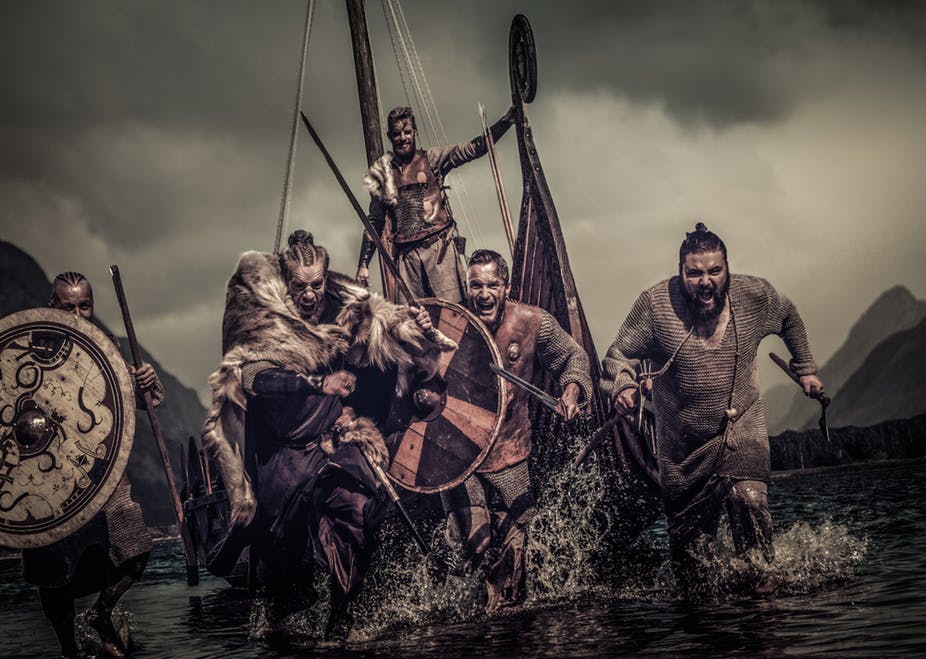
Early medieval and Norse masculinities developed in a world where household authority, kinship obligation, reputation, and violence remained deeply intertwined. The social landscape of Viking Age Scandinavia and medieval Iceland was not identical to the classical Mediterranean, but it continued an older pattern: manhood was a status that had to be recognized by others and defended against shame. The free male household head was expected to manage property, protect dependents, sustain alliances, answer insults, and preserve the standing of his kin. Masculinity was not only physical courage. It was social credibility. A man had to be seen as someone whose word mattered, whose household could not be violated without consequence, and whose reputation would survive in communal memory. In saga literature especially, honor operates like a public currency. It could be accumulated through generosity, courage, vengeance, legal skill, and restraint, but it could also be lost through cowardice, passivity, sexual humiliation, failure to avenge, or visible submission to another man’s will.
The household was central to this masculine order. In Norse and Icelandic contexts, the farmstead was not merely a domestic space but a political and economic unit through which male authority became visible. A man’s standing depended on his ability to maintain land, kin, dependents, guests, labor, and alliances. Hospitality and generosity mattered because they displayed abundance and control; a man who could feed, gift, shelter, and protect others demonstrated that his household had weight in the world. Marriage, inheritance, fosterage, and feud all connected private domestic life to wider networks of power. Yet the household was not simply a male fortress. Women in saga literature often shape honor conflicts by urging vengeance, preserving memory, negotiating kinship ties, managing property, and judging male failure. Their voices frequently expose the fragility of masculine reputation. A man could imagine himself master of the household, but he remained vulnerable to the judgments of those within it, especially when his courage or resolve was questioned.
Violence in the sagas is rarely random, even when it becomes brutal. It is embedded in systems of insult, compensation, feud, law, and memory. A killing might demand vengeance, but vengeance itself could create new obligations and new enemies. This made masculine honor both necessary and dangerous. The man who refused to answer injury risked shame; the man who answered too violently risked escalation, outlawry, or death. The Icelandic sagas are especially valuable because they show men negotiating this tension between force and law. Legal assemblies, compensation settlements, witnesses, oaths, and arbitration existed alongside ambush, revenge, and bloodshed. Masculinity was tested not only by the sword, but by the ability to navigate public process without appearing weak. A successful man needed courage, but also timing, counsel, alliances, and judgment. Saga society did not simply glorify violence for its own sake. It repeatedly asked whether violence restored honor or trapped men inside cycles they could no longer control. This is why feud literature is so useful for understanding masculinity as a social system rather than a personality trait. Men are not violent merely because they are angry; they are violent because kinship, reputation, legal expectation, and public memory place them under pressure to respond. Yet the sagas often recognize the tragedy of that pressure. A restrained settlement may look prudent to one audience and shameful to another. A revenge killing may restore honor in the moment while ensuring future grief. Male identity is caught between competing demands: to be brave but not reckless, forceful but not lawless, loyal but not blindly destructive. The sagas preserve that tension with remarkable subtlety, showing how a culture can admire courage while also understanding that courage, when chained to reputation, may become a machine for producing more death.
Reputation was perhaps the most enduring battlefield. In a culture where memory carried social force, words could wound almost as deeply as weapons. Insults questioning courage, sexual role, bodily integrity, or masculine competence could produce dangerous consequences. Accusations of cowardice or effeminacy threatened a man’s place among other men because they implied that he had failed the basic expectations of free male status. The category of níð, involving shame, dishonor, and sometimes sexualized degradation, shows how gendered insult could become socially explosive. A man accused of passivity, cowardice, or unmanliness faced not only emotional injury but public diminishment. Here Norse masculinity intersects with broader ancient and medieval patterns: manhood depended on being recognized as active, self-possessed, and capable of response. To be feminized or shamed was to be pushed toward symbolic dependency, and the pressure to answer such humiliation could drive men toward violence even when prudence counseled restraint. The danger lay in the fact that reputation did not belong entirely to the self. It lived in others’ speech, in rumor, in poetry, in memory, in the judgment of neighbors, and in the stories told after a man’s death. A man might know his own courage, but if the community named him coward, that knowledge was not enough. Masculinity had to be socially ratified. This made words politically charged and emotionally volatile. A cutting insult, a mocking verse, or a public accusation could demand an answer because silence itself might be read as confession. The tongue could become a weapon that forced the hand toward the sword.
The warrior ideal remained powerful, but it was never the whole story. Norse masculinity valued courage in battle, loyalty to lord or kin, physical toughness, and readiness to face death, yet saga heroes are not all admired in the same way. Some are praised for restraint, legal intelligence, poetic skill, foresight, or loyalty under pressure. Others are impressive but destructive, trapped by pride or unable to let insults pass. The figure of the berserker, for instance, dramatizes uncontrolled martial ferocity, but saga literature often treats such men with ambivalence or suspicion rather than uncomplicated admiration. Likewise, the greatest heroes can be doomed by the very honor code that makes them memorable. The Saga of the Volsungs and the Icelandic family sagas preserve a world in which masculine greatness is inseparable from vulnerability to fate, feud, and reputation. A man may win fame, but fame often comes at the price of peace.
Early medieval and Norse masculinities extend the central argument beyond antiquity without merely repeating it. They show that the construction of manhood through honor, household authority, public recognition, controlled violence, and fear of shame continued to shape post-classical societies in distinctive ways. The Norse world did not simply inherit Greek or Roman masculinity, nor should it be reduced to modern fantasies of Vikings as pure “alpha” warriors. Its literature is far more subtle. It portrays men who must defend honor, but also men destroyed by honor; men who rule households, but depend on women’s judgment; men who wield violence, but must answer to law; men who seek fame, but become prisoners of reputation. In that tension lies the deeper continuity. Across cultures and centuries, masculinity remained unstable because it required witnesses. A man had to be remembered as brave, generous, self-possessed, and dangerous enough to command respect. But the need to be remembered could become its own trap, turning reputation into a master more demanding than any king.
The Tyrannical Patriarch: From Ancient Kingship to Henry VIII as an Afterlife, Not an Ancient Example
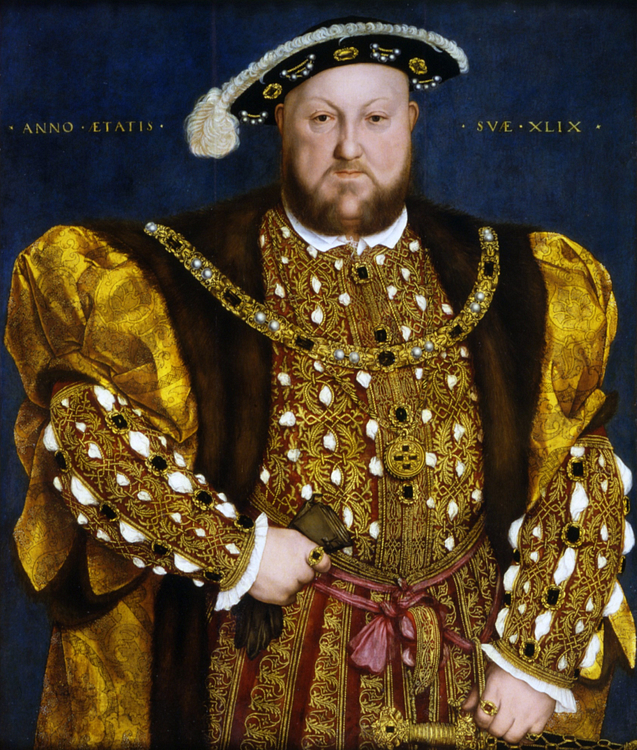
Henry VIII does not belong to the ancient world, and treating him as an ancient example would distort the chronology. He belongs instead to the afterlife of older patriarchal patterns: the king as father of the realm, the ruler as master of bodies and households, the male sovereign whose private desires could become public policy, and the dynastic patriarch whose need for legitimacy shaped law, religion, marriage, and violence. This distinction matters because the goal is not to draw a crude line from Gilgamesh to Henry VIII as though all patriarchal rulers were the same. The point is subtler. Early modern kingship inherited and reworked much older ideas about masculine rule, household order, sexual control, divine sanction, and political obedience. Henry’s reign shows how ancient and medieval masculine scripts could survive in transformed Christian, dynastic, legal, and monarchical settings. He was not a Spartan, a Homeric warrior, or a Roman aristocrat. Yet the symbolic grammar of his authority remained deeply patriarchal: to rule was to command, to father was to secure succession, and to be challenged was to risk humiliation before the political household of the kingdom.
The dynastic problem lay at the center of Henry’s masculine self-fashioning. Tudor rule was relatively new, born from the violence and instability of the Wars of the Roses, and the production of legitimate heirs was not a private domestic matter. It was a question of national security, political continuity, and royal reputation. Henry’s anxieties over male succession fused the household with the state in an unusually visible form. His marriages were not only romantic, sexual, or personal arrangements. They were instruments through which the future of the dynasty was imagined and contested. Henry’s masculinity was measured by reproductive success as much as military display or theological authority. Failure to produce a surviving legitimate male heir could be read not merely as misfortune, but as a threat to the king’s body politic, his providential standing, and his patriarchal competence. The king’s bedchamber became a political chamber because the male body of the sovereign was expected to secure the future of the realm.
This dynastic masculinity helps explain why Henry’s marital history became so explosive. His break with Catherine of Aragon, his marriage to Anne Boleyn, the repudiation and execution of Anne, and the subsequent sequence of marriages all reveal how female bodies became sites of royal expectation, blame, and replacement. Henry’s wives were not passive figures without agency, but the structure surrounding them was brutally asymmetrical. A queen’s fertility, sexuality, loyalty, speech, and obedience could determine her survival. Anne Boleyn’s fall shows how accusations of sexual disorder could be weaponized to resolve political, dynastic, and emotional crisis. Whether understood through court faction, royal disillusionment, or the need to clear a path for another marriage, the charges against Anne transformed alleged female sexual treason into a justification for patriarchal elimination. The logic was ancient in shape even when early modern in form: male sovereignty displaced its instability onto the woman whose body had failed, threatened, or been made to symbolize dynastic disorder. Catherine of Aragon had already been made to bear the burden of Henry’s dynastic anxiety, as the long struggle over annulment turned a marriage, a daughter, and a queen’s dignity into obstacles before the king’s need for a male successor. Anne then became the promise of restored virility and providential renewal, only to be recast as betrayal when that promise failed to produce the desired result. In both cases, the women’s bodies became political arguments. Fertility, chastity, obedience, and legitimacy were not merely personal virtues or failures; they were made to carry the symbolic weight of Tudor survival. Henry’s patriarchal power depended on this displacement, because it allowed the crisis of royal masculinity to appear as a crisis caused by women.
Henry’s religious supremacy intensified this patriarchal structure by making obedience to the king a theological and political requirement. The break with Rome was not only a doctrinal or institutional event. It was also a reconfiguration of masculine sovereignty. Henry claimed authority over the English church, making himself supreme head, later supreme governor in the language of his successors, of the religious body of the realm. This brought together kingship, fatherhood, conscience, law, and coercion in a single royal identity. Resistance could be interpreted not simply as political disagreement, but as disobedience to the divinely sanctioned order Henry claimed to embody. Thomas More and John Fisher became prominent victims of this new settlement because their refusal to recognize the king’s supremacy challenged the totality of Henry’s authority. Here again, the issue was not merely policy. It was the danger of limits. A patriarchal sovereign who identifies his will with the order of church and realm cannot easily tolerate principled refusal, because dissent exposes the fact that obedience is not absolute.
The tyrannical quality of Henry’s masculinity lay not simply in violence, but in the fusion of personal injury with state power. Many rulers were violent; that alone does not explain his importance here. Henry’s significance lies in how often royal anger, dynastic fear, sexual frustration, theological certainty, and political coercion converged. The king’s wounded pride could become legal process. His marital desires could become ecclesiastical revolution. His suspicion could become treason. His need for obedience could become execution. In that sense, Henry represents an afterlife of heroic and patriarchal masculinity under conditions of centralized monarchy. Like earlier figures of dominating manhood, he treated dissent as disorder and disorder as something to be mastered. But unlike the Homeric hero or saga warrior, Henry possessed the machinery of an early modern state. His masculinity did not have to be proved only by sword, speech, household discipline, or personal courage. It could be enforced through Parliament, courts, clergy, proclamations, oaths, imprisonment, and the scaffold. This is what makes his reign such a powerful later mirror of older patriarchal scripts. Achilles needed an audience of warriors, the Roman aristocrat needed reputation among peers, and the Norse household head needed communal recognition; Henry had institutions capable of converting his self-defense into national obedience. The scale had changed. Masculine insecurity could now be bureaucratized. A king’s fear of humiliation, failure, betrayal, or dynastic extinction could move through statutes, trials, attainders, and executions, giving personal anxiety the appearance of lawful necessity.
Henry VIII belongs near the end of this historical arc not because he was ancient, but because he reveals the endurance and transformation of older masculine assumptions. The king as patriarch, the household as political model, the female body as dynastic instrument, the ruler’s honor as public order, and dissent as personal affront all recur in new institutional forms. Yet Henry also shows the danger of confusing authority with masculinity and masculinity with domination. His reign produced heirs, churches, laws, executions, ruptures, and legends, but it also exposed the fragility beneath tyrannical power. The sovereign who must constantly secure obedience, replace wives, punish dissent, and proclaim legitimacy is not a figure of serene strength. He is a ruler haunted by the possibility that his body, household, conscience, and dynasty might fail him. In that anxiety, Henry becomes not an ancient example, but a later mirror: the patriarch who commands the realm because he cannot bear the limits of being a man.
Ancient Masculinity and Modern Toxicity: Continuity, Difference, and Misuse
The following video from “Classics in Color” discusses ancient Greek ideals of masculinity:
The relationship between ancient masculinity and modern toxic masculinity must be handled with care. It would be historically lazy to claim that Achilles, Heracles, Roman virtus, Spartan discipline, Norse honor, and early modern patriarchal kingship simply “caused” modern misogyny, domination, or male emotional repression. Modern masculinity has been shaped by capitalism, colonialism, nationalism, industrial labor, racial hierarchy, evangelical and secular moral cultures, mass media, online radicalization, and the politics of resentment. The ancient world did not contain all of those structures, nor did it imagine gender in the same conceptual vocabulary. Yet the distance between antiquity and the present does not erase continuity. Ancient sources preserve recurring masculine scripts that remain recognizable: the fear of humiliation, the need for public validation, the conversion of grief into violence, the treatment of women as symbols of male honor, the suspicion of softness, the association of dominance with freedom, and the belief that a man must prove himself before other men or risk social erasure.
The danger comes when modern readers treat ancient masculinity as a usable fantasy rather than a historical problem. Classical Greece, Rome, Sparta, the Vikings, and warrior kings are often selectively appropriated in contemporary culture as evidence of a supposedly natural male order: hard, hierarchical, heterosexual, violent, emotionally silent, and contemptuous of weakness. This is not antiquity. It is nostalgia wearing armor. The actual ancient evidence is far more conflicted. Achilles is magnificent, but his rage destroys. Heracles protects civilization, but he also devastates his household. Sparta trains endurance, but depends on domination over helots. Roman virtus prizes discipline, but is haunted by sexual and social anxiety. Norse saga heroes defend honor, but are often trapped by the very reputation they seek to preserve. Ancient cultures did not simply celebrate domination without consequence. Their greatest texts repeatedly show what happens when honor, appetite, rage, and authority escape moral limits.
This complexity matters because modern toxic masculinity often feeds on simplified antiquity. It turns Sparta into a gym slogan, Rome into an authoritarian aesthetic, Vikings into symbols of racialized warrior fantasy, and Greek heroes into icons of male supremacy stripped of tragedy, grief, dependence, and failure. The resulting image is not historical memory but ideological extraction. It takes the hard surfaces of ancient manhood and discards the warnings embedded within them. Homer’s Achilles becomes “alpha” rage without Priam’s supplication. Heracles becomes strength without madness, labor without ruin. Rome becomes command without anxiety, law without coercion, empire without exploitation. The past is made useful by being made shallow. That shallowness is precisely why historians must insist on the full record. Ancient masculinity was never one thing. It was a contested field of warrior courage, civic service, philosophical self-command, household rule, sexual hierarchy, religious endurance, public speech, and political fear. The misuse of antiquity depends on selective memory, taking the images that flatter domination while ignoring the narratives that expose its cost. The ancient world becomes a costume closet for modern grievance: helmets without history, marble without slavery, shields without grief, conquest without widows, glory without corpses. That kind of appropriation does not honor the past. It empties it. It turns complex cultures into props for men who want authority without responsibility, toughness without wisdom, and tradition without the burden of interpretation.
Acknowledging misuse should not lead to sanitizing the ancient world. Many ancient masculine systems really did normalize domination, slavery, misogyny, sexual coercion, militarized honor, and emotional restriction. They often taught men that status depended on command over women, dependents, captives, enemies, and lesser men. They often made public shame more terrifying than cruelty, and they often rewarded those who could turn vulnerability into aggression. These patterns are not inventions of modern polemic. They are visible in epic, tragedy, law, rhetoric, political propaganda, religious discipline, and saga literature. The historian’s task is not to excuse them as “products of their time” or condemn them as if context did not matter. It is to understand how they worked, why they were persuasive, whom they benefited, whom they injured, and how ancient writers themselves sometimes exposed their contradictions. The ancient world gives us both the architecture of patriarchal power and some of the earliest critiques of its costs.
Modern toxicity, then, is neither a fossil from antiquity nor a wholly new invention. It is a contemporary formation that repeatedly draws on old emotional scripts: the man who must dominate because he fears being diminished, the ruler who treats dissent as emasculation, the warrior who cannot grieve without rage, the household master who confuses control with care, and the culture that teaches boys that tenderness is danger. But antiquity also offers counter-scripts. Socrates stands before death without domination. Plato imagines tyranny as enslavement to appetite. Aristotle distinguishes courage from recklessness. Christian martyrs transform defeat into moral witness. Saga literature shows men destroyed by the honor they cannot escape. The past does not give us a pure model to imitate. It gives us a record of struggle over what strength means. The most useful lesson is not that ancient men were naturally toxic or nobly superior, but that masculinity has always been made, taught, performed, and contested. What has been constructed can also be criticized, refused, and remade. That is the point at which historical analysis becomes ethically useful. If ancient manhood was assembled through rituals, stories, laws, households, wars, speeches, and memories, then modern manhood is also being assembled, every day, through families, screens, schools, churches, politics, entertainment, and peer culture. The question is not whether boys and men will inherit scripts of strength. They will. The question is whether those scripts teach courage without cruelty, confidence without domination, desire without entitlement, discipline without emotional mutilation, and honor without the endless hunger to humiliate someone else.
Conclusion: The Manhood That Had to Be Proved
The long history traced here begins with a deceptively simple insight: masculinity was rarely treated as a condition that merely arrived with the male body. It had to be made. It had to be recognized. It had to be performed before gods, kings, fathers, comrades, rivals, wives, enemies, citizens, subjects, and descendants. From Gilgamesh’s royal excess to Achilles’ wounded honor, from Heracles’ overwhelming body to Spartan discipline, from Athenian speech to Roman virtus, from Christian ascetic struggle to Norse reputation and Henry VIII’s dynastic anxiety, manhood appears again and again as unstable status. It was surrounded by rituals, tests, narratives, laws, accusations, and symbols because it was never simply secure. The demand to prove manhood gave ancient and later societies powerful ideals of courage, endurance, duty, and self-command. But it also created a deep vulnerability: the man who must constantly prove himself can come to experience tenderness, dependence, grief, hesitation, and contradiction as threats to his existence.
That vulnerability helps explain why masculine ideals so often turned toward domination. If manhood depended on being visibly free, then women, slaves, captives, children, foreigners, sexual partners, religious dissenters, household dependents, and defeated enemies could all become the surfaces on which male freedom was written. The man was the one who commanded rather than submitted, penetrated rather than was penetrated, avenged rather than endured, spoke rather than was silenced, ruled rather than was ruled. Yet the very insistence on mastery revealed the anxiety beneath it. Achilles could not bear dishonor. Heracles could not fully govern the force that made him heroic. The Roman elite male feared accusations of softness because reputation could undo him. The Norse household head lived under the judgment of memory and insult. Henry VIII possessed a kingdom, yet still feared dynastic failure, female disobedience, and principled refusal. Across these worlds, patriarchal masculinity promised power while making men dependent on validation they could never permanently possess.
The most important ancient traditions did not merely endorse this order. They exposed its costs. Homer allowed Priam and Achilles to meet in grief. Greek tragedy showed heroic power collapsing into domestic ruin. Philosophy asked whether domination over others meant anything if the soul remained enslaved to appetite, anger, or fear. Christian martyrdom and asceticism reversed older models of victory, even while preserving hierarchy and discipline. Saga literature showed men destroyed by honor codes they could not escape. These countercurrents matter because they prevent the past from becoming either a museum of barbarism or a fantasy of lost masculine purity. Antiquity was not morally simple. It contained domination and critique, violence and self-command, misogyny and female resistance, heroic aspiration and tragic warning. Its record is valuable precisely because it shows masculinity being simultaneously made and questioned.
Modern toxic masculinity is not ancient manhood repeated unchanged, but it continues to draw from old emotional scripts: the fear of humiliation, the worship of dominance, the suspicion of softness, the conversion of pain into aggression, and the belief that a man must be invulnerable to be worthy. The historical task is not to sneer at ancient men or excuse them, but to understand how cultures teach boys and men what strength is supposed to mean. The deepest tragedy is not that societies admired courage, discipline, protection, or honor. Those can be humane virtues. The tragedy is that so many societies taught men to confuse strength with control, honor with domination, silence with maturity, and violence with proof. If manhood has always been constructed, then it has never been inevitable. What was made can be remade, and the measure of that remaking is whether strength can be separated from the need to rule, wound, or silence others.
Bibliography
- Aeschylus. Agamemnon. In Aeschylus II: The Oresteia, edited by Mark Griffith and Glenn W. Most, translated by Richmond Lattimore. 3rd ed. Chicago: University of Chicago Press, 2013.
- Apollodorus. The Library of Greek Mythology. Translated by Robin Hard. Oxford: Oxford University Press, 1997.
- Aristophanes. Assemblywomen. In Aristophanes: Frogs, edited and translated by Jeffrey Henderson. Cambridge, MA: Harvard University Press, 2002.
- —-. Lysistrata. In Aristophanes: Birds, Lysistrata, Women at the Thesmophoria, edited and translated by Jeffrey Henderson. Cambridge, MA: Harvard University Press, 2000.
- Aristotle. Nicomachean Ethics. Translated by Terence Irwin. Indianapolis: Hackett, 1999.
- —-. Politics. Translated by C. D. C. Reeve. Indianapolis: Hackett Publishing, 1998.
- Arrian. Anabasis of Alexander. Translated by P. A. Brunt. Cambridge, MA: Harvard University Press, 1976.
- Athanasius. The Life of Antony and the Letter to Marcellinus. Translated by Robert C. Gregg. Mahwah, NJ: Paulist Press, 1980.
- Augustine of Hippo. Confessions. Translated by Henry Chadwick. Oxford: Oxford University Press, 1991.
- —-. The City of God. Translated by Henry Bettenson. London: Penguin Classics, 2003.
- Beard, Mary. SPQR: A History of Ancient Rome. New York: Liveright, 2015.
- —-. Women & Power: A Manifesto. New York: Liveright, 2017.
- Bernard, G. W. The King’s Reformation: Henry VIII and the Remaking of the English Church. New Haven: Yale University Press, 2005.
- Boone, Elizabeth Hill. Incarnations of the Aztec Supernatural: The Image of Huitzilopochtli in Mexico and Europe. Philadelphia: American Philosophical Society, 1989.
- Briant, Pierre. Alexander the Great and His Empire: A Short Introduction. Translated by Amélie Kuhrt. Princeton: Princeton University Press, 2010.
- Brown, Peter. The Body and Society: Men, Women, and Sexual Renunciation in Early Christianity. New York: Columbia University Press, 1988.
- Burrus, Virginia. Begotten, Not Made: Conceiving Manhood in Late Antiquity. Stanford, CA: Stanford University Press, 2000.
- Butler, Judith. Gender Trouble: Feminism and the Subversion of Identity. New York: Routledge, 1990.
- Byock, Jesse L. Viking Age Iceland. London: Penguin Books, 2001.
- Carr, David M. Writing on the Tablet of the Heart: Origins of Scripture and Literature. Oxford: Oxford University Press, 2005.
- Cartledge, Paul. Alexander the Great: The Hunt for a New Past. Woodstock, NY: Overlook Press, 2004.
- —-. Spartan Reflections. London: Duckworth, 2001.
- Catullus. The Poems of Catullus. Translated by Peter Green. Berkeley: University of California Press, 2005.
- Cicero. Philippics 1–6. Edited and translated by D. R. Shackleton Bailey. Cambridge, MA: Harvard University Press, 2009.
- Clark, Elizabeth A. Reading Renunciation: Asceticism and Scripture in Early Christianity. Princeton: Princeton University Press, 1999.
- Clarke, Michael. Flesh and Spirit in the Songs of Homer: A Study of Words and Myths. Oxford: Clarendon Press, 1999.
- Clendinnen, Inga. Aztecs: An Interpretation. Cambridge: Cambridge University Press, 1991.
- Clover, Carol J. “Regardless of Sex: Men, Women, and Power in Early Northern Europe.” Speculum 68:2 (1993): 363–387.
- Cohen, David. Law, Sexuality, and Society: The Enforcement of Morals in Classical Athens. Cambridge: Cambridge University Press, 1991.
- Connell, R. W. Masculinities. Berkeley: University of California Press, 1995.
- Cooper, Kate. The Virgin and the Bride: Idealized Womanhood in Late Antiquity. Cambridge, MA: Harvard University Press, 1996.
- Demosthenes. Demosthenes, Speeches 27-38. Translated by Edward M. Harris. Austin: University of Texas Press, 2008.
- Diodorus Siculus. Library of History, Book 15. Translated by C. H. Oldfather. Cambridge, MA: Harvard University Press (Loeb Classical Library), 1957.
- Doran, Susan. Henry VIII and the English Reformation. London: Routledge, 1997.
- Dover, Kenneth J. Greek Popular Morality in the Time of Plato and Aristotle. Berkeley: University of California Press, 1974.
- duBois, Page. Sowing the Body: Psychoanalysis and Ancient Representations of Women. Chicago: University of Chicago Press, 1988.
- Ducat, Jean. Spartan Education: Youth and Society in the Classical Period. Translated by Emma Stafford, Pamela-Jane Shaw, and Anton Powell. Swansea: Classical Press of Wales, 2006.
- Edwards, Catharine. The Politics of Immorality in Ancient Rome. Cambridge: Cambridge University Press, 1993.
- Elton, G. R. Reform and Reformation: England, 1509–1558. Cambridge, MA: Harvard University Press, 1977.
- Euripides. Heracles. In Euripides: Heracles and Other Plays, translated by Robin Waterfield. Oxford: Oxford University Press, 2002.
- Fisher, Nick. Aeschines: Against Timarchos. Oxford: Oxford University Press, 2001.
- Foxhall, Lin, and John Salmon, eds. When Men Were Men: Masculinity, Power and Identity in Classical Antiquity. London: Routledge, 1998.
- Frymer-Kensky, Tikva. Reading the Women of the Bible: A New Interpretation of Their Stories. New York: Schocken Books, 2002.
- Galinsky, G. Karl. The Herakles Theme: The Adaptations of the Hero in Literature from Homer to the Twentieth Century. Oxford: Basil Blackwell, 1972.
- Gleason, Maud W. Making Men: Sophists and Self-Presentation in Ancient Rome. Princeton: Princeton University Press, 1995.
- Gloyn, Liz. “Teaching Sex and Gender in the Ancient World.” Transformations: The Journal of Inclusive Scholarship and Pedagogy 21:2 (2010/2011), 25-35.
- Graziosi, Barbara, and Johannes Haubold. “Homeric Masculinity: ἠνορέη and ἀγηνορίη.” Journal of Hellenic Studies 123 (2003), 60–76.
- Hadot, Pierre. Philosophy as a Way of Life: Spiritual Exercises from Socrates to Foucault. Edited by Arnold I. Davidson. Translated by Michael Chase. Oxford: Blackwell, 1995.
- Hallett, Judith P., and Marilyn B. Skinner, eds. Roman Sexualities. Princeton: Princeton University Press, 1997.
- Harris, Rivkah. Gender and Aging in Mesopotamia: The Gilgamesh Epic and Other Ancient Literature. Norman: University of Oklahoma Press, 2000.
- Hassig, Ross. Aztec Warfare: Imperial Expansion and Political Control. Norman: University of Oklahoma Press, 1988.
- Hodkinson, Stephen. Property and Wealth in Classical Sparta. Swansea: Classical Press of Wales, 2000.
- Holt, Frank L. Into the Land of Bones: Alexander the Great in Afghanistan. Berkeley: University of California Press, 2005.
- Homer. The Iliad. Translated by Samuel Butler. The Internet Classics Archive.
- —-. The Odyssey. Translated by Samuel Butler. The Internet Classics Archive.
- Hunter, Virginia J. Policing Athens: Social Control in the Attic Lawsuits, 420–320 B.C. Princeton: Princeton University Press, 1994.
- Ives, Eric. The Life and Death of Anne Boleyn: “The Most Happy.” Malden, MA: Blackwell, 2004.
- Jochens, Jenny. Women in Old Norse Society. Ithaca, NY: Cornell University Press, 1995.
- Kennell, Nigel M. The Gymnasium of Virtue: Education and Culture in Ancient Sparta. Chapel Hill: University of North Carolina Press, 1995.
- Kimmel, Michael. Angry White Men: American Masculinity at the End of an Era. New York: Nation Books, 2013.
- Livy. Ab Urbe Condita. Translated by B. O. Foster et al. Cambridge, MA: Harvard University Press, 1919–1959.
- Loades, David. Henry VIII: Court, Church and Conflict. London: National Archives, 2007.
- Loraux, Nicole. Tragic Ways of Killing a Woman. Translated by Anthony Forster. Cambridge, MA: Harvard University Press, 1987.
- MacCulloch, Diarmaid. Thomas Cromwell: A Revolutionary Life. New York: Viking, 2018.
- Matthews, Victor H., and Don C. Benjamin. Social World of Ancient Israel, 1250–587 BCE. Peabody, MA: Hendrickson Publishers, 1993.
- McDonnell, Myles. Roman Manliness: Virtus and the Roman Republic. Cambridge: Cambridge University Press, 2006.
- Miller, William Ian. Bloodtaking and Peacemaking: Feud, Law, and Society in Saga Iceland. Chicago: University of Chicago Press, 1990.
- Murnaghan, Sheila. Disguise and Recognition in the Odyssey. 2nd ed. Lanham, MD: Lexington Books, 2011.
- Nagy, Gregory. The Best of the Achaeans: Concepts of the Hero in Archaic Greek Poetry. Rev. ed. Baltimore: Johns Hopkins University Press, 1999.
- Njáls Saga. Translated by Robert Cook. London: Penguin Classics, 2001.
- Nussbaum, Martha C. The Fragility of Goodness: Luck and Ethics in Greek Tragedy and Philosophy. Rev. ed. Cambridge: Cambridge University Press, 2001.
- Ober, Josiah. Mass and Elite in Democratic Athens: Rhetoric, Ideology, and the Power of the People. Princeton: Princeton University Press, 1989.
- Ovid. Metamorphoses. Translated by Charles Martin. New York: W. W. Norton, 2004.
- Padilla, Mark W., ed. Rites of Passage in Ancient Greece: Literature, Religion, Society. Lewisburg, PA: Bucknell University Press, 1999.
- Pang, Colin Cromwell. “Catullus, Hip-hop, and Masculinity.” Arion: A Journal of Humanities and the Classics 25:1 (2017), 61-94.
- Perpetua. The Passion of Perpetua and Felicity. In The Acts of the Christian Martyrs, edited and translated by Herbert Musurillo. Oxford: Clarendon Press, 1972.
- Plato. Apology. In Plato: Complete Works, edited by John M. Cooper. Indianapolis: Hackett Publishing, 1997.
- —-. Gorgias. In Plato: Complete Works, edited by John M. Cooper, translated by Donald J. Zeyl, 791–869. Indianapolis: Hackett Publishing, 1997.
- —-. Laws. In Plato: Complete Works, edited by John M. Cooper, translated by Donald J. Zeyl, 791–869. Indianapolis: Hackett Publishing, 1997.
- —-. Republic. In Plato: Complete Works, edited by John M. Cooper, translated by Donald J. Zeyl, 791–869. Indianapolis: Hackett Publishing, 1997.
- Plutarch. Life of Alexander. In Plutarch: Lives, translated by Robin Waterfield. Oxford: Oxford University Press, 1998.
- —-. Life of Antony. In Plutarch: Lives, translated by Robin Waterfield. Oxford: Oxford University Press, 1999.
- —-. Life of Lycurgus. In Plutarch: Lives, translated by Robin Waterfield. Oxford: Oxford University Press, 1998.
- Powell, Anton, ed. A Companion to Sparta. 2 vols. Hoboken, NJ: Wiley Blackwell, 2018.
- Psoma, Selene. “The Spartan Krypteia Revisited.” Kernos 37 (2024), 181–217.
- Redfield, James M. Nature and Culture in the Iliad: The Tragedy of Hector. Expanded ed. Durham, NC: Duke University Press, 1994.
- Richlin, Amy. The Garden of Priapus: Sexuality and Aggression in Roman Humor. New York: Oxford University Press, 1983.
- Roisman, Joseph, ed. Brill’s Companion to Alexander the Great. Leiden: Brill, 2002.
- Sahagún, Bernardino de. Florentine Codex: General History of the Things of New Spain. Translated by Arthur J. O. Anderson and Charles E. Dibble. Santa Fe: School of American Research, 1950.
- Scarisbrick, J. J. Henry VIII. New Haven: Yale University Press, 1968.
- Schein, Seth L. The Mortal Hero: An Introduction to Homer’s Iliad. Berkeley: University of California Press, 1984.
- Shaw, Brent D. Sacred Violence: African Christians and Sectarian Hatred in the Age of Augustine. Cambridge: Cambridge University Press, 2011.
- Sophocles. Women of Trachis. In Sophocles. Ajax. Translated by H. Lloyd-Jones. Cambridge, MA: Harvard University Press, Loeb Classical Library, 1994.
- Stafford, Emma. Herakles. London: Routledge, 2012.
- Starkey, David. Six Wives: The Queens of Henry VIII. New York: HarperCollins, 2003.
- Suetonius. The Twelve Caesars. Translated by Robert Graves. London: Penguin Classics, 2007.
- Tertullian. Apology. Translated by T. R. Glover. Cambridge: Harvard University Press, 1931.
- The Epic of Gilgamesh. Translated by Andrew George. London: Penguin Classics, 2003.
- The Saga of the Volsungs. Translated by Jesse L. Byock. London: Penguin Classics, 1990.
- Toorn, Karel van der. Family Religion in Babylonia, Syria and Israel: Continuity and Change in the Forms of Religious Life. Leiden: Brill, 1996.
- Þorgilsson, Ari. The Book of the Icelanders. In The Book of Settlements: Landnámabók, translated by Hermann Pálsson and Paul Edwards. Winnipeg: University of Manitoba Press, 1972.
- Turner, Victor. The Ritual Process: Structure and Anti-Structure. Chicago: Aldine Publishing, 1969.
- van Gennep, Arnold. The Rites of Passage. Translated by Monika B. Vizedom and Gabrielle L. Caffee. Chicago: University of Chicago Press, 1960.
- Vésteinn Ólason. Dialogues with the Viking Age: Narration and Representation in the Sagas of Icelanders. Translated by Andrew Wawn. Reykjavík: Heimskringla, 1998.
- Vlastos, Gregory. Socrates: Ironist and Moral Philosopher. Ithaca, NY: Cornell University Press, 1991.
- Westbrook, Raymond, ed. A History of Ancient Near Eastern Law. 2 vols. Leiden: Brill, 2003.
- Whitehead, Neil L., ed. “Violence & the Cultural Order.” Daedalus 136:1 (2007), 40-50.
- Williams, Craig A. Roman Homosexuality: Ideologies of Masculinity in Classical Antiquity. 2nd ed. Oxford: Oxford University Press, 2010.
- Wohl, Victoria. Love Among the Ruins: The Erotics of Democracy in Classical Athens. Princeton: Princeton University Press, 2002.
- Wooding, Lucy. Henry VIII. London: Routledge, 2009.
- Worman, Nancy. Abusive Mouths in Classical Athens. Cambridge: Cambridge University Press, 2008.
- Worthington, Ian. By the Spear: Philip II, Alexander the Great, and the Rise and Fall of the Macedonian Empire. Oxford: Oxford University Press, 2014.
- Zeitlin, Froma I. Playing the Other: Gender and Society in Classical Greek Literature. Chicago: University of Chicago Press, 1996.
Originally published by Brewminate, 05.10.2026, under the terms of a Creative Commons Attribution-NonCommercial-NoDerivatives 4.0 International license.
About the Author