Ancient Greek sexuality resists modern labels, revealing a complex system shaped by status, roles, and context rather than identity or fixed moral categories.

By Matthew A. McIntosh
Public Historian
Brewminate
Introduction: Why Ancient Greek Sexuality Remains Contested
Debates over sexuality in ancient Greece have long occupied a charged position at the intersection of classical scholarship, modern identity, and cultural politics. Few topics in the ancient world have been so persistently reframed through contemporary concerns, and few have generated such polarized interpretations. On one end, some portray classical Greece as a society in which same-sex desire was openly celebrated and culturally central; on the other, critics argue that such portrayals exaggerate limited and highly structured practices into a misleading vision of widespread acceptance. The enduring controversy reflects not only the fragmentary and genre-specific nature of the ancient evidence, but also the difficulty of disentangling historical reconstruction from modern ideological investment.
This tension is clearly illustrated in a video produced by the YouTube account Leather Apron Club, hereafter LAC, which presents itself as a corrective to what it characterizes as a dominant academic narrative of a “homosexual paradise” in ancient Greece. Drawing on a mixture of literary references, philosophical texts, and modern commentary, LAC contends that same-sex relations in classical Greece were rare, socially condemned, and largely confined to the controversial institution of pederasty. The video further suggests that modern scholarship has been shaped by contemporary cultural movements, leading to an overstatement of the prevalence and acceptance of male-male relationships in antiquity. LAC frames its own intervention as a necessary rebalancing of the historical record, explicitly acknowledging its own bias while positioning itself against what it sees as a broader intellectual trend.
Yet the problem is not simply one of competing conclusions, but of method, categories, and evidence. As historians have long emphasized, the conceptual vocabulary of modern sexuality (terms such as “homosexual,” “heterosexual,” and “sexual orientation”) does not map neatly onto ancient Greek social and cultural frameworks. Classical Greek sources instead organize erotic life through distinctions of age, status, citizenship, and active versus passive roles, all embedded within broader concerns about masculinity, self-control, and civic virtue. These sources are themselves uneven: philosophical dialogues, comic plays, forensic speeches, and mythological narratives each deploy erotic language in different ways and for different purposes. The result is a body of evidence that resists simple generalization and demands careful contextual interpretation.
Here I address the claims advanced by LAC by situating them within the broader historiography of ancient Greek sexuality and by returning closely to the primary sources upon which such debates depend. It argues that while LAC is correct to caution against uncritical projection of modern categories onto the ancient world, its own analysis relies on selective reading, categorical conflation, and rhetorical overstatement that obscure rather than clarify the historical record. A more rigorous approach must recognize that ancient Greek attitudes toward same-sex desire were neither uniformly celebratory nor uniformly condemnatory, but instead constituted a complex and often contradictory field of social practice, moral reflection, and cultural representation.
The Video’s Central Argument and Method
Following is the video by “Leather Apron Club” I am addressing here:
The central argument advanced by LAC is presented as a corrective to what it characterizes as a widespread scholarly and popular misconception: that ancient Greece constituted a society in which homosexuality was broadly accepted or even celebrated. According to LAC, this interpretation rests on exaggerated readings of limited evidence, particularly the institution of pederasty, which the video frames as both rare and socially contested. LAC argues that while same-sex acts did occur, they were neither widely endorsed nor representative of Greek moral ideals, and that claims to the contrary rely on selective citation and modern ideological projection rather than a balanced reading of the sources.
To support this position, LAC constructs a three-part counter-argument. First, it asserts that same-sex relations in Greece were largely confined to pederastic relationships between adult men and adolescent boys, rather than existing as stable, adult partnerships comparable to modern same-sex relationships. Second, it contends that even these relationships were not universally accepted but were the subject of moral anxiety, legal restriction, and social stigma, particularly when they crossed perceived boundaries of propriety or self-control. Third, LAC maintains that the Greeks did not conceptualize sexuality in terms of orientation, but rather in terms of active and passive roles, with particular emphasis on the preservation of masculine status. From this perspective, the video concludes that applying modern categories such as “gay” to the ancient world is fundamentally misleading.
At the level of method, LAC’s argument depends heavily on a particular mode of evidentiary selection and rhetorical framing. The video draws on a wide range of ancient sources (philosophical texts, plays, historical accounts, and mythological narratives) but tends to treat them as if they formed a coherent and unified body of opinion. Statements from figures such as Plato, Xenophon, and Aristotle are presented as straightforward reflections of broader social attitudes, often without sufficient attention to genre, context, audience, or the dramatic framing of many of these works. For example, philosophical dialogues such as Plato’s Symposium contain multiple speakers expressing competing viewpoints, yet LAC frequently extracts individual statements as if they represent settled doctrine. Likewise, comedic texts such as those of Aristophanes rely on exaggeration, satire, and inversion, but are nonetheless treated as transparent reflections of everyday attitudes. This flattening of genre differences is compounded by a tendency to privilege hostile or moralizing passages while minimizing or dismissing more ambiguous or positive depictions, thereby producing an evidentiary imbalance that reinforces the video’s conclusions. The method does not simply interpret the sources but curates them, assembling a selective archive that appears internally consistent precisely because discordant evidence is either excluded or reframed.
In addition, LAC repeatedly frames its intervention in explicitly oppositional terms, positioning itself against both modern academia and contemporary cultural narratives. The video openly acknowledges its own bias while suggesting that this bias serves as a necessary counterweight to prevailing interpretations, a move that simultaneously asserts objectivity and undermines it. This rhetorical strategy is reinforced through the use of strong declarative language, reductive contrasts, and the dismissal of alternative readings as either naïve or ideologically motivated. The video’s method is not simply analytical but polemical, shaping its use of evidence in ways that require careful scrutiny before its conclusions can be accepted.
The Problem of Categories: Why “Gay” Is Both Useful and Limited
One of LAC’s most consistent and, at first glance, persuasive claims is that applying the term “gay” to ancient Greece is fundamentally misleading. This argument rests on a well-established point within classical scholarship: the categories through which modern societies understand sexuality (particularly fixed identities such as “homosexual” and “heterosexual”) did not exist in the same form in the ancient world. Greek texts do not organize desire according to enduring sexual orientation but instead through a complex interplay of age, status, social role, and the distinction between active and passive participation. LAC is correct to caution against anachronism and to question simplistic projections of modern identity categories onto ancient societies.
LAC moves too quickly from this valid methodological caution to a far broader conclusion: that because the Greeks lacked a category equivalent to modern “gay” identity, same-sex desire itself must have been marginal, stigmatized, or fundamentally alien to their culture. This leap is not supported by the evidence. The absence of a specific term for sexual identity does not imply the absence, or insignificance, of the behaviors, desires, and social practices that such a term would later describe. The Greeks clearly recognized and represented male-male attraction, even if they did not conceptualize it in the same taxonomic terms as modern societies. The challenge is not to deny the presence of same-sex desire, but to understand the frameworks within which it was expressed and interpreted.
Moreover, the insistence on rejecting the term “gay” altogether risks obscuring useful analytical continuity. While it is true that the modern concept of sexual orientation cannot be directly mapped onto ancient categories, historians frequently employ such terms heuristically, as a way of identifying patterns of desire and social regulation across different cultures. Used carefully, the term “gay” can function as a shorthand for male-male erotic relations without implying the full apparatus of modern identity politics. LAC, by contrast, treats the term as if it necessarily carries all its contemporary meanings, thereby setting up a false dichotomy between total acceptance and total rejection. This binary framing simplifies a far more nuanced historical reality.
Finally, LAC’s critique of modern terminology is itself unevenly applied. While rejecting the category of “gay” as anachronistic, the video simultaneously introduces modern moral and psychological frameworks (such as the language of pathology, trauma, and deviance) into its interpretation of ancient evidence. It replaces one form of anachronism with another, importing contemporary assumptions about sexuality and normality into a context where they do not neatly apply. The result is not a more historically grounded account, but a selectively modernized one, in which certain categories are rejected while others are uncritically imposed. A more rigorous approach must acknowledge both the limits and the utility of modern terminology, using it with caution rather than discarding it altogether.
Pederasty and Its Place in Greek Society
At the center of LAC’s argument lies the claim that pederasty was both the primary form of same-sex interaction in ancient Greece and a marginal, morally suspect practice rather than a socially integrated institution. The video correctly identifies pederasty, typically involving an older male (erastēs) and a younger male (erōmenos), as one of the most frequently discussed contexts for male-male relations in classical sources. It also rightly notes that this practice was structured, age-specific, and embedded within elite culture. LAC’s broader conclusion, that pederasty was merely a deviant aberration practiced by a small and widely condemned minority, oversimplifies a far more complex and deeply embedded social phenomenon.
Classical scholarship has long emphasized that pederasty in Athens and other Greek poleis operated within a framework of social norms that combined pedagogical, social, and erotic elements. These relationships were not reducible to either pure education or pure exploitation, as LAC suggests, but instead existed along a spectrum shaped by expectations of mentorship, the cultivation of virtue, and the regulation of desire. Literary and philosophical texts frequently present pederastic relationships as sites of moral tension, in which the older partner was expected to exercise restraint and the younger to maintain dignity and modesty. Far from being uniformly condemned, such relationships could be idealized under certain conditions, particularly when framed as contributing to the formation of good citizens.
It is equally important to recognize that pederasty was not uncritically accepted. Greek sources reveal ongoing anxiety about excess, coercion, and the potential corruption of youth. As LAC notes, authors such as Plato and Xenophon express ambivalence or outright criticism, particularly regarding the sexual dimension of these relationships. Yet this ambivalence does not support the video’s claim of near-universal condemnation. Rather, it reflects an internal discourse about how such relationships should be conducted, what limits should be observed, and how desire could be reconciled with ideals of self-control (sōphrosynē). In Plato’s Symposium, for example, different speakers present sharply divergent views, ranging from the celebration of a higher, intellectualized form of male-male attachment to more skeptical or cautionary perspectives. Xenophon likewise emphasizes restraint and moral discipline, not because such relationships were alien or universally rejected, but because they were socially significant enough to require ethical guidance. Legal and social mechanisms (such as norms governing appropriate courtship, expectations of the youth’s modesty, and the stigma attached to excessive or uncontrolled desire) further indicate that the issue was not whether pederasty existed, but how it should be regulated. These tensions reveal a culture actively negotiating the boundaries of acceptable behavior, rather than one united in simple condemnation.
LAC’s argument further depends on collapsing pederasty into a purely sexual and abusive practice, thereby using it as evidence against the broader acceptance of same-sex relations. This move is methodologically problematic. While sexual elements were undoubtedly present in some cases, ancient evidence consistently frames the idealized version of the relationship as one governed by restraint, reciprocity, and social expectation. To reduce the institution to its most extreme or exploitative forms is to ignore the normative discourse that surrounded it. Modern scholarship does not deny the asymmetries of power inherent in these relationships; rather, it seeks to understand how those asymmetries were negotiated within the cultural logic of the time.
Pederasty cannot bear the interpretive weight that LAC places upon it. It was neither a marginal aberration nor a simple indicator of widespread sexual permissiveness, but a socially embedded practice that occupied an ambiguous position within Greek culture. It functioned as a site where education, desire, status, and morality intersected, generating both idealization and critique. To treat it as definitive proof either for or against the broader acceptance of same-sex desire is to misunderstand both its complexity and its role within the ancient Greek social world.
Elite Culture, Civic Masculinity, and the Politics of Penetration
A central pillar of LAC’s argument is the claim that ancient Greek society was fundamentally hostile to male-male sexual relations, particularly on the grounds that such behavior violated deeply held ideals of masculinity. This claim is not without foundation, but it is presented in the video in a way that obscures the specific social logic at work. Greek attitudes toward sexuality were not organized around a binary of acceptance versus rejection, but around a hierarchy of status, self-control, and civic identity. In this framework, the key distinction was not the sex of one’s partner, but the role one assumed within the sexual act and the implications of that role for one’s standing as a citizen.
The distinction between active and passive roles, frequently emphasized by LAC, was indeed central to Greek sexual ethics. The adult male citizen was expected to embody rational self-mastery, and this expectation extended to sexual conduct. To take the active role in a sexual encounter, whether with a woman, a slave, or a younger male, was generally compatible with this ideal, provided it did not involve excess or loss of control. By contrast, to assume the passive role as an adult male citizen was widely stigmatized, as it was associated with submission, loss of autonomy, and a failure to maintain proper masculine authority. This asymmetry is crucial, yet LAC treats it as evidence of blanket condemnation rather than as part of a more complex system of social differentiation.
Importantly, these norms were closely tied to the structure of the polis and the privileges of citizenship. Sexual conduct was not merely a private matter but one that reflected and reinforced broader hierarchies of power. Adult male citizens occupied the highest position within this system, while women, slaves, foreigners, and youths were situated differently in relation to authority and autonomy. The stigma attached to passivity must be understood within this context: it was not simply about sexual preference, but about the preservation of civic identity and social order. LAC’s argument tends to abstract these norms from their political and social foundations, presenting them instead as expressions of a generalized moral revulsion.
Moreover, Greek discourse on masculinity was not monolithic, and the boundaries of acceptable behavior were continually negotiated. While certain forms of male-male interaction were clearly stigmatized, others were tolerated or even idealized under specific conditions. The expectation that the erōmenos would eventually transition into the role of an active adult citizen illustrates this dynamic: what was acceptable at one stage of life could become shameful at another. This temporal dimension complicates any attempt to draw simple conclusions about acceptance or rejection. LAC acknowledges age distinctions but ultimately flattens them into a single moral narrative.
LAC also relies heavily on invective language (slurs, punishments, and ridicule) as evidence of widespread hostility toward homosexuality. Such material does indeed demonstrate that certain behaviors were socially policed and could provoke intense condemnation. As scholars have noted, the presence of strong denunciatory language does not necessarily indicate the absence of the behavior being condemned, nor does it provide a complete picture of social attitudes. Such rhetoric often functioned as a means of reinforcing norms precisely because those norms were contested or subject to transgression. To read invective as straightforward evidence of universal consensus is methodologically problematic.
The politics of penetration in ancient Greece reveal a system concerned less with the gender of one’s partner than with the maintenance of hierarchy, control, and civic identity. LAC is correct to highlight the importance of masculinity and the stigma attached to certain roles, but it misinterprets these features as evidence of a uniformly hostile culture. A more accurate understanding recognizes that Greek sexual ethics were structured, conditional, and deeply embedded in the social fabric of the polis. They cannot be reduced to a simple narrative of either acceptance or rejection but must be understood as part of a broader system of power and meaning.
Same-Sex Desire Beyond Pederasty

LAC’s argument depends heavily on the assumption that pederasty was not only the dominant but effectively the only socially recognizable form of same-sex desire in ancient Greece. By narrowing the discussion in this way, the video presents a constrained and ultimately misleading picture of Greek sexual culture. While pederastic relationships are indeed the most extensively documented in classical sources, this visibility reflects the priorities of elite male authors rather than the full range of lived experience. Evidence from a broader array of texts suggests that same-sex desire existed in forms that cannot be reduced to age-structured relationships or neatly contained within the pedagogical model.
One of the most significant bodies of evidence comes from lyric poetry, particularly the works attributed to Sappho. Writing in the Archaic period, Sappho’s surviving fragments express intense emotional and erotic attachment between women, often framed in personal and affective terms rather than institutional ones. These poems do not describe a formalized social structure comparable to pederasty, nor do they present such relationships as aberrant or inherently problematic. Instead, they reveal a spectrum of desire that operates outside the rigid frameworks emphasized in LAC’s account. While the fragmentary nature of the evidence complicates interpretation, it nonetheless demonstrates that same-sex attraction was not confined to male elite practices or to the specific dynamics of mentorship.
Philosophical literature also gestures toward broader conceptions of same-sex attachment that exceed the limits of pederasty. In Symposium, the speeches attributed to Aristophanes and Pausanias offer accounts of desire that encompass enduring attraction between adult men. Aristophanes’ myth of the divided beings presents same-sex love as a natural and even primordial condition for some individuals, rather than a derivative or socially constructed practice. Although the dialogue is not a straightforward reflection of social reality, it provides valuable insight into the range of ideas circulating within Athenian intellectual culture. The presence of such perspectives complicates any attempt to reduce Greek attitudes to a single normative model.
Legal and forensic sources further indicate that adult male relationships could exist outside the pederastic framework, even if they were subject to scrutiny or regulation. Speeches such as Aeschines’ Against Timarchus reveal a concern with excessive or inappropriate behavior, particularly when it threatened civic status or violated expectations of self-control. Yet the need for such legal intervention also implies that a variety of relationships and practices were sufficiently common to warrant attention. The issue, once again, was not simply the existence of same-sex desire, but the conditions under which it was considered acceptable or disreputable. This reinforces the broader pattern seen throughout Greek sources: regulation rather than outright prohibition.
This evidence suggests that same-sex desire in ancient Greece cannot be confined to the narrow category of pederasty. While that institution played a prominent role in elite discourse, it existed alongside other forms of attraction, attachment, and expression that are less systematically documented but nonetheless significant. LAC’s focus on pederasty as both the defining and limiting case leads to an incomplete understanding of Greek sexual culture. A more comprehensive view recognizes the diversity of experiences and acknowledges that the surviving sources, shaped as they are by genre and perspective, offer only a partial glimpse into a more complex social reality.
Plato, Xenophon, Aristotle, and the Danger of Selective Quotation
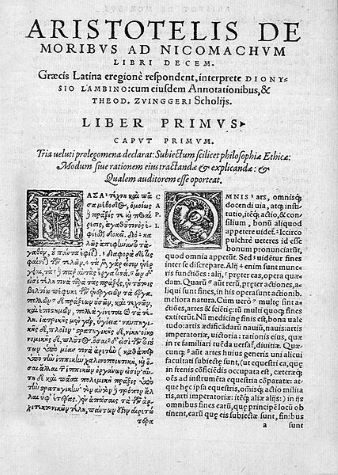
A significant portion of LAC’s argument rests on the selective use of philosophical sources, particularly the works of Plato, Xenophon, and Aristotle, to demonstrate that ancient Greek thinkers uniformly condemned same-sex relations. At first glance, this approach appears persuasive, as these authors do at times express discomfort with or criticism of certain sexual behaviors. The interpretive problem lies not in citing these sources, but in extracting isolated statements while disregarding their broader argumentative contexts. Greek philosophical texts are rarely straightforward moral pronouncements; they are dialogical, situational, and often internally contradictory, requiring careful reading rather than selective quotation.
Plato, for example, is frequently invoked as a critic of same-sex desire, especially through passages in the Laws that appear to condemn non-procreative sexual activity. Yet to elevate these passages as representative of Plato’s thought is to ignore the complexity of his philosophical project. In the Symposium, Plato presents a range of perspectives on love, some of which explicitly valorize male-male relationships as intellectually and spiritually significant. The speech attributed to Pausanias distinguishes between a “common” and a “heavenly” form of love, the latter associated with enduring bonds between males oriented toward virtue. Socrates, recounting the teachings of Diotima, reframes desire as a movement toward the contemplation of beauty itself, a formulation that transcends simple moral prohibition. These tensions do not indicate inconsistency so much as they reveal Plato’s engagement with competing ideas within Athenian culture.
Xenophon, often presented as more conservative than Plato, is similarly subject to selective interpretation. His Symposium emphasizes restraint and self-discipline, particularly in the conduct of relationships between older and younger males. Xenophon’s Socrates criticizes the pursuit of purely physical gratification, advocating instead for a form of attachment grounded in moral improvement. This critique presupposes the existence and social relevance of such relationships; it does not amount to a categorical rejection of them. By focusing exclusively on Xenophon’s cautionary tone, LAC overlooks the fact that his arguments operate within, rather than outside of, the cultural framework of male-male bonds.
Aristotle presents a different but equally nuanced case. While he does not engage with same-sex desire in the same narrative or dialogical manner as Plato and Xenophon, his ethical and political writings provide insight into Greek conceptions of friendship, pleasure, and virtue. In the Nicomachean Ethics, Aristotle distinguishes between various forms of friendship, including those based on pleasure and those grounded in mutual recognition of virtue. Although he does not explicitly theorize same-sex relationships in the same way as Plato, his broader framework allows for a range of human attachments that cannot be neatly categorized as either approved or condemned. Attempts to enlist Aristotle as a straightforward opponent of homosexuality tend to rely on extrapolation rather than explicit argument.
The methodological issue at stake is not merely one of incomplete reading, but of interpretive framing. Philosophical texts from classical Greece are embedded in a culture that was actively negotiating the boundaries of desire, morality, and social order. Statements that appear condemnatory in isolation often function as part of a larger effort to regulate behavior, articulate ideals, or explore the relationship between desire and reason. By isolating such statements and presenting them as definitive, LAC constructs an image of philosophical consensus that the sources themselves do not support. This approach risks flattening a rich and contested intellectual landscape into a series of decontextualized sound bites.
A careful reading of Plato, Xenophon, and Aristotle reveals not a unified doctrine of rejection, but an ongoing conversation about the place of desire within a well-ordered life. These authors grapple with questions of self-control, virtue, and the proper orientation of human relationships, often arriving at conclusions that are conditional, context-dependent, and open to interpretation. To understand their contributions, one must resist the temptation to extract isolated lines and instead engage with the full complexity of their works. Only then can their writings be situated accurately within the broader discourse of ancient Greek society.
Comedy, Invective, and the Language of Social Policing

A further dimension of LAC’s argument rests on the use of comic and invective sources as evidence for widespread hostility toward same-sex relations in ancient Greece. The video draws on insults, ridicule, and exaggerated portrayals, particularly from Athenian comedy, to suggest that male-male desire was broadly condemned and socially stigmatized. While these sources do indeed contain sharp and often explicit language targeting sexual behavior, the interpretive challenge lies in understanding their function. Comedy and invective were not neutral reflections of social reality but highly stylized forms of discourse, shaped by performance, audience expectation, and rhetorical intent.
Old Comedy, as represented in the plays of Aristophanes, frequently employs sexual humor as a tool of political and social critique. Characters are mocked, exaggerated, and caricatured, often through references to their perceived sexual behavior. Accusations of passivity, effeminacy, or excessive desire appear regularly, but these insults operate within a broader system of symbolic language. To call a political rival “soft” or sexually submissive was not necessarily a literal claim about behavior, but a way of questioning his fitness for public life. Sexual insult functioned as a shorthand for broader anxieties about discipline, authority, and civic worth. The comic stage amplified these anxieties, turning them into spectacle, where laughter itself became a mechanism of reinforcement. The audience was invited not only to laugh at the target of the joke but also to participate in the reaffirmation of shared norms, however unstable or contested those norms might be.
Moreover, the conventions of Old Comedy encouraged exaggeration and inversion as core elements of its humor. Figures were routinely depicted in ways that distorted reality for dramatic effect, blending recognizable traits with absurd embellishment. This complicates any attempt to treat comic dialogue as straightforward evidence of social attitudes. The repeated association of certain individuals with sexual deviance may reflect political rivalry or personal attack as much as any underlying moral consensus. In some cases, the humor derives precisely from the tension between public reputation and comic portrayal, suggesting that the audience was aware of the constructed nature of these depictions. LAC’s reading flattens this complexity, treating comedic invective as transparent rather than performative and misses how humor itself functioned as a medium through which social values were negotiated rather than simply declared.
Forensic oratory provides a different but related body of evidence, particularly in speeches where litigants deploy sexual accusations to discredit their opponents. In Athenian courts, reputation was inseparable from civic identity, and allegations of inappropriate sexual conduct could be used to undermine a man’s claim to respectability. As in comedy, these accusations must be read within their rhetorical context. Speakers were not offering dispassionate descriptions of social norms; they were crafting arguments designed to persuade juries and win cases. The intensity of the language reflects the stakes of the courtroom rather than a simple consensus about morality. Indeed, forensic speeches often exaggerate or strategically frame behavior in ways that align with the speaker’s immediate goals, drawing on widely understood cultural codes to produce maximum effect. This suggests that such language was persuasive precisely because it tapped into shared assumptions, but it does not follow that those assumptions were uniform or uncontested.
In addition, the legal setting imposed its own constraints and incentives on how behavior was described. Litigants had to present their cases in ways that resonated with jurors, who themselves came from a range of social backgrounds and experiences. The portrayal of sexual conduct in these speeches reflects not only the speaker’s strategy but also an attempt to anticipate and shape audience reaction. This dynamic further complicates the evidentiary value of invective, as it highlights the gap between rhetorical construction and lived reality. LAC’s reliance on such material risks conflating these two levels, reading persuasive language as though it were a neutral record of social attitudes rather than a calculated intervention within a specific institutional context.
The language of invective also reveals the importance of boundaries within Greek conceptions of masculinity. Terms used to shame individuals often focused on the perceived loss of self-control or the assumption of a passive role, reinforcing broader anxieties about status and autonomy. Yet the very need to articulate these boundaries suggests that they were neither fixed nor universally observed. Invective operates most powerfully in spaces where norms are contested, not where they are unquestioned. By presenting these insults as evidence of uniform condemnation, LAC overlooks the dynamic and often unstable nature of the social values they reflect.
It would be misleading to dismiss comic and invective sources entirely as mere exaggeration. They do provide valuable insight into the cultural vocabulary through which Athenians understood and policed behavior. The ridicule directed at certain forms of sexual conduct indicates that these behaviors carried social risks, particularly when they threatened established hierarchies or violated expectations of decorum. This does not equate to a blanket rejection of same-sex desire. Rather, it highlights the conditional and context-dependent nature of acceptance, in which behavior could be tolerated in some circumstances and condemned in others.
The evidence from comedy and invective underscores the importance of reading ancient sources with attention to genre and purpose. These texts reveal how language was used to enforce norms, negotiate identity, and contest status within the polis. They do not offer a straightforward window into collective attitudes, nor do they support the claim of universal hostility advanced by LAC. Instead, they point to a society in which sexual behavior was subject to scrutiny, interpretation, and debate, mediated through forms of expression that were as performative as they were descriptive.
Myth, Epic, and the Limits of Literalism

LAC’s argument extends beyond philosophical and legal texts into the realm of myth and epic, where it seeks to locate further evidence for the supposed marginality or condemnation of same-sex desire in ancient Greece. By drawing on mythological narratives and epic traditions, the video attempts to treat these sources as reflections of social norms in a direct and literal sense. Yet this approach raises significant methodological concerns. Myth and epic are not documentary records of social practice; they are narrative forms shaped by symbolism, tradition, and poetic convention. To read them as straightforward evidence of moral attitudes risks collapsing the distinction between representation and reality.
Epic poetry, particularly the works attributed to Homer, offers a rich but complex field of interpretation. In the Iliad, the relationship between Achilles and Patroclus has long been the subject of scholarly debate, with ancient and modern readers alike questioning whether it should be understood as a form of deep friendship, heroic companionship, or something more explicitly erotic. The text itself does not define the relationship in unambiguous terms, instead presenting a bond characterized by loyalty, emotional intensity, and mutual dependence. Their shared history, hinted at but never fully elaborated, reinforces the sense of intimacy that underpins their interactions throughout the poem. Later Greek authors, including Aeschylus and Plato, would interpret this relationship in more explicitly erotic terms, suggesting that the ambiguity of the epic allowed for multiple readings rather than prescribing a single, fixed meaning. This layered reception history demonstrates that even in antiquity the relationship was not settled or universally understood but remained open to reinterpretation depending on cultural and philosophical context.
The key issue here is not whether Achilles and Patroclus were “really” lovers, but how such narratives functioned within Greek culture. Myth and epic operated as flexible frameworks through which audiences could explore themes of heroism, loyalty, loss, and desire. The emotional depth of Achilles’ grief, vividly depicted in the aftermath of Patroclus’ death, underscores the centrality of their bond without reducing it to a single category. LAC’s attempt to impose a definitive interpretation, either affirming or denying an erotic dimension, overlooks the literary and cultural openness that characterizes these texts. Such narratives were not constrained by the need to articulate clear social rules, and their meaning could shift across time and context.
Mythological traditions beyond epic also present figures and relationships that complicate rigid categories of sexual identity. Stories involving gods and heroes frequently depict transformations, transgressions, and unconventional forms of desire. These narratives are not easily mapped onto social practice, nor do they function as straightforward endorsements or condemnations of particular behaviors. Instead, they explore the boundaries of human and divine experience, often using sexuality as a vehicle for broader themes of power, identity, and transformation. The fluidity of form and identity in these myths resists any attempt to extract fixed moral lessons, inviting audiences to engage with ambiguity rather than certainty. In some cases, the very strangeness of these stories serves to distance them from everyday life, reinforcing their role as symbolic explorations rather than social prescriptions. LAC’s reading, by contrast, treats them as if they were direct reflections of lived norms, thereby flattening their narrative richness and interpretive openness.
Myth and epic were not entirely detached from the societies that produced and consumed them. They interacted with cultural values, informed collective imagination, and provided reference points for ethical reflection. The fact that later authors could reinterpret earlier stories in light of changing perspectives suggests that these narratives were part of an ongoing cultural dialogue. This interaction does not justify a literalist reading. The presence of a theme within myth does not indicate its acceptance or rejection in everyday life; rather, it signals its significance as a subject of reflection and debate.
The use of myth and epic as evidence requires a careful balance between recognition of their cultural importance and awareness of their literary nature. LAC’s argument falters by treating these sources as transparent windows into Greek attitudes, rather than as complex and multifaceted texts that resist simple interpretation. A more nuanced approach acknowledges that myth and epic contribute to our understanding of ancient Greek conceptions of desire, but only when read with sensitivity to genre, symbolism, and historical context. Without this caution, the risk of oversimplification remains substantial.
The Sacred Band of Thebes and the Politics of Historical Imagination

LAC’s argument also turns to one of the most frequently cited examples in discussions of same-sex relations in ancient Greece: the Sacred Band of Thebes. The video attempts to minimize or reinterpret this elite military unit, suggesting that modern scholars have exaggerated or misrepresented its significance to project contemporary ideas onto the ancient past. While it is certainly true that the Sacred Band has been subject to romanticization, LAC’s dismissal goes too far in the opposite direction, neglecting both the historical evidence and the interpretive care required when dealing with such sources.
The Sacred Band, traditionally dated to the fourth century BCE, is described in several ancient accounts as a corps composed of pairs of male lovers. According to Plutarch, writing centuries later but drawing on earlier traditions, the unit was organized on the principle that bonds of affection would strengthen cohesion and courage in battle. This idea reflects a broader Greek association between personal loyalty and martial excellence, rather than an isolated or anomalous belief. The pairing of individuals in such a way would have created a structure in which each soldier’s honor and survival were tied directly to that of his partner, reinforcing both discipline and commitment. While the precise historical details remain debated, the existence of the Sacred Band itself is not in serious doubt, nor is the association between intimate bonds and military effectiveness entirely implausible within the cultural framework of the time. Indeed, the concept aligns with wider Greek ideals that valorized loyalty, mutual obligation, and the willingness to sacrifice for those with whom one shared a close personal bond.
Plutarch’s account, particularly in his Life of Pelopidas, presents the Sacred Band as an elite force whose members were bound together by mutual devotion. He explicitly contrasts this model with armies composed of unrelated individuals, suggesting that emotional attachment could serve as a powerful motivator in combat. Plutarch is writing with his own philosophical and moral agenda, shaped by the intellectual climate of the early Roman Empire. His portrayal of the Sacred Band may reflect both historical memory and later interpretation, blending fact with idealization. LAC is correct to caution against uncritical acceptance of such accounts, but it errs in treating this caution as grounds for wholesale rejection.
Archaeological and historical evidence further complicates the picture. The mass grave discovered at Chaeronea, associated with the battle in which the Sacred Band was defeated by Philip II of Macedon, has often been interpreted as corroborating the existence of a distinct and cohesive unit. While the grave itself does not provide direct evidence of the relationships between the soldiers, it does support the notion of a specialized group that fought and died together. The arrangement of the remains, along with the commemorative lion monument erected at the site, has been taken by many scholars as indicative of a group identity that extended beyond ordinary military organization. This suggests a level of cohesion and recognition that aligns with literary descriptions of the Sacred Band as a distinct corps. The archaeological record cannot fully resolve questions about the internal structure or personal relationships of the unit, leaving room for interpretation and debate.
The broader significance of the Sacred Band lies not only in its historical reality but in how it has been used in modern debates about ancient sexuality. It has become a focal point for competing narratives, with some emphasizing it as evidence of acceptance and others dismissing it as myth or exaggeration. This polarization reflects contemporary concerns as much as ancient realities. LAC’s treatment participates in this dynamic by seeking to counter what it perceives as overstatement, yet it risks reproducing a different form of distortion. The challenge is to navigate between these extremes, acknowledging both the limits of the evidence and its implications.
The Sacred Band of Thebes illustrates the difficulties inherent in reconstructing ancient social practices from fragmentary and mediated sources. It neither provides definitive proof of widespread acceptance of same-sex relationships nor supports the claim that such relationships were marginal or condemned. Instead, it offers a glimpse into the ways in which intimacy, loyalty, and identity could intersect within specific historical contexts. To understand its significance, one must approach the evidence with both skepticism and openness, resisting the temptation to impose modern categories while remaining attentive to the complexities of the ancient world.
Sappho, Women, and the Asymmetry of the Archive

LAC’s argument, like much popular discourse on ancient Greek sexuality, is overwhelmingly centered on male experience. This focus is not entirely misplaced, given that the majority of surviving sources were produced by elite men and reflect their interests, anxieties, and social structures. The near exclusion of female same-sex desire from the analysis creates a distorted picture of Greek sexual culture. It reinforces the illusion that male practices, particularly pederasty, were not only dominant but exhaustive. A more complete account must confront what may be called the asymmetry of the archive: the uneven survival of evidence that privileges certain voices while obscuring others.
The most significant counterpoint to this imbalance is the work of Sappho, whose lyric poetry provides rare and invaluable insight into relationships between women. Although her surviving corpus is fragmentary, the emotional intensity and specificity of her language leave little doubt that she was articulating forms of desire directed toward other women. Her poems speak of longing, jealousy, admiration, and physical response, often in terms that parallel or exceed the expressive range found in male-authored texts. The famous Fragment 31, for instance, vividly describes the bodily sensations of desire, including trembling, loss of voice, and a sense of overwhelming heat, offering one of the most detailed accounts of erotic experience in all of Greek literature. Unlike the structured and socially regulated relationships emphasized in discussions of male pederasty, Sappho’s poetry presents a more fluid and personal register of attachment, one that is not clearly embedded in institutional frameworks. This suggests not an absence of structure, but a different kind of social expression, one that may have operated outside the formalized systems that dominate male-authored sources.
Interpreting Sappho presents its own challenges. The fragmentary state of the evidence, combined with the conventions of lyric poetry, makes it difficult to reconstruct the precise social context in which her work was performed and understood. Some scholars have suggested that her poetry reflects educational or ritual settings, possibly involving groups of young women in transitional phases of life, while others emphasize its intensely personal and emotional dimensions. These competing interpretations are not mutually exclusive, but they underscore the difficulty of drawing firm conclusions from incomplete material. The loss of so much of Sappho’s corpus further complicates the picture, leaving us with isolated pieces that must be carefully contextualized without overinterpretation. These debates highlight the broader difficulty of accessing female experience in the ancient world, where the surviving record is both limited and mediated. LAC’s omission of this material bypasses these complexities entirely, effectively erasing a crucial dimension of the evidence.
The asymmetry of the archive extends beyond Sappho to the broader absence of female voices in Greek literature. Women appear frequently in male-authored texts, but their perspectives are filtered through the assumptions and narrative priorities of male writers. This makes it difficult to assess how relationships between women were perceived, regulated, or experienced in everyday life. The silence of the sources should not be mistaken for the absence of the phenomena they fail to describe. Rather, it reflects the structural limitations of the archive itself, which preserves certain kinds of information while excluding others.
Recognizing this asymmetry has important implications for how we interpret Greek attitudes toward same-sex desire. If the surviving evidence is disproportionately male, then any argument that relies exclusively on that evidence risks reproducing its biases. LAC’s focus on male-male relations, combined with its narrow reading of those relations, results in a double distortion: it both constrains the range of acceptable interpretations and ignores entire categories of experience. This is not simply an omission but a methodological problem, as it leads to conclusions that appear comprehensive while resting on a partial evidentiary base. A more balanced approach requires not only expanding the evidentiary base where possible but also acknowledging the limits of what can be known, resisting the temptation to treat absence as proof.
The case of Sappho and the broader absence of female perspectives remind us that ancient Greek sexuality cannot be fully understood through the surviving record alone. The archive is not a neutral repository of facts but a product of historical processes that shaped what was recorded, preserved, and transmitted. To engage with this material responsibly, one must read both what is present and what is absent, recognizing that silence itself can be historically meaningful. Only by confronting these limitations can we approach a more nuanced and inclusive understanding of the ancient Greek world.
Pottery, Visual Culture, and the Risks of Overclaiming
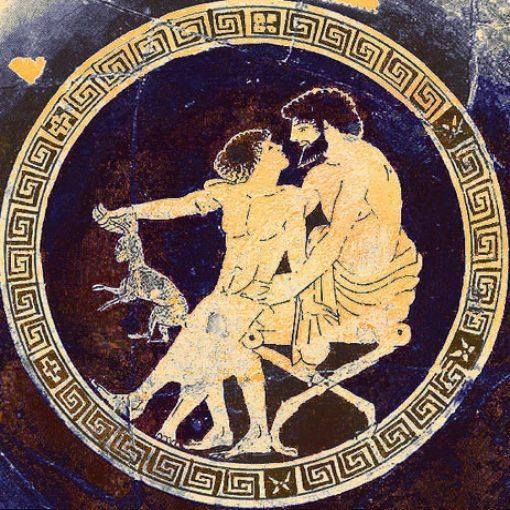
LAC’s argument also engages, albeit briefly, with visual evidence, particularly the depictions found on ancient Greek pottery. These images are often cited in modern scholarship as important sources for understanding social practices, including same-sex interactions. The video treats such material either as exaggerated modern misinterpretation or as insufficiently reliable to support broader conclusions. While it is true that visual evidence must be handled with caution, dismissing it outright overlooks its value as a complementary source that can both illuminate and complicate textual accounts.
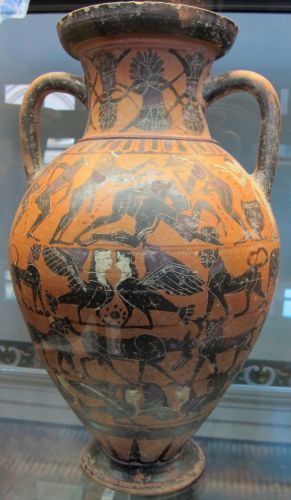
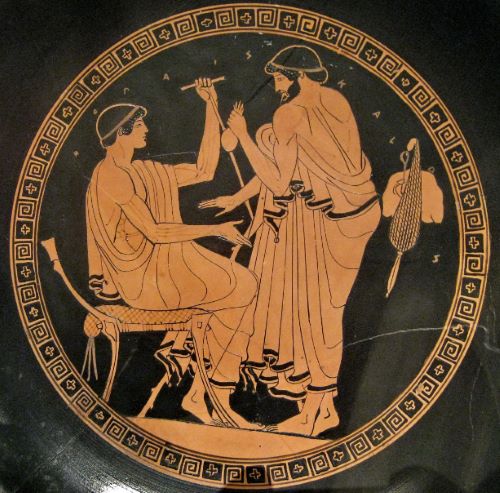
Attic vase painting, especially from the sixth and fifth centuries BCE, includes numerous scenes that appear to depict interactions between males in contexts that align with what is known from literary sources about courtship and social relations. These images often show an older male presenting gifts to a younger male, engaging in gestures of pursuit, or participating in sympotic settings where social and erotic interactions overlapped. Such scenes have been interpreted by scholars as visual representations of pederastic courtship, reflecting both its social conventions and its symbolic language. The recurrence of these motifs across multiple works suggests that they were not isolated or accidental but part of a recognizable visual vocabulary.
Interpreting these images presents significant challenges. Vase paintings are not photographs of lived reality; they are artistic compositions shaped by conventions, audience expectations, and the intentions of the painter. Figures may be idealized, stylized, or arranged to convey meaning rather than to document actual events. The presence of a particular gesture or pairing does not necessarily indicate that the scene is meant to be read literally. Instead, it may function as a symbolic representation of broader themes, such as education, desire, or social hierarchy. Moreover, the absence of accompanying explanatory text leaves modern viewers reliant on comparative interpretation, drawing connections between images and literary sources that may or may not have been intended by the original audience. Differences in regional styles, workshop practices, and intended use further complicate interpretation, as the same motif could carry different connotations depending on context. LAC is correct to caution against overly literal readings, but it errs in suggesting that this uncertainty renders the evidence unusable, when in fact it calls for more careful and context-sensitive analysis.
The relationship between visual and textual sources is particularly important here. The imagery on pottery corresponds with descriptions found in literary texts, creating a dialogue between different forms of evidence. For example, the exchange of gifts, a recurring motif in vase painting, aligns with references in literature to courtship practices involving tokens of affection. This convergence does not eliminate ambiguity, but it does strengthen the case for interpreting these images as reflecting, at least in part, recognizable social practices. To ignore this interplay is to miss an opportunity for a more nuanced understanding of the evidence.
There is also a real danger of overclaiming when working with visual material. Modern viewers, influenced by contemporary categories of identity and sexuality, may be tempted to read these images in ways that go beyond what the evidence can support. The absence of explanatory text, combined with the stylized nature of the scenes, makes it difficult to determine the precise meaning intended by the artist or understood by the original audience. Scholars must balance interpretation with restraint, acknowledging both the insights these images provide and the limits of what can be confidently asserted. Overinterpretation can lead to the projection of modern assumptions onto ancient material, obscuring rather than clarifying historical realities. Excessive skepticism risks stripping the images of interpretive value altogether, reducing them to decorative artifacts devoid of cultural significance. The challenge lies in navigating between these extremes, allowing the evidence to inform interpretation without forcing it into predetermined frameworks.
Greek pottery and visual culture occupy a middle ground between confirmation and ambiguity. They neither provide definitive proof of specific social practices nor can they be dismissed as irrelevant or purely decorative. Instead, they contribute to a broader evidentiary landscape in which meaning emerges through the interaction of multiple sources and perspectives. LAC’s treatment of this material, by oscillating between dismissal and skepticism, fails to engage with its interpretive potential. A more careful approach recognizes that visual evidence, when read in conjunction with textual sources, can deepen our understanding of ancient Greek conceptions of desire and social interaction without overstepping the bounds of the evidence.
Ancient Medicine, Moral Judgment, and the Pathologizing of Desire
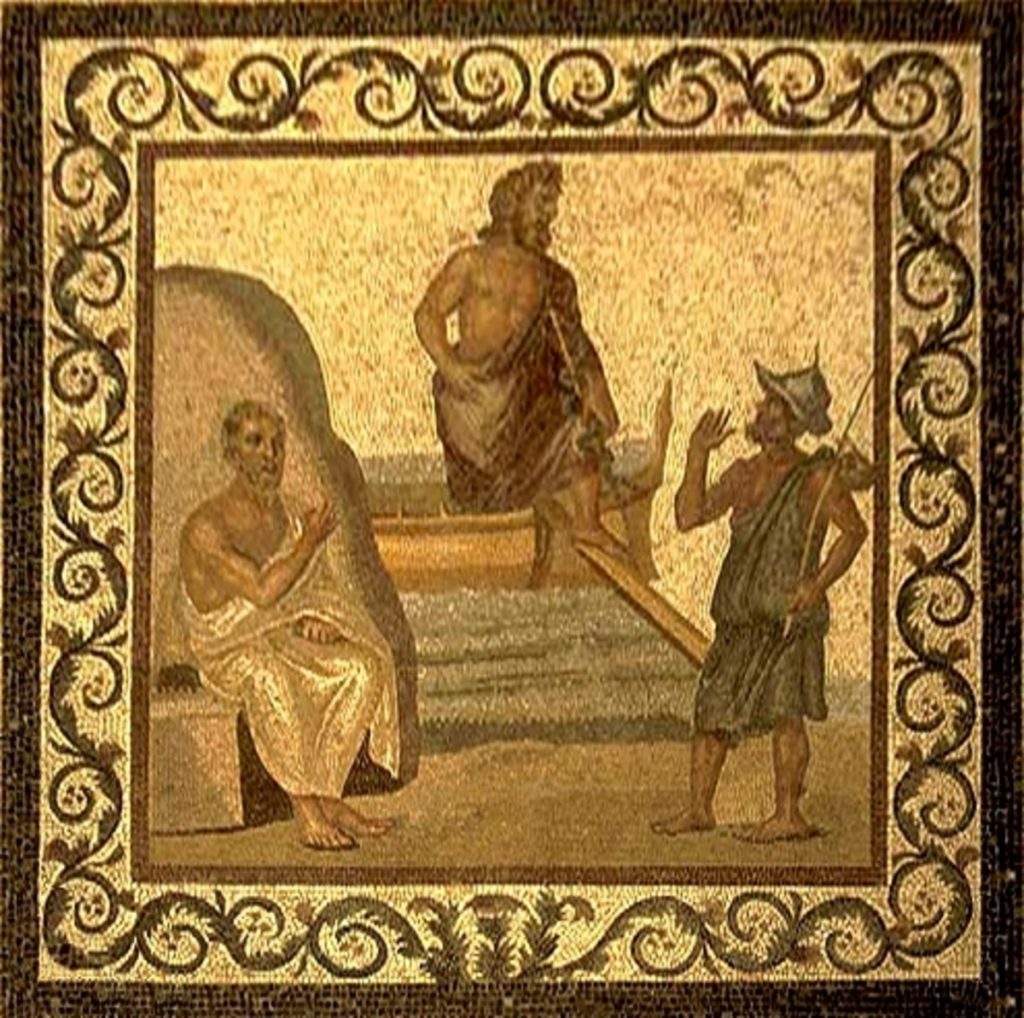
LAC’s argument also draws, implicitly or explicitly, on the idea that ancient Greek thought treated same-sex desire as a kind of deviation from natural or healthy norms, pointing to medical and philosophical traditions that appear to frame certain behaviors as excessive or disordered. This line of reasoning reflects a broader modern tendency to read ancient discussions of the body and desire through the lens of later medicalized concepts of pathology. Yet Greek medical and philosophical texts operate within a fundamentally different conceptual framework, one that does not map neatly onto modern categories of sexual identity or psychological abnormality.
The Hippocratic corpus, a collection of medical writings from the classical period, provides insight into how Greek thinkers understood the body, health, and desire. These texts often explain behavior in terms of bodily balance, environmental influence, and physiological processes rather than moral failing in a strictly modern sense. Desire is not inherently pathological but becomes problematic when it is excessive, uncontrolled, or disruptive to bodily equilibrium. This emphasis on moderation reflects a broader Greek concern with balance and self-regulation, extending beyond sexuality to encompass diet, exercise, and emotional life. To interpret such discussions as evidence of categorical condemnation is to impose a modern medical model onto a very different system of thought.
Philosophical traditions, particularly those associated with Plato and later thinkers, similarly engage with questions of desire, control, and the proper ordering of the soul. These discussions often frame certain forms of desire as needing to be guided or restrained, not because they are inherently unnatural, but because they can lead to imbalance or ethical failure if left unchecked. The emphasis is on governance rather than eradication, on aligning desire with reason rather than eliminating it altogether. LAC’s reading tends to collapse this distinction, treating critiques of excess as though they were rejections of entire categories of behavior.
There are moments in Greek thought where desire is described in terms that approach what might be called pathologizing language. Certain texts associate excessive sexual appetite with weakness, lack of self-control, or even physical abnormality. These descriptions are not limited to same-sex desire; they apply equally to heterosexual excess and other forms of indulgence. The underlying concern is not the object of desire but the individual’s capacity for self-mastery. The language used frequently reflects broader ethical anxieties about moderation and discipline rather than a focused attempt to single out specific forms of desire as inherently deviant. By isolating references to same-sex behavior and presenting them as uniquely stigmatized, LAC overlooks this broader ethical framework. What emerges instead is a selective reading that exaggerates the significance of particular passages while ignoring the consistent emphasis on balance that runs throughout Greek medical and philosophical thought.
Medical writers also occasionally attempt to explain variations in behavior through physical or environmental causes, suggesting that certain conditions of the body might predispose individuals to particular desires. These explanations do not constitute a coherent theory of sexual pathology in the modern sense. They are speculative, inconsistent, and embedded in a system that lacks the categorical distinctions characteristic of later medical discourse. The absence of a unified theory of sexual identity further complicates any attempt to read these texts as diagnosing or condemning homosexuality as such.
The intersection of medicine, morality, and desire in ancient Greece reflects a concern with balance, control, and the maintenance of social and personal order. While certain behaviors could be criticized or stigmatized, these judgments were situational and tied to broader ethical considerations rather than to fixed categories of identity. LAC’s interpretation, by projecting modern notions of pathology onto ancient texts, obscures this complexity. A more accurate reading recognizes that Greek medical and philosophical traditions were less concerned with defining normal and abnormal identities than with cultivating moderation and self-command within a diverse range of human experiences.
Modern Bias, Academic Debate, and the Video’s Polemical Frame

LAC’s broader interpretive framework is shaped not only by its reading of ancient evidence but by its positioning within a modern debate about the meaning and significance of same-sex relations in antiquity. The video presents itself as a corrective to what it characterizes as a prevailing scholarly consensus that exaggerates or misrepresents the acceptance of homosexuality in ancient Greece. While it is true that earlier generations of scholarship sometimes projected modern categories onto ancient societies, LAC’s response risks reproducing a different kind of distortion, one that selectively emphasizes evidence of restriction or criticism while minimizing contrary material. The result is not a neutral reassessment but a polemical intervention framed as corrective scholarship.
Modern academic study of Greek sexuality has evolved significantly over the past several decades, moving away from simplistic models toward more nuanced analyses of social roles, power dynamics, and cultural context. Scholars have demonstrated that Greek sexual practices cannot be understood through the lens of fixed identities or binary categories. Instead, they emphasize the importance of status, age, and role in shaping acceptable behavior. This body of scholarship does not present a monolithic view of acceptance but rather highlights the complexity and variability of Greek attitudes, including the ways in which norms could be both enforced and negotiated in different contexts. Historiography establishes the importance of role-based distinctions, while later scholars expanded the conversation to include questions of discourse, identity, and cultural meaning. LAC’s characterization of the field as uniformly permissive misrepresents this diversity of interpretation and overlooks the extent to which scholars have already grappled with the very tensions the video claims to expose.
Academic debate on this topic remains active and contested. Different scholars have offered competing interpretations of key evidence, particularly regarding the extent to which same-sex relationships were integrated into social norms or subject to moral scrutiny. Some emphasize the structured and conditional nature of acceptance, while others highlight tensions, contradictions, and areas of resistance. This ongoing debate reflects the fragmentary and context-dependent nature of the sources, as well as the methodological challenges involved in interpreting them. LAC is correct to note that consensus is neither complete nor uncontested, but it frames this lack of unanimity as evidence of scholarly error rather than as a normal feature of historical inquiry.
The video’s polemical tone further complicates its engagement with the evidence. By presenting its argument as a necessary correction to widespread misunderstanding, it adopts a rhetorical stance that prioritizes persuasion over balanced analysis. This approach is evident in the selective use of sources, the emphasis on extreme or condemnatory passages, and the framing of alternative interpretations as naïve or ideologically motivated. Such strategies are effective in creating a sense of clarity and certainty, but they come at the cost of oversimplifying a complex and multifaceted subject. The argument proceeds by narrowing the evidentiary field to those examples that support its thesis while sidelining or reinterpreting material that complicates it. This produces an impression of coherence that does not fully reflect the diversity of the sources themselves. LAC mirrors the very tendencies it seeks to critique, replacing one form of overgeneralization with another.
A more productive approach would situate LAC’s claims within the broader historiographical landscape, recognizing both the insights it offers and the limitations of its method. The emphasis on regulation, hierarchy, and moral discourse is not without merit, and it aligns with important strands of existing scholarship. These elements must be integrated with, rather than set against, evidence of diversity, ambiguity, and conditional acceptance. By framing the issue as a binary opposition between acceptance and rejection, LAC constrains the range of possible interpretations and obscures the complexity of the historical record.
The debate over same-sex relations in ancient Greece is not a question of proving or disproving a single thesis but of understanding a society that conceptualized desire, identity, and morality in ways that differ fundamentally from modern frameworks. LAC’s contribution to this debate is limited by its polemical framing and selective use of evidence. A more nuanced engagement requires attention to the full range of sources, an openness to competing interpretations, and a recognition of the historian’s own position within contemporary discourse. Only through such an approach can the study of ancient Greek sexuality move beyond simplification and toward a more accurate and meaningful understanding.
Anachronism in Two Directions

A persistent problem underlying LAC’s argument is the issue of anachronism, though not in the singular sense the video emphasizes. LAC rightly criticizes the projection of modern categories of sexual identity onto ancient Greek society, noting that concepts such as “homosexuality” and “heterosexuality” do not map cleanly onto the ancient evidence. This critique aligns with well-established scholarly cautions against reading the past through the lens of contemporary identity frameworks. The video’s corrective move introduces a second form of anachronism, one that replaces modern identity categories with an equally distorting assumption of uniform moral rejection. In attempting to avoid one kind of projection, it inadvertently imposes another.
The first form of anachronism involves the retroactive application of modern identity-based categories to a society that organized sexual behavior differently. Greek sources consistently emphasize role, status, and context rather than fixed identity, distinguishing between active and passive positions, citizen and non-citizen status, and appropriate versus inappropriate conduct. To describe individuals in ancient Greece as “homosexual” in the modern sense risks obscuring these distinctions and imposing a framework that did not exist at the time. LAC is correct to highlight this issue, and it represents one of the stronger elements of the video’s critique.
Yet the second form of anachronism emerges when LAC interprets Greek attitudes through a lens shaped by later moral traditions, particularly those associated with more rigidly prohibitive frameworks. By emphasizing condemnation, deviance, and moral disapproval as defining features of Greek thought, the video projects a coherence and uniformity that the sources themselves do not support. Greek texts reveal a spectrum of attitudes, ranging from acceptance and idealization in certain contexts to criticism and regulation in others. To collapse this diversity into a single narrative of rejection is to impose a different kind of modern framework, one that is no less anachronistic for being framed as corrective.
The coexistence of these two forms of anachronism highlights the difficulty of interpreting ancient sexuality without falling into conceptual traps. Avoiding modern identity categories does not automatically produce a more accurate account if it is replaced by an equally simplified model of moral judgment. Instead, the challenge is to remain attentive to the categories and distinctions that emerge from the sources themselves, even when they resist easy translation into modern terms. This requires a willingness to accept ambiguity and contradiction as integral features of the evidence rather than problems to be resolved.
A historically grounded approach must navigate between these competing distortions, recognizing that ancient Greek conceptions of desire were structured by their own cultural logic. Neither the imposition of modern identity labels nor the projection of uniform condemnation does justice to the complexity of the material. LAC’s argument, by moving from one form of anachronism to another, illustrates how easily interpretation can become constrained by the very frameworks it seeks to escape. A more balanced reading acknowledges the limits of our categories while remaining closely attuned to the nuances of the ancient sources.
What the Evidence Actually Supports
Having examined the range of sources invoked by LAC (philosophical texts, legal speeches, comedy, myth, visual culture, and medical writing) it becomes possible to step back and assess what the evidence actually supports. The surviving material does not point to a single, unified position on same-sex desire in ancient Greece. Instead, it reveals a complex and often internally contradictory set of attitudes shaped by status, age, context, and cultural expectation. Any interpretation that seeks to reduce this diversity to a simple narrative of either acceptance or rejection necessarily distorts the historical record.
One of the clearest patterns to emerge from the evidence is the centrality of social hierarchy in structuring sexual norms. Greek attitudes consistently distinguish between active and passive roles, between citizen and non-citizen status, and between different stages of life. These distinctions are not incidental but foundational, shaping what forms of behavior were considered appropriate, tolerable, or shameful. Same-sex relations, particularly between males, were embedded within this framework rather than existing outside it. This means that their evaluation depended less on the gender of the participants than on the roles they occupied and the ways in which those roles aligned with broader expectations of masculinity and civic identity.
The evidence demonstrates that same-sex desire was neither uniformly celebrated nor categorically condemned. Literary and philosophical texts present a range of perspectives, from idealization in certain contexts to criticism in others. Legal and comedic sources reveal mechanisms of social regulation, often expressed through ridicule or invective, while visual and poetic material points to forms of interaction that were recognizable and culturally meaningful. These different strands of evidence do not always align, and their tensions are themselves historically significant. They suggest a society engaged in ongoing negotiation over the place of desire within its moral and social order.
Equally important is the recognition that the surviving evidence is partial and uneven. The predominance of male-authored texts, the fragmentary nature of key sources, and the interpretive challenges posed by genre all limit the conclusions that can be drawn. The absence of comprehensive documentation, particularly for the experiences of women and non-elite individuals, means that any reconstruction of Greek sexual culture must remain provisional. This does not render interpretation impossible, but it does require caution and an awareness of the gaps that shape the available material.
What the evidence supports is not a definitive answer to the question of whether ancient Greece “accepted” or “rejected” same-sex desire, but a more nuanced understanding of how such desire was integrated into a broader system of social relations. It was regulated, debated, sometimes idealized, and sometimes criticized, depending on context and perspective. These patterns reflect a society that did not organize sexuality around fixed identities but around roles, hierarchies, and expectations that could shift over time and circumstance. LAC’s attempt to impose a singular conclusion on this evidence obscures these complexities by forcing a false clarity onto a fundamentally ambiguous record. A more accurate account recognizes that ancient Greek sexuality was neither reducible to modern categories nor amenable to simple generalization, but instead reflects a dynamic interplay of norms, practices, and interpretations that resist reduction to any single explanatory model.
Conclusion: The Uses and Misuses of the Greek Past
The enduring fascination with ancient Greece lies not only in its intellectual and cultural achievements but in its perceived relevance to modern debates about identity, morality, and social norms. Yet this very relevance creates the conditions for distortion. The Greek past is frequently invoked as a mirror in which contemporary concerns are reflected, whether to validate present-day categories or to challenge them. Interpretations often move beyond the evidence, selecting, simplifying, or reframing material in ways that serve modern arguments rather than historical understanding. The result is not a neutral reconstruction of antiquity, but an active reimagining shaped by present priorities.
This dynamic is particularly evident in discussions of sexuality, where the desire for historical precedent can lead to the imposition of modern frameworks onto ancient evidence. Efforts to identify “homosexuality” or “heterosexuality” in Greek society risk collapsing important distinctions that structured ancient thought, especially those related to status, role, and civic identity. Attempts to deny the presence or significance of same-sex desire altogether are equally reductive, ignoring the substantial body of literary, visual, and philosophical material that attests to its place within Greek culture. Both approaches reflect a misuse of the past, not because they are motivated by ill intent, but because they seek clarity where the historical record offers complexity.
A more responsible engagement with the Greek past requires a willingness to accept ambiguity and to resist the temptation of definitive answers. The evidence does not provide a single, unified model of sexual norms, nor does it map neatly onto contemporary categories. Instead, it reveals a society negotiating competing values, expectations, and practices within a framework that differs fundamentally from modern assumptions. This recognition demands careful attention to genre, context, and the limits of the surviving archive, as well as an awareness of how modern language can subtly reshape ancient meaning. It also requires historians to remain attentive to what is absent as much as to what is present, particularly in relation to marginalized voices that rarely appear in the sources. Recognizing this difference is not a limitation but a strength, allowing the Greek world to be understood on its own terms rather than as a precursor to the present. It also underscores the importance of methodological care, particularly in distinguishing between what the sources show and what modern interpreters wish them to show.
The study of ancient Greece offers less a set of answers than a set of questions about how societies construct, regulate, and debate human relationships. Its value lies in its capacity to unsettle certainty and to illuminate the historical contingency of norms that are often taken for granted. To use the Greek past well is to engage with its complexities honestly, acknowledging both what can be known and what remains uncertain. To misuse it is to flatten those complexities into convenient narratives. The task of scholarship is not to resolve this tension entirely, but to navigate it with rigor, restraint, and a commitment to evidence over assumption.
Biblilography
- Aeschines. Against Timarchus. Translated by Chris Carey. Austin: University of Texas Press, 2000.
- Aeschylus. Myrmidons. Fragmentary text in Aeschylus II: The Oresteia, translated by Alan H. Sommerstein. Cambridge, MA: Harvard University Press (Loeb Classical Library), 2008.
- Aristophanes. Clouds. Translated by Jeffrey Henderson. Cambridge, MA: Harvard University Press (Loeb Classical Library), 1998.
- —-. Frogs. Translated by Jeffrey Henderson. Cambridge, MA: Harvard University Press (Loeb Classical Library), 2002.
- Aristotle. Nicomachean Ethics. Translated by Terence Irwin. Indianapolis: Hackett, 1999.
- Boardman, John. Affiliate disclosure: Amazon links on this site are paid links. As an Amazon Associate I earn from qualifying purchases.Athenian Red Figure Vases: The Classical Period. London: Thames & Hudson, 1989.
- Boehringer, Sandra, Stefano Caciagli, and Anne Stevens. “The Age of Love: Gender and Erotic Reciprocity in Archaic Greece.” Clio: Women, Gender, History 42 (2015), 24-51.
- Cartledge, Paul. Thebes: The Forgotten City of Ancient Greece. London: Pan Macmillan, 2020.
- Davidson, James. The Greeks and Greek Love: A Radical Reappraisal of Homosexuality in Ancient Greece. London: Weidenfeld & Nicolson, 2007.
- Demosthenes. Against Conon. Translated by C. A. Vince and J. H. Vince. Cambridge, MA: Harvard University Press (Loeb Classical Library), 1926.
- Diodorus Siculus. Library of History, Book 15. Translated by C. H. Oldfather. Cambridge, MA: Harvard University Press (Loeb Classical Library), 1957.
- Dover, Kenneth J. Greek Homosexuality. Cambridge, MA: Harvard University Press, 1978.
- Duberman, Martin Bauml. “Reclaiming the Gay Past.” Reviews in American History 16:4 (1988), 515-525.
- Foucault, Michel. The History of Sexuality, Volume 2: The Use of Pleasure. Translated by Robert Hurley. New York: Vintage Books, 1985.
- Halperin, David M. One Hundred Years of Homosexuality and Other Essays on Greek Love. New York: Routledge, 1990.
- Hippocrates. Airs, Waters, Places. Translated by W. H. S. Jones. Cambridge, MA: Harvard University Press (Loeb Classical Library), 1923.
- —-. On the Sacred Disease. Translated by W. H. S. Jones. Cambridge, MA: Harvard University Press (Loeb Classical Library), 1923.
- Homer. The Iliad. Translated by Samuel Butler. The Internet Classics Archive.
- Kilmer, Martin F. Greek Erotica on Attic Red-Figure Vases. London: Duckworth, 1993.
- Lear, Andrew, and Eva Cantarella. Images of Ancient Greek Pederasty: Boys Were Their Gods. London: Routledge, 2008.
- Nutton, Vivian. Ancient Medicine. 2nd ed. London: Routledge, 2012.
- Parker, Holt N. “Sappho Schoolmistress.” Transactions of the American Philological Association 123 (1993), 309–351.
- Pausanias. Description of Greece. Translated by W. H. S. Jones. Cambridge, MA: Harvard University Press (Loeb Classical Library), 1918.
- Plato. Laws. In Plato: Complete Works, edited by John M. Cooper. Indianapolis: Hackett Publishing, 1997.
- —-. Symposium. In Plato: Complete Works, edited by John M. Cooper. Indianapolis: Hackett Publishing, 1997.
- —-. Phaedo. In Plato: Complete Works, edited by John M. Cooper. Indianapolis: Hackett Publishing, 1997.
- —-.The Republic of Plato. Benjamin Jowett, trans. Oxford: Clarendon Press, 1888.
- Plutarch. The Life of Pelopidas. In Plutarch’s Lives, translated by Bernadotte Perrin. Cambridge, MA: Harvard University Press, 1916.
- Sappho. Fragments. In Greek Lyric I: Sappho and Alcaeus, translated by David A. Campbell. Cambridge, MA: Harvard University Press (Loeb Classical Library), 1982.
- Skinner, Marilyn B. Sexuality in Greek and Roman Culture. 2nd ed. Malden, MA: Wiley-Blackwell, 2014.
- Stehle, Eva. Performance and Gender in Ancient Greece: Nondramatic Poetry in Its Setting. Princeton: Princeton University Press, 1997.
- Winkler, John J. The Constraints of Desire: The Anthropology of Sex and Gender in Ancient Greece. New York: Routledge, 1990.
- Xenophon. Symposium. Translated by Robin Waterfield. Oxford: Oxford University Press, 1994.
Originally published by Brewminate, 04.15.2026, under the terms of a Creative Commons Attribution-NonCommercial-NoDerivatives 4.0 International license.
About the Author