Medieval peasants and serfs lived on bread, pottage, ale, pulses, dairy, fasting rules, seasonal labor, and the fragile line between sufficiency and hunger.

By Matthew A. McIntosh
Public Historian
Brewminate
Introduction: Eating at the Bottom of Medieval Society
The food of medieval peasants and serfs is often imagined as a grim monotony of black bread, watery gruel, and near-starvation. That image is not entirely invented, because hunger was a real and recurring presence in medieval rural life, especially in years of harvest failure, war, disease, or excessive lordly extraction. Yet it is also too simple. The lower medieval diet was not merely a catalogue of deprivation. It was a structured food system built around grains, legumes, garden vegetables, dairy, ale, preserved foods, and the constant management of seasonality. A peasant meal might look humble beside the roast meats, white breads, imported spices, and ceremonial abundance of aristocratic tables, but it was also the daily fuel of the agricultural labor on which medieval society depended.
To eat at the bottom of medieval society was to eat according to land, labor, and obligation. Peasants and serfs lived close to the sources of food, but proximity did not mean freedom. A household might grow grain, keep hens, tend a cow, brew ale, or fatten a pig, yet much of what it produced was already claimed by necessity: seed for the next crop, rent to a landlord, tithes to the Church, dues in kind, market sales needed for cash, and reserves against winter or spring scarcity. Serfdom sharpened these pressures because unfree tenants owed labor services and lived under legal restrictions that shaped their access to land, animals, mills, ovens, woods, and commons. The peasant diet was never simply a matter of appetite. It emerged from a social order in which food production and food consumption were separated by hierarchy, obligation, and risk.
The ordinary lower-class regimen was heavily plant-based, with cereals at its center. Bread, pottage, porridge, ale, peas, beans, onions, leeks, cabbage, roots, herbs, and seasonal greens formed the core of daily eating across much of northern and western Europe, though the exact balance varied widely by region. Wheat carried prestige, but rye, barley, oats, mixed grains, and pulses often sustained poorer households more reliably. Meat was not absent, but it was unevenly available and often appeared as bacon, salted pork, offal, poultry, lard, or festival food rather than as the centerpiece of daily meals. Dairy and eggs mattered, but even these were shaped by preservation, season, household need, and market value. Medieval peasant food was repetitive without being entirely uniform, plain without being nutritionally meaningless, and local without being isolated from wider networks of trade, religion, and lordship.
Here I examine the typical food regimen of lower medieval classes not as a fixed menu, but as a pattern of survival. It follows the daily and yearly structures that organized eating: grains before meat, pottage at the hearth, ale as nourishment and hydration, legumes as protein, dairy as preserved animal food, religious fasting as a discipline of the calendar, and famine as the ever-present threat beneath ordinary sufficiency. Its argument is that medieval peasant diets could be sturdy, adaptive, and in good years surprisingly adequate, but they remained fragile because the households that depended on them had limited control over weather, rents, prices, disease, war, and seigneurial power. The story of peasant food is not only a story of what the poor ate. It is a story of how medieval society rested on the bodies of those who transformed land into food while often living closest to the edge of hunger.
The Medieval Food Order: Class, Land, Labor, and Obligation
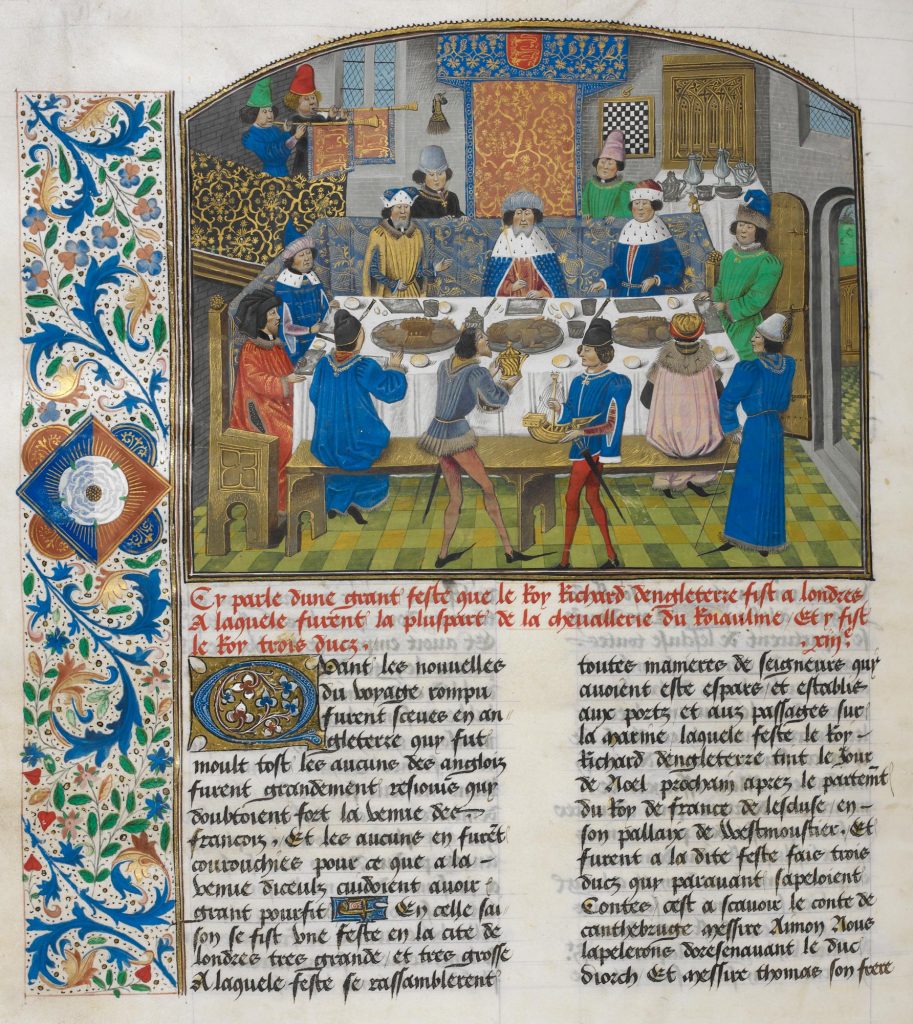
Medieval food was never simply a matter of what the land could produce. It was also a matter of who controlled the land, who worked it, who owed payments from it, and who had the right to consume its yield. For peasants and serfs, food began in fields, gardens, barns, byres, mills, ovens, woods, and commons, but it passed through a dense web of obligation before it reached the household table. Grain could be grown by peasant hands and still be partly claimed as rent, tithe, seed, labor payment, marketable surplus, or lordly due. Animals could be raised within a village economy and still be too valuable to slaughter casually. Eggs, butter, cheese, wool, hides, and young livestock might serve as food, but they might also serve as currency, obligation, or commercial opportunity. The lower medieval diet was shaped by the tension between production and access: peasants produced much of the food of medieval society, but they did not command all the food they produced.
This order was hierarchical from the ground up. At the top stood lords, monasteries, bishops, wealthy townspeople, royal households, and military elites whose tables expressed status through abundance, refinement, and selectivity. They consumed finer wheat breads, larger quantities of meat, imported wine, spices, game, fish from managed ponds or long-distance trade, and elaborate dishes that signaled social rank as much as appetite. Below them, villagers ate foods that were heavier, darker, coarser, and more local: rye or barley bread, oatcakes, pottage, pulses, ale, dairy, onions, leeks, cabbage, turnips, and occasional meat. These differences were not merely culinary preferences. They were the edible form of social hierarchy. Food marked the distance between those who lived from rents and those who lived from labor.
The peasant household stood at the center of this food order, but it was not a self-contained unit of simple subsistence. A family had to balance consumption against obligation, and this balance was rarely comfortable. Grain had to be held back for seed, and seed grain represented a painful kind of stored hope: eating it in crisis might postpone hunger for a few days while endangering the next harvest. Rents could be owed in money, labor, grain, poultry, eggs, or other produce. The Church tithe claimed a portion of agricultural output, reminding villagers that food belonged not only to household economy but to sacred obligation. Market sale also mattered. Peasants might sell better grain, eggs, cheese, animals, or ale to obtain cash for dues, tools, salt, cloth, taxes, fees, or marriage expenses. In many villages, the household table was supplied only after these prior claims had been satisfied, and the order in which claims were met mattered. Seed came before appetite because next year’s crop depended on it; rent came before comfort because default could bring fines, seizure, or legal trouble; tithe came before discretion because it was embedded in religious and communal expectation. The fact that a household produced a food does not prove that it regularly ate it. A family might keep hens yet sell many of the eggs, own a cow yet turn milk into cheese rather than drink it fresh, grow wheat yet eat rye or barley because the better grain was owed, sold, or saved. Production was filtered through necessity.
Serfdom intensified these pressures because unfree peasants lived within a legal and economic framework that restricted movement, marriage, inheritance, labor time, and access to resources. The exact meaning of serfdom varied across Europe and across centuries, but in broad terms it tied people to land and lordship in ways that affected daily life. A serf might owe week-work on the lord’s demesne, additional labor at harvest, payments for using the lord’s mill or oven, fines for marriage or inheritance, and dues attached to livestock, brewing, or land transfer. Every hour owed elsewhere was an hour not spent on the household’s own fields, garden, animals, brewing, repairs, or gathering. Every customary payment reduced the margin between sufficiency and need. Food was not only consumed after labor; it was shaped by the distribution of labor itself.
Landholding also divided the lower classes from one another. “Peasant” is a broad word, and it can hide sharp distinctions. Some villagers held enough arable land, meadow, pasture rights, animals, and tools to maintain a relatively secure household in normal years. Others held only a cottage and a small garden, or depended heavily on wage labor, gleaning, service, charity, seasonal employment, or access to commons. A substantial tenant might eat better bread, brew more regularly, keep more livestock, and produce more cheese or bacon. A cottager or landless laborer might live far closer to the market and the mercy of employers. Serfs were not all equally poor, and free peasants were not all prosperous. The medieval lower orders formed a layered rural society in which food access depended on land, labor power, family size, legal status, animals, tools, and local custom.
Common rights were important because they gave poorer households access to resources beyond their own strips of land. Woodland, pasture, meadow, marsh, heath, and waste could provide grazing, pannage for pigs, fuel, nuts, berries, wild greens, reeds, fish, birds, and other supplements to the diet and household economy. These rights were often regulated and contested, and their value is easy to underestimate if food is imagined only as grain from arable fields. Lords might try to control woodland use, restrict grazing, charge fees, or punish unauthorized hunting and gathering. Villagers, meanwhile, treated commons as part of the practical architecture of survival. A pig fattened in woodland, a cow grazed on common pasture, or fuel gathered for the hearth could make the difference between a functioning household and one forced deeper into dependence. Fuel itself belonged to the food system, because uncooked grain, dried peas, beans, roots, and tough greens were of little use without the means to boil, bake, parch, or stew them. Access to wood, turf, brush, or other fuels determined how often a pot could simmer and how efficiently a household could turn coarse ingredients into edible meals. Commons also mattered because they softened the sharp edges of inequality within the village: a smallholder with little arable might still maintain a goose, gather greens, collect nuts, or fatten a pig if customary rights allowed it. When those rights were narrowed, fined, or monopolized, the effects reached directly into the bowl and loaf. The peasant meal was tied not only to cultivated fields but to the legal geography of access.
Food also revealed the relationship between labor and bodily need. Medieval agricultural work was physically demanding, especially during plowing, haymaking, harvest, threshing, carting, ditching, hedging, and manuring. The lower-class diet had to provide energy for sustained exertion. Bread, ale, pottage, and pulses may seem plain, but they were dense with practical value: calories, carbohydrates, protein, fiber, warmth, liquid, and volume. A bowl of thick pottage, a hunk of bread, and a cup of ale were not elegant, but they were suited to a world in which food had to be filling, cheap, flexible, and repeatable. Status foods were not always labor foods. The diet of the poor was shaped by necessity, but also by the physiological demands of work.
Yet the medieval food order was not static. From the early to the later Middle Ages, population growth, agricultural expansion, commercialization, urban markets, climatic stress, plague, war, and changing labor relations altered the balance between production and consumption. In some places, particularly after the demographic shocks of the fourteenth century, surviving workers could command better wages or access more land and food. In other contexts, rents, enclosure-like restrictions, warfare, taxation, or market dependency sharpened insecurity. The fundamental point remains: lower medieval diets cannot be understood by listing ingredients alone. They must be read as the outcome of a social system in which class, land, labor, law, religion, and obligation determined who ate wheat and who ate rye, who slaughtered animals and who sold them, who drank ale daily and who stretched grain into thinner pottage, and who survived a bad harvest with reserves while others crossed quickly into hunger.
Bread Before Meat: Grains as the Foundation of the Peasant Diet

Before meat, before cheese, before garden vegetables or fish, there was grain. For most peasants and serfs in medieval Europe, cereals supplied the largest share of daily calories and formed the base upon which the rest of the diet was built. Grain could become bread, porridge, gruel, ale, dumplings, thickened pottage, or festival dishes, and this versatility made it indispensable. A household might vary its meals with peas, beans, onions, leeks, cabbage, eggs, dairy, or bits of pork, but the underlying question of survival was often whether there was enough grain in the barn, chest, sack, or bin to reach the next harvest. Medieval poverty was not always the absence of food in general; very often it was the narrowing of grain choices until bread became darker, pottage thinner, ale weaker, and stored reserves dangerously low.
Yet “grain” did not mean one thing. Medieval cereals carried strong social meanings. Wheat was the most prestigious bread grain across much of western Europe, especially when it could be bolted into lighter flour and baked into finer white loaves. Such bread was associated with aristocratic households, monasteries, wealthy townspeople, and prosperous regions capable of supporting wheat cultivation. Lower-status people might eat wheat at times, particularly in areas where it grew well or when wages and harvests were favorable, but it was not the universal peasant staple imagined in later bread-centered histories. Many rural households depended instead on rye, barley, oats, maslin, dredge, millet, or other mixed grains, each suited to different soils, climates, and economic pressures. Wheat demanded relatively favorable conditions and often carried higher market value, which meant that even when peasants produced it, they might sell it, pay it as rent, reserve it for special baking, or consume it less frequently than poorer grains. Rye’s darker bread, barley’s usefulness for brewing, and oats’ importance in upland or northern regions all show that the medieval grain economy was not a simple ladder from hunger to wheat, but a landscape of adaptation. The darker loaf was not merely a culinary preference; it was an index of ecology and hierarchy. It told a story about soil quality, weather, market access, household wealth, and social position before a single word was spoken at the table.
Rye mattered in colder, poorer, or less forgiving agricultural zones because it could thrive where wheat was less reliable. Barley was valuable both as food and as a brewing grain, binding bread and ale together in the same subsistence economy. Oats sustained people as well as animals, particularly in northern and upland regions, where oatcakes, porridges, and coarse breads could be more practical than wheat loaves. Mixed grains were common because medieval agriculture often prized resilience over purity. Maslin, usually a mixture of wheat and rye, could hedge against risk; dredge, often barley and oats, similarly reflected adaptation to local conditions. The peasant field was not arranged around modern ideas of culinary refinement. It was arranged around survival, yield, soil, weather, rent, seed, and the need to produce something edible even when the ideal crop failed.
Bread itself stood at the center of medieval eating, but it was not always the soft, uniform loaf suggested by modern expectations. Peasant bread might be dense, coarse, dark, sour, gritty, or mixed with bran. It could be baked in household ovens, communal ovens, or ovens controlled by a lord who charged fees for their use. In some manorial systems, the lord’s oven, mill, or bakehouse became part of the machinery of obligation, turning the preparation of grain into another point where lordship touched the household. Milling mattered because grain could not become good bread without labor, equipment, and access. Baking mattered because fuel was costly and ovens were not equally available. A loaf on a peasant table represented more than harvested grain. It represented cultivation, threshing, winnowing, drying, storing, grinding, kneading, fuel, time, and often payment. It also represented the physical vulnerability of stored food. Grain had to be kept dry, guarded from vermin, protected from mold, and measured carefully against the household’s future needs. Poor storage could ruin a harvest after it had already been gathered, while a damp season could make grain difficult to dry and preserve. Even the texture of bread could carry traces of this struggle: bran left in the flour, grit from milling stones, adulterating substitutes in hard times, or mixtures chosen because pure wheat was unavailable or unaffordable. Bread was daily, but it was not simple. Every loaf condensed a long chain of labor and risk.
Not all cereals became bread. In many households, boiling was as important as baking, and in some situations more practical. Porridge, gruel, frumenty, and grain-thickened pottages allowed families to stretch supplies, use coarser grains, feed children and the elderly, and adjust texture according to need. Boiled grain could absorb legumes, herbs, greens, onions, dairy, fat, or scraps of meat when available. It could also be thinned in hard times, making hunger visible not through the disappearance of the meal but through its dilution. This is one reason pottage and bread should be understood together rather than separately. They were two expressions of the same grain-based food order: one baked, portable, and divisible; the other simmered, flexible, and domestic. Bread could go to the field, be shared at table, used as a trencher, or carried as a practical ration; pottage stayed closer to the hearth, where it could be extended, reheated, and altered as ingredients appeared. Boiling also required less specialized equipment than baking and made sense where ovens, fuel, or fine flour were limited. A coarse grain that made poor bread might still make a useful porridge. A handful of oats or barley could give substance to a pot of vegetables; a little flour could thicken a stew; leftover bread could be softened into broth. The peasant grain diet was not monotonous because it had no techniques, but because its techniques were designed for repetition, thrift, and endurance. Between bread and pottage stood ale, another transformation of grain into calories, liquid, and daily routine.
The dominance of grain gave the peasant diet both its strength and its danger. In ordinary years, cereals provided energy for demanding labor and could be combined with legumes, dairy, vegetables, and ale into a regimen that was repetitive but sustaining. In bad years, dependence on grain became a trap. A wet harvest, failed crop, diseased field, military disruption, price spike, or excessive extraction could threaten the entire structure of daily eating. When grain failed, bread failed; when bread failed, pottage thinned; when pottage thinned, labor weakened; when labor weakened, next year’s production was endangered. Medieval peasants did not live by bread alone, but their lives were organized around the hope that grain would grow, dry, store, grind, bake, boil, and last. In that sense, bread came before meat not only at the table, but in the entire logic of lower-class survival.
Pottage, the Hearth, and the Daily Meal
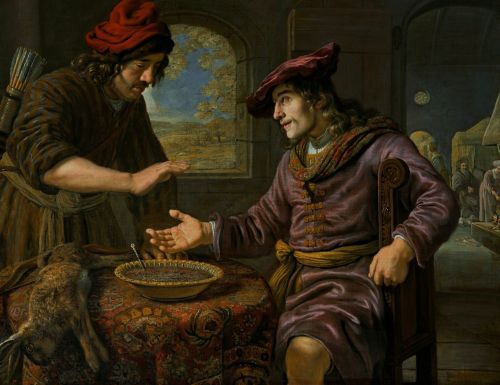
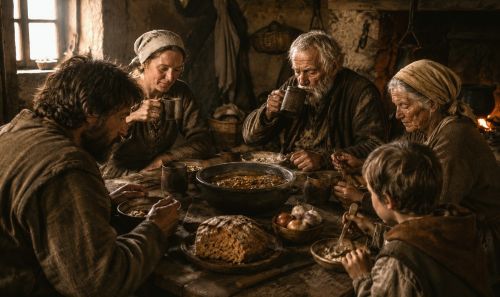
If bread was the foundation of the lower medieval diet, pottage was its daily engine. The word can mislead modern readers because it suggests a thin soup, but medieval pottage could range from a watery broth to a dense stew or porridge thick enough to sustain a laborer through hours of fieldwork. It was not a single recipe but a method: a pot set over the hearth, filled and refilled according to what the household had available. Grain, peas, beans, leeks, onions, cabbage, herbs, roots, greens, crumbs of bread, milk, whey, fat, or scraps of salted meat could all enter the pot. Its genius was flexibility. In a world where harvests varied, cash was scarce, fuel mattered, and cooking had to serve many mouths with limited ingredients, pottage transformed whatever was at hand into a shared meal.
The hearth gave pottage its practical and symbolic power. Medieval peasant cooking was organized around heat that had to be made, tended, protected, and used efficiently. A simmering pot made sense because it could soften hard grains and dried legumes, draw flavor from modest ingredients, and stretch small additions of fat, dairy, or meat across an entire household. It also allowed women and other household workers to combine cooking with other labor: tending children, spinning, brewing, mending, feeding animals, preparing dairy, cleaning, preserving food, and managing the daily arithmetic of scarcity. Fuel was itself part of this calculation. Wood, brush, turf, peat, straw, or other combustible material had to be gathered, stored, dried, and guarded from waste, so a dish that could simmer slowly or be reheated without elaborate preparation fit the realities of the cottage economy. The pot over the fire was not an incidental detail of peasant life. It was the center of daily survival, a technology of thrift and continuity. It made hard foods edible, old foods useful, and small quantities of better ingredients meaningful. A scrap of bacon, a little cheese, a handful of peas, or the remains of yesterday’s bread could disappear into the common pot and flavor far more than it could have fed alone. Unlike the elite kitchen, with its specialized cooks, equipment, roasts, sauces, and staged service, the peasant hearth was built around repetition, economy, and the need to keep food warm, edible, and expandable. It was also a social center, the place where hunger, labor, domestic skill, and household hierarchy met. Whoever controlled the pot controlled not luxury but distribution: how thick the meal would be, who received the heartier portion, what was saved for morning, and how far the household’s stores could be made to last.
Pottage also reveals why the peasant diet cannot be understood by listing ingredients alone. The same basic dish could signal relative comfort or hardship depending on thickness, contents, and season. In a good month, pottage might be rich with peas or beans, garden greens, onions, leeks, barley, oats, and a little bacon fat, cheese, milk, or meat broth. During Lent or other fast periods, it might lose animal products but gain pulses, herbs, oil where available, or fish if the household could obtain it. In late winter or the hungry gap before the new harvest, it might become thinner, darker, and more repetitive, stretched with coarse meal, roots, wild greens, or whatever remained in storage. Hunger often appeared not as an empty bowl but as a changed bowl: less grain, fewer pulses, no fat, weaker flavor, more water, and a longer silence around the hearth.
The daily meal pattern of peasants and serfs was organized less around elaborate courses than around durable staples served in practical combinations. A common main meal might consist of pottage, bread, and ale, with cheese, onions, eggs, fish, or a little meat appearing when available. Supper could resemble the main meal in lighter form, while breakfast, when taken, might be bread, ale, leftovers, or something similarly simple. The rhythm depended on labor, daylight, season, age, health, and household need. Harvest workers required more food than someone doing winter tasks; children, the elderly, servants, and field laborers did not necessarily follow the same schedule; feast days disrupted ordinary routines with better bread, meat, ale, or communal food. The “daily meal” was not a modern three-meal structure imposed on the Middle Ages. It was a flexible arrangement around work, light, hunger, and the contents of the pot.
To call pottage humble is accurate, but to call it insignificant would be a mistake. It was the dish through which medieval lower-class households converted agriculture into bodily endurance. It joined field to garden, garden to hearth, hearth to labor, and labor back to field. It could absorb the products of women’s domestic work, men’s agricultural labor, children’s gathering, common rights, seasonal luck, religious restriction, and household poverty. It was also one of the great equalizers of medieval food culture, in the limited sense that variations of pottage appeared across social ranks, even if elite versions were richer, more carefully seasoned, and served among many other dishes. For peasants and serfs, pottage was not one dish among many. It was the recurring form of daily sufficiency, the edible compromise between scarcity and survival.
Peas, Beans, Lentils, and the Protein of Poverty
If grain gave the peasant diet its caloric foundation, pulses gave it much of its sustaining strength. Peas, beans, lentils, and related legumes were among the most important foods of lower medieval Europe because they supplied protein in a world where meat was irregular, expensive, restricted by season, or reserved for special occasions. They were not glamorous foods. Elite writers and moralists often associated beans, peas, onions, garlic, and coarse bread with rustic bodies and low status. Yet from the perspective of survival, these humble foods were indispensable. A diet built only on bread, ale, and thin gruel could weaken under the demands of agricultural labor. A diet supplemented with peas or beans had more staying power, more body, and more resilience.
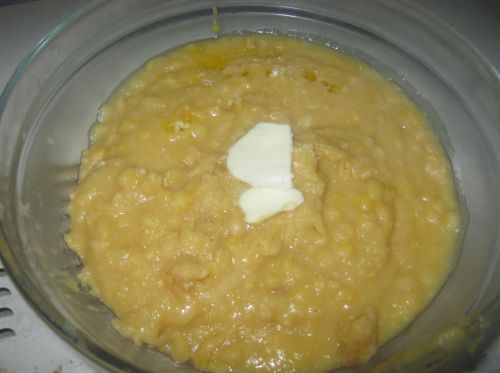
Pulses were valuable because they could be dried, stored, boiled, mashed, and stretched. They entered the household pot as pease pottage, bean stews, thick porridges, Lenten dishes, and everyday mixtures with grain, greens, onions, leeks, herbs, or fat when available. Their texture and density made them useful in pottage, where they could turn water, herbs, and coarse meal into something more filling. A handful of peas might thicken an otherwise thin broth; beans could be cooked slowly until they became soft enough to mash into a sustaining paste; lentils, where available, offered a quicker-cooking pulse that could be adapted to soups, stews, and fast-day meals. Dried peas and beans also fit the rhythm of the agricultural year. They could sit in storage after harvest and help carry a household through winter, Lent, and the hungry gap before new crops matured. Unlike fresh vegetables, which were tied tightly to season, dried pulses gave the peasant household a form of delayed nourishment. Their value lay partly in their patience: they waited in sacks, bins, crocks, or loft storage until the household needed them. In a food economy where spoilage, damp, vermin, and shortage were constant dangers, any food that could endure time had special importance. They were poor people’s food not because they were nutritionally worthless, but because they were durable, practical, and capable of feeding many mouths at low cost.
Legumes also belonged to the field as well as the table. Medieval agriculture was not only a matter of growing grain year after year until the soil failed; it depended on rotations, fallow, manure, grazing, and crops that could fit local ecological needs. Peas and beans could be cultivated in ways that complemented cereal production, and their importance increased in regions where mixed farming linked arable land, livestock, gardens, and household storage. They were part of a wider peasant strategy of risk management. Grain might dominate the diet, but legumes diversified it. They offered another crop, another texture, another storage food, and another source of nourishment when meat was absent or unaffordable. A failed wheat crop might be disastrous, but a household with stored peas, beans, oats, barley, and garden produce had more ways to endure scarcity than one dependent on a single staple. This does not mean peasants possessed a secure abundance of choices; rather, it means that survival often depended on overlapping modest resources. A few rows of beans, a patch of peas, a sack of dried pulses, or access to market legumes could help soften the blow of poor harvests or expensive grain. Pulses also made sense in households where cooking had to serve many people at once. They expanded well in the pot, accepted flavor from onions, garlic, herbs, fat, or broth, and could make a meal feel substantial even when better foods were missing. The importance of pulses lies not only in protein but in flexibility: they helped lower-class households spread risk across different foods, fields, seasons, and cooking methods.
Their association with poverty should not obscure their cultural complexity. Beans and peas could be ordinary enough to be mocked, but they were also common enough to appear across social boundaries in fasting seasons or practical institutional diets. Monasteries, hospitals, schools, and large households also made use of pulses, even if elite tables preferred more refined preparations or relegated such foods to servants, laborers, or penitential contexts. In religious terms, pulses became particularly important when meat and sometimes dairy were forbidden. Lent did not create peasant dependence on peas and beans, but it intensified the place of these foods within the Christian calendar. For households already accustomed to plant-heavy meals, fast days might not represent a total culinary revolution, but they did confirm the value of foods that could nourish without violating religious discipline.
To call peas, beans, and lentils the “protein of poverty” is accurate only if poverty is understood as a condition of hard calculation rather than passive misery. Pulses did not eliminate hunger, and they did not erase the inequalities that kept fine bread, abundant meat, and rich dairy beyond the ordinary reach of many peasants and serfs. But they did make the lower-class diet more nutritionally coherent than a stereotype of bread and water allows. In the pot, they thickened the meal; in the field, they diversified production; in storage, they guarded against seasonal emptiness; in fasting seasons, they met religious demands; in the body, they helped sustain labor. The medieval poor did not live by grain alone. They lived by the stubborn partnership of grain and pulse, bread and bean, field and hearth.
Ale, Water, and Everyday Hydration

No account of the lower medieval diet can treat drink as an afterthought. For peasants and serfs, hydration was part of nourishment, labor, safety, and routine. The common image that medieval people drank ale because they believed all water was deadly is too blunt, but it points toward a real feature of daily life: weak ale, small beer, wine in some regions, cider in others, and other fermented drinks provided more than pleasure. They supplied liquid, calories, social familiarity, and a degree of keeping quality that plain water did not always possess. A laborer working in fields, carting grain, cutting hay, threshing, digging, or hauling wood needed not only food but steady drink. In that sense, ale belonged beside bread and pottage as one of the basic supports of ordinary survival.
Water was not absent from medieval life, and medieval people were not too foolish to recognize good water. Springs, wells, streams, rainwater, cisterns, and conduits all mattered, and many communities invested labor in protecting or managing water sources. Monastic rules, medical writing, urban regulations, and household practice all show awareness that waters differed in quality. Clear running water from a good spring was not the same as a stagnant ditch, a fouled town channel, or a stream polluted by animals, tanning, washing, butchering, or human waste. The problem was not that medieval people never drank water; it was that safe water was unevenly available, seasonally variable, and locally contingent. Rural villages often had better access to springs or wells than crowded towns, but even there, mud, livestock, flood, drought, and poor maintenance could compromise supply. Wells had to be covered or protected; streams that seemed clean in one season could become muddy, low, or fouled in another; animals that shared the same landscape as people could make water management a constant practical concern. Medieval people judged water through experience, sight, smell, taste, reputation, and inherited local knowledge, but such judgment did not eliminate risk. Nor did the availability of water eliminate the appeal of ale, because ale offered more than safety. It offered nourishment, habit, warmth, sociability, and a predictable use for grain. The contrast should not be drawn between “unsafe water” and “safe ale” as if medieval households faced a simple either-or choice. They used both, but they used them within a world where water quality depended on place and season, while brewed drink could turn uncertain liquid and stored grain into a more dependable daily resource.
Ale was important in northern and western Europe because it turned grain into a drinkable, nourishing staple. Small ale was weaker than strong ale and could be consumed routinely by adults and, in milder forms, by children. It was not merely an intoxicant. It offered calories from grain, a familiar taste, and a liquid that had been heated during brewing and transformed through fermentation. Household brewing was a major domestic task. Malt had to be made or obtained, water heated, mash managed, wort strained, fermentation watched, vessels cleaned, and the finished ale consumed before it soured. Because unhopped ale did not keep indefinitely, brewing often had to be repeated. This made ale part of the rhythm of the household, as ordinary as baking or tending the pot, and it helps explain why brewing labor, often performed by women, stood at the intersection of domestic survival and local commerce.
Ale also belonged to the village economy. Some households brewed mainly for themselves; others sold surplus or operated on a more regular commercial basis. Alehouses, informal drinking spaces, church ales, harvest gatherings, and manorial or village festivities made drink a social as well as nutritional institution. The same beverage that restored a fieldworker could also seal neighborly exchange, mark a feast, support parish fundraising, or become the subject of regulation when quality, price, measure, or disorder came under scrutiny. Authorities cared about ale because ordinary people depended on it. Assizes of ale, local fines, and market oversight reflected not simply moral anxiety about drunkenness but the fact that drink was a daily commodity whose price and reliability affected the poor. A bad loaf and a bad measure of ale were both matters of public concern because both touched the foundations of subsistence.
Regional variation complicates the picture. In wine-growing regions across much of the Mediterranean and parts of France, wine could occupy some of the daily space that ale held farther north, though quality and strength varied sharply by class and locality. In cider regions, apples and pears could be transformed into another form of everyday drink. In parts of central and northern Europe, hopped beer gradually changed keeping qualities, trade possibilities, and brewing scale. These differences matter because “medieval drink” was not one universal habit. Still, the underlying pattern remains clear: lower-class people relied on drink as food, comfort, labor support, and social glue. Whether in the form of ale, small beer, wine, cider, or water from a trusted source, hydration was woven into the same world as bread and pottage. It was another way medieval households turned local resources into endurance.
Dairy, Eggs, and the Modest Animal Economy

Animal products entered the lower medieval diet unevenly, often modestly, and almost always through the practical logic of household economy. Peasants and serfs might live among cows, sheep, goats, pigs, chickens, geese, and working animals, but proximity to animals did not mean abundant daily access to meat, milk, or eggs. Livestock represented labor, fertility, traction, manure, wool, hides, rent, savings, and market value as much as food. A cow could be more valuable alive than slaughtered; a hen’s eggs might be sold, owed, hatched, or saved rather than freely eaten; a pig might be fattened for a seasonal killing rather than provide regular fresh meat. The animal economy of the poor was not an economy of constant consumption. It was an economy of careful extraction, preservation, and calculation.
Dairy was among the most important animal foods available to lower-status households, though it rarely resembled the fresh-milk abundance imagined from later rural life. Fresh milk spoiled quickly without modern cooling, and its availability depended on season, animal ownership, grazing, lactation, and household needs. Much of its value came from transformation. Milk could become butter, curds, whey, buttermilk, soft cheeses, and more durable cheeses that lasted longer than fresh liquid. These products added fat, protein, flavor, and variety to grain-heavy meals. A little cheese could strengthen bread and pottage; whey or buttermilk could be drunk, added to cooking, or used in household food preparation; butter could enrich otherwise plain foods, though its availability varied sharply by region and status. Dairy was not merely a supplement to the peasant diet. Where animals and pasture allowed it, dairy helped make the difference between a bare cereal regimen and a more sustaining mixed diet.
Cheese deserves particular attention because it solved several problems at once. It preserved milk, concentrated nourishment, traveled better than liquid dairy, and could be portioned across days or seasons. Soft “green” cheeses might be eaten relatively fresh, while harder cheeses could last longer and serve as food, rent, gift, or market product. Like eggs and grain, cheese moved between household use and economic obligation. A peasant household might produce cheese but consume only part of it, selling or paying away the rest. In some regions, dairying was closely tied to women’s labor, because milking, straining, churning, cheese-making, washing vessels, and managing spoilage belonged to the daily round of domestic work. This labor was skilled, repetitive, and time-sensitive. It required attention to temperature, cleanliness, souring, storage, and the fragile chemistry of turning perishable milk into useful food. The modest dairy foods of the poor were not passive gifts from animals; they were manufactured through work.
Eggs occupied a similar middle ground between nourishment and value. Chickens were practical animals for many households because they required less land than larger livestock and could live close to the domestic sphere. Their eggs provided compact, versatile protein, useful in cooking, fast-day adjustments depending on local rules, feeding the vulnerable, or adding substance to otherwise plain meals. But eggs were not necessarily eaten in the quantities a modern reader might imagine. Hens laid seasonally and irregularly, and eggs could be sold in markets, paid as dues, used for breeding, reserved for feast days, or consumed sparingly. Their very convenience made them economically useful. A few eggs could be turned into cash, exchanged locally, or incorporated into better dishes when ordinary bread and pottage needed enrichment. For poorer households, the egg was valuable precisely because it was small: small enough to sell, small enough to save, small enough to add dignity and nourishment to a meal without sacrificing a larger animal.
The modest animal economy reveals one of the central truths of lower medieval eating: animal products mattered greatly, but they did not necessarily imply abundance. Dairy, eggs, fat, broth, offal, bacon, and occasional poultry or pork could transform the taste and nutritional quality of a meal, yet their appearance depended on household resources, season, custom, market pressure, and obligation. Peasants were not strict vegetarians, nor were they regular consumers of elite-style meat and dairy. They lived in between, drawing nourishment from animals carefully and intermittently. A little cheese beside bread, a spoonful of butter or lard in pottage, an egg added to a dish, whey used in cooking, or milk turned quickly into curds could all carry real importance. These foods softened the austerity of the grain-and-pulse diet, but they also remind us that medieval poverty was not measured only by what people lacked. It was measured by how carefully they had to use what they had. The same animal might stand for several futures at once: a cow as milk, manure, status, breeding potential, and emergency wealth; a hen as eggs, chicks, market pennies, and occasional meat; a pig as a living store of fat slowly converted from mast, scraps, and household waste into bacon, lard, and winter security. Lower-class households constantly weighed immediate appetite against longer-term survival. To eat the egg, sell the egg, hatch the egg, or owe the egg was not a trivial choice when every small product belonged to a larger economy of risk. This is why animal foods in the peasant diet often appeared as fragments, additions, enrichments, and preserved forms rather than daily centerpieces. Their power lay in concentration. A little fat could make vegetables satisfying; a little cheese could make bread feel like a meal; a little broth could give depth to a pot; a little bacon could flavor food far beyond its weight. The animal economy did some of its most important work in small transformations.
Meat, Fish, and the Myth of Total Deprivation

The place of meat in the lower medieval diet is often misunderstood because it is pulled between two opposing myths. One imagines peasants and serfs as almost entirely meatless, living on bread, onions, and gruel while the wealthy consumed endless roasts. The other, sometimes reacting against that stereotype, overstates the abundance of meat among ordinary people in the later Middle Ages when wages and access to animal foods improved in some regions. The more accurate picture lies between these extremes. Meat was not absent from lower-class diets, but it was rarely the daily centerpiece of ordinary meals. Its availability depended on landholding, animals, woodland rights, household wealth, region, season, labor conditions, religious restrictions, and market access. A peasant might taste pork, bacon, poultry, offal, broth, lard, or festival meat, but this did not mean that fresh meat appeared regularly on the table in elite quantities.
Pork was probably the most practical and important meat for many rural households because pigs fit the peasant economy better than cattle raised primarily for milk, traction, breeding, or value. Pigs could be fed on scraps, mast, acorns, beech nuts, waste, and woodland resources where pannage rights allowed, converting marginal food sources into fat and flesh. A pig did not require the same kind of arable investment as grain, nor did it necessarily compete with people for the best foods. It could live partly from the edges of the household economy: peelings, refuse, whey, spoiled grain, garden waste, fallen nuts, and access to woodland. This made it particularly valuable to families whose food system depended on extracting nourishment from resources that might otherwise be lost. A pig slaughtered in season could provide meat, bacon, lard, sausages, blood pudding, offal, and preserved products that stretched into winter. This was not the same as frequent fresh meat consumption. It was a preservation strategy. Salted pork, smoked bacon, rendered fat, and cured pieces could flavor many meals long after slaughter day. Lard could serve as cooking fat, bacon could season beans or greens, bones could strengthen broth, and offal could be consumed quickly after killing. In a household built around bread, pottage, pulses, and vegetables, even a small amount of pork fat could transform the pot. The value of meat lay not only in quantity but in intensity: a little bacon could make cabbage, beans, peas, or grain taste richer and feel more sustaining. Pork occupied a special place between feast and utility. It could mark a seasonal moment of abundance, but it could also become the quiet background flavor of many ordinary meals.
Cattle, sheep, goats, and poultry entered the lower-class diet in more complicated ways. Cattle were often too valuable alive to be slaughtered casually, especially when they supplied traction, manure, calves, milk, or economic security. Beef might appear when an animal aged, became injured, died, or was slaughtered for a special occasion, but regular fresh beef was far more strongly associated with higher-status households and later changes in labor and market conditions. Sheep and goats could provide milk, wool, skins, manure, and eventually meat, but their value also extended beyond the cooking pot. Poultry were more accessible in some households, yet chickens and geese too had multiple uses: eggs, feathers, young birds, market sale, dues, and occasional meals. Offal should not be overlooked. Heads, feet, blood, liver, heart, tripe, and other less prestigious parts could be nutritionally important and more available to lower-status eaters than choice cuts. Elite disdain for such foods did not make them marginal to survival.
Fish complicates the question still further because it belonged to both ordinary subsistence and religious discipline. In coastal, riverine, lake, marsh, and trade-connected regions, fish could be a meaningful part of lower-class foodways, though access varied sharply. Fresh fish was not universally available or cheap, but preserved fish traveled widely. Herring in particular became one of the great foods of medieval northern Europe: salted, smoked, dried, barreled, traded, and eaten across class lines. Cod, stockfish, eel, salmon, freshwater fish, shellfish, and smaller local catches also mattered depending on geography. The Church’s fasting calendar gave fish special importance. On days when meat was forbidden, fish could serve as the permitted animal food, though poorer households often relied just as heavily on pulses, bread, ale, vegetables, and oil or dairy substitutes where permitted. Fish was not simply a luxury alternative to meat. It was part of a religious, commercial, and ecological system that connected village tables to rivers, coasts, markets, and distant fisheries.
The myth of total deprivation collapses when these details are taken seriously, but so does any romantic picture of hearty peasant meat eating. Lower medieval households lived in a world of fragments, flavorings, preserved portions, occasional slaughter, fast-day substitutions, and feast-day exceptions. Meat and fish mattered because they were intermittent, concentrated, and socially meaningful. They could mark Christmas, Easter, weddings, harvest celebrations, manorial distributions, parish feasts, or rare moments of household prosperity. They could also appear in humble forms: bacon in pottage, lard with bread, a dried herring, a bit of offal, broth from bones, a goose shared at a feast, or pork preserved from the annual killing. These modest forms should not be dismissed as nutritionally or culturally minor simply because they were not grand joints of roasted meat. In a diet dominated by grain, pulses, greens, and ale, a small animal addition could change the character of an entire meal. It brought fat, salt, savor, protein, and a sense of occasion. It could make ordinary food feel less like mere subsistence and more like something remembered. Its irregularity reinforced class difference. The wealthy could build meals around meat; the poor more often used meat to deepen, season, stretch, or celebrate. Fish operated similarly. A preserved herring might be plain food, even poor food, but it still connected the eater to wider networks of trade, religion, and fasting discipline. The lower-class diet was not vegetarian by ideology or entirely meatless by circumstance. It was a diet in which animal foods entered irregularly but powerfully, altering nutrition, taste, status, and memory. For peasants and serfs, the question was not whether meat and fish existed. It was how often they appeared, in what form, under whose control, and at what cost.
Vegetables, Herbs, Fruits, and the Garden Economy

The lower medieval diet was not built from grain alone, even if grain supplied its caloric base. Around the fields of rye, barley, oats, wheat, peas, and beans stood a more intimate food world: the garden, the orchard, the hedgerow, the woodland edge, and the patch of cultivated ground near the house. These spaces supplied many of the foods that gave color, sharpness, flavor, and seasonal variety to peasant meals. Cabbage, leeks, onions, garlic, turnips, parsnips, beets, peas, beans, herbs, apples, pears, plums, berries, nuts, and leafy greens could all matter, though their availability varied by region, climate, season, and household resources. Such foods rarely dominate surviving records in the same way grain rents, livestock accounts, and market transactions do, but that does not mean they were marginal. Their very ordinariness often made them less visible to literate record-keepers. Grain was measured, tithed, sold, stored, and litigated in ways that left a heavier documentary trail; a handful of greens cut near the house, onions lifted from a garden bed, apples gathered from a tree, or herbs added to a pot did not always enter formal accounting. For the peasant household, the garden could be the difference between monotonous survival and a diet that had texture, flavor, and some measure of resilience. It was also one of the places where household autonomy survived within a larger world of rents, dues, and lordship. A family might not control the manor, the mill, the market, or the tithe barn, but it could often shape a small plot of soil near the door into an edible reserve of roots, greens, seasonings, and small comforts.
Vegetables entered the daily meal most often through the pot. Cabbage, leeks, onions, garlic, and root crops could be boiled, stewed, mashed, or added to pottage, where they stretched grain and pulses while improving taste. Onions and garlic were important because they brought intensity to otherwise plain foods; a small amount could enliven bread, beans, greens, or broth. Leeks and cabbage were sturdy, useful, and well suited to humble cooking. Roots such as turnips and parsnips offered bulk and could help carry households through colder seasons when fresh greens were scarce. These foods were not luxuries, but they were not insignificant. In a cuisine where meat was irregular and spices were usually beyond the reach of the poor, ordinary vegetables and herbs supplied much of the flavor structure of everyday eating. They also helped explain why pottage could be repetitive without being identical from day to day. The same pot might be thickened with grain one week, sharpened with onions the next, enriched with beans after harvest, or stretched with roots during winter.
Herbs occupied a space between food, medicine, and household knowledge. Parsley, sage, thyme, mint, fennel, mustard, sorrel, nettles, and other local plants could flavor food, support digestion according to medieval understandings of health, and serve practical medicinal purposes. Medieval people did not divide culinary and medicinal plants as sharply as modern categories sometimes do. A herb garden might season a meal, supply a remedy, perfume a room, repel pests, or form part of women’s household expertise. Greens, too, could be gathered as well as cultivated. Nettles, sorrel, wild garlic, dandelion-like leaves, and other edible plants could supplement the pot, especially in spring when stored foods were running low and new growth returned to the landscape. This springtime importance should not be underestimated. The return of edible greens came at precisely the moment when grain stores might be low, dried pulses monotonous, and preserved foods dwindling. Fresh leaves could not replace bread, but they could make a thin diet feel less deadening and provide flavors absent from winter stores. Knowledge mattered here as much as access. Someone had to know which plants were edible, which were medicinal, which were dangerous, when to gather them, how to cook them, and how to combine them with grain, dairy, or pulses. This knowledge was practical, inherited, local, and often domestic rather than learned from formal books. It belonged to the same world as brewing, dairying, preserving, and tending the hearth: the quiet expertise by which lower-status households made scarcity more manageable. This did not make for a romantic abundance of wild food; gathering depended on knowledge, access, labor, and season. But it did mean that the lower-class diet drew from a broader edible environment than the plowed field alone.
Fruits and nuts added another layer to the garden economy. Apples and pears could be eaten fresh, cooked, dried, pressed into drink, or stored for a time depending on variety and conditions. Plums, cherries, berries, medlars, and other fruits appeared according to locality and season. Nuts, such as hazelnuts and walnuts in suitable regions, offered concentrated nourishment and could be gathered, stored, eaten, traded, or used in cooking. Like vegetables, fruits were often seasonal and unevenly recorded, but they mattered because they widened the sensory and nutritional range of ordinary life. They also linked peasant households to rights of access. A tree in a cottage garden, an orchard attached to a holding, a hedgerow berry patch, or woodland nut-gathering could all contribute to the household’s food supply. Where lords restricted woodland, enclosed resources, or controlled orchards and pannage, the effects were not abstract legal changes. They reshaped what poorer people could gather, feed to animals, preserve, or eat.
The garden economy complicates any picture of medieval peasants as living only on bread and gruel. It does not overturn the centrality of grain, nor does it erase hunger, poverty, or dependence. A cabbage patch was not a safeguard against famine if the grain harvest failed; a few herbs could not compensate for lost land or heavy rents. Yet gardens, greens, fruits, nuts, and gathered foods made the lower medieval diet more adaptive than a simple staple list suggests. They supplied flavor where spices were scarce, vitamins where bread was dominant, bulk where meat was absent, and flexibility where cash was limited. They also reveal the importance of household labor, particularly the small, repetitive, often gendered work of planting, weeding, gathering, drying, storing, seasoning, and stretching. The peasant table was fed by fields, but it was made livable by gardens. Between the great grain economy and the daily bowl stood the smaller food world of leaves, roots, herbs, fruits, and remembered places where something edible might still be found.
The Daily Rhythm: Breakfast, Dinner, Supper, and Labor
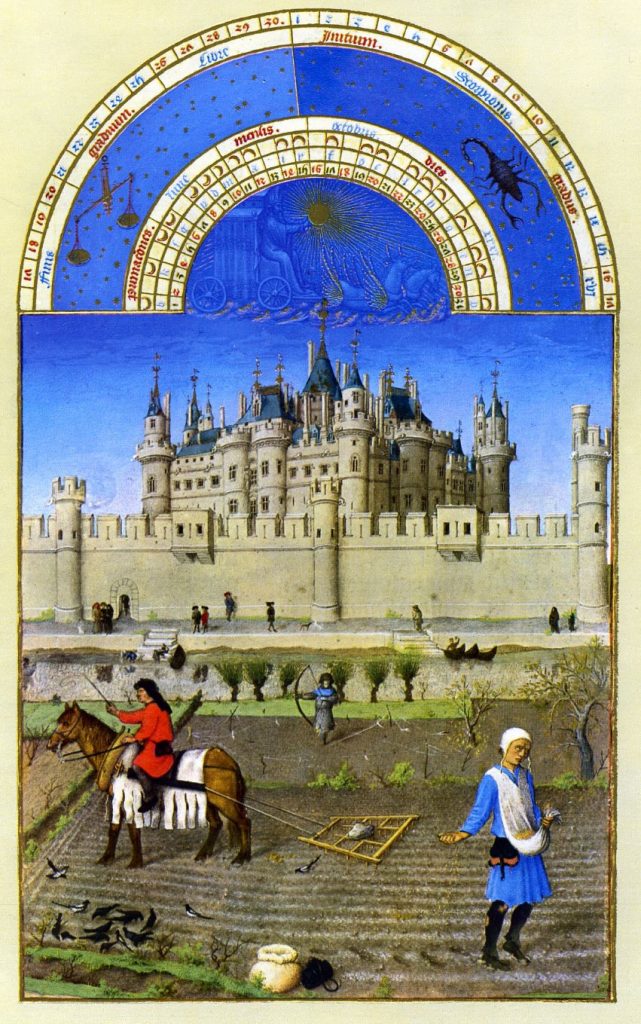
The daily rhythm of eating among peasants and serfs followed work more than clock time. Medieval meals were shaped by daylight, season, household labor, agricultural demands, fasting rules, and the availability of prepared food. A modern pattern of breakfast, lunch, and dinner can mislead if imposed too neatly on medieval life. Many lower-class households organized eating around one substantial meal and one lighter meal, with smaller bites or drinks taken as labor required. The central question was not whether a meal fit a formal schedule, but whether the body could be sustained through plowing, sowing, weeding, haymaking, harvest, threshing, hauling, brewing, spinning, dairying, child care, animal care, and the countless small tasks that held a household together.
Breakfast was the most ambiguous of the daily meals. Moral and religious writers sometimes treated early eating with suspicion, associating it with gluttony, weakness, or lack of discipline. But peasant life could not be governed entirely by moral ideals written for other bodies. A field laborer beginning work before full daylight, a servant sent on errands, a child, an elderly person, a pregnant woman, or someone performing heavy seasonal labor might need something before the main meal. When breakfast appeared, it was often modest: bread, ale, leftovers, cheese, an onion, or some portion of the previous day’s food. It was less a ceremonial meal than a practical act of bodily preparation. The suspicion attached to breakfast reveals less about universal medieval practice than about the tension between moral discipline and the physical demands of labor.
Dinner, usually the principal meal of the day, often came in the late morning or around midday, though exact timing varied. It was the point at which the household’s main cooked food could be distributed: pottage, bread, ale, vegetables, pulses, cheese, eggs, fish, or meat when available. For those working near the home, the meal might be eaten at the hearth, in the yard, or near the domestic buildings where the pot, bread, ale, and stored foods were accessible. For those in fields, meadows, woods, or at distant work sites, food might have to be carried, wrapped, or brought out by another household member. Bread was particularly useful for this reason. It could travel more easily than a pot of stew, and it could be eaten with cheese, onions, bacon, dried fish, or ale. A thick slice of coarse bread was not merely a side dish; it was a portable utensil, a source of calories, and sometimes the most reliable part of the meal. During intense agricultural seasons, the midday meal became important because it divided long hours of labor and restored enough strength for the afternoon’s work. A weak meal at midday could mean slower work, poorer endurance, and greater exhaustion by evening. In harvest, when delay could expose crops to weather or spoilage, feeding workers adequately was not generosity alone but practical necessity. The daily table was not separate from the field; it was the field’s necessary interruption. Dinner marked the point where bodily need, household management, and agricultural urgency met.
Supper was usually lighter, though not necessarily unimportant. It could repeat the contents of dinner in smaller form: more pottage, bread, ale, leftovers, dairy, or whatever remained available. Evening food had to fit the household’s remaining fuel, light, and labor. Animals still needed tending, tools needed putting away, children needed care, and domestic work did not end when field labor stopped. In winter, shorter days compressed work and eating into a different rhythm; in summer, long daylight extended labor and could push ordinary routines later. Supper also had a social meaning because it gathered the household after dispersed tasks. Even if the food was plain, the evening meal marked a return to the domestic center: the hearth, the pot, the sleeping space, the stored food, and the fragile security of the household enclosure.
Seasonal labor could alter the entire pattern. Harvest was the clearest example. At harvest time, work was urgent, collective, and physically punishing, and the need for food rose sharply. Laborers might receive extra bread, ale, cheese, meat, or pottage, depending on local custom and the resources of the employer or household. Harvest meals could become more generous not because peasants suddenly entered abundance, but because the work demanded it and because failure to gather crops quickly threatened everyone’s survival. Haymaking, sheep-shearing, plowing, threshing, and other seasonal tasks also changed appetite, timing, and distribution. Food was part of labor management. A poorly fed worker tired sooner; a hungry household worked under the shadow of future weakness. The daily rhythm of eating was an energy system, constantly adjusted to the demands placed on human bodies.
The daily meal structure also varied by age, gender, status, and place within the household. Men doing heavy fieldwork might receive larger portions than children or the elderly, though women’s labor could be equally relentless in different forms: brewing, baking, dairying, gardening, gathering, preserving, spinning, washing, cooking, and caring for children or animals. Servants and hired laborers might eat according to the rules of the household that employed them. The poor, the landless, and the marginal could experience meal rhythms more precariously than substantial tenants with fuller stores. Feast days, fast days, illness, childbirth, market days, and church observances all disrupted ordinary patterns. Medieval lower-class eating was neither random nor rigid. It followed a practical rhythm: enough in the morning if the body required it, the main meal when work allowed, a lighter meal at day’s end, and constant adjustment to labor, season, hunger, and the contents of the household store.
The Seasonal Food Year: Plenty, Scarcity, and the Hungry Gap

The lower medieval diet cannot be understood as a fixed daily menu because the peasant table changed with the year. A household’s food supply expanded and contracted according to sowing, harvest, slaughter, brewing, dairying, fasting, storage, and weather. Modern descriptions often flatten this rhythm into a single list of foods: bread, pottage, ale, peas, beans, onions, cheese, and occasional meat. But medieval people experienced those foods through time. The same household that ate reasonably well after harvest might thin its meals by late spring. The same family that enjoyed fresh greens, dairy, fruit, or festival food in one season might depend heavily on stored grain and dried pulses in another. Seasonality was not a decorative feature of peasant life. It was the organizing structure of appetite, labor, fear, and hope.
Harvest brought the closest thing many rural households knew to abundance, though even abundance was disciplined by obligation. Grain came in from the fields, but it did not all become food. Some had to be saved as seed, some owed as rent or tithe, some sold to raise cash, and some stored against the long months ahead. Still, the weeks around harvest could alter the emotional texture of eating. New grain, fuller barns, heavy labor, and communal work created moments when food and drink were more plentiful than usual. Harvest workers might receive extra bread, ale, cheese, meat, or pottage, depending on custom and resources. Feasts and church observances could mark the gathering of crops, and even modest households might experience a temporary sense of relief. This relief mattered psychologically as well as physically. After months of watching stores dwindle, the sight of sheaves, sacks, cartloads, and granaries offered a kind of reassurance that the year might be survived. Yet harvest abundance was never simply carefree. It came with urgency, exhaustion, and calculation. Bad weather at the wrong moment could ruin grain before it was safely stored, and a full barn was already shadowed by the question of whether it would last. The harvest also exposed the social structure of the village food system. Landlords, tithe collectors, creditors, laborers, gleaners, and household members all had claims or expectations attached to the crop. What looked like abundance in the field could shrink quickly once dues were paid, seed was set aside, debts were settled, and market needs were met. For peasants and serfs, harvest was both celebration and accounting, a moment when the household briefly touched plenty while immediately dividing it into obligations, reserves, and future meals.
Autumn was also the season of preservation and preparation. Animals that could not be fed through winter might be slaughtered, especially pigs fattened on mast, scraps, and household waste. Meat could be salted, smoked, or otherwise preserved; fat could be rendered; blood and offal consumed quickly; bones saved for broth. Fruits might be dried, stored, cooked, or pressed into drink where local practice allowed. Nuts could be gathered, roots lifted, cabbages stored, and pulses dried. Ale could be brewed as grain became available, though the keeping quality of drink varied by region and technique. Autumn turned the labor of harvest into the labor of storage. The medieval peasant household did not merely gather food; it fought time. Every dried bean, salted herring, smoked piece of pork, cheese, sack of grain, bundle of herbs, or barrel of ale represented an attempt to move nourishment from a season of relative supply into a season of narrowing choices.
Winter was not always a season of immediate starvation, but it was a season of dependence on what had already been secured. Stored grain, pulses, cheese, preserved meat, roots, dried fruit, nuts, ale, and fish became more important as gardens slowed and fresh foods diminished. Meals might grow heavier, darker, and more repetitive: bread from stored grain, pottage thickened with peas or beans, cabbage or roots where available, dairy if it had been preserved, and small amounts of bacon, lard, or salted meat when the household could spare them. Winter also changed labor. Fieldwork did not disappear, but the agricultural calendar slowed in some respects and shifted toward threshing, animal care, repairs, fuel gathering, spinning, brewing, and domestic production. The hearth became even more central, not only for cooking but for warmth and household gathering. Fuel shortages could affect food directly, because dried pulses and coarse grains required long cooking. A household might possess food in one sense and still struggle to turn it into meals if fuel, vessels, or labor were strained.
Spring was often the most dangerous season because it could bring the hungry gap, the period when stored food ran low before new crops were ready. This was not famine in every year, but it was an annual vulnerability. Grain reserves had to stretch until harvest, seed grain had to be protected from desperate consumption, and animals might be lean after winter. Dairy could begin to improve with the return of pasture and lactation, and fresh greens might reappear, bringing flavor and some relief after months of stored foods. But these early foods did not necessarily provide enough calories to replace dwindling grain. Spring hunger could be quiet and cumulative: smaller loaves, thinner pottage, weaker ale, fewer beans, less fat, and more reliance on greens, roots, or gathered plants. The hungry gap shows why peasant food security cannot be measured only by what was theoretically available in the landscape. The decisive question was timing. Food that arrived too late could not prevent hunger now.
Summer brought both promise and pressure. Gardens yielded more, dairy might be more available, hens could lay more reliably, and fresh vegetables and herbs could diversify the pot. Haymaking, weeding, tending animals, and preparing for harvest filled the days with labor. Yet summer before the grain harvest could also be tense if the previous year’s stores were nearly gone. Early crops, garden produce, and dairy could help, but the main cereal harvest still determined whether the household would move into relief or crisis. Weather mattered intensely: too much rain, too little rain, storms, pests, plant disease, or failed ripening could undo months of labor. The peasant year was suspended between green promise and harvest anxiety. Fields that looked abundant were not yet food in the barn; grain standing in the field remained vulnerable until cut, dried, gathered, threshed, stored, and protected. This uncertainty shaped how households ate even before scarcity became visible. A family might conserve grain more carefully, dilute ale, stretch pottage, sell fewer eggs, delay slaughter, or gather more greens while waiting to see whether the crop would ripen safely. The weeks before harvest could be among the most psychologically charged moments of the year because hope and hunger stood so close together. Summer abundance in the garden did not erase the central importance of cereal crops. A patch of leeks, a basket of berries, fresh milk, or a few eggs could ease the season, but bread still depended on grain that had not yet been secured. Summer was not simply a season of plenty. It was a season of watching, laboring, calculating, and waiting for the food that would decide the next year.
The seasonal food year reveals the central paradox of lower medieval subsistence. Peasant diets could be varied across the year, sometimes more varied than a simple stereotype allows, because different seasons brought greens, dairy, fruits, nuts, slaughtered meat, fresh ale, stored pulses, and feast foods. But this variety was inseparable from risk. Plenty was often temporary, scarcity often predictable, and hunger sometimes only one failed harvest away. A full meal in October did not guarantee sufficiency in May. A household’s well-being depended on the success of storage, the fairness or severity of obligations, the preservation of common rights, the availability of labor, and the mercy of weather. The medieval food year was a cycle of accumulation and depletion. The lower classes lived not only from meal to meal, but from harvest to harvest, always measuring the present bowl against the future emptiness it might have to prevent.
Religion and the Food Calendar: Fasting, Fish, Lent, and Feast

Medieval peasants and serfs did not eat according to season and labor alone. They also ate according to the Christian calendar, which divided the year into ordinary days, fast days, vigils, Lent, Advent customs, saints’ days, parish feasts, and great celebrations such as Christmas and Easter. Religion did not float above the food system as a purely spiritual matter. It entered the kitchen, the market, the fish trade, the dairy economy, the timing of slaughter, and the contents of the pot. The Church’s calendar told medieval Christians not only when to pray, confess, abstain, and celebrate, but also when meat should disappear from the table, when indulgence was appropriate, and when restraint itself became a form of obedience. For lower-class households already accustomed to modest meals, religious discipline did not create austerity from nowhere, but it formalized and intensified it.
Fasting rules varied by region, period, local custom, and ecclesiastical enforcement, so the familiar claim that medieval Christians observed “a hundred fast days” should be treated as a useful approximation rather than a universal formula. Still, the burden of abstinence was real. Lent was the most dramatic example, but Fridays, vigils, Ember days, and other observances could also restrict the eating of meat, and in some contexts animal products such as eggs and dairy were limited or debated. For wealthy households, fasting could produce elaborate substitutes: fish dishes, almond milk, imported ingredients, refined sauces, and culinary ingenuity that preserved status even under restraint. For peasants and serfs, the change was usually less theatrical. A household already living on bread, pottage, pulses, vegetables, ale, and occasional dairy or meat might adjust by leaving out bacon fat, avoiding meat broth, relying more heavily on peas and beans, or seeking fish if it was affordable and accessible. This difference is important because religious fasting did not fall on a neutral food system. It landed on a society already divided by class, region, and access. A lord might abstain from meat while eating costly fish, spiced sauces, fine white bread, and sweetened dishes; a poor household might abstain by making an already plain pottage plainer. The rule could be shared across Christian society, but its material experience was not shared equally. Even so, fasting also created a common rhythm. However different their tables, rich and poor alike moved through a year marked by permitted and forbidden foods, bodily discipline, and the expectation that appetite itself could be morally ordered. The fast reshaped the meal, but it did not necessarily transform it beyond recognition.
Fish became the most visible food of abstinence because it occupied a permitted place where meat was forbidden. Yet fish was not equally available to all. Coastal communities, river settlements, marshlands, lake districts, and towns connected to trade could obtain fish more readily than isolated inland villages, but preserved fish widened access far beyond the shoreline. Salted herring, dried cod, stockfish, eels, freshwater fish, shellfish, and other forms of aquatic food moved through medieval markets and ecclesiastical demand. Herring mattered in northern Europe because it could be caught in large quantities, preserved, transported, and consumed across class lines. For the poor, a dried or salted fish was not a luxurious substitute for roast meat. It was often a hard, salty, practical food, useful because it kept and because religious rules made it valuable. The fasting calendar helped connect peasant tables to larger commercial networks of fishing, salting, shipping, market regulation, and seasonal demand.
Lent exposed the tension between religious ideals and bodily need. The forty-day season before Easter fell at a difficult point in the food year, often close to the hungry gap, when stores from the previous harvest could be low and fresh supplies had not fully returned. In that sense, Lent’s discipline coincided with a material season of narrowing choices. This does not mean that Lent was simply imposed cruelty. Medieval Christians understood fasting as penitence, imitation, purification, communal discipline, and preparation for the joy of Easter. But for lower-class households, the spiritual meaning of restraint met the practical reality of scarcity. Bread, ale, pulses, greens, and fish where available had to carry the body through both religious obligation and seasonal depletion. The same thinness that a preacher might praise as penitential could also be felt by a laborer as weakness, hunger, or anxiety about whether the household’s grain would last. Lent also required planning. If animal foods were restricted, then households had to think ahead about beans, peas, stored grain, dried fish, oil where it was used, and whatever greens might return with spring. The season could intensify women’s domestic management, since the ordinary pot had to be adjusted to rules of abstinence while still feeding children, workers, the elderly, servants, and the sick. Exceptions and dispensations existed, and practice was never perfectly uniform, but the ideal mattered because it made food part of spiritual accountability. Lent turned the household meal into a test of discipline, memory, and endurance. It asked medieval Christians to feel the body’s wants and subordinate them to sacred time, even when the poor had far less bodily surplus to give up.
Feast days formed the other side of the religious food calendar. Medieval Christianity did not only restrict eating; it also authorized moments of abundance, celebration, and communal release. Christmas, Easter, saints’ days, weddings, harvest observances, parish ales, and local festivals could bring better bread, stronger ale, meat, eggs, cheese, fish, sweets, or shared dishes beyond ordinary routine. For peasants and serfs, such occasions mattered precisely because daily life was repetitive and carefully rationed. A feast was not merely a large meal. It was a social event that marked belonging: to a household, village, guild, parish, manor, or Christian community. It could reinforce hierarchy, since lords, monasteries, and wealthy neighbors might distribute food or stage hospitality, but it could also create moments of collective enjoyment in which ordinary people tasted foods rarely available in daily life. The religious calendar alternated restraint and release, hunger and celebration, discipline and memory.
Religion complicates any purely economic account of the lower medieval diet. Peasant food was shaped by land, labor, rent, harvest, and market access, but also by sacred time. The Christian year told people when ordinary hunger should be interpreted as discipline, when abstinence should mark obedience, when fish could replace flesh, and when feasting could briefly overturn the monotony of pottage and bread. For the poor, these observances did not erase class inequality. A noble’s fast might still be richer than a peasant’s feast. But the calendar gave lower-class eating a rhythm that was moral as well as seasonal. It made food a language of sin, penance, celebration, community, and hope. The medieval peasant table was not only an economic table. It was a Christian table, where the contents of the bowl changed with both the harvest and the holy year.
Regional Diets: Europe Was Not One Peasant Table
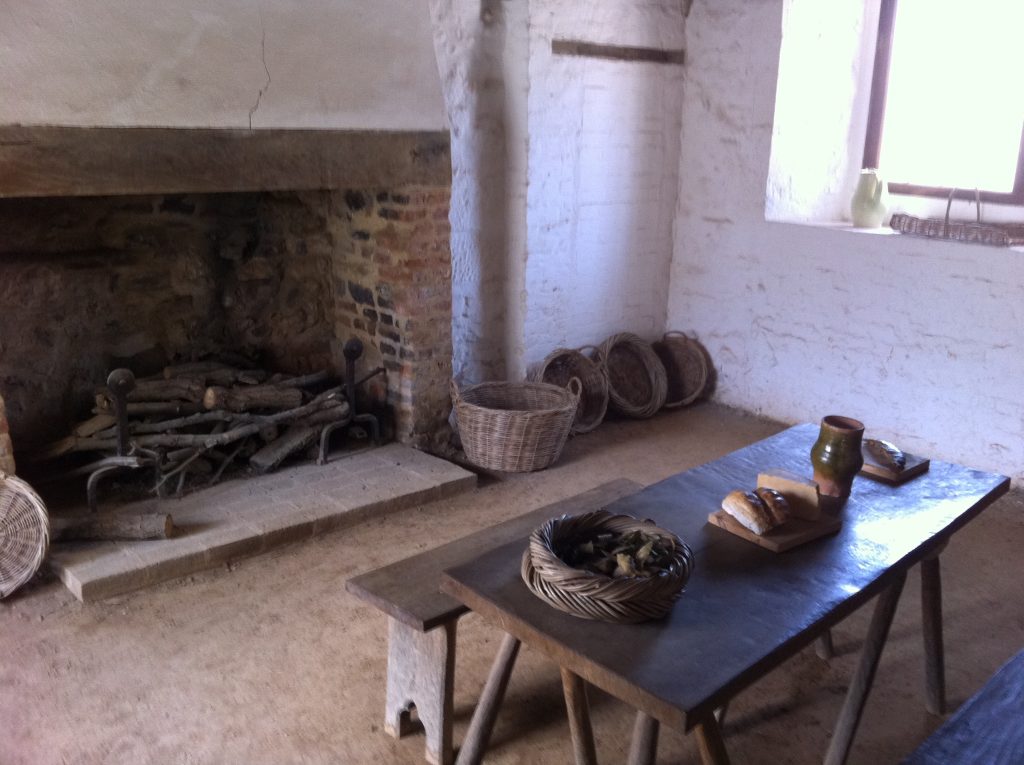
To speak of “the medieval peasant diet” is useful only if the phrase is treated as shorthand rather than a single menu. Europe was not one agricultural zone, one climate, one religious practice, one market system, or one peasant economy. The lower classes across medieval Europe shared certain broad conditions: dependence on local staples, vulnerability to harvest failure, heavy reliance on cereals and pulses, limited access to elite foods, and a food calendar shaped by labor and religion. Yet the actual contents of the bowl and loaf changed dramatically from one region to another. Soil, rainfall, altitude, temperature, rivers, coasts, forests, pasture, market distance, political control, and customary rights all shaped what peasants could grow, gather, brew, press, preserve, sell, and eat. A peasant in an English barley-and-ale landscape, a French tenant in a wheat-and-wine zone, a Mediterranean smallholder with access to oil and vines, and an upland household dependent on oats, dairy, and hardy livestock all belonged to the lower medieval world, but not to the same table.
In much of northern and northwestern Europe, including England, parts of the Low Countries, northern France, and German-speaking regions, the lower-class diet leaned heavily on grains suited to cooler and wetter conditions. Rye, barley, oats, and mixed grains often mattered as much as or more than wheat for ordinary people. Ale or beer occupied a central place in daily nourishment, while dairy, bacon, pottage, cabbages, leeks, peas, beans, onions, and preserved fish helped shape the ordinary food pattern. Herring and other preserved fish linked inland eaters to coastal fisheries and trade networks, especially during fasting seasons. In some places, access to woodland supported pigs, nuts, fuel, and gathered foods; in others, dense settlement and tighter lordly control restricted the resources available beyond the field. The result was a peasant diet that could be filling and sturdy in good years, but was often dark-breaded, grain-heavy, and dependent on careful storage. Northern foodways also reveal how climate shaped technique. Wet conditions could complicate harvest and storage, making drying, malting, brewing, baking, and preservation crucial household skills. Cooler weather favored some forms of storage but shortened growing seasons in marginal areas, increasing reliance on hardy cereals and durable foods. In these regions, the ordinary meal often reflected a practical alliance between grain field, dairy animal, garden plot, ale vat, and fish barrel. It was not necessarily elegant, but it was deeply adapted to a landscape where calories had to be secured from crops that could survive damp soils, unpredictable weather, and the demands of rent and tithe.
Mediterranean foodways operated under different ecological rules. In parts of Italy, southern France, Iberia, Greece, and other Mediterranean zones, wheat, barley, vines, olives, legumes, vegetables, fruits, and fish formed a different constellation of staples. Wine often took the place that ale occupied farther north, though ordinary wine could be rough, diluted, local, and sharply different from elite vintages. Olive oil, where available, provided fat in ways that butter, lard, or dairy did elsewhere, though access varied by class and region. The Mediterranean peasant table could include bread, pulses, onions, garlic, greens, figs, grapes, olives, oil, wine, cheese, and fish, but this should not be romanticized into a timeless abundance. Drought, poor soils, taxation, warfare, market extraction, and unequal landholding could make southern diets just as precarious as northern ones. The Mediterranean world offered different ingredients, not automatic plenty.
Mountain, upland, and marginal regions produced still other patterns. Where wheat was unreliable, households might depend more heavily on oats, barley, rye, millet, buckwheat in later medieval and early modern contexts, chestnuts in some regions, dairy, preserved foods, and hardy animals. Pastoral and mixed economies made cheese, milk products, goats, sheep, and seasonal movement especially important in some areas. In Alpine, Pyrenean, Apennine, Balkan, or upland British settings, the calendar of pasture could matter as much as the calendar of grain. Food preservation was crucial because elevation and climate shortened growing seasons and intensified winter dependence. Such regions remind us that the medieval peasant diet cannot be reconstructed from lowland cereal agriculture alone. A household living near mountains, forests, or rough pasture might have less grain security but more access to dairy, fuel, animals, wild plants, or seasonal grazing, depending on local rights and ecological opportunity.
Eastern and central Europe also complicate any western-centered model. Rye, millet, barley, oats, cabbage, legumes, pork, dairy, forest products, and fermented foods could play major roles in different areas, while settlement patterns, lordship, colonization, frontier expansion, and later intensification of serfdom reshaped food access. Forest and marsh zones could supply fish, game, honey, berries, nuts, mushrooms, and fuel, though legal rights determined who could use them. Grain remained central, but the grain was not always wheat, and the accompanying foods reflected landscapes of river, woodland, pasture, and village garden. In some regions, lower-class diets were less tied to commercial markets than in heavily urbanized western zones; in others, towns, trade routes, mines, castles, monasteries, and military demands pulled peasant produce outward. Regional food was inseparable from regional power. What grew locally did not necessarily stay local, and what peasants produced could be redirected toward landlords, towns, armies, or trade. The frontier and colonization zones of medieval central and eastern Europe make this especially clear. New settlements might open access to land, forest, and pasture, but they also brought obligations, lordly claims, ecclesiastical structures, and market demands. A household might live in a landscape rich with fish, woodland products, or grazing, yet still face restrictions on hunting, fishing, milling, brewing, or moving produce. Fermentation and preservation also took on particular importance in colder or forested regions, where cabbage, dairy, grain, and meat could be transformed into foods that endured winter and travel. These patterns were not backward survivals outside “mainstream” medieval Europe; they were local solutions to the same basic problem of turning environment, labor, and obligation into food.
Urban poor diets differed again from rural peasant diets, even when they shared the same class vulnerabilities. Town dwellers often had less direct access to fields, gardens, livestock, woodland, and commons, making them more dependent on markets, wages, price regulation, and public supply systems. They might buy bread rather than bake it, purchase ale from brewers rather than make it at home, eat prepared foods from cooks or vendors, or rely on cheap fish, pottage, pies, offal, cheese, onions, and street foods according to local custom. Urban diets could be more varied in one sense because towns concentrated markets and trades, but also more precarious because cash failure quickly became food failure. A rural household might stretch a garden, a pig, a sack of beans, or gleaning rights; an urban laborer needed money or credit. This contrast further weakens any single image of the medieval poor. The difference between village subsistence and urban market dependence mattered as much as the difference between rye and wheat.
Regional variation does not destroy the idea of a typical lower medieval food regimen, but it changes what “typical” must mean. It cannot mean that all peasants ate the same bread, drank the same ale, cooked the same pottage, or faced hunger in the same way. It means that across medieval Europe, lower-class diets tended to be organized around local staples, modest animal products, preserved foods, household labor, religious calendars, and vulnerability to ecological or social disruption. The form varied: ale in one region, wine in another; rye bread here, barley porridge there; olive oil in one place, lard or butter in another; herring on one table, freshwater fish or chestnuts on another. Europe was not one peasant table. It was a patchwork of food networks held together by common structures of labor, class, season, and risk. The medieval poor did not eat identically, but they ate under comparable constraints.
Nutrition, Health, and the Question of Adequacy

The nutritional quality of the lower medieval diet is difficult to judge because it resists both pitying caricature and modern romanticism. On one hand, peasants and serfs lived with hunger, disease, parasites, hard labor, poor sanitation, periodic famine, and the constant danger that a failed harvest could turn modest sufficiency into crisis. On the other hand, their ordinary foods were not nutritionally empty. A diet based on whole grains, pulses, pottage, garden vegetables, ale, dairy, eggs, occasional meat, fish, and seasonal fruits could provide substantial calories, fiber, complex carbohydrates, plant protein, minerals, and some animal fat and protein. The issue was not simply that medieval peasants ate “badly.” It was that adequacy depended on year, region, household status, season, age, sex, health, labor burden, and access to land and resources. A substantial tenant after a good harvest might eat coarse but filling meals that sustained heavy work, while a landless laborer, widow, orphan, servant, or smallholder near the hungry gap might experience the same food system as chronic insufficiency. Nutrition was not only a question of ingredients, but of timing, distribution, bodily demand, and social power. The same food network that could sustain heavy agricultural work in a good year could become dangerously thin in a bad one.
Calories mattered first because lower-class bodies were working bodies. Plowing, sowing, reaping, threshing, ditching, hauling, tending animals, gathering fuel, brewing, baking, washing, spinning, dairying, and gardening all required energy. Bread, ale, pottage, peas, beans, oats, barley, rye, and dairy were not refined luxuries, but they could be effective labor fuel. Whole grains and pulses provided bulk and slow energy; ale added liquid calories; cheese, butter, lard, bacon, eggs, and fish, when available, added fat and protein. The heaviness of the peasant diet was functional. Dense bread, thick pottage, and legume-based meals suited bodies that needed endurance more than delicacy. A modern observer might see monotony, but for a laborer facing hours in the field, the crucial question was whether the meal filled the stomach and held strength long enough for work to continue.
Yet adequacy was never evenly distributed. Within a household, portions could vary by age, gender, labor role, status, and vulnerability. Men engaged in heavy field labor might receive more food at certain times, but women’s work was also physically demanding and often less visible in records: carrying water, brewing, baking, dairying, child care, preserving, fuel gathering, gardening, and textile work all consumed energy. Children needed nutrients for growth; pregnant and nursing women faced special demands; the elderly, sick, and disabled were vulnerable when food was rationed by usefulness or household hierarchy. Servants and hired laborers might be fed according to contract, custom, or the generosity of an employer. Landless workers had less direct access to stored food than better-off tenants. The phrase “peasant diet” can hide internal inequalities. Nutrition was not only a matter of what foods existed in the village, but of who received them, when, and in what quantity.
Health risks also complicated the picture. Coarse whole-grain bread and fibrous pottage could be sustaining, but they could also be gritty, contaminated, moldy, or adulterated in hard times. Poor milling might introduce stone particles that wore teeth. Damp storage could encourage spoilage. Ergot and other grain diseases could turn cereals dangerous. Water could be clean in one place and hazardous in another. Parasites, infections, dental disease, childhood malnutrition, repeated pregnancies, injuries, and chronic physical strain all affected how well bodies converted food into health. The body was not a neutral vessel into which calories simply entered and became strength. A person weakened by worms, fever, infected wounds, bad teeth, respiratory illness, or repeated seasonal hunger might gain less from the same meal than a healthier neighbor. Famine and dearth did not merely reduce calories; they weakened immune systems, increased susceptibility to disease, encouraged consumption of inferior substitutes, and forced households into desperate decisions such as eating seed grain, selling animals, or abandoning reserves. Shortage could also create a downward spiral: hunger reduced work capacity, reduced work capacity endangered production or wages, and reduced production made future hunger more likely. A diet can look adequate on paper while failing in the body under stress.
The best interpretation is neither that medieval peasants were always starving nor that they enjoyed a naturally healthy premodern diet. In stable years, many lower-class households could eat a regimen that was coarse but substantial, repetitive but nutritionally meaningful, and sometimes superior in whole grains, legumes, and low sugar to many later poor diets. But this adequacy was fragile. It depended on the harvest arriving, stores lasting, rents not crushing the household, animals surviving, common rights remaining usable, and illness not breaking the labor supply. Medieval peasant nutrition was a balance between resilience and exposure. Bread, pottage, ale, beans, greens, cheese, bacon, and fish could keep people alive and working, but they did so in a world with little margin for failure. The lower-class diet was not simply a diet of deprivation. It was a diet of conditional sufficiency, always haunted by the possibility that ordinary hardship could become hunger.
Famine, War, Rent, and the Collapse of the Ordinary Diet
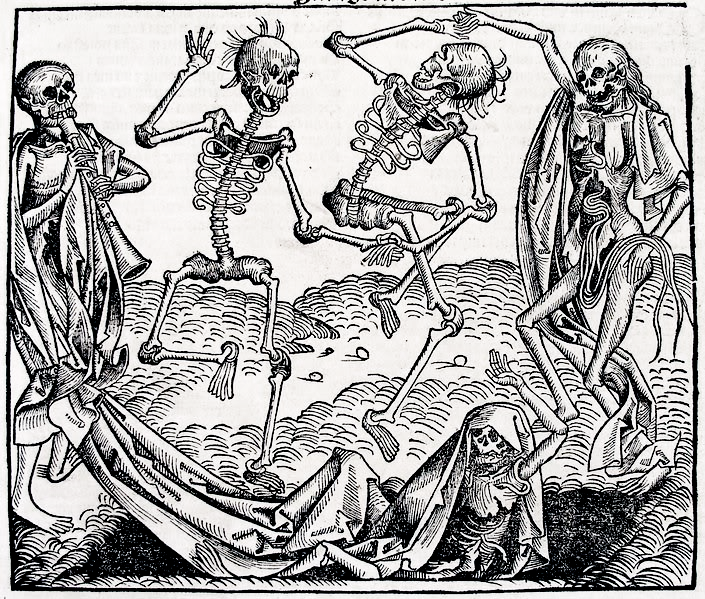
The ordinary peasant diet was built for endurance, but it was not built with much room for disaster. In a stable year, bread, pottage, ale, pulses, greens, dairy, and occasional animal foods could form a workable regimen, plain but sustaining. Yet the same system could collapse quickly when harvests failed, prices rose, war disrupted production, animals died, rents remained due, or household labor was weakened by disease. The lower medieval food network was resilient in its techniques but fragile in its margins. Peasants knew how to stretch grain, dry beans, preserve pork, gather greens, brew weak ale, and thicken the pot with whatever remained. What they could not always do was overcome the combined force of weather, extraction, violence, and scarcity. The collapse of the ordinary diet was rarely a single event. It was a sequence: stores dwindled, bread darkened, pottage thinned, ale weakened, animals were sold or slaughtered, seed grain came under threat, and the household’s future was consumed along with its present.
Famine was the most dramatic form of this collapse, and the Great Famine of 1315–1317 remains one of the clearest examples in northern Europe. Excessive rain, failed harvests, livestock disease, high prices, and social stress produced a crisis that exposed how dependent lower-class households were on grain and how little protection many possessed against consecutive bad years. A single poor harvest could be survived by reducing portions, selling goods, relying on kin, using stored pulses, gathering wild foods, or buying grain at higher prices. Repeated failure was different. It broke the logic of household management. Seed grain, usually protected as the promise of next year’s crop, became food of last resort. Livestock, normally valued as labor, milk, manure, wealth, and future security, might be sold into a bad market or slaughtered prematurely. Tools, clothing, bedding, and small possessions could be pawned or sold. The crisis also exposed inequality within and between communities. Better-off tenants might have deeper stores, more animals to sell, kin networks with resources, or enough credit to purchase grain before prices rose beyond reach. Poorer cottagers, servants, widows, or landless laborers had fewer buffers and could be forced into dependency much sooner. Charity, parish support, monastic almsgiving, and lordly relief might help, but they were uneven, limited, and often overwhelmed when scarcity became widespread. Famine turned the peasant economy inside out, forcing families to trade tomorrow’s survival for today’s calories. It also showed that hunger was not only an ecological event but a social sorting mechanism, revealing who had reserves, who had claims on others, and who stood closest to destitution when the normal food year failed.
The food of crisis was not merely less food; it was worse food, riskier food, and more desperate food. Households might stretch flour with inferior grains, bran, acorns, roots, weeds, or other substitutes. Pottage could become thin enough to offer warmth without strength. Spoiled grain, moldy bread, diseased crops, or poorly processed wild foods could enter the diet when hunger lowered standards of safety. People might eat animals they would normally preserve, sell, breed, or keep for labor. They might consume seed, strip gardens too early, gather unripe foods, or depend on charity that was itself overwhelmed. The crisis diet was a distortion of the ordinary diet. Bread remained central, but it became darker, smaller, adulterated, or absent. Pottage remained central, but it became watery and improvised. Ale remained desirable, but it might be weaker or unaffordable. Hunger did not always abolish familiar foods; often it hollowed them out.
War added another path to dietary collapse. Armies ate as they moved, and they took from fields, barns, mills, animals, and villages. Even when peasants were not killed or displaced, military activity could destroy crops, burn stores, interrupt plowing, block markets, damage mills, frighten livestock, and make roads unsafe. Siege warfare, raiding, chevauchée, private violence, and local conflict could all turn productive landscapes into zones of extraction. A village that had enough food in theory might lose access to it through requisition, pillage, taxation, or forced provisioning. War also redirected labor. Men might be drawn into service, animals seized for transport, carts taken, and time lost from cultivation. The result was not only immediate hunger but delayed hunger, because fields not sown, manured, weeded, harvested, or protected would produce future shortage. Violence entered the diet long after soldiers had passed through. It appeared months later as missing grain, fewer animals, thinner meals, and debts that could not be paid.
Rent, tithe, tax, and lordly obligation could make scarcity worse because they did not always diminish when harvests failed. A peasant household might face hunger not simply because the land produced too little, but because too much of what it produced was already claimed. Rent in grain, money payments, labor services, church tithes, milling fees, oven fees, fines, market tolls, and extraordinary taxation all shaped how much food remained for consumption. In a good year, these obligations were burdensome but manageable for some households. In a bad year, they could become ruinous. If rent had to be paid, grain might be sold when the household needed to eat it. If cash was required, eggs, cheese, livestock, ale, or tools might be converted into money rather than nourishment. If labor services were demanded at critical agricultural moments, a family’s own crops could suffer. These obligations also shaped the order in which scarcity was felt. The household did not simply divide its harvest into food and surplus; it had to divide it into seed, rent, tithe, debt, market need, animal feed, and daily consumption. When the total supply shrank, each claim pressed harder against the others. A lord’s demand, a tax collector’s assessment, or a miller’s fee could mean fewer loaves, thinner ale, or the sale of an animal that would have supplied milk, manure, or breeding. Even where customary obligations were negotiable, negotiation depended on power. Some lords might defer, remit, or distribute relief; others might insist on dues precisely when peasants were least able to pay. The collapse of diet was political as well as environmental. Hunger followed the weather, but it also followed power.
The ordinary lower-class diet was strongest when its many parts worked together: grain in storage, pulses in reserve, garden produce in season, animals alive, ale brewed, fish or dairy available, fuel accessible, labor healthy, and obligations survivable. Famine, war, and rent broke those connections. They did not merely remove one food from the table; they damaged the relationships that allowed households to turn land, labor, storage, and custom into meals. This is why the peasant food system should be understood as conditional sufficiency rather than permanent starvation or secure subsistence. In ordinary times, it could sustain life with remarkable thrift. Under pressure, it could unravel with terrifying speed. The same bowl of pottage that represented resilience in a good year could become evidence of collapse in a bad one, thinner each week until it marked the boundary between endurance and hunger.
After the Black Death: Wages, Meat, Markets, and Changing Expectations
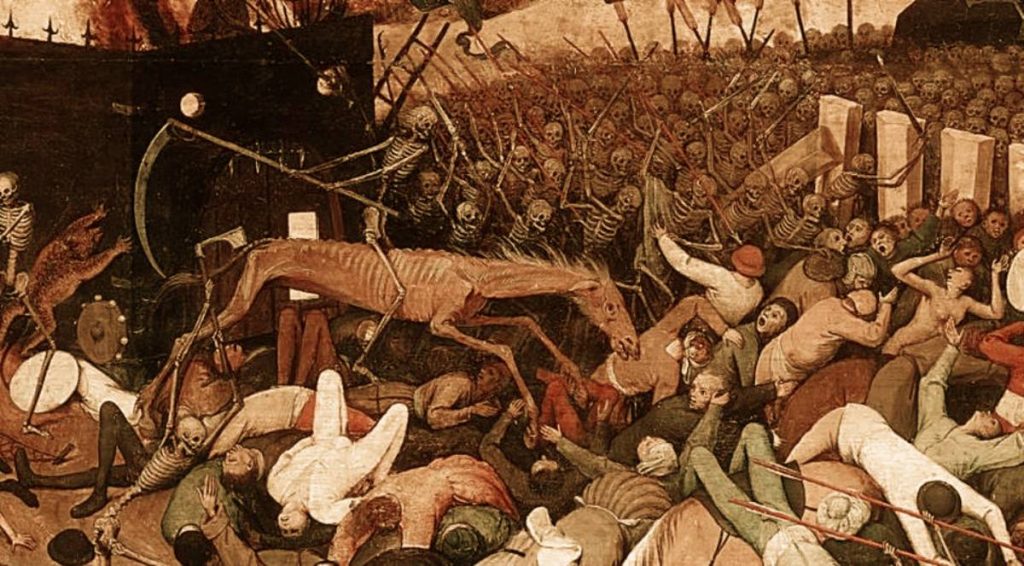
The Black Death did not erase hunger from medieval Europe, but it changed the conditions under which many lower-class people sought food. The demographic catastrophe of the mid-fourteenth century killed on such a scale that land, labor, wages, rents, and bargaining power were altered across many regions, especially in parts of western Europe. Fields still had to be plowed, animals tended, grain harvested, ale brewed, roads maintained, and households supplied, but there were fewer workers to do that labor. For surviving peasants, servants, and wage laborers, this could mean higher wages, better terms of employment, access to abandoned holdings, lower rents in some places, or improved ability to move in search of opportunity. The effects were uneven and often contested, but the food implications were real. When labor became more valuable, the laboring body could sometimes command a better diet.
One of the clearest changes was the possibility of increased meat consumption among some lower-class groups. This did not mean that every peasant suddenly ate like a lord, nor that regional and household inequalities disappeared. But in many areas, especially where wages rose and population pressure on land eased, surviving workers could gain better access to animal products. Meat, dairy, ale, wheat bread, fish, and market foods could become more attainable than they had been during the crowded, high-pressure decades before the plague. Land that had once been divided among too many mouths might now support fewer households more comfortably. Pasture could expand where arable cultivation contracted, making livestock relatively more important. For some villagers, the post-plague diet may have become less desperately cereal-bound and more mixed, with bacon, beef, mutton, poultry, cheese, butter, eggs, or better ale appearing more often than before. This shift mattered because animal foods changed not only nutrition but also expectation. A little more meat meant more fat, more protein, more flavor, and a stronger sense that labor had value. Better access to pasture or livestock could make cheese, butter, and milk products more regular; higher wages could make purchased meat or fish more plausible; and fewer mouths competing for grain could make better bread less exceptional. Even where meat remained intermittent, its increased frequency could mark a real change in ordinary life. The peasant table was still not aristocratic, but it could become less tightly bound to the old rhythm of dark bread, thin pottage, and rare animal additions.
Yet this improvement was not simply a gift of demographic arithmetic. Lords and governments recognized the danger that labor scarcity posed to the old order and tried to restrain wages, bind workers, regulate service, and preserve customary obligations. Laws against excessive wages, complaints about servants demanding better food or pay, and moral criticism of lower-class consumption all reveal that diet had become part of a broader social struggle. When workers expected better meals, better bread, more ale, or more meat, elites could interpret those expectations as insolence, disorder, or luxury beyond proper rank. Food was not only a consequence of changing wages; it became a sign of changing social relations. The laborer who ate better was not merely better nourished. He or she appeared to challenge the older assumption that refinement and abundance belonged naturally to the higher orders.
Markets also mattered more in the later medieval food world. Surviving peasants did not simply eat what they grew; many participated in local and regional markets as sellers, buyers, brewers, wage earners, tenants, and consumers. Better wages could be converted into bread, ale, fish, meat, cheese, salt, or prepared foods. Towns drew in grain, animals, dairy, fish, fuel, and vegetables from surrounding countryside, while rural households used market exchange to manage shortages or turn surplus into cash. Commercial brewing expanded in many places, and prepared foods in towns offered new ways for laborers, servants, travelers, and the urban poor to eat outside the household. This did not eliminate subsistence production, but it complicated it. The lower-class diet increasingly stood at the intersection of household stores and market purchase, especially for wage laborers and urban workers whose access to food depended heavily on cash. This market connection could widen choice, but it also created new vulnerabilities. A household with money could buy what it did not grow, but a household without wages, credit, or saleable goods might be exposed quickly to hunger when prices rose. Markets also changed the meaning of food quality. Better bread, stronger ale, fresh meat, salted fish, imported salt, or professionally baked goods could become signs of access to cash and commercial networks rather than simply products of household labor. The later medieval poor were not merely subsistence eaters clinging to the soil. Many were also consumers, however modestly, navigating prices, wages, measures, quality, and supply in a food economy that reached beyond the village.
The post-plague world also changed expectations within rural society itself. A substantial tenant with more land per person might be able to grow better grain, keep more animals, brew more regularly, and consume more of the produce once diverted to rents or market necessity. A servant in husbandry might negotiate not only wages but board, drink, clothing, and seasonal perquisites. Harvest workers might demand customary food and drink with greater confidence. Even poorer households could sometimes benefit from higher wages or more available land, though these gains were vulnerable to local conditions and elite resistance. Diet became one of the ways people experienced the altered value of labor. To eat more meat, drink stronger ale, buy better bread, or expect a fuller harvest meal was to feel, in the body, that the social world had shifted.
Still, the benefits were uneven. Not every region experienced the same rise in wages or improvement in living standards, and not every lower-class person shared equally in post-plague opportunity. Widows, orphans, the elderly, the disabled, landless people without secure employment, and those in regions of warfare or harsh lordship could remain deeply vulnerable. In some parts of Europe, especially as later forms of seigneurial control hardened, peasants faced renewed obligations rather than greater freedom. Population decline could reduce pressure on land, but it could also leave villages weakened, fields abandoned, markets disrupted, and households short of labor. A family that lost adults to plague might inherit land but lack the bodies needed to work it. Children could be left with rights they were too young to use fully; widows might gain temporary managerial authority while also facing intensified labor burdens; elderly survivors might possess memory and claims but not the strength to cultivate, brew, tend animals, or defend household resources. Labor scarcity could raise wages for some while making household production harder for others. A holding that looked larger on paper after deaths in the family could become a burden if there were not enough hands to plow, harvest, milk, bake, brew, and preserve. The post-Black Death diet cannot be described as simple improvement. It was a field of possibility shaped by survival, inheritance, bargaining, gender, age, region, and power.
The changing food expectations of the later Middle Ages also help explain elite anxiety about consumption. Sumptuary laws, wage regulations, moral complaints, and household ordinances often reveal not only what elites wanted to forbid but what they feared was already happening. If servants, laborers, and peasants were criticized for eating too well, dressing above their station, demanding higher wages, or refusing old terms, then food had become a visible marker of social instability. The ordinary meal could carry political meaning. Meat in the pot, wheat bread on a lower-status table, or ale consumed in greater quantity might seem trivial in isolation, but together they suggested that hierarchy was being renegotiated at the level of daily life. The struggle over diet was part of the struggle over labor after plague.
By the fifteenth century, in some regions, lower-class eating had become more varied and market-connected than the stereotype of medieval peasant poverty allows. This was especially true where wages remained relatively strong, population pressure lower, and pastoral production more accessible. But the change should not be overstated. Bread, pottage, ale, pulses, dairy, vegetables, and preserved foods still formed the backbone of ordinary eating. Meat may have appeared more often for some, but it did not make class vanish. Markets could widen choice, but they also exposed consumers to price shocks. Higher wages could improve diet, but illness, war, rent, taxation, and local scarcity could still pull households back toward austerity. The later medieval lower-class diet was not a new world of abundance, but a modified food regime in which some survivors gained greater access to foods that had once been more tightly restricted by poverty and population pressure.
The Black Death’s most important dietary legacy may be that it revealed how deeply food depended on labor relations. When labor was cheap and land crowded, the peasant diet narrowed under pressure. When labor became scarce and bargaining power improved, food expectations could expand. This does not mean that disease benefited the poor in any simple moral sense; the plague was a human catastrophe, and its gains were bought with mass death. But historically, the aftermath shows that lower-class diets were not fixed by nature, taste, or “medieval backwardness.” They were shaped by the balance of land, labor, wages, markets, and power. After the Black Death, that balance shifted, and in some places the shift could be tasted: in stronger ale, fuller bowls, more animal fat, better bread, and a new insistence that those who worked the land deserved a larger share of what the land produced.
Are We Making the Peasant Diet Too Coherent?
The following video from “Tasting History with Max Miller” discusses peasant meals:
The strongest challenge to any account of “the medieval peasant diet” is that the phrase itself may impose too much order on a profoundly uneven reality. There was no single peasant table, no standard bowl of pottage, no universal loaf, no stable daily ration that can stand for all lower-class medieval people across Europe. The surviving evidence is fragmentary and often skewed toward institutions, elites, towns, monasteries, manors, courts, and written regulations rather than the unrecorded habits of ordinary households. Manorial accounts tell us what was owed, sold, stored, or distributed, but not always what was eaten at the hearth. Cookbooks preserve elite or aspirational food culture more readily than peasant improvisation. Archaeological plant remains, animal bones, isotopic evidence, and dental wear reveal patterns of consumption and health, but they do not always translate neatly into meals, recipes, or daily experience. Even moral and literary references to rustic food can tell us more about elite attitudes than about actual village diets.
This problem is intensified by the diversity hidden within the word “peasant.” A substantial tenant with land, animals, tools, pasture rights, and access to woodland did not live like a landless laborer, servant, widow, orphan, cottager, or displaced migrant. A serf in one region might have customary protections and access to land, while a technically free poor laborer elsewhere might be more exposed to hunger because freedom did not guarantee resources. Gender and age further complicate the picture. Men performing heavy field labor, women managing domestic production and child care, children in growing bodies, pregnant and nursing women, servants under household discipline, and elderly dependents may all have eaten differently within the same community. Even within one household, food could be distributed according to labor value, authority, age, health, or custom. To speak too confidently of “what peasants ate” risks smoothing over inequalities inside the lower classes themselves.
Regional variation deepens the challenge. England, northern France, the Low Countries, Iberia, Italy, Scandinavia, central Europe, eastern Europe, upland zones, coastal communities, river valleys, woodland settlements, and Mediterranean villages were not versions of the same food system with minor local coloring. They could differ fundamentally in staple grains, fats, drinks, preservation methods, access to fish, use of wine or ale, dependence on dairy, role of olive oil, availability of chestnuts or millet, and relationship to markets. Chronology matters as well. The peasant diet of the twelfth century cannot simply be carried into the fifteenth; population pressure, commercialization, climate instability, the Great Famine, the Black Death, wage changes, changing lordship, and expanding markets altered what lower-class people could produce, buy, and expect.
The counterpoint is serious: perhaps “the typical peasant diet” is less a historical fact than a convenient scholarly construction assembled from recurring foods, scattered evidence, and modern desire for synthesis. The danger is not merely factual error but interpretive overconfidence. If I present bread, pottage, ale, pulses, dairy, vegetables, occasional meat, fish, fasting, seasonality, and famine risk as though every lower-class household experienced them in the same proportions, it risks replacing one myth with another. The old myth was total deprivation: peasants as people of black bread and misery. The new myth could be tidy resilience: peasants as managers of a balanced, seasonal, whole-food diet that worked well until disrupted. Both flatten the past. Medieval lower-class eating was often adaptive, but it was also messy, unequal, poorly documented, regionally specific, and vulnerable to events that left little trace in prescriptive sources.
Yet this challenge modifies rather than destroys my main argument. The value of identifying a lower medieval food regimen lies not in claiming a single menu, but in identifying repeated structures: dependence on local staples, especially grains; the importance of pottage and boiled foods; the supporting role of pulses, dairy, eggs, vegetables, herbs, fruits, and preserved foods; the irregular but meaningful place of meat and fish; the shaping force of religious calendars; the importance of seasonality; and the constant pressure of land, labor, rent, market access, and ecological risk. “Typical” must mean patterned, not uniform. The peasant diet was coherent only at the level of constraints and strategies, not at the level of identical meals. That distinction strengthens the final interpretation. Medieval peasants and serfs did not eat one diet; they navigated a family of diets shaped by the same hard questions: what could be grown, what had to be paid, what could be stored, what the Church allowed, what the season provided, what the market charged, and what the household body needed to keep working.
Conclusion: The Taste of Ordinary Survival
The food regimen of medieval peasants and serfs was not a single menu, but a durable pattern of ordinary survival. It was built from the foods most able to sustain labor under conditions of limited power: bread, pottage, ale, pulses, garden vegetables, herbs, dairy, eggs, preserved foods, occasional meat, and fish when geography, market access, or religious demand made it available. These foods were humble, but they were not meaningless. They carried the knowledge of fields, gardens, hearths, barns, commons, mills, ovens, rivers, forests, and markets. A loaf of rye or barley bread, a bowl of thick pottage, a cup of small ale, a piece of cheese, a handful of beans, or a strip of bacon was not simply food. It was the material result of labor, obligation, season, and household management.
The central feature of this diet was its conditional adequacy. In good years, many lower-class households could eat in ways that were repetitive but sustaining, coarse but nourishing, and more varied than the stereotype of medieval misery allows. Whole grains supplied energy; pulses brought protein; ale added calories and hydration; dairy, eggs, fish, fat, and meat enriched the diet when available; gardens and gathered foods added flavor, freshness, and resilience. Yet this adequacy was always fragile. The same household that managed a respectable harvest meal in autumn might confront thinning pottage by spring. The same pig that promised winter fat could be lost to disease, dues, theft, or premature sale. The same grain that fed the family also had to serve as seed, rent, tithe, marketable surplus, and insurance against the future. Medieval peasant food was never only about what could be grown. It was about what remained after power, weather, religion, and necessity had made their claims.
That is why the lower medieval diet should not be reduced either to degradation or to rustic health. Peasants were not merely starving victims living on scraps, but neither were they beneficiaries of some simple premodern natural diet. They lived inside a food system that could be intelligent, adaptive, and nutritionally meaningful while still being harsh, unequal, and dangerously exposed. Seasonality gave variety, but also the hungry gap. Religion gave rhythm, but also restriction. Markets offered access, but also price vulnerability. The Black Death and later wage changes could improve expectations for some, but not for all. Regional landscapes offered different staples, fats, drinks, and preservation strategies, yet the lower classes across Europe faced the same basic question: how to turn limited resources into enough strength to work, endure, and begin again.
The taste of ordinary survival was not one taste. It was dark bread and sour ale, cabbage and onion, peas thickened in a pot, cheese cut sparingly, fish salted hard for Lent, pork fat melting into beans, greens gathered at the edge of spring, and feast meat remembered long after it was eaten. It was the taste of repetition made bearable by skill, scarcity made negotiable by custom, and hunger held back by the daily labor of households whose work fed the medieval world. Castles, monasteries, towns, armies, and courts rested on that foundation. Beneath the spectacle of elite dining stood the peasant hearth: a pot, a loaf, a cup, and the fragile hope that what remained would be enough.
Bibliography
Affiliate disclosure: Amazon links on this site are paid links. As an Amazon Associate I earn from qualifying purchases.
- Adamson, Melitta Weiss. Food in Medieval Times. Westport, CT: Greenwood Press, 2004.
- Aelfric of Eynsham. Aelfric’s Colloquy. Edited by G. N. Garmonsway. London: Methuen, 1947.
- Alexander, Jonathan. “Labeur and Paresse: Ideological Representations of Medieval Peasant Labor.” The Art Bulletin 72:3 (1990), 436-452.
- Bailey, Mark. After the Black Death: Economy, Society, and the Law in Fourteenth-Century England. Oxford: Oxford University Press, 2021.
- Barrett, James H., et.al. “Interpreting the Expansion of Sea Fishing in Medieval Europe Using Stable Isotope Analysis of Archaeological Cod Bones.” Journal of Archaeological Science 38:7 (2011), 1516–1524.
- Barrett, James H., Alison M. Locker, and Callum M. Roberts. “The Origins of Intensive Marine Fishing in Medieval Europe: The English Evidence.” Proceedings of the Royal Society B: Biological Sciences 271:1556 (2004), 2417–2421.
- Benedict of Nursia. The Rule of Saint Benedict. Edited and translated by Timothy Fry. Collegeville, MN: Liturgical Press, 1981.
- Bennett, Judith M. Ale, Beer, and Brewsters in England: Women’s Work in a Changing World, 1300–1600. New York: Oxford University Press, 1996.
- —-. Women in the Medieval English Countryside: Gender and Household in Brigstock before the Plague. New York: Oxford University Press, 1987.
- Braudel, Fernand. The Structures of Everyday Life: Civilization and Capitalism, 15th–18th Century. Vol. 1. Translated by Siân Reynolds. New York: Harper & Row, 1981.
- Brears, Peter. Cooking and Dining in Medieval England. Totnes: Prospect Books, 2007.
- Campbell, Bruce M. S. English Seigniorial Agriculture, 1250–1450. Cambridge: Cambridge University Press, 2000.
- —-. The Great Transition: Climate, Disease and Society in the Late-Medieval World. Cambridge: Cambridge University Press, 2016.
- Carlin, Martha. “Fast Food and Urban Living Standards in Medieval England.” In Food and Eating in Medieval Europe, edited by Martha Carlin and Joel T. Rosenthal, 27–51. London: Hambledon Press, 1998.
- —-. “’What Say You to a Piece of Beef and Mustard?’: The Evolution of Public Dining in Medieval and Tudor London.” Huntington Library Quarterly 71:1 (2008), 199-217.
- Carlin, Martha, and Joel T. Rosenthal, eds. Food and Eating in Medieval Europe. London: Hambledon Press, 1998.
- The Domesday Book: A Complete Translation. London: Penguin, 2003.
- Dyer, Christopher. Making a Living in the Middle Ages: The People of Britain 850–1520. New Haven: Yale University Press, 2002.
- —-. “The Material World of English Peasants, 1200-1540: Archaeological Perspectives on Rural Economy and Welfare.” The Agricultural History Review 62:1 (2014), 1-22.
- —-. Standards of Living in the Later Middle Ages: Social Change in England c.1200–1520. Cambridge: Cambridge University Press, 1989.
- Faith, Rosamond. The English Peasantry and the Growth of Lordship. London: Leicester University Press, 1997.
- The Forme of Cury: A Roll of Ancient English Cookery. Edited by Samuel Pegge. London: J. Nichols, 1780.
- The Goodman of Paris: A Treatise on Moral and Domestic Economy by a Citizen of Paris, c. 1393. Translated by Eileen Power. London: George Routledge & Sons, 1928.
- Hammond, P. W. Food and Feast in Medieval England. Stroud: Sutton Publishing, 1993.
- Hanawalt, Barbara A. The Ties That Bound: Peasant Families in Medieval England. New York: Oxford University Press, 1986.
- Harvey, John H. Mediaeval Gardens. London: B. T. Batsford, 1981.
- Hatcher, John. Plague, Population and the English Economy, 1348–1530. London: Macmillan, 1977.
- Henisch, Bridget Ann. Fast and Feast: Food in Medieval Society. University Park: Pennsylvania State University Press, 1976.
- Hilton, Rodney H. The English Peasantry in the Later Middle Ages. Oxford: Clarendon Press, 1975.
- Hoffmann, Richard C. An Environmental History of Medieval Europe. Cambridge: Cambridge University Press, 2014.
- Jordan, William Chester. The Great Famine: Northern Europe in the Early Fourteenth Century. Princeton, NJ: Princeton University Press, 1996.
- Jørgensen, Dolly. “Running Amuck? Urban Swine Management in Late Medieval England.” Agricultural History 87:4 (2013), 429-451.
- Kershaw, Ian. “The Great Famine and Agrarian Crisis in England 1315–1322.” Past & Present 59 (1973), 3–50.
- Langdon, John. Mills in the Medieval Economy: England, 1300–1540. Oxford: Oxford University Press, 2004.
- Masschaele, James. “The Public Space of the Marketplace in Medieval England.” Speculum 77:2 (2002), 383-421.
- Mate, Mavis E. Daughters, Wives and Widows after the Black Death: Women in Sussex, 1350–1535. Woodbridge: Boydell Press, 1998.
- Mays, Simon. The Archaeology of Human Bones. 3rd ed. London: Routledge, 2021.
- Moffett, Lisa. “The Archaeology of Medieval Plant Foods.” In Food in Medieval England: Diet and Nutrition, edited by C. M. Woolgar, D. Serjeantson, and T. Waldron, 41–55. Oxford: Oxford University Press, 2006.
- Montanari, Massimo. The Culture of Food. Translated by Carl Ipsen. Oxford: Blackwell, 1993.
- —-. Medieval Tastes: Food, Cooking, and the Table. Translated by Beth Archer Brombert. New York: Columbia University Press, 2015.
- Nelson, Max. The Barbarian’s Beverage: A History of Beer in Ancient Europe. London: Routledge, 2005.
- Ó Gráda, Cormac. Famine: A Short History. Princeton: Princeton University Press, 2009.
- Peters, Cherie N. “’He Is Not Entitled to Butter’: The Diet of Peasants and Commoners in Early Medieval Ireland.” Proceedings of the Royal Irish Academy: Archaeology, Culture, History, Literature 115C (2015), 79-109.
- Poos, L. R. A Rural Society after the Black Death: Essex 1350–1525. Cambridge: Cambridge University Press, 1991.
- Postan, M. M. The Medieval Economy and Society: An Economic History of Britain, 1100–1500. Berkeley: University of California Press, 1973.
- Renfrow, Cindy. A Sip Through Time: A Collection of Old Brewing Recipes. Highland Springs, VA: Cindy Renfrow, 1995.
- Roberts, Charlotte, and Keith Manchester. The Archaeology of Disease. 3rd ed. Ithaca, NY: Cornell University Press, 2007.
- Roberts, Charlotte, and Margaret Cox. Health and Disease in Britain: From Prehistory to the Present Day. Stroud: Sutton, 2003.
- Scully, Terence. The Art of Cookery in the Middle Ages. Woodbridge: Boydell Press, 1995.
- Serjeantson, Dale. “Birds: Food and a Mark of Status.” In Food in Medieval England: Diet and Nutrition, edited by C. M. Woolgar, D. Serjeantson, and T. Waldron, 131-147. Oxford: Oxford University Press, 2006.
- The Statute of Labourers, 1351. In English Historical Documents, Volume IV: 1327–1485, edited by A. R. Myers. London: Eyre & Spottiswoode, 1969.
- Stone, David J. “The Consumption and Supply of Birds in Late Medieval England.” In Food in Medieval England: Diet and Nutrition, edited by C. M. Woolgar, D. Serjeantson, and T. Waldron, 149–163. Oxford: Oxford University Press, 2006.
- —-. Decision-Making in Medieval Agriculture. Oxford: Oxford University Press, 2005.
- Titow, J. Z. English Rural Society, 1200–1350. London: George Allen & Unwin, 1969.
- Unger, Richard W. Beer in the Middle Ages and the Renaissance. Philadelphia: University of Pennsylvania Press, 2004.
- Waldron, Tony. “Nutrition and the Skeleton.” In Food in Medieval England: Diet and Nutrition, edited by C. M. Woolgar, D. Serjeantson, and T. Waldron, 254-266. Oxford: Oxford University Press, 2006.
- Woolgar, C. M. The Culture of Food in England, 1200–1500. New Haven, CT: Yale University Press, 2016.
- —-. The Great Household in Late Medieval England. New Haven, CT: Yale University Press, 1999.
- Woolgar, C. M., D. Serjeantson, and T. Waldron, eds. Food in Medieval England: Diet and Nutrition. Oxford: Oxford University Press, 2006.
Originally published by Brewminate, 06.11.2026, under the terms of a Creative Commons Attribution-NonCommercial-NoDerivatives 4.0 International license.
About the Author