Xunzang reveals how Chinese rulers carried power into the grave through servants, guards, concubines, and symbolic substitutes.

By Matthew A. McIntosh
Public Historian
Brewminate
Introduction: Service Beyond Death
The emperor’s death did not end the social world that had gathered around his body. In many early and imperial Chinese burial traditions, the grave was imagined not as an empty resting place but as a continuation of court, household, army, and cosmos. The ruler who had commanded ministers, consorts, guards, servants, craftsmen, and ritual specialists in life could be provided with attendants in death, either through actual human victims or through symbolic replacements made of clay, wood, bronze, lacquer, paper, and stone. This violent and imaginative funerary logic is often discussed under the term xunzang, sacrificial or accompanying burial, though the term covers practices that changed greatly across time. At its most brutal, xunzang meant that living people were killed, forced to commit suicide, or enclosed within the ruler’s funerary world so that their service could continue beyond death. At its most symbolic, the same idea survived through figurines, tomb objects, painted attendants, spirit goods, and architectural models that reproduced hierarchy without requiring actual human bodies.
Xunzang was never merely a superstition about the afterlife. It was a political technology of death. It transformed service into possession, loyalty into bodily submission, and imperial authority into a claim that could cross the boundary between the living and the dead. The practice drew strength from several overlapping ideas: that the dead required provision; that rank demanded visible display; that rulers remained powerful ancestors; that women, servants, guards, and retainers could be absorbed into the identity of the master they served; and that the tomb could preserve the order of the world at the moment of death. In that sense, xunzang reveals more than cruelty. It reveals how deeply hierarchy could be naturalized, ritualized, and made permanent. To bury people with a ruler was to insist that command did not expire with breath.
Yet the history of xunzang was not a simple, unbroken line from antiquity to abolition. Early China witnessed large-scale human sacrifice and retainer burial, but it also produced moral criticism of lavish and lethal funerary customs. Qin imperial burial culture combined substitutionary grandeur, most famously in the Terracotta Army, with traditions of human death attached to the ruler’s mausoleum. Han and later elite practice increasingly favored mingqi, or spirit objects, which allowed servants, soldiers, animals, buildings, and luxuries to be represented rather than killed. Tang and Song funerary norms largely moved away from live burial in mainstream imperial practice. But the story did not end there. Under Liao, Yuan, early Ming, and early Qing rule, forms of retainer death, concubine sacrifice, and coerced funerary suicide reappeared or persisted, often shaped by conquest politics, palace hierarchy, gendered dependency, and arguments over loyalty.
The chronological arc complicates any easy story of moral progress. Xunzang was condemned, replaced, revived, restricted, and finally banned, but the underlying question remained remarkably persistent: what should follow the powerful dead into the grave? Sometimes the answer was a human body. Sometimes it was a clay servant, a terracotta guard, a painted official, a wooden horse, a paper mansion, or an inscription that fixed the dead person’s place in family and state memory. The final abolition of human sacrificial burial in the Qing did mark a real moral and political boundary, but it did not erase the older funerary imagination that had made such deaths meaningful to rulers and dangerous to those around them. The history of xunzang is a history of Chinese death ritual, but also of sovereignty, gender, labor, violence, substitution, and the terrifying desire to make power survive the grave.
Before Empire: Shang Sacrifice, Retainer Death, and the Origins of Xunzang

Long before the imperial state took shape, the dead in China could be surrounded by the living through ritual killing. The clearest and most unsettling evidence comes from the late Shang world, where tombs, sacrificial pits, oracle-bone inscriptions, and skeletal remains reveal a society in which death ritual was inseparable from kingship, warfare, ancestry, and violence. Shang royal burials were not merely places of commemoration. They were ritual landscapes in which the king’s relationship to ancestors, gods, enemies, dependents, and retainers could be staged in the ground. Human beings were killed and deposited in carefully structured contexts: some as offerings, some as attendants, some as captives, some as symbolic participants in a royal order that extended beyond ordinary life. These practices were not yet “imperial” xunzang in the later sense, because there was not yet a unified imperial court, a bureaucratic emperor, or the later palace system that would make concubines, eunuchs, guards, and servants central to dynastic burial politics. But the Shang material does reveal the older ritual grammar from which accompanying burial would develop: the powerful dead required provision, proximity, protection, and service, and the living ruler or royal house could use human bodies to make those needs visible. The tomb was not only a grave. It was a constructed world, a ritualized extension of rule, in which the violence of earthly hierarchy was carried into the realm of ancestors.
It is important to distinguish between different forms of human death in early Chinese burial contexts. Some victims were probably war captives or enslaved outsiders sacrificed to royal ancestors or other powers. Others appear to have been retainers, servants, guards, charioteers, or dependents buried in ways that suggest continued service to the deceased. Modern scholarship often separates sacrificial killing from retainer burial, though the two could overlap in practice and meaning. Sacrificial victims might be offerings to the ancestral or divine world; retainers buried with an elite dead person might be understood as members of the deceased’s household or following. The later word xunzang, “accompanying burial,” captures this second logic well: the dead lord did not go alone, because his rank required attendance. The social body around him had to be recreated, sometimes by killing actual human beings.
The tomb of Fu Hao, the powerful Shang royal woman, military leader, and consort of King Wu Ding, shows the complexity of this world. Her burial contained rich grave goods, weapons, ritual bronzes, jade, bone objects, and sacrificed human beings. Fu Hao’s tomb does not simply reveal wealth; it reveals a society in which elite status was materially and ritually assembled after death. Objects, animals, and people together marked the power of the deceased. The presence of weapons and ritual bronzes also matters, because Fu Hao was not merely a passive royal consort ornamented in death by the wealth of her husband’s house. Oracle-bone inscriptions associate her with military command, ritual activity, and high political standing, and her tomb reflects that authority in material form. The fact that Fu Hao herself was a woman of military and ritual power also complicates any simple gendered reading of early sacrifice. Later imperial xunzang would often fall most heavily on concubines and palace women, especially women without sons or independent political protection, but in the Shang context the central deceased could be a woman whose own status commanded both objects and human victims. The violence of the tomb reflected rank before it reflected any single gender pattern. It was hierarchy, not masculinity alone, that organized the funerary world, even though gender would become one of the most important axes of vulnerability in later dynastic practice.
Shang royal sacrifice also emerged from a political culture in which the king mediated between living society and ancestral power. Oracle-bone inscriptions show rulers communicating with ancestors, asking about harvests, warfare, illness, childbirth, weather, and ritual propriety. The dead were not silent memory. They were active powers who required offerings and could influence events among the living. Human sacrifice was not random cruelty, even though it was cruel. It was embedded in a system that made political authority dependent on ritual performance. The king’s ability to kill, offer, bury, and communicate helped define his position. Royal violence was not merely punitive or military; it was cosmological. Captives taken in war, animals gathered for sacrifice, and retainers placed in tombs all became part of a ritual economy through which the royal house negotiated with ancestors and displayed control over people, resources, and time itself. This matters for the later history of xunzang because it shows how the tomb could become an extension of government. To command bodies in death was part of the same order that allowed rulers to command bodies in life. The grave did not suspend politics. It concentrated politics, stripping hierarchy down to its most absolute form: some people were powerful enough to be served after death, while others could be made into that service.
By the Western Zhou and later periods, the evidence changes, and so does the moral language around death. Human sacrifice and retainer burial did not vanish immediately after the Shang, but the Zhou world developed new ideals of ritual restraint, ancestral order, and political legitimacy. Bronze inscriptions, transmitted texts, and later historical memory suggest a gradual discomfort with excessive burial display and lethal funerary practices, even while aristocratic tombs continued to contain rich goods and, in some cases, human victims. This tension is crucial. Early Chinese society did not move neatly from barbarism to civilization. Instead, it preserved older ritual habits while also producing new arguments about moral rule, proper mourning, economic moderation, and the value of human life. The tomb remained a place where status was made visible, but the question of how much death that visibility required became increasingly contested.
The origins of xunzang lie not in one dynasty or one decree but in a deep early Chinese relationship between death, hierarchy, and service. Shang sacrifice established the terrifying possibility that the ruler’s world could be rebuilt underground with actual human bodies. Zhou and Warring States criticism later exposed the moral problem inside that possibility: if a lord required servants in death, did loyalty justify killing them, or did such killing reveal the lord’s failure to govern humanely? This unresolved tension would shape the entire later history of Chinese imperial burial. The dead elite continued to need attendants, guards, goods, and ritual care, but Chinese society repeatedly reconsidered whether those attendants had to be living people transformed into corpses. Xunzang began as both ritual practice and moral problem: a way of imagining service beyond death, and a scandal that later thinkers, rulers, and reformers would struggle to contain.
Moral Protest and Political Memory: Duke Mu of Qin and the Problem of Loyal Death
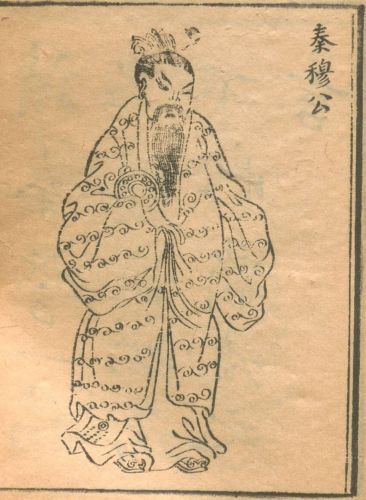
One of the most important pre-imperial episodes in the history of xunzang belongs not to a Shang king but to Duke Mu of Qin, who died in 621 BCE. Later tradition remembered him as one of the great hegemons of the Spring and Autumn period, a ruler whose state expanded westward, absorbed talent from beyond its borders, and laid part of the distant foundation for Qin’s eventual rise to empire. Yet his death also became attached to one of the most famous condemnations of retainer burial in early Chinese memory. According to transmitted accounts, 177 people were buried with him, including three distinguished men of the Ziche clan: Yanxi, Zhonghang, and Zhenhu. Their deaths were not remembered as obscure palace violence but as a public moral injury. In the Classic of Poetry, the poem commonly known as “Yellow Bird” mourns these men and laments that they were sent to accompany Duke Mu in death. The poem turns xunzang into grief, and grief into political criticism.
The importance of this episode lies in the status of the victims. They were not imagined merely as anonymous captives or enslaved laborers taken from the margins of society. Later tradition remembered them as worthy men, men whose talents should have remained available to the living community. That memory changed the moral meaning of accompanying burial. If a ruler buried faceless dependents with him, later elites might condemn the cruelty in general terms; but when named and valued men were forced into the tomb, the practice could be judged as a direct loss to the state. Their deaths exposed a contradiction inside aristocratic honor. The ruler’s magnificence in death required the destruction of human excellence in life. What looked, from one angle, like loyalty to a lord could look, from another, like political waste, ritual excess, and moral failure.
“Yellow Bird” is not simply an elegy. It is a crucial document in the transformation of xunzang from ritual act into ethical scandal. The poem’s repeated image of the yellow bird hovering or resting near the thorns evokes sorrow, entrapment, and helpless witness. The dead retainers are praised, but the system that consumed them is implicitly condemned. This matters because early Chinese moral criticism often worked through memory rather than abstract denunciation alone. A ruler’s action could survive as a cautionary tale; the tomb could become a site not only of prestige but of reputational damage. Duke Mu may have been honored as a powerful lord, but the deaths attached to his burial complicated his legacy. Xunzang entered historical consciousness as a practice capable of injuring the dead ruler’s name as much as glorifying his afterlife.
The episode also reveals the unstable language of “loyal death.” To die with one’s lord might be praised as devotion, particularly in aristocratic and military cultures that valued personal bonds between ruler and retainer. But such praise could conceal coercion, and coercion could be made almost invisible when wrapped in the vocabulary of duty. Were the men of the Ziche clan willing companions, ritual victims, political prisoners of expectation, or later literary symbols of a broader wrong? The sources do not allow a simple modern reconstruction of their final moments, but that uncertainty is itself revealing. Xunzang often depended on precisely this ambiguity. A death could be framed as honor even when refusal was impossible, when the social order gave the lord’s household, heirs, ritual officers, or political community the power to define obedience after the fact. What later readers received was not necessarily the victim’s voice but the language imposed on the victim’s death: loyalty, accompaniment, sacrifice, devotion, propriety. That language could dignify the dead while protecting the system that killed them. Later imperial concubines, palace women, eunuchs, guards, and servants would be caught in the same moral trap: if they died, they could be celebrated as loyal; if they resisted, they could be condemned as ungrateful, dishonorable, or disobedient. The Duke Mu tradition shows that this problem was already visible centuries before empire. It also shows why xunzang was so difficult to eradicate. The practice did not survive only because rulers were powerful enough to command death. It survived because societies could turn commanded death into moral performance, converting subordination into virtue and violence into memory.
By the Warring States period, thinkers such as Mozi and Xunzi attacked extravagant funerals and harmful burial customs from different philosophical directions. Mohist criticism emphasized waste, social harm, and the need to preserve resources and human life for practical benefit. Xunzi, while deeply committed to ritual, insisted that ritual should order emotion and society rather than destroy them through excess. These critiques did not immediately abolish xunzang, nor did they prevent later revivals of human sacrifice and coerced funerary death. But they established a vocabulary of protest that would matter throughout Chinese history. Duke Mu’s burial, and the poetic mourning attached to it, marks a turning point in the moral memory of accompanying burial: the tomb was no longer only the ruler’s final court. It could also become the place where the living judged whether his authority had exceeded the bounds of humane rule.
Qin Shi Huang and the Imperial Tomb as a Universe of Power

With Qin Shi Huang, the logic of accompanying burial entered a new political scale. Earlier aristocratic tombs had reproduced lordship, household, ancestry, and retainer service, but the First Emperor’s mausoleum attempted something more ambitious: the burial of imperial universality itself. Qin Shi Huang did not merely rule a state among rival states. After the conquest of the Warring States kingdoms in 221 BCE, he claimed to have created a new order under a new title, huangdi, “emperor,” joining mythic antiquity to unprecedented political centralization. His tomb near Mount Li must be understood in that context. It was not simply a place to house the corpse of a ruler. It was the underground continuation of a regime that had standardized weights, measures, writing, roads, laws, coinage, axle widths, administrative ranks, and punishments across a conquered world. The emperor who had tried to make “All Under Heaven” obey one earthly center also required a funerary world organized around himself. In that sense, the mausoleum was not an eccentric monument built by a ruler obsessed with death. It was the logical extension of Qin imperial ideology. If empire meant the concentration of space, labor, violence, and ritual around a single sovereign in life, then the imperial tomb became the place where that concentration could be preserved after death.
The famous Terracotta Army is the most visible symbol of this ambition, but it should not be isolated from the larger mausoleum complex. The thousands of life-sized soldiers, officers, horses, chariots, weapons, and military formations discovered near the burial mound were not ornamental decoration. They staged the emperor’s power as disciplined, ranked, and permanent. Each figure is individualized in face, posture, clothing, armor, and hair, yet each also belongs to an ordered military whole. This combination is important. Qin imperial power was not imagined as a vague supernatural aura but as organized force: infantry, archers, cavalry, charioteers, commanders, and bureaucratic arrangement. The Terracotta Army represents more than an afterlife guard. It materializes the Qin state’s central fantasy of rule, countless bodies made legible, ranked, and deployable in service of the sovereign.
The Terracotta Army also marks one of the great developments in the history of substitutionary burial. Instead of killing and burying an actual army with the emperor, Qin artisans created a clay army to serve him. That fact has often been read as a humane departure from earlier retainer sacrifice, and in one sense it was. A terracotta soldier was not a murdered soldier. A clay horse was not a slaughtered horse. A ceramic formation could reproduce imperial protection without requiring thousands of living troops to die. But this interpretation should be handled carefully. Substitution did not mean that Qin funerary culture had abandoned the idea that the dead ruler required service. It meant that service could be manufactured at monumental scale. The underlying logic remained recognizably continuous with xunzang: the ruler should not enter death alone, and his authority required attendants, guards, labor, and provision. What changed was the medium through which that service could be supplied.
Nor should the Terracotta Army lead us to imagine Qin Shi Huang’s mausoleum as free from human death. Sima Qian’s account in the Records of the Grand Historian describes a vast tomb filled with palaces, towers, precious objects, mechanical devices, and rivers and seas of mercury, all designed to replicate the world beneath the ground. The same account records that after the emperor’s death, the Second Emperor ordered childless palace women to accompany him in death because it was deemed improper for them to leave. It also reports that craftsmen who had worked on the tomb’s hidden devices were sealed inside so that its secrets would not be revealed. Whether every detail in Sima Qian’s description can be confirmed archaeologically is a separate question, and the text itself was written under the Han, whose historians had strong reasons to portray Qin as cruel, excessive, and morally doomed. Even so, Sima Qian’s narrative cannot be dismissed as mere fantasy, because it preserves a coherent memory of what Qin imperial burial meant to later Chinese political culture. The First Emperor’s tomb was imagined as a totalizing structure, one that absorbed women, artisans, military force, treasure, technology, and landscape into a single posthumous order. The moral and political logic of the story is clear. The Qin imperial tomb was remembered as a place where human beings, objects, secrets, technologies, and the landscape itself were subordinated to the dead emperor’s command.
The killing of childless concubines is important for the later history of imperial xunzang. These women were vulnerable not because they were politically central, but because they were dependent. In the palace order, a concubine without a son had little independent dynastic value once the emperor died. Motherhood could transform a palace woman into the mother of a prince, perhaps even the mother of a future ruler; childlessness left her more easily classified as part of the deceased emperor’s personal sphere. The order that such women “follow” him into death reveals the possessive logic of imperial sexuality. Their bodies had belonged to the emperor in life, and the burial order claimed that they should remain attached to him in death. Later dynasties would repeat this gendered pattern with devastating consistency, especially in moments when court ritual turned female dependency into posthumous loyalty.
The reported sealing of craftsmen inside the tomb reveals a different but related form of subordination. Here the issue was not sexual possession or intimate service but labor and secrecy. The craftsmen had made the emperor’s hidden world; therefore, their knowledge made them dangerous. In Sima Qian’s telling, they were trapped within the structure they had built, converted from skilled workers into buried witnesses. This story may carry elements of moralizing legend, but it captures an important truth about Qin political imagination. The imperial project consumed labor on an enormous scale, from walls and roads to palaces and tombs. Workers were mobilized by command, moved by law, and disciplined by punishment. The same administrative system that could conscript peasants, convicts, soldiers, and artisans for massive public works could also imagine their bodies as expendable once their usefulness had ended. The craftsmen’s fate belongs to the same moral universe as the concubines’ deaths, even though the social logic differs. Both groups were subordinated to the sovereign’s posthumous needs: the concubines as intimate dependents whose presence maintained the palace order, the craftsmen as technical laborers whose silence protected the hidden architecture of imperial power. In the mausoleum tradition, even knowledge could become something the state buried with the sovereign. The tomb was not only guarded by clay soldiers. It was protected by the silencing of human makers.
Qin Shi Huang’s mausoleum stands at the intersection of substitution and sacrifice. It used terracotta bodies to replace living soldiers, but it also preserved the possibility of actual human victims. It projected an afterlife of military order, palace service, cosmic geography, and imperial secrecy. In earlier xunzang, a lord might be accompanied by retainers who reproduced his household or aristocratic following. In the Qin tomb, that principle was enlarged into an entire imperial universe. Armies, rivers, palaces, officials, craftsmen, concubines, treasures, weapons, and mechanical devices all formed part of a posthumous state centered on the emperor. The grave became a buried empire, and the emperor’s death became another occasion for organizing the world around his body.
The Qin case also shaped later memory because it became both a wonder and a warning. Later writers could marvel at the scale of the First Emperor’s tomb while also reading it as evidence of tyranny, excess, and fear. Qin Shi Huang’s desire for immortality, his monumental building campaigns, and his harsh mobilization of labor all helped later dynasties define what imperial power should not become. Yet the attraction of his funerary imagination did not disappear. Later rulers continued to build tombs that replicated courts, guarded approaches, housed ritual objects, and projected authority beyond death. Qin Shi Huang’s mausoleum marks a decisive moment in the history of xunzang: not because it simply replaced human sacrifice with terracotta substitutes, and not because it merely continued ancient cruelty, but because it fused both impulses into a new imperial form. It showed that the emperor’s tomb could be imagined as a universe of power, a world where service, hierarchy, violence, and sovereignty survived underground.
Han Reform, Mingqi, and the Rise of Substitutionary Service
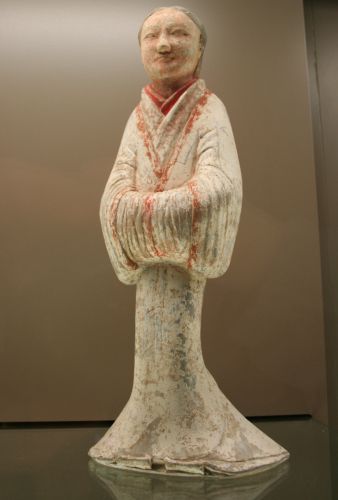
The Han dynasty inherited both the practical ruins and the moral memory of Qin. Its rulers governed from within the institutional world Qin had created (empire, commanderies, written law, centralized administration, standardized authority) while also presenting themselves as correcting Qin’s excesses. This tension shaped Han funerary culture. The early empire did not abandon the belief that the dead required provision, protection, status, and service, but it increasingly developed ways to supply those needs without repeating the most notorious forms of human sacrifice. In the long history of xunzang, Han burial practice marks a crucial turn from literal attendance to symbolic attendance. The elite dead still entered tombs furnished as worlds. They still received servants, animals, guards, kitchens, granaries, vehicles, entertainers, and ritual equipment. But more and more, these attendants were made rather than killed.
This shift centered on mingqi, often translated as “spirit objects” or “bright objects,” a broad category of tomb goods made for the use of the dead rather than the living. Mingqi could include ceramic servants, wooden figures, model houses, watchtowers, wells, kitchens, pigs, dogs, chickens, horses, carts, dancers, musicians, officials, and soldiers. They were not ordinary household possessions simply placed in the grave after use. Many were created specifically for burial, designed to supply the deceased with a recognizable social and material world in the afterlife. The tomb became a miniature estate, farm, palace, office, or military command, depending on the status and identity of the deceased. Han mingqi did not reject the old logic of accompaniment. It translated it into objects.
The moral significance of that translation should not be underestimated. A clay servant was not a murdered servant. A ceramic horse was not a slaughtered horse. A model granary did not require the permanent removal of food from the living community on the same scale as actual stores might have done. Substitution allowed funerary imagination to preserve status while reducing direct violence. It answered a problem that had troubled early thinkers: how could the dead be honored without destroying the living? The Han solution was not fully “rational” in a modern sense, nor was it egalitarian. It still assumed that hierarchy should continue after death. But it created a funerary language in which hierarchy could be represented rather than enacted through killing. This distinction is essential, because symbolic service did not make the tomb less political. It simply changed the terms by which power appeared underground. The dead still possessed attendants, food, property, animals, vehicles, and guards, but these were now mediated through craft and ritual convention rather than through the physical death of dependents. That mediation mattered. It placed a limit on the master’s claim over living bodies, even while preserving the idea that rank required visible service. This was a major transformation in the history of xunzang because it showed that the afterlife court could be populated by images, models, and symbolic bodies.
Han reform also operated through law, administration, and moral example. Later accounts preserve stories of Han rulers condemning or refusing lethal burial practices, especially when nobles or local elites sought to send servants into the grave. Whether every anecdote should be read as literal policy or moralized memory, the pattern is revealing. Han political culture increasingly associated humane rule with the restraint of funerary excess. The emperor and his officials were expected to regulate death as part of regulating society. Extravagant burial could impoverish families, disrupt labor, encourage competition among elites, and revive customs associated with cruelty. To restrain funerary violence was not only an ethical gesture but an act of governance. The state claimed authority over the boundary between proper ritual and destructive display.
This did not mean Han tombs became modest. On the contrary, many elite Han burials were extraordinarily rich, elaborate, and cosmologically ambitious. Royal tombs could contain jade burial suits, lacquerware, bronzes, weapons, chariots, seals, maps, manuscripts, textiles, figurines, and architectural simulations of earthly life. The famous tombs at Mawangdui, Mancheng, and other sites reveal a culture deeply invested in preserving the body, feeding the spirit, organizing the afterlife, and surrounding the dead with signs of rank. The difference lay less in the disappearance of funerary ambition than in its reorientation. Han elites continued to spend wealth and labor on death, but increasingly they did so through crafted substitutes, ritual objects, and representational environments. Death remained a field of display. It was just less often a field of retainer killing in mainstream imperial practice.
The rise of mingqi also changed the meaning of service itself. In earlier xunzang, the attendant’s body was the service: the servant, guard, or concubine was made physically present beside the dead. In Han substitutionary burial, service became visual, symbolic, and repeatable. A small ceramic servant could stand for many servants; a model granary could stand for abundance; a miniature tower could stand for estate power; a tomb figurine of a dancer or musician could stand for perpetual entertainment. This representational quality allowed the tomb to become more expansive, not less. Once objects could substitute for living beings, the dead could be supplied with entire worlds in compressed form. The move away from killing did not necessarily reduce the ideological ambition of burial. It made that ambition more flexible. The underground household could now be multiplied through craft. A tomb did not need a real kitchen staff if it had model kitchens, servants, livestock pens, wells, and storage jars. It did not need an actual military escort if soldiers, weapons, horses, and vehicles could be represented in durable form. Substitution made afterlife service scalable. It could reproduce the structures of command without consuming the actual household, and it could express abundance without emptying the living estate to the same degree. Yet this very flexibility also preserved the older fantasy of mastery. The dead person still occupied the center of a world arranged for his or her benefit. Mingqi softened the violence of xunzang, but it did not dissolve the social imagination that had made xunzang meaningful.
For the broader history of xunzang, the Han period is best understood as a transformation rather than an abolition. The desire to accompany the dead did not disappear. The elite imagination still expected rank, service, labor, comfort, protection, and display beyond the grave. But the Han normalized a powerful alternative: the dead could be served by things. That alternative would dominate much of later Chinese funerary culture, particularly in periods when live burial was morally disapproved or legally restricted. Yet the persistence of mingqi also reminds us that the moral victory was partial. Symbolic servants saved human lives, but they preserved the assumption that the powerful dead remained entitled to service. Han burial culture stands at a crossroads in the history of xunzang. It reduced the need for actual victims while keeping alive the afterlife hierarchy that had once demanded them.
Tang and Song: The Civilized Tomb, the Bureaucratic Afterlife, and the Apparent Disappearance of Xunzang
By the Tang and Song dynasties, the mainstream funerary culture of the imperial elite had moved far from the world of Shang sacrificial pits and early retainer burial. This does not mean that violence vanished from Chinese society, or that all local practices can be neatly reconstructed from court ideals. But in the official, literati, and imperial imagination of these centuries, the proper tomb increasingly became a regulated, moralized, and representational space rather than a place where living attendants were expected to die. Rank still mattered profoundly. Tombs still displayed hierarchy, wealth, lineage, office, and cosmological hope. Yet the dead were served primarily through ritual, objects, writing, images, and architecture. Xunzang, in the narrow sense of killing or compelling people to accompany the dead, appears to have receded from normative imperial practice.
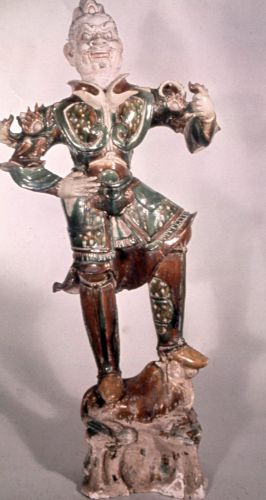
The Tang inherited the Han tradition of furnishing tombs with substitutes, but it gave that tradition new artistic and social richness. Tang tombs are famous for ceramic figures of officials, soldiers, grooms, horses, camels, musicians, dancers, foreign merchants, guardians, and courtly attendants. These figures reveal a funerary world filled with movement, status, cosmopolitan exchange, and spectacle. The dead elite could be accompanied by a full retinue, but that retinue was made of clay. Tang burial continued the older logic of service beyond death while normalizing its symbolic replacement. Tomb figurines allowed the deceased to possess an afterlife household, court, stable, caravan, and guard force without making actual human beings into funerary victims. The range of these figures also matters because it reflects the Tang world’s self-image: imperial, urban, aristocratic, military, and open to the movement of people and goods across Inner Asia and beyond. Camels and foreign grooms evoked long-distance trade; musicians and dancers evoked courtly pleasure; officials and guardians evoked administration and protection. The tomb became a compressed social universe, but one built through ceramic imagination rather than blood obligation. The result was not a rejection of hierarchy, but a more civilized medium for expressing it. The dead still possessed attendants; the crucial difference was that those attendants no longer had to be living people transformed into permanent servants by death.
Tang imperial and aristocratic tombs also placed special emphasis on guardianship and cosmic order. Tomb guardian beasts, lokapala figures, painted passageways, celestial imagery, and directional symbolism helped transform the grave into a protected and ordered passage between worlds. The dead were imagined as needing defense, orientation, and status recognition, but these needs were increasingly fulfilled through ritualized representation. Such tombs could be grand and even intimidating, yet their grandeur did not require the same explicit destruction of servants or retainers that had marked earlier forms of xunzang. The tomb became theatrical rather than directly sacrificial. Its attendants performed service in visual and symbolic form, standing permanently in place of the living bodies that earlier elites might have claimed.
The Song period pushed this transformation in a more restrained, bureaucratic, and text-centered direction. Song elite burial culture often emphasized epitaphs, lineage memory, geomantic placement, moral reputation, ancestral continuity, and the written record of office and virtue. The tomb was still a place of hierarchy, but it was increasingly integrated into family history and bureaucratic identity. The deceased was not only provided for; he or she was documented, placed, narrated, and morally evaluated. Epitaphs and tomb inscriptions became central to the afterlife of reputation, recording ancestry, career, marriage alliances, learning, public service, and private virtue. This mattered for the history of xunzang because writing could do some of the work that bodies once did. A retinue of sacrificed servants proclaimed rank through violence; an epitaph proclaimed rank through memory, office, and literary form. In Song elite culture, the dead person’s social world was increasingly preserved by text: the names of ancestors, the sequence of appointments, the moral qualities of the deceased, the achievements of sons and descendants, and the proper placement of the burial within lineage continuity. This did not make the tomb less hierarchical. It made hierarchy more documentary. The grave became a bureaucratic and genealogical archive as much as a furnished residence, and the afterlife was imagined through records, relationships, and ritual correctness. If Tang tombs often displayed a brilliant retinue of ceramic attendants, Song tombs more strongly emphasized the written and familial systems that fixed a person’s place in the moral order. In both cases, the living body of the servant became less necessary because status could be carried by other media.
This does not mean that Tang and Song funerary culture became modest or egalitarian. Elite tombs remained expensive, status-conscious, and deeply invested in the continuation of social distinction. Servants, musicians, animals, guards, buildings, and goods still appeared in tombs through figurines, images, models, and ritual objects. The dead continued to occupy a ranked world. But the cultural grammar had shifted. The proper expression of status was not the killing of dependents but the careful arrangement of material and textual signs. A tomb could be “civilized” not because it lacked hierarchy, but because hierarchy had been disciplined through ritual order, aesthetic form, and bureaucratic memory. The violence of xunzang was displaced into representation.
The apparent disappearance of xunzang in these centuries requires careful phrasing. It would be too strong to say that no one in Tang or Song society ever practiced coercive funerary death given the unevenness of local custom and the limits of surviving evidence. It would also be misleading to imagine a clean moral triumph over older ideas. The dead still required service. The elite still imagined a postmortem world filled with attendants, protection, food, goods, and signs of rank. What seems to have changed was the accepted method of supplying these things. In mainstream imperial and elite culture, substitution had become normal, and actual retainer death had become abnormal, archaic, or morally suspect. This distinction is essential because it shows that xunzang did not disappear by erasing the desire for afterlife service. It disappeared by making other forms of service more legitimate.
Tang and Song burial culture marks one of the great pauses in the history of sacrificial accompaniment. The tomb became a managed world of objects, inscriptions, guardians, and memory rather than a chamber of coerced human loyalty. Yet this pause was not permanent. The later revival of retainer death under Liao, Yuan, early Ming, and early Qing rule shows that symbolic substitution had not permanently destroyed the older logic. It had only contained it within particular moral and institutional norms. When dynastic politics, conquest traditions, palace hierarchy, or claims of loyalty made human accompaniment meaningful again, xunzang could return. The Tang and Song centuries matter not as the simple end of the practice, but as evidence that Chinese funerary culture had already developed durable alternatives to it. The tragedy of later revivals is that those alternatives were available, known, and yet not always chosen.
Liao, Jin, and Yuan: Conquest Dynasties, Steppe Traditions, and the Return of Retainer Death
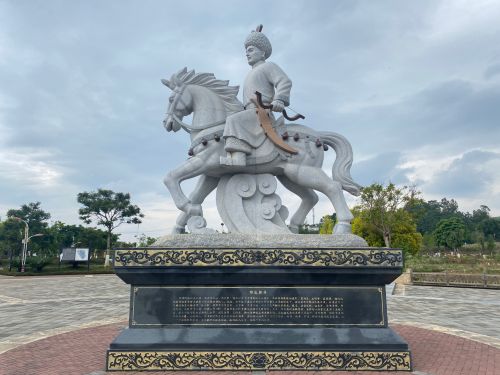
The apparent retreat of xunzang in mainstream Tang and Song imperial culture did not mean that the idea of accompanying the dead had been permanently defeated. From the tenth through fourteenth centuries, northern and Inner Asian conquest dynasties reshaped the political map of China and brought different aristocratic, military, and funerary traditions into contact with Chinese imperial models. The Khitan Liao, Jurchen Jin, and Mongol Yuan did not simply preserve an archaic custom untouched by Chinese influence, nor should they be treated as a single “nomadic” bloc. Each dynasty governed differently, adapted differently to Chinese institutions, and left different kinds of evidence. Yet their histories show that retainer death and related forms of funerary accompaniment could reappear when conquest elites connected burial to personal loyalty, martial identity, household dependency, and the continuing power of the ruling clan. The older logic of xunzang had not vanished. It remained available in political cultures where the ruler’s following was imagined less as an impersonal bureaucracy than as a personal, military, and household bond. This is why the conquest-dynasty material is so important to the larger history of sacrificial burial. It interrupts any neat narrative in which Chinese funerary culture simply became more symbolic and less violent. Tang and Song elite practice may have made live accompaniment seem archaic or improper, but the political conditions of conquest could revive older expectations when rulers and nobles understood authority through the language of comradeship, dependence, clan loyalty, and service to a charismatic lord. Xunzang returned not as a fossil from the past but as a practice that could still make sense within certain worlds of power.
The Liao dynasty, founded by the Khitan in the early tenth century, offers one of the clearest examples of this return. Khitan rule combined steppe aristocratic traditions with Chinese-style imperial institutions, producing a dual political culture that could govern pastoral and sedentary populations in different ways. Liao burial practice likewise reflected a mixture of Inner Asian, Buddhist, Chinese, and native Khitan elements. Elite tombs could contain murals, grave goods, horse equipment, personal ornaments, and signs of both mobility and courtly splendor. Within this world, the death of a ruler or aristocrat could still demand more than objects. Retainers, attendants, animals, or symbols of personal following might be drawn into the funerary order. The tomb was not merely an administrative record of rank, as it increasingly became in some Song contexts, but a continuation of the ruler’s embodied household and military world. Where Song elite burial often emphasized text, lineage, and bureaucratic virtue, Liao funerary culture could preserve a stronger sense of the dead lord surrounded by his personal following.
The story of Abaoji, founder of the Liao, and Empress Shulü Ping is revealing because it places xunzang at the intersection of ritual expectation, political power, and bodily substitution. Later accounts describe pressure for the empress to follow Abaoji in death after his death in 926. She did not die, but she is said to have cut off her right hand and buried it with him instead. Whether read as literal event, political memory, or stylized dynastic narrative, the story is extraordinary because it dramatizes the problem of accompanying burial in a single gesture. The empress acknowledges the demand that part of her should accompany the dead ruler, but she refuses total erasure. Her severed hand becomes a substitute for her body, a compromise between ritual expectation and political survival. This was not the same kind of substitution as Han or Tang mingqi. It was not clay replacing flesh. It was flesh replacing a life. The episode reveals how difficult it could be for powerful women to resist the claim of the dead ruler, even when their own political authority made their survival necessary. It also reveals that substitution itself was not always humane in any simple sense. In Han and Tang tombs, substitution could mean figurines, models, and objects that spared living bodies. In Shulü Ping’s story, substitution becomes mutilation: the body is not saved whole, but negotiated. The tale exposes the pressure that xunzang placed on elite women who were both politically indispensable and ritually vulnerable. The empress could not simply reject the dead ruler’s claim, but neither could the regime afford to lose her entirely. Her hand, buried in place of her person, became a political solution written on the body.
The Jin dynasty, founded by the Jurchens, complicates the picture further. Like the Liao, the Jin ruled across cultural frontiers and gradually adopted many Chinese administrative and court practices, often after conquering northern China from the Song. Yet Jurchen aristocratic culture also preserved martial and clan-based values that could give special weight to personal loyalty and household attachment. Funerary customs among ruling and noble families were shaped by this mixture. Chinese-style imperial legitimacy did not automatically erase older expectations surrounding the dead. Instead, elite burial could become a place where different political languages met: Chinese bureaucratic rule, Inner Asian warrior aristocracy, clan continuity, and Buddhist or native ritual ideas. The evidence for Jin xunzang must be handled cautiously, but the broader pattern is clear enough: conquest regimes did not simply inherit the Tang-Song tendency toward symbolic substitution. They reopened the question of whether the ruler’s living dependents, followers, or intimates might be expected to accompany him in death.
The Yuan dynasty, created by the Mongol conquest, carried this tension into an even larger imperial framework. Mongol imperial culture possessed its own traditions of elite burial secrecy, horse sacrifice, personal retainership, and loyalty to the ruling house. Yuan rulers governed China through a layered empire that drew on Mongol, Central Asian, Tibetan Buddhist, Islamic, and Chinese administrative practices. Xunzang cannot be understood only through Chinese ritual vocabulary. The Mongol idea of the ruler’s following, the importance of personal bonds among warriors and household dependents, and the prestige of dying in loyalty to one’s superior all shaped how death could be interpreted. Some Yuan-period accounts praised people, notably wives or dependents, who chose or were said to choose death to accompany a husband or master. As in earlier periods, the crucial problem lies in the word “choose.” A death remembered as voluntary might have been surrounded by pressure from kin, status expectation, household hierarchy, or official commendation.
This makes the conquest-dynasty revival of xunzang important for my larger argument. It shows that the practice did not survive merely as a leftover from archaic Chinese religion. It could be reactivated when social and political conditions made personal loyalty more valuable than bureaucratic restraint. Tang and Song burial culture had demonstrated that clay, text, and ritual could substitute for living service. But in Liao, Jin, and Yuan contexts, the ruler’s body was often tied to a different imagination of power: the war band, the camp, the household, the mounted retinue, the clan, and the personal bond between lord and follower. In that setting, the dead elite might seem incomplete without living signs of loyalty. The tomb could once again become a test of devotion rather than only a place of representation. This does not mean every conquest dynasty practiced xunzang uniformly, or that Chinese dynasties were innocent of the same violence. Early China had already practiced human sacrifice, and the Ming would later revive imperial concubine sacrifice under a Han Chinese restoration regime. The point is not ethnic blame. The point is that different political cultures made different forms of death meaningful.
The Liao, Jin, and Yuan period marks not a simple regression but a dangerous reopening. The symbolic solutions developed under Han, Tang, and Song remained available, but they did not monopolize elite funerary imagination. In conquest-dynasty settings, where rulership was often grounded in martial charisma, household command, and the personal loyalty of retainers, the old claim of the dead over the living could regain force. Xunzang returned not because the past had never changed, but because the past offered a ritual language that later rulers and elites could use when it served their needs. The tomb once again became a place where sovereignty, gender, service, and violence converged. If the Tang and Song had shown that the dead could be attended by objects, the conquest dynasties showed that under certain political conditions, human bodies could still be made to answer the call.
Early Ming Revival: Imperial Concubines, Dynastic Restoration, and the Gendered Violence of Loyalty
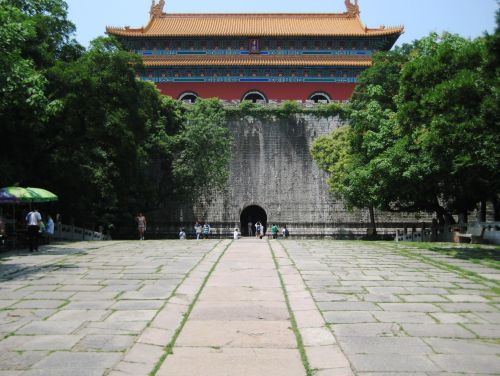
The early Ming revival of xunzang is one of the most important turns in the history of sacrificial burial because it prevents the practice from being explained away as merely archaic, foreign, or “nomadic.” The Ming dynasty was founded in 1368 by Zhu Yuanzhang, the Hongwu emperor, who presented his rule as the restoration of native Chinese sovereignty after the Mongol Yuan. Ming political ideology drew heavily on Confucian moral language, bureaucratic discipline, agrarian order, and the recovery of institutions associated with earlier Chinese dynasties. Yet within this restorationist project, the early Ming court revived the practice of forcing imperial women to accompany dead emperors. This was not a survival from a remote Shang past, nor simply an Inner Asian custom imported into China. It was a deliberate court practice within a dynasty that claimed to represent moral renewal. That contradiction makes the early Ming essential to my larger argument: xunzang could return not only from the frontier or the steppe, but from the very center of a self-consciously Confucian imperial state.
The victims most closely associated with early Ming xunzang were imperial consorts and concubines, preferably women who had not borne sons. This pattern reveals the gendered structure of palace vulnerability. In the imperial household, a woman’s status depended not only on rank, favor, and ritual position, but also on reproductive consequence. A woman who bore a prince could become politically connected to succession, lineage continuity, and the future of the dynasty. A woman without children remained more easily absorbed into the dead emperor’s personal sphere. Once the emperor died, her life could be reinterpreted as having no legitimate future apart from him. The command that she “follow” the ruler into death transformed palace dependency into funerary obligation. It was not enough that she had served him in life; the logic of xunzang insisted that her service remained incomplete unless it crossed into the grave.
The early Ming case is disturbing because the violence was often wrapped in the language of loyalty, chastity, and honor. Palace women who died with an emperor could be memorialized with titles, posthumous recognition, or ritual praise, making their deaths appear noble rather than coerced. This language did important political work. It shifted attention from the command that killed them to the virtue supposedly revealed by their obedience. The woman became “loyal” because she died; the court became “orderly” because her death preserved the hierarchy of the imperial household; the emperor remained sovereign because even death did not dissolve his claim over those attached to him. Such language did not eliminate coercion. It beautified it. The same pattern had appeared earlier in memories of loyal retainers and would appear again in later praise for widow suicide. In the Ming palace, the ideology of virtuous death helped turn gendered subordination into moral spectacle.
The Hongwu emperor’s own political culture helps explain why such a practice could reappear. Hongwu was deeply concerned with hierarchy, discipline, ritual correctness, and the moral ordering of society. He attacked corruption, punished officials harshly, regulated families and communities, and tried to build a dynasty in which obedience flowed downward from the throne through every level of social life. In that world, the imperial household was not a private domestic space separate from politics. It was the symbolic heart of hierarchy. The emperor’s wives and concubines occupied ranked positions within a palace order that mirrored the state’s broader concern with status and obedience. To compel selected women to die with the ruler was not an accidental cruelty at the edge of policy. It expressed an extreme version of the same hierarchical imagination that structured the early Ming state. Hongwu’s restoration project was not simply about recovering Chinese rule after the Yuan; it was about reconstructing a disciplined moral universe in which every person knew his or her place and in which disorder could be answered with exemplary punishment. The inner palace, with its ranks of empresses, consorts, concubines, servants, eunuchs, and attendants, provided one of the most tightly controlled models of that universe. There, hierarchy was intimate as well as political. A woman’s body, movement, sexuality, speech, and future were subject to court regulation. Xunzang carried that regulation to its most final form. The palace woman’s body became a final site where imperial order could be enforced, and her death made visible the idea that the emperor’s authority did not loosen merely because he had died.
The practice continued after Hongwu. Early Ming emperors before the mid-fifteenth century were accompanied in death by palace women, and later memory treated these women as a distinct group of sacrificial consorts. The numbers given in historical discussions vary, and they should be handled cautiously, but the pattern is clear: the early Ming court repeatedly used female death to complete the emperor’s burial. The women were not killed because they threatened the state, nor because they had committed crimes, nor because they were enemies taken in war. They were killed because their social identity had been defined through attachment to the emperor. This is one of the sharpest differences between early imperial retainer sacrifice and early Ming concubine xunzang. In the Shang or Spring and Autumn contexts, accompanying burial could include captives, servants, guards, or valued male retainers. In the Ming court, the violence became concentrated through the gendered architecture of the inner palace. The afterlife retinue was feminized, sexualized, and moralized.
That gendered architecture also shaped the problem of consent. Sources may describe such women as dying willingly, accepting death, or receiving honor for accompanying the ruler, but the political conditions of the palace make such claims difficult to read at face value. These women lived inside a system where obedience was mandatory, mobility was restricted, and personal future depended on imperial and dynastic decisions. Even if some performed courage, resignation, or ritual composure at the moment of death, that does not make the institution voluntary in any meaningful sense. The court controlled the language, the ceremony, the memory, and often the body itself. To praise the women as loyal was not necessarily to preserve their voices. It was more often to convert their silence into a statement useful to the dynasty. This is why the early Ming evidence must be read with special care. A woman who died calmly may have been terrified; a woman praised for devotion may have had no permitted alternative; a woman remembered as virtuous may have been remembered that way precisely because the court needed her death to appear morally legible. The ceremony could turn execution into loyalty, suicide into chastity, and compulsion into honor. Xunzang reveals one of the central problems in reading premodern accounts of “voluntary” death: the more a society rewards obedience with honor, the harder it becomes to separate devotion from coercion. In the Ming palace, that ambiguity was not incidental. It was part of how the system worked, allowing the dynasty to claim moral order while requiring the deaths of women whose futures had been absorbed by the emperor’s grave.
The early Ming revival transforms the history of xunzang from a story about ancient sacrifice into a story about imperial patriarchy and state power. It shows that substitutionary burial and moral criticism did not permanently end the claim of the dead ruler over living dependents. It also shows that revival could occur within a bureaucratic and Confucianizing court, not only in conquest dynasties or archaic ritual systems. The Ming did not lack alternatives. Chinese burial culture had long possessed figurines, ritual objects, tomb architecture, inscriptions, and other ways to represent service beyond death. Yet early Ming emperors still received human women as posthumous attendants. That choice matters. It reveals that xunzang survived wherever hierarchy could define certain lives as extensions of another person’s power. In the early Ming, the emperor’s tomb became the last chamber of the palace, and concubines without sufficient dynastic protection became its most vulnerable inhabitants.
Abolition under Ming Yingzong: Reform, Reputation, and the Limits of Imperial Mercy
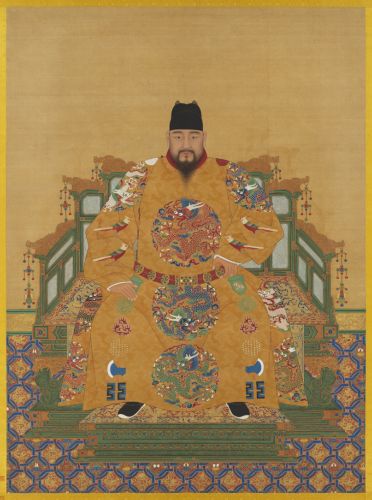
The first decisive break with early Ming imperial concubine sacrifice came under the Zhengtong emperor, better known by his temple name, Yingzong. His reign was politically turbulent, and his reputation was anything but simple. Captured by the Oirats after the disastrous Tumu Crisis of 1449, displaced from the throne during his captivity, and later restored after a palace coup in 1457, Yingzong occupied one of the most troubled biographies in Ming imperial history. Yet near the end of his life in 1464, he issued an order that became one of the most important moral turning points in the history of xunzang: palace women were not to be forced to accompany him in death. This order ended, at least at the level of imperial burial practice, the early Ming custom by which concubines had been sacrificed or compelled to die for deceased emperors. The reform did not erase the previous deaths, but it marked a formal recognition that such deaths no longer belonged within legitimate dynastic ritual.
Yingzong’s abolition is striking precisely because he was not an obvious moral hero. His early reign had been dominated by court factions and the influence of the eunuch Wang Zhen; his capture at Tumu humiliated the dynasty and exposed the fragility of Ming military command; his restoration to power involved political reversal, suspicion, and the execution of officials associated with the intervening Jingtai reign. To present him simply as a compassionate ruler would flatten the contradictions of his life. Yet this complexity makes the abolition more revealing, not less. The ending of concubine sacrifice did not require a saintly emperor. It required a convergence of political experience, courtly anxiety, moral criticism, and dynastic self-presentation. Yingzong may have understood, or his advisers may have helped him understand, that the prestige gained from human accompaniment was no longer worth the cruelty, fear, and reputational burden it carried. A ruler who had experienced captivity, loss of authority, and restoration may also have grasped more sharply than some predecessors how fragile imperial legitimacy could be.
The abolition also shows that the Ming state had always possessed alternatives to xunzang. By the fifteenth century, Chinese funerary culture had centuries of practice in symbolic service, ritual substitution, tomb objects, inscriptions, ancestral rites, and posthumous honors. No doctrinal necessity required palace women to die. Earlier Ming emperors had chosen to revive and maintain the practice, and Yingzong chose to stop it. That choice matters because it exposes xunzang as a political institution rather than an unavoidable religious demand. The emperor could be honored, buried, mourned, memorialized, and ritually served without killing his consorts. Once the court acknowledged that fact, the moral logic of imperial concubine sacrifice weakened dramatically. If objects, rites, titles, and ancestral offerings could preserve the dignity of the dead ruler, then the demand for living victims appeared less like sacred necessity and more like an abuse of power.
Yingzong’s reform had limits. It ended a specific court practice; it did not dismantle the wider cultural structures that had made women’s death intelligible as loyalty. Late imperial China continued to honor female chastity, widow fidelity, and, in some contexts, suicide understood as moral devotion. Women could still be praised for refusing remarriage, dying for husbands, preserving sexual and familial purity, or subordinating their own survival to the reputation of a household or lineage. The abolition of imperial xunzang did not produce a broad liberation of women from sacrificial ideals. It narrowed one extreme claim: the dead emperor no longer had the right to receive palace women as literal companions in the grave. But the language of virtuous female self-erasure survived in other forms, and in some cases became even more deeply embedded in local, familial, and moral discourse. A woman did not have to be ordered into an imperial tomb to be trapped by a culture that made her death legible as honor. The same society that could condemn the killing of palace women might still admire the widow who starved herself, hanged herself, refused remarriage to the point of destitution, or turned her body into proof of fidelity. This distinction matters because it prevents the abolition from becoming a falsely triumphant endpoint. The court could stop killing concubines for emperors while still celebrating moral codes that made women’s lives subordinate to male lineage, household honor, and dynastic memory.
The reform also raises the question of reputation. Ming emperors cared deeply about how they were placed within history, ritual, and ancestral judgment. The posthumous record mattered, because the emperor’s image was not only personal; it was dynastic property. Earlier rulers may have accepted concubine sacrifice as a sign of authority, but by Yingzong’s time the same act could appear excessive, cruel, or archaic. To refuse it allowed the emperor to craft a different final image: not a ruler whose death consumed the women of his palace, but one who restrained the power that earlier emperors had exercised. This does not make the order purely cynical. Moral acts can be politically useful and still morally consequential. In fact, imperial reform often operated through precisely that overlap. The ruler’s mercy strengthened the ruler’s reputation, and the desire for reputation could save lives. Yingzong’s abolition belongs to that ambiguous but significant category of state mercy: limited, self-interested, shaped by hierarchy, but real in its effects.
The abolition under Ming Yingzong complicates the history of xunzang in two ways. First, it shows that the practice could be ended from within the imperial system that had revived it. The same court culture that had turned concubine death into loyalty could redefine restraint as proper kingship. Second, it reminds us that formal prohibition is not the same as full moral transformation. Yingzong’s order ended one of the most brutal expressions of afterlife service in Ming imperial burial, but it left intact many of the assumptions that had made such service imaginable: hierarchy, gendered dependency, posthumous reputation, and the belief that the dead remained socially powerful. The reform was a boundary, not a revolution. Yet boundaries matter. By refusing to take palace women into death, Yingzong helped close a violent chapter of Ming dynastic ritual and demonstrated that imperial dignity did not require human sacrifice.
Early Qing: Manchu Custom, Imperial Consolidation, and Kangxi’s 1673 Ban
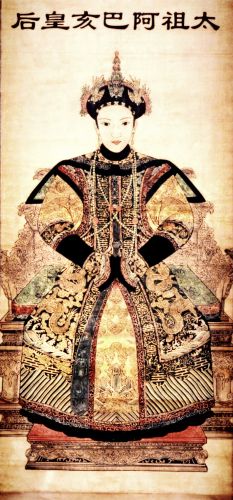
The Qing dynasty brought the history of xunzang into its final imperial phase. Like the Liao, Jin, and Yuan before it, the Qing was founded by a conquest elite whose political culture cannot be reduced to Chinese bureaucratic norms. The Manchus entered China with their own traditions of banner organization, martial hierarchy, aristocratic household service, and loyalty to the ruling house. In the early seventeenth century, before the Qing conquest of Beijing in 1644, Manchu political life was still closely tied to the world of war leadership, personal retainership, clan power, and the intimate household structures of the Aisin Gioro rulers. Within that context, the death of a ruler could still generate expectations that wives, servants, or retainers should accompany him. As in earlier conquest-dynasty settings, the tomb was not only a ritual site. It was a continuation of the lord’s personal following, a place where loyalty could be made visible through death.
The most famous early Qing case is the death of Lady Abahai, consort of Nurhaci, the founder of the Later Jin state that preceded the Qing. When Nurhaci died in 1626, Abahai was forced to die with him, according to later accounts, in a moment deeply entangled with succession politics. Her death should not be treated simply as an example of timeless Manchu custom, because it also served immediate political purposes. Abahai was the mother of several important princes, including Dorgon, who later became one of the most powerful figures in the Qing conquest. Removing her at Nurhaci’s death may have helped rival factions manage succession, prevent her from becoming a political center, and reshape the balance among the imperial sons. Here xunzang appears as both ritual and strategy. The language of accompanying the dead could conceal the living politics of eliminating a dangerous woman at court. This is what makes Abahai’s death so revealing for the broader history of sacrificial burial: the tomb could function as a solution to political uncertainty. A surviving consort of a founding ruler might carry memory, legitimacy, maternal authority, and factional influence into the next reign. Her presence could strengthen the claims of her sons or complicate the plans of rival princes. By forcing her into death, the court converted a living political actor into a posthumous emblem of loyalty. The act could be narrated as obedience to Nurhaci, but its consequences belonged to the world of the living. Xunzang, in this case, did not merely accompany the dead ruler; it helped reorder the political field he left behind.
This political dimension is crucial because early Qing xunzang, like early Ming concubine sacrifice, fell heavily on women whose palace positions made them both intimate and vulnerable. The woman attached to the ruler could be described as properly following him in death, but that description blurred the difference between loyalty and coercion. A consort’s death could be framed as moral devotion, ritual obedience, or ethnic custom, while also serving the practical interests of men competing for power after the ruler’s death. The palace woman became useful twice: first as a living partner in dynastic reproduction and household alliance, and then as a dead symbol of loyalty whose removal simplified succession politics. Abahai’s fate shows how xunzang could transform gendered dependency into political disappearance. The grave absorbed not only her body but also her possible future as mother, patron, factional figure, and surviving widow of the founder.
After the Qing conquest of China, the Manchu court faced the same larger problem confronted by earlier conquest dynasties: how could a ruling house preserve its own identity while presenting itself as a legitimate imperial dynasty to a vast Chinese population? The Qing did not simply abandon Manchu ways. Banner institutions, Manchu language, hunting rites, military values, and imperial claims to Inner Asian rulership remained central to Qing identity. But the dynasty also had to speak the language of Confucian kingship, humane governance, classical precedent, and moral restraint. Practices that could be defended within a narrower aristocratic or martial context could become dangerous when displayed before the moral expectations of empire. Retainer sacrifice and coerced widow death threatened to mark the dynasty as cruel, archaic, or insufficiently transformed from conquest regime into universal monarchy. The issue was not only whether xunzang was humane. It was whether the Qing emperor could afford to let such a practice remain part of legitimate rule. The conquest had created a multiethnic empire, but ruling that empire required careful translation of power into acceptable moral forms. A Manchu ruler could be martial, ancestral, and Inner Asian, but he also had to appear as a sage-like Son of Heaven capable of protecting life, restraining excess, and disciplining his own elites. In that context, the continuation of xunzang risked becoming more than a private funerary matter. It could be read as a public sign that the dynasty had not fully mastered the ethical language of Chinese imperial rule. The Qing court had to manage not only bodies in tombs, but the symbolic reputation of Manchu sovereignty itself.
Kangxi’s 1673 prohibition marked the decisive Qing break with sacrificial accompaniment. By this point, the dynasty had survived the initial conquest generation but still faced enormous pressures: consolidating rule, managing banner elites, suppressing rebellion, governing Han Chinese officials and subjects, and defining the moral identity of Qing sovereignty. A ban on xunzang served several purposes at once. It restrained a violent custom; it projected the emperor as humane; it aligned Qing rule with Confucian expectations of benevolent kingship; and it disciplined Manchu aristocratic practice under central imperial authority. Kangxi’s reform should not be understood only as moral awakening, though it certainly had moral consequences. It was also state formation. By forbidding the living to be buried with the dead, Kangxi asserted that even aristocratic custom and household loyalty must submit to imperial regulation. The emperor claimed the right to decide what counted as proper death.
The Qing ban gives the long history of xunzang a formal endpoint, but, as with Ming Yingzong’s reform, it was a boundary rather than a complete transformation of social imagination. The dead continued to receive offerings, servants in symbolic form, spirit goods, ancestral rites, and ritual care. Hierarchy still crossed into the afterlife, but the court rejected the most extreme claim: that a ruler, husband, master, or noble could require living bodies to accompany him into the grave. Kangxi’s prohibition completed a process that had begun much earlier, with philosophical criticism, symbolic substitutes, mingqi, ritual regulation, and earlier acts of imperial restraint. Yet the need for a seventeenth-century ban also reveals how persistent the old logic remained. Xunzang survived because it joined some of the strongest forces in premodern political culture: loyalty, gendered dependency, household command, aristocratic honor, and the fear that death might weaken authority. Kangxi’s 1673 ban did not erase those forces, but it denied them one of their most violent ritual forms. The Qing state could continue to honor ancestors and rulers without allowing the tomb to claim the living.
Objects Instead of Bodies: Figurines, Tomb Goods, and the Long Afterlife of Servitude

The history of xunzang is not only a history of people killed for the dead. It is also a history of substitutions invented to avoid, soften, regulate, or disguise that killing. From the Warring States and Han onward, Chinese tombs increasingly filled with objects that performed the work once assigned to living attendants: figurines, models, vessels, weapons, animals, buildings, carts, guardians, documents, and later paper goods burned or offered through ritual. These objects did not simply decorate the grave. They answered an old question in a new medium: how could the dead continue to receive service? If xunzang placed actual bodies beside the deceased, mingqi and other funerary goods created symbolic bodies and symbolic worlds. The human victim was not always replaced because the desire for service had vanished. More often, the victim was replaced because the desire for service had found a more acceptable form. This is why the history of substitution must be treated as part of the history of sacrificial burial rather than as its opposite. Objects did not merely end the problem of xunzang; they carried parts of its imagination forward. They preserved the expectation that the dead should be attended, protected, fed, entertained, transported, housed, and honored according to rank. What changed was the moral and material mechanism by which that attendance was supplied.
This shift can be seen most clearly in the development of mingqi, objects made for the dead rather than for everyday use among the living. In Han tombs, ceramic servants, musicians, dancers, soldiers, animals, wells, granaries, houses, watchtowers, ovens, and latrines could reproduce the structures of a working estate. These objects made the tomb into an inhabitable social world. The dead person could eat, travel, command, be entertained, receive visitors, supervise property, and remain surrounded by signs of status. Yet the service was representational. A ceramic servant did not labor. A model granary did not feed a household. A clay pig did not reproduce wealth in any literal economic sense. Their power lay in ritual imagination: they made provision visible, and visibility mattered. The tomb did not need living people if it could display durable signs that service, abundance, and rank had been secured.
This representational turn was morally significant, but it was not morally simple. On one hand, substitution saved lives. A clay attendant stood where a living servant might once have been buried. A terracotta warrior guarded where a real soldier might have died. A wooden or ceramic horse replaced an animal that might otherwise have been slaughtered. From this perspective, the rise of tomb goods was a genuine ethical transformation, even when it was not presented as one in modern humanitarian terms. It limited the reach of elite death over dependent bodies. On the other hand, the objects preserved the structure of domination in symbolic form. They continued to imagine the afterlife as a place where some people commanded and others served. The servant’s murder might be prevented, but servitude itself remained part of the desired world beyond the grave. Chinese funerary substitution did not abolish hierarchy. It translated hierarchy into material culture.
The scale and variety of these substitutes also changed what the tomb could become. A ruler or noble did not need to bury an actual household, army, stable, kitchen, and administrative staff if each could be represented in miniature or symbolic form. This made afterlife service expandable. An entire estate could be compressed into a set of models; an official career could be preserved through seals and inscriptions; military authority could be represented through weapons, guardians, or ranks of figurines; domestic comfort could be evoked through furniture, cooking equipment, and attendants. The tomb became a technology of compression. It transformed society into objects and arranged those objects around the dead. Substitution did not necessarily make funerary culture less ambitious. It often made it more ambitious, because the dead could be given an entire world without the practical limits imposed by actual bodies. A living retinue was finite, dangerous, politically costly, and morally vulnerable to criticism; an object retinue could be multiplied, standardized, arranged, and preserved indefinitely. Figurines and models allowed elites to imagine a more complete afterlife than human sacrifice alone could reasonably provide. A tomb could now contain not only attendants but whole environments: courtyards, kitchens, towers, granaries, wells, stables, pens, gates, and processional spaces. The dead were no longer simply accompanied. They were installed within a manufactured world.
The Terracotta Army of Qin Shi Huang is the most famous example of this principle at monumental scale, but it belongs to a much wider pattern. Han, Tang, and later tombs used figurines and goods to stage forms of service that had once been imagined through living retainers. Tang tomb figures, with their officials, grooms, horses, camels, guardians, musicians, and foreign attendants, turned the elite grave into a courtly and cosmopolitan procession. Song burial culture often placed greater emphasis on inscriptions, lineage, and moral memory, but even there the dead were surrounded by objects and textual forms that fixed status and social belonging. Later ritual practice, including the burning of paper money, paper houses, paper servants, and paper luxuries, extended the same logic beyond the sealed tomb. The dead continued to receive service, but increasingly through ritualized media that could be renewed by the living rather than supplied through one irreversible act of killing.
These objects also reveal how deeply the afterlife was imagined as a continuation of social order. The dead did not merely need food in the abstract; they needed the right kind of food, served within a recognizable household. They did not merely need protection; they needed guards, weapons, gates, guardian beasts, and directional order. They did not merely need memory; they needed names, titles, genealogies, offices, and inscriptions that placed them within family and state. The persistence of servant figures, guards, musicians, animals, and estate models shows that Chinese funerary culture repeatedly imagined death as a transfer rather than an end. The elite dead moved from one domain to another, but they took the signs of rank with them. This is why the history of objects cannot be separated from the history of xunzang. The figurine and the sacrificial victim were morally different, but both belonged to the same broad question of what the dead were owed and who, or what, would provide it. In both cases, the tomb translated social relations into posthumous form. Masters still appeared as masters, officials as officials, guards as guards, servants as servants, and households as households. The difference was that the relationships could be represented without consuming the living people who occupied them. That difference was enormous, but it did not erase the continuity of imagination. The tomb still taught that rank should endure, that service should continue, and that the dead elite remained entitled to a world organized around their needs.
The long afterlife of servitude in Chinese tomb goods complicates the story of abolition. Banning xunzang did not mean that the dead ceased to be served. It meant that service had to be mediated through acceptable forms: objects, offerings, inscriptions, rituals, and symbolic substitutes. This was a profound change, because it denied rulers and nobles the right to turn living dependents into grave goods. But it was also a conservative change, because it preserved the social imagination that had made accompanying burial meaningful in the first place. The tomb remained a court, a household, an estate, an office, or a guarded palace. It simply became a world increasingly populated by things instead of bodies. That transformation is one of the central paradoxes of Chinese funerary history: the replacement of human victims with objects marked a real moral advance, while still carrying forward the dream of eternal service.
Power, Gender, and the Language of “Voluntary” Death

The history of xunzang repeatedly turns on a dangerous word: “voluntary.” Sources often describe attendants, wives, concubines, retainers, or servants as “following” a ruler, husband, or master into death, as though the act were a final expression of loyalty freely chosen. But the social worlds in which these deaths occurred were structured by hierarchy so deep that consent is difficult to separate from command. A palace woman ordered to die, a widow praised for suicide, a retainer expected to accompany his lord, or a servant trapped inside a funerary obligation may all appear in the record as loyal. Yet the record often speaks in the language of the institutions that benefited from the death. The victim’s own fear, hesitation, resistance, or lack of alternatives is much harder to recover. This does not mean historians should assume that every account of devotion is false, but it does mean that devotion must be read within structures of power. When a society defines obedience as virtue, dependence as duty, and death as honor, the boundary between choice and coercion becomes deliberately blurred. Xunzang lived inside that blur. Its violence was not only that people died for the powerful dead, but that their deaths could be narrated as if they had completed themselves morally by accepting disappearance.
This problem is not unique to Chinese history, but xunzang makes it highly visible because the practice joined political power to intimate dependency. The people most vulnerable to accompanying burial were rarely social equals of the deceased. They were servants, concubines, palace women, guards, retainers, craftsmen, eunuchs, or wives whose identities had been defined through relation to a more powerful figure. Their deaths were not random. They followed lines of dependence. The master’s household, the ruler’s court, the husband’s lineage, and the lord’s military following all created relationships in which one person’s life could be imagined as belonging to another. Xunzang made that belonging final. It converted social subordination into posthumous service.
Gender sharpened this logic. In later imperial contexts, in the Qin, early Ming, and early Qing examples, women attached to rulers were particularly vulnerable to being absorbed into the tomb. Concubines without sons were the clearest case. They had been sexually and domestically attached to the emperor, but they lacked the political protection that maternity could provide. A woman who bore a prince might remain useful to the dynasty as a mother, dowager, or factional figure. A woman without children could be treated as part of the dead emperor’s personal world, without a legitimate future independent of him. Her life could be described as complete because her service to him had ended, or more brutally, because her service had to continue beyond death. The tomb became the final chamber of the palace, and the woman’s body became one more object of imperial possession.
The language used to describe such deaths often softened their violence. A woman “followed” the emperor. A wife “remained faithful” to her husband. A retainer “died in loyalty.” A servant “accompanied” the lord. These phrases obscure the machinery behind them: palace command, ritual expectation, family pressure, political calculation, and the absence of acceptable refusal. The word “follow” is revealing. It suggests movement, devotion, even agency, while concealing compulsion. To say that a concubine followed the emperor into death sounds almost ceremonial. To say that she was forced to hang herself, poisoned, killed, or enclosed in a tomb is to expose the violence that ceremonial language hides. Xunzang depended on this kind of moral translation. It turned death imposed from above into virtue performed from below. This translation was powerful because it allowed institutions to preserve an image of order while avoiding the ugliness of direct admission. A court did not have to say that it had disposed of unwanted women; it could say they had fulfilled loyalty. A lineage did not have to say that a widow’s life had been narrowed by pressure and surveillance; it could say she had embodied chastity. A lord’s followers did not have to be remembered as men crushed by expectation; they could be remembered as heroic companions. The language of virtue did not merely describe death after the fact. It helped produce the conditions in which death became imaginable, expected, and praiseable.
The same problem appears in the praise of loyal retainers. In aristocratic and military cultures, the bond between lord and follower could be celebrated as personal, honorable, and sacred. A retainer who died with his lord might be remembered as an ideal servant, a man whose loyalty exceeded ordinary self-interest. Yet even here, “voluntary” death was rarely free from social pressure. Honor cultures do not need explicit orders to compel obedience. Reputation, shame, fear of disgrace, expectations from peers, loyalty to a house, and the judgment of later memory could all narrow the field of choice. If the only honorable action is death, then survival becomes morally suspect. Xunzang could function even when the knife was not visibly in the ruler’s hand. The system could make death appear self-chosen by making life after refusal unbearable.
This is why the distinction between execution and suicide can be misleading. Some victims of xunzang may have been physically killed by others. Some may have been ordered to kill themselves. Some may have been pressured into doing so by court or family expectation. Some may have performed loyalty sincerely within a world that had taught them to understand death as the highest form of devotion. These differences matter, but they should not be allowed to obscure the larger structure. A coerced suicide can serve the same political purpose as an execution: it removes the dependent person, preserves the honor of the superior, and allows the institution to claim that virtue rather than violence produced the death. In fact, suicide could be more useful to the system than direct killing, because it allowed power to disappear behind the victim’s own body. The dead person seemed to authorize the order that destroyed them.
The politics of memory completed this transformation. Once the victim was dead, the court, lineage, or historian could decide what the death meant. Titles, memorials, inscriptions, poems, biographies, and ritual honors could turn coercion into loyalty and fear into virtue. This does not mean every commemoration was cynical. Families and communities could genuinely mourn those who died, and some historical writers used such deaths to criticize cruel rulers. The poem “Yellow Bird” did precisely that for the retainers buried with Duke Mu of Qin. But commemoration could also domesticate violence. A palace woman whose death had served imperial convenience could be remembered as faithful; a widow whose life had been crushed by expectation could be celebrated as chaste; a retainer whose refusal was impossible could be praised as loyal. Memory did not simply preserve death. It interpreted death, and interpretation often served power. The historical record can become a second tomb: it encloses the victim within an authorized meaning. The person who died may disappear behind the category assigned to them: loyal minister, faithful wife, virtuous concubine, devoted servant. Those categories are not useless, because they show what a society valued, but they are also dangerous when treated as transparent descriptions. They may tell us more about the needs of the living institutions than about the interior lives of the dead. To recover xunzang critically, the historian must listen for the silences behind praise and ask what forms of pressure had to exist before such praise could make sense.
To read xunzang critically is not to deny that some people may have internalized ideals of loyalty, chastity, or service. Premodern subjects were not empty victims without beliefs of their own. Some may have understood death with a lord or husband as meaningful, honorable, or religiously necessary. But historical analysis must ask who created those ideals, who enforced them, who benefited from them, and whose alternatives they erased. The central issue is not whether every victim resisted inwardly or whether every account of devotion is false. The issue is that xunzang made hierarchy so absolute that another person’s death could be narrated as the natural completion of service. Its deepest violence lay not only in the killing, but in the language that made killing appear beautiful. The history of “voluntary” death is one of the clearest windows into the moral power of xunzang: it shows how domination could survive by calling itself loyalty.
Are We Mistaking Scattered Revivals for a Continuous Institution?
The following video from “Weirdward Bound” discussions the burial of concubines with emperors:
Xunzang may be too tidy a label for practices that were historically uneven, regionally diverse, and separated by enormous spans of time. Shang sacrificial pits, the burial of retainers with Duke Mu of Qin, the reported killing of Qin Shi Huang’s childless concubines, Liao and Yuan forms of retainer death, early Ming concubine sacrifice, and early Qing Manchu funerary custom were not identical institutions. They emerged from different political systems, different ritual worlds, and different forms of evidence. Some belong to archaeology; others to transmitted histories, dynastic moral judgment, court records, poetry, or later memory. To call all of them “xunzang” risks creating the appearance of a single continuous custom where the evidence may instead show repeated but distinct episodes of accompanying death.
This challenge matters because historical interpretation can easily flatten the past into a moral drama of cruelty and abolition. If the story is told too simply, China appears to move from ancient barbarism to symbolic refinement, then briefly backward under conquest dynasties, then forward again with Ming and Qing bans. But the actual chronology is less orderly. Moral criticism of lethal burial appeared early, even while the practice still existed. Substitutionary burial developed early, but it did not eliminate the possibility of human sacrifice. Tang and Song elite culture seem to have normalized non-lethal forms of afterlife service, yet later Ming rulers revived the killing of palace women from within a self-consciously Confucian imperial state. Qing abolition came only after the practice had again become entangled with conquest politics and Manchu aristocratic custom. The evidence resists a straight line. It shows discontinuity, revival, suppression, adaptation, and reinterpretation.
The problem is also methodological. Archaeological evidence can show bodies in tombs, but it cannot always tell us whether those people were captives, servants, retainers, wives, laborers, executed criminals, sacrificial victims, or honored companions. Textual sources can name motives, but they often speak through the interests of courts, historians, moralists, or later dynastic compilers. A poem may preserve grief but not procedure. A dynastic history may condemn an earlier ruler to make a later regime look humane. A court record may describe a woman as loyal without preserving the coercion that made refusal impossible. Even the language of “following” the dead can hide more than it reveals. The historian has to resist the temptation to make every buried body mean the same thing. Xunzang is a useful category only if it remains flexible enough to account for different kinds of death, different degrees of coercion, and different political meanings.
That counterpoint does not destroy my argument, but it does modify it. The continuity is not institutional sameness. It is not that one unbroken, legally stable practice existed from Shang kings to Kangxi and simply survived unchanged for thousands of years. Rather, the continuity lies in a recurring funerary logic: the belief that the powerful dead might require, deserve, or command service beyond the grave. Sometimes that logic produced actual human victims. Sometimes it produced clay figurines, terracotta soldiers, tomb guardians, paper servants, inscriptions, ritual offerings, or symbolic substitutes. Sometimes it was condemned as cruel; sometimes it was praised as loyalty; sometimes it was regulated by law; sometimes it was revived by rulers who had every alternative available to them. The forms changed, but the underlying question returned again and again: what should accompany the dead, and whose lives could be claimed to answer that need?
Seen this way, the scattered nature of the evidence strengthens rather than weakens the final interpretation. Xunzang was not a single fossilized custom dragging itself unchanged through Chinese history. It was the most violent expression of a broader political imagination in which hierarchy, service, gender, loyalty, and sovereignty could be projected into death. Its repeated disappearance and return show that Chinese funerary culture was not governed by one simple moral trajectory. It had humane alternatives, powerful critiques, and sophisticated symbolic substitutions, yet it also retained social structures that could make human accompaniment meaningful again under certain conditions. The danger was not only the survival of an old rite. The deeper danger was the recurring belief that some lives were so dependent on the powerful that even death did not release them.
Conclusion: The Tomb as the Last Court
The history of xunzang reveals a society’s deepest assumptions about power at the moment when power should have ended. Death could dissolve the body, but it did not necessarily dissolve rank, command, dependency, or service. From Shang sacrificial pits to Qin imperial monumentality, from Han and Tang substitutionary objects to early Ming concubine sacrifice and early Qing prohibition, Chinese funerary culture repeatedly returned to the same unsettling question: how should the powerful dead be served? At its most violent, the answer was human life. Servants, retainers, concubines, guards, wives, and dependents could be drawn into the grave because their social identities had been defined through attachment to a ruler, lord, husband, or master. The tomb became the last court, the final palace, the underground household where hierarchy was expected to continue without interruption.
Yet this was never a simple story of uninterrupted cruelty. Chinese history also produced criticism, restraint, substitution, and abolition. The rise of mingqi and other tomb goods showed that service could be represented rather than enacted through killing. Clay servants, terracotta soldiers, ceramic horses, tomb guardians, model estates, inscriptions, ritual offerings, and later paper goods all supplied the dead with signs of rank and provision while sparing living bodies. These substitutions mattered profoundly. They were not merely aesthetic refinements; they were moral and ritual alternatives. They proved that the dead could be honored without demanding the death of the living. Still, they also preserved the older imagination of command. The servant made of clay was not a murdered servant, but it still stood inside a world where service remained the expected condition of the dead elite’s afterlife.
The repeated revival of xunzang is as important as its repeated rejection. The practice returned in moments when personal loyalty, conquest politics, palace hierarchy, gendered dependency, or dynastic anxiety made human accompaniment meaningful again. The early Ming revival is revealing because it shows that xunzang was not merely a “foreign” custom or an archaic survival from the remote past. A self-consciously Confucian restoration dynasty could still require palace women to die for emperors. Likewise, the early Qing case shows how conquest custom, succession politics, and imperial consolidation could converge around the bodies of women attached to rulers. In both cases, the language of loyalty softened the fact of coercion. To “follow” the dead often meant to be denied a future among the living. The violence of xunzang lay not only in death itself, but in the moral vocabulary that made such death appear proper, beautiful, or necessary.
The bans issued under Ming Yingzong and Kangxi did not erase hierarchy from Chinese funerary culture, nor did they end the broader ideals of female chastity, loyal service, or ancestral obligation. But they did draw a crucial boundary. They denied the claim that imperial dignity required living victims. They marked the point at which the ruler’s tomb could remain sacred, guarded, furnished, remembered, and ritually served without becoming a chamber of coerced human death. That boundary is the final significance of xunzang’s long history. The practice endured because it answered a powerful fantasy: that sovereignty, household command, and social dependence could survive the grave. Its abolition mattered because it rejected the most brutal form of that fantasy. The dead could still have courts, attendants, offerings, and memory, but the living could no longer be made into the furniture of imperial eternity.
Bibliography
Affiliate disclosure: Amazon links on this site are paid links. As an Amazon Associate I earn from qualifying purchases.
- Allsen, Thomas T. Culture and Conquest in Mongol Eurasia. Cambridge: Cambridge University Press, 2001.
- Bagley, Robert. “Shang Archaeology.” In The Cambridge History of Ancient China: From the Origins of Civilization to 221 B.C., edited by Michael Loewe and Edward L. Shaughnessy, 124–231. Cambridge: Cambridge University Press, 1999.
- Barbieri-Low, Anthony J. Artisans in Early Imperial China. Seattle: University of Washington Press, 2007.
- Biran, Michal. Qaidu and the Rise of the Independent Mongol State in Central Asia. Richmond, Surrey: Curzon, 1997.
- Birge, Bettine. Women, Property, and Confucian Reaction in Sung and Yüan China, 960–1368. Cambridge: Cambridge University Press, 2002.
- Brashier, K. E. Ancestral Memory in Early China. Cambridge, MA: Harvard University Asia Center, 2011.
- Bray, Francesca. Technology and Gender: Fabrics of Power in Late Imperial China. Berkeley: University of California Press, 1997.
- Brook, Timothy. The Confusions of Pleasure: Commerce and Culture in Ming China. Berkeley: University of California Press, 1998.
- —-. The Troubled Empire: China in the Yuan and Ming Dynasties. Cambridge, MA: Belknap Press of Harvard University Press, 2010.
- Cahill, James. The Painter’s Practice: How Artists Lived and Worked in Traditional China. New York: Columbia University Press, 1994.
- Campbell, Roderick. Violence, Kinship and the Early Chinese State: The Shang and Their World. Cambridge: Cambridge University Press, 2018.
- Chan, Hok-lam. Legitimation in Imperial China: Discussions under the Jurchen-Chin Dynasty, 1115–1234. Seattle: University of Washington Press, 1985.
- Chang, Kwang-chih. Shang Civilization. New Haven: Yale University Press, 1980.
- Confucius. The Book of Songs. Translated by Arthur Waley. Edited with additional translations by Joseph R. Allen. New York: Grove Press, 1996.
- Crossley, Pamela Kyle. A Translucent Mirror: History and Identity in Qing Imperial Ideology. Berkeley: University of California Press, 1999.
- Dardess, John W. Confucianism and Autocracy: Professional Elites in the Founding of the Ming Dynasty. Berkeley: University of California Press, 1983.
- —-. Ming China, 1368–1644: A Concise History of a Resilient Empire. Lanham, MD: Rowman & Littlefield, 2011.
- Ebrey, Patricia Buckley. The Aristocratic Families of Early Imperial China: A Case Study of the Po-ling Ts’ui Family. Cambridge: Cambridge University Press, 1978.
- —-. The Inner Quarters: Marriage and the Lives of Chinese Women in the Sung Period. Berkeley: University of California Press, 1993.
- Elliott, Mark C. The Manchu Way: The Eight Banners and Ethnic Identity in Late Imperial China. Stanford: Stanford University Press, 2001.
- Goodrich, L. Carrington, and Chaoying Fang, eds. Dictionary of Ming Biography, 1368–1644. 2 vols. New York: Columbia University Press, 1976.
- Harper, Donald. Early Chinese Medical Literature: The Mawangdui Medical Manuscripts. London: Kegan Paul International, 1998.
- Harrist, Robert E., Jr. The Landscape of Words: Stone Inscriptions from Early and Medieval China. Seattle: University of Washington Press, 2008.
- Hung, Wu. The Art of the Yellow Springs: Understanding Chinese Tombs. Honolulu: University of Hawai‘i Press, 2010.
- Hymes, Robert P., and Conrad Schirokauer, eds. Ordering the World: Approaches to State and Society in Sung Dynasty China. Berkeley: University of California Press, 1993.
- Keightley, David N. The Ancestral Landscape: Time, Space, and Community in Late Shang China, ca. 1200–1045 BCE. Berkeley: Institute of East Asian Studies, University of California, 2000.
- —-. Sources of Shang History: The Oracle-Bone Inscriptions of Bronze Age China. Berkeley: University of California Press, 1978.
- Kern, Martin. “The Poetry of the Classic of Poetry.” In The Cambridge History of Chinese Literature, Volume 1: To 1375, edited by Kang-i Sun Chang and Stephen Owen, 76–136. Cambridge: Cambridge University Press, 2010.
- Ko, Dorothy. Teachers of the Inner Chambers: Women and Culture in Seventeenth-Century China. Stanford: Stanford University Press, 1994.
- Kuhn, Dieter. The Age of Confucian Rule: The Song Transformation of China. Cambridge, MA: Belknap Press of Harvard University Press, 2009.
- Lai, Guolong. “Death and the Otherworldly Journey in Early China as Seen through Tomb Texts, Travel Paraphernalia, and Road Rituals.” Asia Major 18:1 (2005), 1-44.
- Ledderose, Lothar. Ten Thousand Things: Module and Mass Production in Chinese Art. Princeton: Princeton University Press, 2000.
- Lewis, Mark Edward. The Early Chinese Empires: Qin and Han. Cambridge, MA: Harvard University Press, 2007.
- —-. Sanctioned Violence in Early China. Albany: State University of New York Press, 1990.
- Loewe, Michael. The Government of the Qin and Han Empires: 221 BCE–220 CE. Indianapolis: Hackett Publishing, 2006.
- —-. Ways to Paradise: The Chinese Quest for Immortality. London: George Allen & Unwin, 1979.
- Mann, Susan. Precious Records: Women in China’s Long Eighteenth Century. Stanford: Stanford University Press, 1997.
- Morgan, David. The Mongols. 2nd ed. Oxford: Blackwell, 2007.
- Mote, Frederick W. Imperial China 900–1800. Cambridge, MA: Harvard University Press, 1999.
- Mozi. The Mozi: A Complete Translation. Translated and annotated by Ian Johnston. New York: Columbia University Press, 2010.
- Nylan, Michael. “Boundaries of the Body and Body Politic in Early Confucian Thought.” In Boundaries and Justice: Diverse Ethical Perspectives, edited by David Miller and Sohail H. Hashmi, 112-135. Princeton: Princeton University Press, 2001.
- —-. The Five “Confucian” Classics. New Haven, CT: Yale University Press, 2001.
- Pines, Yuri. Foundations of Confucian Thought: Intellectual Life in the Chunqiu Period, 722–453 B.C.E. Honolulu: University of Hawai‘i Press, 2002.
- Pirazzoli-t’Serstevens, Michèle. The Han Dynasty. New York: Rizzoli, 1982.
- Poo Mu-Chou. “Ideas concerning Death and Burial in Pre-Han and Han China.” Asia Major 3:2 (1990), 25-62.
- Portal, Jane, ed. The First Emperor: China’s Terracotta Army. Cambridge, MA: Harvard University Press, 2007.
- Powers, Martin J. Art and Political Expression in Early China. New Haven: Yale University Press, 1991.
- Rawski, Evelyn S. The Last Emperors: A Social History of Qing Imperial Institutions. Berkeley: University of California Press, 1998.
- Rawson, Jessica. Chinese Jade from the Neolithic to the Qing. London: British Museum Press, 1995.
- —-. Chinese Ornament: The Lotus and the Dragon. London: British Museum Press, 1984.
- Robinson, David M. Empire’s Twilight: Northeast Asia under the Mongols. Cambridge, MA: Harvard University Asia Center, 2009.
- —-. Martial Spectacles of the Ming Court. Cambridge, MA: Harvard University Asia Center, 2013.
- Ropp, Paul S., Paola Zamperini, and Harriet T. Zurndorfer, eds. Passionate Women: Female Suicide in Late Imperial China. Leiden: Brill, 2001.
- Rossabi, Morris. Khubilai Khan: His Life and Times. Berkeley: University of California Press, 1986.
- Schafer, Edward H. The Golden Peaches of Samarkand: A Study of T’ang Exotics. Berkeley: University of California Press, 1963.
- Sima Guang. Records of the Khitans. In Liao shi. Beijing: Zhonghua shuju, 1974.
- Sima Qian. Records of the Grand Historian. Translated by Burton Watson. New York: Columbia University Press, 1993.
- Sommer, Matthew H. Sex, Law, and Society in Late Imperial China. Stanford, CA: Stanford University Press, 2000.
- Spence, Jonathan D. Emperor of China: Self-Portrait of K’ang-Hsi. New York: Knopf, 1974.
- Steinhardt, Nancy Shatzman. Chinese Imperial City Planning. Honolulu: University of Hawai‘i Press, 1990.
- Tao, Jing-shen. The Jurchen in Twelfth-Century China: A Study of Sinicization. Seattle: University of Washington Press, 1976.
- Theiss, Janet M. Disgraceful Matters: The Politics of Chastity in Eighteenth-Century China. Berkeley: University of California Press, 2004.
- Thorp, Robert L. China in the Early Bronze Age: Shang Civilization. Philadelphia: University of Pennsylvania Press, 2006.
- —-. “The Sui Xian Tomb: Re-Thinking the Fifth Century.” Artibus Asiae 43:1/2 (1981), 67-110.
- Thote, Alain. “The Qin and Han Dynasties.” In China: Dawn of a Golden Age, 200–750 AD, edited by James C. Y. Watt, 15–29. New York: Metropolitan Museum of Art, 2004.
- Twitchett, Denis, and Michael Loewe, eds. The Cambridge History of China, Volume 1: The Ch’in and Han Empires, 221 B.C.–A.D. 220. Cambridge: Cambridge University Press, 1986.
- Twitchett, Denis, and Herbert Franke, eds. The Cambridge History of China, Volume 6: Alien Regimes and Border States, 907–1368. Cambridge: Cambridge University Press, 1994.
- Twitchett, Denis, and Frederick W. Mote, eds. The Cambridge History of China, Volume 7: The Ming Dynasty, 1368–1644, Part I. Cambridge: Cambridge University Press, 1988.
- Wakeman, Frederic Jr. The Great Enterprise: The Manchu Reconstruction of Imperial Order in Seventeenth-Century China. Berkeley: University of California Press, 1985.
- Xunzi. Xunzi: The Complete Text. Translated and edited by Eric L. Hutton. Princeton, NJ: Princeton University Press, 2014.
- Yang, Xiaoneng, ed. The Golden Age of Chinese Archaeology: Celebrated Discoveries from the People’s Republic of China. Washington, DC: National Gallery of Art, 1999.
- Zhao, Gang. The Qing Opening to the Ocean: Chinese Maritime Policies, 1684–1757. Honolulu: University of Hawai‘i Press, 2013.
Originally published by Brewminate, 06.15.2026, under the terms of a Creative Commons Attribution-NonCommercial-NoDerivatives 4.0 International license.
About the Author